
Greek Salad Traditional Horiatiki Recipe: The Only Recipe You’ll Ever Need
Imagine wandering through a sun-drenched Greek village, where the air is filled with the scent of fresh herbs and ripe tomatoes picked straight from the vine. This Greek Salad Traditional Horiatiki Recipe brings that authentic, village-style freshness right to your kitchen, transforming simple ingredients into a vibrant, refreshing dish that captures the essence of Mediterranean simplicity. With its bold flavors and crisp textures, it’s perfect for a quick summer meal or a healthy side. As Chef Lalybeth shares her time-tested approach, you’ll discover how using the freshest, highest-quality produce elevates this classic salad to new heights, making it the ultimate go-to Greek Salad Traditional Horiatiki Recipe for home cooks everywhere.
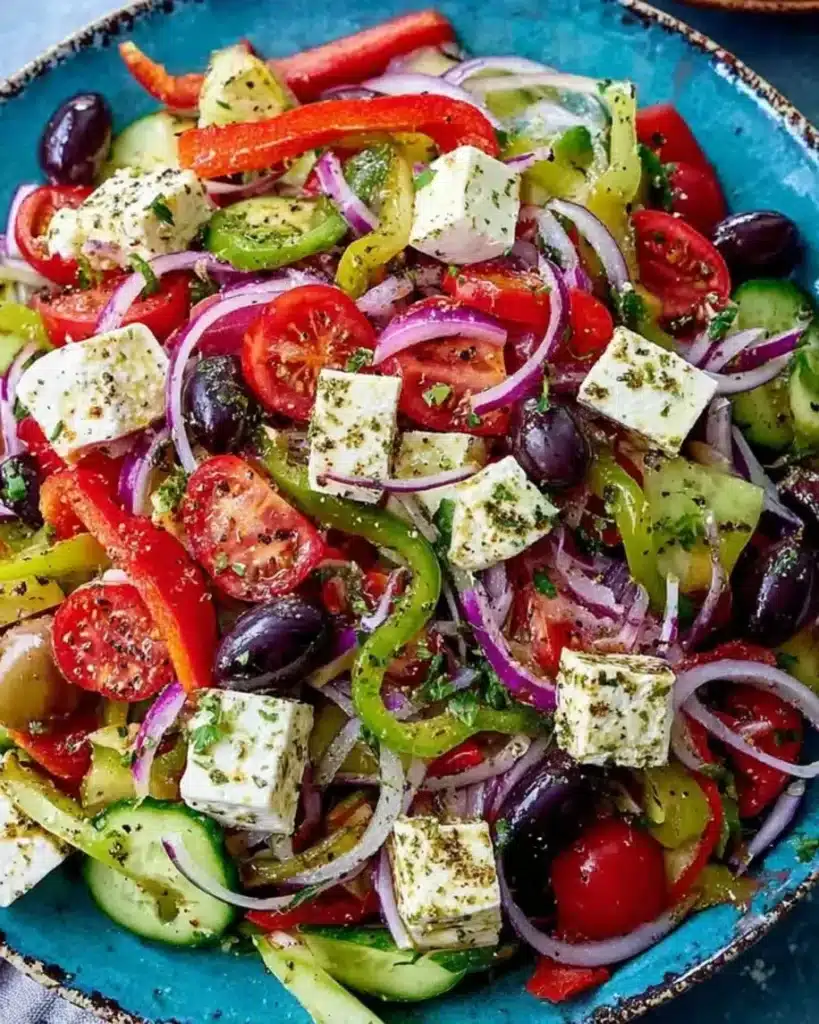
The allure of this Greek Salad Traditional Horiatiki Recipe lies in its sensory symphony—juicy tomatoes bursting with sweetness, crunchy cucumbers that provide a satisfying snap, and the tangy bite of feta cheese that melts on your tongue. Picture the aromatic blend of dried oregano mingling with extra virgin olive oil, creating a dressing that coats each ingredient in a light, flavorful embrace. The red onions add a sharp, pungent kick, balanced by the briny Kalamata olives, resulting in a harmonious mix of textures and tastes that’s as visually appealing as it is delicious. Every bite transports you to the Aegean coast, evoking memories of shared meals under olive trees.
Drawing from Chef Lalybeth’s extensive experience at cookinwithlalyta.com, this Greek Salad Traditional Horiatiki Recipe stands out as the definitive version, honed for authenticity and ease. What makes it special is our Chef’s Secret: emphasizing village-style freshness by selecting the ripest tomatoes and letting the flavors meld just right, a technique that ensures unparalleled taste without any fuss. You’ll learn insider tips on ingredient swaps, step-by-step guidance to avoid common pitfalls, and serving ideas that impress. Dive in to master this foolproof recipe and become the hero of your next gathering.
Why This Greek Salad Traditional Horiatiki Recipe is a Game-Changer
The Chef’s Secret to this Greek Salad Traditional Horiatiki Recipe lies in its village-style freshness, achieved by insisting on the ripest, most vibrant vegetables straight from the market, much like in traditional Greek homes. This emphasis on quality ingredients, such as letting the tomatoes and cucumbers shine without over-processing, creates a salad that’s bursting with natural flavors and nutrients, setting it apart from ordinary versions. By simply allowing the dressing to infuse for a few minutes, as noted in the recipe, you unlock deeper taste profiles that mimic the authenticity of a Grecian taverna.
Unbeatable Texture: The science behind the texture in this Greek Salad Traditional Horiatiki Recipe comes from the crisp contrast of fresh vegetables like cucumbers and bell peppers against the creamy feta. Using firm, chilled ingredients ensures they retain their crunch, while the olive oil dressing coats everything lightly, preventing sogginess and enhancing the overall mouthfeel through natural emulsification.
Foolproof for a Reason: This recipe has been tested multiple times in our cookinwithlalyta.com kitchen to guarantee success, even for beginners. Its straightforward steps minimize errors, making it a reliable choice for busy weeknights or impromptu gatherings, ensuring every batch delivers consistent, authentic Greek salad results.
Ingredient Spotlight: Quality Makes the Difference
For the 4 large tomatoes, cut into wedges: Tomatoes form the heart of this Greek Salad Traditional Horiatiki Recipe, providing juicy sweetness and vibrant color. Always opt for ripe, in-season varieties to maximize flavor and juiciness—vine-ripened ones are ideal for that authentic taste. If unavailable, substitute with heirloom tomatoes for a similar depth, but avoid canned ones as they lack freshness.
Regarding the 1 English cucumber, halved lengthwise and sliced: This ingredient adds a refreshing crunch and hydrating element, balancing the salad’s richness. Quality matters here; choose unwaxed, organic cucumbers to avoid bitterness. A tested substitution could be Persian cucumbers for a similar crisp texture, but regular ones might water down the dish if not properly dried.
For the 1 red onion, thinly sliced: Red onions bring a sharp, pungent flavor that cuts through the creaminess of feta, adding depth to the Greek Salad Traditional Horiatiki Recipe. Select firm, brightly colored onions for the best taste; soaking slices in cold water for a minute can mellow their intensity. If needed, swap with shallots for a milder bite, but this alters the traditional sharpness slightly.
Concerning the 1 green bell pepper, sliced into rings: This adds a subtle sweetness and crunch, enhancing the vegetable medley. Fresh, crisp peppers ensure the salad’s texture remains lively; look for ones without blemishes. You can substitute with yellow bell peppers for a sweeter note, but green ones best preserve the authentic Horiatiki profile.
For the 1 cup Kalamata olives: These briny gems provide a salty, tangy contrast that’s signature to Greek salads. High-quality, pitted olives from Greece offer the best flavor; they’re packed with healthy fats. If substituting, try black olives, but they won’t match the robust taste—always drain them well to prevent excess moisture.
As for the 200g feta cheese, cubed: Feta’s creamy, tangy profile is irreplaceable in a Greek Salad Traditional Horiatiki Recipe, made from sheep’s milk for authenticity. Choose a block over pre-crumbled for better texture; it’s rich in protein. A vegan alternative like cashew-based feta works, but it changes the flavor—ensure it’s firm to maintain the salad’s balance.
Finally, the 1/4 cup extra virgin olive oil, 2 tablespoons red wine vinegar, 1 teaspoon dried oregano, and salt and pepper to taste: The olive oil acts as a base for the dressing, infusing the salad with fruity notes, while vinegar adds acidity and oregano brings herbal warmth. Use cold-pressed olive oil for purity; substitute with apple cider vinegar if needed, but it will slightly alter the Mediterranean essence. Fresh oregano can replace dried for a bolder punch, and always adjust seasoning to taste for perfection.
Step-by-Step Instructions
Step 1: Preparing the Vegetables
In a large salad bowl, combine the tomatoes, cucumber, onion, green bell pepper, and Kalamata olives as per the recipe. Start by washing and cutting the vegetables fresh for optimal crispness—toss them gently to avoid bruising.
Pro Tip: Always use a sharp knife to slice the vegetables evenly; this ensures uniform texture and allows flavors to distribute better throughout the Greek Salad Traditional Horiatiki Recipe.
Step 2: Arranging the Feta Cheese
Arrange the feta cheese on top of the vegetables in the bowl. Place it strategically to create visual appeal, ensuring it doesn’t get lost among the other ingredients.
Common Mistake to Avoid: Don’t cube the feta too early, as it can become mushy; prepare it just before adding to keep its firmness and prevent it from making the salad watery.
Step 3: Adding the Dressing
Drizzle the extra virgin olive oil and red wine vinegar over the salad. Pour evenly to coat all elements without overwhelming them.
Pro Tip: Measure the oil and vinegar precisely to maintain the balance of flavors in this Greek Salad Traditional Horiatiki Recipe—too much oil can make it greasy.
Step 4: Seasoning the Salad
Sprinkle the dried oregano, salt, and pepper over the top. Use a light hand to enhance rather than overpower the natural tastes.
Common Mistake to Avoid: Over-salting is easy with briny olives, so taste as you go to ensure the seasoning complements the fresh ingredients without dominating.
Step 5: Tossing and Serving
Toss the salad gently to combine all ingredients, then serve immediately to preserve the crispness.
Pro Tip: Let the salad rest for 2-3 minutes after tossing; this allows the flavors to meld, elevating your Greek Salad Traditional Horiatiki Recipe to authentic perfection.
Serving & Presentation
For an impressive presentation of this Greek Salad Traditional Horiatiki Recipe, layer the ingredients in a wide, shallow bowl to showcase the colors and textures, with feta cubes artfully placed on top. Garnish with a sprig of fresh oregano or a few extra olives for a professional touch. This salad pairs beautifully as an appetizer with grilled meats like souvlaki or as a side to seafood dishes, enhancing Mediterranean-themed meals. For a complete meal, add grilled chicken or chickpeas to make it heartier, ensuring it complements lighter fare without overwhelming the palate.
Make-Ahead & Storage Solutions
Make-Ahead Strategy: Prep the vegetables up to 3 hours in advance by washing, cutting, and storing them separately in airtight containers in the fridge to maintain crunch. Assemble the salad just before serving to keep it fresh.
Storing Leftovers: Refrigerate any remaining salad in a sealed container for up to 24 hours; the vegetables may soften, so consume quickly. Avoid freezing, as it can make the textures mushy and alter the flavors of this Greek Salad Traditional Horiatiki Recipe.
The Best Way to Reheat: This salad is best enjoyed cold, but if needed, let it sit at room temperature for 10 minutes to refresh flavors—do not microwave, as it will wilt the greens.

Frequently Asked Questions (FAQ)
What are the key ingredients in a traditional Horiatiki Greek salad?
The key ingredients in a traditional Horiatiki Greek salad include fresh tomatoes, cucumbers, red onions, green bell peppers, Kalamata olives, and feta cheese, dressed with extra virgin olive oil, red wine vinegar, oregano, salt, and pepper. These elements highlight the salad’s rustic simplicity and Mediterranean flavors, making it a staple in Greek cuisine.
Can I substitute ingredients like feta cheese or olives in a Greek salad?
Yes, you can substitute ingredients, but it will alter the authenticity slightly. For feta cheese, a vegan alternative like tofu or cashew-based cheese works for dietary needs, though it lacks the tangy creaminess. For olives, milder black olives can replace Kalamata, but they won’t provide the same briny depth—always choose high-quality options to maintain the salad’s balance.
How long does it take to prepare a traditional Horiatiki salad?
Preparing a traditional Horiatiki salad takes about 15 minutes total, with no cooking required. This quick prep time makes it ideal for busy days, as it involves simple chopping and mixing, allowing you to enjoy fresh, authentic flavors in no time.
What are some good serving suggestions for a Greek salad?
Good serving suggestions for a Greek salad include pairing it with grilled proteins like lamb kebabs or fish, or as a refreshing side to pasta dishes. It’s also perfect for picnics or as a light lunch; serve it chilled on a hot day for the best experience, and consider adding pita bread for dipping.
Is this Greek salad suitable for a vegan diet?
Yes, you can make this Greek salad vegan by omitting the feta cheese or swapping it with a plant-based alternative like marinated tofu. Ensure all other ingredients, like olives and olive oil, are vegan-friendly, keeping the focus on fresh vegetables for a delicious, cruelty-free version.
How can I make this salad more flavorful?
To make this salad more flavorful, use the freshest ingredients possible and let it sit for a few minutes after dressing. Adding a squeeze of fresh lemon juice or extra herbs like mint can enhance the taste without overpowering the traditional profile of the Horiatiki salad.
Tried This Recipe? Leave a Comment!
Did you make this recipe? I’d love to hear how it turned out! Please leave a comment and a rating below. Your feedback helps other home cooks and supports cookinwithlalyta!
For more delicious inspiration, follow me on Pinterest!
Greek Salad Traditional Horiatiki Recipe
- Total Time: 15 minutes
- Yield: 4 1x
Description
A traditional Greek salad featuring fresh vegetables, Kalamata olives, and feta cheese, dressed with olive oil and oregano.
Ingredients
- 4 large tomatoes, cut into wedges
- 1 English cucumber, halved lengthwise and sliced
- 1 red onion, thinly sliced
- 1 green bell pepper, sliced into rings
- 1 cup Kalamata olives
- 200g feta cheese, cubed
- 1/4 cup extra virgin olive oil
- 2 tablespoons red wine vinegar
- 1 teaspoon dried oregano
- Salt and pepper to taste
Instructions
- In a large salad bowl, combine the tomatoes, cucumber, onion, green bell pepper, and Kalamata olives.
- Arrange the feta cheese on top of the vegetables.
- Drizzle the extra virgin olive oil and red wine vinegar over the salad.
- Sprinkle with dried oregano, salt, and pepper.
- Toss gently to combine, and serve immediately.
Notes
Use ripe, fresh tomatoes for the best flavor; let the salad sit for a few minutes before serving to allow the flavors to meld.
- Prep Time: 15 minutes
- Cook Time: 0 minutes
- Method: Appetizer
- Cuisine: Greek
Nutrition
- Calories: 250
- Sugar: 5g
- Fat: 20g
- Carbohydrates: 10g
- Protein: 8g
Conclusion
This traditional Greek Salad, or Horiatiki, offers a refreshing burst of flavors from fresh tomatoes, cucumbers, onions, and tangy feta cheese, all brought together with a simple olive oil dressing, making it a perfect light and healthy side dish for any meal. Its vibrant Mediterranean taste not only evokes the essence of Greek cuisine but also provides a nutritious option that’s easy to prepare and enjoy. For the best experience, serve it chilled alongside warm pita bread to enhance the textures and flavors, or try a variation by adding grilled vegetables for an extra twist on this classic recipe.