
Table of Contents
Balsamic Marinated Flank Steak with Blue Cheese Crust – Savory, Tangy Perfection

I still remember the first time I tasted a truly great balsamic marinated flank steak. It was at a tiny bistro tucked away in the Marais district of Paris, just steps from my culinary school. The chef there — a gruff but brilliant man named Claude — taught me that the secret to an unforgettable flank steak recipe lies not in expensive cuts but in the marriage of a bold marinade and a perfectly timed sear. That lesson stayed with me through my years training in French kitchens, through my mother’s fragrant spice-laden cooking back in Morocco, and right into my bustling New York City kitchen today. This Balsamic Marinated Flank Steak with Blue Cheese Crust is the culmination of all those experiences — a dish where tangy balsamic vinegar, pungent blue cheese, and juicy grilled beef come together in one spectacularly craveable bite. It is, without question, my favorite grilled flank steak recipe to pull out when I want to impress guests without spending hours in the kitchen.
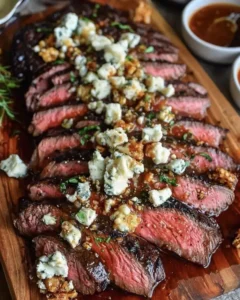
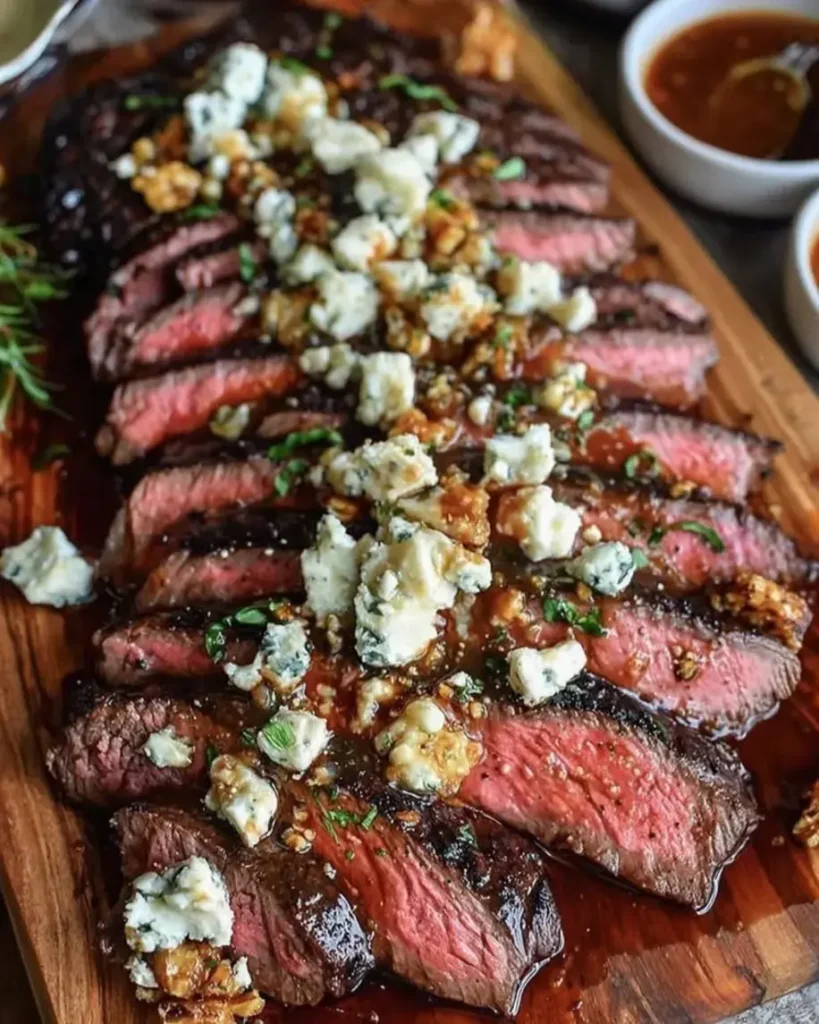
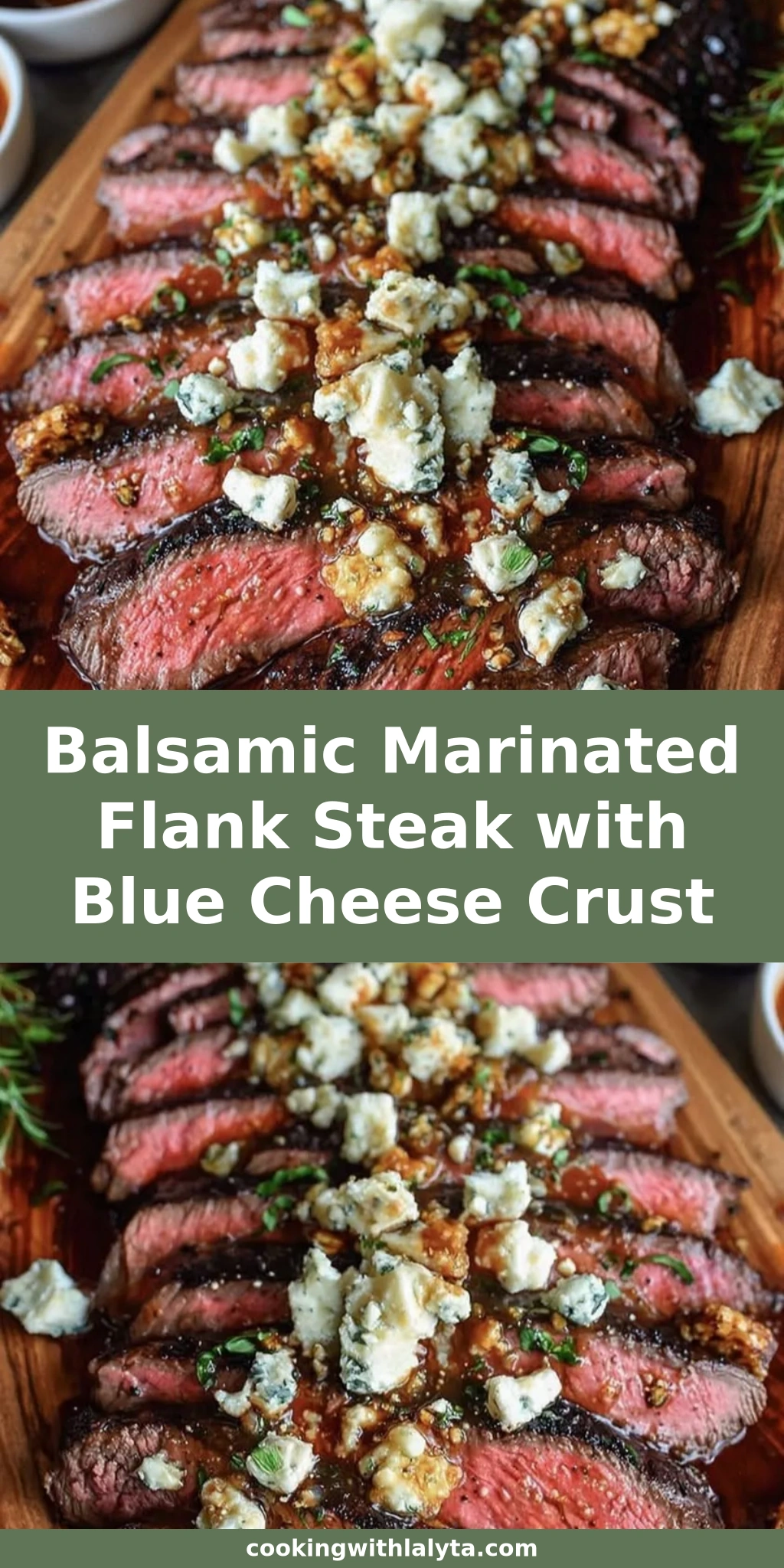
Close your eyes and imagine this: a beautifully charred flank steak, its surface glistening with caramelized balsamic sugars, sliced open to reveal a blushing medium-rare center. On top sits a golden, bubbling blue cheese crust — creamy, salty, and impossibly savory — studded with crispy panko breadcrumbs and flecks of fresh parsley. The aroma alone is intoxicating: the sharp, fruity tang of reduced balsamic mingling with the earthy funk of blue cheese and the smoky kiss of a hot grill. Every slice yields tender ribbons of beef that practically melt on your tongue, while the crust delivers a satisfying crunch and a burst of umami richness. The balsamic marinade does double duty here: its acidity gently tenderizes the lean flank steak while infusing it with deep, complex flavor that penetrates well beyond the surface. Trust me when I say this is the kind of dish that turns a weeknight dinner into a celebration — and it all starts with a handful of pantry staples and a little bit of patience while the marinade works its magic.
Now, I know what you might be thinking: a blue cheese crust steak sounds fancy — maybe even intimidating. But here’s the truth: I’ve tested this recipe dozens of times in my NYC apartment kitchen, tweaking the marinade ratios, playing with different broiling distances, and even dragging my grill pan out onto the fire escape (don’t tell my landlord!). What I’ve landed on is a foolproof method that anyone — whether you’re a seasoned cook or a nervous beginner — can execute with confidence. In this post, I’ll walk you through every detail: how long to marinate for maximum tenderness without turning the meat mushy, the exact moment to pull the steak off the grill, and a few of my favorite pro tips that I picked up in Paris and perfected at home. Stick with me, and you’ll be serving up a restaurant-quality balsamic marinated flank steak that will have everyone at your table reaching for seconds.
Why This Balsamic Marinated Flank Steak Recipe Is the Best
What sets this flank steak recipe apart from the hundreds of others floating around the internet? It all comes down to the flavor architecture. In my culinary training in Paris, I learned that a great dish is built in layers — each ingredient must serve a purpose and complement the others without overpowering them. The balsamic vinegar brings a deep, almost wine-like acidity that brightens the richness of the beef, while the Dijon mustard (a trick I picked up from my Moroccan mother, who used it in her own marinades) acts as both an emulsifier and a flavor bridge, helping the oil and vinegar cling to every crevice of the meat. The minced garlic and dried rosemary infuse the steak with an aromatic backbone that feels both rustic and refined. And then there’s that blue cheese crust — my bold NYC-inspired twist that takes this dish from “really good” to “where has this been all my life?” The creamy, salty funk of the blue cheese against the tangy-sweet balsamic is a pairing that just works on every level.
Texture is another area where this balsamic marinated flank steak absolutely shines, and it’s something I obsess over as a professional cook. Flank steak, by its nature, is a lean, muscular cut with a pronounced grain. If you handle it wrong — overcook it, slice it with the grain, or skip the resting step — you’ll end up with tough, chewy slices that no amount of sauce can save. But when you treat it right, it transforms into one of the most flavorful and satisfying cuts of beef you can buy. The marinade tenderizes without breaking down the fibers too aggressively (I keep the acid balanced with oil and limit marination to 8 hours max). Grilling over medium-high heat creates that essential crusty exterior through the Maillard reaction, while the interior stays juicy and tender. The quick blast under the broiler melts the blue cheese into a lacy, crispy crust — a textural counterpoint to the soft, yielding meat beneath. It’s a study in contrasts that makes every forkful exciting.
And here’s the best part: this is a grilled flank steak recipe that’s built for real life. I don’t have a sprawling outdoor kitchen — just a small NYC galley kitchen with a stove that’s seen better days. This recipe works beautifully on a cast-iron grill pan, a standard gas grill, or even under the broiler if that’s all you’ve got. The active cooking time is under 15 minutes, which means you can marinate the steak in the morning, head out to work (or explore the Union Square Greenmarket, one of my favorite Saturday rituals), and come home to a dinner that feels lavish but comes together in a flash. I’ve included clear visual cues, timing guidelines, and a handy temperature chart so you can cook with confidence no matter your equipment. This is the kind of recipe that builds culinary intuition — and once you master it, you’ll find yourself returning to it again and again.
Balsamic Marinated Flank Steak Ingredients
One of the things I love most about this balsamic marinated flank steak is how accessible the ingredient list is. Most of these items are already in your pantry, and any you need to grab can be found at a standard American grocery store — though I always recommend a trip to a good butcher for the steak itself. On Saturdays, I love walking down to my local butcher in Hell’s Kitchen, where the team knows me by name and always sets aside the best flank steaks. There’s something deeply satisfying about building a relationship with the people who provide your food — it’s a value my mother instilled in me back in Morocco, where we knew our baker, our spice merchant, and our vegetable vendor by name. That personal connection makes every meal taste a little bit better.
Ingredients List
- For the Marinade:
- 1/4 cup balsamic vinegar
- 2 tablespoons olive oil
- 2 cloves garlic, minced
- 1 teaspoon Dijon mustard
- 1 teaspoon dried rosemary
- Salt and freshly ground black pepper, to taste
- 1 1/2 pounds flank steak
- For the Blue Cheese Crust:
- 1/2 cup crumbled blue cheese (about 2 ounces)
- 2 tablespoons unsalted butter, softened
- 1/4 cup panko breadcrumbs
- 1 tablespoon chopped fresh parsley
Ingredient Spotlight
Balsamic Vinegar: This is the backbone of the balsamic marinade steak experience, so don’t skimp here. A good-quality balsamic vinegar from Modena — the kind that’s aged at least a few years in wooden barrels — will have a syrupy consistency and a balanced sweet-tart flavor that cheap imitations simply can’t replicate. When shopping, look for “Aceto Balsamico di Modena IGP” on the label; anything labeled simply “balsamic vinegar” without a protected designation may be little more than wine vinegar with added caramel coloring. If you’re in a pinch, you can substitute a high-quality sherry vinegar mixed with a teaspoon of honey, but the deep, fruity complexity of true balsamic is hard to match. I keep a bottle of 12-year aged balsamic in my pantry at all times — it’s one of those ingredients that elevates everything it touches.
Flank Steak: This lean, flat cut comes from the abdominal muscles of the cow, which means it has a pronounced grain and can be tough if mishandled — but it’s also intensely beefy and takes beautifully to marinades. When selecting a flank steak at the butcher counter, look for a piece that’s relatively uniform in thickness so it cooks evenly. The surface should be deep red with a fine marbling of fat and no excessive liquid in the package. A typical flank steak weighs between 1.5 and 2 pounds and is about 3/4 to 1 inch thick. You can substitute skirt steak or hanger steak in this flank steak recipe with excellent results — just note that skirt steak cooks even faster and hanger steak benefits from a slightly longer marinade time due to its denser texture.
Blue Cheese: For the blue cheese crust, reach for a cheese that’s creamy enough to spread but pungent enough to stand up to the bold balsamic and beef flavors. My go-to choices are Roquefort (the king of blue cheeses, with a sharp, salty tang that I fell in love with during my Paris years), Gorgonzola Dolce (creamier and milder, which is great if you’re new to blue cheese), or a classic American Maytag Blue (widely available and reliably good). Avoid pre-crumbled blue cheese if you can — it’s often drier and coated with anti-caking agents that prevent it from melting into that luscious, bubbly crust we’re after. If blue cheese isn’t your thing, a sharp aged cheddar or crumbled feta can work, though the flavor profile will shift considerably. Lalybeth’s rule: always taste your cheese before using it — if you wouldn’t eat it on its own, don’t cook with it.
| Original Ingredient | Best Substitution | Flavor / Texture Impact |
|---|---|---|
| Balsamic Vinegar | Sherry vinegar + 1 tsp honey | Slightly sharper, less syrupy; still tangy and complex |
| Flank Steak | Skirt steak or hanger steak | Skirt is thinner and cooks faster; hanger is denser and richer |
| Blue Cheese | Gorgonzola Dolce or aged cheddar | Milder and creamier (Gorgonzola) or sharper and less funky (cheddar) |
| Panko Breadcrumbs | Crushed pork rinds (gluten-free) | Crispier, zero-carb, with a subtle savory note |
| Dried Rosemary | Fresh rosemary (1 Tbsp minced) | Brighter, more aromatic; reduce slightly to avoid overpowering |
How to Make Balsamic Marinated Flank Steak — Step-by-Step
Alright, let’s get cooking! I promise this balsamic marinated flank steak recipe is far simpler than it looks. Read through all the steps first (a habit my Parisian chef instructors drilled into me), then gather your ingredients and take it one stage at a time. You’ve got this!
Step 1: Marinate the Steak
In a shallow glass or ceramic dish — or a large resealable plastic bag — whisk together the balsamic vinegar, olive oil, minced garlic, Dijon mustard, dried rosemary, and a generous pinch of salt and freshly ground black pepper. Add the flank steak, turning it several times to coat every surface with the marinade. Cover the dish tightly with plastic wrap (or seal the bag, pressing out as much air as possible) and refrigerate for at least 2 hours or up to 8 hours. If using a bag, place it on a rimmed plate in case of leaks. About 30 minutes before you plan to cook, remove the steak from the refrigerator and let it sit at room temperature — this helps it cook more evenly.
⚠️ Common Mistake to Avoid: Do not marinate flank steak for more than 8 hours — the acid in the balsamic vinegar will eventually start to break down the meat’s texture, making it mushy rather than tender. I learned this the hard way during my first year in NYC when I left a steak marinating overnight and ended up with a disappointing, almost pasty texture. Set a timer if you need to!
Step 2: Prep and Grill
Preheat your grill to medium-high heat — around 400°F to 450°F. You want a hot, clean grate that will give you those gorgeous sear marks. While the grill heats, remove the steak from the marinade, letting the excess drip back into the dish. Discard the used marinade — do not reuse it as a sauce unless you bring it to a rolling boil for at least 5 minutes to kill any bacteria. Pat the steak thoroughly dry with paper towels; this step is crucial because any surface moisture will steam the meat instead of searing it. Lightly brush both sides with a thin film of olive oil and season once more with a pinch of salt and pepper. Place the steak on the hot grill and cook for 5 to 7 minutes on the first side. You’ll know it’s ready to flip when the meat releases easily from the grate — if it’s sticking, give it another minute. Flip and cook for another 5 to 7 minutes on the second side. For medium-rare, the internal temperature should read 125°F to 130°F on an instant-read thermometer.
💡 Lalybeth’s Pro Tip: Invest in a good instant-read meat thermometer. It will change your cooking game forever. I use mine for everything from roast chicken to quick breads, and it takes all the guesswork out of grilling flank steak. For medium-rare, pull the steak at 125°F — carryover heat will bring it to about 130°F during the rest.
Step 3: Rest the Steak
Transfer the grilled steak to a clean cutting board and let it rest for at least 5 minutes. I know the temptation to slice right in is strong — the aroma filling your kitchen will be downright intoxicating — but resting is non-negotiable. During those 5 minutes, the muscle fibers relax and the juices redistribute throughout the meat. If you cut too soon, all those flavorful juices will spill out onto the board, leaving you with a drier steak. Use this resting time to preheat your broiler and whip up the blue cheese crust mixture.
💡 Lalybeth’s Pro Tip: Tent the steak loosely with aluminum foil during the rest — but don’t wrap it tightly or you’ll trap steam and soften that beautiful crust you just worked so hard to create. A loose tent keeps the exterior warm without steaming it.
Step 4: Make the Blue Cheese Crust
While the steak rests, preheat your oven’s broiler to high and position an oven rack about 4 to 5 inches from the heat source. In a small mixing bowl, combine the crumbled blue cheese, softened unsalted butter, panko breadcrumbs, and chopped fresh parsley. Use a fork to mash everything together until it forms a cohesive, spreadable paste. The butter should be truly soft — if it’s cold, the mixture will be lumpy and won’t spread evenly. Taste the mixture and add a tiny pinch of black pepper if desired (the blue cheese is usually salty enough on its own).
⚠️ Common Mistake to Avoid: Using cold butter straight from the fridge. I cannot stress this enough — softened butter is the glue that holds your blue cheese crust together and allows it to spread smoothly. If you forget to set your butter out, microwave it in 5-second bursts until it yields to gentle pressure but isn’t melted. Melted butter will make the crust greasy and prevent it from achieving that golden, bubbly finish.
Step 5: Broil to Perfection
Place the rested steak on a rimmed baking sheet lined with foil for easy cleanup. Using an offset spatula or the back of a spoon, spread the blue cheese mixture evenly over the top surface of the steak, going all the way to the edges. Don’t worry about making it perfect — the crust will bubble and spread slightly under the broiler. Slide the baking sheet under the broiler and cook for 2 to 3 minutes. Watch it closely! Broilers vary wildly in intensity, and the difference between golden-bubbly and burnt can be a matter of seconds. You’re looking for the cheese to melt completely, the panko to turn golden brown, and the edges to develop tiny caramelized spots. The aroma will be heavenly — that funky blue cheese smell will mellow into something nutty and deeply savory.
💡 Lalybeth’s Pro Tip: Keep the oven door slightly ajar while broiling and position yourself right in front of it if possible. The visual transformation happens fast, and that direct line of sight is your best insurance against a burnt crust. I learned this trick in a tiny Parisian bistro kitchen where the broiler was ancient and temperamental — constant vigilance was the only way to get consistent results.
Step 6: Slice and Serve
Remove the baking sheet from the broiler and transfer the steak to a clean cutting board. Now for the most important slicing technique: flank steak must be cut against the grain. Look closely at the surface of the meat and you’ll see long parallel lines running through it — that’s the grain. Position your sharpest chef’s knife perpendicular to those lines and slice the steak into thin strips about 1/4 to 1/2 inch thick. Cutting against the grain shortens the muscle fibers, making each slice tender and easy to chew. Fan the slices out on a warm serving platter, drizzle any accumulated juices from the cutting board over the top, and serve immediately while the crust is still warm and the steak is at its juiciest.
⚠️ Common Mistake to Avoid: Slicing with the grain is the single most common error I see with flank steak — and it’s heartbreaking because by that point, you’ve done everything else right. I once served a beautiful balsamic marinated flank steak at a dinner party, only to realize I’d sliced it wrong in my rush to get food on the table. The flavor was perfect, but every bite was tough and chewy. Learn from my mistake: take an extra 10 seconds to identify the grain direction before you make that first cut.
| Step | Action | Duration | Key Visual Cue |
|---|---|---|---|
| 1 | Marinate the Steak | 2–8 hours | Meat darkens slightly from balsamic |
| 2 | Prep and Grill | 10–14 minutes | Deep brown sear marks; meat releases easily |
| 3 | Rest the Steak | 5 minutes | Surface juices settle; meat feels warm, not hot |
| 4 | Make Blue Cheese Crust | 2–3 minutes | Mixture forms a uniform, spreadable paste |
| 5 | Broil to Perfection | 2–3 minutes | Crust turns golden brown and bubbly |
| 6 | Slice and Serve | 2 minutes | Thin slices against the grain with visible crust |
Serving & Presentation
When it comes to plating this balsamic marinated flank steak with blue cheese crust, I like to channel a bit of that effortless Parisian bistro elegance — nothing too fussy, but beautiful enough to make your guests pause and admire before they dig in. Slice the steak against the grain into thin, even strips and fan them out across a warm serving platter or a rustic wooden board. The blue cheese crust should be visible on each slice, golden and tempting. Drizzle any accumulated juices from the cutting board over the top — those drippings are liquid gold, infused with balsamic tang, beefy richness, and melted blue cheese. A final scattering of fresh parsley adds a pop of green that wakes up the whole plate visually and echoes the herbs in the crust. If I’m serving this at a dinner party, I’ll often tuck a few roasted cherry tomatoes or grilled lemon halves around the edges — their bright acidity cuts through the richness beautifully.
For side dishes, think about balance. The flank steak recipe is rich and savory, so I like to pair it with something that offers contrast — either a fresh, acidic element or a creamy, comforting starch. One of my go-to pairings is a simple arugula salad dressed with lemon juice and a whisper of olive oil; the peppery greens and bright lemon are a perfect foil for the deep, savory notes of the steak and blue cheese crust. On the starch side, you can’t go wrong with garlic-rosemary roasted potatoes (an homage to my Paris days) or a fragrant saffron couscous that nods to my Moroccan roots. The couscous, in particular, soaks up those incredible steak juices beautifully, and the floral saffron plays unexpectedly well with the balsamic and blue cheese. For a vegetable, grilled asparagus or blistered green beans with a squeeze of lemon add color and freshness to the plate.
And don’t forget the wine! This is a dish that begs for a bold red with enough structure to stand up to the blue cheese. A Cabernet Sauvignon from Napa Valley or a Malbec from Argentina are my top picks — both have the tannic backbone and dark fruit character that complement the charred steak and tangy balsamic. If you prefer white wine, go for a full-bodied oaked Chardonnay that can handle the richness. For a non-alcoholic option, a sparkling water with a splash of pomegranate juice and a twist of lemon feels celebratory and refreshing. Whatever you choose, serve everything family-style and let people build their own perfect bites. That communal, relaxed vibe is exactly how I love to eat — whether in my mother’s kitchen in Morocco or my own tiny dining nook in NYC.
| Pairing Type | Suggestions | Why It Works |
|---|---|---|
| Side Dish | Arugula salad, garlic-rosemary roasted potatoes, saffron couscous | Acidity and freshness balance the richness; starches soak up juices |
| Sauce / Dip | Balsamic reduction drizzle, creamy horseradish sauce, chimichurri | Adds brightness, heat, or extra tang to complement the crust |
| Beverage | Cabernet Sauvignon, Malbec, oaked Chardonnay, pomegranate spritzer | Bold reds match the blue cheese; full-bodied whites offer contrast |
| Garnish | Fresh parsley, roasted cherry tomatoes, grilled lemon halves, flaky sea salt | Adds color, brightness, and a finishing crunch |
Make-Ahead, Storage & Reheating
Between recipe testing, catering gigs, and my never-ending love for dinner parties, my NYC schedule can get hectic — so I’ve figured out exactly how to make this balsamic marinated flank steak work for real life. The beauty of this recipe is that a lot of the heavy lifting happens in advance. You can mix the marinade and get the steak soaking the night before (just keep it to that 8-hour max!), and the blue cheese crust mixture can be prepped up to 2 days ahead and stored in an airtight container in the fridge. When it’s go-time, all you need to do is grill, broil, and slice — which means a showstopping dinner can hit the table in under 20 minutes of active effort. That’s my kind of weeknight magic.
| Method | Container | Duration | Reheating Tip |
|---|---|---|---|
| Refrigerator | Airtight glass container or wrap tightly in foil | Up to 3 days | Reheat gently in a 275°F oven for 8–10 minutes, covered loosely with foil |
| Freezer | Double-wrap in plastic wrap and foil; place in freezer bag | Up to 2 months | Thaw overnight in fridge; reheat in 275°F oven; refresh crust under broiler for 1 minute |
| Make-Ahead | Marinate steak in bag; crust mixture in small airtight container | Marinate up to 8 hours; crust mixture up to 2 days | Bring crust mixture to room temp before spreading; grill steak fresh |
A quick word on reheating, because no one wants dry steak. The microwave is not your friend here — it will zap the moisture out of the meat and turn that glorious blue cheese crust into a soft, sad mess. Instead, I recommend a low-and-slow oven approach: place the sliced steak in a baking dish, cover loosely with foil so the crust doesn’t steam, and warm at 275°F just until heated through. The crust may lose a little of its initial crispness, but a quick 60-second flash under the broiler will bring it right back to bubbly, golden glory. If you’ve stored the steak whole, slice it after reheating rather than before — this helps retain more moisture. And honestly, cold leftover flank steak thinly sliced over a salad the next day is one of my favorite secret-weapon lunches. The balsamic flavor is even more pronounced when chilled, and those blue cheese crumbles make any salad feel decadent.
One more insider tip from my restaurant days: if you’re planning to serve this at a party and want the crust at its absolute peak, wait to add the blue cheese mixture until just before broiling. You can have the grilled and rested steak sitting at room temperature for up to 30 minutes while you mingle with guests, then pop it under the broiler right before everyone sits down. The crust takes just 2–3 minutes, and the dramatic reveal — that sizzling, golden-topped steak emerging from the kitchen — is worth the tiny bit of last-minute effort. I’ve done this exact move at countless NYC dinner parties, and it never fails to draw appreciative oohs and ahhs.
Variations & Easy Swaps
One of the things I love about this balsamic marinated flank steak recipe is how adaptable it is. Over the years, I’ve played with countless variations — some inspired by my Moroccan pantry, others by seasonal finds at the Union Square Greenmarket, and a few born from sheer necessity when I realized I was out of a key ingredient. Here are three of my favorite riffs that stay true to the spirit of the original while offering something fresh and exciting.
| Variation | Key Change | Best For | Difficulty Impact |
|---|---|---|---|
| Gorgonzola Dolce Crust | Swap blue cheese for Gorgonzola Dolce | Milder palates; creamier texture | No change |
| Gluten-Free Crust | Replace panko with crushed pork rinds or GF breadcrumbs | Gluten-free diners; keto-friendly | No change |
| Moroccan-Spiced Twist | Add ras el hanout and smoked paprika to marinade; swap parsley for cilantro | Adventurous eaters; spice lovers | Slightly more complex flavors but same technique |
Gorgonzola Dolce Swap
If you’re new to blue cheese or serving guests who are a bit shy about strong, funky flavors, Gorgonzola Dolce is your best friend. This Italian blue cheese has a soft, almost buttery texture and a much milder, sweeter flavor than traditional blue cheese or Roquefort. It melts like a dream and creates a crust that’s creamy and approachable without losing that distinctive blue cheese character. I discovered this swap during my culinary school days in Paris when a classmate from Milan introduced me to the wonders of Gorgonzola Dolce. Simply replace the blue cheese in equal amounts — the rest of the recipe stays exactly the same. The resulting crust will be a touch softer and less intensely salty, so you may want to add a tiny pinch of flaky sea salt before broiling.
Gluten-Free Crust (Also Keto-Friendly!)
Living in NYC, I’m constantly cooking for friends with diverse dietary needs, and I’ve learned that a great gluten-free swap shouldn’t feel like a compromise. For this blue cheese crust steak, my absolute favorite panko replacement is finely crushed pork rinds — they’re naturally gluten-free, zero-carb, and they crisp up even better than breadcrumbs under the broiler. The flavor is neutral enough that you won’t taste pork, just a deep, satisfying crunch. If pork rinds aren’t your thing, gluten-free panko-style breadcrumbs (Ian’s and Aleia’s both make good ones) work beautifully. Just avoid almond flour or coconut flour here — they don’t deliver the same crispy texture and can turn the crust pasty. Use the same quantity as the original panko, and proceed with the recipe exactly as written.
Moroccan-Spiced Seasonal Herb Twist
This variation is close to my heart because it marries the French bistro sensibility of the original recipe with the warm, aromatic spices of my Moroccan childhood. To the balsamic marinade, add 1 teaspoon of ras el hanout — that iconic North African spice blend that typically includes cinnamon, cumin, coriander, cardamom, and a whisper of rose petals or lavender. Add a half teaspoon of smoked Spanish paprika for a subtle campfire smokiness. Swap the dried rosemary for fresh thyme, and replace the parsley in the crust with chopped fresh cilantro. The result is a balsamic marinated flank steak that tastes familiar yet intriguing, with warm spices that play beautifully against the tangy balsamic and funky blue cheese. I love making this version in the fall when the Union Square Greenmarket is brimming with fresh herbs and the air starts to turn crisp. Serve it with a side of honey-glazed carrots and a glass of spicy Syrah for a truly memorable meal.
How long should I marinate flank steak in balsamic vinegar for the best flavor?
For the best balance of flavor and texture, marinate your flank steak in the balsamic mixture for at least 2 hours but no more than 8 hours. Two hours is enough time for the balsamic vinegar, garlic, and rosemary to penetrate the meat and impart noticeable flavor, while 4 to 6 hours is the sweet spot for deeper, more complex flavor without compromising texture. I don’t recommend going past 8 hours because the acid in the balsamic vinegar will begin to break down the muscle fibers too aggressively, resulting in a mushy or mealy texture that no amount of perfect grilling can fix. If you’re marinating during a busy workday, pop the steak in the marinade before you leave in the morning and it’ll be ready to grill when you get home — just don’t let it go overnight.
Can I substitute the blue cheese with another type of cheese for the crust?
Absolutely! While blue cheese is traditional and delivers that signature pungent, savory punch, there are several excellent substitutes that work beautifully in this crust. Gorgonzola Dolce is my top pick for a milder, creamier alternative — it melts like a dream and has a sweeter, less aggressive flavor that’s perfect for blue cheese newcomers. If you want to stay in the same flavor family but try something different, Roquefort offers a sharper, saltier profile. For a completely different direction, an aged sharp cheddar creates a crust that’s nutty and rich, while crumbled feta (mixed with a little extra butter to help it spread) lends a tangy, Mediterranean vibe. Just keep in mind that different cheeses have different salt levels, so taste your crust mixture before adding any extra seasoning.
What is the best cooking method for flank steak with a blue cheese crust to keep it tender?
The key to a tender balsamic marinated flank steak is a three-part strategy: a proper marinade, high-heat searing, and slicing against the grain. First, the balsamic marinade’s acidity gently tenderizes the lean muscle fibers — but only if you don’t over-marinate. Second, cooking over high heat (grilling at 400–450°F or using a screaming-hot cast-iron skillet) creates a flavorful crust while cooking the interior quickly enough that it doesn’t dry out. Flank steak is best enjoyed medium-rare (125–130°F internal temperature); cooking it past medium will make it tough no matter how good your marinade is. Finally, and this is the step most home cooks miss, always slice flank steak against the grain into thin strips. The grain is the visible direction of the muscle fibers — cutting perpendicular to them shortens the fibers so each bite is tender and easy to chew. A sharp chef’s knife and a 45-degree angle on your slices will give you beautiful, tender ribbons of steak every time.
What side dishes pair well with balsamic marinated flank steak topped with blue cheese?
This balsamic marinated flank steak with blue cheese crust pairs wonderfully with sides that balance its richness. For freshness and acidity, try a simple arugula salad with lemon vinaigrette, roasted cherry tomatoes, or grilled asparagus with a squeeze of lemon. For hearty starches that soak up the delicious steak juices, garlic-rosemary roasted potatoes, creamy polenta, or a fragrant saffron couscous are all excellent choices — the couscous, in particular, nods to my Moroccan heritage and the floral saffron is surprisingly lovely against the balsamic and blue cheese. Blistered green beans, a shaved fennel and citrus salad, or a warm farro salad with herbs also work beautifully. The key is to include something with brightness or acidity to cut through the richness of the crust, and something starchy or substantial to round out the plate.
Can I make this balsamic marinated flank steak without a grill?
Yes, you absolutely can make this recipe without a grill, and the results are still spectacular. A cast-iron grill pan is my favorite indoor alternative — preheat it over medium-high heat until it’s smoking hot, then cook the steak for the same 5–7 minutes per side. The raised ridges will give you those desirable sear marks and allow excess fat to drain away. If you don’t have a grill pan, a regular heavy-bottomed cast-iron skillet works beautifully too; you’ll get an even, deep-brown crust across the entire surface of the steak. For apartment dwellers without access to outdoor space (I’ve been there in my NYC days!), you can even cook the steak entirely under the broiler — about 4–5 minutes per side on a rimmed baking sheet placed 4 inches from the heat source. Just be sure to pat the steak dry before cooking regardless of the method, and always let it rest before adding the blue cheese crust.
How do I know when my flank steak is cooked to the right temperature?
The most reliable way to determine doneness is with an instant-read meat thermometer. For medium-rare flank steak — which I strongly recommend for maximum tenderness — pull the steak off the heat when the thickest part reads 125°F to 128°F. Carryover cooking during the rest will bring it to a final temperature of about 130°F to 135°F, which is a perfect medium-rare. For medium, pull at 135°F (final temp around 140°F). I don’t recommend cooking flank steak beyond medium — it will become tough and dry. If you don’t have a thermometer, you can use the touch test: press the center of the steak with your finger. Medium-rare feels similar to the fleshy area at the base of your thumb when you press your thumb and index finger together. The steak should feel springy and soft but not squishy (rare) or firm (well-done).
Is it necessary to let the flank steak rest before adding the blue cheese crust?
Yes, resting the steak is absolutely essential — I consider it one of the non-negotiable steps in this recipe. Those 5 minutes of rest after grilling allow the muscle fibers to relax and the internal juices to redistribute throughout the meat. If you skip the rest and immediately add the crust, two things will happen: first, the juices will spill out when you eventually slice, leaving the steak drier than it should be, and second, the residual heat from the just-grilled steak combined with the broiler can easily overcook the interior. The rest period also gives you the perfect window to mix up the blue cheese crust and preheat the broiler. By the time the crust is ready to spread, the steak has rested enough to retain its juices and is still warm enough that the cheese mixture will soften slightly on contact before it even hits the broiler.
What type of balsamic vinegar works best for marinating flank steak?
For the best balsamic marinated flank steak, I recommend using a mid-range balsamic vinegar from Modena labeled “Aceto Balsamico di Modena IGP.” These vinegars are aged for at least 2–3 years in wooden barrels, giving them a balanced sweet-tart flavor and a slightly syrupy consistency that clings beautifully to the meat. Avoid the very cheapest balsamic vinegars — they’re often just wine vinegar with caramel coloring and lack the depth and complexity needed to properly season the steak. On the other end of the spectrum, you don’t need to splurge on super-premium aged balsamic (the $50+ bottles) for a marinade; save those for drizzling over finished dishes where their nuances can truly shine. A good $10–$15 bottle from a reputable brand like Colavita, Lucini, or Napa Valley Naturals will give you excellent results every time.
Share Your Version!
I truly believe that the best recipes are the ones that evolve as they travel from kitchen to kitchen, picking up personal touches and family traditions along the way. This balsamic marinated flank steak with blue cheese crust has been one of the most beloved dishes in my rotation ever since I first tested it in my tiny NYC apartment, and I would absolutely love to see how it turns out in your kitchen. Did you try the Gorgonzola swap? Maybe you added a sprinkle of smoky paprika or served it with a side that I haven’t thought of yet? Whatever you did, I want to hear about it!
Leaving a star rating and a comment below helps me know which recipes resonate with you and what you’d like to see more of — your feedback genuinely shapes the content I create here. And if you snap a photo of your gorgeous steak dinner, please share it on Instagram or Pinterest and tag @cookingwithlalyta so I can see your creation and share it with our growing community of home cooks. Here’s a question I’d love for you to answer in the comments: What’s your all-time favorite way to use balsamic vinegar — in a marinade, a salad dressing, or drizzled over something unexpected? I’m always looking for new inspiration, and I have a feeling this community has some brilliant ideas.
From my NYC kitchen to yours — I hope this recipe brings as much warmth to your table as it does to mine. — Lalybeth 🧡
Love This Recipe? Save It to Pinterest!
If you enjoyed this Balsamic Marinated Flank Steak with Blue Cheese Crust recipe, don’t let it get lost in your browser tabs! 😄 Pin it now so you can find it again anytime — and explore hundreds more tried-and-tested recipes waiting for you on my Pinterest boards.
👉 Follow Lalybeth on Pinterest @cookingwithlalyta
📌 Pin this recipe · 🔁 Re-pin your favorites · 💬 Tag me when you make it — I love seeing your creations!
Balsamic Marinated Flank Steak with Blue Cheese Crust
- Total Time: 2 hours 30 minutes
- Yield: 4 1x
Description
This balsamic marinated flank steak is grilled to perfection and topped with a savory blue cheese crust. The tangy balsamic marinade tenderizes the meat while the blue cheese adds a creamy, pungent finish.
Ingredients
- For the Marinade:
- 1/4 cup balsamic vinegar
- 2 tablespoons olive oil
- 2 cloves garlic, minced
- 1 teaspoon Dijon mustard
- 1 teaspoon dried rosemary
- Salt and freshly ground black pepper, to taste
- 1 1/2 pounds flank steak
- For the Blue Cheese Crust:
- 1/2 cup crumbled blue cheese (about 2 ounces)
- 2 tablespoons unsalted butter, softened
- 1/4 cup panko breadcrumbs
- 1 tablespoon chopped fresh parsley
Instructions
- In a shallow dish or resealable plastic bag, combine balsamic vinegar, olive oil, minced garlic, Dijon mustard, rosemary, salt, and pepper. Add flank steak, turning to coat. Cover or seal and refrigerate for at least 2 hours or up to 8 hours.
- Preheat grill to medium-high heat (about 400°F). Remove steak from marinade; discard excess marinade. Pat steak dry with paper towels.
- Grill steak for 5–7 minutes per side for medium-rare, or until desired doneness. Transfer to a cutting board and let rest for 5 minutes.
- While steak rests, prepare blue cheese crust: In a small bowl, mix together blue cheese, softened butter, panko, and parsley until well combined.
- Preheat oven broiler. Place the rested steak on a baking sheet. Spread the blue cheese mixture evenly over the top of the steak.
- Broil 4–5 inches from heat for 2–3 minutes, until the crust is golden and bubbly. Slice steak against the grain and serve.
Notes
For best results, use a good quality balsamic vinegar and allow the steak to come to room temperature before grilling. You can substitute Gorgonzola for the blue cheese if desired.
- Prep Time: 2 hours 15 minutes
- Cook Time: 15 minutes
- Method: Main Course
- Cuisine: American
Nutrition
- Calories: 480
- Sugar: 6g
- Fat: 28g
- Carbohydrates: 12g
- Protein: 42g
Tried This Recipe? Leave a Comment!
Did you make this recipe? I’d love to hear how it turned out! Please leave a comment and a rating below. Your feedback helps other home cooks and supports cookingwithlalyta.com!
For more delicious inspiration, follow me on Pinterest!