
Table of Contents
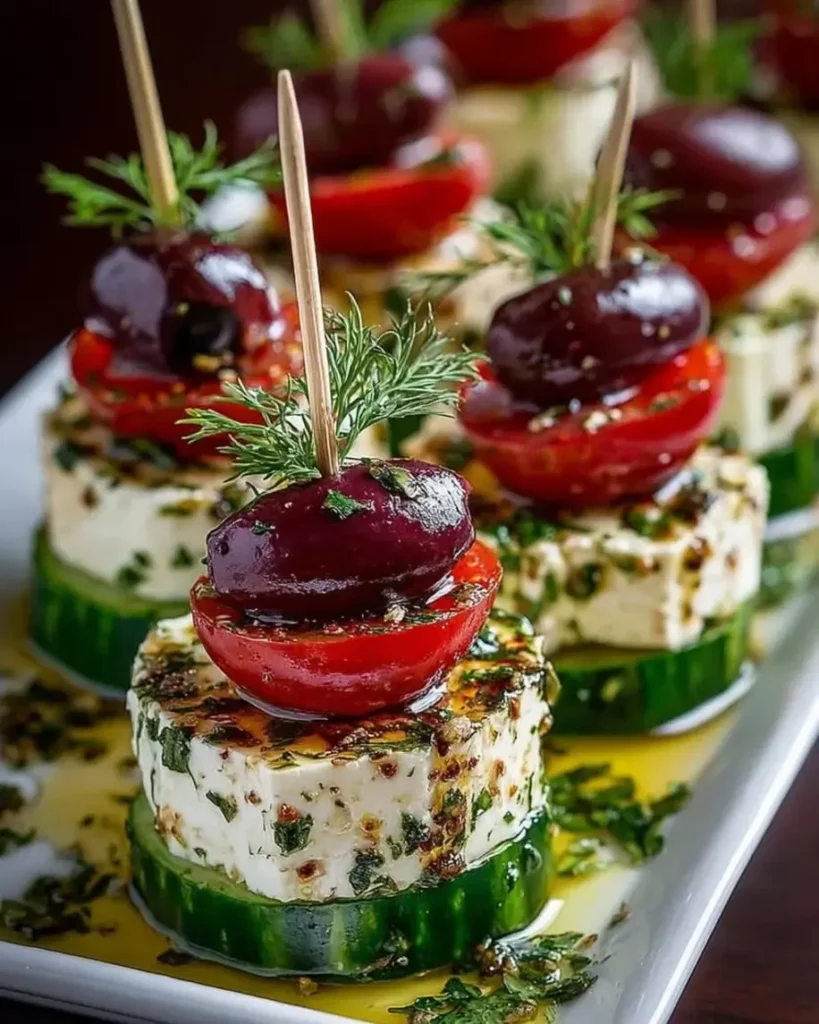
Greek Feta & Cucumber Bite Skewers – The Ultimate No-Cook Mediterranean Party Appetizer
I still remember the first time I tasted Greek feta cucumber skewers — not in Athens, surprisingly, but at a tiny rooftop gathering in Brooklyn. It was one of those sweltering July evenings when turning on the oven felt like a crime, and the host — a friend who’d spent summers cooking with her yiayia in Thessaloniki — casually brought out a platter of these vibrant, glistening Greek Feta Cucumber Skewers. One bite and I was hooked: the cool, crisp cucumber collapsing into creamy, salty feta, punctuated by briny Kalamata olives and sweet cherry tomatoes that burst on your tongue. As a chef trained in Paris, I’d spent years mastering elaborate sauces and precise pastry work, but this no-cook wonder reminded me that simplicity, when done right, is the highest form of sophistication. It transported me right back to my mother’s kitchen in Morocco, where the philosophy was always: let good ingredients speak for themselves.
These low carb skewers are a riot of textures and flavors — crunchy cucumber, velvety feta, juicy tomatoes, and the sharp bite of red onion all held together on one little stick. The dressing, a fragrant whisper of extra-virgin olive oil, fresh lemon juice, and dried oregano, seeps into every crevice, marrying the components without overwhelming them. There’s a reason this healthy Greek appetizer has become my go-to for everything from impromptu book club nights to fancy holiday cocktail parties. The visual appeal alone — those snowy white feta cubes nestled between ruby-red tomatoes and deep purple olives — makes the platter disappear within minutes. And the aroma? It smells like a Mediterranean summer breeze caught in your kitchen: herbaceous, bright, and utterly inviting.
Over the years, I’ve tested countless party finger food appetizer recipes, and this one remains in my permanent rotation because it solves the eternal host’s dilemma: how do you serve something impressive without spending hours in the kitchen? The answer lies in a few chef-level tricks I picked up during my Paris training — like letting the dressing rest so the oregano blooms in the oil, and choosing the right feta that holds its shape on the skewer. One common mistake I see? People cube their feta too small and it crumbles mid-thread, or they skip soaking the wooden skewers and wonder why they splinter. Stick with me, and I’ll walk you through every detail so your Greek feta cucumber appetizer turns out flawless every single time.
Why This Greek Feta & Cucumber Bite Skewers Recipe Is the Best
The Flavor Secret. Many recipes for these skewers simply tell you to toss everything in oil and call it a day. But here’s what my Paris training taught me: a dressing needs time to bloom. By whisking the olive oil, lemon juice, and dried oregano together and letting it sit for a full 10 minutes before drizzling, the oregano rehydrates and releases its essential oils into the fat, creating an infusion that coats every ingredient with herbaceous depth. I learned this technique from a Greek sous-chef I worked alongside in the 11th arrondissement — she called it “waking up the oregano” — and it transforms these Greek Feta Cucumber Skewers from a simple snack into something truly memorable. The lemon juice also slightly softens the raw onion’s bite, making the whole skewer sing in harmony rather than one ingredient shouting over the others.
Perfected Texture. Texture is everything in a no-cook appetizer, and I’ve engineered these skewers for maximum contrast. The cucumber should be cut into 1-inch cubes — not slices, not triangles — so each piece delivers a satisfying crunch without collapsing under the weight of the feta. Speaking of feta, always buy it in a block packed in brine, not pre-crumbled. Brined feta has a firm, sliceable texture that threads cleanly onto skewers without crumbling, and its salt level is far more controlled than the dry, pre-crumbled stuff. The cherry tomatoes should be halved, exposing their juicy interior so the dressing can penetrate. And those Kalamata olives? Leave them whole — their meaty, briny pop is one of the best surprises in every bite of this healthy Greek appetizer.
Foolproof & Fast. I’ve made these low carb skewers with my 10-year-old niece during a chaotic holiday prep session, and she assembled a dozen in under five minutes. There’s truly no cooking, no knife-skills anxiety, and no way to mess them up as long as you follow the soaking rule for wooden skewers. (Soaking them in water for 30 minutes prevents splinters and — bonus — keeps them fresh-looking if you’re not serving immediately.) Whether you’re a seasoned home cook or someone who only enters the kitchen for party prep, these party finger food appetizer skewers are your new secret weapon. They’re also naturally gluten-free, keto-friendly at just 6g net carbs per serving, and endlessly adaptable — but I’ll get to all those juicy variations later.
Greek Feta Cucumber Skewers Ingredients
Every time I gather these ingredients for Greek Feta Cucumber Skewers, I’m reminded of Saturday mornings at the Union Square Greenmarket here in NYC. The cucumbers are firm and glossy, the cherry tomatoes still warm from the sun, and I can usually find a local creamery selling brined feta that rivals anything imported. My mother in Morocco would have walked to the souk for similar treasures — plump olives, fresh herbs, and good oil. That connection across continents, anchored by simple, honest ingredients, is what makes this recipe feel like home. Here’s exactly what you’ll need, with my personal notes on selecting the best of each.
Ingredients List
- 1 large cucumber, cut into 1-inch cubes
- 8 oz feta cheese (block, in brine), cut into 1-inch cubes
- 1 cup cherry tomatoes, halved
- 1/2 cup Kalamata olives, pitted
- 1/4 red onion, cut into small wedges
- 2 tbsp extra-virgin olive oil
- 1 tbsp fresh lemon juice
- 1 tsp dried oregano
- Salt and freshly ground black pepper to taste
- Wooden skewers (soaked in water for 30 minutes)
Ingredient Spotlight
Cucumber. The backbone of these skewers. I reach for English (hothouse) cucumbers because they’re nearly seedless, have thin, unwaxed skin that doesn’t need peeling, and maintain a firm, crisp texture even after sitting dressed for a couple of hours. At any US grocery store, look for cucumbers that feel heavy for their size with no soft spots. If you can only find standard slicing cucumbers, peel them and scoop out the seedy core before cubing. The best substitution is Persian cucumbers — use two or three, cut into thick coins — which are even crunchier and slightly sweeter. Avoid using pickling cucumbers, as their bumpy skin and higher water content throw off the texture.
Feta Cheese. This is the star, so don’t skimp. True Greek feta made from sheep’s milk (often with a bit of goat’s milk) has a tangy, salty complexity that cow’s-milk versions can’t match. Buy it in a block submerged in brine, which keeps it moist and firm enough to cube cleanly. I find excellent imported feta at Whole Foods and Trader Joe’s, but domestic brined fetas from Vermont or Wisconsin creameries work beautifully too. If you must substitute, a firm block of halloumi (cow/sheep blend) offers a similar salty punch with a squeaky texture, though it’s milder. For a vegan option, use a firm almond-based “feta” — look for brands like Violife — though expect a softer bite and less briny tang.
Kalamata Olives. These deep-purple, almond-shaped olives are the soul of this healthy Greek appetizer. Their meaty texture and wine-like fruitiness cut through the richness of the feta beautifully. Always buy pitted for convenience — or pit them yourself for the freshest flavor. You’ll find them in the deli or olive bar section of most US supermarkets. If you’re not a fan of Kalamata’s intensity, Castelvetrano olives are a wonderful substitute: bright green, buttery, and far milder, with a crisp bite. Black olives from a can won’t deliver the same complexity — I’d skip them here.
Extra-Virgin Olive Oil. Because this is a no-cook recipe, the olive oil is tasted raw, so quality matters enormously. I use a robust Greek or Spanish EVOO with grassy, peppery notes that stand up to the feta and lemon. The bottle should smell like fresh-cut grass and green almonds. My go-to affordable option is the Kirkland Signature Organic Extra Virgin Olive Oil from Costco — it’s surprisingly good for the price. Store it away from heat and light. If you only have a neutral oil like avocado oil, it’ll work in a pinch, but you’ll lose that signature Mediterranean fruitiness. Whatever you do, don’t use “light” olive oil — it lacks flavor entirely.
| Original Ingredient | Best Substitution | Flavor / Texture Impact |
|---|---|---|
| English Cucumber | Persian cucumbers (2–3, thick coins) | Slightly sweeter, crunchier; no peeling needed |
| Block Feta (sheep’s milk) | Halloumi or firm vegan almond feta | Halloumi: squeaky, milder; Vegan: softer, less briny |
| Kalamata Olives | Castelvetrano olives (pitted) | Buttery, mild, bright green; less intense |
| Cherry Tomatoes | Grape tomatoes or sundried tomatoes (oil-packed) | Grape: similar; Sundried: chewier, more intense umami |
| Red Onion | Shallots or pickled red onion | Shallots: milder, sweeter; Pickled: tangier, softer bite |
How to Make Greek Feta & Cucumber Bite Skewers — Step-by-Step
Alright, let’s get those skewers loaded! I promise this is as easy as it gets — no stove, no oven, no stress. Just a little chopping, a quick whisk, and some satisfying threading. Follow along and you’ll have a stunning platter of these party finger food appetizers ready in about 15 minutes flat.
Step 1: Whisk the Dressing
In a small bowl, combine 2 tablespoons of extra-virgin olive oil, 1 tablespoon of fresh lemon juice, 1 teaspoon of dried oregano, and a generous pinch of salt and freshly ground black pepper. Whisk vigorously with a fork for about 30 seconds until the mixture looks slightly emulsified and cloudy — you’re not making mayonnaise here, just encouraging the oregano to start releasing its aromatic oils into the fat. Set the bowl aside and let it rest for a full 10 minutes while you prep the other ingredients. This resting period is not optional; it’s the single most important step for building deep, layered flavor.
💡 Lalybeth’s Pro Tip: Rub the dried oregano between your palms before adding it to the bowl. The friction and warmth from your hands crush the tiny leaves and release their essential oils, nearly doubling the herbal intensity in the finished dressing. This is a trick I learned from a spice merchant in the Marrakech souk — it works for any dried herb.
Step 2: Prep the Skewers & Thread Ingredients
First, make sure your wooden skewers have been soaking in water for at least 30 minutes — this prevents splintering and keeps them looking fresh. Drain them and pat dry with a clean kitchen towel. Now, thread your ingredients onto each skewer in any order you like. I typically go: cucumber cube, feta cube, cherry tomato half (flat side facing out), olive, red onion wedge, and repeat until the skewer is full but not overcrowded — leave about 1 inch of bare skewer at each end for easy handling. Aim for roughly 5 to 6 pieces per skewer so each guest can grab and eat in two bites.
⚠️ Common Mistake to Avoid: Overpacking the skewer so ingredients are jammed together. When pieces are too tight, the dressing can’t coat all surfaces, and the flavors stay isolated instead of melding. Give each piece a tiny bit of breathing room — about 1/8 inch between items is perfect.
Step 3: Assemble and Arrange
Once all your skewers are threaded, lay them out on a large serving platter in a single layer, handles facing outward for easy grabbing. If you’re making a big batch for a crowd, you can go double-decker: arrange one layer of skewers, cover with parchment, and add a second layer. Drizzle the dressing evenly over the skewers, using the back of a spoon to guide it into the crevices between the cucumber and feta. Don’t pour it all in one spot — walk around the platter, drizzling from a height of about 6 inches for even distribution. Let the skewers sit for 5 minutes so the dressing absorbs slightly into the cucumber and tomato.
💡 Lalybeth’s Pro Tip: For a showstopping presentation, sprinkle a pinch of flaky sea salt like Maldon over the finished platter and scatter a few fresh oregano leaves or microgreens across the top. It takes 10 seconds but makes the dish look like it came from a restaurant kitchen — your guests will be snapping photos before they even taste it.
Step 4: Drizzle and Serve
Give the platter one final light grind of black pepper — I love using a coarse setting on my pepper mill so you get those spicy little flecks — and serve immediately. If you’re not serving right away, pop the platter into the refrigerator uncovered for up to 2 hours. Uncovered refrigeration actually helps the cucumber stay crisp rather than going soggy, as the cold air circulates around the skewers. When ready to serve, you can add a final drizzle of fresh olive oil if the skewers have absorbed most of the dressing.
⚠️ Common Mistake to Avoid: Dressing the skewers too far in advance. While the cucumber holds up well for 2 hours, going beyond that causes the salt in the dressing to draw out moisture from the vegetables, leaving you with a watery platter and diluted flavor. Always dress close to serving time for the brightest, freshest results.
| Step | Action | Duration | Key Visual Cue |
|---|---|---|---|
| 1 | Whisk Dressing | 2 min (+ 10 min rest) | Slightly cloudy, emulsified look |
| 2 | Thread Skewers | 8 min | 5–6 pieces per skewer, 1/8″ gaps |
| 3 | Arrange & Drizzle | 3 min | Even coating, glossy sheen on all pieces |
| 4 | Final Season & Serve | 2 min | Flaky salt visible, fresh pepper flecks |
Serving & Presentation
These Greek Feta Cucumber Skewers are natural showstoppers, and the way you present them can elevate the whole experience. I love arranging them on a long rectangular platter — the kind you’d use for antipasti — in neat rows with the handles all pointing in one direction. It’s a small detail, but it makes grabbing effortless and gives the platter a clean, intentional look. For casual gatherings, I’ll line a rustic wooden board with fresh grape leaves from the Greek market in Astoria, then lay the skewers on top. The leaves aren’t just decorative — they release a subtle, earthy aroma that complements the oregano and olive oil beautifully. If grape leaves aren’t available, a bed of fresh arugula or flat-leaf parsley works just as well and adds a peppery note.
Garnishes are your chance to add a final pop of color and flavor. I always have a lemon nearby to squeeze over the skewers just before serving — that last-minute hit of acidity wakes everything up. A sprinkle of fresh oregano leaves (or even thyme) and a few extra Kalamata olives scattered around the platter make it look abundant. In the summer, I’ll tuck edible nasturtium flowers from the NYC farmers market around the edges — their peppery kick and vibrant orange petals are pure magic. For a more substantial spread, serve these low carb skewers alongside warm pita triangles, a bowl of creamy tzatziki, and a dish of marinated gigante beans for a full-on Greek mezze spread that never fails to impress.
The beauty of this healthy Greek appetizer is its versatility: it pairs effortlessly with a crisp Assyrtiko white wine or a cold glass of rosé on a warm evening. For non-alcoholic options, a sparkling water with muddled cucumber and mint echoes the skewers’ freshness. My Paris training taught me that the best food memories come from the whole sensory experience — the look, the smell, the ease of eating. These skewers deliver on all fronts, and I hope they become as much of a staple in your entertaining repertoire as they are in mine.
| Pairing Type | Suggestions | Why It Works |
|---|---|---|
| Side Dish | Warm pita bread, marinated white beans, orzo salad | Adds substance without overshadowing the bright, fresh flavors |
| Sauce / Dip | Tzatziki, roasted red pepper hummus, whipped feta | Creamy dips balance the acidity; whipped feta doubles down on the star ingredient |
| Beverage | Assyrtiko white wine, dry rosé, cucumber-mint sparkling water | Crisp acidity cuts through the feta’s richness; cucumber echoes the skewer notes |
| Garnish | Fresh oregano, lemon wedges, edible flowers, flaky sea salt | Visual appeal plus an aromatic boost; salt crystals add textural surprise |
Make-Ahead, Storage & Reheating
Living in NYC means my schedule is often a whirlwind of work, social events, and last-minute dinner invites. I’ve learned to master the art of the make-ahead appetizer, and these Greek Feta Cucumber Skewers are surprisingly prep-friendly with a few strategic moves. The key is keeping the components separate until the final hour — just like a good salad dressing, you don’t want salt pulling moisture out of your vegetables too early. Here’s my tested system for pulling this off even on the busiest days.
| Method | Container | Duration | Reheating Tip |
|---|---|---|---|
| Refrigerator (assembled & dressed) | Uncovered platter or baking sheet | Up to 2 hours | Serve cold; no reheating needed |
| Refrigerator (components prepped separately) | Airtight containers for each component | Up to 1 day | Assemble and dress just before serving |
| Freezer | Not recommended | N/A | Cucumber and tomato lose texture upon thawing; feta becomes crumbly |
| Make-Ahead (max prep) | Separate containers + dressing jar | 1 day in advance | Thread skewers day-of; dress 10 min before serving |
Let me share exactly how I prep these for a party. The night before, I cube the feta and store it in its own brine in a sealed container in the fridge. I halve the cherry tomatoes and slice the red onion wedges, each in their own airtight containers. The cucumber, however, I always cut fresh on the day of — it releases water as it sits, and pre-cut cucumber cubes can turn slightly slimy even in airtight storage. The dressing can be made the night before, too — in fact, it gets better! Whisk it up and leave it in a sealed jar at room temperature; the oregano will continue infusing the oil, and you’ll have an even more fragrant result. On party day, all you do is thread, drizzle, and serve. It takes maybe 10 minutes from fridge to platter.
One thing I’ve learned the hard way: never try to freeze these skewers or their components. Cucumbers are over 95% water, and freezing ruptures their cell walls — what comes out of the freezer is a limp, watery mess. The feta can technically be frozen, but its texture turns crumbly and dry. This recipe is truly at its best fresh, and honestly, with only 15 minutes of total prep time, you won’t need a freezer shortcut anyway. If you have leftover dressed skewers, they’ll keep in the fridge overnight, but the cucumbers will lose some crunch — I’d repurpose them by chopping everything into a quick Greek salad for lunch the next day rather than eating them as skewers.
Variations & Easy Swaps
| Variation | Key Change | Best For | Difficulty Impact |
|---|---|---|---|
| Grilled Feta & Cucumber Skewers | Briefly grill skewers; cucumber swapped for grilled zucchini | Warm appetizer for cooler months; adds smoky depth | Slightly harder (grilling required) |
| Dairy-Free / Vegan Skewers | Swap feta for marinated firm tofu or almond feta | Vegan guests; dairy-free diets | Same easy level |
| Spicy Harissa Twist | Add harissa to the dressing; swap oregano for cilantro | Heat lovers; North African-Mediterranean fusion | Same easy level |
Grilled Feta & Cucumber Skewers
Here’s a variation for those cooler months when you crave warmth but still want that Mediterranean brightness. Swap the raw cucumber for 1-inch chunks of zucchini or yellow squash, which hold up beautifully on the grill. Thread them with the feta, tomatoes, olives, and onion, and brush the assembled skewers lightly with olive oil. Grill over medium-high heat for just 2 to 3 minutes per side — you want grill marks and a slight softening, not mushy vegetables. The feta will soften but shouldn’t melt completely if you use a firm brined block. The smoky char from the grill paired with the tangy lemon-oregano dressing is absolutely intoxicating. I first tried this on a rooftop grill in Astoria, Queens, and it’s been in heavy rotation ever since. Just be sure those skewers are well-soaked — dry wood on a grill is a recipe for flare-ups, and I learned that one the hard way during my Paris externship!
Dairy-Free / Vegan Skewers
I have several vegan friends in my NYC supper club, and I never want anyone to miss out on the joy of these skewers. My favorite dairy-free swap is to marinate cubes of extra-firm tofu in a mixture of lemon juice, olive oil, nutritional yeast, and a pinch of salt for at least 30 minutes. The nutritional yeast gives a cheesy, savory note that mimics feta’s umami, and the lemon-brine-like marinade infuses every cube. Press the tofu well before marinating to remove excess water so it absorbs maximum flavor. Another option is store-bought vegan feta made from almonds or coconut oil — Violife and Follow Your Heart make decent versions available at Whole Foods. They’re softer than dairy feta, so cut them slightly larger (1¼-inch cubes) and handle gently when threading. The flavor won’t have that sharp sheep’s milk tang, but the creamy, salty profile works beautifully with the other ingredients.
Spicy Harissa Twist
This variation is deeply personal to me — it’s where my Moroccan roots meet Greek flavors, and the result is pure magic. Whisk 1 teaspoon of harissa paste (I use the rose-hued one from Mina, available at most US grocery stores or online) into the olive oil and lemon dressing. The harissa brings a gentle, smoky heat and a gorgeous red tint that streaks the feta and cucumber. Swap the dried oregano for fresh chopped cilantro, and add a few fresh mint leaves to each skewer for a cooling counterpoint. My mother used to make a similar dressing for grilled vegetables back in Casablanca, and every time I make these, I think of her standing over the charcoal brazier on our terrace. If you want to go all-in on the North African theme, serve the skewers on a platter dusted with toasted cumin seeds and a drizzle of pomegranate molasses — it’s unexpected, stunning, and completely unforgettable.
How do you keep cucumber bites from getting soggy when making these skewers ahead of time?
This is the number one question I get about Greek Feta Cucumber Skewers, and the answer lies in a few key techniques. First, always use English (hothouse) cucumbers — their lower water content and firmer flesh hold up far better than standard slicing cucumbers. Cut them into generous 1-inch cubes; smaller pieces release moisture faster. Second, keep the dressing separate until no more than 10 minutes before serving. I prep all components the night before — cubed feta in brine, halved tomatoes, sliced onion — but the cucumber stays whole in the fridge until an hour before the party. Third, if you absolutely must dress the skewers in advance, arrange them uncovered on a wire rack set over a baking sheet in the fridge. The air circulation prevents condensation from pooling around the cucumber, and any released moisture drips through instead of saturating the other ingredients. The salt in the dressing will always draw out some water — that’s just osmosis — so aim for that 2-hour maximum window for the best texture. If you end up with dressed skewers that sat too long, don’t panic: pat them gently with a paper towel and give them a fresh drizzle of olive oil right before serving to revive the glossy look.
What can I use instead of feta cheese for Greek cucumber skewers?
There are several excellent substitutes for feta in this healthy Greek appetizer, depending on your dietary needs. For a dairy-based swap, halloumi is my top pick — it’s a semi-firm Cypriot cheese with a similar salty profile and a unique squeaky texture that doesn’t crumble. Cut it into cubes the same size as your feta and thread carefully; halloumi is a bit firmer and holds its shape beautifully. For a vegan option, I recommend marinating extra-firm tofu cubes in a mixture of lemon juice, olive oil, salt, and nutritional yeast for at least 30 minutes. The nutritional yeast provides that cheesy umami note that mimics feta’s savory depth. Press the tofu well first to remove excess water so the marinade penetrates deeply. Store-bought vegan feta blocks made from almond milk or coconut oil (like Violife or Follow Your Heart) are also convenient, though they tend to be softer — cut them into slightly larger 1¼-inch cubes to prevent crumbling during threading. For a completely different but equally delicious twist, use small fresh mozzarella balls (bocconcini) — they’re milky and mild, so you’ll want to amp up the salt in your dressing to compensate. No matter which substitute you choose, the key is choosing something firm enough to stay on the skewer and salty enough to balance the cool cucumber and sweet tomato.
What is the best way to assemble Greek feta and cucumber bite skewers for a party?
Assembling these party finger food appetizer skewers for a crowd is all about efficiency and presentation. I set up an assembly line on my kitchen counter: a cutting board with cucumber cubes on the left, then feta cubes, halved cherry tomatoes, Kalamata olives, and red onion wedges in separate piles, lined up in order. I grab a handful of pre-soaked skewers and work left to right, threading one of each component before starting the next skewer. This system lets me assemble 8 skewers in about 5 minutes. For larger parties, double or triple the recipe and recruit a helper — threading skewers is actually a great job for kids or early guests who want to feel useful. I arrange finished skewers on a parchment-lined baking sheet until I’m ready to plate. When it’s go-time, I transfer them to the serving platter, drizzle with dressing, and garnish. One pro move: if you’re serving a crowd, build a “skewer bar” where guests assemble their own from bowls of prepped ingredients. It’s interactive, fun, and takes the assembly work off your plate entirely.
Can I add olives or tomatoes to Greek feta and cucumber bite skewers?
Absolutely — and in fact, I insist on it! Both olives and cherry tomatoes are essential components of the classic flavor profile for these low carb skewers, and they’re included in my recipe. Kalamata olives bring a meaty, briny depth that plays beautifully against the salty feta and cool cucumber. Cherry tomatoes, halved to expose their juicy interior, add a burst of sweetness and acidity that brightens every bite. If you’re not a fan of Kalamata’s intensity, Castelvetrano olives are a wonderful substitute with a buttery, mild flavor and bright green color. You can also add pitted green olives stuffed with pimentos for a retro touch that’s actually delicious. As for tomatoes, grape tomatoes work interchangeably with cherry — just halve them lengthwise so they sit flat on the skewer. Oil-packed sundried tomatoes are a fantastic twist for a more concentrated, umami-forward flavor. The beauty of this Greek feta cucumber appetizer is that it’s endlessly customizable — add what you love, and leave out anything that doesn’t suit your palate.
How far in advance can I make feta cucumber skewers?
You can prep the components for these Greek Feta Cucumber Skewers up to 24 hours in advance, but the final assembly and dressing should happen close to serving time. Here’s my timeline: cube the feta and store it submerged in its brine (or a light saltwater solution) in an airtight container overnight in the fridge. Halve the cherry tomatoes and slice the red onion, each in separate sealed containers. The dressing can be whisked the night before — in fact, it develops deeper flavor as the oregano infuses the oil, so I make it ahead and leave it covered at room temperature. The cucumber is the one ingredient I recommend cutting fresh on the day of; it weeps moisture as it sits, and pre-cut cubes can become slightly slimy even in airtight storage. On party day, cut the cucumber, thread all ingredients onto skewers, arrange on the platter, and drizzle with dressing no more than 10 to 15 minutes before guests arrive. This way, you get all the convenience of advance prep with none of the soggy texture issues.
Are Greek feta cucumber skewers keto-friendly and low carb?
Yes, these skewers are naturally low carb and fit well within a keto or low-carb lifestyle. Each serving (one skewer) contains approximately 6 grams of carbohydrates and 3 grams of sugar, which comes mostly from the cherry tomatoes and a small amount from the cucumber and onion. With 14 grams of fat and 6 grams of protein, they’re a satisfying, nutrient-dense finger food that won’t spike blood sugar. The feta and olive oil provide healthy fats, while the cucumber, tomato, and olives contribute fiber and antioxidants. If you’re strictly tracking macros for ketosis, you can reduce the tomato to half a cherry tomato per skewer and use fewer onion wedges to bring the net carbs down even further. Compared to traditional party foods like crackers, bread-based appetizers, or sugary dips, these healthy Greek appetizer skewers are a smart, delicious choice that supports your goals without making you feel deprived.
What kind of skewers should I use for Greek feta cucumber bites?
I recommend 6-inch wooden or bamboo skewers for these bite-sized appetizers — they’re inexpensive, disposable, and easy to find at any grocery store. The key is soaking them in water for at least 30 minutes before use. This prevents splintering when threading ingredients and, if you decide to grill the skewers, keeps them from burning. If you’re short on time, you can soak them in hot water for 15 minutes instead, which speeds up the absorption. For a more elegant presentation at dinner parties, I use reusable stainless steel cocktail picks or 4-inch metal skewers. They’re sleek, durable, and eliminate the need for soaking entirely — plus they can go straight into the dishwasher afterward. Avoid using short round toothpicks as they’re too thin to support the weight of multiple ingredients, and the feta cubes will spin around when guests try to eat them. Whatever you choose, make sure the skewer is sturdy enough to hold 5 to 6 pieces without bending.
Can I grill Greek feta and cucumber skewers?
You can absolutely grill these skewers with a few smart adjustments. Raw cucumber doesn’t grill well — it releases too much water and turns mushy — so swap it for 1-inch chunks of zucchini or yellow squash, which hold their shape and develop a lovely char. Thread zucchini, feta, cherry tomatoes, olives, and red onion onto well-soaked wooden skewers, brush lightly with olive oil, and grill over medium-high heat for just 2 to 3 minutes per side. You want visible grill marks and slight softening, not limp vegetables. The feta should warm through and soften but not melt into a puddle — using a firm block of brined feta is essential here. If you’re worried about the cheese sticking, grill the skewers on a piece of lightly oiled foil with holes poked in it. Serve the grilled skewers immediately while warm, drizzled with the lemon-oregano dressing. This variation is perfect for cookouts, tailgating, or anytime you want that irresistible smoky flavor.
What’s the best feta cheese to buy for skewers?
For these Greek Feta Cucumber Skewers, you want a firm block of feta packed in brine — never the pre-crumbled kind, which is too dry and salty and falls apart on the skewer. True Greek feta made from sheep’s milk (often with up to 30% goat’s milk) has the best tangy, complex flavor and the firmest texture. Look for brands like Dodoni, Mt. Vikos, or Athenos in the refrigerated cheese section of most US supermarkets. The block should be snowy white with a few visible cracks on the surface — that’s a sign of proper brining. When you cut it, it should slice cleanly without crumbling. Avoid feta labeled “light” or “reduced-fat,” which tends to be rubbery and bland. If you can find Bulgarian feta, it’s a bit creamier and saltier while still holding its shape — an excellent alternative. Store any leftover feta submerged in its brine in an airtight container; it’ll keep for weeks and only gets better with time, making it a staple in my NYC fridge.
How do I transport Greek feta cucumber skewers to a potluck or picnic?
Transporting these skewers is easy with the right setup. I pack the assembled but undressed skewers in a single layer inside a large rectangular glass or plastic container with a tight-fitting lid. Place a sheet of parchment paper between layers if stacking is necessary, and keep the container cool in a cooler bag with ice packs. The dressing travels separately in a small sealed jar at room temperature. When I arrive at the potluck or picnic spot, I arrange the skewers on the host’s platter (or a disposable party tray for parks), drizzle with the dressing, add a final pinch of flaky salt and fresh pepper, and they’re ready to serve in under two minutes. This method has never failed me, even on sweltering summer afternoons in Central Park. Avoid dressing the skewers before transport — the motion of the car or train will slosh the dressing around and potentially knock pieces off the skewers, plus the salt starts drawing out moisture immediately. Keep components separate, and you’ll arrive with crisp, beautiful skewers every time.
Share Your Version!
I truly believe that recipes come alive when people make them their own, and I would absolutely love to see your spin on these Greek Feta Cucumber Skewers. Did you try the spicy harissa twist or discover a new olive variety that knocked your socks off? Maybe you grilled them for a backyard cookout and snapped a gorgeous photo of those char marks against the white feta. Whatever you do, don’t keep it to yourself! Cooking is meant to be shared, and our little corner of the internet here at cookingwithlalyta.com thrives because of readers like you who bring these recipes into their own kitchens and add their unique touch.
Here’s how to connect: leave a star rating and a comment in the section below — I read every single one, and your feedback helps other readers decide whether to try this healthy Greek appetizer. Snap a photo of your finished platter and tag me on Instagram @cookingwithlalyta or save it to Pinterest and follow me at cookingwithlalyta. When you post, tell me: what’s your favorite way to customize these low carb skewers? I’ll reshare my favorites in my stories! And if you run into any trouble or have a question I didn’t cover, drop it in the comments — I’m here to help you nail this recipe.
From my NYC kitchen to yours — I hope this recipe brings as much warmth to your table as it does to mine. — Lalybeth 🧡
Love This Recipe? Save It to Pinterest!
If you enjoyed this Greek Feta & Cucumber Bite Skewers recipe, don’t let it get lost in your browser tabs! 😄 Pin it now so you can find it again anytime — and explore hundreds more tried-and-tested recipes waiting for you on my Pinterest boards.
👉 Follow Lalybeth on Pinterest @cookingwithlalyta
📌 Pin this recipe · 🔁 Re-pin your favorites · 💬 Tag me when you make it — I love seeing your creations!
✨ Loved This Recipe? Let’s Keep the Inspiration Going! ✨
Snap a photo of your beautiful skewers and tag me @cookingwithlalyta on Instagram — I’ll reshare my favorites! And don’t forget to pin this recipe to your Appetizers board so it’s always at your fingertips.
💬 Have a question? Drop it in the comments below — I answer every single one personally!
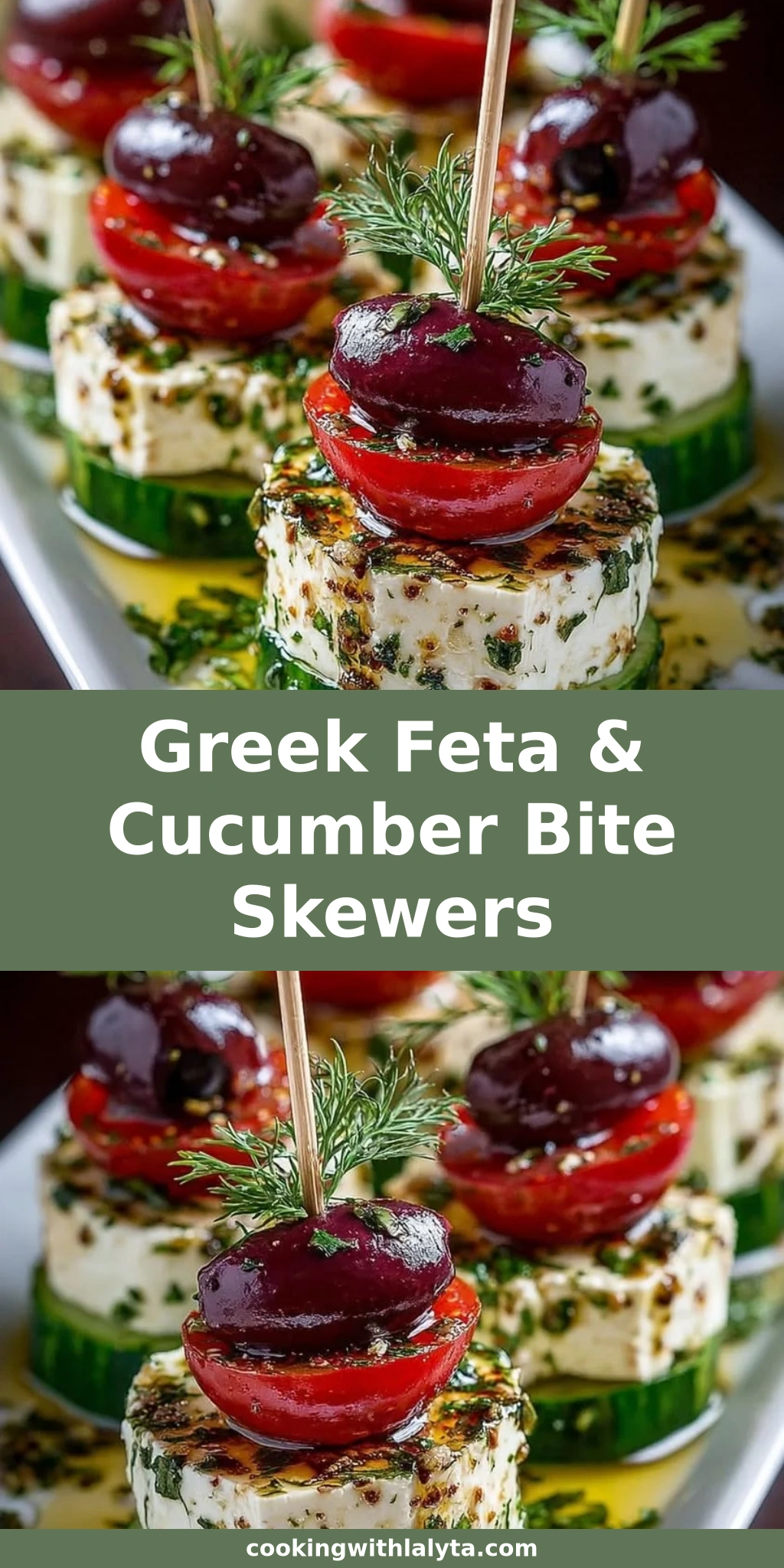
Greek Feta & Cucumber Bite Skewers
- Total Time: 15 minutes
- Yield: 8 skewers 1x
Description
Fresh and tangy bite-sized skewers with cucumber, feta, olives, and cherry tomatoes, perfect for appetizers or parties.
Ingredients
- 1 large cucumber, cut into 1-inch cubes
- 8 oz feta cheese, cut into 1-inch cubes
- 1 cup cherry tomatoes, halved
- 1/2 cup Kalamata olives, pitted
- 1/4 red onion, cut into small wedges
- 2 tbsp extra-virgin olive oil
- 1 tbsp fresh lemon juice
- 1 tsp dried oregano
- Salt and freshly ground black pepper to taste
- Wooden skewers (soaked in water for 30 minutes)
Instructions
- In a small bowl, whisk together olive oil, lemon juice, oregano, salt, and pepper to make a dressing.
- Thread cucumber cubes, feta cubes, cherry tomato halves, olives, and red onion wedges onto skewers in any order.
- Arrange skewers on a serving platter and drizzle with the prepared dressing.
- Serve immediately or refrigerate for up to 2 hours before serving.
Notes
For best flavor, let the dressing sit for 10 minutes before drizzling. Soaking wooden skewers prevents burning if you choose to grill them briefly.
- Prep Time: 15 minutes
- Cook Time: 0 minutes
- Method: Appetizer
- Cuisine: Greek
Nutrition
- Calories: 180
- Sugar: 3g
- Fat: 14g
- Carbohydrates: 6g
- Protein: 6g
Tried This Recipe? Leave a Comment!
Did you make this recipe? I’d love to hear how it turned out! Please leave a comment and a rating below. Your feedback helps other home cooks and supports cookingwithlalyta.com!
For more delicious inspiration, follow me on Pinterest!