
Table of Contents
Layered Sweet Potato, Butternut Squash, Carrot Lasagna with Feta, Walnuts, and Cranberry-Honey Glaze – A Sweet-Savory Holiday Showstopper
I still remember walking through the Union Square Greenmarket on a crisp October morning, my canvas tote already heavy with apples and a bouquet of late-season herbs, when I spotted the most stunning display of sweet potatoes, butternut squash, and rainbow carrots. It stopped me in my tracks — the deep oranges, the earthy golds, the rustic purples — and suddenly I was transported back to my mother’s kitchen in Morocco, where root vegetables were never an afterthought. They were the main event. This sweet potato butternut squash lasagna was born from that moment — a dish that layers roasted autumnal vegetables with creamy feta, crunchy toasted walnuts, and a glossy cranberry-honey glaze that cuts through the richness like a perfectly timed punchline. It’s a vegetarian fall lasagna that feels both celebratory and deeply comforting, the kind of dish that makes everyone at the table pause and ask, “What’s in this?”
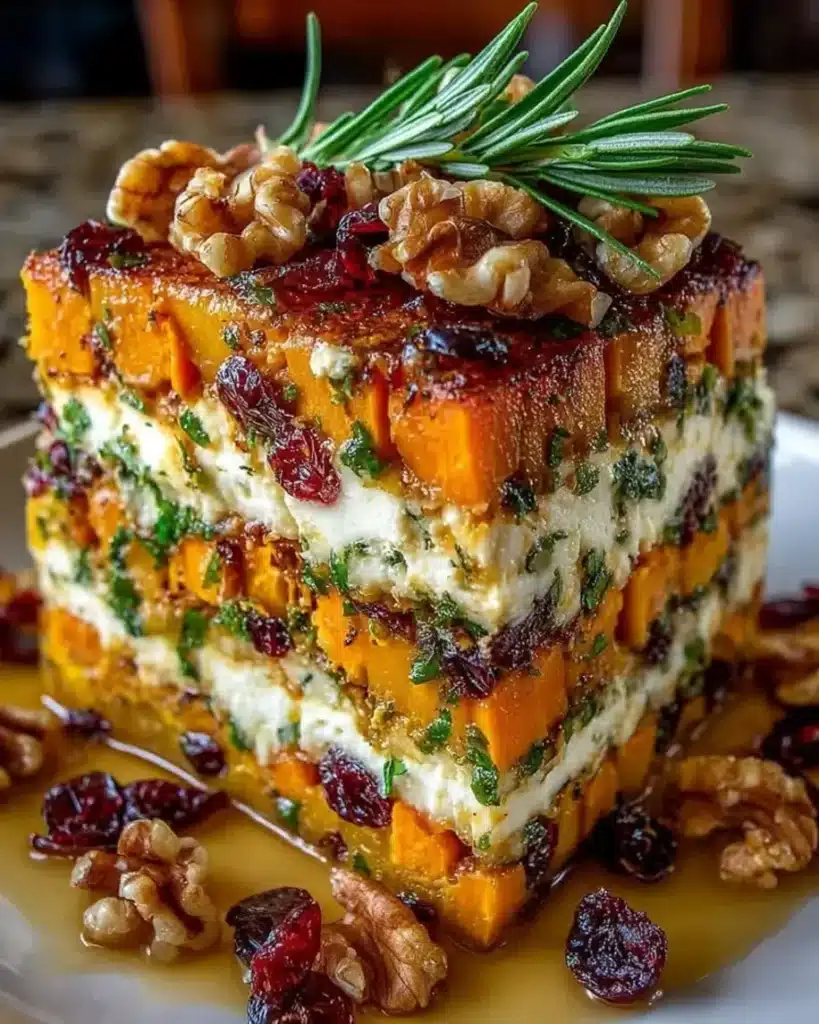
Let me paint you a picture: You slide your fork through tender sheets of pasta, and the first thing you notice is the way the sweet potato rounds have caramelized at the edges, their natural sugars concentrated by a high-heat roast. Then comes the butternut squash, silky and almost buttery, layered with thin coins of carrot that hold just enough bite to keep things interesting. The ricotta-feta mixture — flecked with fresh parsley, oregano, and a whisper of nutmeg — melts into every crevice, while toasted walnuts add an unexpected crunch that makes each bite feel like a discovery. And then there’s the glaze. Oh, that cranberry-honey glaze! It’s tart, it’s sweet, it has a hint of cinnamon warmth, and it ties the whole cranberry walnut lasagna together in a way that feels both sophisticated and deeply familiar. The aroma alone — roasted vegetables, bubbling cheese, and that slightly fruity glaze caramelizing on top — will have your neighbors knocking on your door.
Here’s the thing I learned during my years in Paris kitchens: a great dish isn’t just about following a recipe — it’s about understanding what each ingredient brings to the party and respecting its role. This feta vegetable lasagna is my love letter to that philosophy. The feta provides a salty, tangy backbone that balances the vegetables’ natural sweetness, something I picked up from a Greek sous-chef I worked alongside in the 10th arrondissement. The no-boil noodles soak up the vegetable juices and glaze as they bake, becoming tender without ever turning mushy — a trick I’ll share in my pro tip below. And the walnuts? Toasting them is non-negotiable; it unlocks an earthy depth that raw walnuts simply don’t have. Before we dive in, let me warn you about one common mistake: don’t skip the roasting step for the vegetables. I know it’s tempting to layer them raw and hope for the best, but roasting concentrates their flavor and drives off excess moisture — without it, you’ll end up with a watery lasagna, and nobody wants that. Trust me, I learned that one the hard way in my tiny NYC apartment kitchen.
Why This Layered Sweet Potato, Butternut Squash, Carrot Lasagna Recipe Is the Best
The Flavor Secret: What sets this carrot squash lasagna apart from every other vegetable lasagna out there is the cranberry-honey glaze. It’s not just a topping — it’s woven throughout the entire dish, creating these pockets of sweet-tart brightness that cut through the richness of the cheese and the earthiness of the roasted vegetables. I developed this technique during my Paris training, where I learned that acid and sweetness aren’t just for desserts; they’re essential tools for building depth in savory dishes. The glaze is made with simple ingredients — cranberry sauce, honey, apple cider vinegar, and cinnamon — but together they create something that tastes far more complex than the sum of its parts. It’s the kind of unexpected twist that makes people say, “I’ve never had anything like this,” which is exactly what I aim for in my NYC kitchen.
Perfected Texture: One of the biggest challenges with vegetarian fall lasagna is avoiding the dreaded soggy layer. Here’s how I solve it: First, I roast all the vegetables at 400°F until they’re tender and lightly browned, which caramelizes their natural sugars and evaporates excess water. Second, I use no-boil lasagna noodles, which absorb the vegetable juices and glaze as they bake, swelling to the perfect al dente texture without ever becoming gummy. Third, the ricotta-feta mixture includes an egg, which helps it set into a creamy, sliceable layer rather than oozing out when you cut into the lasagna. The walnuts on top toast further in the oven, becoming deeply crunchy and nutty. Every bite has contrast: tender vegetable, creamy cheese, chewy pasta, crunchy walnut, and that sticky, glossy glaze pulling it all together.
Foolproof & Fast: I designed this recipe with busy home cooks in mind — especially during the holidays when oven real estate is precious. The vegetables roast on two sheet pans simultaneously, so you’re not waiting around for batch after batch. The glaze comes together in under five minutes on the stovetop. And because we’re using no-boil noodles, there’s no fussing with slippery pasta sheets or timing them just right. You can even assemble the entire lasagna a day ahead and refrigerate it, then pop it in the oven when your guests arrive. It’s the kind of dish that looks and tastes like you spent all day in the kitchen, but really, the oven does most of the heavy lifting. That’s my kind of cooking — smart, strategic, and always delicious.
Sweet Potato Butternut Squash Lasagna Ingredients
One of my favorite weekend rituals is heading to the Union Square Greenmarket here in NYC and letting the produce guide my menu. For this recipe, I look for sweet potatoes that feel heavy for their size (that means they’re still moist and fresh), butternut squash with a matte skin (shiny means it was picked too early), and carrots with their tops still attached if possible — the greens are a great indicator of freshness. The feta I use comes from a Greek importer in Astoria, Queens, but any good-quality block feta packed in brine will give you that creamy, tangy punch. As for the cranberry sauce, I stock up on whole-berry sauce after Thanksgiving when it goes on sale, but jellied works beautifully too. Here’s everything you’ll need:
Ingredients List
- For the Vegetables:
- 2 large sweet potatoes, peeled and sliced into 1/4-inch rounds
- 1 medium butternut squash, peeled, seeded, and sliced into 1/4-inch half-moons
- 3 large carrots, peeled and sliced into 1/4-inch rounds
- 2 tablespoons olive oil
- Salt and freshly ground black pepper to taste
- For the Cheese Mixture:
- 1 (15-ounce) container ricotta cheese
- 1 cup crumbled feta cheese
- 1 large egg
- 1/4 cup chopped fresh parsley
- 1/2 teaspoon dried oregano
- 1/4 teaspoon nutmeg
- For the Lasagna Assembly:
- 12 no-boil lasagna noodles
- 2 cups shredded mozzarella cheese
- 1/2 cup grated Parmesan cheese
- 1 cup chopped walnuts, toasted
- For the Cranberry-Honey Glaze:
- 1/2 cup cranberry sauce (jellied or whole berry)
- 2 tablespoons honey
- 1 tablespoon apple cider vinegar
- 1/4 teaspoon cinnamon
Ingredient Spotlight
Sweet Potatoes: These are the backbone of the dish, providing natural sweetness and a creamy texture when roasted. Look for firm, smooth-skinned sweet potatoes without soft spots or cracks. In US grocery stores, you’ll often see both orange-fleshed (often labeled “yams” though they’re actually sweet potatoes) and paler varieties — either works, but the orange ones give you that gorgeous color contrast. If you need a substitution, acorn squash or delicata squash can step in, though they’ll be slightly less sweet. Just make sure to slice everything to the same 1/4-inch thickness for even cooking.
Butternut Squash: This brings a velvety, almost buttery texture and a mild sweetness that doesn’t overpower. Choose a squash that feels heavy for its size with an intact stem — a missing stem can be an entry point for bacteria. Peeling and slicing butternut squash can feel like a workout, so here’s my Paris-trained trick: microwave it whole for 2-3 minutes first; the skin softens just enough to make peeling easier. If butternut isn’t available, buttercup squash or even sugar pumpkins make excellent substitutes, though you may need to adjust roasting time slightly.
Feta Cheese: This is the secret weapon of this feta vegetable lasagna. Its briny, tangy character cuts through the sweetness of the roasted vegetables and the cranberry glaze, creating a beautifully balanced bite. Always buy feta packed in brine rather than pre-crumbled — it’s creamier, more flavorful, and melts better. In a pinch, goat cheese offers a similar tang but with a softer, more spreadable texture. Avoid using low-fat feta; it tends to turn grainy when baked.
Walnuts: Toasted walnuts add an essential crunchy contrast and an earthy, slightly bitter note that plays beautifully against the sweet glaze. Toast them in a dry skillet over medium heat for 3-4 minutes, shaking the pan frequently, until they’re fragrant and just starting to darken — don’t walk away, because they burn in seconds. Pecans are the closest substitute and work wonderfully here, giving the dish a slightly sweeter, more buttery crunch. For a nut-free version, try roasted pumpkin seeds (pepitas) — they’ll add a similar textural pop without the allergen concern.
Cranberry Sauce: This forms the base of our signature glaze. Whole-berry cranberry sauce gives you those lovely little fruit bursts throughout the lasagna, but jellied works just as well and creates a smoother glaze. If you’re making this outside of holiday season when cranberry sauce is harder to find, lingonberry preserves (available at IKEA or specialty stores) make a fantastic substitute with a nearly identical sweet-tart profile. You can also make a quick stovetop cranberry sauce from fresh or frozen cranberries in about 15 minutes.
| Original Ingredient | Best Substitution | Flavor / Texture Impact |
|---|---|---|
| Feta cheese | Goat cheese (chèvre) | Slightly milder tang; creamier, softer texture |
| Walnuts | Pecans or pumpkin seeds | Sweeter crunch (pecans); nut-free crunch (pepitas) |
| Cranberry sauce | Lingonberry preserves | Nearly identical sweet-tart profile; slightly thinner |
| Butternut squash | Buttercup squash or sugar pumpkin | Denser texture; slightly earthier flavor |
| No-boil lasagna noodles | Gluten-free no-boil noodles | Slightly firmer bite; may need extra glaze for moisture |
How to Make Layered Sweet Potato, Butternut Squash, Carrot Lasagna — Step-by-Step
Don’t let the long ingredient list intimidate you — this vegetarian fall lasagna comes together in a logical, relaxed flow, and I’ll walk you through every detail. Breathe, pour yourself a glass of wine, and let’s cook together.
Step 1: Roast the Vegetables
Preheat your oven to 400°F (200°C) and line two baking sheets with parchment paper. In a large bowl, toss the sweet potato rounds, butternut squash half-moons, and carrot slices with the olive oil, a generous pinch of salt, and several grinds of black pepper. Spread the vegetables in a single layer across both baking sheets — don’t overcrowd them, or they’ll steam instead of roast. If needed, use a third sheet. Roast for 20–25 minutes, flipping the vegetables halfway through, until they’re tender when pierced with a fork and have developed light golden-brown edges. Remove from the oven and let them cool slightly while you reduce the oven temperature to 375°F (190°C).
💡 Lalybeth’s Pro Tip: For extra caramelization, don’t line your baking sheets with parchment for the last 5 minutes — slide the vegetables directly onto the hot sheet. The direct contact with the metal creates those gorgeous browned edges that add so much depth to the final dish. Just keep a close eye so they don’t burn.
Step 2: Make the Cheese Mixture
In a medium mixing bowl, combine the ricotta, crumbled feta, egg, chopped parsley, dried oregano, nutmeg, and a small pinch each of salt and pepper. Use a fork or a spatula to mix everything together until it’s well blended and creamy. The egg here is your insurance policy — it helps the cheese layer set during baking so you get clean, beautiful slices instead of a soupy mess. Taste the mixture and adjust the seasoning if needed, keeping in mind that the feta is already quite salty, so go easy on the additional salt.
⚠️ Common Mistake to Avoid: Overmixing the cheese filling. I know it’s tempting to whip it until it’s perfectly smooth, but that can actually make the texture gummy once baked. Mix just until everything is evenly distributed — a few small lumps of feta and ricotta are absolutely fine and will melt into creamy pockets as the lasagna bakes.
Step 3: Prepare the Cranberry-Honey Glaze
In a small saucepan over low heat, combine the cranberry sauce, honey, apple cider vinegar, and cinnamon. Stir gently and continuously as the cranberry sauce melts and the mixture comes together into a smooth, glossy glaze — this should take about 3–4 minutes. Don’t let it boil; you’re just warming it enough to blend the ingredients and slightly thicken the consistency. Once the glaze is smooth and coats the back of a spoon, remove it from the heat and set it aside. It will thicken a bit more as it cools.
💡 Lalybeth’s Pro Tip: If your cranberry sauce is particularly chunky, give the glaze a quick buzz with an immersion blender for a silky-smooth finish. This also helps the glaze distribute more evenly throughout the lasagna layers. I learned this trick in a Paris bistro where we used a similar glaze on a roasted vegetable terrine — it looked so elegant drizzled on the plate.
Step 4: Assemble the First Layers
Spread a thin, even layer of the cranberry-honey glaze across the bottom of a 9×13-inch baking dish — this prevents the noodles from sticking and infuses the bottom layer with that sweet-tart flavor. Arrange about 3 no-boil lasagna noodles over the glaze, overlapping them slightly if needed to cover the bottom. Then spread half of the ricotta-feta mixture over the noodles, using the back of a spoon or an offset spatula to reach the edges. Layer half of the roasted sweet potatoes, butternut squash, and carrots on top, arranging them in an even, colorful mosaic. Sprinkle with one-third of the mozzarella and one-third of the Parmesan, then drizzle generously with some of the glaze — don’t be shy here; those pockets of glaze are what make this cranberry walnut lasagna so special.
⚠️ Common Mistake to Avoid: Skipping the glaze on the bottom of the dish. Without it, the bottom noodles can stick and even scorch, especially if your oven runs hot. That thin layer of glaze also creates a gorgeous, slightly sticky bottom crust that’s one of my favorite parts of the dish — don’t miss out on it!
Step 5: Layer and Top
Repeat the layering process: Add another layer of noodles, then spread the remaining ricotta-feta mixture on top. Add the remaining roasted vegetables, then sprinkle with another one-third of the mozzarella and Parmesan. Drizzle with more glaze. Now place the final layer of noodles on top. Spread the remaining glaze evenly over these top noodles — this will caramelize beautifully in the oven. Finish by sprinkling the remaining mozzarella and Parmesan over the glaze, and then scatter the toasted walnuts evenly across the top. The walnuts will toast further during baking and become incredibly crunchy and aromatic.
Step 6: Bake Covered
Cover the baking dish tightly with aluminum foil — tent it slightly if the foil is touching the cheese, so it doesn’t stick. Place the dish in the preheated 375°F (190°C) oven and bake for 30 minutes. This covered baking period allows the noodles to steam and soften, absorbing moisture from the vegetables, cheese, and glaze. The vegetables will release their remaining juices, and the cheese mixture will set gently without browning too quickly.
💡 Lalybeth’s Pro Tip: Spray the underside of your foil with a little cooking spray before covering the dish. This prevents the melted cheese from sticking to the foil and peeling off when you remove it. I picked up this little kitchen hack from a chef friend at a Brooklyn restaurant, and it’s saved me from many a cheese-splattered tragedy.
Step 7: Bake Uncovered and Rest
After 30 minutes, remove the foil and return the dish to the oven. Bake for an additional 15–20 minutes, until the top is golden brown and the edges are bubbling. You’ll see the walnuts darkening slightly and the glaze caramelizing into shiny patches on top. Remove the lasagna from the oven and let it rest for at least 10 minutes before slicing. This resting period is crucial — it allows the lasagna to firm up so the slices hold their shape when you cut into them. If you slice too soon, the layers will slide apart. Garnish with additional fresh chopped parsley for a pop of color.
⚠️ Common Mistake to Avoid: Under-resting. I know the smell is incredible and everyone’s hovering with plates, but those 10 minutes of rest are non-negotiable. During this time, the cheese sets, the juices redistribute, and the lasagna transforms from a bubbly casserole into clean, stackable slices. Trust me — it’s worth the wait.
| Step | Action | Duration | Key Visual Cue |
|---|---|---|---|
| 1 | Roast vegetables | 20–25 min | Tender, lightly browned edges |
| 2 | Mix cheese filling | 5 min | Creamy, evenly blended, no dry spots |
| 3 | Prepare glaze | 5 min | Smooth, glossy, coats spoon |
| 4–5 | Assemble lasagna | 15 min | Even layers, colorful vegetable mosaic |
| 6 | Bake covered | 30 min | Bubbling edges, noodles softened |
| 7 | Bake uncovered + rest | 15–20 min + 10 min rest | Golden top, caramelized walnuts, set layers |
Serving & Presentation
When it comes to serving this carrot squash lasagna, I like to think of it as the centerpiece of a holiday table — it deserves a moment to shine. Use a sharp chef’s knife to slice through all those layers cleanly, and lift each portion with a sturdy metal spatula. I love to serve it on white plates for maximum contrast — the deep orange vegetables, the creamy white cheese, the ruby-hued glaze, and the golden walnuts create a palette that feels like autumn on a plate. A scatter of fresh pomegranate seeds over each serving adds a jewel-like pop of color and a bright, juicy crunch that echoes the cranberry glaze. If I’m feeling particularly festive, I’ll drizzle a tiny ribbon of extra honey around the plate — it looks beautiful and ties into the flavors of the dish.
As for what to serve alongside this vegetarian fall lasagna, I tend to keep it simple — the lasagna itself is rich and substantial, so lighter sides work best. A peppery arugula salad dressed with lemon juice and olive oil cuts through the richness beautifully. If you want something more substantial, roasted Brussels sprouts with a splash of balsamic vinegar are a natural companion. For a Moroccan-inspired touch (a nod to my roots), I sometimes serve it with a side of chermoula-roasted cauliflower, the herbaceous, garlicky notes dancing beautifully with the sweet-savory lasagna. My Paris-trained friends would insist on a glass of Alsatian Pinot Gris or a crisp, unoaked Chardonnay — both have enough acidity to stand up to the creamy feta and sweet glaze without overwhelming the delicate vegetable flavors.
| Pairing Type | Suggestions | Why It Works |
|---|---|---|
| Side Dish | Arugula salad, roasted Brussels sprouts, chermoula cauliflower | Acidity and bitterness cut the richness; bright, fresh contrast |
| Sauce / Dip | Extra cranberry-honey glaze, lemon-tahini drizzle, garlic yogurt | Creamy, tangy elements enhance the feta and vegetable layers |
| Beverage | Pinot Gris, unoaked Chardonnay, hard cider, sparkling water with lemon | Crisp acidity balances the sweet glaze and creamy cheese |
| Garnish | Fresh parsley, pomegranate seeds, lemon zest, extra toasted walnuts | Color contrast and fresh, bright pops of flavor and texture |
Make-Ahead, Storage & Reheating
In my busy NYC life, I’m a big believer in working smarter, not harder. This sweet potato butternut squash lasagna is one of my favorite make-ahead dishes for exactly that reason — you can assemble the entire thing on a Sunday afternoon, stash it in the fridge, and then simply bake it when you need a showstopping dinner without the last-minute chaos. I actually think the flavors meld and deepen overnight, so if you have the time, a 24-hour rest in the refrigerator is a gift to your future self. Here’s how to store and reheat it properly, no matter what stage you’re at:
| Method | Container | Duration | Reheating Tip |
|---|---|---|---|
| Refrigerator | Airtight container or tightly wrapped baking dish | Up to 4 days | Reheat individual slices in microwave (1–2 min) or oven at 350°F for 10–12 min |
| Freezer | Wrap dish in plastic wrap, then foil; or use freezer-safe container | Up to 3 months | Thaw overnight in fridge; reheat covered at 350°F for 25–30 min, then uncovered 10 min |
| Make-Ahead | Assemble in baking dish, cover tightly with plastic wrap | Up to 24 hours in advance | Remove from fridge 30 min before baking; add 5–10 min to covered baking time |
When reheating a whole lasagna from the refrigerator, I recommend covering it with foil and warming it in a 350°F oven for about 20–25 minutes, then removing the foil for the last 5 minutes to re-crisp the top. If you’re reheating from frozen, always thaw it overnight in the refrigerator first — reheating from frozen tends to dry out the edges while leaving the center cold, and nobody has time for that. One thing I love to do is reserve a little extra cranberry-honey glaze in a small jar in the fridge; then, when I reheat individual slices, I drizzle a fresh ribbon of warm glaze over the top. It revives the whole dish and makes leftovers feel intentional rather than like an afterthought.
Speaking of leftovers, this feta vegetable lasagna makes an incredible packed lunch — something I rely on during those long recipe development days when I barely have time to breathe between stove checks. The flavors continue to develop, and honestly, on day two, the glaze has really soaked into the noodles and vegetables, creating an almost different (but equally delicious) dish. If you’re meal-prepping, portion the cooled lasagna into individual containers, top each with a few fresh parsley leaves, and you’ve got a week’s worth of lunches that will make your coworkers very, very jealous.
Variations & Easy Swaps
One of the things I love most about this vegetarian fall lasagna is how adaptable it is. Over the years, I’ve experimented with countless variations — some inspired by my Moroccan heritage, some by seasons at the NYC Greenmarket, and some simply by what was languishing in my crisper drawer. Here are my three favorite riffs on the original, each tested and approved in my kitchen:
| Variation | Key Change | Best For | Difficulty Impact |
|---|---|---|---|
| Moroccan-Spiced | Add ras el hanout, swap feta for preserved lemon ricotta | Holiday dinners, adventurous eaters | No change |
| Gluten-Free & Dairy-Free | GF noodles, cashew-based ricotta, vegan feta | Dietary needs, vegan guests | Slight increase in prep time |
| Summer Garden Swap | Replace root veggies with zucchini, eggplant, bell peppers | Warm-weather menus, summer harvest | Roasting time decreases |
Moroccan-Spiced Variation
This variation is a direct homage to my mother’s kitchen in Casablanca, where the scent of ras el hanout was a constant companion. To make this version, add 1½ teaspoons of ras el hanout to the ricotta-feta mixture — the warm notes of cinnamon, cumin, coriander, and ginger will weave through the creamy cheese and complement the roasted vegetables beautifully. I also like to replace half of the feta with a homemade preserved lemon ricotta (just fold finely chopped preserved lemon into the ricotta along with a spoonful of the preserving liquid). The bright, salty citrus cuts through the sweetness of the glaze in a way that feels distinctly North African. My French culinary background nudges me to serve this version with a generous sprinkle of toasted slivered almonds instead of walnuts, and a drizzle of honey infused with a pinch of saffron right before serving — it’s showstopping.
Gluten-Free & Dairy-Free Variation
I’ve tested this carrot squash lasagna extensively for my readers with dietary restrictions, and I’m happy to report it works beautifully with a few thoughtful swaps. For the noodles, use any high-quality gluten-free no-boil lasagna noodles — the Barilla oven-ready ones hold up particularly well. For the cheese mixture, I make a quick cashew ricotta by blending soaked raw cashews with lemon juice, nutritional yeast, and a splash of water until creamy. Instead of feta, crumble in a good-quality dairy-free feta (Violife makes one that melts surprisingly well). The egg can be replaced with a flax egg (1 tablespoon ground flaxseed mixed with 3 tablespoons water, left to gel for 5 minutes). The result is slightly softer than the original, so let it rest a full 15 minutes before slicing. The walnuts and glaze remain unchanged, so you still get that signature cranberry walnut lasagna experience.
Summer Garden Swap Variation
When the Union Square Greenmarket is bursting with summer produce, I love giving this recipe a seasonal makeover. Instead of sweet potatoes, butternut squash, and carrots, I use thick slices of zucchini, Japanese eggplant, and red bell peppers — all roasted in the same way, though they’ll need only about 15–18 minutes in the oven. The cranberry-honey glaze feels a bit autumnal for July, so I swap it for a roasted cherry tomato and balsamic jam (simmer halved cherry tomatoes with balsamic vinegar, a touch of honey, and fresh thyme until jammy). The walnuts become toasted pine nuts, and I add ribbons of fresh basil between the layers instead of parsley. It’s a completely different dish — lighter, brighter, and perfect for al fresco dining — but built on the same foolproof layering technique. This is the kind of flexible cooking I love to teach.
Share Your Version!
One of the greatest joys of running this food blog is seeing your beautiful recreations pop up in my Instagram feed and Pinterest notifications. Whether you followed this recipe to the letter or added your own spin — maybe you spiced it up with harissa like my aunt in Marrakech, or swapped the walnuts for hazelnuts because that’s what was in your pantry — I’d genuinely love to see what you created. Food connects us across kitchens, cities, and continents, and every time you make one of my recipes, you’re becoming part of a community that spans from my NYC kitchen to yours, wherever you may be.
So here’s my invitation: Drop a star rating and a comment below — tell me how it turned out, what you changed, what your family said when they took that first bite. Share a photo on Instagram or Pinterest and tag me @cookingwithlalyta so I can celebrate your creation and share it with our community. And here’s my question for you: What’s your favorite autumn ingredient to cook with, and how do you think it would work in this sweet potato butternut squash lasagna? I read every comment and your ideas often inspire my next recipe.
From my NYC kitchen to yours — I hope this recipe brings as much warmth to your table as it does to mine. — Lalybeth 🧡
Can I substitute the feta with another cheese in this vegetable lasagna?
Absolutely, and I’ve tested several options over the years. Goat cheese (chèvre) is my top pick — it brings a similar tangy, slightly funky character that balances the sweet vegetables and cranberry-honey glaze beautifully. It’s softer and creamier than feta, so expect a slightly more spreadable consistency in the cheese mixture. If you prefer something milder, whole-milk ricotta with an extra pinch of salt works, though you’ll lose that distinctive briny punch. Shredded fontina or even a mild Gruyère can add a lovely melting quality, but the flavor profile shifts away from the Mediterranean toward a more Alpine feel. For a dairy-free version, I’ve had good results with crumbled Violife vegan feta — it surprisingly holds its own during baking and maintains a pleasant salty bite. Whatever you choose, avoid pre-shredded, low-moisture cheeses, as they tend to become grainy and oily when baked into a lasagna like this feta vegetable lasagna.
Do I need to pre-cook the sweet potato and butternut squash before layering?
Yes — and I cannot stress this enough — roasting the sweet potatoes, butternut squash, and carrots before layering is a non-negotiable step for this vegetarian fall lasagna. Raw root vegetables contain a significant amount of water, and if you layer them directly into the lasagna without pre-roasting, that moisture will leach out during baking and create a watery, soupy mess that prevents the noodles from cooking properly. Roasting at 400°F for 20–25 minutes does two crucial things: it drives off excess moisture, concentrating the vegetables’ natural sugars for deeper flavor, and it caramelizes the edges, adding layers of complexity that you simply cannot achieve with raw vegetables. I learned this lesson the hard way during my early days in NYC, when I tried to shortcut the process and ended up with a lasagna that needed a slotted spoon. Take the extra 25 minutes — your lasagna will thank you, and so will anyone lucky enough to eat it.
How long should I bake this layered vegetable lasagna with the cranberry-honey glaze?
The total baking time for this cranberry walnut lasagna is approximately 45–50 minutes, divided into two stages. First, you’ll bake the lasagna covered with foil at 375°F for 30 minutes — this traps steam and allows the no-boil noodles to absorb moisture from the vegetables, cheese mixture, and glaze, softening them to a perfect al dente texture. Then, you’ll remove the foil and bake uncovered for an additional 15–20 minutes, until the top is golden brown, the cheese is bubbling, and the walnuts and glaze have caramelized into a gorgeous, glossy crust. After removing it from the oven, a 10-minute rest is essential — this allows the layers to set so they slice cleanly. If you’ve assembled the lasagna ahead of time and it’s coming straight from the refrigerator, add an extra 5–10 minutes to the covered baking time to ensure the center is fully heated through. Every oven runs slightly differently, so your visual cues are the golden, bubbly top and the fragrant, caramelized edges.
What can I serve as a main dish alongside this sweet potato and squash lasagna?
This sweet potato butternut squash lasagna is hearty and substantial enough to stand alone as a main course, especially with its layers of roasted vegetables, three kinds of cheese, and protein-rich walnuts. However, if you’re hosting a larger gathering or want to round out the table, I’d recommend keeping accompaniments on the lighter, brighter side to contrast the lasagna’s richness. A simple arugula and shaved fennel salad with lemon vinaigrette offers peppery freshness that cuts through the creamy cheese. Garlicky sautéed greens like Swiss chard, kale, or spinach bring a welcome earthy note. For a more substantial spread, consider adding a roasted heritage chicken or seared salmon for the omnivores at your table — both pair beautifully with the cranberry-honey glaze. If you’re keeping things vegetarian, a bowl of lemony gigante beans or a spiced lentil soup makes a lovely, protein-rich companion that echoes the dish’s Mediterranean undertones without competing for attention on the plate.
Can I make this carrot squash lasagna ahead of time?
This is one of my favorite make-ahead dishes, especially during the busy holiday season when oven space and time are at a premium. You have two excellent options: you can assemble the entire lasagna up to 24 hours in advance, cover it tightly with plastic wrap, and refrigerate it unbaked. When you’re ready to cook, let it sit at room temperature for about 30 minutes, then bake as directed, adding 5–10 extra minutes to the covered baking time since you’re starting from cold. Alternatively, you can fully bake the lasagna, cool it completely, and refrigerate it for up to 4 days or freeze it for up to 3 months. I actually prefer the overnight-assembly method because the flavors of the carrot squash lasagna have time to meld and deepen, and the noodles absorb moisture at a gentler pace. If freezing a baked lasagna, wrap the cooled dish first in plastic wrap, then in a layer of foil to prevent freezer burn. Thaw overnight in the refrigerator before reheating.
Is this sweet potato butternut squash lasagna suitable for a gluten-free diet?
With one simple swap, this recipe becomes entirely gluten-free and every bit as delicious. The key is replacing the no-boil lasagna noodles with certified gluten-free oven-ready noodles — my favorite brand is Barilla’s gluten-free line, which holds its texture beautifully and doesn’t turn gummy during the long bake. Be sure to check that your other ingredients are gluten-free as well: most ricotta, feta, mozzarella, and Parmesan are naturally gluten-free, but always verify labels, especially on pre-shredded cheeses, which sometimes use anti-caking agents containing wheat starch. The cranberry sauce, honey, nuts, and vegetables are naturally gluten-free, so the swap really is as simple as changing the noodles. For a completely allergen-friendly version, you can also use dairy-free cheese substitutes and a flax egg (1 tablespoon ground flaxseed mixed with 3 tablespoons water), as I detail in my Dairy-Free Variation above. The result is slightly softer, so give it a full 15-minute rest before slicing for the cleanest presentation.
What can I use instead of cranberry sauce in the glaze?
The cranberry-honey glaze is truly the soul of this dish, but I understand that cranberry sauce isn’t always in the pantry outside of the holiday season. My number one substitute is lingonberry preserves — they have a nearly identical sweet-tart balance and a similar ruby-red hue, and they’re readily available at IKEA, specialty food stores, and many larger supermarkets. Pomegranate molasses mixed with a touch of honey (use about 3 tablespoons molasses to 2 tablespoons honey) creates a darker, more intensely tangy glaze that’s absolutely stunning. For a less sweet option, a reduction of balsamic vinegar simmered with a spoonful of fig jam until syrupy brings a sophisticated, deeply caramelized note. If you have fresh or frozen cranberries on hand, you can make a quick stovetop cranberry sauce in about 15 minutes: simmer 1 cup cranberries with 3 tablespoons honey, 2 tablespoons water, and a pinch of cinnamon until the berries burst and the mixture thickens. Whichever substitute you choose, the goal is to maintain that essential sweet-tart contrast that makes this vegetarian fall lasagna so memorable.
Why is my vegetable lasagna watery, and how can I prevent it?
A watery lasagna is, unfortunately, a common frustration with vegetable-based versions, but it’s entirely preventable once you understand the culprit: excess moisture from the vegetables. In this carrot squash lasagna, I address the problem at the source by roasting the sweet potato, butternut squash, and carrot slices until they’re tender and lightly browned before they ever touch the lasagna pan. This step evaporates a significant amount of their internal water and concentrates their flavor. Another key strategy is using no-boil noodles, which are designed to absorb liquid from the sauce and vegetables as they bake — they act like little sponges, soaking up moisture rather than contributing to it. The egg in the ricotta-feta mixture also helps bind the cheese layer so it sets firmly rather than weeping liquid. Finally, that 10-minute rest after baking is essential: during this time, the lasagna’s internal structure firms up, and any remaining loose liquid is reabsorbed into the noodles and vegetables. If your lasagna is still watery, check your oven temperature with a separate thermometer — an oven running cool can under-bake the dish, leaving it with unabsorbed moisture.
Can I add meat to this sweet potato butternut squash lasagna?
While this recipe was designed as a celebration of vegetables and intentionally kept vegetarian, I understand that some households have meat-lovers who’d appreciate a heartier version. If you’d like to incorporate meat, I’d recommend doing so in a way that complements rather than overwhelms the delicate sweet-savory balance of the sweet potato butternut squash lasagna. Crumbled, browned Italian sausage (removed from its casing) works beautifully — its fennel and garlic notes echo the oregano in the cheese mixture, and its richness stands up to the bold flavors. Distribute the cooked sausage in small crumbles throughout one or both vegetable layers, using about 8 ounces total. Alternatively, finely chopped, crisped pancetta or bacon adds a smoky, salty punch that plays well against the cranberry-honey glaze — sprinkle it sparingly between layers much like you would the walnuts. For poultry lovers, shredded roasted chicken tossed with a little extra cranberry glaze makes a lovely addition. Whichever meat you choose, I recommend browning and draining it well to avoid introducing excess grease, which can make the lasagna feel heavy and overtake the delicate vegetable flavors that are the true stars of this dish.
How should I store and reheat leftover cranberry walnut lasagna?
Leftovers of this cranberry walnut lasagna are a gift — the flavors continue to meld and deepen in the refrigerator, and I’d argue it’s even more delicious on day two. Store any leftover lasagna in an airtight container in the refrigerator for up to 4 days. For individual servings, the microwave is perfectly acceptable: a 1–2 minute reheat at medium power, covered loosely with a paper towel, will warm it through without drying it out. For multiple servings or if you want to preserve the crispy top, reheat in a 350°F oven for 10–12 minutes, covered with foil to prevent the walnuts from burning, then uncovered for the final 2–3 minutes. If you’ve frozen the lasagna, always thaw it overnight in the refrigerator before reheating — going straight from freezer to oven creates uneven heating, with overcooked edges and a still-cold center. I like to keep a little extra cranberry-honey glaze in a jar in the fridge; a fresh drizzle over reheated slices revives the whole dish and makes leftovers feel intentional rather than like an afterthought. The toasted walnuts will naturally soften during storage, so if you want to restore that initial crunch, scatter a few fresh toasted walnuts on top after reheating.
📌 Loved This Recipe? Let’s Stay Connected!
If this sweet potato butternut squash lasagna brought some autumnal magic to your table, I’d be so grateful if you’d leave a ⭐⭐⭐⭐⭐ rating and a comment below — your feedback means the world to me and helps other home cooks find this recipe. And don’t forget to pin it for later so it’s waiting for you when those holiday cooking marathons begin!
Tag me on Instagram @cookingwithlalyta — I feature my favorite reader recreations in my stories! 🧡
Love This Recipe? Save It to Pinterest!
If you enjoyed this Layered Sweet Potato, Butternut Squash, Carrot Lasagna with Feta, Walnuts, and Cranberry-Honey Glaze recipe, don’t let it get lost in your browser tabs! 😄 Pin it now so you can find it again anytime — and explore hundreds more tried-and-tested recipes waiting for you on my Pinterest boards.
👉 Follow Lalybeth on Pinterest @cookingwithlalyta
📌 Pin this recipe · 🔁 Re-pin your favorites · 💬 Tag me when you make it — I love seeing your creations!
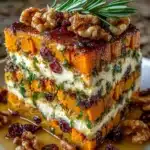
Layered Sweet Potato, Butternut Squash, Carrot Lasagna with Feta, Walnuts, and Cranberry-Honey Glaze
- Total Time: 2 hours (including resting)
- Yield: 8 to 10 1x
Description
A savory and sweet twist on classic lasagna, featuring layers of roasted sweet potato, butternut squash, and carrot, combined with creamy feta, crunchy walnuts, and a tangy cranberry-honey glaze. Perfect for holiday dinners or a comforting vegetarian main course.
Ingredients
- For the Vegetables:
- 2 large sweet potatoes, peeled and sliced into 1/4-inch rounds
- 1 medium butternut squash, peeled, seeded, and sliced into 1/4-inch half-moons
- 3 large carrots, peeled and sliced into 1/4-inch rounds
- 2 tablespoons olive oil
- Salt and freshly ground black pepper to taste
- For the Cheese Mixture:
- 1 (15-ounce) container ricotta cheese
- 1 cup crumbled feta cheese
- 1 large egg
- 1/4 cup chopped fresh parsley
- 1/2 teaspoon dried oregano
- 1/4 teaspoon nutmeg
- For the Lasagna Assembly:
- 12 no-boil lasagna noodles
- 2 cups shredded mozzarella cheese
- 1/2 cup grated Parmesan cheese
- 1 cup chopped walnuts, toasted
- For the Cranberry-Honey Glaze:
- 1/2 cup cranberry sauce (jellied or whole berry)
- 2 tablespoons honey
- 1 tablespoon apple cider vinegar
- 1/4 teaspoon cinnamon
Instructions
- Preheat oven to 400°F (200°C). Line two baking sheets with parchment paper.
- Toss sweet potato, butternut squash, and carrot slices with olive oil, salt, and pepper. Spread in a single layer on the prepared baking sheets. Roast for 20–25 minutes, flipping halfway, until tender and lightly browned. Remove from oven and let cool slightly. Reduce oven temperature to 375°F (190°C).
- In a medium bowl, combine ricotta, feta, egg, parsley, oregano, nutmeg, and a pinch of salt and pepper. Mix well.
- In a small saucepan, combine cranberry sauce, honey, vinegar, and cinnamon. Warm over low heat, stirring occasionally, until smooth and slightly thickened. Set aside.
- Spread a thin layer of the cranberry-honey glaze on the bottom of a 9×13-inch baking dish.
- Arrange a layer of lasagna noodles over the glaze (about 3 noodles, overlapping slightly).
- Spread half of the ricotta-feta mixture over the noodles. Top with half of the roasted sweet potato, butternut squash, and carrot slices. Sprinkle with 1/3 of the mozzarella and 1/3 of the Parmesan. Drizzle with some of the glaze.
- Repeat with another layer of noodles, remaining ricotta mixture, remaining roasted vegetables, and another 1/3 of the mozzarella and Parmesan. Drizzle with glaze.
- Top with a final layer of noodles. Spread the remaining glaze over the top. Sprinkle with the remaining mozzarella and Parmesan, then scatter the toasted walnuts evenly over the top.
- Cover the dish with foil and bake for 30 minutes. Remove foil and bake for an additional 15–20 minutes, until the top is golden and bubbly.
- Let the lasagna rest for 10 minutes before slicing. Garnish with additional parsley if desired.
Notes
If you prefer a spicier kick, add 1/4 teaspoon red pepper flakes to the ricotta mixture. For a gluten-free version, use gluten-free lasagna noodles. The cranberry-honey glaze can be made ahead and refrigerated. This lasagna also freezes well; bake covered, then cool completely and freeze for up to 3 months.
- Prep Time: 45 minutes
- Cook Time: 1 hour 15 minutes
- Method: Main Course
- Cuisine: American / Fusion
Nutrition
- Calories: 485
- Sugar: 18 g
- Fat: 22 g
- Carbohydrates: 58 g
- Protein: 18 g
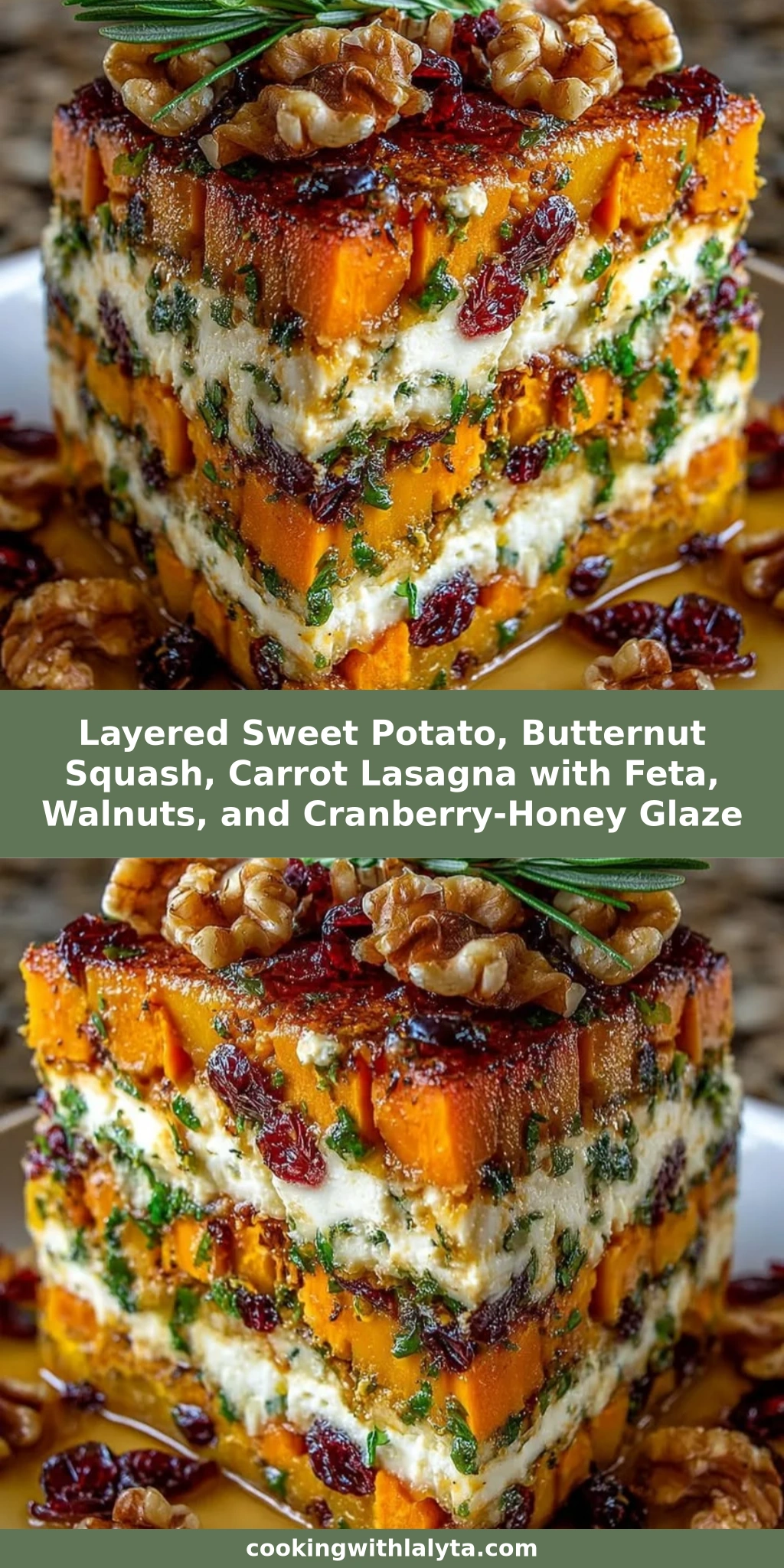
Tried This Recipe? Leave a Comment!
Did you make this recipe? I’d love to hear how it turned out! Please leave a comment and a rating below. Your feedback helps other home cooks and supports cookingwithlalyta.com!
For more delicious inspiration, follow me on Pinterest!