
Table of Contents
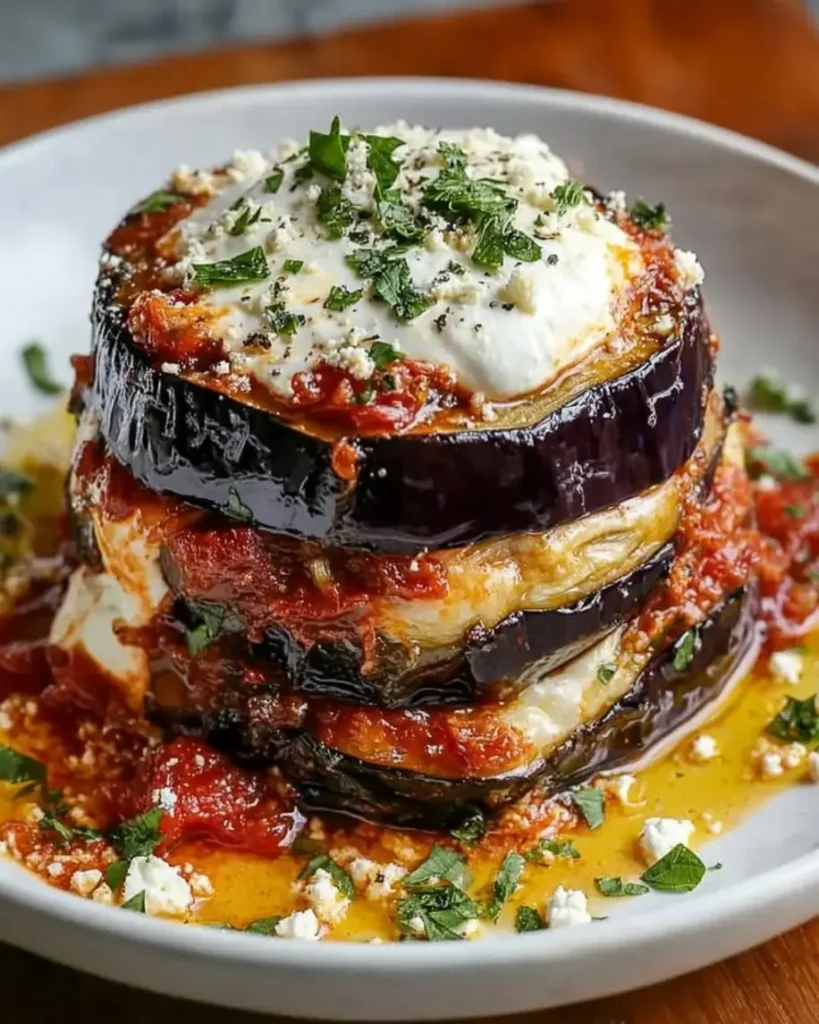
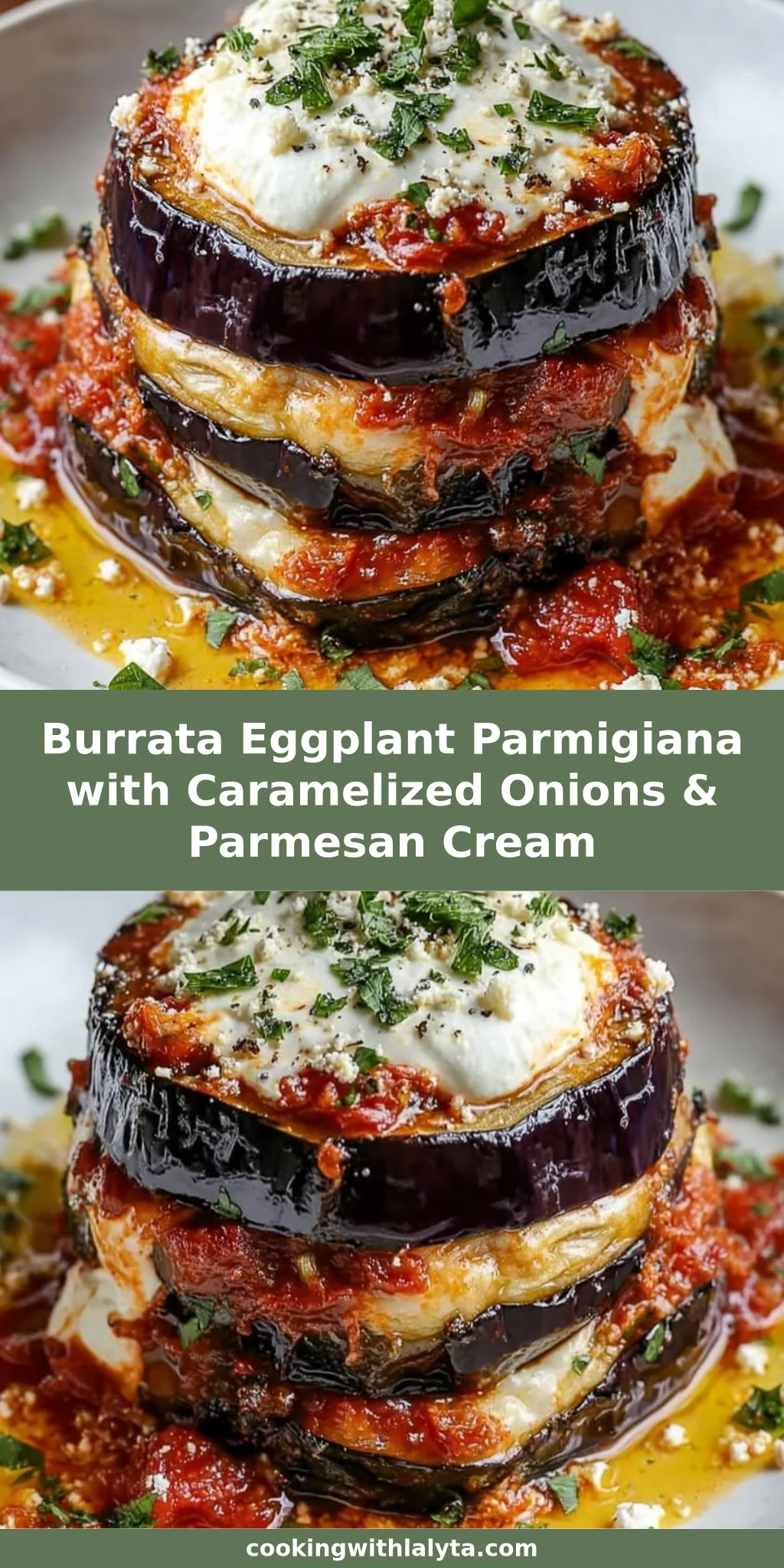
Burrata Eggplant Parmigiana with Caramelized Onions & Parmesan Cream – A Decadent Vegetarian Masterpiece
This burrata eggplant parmigiana recipe is more than just a meal—it’s the dish I turn to when I want to bring a little bit of my culinary training in Paris and the bold, comforting flavors of New York City together on one plate. I still remember the first time I tasted true Italian eggplant parmigiana in a tiny trattoria during a weekend trip from culinary school; the way the crispy eggplant gave way to a molten, cheesy interior was pure magic. Years later, I began adding my own twist at home, layering in the deeply sweet notes of caramelized onions and finishing everything with a silky parmesan cream sauce that feels like a warm hug. This vegetarian eggplant recipe is my love letter to that memory, elevated with a crown of luscious burrata that melts into every bite.
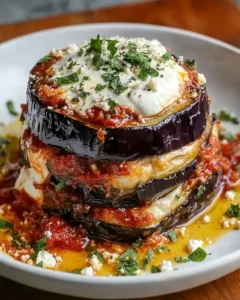
Imagine cutting into a casserole where every layer tells a different story. The top is blistered and golden from the oven, with creamy burrata peeking out like little clouds against a blanket of nutmeg-kissed parmesan cream. The scent of sweet onions cooked low and slow in butter mingles with the sharp, savory notes of marinara, while panko-crusted eggplant rounds provide a satisfying crunch that echoes through the dish. It’s a symphony of textures—crispy, silky, gooey, and tender—all in one forkful. My mother in Morocco always taught me that the best dishes engage all the senses before you even taste them, and this one certainly does, from the sizzle of frying eggplant to the fresh basil scattered on top at the very end.
I know there are a million eggplant parmesan recipes out there, but this version is truly special because of the techniques I’ve borrowed from my professional kitchen days. We’re not just layering mozzarella; we’re using fresh burrata—that delicate pouch of cream and mozzarella stracciatella—to add a level of richness you simply can’t get from a pre-shredded bag. And the caramelized onions? They transform from sharp, pungent bulbs into a jammy, sweet confit that balances the acidity of the tomatoes perfectly. Stick with me here: I’ll share a pro tip about salting your eggplant that changes everything, plus a common mistake that even seasoned cooks make when layering this dish. Get ready to create the best burrata eggplant parmigiana you’ve ever had.
Why This Burrata Eggplant Parmigiana Recipe Is the Best
The real secret to why this caramelized onion eggplant parmigiana stands out lies in building flavors in layers, a lesson I learned while perfecting French sauces in Paris. Each component is seasoned and cooked individually before assembly, so you’re not relying on a single note of salt or fat. The eggplant is fried until it’s a deep, nutty golden brown, which creates a sturdy, crispy barrier that never turns mushy under the sauce. The caramelized onions are coaxed into sweetness for a full 30 minutes, developing a complexity that tastes almost like a savory jam. And then there’s my parmesan cream sauce, which starts with heavy cream gently heated and infused with freshly grated Parmigiano-Reggiano and a whisper of nutmeg—it’s a technique borrowed from béchamel but lighter, faster, and so much more luxurious.
Texture is everything in this dish, and I’ve designed the recipe so every bite is a contrast of crispy, creamy, and tender. Many vegetarian eggplant recipes fail because the vegetable releases water into the casserole, leaving you with a soggy mess. At my NYC catering gigs, I learned to treat eggplant like a sponge: salt it first to draw out the excess moisture, then pat it completely dry before breading. This simple step, combined with the panko breadcrumbs that fry up into shatteringly crisp shells, ensures your final bake stays structured and beautiful. The burrata is added in torn dollops just before the final oven finish, so its creamy center stays intact, creating pockets of liquid gold rather than disappearing into the sauce.
This is a foolproof recipe, even if it looks fancy enough for a dinner party. I’ve broken down every step so a home cook can execute it perfectly—whether you’re in a tiny Manhattan apartment kitchen or a sprawling suburban space. The quick-reference tables I’ve included make timing a breeze, and the substitution notes let you adapt it for dietary needs without losing the soul of the dish. My goal was to take the intimidation out of eggplant parmesan with burrata and give you a reliable, show-stopping main course that will have everyone asking for the recipe.
Burrata Eggplant Parmigiana Ingredients
One of my favorite rituals is walking through the Union Square Greenmarket early on a Saturday morning, hunting for the most pristine eggplants and fresh basil. For this dish, I always look for eggplants that feel heavy for their size with tight, glossy skin—these are the ones that will fry up perfectly without absorbing too much oil. The burrata comes from a specialty cheese shop in Little Italy, but you can find excellent fresh burrata at most grocery stores now, usually near the fresh mozzarella. And of course, nothing beats the aroma of Parmesan you’ve grated yourself—it melts into the cream sauce like a dream compared to the pre-shredded stuff, which often has anti-caking agents.
Ingredients List
- 2 large eggplants, sliced into 1/2-inch rounds
- 1 teaspoon salt (for drawing out moisture)
- 1 cup all-purpose flour
- 3 large eggs, beaten
- 2 cups panko breadcrumbs
- 1/2 cup grated Parmesan cheese (for breading)
- 1 teaspoon garlic powder
- 1 teaspoon dried oregano
- 1/2 teaspoon black pepper
- Vegetable oil, for frying
- 2 large yellow onions, thinly sliced
- 2 tablespoons butter
- 1 tablespoon olive oil
- 1 cup heavy cream
- 1/2 cup grated Parmesan cheese (for sauce)
- 1/4 teaspoon nutmeg
- 1 1/2 cups marinara sauce (use your favorite high-quality jarred or homemade)
- 8 oz fresh burrata cheese (1-2 balls)
- Fresh basil leaves, for garnish
Ingredient Spotlight
Eggplant: The true star of this show needs a little prep to shine. In a US grocery store, pick eggplants that are firm, glossy, and free of soft spots. The “sweating” step with salt is non-negotiable—it collapses the spongy cell walls so the slices don’t drink up too much oil. If you must substitute, zucchini rounds work, but they’ll be softer and release more water, so double the salting and patting time. You’ll lose some of that classic eggplant texture but gain a delicate sweetness.
Fresh Burrata: This isn’t just fancy mozzarella; burrata’s creamy stracciatella center is what makes this dish unforgettable. Look for a 4- or 8-ounce ball in the refrigerated specialty cheese section, usually packed in water. The best substitution is fresh mozzarella di bufala, but it won’t have the same liquid cream core. If you can only find standard fresh mozzarella, tear it into chunks and consider drizzling a tablespoon or two of heavy cream between the layers to mimic that milky richness—it’s not the same, but it’ll still be delicious.
Panko Breadcrumbs: I swear by panko for its unparalleled crunch. These Japanese-style breadcrumbs are larger and flakier than traditional breadcrumbs, creating a lighter, crispier coating that stays audible even after baking. You’ll find them in the Asian or breadcrumb aisle of any standard supermarket. In a pinch, crushed plain cornflakes can achieve a similar golden shatter, though the flavor will be slightly sweeter. Don’t use fine dried breadcrumbs unless you’re okay with a denser, less crispy result.
| Original Ingredient | Best Substitution | Flavor / Texture Impact |
|---|---|---|
| Fresh Burrata | Fresh mozzarella + 2 tbsp heavy cream drizzle | Less oozy, but still creamy |
| Panko Breadcrumbs | Crushed plain cornflakes | Slightly sweeter, very crispy |
| Heavy Cream | Half-and-half | Thinner sauce; simmer longer to reduce |
| Yellow Onions | Sweet Vidalia or red onions | Sweeter final taste; reds turn slightly purple |
How to Make Burrata Eggplant Parmigiana — Step-by-Step
I promise, this recipe flows beautifully once you have all your components prepped. I often play some classic French jazz in the background and treat the process like a meditative kitchen ritual. Let’s do it together, step by step.
Step 1: Salt the Eggplant
Slice your 2 large eggplants into even 1/2-inch rounds. Lay them out on a sheet pan lined with paper towels and sprinkle both sides generously with 1 teaspoon of salt. Let them sit for a full 30 minutes. You’ll see little beads of moisture appear on the surface—that’s the bitter liquid and excess water being drawn out. After 30 minutes, use fresh paper towels to firmly pat each slice completely dry, pressing down gently to absorb all the moisture. This is the single most important step to avoid soggy eggplant parmigiana.
💡 Lalybeth’s Pro Tip: Don’t skip the patting dry step—be ruthless here! Any remaining surface moisture will steam the eggplant instead of letting it fry crispy. I like to lay the slices between two layers of paper towels and press down with a sheet pan to wick away every drop.
Step 2: Set Up Your Breading Station
Set up three shallow bowls. In the first, place 1 cup of all-purpose flour. In the second, beat 3 large eggs until uniform in color. In the third bowl, combine 2 cups of panko breadcrumbs, 1/2 cup of grated Parmesan cheese, 1 teaspoon of garlic powder, 1 teaspoon of dried oregano, and 1/2 teaspoon of black pepper. Stir the panko mixture well so the seasoning is evenly distributed. Have a clean wire rack set over a baking sheet ready to hold your breaded slices.
⚠️ Common Mistake to Avoid: Dredging in advance and letting the breaded eggplant sit too long. The panko will absorb moisture from the egg and flour, turning from crisp-ready to gummy. Fry within 10 minutes of breading for the best crunch.
Step 3: Fry the Eggplant to Golden Perfection
Dredge each eggplant slice first in the flour, shaking off the excess, then dip it in the beaten eggs, letting the excess drip back into the bowl, and finally press it firmly into the panko-Parmesan mix, coating both sides thoroughly. Place the breaded slice on the wire rack. Heat about 1/2 inch of vegetable oil in a large, heavy skillet over medium-high heat until it shimmers but doesn’t smoke (around 350°F/175°C if you’re using a thermometer). Fry the slices in small batches—don’t overcrowd the pan—for 2 to 3 minutes per side, until they are a deep golden brown and incredibly crisp. Transfer them to a paper towel-lined plate to drain.
💡 Lalybeth’s Pro Tip: Use a wire rack set inside a sheet pan to keep fried batches warm in a 200°F oven while you finish the rest. This circulates air around the slices so they stay crispy, unlike a plate where the bottoms can steam and soften.
Step 4: Caramelize the Onions Low and Slow
In a large, clean skillet, melt 2 tablespoons of butter with 1 tablespoon of olive oil over medium heat. Once the butter is foamy, add the 2 thinly sliced large yellow onions. Stir them to coat in the fat, then spread them into an even layer. Cook, stirring every 5 to 7 minutes, for about 25 to 30 minutes total. The onions will first soften, then turn translucent, and eventually transform into a deeply golden-brown, jammy mass. If they start to catch or burn on the bottom, lower your heat slightly and add a tablespoon of water to deglaze. Season with a pinch of salt at the very end.
⚠️ Common Mistake to Avoid: Rushing caramelized onions with high heat. If your pan is too hot, the onions will char and turn bitter before their natural sugars have a chance to develop into that complex sweetness. Patience, my friend—25 minutes is the minimum for the magic to happen.
Step 5: Make the Silky Parmesan Cream
In a small saucepan, pour 1 cup of heavy cream and warm it over medium-low heat. You don’t want it to boil; just let it get steamy and hot. Whisk in the 1/2 cup of grated Parmesan cheese and 1/4 teaspoon of fresh nutmeg (freshly grated is a game-changer here). Continue to whisk gently for 2 to 3 minutes as the sauce simmers and thickens just enough to coat the back of a spoon. Remove from the heat and keep it warm, covered. The sauce will continue to thicken slightly as it sits; if it gets too thick, just whisk in a splash of warm milk.
💡 Lalybeth’s Pro Tip: For an ultra-smooth Parmesan cream, make sure your cheese is finely grated and at room temperature. Cold cheese clumps when it hits hot cream. I pull mine from the fridge 15 minutes before I start this step, a trick I learned in Paris for flawless mornay sauces.
Step 6: Assemble the Layers With Care
Preheat your oven to 375°F (190°C). Spread a thin layer (about 1/2 cup) of your marinara sauce over the bottom of a 9×13-inch baking dish. Arrange half of the crispy fried eggplant slices in an overlapping layer over the sauce. Scatter half of the caramelized onions evenly on top. Take half of the burrata (about 4 ounces) and tear it into irregular, rustic dollops, tucking them between the eggplant and onions. Repeat the layers: a light spread of the remaining marinara, the rest of the eggplant, the rest of the caramelized onions, and the remaining burrata torn into pieces. Finally, pour the Parmesan cream sauce evenly over the entire surface, letting it drip down into the crevices.
⚠️ Common Mistake to Avoid: Burying the burrata too deeply or adding it too early. You want those creamy centers to burst in the oven, not dissolve completely. Tearing it into large, chunky dollops and keeping them towards the top is key, so they gently melt rather than disappear into the sauce.
Step 7: Bake and Finish With Fresh Basil
Place the assembled dish in the preheated oven and bake for 15 to 20 minutes. You’re looking for the sauce to be bubbly around the edges and the Parmesan cream on top to take on a light golden hue in spots. The burrata should look softly melted but still hold some shape. Remove the dish from the oven and let it rest on a wire rack for a full 5 minutes—this is crucial for the layers to set up slightly before you cut into it. Just before serving, scatter a generous handful of fresh, bright green basil leaves over the top.
💡 Lalybeth’s Pro Tip: A 5-minute rest isn’t just about preventing burned tongues; it allows the bubbling sauce to reabsorb into the layers, giving you a slice that holds its shape on the plate instead of collapsing into a puddle. It’s the difference between a casserole and a composed dish.
| Step | Action | Duration | Key Visual Cue |
|---|---|---|---|
| 1. Salt Eggplant | Salt slices and let sit | 30 min | Beads of moisture on surface |
| 3. Fry Eggplant | Fry breaded slices in oil | 2-3 min per side | Deep golden brown, crispy |
| 4. Caramelize Onions | Cook sliced onions in butter/oil | 25-30 min | Jammy, deep golden-brown |
| 5. Parmesan Cream | Simmer cream, Parmesan, nutmeg | 3-5 min | Coats back of spoon, smooth |
| 7. Bake | Bake assembled dish | 15-20 min | Bubbly edges, light golden top |
Serving & Presentation
This dish demands to be served family-style, brought straight to the table in the baking dish so everyone can see those gorgeous layers. I love setting it on a rustic wooden trivet and scattering a few whole basil leaves on top for that pop of green against the golden cream. Use a sharp, flat spatula to cut and lift out portions—you want to preserve the vertical stack as much as possible. In Morocco, we always serve with warmth and generosity, so I heap each plate with a little extra spoonful of any sauce that’s escaped to the edges.
When I’m hosting in my NYC apartment, I pair this burrata eggplant parmigiana with a simple arugula salad dressed in lemon and olive oil to cut through the richness. A crusty loaf of sesame-seeded Italian bread is non-negotiable for sopping up every last drop of that Parmesan cream. For a heartier spread, roasted broccolini or green beans with toasted almonds bring a nice bitter crunch that balances the sweet onions. And if you want to make it a true Italian-American feast, start with a simple minestrone or a board of marinated olives and sharp provolone.
| Pairing Type | Suggestions | Why It Works |
|---|---|---|
| Side Dish | Lemon arugula salad, roasted broccolini | Peppery, bitter notes cut the rich cream |
| Sauce / Dip | Extra marinara, balsamic glaze drizzle | Acidity brightens the fried and creamy elements |
| Beverage | Chianti Classico, sparkling water with lemon | Tannins cut fat; bubbles cleanse the palate |
| Garnish | Fresh basil, chili flakes, fried capers | Herbal freshness, heat, and briny crunch |
Make-Ahead, Storage & Reheating
In the rhythm of a busy NYC week, I love knowing I can break this recipe into manageable steps. The entire dish can be assembled a day ahead, refrigerated unbaked, and then popped into the oven when you walk in the door. Just take it out of the fridge about 20 minutes before baking to take the chill off the dish. You can also caramelize the onions and make the Parmesan cream up to two days in advance and store them separately in the fridge, which makes the day-of assembly feel like a breeze.
| Method | Container | Duration | Reheating Tip |
|---|---|---|---|
| Refrigerator | Airtight container or foil-covered baking dish | Up to 4 days | Reheat in 350°F oven for 15 min, covered |
| Freezer | Freezer-to-oven safe dish, wrapped tightly | Up to 2 months | Thaw overnight in fridge, then bake at 375°F for 25-30 min |
| Make-Ahead | Assembled unbaked in baking dish | 1 day in advance | Add 5-7 extra minutes to bake time from cold |
When you’re reheating a fully baked leftover portion, I always recommend the oven or toaster oven over the microwave. The microwave will turn your beautiful crispy eggplant soft and the burrata rubbery. Instead, place your portion in an oven-safe dish, cover it loosely with foil, and warm it at 350°F for about 12-15 minutes. Remove the foil for the last 3 minutes to let the top crackle back to life. It won’t be quite as crisp as day one, but it will still be deeply satisfying.
One little trick I picked up from my Parisian training: if you know you’ll have leftovers, slightly underbake the casserole the first time. This prevents the eggplant from becoming overcooked and mushy during the reheat. Pull the dish out of the oven when it’s just hot and bubbly but before the top gets intensely dark, then cool it quickly. The second bake will perfect it.
Variations & Easy Swaps
| Variation | Key Change | Best For | Difficulty Impact |
|---|---|---|---|
| Spicy Moroccan Harissa Twist | Add harissa to marinara, use cumin in breading | Heat lovers & North African flavor fans | No change |
| Gluten-Free Panko Swap | Use GF flour blend and GF panko | Gluten-sensitive guests | Easier (same method) |
| Summer Zucchini Stack | Replace half the eggplant with zucchini rounds | Peak summer vegetable bounty | Slightly more attention to salting |
Spicy Moroccan Harissa Twist
This variation brings me right back to my mother’s kitchen in Morocco, where we never shy away from layers of warm spice. Whisk 1 to 2 tablespoons of harissa paste into your marinara sauce before layering—start with one if you’re spice-sensitive, as the heat will concentrate in the oven. Swap the dried oregano in the panko mixture with 1/2 teaspoon of ground cumin and a pinch of smoked paprika. The earthy, smoky notes from the cumin perfectly complement the sweetness of the caramelized onions, creating a stunning Mediterranean-North African fusion that still feels incredibly comforting.
Gluten-Free Panko Swap
I’ve tested this version for friends with celiac needs, and it holds up beautifully with just a few smart swaps. Use a high-quality 1:1 gluten-free all-purpose flour blend in place of regular flour. For the breadcrumbs, several brands now make excellent gluten-free panko that fries up just as crisply as the original—Ian’s and Kikkoman both have great options. The texture will be nearly identical, though you might need to press the egg-dipped eggplant a little more firmly into the gluten-free panko to help it adhere. Everything else remains the same, making this a stress-free swap for a dinner party.
Summer Zucchini & Eggplant Stack
When the Union Square Greenmarket is overflowing with zucchini in late July, I love using a 50/50 mix of eggplant and zucchini. Slice the zucchini into the same 1/2-inch rounds, and because zucchini is even more water-dense than eggplant, salt them generously just like the eggplant and let them sit for the full 30 minutes. Pat them extremely dry—you’ll be surprised by how much liquid comes out. The zucchini rounds fry up with a slightly sweeter, more delicate flavor that makes the whole dish feel lighter and perfect for a summer evening on the patio, paired with a crisp glass of rosé.
Can I use regular mozzarella instead of burrata for this eggplant parmigiana recipe?
Absolutely, you can use regular mozzarella if burrata isn’t available, though the experience will be slightly different. Fresh mozzarella in water, or even a high-quality low-moisture mozzarella (the kind you’d use on pizza), will give you a lovely cheesy stretch. The real magic of burrata lies in its soft, creamy stracciatella center that melts into lush pockets throughout the dish. To get a bit of that texture with regular mozzarella, tear it into chunks rather than slicing it, and consider drizzling about 2 tablespoons of heavy cream directly over the mozzarella layers before adding the parmesan cream sauce. The dish will still be wonderfully satisfying and cheesy, just without those distinct molten cream centers that burrata uniquely provides.
How do you keep the eggplant from getting soggy when making burrata eggplant parmigiana with caramelized onions?
The key to avoiding a soggy eggplant parmigiana starts long before the dish hits the oven, and it’s all about moisture management. First, you must salt the eggplant slices and let them sit for a full 30 minutes; this draws out the bitter, water-heavy liquid naturally present in the vegetable. Patting them completely dry afterward is just as crucial—any surface moisture will steam the eggplant during frying instead of letting it crisp up. When you fry, make sure your oil is at the correct temperature (around 350°F) and don’t overcrowd the pan, which lowers the heat and causes the eggplant to absorb oil. Finally, drain the fried slices on paper towels and use them immediately in the assembly, layering them directly into the dish so they don’t sit and soften in a steamy environment. This process, combined with a hot, fast bake, ensures your eggplant stays beautifully crisp-tender.
What is the best way to caramelize onions for a burrata eggplant parmigiana with parmesan cream?
The best way to caramelize onions is with patience, a heavy-bottomed pan, and a mix of butter and oil. I always use a combination of butter for rich flavor and olive oil to raise the smoke point, preventing the milk solids in the butter from burning. Slice your onions thinly and uniformly—about 1/8-inch thick—so they cook evenly. Start them over medium heat, stirring to coat them in the fat, then allow them to sit and cook undisturbed for 5-7 minutes between stirs. This allows the natural sugars to brown and develop that deep, sweet flavor. If the pan starts to look dry or the onions begin to stick too aggressively, add a tablespoon of water and scrape up the browned bits from the bottom; this deglazing step adds even more flavor. A full batch of deeply golden, jammy caramelized onions will take at least 25 to 30 minutes, and it’s a step you absolutely shouldn’t rush for this recipe.
How long should I bake burrata eggplant parmigiana with caramelized onions and parmesan cream?
For the perfect result, bake your assembled burrata eggplant parmigiana at 375°F for 15 to 20 minutes. Since the eggplant is already fried, the onions are cooked, and the Parmesan cream is warm, the baking time is primarily to heat everything through, marry the flavors, and melt the burrata into glorious cream pockets. You’ll know it’s ready when the edges are joyfully bubbly and the top of the Parmesan cream has taken on a few spots of light golden color. Be careful not to overbake it, as the burrata can fully melt and lose its distinct creamy texture, blending too much into the surrounding sauce. If your dish was assembled ahead of time and went into the oven cold from the refrigerator, add an extra 5 to 7 minutes to the baking time to ensure it’s piping hot in the center.
Can I make this burrata eggplant parmigiana ahead of time?
Yes, this dish is a wonderful candidate for make-ahead preparation, which I often rely on in my own busy week. You can fully assemble the casserole up to 24 hours in advance, cover it tightly with plastic wrap or foil, and store it in the refrigerator. You can also prepare individual components in advance: the caramelized onions and the Parmesan cream sauce can both be made two days ahead and kept in separate airtight containers in the fridge. The eggplant slices are best fried the day of assembly for maximum crispness, but if you’re really in a time crunch, you can fry them a day ahead, store them in the fridge between layers of paper towels, and then quickly re-crisp them in a 350°F oven for 5 minutes before layering. Just remember to pull the assembled dish out of the fridge about 20 minutes before baking so it can come to room temperature, preventing that sudden temperature shock in the oven.
Is there a gluten-free alternative for the breading in this eggplant parmesan with burrata?
Absolutely, and I’ve tested this to ensure the texture doesn’t suffer. For the flour dredge, use a high-quality 1-to-1 gluten-free flour blend, such as Bob’s Red Mill or Cup4Cup. For the panko, look for gluten-free panko breadcrumbs, which are now widely available in well-stocked supermarkets—Ian’s and Aleia’s are two reliable brands. The rest of the seasoning (garlic powder, oregano, Parmesan) remains the same and is naturally gluten-free, but always double-check your spice labels for hidden additives. The eggplant fries up just as golden and crispy, and the final texture in the casserole is remarkably close to the wheat-based version. One tiny note: gluten-free panko can sometimes be a bit more absorbent, so don’t let the breaded slices sit for more than 5 minutes before frying to prevent any gumminess.
Do I need to peel the eggplant for this vegetarian eggplant recipe?
I never peel the eggplant for this recipe, and here’s why: the skin provides structural integrity to each slice during the frying and layering process. Without the skin, the rounds can become too soft and fall apart easily, especially after being sauced and baked. It also adds a subtle, pleasant textural contrast and a deep purple color that peeks through the crispy panko crust, making the dish visually more beautiful. If you’re using very large, mature eggplants that have a thick or bitter skin, you can peel them in alternating strips, creating a zebra pattern that strikes a balance between tenderness and structure. For younger, smaller, thin-skinned eggplants, leaving them fully intact is the way to go.
What can I use instead of heavy cream in the Parmesan cream sauce?
If you don’t have heavy cream on hand, half-and-half is your best straightforward substitute. Because half-and-half has a lower fat content, it will result in a slightly thinner sauce. To help it thicken, you can simmer it for an extra 3 to 5 minutes while whisking gently, or whisk in 1 to 2 teaspoons of cornstarch dissolved in a tablespoon of cold water (a slurry) and cook until the sauce coats the back of a spoon. The flavor will still be wonderfully rich, though not quite as decadently luxurious. For a completely dairy-free alternative, use a high-quality unsweetened barista-style oat milk or full-fat canned coconut milk—the latter will add a faintly sweet coconut note that actually pairs surprisingly well with the caramelized onions. Do not use skim milk, as it lacks the fat needed to properly emulsify with the Parmesan cheese.
How do I know when the oil is hot enough for frying the eggplant?
Getting the oil temperature right is critical for crispy, non-greasy eggplant. The ideal temperature is around 350°F (175°C). If you have a kitchen thermometer, use it—it’s the most foolproof method. Without one, there are two classic tests: first, you can dip the end of a wooden spoon or a wooden chopstick into the oil; if a steady stream of tiny bubbles fizzles around it immediately, the oil is ready. Second, you can toss a single panko breadcrumb into the pan. If it sizzles vigorously and turns golden in about 10 seconds without burning, you’re in the sweet spot. If the oil isn’t hot enough, the eggplant will sit and soak up grease instead of searing shut. If it’s too hot, the breading will burn before the eggplant is tender. Adjust your burner as you go, especially between batches, to maintain a steady temperature.
Can I bake the eggplant instead of frying it for a lighter version?
Yes, you can absolutely bake the breaded eggplant for a lighter take on this caramelized onion eggplant parmigiana. To do so, preheat your oven to 425°F and arrange the breaded slices on a wire rack set over a baking sheet. Spray both sides of the eggplant generously with a neutral cooking spray or olive oil spray—this is essential to get any browning and crispness. Bake for 12 to 15 minutes, then carefully flip each slice, spray again, and bake for another 10 to 12 minutes until they’re golden and crisp. The texture will be lighter and less decadent than fried eggplant, with a more delicate crunch, but the flavor will still be very satisfying. Just keep in mind that baked slices retain slightly less structural integrity, so handle them gently when layering, and expect a more casserole-like, softer final dish.
Share Your Version!
I truly believe that recipes are just a starting point for your own creativity, and I’d love nothing more than to see how this dish turns out in your kitchen. When those layers bubble and that burrata melts into a creamy, dreamy pool, snap a photo and share it on Instagram or Pinterest—make sure to tag me @cookingwithlalyta so I can cheer you on and share your beautiful work with our community. If you have a moment, leaving a star rating and a review in the comments below not only makes my day but helps other home cooks find this recipe with confidence. Tell me: did you add your own twist, like a pinch of Aleppo pepper or a layer of roasted red peppers? Every little adaptation tells a story.
From my NYC kitchen to yours — I hope this recipe brings as much warmth to your table as it does to mine. — Lalybeth 🧡
Love This Recipe? Save It to Pinterest!
If you enjoyed this Burrata Eggplant Parmigiana with Caramelized Onions & Parmesan Cream recipe, don’t let it get lost in your browser tabs! 😄 Pin it now so you can find it again anytime — and explore hundreds more tried-and-tested recipes waiting for you on my Pinterest boards.
👉 Follow Lalybeth on Pinterest @cookingwithlalyta
📌 Pin this recipe · 🔁 Re-pin your favorites · 💬 Tag me when you make it — I love seeing your creations!
What’s the one ingredient you think makes this dish absolutely unforgettable? 🍆🧅🧀
Drop a comment below and let me know! I read every single one and love hearing about your kitchen wins.
Burrata Eggplant Parmigiana with Caramelized Onions & Parmesan Cream
- Total Time: 1 hour 15 minutes
- Yield: 6 1x
Description
A rich and indulgent twist on classic eggplant Parmigiana, featuring crispy breaded eggplant, sweet caramelized onions, a luscious Parmesan cream sauce, and creamy burrata cheese.
Ingredients
- 2 large eggplants, sliced into 1/2-inch rounds
- 1 teaspoon salt
- 1 cup all-purpose flour
- 3 large eggs, beaten
- 2 cups panko breadcrumbs
- 1/2 cup grated Parmesan cheese
- 1 teaspoon garlic powder
- 1 teaspoon dried oregano
- 1/2 teaspoon black pepper
- Vegetable oil, for frying
- 2 large yellow onions, thinly sliced
- 2 tablespoons butter
- 1 tablespoon olive oil
- 1 cup heavy cream
- 1/2 cup grated Parmesan cheese (for sauce)
- 1/4 teaspoon nutmeg
- 1 1/2 cups marinara sauce
- 8 oz fresh burrata cheese (1–2 balls)
- Fresh basil leaves, for garnish
Instructions
- 1. Salt the eggplant slices and let sit for 30 minutes to draw out moisture. Pat dry with paper towels.
- 2. Set up breading station: flour in one bowl, beaten eggs in another, and mix panko, 1/2 cup Parmesan, garlic powder, oregano, and pepper in a third.
- 3. Dredge each eggplant slice in flour, then egg, then panko mixture. Set on a wire rack.
- 4. Heat 1/2 inch oil in a large skillet over medium-high heat. Fry eggplant slices in batches until golden and crispy, about 2-3 minutes per side. Drain on paper towels.
- 5. For caramelized onions: In a large skillet, melt butter with olive oil over medium heat. Add sliced onions and cook, stirring occasionally, for 25-30 minutes until deep golden brown and soft. Season with salt.
- 6. For Parmesan cream: In a small saucepan, heat heavy cream over medium-low heat. Whisk in 1/2 cup Parmesan and nutmeg until smooth. Simmer gently for 2-3 minutes until thickened. Keep warm.
- 7. Preheat oven to 375°F (190°C). Spread a thin layer of marinara in the bottom of a 9×13 baking dish.
- 8. Layer half the fried eggplant slices over the sauce, then top with half the caramelized onions and dollops of half the burrata. Repeat layers (eggplant, remaining onions, remaining burrata).
- 9. Pour Parmesan cream evenly over the top. Bake for 15-20 minutes until bubbly and golden.
- 10. Let rest for 5 minutes, then garnish with fresh basil. Serve warm.
Notes
Burrata is best added during the last few minutes of baking to keep its creamy center. For a lighter version, you can bake the breaded eggplant instead of frying.
- Prep Time: 30 minutes
- Cook Time: 45 minutes
- Method: Main Course
- Cuisine: Italian-American
Nutrition
- Calories: 620
- Sugar: 12g
- Fat: 38g
- Carbohydrates: 42g
- Protein: 22g
Tried This Recipe? Leave a Comment!
Did you make this recipe? I’d love to hear how it turned out! Please leave a comment and a rating below. Your feedback helps other home cooks and supports cookingwithlalyta.com!
For more delicious inspiration, follow me on Pinterest!