Table of Contents
Caramelized Brussels Sprouts Skewers with Walnut Honey – The Ultimate Vegetarian Christmas Appetizer
I still remember the first time I tossed halved Brussels sprouts onto a smoking grill pan in my tiny Parisian apartment kitchen—my neighbors must have thought I’d lost my mind, but that smoky, caramelized aroma transported me straight back to my mother’s courtyard in Morocco, where vegetables were always treated with a sweet-savory reverence. These caramelized Brussels sprouts skewers with a sticky walnut honey glaze are the result of years of playing with that memory, refined through French technique and perfected in my bustling NYC kitchen. They’re the kind of vegetarian Christmas appetizer that steals the spotlight from the roast, turning humble sprouts into something utterly celebratory with just seven ingredients and a clever little trick to keep the skewers from burning.
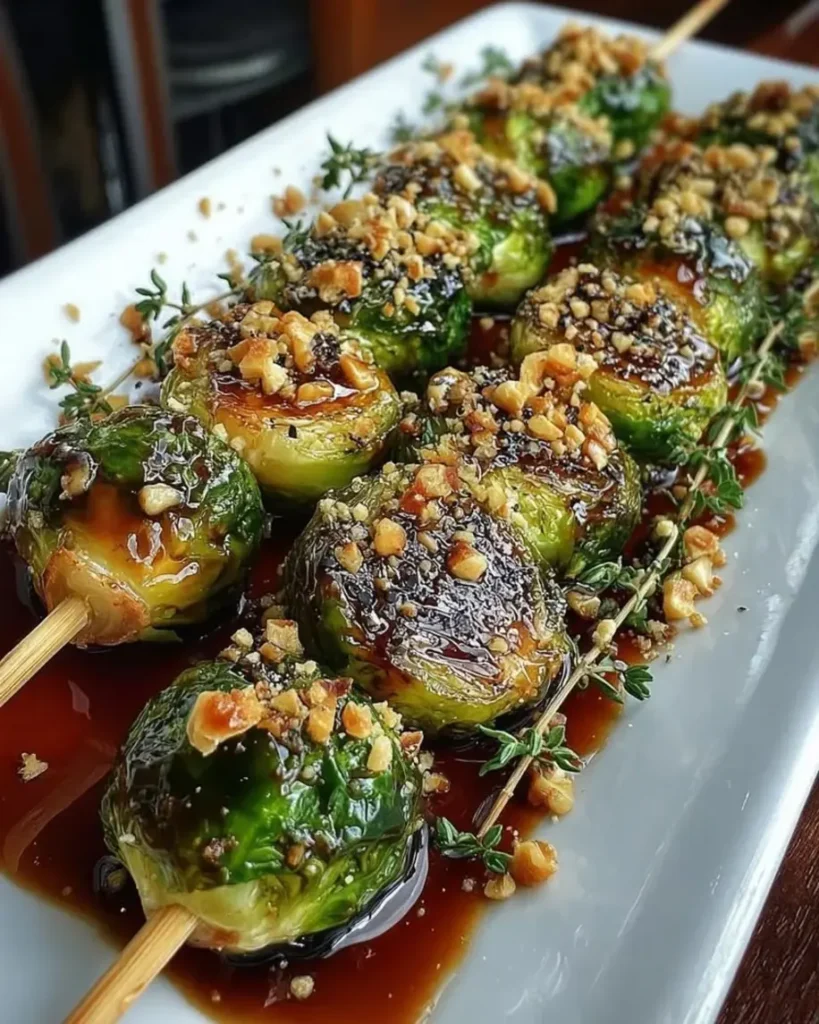
Think of the first bite: a crackly, deep brown exterior giving way to a tender, almost nutty heart, each sprout swirled in a luscious balsamic-honey sauce studded with toasted walnuts. The edges get dark and sweet where they kissed the hot grill pan, while the inside stays verdant and faintly peppery—a contrast that’s pure magic. That maple glazed Brussels sprouts vibe comes from a secret splash of balsamic vinegar that lifts the honey into something much more complex than simple sweetness. I always say the best appetizers are the ones that feel both rustic and elegant, and these skewers, with their pretty walnut flecks and drizzle, do exactly that.
I’ve tested this recipe through countless New York dinner parties (and one memorable Friendsgiving where they were gone before the turkey even hit the table), and the real key is managing the heat so the sprouts caramelize deeply without turning to charcoal. My Moroccan upbringing taught me to trust the senses over the clock, and I’ll walk you through exactly what to look for. By the end, you’ll have a foolproof, make-ahead-friendly brussels sprouts skewers recipe that you can whip up for a weeknight or dress up for a holiday starter. Stick with me—I’m going to share a professional tip for soaking the skewers that makes all the difference, plus a common overheating mistake to sidestep.
Why This Caramelized Brussels Sprouts Skewers Recipe Is the Best
The Flavor Secret: The magic isn’t just honey—it’s the way we build layers. A simple drizzle of olive oil and a generous pinch of salt before roasting coaxes out the sprout’s natural sweetness, but the real star is the walnut honey dressing. Borrowing a page from my French pastry training, I gently warm the honey with balsamic just until it’s fluid (never boiled), which turns it into a glossy, pourable glaze that clings to every crevice. That walnut honey glaze isn’t an afterthought; it’s a finishing sauce that melds with the charred edges, creating a perfect sweet-savory balance with a whisper of acidity from the balsamic.
Perfected Texture: Anyone who’s suffered through mushy, steamed sprouts knows the tragedy of a lost crunch. Here we use high heat—400°F in the oven or a ripping-hot grill—to encourage rapid evaporation and the Maillard reaction that gives us those irresistible deeply browned spots. Threading the sprouts onto skewers does two things: it makes flipping a breeze and ensures all sides get exposed to the dry heat, mimicking the effect of a rotisserie. I learned this trick from a Moroccan street vendor in Marrakech who threaded seasoned vegetables onto thin metal rods over an open flame—the same principle gives these caramelized Brussels sprouts an even char without sacrificing tenderness inside.
Foolproof & Fast: From start to finish you’re looking at 35 minutes, and half of that is hands-off roasting. The ingredients are supermarket staples you likely already have: fresh sprouts, olive oil, walnuts, honey, balsamic. I’ve included a substitution table below so you don’t have to worry if you’re out of walnuts or need a vegan option. Even a novice cook can nail these brussels sprouts skewers on the first try because I’ll point out the visual cues—when the sprouts look glossy and deep golden with a few darker flecks, they’re done. No guesswork, just gorgeous results.
Caramelized Brussels Sprouts Ingredients
I do most of my produce shopping at the Union Square Greenmarket, where in late fall and winter the Brussels sprouts are still on the stalk—so fresh you’d swear they were just pulled from the soil. That freshness matters because older sprouts can turn bitter and lose their tight structure. When I’m not near the market, my go-to is the organic bin at my neighborhood co-op, and I always look for bright green, compact heads with no yellowing leaves. The rest of the ingredients live in my pantry year-round, and I bet they do in yours too.
Ingredients List
- 1 lb Brussels sprouts, trimmed and halved
- 2 tbsp olive oil
- Salt and pepper to taste
- 1/2 cup walnuts
- 1/4 cup honey
- 1 tbsp balsamic vinegar
- Wooden skewers, soaked in water for 30 minutes
Ingredient Spotlight
Brussels sprouts: The star of the show. Choose sprouts that are firm and about 1 to 1½ inches in diameter—smaller ones are sweeter and caramelize more evenly. In a US grocery store, look for ones on the stalk or in bulk bins; avoid any with black spots or a pungent sulfur smell, which indicates age. If you can’t find fresh, frozen whole Brussels sprouts work in a pinch—thaw, pat completely dry, then proceed—but the caramelization won’t be quite as crisp. I tested this swap: the flavor is still good, though the edges may steam rather than char.
Walnuts: Toasting them is non-negotiable. Raw walnuts are fine, but a quick toast in a dry skillet over medium heat (about 3–4 minutes, shaking often) unlocks their oils and deepens their flavor, which echoes the char on the sprouts beautifully. In NYC bodegas, you’ll often find walnut pieces cheaper than halves—go ahead and use those. For a different nutty note, pecans make an excellent substitute; they’re sweeter and softer, adding a buttery finish. Avoid almonds: their harder crunch fights the tender sprout.
Honey: I reach for a mild wildflower honey so it doesn’t overpower the sprouts, but any liquid honey will do. Clover, orange blossom, or even a darker buckwheat honey works if you want a bold molasses-like undertone. For a vegan version, pure maple syrup (which I sometimes use when I want that distinctly maple glazed Brussels sprouts profile) or agave nectar can step in; both will be slightly thinner, so reduce by 1 teaspoon and watch the cooking time because they caramelize faster. No matter which sweetener you pick, the lush, sticky coating is essential to holding the chopped walnuts in place.
Balsamic vinegar: Just one tablespoon transforms the honey from cloying to complex. Look for a balsamic labeled “Aceto Balsamico di Modena IGP”—it doesn’t need to be the expensive aged variety, but it should have some body. The vinegar’s acidity cuts the richness and helps the glaze cling. In a pinch, red wine vinegar plus a tiny pinch of brown sugar can mimic the effect, but you’ll miss that subtle grapey sweetness. Do not skip the vinegar; it’s the secret reason people can’t stop eating these skewers.
| Original Ingredient | Best Substitution | Flavor / Texture Impact |
|---|---|---|
| Brussels sprouts | Frozen whole Brussels sprouts (thawed, dried) | Slightly less crisp exterior; still sweet and tender inside. |
| Walnuts | Pecans | Sweeter, softer texture; melts into the glaze more. |
| Honey | Maple syrup (vegan) | Thinner, slightly smokier flavor; may darken faster. |
| Balsamic vinegar | Red wine vinegar + ½ tsp brown sugar | Sharper tang, less roundness; still balances the honey. |
How to Make Caramelized Brussels Sprouts Skewers – Step-by-Step
Take a deep breath—this is easier than it looks. I’ll guide you through each step with the same cues I use when I’m testing recipes in my own kitchen. Trust the process and your senses, and you’ll have a platter of stunning skewers in about half an hour.
Step 1: Prep and Soak
Trim the dry stem ends off each Brussels sprout—just a thin slice so the leaves hold together—then halve them lengthwise through the core. If any outer leaves are wilted or yellowed, pull them away. Place the halves in a large bowl, drizzle with the 2 tablespoons of olive oil, and season generously with salt and a few grinds of black pepper. Toss well so every piece is coated. Meanwhile, submerge 6 to 8 wooden skewers in water and let them soak for at least 30 minutes. This step is critical: waterlogged skewers won’t burn on the grill or under the broiler, and they’ll protect the delicate sprout edges from direct flame.
💡 Lalybeth’s Pro Tip: For extra flavor, add a smashed garlic clove to the soaking water—the faint garlic perfume will infuse the skewers and intensify the savory notes without overpowering.
Step 2: Thread the Skewers
Thread the oiled sprout halves onto the soaked skewers, about 5 to 6 per skewer, leaving a tiny gap between pieces so air can circulate. Push them close enough that they don’t spin freely but not so tight that the cut sides steam instead of char. Lay the skewers flat on a baking sheet lined with parchment or foil if using the oven, or directly onto a preheated grill pan. I like to arrange the skewers so the flat cut side faces upward—this maximizes that caramelized surface area.
⚠️ Common Mistake to Avoid: Overcrowding the skewers. Too many sprouts packed together create steam pockets and prevent browning. Give each piece its own space—if you need an extra skewer, use one. A few straggling sprouts on a separate skewer are better than a soft, pale batch.
Step 3: Roast or Grill
If using the oven, preheat to 400°F (200°C) with a rack in the middle. Slide the baking sheet in and roast for 12 minutes, then use tongs to carefully flip each skewer—the sprouts should be starting to turn golden on the bottom. Continue roasting for another 10–13 minutes, until the edges are deeply caramelized and a few blackened tips appear. On a grill or grill pan, work over medium-high heat: place the skewers directly on the grates and cook for about 6–7 minutes per side, turning once. Either method, you want the sprouts fork-tender but not mushy, with a glossy, dark amber exterior.
💡 Lalybeth’s Pro Tip: If you’re grilling, close the lid for the first 4 minutes of each side to trap heat and mimic an oven—then open to check. A light char is your friend; bitter, sooty blackness is not. If any sprouts threaten to burn before the inside is cooked, move the skewer to a cooler part of the grill for a minute or two.
Step 4: Toast the Walnuts
While the sprouts roast, set a small skillet over medium-low heat. Add the walnut halves or pieces in a single layer and toast for 3–4 minutes, shaking the pan occasionally, until they smell nutty and deepen in color. Transfer immediately to a cutting board to cool—they can burn in a hot pan in seconds. Once cooled, roughly chop them. The toasting step brings out a richness that complements the honey beautifully; skipped, the walnuts taste flat and raw next to the intense sprouts.
⚠️ Common Mistake to Avoid: Chopping the walnuts too finely. You want small, craggy pieces that catch in the glaze and provide crunch, not a powder that dissolves into the sauce. Aim for the size of small pebbles—about ¼-inch bits.
Step 5: Make the Walnut Honey Glaze
In the same skillet (now off the heat), combine the honey and balsamic vinegar. Warm gently over the lowest flame, stirring just until the honey loosens and the mixture becomes glossy—about 1 minute. Do not let it boil; overheating will break the honey and create a stiff, candy-like texture. Stir in the chopped toasted walnuts, and immediately remove from heat. The glaze should coat the back of a spoon thickly. This walnut honey glaze is the soul of the dish, so taste it: it should be sweet, tangy, and deeply nutty. Adjust with a pinch of salt if needed.
💡 Lalybeth’s Pro Tip: If the glaze seems too thick to drizzle after sitting, re-warm it over the steam of the roasted sprouts (just hold the pan over the hot baking sheet for a few seconds) rather than direct heat, which can seize the honey.
Step 6: Drizzle and Serve
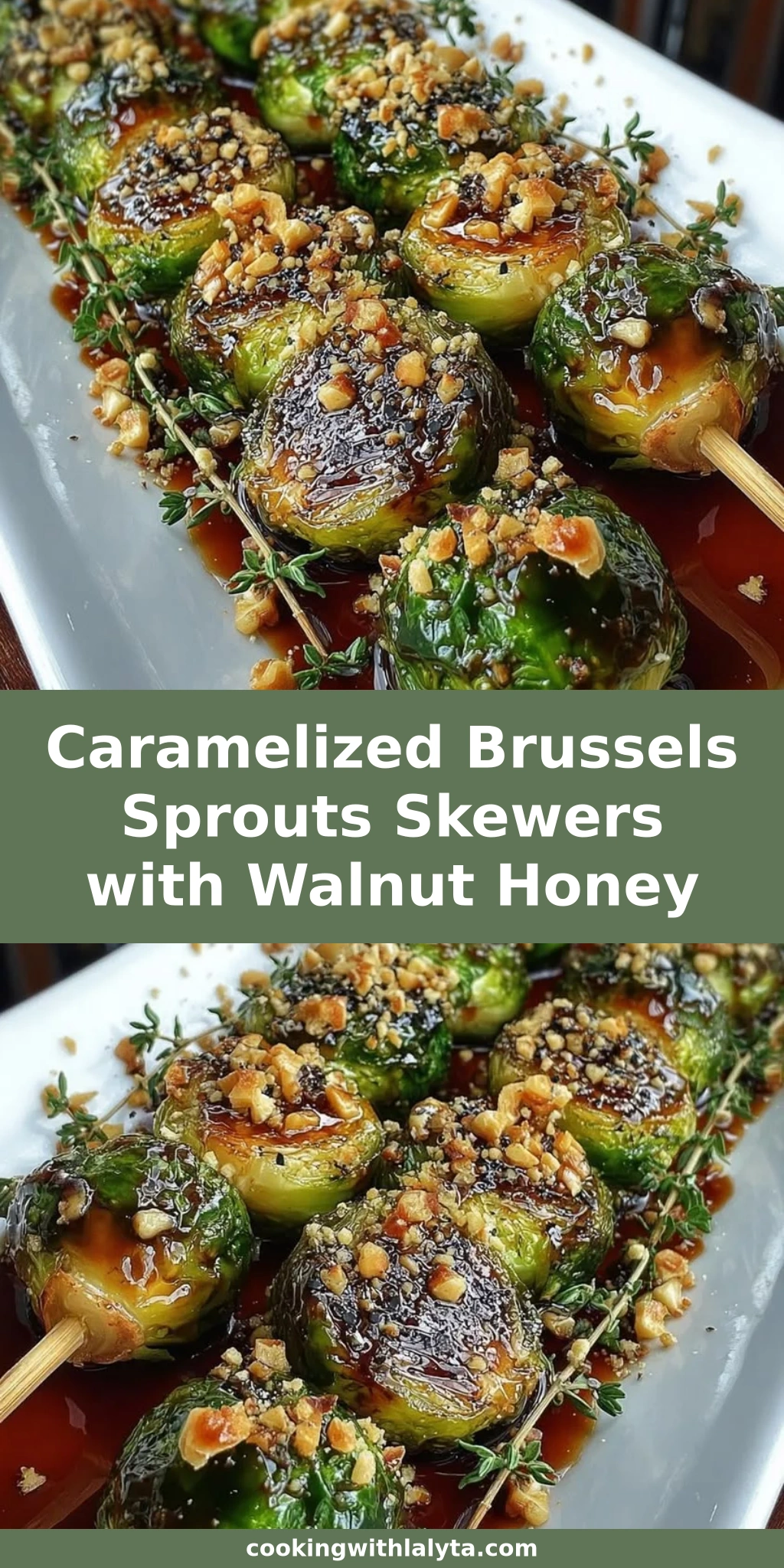
Arrange the hot skewers on a serving platter. Using a spoon, drizzle the walnut honey glaze generously over the top, letting it pool slightly on the plate. The warmth of the sprouts will help the glaze thin and spread. Scatter any extra walnuts that remain in the pan over the skewers. Serve immediately—these are at their best just after glazing, when the contrast between the crisp-tender sprout and the sticky coating is most pronounced.
⚠️ Common Mistake to Avoid: Glazing too early. If you drizzle the honey mixture over the skewers while they’re still in the hot oven or on a sizzling grill pan, the sugar can burn in seconds and turn bitter. Always take the skewers off the heat, plate them, then dress.
| Step | Action | Duration | Key Visual Cue |
|---|---|---|---|
| Prep & Soak | Trim, halve sprouts; season; soak skewers | 10 mins (active), 30 mins soak | Skewers fully submerged, no floating |
| Thread | Slide halves onto skewers, slightly spaced | 5 mins | Cut sides facing up, 5–6 per skewer |
| Roast/Grill | Cook at 400°F or medium-high grill, flip once | 20–25 mins | Deep golden, few dark specks, fork-tender |
| Toast Walnuts | Dry-toast, then chop | 3–4 mins | Fragrant, slightly darker, no burnt smell |
| Make Glaze | Warm honey + balsamic, stir in walnuts | 2 mins | Glossy, pourable, coats a spoon |
| Drizzle & Serve | Plate skewers, pour glaze over | 1 min | Glaze oozing slightly, walnuts scattered |
Serving & Presentation
The first thing your guests will notice is the jewel-like shine of those skewers, so I always serve them on a rustic wooden board or a long white platter to let the golden-brown sprouts pop. A scattering of fresh thyme leaves or a few pomegranate arils adds a festive, Christmas-red sparkle—perfect for that vegetarian Christmas appetizer spread. I like to set a small bowl of extra glaze on the side for dipping, because honestly, people will want more. In my NYC kitchen, I often lay the skewers over a bed of creamy Greek yogurt or whipped feta; the tangy coolness is a gorgeous counterpoint to the warm, sweet-salty sprouts and reminds me of a mezze I’d enjoy back in Morocco.
For a holiday dinner, pair these skewers alongside a roasted butternut squash risotto or a simple lemony arugula salad dressed with shaved Parmesan. They also make a wonderful side for roasted chicken or pork tenderloin if you’re not sticking to a vegetarian menu. And don’t forget the drinks: a crisp Sauvignon Blanc or a sparkling apple cider mocktail cuts through the richness and cleanses the palate between bites. One of my favorite NYC pairings is a hazy IPA whose slight bitterness plays beautifully with the charred edges and sweet glaze.
| Pairing Type | Suggestions | Why It Works |
|---|---|---|
| Side Dish | Lemon-herb quinoa, roasted sweet potatoes, warm farro salad | Hearty grains soak up excess glaze; sweetness echoes the honey. |
| Sauce / Dip | Whipped feta, garlic labneh, spicy sriracha mayo | Cool and tangy or spicy contrast wakes up the palate. |
| Beverage | Dry Riesling, sparkling water with lemon, Oolong tea | Acidity and effervescence cut through richness. |
| Garnish | Pomegranate arils, microgreens, flaky sea salt | Adds color, crunch, and a fresh finish. |
Make-Ahead, Storage & Reheating
My life in the city runs at full tilt, so I love that I can break this recipe into stages. I’ll often trim and halve the sprouts the night before, soak the skewers in a Ziploc bag in the fridge, and toast the walnuts so they’re ready to go. When friends come over, I thread the skewers as we chat, roast them, and then just before serving I warm the glaze and drizzle. That way, the kitchen smells wonderful while people gather, but I’m not stuck at the stove.
| Method | Container | Duration | Reheating Tip |
|---|---|---|---|
| Refrigerator | Airtight container, single layer | Up to 3 days | Reheat in a 350°F oven for 5–7 mins on a foil-lined tray; glaze after warming. |
| Freezer | Freezer-safe bag, unglazed | Up to 1 month | Thaw overnight in fridge; re-crisp in 400°F oven for 8 mins; make fresh glaze. |
| Make-Ahead | Assemble uncooked skewers on tray; cover | Up to 24 hours in fridge | Roast directly from chilled, adding 2–3 extra minutes. |
The key to reheating is never to microwave these skewers—the sprouts turn to steam-bathed mush and the glaze separates into an oily slick. A hot oven or even an air fryer (370°F for 4 minutes) revives the crispy edges nicely. If the glaze has thickened too much in the fridge, let it come to room temperature or gently warm it in a bowl set over a pan of simmering water. For full freshness, I always keep the glaze separate until the final moment, then drizzle and serve. That’s a trick I picked up in a Paris bistro: sauce always meets plate, never tray.
Variations & Easy Swaps
| Variation | Key Change | Best For | Difficulty Impact |
|---|---|---|---|
| Moroccan Spice Twist | Add ½ tsp ras el hanout to oil | Exotic warmth, holiday dinners | Just as easy |
| Maple-Balsamic (Vegan) | Swap honey for maple syrup | Vegan holiday table, Thanksgiving | Watch caramelization time |
| Smoky Paprika & Almond | Smoked paprika on sprouts; toasted almonds | BBQ-style flavor, summer grilling | Just as easy |
Moroccan Spice Twist
Channel my mother’s pantry by adding ½ teaspoon of ras el hanout—that warm, rose-petal-speckled blend—to the olive oil before tossing the sprouts. The cinnamon and cumin notes mingle with the honey-balsamic glaze to create a heady, almost incense-like perfume. This version is stunning alongside a lamb tagine or a simple couscous, and it’s my go-to when I’m homesick for Casablanca. Just be sure to use a mild honey so the spices aren’t bullied into the background.
Maple-Balsamic (Vegan)
For a fully plant-based take, use pure maple syrup instead of honey. The resulting maple glazed Brussels sprouts have a deeper, slightly smoky sweetness that feels right at home on a Thanksgiving table. I’ve tested this swap many times in my NYC kitchen: because maple syrup caramelizes more quickly, roast the skewers at 385°F and check a minute or two earlier. The glaze will be a bit thinner, so I like to reduce it by simmering for an extra 30 seconds before adding the walnuts. Agave nectar works too, but it lacks the depth and can taste one-note; maple is the star here.
Smoky Paprika & Almond Variation
During summer, I swap the walnuts for toasted slivered almonds and add a generous pinch of smoked Spanish paprika (pimentón) to the oil. The earthy, campfire notes are fantastic off the grill, and a squeeze of lemon right before serving brightens everything up. I stumbled upon this combo at a rooftop barbecue in Brooklyn, and it’s been a warm-weather staple ever since. The almonds stay crunchier than walnuts, so the texture contrast is even more pronounced—just be sure to toast them gently so they don’t burn.
How do you caramelize Brussels sprouts on skewers without burning them?
The secret lies in three things: adequate oil coating, soaked skewers, and proper spacing. Toss the sprouts thoroughly in olive oil so every cut side has a glossy sheen—this promotes even browning. Soak wooden skewers for at least 30 minutes; wet wood resists charring and acts as a buffer. On the skewer, leave a little breathing room between each sprout half so steam escapes. Roast at a steady 400°F and flip once halfway through. If you see edges blackening before the interior is tender, simply move the skewer to a cooler spot or lower the heat slightly. I also watch for a deep amber color with just a few darkened flecks—that’s when you know the natural sugars have caramelized without burning.
Can you use a different nut instead of walnuts in the walnut honey dressing?
Absolutely, and I encourage you to experiment. Pecans are my favorite swap because they have a buttery sweetness that mirrors the honey glaze and soften slightly as they sit, creating a melt-in-your-mouth texture. Toasted hazelnuts bring a more robust, earthy flavor that works beautifully with balsamic. Sliced almonds offer a louder crunch and a cleaner taste, while pistachios add a pop of color and a faintly resinous note. Whichever nut you choose, be sure to toast it first—raw nuts lack the depth needed to stand up to the charred sprouts. Avoid peanuts, as their stronger savory profile can clash.
How long do you need to cook caramelized Brussels sprout skewers in the oven?
At 400°F, plan on 20 to 25 minutes total. I set a timer for 12 minutes, then flip the skewers using tongs. The sprouts should be starting to brown on the underside. After flipping, roast another 10 to 13 minutes until they’re fork-tender and have developed deep caramelized patches. Thickness matters: very large sprouts may need a couple of extra minutes, while tiny ones might be done by 18 minutes. I always check by piercing one with the tip of a knife—if there’s no resistance, they’re ready. If you want extra char, you can finish them under the broiler for 1 minute, but watch carefully.
What are the best dipping sauces or sides to serve with caramelized Brussels sprout skewers?
These skewers shine with a cool, creamy dip. I love a bowl of whipped feta or labneh swirled with a little lemon zest—it balances the sweetness. A garlicky aioli or a sriracha-lime mayo brings some kick. For a more substantial side, serve them over a bed of couscous or quinoa tossed with dried cranberries and herbs. During the holidays, they’re wonderful alongside a platter of roasted root vegetables or a simple green salad with a mustard vinaigrette. Even a light drizzle of tahini sauce, inspired by my Moroccan roots, adds a pleasant nutty depth. The key is contrast: something fresh and sharp to cut through the glaze’s richness.
Can I make these skewers ahead of time for a party?
Yes, and I do it often when I’m hosting. You can trim, halve, and season the sprouts and even thread them onto skewers up to 24 hours in advance. Store the assembled skewers on a baking sheet, covered, in the fridge. Soak the skewers right before threading, or if you soak them ahead, just pat them dry so the oil adheres. Roast them just before serving, allowing an extra 2–3 minutes since they’ll start cold. Alternatively, roast the skewers fully, cool them, and refrigerate unglazed. Reheat in a hot oven (350°F for 5–7 minutes) and drizzle with fresh glaze. The glaze itself can be made a day ahead and gently rewarmed.
Are these Brussels sprout skewers gluten-free?
Absolutely, the recipe as written contains no gluten. All ingredients—Brussels sprouts, olive oil, walnuts, honey, balsamic vinegar, and wooden skewers—are naturally gluten-free. Just double-check your balsamic vinegar label to ensure no malt vinegar or caramel coloring containing gluten is added (most pure balsamic is safe). If you’re serving with a dipping sauce, be sure that’s gluten-free too. This makes the skewers an ideal choice for a gluten-free holiday spread or weeknight dinner without worry.
Can I use frozen Brussels sprouts for this recipe?
You can, though the result will be slightly softer. Thaw frozen whole Brussels sprouts completely in the refrigerator, then drain and pat them extremely dry with paper towels—excess moisture is the enemy of caramelization. Halve them if they’re large. The texture may be a bit less crisp on the outside, but the flavor will still be delicious. To improve browning, I toss them with a tiny extra drizzle of oil and roast at 425°F for the first 5 minutes, then lower to 400°F. Fresh is always best for that ideal char, but in a pinch, frozen works.
How do I prevent the skewers from burning on the grill?
Soaking wooden skewers in water for a full 30 minutes is your first line of defense. I also like to add a splash of white vinegar to the soaking water, which slightly raises the wood’s char point. On the grill, avoid placing the skewers directly over the hottest flames; set them on a cooler zone and close the lid to trap heat. If the exposed wooden ends are still burning, you can wrap them in a small piece of aluminum foil before threading the sprouts. Metal skewers are an easy alternative—no soaking needed and they conduct heat to help cook the sprouts from the inside.
Can I use maple syrup instead of honey to make this recipe vegan?
Yes, maple syrup is a fantastic plant-based substitute that turns this into a maple glazed Brussels sprouts dish. Because maple syrup is thinner and caramelizes faster than honey, reduce the oven temperature to 385°F and check the skewers a couple of minutes earlier. I also like to let the maple-balsamic mixture simmer for about 30 seconds longer to thicken slightly before adding the walnuts. The flavor profile shifts to a deeper, woodsy sweetness that pairs beautifully with pecans. Many of my vegan friends request this version for Friendsgiving, and it never disappoints.
Share Your Version!
I truly believe recipes come alive when you add your own touch, and I’d love nothing more than to see these caramelized Brussels sprouts skewers through your eyes. Did you try the Moroccan spice twist? Maybe you grilled them over an open flame and got those perfect charred edges? Leave a star rating and a quick comment below—it helps other home cooks find the recipe and lets me know what you’re loving. And if you snap a photo for Instagram or Pinterest, tag me @cookingwithlalyta so I can cheer you on from my little NYC kitchen.
One question I’d love you to answer in the comments: What’s your favorite nut to pair with Brussels sprouts, and why? I’m always amazed by the creative combinations this community dreams up. From my NYC kitchen to yours — I hope this recipe brings as much warmth to your table as it does to mine. — Lalybeth 🧡
Love This Recipe? Save It to Pinterest!
If you enjoyed this Caramelized Brussels Sprouts Skewers with Walnut Honey recipe, don’t let it get lost in your browser tabs! 😄 Pin it now so you can find it again anytime — and explore hundreds more tried-and-tested recipes waiting for you on my Pinterest boards.
👉 Follow Lalybeth on Pinterest @cookingwithlalyta
📌 Pin this recipe · 🔁 Re-pin your favorites · 💬 Tag me when you make it — I love seeing your creations!
Did you make these skewers? Let’s chat!
Drop a comment below with your favorite way to serve them, or any clever swaps you tried. I read every single one and often respond from my little NYC kitchen. Your stories make this community so special.
⭐ Don’t forget to leave a star rating — it helps others discover the recipe.
Caramelized Brussels Sprouts Skewers with Walnut Honey
- Total Time: 35 mins
- Yield: 4 1x
Description
These caramelized Brussels sprouts skewers are a delicious appetizer or side dish, drizzled with a walnut honey sauce.
Ingredients
- 1 lb Brussels sprouts, trimmed and halved
- 2 tbsp olive oil
- Salt and pepper to taste
- 1/2 cup walnuts
- 1/4 cup honey
- 1 tbsp balsamic vinegar
- Wooden skewers, soaked
Instructions
- Preheat grill or oven to 400°F.
- Toss Brussels sprouts with olive oil, salt, and pepper.
- Thread onto skewers.
- Grill or roast for 20-25 minutes, turning once, until caramelized.
- Meanwhile, toast walnuts in a skillet and chop.
- Mix honey, balsamic vinegar, and walnuts.
- Drizzle over skewers and serve.
Notes
Soak wooden skewers for 30 minutes to prevent burning.
- Prep Time: 10 mins
- Cook Time: 25 mins
- Method: Appetizer
- Cuisine: American
Nutrition
- Calories: 180
- Sugar: 12g
- Fat: 10g
- Carbohydrates: 20g
- Protein: 5g
Tried This Recipe? Leave a Comment!
Did you make this recipe? I’d love to hear how it turned out! Please leave a comment and a rating below. Your feedback helps other home cooks and supports cookingwithlalyta.com!
For more delicious inspiration, follow me on Pinterest!