Table of Contents
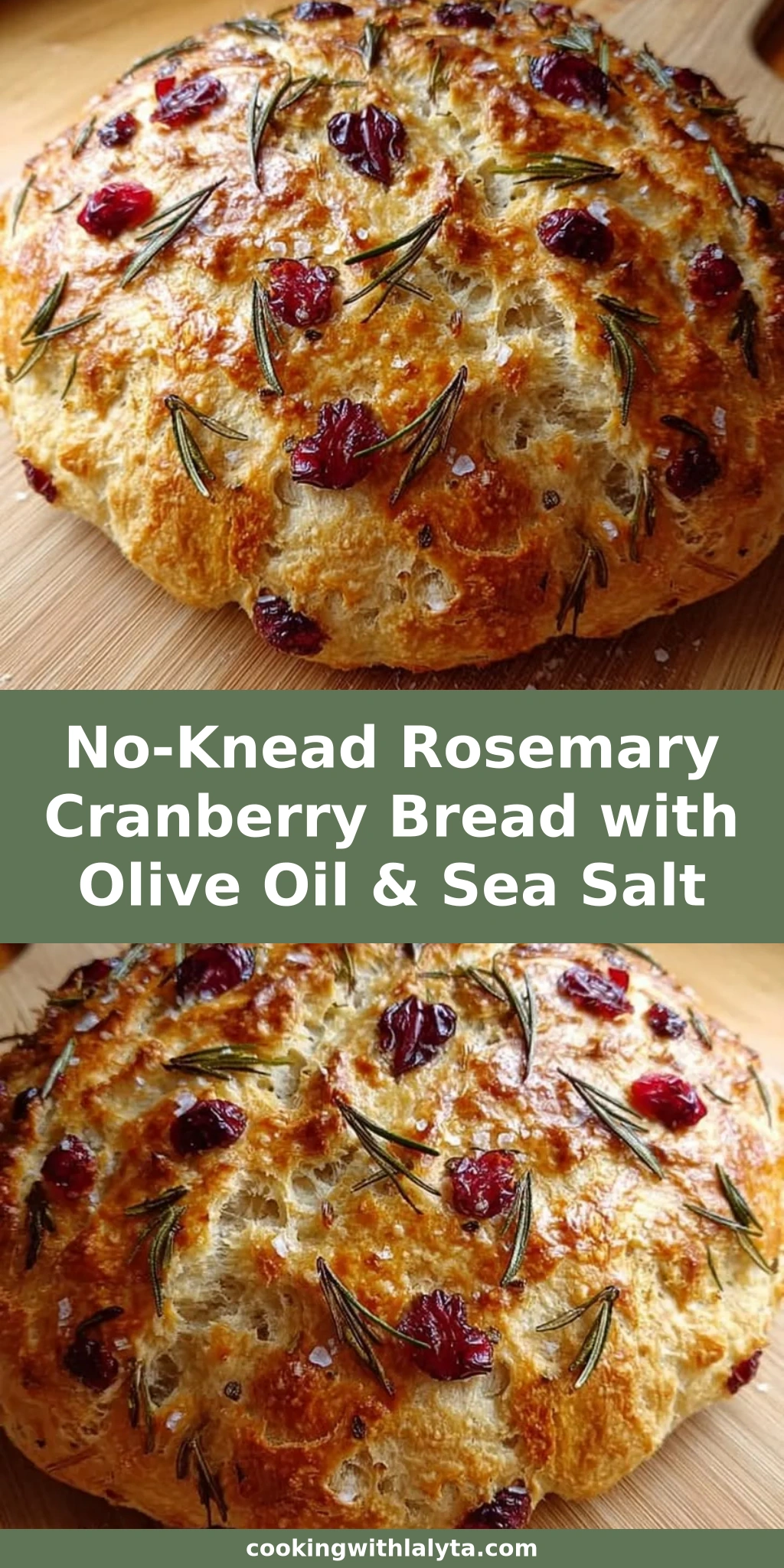
No-Knead Rosemary Cranberry Bread with Olive Oil & Sea Salt – A Rustic Artisan Loaf with Sweet-Tart Cranberries & Fragrant Rosemary
I still remember the first time I pulled a loaf of no-knead rosemary cranberry bread from my tiny Paris apartment oven — the steam fogging the window, the scent of rosemary weaving through the air, and the jeweled cranberries peeking through a crackly, golden crust. That was the moment I fell in love with no-knead bread. Back then, as a culinary student, I craved the kind of rustic, artisan loaf that tasted like it had been made in a centuries-old boulangerie, but didn’t require me to spend hours kneading dough. This no-knead rosemary cranberry bread with olive oil & sea salt is exactly that — a chewy, open-crumbed, bakery-style bread that’s astonishingly simple to make at home. The olive oil gives the crust a delicate crispness and the sea salt finish makes every bite sing.
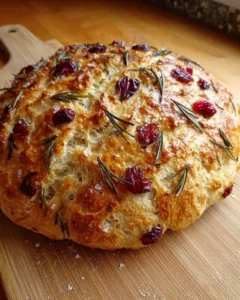
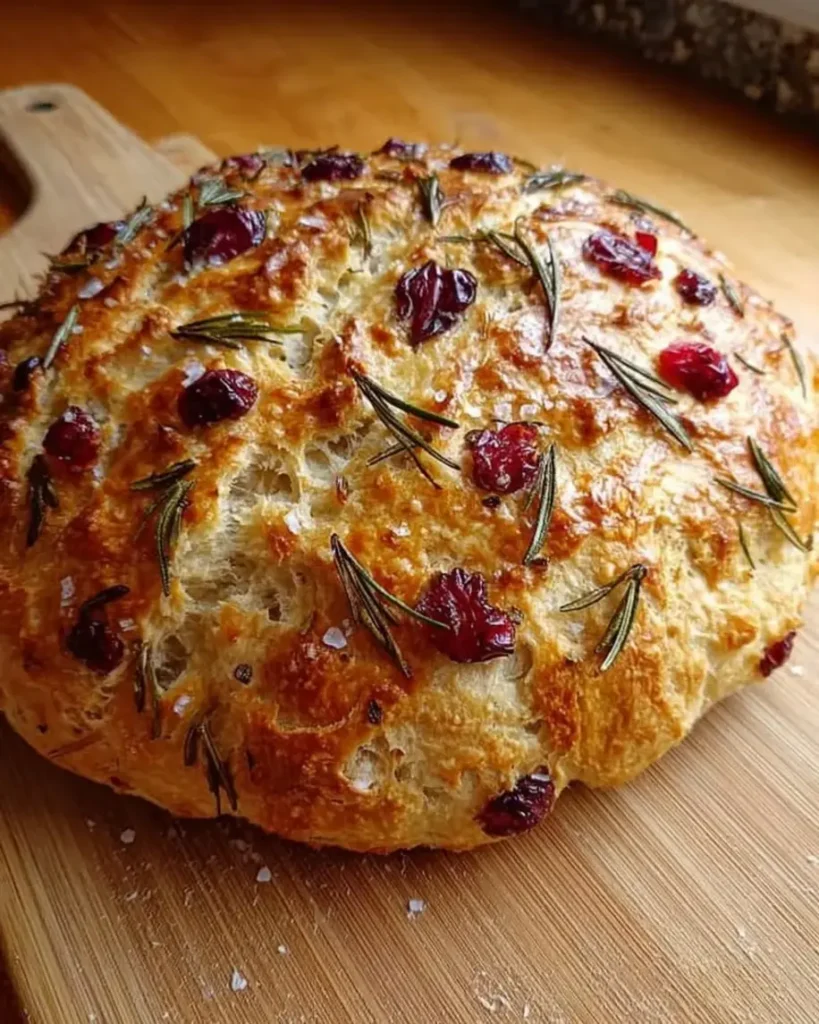
Let me paint you a picture: you crack into that deep amber crust and the aroma of warm rosemary and sweet-tart cranberries rushes out. The crumb is airy and tender, studded with ruby-red dried cranberries that have softened just enough to become jammy little bursts of sweetness. The olive oil crust shatters under your bread knife, giving way to a chewy interior that’s perfect for sopping up soup or simply slathering with good butter. A sprinkle of flaky sea salt on top adds the most addictive salty crunch. This is the kind of cranberry rosemary artisan bread that stops conversation at the dinner table — everyone suddenly goes quiet, just chewing and smiling.
What makes my version of no-knead bread with olive oil different? I pull from three culinary worlds. From my mother’s kitchen in Morocco comes the wisdom that bread should always be finished with a generous drizzle of good olive oil — never shy away from it. From my Paris training, I learned that a long, cold fermentation develops deep, complex flavor with virtually no effort. And from my life here in New York City, I’ve discovered that dried cranberries — those sweet-tart gems I find year-round at my local farmers market — are the perfect foil to earthy rosemary. I’ll share a key pro tip about why cool water matters for slow fermentation, and one common mistake home bakers make when adding toppings that can deflate your beautifully risen dough. This easy no-knead bread recipe is forgiving, flexible, and endlessly impressive.
Why This No-Knead Rosemary Cranberry Bread Recipe Is the Best
The flavor secret here is time — glorious, hands-off time. By using a tiny amount of yeast and a 12 to 18 hour room-temperature fermentation, the dough develops a subtly tangy, almost sourdough-like complexity without any starter. I learned this long-fermentation technique in Paris, where bakers let time do the hard work. The olive oil does double duty: it enriches the dough slightly, giving the crumb a tender, almost cake-like softness, while also creating that shatteringly crisp crust when it hits the blazing hot Dutch oven. And those dried cranberries? They rehydrate just enough during the long rise to turn into soft, jammy pockets that balance the piney rosemary beautifully.
From a texture standpoint, this cranberry rosemary artisan bread is everything you want an artisan loaf to be. The Dutch oven traps steam during the first half of baking, which is the secret to the blistered, crackly crust that professional bakers achieve in commercial steam-injection ovens. Once you remove the lid, the dry heat finishes the crust to a deep mahogany while the interior stays moist and chewy. I’ve tested this recipe dozens of times, and the combination of bread flour (for extra gluten strength) and a gentle shaping technique — just a couple of folds, no aggressive kneading — yields an open, holey crumb that rivals any bakery loaf.
If you’re new to bread baking, this easy no-knead bread recipe is your gateway. There’s no stand mixer needed, no windowpane tests, no anxiety about over-kneading. You literally stir a few ingredients together in a bowl, walk away for 12 hours, and come back to dough that’s bubbly, billowy, and ready to transform into something spectacular. I’ve made this bread with friends in my tiny NYC apartment kitchen, and they’re always shocked at how little active work is involved. It’s foolproof because the long fermentation builds both flavor and structure, so even if your shaping is a little wonky, the results are still gorgeous and delicious.
No-Knead Rosemary Cranberry Bread Ingredients
When I shop for these ingredients in New York, I love visiting the Union Square Greenmarket for fresh rosemary — the aroma is so much more vibrant than what you find in plastic clamshells at the grocery store. Dried cranberries are a pantry staple in my kitchen, just like my mother always kept raisins and dried apricots in hers back in Morocco. For the olive oil, I reach for a good extra-virgin with a fruity, peppery finish — nothing too expensive, but something you’d happily dip bread into. And if you can, grab a box of coarse flaky sea salt like Maldon for the topping; it makes all the difference in that final salty crunch.
Ingredients List
- FOR THE DOUGH:
- 3 cups bread flour or all-purpose flour
- 1 ½ cups cool water (about 70°F/21°C)
- ¼ teaspoon instant yeast (or ½ teaspoon active dry yeast)
- 1 ½ teaspoons fine sea salt
- ¾ cup dried cranberries
- 2 tablespoons fresh rosemary, finely chopped
- 2 tablespoons extra-virgin olive oil
- FOR THE TOPPING:
- 1 tablespoon extra-virgin olive oil
- 1 teaspoon fresh rosemary, chopped
- 1 teaspoon coarse sea salt
Ingredient Spotlight
Bread Flour: Bread flour is my go-to for this no-knead rosemary cranberry bread because its higher protein content (about 12-14%) develops stronger gluten networks during the long fermentation, giving you that beautifully chewy, open crumb. You’ll find it in the baking aisle of any US grocery store — King Arthur and Bob’s Red Mill are reliable brands. If you only have all-purpose flour, the bread will still work beautifully; the crumb will be slightly less chewy and a touch more tender, but still utterly delicious.
Dried Cranberries: Dried cranberries are the star of this cranberry rosemary artisan bread — they bring a concentrated sweet-tart pop that fresh cranberries can’t replicate in a no-knead setting. Look for unsweetened or reduced-sugar dried cranberries if you prefer less sweetness; otherwise, regular sweetened dried cranberries work perfectly. They rehydrate slightly during the long fermentation, turning into soft, jammy pockets. If you must substitute, dried cherries or chopped dried apricots work wonderfully, though the flavor profile shifts more toward sweet and less tart.
Fresh Rosemary: Fresh rosemary is non-negotiable here — dried rosemary simply doesn’t have the same piney, aromatic punch and can taste dusty and sharp. When shopping, look for sprigs with firm, fragrant needles that aren’t yellowing. Chop it finely so it distributes evenly throughout the dough. In a pinch, you could swap in fresh thyme (softer, more floral) or fresh sage (earthier), but rosemary’s assertive, woodsy character is what makes this bread sing.
Extra-Virgin Olive Oil: This ingredient pulls double duty: it enriches the dough for a tender crumb and creates that crackly, golden crust when baked at high heat. Choose an olive oil with a fruity, slightly peppery profile — it doesn’t need to be your most expensive finishing oil, but avoid anything labeled “light” or “pure” olive oil, as those lack flavor. A good California or Spanish extra-virgin works beautifully. If you need a substitute, avocado oil is neutral and works structurally, but you’ll miss the fruity olive oil character on the crust.
| Original Ingredient | Best Substitution | Flavor / Texture Impact |
|---|---|---|
| Bread Flour | All-Purpose Flour | Slightly less chewy crumb, tender texture |
| Dried Cranberries | Dried Cherries or Chopped Apricots | Sweeter, less tart; different fruit character |
| Fresh Rosemary | Fresh Thyme or Sage | More floral (thyme) or earthy (sage); still delicious |
| Extra-Virgin Olive Oil | Avocado Oil | Neutral flavor, still yields a crisp crust |
How to Make No-Knead Rosemary Cranberry Bread — Step-by-Step
Don’t let the long total time intimidate you — nearly all of it is hands-off while the dough does its magic. I’ll walk you through every step just as I would if you were standing beside me in my NYC kitchen.
Step 1: Whisk Dry Ingredients
In a large mixing bowl, whisk together 3 cups of bread flour, 1 ½ teaspoons of fine sea salt, and ¼ teaspoon of instant yeast until evenly combined. This dry mix is your blank canvas — whisking now ensures the yeast and salt are distributed, so you don’t end up with salty pockets or uneven fermentation. Use a big bowl; the dough will expand significantly over the next 12 to 18 hours.
💡 Lalybeth’s Pro Tip: If you’re using active dry yeast instead of instant, dissolve it in 2 tablespoons of the cool water first and let it bloom for 5 minutes before adding. Instant yeast is finer and can be mixed right in with the flour — it’s my preference for this easy no-knead bread recipe.
Step 2: Form a Shaggy Dough
Pour 1 ½ cups of cool water (about 70°F) and 2 tablespoons of extra-virgin olive oil into the flour mixture. Using a sturdy wooden spoon, stir everything together until no dry flour pockets remain and a shaggy, sticky mass forms — this takes about 30 to 45 seconds. The dough will look rough and unkempt, and that’s exactly what you want. Resist the urge to keep stirring; overworking at this stage can toughen the final crumb.
⚠️ Common Mistake to Avoid: Don’t use warm water! A lot of recipes call for warm water to speed up yeast activity, but for this long, slow fermentation, cool water is key. If your water is too warm, the yeast will work too fast, and by the 12-hour mark, your dough may overproof and collapse. Stick with cool tap water — about 70°F — for the best flavor and structure.
Step 3: Fold in Cranberries & Rosemary
Scatter ¾ cup of dried cranberries and 2 tablespoons of finely chopped fresh rosemary over the shaggy dough. Using your wooden spoon — or get in there with a clean, damp hand — fold the dough over itself several times until the cranberries and rosemary are fairly evenly distributed. The dough will be sticky, so don’t stress about every cranberry being perfectly placed. The long fermentation will help everything settle.
💡 Lalybeth’s Pro Tip: If your dried cranberries are on the drier side, soak them in warm water for 10 minutes and drain well before adding. This plumps them up so they stay soft and jammy in the finished cranberry rosemary artisan bread rather than turning into tough little chewy bits.
Step 4: Long, Slow Fermentation
Cover the bowl tightly with plastic wrap or a clean kitchen towel and let it rest at room temperature for 12 to 18 hours. After this long nap, the surface should be dotted with bubbles — like a swampy little moon — and the dough will have doubled, maybe even tripled, in size. It’ll smell slightly tangy and yeasty, a sign that complex flavors have developed. If your kitchen is on the cooler side (below 68°F), lean toward the longer end of that range.
💡 Lalybeth’s Pro Tip: I like to mix my dough around 6 p.m., let it ferment overnight, and then bake it fresh the next morning. The timing is perfectly practical for a lazy weekend bake — and your kitchen smells like an artisan bakery by 10 a.m.
Step 5: Shape and Second Rise
Lightly flour a clean work surface and turn the bubbly dough out onto it. Don’t punch it down — just gently coax it out. Fold the dough over on itself once or twice to create some surface tension, then shape it into a rough, taut ball. Cover it loosely with the kitchen towel and let it rest for 30 minutes while you preheat the oven. This bench rest relaxes the gluten just enough to give you a tender crumb while still holding its shape.
⚠️ Common Mistake to Avoid: Over-flouring your work surface. A light dusting is all you need. If you add too much flour during shaping, it’ll get incorporated into the dough and make your loaf dry and dense instead of chewy and open.
Step 6: Preheat Dutch Oven
Place a large Dutch oven (5 to 6 quarts) with its lid inside your oven, then preheat the oven to 450°F (230°C). Let it heat for at least 30 full minutes — you want that pot screaming hot. The intense, enclosed heat is what creates the burst of steam that gives no-knead bread with olive oil its signature crust. If your Dutch oven isn’t fully preheated, you’ll miss out on the dramatic oven spring and blistered exterior.
💡 Lalybeth’s Pro Tip: If your Dutch oven has a plastic knob on the lid, check if it’s oven-safe to 450°F. Most newer models are fine, but some older ones aren’t. If yours can’t handle the heat, simply unscrew the knob and plug the hole with a small ball of aluminum foil for this bake.
Step 7: Add Olive Oil, Rosemary & Sea Salt Topping
Carefully transfer the rested dough ball to a sheet of parchment paper. Brush the top generously with 1 tablespoon of extra-virgin olive oil — this is what will crisp and brown into that gorgeous golden crust. Then sprinkle with the remaining 1 teaspoon of chopped fresh rosemary and 1 teaspoon of coarse sea salt, pressing very gently so the toppings adhere. The parchment paper not only helps you transfer the dough but also prevents sticking.
⚠️ Common Mistake to Avoid: Pressing too firmly when adding toppings can partially deflate your beautifully risen dough. Use a light hand — just enough pressure for the rosemary and salt to stick. The olive oil brush will help everything cling without force.
Step 8: Steam Bake Covered
Using heavy-duty oven mitts, lift the parchment paper by its corners and lower the dough gently into the preheated Dutch oven. Be extremely careful — that pot is 450°F and unforgiving. Cover immediately with the lid and bake for 30 minutes. The sealed environment traps steam from the dough, which keeps the crust soft and elastic, allowing the loaf to expand dramatically upward — that’s your oven spring. Don’t peek; every time you lift the lid, precious steam escapes.
💡 Lalybeth’s Pro Tip: If your parchment paper has a lot of overhang, trim it with scissors before lowering it into the pot. Long flaps that touch the oven walls can scorch or catch fire. Leave about 1 to 2 inches overhang as handles for easy lifting later.
Step 9: Finish Baking Uncovered
After 30 minutes, remove the lid from the Dutch oven. The loaf should be pale golden and nicely risen. Continue baking uncovered for another 10 to 15 minutes, until the crust is a deep, rich golden brown and the loaf sounds hollow when you tap the bottom. If you have an instant-read thermometer, the internal temperature should reach about 200°F to 205°F. The olive oil on the crust will have caramelized into a glossy, crackly finish that’s irresistible.
⚠️ Common Mistake to Avoid: Underbaking. It’s tempting to pull the bread when it just looks golden, but a slightly darker crust means more flavor and a crisper texture. Don’t be afraid of a deep amber color — that’s where the magic of this no-knead rosemary cranberry bread lives.
Step 10: Cool Completely Before Slicing
Lift the finished loaf out of the Dutch oven using the parchment handles and transfer it to a wire rack. Now comes the hardest part: let it cool completely before slicing, about 1 to 2 hours. I know the aroma is intoxicating, but if you cut in while it’s still steaming, the crumb will be gummy and compress rather than slice cleanly. The bread continues to set as it cools, and the texture improves dramatically.
💡 Lalybeth’s Pro Tip: To keep the crust extra crackly as it cools, don’t cover the bread with a towel. Let it cool on the wire rack exposed to the air. If you wrap it while warm, trapped steam will soften that beautiful crisp crust you worked so hard to achieve.
| Step | Action | Duration | Key Visual Cue |
|---|---|---|---|
| 1 | Whisk Dry Ingredients | 2 mins | Evenly blended, no clumps |
| 2 | Form Shaggy Dough | 1 min | Sticky, rough mass, no dry spots |
| 3 | Fold in Cranberries & Rosemary | 2 mins | Even distribution, clumps of fruit |
| 4 | Long Fermentation | 12-18 hrs | Bubbly surface, doubled in size |
| 5 | Shape & Second Rise | 30 mins | Taut ball, slightly puffed |
| 6 | Preheat Dutch Oven | 30 mins | Oven at 450°F, pot ripping hot |
| 7 | Add Topping | 2 mins | Glossy olive oil sheen, salt visible |
| 8 | Steam Bake Covered | 30 mins | Pale golden, risen dramatically |
| 9 | Finish Baking Uncovered | 10-15 mins | Deep golden brown, hollow sound |
| 10 | Cool Completely | 1-2 hrs | Room temperature, crust crackly |
Serving & Presentation
When I bring this no-knead rosemary cranberry bread to the table, I like to present it on a rustic wooden board with a serrated bread knife and a small dish of good salted butter or whipped honey butter on the side. The loaf is so gorgeous on its own — that deep amber crust studded with rosemary flecks and sparkling sea salt — that you don’t need much fuss. A few sprigs of fresh rosemary scattered around the board echo the flavors inside and look effortlessly beautiful, a little trick I picked up from pastry plating back in Paris.
This cranberry rosemary artisan bread is incredibly versatile at the table. Slice it thick and serve it alongside a bowl of creamy butternut squash soup or a hearty lentil stew for a cozy weeknight dinner. It’s also spectacular as part of a cheese board — try it with a soft, tangy goat cheese or a sharp aged cheddar. The sweet-tart cranberries play beautifully against savory, salty cheeses. For a casual NYC-style brunch, I toast thick slices and top them with ricotta, a drizzle of honey, and a few extra cracks of black pepper. My mother in Morocco would have simply served it with a bowl of golden olive oil and za’atar for dipping, and honestly, that’s still one of my favorite ways to enjoy it.
For a more substantial meal, use this bread as the base for an open-faced sandwich. A smear of Dijon mustard, thin slices of roasted turkey or chicken, and some peppery arugula create a perfect lunch. The olive oil crust holds up beautifully to toppings without getting soggy. However you serve it, bring the loaf to the table whole and let everyone slice their own piece — there’s something deeply communal and satisfying about tearing into a freshly baked loaf together.
| Pairing Type | Suggestions | Why It Works |
|---|---|---|
| Side Dish | Butternut squash soup, lentil stew, tomato bisque | Hearty, earthy flavors complement the bread’s chewy texture and sweet-tart notes |
| Sauce / Dip | Olive oil & za’atar, whipped honey butter, balsamic reduction | Sweet, savory, and tangy dips highlight the rosemary and cranberry |
| Beverage | Pinot Noir, spiced apple cider, black tea | Earthy wine or warm spiced drinks echo the bread’s cozy flavor profile |
| Garnish | Fresh rosemary sprigs, flaky sea salt, cracked black pepper | Reinforces the aroma and adds a final touch of elegance |
Make-Ahead, Storage & Reheating
In my busy NYC life, I love that this no-knead rosemary cranberry bread can be largely made ahead. The dough does its long ferment overnight while I sleep, and then it’s just a quick shape and bake in the morning. The baked loaf itself keeps beautifully for a few days, and I often make two at a time — one for now, one for the freezer. Here’s how I handle storage and reheating to keep that crust as crackly as the moment it came out of the oven.
| Method | Container | Duration | Reheating Tip |
|---|---|---|---|
| Room Temperature | Wrapped in a clean kitchen towel or paper bag | Up to 3 days | Warm slices in a 350°F oven for 5-7 mins |
| Refrigerator | Airtight container or zip-top bag | Up to 5 days | Reheat whole loaf at 350°F for 10-15 mins to re-crisp crust |
| Freezer | Double-wrapped in plastic wrap then foil, or freezer bag | Up to 3 months | Thaw at room temp, then reheat at 350°F for 10-15 mins |
| Make-Ahead Dough | Covered bowl in refrigerator | Up to 24 hours (after initial 12-hr rise) | Let come to room temp 1 hour before shaping |
One thing I learned during my Paris training: never store crusty bread in a plastic bag at room temperature. It traps moisture and turns that gorgeous, crackly crust soft and leathery. Instead, I keep the loaf cut-side down on a wooden board with a clean kitchen towel draped over it — this lets the bread breathe while protecting the crumb from drying out too quickly. If you do need to refresh slices, a quick 5-minute warm-up in a 350°F oven works miracles. The crust re-crisps, the interior softens, and the rosemary aroma fills your kitchen all over again.
For freezing, I slice the entire loaf first, then freeze the slices in a single layer on a baking sheet before transferring them to a freezer bag. That way, I can pull out exactly as many slices as I need and pop them straight into the toaster or oven. It’s a little meal-prep trick that makes weekday mornings feel special — imagine toasted cranberry rosemary bread with a swipe of butter alongside your morning eggs. That’s a little New York luxury on a time budget.
Variations & Easy Swaps
| Variation | Key Change | Best For | Difficulty Impact |
|---|---|---|---|
| Classic Olive Oil, Rosemary & Sea Salt | Omit cranberries entirely | Savory meals, dipping, cheese boards | No change |
| Gluten-Free Version | Use 1:1 gluten-free flour blend + 1 tsp xanthan gum | Gluten-sensitive eaters | Slightly trickier; dough is stickier |
| Seasonal NYC Fall Walnut & Fig | Swap cranberries for chopped dried figs, add ½ cup toasted walnuts | Autumn gatherings, holiday tables | No change |
Classic Olive Oil, Rosemary & Sea Salt (No Cranberry)
If you’re craving a purely savory loaf, simply leave out the dried cranberries. This stripped-back version lets the rosemary and olive oil shine in their full glory, and the crust gets even more focus. I love this variation for dipping into soups and stews, or served alongside a cheese plate with soft, tangy cheeses. It’s the bread my mother would recognize from her own kitchen — simple, honest, and deeply satisfying. The dough behaves exactly the same way, so there’s no adjustment needed for timing or technique. Just pure, fragrant, golden no-knead bread with olive oil.
Gluten-Free No-Knead Rosemary Cranberry Bread
For a gluten-free version, I’ve tested this with a high-quality 1:1 gluten-free flour blend (Bob’s Red Mill or King Arthur Measure for Measure) plus 1 teaspoon of xanthan gum for structure. The dough will be noticeably stickier and wetter — think thick cake batter rather than shaggy dough — but that’s completely fine. You’ll want to reduce the water slightly, to about 1¼ cups, and keep a close eye on the fermentation; gluten-free flours can overproof faster. The crust won’t be quite as shatteringly crisp, but it still gets a lovely golden color, and the interior is tender and moist. The rosemary and cranberry flavors shine through beautifully, making this a wonderful option for gluten-free guests at your holiday table.
Seasonal NYC Fall Walnut & Fig Twist
One chilly October morning at the Union Square Greenmarket, I spotted fresh California figs and was inspired to create a seasonal variation of this cranberry rosemary artisan bread. Swap the dried cranberries for ¾ cup of chopped dried figs (stems removed) and add ½ cup of roughly chopped toasted walnuts along with them. The figs bring a honeyed, jammy sweetness that’s less tart than cranberries but equally luscious, while the walnuts add a rich, buttery crunch. The rosemary still works beautifully here — its piney notes are a classic partner with figs in Mediterranean cooking. This version feels like autumn in a loaf and is absolutely stunning on a Thanksgiving table.
How long should I let no-knead rosemary cranberry bread dough rise before baking?
For this no-knead rosemary cranberry bread, the ideal fermentation time is 12 to 18 hours at room temperature (around 70°F). This long, slow rise is what develops the bread’s complex, slightly tangy flavor and open, chewy crumb — no kneading required. You’ll know it’s ready when the surface of the dough is dotted with bubbles and it has at least doubled in size. If your kitchen is cooler, lean toward the 18-hour mark; if it’s warm, check around 12 hours. After the initial rise, there’s a shorter 30-minute bench rest after shaping, which relaxes the gluten just enough to ensure a tender crumb while the loaf holds its form beautifully in the oven.
Can I use dried cranberries instead of fresh in no-knead rosemary cranberry bread?
Absolutely — and in fact, I strongly recommend using dried cranberries for this no-knead rosemary cranberry bread! Dried cranberries are much better suited to a long, slow fermentation because they rehydrate gradually, turning into soft, jammy pockets of concentrated sweet-tart flavor. Fresh cranberries, on the other hand, release a lot of liquid as they bake, which can throw off your dough’s hydration and create soggy spots inside the loaf. If your dried cranberries seem particularly dry, I like to soak them in warm water for 10 minutes and drain well before folding them into the dough. This plumps them up beautifully so they stay tender and juicy in the finished cranberry rosemary artisan bread.
What is the best way to add olive oil and sea salt to the top of no-knead bread before baking?
To get that gorgeous, glossy, crackly crust on your no-knead bread with olive oil, brush the top of the shaped dough generously with extra-virgin olive oil right before it goes into the preheated Dutch oven. Use a soft pastry brush and apply a thin, even layer — it should look slick but not pooling. Then, sprinkle the chopped fresh rosemary and coarse flaky sea salt (like Maldon) over the oiled surface, pressing very gently with your fingertips just until they adhere. The key is a light touch: pressing too firmly can partially deflate your carefully risen dough. The olive oil helps the toppings stick while also caramelizing in the intense heat to create that deep golden-brown, shatteringly crisp crust that makes this easy no-knead bread recipe so irresistible.
Can I make no-knead rosemary cranberry bread without a Dutch oven or cast iron pot?
Yes, you can still bake this no-knead rosemary cranberry bread without a Dutch oven, though the crust will be less dramatically blistered and crisp. The Dutch oven’s magic is that it traps steam, which keeps the crust soft during the first phase of baking so the loaf can expand fully. To replicate this, place a rimmed baking sheet on the bottom rack while the oven preheats, and when you put the bread in (on a baking stone or inverted sheet pan on the middle rack), carefully toss a handful of ice cubes into the hot bottom pan and quickly close the door. The ice creates a burst of steam. Bake at the same 450°F for about 35-40 minutes total, until deeply golden. The result won’t be quite as crackly as the Dutch oven version, but it will still be a delicious, crusty cranberry rosemary artisan bread.
Why is my no-knead bread crust not crispy enough?
If your no-knead rosemary cranberry bread crust isn’t as crispy as you’d like, there are a few common culprits. First, make sure your Dutch oven is thoroughly preheated for at least 30 minutes at 450°F — if the pot isn’t screaming hot when the dough hits it, you miss out on the initial burst of steam that creates a crisp crust. Second, don’t skip the uncovered baking phase; those final 10 to 15 minutes with the lid off are crucial for driving off moisture and caramelizing the olive oil on the surface. Finally, cooling method matters: always cool the loaf on a wire rack, uncovered. If you wrap the bread while it’s still warm, trapped steam will soften that beautiful crust you worked so hard to achieve. A properly baked and cooled loaf should crackle audibly when you press the crust.
Can I add other mix-ins to this no-knead rosemary cranberry bread?
This easy no-knead bread recipe is wonderfully flexible and welcomes all sorts of mix-ins! Some of my favorite additions are toasted walnuts or pecans (about ½ cup, roughly chopped), which add a buttery crunch that pairs beautifully with the cranberries and rosemary. You could also fold in ½ cup of grated Parmesan or sharp aged cheddar for a savory, cheesy twist. If you’re feeling adventurous, a handful of pitted and halved Kalamata olives and a little lemon zest will transport the loaf toward Mediterranean flavors. Whatever you add, keep the total amount of mix-ins to about 1 to 1½ cups so the dough can still support itself structurally. Fold them in gently after the initial mixing, just as you would the cranberries and rosemary.
How do I store no-knead rosemary cranberry bread to keep it fresh?
To keep your no-knead rosemary cranberry bread fresh, store it cut-side down on a wooden cutting board and drape a clean kitchen towel over it — this lets the bread breathe while protecting the crumb from drying out. Avoid plastic bags at room temperature, as they trap moisture and turn the crisp crust soft and leathery. The bread stays delicious at room temperature for up to 3 days. If you need longer storage, slice the loaf, freeze the slices on a baking sheet, then transfer them to a freezer bag for up to 3 months. Reheat slices straight from frozen in a 350°F oven for about 7 to 10 minutes, and they’ll taste nearly fresh-baked. You can also refresh a whole loaf by spritzing it lightly with water and warming it at 350°F for 10 to 15 minutes.
What does olive oil do in no-knead bread dough?
Olive oil plays two important roles in this no-knead bread with olive oil. Inside the dough, the fat coats the gluten strands, which inhibits excessive gluten development and results in a more tender, almost cake-like crumb — this is part of what gives the bread its lovely soft chew. On the outside, a final brush of olive oil before baking caramelizes in the intense heat of the Dutch oven, contributing to that deep amber, shatteringly crisp crust. Beyond texture, olive oil adds a subtle fruity, peppery flavor that complements the rosemary and cranberries beautifully. I always use a good extra-virgin olive oil for this recipe — not your most expensive finishing oil, but one with enough character to make its presence known. It’s a small detail that makes a big difference in this cranberry rosemary artisan bread.
Is it normal for no-knead bread dough to be very sticky?
Yes, absolutely — a sticky, wet dough is exactly what you want for this no-knead rosemary cranberry bread! The high hydration (the ratio of water to flour) is what creates that airy, open crumb and chewy texture without any kneading. The dough should be shaggy and tacky when you first mix it, and after the long fermentation, it will be very bubbly and still quite sticky. Resist the urge to add more flour during shaping — a light dusting on your work surface and hands is all you need. The stickiness is a sign that the gluten has developed properly and that the dough will yield a beautiful, tender crumb. Over time, you’ll learn to embrace the stickiness as a promise of great bread to come.
Can I let the dough ferment in the refrigerator overnight instead of at room temperature?
Yes, you can use a cold fermentation for this no-knead rosemary cranberry bread, but the timing changes. If you refrigerate the dough, the yeast activity slows dramatically, so you’ll need about 18 to 24 hours to achieve the same level of fermentation and flavor development. Cold fermentation actually produces a more complex, slightly tangier flavor — closer to a mild sourdough — which I love. After the cold ferment, let the dough sit at room temperature for about 1 hour before shaping to take the chill off; cold dough is stiffer and harder to shape. Then proceed with the 30-minute bench rest and baking as directed. This method is great if you want to mix the dough on Saturday morning and bake on Sunday morning.
Share Your Version!
I truly hope this no-knead rosemary cranberry bread with olive oil & sea salt becomes a beloved staple in your kitchen — the kind of recipe you make on a quiet weekend and feel ridiculously proud of when you pull that gorgeous, crackly loaf from the oven. If you give it a try, I’d love to hear how it turns out! Leave a star rating and a comment below to let me know — did you stick with cranberries, or did you try the walnut and fig variation? Your feedback helps other home bakers and honestly just makes my day. Every comment lands in my inbox here in New York, and I read every single one.
If you share a photo on Instagram or Pinterest, please tag me @cookingwithlalyta — I love seeing your kitchen creations, and I always share my favorites in my stories. It’s like having a global kitchen table where we all get to cook together. And here’s my question for you: what’s one ingredient you’re curious about adding to this bread? Let me know in the comments — I might just test it in my own kitchen and share the results!
From my NYC kitchen to yours — I hope this recipe brings as much warmth to your table as it does to mine. — Lalybeth 🧡
Love This Recipe? Save It to Pinterest!
If you enjoyed this No-Knead Rosemary Cranberry Bread with Olive Oil & Sea Salt recipe, don’t let it get lost in your browser tabs! 😄 Pin it now so you can find it again anytime — and explore hundreds more tried-and-tested recipes waiting for you on my Pinterest boards.
👉 Follow Lalybeth on Pinterest @cookingwithlalyta
📌 Pin this recipe · 🔁 Re-pin your favorites · 💬 Tag me when you make it — I love seeing your creations!
Tried This No-Knead Rosemary Cranberry Bread?
I’d truly love to hear from you! Drop a ⭐ star rating and a comment below — your feedback and photos make my day. 💬
No-Knead Rosemary Cranberry Bread with Olive Oil & Sea Salt
- Total Time: 13 hours 5 minutes
- Yield: 1 loaf (12 slices) 1x
Description
A rustic artisan bread with sweet-tart dried cranberries, fragrant rosemary, and a crispy olive oil crust, finished with flaky sea salt. This no-knead recipe is simple, forgiving, and yields a bakery-style loaf at home.
Ingredients
- FOR THE DOUGH:
- 3 cups bread flour or all-purpose flour
- 1 ½ cups cool water (about 70°F/21°C)
- ¼ teaspoon instant yeast (or ½ teaspoon active dry yeast)
- 1 ½ teaspoons fine sea salt
- ¾ cup dried cranberries
- 2 tablespoons fresh rosemary, finely chopped
- 2 tablespoons extra-virgin olive oil
- FOR THE TOPPING:
- 1 tablespoon extra-virgin olive oil
- 1 teaspoon fresh rosemary, chopped
- 1 teaspoon coarse sea salt
Instructions
- In a large mixing bowl, whisk together the flour, fine sea salt, and instant yeast.
- Add the cool water and 2 tablespoons of olive oil. Stir with a wooden spoon until a shaggy dough forms.
- Fold in the dried cranberries and 2 tablespoons of chopped rosemary until evenly distributed.
- Cover the bowl with plastic wrap or a clean kitchen towel. Let rest at room temperature for 12 to 18 hours, until the surface is dotted with bubbles and the dough has doubled in size.
- Lightly flour a clean work surface. Turn the dough out and fold it over on itself once or twice. Shape into a rough ball, cover with the towel, and let rest for 30 minutes.
- Meanwhile, place a large Dutch oven (with lid) in the oven and preheat to 450°F (230°C) for at least 30 minutes.
- Carefully transfer the rested dough to a sheet of parchment paper. Brush the top with the remaining 1 tablespoon of olive oil and sprinkle with the remaining 1 teaspoon rosemary and coarse sea salt.
- Using oven mitts, place the parchment and dough into the preheated Dutch oven. Cover and bake for 30 minutes.
- Remove the lid and bake for another 10–15 minutes, until the crust is deep golden brown and the loaf sounds hollow when tapped.
- Transfer the bread to a wire rack and cool completely before slicing.
Notes
For the best texture and easier slicing, let the bread cool completely before cutting. Store leftovers in an airtight container or wrapped in a kitchen towel at room temperature for up to 3 days. To refresh, warm slices or the whole loaf in a 350°F oven for 5–10 minutes.
- Prep Time: 20 minutes
- Cook Time: 45 minutes
- Method: Bread
- Cuisine: Artisan Bread
Nutrition
- Calories: 170 kcal
- Sugar: 9 g
- Fat: 3.5 g
- Carbohydrates: 34 g
- Protein: 4 g
Tried This Recipe? Leave a Comment!
Did you make this recipe? I’d love to hear how it turned out! Please leave a comment and a rating below. Your feedback helps other home cooks and supports cookingwithlalyta.com!
For more delicious inspiration, follow me on Pinterest!