Table of Contents
Reuben Bake with Layers of Corned Beef, Sauerkraut, and Swiss Cheese – The Ultimate Overnight Custard Casserole
I still remember the first time I bit into a proper Reuben sandwich — it was at a tiny Jewish deli on the Upper West Side, not long after I moved to New York City from Paris. The way the tangy sauerkraut cut through the richness of the corned beef, the nutty Swiss cheese pulling into long, glorious strands, and that unmistakable crunch of grilled rye bread — it was love at first bite. This Reuben bake is my homage to that iconic sandwich, transformed into a warm, bubbling Reuben casserole that feeds a crowd with almost no fuss. The secret? An overnight custard soak that turns humble rye bread cubes into a silky, savory bread pudding — what I like to call my Overnight Custard Method — so every forkful delivers that perfect harmony of flavors I first fell for all those years ago.
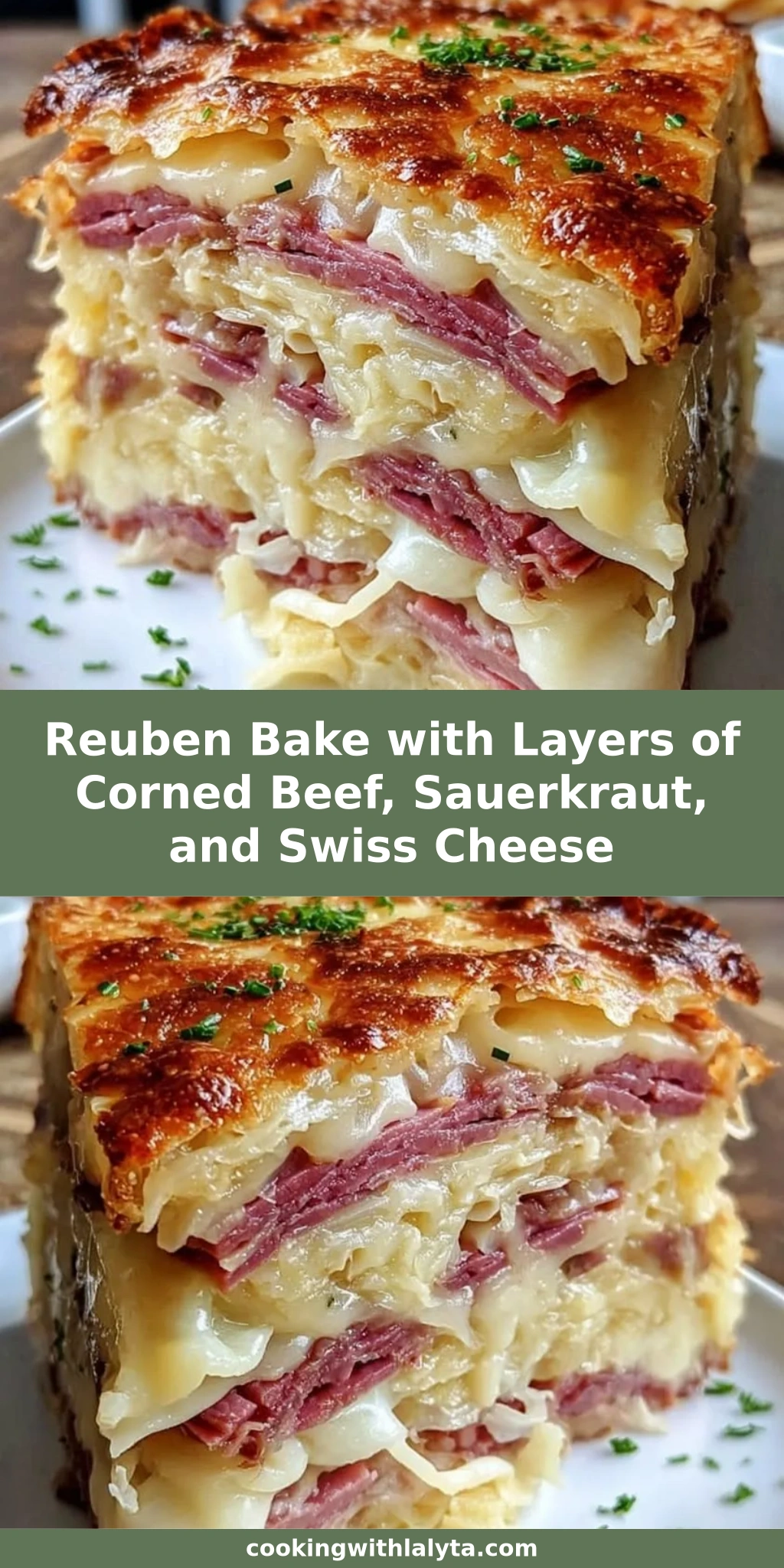
Picture this: you pull a 9×13-inch dish from the oven, the top a mosaic of golden-brown, blistered Swiss cheese with dark, caramelized edges. As you scoop into it, the custard-soaked rye bread peeks through — soft and almost quiche-like in texture — while ribbons of chopped corned beef and tangy sauerkraut weave through every layer. The aroma is intoxicating: toasted caraway seeds from the rye mingling with the sharp, nutty scent of melted Swiss, all brightened by that unmistakable vinegary pop of fermented cabbage. It’s the kind of dish that fills your kitchen with the scent of a classic Jewish deli — but with the warmth and comfort of a home-cooked casserole. A dollop of Thousand Island dressing on the side adds that cool, creamy finish that ties everything together, just like it does on the sandwich itself.
What separates this corned beef sauerkraut casserole from other versions floating around the internet is technique. I don’t just toss everything together and hope for the best — I treat the bread like a sponge, giving it time to drink up a properly seasoned egg custard. That resting period (30 minutes minimum, but overnight if you can plan ahead) is what transforms a good Reuben bake into a great one. Stick with me and I’ll walk you through every step, including how to avoid the number one mistake home cooks make — using soggy, un-drained sauerkraut that waters down the whole dish. There’s a reason this Reuben casserole recipe has become one of my most-requested comfort foods during chilly NYC winters, and I can’t wait to share it with you.
Why This Reuben Bake Recipe Is the Best
The flavor secret here comes straight from my Paris culinary school days, where I learned that a proper custard is never just eggs and milk — it needs a supporting player. That’s where a tablespoon of Dijon mustard steps in, adding a subtle, sharp depth that wakes up every other ingredient in the dish. It doesn’t scream “mustard” — instead, it quietly amplifies the savory notes of the corned beef and adds complexity to the mild Swiss cheese. I also insist on using fresh, bakery-style rye bread rather than the pre-sliced sandwich loaf; those sturdy, craggy cubes hold their structure far better during the long custard soak, giving you distinct layers rather than one homogeneous mush. It’s a small upgrade that makes a world of difference.
Texture is where this Reuben bake with Swiss cheese truly shines, and it’s no accident. After testing this recipe over a dozen times in my tiny NYC apartment kitchen, I landed on the perfect bread-to-custard ratio: six cups of cubed rye to two cups of milk and three eggs. Too much liquid and you get a soupy mess; too little and the bake turns dry and crumbly. I also layer strategically — half the bread on the bottom soaks up all the meaty, tangy juices from the corned beef and sauerkraut, while the top layer of bread cubes stays slightly elevated, creating a contrast between the custardy interior and the crispy, cheesy crown. That dual texture is what keeps you coming back for bite after bite.
Even if you’ve never made a savory bread pudding before, this recipe is foolproof and fast. There’s no complicated sauce to whisk over a double boiler, no finicky dough to knead — just a handful of grocery-store staples layered in a single dish. The 30-minute fridge rest does all the heavy lifting for you, and while it bakes, you can toss together a simple green salad or set the table. I’ve intentionally designed this Reuben bake to be a weeknight-friendly dinner that tastes like you spent hours on it. Whether you’re feeding a hungry family or bringing a dish to a potluck, this casserole delivers restaurant-quality flavor with home-kitchen simplicity.
Reuben Bake Ingredients
One of the things I love most about this Reuben casserole is how accessible the ingredients are. I pick up my corned beef from the deli counter at my neighborhood grocery store — ask them to slice it thick, about a quarter-inch, so you can chop it into satisfying chunks rather than wispy ribbons. The rye bread comes from a Jewish bakery in my Brooklyn neighborhood, but any good-quality rye with visible caraway seeds will do beautifully. As for the sauerkraut, I reach for the refrigerated kind sold in pouches or jars near the hot dogs — it’s fresher and tangier than the shelf-stable cans, though both work. The Swiss cheese, I’ll admit, sometimes comes from a bag when life is busy, but when I want to treat myself, I grate a block of Emmentaler by hand — it melts like a dream.
Ingredients List
- 6 cups rye bread, cubed (about ½-inch pieces, preferably day-old or lightly toasted)
- 1 pound deli corned beef, chopped into bite-sized pieces
- 1 can (14 ounces) sauerkraut, rinsed and thoroughly drained
- 1 cup Thousand Island dressing
- 2 cups shredded Swiss cheese (about 8 ounces, freshly grated for best melt)
- 3 large eggs, beaten
- 2 cups milk (whole milk preferred for richness, 2% works in a pinch)
- 1 tablespoon Dijon mustard
Ingredient Spotlight
Rye Bread: The foundation of any great Reuben bake. Look for a dense, bakery-style rye with visible caraway seeds — those tiny, crescent-shaped seeds are what give rye its signature aromatic, slightly anise-like flavor. Pre-sliced sandwich rye works in an absolute emergency, but I find the slices too thin and uniform; they tend to disintegrate during the custard soak. If your bread is very fresh, spread the cubes on a sheet pan and toast them in a 300°F oven for 8–10 minutes to dry them out slightly — this helps them absorb the custard without turning to mush. For a gluten-free Reuben casserole, substitute with cubed gluten-free rye-style bread or even sturdy gluten-free sourdough; the texture will be slightly different, but still delicious.
Corned Beef: This is the star protein of the dish, and quality matters. I always ask the deli clerk for thick-sliced corned beef — about a quarter-inch — so I can chop it into chunky, rustic pieces that retain their meaty bite. Thin-shaved deli meat works, but it can get lost in the casserole and won’t provide the same satisfying chew. If you have leftover homemade corned beef from St. Patrick’s Day, this is the perfect way to use it up. Pastrami makes an outstanding swap — it’s smoked and spiced more aggressively, so your bake will have a bolder, peppery edge. In a pinch, even good-quality roast beef works, though you’ll lose some of that distinctive brined flavor that defines a true Reuben.
Sauerkraut: Please, whatever you do, do not skip the rinsing and draining step — this is the most common mistake I see in Reuben casserole recipes. Sauerkraut straight from the can or jar is packed in a brine that, if left un-rinsed, will flood your custard with excess liquid and make the entire bake unpleasantly sour. I rinse mine under cool running water in a fine-mesh strainer, then press it firmly with the back of a spoon — or even squeeze it in a clean kitchen towel — until no more liquid drips out. If you love extra tang, reserve about a tablespoon of the drained juice and whisk it into the egg custard; this adds brightness without compromising texture. For a milder flavor, you can substitute with shredded green cabbage that has been quickly pickled in a splash of vinegar and a pinch of salt.
Swiss Cheese: Nutty, melty, and gloriously stretchy — Swiss cheese is non-negotiable in a Reuben bake. I prefer grating my own from a block because pre-shredded cheese is coated with anti-caking agents that can inhibit smooth melting. Emmentaler is my go-to for its superior meltability and rich flavor, but Jarlsberg or a domestic Swiss from Wisconsin are also excellent choices. If you’re in a bind, provolone can step in — it’s milder and less nutty, but it melts beautifully. For a dairy-free version, use a plant-based Swiss-style shred that’s designed for melting; the flavor won’t be identical, but the creamy texture will carry the dish.
| Original Ingredient | Best Substitution | Flavor / Texture Impact |
|---|---|---|
| Rye Bread | Gluten-free rye-style bread or sturdy sourdough | Slightly different crumb; caraway flavor may need to be added separately |
| Corned Beef | Pastrami or thick-cut roast beef | Pastrami adds smoky, peppery notes; roast beef is milder and less briny |
| Sauerkraut | Quick-pickled shredded cabbage with a splash of vinegar | Milder tang, less fermented depth; fresher crunch |
| Swiss Cheese | Provolone or dairy-free Swiss-style shreds | Provolone is milder and less nutty; dairy-free option varies by brand |
| Whole Milk | Unsweetened almond milk or oat milk | Less rich custard; oat milk is creamier than almond |
How to Make Reuben Bake — Step-by-Step
Ready to turn your kitchen into the best-smelling deli in town? Let me walk you through each step. The beauty of this Reuben casserole is that it looks and tastes impressive, but the actual hands-on work is minimal — mostly layering and whisking. I’ll share all the pro-level tricks I’ve picked up along the way.
Step 1: Prep the Oven and Dish
Preheat your oven to 375°F (190°C). Position a rack in the center of the oven so the casserole bakes evenly — too close to the top and the cheese might burn before the custard sets. Generously grease a 9×13-inch baking dish with butter, non-stick spray, or a thin coating of olive oil. Don’t skip this step; the egg custard loves to cling to ungreased corners, and you’ll spend more time scrubbing than eating. I like to use butter because it adds a whisper of richness to the bottom crust, but a neutral spray works just fine for a lighter option.
💡 Lalybeth’s Pro Tip: If you want ultra-crispy bottom edges, after greasing the dish, dust it lightly with rye bread crumbs or a sprinkle of caraway seeds. This creates a delicate, flavorful crust reminiscent of a grilled Reuben sandwich.
Step 2: Layer the Casserole
Spread half of your rye bread cubes (about 3 cups) evenly across the bottom of the prepared dish. This bottom layer is going to soak up all the savory juices from the meat and sauerkraut, so make sure it covers the surface without large gaps. Next, scatter the chopped corned beef evenly over the bread — don’t clump it together, or some bites will be overloaded while others miss out. Follow with the rinsed and well-drained sauerkraut, dropping it in small forkfuls to distribute it evenly. Drizzle the cup of Thousand Island dressing over the sauerkraut in ribbons — you don’t need to spread it perfectly; it will melt into the layers as it bakes. Sprinkle one cup of the shredded Swiss cheese over everything, then top with the remaining bread cubes. Press down gently with your palm to compact the layers slightly, which helps the custard distribute more evenly.
⚠️ Common Mistake to Avoid: Don’t layer the sauerkraut while it’s still wet. Even after rinsing, give it a firm squeeze in a clean kitchen towel or paper towels. Excess liquid at this stage is the number one reason Reuben bakes turn out soupy rather than custardy. I learned this the hard way during my first test run, and I’ve never forgotten it.
Step 3: Make the Custard
In a medium bowl, crack three large eggs and beat them thoroughly with a whisk until the yolks and whites are fully combined — you want a uniform pale yellow, not streaks. Pour in the two cups of milk and the tablespoon of Dijon mustard, then whisk again until the mustard has dissolved completely and the mixture is smooth. The mustard here isn’t for heat; it’s for depth, adding a savory backbone that rounds out all the other flavors. Slowly pour this custard mixture evenly over the entire surface of the casserole, making sure to drench all the top bread cubes. You’ll see it start to seep down into the layers — that’s exactly what you want. Sprinkle the remaining one cup of Swiss cheese over the top, covering it generously from edge to edge.
💡 Lalybeth’s Pro Tip: For an even more luxurious custard, swap a quarter cup of the milk for heavy cream. It adds a silky richness that makes the bake taste almost like a savory bread pudding — a little trick I picked up in Paris while studying classic French quiche techniques.
Step 4: Rest for Flavor
Cover the dish tightly with plastic wrap or a reusable silicone lid and refrigerate for at least 30 minutes, or up to overnight. This resting period is non-negotiable — it’s the step that elevates this from a thrown-together casserole to a truly memorable Reuben bake with Swiss cheese. During this time, the rye bread absorbs the seasoned custard, softening into a tender, quiche-like texture while the flavors of the corned beef, sauerkraut, and dressing meld together into a cohesive whole. If you’re making this for a dinner party or holiday brunch, I highly recommend assembling it the night before; the overnight soak produces the most consistent, creamy results, and all you have to do the next day is pop it in the oven.
⚠️ Common Mistake to Avoid: If refrigerating overnight, don’t skip covering the dish tightly. An uncovered casserole in the fridge will absorb odors from other foods and can develop a dry, leathery top layer. Use a lid or double-wrap with plastic to keep everything moist and fresh.
Step 5: Bake to Golden Perfection
Remove the casserole from the refrigerator and let it sit at room temperature for about 10 minutes while the oven finishes preheating — this prevents thermal shock if you’re using a glass dish. Bake, uncovered, on the center rack for 30 to 35 minutes. You’ll know it’s done when the top is deeply golden brown with patches of bubbly, blistered cheese, and the center no longer jiggles when you gently shake the dish. If you have an instant-read thermometer, the internal temperature should register around 160°F (71°C), indicating the custard is fully set. Once out of the oven, let the bake rest for a full 5 minutes before cutting into it — this brief pause allows the custard to firm up just enough to hold clean slices. Serve hot, with extra Thousand Island dressing on the side for drizzling or dipping.
💡 Lalybeth’s Pro Tip: If the top is browning too quickly but the center still needs time, tent a piece of aluminum foil loosely over the dish for the final 10 minutes. This shields the cheese from direct heat while allowing the custard to finish setting.
| Step | Action | Duration | Key Visual Cue |
|---|---|---|---|
| 1 | Preheat oven; grease baking dish | 5 minutes | Oven light indicates ready; dish is evenly coated |
| 2 | Layer bread, corned beef, sauerkraut, dressing, cheese | 10 minutes | Distinct, even layers visible from the side |
| 3 | Whisk eggs, milk, Dijon; pour over casserole | 3 minutes | Custard seeps down; top bread glistens |
| 4 | Cover and refrigerate | 30 min – overnight | Bread has absorbed most visible liquid |
| 5 | Bake uncovered at 375°F | 30–35 minutes | Golden-brown top; no jiggle in center |
Serving & Presentation
When I bring this Reuben bake to the table, I don’t fuss with fancy plating — its rustic, golden-brown beauty speaks for itself. I slide a spatula under a generous square, revealing the distinct layers of bread, meat, and cheese, and set it on a simple white plate. A small ramekin of extra Thousand Island dressing on the side is a must; some of my friends prefer to drizzle it over the top, while others like to dip each forkful. A scattering of fresh chopped parsley or chives adds a pop of green that cuts through the richness visually and on the palate. For a brunch presentation, I’ll cut smaller squares and arrange them on a platter with cocktail forks — it’s always one of the first dishes to disappear.
In my NYC kitchen, this casserole is a weeknight hero, but it pairs beautifully with a few simple sides that round out the meal. A crisp, lightly dressed green salad with a lemon vinaigrette provides a refreshing counterpoint to the creamy, cheesy bake. When I’m channeling my mother’s Moroccan table, I’ll serve it alongside a quick cucumber and tomato salad with fresh mint — the cool, bright flavors balance the warm, savory casserole in the most wonderful way. For a heartier dinner, roasted asparagus or steamed green beans work beautifully, especially when tossed with a little olive oil and flaky sea salt. This is a dish that loves company, so don’t hesitate to double the recipe for a crowd.
| Pairing Type | Suggestions | Why It Works |
|---|---|---|
| Side Dish | Mixed green salad with lemon vinaigrette, roasted asparagus, cucumber-tomato salad | Acidity and freshness cut through the richness of the cheese and custard |
| Sauce / Dip | Extra Thousand Island dressing, spicy brown mustard, Russian dressing | Creamy, tangy condiments echo the classic Reuben sandwich experience |
| Beverage | Pilsner or lager, hard apple cider, sparkling water with lemon | Crisp, effervescent drinks refresh the palate between rich bites |
| Garnish | Chopped fresh parsley, snipped chives, caraway seed sprinkle, paprika dusting | Herbal brightness and a hint of color elevate the visual appeal |
Make-Ahead, Storage & Reheating
Living in New York City means my schedule is often packed, so I’ve mastered the art of making this Reuben casserole work around my life — not the other way around. On busy weeks, I’ll assemble the entire dish on Sunday evening, tuck it into the fridge overnight, and simply bake it when I get home from work on Monday. The overnight soak only improves the texture, so it’s a genuine time-saver that costs you nothing in quality. Leftovers, if you’re lucky enough to have them, reheat beautifully and make a next-day lunch that has my coworkers leaning over my desk asking what smells so good.
| Method | Container | Duration | Reheating Tip |
|---|---|---|---|
| Refrigerator | Airtight container or tightly covered baking dish | Up to 4 days | Reheat individual portions in microwave for 1–2 minutes, or in a 325°F oven for 10–12 minutes until warmed through |
| Freezer | Tightly wrapped in plastic wrap then foil, or an airtight freezer-safe container | Up to 2 months | Thaw overnight in refrigerator, then reheat covered at 325°F for 20–25 minutes; uncover for final 5 minutes to re-crisp the top |
| Make-Ahead | Original baking dish, tightly covered with lid or plastic wrap | Assemble up to 24 hours in advance; bake day-of | Keep unbaked casserole refrigerated; add 5 extra minutes to bake time if going straight from fridge to oven |
When reheating from the refrigerator, my personal favorite method is the oven rather than the microwave — it preserves the contrast between the crispy cheese top and the custardy interior far better. I preheat the oven to 325°F, place the portion on a sheet of foil or in an oven-safe dish, and warm it gently for 10 to 12 minutes. If the top starts to darken too much before the center is hot, I’ll tent it loosely with foil. For frozen portions, patience is key; a slow thaw in the fridge overnight prevents the custard from weeping water and turning grainy. One of my favorite tricks is to reheat leftover slices in a dry non-stick skillet over medium-low heat — it recreates that grilled-Reuben vibe, with a delightfully crisp bottom and a melty interior.
I’ll be honest: the sauerkraut’s texture does soften slightly upon freezing and reheating, but the flavor remains spot-on. If you’re planning to freeze, consider slightly under-baking the casserole by about 5 minutes so it finishes cooking during the reheat without drying out. And always, always label your freezer container with the date — trust me, six weeks from now you won’t remember whether it’s Reuben bake or that other mystery casserole lurking in the back.
Variations & Easy Swaps
| Variation | Key Change | Best For | Difficulty Impact |
|---|---|---|---|
| Pastrami Reuben Bake | Swap corned beef for pastrami | Lovers of bold, smoky, peppery flavor | No change — same prep, bigger flavor |
| Gluten-Free Reuben Bake | Use gluten-free rye-style bread or sturdy GF sourdough | Gluten-sensitive diners who still crave deli comfort | Minimal — may need extra custard soak time |
| Spicy Harissa Reuben Bake | Add 2 teaspoons harissa paste to custard; reduce Dijon to 1 teaspoon | Adventurous eaters who love North African heat | Slight increase — needs careful spice balancing |
Pastrami Reuben Bake
If you’re a pastrami fan, this variation will absolutely sing to you. Pastrami brings a smoky, black-pepper-crusted intensity that transforms the casserole into something deeper and more complex. The swap is straightforward — use an equal weight of thick-sliced pastrami in place of the corned beef — but the resulting flavor profile is notably different: earthier, spicier, and more robust. I love making this version in the fall, when the weather turns crisp and I’m craving something with a little more oomph. A drizzle of spicy brown mustard on the side instead of (or alongside) Thousand Island dressing plays beautifully with pastrami’s peppery crust. This variation has become a staple at my Super Bowl spreads — it pairs incredibly well with cold beer and good company.
Gluten-Free Reuben Bake
Having friends with celiac disease means I’ve become quite adept at adapting my favorite recipes, and this Reuben casserole is no exception. The key is choosing a gluten-free bread with enough structure to stand up to the custard soak — look for a GF rye-style loaf or a sturdy artisan GF sourdough. I’ve tested this with several brands, and the ones that contain psyllium husk or flaxseed tend to hold their shape best. Because gluten-free breads can be denser, I increase the custard resting time to a full hour (or overnight if possible) to ensure thorough absorption. The Thousand Island dressing is naturally gluten-free, but always double-check your specific brand’s label to be safe. The resulting bake is every bit as comforting as the original, with all the tangy, cheesy, savory goodness intact.
Spicy Harissa Reuben Bake
This variation is where my Moroccan heritage collides with my New York deli obsession, and I have to say — it works brilliantly. Harissa, the smoky North African chili paste that was a constant presence in my mother’s kitchen, adds a warm, slow-building heat that complements the sauerkraut’s tang in unexpected harmony. To make it, reduce the Dijon mustard to just 1 teaspoon and whisk 2 teaspoons of good-quality harissa paste (I like the one in tubes from my local Middle Eastern grocer) into the egg custard. The result is a casserole with a subtle reddish tint and a gentle heat that lingers on the back of your palate. I often serve this version with a cooling cucumber-yogurt salad on the side — a classic Moroccan pairing that tames the spice beautifully. It’s become my signature potluck dish, and without fail, someone always asks for the recipe.
How long should I bake a Reuben bake and at what oven temperature?
For the best results, bake your Reuben casserole at 375°F (190°C) for 30 to 35 minutes. The exact time can vary slightly depending on your oven and whether the dish went into the oven cold from the refrigerator or at room temperature. If you assembled it the night before and it’s fridge-cold, add an extra 5 minutes to the bake time. You’ll know it’s ready when the top is deeply golden brown with bubbly, blistered patches of Swiss cheese and the center no longer jiggles when you gently shake the dish. For absolute precision, use an instant-read thermometer — the internal temperature should reach 160°F (71°C), which indicates the egg custard is fully set and safe to eat. Let the bake rest for 5 minutes after removing it from the oven so the custard can firm up enough to slice cleanly.
Can I substitute pastrami for corned beef in a Reuben bake?
Absolutely — and it’s a delicious variation! Pastrami is essentially corned beef that has been smoked and coated with a black pepper and spice crust, so it brings a bolder, smokier, and more peppery profile to your Reuben casserole. Substitute an equal weight of thick-sliced pastrami for the corned beef, and chop it into the same bite-sized pieces. The bake will taste noticeably more robust and slightly spicier, which I find particularly appealing during fall and winter months. Because pastrami is typically drier than corned beef, the casserole’s texture remains virtually identical — the egg custard ensures everything stays moist and tender. If you’re a fan of a classic New York deli pastrami on rye, this swap will feel like a warm, cheesy hug in casserole form.
Do I need to rinse and drain sauerkraut before layering it into the bake?
Yes — and I cannot stress this enough. Rinsing and thoroughly draining your sauerkraut is the single most important step that separates a perfect Reuben bake from a soggy, overly sour disappointment. Sauerkraut is packed in a salty, vinegary brine that, if left un-rinsed, will flood your custard with excess liquid and make the entire casserole watery. To do it right, empty the sauerkraut into a fine-mesh strainer and rinse it under cool running water for 30 seconds, tossing it gently with your fingers. Then, press it firmly with the back of a spoon or squeeze it in a clean kitchen towel until no more liquid drips out. If you miss the extra tang, reserve about a tablespoon of the drained juice and whisk it directly into the egg custard — that way you get the bright flavor without ruining the texture.
What side dishes go well with a Reuben bake?
A Reuben bake is rich, cheesy, and savory, so the best side dishes are those that provide contrast — freshness, acidity, and crunch. My go-to pairing is a simple mixed green salad tossed in a bright lemon vinaigrette; the citrusy acidity cuts right through the richness of the custard and Swiss cheese. Roasted asparagus or steamed green beans with a drizzle of olive oil and flaky salt also work beautifully, adding a vegetal freshness that balances the hearty casserole. For a more casual spread, serve the bake alongside crisp dill pickle spears and kettle-cooked potato chips — they echo the classic deli experience. If you want to add a Moroccan touch, a cucumber and tomato salad with fresh mint and a squeeze of lemon is cooling, vibrant, and always a hit at my table.
Can I make a Reuben bake ahead of time?
Yes, and it’s actually better when you do! This Reuben casserole is designed for make-ahead convenience. Assemble the entire dish up to 24 hours in advance, cover it tightly with plastic wrap or a reusable lid, and let it rest in the refrigerator. During this time, the rye bread thoroughly absorbs the seasoned egg custard, resulting in a creamier, more cohesive texture after baking. When you’re ready to cook, simply preheat your oven to 375°F and bake the casserole straight from the fridge — just add an extra 5 minutes to the total bake time to compensate for the cold start. This make-ahead method is a lifesaver for holiday brunches, busy weeknights, or any time you want a fuss-free dinner that tastes like you spent hours on it.
Why is my Reuben casserole soggy and how can I fix it?
A soggy Reuben casserole is almost always caused by one of two things: un-drained sauerkraut or bread that’s too fresh and soft. Sauerkraut right out of the jar carries a significant amount of brine that leaches into the custard during baking, so rinsing and thoroughly squeezing it dry is essential. The other culprit is using very fresh, soft rye bread — it can disintegrate before it has a chance to absorb the custard properly. To fix this, toast your bread cubes in a 300°F oven for 8 to 10 minutes before assembling the casserole. This dries them out just enough so they act like sponges, soaking up the custard without turning to mush. Also make sure you’re using the correct ratio of liquid to bread — six cups of bread to two cups of milk and three eggs is the sweet spot I’ve landed on after many rounds of testing.
Can I freeze leftover Reuben bake?
Absolutely — leftover Reuben bake freezes well for up to two months. To freeze, let the baked casserole cool completely, then cut it into individual portions. Wrap each portion tightly in plastic wrap, followed by a layer of aluminum foil, or place them in airtight freezer-safe containers. Label everything with the date so you don’t end up playing freezer roulette. When you’re ready to enjoy it, thaw a portion overnight in the refrigerator, then reheat it covered in a 325°F oven for 20 to 25 minutes, uncovering for the final 5 minutes to re-crisp the cheesy top. I’ll be honest — the sauerkraut’s texture does soften slightly after freezing and reheating, but the flavor remains wonderfully tangy and satisfying. For an extra-crispy bottom, try reheating a slice in a dry non-stick skillet over medium-low heat until warmed through.
What’s the best Thousand Island dressing to use in a Reuben casserole?
For a Reuben bake, I recommend using a good-quality store-bought Thousand Island dressing — one that’s creamy, slightly chunky, and has a balanced sweet-tangy flavor. In my NYC kitchen, I gravitate toward brands like Marie’s or Ken’s Steak House, which have a homemade feel and don’t taste overly processed. If you have an extra five minutes, making your own is surprisingly easy and infinitely customizable: whisk together equal parts mayonnaise and ketchup, a splash of sweet pickle relish, a dash of white vinegar or lemon juice, and a pinch of onion powder and paprika. Homemade dressing lets you control the sweetness and tang, and it keeps in the fridge for up to a week. Whichever route you take, make sure the dressing is at room temperature when you drizzle it into the casserole — cold dressing can cause the custard to set unevenly.
Can I use a different cheese instead of Swiss in a Reuben bake?
Swiss cheese is traditional in a Reuben, and its nutty, mild flavor and exceptional meltability make it the top choice — but you do have options. Provolone is the most popular alternative; it’s milder and slightly sweeter than Swiss, and it melts into those beautiful, stretchy strands everyone loves. Mozzarella works in a pinch for meltability, though its flavor is quite neutral, so consider mixing it with a handful of sharp white cheddar for more character. If you’re feeling adventurous, a young Gouda or even fontina can bring a creamy, buttery richness that elevates the whole dish. The one cheese I’d avoid is anything overly sharp or crumbly, like extra-aged cheddar or feta — they don’t melt smoothly and can release oil during baking, making the casserole greasy rather than creamy.
Is Reuben bake gluten-free?
A traditional Reuben bake is not gluten-free because it relies on rye bread, which contains gluten. However, you can easily adapt this recipe to be gluten-free by substituting a sturdy gluten-free rye-style bread or a high-quality gluten-free artisan sourdough. The key is choosing a GF bread with enough structural integrity to withstand the custard soak — look for loaves that contain psyllium husk or flaxseed, which help mimic gluten’s binding properties. I also recommend toasting the GF bread cubes lightly before assembling the casserole, as gluten-free breads can be more fragile when wet. Most Thousand Island dressings are naturally gluten-free, but always check the label to be sure. With the right bread swap, your gluten-free Reuben bake will be every bit as comforting and delicious as the classic version.
Share Your Version!
I truly hope this Reuben bake finds a regular spot in your dinner rotation the way it has in mine. There’s something deeply satisfying about taking the iconic flavors of a deli classic and transforming them into a warm, bubbling casserole that brings everyone to the table. Whether you make it exactly as written or put your own spin on it with pastrami, harissa, or your favorite gluten-free bread, I’d love to hear how it turns out for you.
Please leave a star rating and comment below — your feedback helps other home cooks find recipes they can trust, and I read every single note. When you share a photo on Instagram or Pinterest, tag me @cookingwithlalyta so I can see your beautiful creations and share them with our community. Here’s my question for you: did you try the overnight custard soak, or did you go with the 30-minute quick rest? I’m always curious to hear how these techniques work in real kitchens. From my NYC kitchen to yours — I hope this recipe brings as much warmth to your table as it does to mine. — Lalybeth 🧡
Did You Make This Reuben Bake?
I’d love to know how it turned out! Leave a comment below with your favorite variation, ask a question, or share a photo — your kitchen stories make this community special. ⭐⭐⭐⭐⭐
Tag your photos #cookingwithlalyta — I can’t wait to see what you create!
Love This Recipe? Save It to Pinterest!
If you enjoyed this Reuben Bake with Layers of Corned Beef, Sauerkraut, and Swiss Cheese recipe, don’t let it get lost in your browser tabs! 😄 Pin it now so you can find it again anytime — and explore hundreds more tried-and-tested recipes waiting for you on my Pinterest boards.
👉 Follow Lalybeth on Pinterest @cookingwithlalyta
📌 Pin this recipe · 🔁 Re-pin your favorites · 💬 Tag me when you make it — I love seeing your creations!

Reuben Bake with Layers of Corned Beef, Sauerkraut, and Swiss Cheese
- Total Time: 50 minutes
- Yield: 8 servings 1x
Description
This hearty Reuben bake layers rye bread, corned beef, sauerkraut, and Swiss cheese in a creamy egg custard. Perfect for a comforting dinner.
Ingredients
- 6 cups rye bread, cubed
- 1 pound deli corned beef, chopped
- 1 can (14 ounces) sauerkraut, rinsed and drained
- 1 cup Thousand Island dressing
- 2 cups shredded Swiss cheese
- 3 large eggs, beaten
- 2 cups milk
- 1 tablespoon Dijon mustard
Instructions
- Preheat oven to 375°F (190°C). Grease a 9×13-inch baking dish.
- Arrange half of the bread cubes in the prepared dish. Layer with corned beef, sauerkraut, Thousand Island dressing, and half of the Swiss cheese. Top with remaining bread cubes.
- In a medium bowl, whisk together eggs, milk, and Dijon mustard. Pour evenly over the casserole. Sprinkle with remaining Swiss cheese.
- Cover and refrigerate for 30 minutes or up to overnight.
- Bake, uncovered, for 30-35 minutes or until golden brown and set. Let stand for 5 minutes before serving.
Notes
For best flavor, use fresh rye bread and good-quality Swiss cheese. If you prefer extra tang, add a little sauerkraut juice. Refrigerating the casserole before baking allows the bread to absorb the custard.
- Prep Time: 15 minutes
- Cook Time: 35 minutes
- Method: Dinner
- Cuisine: American
Nutrition
- Calories: 485 kcal
- Sugar: 6 g
- Fat: 28 g
- Carbohydrates: 32 g
- Protein: 22 g
Tried This Recipe? Leave a Comment!
Did you make this recipe? I’d love to hear how it turned out! Please leave a comment and a rating below. Your feedback helps other home cooks and supports cookingwithlalyta.com!
For more delicious inspiration, follow me on Pinterest!