Table of Contents
Caramelized Sweet Potato Rounds with Burrata, Roasted Beets & Walnut Sage Pesto – A Stunning Vegetarian Fall Appetizer

One chilly October evening in my NYC kitchen, I found myself craving the deep, soul-warming flavors of autumn—something that felt both rustic and refined. That’s when these **caramelized sweet potato rounds with burrata, roasted beets, and a walnut sage pesto** came to life. I remember my mother in Morocco roasting root vegetables over an open flame, their edges charred and sweet, and my Paris training teaching me how to coax that perfect caramelization with just a brush of maple syrup and a whisper of smoked paprika. This dish is my edible love letter to fall: a vegetarian appetizer that’s as stunning on the plate as it is comforting to eat. It’s the kind of recipe that makes guests pause mid-conversation, and I can’t wait for you to try it.
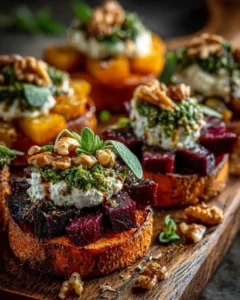
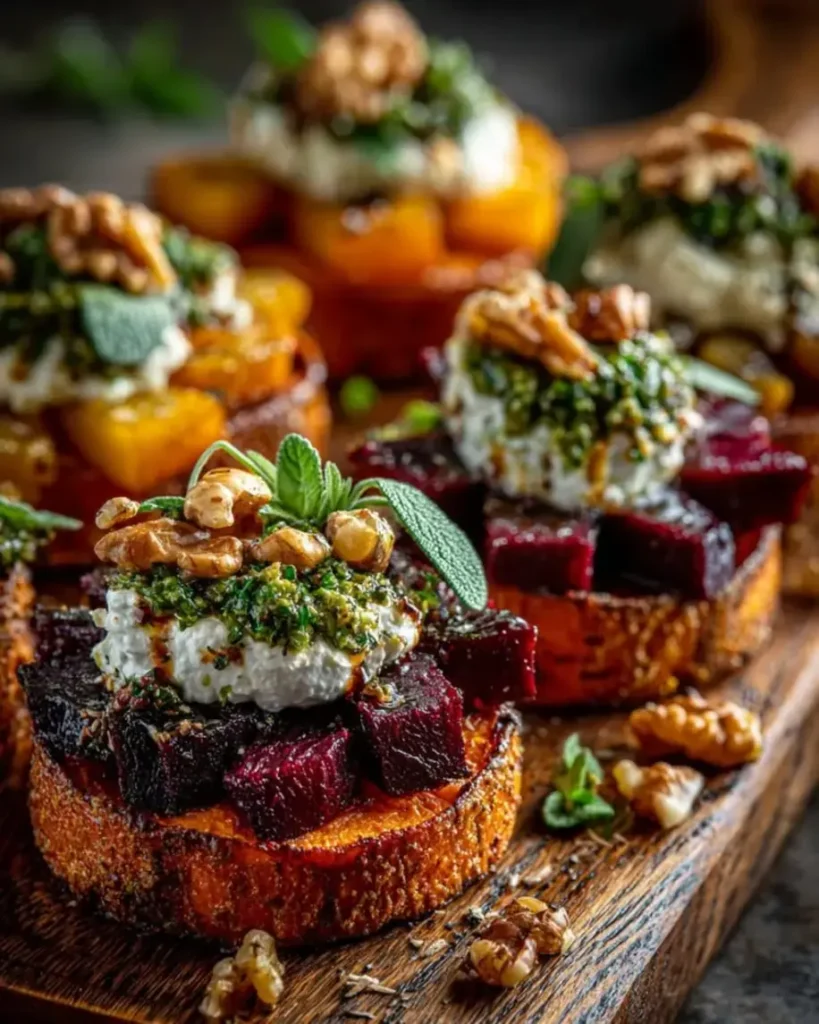
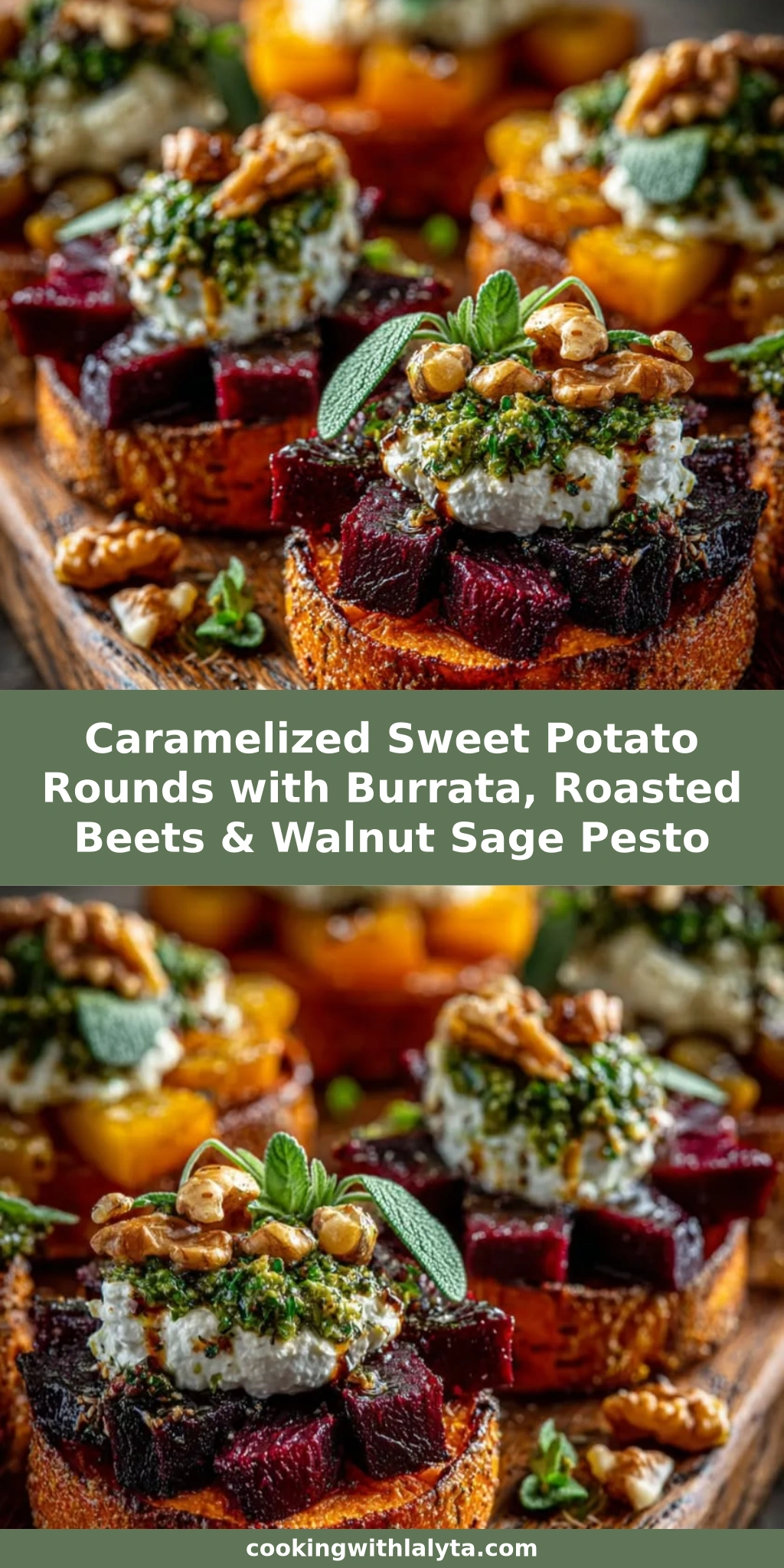
Imagine a fork-tender round of sweet potato, its surface glistening with a maple-kissed, smoky caramel crust, giving way to a pillowy soft center. On top, a creamy, cool swoop of burrata that slowly melts into the warm vegetable, its milky richness cutting through the sweet earthiness. Nestled beside are wedges of ruby-red roasted beets, their natural sugars concentrated by the oven, and a vibrant green swirl of walnut sage pesto that brings a peppery, nutty freshness. Every bite is a symphony of textures—crisp edges, silky cheese, tender roots—and aromas that fill your kitchen with a cozy, woodsy scent. The visual contrast is breathtaking: orange, magenta, creamy white, and emerald green arranged on a platter like an autumnal painting. This is the dish I proudly serve at my Brooklyn dinner parties, and it never fails to draw oohs and aahs, even from self-professed beet skeptics.
I’ve made plenty of roasted vegetable platters, but what sets this **sweet potato and beet appetizer** apart is that technique I honed in Paris: using a hot oven and a quick maple syrup glaze to achieve a true caramelization that’s candy-like yet not burnt. Plus, the walnut sage pesto is a revelation—earthy, bright, and far more interesting than the usual basil. I’ll share my pro tip for getting those sweet potato rounds perfectly golden without steaming them (hint: don’t overcrowd the pan), and one common mistake to avoid: roasting beets with too little oil can leave them leathery instead of tender. Stick with me, and you’ll have a foolproof, elegant fall side dish or appetizer that looks like it came from a restaurant kitchen—but with the warmth of a home cook’s touch.
Why This Caramelized Sweet Potato Rounds with Burrata Recipe Is the Best
The Flavor Secret: My Moroccan roots taught me to layer sweetness with spice, and that’s exactly what happens here. The smoked paprika isn’t just a background note—it provides a gentle heat that balances the maple syrup’s sweetness on the sweet potato rounds, while the roasted beets and sage pesto bring an earthy, herbaceous counterpoint. And then there’s the burrata: its cool creaminess is the perfect foil for the warm vegetables, creating a temperature and texture contrast that makes each bite dynamic. I discovered this combination one rainy afternoon at the Union Square Greenmarket when I found beautiful golden beets next to a mound of fresh sage—the pesto idea was born on the spot, and it’s been a staple in my fall repertoire ever since.
Perfected Texture: As a professionally trained cook, I’ve tested countless methods for roasting sweet potatoes, and this one triumphs. Cutting the potatoes into uniform half-inch rounds ensures even cooking, while the high heat (400°F) and a single flip achieve a caramelized crust that’s crisp without being burnt. Roasting the beets separately allows each vegetable to cook optimally—beets need a little longer and can be wrapped in foil for steam, but I prefer an open roast for a more concentrated flavor. The result: tender, slightly chewy beet edges and melt-in-your-mouth sweet potatoes. Assembling the dish right before serving keeps those textures distinct, and I always add a final sprinkle of flaky sea salt to enhance every layer.
Foolproof & Fast: Even though this **roasted beet burrata salad** looks fancy, it’s surprisingly straightforward—perfect for a weeknight dinner or Thanksgiving side. All the active work (slicing, tossing, blending) takes just 15 minutes, and while the oven does its magic, you can set the table or pour a glass of wine. I designed this recipe so you can roast both vegetables on separate sheet pans simultaneously, cutting the total cook time to just 40 minutes. The pesto comes together in a food processor in under 2 minutes, and the assembly is as simple as arranging and tearing. Whether you’re a novice cook or an experienced host, you’ll find this dish impressively reliable—I’ve taught it in my cooking classes, and everyone nails it on the first try.
Caramelized Sweet Potato Rounds Ingredients
Every time I shop for these ingredients at the NYC farmers market, I’m transported. The sweet potatoes remind me of the ones my mother would buy from the souk in Marrakech—firm, deep orange, and heavy for their size. I look for smooth-skinned beets without blemishes, and fresh sage that’s vibrant and aromatic; if you can’t find it, don’t fret—I’ll give you a substitution. The burrata should be as fresh as possible; I grab mine at Di Palo’s in Little Italy, where the cheese is flown in from Puglia. These simple, high-quality components are what make this **vegetarian fall appetizer** shine, so I encourage you to seek out the best you can find.
Ingredients List
- For the Roasted Beets:
- 1 large beet (about 8 oz), peeled and cut into 1-inch wedges
- 1 tablespoon olive oil
- Salt and black pepper, to taste
- For the Caramelized Sweet Potatoes:
- 2 large sweet potatoes (about 1½ lbs total), sliced into ½-inch rounds
- 2 tablespoons olive oil
- 2 tablespoons pure maple syrup
- ½ teaspoon smoked paprika
- Salt and black pepper, to taste
- For the Walnut Sage Pesto:
- 1 cup lightly packed fresh sage leaves (about 1 large bunch)
- ½ cup walnut halves, toasted (see pro tip below)
- ¼ cup freshly grated Parmesan cheese
- 1 clove garlic, smashed
- ½ cup extra-virgin olive oil
- 1 tablespoon fresh lemon juice
- Salt and black pepper, to taste
- For Assembly:
- 8 ounces burrata cheese, at room temperature
- Flaky sea salt, for garnish
Ingredient Spotlight
Sweet Potatoes: Choose firm, unblemished sweet potatoes with a deep orange flesh (often labeled “garnet” or “jewel” in US stores). They caramelize beautifully thanks to their natural sugars. If unavailable, butternut squash cut into ½-inch slices works almost identically, though it may roast a minute or two faster. The key is uniform slices so they cook evenly. Look for medium-sized potatoes—giant ones can be fibrous.
Burrata: This fresh Italian cheese is a mozzarella shell filled with soft, stringy curd and cream. It’s the luscious heart of the dish. When shopping, look for burrata packed in water, with a “best by” date far out. If you can’t find it, fresh mozzarella in water or even whole-milk ricotta can stand in, though you’ll lose the creamy ooze. I’ve also used a smear of creamy goat cheese for a tangier twist.
Walnuts: Toasted walnuts lend the pesto a buttery, nutty depth that complements sage’s robust flavor. I toast them in a dry skillet over medium heat for 3–4 minutes until fragrant, shaking the pan often. Pecans are a fine substitute, with a slightly sweeter, milder profile. Store-bought raw walnuts from the baking aisle are perfect; just don’t use rancid ones—give them a sniff!
Fresh Sage: This herb’s earthy, slightly peppery character defines the pesto. Look for perky leaves without brown spots; if the bunch is large, you’ll have enough for garnishing too. During winter, if fresh sage is scarce, you can use ⅓ cup fresh rosemary leaves mixed with ⅔ cup fresh parsley for a similar piney-herb blend—just adjust the quantity to your taste. Dried sage is too potent and dusty, so I don’t recommend it.
| Original Ingredient | Best Substitution | Flavor / Texture Impact |
|---|---|---|
| Sweet Potato Rounds | Butternut Squash Slices | Slightly less sweet, but equally creamy when roasted; caramelizes similarly. |
| Burrata | Fresh Mozzarella or Ricotta | Mild-tasting; lacks the creamy center, but still provides a milky contrast. Ricotta will be more granular. |
| Walnuts | Pecans | Sweeter, buttery flavor; texture remains crunchy. Good in pesto. |
| Fresh Sage | Fresh Rosemary + Parsley Mix | More piney and less peppery; still aromatic. Use ⅓ cup rosemary + ⅔ cup parsley. |
| Beet | Golden Beets | Milder, sweeter, less earthy; vibrant color contrast changes but still beautiful. |
How to Make Caramelized Sweet Potato Rounds with Burrata – Step-by-Step
Don’t be intimidated by the multiple components—this **walnut sage pesto recipe** and the roasted vegetables come together like a well-choreographed dance. I’ll walk you through each stage with the precision I learned in my Paris years, along with the warmth of my mother’s kitchen wisdom. Let’s get started!
Step 1: Roast the Beets
Preheat your oven to 400°F (200°C). Position two racks in the upper and lower thirds of the oven. Line a rimmed baking sheet with parchment paper for easy cleanup. Spread the peeled and wedged beets in a single layer, drizzle with the 1 tablespoon olive oil, and season generously with salt and pepper. Toss to coat evenly. Roast on the lower rack for 25–30 minutes, tossing halfway, until a fork easily pierces the thickest part of a wedge. The edges should look slightly wrinkled and caramelized. Remove from the oven and set aside; they can stay warm on the tray.
💡 Lalybeth’s Pro Tip: For extra flavor, add a sprig of fresh thyme or rosemary to the beet pan before roasting. The herbs infuse the oil and subtly perfume the beets—a little trick I picked up while cooking alongside a French sous chef who always had herbs in his pocket.
Step 2: Caramelize Sweet Potato Rounds
On a separate sheet pan (also lined with parchment if you like), place the sweet potato rounds. Drizzle with the 2 tablespoons olive oil and maple syrup, then sprinkle with smoked paprika, salt, and pepper. Use your hands to toss until every slice is evenly coated—this is key for that uniform caramelization. Arrange the rounds in a single layer, making sure no slices overlap. Roast on the upper rack for 15 minutes. Remove the pan, flip each round carefully with a spatula, and then roast for another 10–15 minutes, until the undersides are deep golden brown and the sweet potatoes are tender. The maple syrup will create a glossy, caramelized crust.
⚠️ Common Mistake to Avoid: Overcrowding the pan is the quickest way to end up with steamed, soggy sweet potatoes. If you have too many rounds, use two pans or work in batches. The space allows hot air to circulate, giving you those crispy edges.
Step 3: Make Walnut Sage Pesto
While the vegetables roast, toast the walnuts if you haven’t already: place them in a dry skillet over medium heat, shaking frequently, until fragrant and lightly browned, about 3–4 minutes. Let them cool slightly. In a food processor, combine the sage leaves, toasted walnuts, Parmesan, garlic clove, lemon juice, and a pinch of salt and pepper. Pulse a few times to chop. With the motor running, slowly pour in the ½ cup olive oil through the feed tube. Stop as soon as the mixture is smooth and has a pesto consistency—don’t overprocess, or the friction can turn the sage bitter and warm the oil. Taste and adjust salt, pepper, or lemon juice. Transfer to a bowl; the pesto will keep, covered, in the fridge for up to 3 days.
💡 Lalybeth’s Pro Tip: If your pesto seems thick, thin it with a teaspoon of cold water or extra lemon juice rather than more oil. This brightens the flavor without making it greasy. I learned this in Paris, where we’d sometimes add an ice cube to the processor to keep the herbs vibrant green.
Step 4: Assemble the Dish
Choose a large, flat serving platter or a wooden board for a rustic look. Spread about 2 tablespoons of the walnut sage pesto across the bottom—this acts as a flavorful base. Arrange the caramelized sweet potato rounds in an overlapping pattern. Tear the room-temperature burrata into large, irregular pieces and dot them around the sweet potatoes. Scatter the roasted beet wedges in between. Drizzle the remaining pesto generously over the top (you may not need all of it; save extra for dipping). Finish with a sprinkle of flaky sea salt and, if you like, a few fresh sage leaves. Serve immediately while the vegetables are still slightly warm or at room temperature. The warmth will gently soften the burrata without melting it into a puddle.
⚠️ Common Mistake to Avoid: Adding burrata straight from the fridge makes it firm and less luscious. Let it sit at room temperature for at least 30 minutes before tearing—this is non-negotiable for that creamy ooze.
| Step | Action | Duration | Key Visual Cue |
|---|---|---|---|
| 1. Roast Beets | Toss with oil, salt, pepper; roast at 400°F. | 25-30 min | Fork-tender, wrinkled edges |
| 2. Caramelize Sweet Potatoes | Coat with oil, maple syrup, paprika; roast, flip. | 25-30 min | Deep golden brown crust, tender |
| 3. Make Pesto | Pulse all ingredients in food processor. | 2 min | Smooth, bright green, pourable |
| 4. Assemble | Spread pesto, arrange vegetables, tear burrata, garnish. | 5 min | Beautiful, colorful, inviting platter |
Serving & Presentation
I love arranging this dish on a long, rustic wooden board—it instantly elevates the feel of a casual gathering and makes the colors pop. Start by spooning a generous swoop of that vibrant green pesto right in the center; don’t be shy—it’s your “canvas.” Layer the caramelized sweet potato rounds in a slight cascade, then tuck the beet wedges into the gaps, letting their magenta hue peek through. Tear the burrata in large, imperfect pieces (perfection is overrated!) and place them where they catch the light. A final flourish of flaky sea salt—I use Maldon—and maybe a few toasted walnut halves for crunch is all you need. This presentation always reminds me of the composed salads we plated at my favorite bistro in Paris, where every element had its place but still looked effortless.
At home in NYC, I often serve this as a starter for a fall dinner party alongside glasses of chilled Sancerre or a dry hard cider. It also shines as a side dish next to roast chicken or a Thanksgiving turkey. The key is serving it when the vegetables are still slightly warm, so the burrata softens but holds its shape. For an extra touch, I sometimes drizzle a balsamic reduction over the beets—it amplifies their sweetness and adds a glossy finish. And don’t forget crusty bread on the side to mop up every last bit of pesto and creamy cheese; a warm baguette from the corner bakery in my East Village neighborhood is my go-to.
| Pairing Type | Suggestions | Why It Works |
|---|---|---|
| Side Dish | Simple arugula salad with lemon vinaigrette, roasted pork tenderloin, or a crusty grain like farro | Peppery greens cut through the richness; grains add a chewy contrast. |
| Sauce / Dip | Extra walnut sage pesto, balsamic glaze, or a dollop of whole-grain mustard | Pesto echoes the dish; balsamic adds sweet acidity; mustard provides sharpness. |
| Beverage | Unoaked Chardonnay, Pinot Noir, sparkling apple cider, or a hoppy amber ale | Wine’s acidity balances richness; cider complements autumn flavors; ale’s bitterness cuts fat. |
| Garnish | Toasted walnut pieces, microgreens, pomegranate arils, or fresh sage leaves | Adds texture, freshness, and pops of color; pomegranate adds sweet-tart bursts. |
Make-Ahead, Storage & Reheating
Between my recipe testing and dinner parties, I’ve learned that a little advance prep makes hosting a breeze. The beauty of this dish is that all the components can be prepped separately ahead of time, so you only have to assemble at the last minute—perfect for my busy NYC schedule. The roasted beets and caramelized sweet potatoes hold beautifully for a couple of days in the fridge, and the pesto actually gets better as the flavors meld. I often roast the vegetables on a Sunday afternoon, then throw together this **sweet potato and beet appetizer** in just 5 minutes when friends drop by for a weeknight glass of wine. Here’s exactly how to store and reheat everything so you never lose that just-made quality.
| Method | Container | Duration | Reheating Tip |
|---|---|---|---|
| Refrigerator | Airtight glass containers (separate for beets, sweet potatoes, pesto) | Up to 4 days | Reheat sweet potatoes in a 350°F oven for 5-7 min to recrisp; serve beets cold or at room temp. |
| Freezer | Freezer-safe bags or containers (pesto only) | Pesto up to 2 months; do not freeze assembled dish or burrata | Thaw pesto in the fridge overnight and stir before using. Freeze pesto in ice cube trays for single servings. |
| Make-Ahead | Separate airtight containers for roasted vegetables and pesto | Roast vegetables up to 2 days in advance; pesto up to 3 days | Bring vegetables to room temp or gently rewarm before assembling; let burrata sit out 30 min. |
One thing I’ve noticed after years of hosting is that sweet potatoes and beets actually taste even more flavorful the next day—the sugars continue to develop. If you’re reheating the sweet potato rounds, avoid the microwave, which can turn them gummy; instead, spread them on a baking sheet and pop them into a 350°F oven for 5–7 minutes until sizzling and crisp again. The beets, I prefer at room temperature or even slightly chilled, as their earthiness becomes less pronounced when cold. And never, ever assemble with burrata until just before serving—its delicate creaminess doesn’t withstand storage. I’ve learned that lesson the hard way at a dinner party where I plated too early and ended up with a puddle of cheese (still delicious, but not so pretty).
Variations & Easy Swaps
| Variation | Key Change | Best For | Difficulty Impact |
|---|---|---|---|
| Protein Boost | Add 1 cup canned chickpeas (roasted alongside sweet potatoes) or 4 oz sliced prosciutto | Making it a main course | No change (easy) |
| Gluten-Free & Dairy-Free | Omit burrata and Parmesan; use a creamy cashew-based mozzarella and nutritional yeast in pesto | Vegan guests or dairy allergies | Minor adjustment |
| Seasonal Swap | Replace beets with 1 cup roasted butternut squash cubes or 1 thinly sliced ripe pear | When beets aren’t in season or you want a milder flavor | No change (easy) |
Protein Boost Variation
To turn this **roasted beet burrata salad** into a hearty main, I love adding crispy chickpeas. Toss a drained can of chickpeas with a drizzle of olive oil, salt, and smoked paprika, then roast them on a separate corner of the sweet potato pan during the last 15 minutes—they’ll become crunchy and golden. Or, for a nod to my Moroccan heritage, I sometimes add a handful of toasted almonds and a sprinkle of ras el hanout over the chickpeas. If meat is your thing, thin slices of prosciutto laid over the warm sweet potatoes add a salty, savory contrast that brings the whole dish together beautifully.
Gluten-Free & Dairy-Free Variation
The whole recipe is naturally gluten-free, but making it dairy-free is a cinch with today’s plant-based products. Swap the burrata for a store-bought creamy cashew mozzarella or a generous smear of almond-based ricotta—I’ve tested both and they work surprisingly well, though the “cream” inside won’t be as oozy. In the pesto, simply replace the Parmesan with 2 tablespoons of nutritional yeast, which adds a cheesy, umami depth. I also add a pinch of salt to compensate. The result is still vibrant and satisfying, and my vegan friends in NYC have given it their stamp of approval. The key is to let the dairy-free cheese come to room temperature so it spreads nicely.
Seasonal Swap Variation
Come December, when beets at the farmers market start looking weary, I switch to roasted butternut squash cubes—they echo the sweet potato’s caramelized notes and meld seamlessly. Simply cube them and roast alongside the sweet potatoes; they may need 5 extra minutes. In early fall, I sometimes tuck paper-thin slices of ripe pear (like Bosc) between the sweet potatoes and beets for a crisp, juicy bite that brightens the whole plate. Brush the pear with a little lemon juice to prevent browning. This twist always reminds me of the fruit-and-vegetable pairings I loved in Paris bistros, where a single sweet element could transform a dish.
Frequently Asked Questions
How do you caramelize sweet potato rounds without burning them?
The secret lies in a few key steps: cut uniform ½-inch thick rounds, coat them evenly with a mix of oil and maple syrup, and roast at a steady 400°F. Arrange the rounds in a single layer with space between—if they touch, they steam. Flip them halfway through the cooking time to allow both sides to brown. Keep an eye on them during the final 5 minutes; you want a deep amber color with glossy edges, but not blackened. The maple syrup can burn quickly if the oven is too hot, so I avoid the broiler. Trust your nose: when they smell deeply sweet and slightly smoky, they’re done.
Can I make the walnut sage pesto in advance for this dish?
Absolutely, and in fact, I often do. The pesto can be made up to 3 days ahead and stored in an airtight container in the refrigerator. To prevent discoloration, press a piece of plastic wrap directly onto the surface before sealing. The flavors actually deepen overnight as the garlic and sage marry. Just before using, let it sit at room temperature for 15 minutes and give it a good stir. You can also freeze the pesto in ice cube trays for up to 2 months; thaw a cube or two as needed. This make-ahead step is a lifesaver when I’m prepping for a dinner party.
What can I substitute for burrata in caramelized sweet potato and roasted beet rounds?
If burrata is elusive, fresh mozzarella (the water-packed kind) is the easiest swap—it’s milky and soft, though less creamy inside. For a richer experience, use a mound of whole-milk ricotta whipped with a splash of cream. I’ve also tried tangy goat cheese, which contrasts the sweetness beautifully, or even stracciatella (the torn interior of burrata sold separately). Vegan versions? Try a creamy cashew cheese or a macadamia-based ricotta. Whatever you choose, bring it to room temperature before serving so it melds with the warm vegetables and doesn’t shock the palate.
How long do you roast beets for this recipe and should they be peeled first?
I peel and cut the beets into 1-inch wedges before roasting, which shortens the cooking time to 25–30 minutes at 400°F. The skin can be bitter and chewy, so I always remove it using a vegetable peeler (wear gloves to avoid stained hands). The wedges are done when a fork easily slides into the thickest part. If you prefer to roast whole unpeeled beets, it will take about 50–60 minutes; after cooling, the skins slip off. For this recipe, pre-peeling and cutting ensures they finish at the same time as the sweet potatoes, streamlining the process.
Can I use dried sage instead of fresh for the walnut sage pesto?
I strongly recommend sticking with fresh sage leaves. Dried sage is potent and has a dusty, concentrated flavor that can overwhelm the pesto, turning it bitter and harsh. Fresh sage provides a lively, peppery freshness that balances the buttery walnuts and Parmesan. If you must use dried, start with 1 teaspoon for the entire batch—but expect a more medicinal taste and a brownish-green hue. A better swap, if fresh sage is gone, is to use a mix of fresh rosemary and parsley as suggested in the substitutions table. The texture and brightness will be far superior.
What’s the best way to toast walnuts for this recipe?
Toasting walnuts is simple and unlocks their natural oils, making them crunchier and more flavorful. Heat a dry skillet (no oil) over medium heat. Add the walnut halves in a single layer and shake the pan gently for 3–4 minutes, until they’re fragrant and lightly golden. Watch closely—they burn fast. Pour them onto a cool plate immediately to stop the cooking. For the oven, spread on a baking sheet and toast at 350°F for 6–8 minutes. Once cooled, they’re ready for the food processor. I always toast extra to nibble on; the scent reminds me of my mom’s Moroccan baklava.
Is this dish suitable for meal prep?
Yes, with a strategy! The roasted beets and sweet potato rounds can be prepped 2 days ahead and stored separately in the fridge. Reheat the sweet potatoes in a 350°F oven for a few minutes to restore crispness; the beets can be served cold or at room temp. The pesto keeps for 3 days refrigerated. Assemble just before eating to keep the burrata fresh and the textures distinct. I love having these components ready for quick weeknight entertaining—guests are always impressed by the colors and flavors, and it takes me under 10 minutes to plate.
How can I make this recipe vegan?
To veganize this **vegetarian fall appetizer**, focus on two swaps: the burrata and the Parmesan. Use a creamy vegan mozzarella (I like the cashew-based ones from Miyoko’s or make my own) or a thick cashew cream seasoned with lemon and salt. For the pesto, replace Parmesan with 2–3 tablespoons of nutritional yeast, which adds a cheesy umami note. Double-check that your maple syrup is pure and unrefined. The rest—vegetables, nuts, olive oil—is already plant-based. The result is still decadent and satisfying; I’ve served it at vegan potlucks and even the dairy-lovers went back for seconds.
Can I use pre-cooked beets from the store?
You can, but I prefer roasting my own for deeper flavor and better texture. Vacuum-packed pre-cooked beets are convenient—just dice them and bring to room temperature before assembling. However, they can sometimes be watery and less sweet. If you go that route, pat them dry thoroughly and consider giving them a quick sear in a hot skillet with a little olive oil to enhance their caramelization. But honestly, roasting a fresh beet is so easy and rewards you with earthy, concentrated sweetness that really makes this dish sing. Give it a try!
How do I prevent the sweet potato rounds from getting soggy?
Sogginess happens when the rounds are overcrowded or cut too thin. Make sure they’re in a single, uncrowded layer—use two sheet pans if needed. The ½-inch thickness gives a creamy interior while allowing the outside to crisp up. Dry the sweet potatoes after slicing (pat with a towel) to remove excess starch. And don’t skip the flip: that gives both sides direct heat. After roasting, serve immediately or keep them in a warm oven on a wire rack (not a dense pan) so air circulates underneath. These steps guarantee a caramelized, firm texture that holds its own under the toppings.
Share Your Version!
I can’t tell you how much it means when you make one of my recipes and share your own twist. Whether you added a sprinkle of chili flakes for heat, swapped in golden beets, or served this as a Thanksgiving centerpiece, I want to see it! Leave a star rating and a review in the comments below—it helps other home cooks discover this dish and lets me know what you loved. Your feedback often sparks new recipe ideas, like the time a reader’s suggestion to add crispy shallots led to my favorite variation.
Take a photo and tag me on Instagram or Pinterest at @cookingwithlalyta—I repost my favorite creations in my stories. Seeing your beautiful platters from kitchens around the world is the best part of this blogging journey. One question I’m especially curious about: which herb combo are you most excited to try in the pesto? Tell me in the comments—I read every single one. From my NYC kitchen to yours — I hope this recipe brings as much warmth to your table as it does to mine. — Lalybeth 🧡
Love This Recipe? Save It to Pinterest!
If you enjoyed this Caramelized Sweet Potato Rounds with Burrata, Roasted Beets & Walnut Sage Pesto recipe, don’t let it get lost in your browser tabs! 😄 Pin it now so you can find it again anytime — and explore hundreds more tried-and-tested recipes waiting for you on my Pinterest boards.
👉 Follow Lalybeth on Pinterest @cookingwithlalyta
📌 Pin this recipe · 🔁 Re-pin your favorites · 💬 Tag me when you make it — I love seeing your creations!
What’s your favorite fall vegetable to roast? Share your go-to combination in the comments below — I’m always looking for inspiration from your kitchens!
Caramelized Sweet Potato Rounds with Burrata, Roasted Beets & Walnut Sage Pesto
- Total Time: 55 minutes
- Yield: 4 servings 1x
Description
Caramelized sweet potato rounds topped with creamy burrata, roasted beets, and a vibrant walnut sage pesto. A beautiful and delicious fall side dish or appetizer that is sure to impress.
Ingredients
- For the Roasted Beets:
- 1 large beet, peeled and cut into wedges
- 1 tablespoon olive oil
- Salt and black pepper, to taste
- For the Caramelized Sweet Potatoes:
- 2 large sweet potatoes, sliced into 1/2-inch rounds
- 2 tablespoons olive oil
- 2 tablespoons maple syrup
- 1/2 teaspoon smoked paprika
- Salt and black pepper, to taste
- For the Walnut Sage Pesto:
- 1 cup fresh sage leaves
- 1/2 cup walnuts, toasted
- 1/4 cup grated Parmesan cheese
- 1 clove garlic
- 1/2 cup olive oil
- 1 tablespoon lemon juice
- Salt and black pepper, to taste
- For Assembly:
- 8 ounces burrata cheese, at room temperature
- Flaky sea salt, for garnish
Instructions
- Preheat the oven to 400°F (200°C).
- Roast the beets: On a baking sheet, toss the beet wedges with olive oil, salt, and pepper. Roast for 25-30 minutes until fork-tender. Remove and set aside.
- Caramelize the sweet potatoes: On a separate baking sheet, toss the sweet potato rounds with olive oil, maple syrup, smoked paprika, salt, and pepper. Arrange in a single layer. Roast for 15 minutes, flip, and roast another 10-15 minutes until caramelized and tender.
- Make the pesto: In a food processor, combine sage, walnuts, Parmesan, garlic, olive oil, and lemon juice. Pulse until smooth. Season with salt and pepper.
- Assemble: Spread a spoonful of pesto on a serving platter. Arrange the caramelized sweet potato rounds on top. Tear the burrata and distribute over the sweet potatoes. Add the roasted beet wedges. Drizzle with additional pesto and sprinkle with flaky sea salt.
- Serve warm or at room temperature.
Notes
If you can’t find burrata, fresh mozzarella or ricotta can be substituted. The walnut sage pesto can be made ahead and stored in the refrigerator for up to 3 days. For extra flavor, try adding a drizzle of balsamic glaze before serving.
- Prep Time: 15 minutes
- Cook Time: 40 minutes
- Method: Side Dish
- Cuisine: American
Nutrition
- Calories: 480 kcal
- Sugar: 14 g
- Fat: 33 g
- Carbohydrates: 38 g
- Protein: 12 g
Tried This Recipe? Leave a Comment!
Did you make this recipe? I’d love to hear how it turned out! Please leave a comment and a rating below. Your feedback helps other home cooks and supports cookingwithlalyta.com!
For more delicious inspiration, follow me on Pinterest!