Table of Contents
Burrata Rigatoni with Roasted Cherry Tomatoes, Basil & Pistachio Crunch — The Ultimate Creamy Pasta with an Irresistible Nutty Bite
There are certain dishes that transport me straight back to my mother’s kitchen in Morocco — not because she made this exact burrata rigatoni recipe, but because she understood something profound about food: that contrast is the heartbeat of a truly memorable meal. I still remember watching her sprinkle toasted almonds over a steaming tagine, the crunch shattering the tender braise in the most beautiful way. Years later, standing in my tiny Paris apartment after a long day at culinary school, I would riff on that principle with whatever I had on hand — a nub of creamy cheese, a handful of sweet cherry tomatoes from the marché, and always some kind of nut for that essential textural pop. This burrata rigatoni with roasted cherry tomatoes, basil & pistachio crunch is the dish that finally brings all those memories together on one plate — and it has become my go-to when I want to impress guests at my NYC dinner table without spending hours in the kitchen.
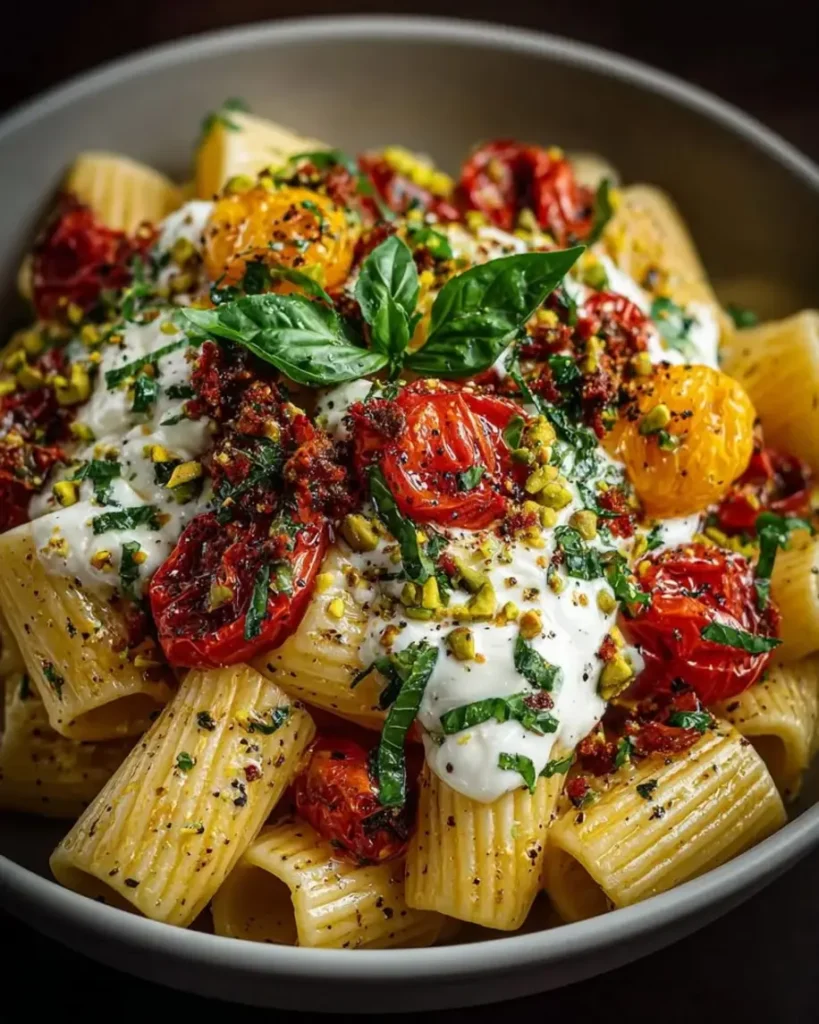
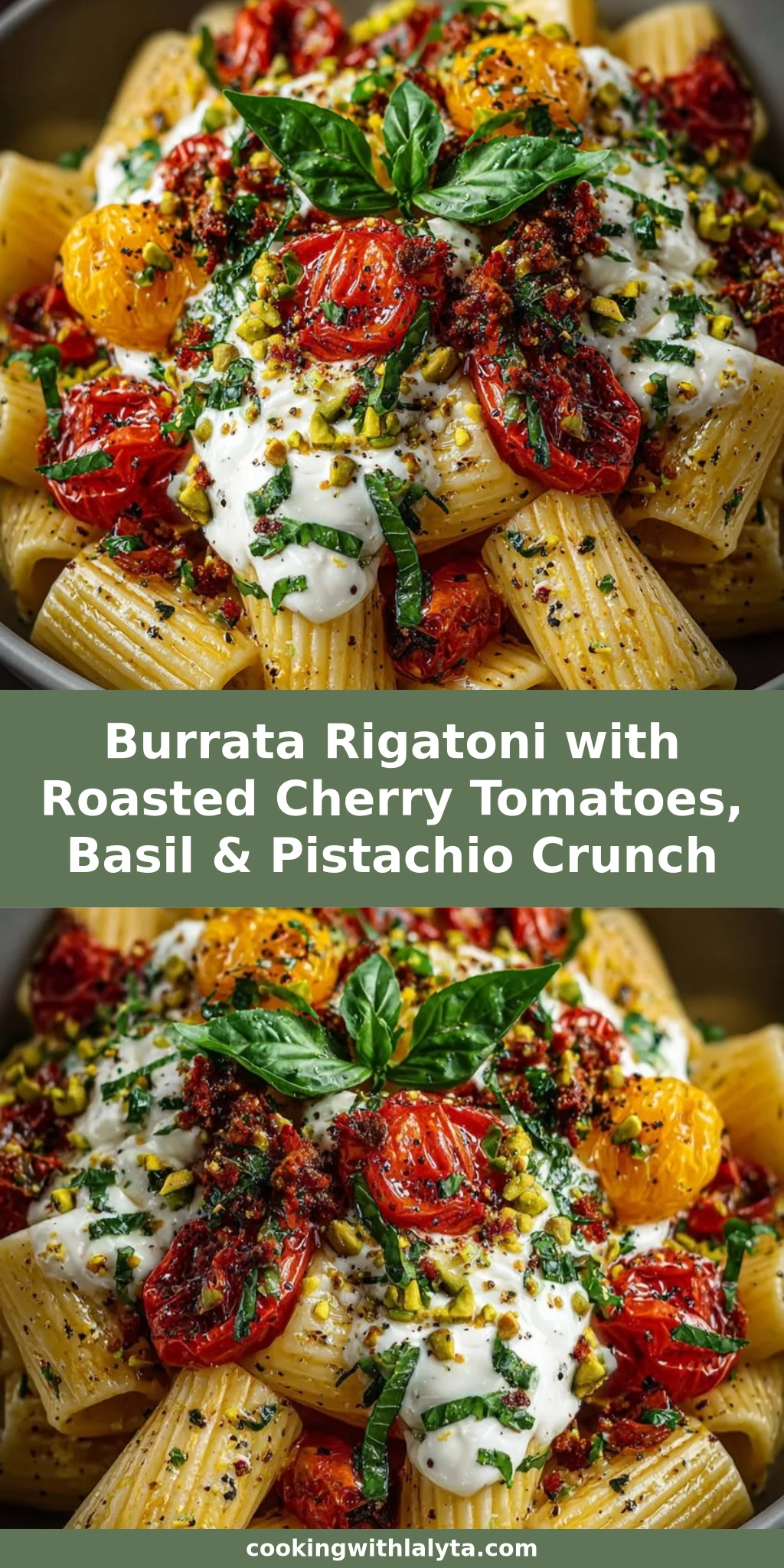
Let me paint you a picture of what you’re about to create: al dente rigatoni tubes, each one cradling a silky, decadent sauce made from melted burrata and Parmesan that clings to every ridge and groove. On top, you’ve got jewel-toned roasted cherry tomatoes that have collapsed just enough in the oven to release their concentrated sweetness, their skins blistered and caramelized at the edges. Fresh ribbons of basil perfume the whole dish with that unmistakable peppery-minty fragrance that only fresh herbs can deliver. And then — the pièce de résistance — a shower of roughly chopped pistachios that bring a salty, buttery crunch so satisfying you’ll find yourself sneaking spoonfuls straight from the bowl. Every forkful is a push-pull of creamy and crunchy, sweet and savory, rich and bright. It’s the kind of pasta that makes you close your eyes for just a second on that first bite.
What makes this version truly special, and why I’m so excited to share it with you today, is a technique I borrowed from my French sauce training — we’re going to build the cream sauce directly in the skillet using the residual heat from sautéed garlic, which prevents the burrata from breaking or becoming grainy. It’s a small move that makes a world of difference. I’m also going to walk you through the one mistake I see home cooks make all the time when working with fresh mozzarella-style cheeses: adding them too early and at too high a heat, which turns that dreamy creaminess into a stringy, separated mess. Stick with me, and I promise you’ll nail the silkiest burrata pasta you’ve ever made. Plus, I’ve got a killer trick for the pistachio crunch that takes this dish from great to absolutely unforgettable.
Why This Burrata Rigatoni Recipe Is the Best
The flavor secret here is all about layering. Most creamy pasta recipes dump everything into one pot and hope for the best, but I approach this burrata rigatoni the way my Paris instructors taught me to build a sauce mère — patiently, with intention. We start by blistering cherry tomatoes in a hot oven until their natural sugars caramelize and concentrate, which gives the finished dish a deep, almost sun-dried intensity that you simply can’t get from raw tomatoes. Then we bloom garlic and red pepper flakes in good olive oil, just until fragrant, so the heat releases their aromatic oils without scorching them into bitterness. The burrata gets added off the heat, stirred gently into warm cream and nutty Parmesan, preserving every ounce of its delicate, milky sweetness. That interplay — smoky-sweet tomatoes, mellow garlic, and the clean, lactic tang of burrata — is what makes this pasta sing.
Texture-wise, I’ve engineered this dish to hit every note. The rigatoni is non-negotiable here: those wide tubes with their ridged exteriors are designed to trap sauce, and when you toss them with our creamy base, every piece gets coated inside and out. The roasted tomatoes offer a tender, jammy bite that bursts under gentle pressure, while the pistachio crunch — which I insist you toast in a dry pan first — delivers a crackling counterpoint that keeps your palate engaged from start to finish. I learned the power of toasted nuts from my mother, who would never dream of adding almonds to a dish without first waking them up in a hot skillet. The difference is night and day: raw pistachios are fine, but toasted pistachios are a revelation — nuttier, more aromatic, and infinitely more crunchy.
And here’s why this recipe is foolproof, even if you don’t consider yourself a confident cook: everything comes together in about 40 minutes using one pot, one skillet, and one sheet pan. The steps are sequential and logical — roast the tomatoes while the pasta water comes to a boil, build the sauce while the pasta cooks, and assemble right before serving. I’ve tested this burrata rigatoni recipe more times than I can count, including on busy weeknights when my NYC kitchen is the size of a postage stamp and I’ve got exactly zero patience for fussy techniques. It works. Every. Single. Time. And if you follow my pro tips — especially the one about reserving pasta water — you’ll be rewarded with a restaurant-worthy pasta that tastes like you spent all day on it.
Burrata Rigatoni Recipe Ingredients
I source most of these ingredients from my local farmers market in Union Square, where the cherry tomatoes in late summer are so sweet they barely need any help, and the basil bunches are so fragrant you can smell them from three stalls away. But honestly, even in the dead of a New York winter, a pint of cherry tomatoes from the grocery store will roast up beautifully — that’s the magic of this technique. The burrata I buy from a tiny Italian specialty shop in the West Village, but any well-stocked supermarket cheese section should carry it these days. Look for burrata packed in water with a visible cream center; the fresher it is, the more luscious your sauce will be.
Ingredients List
- 1 lb rigatoni pasta
- 2 pints cherry tomatoes, halved
- 3 tablespoons olive oil
- 4 cloves garlic, minced
- 1/2 teaspoon red pepper flakes
- 8 oz burrata cheese, torn
- 1/2 cup heavy cream
- 1/2 cup grated Parmesan cheese
- 1/4 cup chopped fresh basil
- 1/3 cup shelled pistachios, roughly chopped
- Salt and black pepper to taste
Ingredient Spotlight
Burrata: This is the soul of the dish. Burrata is a fresh Italian cheese made from a mozzarella shell wrapped around a soft, creamy center of stracciatella and cream. When shopping in a US grocery store, look for burrata sold in a small tub of water or brine — that’s a sign of freshness. Give it a gentle squeeze: it should feel plump and supple, not firm or rubbery. If you absolutely cannot find burrata, fresh mozzarella (the kind packed in water, not the low-moisture block) is your best substitute. Tear it into small pieces and add an extra splash of heavy cream to mimic the creamy interior. The flavor will be milder and less decadent, but still delicious.
Cherry Tomatoes: I prefer cherry tomatoes over grape tomatoes for roasting because they tend to be juicier and sweeter, collapsing into little jammy puddles in the oven. Look for bright, firm tomatoes with tight skin — avoid any that are wrinkled or soft. Campari tomatoes or small vine-ripened tomatoes also work beautifully if halved. In a pinch, you can use canned whole San Marzano tomatoes (drained and halved), but roast them for an extra 10 minutes to drive off excess moisture. The flavor won’t be quite as bright, but you’ll still get a lovely caramelized tomato note.
Pistachios: For the pistachio crunch, I reach for shelled, raw, unsalted pistachios and toast them myself. Pre-roasted and salted pistachios can work in a hurry, but I find they often taste a bit stale and can make the dish overly salty. When toasting, keep a close eye on them — they go from golden to burned in a flash, and bitter pistachios will ruin the bright, buttery crunch we’re after. If you have a nut allergy, toasted pumpkin seeds (pepitas) are a fantastic substitute with a similarly earthy crunch, though they lack the buttery richness of pistachios.
| Original Ingredient | Best Substitution | Flavor / Texture Impact |
|---|---|---|
| Burrata cheese | Fresh mozzarella + 2 tbsp heavy cream | Milder, less creamy center; increase cream to compensate |
| Cherry tomatoes | Canned San Marzano tomatoes, drained and halved | Less bright, deeper cooked-tomato flavor; roast 10 min longer |
| Shelled pistachios | Toasted pumpkin seeds (pepitas) | Earthier, less buttery; still delivers satisfying crunch |
| Heavy cream | Half-and-half or whole milk + 1 tbsp butter | Lighter sauce, slightly less rich; reduce heat to avoid curdling |
| Rigatoni pasta | Penne, ziti, or mezzi rigatoni | Slightly different sauce-trapping ability; penne holds less sauce inside |
How to Make Burrata Rigatoni with Roasted Cherry Tomatoes, Basil & Pistachio Crunch — Step-by-Step
Okay, my friend — let’s get cooking. I promise this comes together beautifully if you just follow along. Put on some music, pour yourself a glass of wine if that’s your thing, and let’s make something truly special.
Step 1: Roast the Cherry Tomatoes
Preheat your oven to 400°F. On a rimmed baking sheet, toss the halved cherry tomatoes with 2 tablespoons of olive oil and a generous pinch of salt and freshly ground black pepper. Spread them in a single layer, cut-side up — this encourages caramelization and keeps them from steaming. Roast for 20 minutes, or until the tomatoes are blistered and slightly collapsed, with charred edges. You’ll smell them before you see them: sweet, smoky, and intensely tomato-y. Remove from the oven and set aside.
💡 Lalybeth’s Pro Tip: For deeper, almost sun-dried flavor, roast the tomatoes for an additional 5–7 minutes until the edges are deeply charred. Just keep an eye on them — there’s a fine line between beautifully blistered and burnt.
Step 2: Cook the Rigatoni
While the tomatoes roast, bring a large pot of generously salted water to a rolling boil. The water should taste like the sea — this is your only chance to season the pasta itself. Add the rigatoni and cook according to package directions until al dente, usually about 11–12 minutes. Before draining, scoop out 1 full cup of the starchy pasta water and set it aside — this liquid gold is your secret weapon for a silky sauce. Drain the pasta but do not rinse it; the starch on the surface helps the sauce cling.
⚠️ Common Mistake to Avoid: Do not skip reserving the pasta water. I’ve seen so many home cooks drain their pasta without saving a single drop, then wonder why their sauce is thick and gluey instead of silky and emulsified. That starchy water is the bridge between your sauce and your pasta — it helps everything marry together beautifully. Scoop it out before you drain, every single time.
Step 3: Sauté Garlic and Red Pepper Flakes
In a large skillet or sauté pan, heat the remaining 1 tablespoon of olive oil over medium heat. Add the minced garlic and red pepper flakes and cook for exactly 1 minute, stirring constantly with a wooden spoon or spatula. You’re looking for the garlic to become fragrant and just barely golden at the edges — it should smell sweet and aromatic, not acrid or brown. Burnt garlic is bitter garlic, and there’s no coming back from it, so keep it moving.
💡 Lalybeth’s Pro Tip: If your stove runs hot, briefly lift the pan off the burner while stirring to control the heat. I learned this trick in Paris from a chef who could sauté garlic in his sleep — it’s saved me from more burnt batches than I care to admit.
Step 4: Build the Creamy Burrata Sauce
Reduce the heat to low. Pour in the heavy cream and sprinkle in the grated Parmesan, stirring gently until the Parmesan melts and the mixture looks smooth and cohesive. Now remove the skillet from the heat entirely — this is the critical move. Add half of the torn burrata (about 4 ounces) to the warm cream and stir slowly, allowing the residual heat to melt the cheese into a luscious, creamy sauce. If the sauce looks too thick, add a splash of the reserved pasta water, a tablespoon at a time, until it reaches a velvety, flowing consistency that will coat the back of a spoon.
⚠️ Common Mistake to Avoid: Adding burrata over direct high heat will cause the delicate cheese to seize up and become stringy instead of melting into a silky sauce. Always remove the pan from the burner first. The residual warmth from the cream and the pan itself is more than enough to melt burrata into creamy perfection. I ruined an entire batch this way in my early NYC cooking days and the memory still stings!
Step 5: Toss Rigatoni in the Sauce
Add the drained rigatoni directly to the skillet with the burrata cream sauce. Using tongs or a large spoon, toss thoroughly but gently — you want every piece coated without breaking the pasta. The sauce should be glossy and cling to each tube. If it seems dry or tight, add another splash of pasta water and toss again; the starch in the water will emulsify with the fats and create a restaurant-quality sheen. Taste for seasoning and adjust with salt and freshly cracked black pepper as needed.
💡 Lalybeth’s Pro Tip: This is the moment to really work that pasta water magic. Add it a tablespoon at a time while tossing vigorously — the motion plus the starch creates an emulsion that makes the sauce creamier and helps it cling to every ridge of the rigatoni. This is a classic French technique called monter au beurre, adapted for pasta, and it’s the difference between a sauce that sits sadly at the bottom of the bowl and one that hugs every single piece of pasta.
Step 6: Top with Tomatoes, Burrata, Basil, and Pistachio Crunch
Remove the skillet from the heat. Scatter the roasted cherry tomatoes over the pasta, letting some nestle into the crevices. Tear the remaining 4 ounces of burrata into rustic pieces and dot them across the surface — these will gently melt on contact with the warm pasta but still hold their shape, giving you pockets of pure creamy bliss. Sprinkle the chopped fresh basil over everything, followed by the roughly chopped pistachios. For the absolute best pistachio crunch, I toast them first: simply toss the chopped pistachios in a dry skillet over medium heat for 2 minutes, shaking frequently, until they’re golden and fragrant. Serve immediately, while the burrata is still soft and the pasta is hot.
💡 Lalybeth’s Pro Tip: Toast those pistachios! Spread the chopped nuts in a dry skillet over medium heat and shake them gently for about 2 minutes, just until you can smell their nutty aroma. This simple step unlocks oils that make them twice as flavorful and significantly crunchier — a trick my mother used with almonds for her couscous toppings, and one I’ve never stopped using.
| Step | Action | Duration | Key Visual Cue |
|---|---|---|---|
| 1. Roast Tomatoes | Toss halved tomatoes with oil, salt, pepper; roast at 400°F | 20 min | Blistered skins, collapsed and jammy texture |
| 2. Cook Pasta | Boil rigatoni in salted water; reserve 1 cup pasta water | 11–12 min | Al dente bite, opaque white center just disappearing |
| 3. Sauté Garlic | Garlic and red pepper flakes in olive oil over medium heat | 1 min | Fragrant garlic, just barely golden at edges |
| 4. Build Sauce | Add cream and Parmesan; remove from heat; stir in half the burrata | 3–4 min | Smooth, velvety sauce that coats the back of a spoon |
| 5. Toss Pasta | Add rigatoni to sauce; toss with pasta water as needed | 2 min | Glossy sauce clinging to every pasta tube |
| 6. Top & Serve | Add roasted tomatoes, remaining burrata, basil, toasted pistachios | 1 min | Burrata pieces soft and creamy; pistachios crunchy and fragrant |
Serving & Presentation
I like to bring this pasta to the table in a wide, shallow serving bowl — the kind that shows off all those beautiful toppings in a single generous layer. A deep bowl works too, but the visual impact of seeing the glossy rigatoni, the ruby-red roasted tomatoes, the pillowy white burrata, and the confetti of green basil and pistachio all together is part of the experience. Give the dish one final drizzle of good olive oil and a crack of black pepper right before setting it down, and don’t forget a small bowl of extra toasted pistachios on the side for anyone who wants more crunch. In my NYC apartment, I serve this family-style and let everyone dig in with big forks and even bigger appetites.
For a complete meal, I love pairing this creamy burrata pasta with a simple arugula salad dressed with lemon vinaigrette — the peppery greens and bright acidity cut through the richness beautifully. Crusty Italian bread or a warm baguette is essential for mopping up every last bit of sauce (a habit I picked up in Paris that I’ll never break). If you’re entertaining, this dish is stunning plated individually: twirl a generous nest of rigatoni in the center of each warm bowl, spoon the roasted tomatoes around the edges, and crown each portion with a lobe of fresh burrata and a heavy sprinkle of the pistachio crunch. It looks like something from a restaurant menu, but only you need to know how simple it really was.
| Pairing Type | Suggestions | Why It Works |
|---|---|---|
| Side Dish | Arugula salad with lemon vinaigrette; garlic bread; roasted broccolini | Peppery greens and acid balance the rich cream sauce |
| Sauce / Dip | Extra virgin olive oil for drizzling; balsamic glaze; chili oil | Adds brightness, sweetness, or gentle heat to customize each plate |
| Beverage | Pinot Grigio; unoaked Chardonnay; sparkling water with lemon | Crisp, light-bodied wines complement without overwhelming the delicate burrata |
| Garnish | Extra fresh basil; grated Parmesan; flaky sea salt; toasted pistachios | Enhances the herbal, nutty, and savory notes already present |
Make-Ahead, Storage & Reheating
In my busy NYC life, I’m all about smart meal prep that doesn’t compromise on quality. This burrata rigatoni is best enjoyed fresh — the moment the burrata hits the warm pasta, it’s at its peak — but I’ve developed a few strategies for busy weeknights. I often roast the cherry tomatoes a day ahead and store them in the fridge, which actually deepens their flavor overnight. I’ll also toast the pistachios in advance and keep them in an airtight container. When dinner time rolls around, all I have to do is boil pasta, build the sauce, and assemble — shaving a good 15 minutes off the clock.
| Method | Container | Duration | Reheating Tip |
|---|---|---|---|
| Refrigerator | Airtight glass or BPA-free plastic container | Up to 3 days | Reheat gently in a skillet with a splash of milk or cream over low heat; stir frequently. Add fresh burrata and pistachios after reheating. |
| Freezer | Freezer-safe container (sauce and pasta only; exclude fresh burrata and pistachios) | Up to 2 months | Thaw overnight in the fridge. Reheat in a skillet with a splash of cream, then top with fresh burrata, basil, and toasted pistachios. |
| Make-Ahead | Separate containers for roasted tomatoes, toasted pistachios, and sauce base | Tomatoes and pistachios: 2 days ahead; sauce base: 1 day ahead | Assemble fresh: reheat sauce with a splash of pasta water, toss with freshly cooked rigatoni, and top with tomatoes, burrata, basil, and pistachios. |
A word of caution from someone who learned the hard way: burrata does not freeze well. The delicate cheese structure breaks down when frozen and thawed, turning watery and grainy instead of creamy. If you’re planning to freeze leftovers, I recommend removing any whole pieces of burrata before storing and adding fresh burrata when you reheat. The cream sauce itself freezes decently well, though it may separate slightly — a quick whisk over low heat with a splash of cream brings it right back together. And whatever you do, don’t microwave this pasta on high; the gentle stovetop method is the only way to preserve that silky texture I’ve been raving about.
The roasted cherry tomatoes, on the other hand, are meal-prep superstars. I often double the batch and use the extras on crostini with ricotta, folded into scrambled eggs, or spooned over grilled chicken throughout the week. They keep beautifully in the fridge for up to five days and actually get more concentrated and savory as they sit. Just be sure to store them in a clean glass jar with a thin layer of olive oil on top to preserve their texture — a trick my mother used for preserving roasted vegetables that has served me well in my own kitchen.
Variations & Easy Swaps
| Variation | Key Change | Best For | Difficulty Impact |
|---|---|---|---|
| Spicy Arrabiata-Style | Add 1 tsp Calabrian chili paste and increase red pepper flakes to 1 tsp | Spice lovers and anyone craving a bolder, more assertive pasta | No change — remains easy and fast |
| Gluten-Free & Dairy-Free | Use GF rigatoni; replace burrata with cashew cream + vegan mozzarella; use coconut cream | Those with dietary restrictions who still want a creamy, satisfying pasta | Slightly more complex — requires sourcing specialty ingredients |
| Seasonal Spring Pea & Mint | Swap cherry tomatoes for blanched fresh peas; replace basil with mint; use pine nuts instead of pistachios | Spring and early summer, when peas are at their sweetest | Slightly more hands-on due to pea blanching, but still approachable |
Spicy Arrabiata-Style Burrata Rigatoni
Sometimes I crave a little more fire, and that’s when I reach for the Calabrian chili paste. This variation channels my love for the bold, vibrant flavors I discovered traveling through southern Italy. Simply stir a teaspoon of chopped Calabrian chilies in oil into the garlic during Step 3, and bump the red pepper flakes up to a full teaspoon. The heat builds gradually, playing beautifully against the cool, creamy burrata and sweet roasted tomatoes. It’s a Moroccan-meets-Italian moment that reminds me of the harissa-spiked pasta experiments I used to make in my tiny Paris kitchen — served with a crisp lager or a chilled rosé, it’s absolutely electric.
Gluten-Free & Dairy-Free Burrata Rigatoni
Over the years, I’ve had enough friends with dietary restrictions pass through my NYC dinner parties that I’ve developed a genuinely delicious dairy-free and gluten-free version of this pasta. Use a high-quality gluten-free rigatoni (I like the brown rice pasta from Jovial for its sturdy texture) and cook it precisely to al dente — GF pasta can go from perfect to mushy in seconds. For the sauce, swap the heavy cream for full-fat coconut cream (the thick part at the top of the can) and use a good meltable vegan mozzarella plus 2 tablespoons of cashew cream to mimic burrata’s creamy center. The flavor profile shifts slightly toward the tropics, but the roasted tomatoes, basil, and pistachio crunch keep it grounded. I’ve tested this version multiple times, and even my dairy-loving friends clean their plates.
Seasonal Twist: Spring Pea & Mint Burrata Rigatoni
When the Union Square Greenmarket bursts into life in late spring, I swap the roasted cherry tomatoes for sweet English peas and fresh mint. Blanch two cups of shelled peas in salted boiling water for just 90 seconds, then plunge them into an ice bath to set their vivid green color. The peas get folded into the creamy burrata sauce along with the pasta, and the whole dish is finished with torn mint leaves and toasted pine nuts instead of pistachios. It’s lighter, brighter, and tastes like spring on a plate — a reminder that this creamy burrata rigatoni template is endlessly adaptable to whatever looks best at the market.
Can I substitute burrata with another cheese in this rigatoni recipe?
Yes, absolutely — and I’ve tested this several ways for those moments when burrata isn’t available. Your best substitute is fresh mozzarella (the kind packed in water, not the low-moisture block for pizza). Tear it into small pieces and add an extra 2 tablespoons of heavy cream to mimic burrata’s creamy center. The flavor will be slightly milder and less decadent, but the sauce will still be silky and satisfying. You can also use stracciatella (the creamy filling inside burrata) if you happen to find it sold separately at a specialty Italian shop — it melts into the sauce even more beautifully than whole burrata. Avoid using pre-shredded mozzarella, which is coated in anti-caking agents and won’t melt smoothly into a sauce. If you’re really in a pinch, a combination of whole-milk ricotta and cream cheese (half and half) stirred into the warm cream can approximate the texture, though the distinct burrata tang will be missing.
How do you make the pistachio crunch for the burrata rigatoni?
Making the pistachio crunch is incredibly simple, and it’s the step that elevates this dish from great to unforgettable. Start with shelled, raw, unsalted pistachios — about 1/3 cup. Roughly chop them with a chef’s knife on a cutting board; you want a mix of small pieces and some larger shards for varied texture. Place the chopped pistachios in a dry skillet (no oil) over medium heat and toast them for 2 to 3 minutes, shaking the pan frequently or stirring with a wooden spoon. You’ll know they’re ready when they turn a shade darker and you can smell their warm, nutty aroma — the kitchen will fill with the most incredible scent. Immediately transfer them to a cool plate so they don’t continue cooking in the hot pan. If you want an extra flavor dimension, toss the warm pistachios with a tiny pinch of flaky sea salt and a whisper of finely grated lemon zest. Sprinkle the crunch over the pasta just before serving so it stays crisp against the creamy sauce.
What temperature and time should you roast cherry tomatoes for this pasta dish?
For this burrata rigatoni recipe, I roast cherry tomatoes at 400°F for exactly 20 minutes, which is the sweet spot for achieving blistered, jammy tomatoes without burning them. Halve the tomatoes and arrange them cut-side up on a rimmed baking sheet — this orientation encourages the cut surfaces to caramelize while the skins protect the juicy interior from drying out. Toss them with olive oil, salt, and pepper before roasting, and make sure they’re in a single layer with a little space between each piece; if they’re crowded, they’ll steam rather than roast. At 20 minutes, the tomatoes should be visibly collapsed, with charred edges and concentrated sweetness. If you prefer a deeper, almost sun-dried quality — which I often do — leave them in for an additional 5 to 7 minutes, keeping a close eye toward the end to prevent burning. Every oven runs slightly differently, so use your senses: the tomatoes should smell intensely sweet and look deeply blistered when they’re ready.
Can I make burrata rigatoni with roasted tomatoes and pistachio crunch ahead of time?
You can definitely prep components ahead of time, though the assembled dish is at its absolute best when served fresh. The roasted cherry tomatoes can be made up to two days in advance and stored in the refrigerator — their flavor actually deepens and concentrates overnight, which is a happy bonus. The pistachio crunch can be toasted and chopped a day ahead; just keep it in an airtight container at room temperature so it stays crisp. The cream sauce base (the garlic, cream, and Parmesan mixture before adding the burrata) can be made a day in advance and gently reheated with a splash of milk or pasta water. However, I strongly recommend cooking the pasta and assembling everything just before serving. The burrata should be added at the very last minute — its delicate, creamy texture is ephemeral and doesn’t hold well once it’s been stirred into hot pasta. If you have leftovers, store them in an airtight container in the fridge for up to three days and reheat gently on the stovetop with a splash of cream, adding fresh burrata and a new sprinkle of pistachios to revive the dish.
What type of pasta works best for this recipe if I don’t have rigatoni?
Rigatoni is my first choice because its wide tubes and ridged exterior are designed to capture and hold creamy sauces, but you have excellent alternatives if your pantry is bare. Penne is the most common substitute — choose penne rigate (with ridges) over smooth penne lisce, as those ridges grip the sauce better. Mezzi rigatoni, which are shorter, half-sized rigatoni, are another fantastic option and work identically. Ziti is a smooth, medium-length tube that also pairs well, though it holds slightly less sauce inside. For a completely different but equally delightful experience, try paccheri — those large, dramatic tubes that collapse into silky, sauce-filled ribbons when tossed. Avoid long, thin pastas like spaghetti or linguine here; the chunky roasted tomatoes and pistachio pieces need a pasta shape that can scoop them up, and the burrata sauce benefits from the structure and heft of a short, sturdy shape. Whatever you choose, cook it to al dente and don’t forget that reserved pasta water.
Is burrata rigatoni with roasted cherry tomatoes spicy?
As written, this burrata rigatoni recipe has only a gentle warmth from half a teaspoon of red pepper flakes, which is more of a background hum than a spicy kick. The red pepper flakes are there to add a subtle layer of complexity — they wake up the palate and balance the richness of the cream and burrata without ever crossing into spicy territory. Even my spice-averse friends find it perfectly comfortable. If you want more heat, you have options: increase the red pepper flakes to a full teaspoon, add a teaspoon of chopped Calabrian chili paste during the garlic step, or finish the dish with a drizzle of chili oil at the table. On the flip side, if you’re cooking for someone who is extremely sensitive to any heat, you can reduce the flakes to a pinch or omit them entirely — the pasta will still be delicious, just slightly less dynamic. I always keep a small bowl of chili oil on the side when I serve this to guests, so everyone can customize their own plate.
How do I store leftover burrata pasta without it getting watery?
The key to storing leftover burrata rigatoni without a watery, separated mess is to remove any large pieces of fresh burrata before refrigerating. Burrata is a high-moisture cheese, and when it sits in the fridge, it releases water that can dilute your sauce and make the pasta soggy. Pick out the visible burrata pieces (or simply enjoy them all at dinner — they don’t reheat well anyway), then transfer the remaining pasta and sauce to an airtight container. When you’re ready to reheat, place the pasta in a skillet with a splash of milk, cream, or even water, and warm it gently over low heat while stirring frequently. This restores the emulsion and brings back that velvety texture. Once the pasta is hot, add fresh burrata, a new sprinkle of basil, and freshly toasted pistachios to bring the dish back to life. Never microwave this pasta on high power — the rapid, uneven heat will break the sauce and turn the pasta gummy. A gentle stovetop reheat is the only way I’ll do it.
Can I use canned tomatoes instead of fresh cherry tomatoes?
You can, and I’ve done it on more than one snowy NYC evening when the farmers market was a distant memory. The best canned option is whole San Marzano tomatoes packed in their juices. Drain them well, cut them in half lengthwise, and gently squeeze out some of the seeds and excess liquid — this prevents your roasting pan from turning into a puddle. Arrange them cut-side up on the baking sheet, drizzle with olive oil and season with salt and pepper, then roast at 400°F for 25 to 30 minutes instead of the usual 20. Canned tomatoes have a softer, more cooked flavor to begin with, so they need a little extra time to develop those caramelized, blistered edges. The result won’t be quite as bright and sweet as fresh cherry tomatoes, but it will be deeply savory and still absolutely satisfying. Avoid using diced canned tomatoes, which are treated with calcium chloride to hold their shape and won’t break down into that jammy, roasted texture we’re after.
Share Your Version!
There is nothing that makes me happier than seeing you bring one of my recipes to life in your own kitchen. When you make this burrata rigatoni with roasted cherry tomatoes, basil, and that glorious pistachio crunch, I want to hear all about it — the tweaks you made, the faces around your table, the moment you took that first creamy, crunchy bite. Leave a star rating and comment below right here on the blog; your feedback helps other home cooks find this recipe and gives me the fuel to keep creating in my little NYC kitchen. I read every single comment, and I often respond with tips or just to share in your excitement.
And if you’re the snapshotting type — and I hope you are — share a photo of your creation on Instagram or Pinterest and tag me @cookingwithlalyta. I repost my favorites in my stories, and honestly, getting tagged in your dinner photos is the highlight of my week. Here’s my question for you: what’s the one ingredient or twist you added to make this burrata rigatoni your own? Tell me in the comments — I’m always looking for new inspiration, and some of my best recipe updates have come straight from your brilliant ideas.
From my NYC kitchen to yours — I hope this recipe brings as much warmth to your table as it does to mine. — Lalybeth 🧡
🔥 Did you make this Burrata Rigatoni? I’d be so grateful if you’d leave a star rating and comment below! Your feedback helps other readers discover this recipe — and it absolutely makes my day to hear how it turned out in your kitchen. Don’t forget to share your photos on Instagram @cookingwithlalyta so I can cheer you on from NYC!
Love This Recipe? Save It to Pinterest!
If you enjoyed this Burrata Rigatoni with Roasted Cherry Tomatoes, Basil & Pistachio Crunch recipe, don’t let it get lost in your browser tabs! 😄 Pin it now so you can find it again anytime — and explore hundreds more tried-and-tested recipes waiting for you on my Pinterest boards.
👉 Follow Lalybeth on Pinterest @cookingwithlalyta
📌 Pin this recipe · 🔁 Re-pin your favorites · 💬 Tag me when you make it — I love seeing your creations!
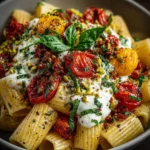
Burrata Rigatoni with Roasted Cherry Tomatoes, Basil & Pistachio Crunch
- Total Time: 40 minutes
- Yield: 4 servings 1x
Description
Rigatoni tossed in a rich, creamy burrata sauce, topped with roasted cherry tomatoes, fresh basil, and a crunchy pistachio topping.
Ingredients
- 1 lb rigatoni pasta
- 2 pints cherry tomatoes, halved
- 3 tablespoons olive oil
- 4 cloves garlic, minced
- 1/2 teaspoon red pepper flakes
- 8 oz burrata cheese, torn
- 1/2 cup heavy cream
- 1/2 cup grated Parmesan cheese
- 1/4 cup chopped fresh basil
- 1/3 cup shelled pistachios, roughly chopped
- Salt and black pepper to taste
Instructions
- Preheat oven to 400°F. On a baking sheet, toss cherry tomatoes with 2 tablespoons olive oil, salt, and pepper. Roast for 20 minutes until blistered.
- Bring a large pot of salted water to a boil. Cook rigatoni according to package directions until al dente. Reserve 1 cup pasta water, then drain.
- In a large skillet, heat remaining 1 tablespoon olive oil over medium heat. Add garlic and red pepper flakes, cook 1 minute.
- Reduce heat to low. Add heavy cream, Parmesan, and half the burrata. Stir until melted and creamy. Add a splash of pasta water if needed to thin.
- Add cooked rigatoni to the skillet and toss to coat. Remove from heat.
- Top with roasted cherry tomatoes, remaining burrata, fresh basil, and chopped pistachios. Serve immediately.
Notes
For extra crunch, toast the pistachios in a dry skillet for 2 minutes before chopping. Burrata is best added just before serving to keep it creamy.
- Prep Time: 15 minutes
- Cook Time: 25 minutes
- Method: Main Course
- Cuisine: Italian-American
Nutrition
- Calories: 720
- Sugar: 6g
- Fat: 38g
- Carbohydrates: 65g
- Protein: 28g
Tried This Recipe? Leave a Comment!
Did you make this recipe? I’d love to hear how it turned out! Please leave a comment and a rating below. Your feedback helps other home cooks and supports cookingwithlalyta.com!
For more delicious inspiration, follow me on Pinterest!