Table of Contents
Halloumi & Cranberry Couscous Salad with Mint-Lemon Dressing – A Vibrant Mediterranean Lunch That Comes Together in 25 Minutes
I first fell in love with the magic combination of salty cheese and sweet dried fruit in my mother’s kitchen in Morocco, where she’d scatter jewel-like raisins and golden fried almonds over steaming mounds of couscous every Friday. Years later, during my culinary training in Paris, I discovered halloumi — that glorious Cypriot cheese that grills instead of melting — and I knew instantly it belonged in a couscous salad. This halloumi cranberry couscous salad is my New York City interpretation of those memories, where the squeaky-salty halloumi gets a quick pan-sear until its exterior crackles with golden-brown crispness, while plump dried cranberries and a bright mint-lemon dressing tie everything together in exactly 25 minutes flat.
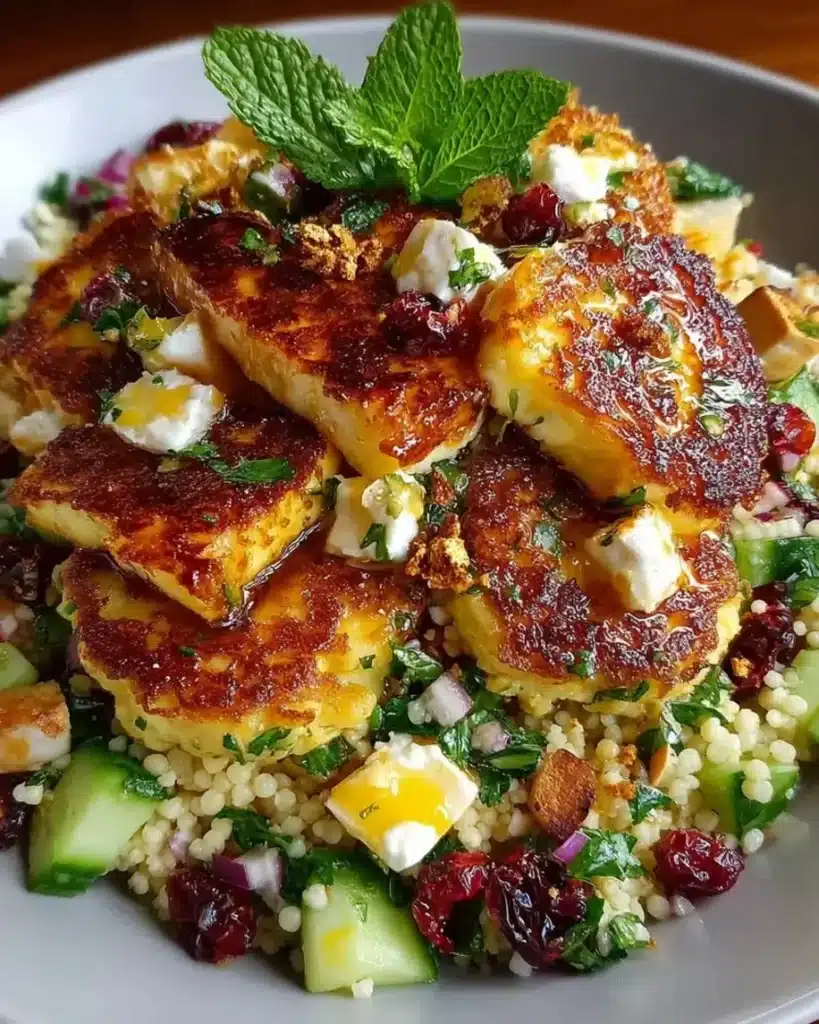
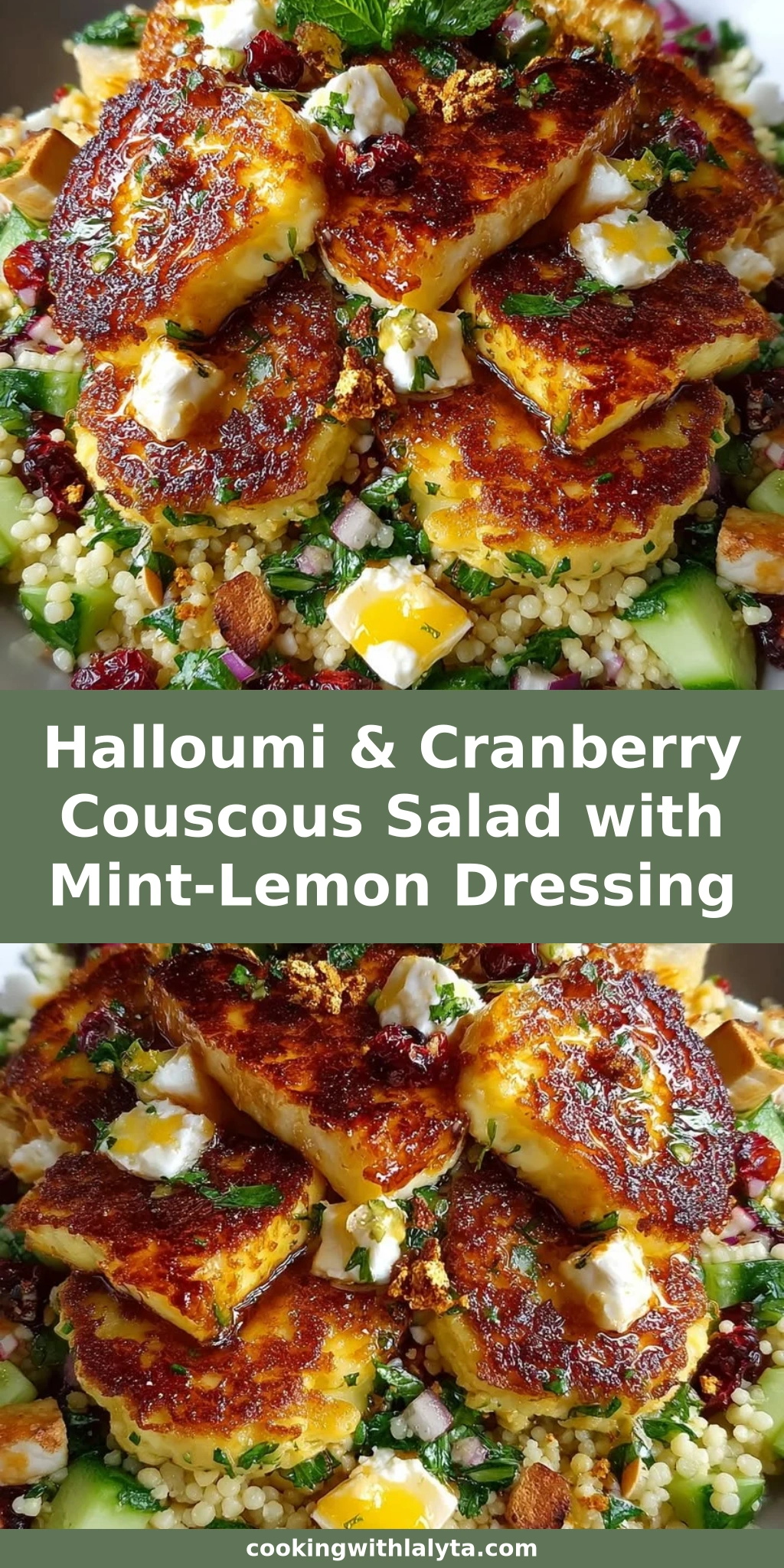
Picture this: you pierce a cube of warm, crispy-edged halloumi with your fork alongside a tangle of fluffy couscous, a few ruby-red cranberries, and a delicate shard of toasted almond. The first bite hits you with the bright, zesty punch of fresh lemon juice and fragrant mint, followed by the satisfying savory chew of the cheese, then the gentle sweetness of cranberries rounding everything out. The almonds add a whisper of nutty crunch that makes each mouthful feel complete. It’s the kind of salad that works equally well packed into a work lunch container or presented on a beautiful platter for weekend entertaining — and the aroma of fresh mint hitting warm couscous will instantly transport you to a sun-drenched Mediterranean terrace, even if you’re just standing in your apartment kitchen.
What makes my version of this cranberry couscous salad genuinely special is the technique I learned in my Paris kitchens: dry-frying the halloumi in a screaming-hot non-stick pan with absolutely no oil. This forces the cheese to release its own moisture, creating that irresistible golden crust while keeping the interior tender and pillowy. I’ll be sharing exactly how to nail that technique below, along with the most common mistake home cooks make when preparing couscous (spoiler: it involves lifting the lid too early). Trust me on this one — once you master these two simple skills, you’ll have a halloumi couscous salad recipe in your back pocket that tastes like it came from a restaurant kitchen but requires zero fancy equipment.
Why This Halloumi & Cranberry Couscous Salad Recipe Is the Best
The flavor secret behind this couscous salad with halloumi lies in the layering technique I brought home from my Moroccan upbringing. Instead of simply tossing everything together in one bowl, we build the salad in stages — first infusing the couscous with boiling vegetable stock rather than plain water, which adds a savory backbone that plain water never could. Then we toast the almonds until they’re fragrant and golden, releasing their natural oils. The cranberries plump slightly from the residual steam of the couscous, becoming tender and juicy. But the real star is the mint-lemon dressing, which I make with double the fresh mint you’d expect — half whisked directly into the lemon and olive oil, and half chopped and folded into the salad for bursts of fresh herbal flavor in every bite.
Perfected texture is something I obsess over, and this halloumi cranberry couscous salad delivers on every level. The halloumi is seared over medium-high heat until it develops a deep golden-brown crust on each side — about 2 to 3 minutes per side — while the inside stays soft and yielding. The couscous itself is light and fluffy, never clumpy or gummy, because we use the absorption method with a proper lid and a full 10-minute rest. The cucumber provides a cool, crisp counterpoint, the red onion adds gentle bite, and the toasted almonds bring a satisfying crunch. Every single ingredient has a textural role to play, and nothing gets lost in the mix.
This recipe is genuinely foolproof and fast, which is exactly what I need on busy weeknights in my NYC kitchen. You can have it on the table in 25 minutes from start to finish, and most of that time is hands-off waiting for the couscous to steam. No complicated techniques, no special equipment beyond a good non-stick skillet. Whether you’re a seasoned home cook or someone who’s never touched a box of couscous before, this recipe walks you through every step with clear visual cues — look for the halloumi to turn deep golden, watch for the couscous to absorb all the liquid, and taste the dressing before you pour it on. It’s the kind of recipe that builds your confidence in the kitchen.
Halloumi Cranberry Couscous Salad Ingredients
Whenever I shop for this couscous salad with halloumi, I find myself at the Union Square Greenmarket here in NYC, where the fresh mint and cucumbers practically jump into my tote bag during the summer months. The halloumi I grab from the specialty cheese counter at my neighborhood grocery — look for it near the feta and mozzarella, usually vacuum-sealed in a rectangular block. The dried cranberries and couscous are pantry staples I always keep on hand, making this one of my go-to “what do I cook when the fridge looks empty” meals. Here’s everything you’ll need:
Ingredients List
- 1½ cups (200g) couscous
- 1 cup plus 1 tablespoon (250ml) boiling vegetable stock
- 7 oz (200g) halloumi cheese, sliced into ¼-inch thick pieces
- ½ cup (75g) dried cranberries
- ⅓ cup (50g) toasted flaked almonds
- 1 small red onion, finely chopped
- 1 medium cucumber, diced into small cubes
- Small bunch fresh mint, chopped (about ¼ cup loosely packed)
- For the dressing:
- Juice of 2 large lemons (about ¼ cup)
- 4 tablespoons extra virgin olive oil
- 2 tablespoons chopped fresh mint
- Salt and freshly ground black pepper to taste
Ingredient Spotlight
Halloumi: This semi-hard Cypriot cheese is the hero of our halloumi couscous salad recipe. It has a high melting point, which means it sears beautifully without turning into a puddle. When shopping, look for halloumi that feels firm to the touch and has no discoloration. In most US grocery stores, you’ll find it in the specialty cheese section near the feta — brands like Almarai, Pittas, or even Trader Joe’s halloumi all work beautifully. If you absolutely cannot find halloumi, paneer is your closest substitute; it won’t have the same salty tang, so you’ll need to season it with a pinch of salt while frying. The texture will be slightly firmer but still delicious.
Dried Cranberries: These little ruby jewels bring a pop of sweetness that balances the salty halloumi perfectly. I prefer unsweetened dried cranberries when I can find them — they have a more natural tartness that plays beautifully against the lemon dressing — but sweetened ones work just fine too. If you need a substitute, dried tart cherries or golden raisins are excellent alternatives. Dried cherries will give you a deeper, almost wine-like sweetness, while golden raisins are milder and more floral. Avoid fresh cranberries here; they’re too tart and their firm texture doesn’t meld into the salad the way dried fruit does.
Couscous: I always reach for standard Moroccan couscous — the fine, instant variety that rehydrates in just 10 minutes with boiling liquid. You’ll find it in the grain aisle or international foods section of any US supermarket, often labeled simply as “couscous” (brands like Near East or Bob’s Red Mill are reliable). Israeli couscous (also called pearl couscous) is a completely different ingredient with larger, pasta-like pearls that require simmering; it will work in a pinch but changes the texture of this dish significantly, making it chewier and more substantial. For the lightest, fluffiest result, stick with traditional fine couscous.
Fresh Mint: There is no substitute for fresh mint in this mint lemon dressing — dried mint simply cannot replicate the bright, cooling, aromatic quality that makes this salad sing. I use spearmint, which is the most common variety in US grocery stores (sold in plastic clamshells in the refrigerated herb section). When selecting mint, look for perky leaves with no yellowing or wilting. In a pinch, a combination of fresh basil and a tiny bit of fresh tarragon can approximate the herbal freshness, but honestly, I’d urge you to wait until you have fresh mint on hand — it’s that essential to the recipe’s DNA.
| Original Ingredient | Best Substitution | Flavor / Texture Impact |
|---|---|---|
| Halloumi cheese | Paneer or firm tofu (pressed and salted) | Less salty; add a pinch of salt while frying. Tofu will be softer with no squeak. |
| Dried cranberries | Dried tart cherries or golden raisins | Cherries: deeper sweetness. Golden raisins: milder, more floral. Both work beautifully. |
| Flaked almonds | Pine nuts or chopped pistachios | Pine nuts: richer, buttery. Pistachios: earthier, vibrant green color. |
| Fresh mint | Fresh basil + a pinch of tarragon | Different profile but still fresh and herbaceous. Best to wait for mint if possible. |
| Red onion | Shallot or green onion | Shallot: milder, sweeter. Green onion: fresher, less pungent bite. |
How to Make Halloumi & Cranberry Couscous Salad — Step-by-Step
I promise you, this couscous salad with halloumi is about as low-stress as cooking gets. We’ll work in a logical sequence — starting with the couscous so it can steam while we handle everything else, then searing the halloumi at the last moment so it’s still warm when you serve. Follow each step in order, watch for the visual cues I’ve noted, and you’ll have a stunning salad in under half an hour.
Step 1: Prepare the Couscous
Place 1½ cups (200g) of couscous into a large heatproof bowl. Pour 1 cup plus 1 tablespoon (250ml) of boiling vegetable stock evenly over the couscous — you want the liquid to cover the grains completely. Immediately cover the bowl tightly with a plate or a lid (this traps the steam, which is what actually cooks the couscous). Set a timer for 10 minutes and do not lift that lid during this time — I mean it! When the timer goes off, remove the plate and fluff the couscous vigorously with a fork, breaking up any clumps and aerating the grains until they’re light and separated. The couscous should have absorbed every drop of liquid and taste tender but not mushy.
⚠️ Common Mistake to Avoid: Lifting the lid to check on the couscous releases the steam that’s essential for proper cooking. If you peek, the grains will end up unevenly cooked — some crunchy, some gummy. Trust the timer, keep that lid on tight, and only uncover when the 10 minutes are up. I learned this the hard way during my first week in Paris when my chef instructor caught me peeking and made me start over!
Step 2: Pan-Fry the Halloumi
While the couscous steams, slice your 7 oz (200g) block of halloumi into pieces about ¼-inch thick — you should get around 8 to 10 slices. Place a non-stick frying pan over medium-high heat and let it get properly hot (you should feel the warmth radiating when you hold your hand a few inches above the surface). There’s no need for any oil — halloumi releases its own moisture as it heats. Lay the slices in a single layer in the dry pan (work in batches if needed; overcrowding will steam the cheese instead of searing it). Cook for 2 to 3 minutes on the first side until you see a deep golden-brown crust forming around the edges — the color should be rich and appetizing, not pale. Flip each slice with a thin spatula and cook for another 2 to 3 minutes on the second side until equally golden. Transfer to a plate and set aside.
💡 Lalybeth’s Pro Tip: For the crispiest halloumi, pat the slices completely dry with paper towels before they hit the pan. Any surface moisture creates steam, which prevents proper browning. I also like to let the halloumi come to room temperature for about 10 minutes before slicing — cold cheese straight from the fridge tends to seize up and release more liquid when it hits the hot pan.
Step 3: Combine the Salad Base
Once your couscous is fluffed and slightly cooled (warm is fine, but you don’t want it steaming hot), add the dried cranberries (½ cup / 75g), toasted flaked almonds (⅓ cup / 50g), finely chopped red onion, diced cucumber, and the chopped fresh mint from the salad ingredients. Toss everything together gently with a fork or your hands — I prefer using my hands because I can feel when everything is evenly distributed without crushing the delicate couscous grains. The residual warmth from the couscous will slightly soften the cranberries, making them tender and juicy in the finished dish.
💡 Lalybeth’s Pro Tip: Toast your flaked almonds in a dry skillet over medium heat for 2 to 3 minutes, shaking the pan frequently, until they’re golden and fragrant. You’ll know they’re ready when you can smell the nutty aroma filling your kitchen. This small extra step takes 3 minutes but adds an incredible depth of flavor that raw almonds simply don’t deliver. I toast a big batch on Sundays and store them in an airtight jar for the week.
Step 4: Whisk the Mint-Lemon Dressing
In a small bowl or a jar with a tight-fitting lid, combine the juice of 2 large lemons (you should have about ¼ cup of juice), 4 tablespoons of extra virgin olive oil, 2 tablespoons of finely chopped fresh mint, and a generous pinch of salt and freshly ground black pepper. Whisk vigorously with a fork — or shake the sealed jar — until the dressing emulsifies and looks slightly creamy and unified, not separated into oil and lemon juice. Taste it! This is crucial — dip a piece of cucumber or a spoon into the dressing and check the balance. It should be bright and tangy with a noticeable mint presence. Adjust with more salt, pepper, or a tiny drizzle of honey if your lemons are particularly tart.
⚠️ Common Mistake to Avoid: Underseasoning the dressing at this stage leads to a flat-tasting salad no matter how good your other ingredients are. The dressing carries the flavor; if it tastes bland on its own, it will taste bland on the salad. Be bold with your salt and pepper — remember that couscous and vegetables absorb seasoning, so you need your dressing to be slightly more assertive than you think.
Step 5: Dress the Salad
Pour about two-thirds of the mint-lemon dressing over the couscous mixture and stir gently to combine, making sure every grain gets kissed by the dressing. Let the salad sit for 2 to 3 minutes so the couscous can absorb the lemony goodness. Then taste again — this is where you decide if you need the remaining dressing. I usually add all of it because I love a brightly dressed salad, but if you prefer a lighter touch, hold back and serve the rest on the side. The couscous should glisten and taste vibrant, with the mint and lemon clearly present in every bite.
💡 Lalybeth’s Pro Tip: Dress the couscous while it’s still slightly warm — not hot, but not completely cooled. Warm grains absorb dressing far better than cold ones, which means more flavor in every bite. If you’re making this salad ahead for meal prep, I recommend dressing it warm, then letting it cool completely before refrigerating. The flavors actually improve as they meld.
Step 6: Plate and Garnish
Transfer the dressed couscous salad to a large serving platter or individual bowls. Arrange the warm halloumi slices on top — I like to fan them out slightly overlapping so they look abundant and inviting. Scatter a few extra mint leaves over the top for that fresh, green pop, and if you want to gild the lily, a final drizzle of extra virgin olive oil and a crack of black pepper. Serve immediately while the halloumi is still warm and its edges are crisp. The contrast between the warm, salty cheese and the cool, lemony couscous is what makes this halloumi cranberry couscous salad truly special.
⚠️ Common Mistake to Avoid: Adding the halloumi too early and letting it sit on the dressed salad for more than a few minutes before serving. The cheese will absorb moisture from the dressing and lose its crispy crust. Always sear the halloumi at the very last moment — even after you’ve plated the couscous — and add it right before the salad hits the table.
| Step | Action | Duration | Key Visual Cue |
|---|---|---|---|
| 1. Couscous | Pour stock, cover, rest | 10 mins | All liquid absorbed; grains fluffy and separate |
| 2. Halloumi | Dry-fry in hot pan | 4–6 mins total | Deep golden-brown crust on both sides |
| 3. Salad Base | Toss all ingredients | 2 mins | Evenly distributed cranberries, almonds, and veggies |
| 4. Dressing | Whisk lemon, oil, mint | 1 min | Emulsified and slightly creamy |
| 5. Dress | Pour and stir | 2 mins | Couscous glistens; even coating |
| 6. Plate | Top with warm halloumi | 1 min | Cheese still warm with crisp edges |
Serving & Presentation
When I plate this halloumi cranberry couscous salad for guests, I reach for a wide, shallow serving bowl or a large wooden board — something that lets the salad spread out so those golden halloumi slices are visible from every angle. I scatter the warm cheese across the top in a casual, almost artful way, letting a few cranberries peek through, then finish with a flurry of torn mint leaves and a final squeeze of lemon right at the table. The dramatic sizzle of the halloumi coming out of the pan moments before serving never fails to draw everyone into the kitchen. If you’re packing this for lunch, layer the couscous in your container first, then place the halloumi on top so it stays separate until you’re ready to reheat.
This cranberry couscous salad is remarkably versatile at the table. It’s substantial enough to stand as a light main course — I often serve it just like this for a quick weeknight dinner with a glass of chilled rosé — but it also shines as a side dish alongside simple grilled proteins. During the summer, I’ll bring it to rooftop gatherings and park picnics, where it holds up beautifully without wilting or getting soggy. My Paris-trained brain also loves it as part of a composed salad plate with a few slices of ripe tomato, some olives, and good crusty bread for mopping up any extra dressing.
| Pairing Type | Suggestions | Why It Works |
|---|---|---|
| Side Dish | Grilled chicken skewers, lamb chops, or roasted salmon | The bright lemon and mint cut through richer proteins beautifully |
| Sauce / Dip | Tzatziki, hummus, or a drizzle of harissa yogurt | Cool, creamy dips complement the salty halloumi and tart cranberries |
| Beverage | Chilled rosé, sparkling water with lemon, or mint iced tea | Light, refreshing drinks echo the salad’s lemon-mint profile |
| Garnish | Extra mint leaves, lemon zest, pomegranate seeds, or toasted pine nuts | Adds color, freshness, and an extra layer of texture |
Make-Ahead, Storage & Reheating
In my busy NYC life, meal prepping is non-negotiable, and this halloumi couscous salad recipe is a champion at it. I’ll often make the couscous base and dressing on a Sunday evening, store them separately in the fridge, then all I have to do on Monday is sear the halloumi and toss everything together in under 5 minutes. The key is keeping the components separate until you’re ready to eat — this preserves the texture of every ingredient and ensures your halloumi stays crispy rather than becoming soft and waterlogged from sitting in the dressing overnight.
| Method | Container | Duration | Reheating Tip |
|---|---|---|---|
| Refrigerator | Airtight glass container | Up to 3 days (undressed couscous); 1 day (dressed) | Re-sear halloumi in a dry pan for 1–2 mins to re-crisp |
| Freezer | Not recommended | N/A | Couscous and fresh vegetables lose texture when frozen and thawed |
| Make-Ahead | Separate containers for couscous base, dressing, and halloumi | Prep up to 2 days in advance | Sear halloumi fresh; toss everything just before serving |
Here’s a little trick I picked up during my Paris restaurant days: if you have leftover dressed salad with the halloumi already mixed in, don’t despair — the flavors will actually deepen overnight. The texture won’t be quite the same (the halloumi loses its crispness, and the couscous absorbs more dressing), but it’s still delicious cold straight from the fridge for lunch the next day. To revive it, let it come to room temperature for about 20 minutes, then freshen it up with a squeeze of lemon and a few torn mint leaves. If you want that crispy halloumi experience again, simply sear a fresh batch — it only takes 5 minutes — and add it on top of the leftover salad.
One final storage tip from my NYC kitchen: always store your toasted almonds separately if you’re making the salad ahead. Nuts absorb moisture from the dressed couscous and lose their crunch within hours. I keep a small jar of toasted flaked almonds in my pantry and scatter them on right before eating — that way every bite has that satisfying nutty crackle that makes this cranberry couscous salad so texturally exciting.
Variations & Easy Swaps
| Variation | Key Change | Best For | Difficulty Impact |
|---|---|---|---|
| Vegan / Dairy-Free | Swap halloumi for crispy roasted chickpeas or pan-fried firm tofu | Vegan eaters, dairy-free diets | No change — still easy |
| Gluten-Free | Use quinoa or certified gluten-free couscous (corn-based) | Gluten intolerance, celiac | Slightly more attention to cooking times |
| Seasonal Summer Twist | Add fresh cherries, swap almonds for pistachios, use basil-mint mix | Summer gatherings, farmers market bounty | No change — still easy |
Vegan / Dairy-Free Variation
To transform this into a fully plant-based halloumi couscous salad recipe, I reach for firm tofu or a can of chickpeas. For tofu, press a 7 oz block for 20 minutes to remove excess water, slice it into ¼-inch slabs, season generously with salt and a tiny pinch of smoked paprika (this mimics halloumi’s salty-smoky depth), then pan-fry in 1 tablespoon of olive oil until golden on both sides — about 4 minutes per side. For chickpeas, I drain and pat dry a 15 oz can, toss them with olive oil and salt, then roast at 425°F for 20 to 25 minutes until they’re shatteringly crisp on the outside and creamy inside. Both options deliver that satisfying savory element that balances the sweet cranberries, and honestly, my vegan friends in NYC have declared this version just as addictive as the original.
Gluten-Free Variation
Traditional couscous is made from semolina wheat and is not gluten-free, but quinoa makes an absolutely stunning substitute in this cranberry couscous salad. I use 1½ cups of quinoa (rinsed well to remove its natural bitter coating) cooked in 2¼ cups of vegetable stock — bring to a boil, then cover and simmer for 15 minutes until the liquid is absorbed and the little white tails have unfurled. Fluff with a fork and proceed exactly as you would with couscous. The texture is slightly nuttier and the grains are more distinct, which actually works beautifully with the salty halloumi and sweet cranberries. Alternatively, you can look for corn-based “couscous” in the gluten-free aisle of well-stocked supermarkets — it cooks identically to traditional couscous.
Seasonal Summer Twist
When summer hits NYC and the Union Square Greenmarket is overflowing with stone fruit, I make a seasonal version of this halloumi cranberry couscous salad that feels completely new. I swap the dried cranberries for fresh pitted cherries (halved, about ¾ cup), replace the almonds with roughly chopped pistachios for their vibrant green color and buttery crunch, and use a mix of fresh basil and mint in the dressing — the basil adds a sweet, almost anise-like note that plays beautifully with the cherries. Sometimes I’ll even throw in a handful of peppery arugula for a fresh green bite. It’s the same easy method, but it tastes like a completely different dish — bright, juicy, and perfect for al fresco dining on a warm evening.
How do you cook halloumi so it’s crispy on the outside but soft inside?
The secret to perfectly crispy-on-the-outside, soft-on-the-inside halloumi is threefold: pat the cheese completely dry with paper towels before cooking, use a hot non-stick pan with absolutely no oil, and avoid overcrowding the pan. Halloumi releases its own moisture as it heats up, so a dry pan allows that moisture to evaporate quickly and the cheese to develop a deep golden crust. Cook for 2 to 3 minutes per side over medium-high heat, and resist the urge to move the slices around — let them sit undisturbed until a crust forms. I learned this technique in Paris, and it has never failed me. For the best results, bring the halloumi to room temperature for about 10 minutes before slicing and cooking; cold cheese tends to release more liquid and seize up.
Can I substitute dried cranberries with fresh or another dried fruit?
Absolutely! While dried cranberries bring a signature sweet-tart pop to this salad, you can easily swap them with other dried fruits. Dried tart cherries are my favorite substitute — they have a deeper, almost wine-like sweetness that pairs beautifully with the salty halloumi. Golden raisins work wonderfully too, offering a milder, more floral sweetness. I don’t recommend fresh cranberries, though; they’re far too tart and their firm, almost waxy texture doesn’t soften enough in the time it takes to assemble this salad. If you want to experiment with fresh fruit, try pomegranate seeds or halved fresh cherries in summer — they won’t give you the same chewy texture as dried fruit but add a juicy burst of sweetness that’s delicious in its own right.
What type of couscous works best for this salad?
Standard Moroccan couscous — the fine, instant variety that rehydrates in just 10 minutes with boiling liquid — is absolutely the best choice for this halloumi cranberry couscous salad. You’ll find it in the grain aisle of any US supermarket, often labeled simply as “couscous.” It’s light, fluffy, and absorbs the mint-lemon dressing beautifully without becoming heavy. Israeli couscous (also called pearl couscous) is a different ingredient entirely — it has larger, pasta-like pearls that require simmering and result in a chewier, more substantial texture. While it will work if it’s all you have, the finished salad will feel denser and less delicate. For the lightest, fluffiest result that lets the halloumi and cranberries shine, stick with traditional fine Moroccan couscous.
Can this halloumi and cranberry couscous salad be made ahead of time?
Yes, but with a smart strategy! The couscous base (couscous with cranberries, almonds, onion, and cucumber) can be prepared up to 2 days ahead and stored in an airtight container in the refrigerator. The mint-lemon dressing can also be made ahead and kept separately in a sealed jar. However, I strongly recommend searing the halloumi fresh just before serving — this ensures it stays crispy on the outside and soft inside. If you’ve already mixed everything together, the dressed salad (with halloumi) will keep in the fridge for up to 1 day, though the halloumi will lose its crispness. To revive leftovers, let the salad come to room temperature, freshen it with a squeeze of lemon and a few torn mint leaves, and if you want that crispy cheese experience again, quickly sear a fresh batch of halloumi.
Is halloumi cheese healthy and what does it taste like?
Halloumi is a semi-hard Cypriot cheese with a distinctive salty, savory flavor and a unique squeaky texture when eaten raw. When cooked, it develops a golden, crispy exterior while the inside stays soft and yielding — it doesn’t melt like most cheeses, which is what makes it so special in salads. Nutritionally, halloumi is relatively high in protein (about 7 grams per ounce) and calcium, but it’s also high in saturated fat and sodium, so it’s best enjoyed in moderation as part of a balanced meal. In this recipe, you’re getting about 2 ounces of halloumi per serving alongside fiber-rich couscous, fresh vegetables, and heart-healthy olive oil, making it a satisfying and relatively balanced dish. If you’re watching your sodium intake, look for reduced-sodium halloumi or give the slices a quick rinse and pat-dry before cooking.
How do I store leftover couscous salad with halloumi?
Store leftover dressed couscous salad in an airtight container in the refrigerator for up to 1 day. The flavors will actually deepen overnight, which is lovely, but the halloumi will lose its crispy crust and become softer. To enjoy leftovers at their best, remove the salad from the fridge about 20 minutes before eating to let it come to room temperature — this helps the olive oil in the dressing loosen up and the flavors bloom. Give it a gentle stir, then freshen it with a squeeze of fresh lemon juice and a few torn mint leaves to revive the bright flavors. If you want that warm, crispy halloumi experience again, I recommend searing a fresh batch (it only takes 5 minutes) and adding it on top of the leftover salad. The couscous base itself, if stored undressed, keeps well for up to 3 days.
Can I make this halloumi cranberry couscous salad vegan?
Yes, you can easily make this salad vegan with a couple of thoughtful swaps. The most straightforward substitution for halloumi is firm tofu: press a 7 oz block for 20 minutes to remove excess water, slice it, season with salt and a pinch of smoked paprika, and pan-fry in 1 tablespoon of olive oil until golden on both sides. Alternatively, use crispy roasted chickpeas — drain and pat dry a can of chickpeas, toss with olive oil and salt, and roast at 425°F for 20 to 25 minutes until crunchy. Both options deliver the savory, satisfying element this salad needs, and the rest of the ingredients (couscous, cranberries, almonds, cucumber, red onion, and the mint-lemon dressing) are already completely plant-based. I’ve served the chickpea version to vegan friends and they’ve asked for the recipe every time.
What can I use instead of halloumi if I can’t find it?
If you can’t track down halloumi at your local grocery store, you have several good options. Paneer — the Indian cheese commonly used in saag paneer — is the closest textural match: it also holds its shape when heated and develops a nice golden crust when pan-fried. It’s noticeably less salty than halloumi, so be sure to season it well with salt before and after cooking. Firm tofu, pressed and well-seasoned, is another excellent alternative, especially for a vegan version. In a pinch, thick slices of queso de freír (a Latin American frying cheese) or even bread cheese (juustoleipä) can work, though their flavors differ. For a non-cheese option, crispy roasted chickpeas lend a satisfying crunch and nutty flavor that complements the sweet cranberries and bright lemon dressing beautifully.
Why is my couscous clumpy and how do I fix it?
Clumpy couscous is almost always caused by one of two things: not enough liquid, or lifting the lid during the steaming process. For perfectly fluffy couscous every time, use a 1:1.25 ratio of couscous to boiling liquid (1½ cups couscous to about 1 cup plus 1 tablespoon of stock), cover the bowl tightly with a plate or lid immediately after pouring the liquid, and — this is critical — do not lift that lid for the full 10 minutes. The trapped steam is what cooks the grains evenly. When the timer goes off, use a fork (never a spoon, which compresses the grains) to fluff the couscous vigorously, breaking apart any clumps and aerating it. If your couscous is already clumpy, drizzle a teaspoon of warm water over it, cover again for 2 minutes, then fluff aggressively with a fork.
Can I serve this halloumi cranberry couscous salad warm or cold?
This salad is wonderfully versatile and can be served warm, at room temperature, or cold, depending on your preference and the occasion. I personally love it served slightly warm — with the couscous still carrying residual heat and the halloumi fresh from the pan — because the contrast between the warm, crispy cheese and the cool, lemony couscous is absolutely magical. At room temperature, it’s perfect for picnics, potlucks, and packed lunches, and the flavors of the mint-lemon dressing actually become more pronounced as the salad sits. Cold from the fridge, it makes a refreshing summer lunch, though the halloumi will have lost its crispness by then. If serving cold, I recommend letting the salad sit at room temperature for 15 to 20 minutes before eating so the olive oil in the dressing can loosen up.
Share Your Version!
I truly hope this halloumi cranberry couscous salad becomes a staple in your kitchen the way it has in mine. There’s something about the combination of crispy, salty cheese and sweet-tart cranberries tangled in lemony, herb-flecked couscous that just feels like sunshine on a plate — whether you’re enjoying it on a busy Tuesday night in your apartment or serving it to friends at a weekend gathering. Every time I make it, I’m transported back to my mother’s kitchen in Morocco, where couscous was always the center of the table, and forward to my Paris training, where I learned to sear cheese to golden perfection. Now, in my NYC kitchen, this dish feels like the best of all those worlds.
I’d love to see your take on this recipe! Leave a star rating and comment below to let me know how it turned out — did you nail the crispy halloumi on your first try? Did you experiment with a different dried fruit or nut? Share a photo of your creation on Instagram or Pinterest and tag me @cookingwithlalyta — I genuinely light up every time I see your beautiful plates. And here’s a question for you: what’s your favorite way to use fresh mint beyond this dressing? I’m always collecting ideas from my readers, and some of my best recipe inspirations have come from the comments section. Let’s keep the conversation going!
From my NYC kitchen to yours — I hope this recipe brings as much warmth to your table as it does to mine. — Lalybeth 🧡
Love This Recipe? Save It to Pinterest!
If you enjoyed this Halloumi & Cranberry Couscous Salad with Mint-Lemon Dressing recipe, don’t let it get lost in your browser tabs! 😄 Pin it now so you can find it again anytime — and explore hundreds more tried-and-tested recipes waiting for you on my Pinterest boards.
👉 Follow Lalybeth on Pinterest @cookingwithlalyta
📌 Pin this recipe · 🔁 Re-pin your favorites · 💬 Tag me when you make it — I love seeing your creations!
Did You Make This Halloumi & Cranberry Couscous Salad?
I’d love to hear how it turned out! Leave a comment below with your star rating ⭐⭐⭐⭐⭐, share your photos on Instagram with #cookingwithlalyta, and tell me — did you nail that crispy golden halloumi crust on the first try? Your feedback and creative twists make my day, every single time.
Halloumi & Cranberry Couscous Salad with Mint-Lemon Dressing
- Total Time: 25 minutes
- Yield: 4 servings 1x
Description
A vibrant and satisfying salad featuring crispy pan-fried halloumi, sweet dried cranberries, fluffy couscous, and a refreshing mint-lemon dressing. Perfect for a light lunch or side dish.
Ingredients
- 200g couscous
- 250ml boiling vegetable stock
- 200g halloumi cheese, sliced
- 75g dried cranberries
- 50g toasted flaked almonds
- 1 small red onion, finely chopped
- 1 cucumber, diced
- Small bunch fresh mint, chopped
- For the dressing:
- Juice of 2 lemons
- 4 tbsp extra virgin olive oil
- 2 tbsp chopped fresh mint
- Salt and black pepper to taste
Instructions
- Place the couscous in a large bowl, pour over the boiling stock, cover with a plate, and leave for 10 minutes until absorbed. Fluff with a fork.
- Meanwhile, heat a non-stick frying pan over medium-high heat. Dry-fry the halloumi slices for 2-3 minutes each side until golden. Set aside.
- Add the cranberries, almonds, red onion, cucumber, and chopped mint to the couscous. Toss well.
- Whisk together the dressing ingredients in a small bowl, season to taste.
- Pour the dressing over the couscous mixture and stir to combine.
- Serve the salad topped with the warm halloumi slices. Garnish with extra mint if desired.
Notes
To make this vegan, substitute halloumi with firm tofu or roasted chickpeas. The salad can be served warm or cold.
- Prep Time: 15 minutes
- Cook Time: 10 minutes
- Method: Salad
- Cuisine: Mediterranean
Nutrition
- Calories: 435 kcal
- Sugar: 12 g
- Fat: 22 g
- Carbohydrates: 45 g
- Protein: 16 g
Tried This Recipe? Leave a Comment!
Did you make this recipe? I’d love to hear how it turned out! Please leave a comment and a rating below. Your feedback helps other home cooks and supports cookingwithlalyta.com!
For more delicious inspiration, follow me on Pinterest!