Table of Contents
Lemon Ricotta Gnocchi with Burrata, Roasted Grapes & Toasted Hazelnuts – Sweet, Creamy & Crunchy Perfection
There are certain dishes that arrive on the table and instantly hush the room — and this Lemon Ricotta Gnocchi with Burrata, Roasted Grapes & Toasted Hazelnuts is absolutely one of them. I still remember the first time I tasted gnocchi like this: it wasn’t in Italy, believe it or not, but in a tiny tucked-away bistro in Paris during my culinary school years. The chef — a gruff Florentine who had emigrated decades earlier — served pillowy ricotta gnocchi with nothing more than brown butter and sage, and I was spellbound. Years later, living in NYC and constantly craving that same tenderness, I started experimenting. I wanted something that captured that Paris memory but with the bold, contrasting flavors I’d grown up with in my mother’s Moroccan kitchen: sweet fruit, creamy tang, and nutty crunch all sharing one plate. That’s how this Gnocchi with Burrata recipe was born — and I’ve been making it for dinner parties, quiet date nights, and everything in between ever since.
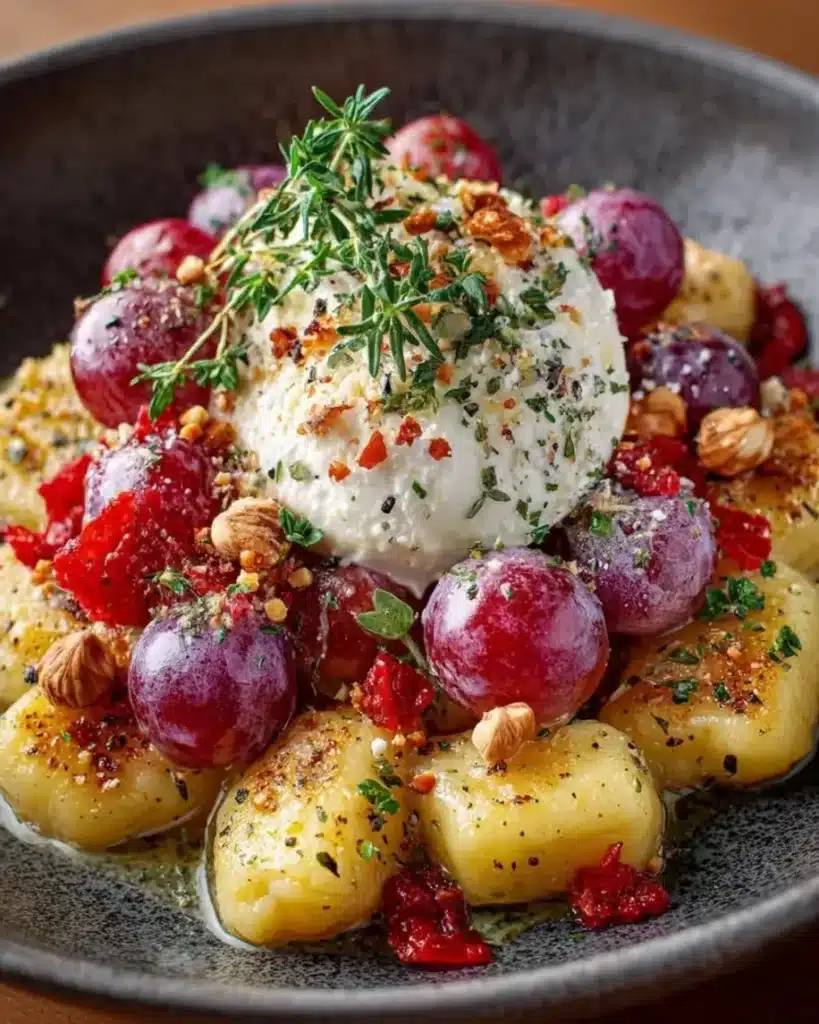
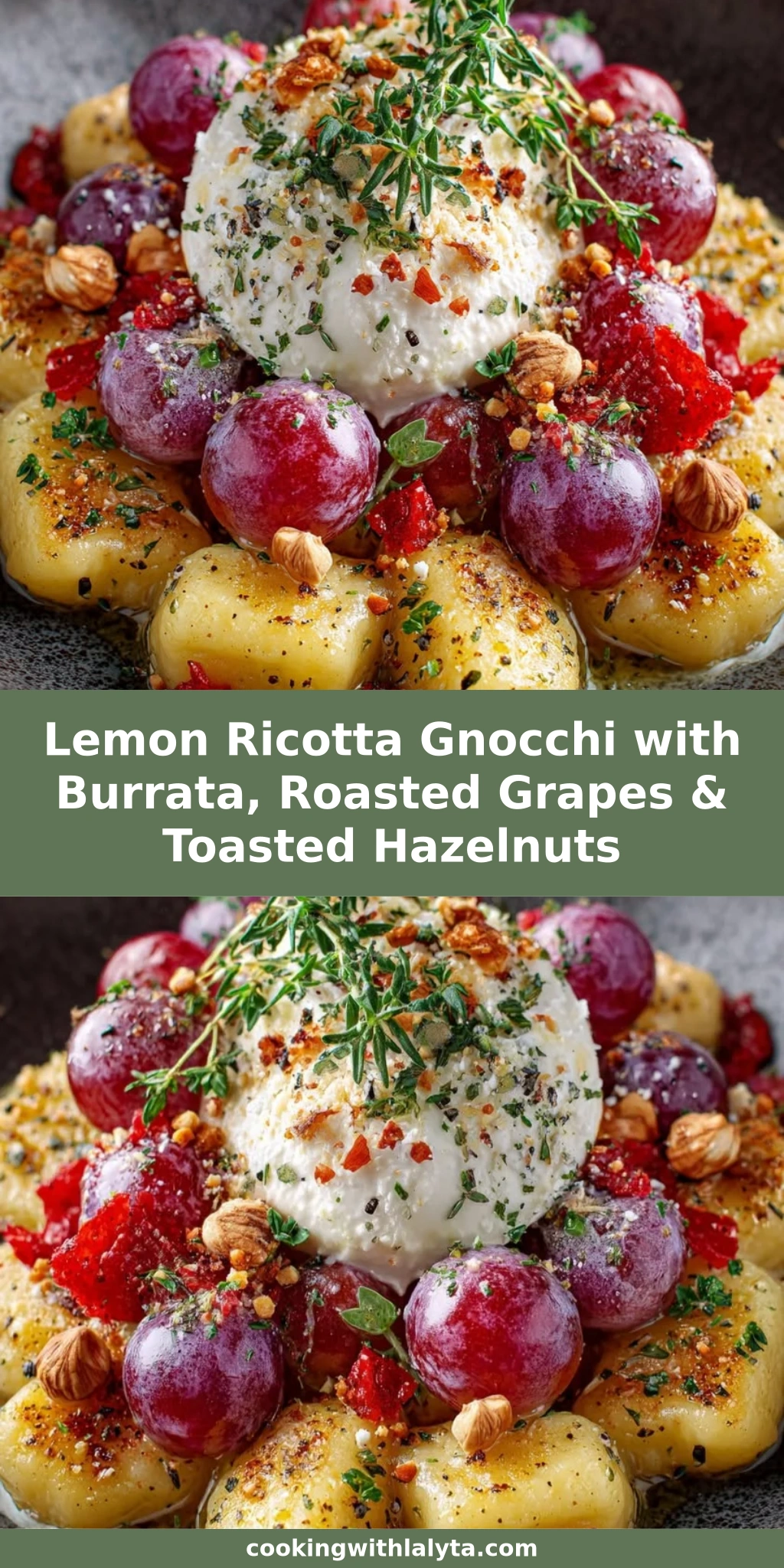
Let me paint the picture for you. Imagine this: soft, cloud-like Ricotta Gnocchi — each little pillow kissed with bright lemon zest and salty Parmigiano — pan-tossed in nutty brown butter that’s been infused with crispy fried sage leaves. Then comes the magic: roasted red grapes, shriveled and jammy from the oven’s heat, bursting with concentrated sweetness that cuts through the richness like sunshine through a curtain. Creamy burrata cheese melts into everything, its cool milky center swirling into the warm butter, while roughly chopped Toasted Hazelnuts Gnocchi brings that essential earthy crunch. A final squeeze of fresh lemon, a scatter of flaky sea salt, and you have a dish that’s simultaneously elegant enough for a dinner party and comforting enough for a Wednesday night when you need something beautiful in your life. The aroma alone — nutty butter, fragrant sage, caramelized fruit — will pull everyone into the kitchen before you’ve even plated.
Here’s what makes this particular Lemon Ricotta Gnocchi recipe different from the dozens you’ve probably scrolled past: I’m going to teach you the exact French technique I learned in Paris for keeping ricotta gnocchi impossibly light — it’s all about moisture control and the gentlest possible hand. Too many recipes lead to dense, rubbery little bullets because they don’t address the elephant in the room: ricotta is wet. I’ll show you my foolproof method, and I’ll also share the single most common mistake home cooks make when boiling gnocchi (hint: it involves overcrowding the pot, and it can ruin the entire batch). Plus, those Roasted Grapes Gnocchi? They’re the unexpected twist that will have your guests asking, “What is that incredible sweetness?” — and you’ll smile because it’s just humble grapes transformed by heat and honey. Trust me, once you master this recipe, you’ll never look at a bag of grapes the same way again.
Why This Lemon Ricotta Gnocchi Recipe Is the Best
The Flavor Secret. What sets this dish apart — and trust me, I’ve tested dozens of variations in my tiny NYC apartment kitchen — is the intentional contrast between four distinct flavor worlds on one plate. There’s the bright, citrusy pop of the Lemon Ricotta Gnocchi itself, a nod to the Amalfi coast that I first fell in love with during a post-culinary-school trip. Then the Roasted Grapes, which I learned to appreciate from my mother’s Moroccan tagines where fruit and savory elements dance together fearlessly. The burrata brings that cool, lactic creaminess that tempers the warm brown butter sauce, and the Toasted Hazelnuts add the textural punctuation mark that every great dish needs. Each forkful is slightly different — sometimes you’ll get a jammy grape, sometimes an extra-crispy sage leaf — and that unpredictability keeps every bite thrilling. It’s the kind of layered flavor thinking they drilled into us at culinary school in Paris, applied to what looks like a simple bowl of gnocchi.
Perfected Texture. Let’s talk about the gnocchi itself because, honestly, this is where most recipes fail. During my training, I learned that the difference between good gnocchi and transcendent gnocchi comes down to two things: the moisture content of your ricotta and the amount of flour you add. Too much flour makes them heavy and pasty; too little and they dissolve in the water. I drain my ricotta for at least 30 minutes before mixing — a trick my Parisian mentor taught me for making the lightest quenelles, which I’ve adapted here. The dough should be just barely holding together when you roll it, slightly tacky but not sticky. And those little fork ridges? They’re not just decorative — they catch the brown butter sauce like tiny canals, ensuring every morsel is coated. The result is a gnocchi that’s tender enough to yield to the lightest pressure of your tongue but structured enough to hold its shape through boiling and pan-tossing.
Foolproof & Fast. Despite its restaurant-worthy presentation, this Ricotta Gnocchi Recipe is surprisingly approachable — even if you’ve never made fresh pasta or gnocchi before. The dough comes together in under 10 minutes with no special equipment beyond a bowl and your hands. The roasted grapes are literally a toss-and-bake situation. The brown butter sauce requires one skillet and about 4 minutes of attention. I’ve designed the workflow so that while the grapes roast, you make and shape the gnocchi; while the water comes to a boil, you start the brown butter. Everything converges at the same moment, and the entire meal — from pulling ingredients out of the fridge to sitting down at the table — clocks in at under an hour. For my busy NYC friends who want to impress dinner guests without spending all day in the kitchen, this is the secret weapon.
Lemon Ricotta Gnocchi Ingredients
I’m a firm believer that simple ingredients, treated with care, create the most memorable meals — a philosophy I absorbed watching my mother transform humble pantry staples into feasts in our Moroccan kitchen. For this dish, I always swing by the Union Square Greenmarket on Saturday mornings to grab fresh ricotta from a local dairy, and if I’m lucky, Concord grapes when they’re in season. The hazelnuts come from a little nut roaster in Brooklyn I discovered years ago, but honestly, any good-quality raw hazelnuts you toast yourself will be infinitely better than pre-toasted. Let’s walk through what you’ll need.
Ingredients List
- For the Gnocchi:
- 1 cup whole milk ricotta cheese
- 1 large egg, lightly beaten
- 1/2 cup freshly grated Parmesan cheese
- 1 tablespoon lemon zest
- 1 teaspoon salt
- 1/2 teaspoon black pepper
- 3/4 cup all-purpose flour, plus more for dusting
- For the Roasted Grapes:
- 2 cups red grapes, halved
- 1 tablespoon olive oil
- 1 tablespoon honey
- Pinch of salt
- For the Sauce & Assembly:
- 4 tablespoons unsalted butter
- 6 fresh sage leaves
- 8 oz burrata cheese, at room temperature
- 1/3 cup toasted hazelnuts, roughly chopped
- Flaky sea salt, for serving
- Fresh lemon juice, to taste
Ingredient Spotlight
Whole Milk Ricotta Cheese. This is the backbone of your gnocchi, and I cannot stress enough: please use whole milk ricotta, not part-skim. The extra fat translates directly to tenderness and flavor. In US grocery stores, look for ricotta sold in tubs (not the grainy, low-moisture kind in plastic baskets). My favorite widely available brand is Calabro, but if you can find fresh sheep’s milk ricotta at a specialty market, it’ll elevate the dish to new heights. Before using, I always drain my ricotta in a fine-mesh sieve lined with cheesecloth for 30 minutes to remove excess whey — this is the single most important step for avoiding gummy gnocchi. Substitution: If you’re in a pinch, well-drained cottage cheese blended until smooth can work, but the texture will be slightly less creamy.
Red Grapes. When roasted, grapes transform into something magical — their skins wrinkle and their flesh collapses into a sweet, almost jammy condiment that tastes like the essence of fruit. I prefer seedless red grapes because they hold their shape better than green ones and have a deeper, more wine-like flavor that pairs beautifully with the brown butter. At the farmers market, I look for firm, plump grapes with a slight bloom on the skin. Substitution: Black seedless grapes or even halved cherry tomatoes (for a less sweet, more savory version) can step in, though the flavor profile changes significantly. If using tomatoes, skip the honey and add a pinch of sugar instead.
Burrata Cheese. Oh, burrata. This is the crown jewel of the dish — a mozzarella shell filled with stracciatella and cream that oozes luxuriously when you cut into it. Buy it as fresh as possible; check the date and look for burrata that’s plump and feels heavy for its size. In most US supermarkets, you’ll find it in the specialty cheese section, often packed in water. Let it come to room temperature for at least 30 minutes before serving so the center softens properly. Substitution: Fresh mozzarella di bufala is the best swap if burrata isn’t available — it’ll still give you that milky creaminess, though you’ll miss the dramatic ooze. In a true emergency, even a good-quality whole milk ricotta can work, but dollop it cold so it contrasts with the warm gnocchi.
Toasted Hazelnuts. That earthy, buttery crunch is the textural counterpoint this dish needs. I always toast my hazelnuts from raw because the flavor difference is night and day — pre-toasted nuts from a bag often taste stale and flat. Buy raw hazelnuts (often labeled “filberts”) and toast them in a dry skillet over medium heat, shaking frequently, until they’re fragrant and the skins start to crackle and darken in spots, about 5–7 minutes. Rub them in a clean kitchen towel to remove the loose skins, then roughly chop. Substitution: If you have a nut allergy, toasted pumpkin seeds (pepitas) are my go-to — they bring a similar earthy crunch. For those who can have other nuts, toasted almonds or walnuts also work beautifully.
| Original Ingredient | Best Substitution | Flavor / Texture Impact |
|---|---|---|
| Whole Milk Ricotta | Well-drained cottage cheese, blended smooth | Slightly less creamy; add 1 tbsp cream to compensate |
| Red Grapes | Black seedless grapes or cherry tomatoes | Tomatoes add savory depth; skip honey if using |
| Burrata | Fresh mozzarella di bufala | Less creamy center; still mild and milky |
| Toasted Hazelnuts | Toasted pumpkin seeds (pepitas) | Similar earthy crunch; slightly greener flavor |
| Parmesan | Pecorino Romano or Grana Padano | Pecorino is saltier; Grana Padano is milder |
How to Make Lemon Ricotta Gnocchi — Step-by-Step
I promise you this: if you follow these steps, you’ll have the most tender, pillowy gnocchi you’ve ever made at home. I’ve taught this recipe to dozens of friends in my NYC kitchen, and the ones who succeed are the ones who trust the process and don’t overthink it. Let’s cook together.
Step 1: Roast the Grapes
Preheat your oven to 400°F (200°C). On a rimmed baking sheet, toss 2 cups of halved red grapes with 1 tablespoon olive oil, 1 tablespoon honey, and a pinch of salt until evenly coated. Spread them in a single layer — this is crucial; if the grapes are crowded, they’ll steam instead of roast. Slide the sheet into the oven and roast for 15–20 minutes, until the grapes are softened, their skins are slightly wrinkled, and the edges are starting to caramelize. You’ll smell the honey caramelizing before you see it. Remove from the oven and set aside. They’ll continue to release their juices as they cool, creating a natural syrup on the baking sheet.
💡 Lalybeth’s Pro Tip: Line your baking sheet with parchment paper for easier cleanup — those honey-roasted grape juices can turn into sticky caramel that’s a pain to scrub off. And don’t toss that syrup left on the sheet! I scrape every last bit of it into the brown butter sauce later for an extra layer of flavor.
Step 2: Make the Gnocchi Dough
In a large mixing bowl, combine 1 cup of well-drained whole milk ricotta, 1 lightly beaten egg, 1/2 cup freshly grated Parmesan, 1 tablespoon lemon zest, 1 teaspoon salt, and 1/2 teaspoon black pepper. Mix with a fork or spatula until everything is evenly incorporated — the mixture will look slightly grainy from the ricotta, and that’s fine. Now, gradually sprinkle in 3/4 cup all-purpose flour, stirring gently as you go. The moment the dough comes together into a soft, slightly tacky ball, stop mixing. Overworking gluten at this stage is the enemy of tender gnocchi. The dough should feel like playdough that’s been left out a bit too long — cohesive but not dry. If it’s unbearably sticky, dust in another tablespoon of flour, but resist the urge to add more than that.
⚠️ Common Mistake to Avoid: Adding too much flour because the dough feels sticky. Ricotta gnocchi dough is naturally tackier than potato gnocchi dough — that’s normal! If you add extra flour to make it “easier to handle,” you’ll end up with dense, chewy gnocchi. Trust the ratio: 1 cup ricotta to 3/4 cup flour is the sweet spot. Generously flour your work surface and your hands instead.
Step 3: Shape the Gnocchi
Turn the dough out onto a generously floured surface. With floured hands, pat it into a rough rectangle, then divide into 4 equal portions. Working with one portion at a time (keep the others covered with a damp towel so they don’t dry out), gently roll the dough into a rope about 1/2-inch thick. Use a bench scraper or sharp knife to cut the rope into 1-inch pieces. If you’d like those classic ridges that trap sauce so beautifully, roll each piece gently over the tines of a fork: press lightly with your thumb as you roll, and the gnocchi will curl into a little shell shape with grooves on the back. Place finished gnocchi on a floured baking sheet in a single layer. Repeat with remaining dough portions.
💡 Lalybeth’s Pro Tip: Don’t stress about perfect fork ridges — honestly, they’re optional. I often skip them on busy weeknights, and the gnocchi still taste incredible. The key is uniform size so they cook evenly. If you’re freezing some for later (and you should!), arrange them on the baking sheet without touching and freeze until solid, then transfer to a zip-top bag for up to 2 months.
Step 4: Boil the Gnocchi
Bring a large pot of generously salted water to a rolling boil — the water should taste like the sea, as my Parisian chef instructor used to say. Working in batches (do not crowd the pot!), gently drop the gnocchi into the boiling water. They’ll sink to the bottom at first, then after about 2–3 minutes, they’ll bob to the surface. That’s your cue: once they float, let them cook for just 30 more seconds, then scoop them out with a slotted spoon or spider strainer. Transfer them directly to a lightly oiled plate or into the waiting brown butter skillet if your timing is perfect.
⚠️ Common Mistake to Avoid: Overcrowding the pot drops the water temperature dramatically, which can make your gnocchi gummy and cause them to stick together. I never cook more than 12–15 gnocchi at a time in a standard 6-quart pot. Also, resist the urge to stir aggressively — just a gentle nudge after they float is enough. Fresh gnocchi are delicate!
Step 5: Make the Brown Butter Sage Sauce
In a large skillet (big enough to eventually hold all the gnocchi), melt 4 tablespoons of unsalted butter over medium heat. Once the butter has melted and starts foaming, add 6 fresh sage leaves. Continue cooking, swirling the pan occasionally, until the butter turns a deep golden brown and smells wonderfully nutty — this should take about 3–4 minutes. You’ll see little brown specks forming at the bottom of the pan; those are milk solids caramelizing, and they’re flavor bombs. The moment the butter reaches that amber hue, remove the pan from the heat. Use tongs to transfer the crispy sage leaves to a paper towel-lined plate (they’ll crisp up further as they cool).
💡 Lalybeth’s Pro Tip: Brown butter can go from perfect to burnt in about 15 seconds, so stay present. I like to use a light-colored skillet (stainless steel or light enameled cast iron) so I can see the color change clearly. If you’re nervous, turn the heat to medium-low — it’ll take a minute longer, but you’ll have more control. The butter should smell nutty, never acrid.
Step 6: Assemble and Serve
Return the skillet with brown butter to medium-low heat and add the cooked gnocchi. Toss gently with a silicone spatula until each piece is coated in that golden, nutty butter — about 2 minutes. Now for the grand finale: spread 8 oz of room-temperature burrata across a large serving platter or divide it among four individual plates, tearing it open so the creamy center is visible. Pile the warm, buttery gnocchi over and around the burrata. Scatter the roasted grapes (along with any accumulated syrup from the baking sheet) over the top, followed by the roughly chopped toasted hazelnuts. Crumble the crispy sage leaves over everything, then finish with a generous squeeze of fresh lemon juice and a pinch of flaky sea salt. Serve immediately, while the contrast between the warm gnocchi and cool, oozing burrata is at its peak.
💡 Lalybeth’s Pro Tip: Warm your serving plates slightly — I pop mine in the still-warm oven for a minute — so the dish stays hot longer at the table. And don’t you dare skip that final squeeze of lemon! It brightens all the rich flavors and keeps the dish from feeling heavy. I learned this from my mother, who finished nearly every Moroccan dish with a hit of acid.
| Step | Action | Duration | Key Visual Cue |
|---|---|---|---|
| 1. Roast Grapes | Toss with oil & honey, roast at 400°F | 15–20 min | Wrinkled skins, caramelized edges |
| 2. Make Dough | Mix ricotta, egg, Parmesan, zest, flour | 8 min | Soft, slightly tacky dough ball |
| 3. Shape | Roll ropes, cut, ridge with fork | 10 min | Uniform 1-inch pillows |
| 4. Boil | Drop in salted boiling water in batches | 2–3 min per batch | Gnocchi float to surface |
| 5. Brown Butter | Melt butter, fry sage, cook until amber | 4 min | Nutty aroma, golden-brown color |
| 6. Assemble | Toss gnocchi in butter, plate with burrata | 5 min | Burrata oozes, grapes glisten |
Serving & Presentation
This is one of those dishes that looks like it took all day, but your secret is safe with me. I love serving it family-style on a large, slightly warmed platter — the kind with a bit of a lip to catch all that glorious brown butter. The moment the burrata hits the plate, use two forks to gently tear it open and spread it around so every guest gets a swipe of that creamy center. The gnocchi goes right on top, still glistening from the skillet, followed by a cascade of those jewel-toned roasted grapes. I scatter the hazelnuts over everything with abandon — you want them in every bite — and then crown the dish with those translucent, almost glass-like crispy sage leaves. A final drizzle of any butter left in the pan, a spritz of lemon, and a pinch of flaky salt that catches the light. It’s rustic-elegant food that makes people lean in and reach for their phones to take a picture before they even pick up a fork.
For pairings, I think about what my guests might want alongside this already-rich dish. A simple arugula salad dressed with nothing more than lemon juice, olive oil, and shaved Parmesan cuts through the richness beautifully — the peppery bite of the greens echoing the sage. In colder months, I’ll quickly sauté some garlicky broccolini or roasted asparagus to add a green element. And wine? A crisp, unoaked white like a Vermentino or a dry Riesling is my go-to; the acidity plays beautifully with the lemon and keeps the palate fresh. If you’re a red wine person, a light, chilled Beaujolais won’t overpower the dish. For a non-alcoholic option, sparkling water with a splash of pomegranate juice and a sprig of rosemary feels special without competing.
| Pairing Type | Suggestions | Why It Works |
|---|---|---|
| Side Dish | Arugula salad with lemon, sautéed broccolini, roasted asparagus | Bitterness and green freshness cut the richness |
| Sauce / Dip | Extra brown butter on the side, lemon wedges, chili oil | Lets guests customize richness and heat |
| Beverage | Vermentino, dry Riesling, chilled Beaujolais | Acidity balances butter; light reds won’t overwhelm |
| Garnish | Extra lemon zest, microgreens, edible flowers | Adds color and fresh aroma at the table |
Make-Ahead, Storage & Reheating
On busy NYC weeknights — which is most nights, let’s be honest — I rely on components I’ve prepped ahead. The good news: nearly every element of this dish can be made in advance, so when dinner time rolls around, you’re just assembling and warming. The gnocchi themselves are dream candidates for freezing; the roasted grapes can be made a day ahead and gently reheated; even the brown butter can be prepared and stored. Here’s my system for making this dish work for a hectic schedule while still tasting like you spent the afternoon in the kitchen.
| Method | Container | Duration | Reheating Tip |
|---|---|---|---|
| Refrigerator | Airtight container, components separate | Up to 2 days | Reheat gnocchi in butter in skillet; grapes in microwave 30 sec |
| Freezer (uncooked gnocchi) | Freeze on sheet, then zip-top bag | Up to 2 months | Cook directly from frozen; add 1 extra minute |
| Make-Ahead | Grapes & brown butter in separate jars | Grapes 2 days; butter 1 week | Assemble day-of; bring burrata to room temp |
When it comes to reheating, I’ve found that the skillet is your best friend. Cold gnocchi straight from the fridge will stiffen up, but a quick 2–3 minute toss in a hot pan with a fresh pat of butter brings them back to life — they’ll re-soften and get that buttery sheen again. The roasted grapes can be microwaved very briefly (30 seconds is plenty) or added to the skillet alongside the gnocchi. One thing I never do: reheat the burrata. It should always be at cool room temperature, never hot, or it’ll lose that delicate, milky freshness. If you’ve stored the brown butter separately, remelt it gently over low heat and add a fresh sage leaf so the aroma blooms again. Assembly takes less than 5 minutes once everything is warmed, and honestly, the leftovers — if you have any — make an incredible next-day lunch that’ll be the envy of your coworkers.
Variations & Easy Swaps
One of the things I love most about this Ricotta Gnocchi Recipe is how adaptable it is — much like the way my cooking style has evolved from my mother’s Moroccan kitchen to my Paris training to my current NYC food adventures. The base formula is forgiving, and depending on what’s in season or what your dietary needs are, you can take this dish in wonderfully different directions. Here are my three favorite tested variations, each of which I’ve served at dinner parties and potlucks with great success.
| Variation | Key Change | Best For | Difficulty Impact |
|---|---|---|---|
| Gluten-Free | Use GF 1:1 flour blend | Gluten-sensitive guests | Slightly more delicate dough; handle gently |
| Dairy-Free / Vegan | Almond ricotta, vegan butter, skip burrata | Vegan or dairy-free diets | Texture less creamy; add avocado for richness |
| Autumn Harvest | Sub grapes for roasted figs or pears | Fall dinners & Thanksgiving | Same technique; different roasting times |
Gluten-Free Lemon Ricotta Gnocchi
For my gluten-free friends, this variation is a true gift — and I say that with confidence because I’ve tested it extensively. The trick is using a high-quality gluten-free 1:1 flour blend (I’ve had the best results with King Arthur Measure for Measure or Bob’s Red Mill 1-to-1, both of which contain xanthan gum for structure). Because GF flours absorb moisture differently, you may need to use slightly less — start with 1/2 cup and add only what you need to bring the dough together. The dough will feel a bit more fragile than the wheat version, so roll it gently and don’t worry about perfect fork ridges; just cut the ropes into pillows and call it a day. When boiling, these GF gnocchi are more delicate; use a gentle simmer rather than a rolling boil, and remove them the moment they float. The brown butter sauce, roasted grapes, and hazelnuts are already naturally gluten-free, so the rest of the recipe remains unchanged.
Dairy-Free / Vegan Adaptation
I’ll be honest: replicating ricotta gnocchi without dairy is a challenge, but it’s not impossible. Use a high-quality almond milk ricotta (Kite Hill makes a solid one that’s available at Whole Foods), and replace the egg with 2 tablespoons of aquafaba (chickpea water) whisked until frothy — this helps bind the dough in a similar way. Swap the Parmesan for a good vegan Parmesan-style cheese, or use 3 tablespoons of nutritional yeast for that savory depth. Instead of butter, use a high-quality vegan butter that browns well (Miyoko’s cultured vegan butter is my favorite for this). For the burrata replacement, I skip the cheese component entirely and add slices of ripe avocado just before serving — it brings that creamy, cooling contrast. The dish is different from the original, yes, but it’s still absolutely delicious and worth making.
Seasonal Autumn Harvest Twist
When the weather turns crisp and the Union Square farmers market overflows with fall produce, I switch the roasted grapes for roasted figs or pears. Fresh figs, halved and roasted with a drizzle of maple syrup instead of honey, become jammy and almost port-like — they pair incredibly well with the brown butter and hazelnuts. If using pears, choose Bosc or Anjou, core them, slice into wedges, and roast until caramelized on the edges but still holding their shape. I also swap the sage for fresh thyme or rosemary, which feels more autumnal. A final sprinkle of pomegranate seeds in place of lemon juice adds a jewel-like burst of acidity and makes the dish look absolutely stunning on a Thanksgiving buffet. This variation captures the same sweet-savory-creamy-crunchy magic with a seasonal wardrobe change.
How do you keep ricotta gnocchi from falling apart during cooking?
The key to keeping ricotta gnocchi intact comes down to three factors: moisture control, adequate binding, and gentle handling. First, drain your ricotta for at least 30 minutes before mixing — I line a fine-mesh sieve with cheesecloth and let the excess whey drip out. This prevents the dough from becoming too wet, which is the number one reason gnocchi disintegrate in the water. Second, the egg and Parmesan in the recipe act as binders; don’t reduce or skip them if you’re having structural issues. Finally, when boiling, use a gentle simmer rather than a furious rolling boil, and don’t stir the gnocchi aggressively once they’re in the pot. A light nudge to prevent sticking is all they need. If your gnocchi still seem fragile, you can add an extra tablespoon of flour, but go slowly — too much flour makes them tough.
Can I substitute the burrata with another cheese in this recipe?
Absolutely — and you have several excellent options depending on what you’re looking for. The closest substitute is fresh mozzarella di bufala, which has a similar milky creaminess and mild flavor, though it lacks the oozy stracciatella center that makes burrata so dramatic. If you can find stracciatella on its own (some Italian specialty shops sell it as a spreadable cheese), you can pair it with fresh mozzarella for a near-match. For a completely different but still delicious direction, try a good-quality whole milk ricotta — dollop it cold over the warm gnocchi for a similar temperature contrast. In a pinch, even a soft, mild chèvre (goat cheese) works, though its tanginess will change the flavor profile noticeably. Whatever you choose, make sure it’s at room temperature before serving so it melts gently into the warm gnocchi.
How long should you roast grapes for lemon ricotta gnocchi?
At 400°F (200°C), seedless red grapes halved and tossed with olive oil and honey should roast for 15 to 20 minutes. The exact time depends on the size and initial ripeness of your grapes — very ripe, large grapes may take closer to 18–20 minutes, while smaller, firmer ones might be done at the 15-minute mark. You’re looking for visual cues: the skins should be visibly wrinkled and slightly shriveled, and the edges where the cut sides touch the baking sheet should show light caramelization. The grapes will release some juice, which turns syrupy as it reduces in the oven. Don’t walk away during the last 5 minutes; grapes can go from perfectly roasted to scorched quickly once their sugars concentrate. If you’re roasting whole grapes instead of halved, add 5–7 minutes and toss them halfway through.
What can I use instead of hazelnuts if I have a nut allergy?
Toasted pumpkin seeds (pepitas) are my top recommendation for a nut-free alternative — they have a similar earthy, slightly buttery flavor and deliver that essential crunchy texture. Toast raw pepitas in a dry skillet over medium heat, shaking frequently, until they puff slightly and turn golden in spots, about 4–5 minutes. For a different but equally delicious crunch, try toasted sunflower seeds or even crispy roasted chickpeas (drain, pat dry, toss with oil, and roast at 400°F until crunchy). If seeds are also off the table, consider fried capers — simply pat dry a few tablespoons of capers and fry them in a bit of olive oil until they bloom and crisp up; they add a salty, briny crunch that plays surprisingly well with the sweet grapes and creamy burrata. The key is preserving that textural contrast in the dish, so choose whichever option fits your needs.
Can I make lemon ricotta gnocchi ahead of time and freeze them?
Yes, and I do this regularly! Freezing ricotta gnocchi is one of my favorite meal-prep strategies. After shaping the gnocchi (but before boiling), arrange them in a single layer on a floured baking sheet, making sure they’re not touching each other. Place the whole sheet in the freezer until the gnocchi are solid, which takes about 2–3 hours. Then transfer them to a airtight zip-top bag or container, where they’ll keep for up to 2 months. To cook, drop the frozen gnocchi directly into boiling salted water — no thawing needed. They’ll take about 3–4 minutes instead of the usual 2–3, and they’re ready when they float to the surface. The texture is nearly indistinguishable from freshly made. The roasted grapes can also be made a day ahead and stored in the fridge; just warm them gently before serving.
Why is my ricotta gnocchi dough too sticky?
A sticky dough is actually expected with ricotta gnocchi — it’s a wetter dough than potato gnocchi by nature. However, if it’s so sticky that you can’t handle it at all, the likely culprit is that your ricotta wasn’t drained sufficiently. Different brands of ricotta have wildly different moisture levels; some are almost pourable straight from the tub. I always drain my ricotta for at least 30 minutes (and up to 2 hours if it’s particularly wet) in a cheesecloth-lined sieve over a bowl. If you’ve already mixed your dough and it’s still unmanageably sticky, add flour one tablespoon at a time, but stop as soon as the dough is workable — adding too much flour is how you end up with dense, tough gnocchi. Generously flour your work surface and your hands rather than adding more flour to the dough itself. A bench scraper is also your best friend for handling sticky dough without overworking it.
What wine pairs well with lemon ricotta gnocchi and burrata?
For this particular dish — with its rich brown butter, creamy burrata, bright lemon, and sweet roasted grapes — you want a white wine with good acidity to cut through the richness without overwhelming the delicate flavors. My top picks are an Italian Vermentino (crisp, citrusy, with a hint of salinity that echoes the Parmesan) or a dry Alsatian Riesling, whose stone fruit notes complement the roasted grapes beautifully. If you prefer French wines, a Sancerre or unoaked Chablis works wonderfully. On the red side, a lightly chilled Beaujolais or a Lambrusco with its slight effervescence can be magical — serve it cool but not cold, and the light tannins won’t clash with the creamy burrata. For a special occasion, a dry rosé Champagne or Franciacorta brings the acid, the bubbles, and the celebration all in one glass. Avoid heavy, oaky wines; they’ll dominate the dish rather than partner with it.
How do I toast hazelnuts without burning them?
Toasting hazelnuts is easy once you know the signs to watch for — and it makes a world of difference in flavor. I always toast them in a dry skillet on the stovetop rather than in the oven because I can see and smell the progress more easily. Place raw hazelnuts in a single layer in a skillet over medium heat. Shake the pan every 30 seconds or so to move them around. After about 3 minutes, you’ll start to smell their nutty aroma; around 5 minutes, the skins will begin to crackle and darken in spots. This is your signal to stay close — hazelnuts can go from perfectly toasted to scorched in under a minute. When the nuts are fragrant and have visible golden-brown spots, transfer them immediately to a clean plate to stop the cooking. To remove the bitter skins, wrap the warm nuts in a clean kitchen towel and rub vigorously; most of the skins will flake right off. Don’t worry about removing every trace of skin — a little adds rustic character.
Is lemon ricotta gnocchi a main course or a side dish?
With the addition of burrata, roasted grapes, and hazelnuts, this recipe is designed to stand confidently as a main course for 4 people. Each serving clocks in at around 620 calories with a good balance of protein (22g), fat (40g), and carbohydrates (48g), making it substantial enough for dinner. That said, in Italian-American tradition, gnocchi can absolutely be served as a smaller primo piatto (first course) before a protein main. If you’re serving it as a starter or side, this recipe will stretch to feed 6–8 people with smaller portions. On the flip side, if you want to bulk it up into an even heartier main course, I sometimes add pan-seared chicken thighs or roasted salmon fillets on the side — the brown butter sauce complements both beautifully. But honestly, on most nights in my NYC kitchen, I serve it just as it is, with a simple arugula salad, and it leaves everyone completely satisfied.
Can I make this recipe with store-bought gnocchi?
You can, and there’s absolutely no shame in it — especially on a weeknight when time is scarce. Look for refrigerated fresh gnocchi in the pasta section of your grocery store (the shelf-stable kind in the dry pasta aisle tends to be denser and less pillowy). Potato gnocchi will work in a pinch, though the flavor and texture will be different from the light, lemony ricotta gnocchi in this recipe. Cook the store-bought gnocchi according to the package directions — typically just 1–2 minutes for fresh refrigerated gnocchi — and then proceed with the brown butter sauce, roasted grapes, burrata, and hazelnuts exactly as written. The dish will still be beautiful and delicious. If you want to add a lemon note, grate a little fresh lemon zest over the finished dish. I’ll always encourage you to try homemade at least once, but I’m a realist, and this shortcut version still yields a wonderful meal.
Share Your Version!
There’s nothing that makes me happier than seeing your beautiful creations pop up in my feed. If you make this Lemon Ricotta Gnocchi with Burrata, Roasted Grapes & Toasted Hazelnuts, I want to hear every detail — did you stick to the recipe faithfully, or did you put your own spin on it with a different nut or fruit? Was it a romantic date night success or a Tuesday dinner win? Leave a star rating ⭐⭐⭐⭐⭐ and a comment below to let me know how it turned out. Your feedback helps other readers and honestly, it fuels my recipe-testing soul.
When you post a photo on Instagram or Pinterest, tag me @cookingwithlalyta so I can see and share your masterpiece. Use the hashtag #LemonRicottaGnocchi and I might just feature you in my stories! And here’s a question I’d love you to answer in the comments: What’s the one ingredient you’d swap in to make this dish uniquely yours — maybe a different cheese, a different fruit, or an unexpected garnish? I’m always looking for inspiration from your kitchens, and some of my favorite recipe evolutions have started with a reader’s brilliant idea. From my NYC kitchen to yours — I hope this recipe brings as much warmth to your table as it does to mine. — Lalybeth 🧡
Love This Recipe? Save It to Pinterest!
If you enjoyed this Lemon Ricotta Gnocchi with Burrata, Roasted Grapes & Toasted Hazelnuts recipe, don’t let it get lost in your browser tabs! 😄 Pin it now so you can find it again anytime — and explore hundreds more tried-and-tested recipes waiting for you on my Pinterest boards.
👉 Follow Lalybeth on Pinterest @cookingwithlalyta
📌 Pin this recipe · 🔁 Re-pin your favorites · 💬 Tag me when you make it — I love seeing your creations!
✨ Loved This Recipe? Let’s Keep Cooking Together! ✨
When you make this Lemon Ricotta Gnocchi — and I know you’ll nail it — snap a photo and tag me @cookingwithlalyta. Your kitchen victories make my NYC heart sing, and I feature my favorites every Friday!
⭐ Leave a star rating below · 💬 Tell me your favorite twist · 📸 Share your creation and inspire someone else to cook tonight.
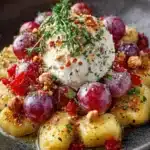
Lemon Ricotta Gnocchi with Burrata, Roasted Grapes & Toasted Hazelnuts
- Total Time: 55 minutes
- Yield: 4 1x
Description
Soft, pillowy lemon ricotta gnocchi paired with sweet roasted grapes, creamy burrata, and crunchy toasted hazelnuts in a brown butter sage sauce.
Ingredients
- For the Gnocchi:
- 1 cup whole milk ricotta cheese
- 1 large egg, lightly beaten
- 1/2 cup freshly grated Parmesan cheese
- 1 tablespoon lemon zest
- 1 teaspoon salt
- 1/2 teaspoon black pepper
- 3/4 cup all-purpose flour, plus more for dusting
- For the Roasted Grapes:
- 2 cups red grapes, halved
- 1 tablespoon olive oil
- 1 tablespoon honey
- Pinch of salt
- For the Sauce & Assembly:
- 4 tablespoons unsalted butter
- 6 fresh sage leaves
- 8 oz burrata cheese, at room temperature
- 1/3 cup toasted hazelnuts, roughly chopped
- Flaky sea salt, for serving
- Fresh lemon juice, to taste
Instructions
- Preheat oven to 400°F (200°C).
- Make the roasted grapes: On a baking sheet, toss grapes with olive oil, honey, and a pinch of salt. Roast for 15–20 minutes until softened and slightly caramelized. Set aside.
- Make the gnocchi: In a large bowl, combine ricotta, egg, Parmesan, lemon zest, salt, and pepper. Mix well. Gradually add flour, stirring until a soft dough forms. Do not overmix.
- Turn dough onto a lightly floured surface. Divide into 4 portions. Roll each into a 1/2-inch-thick rope. Cut into 1-inch pieces. Roll each piece over the tines of a fork to create ridges, if desired.
- Bring a large pot of salted water to a boil. Working in batches, drop gnocchi into boiling water. Cook until they float to the surface, about 2–3 minutes. Remove with a slotted spoon and set aside.
- Make the brown butter sage sauce: In a large skillet over medium heat, melt butter. Add sage leaves and cook until butter turns golden brown and smells nutty, about 3–4 minutes. Remove sage leaves and set aside.
- Add cooked gnocchi to the skillet with the brown butter. Toss gently to coat and heat through, about 2 minutes.
- To serve, spread burrata on a serving platter or individual plates. Top with gnocchi, roasted grapes, toasted hazelnuts, and crispy sage leaves. Drizzle with any remaining brown butter, squeeze fresh lemon juice over top, and sprinkle with flaky sea salt.
Notes
For a gluten-free version, substitute the all-purpose flour with a gluten-free 1:1 baking flour. Gnocchi can be made ahead and frozen on a baking sheet; cook directly from frozen, adding an extra minute to boil time.
- Prep Time: 30 minutes
- Cook Time: 25 minutes
- Method: Main Course
- Cuisine: Italian-American
Nutrition
- Calories: 620
- Sugar: 14 g
- Fat: 40 g
- Carbohydrates: 48 g
- Protein: 22 g
Tried This Recipe? Leave a Comment!
Did you make this recipe? I’d love to hear how it turned out! Please leave a comment and a rating below. Your feedback helps other home cooks and supports cookingwithlalyta.com!
For more delicious inspiration, follow me on Pinterest!