Table of Contents
Mediterranean Mezze Platter with Hummus, Olives & Burrata – The Ultimate 15-Minute Appetizer Platter
Growing up in my mother’s kitchen in Morocco, a mezze platter was never just food — it was an invitation to linger, talk, and share. When I moved to Paris for culinary school, I learned to elevate humble ingredients with careful technique, and now, in my tiny NYC kitchen, I’ve combined those lessons into this Mediterranean mezze platter recipe that delivers maximum wow with minimal effort. The star is a luscious burrata that oozes into the hummus, creating a creamy canvas for briny olives, sweet roasted peppers, and tangy pepperoncini. This easy mezze platter is my go-to when I want a showstopping appetizer that comes together in 15 minutes flat, without ever turning on the stove.
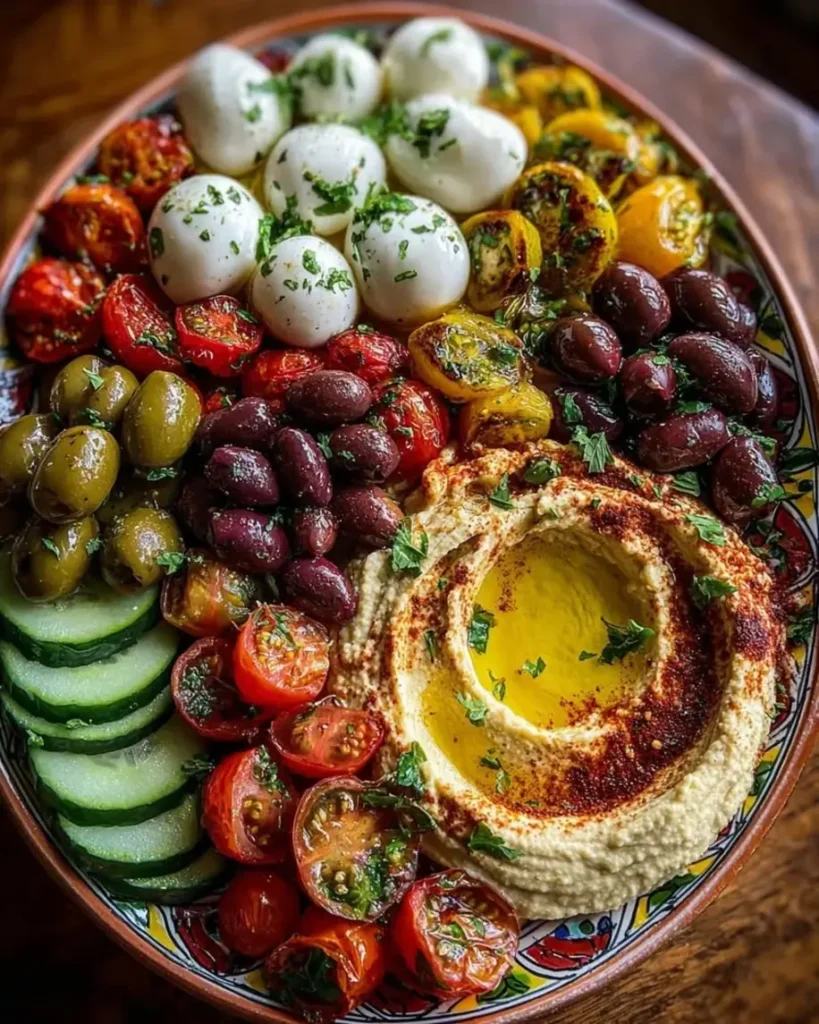
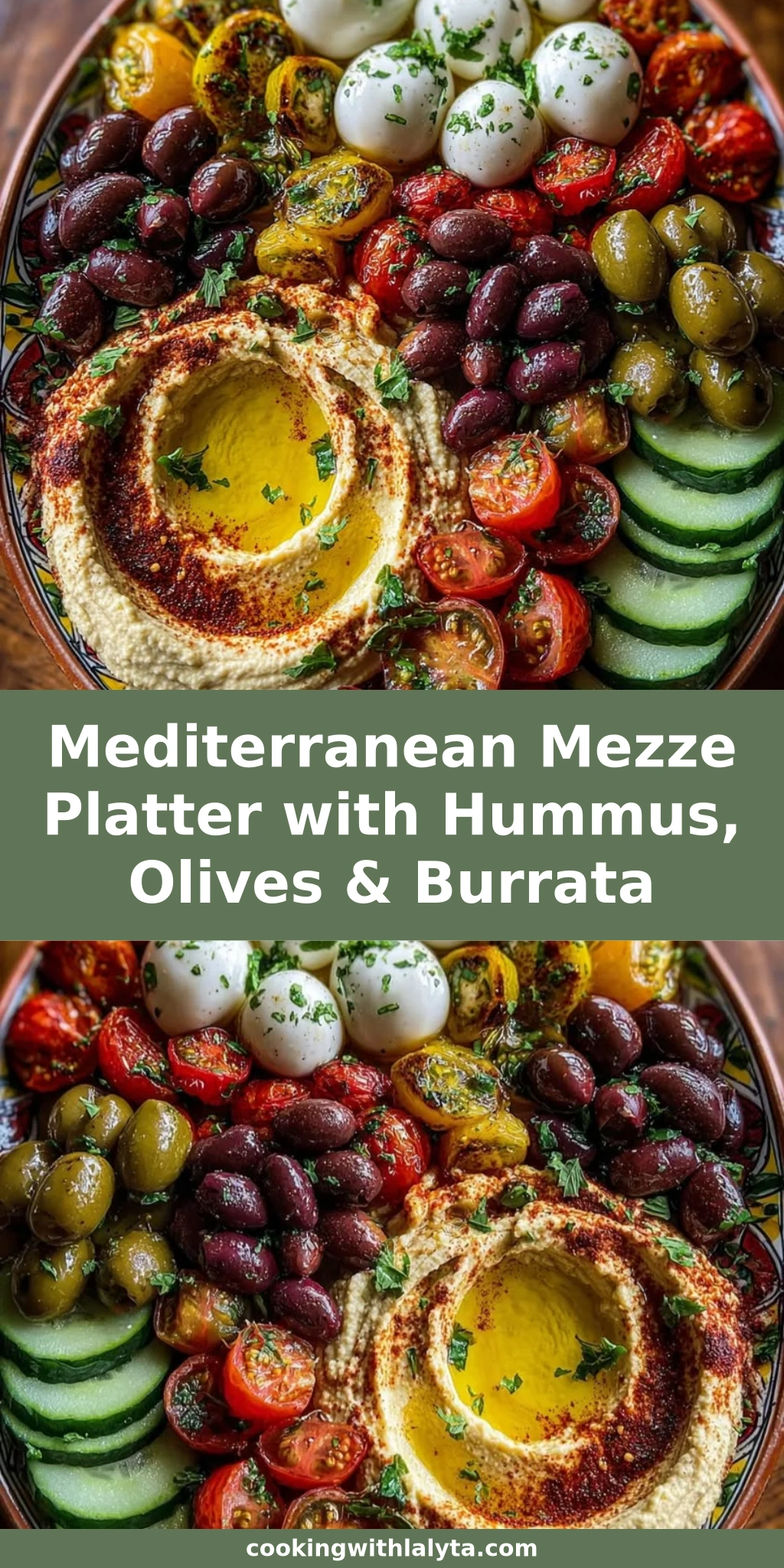
The first bite of this Mediterranean appetizer platter is a sensory journey: the silkiness of hummus, the burst of salty Kalamata olives, the fresh crunch of cucumber, and the unmistakable richness of burrata that coats your palate. A drizzle of grassy extra-virgin olive oil and a sprinkle of za’atar — that lemony-herby North African spice blend I grew up with — ties it all together. The colors alone make you want to dive in: deep purple olives, ruby-red cherry tomatoes, sunny yellow pepperoncini, all set against a backdrop of creamy white. I learned in France that eating with your eyes first is non-negotiable, and this platter never fails to impress, whether I’m hosting brunch or a casual wine night.
What sets my version apart isn’t just the combination of hummus and burrata, but the technique of letting the burrata come to room temperature so it’s perfectly oozy, and the strategic placement of each component to make serving effortless. I’ll share my favorite pro tip for keeping the presentation fresh — even if you need to assemble it a few hours ahead — and the common mistake people make of over-seasoning before tasting, since olives and pepperoncini bring plenty of salt. This is the kind of Mediterranean mezze platter that makes you feel like a chef, even on a busy Tuesday night.
Why This Mediterranean Mezze Platter Recipe Is the Best
The Flavor Secret: My French training taught me that contrast is everything, and here I lean into the balance of creamy, briny, tangy, and fresh. The burrata isn’t just a cheese — it’s a sauce, mingling with the hummus to mellow its garlicky kick. Meanwhile, the za’atar I source from a tiny spice shop in Brooklyn echoes the flavors I remember from Morocco, giving the whole platter a floral, toasty depth that beats any store-bought seasoning blend. This is a Mediterranean appetizer platter that tastes layered, not just assembled.
Perfected Texture: In Paris, we obsessed over mouthfeel. Here, I treat the platter like a composed dish: the hummus is spread thin enough to scoop but thick enough to hold the toppings, the burrata is torn rather than left whole so every forkful gets a bit, and the vegetables are sliced to a thickness that gives satisfying crunch without being unwieldy. The result is a mezze platter recipe where every bite is a perfect mix of soft, crisp, and chewy.
Foolproof & Fast: There’s no cooking, no blender, and barely any knife work. Because the recipe relies on high-quality store-bought ingredients (hello, creamy hummus and pre-roasted peppers), you can throw it together in 15 minutes and still look like you spent hours. I’ve tested this easy mezze platter on friends who swear they can’t cook, and they message me weeks later saying it’s become their signature dish. It’s simply impossible to mess up.
Mediterranean Mezze Platter Ingredients
When I’m not making hummus from scratch, I love grabbing a container of the classic Sabra or Cedar’s brand from the Union Square farmers market bodega — it’s consistent and smooth. For the olives, I always hit the antipasto bar at my local NYC grocery store so I can mix Kalamata and Castelvetrano for a spectrum of flavor. The burrata must be top-notch; I look for it in the specialty cheese case, often imported from Puglia. If I close my eyes while drizzling olive oil, I can almost smell my mother’s kitchen in Marrakech.
Ingredients List
- 1 cup hummus (store-bought or homemade)
- 1/2 cup mixed olives (e.g., Kalamata, Castelvetrano)
- 8 oz burrata cheese (1 ball)
- 1 cup cherry tomatoes, halved
- 1/2 English cucumber, sliced into rounds
- 1/2 cup roasted red peppers, sliced
- 1/4 cup pickled pepperoncini
- 2 tablespoons extra-virgin olive oil
- 1 tablespoon fresh lemon juice
- 1 teaspoon za’atar spice blend (optional)
- Salt and pepper to taste
- Fresh herbs (parsley or mint) for garnish
- Warm pita bread or pita chips for serving
Ingredient Spotlight
Hummus: The base of this Mediterranean mezze platter should be smooth and not too thick. In a U.S. grocery store, look for brands with minimal ingredients — chickpeas, tahini, lemon, garlic — and avoid those with too many stabilizers. If you can’t find good hummus, a quick homemade version with a can of chickpeas will work beautifully; just add a generous spoonful of tahini for luxury. You can also swap in baba ganoush for a smokier note, though the platter will lose the neutral creamy canvas that hummus provides.
Burrata: This is the crown jewel. Select a firm, tight ball with no tears; the inside should feel jiggly when you gently press it. Burrata must be at room temperature to release its stracciatella center — if it’s fridge-cold, it won’t ooze. Feta crumbles can stand in, but they lack the milky creaminess that defines this hummus burrata platter experience.
Olives: I always use a mix of briny oil-cured black olives and buttery Castelvetrano greens for contrast. They’re widely available in supermarket deli sections. If you must substitute, choose any high-quality pitted olive and rinse them briefly to control saltiness. Avoid canned black olives — they’re too bland for this vibrant platter.
| Original Ingredient | Best Substitution | Flavor / Texture Impact |
|---|---|---|
| Burrata | Fresh mozzarella di bufala + a splash of heavy cream | Similar creaminess, slightly less oozy but still rich. |
| Hummus | White bean purée with lemon and garlic | Lighter texture, milder flavor; still a great canvas. |
| Mixed olives | Artichoke hearts + capers | Less salty punch, but adds tang and a meaty bite. |
| Za’atar | Dried oregano + sesame seeds + sumac | Close aromatic profile; will still evoke Mediterranean flair. |
How to Make Mediterranean Mezze Platter – Step-by-Step
This easy mezze platter couldn’t be simpler, but following these steps ensures a photo-worthy arrangement. I’ll walk you through exactly how I do it in my NYC kitchen, with little tricks I learned plating dishes in Paris.
Step 1: Spread the Hummus
Start with a large, flat serving platter or a wooden board. Spoon the hummus into the center and use the back of the spoon to spread it into a smooth, even layer about 1/2 inch thick. Leave a generous border around the edge for the other ingredients — this way, the hummus stays contained and looks polished. If your hummus is too stiff, stir in a teaspoon of water to loosen it.
💡 Lalybeth’s Pro Tip: Chill the platter in the fridge for 5 minutes before spreading the hummus — the cool surface prevents the hummus from warming too quickly, especially if you’re serving outdoors on a hot NYC summer day.
Step 2: Tear the Burrata
Remove the burrata from its brine and gently pat dry with paper towels. Use your hands to tear it into 4–5 uneven pieces, then place them directly on top of the hummus. The tearing exposes the creamy interior, encouraging it to mingle with the hummus as guests scoop. If you prefer a neater presentation, you can keep the ball whole and place it in a small bowl on the side.
⚠️ Common Mistake to Avoid: Don’t cut burrata with a knife — you’ll squeeze out all the stracciatella and end up with a deflated shell. Always tear gently with your fingers.
Step 3: Arrange the Olives and Vegetables
Now, create small, distinct piles around the hummus: one pile of olives, one of cherry tomatoes (halved so they’re easier to pick up), one of cucumber rounds, one of sliced roasted red peppers, and one of pepperoncini. Keep them in separate zones — it looks organized and lets guests choose their favorites. I like to place the olives near the edge so they don’t bleed their brine onto the hummus.
💡 Lalybeth’s Pro Tip: For a stunning visual, place the brightest ingredients opposite each other — the fire-red peppers across from the green herbs, the yellow pepperoncini next to the dark olives. Parisian plating 101!
Step 4: Drizzle and Season
Drizzle the extra-virgin olive oil and fresh lemon juice over the burrata and the vegetables — not the hummus, which already has oil. This step adds a glossy finish and a burst of acidity that lifts the whole Mediterranean appetizer platter. Sprinkle the za’atar, salt, and pepper over everything, but taste an olive first to gauge saltiness; you may need very little extra.
⚠️ Common Mistake to Avoid: Over-salting before tasting. Both olives and pepperoncini are naturally salty, and the za’atar may also contain salt. Always start with a light hand and adjust after the first bite.
Step 5: Garnish and Serve
Scatter fresh parsley or mint leaves over the platter. Serve immediately with warm pita bread or pita chips. If pita chips feel too heavy, I sometimes offer cucumber slices as dippers too — a refreshing, gluten-free option that I adopted from a health-conscious friend in NYC.
💡 Lalybeth’s Pro Tip: Warm the pita in a dry skillet for 30 seconds per side just before serving — the slight char reminds me of the wood-fired ovens in Morocco and makes even store-bought pita taste freshly baked.
| Step | Action | Duration | Key Visual Cue |
|---|---|---|---|
| 1 | Spread hummus | 2 min | Smooth, even layer |
| 2 | Tear burrata | 1 min | Creamy interior visible |
| 3 | Arrange olives & veggies | 5 min | Distinct piles, colorful |
| 4 | Drizzle and season | 2 min | Glossy sheen on veggies |
| 5 | Garnish & serve | 1 min | Fresh herbs scattered |
Serving & Presentation
When I set this mezze platter on my table, I always bring out my mother’s hand-painted Moroccan serving bowl filled with warm pita, which adds an intentional, heirloom feel. For a casual NYC gathering, I might just pile everything onto a rustic wooden board and let guests tear the bread themselves. The beauty of this Mediterranean appetizer platter is that it looks gorgeous with zero fuss — just make sure the burrata is slightly spilling for that irresistible visual cue.
For drinks, a crisp Spanish Albariño or a dry rosé is my go-to; both cut through the richness of the hummus burrata platter without overwhelming the briny notes. If you’re serving beer, a pilsner works wonders. And don’t forget a small bowl for olive pits — I learned that trick in a Parisian bistro, and it keeps the table tidy.
| Pairing Type | Suggestions | Why It Works |
|---|---|---|
| Side Dish | Grilled lamb skewers, Moroccan carrot salad, or a simple arugula salad | Adds protein or freshness, turning the platter into a light meal. |
| Sauce / Dip | Tzatziki, muhammara, or extra za’atar-infused olive oil | Cool, tangy dips contrast the rich burrata; muhammara adds sweet heat. |
| Beverage | Albariño, dry rosé, or sparkling water with lemon | Acidity and bubbles cleanse the palate between creamy, salty bites. |
| Garnish | Fresh mint, sumac, or pomegranate seeds | A pop of color and brightness; sumac echoes the za’atar, and pomegranate adds a jewel-like finish. |
Make-Ahead, Storage & Reheating
In my hectic NYC week, I often prep all the components for this Mediterranean mezze platter in the morning, store them separately, and assemble right before guests arrive. The key is to keep the hummus covered so it doesn’t dry out, and the burrata in its brine until 30 minutes before serving. That way, nothing gets soggy and you can pull everything together faster than you can say “mezze.”
| Method | Container | Duration | Reheating Tip |
|---|---|---|---|
| Refrigerator (assembled leftovers) | Airtight container | Up to 2 days | Serve cold or at room temp; do not heat as burrata will separate. |
| Freezer | Not recommended | – | Freezing ruins the texture of burrata and fresh veggies. |
| Make-Ahead (components) | Separate sealed containers | Up to 1 day in advance | Assemble just before serving. Bring burrata to room temp for 30 minutes. |
If you do end up with leftovers (rare in my house!), the hummus and vegetables can be stored together, but I’d remove the burrata and keep it separate if possible — it’s best enjoyed the day it’s opened. The next day, I like to pile the leftovers onto warm pita for a quick lunch, adding a handful of fresh arugula to revive the crunch.
Variations & Easy Swaps
| Variation | Key Change | Best For | Difficulty Impact |
|---|---|---|---|
| Vegan Mezze Platter | Swap burrata for marinated tofu or extra hummus | Dairy-free guests | No extra effort |
| Gluten-Free Mezze Platter | Use gluten-free pita or cucumber slices for dipping | Gluten intolerance | None—just swap the bread |
| Spicy Moroccan Mezze Platter | Add harissa-drizzled carrots and preserved lemon | Heat lovers and North African flavor fans | Slightly more prep, still easy |
Vegan Mezze Platter
To make this completely plant-based, simply replace the burrata with thick slices of marinated tofu or an extra generous swirl of hummus. I like to marinate firm tofu in olive oil, lemon juice, and za’atar for at least an hour before slicing it into slabs that mimic the creaminess of cheese. You lose the oozy factor, but gain a protein-packed, tangy element that still feels indulgent. Feta-style vegan cheeses made from almonds also work surprisingly well if you can find them.
Gluten-Free Mezze Platter
For my gluten-free friends, I skip the pita entirely and load up on crunchy vegetable dippers — cucumber rounds, bell pepper strips, and endive leaves. You can also find excellent gluten-free pita chips now at most U.S. supermarkets. The platter itself remains unchanged, and nobody will miss the flour. I always keep a separate bowl of GF crackers on hand so there’s no cross-contact.
Spicy Moroccan Mezze Platter
This is my favorite twist, straight from my mama’s kitchen. I add a small bowl of fiery harissa paste on the side, some quick-pickled carrots with preserved lemon, and swap the roasted peppers for grilled eggplant. A sprinkle of toasted cumin over the hummus warms everything up. It’s a soulful nod to my roots and perfect for a winter gathering. If you’re in NYC, you can find harissa at any Middle Eastern grocery — I swear by the Le Palais du Harissa brand.
Frequently Asked Questions
What are the best types of olives to include on a Mediterranean mezze platter?
For the most dynamic Mediterranean mezze platter, I always recommend a mix of Kalamata olives for their deep, wine-dark richness and firm texture, and Castelvetrano olives for their buttery, mild, almost sweet flavor that balances the saltiness. You can also throw in a few oil-cured black olives for an intense briny punch. In my NYC kitchen, I head straight to the olive bar at Whole Foods or my local Italian deli so I can taste before buying. Avoid canned black olives — they’re one-note and can water down the palate. Pitting the olives or leaving them whole is up to you, but if they have pits, warn your guests! A combination of colors and sizes gives the platter that abundant, market-fresh look I love from summers in Morocco.
Can I replace burrata with another cheese in this Mediterranean mezze platter?
Absolutely, though burrata brings that signature oozy center that makes this hummus burrata platter so decadent. If you can’t find it, a high-quality fresh mozzarella (especially buffalo mozzarella) is the closest cousin — just expect less creaminess. For a saltier, crumblier twist, feta is wonderful and pairs beautifully with the olives and za’atar. I’ve even used a scoop of whole-milk ricotta dotted with olive oil and cracked pepper, which spreads like a dream. When I’m in a French bistro mood, a ripe Brie-style cheese works surprisingly well. No matter the swap, bring the cheese to room temperature so its full flavor shines through.
How far in advance can I assemble a Mediterranean mezze platter with hummus, olives, and burrata?
You can prep all the components up to 24 hours in advance, but I strongly suggest assembling the platter no more than 30 minutes before serving. The hummus can be spread, covered, and refrigerated; the olives, veggies, and pepperoncini can be sliced and stored in airtight containers. The burrata should stay in its brine until the last moment — I take it out about 30 minutes before to let it reach room temp. If you assemble too far ahead, the vegetables can release water and make the platter look tired, and the burrata might weep. For my NYC dinner parties, I set everything out on the counter in separate bowls and do a quick assembly while guests are pouring wine — it takes literally 5 minutes.
What other dips pair well with hummus and burrata on a mezze platter?
While hummus is the star, I often add a second dip to create variety on my easy mezze platter. Baba ganoush — that smoky, creamy eggplant dip — is a natural partner and adds a deeper, earthier note. Tzatziki, with its cool cucumber and dill freshness, balances the richness of the burrata. For a spicy kick, muhammara, a Syrian red pepper and walnut dip, is incredible and adds a vibrant red pop to the board. In my Moroccan-inspired version, a bowl of herby chermoula or spicy harissa is also welcome. Just keep the dips in small bowls so the platter doesn’t become a muddy mess, and remember to provide plenty of pita and crunchy vegetables for scooping.
Is this Mediterranean mezze platter healthy?
Yes, this Mediterranean appetizer platter is not only delicious but also packed with nutritious ingredients. The hummus provides plant-based protein and fiber from chickpeas, while the vegetables deliver vitamins, antioxidants, and hydration. Burrata is a good source of calcium and protein, though it is higher in fat — so enjoy in moderation. The olive oil adds heart-healthy monounsaturated fats, and olives themselves are rich in beneficial compounds. With 385 calories per serving, it makes a satisfying light meal or a balanced appetizer. You can easily lighten it further by using a lighter cheese or increasing the vegetable-to-cheese ratio, but I believe everything in moderation — even the burrata — is part of a healthy Mediterranean lifestyle.
Share Your Version!
I truly hope this Mediterranean mezze platter becomes a staple in your home. There’s so much joy in gathering people around a beautiful board of food, and I’d love to see how you make it your own. Did you add grilled eggplant like my mother would, or perhaps a drizzle of truffle honey for a NYC-hipster twist? Share your photos on Instagram and tag me @cookingwithlalyta — I repost my favorites every Friday!
If you gave this recipe a try, I’d be so grateful for a star rating and a comment below. Tell me: what’s your favorite store-bought hummus brand? (In my house, it’s a constant debate.) Your feedback not only makes my day but also helps other home cooks find this recipe. From my NYC kitchen to yours — I hope this recipe brings as much warmth to your table as it does to mine. — Lalybeth 🧡
Love This Recipe? Save It to Pinterest!
If you enjoyed this Mediterranean Mezze Platter with Hummus, Olives & Burrata recipe, don’t let it get lost in your browser tabs! 😄 Pin it now so you can find it again anytime — and explore hundreds more tried-and-tested recipes waiting for you on my Pinterest boards.
👉 Follow Lalybeth on Pinterest @cookingwithlalyta
📌 Pin this recipe · 🔁 Re-pin your favorites · 💬 Tag me when you make it — I love seeing your creations!
Mediterranean Mezze Platter with Hummus, Olives & Burrata
- Total Time: 15 minutes
- Yield: 4 1x
Description
A vibrant and easy Mediterranean mezze platter featuring creamy hummus, briny olives, and rich burrata cheese, paired with fresh vegetables and warm pita for a perfect appetizer or light meal.
Ingredients
- 1 cup hummus (store-bought or homemade)
- 1/2 cup mixed olives (e.g., Kalamata, Castelvetrano)
- 8 oz burrata cheese (1 ball)
- 1 cup cherry tomatoes, halved
- 1/2 English cucumber, sliced into rounds
- 1/2 cup roasted red peppers, sliced
- 1/4 cup pickled pepperoncini
- 2 tablespoons extra-virgin olive oil
- 1 tablespoon fresh lemon juice
- 1 teaspoon za'atar spice blend (optional)
- Salt and pepper to taste
- Fresh herbs (parsley or mint) for garnish
- Warm pita bread or pita chips for serving
Instructions
- 1. On a large serving platter or wooden board, spread the hummus in a smooth layer in the center.
- 2. Tear the burrata into pieces and place it on top of the hummus or in a small bowl alongside.
- 3. Arrange the olives, cherry tomatoes, cucumber slices, roasted red peppers, and pepperoncini in small piles around the hummus.
- 4. Drizzle the olive oil and lemon juice over the burrata and vegetables. Sprinkle with za'atar, salt, and pepper if desired.
- 5. Garnish with fresh herbs and serve immediately with warm pita bread or pita chips.
Notes
For a vegan version, replace burrata with marinated tofu or extra hummus. You can also add crumbled feta or grilled vegetables. Make ahead: prepare all components separately and assemble just before serving.
- Prep Time: 15 minutes
- Cook Time: 0 minutes
- Method: Appetizer
- Cuisine: Mediterranean
Nutrition
- Calories: 385
- Sugar: 4 g
- Fat: 26 g
- Carbohydrates: 28 g
- Protein: 14 g
Tried This Recipe? Leave a Comment!
Did you make this recipe? I’d love to hear how it turned out! Please leave a comment and a rating below. Your feedback helps other home cooks and supports cookingwithlalyta.com!
For more delicious inspiration, follow me on Pinterest!