Table of Contents
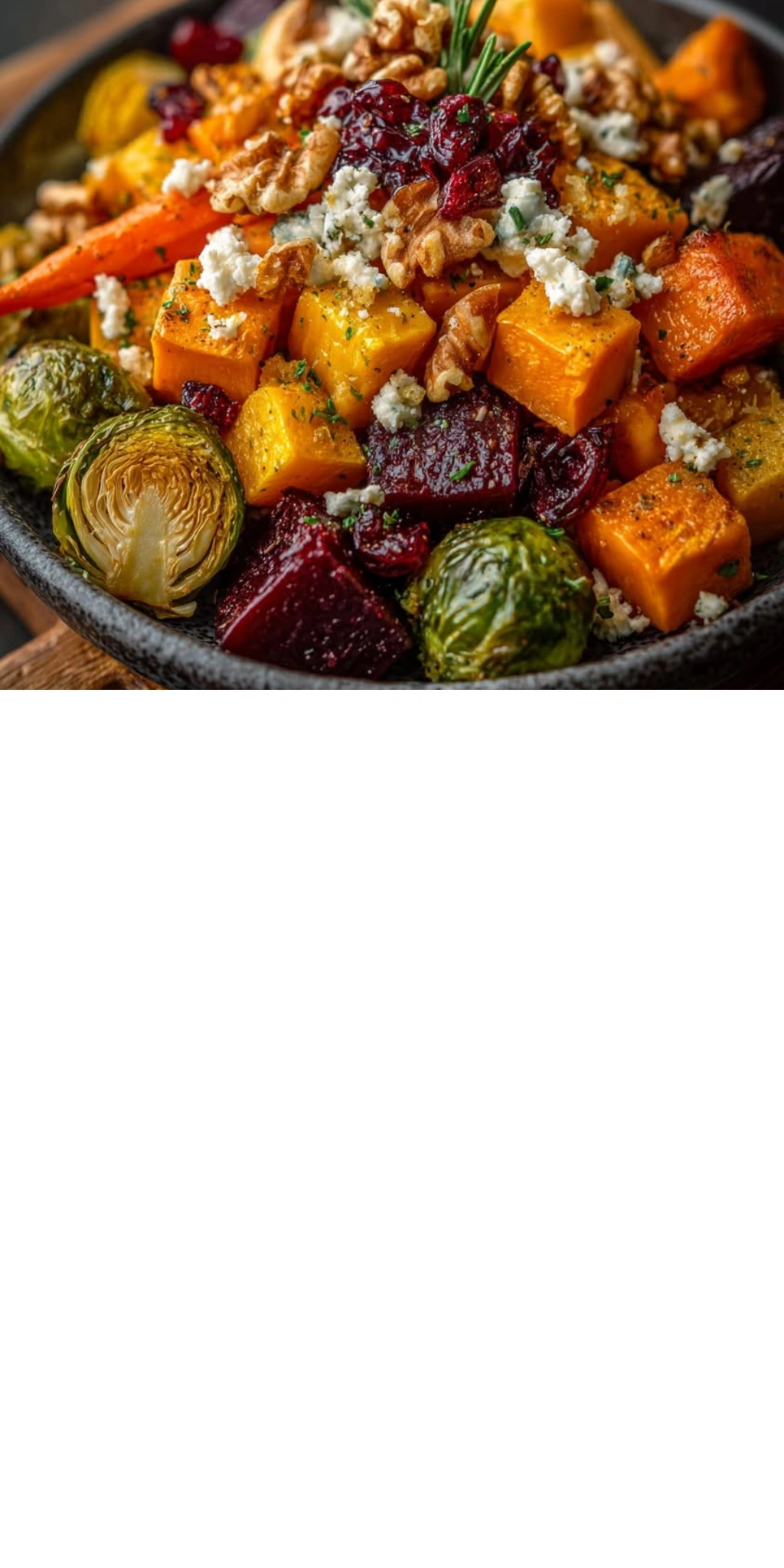
Roasted Brussels Sprouts, Sweet Potato, Butternut Squash, Carrot & Beet Medley with Maple-Feta Crumble, Walnuts & Cranberry-Honey Glaze – The Ultimate Fall Roasted Vegetable Medley That Steals the Show
I still remember the first time I made a roasted vegetable medley in my tiny Paris apartment during culinary school. My stove was barely functional, but my oven — that trusty little French oven — turned humble root vegetables into caramelized jewels that made my classmates poke their heads into my kitchen asking what smelled so divine. Years later, in my NYC kitchen, I’ve refined that simple concept into this showstopping roasted vegetable medley with a maple-feta crumble and cranberry-honey glaze that I’m convinced could turn even the most skeptical vegetable eater into a devotee. It’s a dish that feels simultaneously rustic and elegant, like something you’d find at a Union Square Greenmarket tasting table, but elevated with the kind of layered flavor I learned to build during my training in Paris.
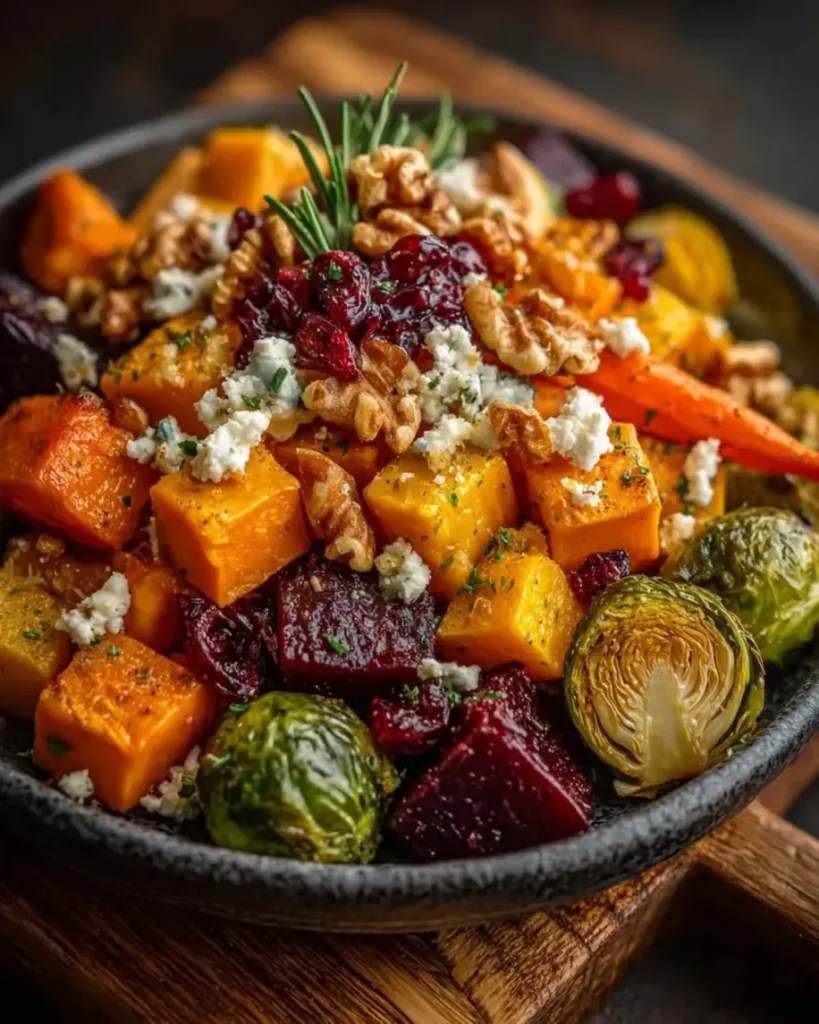
Picture this: tender, golden-brown Brussels sprouts with crispy outer leaves that shatter delicately when you bite into them, cubes of sweet potato and butternut squash that caramelize into almost candied nuggets of earthy sweetness, carrots that concentrate into bright orange bursts of flavor, and beets that turn velvety and almost jammy in the oven’s dry heat. Then imagine all of that jewel-toned goodness blanketed with a tangy-sweet maple-feta crumble that melts slightly from the residual warmth, punctuated by the snap of toasted walnuts and finished with a glossy cranberry-honey glaze that ties everything together with a perfect sweet-tart note. The aroma alone — that heady blend of roasting alliums, caramelizing natural sugars, and warm maple — will draw everyone into your kitchen before the timer even dings.
What makes my version of this fall roasted vegetables dish truly different is the French technique of building flavor in layers rather than just tossing everything together at the end. I roast the vegetables until they reach that perfect balance between tender and crisp-edged — a technique I learned from a patient chef-instructor in the 7th arrondissement who taught me that patience with root vegetables is the difference between good and transcendent. The maple-feta crumble isn’t just a garnish; it’s a textural masterpiece that I discovered by accident when I drizzled maple syrup over feta for a cheese board and realized the sweet-salty combination would be incredible warm. The cranberry-honey glaze, meanwhile, is my nod to the jewel-toned tagines of my Moroccan childhood — it brings that same glossy, sweet-tart finish that makes every bite sing. Before you start, here’s the key: don’t crowd your baking sheets. I’ll say it again later, but if you remember nothing else, remember this. Crowded vegetables steam instead of roast, and you’ll lose all that gorgeous caramelization.
Why This Roasted Vegetable Medley Recipe Is the Best
The Flavor Secret: What sets this maple feta Brussels sprouts dish apart from every other roasted vegetable recipe on the internet is the intentional layering of contrasting flavors that hit every single taste receptor on your tongue. You get sweetness from the roasted butternut squash sweet potato combination and the maple syrup, saltiness from the feta, bitterness from the caramelized Brussels sprouts edges, sourness from the apple cider vinegar in the cranberry-honey glaze, and umami from the deeply roasted beets and walnuts. This isn’t an accident — it’s a flavor-balancing technique I learned while studying sauce work in Paris, where chefs obsess over creating what they call “l’équilibre parfait” — the perfect equilibrium on the plate. When you taste this dish, your palate doesn’t get bored because every forkful offers something slightly different, and that’s precisely why people go back for seconds and thirds.
Perfected Texture: I’ve tested this roasted vegetable medley recipe more times than I can count — at least two dozen iterations over three autumns — to nail the exact roasting time and temperature that yields vegetables that are simultaneously tender and crisp-edged without any single component turning to mush. The trick is cutting everything to roughly uniform size (about ¾-inch pieces), roasting at a high 400°F to encourage rapid caramelization, and using two baking sheets instead of one so every vegetable has its own personal space to brown beautifully. The beets get their own little section on the sheet because they release more moisture, and I’ve learned through trial and error that separating them slightly from the other vegetables yields the best overall texture. The maple-feta crumble adds a creamy-crunchy contrast that takes this dish from a simple side to something you’d proudly serve at Thanksgiving alongside the turkey.
Foolproof & Fast: Despite the impressive final presentation, this is genuinely a 15-minute active prep recipe that relies on the oven to do the heavy lifting. There’s no par-boiling, no blanching, no complicated multi-pot situation. You’ll dirty exactly one mixing bowl, two baking sheets, a small saucepan, and a serving platter. I’ve designed this specifically for busy home cooks — whether you’re pulling together a weeknight dinner in your apartment while fielding work emails or hosting a holiday gathering and need something that looks like you spent hours but actually came together while you were setting the table. I’ve even included make-ahead instructions and a cranberry honey glaze vegetables shortcut that’ll save you precious minutes when you’re in a pinch. This recipe is forgiving, adaptable, and nearly impossible to mess up if you follow my temperature and timing guidelines.
Roasted Vegetable Medley Ingredients
Every time I walk through the Union Square Greenmarket on a crisp fall Saturday morning, I’m drawn to the heaping piles of just-harvested root vegetables and Brussels sprouts still attached to their stalks. There’s something deeply satisfying about selecting each vegetable by hand, feeling the weight of a dense sweet potato or the firmness of a fresh beet, knowing they’re about to become something beautiful. I often think of my mother in Morocco, who taught me to choose vegetables by their scent and heft — a skill that serves me just as well in a New York City farmers market as it did in the souks of my childhood. For this recipe, I’ve kept the ingredients straightforward and accessible, all available at any well-stocked American grocery store. Here’s everything you’ll need.
Ingredients List
- For the vegetables:
- 1 lb Brussels sprouts, trimmed and halved
- 1 large sweet potato, peeled and diced into ¾-inch cubes
- 2 cups butternut squash, peeled and cubed into ¾-inch pieces
- 3 large carrots, peeled and sliced into ½-inch thick rounds
- 2 medium beets, peeled and diced into ¾-inch cubes
- 3 tbsp olive oil
- Salt and pepper to taste
- For the maple-feta crumble:
- ½ cup crumbled feta cheese
- 2 tbsp maple syrup
- ¼ cup chopped walnuts
- For the cranberry-honey glaze:
- ¼ cup dried cranberries
- 2 tbsp honey
- 1 tbsp apple cider vinegar
- ¼ cup water
Ingredient Spotlight
Brussels Sprouts: The backbone of this roasted vegetable medley, Brussels sprouts bring a nutty, slightly bitter edge that balances all the sweetness from the root vegetables. When selecting them at the grocery store, look for bright green, tightly closed heads with no yellowing leaves or black spots. Smaller sprouts (about 1 to 1½ inches in diameter) tend to be sweeter and more tender than larger ones. If you can find them still attached to the stalk at a farmers market, grab them — they stay fresher longer that way. Substitution: Broccoli florets work beautifully if you’re not a Brussels sprouts fan, though you’ll lose some of that distinctive earthy depth. Cut broccoli into similar-sized pieces and reduce roasting time by about 5 minutes to prevent burning.
Butternut Squash & Sweet Potato: These two orange-hued beauties are the sweet backbone of this roasted butternut squash sweet potato combination. The butternut squash becomes almost velvety and custard-like inside while developing caramelized edges, and the sweet potato brings a denser, starchier sweetness that holds its shape beautifully. In US grocery stores, look for butternut squash that feels heavy for its size with a matte (not shiny) skin and no soft spots. Sweet potatoes should be firm with smooth, taut skin. Substitution: Acorn squash or kabocha squash can replace the butternut, and regular yams can step in for sweet potatoes — just note that yams tend to be starchier and slightly less sweet, so you may want to add an extra drizzle of maple syrup.
Beets: Beets are the wild card in this fall roasted vegetables dish — they bring an earthy, almost wine-like depth and that stunning ruby color that bleeds beautifully into the neighboring vegetables (embrace the pink edges, I say!). Choose medium-sized beets that are firm and smooth-skinned, avoiding any that feel soft or have visible cracks. Red beets are classic, but golden beets work wonderfully too and won’t stain everything they touch. Substitution: Parsnips are a fantastic alternative if beets aren’t your thing — they bring a similar earthy sweetness and roast to a gorgeous golden brown, though you’ll lose the dramatic color contrast.
Feta Cheese: The feta in this maple feta Brussels sprouts crumble is the salty, tangy counterpoint that makes every other flavor pop. I recommend using a block of feta packed in brine rather than pre-crumbled dry feta, which can be overly salty and lacks the creamy texture we’re after. Greek feta made from sheep’s milk (or a sheep-goat blend) has the ideal balance of tang and creaminess. Substitution: Goat cheese creates a tangier, more spreadable crumble, while a dairy-free feta made from almond or tofu works for vegan versions — just know the meltability will differ slightly.
Maple Syrup: Not all maple syrups are created equal, and in this recipe, where maple is a starring flavor, I urge you to use pure maple syrup — not pancake syrup, which is just corn syrup with artificial flavoring. Grade A Dark Color, Robust Taste (formerly Grade B) has a stronger maple flavor that stands up beautifully to the assertive vegetables and salty feta. If you only have lighter Grade A Amber, that’s fine too — the flavor will just be more delicate.
| Original Ingredient | Best Substitution | Flavor / Texture Impact |
|---|---|---|
| Brussels Sprouts | Broccoli florets | Milder, less earthy; slightly softer texture |
| Butternut Squash | Acorn or kabocha squash | Similar sweetness; kabocha is denser and creamier |
| Sweet Potato | Yams or carrots | Yams are starchier; extra carrots keep it sweeter |
| Beets | Parsnips | Earthy sweetness remains; loses ruby color |
| Feta Cheese | Goat cheese or vegan feta | Goat cheese is tangier and creamier; vegan feta less melty |
| Walnuts | Pecans or almonds | Pecans bring buttery sweetness; almonds are firmer crunch |
| Maple Syrup | Honey or agave nectar | Honey is floral; agave is milder and vegan-friendly |
How to Make Roasted Vegetable Medley — Step-by-Step
I promise you, this recipe looks more complex than it actually is. We’re essentially roasting vegetables while quickly preparing two simple toppings, and everything comes together on one platter in under an hour. Take a deep breath, put on some music (I love making this dish to the sounds of Chet Baker — very Paris bistro, très chic), and let’s get cooking.
Step 1: Prep Oven and Baking Sheets
Preheat your oven to 400°F (200°C). Line two large baking sheets with parchment paper. This is non-negotiable — using two sheets instead of one ensures the vegetables have enough room to roast rather than steam. The parchment prevents sticking and makes cleanup effortless, which is especially important when you’re dealing with beets that love to leave their mark on everything they touch.
💡 Lalybeth’s Pro Tip: If you have a convection oven, use the convection roast setting at 375°F instead — the circulating air accelerates caramelization and gives you those gorgeous crispy edges in about 5 minutes less time. Just keep an eye on them starting at the 20-minute mark.
Step 2: Season the Vegetables
In a very large bowl (or two medium bowls if that’s what you have), combine the halved Brussels sprouts, diced sweet potato, cubed butternut squash, sliced carrots, and diced beets. Drizzle with 3 tablespoons of olive oil and season generously with salt and freshly ground black pepper. I use about 1 teaspoon of kosher salt and ½ teaspoon of pepper here, but don’t be shy — vegetables need adequate seasoning to bring out their natural sweetness during roasting. Toss everything together with your hands (my preferred method — you can feel when every piece is evenly coated) or two large spoons until every vegetable glistens with oil.
⚠️ Common Mistake to Avoid: Underseasoning at this stage is the number one reason roasted vegetables taste bland. Remember that vegetables are mostly water, and salt helps draw out moisture and concentrate flavor during roasting. Taste a piece of raw squash after tossing — it should taste pleasantly salty. If it doesn’t, add more salt.
Step 3: Arrange on Baking Sheets
Spread the vegetables evenly across the two prepared baking sheets in a single layer. This is crucial: the vegetables should not be touching or overlapping. I like to keep the beets somewhat separated from the other vegetables on one end of a sheet because they release more moisture and can tint everything pink — though honestly, I find the blushed edges of neighboring vegetables charming. If you have any pieces that are significantly larger than others, place them toward the outer edges of the baking sheet where the heat is most intense.
💡 Lalybeth’s Pro Tip: For the crispiest Brussels sprouts, place them cut-side down on the baking sheet. This maximizes the surface area in contact with the hot pan, creating that irresistible golden-brown crust while the rounded top steams gently to tenderness.
Step 4: Roast to Caramelized Perfection
Place both baking sheets in the preheated oven — if your oven has hot spots, swap the sheets between racks and rotate them front-to-back halfway through for even browning. Roast for 25 to 30 minutes total, stirring the vegetables gently with a spatula at the 15-minute mark. You’ll know they’re done when the Brussels sprouts are deeply golden with crispy outer leaves, the sweet potato and squash are fork-tender with caramelized edges, the carrots are slightly wrinkled and intensely sweet, and the beets are tender all the way through. The entire kitchen should smell nutty, sweet, and slightly toasty. If you pierce a beet cube with a paring knife, it should slide in with no resistance.
⚠️ Common Mistake to Avoid: Pulling the vegetables out too early because they “look done.” Undercooked root vegetables are disappointing — starchy and slightly raw-tasting. Trust the fork test: each vegetable should be easily pierced with no resistance at the center. If they need more time, give them another 5 to 7 minutes. The caramelization deepens with patience.
Step 5: Make the Maple-Feta Crumble
While the vegetables are roasting, prepare the maple-feta crumble. In a small bowl, combine the crumbled feta cheese and 2 tablespoons of maple syrup. Use a fork to mix them together, gently mashing some of the feta so the maple syrup incorporates into the cheese rather than just coating it. The mixture should look like a chunky, glossy paste with visible crumbles of feta still intact. Gently fold in the chopped walnuts, being careful not to break down the feta crumbles too much — you want distinct pieces that will soften slightly when they hit the warm vegetables but still hold some texture. Set aside at room temperature; the flavors meld beautifully as it sits.
💡 Lalybeth’s Pro Tip: For an extra layer of flavor, toast the walnuts in a dry skillet over medium heat for 2 to 3 minutes before adding them to the crumble. You’ll know they’re ready when they become fragrant and slightly darker in color. This small step deepens the nuttiness and adds another dimension of warmth to the finished dish.
Step 6: Simmer the Cranberry-Honey Glaze
In a small saucepan, combine the dried cranberries, honey, apple cider vinegar, and water. Place over medium heat and bring to a gentle simmer. Cook for 3 to 4 minutes, stirring occasionally, until the cranberries plump up and soften and the liquid reduces into a glossy, slightly syrupy glaze that coats the back of a spoon. The apple cider vinegar is the secret here — it cuts through the sweetness and brightens the entire glaze, preventing it from becoming cloying. If the glaze reduces too quickly and becomes sticky, simply add a splash of water and stir to loosen it.
⚠️ Common Mistake to Avoid: Over-reducing the cranberry-honey glaze until it turns into hard candy. You want a pourable consistency — it should drizzle off a spoon in a thin stream, not blob off in thick drops. If it thickens too much as it cools, gently reheat it with a teaspoon of water to restore the right consistency before drizzling over the vegetables.
Step 7: Assemble and Serve
When the vegetables are roasted to perfection, remove them from the oven and let them cool on the baking sheets for just 2 to 3 minutes — this brief rest allows any excess steam to dissipate so the vegetables don’t become soggy on the serving platter. Transfer the vegetables to a large serving platter or shallow bowl, arranging them in an even layer. Immediately sprinkle the maple-feta crumble evenly over the top — the residual heat will ever so slightly soften the feta and warm the maple syrup, creating little pockets of creamy, sweet-salty goodness. Finish by drizzling the cranberry-honey glaze over everything, making sure to distribute the plumped cranberries evenly. Serve warm, and watch it disappear.
💡 Lalybeth’s Pro Tip: Don’t toss the vegetables with the toppings — layering them on top preserves the textural contrast between the crispy roasted vegetables and the creamy crumble. If you mix everything together, the feta melts too much and the crunch factor diminishes. Let your guests do the mixing on their own plates for the best experience.
| Step | Action | Duration | Key Visual Cue |
|---|---|---|---|
| Step 1 | Preheat oven & prep sheets | 5 min | Oven reaches 400°F |
| Step 2 | Season vegetables | 5 min | Every piece glistens with oil |
| Step 3 | Arrange on baking sheets | 3 min | Single layer, no overlapping |
| Step 4 | Roast vegetables | 25–30 min | Golden edges, fork-tender centers |
| Step 5 | Make maple-feta crumble | 5 min | Glossy, chunky paste forms |
| Step 6 | Simmer cranberry-honey glaze | 4 min | Cranberries plump, liquid syrupy |
| Step 7 | Assemble & serve | 3 min | Crumble softens slightly, glaze drizzled |
Serving & Presentation
When I serve this roasted vegetable medley at dinner parties in my NYC apartment, I like to use a wide, shallow ceramic platter in a neutral cream or earthy tone — it lets the jewel colors of the vegetables really pop against the backdrop. Arrange the vegetables in a single layer rather than piling them high, which can trap steam and soften those precious crispy edges you worked so hard to achieve. Scatter the maple-feta crumble over the top with your fingers, letting it fall naturally into the nooks and crannies between the vegetables, and then drizzle the cranberry-honey glaze in a zigzag pattern across the entire surface for that restaurant-quality finish. A final sprinkle of flaky sea salt (Maldon is my go-to) and a few cracks of black pepper right before serving heightens every flavor one last time.
This dish is incredibly versatile when it comes to pairings, and I’ve served it alongside everything from a simple roasted chicken on a Tuesday night to a full Thanksgiving spread. For a beautiful vegetarian main course, I pile this medley on a bed of lemony quinoa or farro and add a dollop of Greek yogurt on the side — the cool creaminess against the warm, sweet vegetables is absolutely divine. The Moroccan side of my heritage often whispers to me to add a sprinkle of cumin and a scattering of fresh cilantro, which takes the dish in a completely different but equally delicious direction. If you’re serving this for a holiday meal, it pairs brilliantly with turkey, ham, or a nut roast, and it holds its own beautifully on a buffet table at room temperature for up to an hour.
One of my favorite ways to serve this dish during the fall and winter months is as part of a cozy grain bowl. I layer the roasted vegetables over warm farro or wild rice, add some massaged kale or arugula, top with the crumble and glaze, and finish with a soft-boiled egg or some shredded rotisserie chicken for protein. It’s the kind of lunch that makes my coworkers at the food blog studio peek over and ask if I have any extra — which I always do, because I deliberately make a double batch of this recipe every single time. The leftovers are arguably even better the next day, when the flavors have had time to meld and deepen overnight.
| Pairing Type | Suggestions | Why It Works |
|---|---|---|
| Side Dish | Roast chicken, turkey, glazed ham, nut roast | Sweet-tangy vegetables complement savory mains perfectly |
| Sauce / Dip | Greek yogurt, tahini sauce, balsamic reduction | Cool, creamy, or tangy elements balance the sweetness |
| Beverage | Dry Riesling, hard cider, sparkling water with lemon | Acidity and effervescence cut through the richness |
| Garnish | Fresh thyme, pomegranate arils, flaky sea salt | Fresh herbs brighten, pops of color add visual appeal |
Make-Ahead, Storage & Reheating
Living in New York City means my kitchen doubles as my office, my recipe testing lab, and sometimes my dining room, so I’ve become a master of the make-ahead meal. This roasted vegetable medley is incredibly meal-prep friendly — I often roast a double batch of vegetables on Sunday evening and use them in grain bowls, salads, and quick side dishes throughout the week. The key is storing the components separately: vegetables in one container, maple-feta crumble in another, and cranberry-honey glaze in a small jar. This way, the vegetables retain their texture, the crumble stays chunky and distinct, and the glaze is ready to drizzle at a moment’s notice.
| Method | Container | Duration | Reheating Tip |
|---|---|---|---|
| Refrigerator | Airtight glass container | Up to 5 days | Reheat in a 375°F oven for 8–10 minutes to re-crisp |
| Freezer | Freezer-safe zip-top bag (vegetables only) | Up to 3 months | Reheat from frozen at 400°F for 15–18 minutes |
| Make-Ahead | Separate containers for each component | Up to 3 days in advance | Assemble just before serving; warm glaze gently |
For the best reheating results, I always recommend using the oven or an air fryer rather than the microwave. The microwave will heat the vegetables quickly but will also make them soggy and limp — essentially undoing all your hard-earned caramelization. A quick blast in a hot oven (375°F for 8 to 10 minutes) restores much of that crispy-edged magic, especially if you spread the vegetables out on a baking sheet rather than piling them into a dish. If you’re reheating from frozen, don’t thaw first — just spread the frozen vegetables on a baking sheet and roast at 400°F for 15 to 18 minutes, stirring once halfway through. The maple-feta crumble and cranberry-honey glaze should always be added after reheating, never before, so they stay distinct and vibrant rather than melting into a muddy mess.
One of my favorite make-ahead tricks for holiday meals is to roast the vegetables a day in advance and store them in the refrigerator, then reheat them in the oven while the turkey rests. This frees up valuable oven space during the busy final hour of cooking and means you’re not frantically trying to juggle multiple dishes. I prepare the maple-feta crumble the morning of (it takes literally 3 minutes) and make the cranberry-honey glaze up to 5 days ahead, storing it in a small jar in the refrigerator. When it’s time to serve, I reheat the vegetables, warm the glaze gently in the microwave or in a small saucepan, and assemble everything in under 5 minutes. My guests always think I’ve been slaving away, and I just smile and pour myself another glass of wine.
Variations & Easy Swaps
| Variation | Key Change | Best For | Difficulty Impact |
|---|---|---|---|
| Moroccan-Spiced Medley | Add ras el hanout, swap feta for goat cheese, use dates instead of cranberries | Weeknight dinners, dinner parties with a North African theme | No change — same method, different spices |
| Dairy-Free & Vegan | Use vegan feta or marinated tofu, swap honey for agave | Plant-based eaters, dairy allergies | Slightly easier — no dairy to worry about |
| Spring & Summer Bright Twist | Use asparagus, zucchini, and cherry tomatoes; lemon-herb drizzle instead of glaze | Warmer months, lighter meals | Slightly easier — faster-roasting vegetables |
Moroccan-Spiced Medley
This variation is deeply personal to me — it’s the version I make when I’m feeling homesick for the aromatic spices of my mother’s kitchen in Morocco. Before roasting the vegetables, toss them with 1½ teaspoons of ras el hanout (that intoxicating Moroccan spice blend with cinnamon, cumin, coriander, ginger, and sometimes rose petals) along with the olive oil, salt, and pepper. The warm, floral spices transform the roasted butternut squash sweet potato combination into something that reminds me of the vegetable tagines I grew up eating. For the crumble, swap the feta for soft goat cheese — its tanginess plays beautifully with the warm spices — and replace the walnuts with toasted slivered almonds. In the glaze, swap the dried cranberries for chopped Medjool dates and add a pinch of cinnamon. The result is a dish that bridges my two culinary worlds: the French roasting technique I learned in Paris and the bold, aromatic flavors of my Moroccan upbringing.
Dairy-Free & Vegan Version
I’ve tested this vegan adaptation multiple times for friends who avoid dairy, and I’m happy to report it’s just as satisfying as the original. Replace the feta cheese with a good-quality vegan feta (Violife and Follow Your Heart both make excellent versions that crumble well) or, for a whole-food approach, use marinated extra-firm tofu that’s been crumbled and tossed with a tablespoon of lemon juice and a pinch of salt to mimic feta’s tang. For the maple-feta crumble, the method remains identical — just mix your vegan feta with the maple syrup and walnuts. In the cranberry-honey glaze, swap the honey for agave nectar or maple syrup (yes, more maple — it’s delicious, I promise) and proceed exactly as written. The one difference you’ll notice is that vegan feta doesn’t melt quite the same way as dairy feta when it hits the warm vegetables, but the flavor combination is spot-on and the walnuts still provide that crucial crunch.
Spring & Summer Bright Twist
When the weather turns warm and the Union Square Greenmarket bursts with asparagus, zucchini, and cherry tomatoes, I adapt this recipe to celebrate the season while keeping the same maple-feta crumble and glaze concept intact. Replace the root vegetables and Brussels sprouts with 1 pound of asparagus (trimmed and cut into 2-inch pieces), 2 medium zucchini (halved lengthwise and sliced into half-moons), 1 pint of cherry tomatoes, and 1 large red onion (cut into wedges). These vegetables roast much faster — just 15 to 18 minutes at 425°F — so keep a close eye on them. I like to add a handful of fresh corn kernels during the last 5 minutes of roasting for extra sweetness. For the glaze, I swap the cranberries for fresh or frozen blueberries and add a generous squeeze of lemon juice and some lemon zest for brightness. The feta crumble stays exactly the same because it’s perfect year-round, but I might scatter some fresh basil or mint over the finished dish for an herbaceous pop that screams summer.
Frequently Asked Questions
Can I roast all the vegetables together, or do some need to be cooked separately for the best texture?
Yes, you can absolutely roast all the vegetables together on the same baking sheets, and that’s exactly how this recipe is designed. The key is cutting everything to a uniform size — about ¾-inch pieces ensures that the dense root vegetables (beets, sweet potato, butternut squash) and the more delicate Brussels sprouts all finish cooking at roughly the same time. I do recommend keeping the beets somewhat clustered together rather than scattered everywhere, partly because they release more moisture and partly because they’ll tint everything pink if you mix them too vigorously. The two-sheet setup is also crucial: if you crowd everything onto one sheet, the vegetables will steam rather than roast, and you’ll lose the caramelization that makes this dish special. If you’re worried about certain vegetables cooking faster, just cut the faster-cooking ones (like carrots) slightly larger and the slower-cooking ones (like beets) slightly smaller — that little adjustment goes a long way toward even roasting.
What can I substitute for feta cheese to make this recipe dairy-free or vegan?
There are several excellent dairy-free and vegan alternatives that work beautifully in this maple-feta Brussels sprouts dish. Store-bought vegan feta made from almond milk, tofu, or coconut oil is my top recommendation — brands like Violife and Follow Your Heart crumble and behave similarly to dairy feta. If you prefer a whole-food approach, you can crumble extra-firm tofu (pressed to remove excess water) and toss it with 1 tablespoon of lemon juice, 1 tablespoon of nutritional yeast, and a generous pinch of salt to mimic feta’s tangy, savory character. The texture will be softer and less creamy than dairy feta, but the flavor combination with the maple syrup and walnuts is still absolutely delicious. For the glaze, simply swap the honey for agave nectar or additional maple syrup, and the recipe is fully plant-based.
How long should I roast the vegetables to ensure they are tender without becoming soggy?
At 400°F, the sweet spot for roasting this vegetable medley is 25 to 30 minutes, with a gentle stir at the 15-minute mark. The high temperature is essential — it drives off moisture quickly and encourages the Maillard reaction (that beautiful browning) before the vegetables have a chance to steam and turn soggy. You’ll know they’re perfectly done when the Brussels sprouts have crispy, golden-brown outer leaves, the sweet potato and butternut squash are fork-tender with caramelized edges, and the beets can be easily pierced with a paring knife. If your vegetables still feel firm at the 25-minute mark, give them another 5 to 7 minutes — every oven is different, and factors like the size of your vegetable pieces and the type of baking sheet can affect timing. The most common cause of soggy vegetables is overcrowding the baking sheets, so resist the urge to pile everything onto one sheet to save dishes. Two sheets with plenty of space between the pieces is non-negotiable for the best texture.
Can I prepare the maple-feta crumble and cranberry-honey glaze ahead of time for a holiday meal?
Absolutely — and I encourage it, especially for holiday cooking when oven and counter space are at a premium. The cranberry-honey glaze can be made up to 5 days in advance and stored in a sealed jar in the refrigerator. When you’re ready to use it, gently reheat it in a small saucepan over low heat or in the microwave for 20 to 30 seconds, adding a teaspoon of water if it has thickened too much in the fridge. The maple-feta crumble is best made no more than a day ahead because the feta can absorb too much maple syrup over time and lose its distinct crumbly texture. If I’m prepping for a big holiday meal, I make the glaze several days ahead, roast the vegetables the day before, and assemble the crumble the morning of. At serving time, I reheat the vegetables in a 375°F oven for 8 to 10 minutes, warm the glaze, and assemble everything on the platter. It takes less than 5 minutes of active work and looks like you’ve been cooking all day.
Why are my roasted Brussels sprouts still hard in the center even after 30 minutes in the oven?
This is a common frustration, and it usually comes down to two things: the size of your Brussels sprouts and whether they were cut properly. Large Brussels sprouts (over 1½ inches in diameter) can take significantly longer to cook through than smaller ones, and if they’re left whole or only lightly trimmed, the dense core stays firm while the outer leaves burn. Always halve your Brussels sprouts through the stem end — this opens up the interior to the oven’s heat and allows them to cook evenly from the inside out. If your sprouts are particularly large, quarter them instead of halving. The other culprit could be your oven temperature: if your oven runs cool (which is more common than you might think), 400°F might actually be closer to 375°F, which isn’t hot enough for proper caramelization and tender interiors. I recommend using an inexpensive oven thermometer to verify your oven’s actual temperature — it’s a game-changer for all roasted vegetables, not just this recipe.
Is it necessary to peel the beets and sweet potato, or can I leave the skin on?
For the beets, I strongly recommend peeling them before roasting. Beet skin can be tough and earthy in a way that’s not entirely pleasant in a dish where texture is this important. Plus, peeling removes any residual dirt or grit that might be clinging to the skin’s surface. For the sweet potato, leaving the skin on is completely fine — and actually adds fiber and a rustic texture that I personally love. Just scrub the sweet potato thoroughly under running water and dry it before dicing. The skin will soften during roasting and take on a slightly chewy texture that contrasts nicely with the tender interior. If you’re serving this for a more formal occasion and want a more uniform look, go ahead and peel the sweet potato, but for everyday meals, I leave it on. The butternut squash and carrots should always be peeled — squash skin is inedible, and carrot skin can be bitter when roasted.
How can I prevent the vegetables from sticking to the baking sheet?
Parchment paper is your best friend here, and it’s why I call for lining both baking sheets before you even start chopping vegetables. Parchment creates a non-stick barrier that also makes cleanup effortless — especially important with beets, which can stain aluminum baking sheets permanently. If you don’t have parchment paper, a light coating of cooking spray or a thin layer of oil directly on the baking sheet will work, but you’ll need to be more careful when flipping the vegetables to avoid tearing the caramelized bits. I don’t recommend using aluminum foil for this recipe unless it’s heavy-duty; thin foil can tear when you stir the vegetables, and the caramelized pieces of sweet potato and squash have a tendency to stick to it more than they do to parchment. A silicone baking mat is another excellent alternative if you have one.
Can I use frozen vegetables instead of fresh for this recipe?
I don’t recommend using frozen vegetables for this roasted vegetable medley. Frozen vegetables contain significantly more water than fresh ones — that’s a natural result of the freezing process — and when you roast them, that excess moisture releases into the oven environment and steams the vegetables rather than allowing them to caramelize. You’ll end up with soft, mushy pieces instead of the crisp-edged, deeply browned results this recipe is designed to achieve. If you’re in a pinch and frozen vegetables are your only option, the best approach is to thaw them completely first, pat them extremely dry with paper towels (this step is crucial — get them as dry as you possibly can), and then proceed with the recipe, adding an extra 5 to 7 minutes to the roasting time to help evaporate the additional moisture. The results won’t be quite the same as with fresh vegetables, but they’ll still be enjoyable.
What’s the best way to cut butternut squash safely without struggling?
Butternut squash can be intimidating to cut, but a few simple techniques make it much safer and easier. First, stabilize the squash by slicing off a thin piece from the bottom so it sits flat on your cutting board without wobbling. Then, use a sharp chef’s knife — not a serrated knife — to slice the squash crosswise where the neck meets the bulbous base. Peel each section separately with a Y-shaped vegetable peeler (my preferred tool) or a sharp knife, working away from your body. For the neck, slice it into rounds, then cut those rounds into cubes. For the bulb, cut it in half lengthwise, scoop out the seeds with a spoon, and then slice and cube the flesh. If the squash is particularly hard, you can microwave the whole squash for 60 to 90 seconds to slightly soften it — just enough to make cutting easier without cooking it. And always, always keep your fingers curled under and your knuckles guiding the knife blade to protect your fingertips.
Can I add protein to make this a complete main course?
Absolutely, and I do this often for weeknight dinners when I want a one-pan meal. For a vegetarian option, add a can of drained and rinsed chickpeas to the vegetable mixture before roasting — they’ll become crispy and nutty in the oven and add substantial plant-based protein. For meat-eaters, I love tossing cubed chicken thighs or pork tenderloin with the same olive oil and seasonings and roasting them right alongside the vegetables; just make sure the meat pieces are similar in size to the vegetable cubes so everything finishes cooking at the same time. Sliced smoked sausage or kielbasa is another fantastic addition that requires no pre-cooking — just nestle the slices among the vegetables on the baking sheet. If you’re adding protein, you may need a third baking sheet to avoid overcrowding, and I recommend checking the internal temperature of any meat with a thermometer to ensure it’s fully cooked through before serving.
Share Your Version!
There’s nothing I love more than seeing how you’ve made one of my recipes your own. Did you add your own twist to this roasted vegetable medley? Maybe you swapped the walnuts for pecans, used golden beets instead of red, or added a sprinkle of your favorite spice blend? I want to hear all about it! Leave a star rating and a comment below — your feedback not only makes my day but also helps other home cooks decide if this recipe is right for their table. Don’t be shy about sharing your substitutions, your dinner table stories, or even your “oops” moments (trust me, I’ve had plenty of those in my own kitchen, and they often lead to the best discoveries).
If you’re sharing your creation on Instagram or Pinterest, tag me @cookingwithlalyta and use the hashtag #LalybethsKitchen so I can see and share your beautiful work. I repost my favorites in my stories, and I absolutely love seeing this dish on Thanksgiving tables, weeknight dinner spreads, and everything in between. Before you go, I have one question for you, inspired by this recipe’s unique maple-feta crumble: what’s the most unexpected sweet-savory combination you’ve ever tried and loved? Drop your answer in the comments — I read every single one, and I’m always looking for my next culinary inspiration.
From my NYC kitchen to yours — I hope this recipe brings as much warmth to your table as it does to mine. — Lalybeth 🧡
Love This Recipe? Save It to Pinterest!
If you enjoyed this Roasted Brussels Sprouts, Sweet Potato, Butternut Squash, Carrot & Beet Medley with Maple-Feta Crumble, Walnuts & Cranberry-Honey Glaze recipe, don’t let it get lost in your browser tabs! 😄 Pin it now so you can find it again anytime — and explore hundreds more tried-and-tested recipes waiting for you on my Pinterest boards.
👉 Follow Lalybeth on Pinterest @cookingwithlalyta
📌 Pin this recipe · 🔁 Re-pin your favorites · 💬 Tag me when you make it — I love seeing your creations!
Did you make this roasted vegetable medley?
I’d love to hear how it turned out! Leave a comment below with your favorite vegetable combination or any creative twist you added — your feedback helps me create more recipes you’ll love.
⭐ Rate this recipe · 💬 Leave a comment · 📸 Tag @cookingwithlalyta
Roasted Brussels Sprouts, Sweet Potato, Butternut Squash, Carrot & Beet Medley with Maple-Feta Crumble, Walnuts & Cranberry-Honey Glaze
- Total Time: 45 minutes
- Yield: 6 1x
Description
A colorful medley of roasted root vegetables and Brussels sprouts, topped with a sweet and tangy maple-feta crumble, crunchy walnuts, and a cranberry-honey glaze.
Ingredients
- For the vegetables:
- 1 lb Brussels sprouts, trimmed and halved
- 1 large sweet potato, peeled and diced
- 2 cups butternut squash, peeled and cubed
- 3 large carrots, peeled and sliced
- 2 medium beets, peeled and diced
- 3 tbsp olive oil
- Salt and pepper to taste
- For the maple-feta crumble:
- 1/2 cup crumbled feta cheese
- 2 tbsp maple syrup
- 1/4 cup chopped walnuts
- For the cranberry-honey glaze:
- 1/4 cup dried cranberries
- 2 tbsp honey
- 1 tbsp apple cider vinegar
- 1/4 cup water
Instructions
- Preheat oven to 400°F (200°C). Line two baking sheets with parchment paper.
- In a large bowl, toss Brussels sprouts, sweet potato, butternut squash, carrots, and beets with olive oil, salt, and pepper until coated.
- Spread vegetables evenly on the prepared baking sheets in a single layer.
- Roast for 25-30 minutes, stirring halfway through, until tender and caramelized.
- Meanwhile, make the maple-feta crumble: In a small bowl, mix feta cheese and maple syrup until well combined. Add walnuts and stir gently.
- For the cranberry-honey glaze: In a small saucepan, combine dried cranberries, honey, apple cider vinegar, and water. Bring to a simmer over medium heat and cook for 3-4 minutes until cranberries are plump and glaze thickens slightly.
- Once vegetables are roasted, transfer to a serving platter. Sprinkle the maple-feta crumble over the top and drizzle with the cranberry-honey glaze. Serve warm.
Notes
You can substitute pecans for walnuts or use goat cheese instead of feta for a different flavor. The glaze can be made ahead and reheated.
- Prep Time: 15 minutes
- Cook Time: 30 minutes
- Method: Side Dish
- Cuisine: American
Nutrition
- Calories: 350
- Sugar: 20g
- Fat: 15g
- Carbohydrates: 45g
- Protein: 8g
Tried This Recipe? Leave a Comment!
Did you make this recipe? I’d love to hear how it turned out! Please leave a comment and a rating below. Your feedback helps other home cooks and supports cookingwithlalyta.com!
For more delicious inspiration, follow me on Pinterest!