Table of Contents
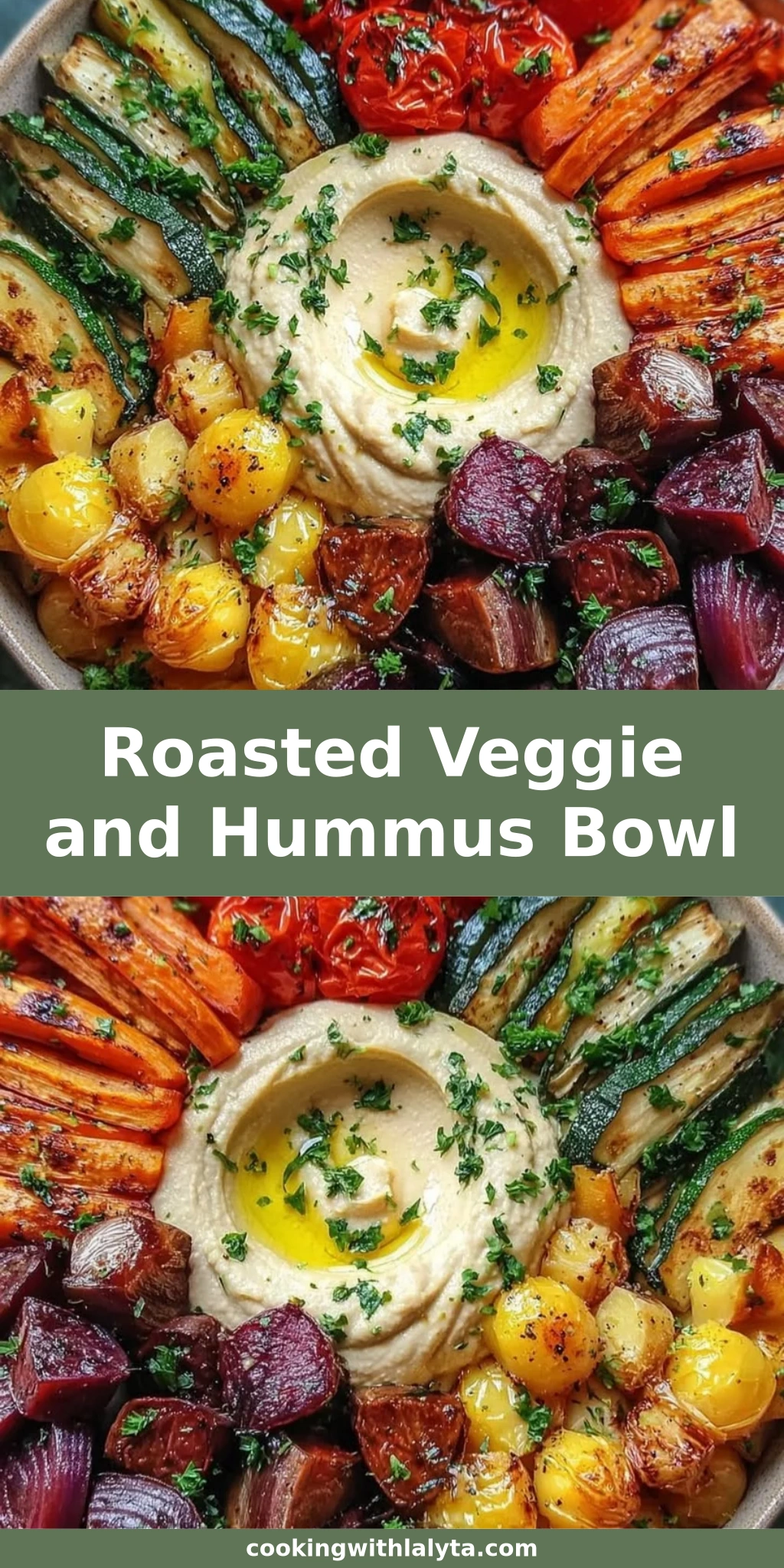
Roasted Veggie and Hummus Bowl – High-Heat Caramelized with Spiced Hummus Base
Approximate nutrition per serving: 450 calories, 50g carbohydrates, 20g fat, 15g protein, 10g sugar.
I still remember my mother’s kitchen in Morocco, where the hum of a simple weeknight dinner always started with a sheet pan of vegetables glistening with olive oil and a generous dusting of cumin. She’d roast them until the edges blackened just a bit—exactly the way I like them today. That memory is the soul behind this roasted veggie hummus bowl. I’ve taken those childhood scents and layered them over a velvety bed of spiced hummus, creating a vegan bowl recipe that feels both deeply comforting and fresh off a New York food truck. What makes this version truly special is the high-heat roast that caramelizes the vegetables into tender, slightly charred gems—a technique I perfected during my Paris training, where precision oven temps are everything. This is more than just a healthy roasted vegetables bowl; it’s a nourishing hug in a bowl, ready in under 40 minutes.
As you lift your fork, the first thing you’ll notice is the contrast: the creamy, tangy hummus base, brightened with lemon and a whisper of cumin, cradles chunks of sweet potato, red pepper, zucchini, and onion that have nearly candied in the oven. The smoked paprika from the roast adds a deep, almost incendiary layer, while fresh spinach brings a crisp, cool counterpoint. When you add a salty crumble of feta (optional, but highly recommended), every bite becomes a little explosion of Mediterranean warmth—something my Moroccan grandmother would recognize, though she might have added preserved lemon. I love making this bowl for a quick NYC lunch because it tastes like it took hours, but it’s actually simpler than a takeout salad. The key is roasting at 425°F and never, ever overcrowding the pan—I’ll share exactly why soon.
As a chef who spent years in French kitchens, I know that a great recipe hinges on technique as much as ingredients. This easy hummus bowl is my trusted go-to when I need something wholesome that doesn’t demand a mountain of dishes. I’ll walk you through the single-layer roasting trick that guarantees caramelization (not steaming) and show you how to elevate store-bought hummus so it tastes homemade. Along the way, you’ll find one crucial pro tip—how to cut your vegetables so they roast at the same rate—and one common mistake: tossing the vegetables in oil right on the baking sheet, which leads to uneven seasoning. By the end, you’ll have a perfectly balanced vegetable hummus bowl that shines for meal prep or a cozy dinner.
Why This Roasted Veggie and Hummus Bowl Recipe Is the Best
The Flavor Secret. I don’t just plop plain hummus into the bottom of the bowl—I stir in cumin and a splash of lemon juice to awaken the store-bought kind, marrying it with the smoky paprika on the vegetables. This small step comes straight from my Paris training, where sauces and bases are rarely left unseasoned. It transforms the entire dish, giving it layers that most vegan bowl recipes miss. When you taste the earthy roasted veggies with that bright, spiced hummus, you’ll understand why this beats any restaurant version I’ve tried in Midtown.
Perfected Texture. Many roasted vegetable bowls end up limp or soggy because home cooks either crowd the pan or don’t use high enough heat. Here, I set the oven to 425°F—a temperature I learned to love in French pastry kitchens, where a blast of heat creates a caramelized shell while keeping centers tender. The sweet potato gets velvety, the bell pepper softens but holds its shape, and the zucchini edges crisp beautifully. Every vegetable is cut to a similar size, a habit drilled into me during training, so everything finishes at once.
Foolproof & Fast. You don’t need a culinary degree to pull off this easy hummus bowl. The recipe has been tested in my tiny Manhattan apartment oven, where I can’t afford a single mistake between work calls. The steps are streamlined: toss, roast, mix, assemble. Clean-up is quick, and the ingredients are available at any Union Square Greenmarket or corner grocery. Whether you’re a meal-prep pro or a weeknight warrior, you’ll appreciate how this recipe delivers a gorgeous, nutrient-packed plate with minimal effort.
Roasted Veggie Hummus Bowl Ingredients
I grab my sweet potatoes and organic zucchini from the Saturday farmers market at Union Square—the smaller ones are sweeter and roast more evenly. Growing up in Morocco, we’d pile roasted vegetables over fresh bread, but here, the hummus does the heavy lifting as a creamy canvas. You’ll find all these ingredients at any US supermarket, and I’ve included swaps for every hero. Trust me: measuring the spices with a generous hand makes all the difference, just like my mother did with her tagine blends.
Ingredients List
- For the roasted vegetables:
- 1 large sweet potato, peeled and cubed (about 2 cups)
- 1 red bell pepper, sliced into strips
- 1 medium zucchini, sliced into half-moons
- 1 red onion, cut into wedges
- 2 tablespoons olive oil
- 1 teaspoon smoked paprika
- ½ teaspoon garlic powder
- Salt and freshly ground black pepper to taste
- For the hummus base:
- 1 cup prepared hummus (store-bought or homemade)
- 1 tablespoon fresh lemon juice
- ½ teaspoon ground cumin
- For serving:
- 2 cups fresh spinach or mixed greens
- ¼ cup crumbled feta cheese (optional, omit for vegan)
- Fresh parsley, chopped, for garnish
Ingredient Spotlight
Sweet potato. This root vegetable gives the bowl hearty substance and natural sweetness that intensifies with high-heat roasting. Look for firm, small-to-medium sweet potatoes with smooth skin; larger ones can be woody. If you prefer a lower-carb option, swap with an equal amount of butternut squash cubes—they’ll caramelize similarly and bring a slightly nuttier flavor. Roasted butternut squash may get a touch softer, but it’s just as delicious.
Smoked paprika. This is the secret weapon of my spice drawer, a nod to the paprika-laced tagines of Morocco. It adds a campfire-like depth that makes the vegetables taste like they’ve been grilled. You can find it in any grocery spice aisle. If you’re in a pinch, sweet paprika mixed with a tiny pinch of cayenne mimics the warmth, though you’ll miss the smokiness. For an Aleppo pepper twist, use that for a fruity, mild heat.
Prepared hummus. I often reach for a good-quality store-bought hummus (Sabra or Ithaca are my US picks) to save time, but I boost it with lemon and cumin so it tastes almost homemade. Look for one that’s smooth and creamy, not grainy. To make it from scratch, blend 1 can of chickpeas, 2 tablespoons of tahini, a clove of garlic, and enough lemon juice and olive oil to get the right consistency—adjusting water as needed. Homemade will be a bit looser, so you might add an extra drizzle of olive oil when spreading.
Red onion. Roasted red onion wedges turn mellow and jammy, balancing the other vegetables. Choose onions that feel heavy for their size and have tight, shiny skin. If you only have yellow onion, that works—just slice it thinner so it softens appropriately. Shallots are an elegant substitute, becoming sweeter and more delicate.
| Original Ingredient | Best Substitution | Flavor / Texture Impact |
|---|---|---|
| Sweet potato | Butternut squash | Slightly nuttier, softer texture |
| Smoked paprika | Sweet paprika + pinch cayenne | Less smoky, similar color |
| Prepared hummus | Homemade hummus | Fresher, slightly looser |
| Red onion | Yellow onion or shallots | Milder sweetness, may need thinner slice |
How to Make Roasted Veggie and Hummus Bowl — Step-by-Step
This bowl comes together in a logical flow: roast the vegetables while you quickly zhuzh up the hummus. I promise it’s as simple as it sounds. Follow each step, and you’ll have a bowl that looks like it came from a café, with perfectly tender veggies and a hummus base that tastes anything but store-bought.
Step 1: Preheat the Oven
Preheat your oven to 425°F (220°C). This high temperature is non-negotiable for achieving caramelized edges on the vegetables—a trick I adopted from my time in Parisian kitchens, where a hot oven is the secret to perfectly roasted root veg. While the oven heats, line a large rimmed baking sheet with parchment paper for easy cleanup.
💡 Lalybeth’s Pro Tip: Place a dark-colored baking sheet in the oven during preheating. The dark metal absorbs more heat and will jump-start the caramelization the moment the vegetables hit it.
Step 2: Prep and Toss the Vegetables
In a large mixing bowl, combine the cubed sweet potato, bell pepper strips, zucchini half-moons, and red onion wedges. Drizzle with 2 tablespoons of olive oil, then sprinkle the smoked paprika, garlic powder, and a generous pinch of salt and pepper. Use your hands (or a spatula) to toss until every piece glistens.
⚠️ Common Mistake to Avoid: Tossing the vegetables directly on the baking sheet. This unevenly seasons them. Always use a bowl to ensure the oil and spices coat the veggies completely, giving you consistent flavor.
Step 3: Spread and Roast
Spread the seasoned vegetables in a single, even layer on your prepared baking sheet. Give them room to breathe—if they’re piled up, they’ll steam rather than roast. Slide the sheet into the preheated oven and roast for 20–25 minutes. At the 12-minute mark, stir the vegetables with a spatula to ensure all sides get exposure to the heat. They’re done when the sweet potato cubes are easily pierced with a fork and the edges have taken on a deep golden-brown color.
💡 Lalybeth’s Pro Tip: For extra crispness, let the vegetables rest on the hot baking sheet for 2 minutes after removing from the oven. They’ll continue to crisp slightly around the edges.
Step 4: Make the Hummus Base
While the vegetables roast, stir together the prepared hummus, lemon juice, and cumin in a small bowl until smooth. This step is where you elevate a store-bought hummus into something vibrant. The lemon cuts the richness, and the cumin ties it to the paprika-roasted veggies. Taste and adjust salt if needed—I often add a tiny drizzle of olive oil for extra silkiness.
⚠️ Common Mistake to Avoid: Using hummus cold straight from the fridge. It can mute the spices. Let it come to room temperature, or microwave it gently for 15–20 seconds to make it more spreadable and flavorful.
Step 5: Assemble the Bowl
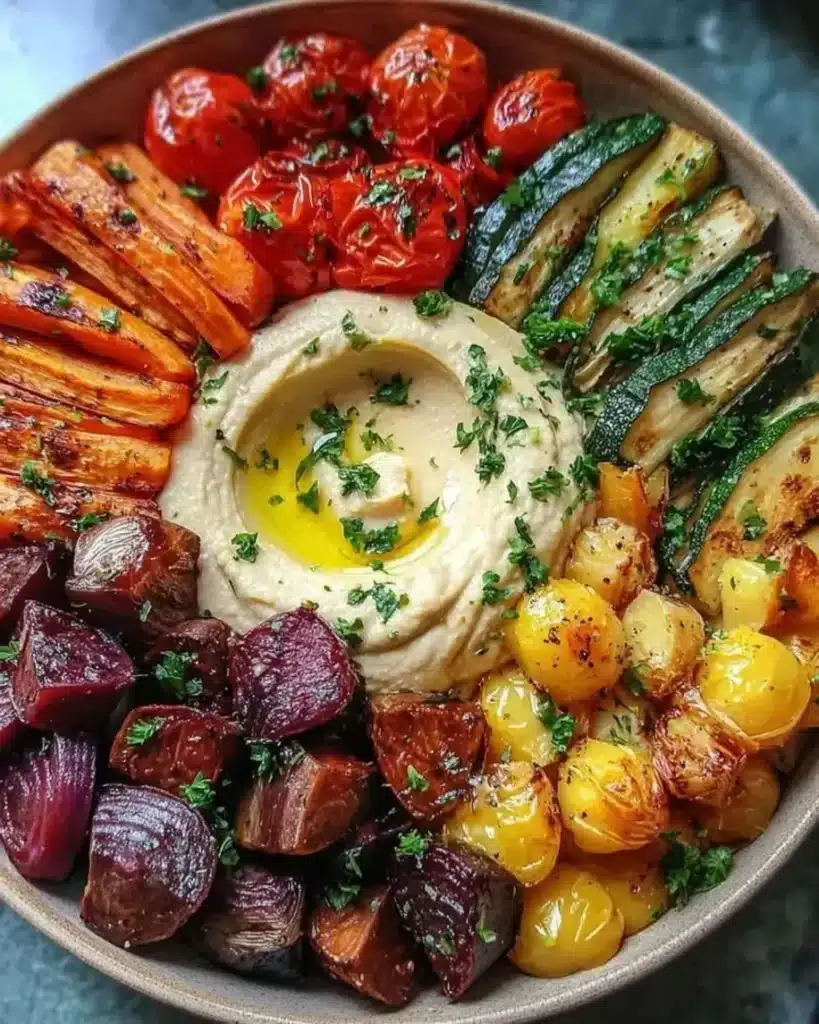
Divide the fresh spinach or mixed greens between two serving bowls. Spoon half of the hummus mixture into each bowl, spreading it over the greens like a soft, savory bed. Pile the roasted vegetables on top, letting them tumble naturally. If using, sprinkle the crumbled feta over everything, then finish with a scattering of fresh parsley. A final grind of black pepper and a tiny drizzle of extra-virgin olive oil are always welcome.
💡 Lalybeth’s Pro Tip: Build the bowl in stages: greens first, then hummus, so the heat of the veggies doesn’t wilt the greens too quickly.
| Step | Action | Duration | Key Visual Cue |
|---|---|---|---|
| 1 | Preheat oven | 5 min | Oven light turns off |
| 2 | Toss vegetables | 5 min | Glossy, evenly coated |
| 3 | Roast vegetables | 20–25 min | Golden-brown edges, tender insides |
| 4 | Mix hummus base | 2 min | Smooth, uniform color |
| 5 | Assemble bowl | 3 min | Layered, colorful presentation |
Serving & Presentation
When I plate this bowl at home, I love using wide, low-rimmed bowls that let all the colors fan out—it’s my French side craving that visual appeal. Start by mounding the greens in the center, then spoon the hummus in a little swoosh using the back of a spoon, just like I learned in a Paris bistro. Pile the roasted vegetables on top with abandon: jewel-toned sweet potato, glossy red pepper, and charred onion tips. A sprinkle of fresh parsley adds that pop of green freshness, and if you’re feeling indulgent, a few extra crumbles of feta or a drizzle of tahini ties it all together. This bowl looks stunning when you bring it to the table family-style, letting everyone build their own perfect bite.
For a weeknight dinner, I’ll often add a side of warm pita bread—the kind I can grab at my corner bodega—to scoop up any leftover hummus. In the summer, a handful of cherry tomatoes halved on the side adds a juicy burst. The bowl is already a balanced meal, but a cup of lentil soup or a simple Moroccan-style carrot salad (grated carrots, orange juice, and cumin) makes it feel like a feast. My NYC friends love it with a crisp hard cider, while I’ll pour a glass of cool mint tea, thinking of my mother’s kitchen in Fez.
| Pairing Type | Suggestions | Why It Works |
|---|---|---|
| Side Dish | Warm pita bread, lentil soup, Moroccan carrot salad | Complements the Mediterranean flavors and adds texture |
| Sauce / Dip | Tahini drizzle, extra-virgin olive oil, harissa yogurt | Adds richness or heat, enhancing the roasted notes |
| Beverage | Moroccan mint tea, crisp hard cider, sparkling water with lemon | Cuts through the richness and cleanses the palate |
| Garnish | Fresh parsley, toasted pine nuts, Aleppo pepper flakes | Provides color contrast and a final flavor bump |
Make-Ahead, Storage & Reheating
Busy New York weeks call for meal prep, and this easy hummus bowl is one of my favorite candidates. I’ll roast the vegetables on a Sunday evening, whip up the hummus mixture, and store everything separately so nothing gets soggy. The high-heat roast means the vegetables maintain their integrity even after a day in the fridge, which is a win when you’re racing out the door. I pack the greens, hummus, and roasted veggies in divided containers and assemble the bowl at work—it’s like my personal lunchtime luxury.
| Method | Container | Duration | Reheating Tip |
|---|---|---|---|
| Refrigerator | Airtight glass container | 3–4 days | Re-roast in a 350°F oven for 5–7 min or microwave for 1 min |
| Freezer | Freezer-safe bag (vegetables only) | Up to 2 months | Thaw overnight, then reheat in a hot skillet or oven |
| Make-Ahead | Divide components in meal-prep boxes | Up to 4 days in fridge | Assemble just before eating; reheat veggies separately |
I’ve found that the hummus mixture actually improves after a day, as the cumin and lemon meld further. Keep it in a small sealed container in the fridge, and stir before spreading. The roasted vegetables can be revived in a dry skillet over medium heat for 2–3 minutes—this brings back some of that initial crispness without adding extra oil. If you’re short on time, a quick microwave zap works too, though the edges won’t be as crisp. For the freshest bowl, store the spinach separately with a paper towel to absorb any moisture.
Variations & Easy Swaps
| Variation | Key Change | Best For | Difficulty Impact |
|---|---|---|---|
| Protein Boost | Add 1 cup roasted chickpeas or shredded rotisserie chicken | Post-workout or hunger-busting meals | Slightly extra roasting time |
| Gluten-Free / Dairy-Free | Omit feta; use certified GF spices | Strict dietary needs | No change |
| Seasonal Twist | Swap zucchini for Brussels sprouts or asparagus | Fall/winter or spring versions | Roasting time may vary |
Protein Boost
When I need this bowl to sustain me after a long run through Central Park, I toss a can of drained chickpeas with a little olive oil and the same spice mix, then roast them on a separate small sheet pan for 15–18 minutes until crunchy. The chickpeas add a satisfying pop of protein and a crispy counterpoint to the creamy hummus. This is a nod to the roasted chickpea snacks my mother used to make in Morocco, spiced with cumin and a pinch of chili. Alternatively, shredded grilled chicken or even flaked salmon can be added for non-vegans—just keep the base the same.
Gluten-Free / Dairy-Free
As written, this bowl is naturally gluten-free if your spices are certified GF. To keep it dairy-free, simply omit the feta or use a plant-based feta alternative—I’ve tested it with Violife’s feta-style block, and it crumbles beautifully with a similar briny bite. The hummus base remains creamy without any dairy, so you won’t miss a thing. If you’re serving to guests with celiac disease, double-check that the hummus is processed in a gluten-free facility; most common brands are safe.
Seasonal Twist
Come autumn, I switch out the zucchini for halved Brussels sprouts that get gloriously charred at 425°F, and I add a few whole garlic cloves to the roast for a mellower, jammy sweetness. In spring, thick asparagus spears take the place of the zucchini—just snap off the woody ends and roast for a slightly shorter time. At the Union Square Greenmarket, I’ll pick up whatever looks best: colorful carrots, turnips, or even cauliflower florets all work with this same method. The key is to keep the vegetable sizes similar for even cooking, a little trick I learned while prepping vegetable platters in Paris.
What vegetables are best for a roasted veggie and hummus bowl?
I always reach for vegetables that roast beautifully and develop deep caramelization at high heat. Sweet potatoes are my number one pick because they get velvety inside and almost candied outside. Bell peppers, zucchini, and red onion are also fantastic—they soften into sweet, tender bites. You can expand with butternut squash, eggplant, cherry tomatoes, or cauliflower. The rule I stick to from my training is to choose vegetables with similar moisture content and cut them uniformly so everything finishes at the same time. Avoid watery vegetables like celery or cucumbers, as they’ll turn mushy. For the best texture, pick firm, fresh produce from your local market, and don’t be afraid to mix colors for a vibrant bowl.
Can I make a roasted veggie and hummus bowl ahead of time for meal prep?
Absolutely—this is one of my favorite meal-prep recipes. I roast the vegetables and mix the hummus base on a Sunday, then store them separately. Keep the roasted vegetables in an airtight container in the fridge for up to 4 days; they reheat wonderfully in a hot skillet or a 350°F oven for a few minutes to crisp back up. The spiced hummus can be prepped up to 5 days ahead and just stirred before using. I pack the fresh spinach separately and assemble the bowl in the morning or at lunchtime so the greens stay crisp. If you want to freeze, only the roasted vegetables go into the freezer—hummus can get grainy, and greens will wilt. This approach means I have a healthy lunch that tastes freshly made, even on my busiest NYC days.
How do you keep roasted vegetables from getting soggy in a hummus bowl?
The number one trick is to roast at a high temperature—425°F—and never overcrowd the baking sheet. I learned in French kitchens that crowding traps steam and leads to soggy vegetables instead of caramelized ones. Spread the veggies in a single layer with a little space between each piece. Also, make sure your vegetables are dry before tossing with oil; any excess moisture will braise them. After roasting, let them rest on the hot sheet for a couple of minutes to drive off residual steam. For an extra crunch, I sometimes pop them under the broiler for the last 2 minutes, watching closely. And always store them separately from the hummus and greens until you’re ready to eat, so the vegetables stay crisp and the greens don’t wilt.
What can I use instead of hummus in a roasted veggie bowl?
If you’re out of hummus or following a different diet, there are plenty of creamy swaps. A thick, plant-based yogurt whisked with lemon and garlic makes a tangy base. You could use mashed avocado with a squeeze of lime, which brings a similar richness. For a protein-packed alternative, try a white bean purée—blend cannellini beans with olive oil, lemon, and a pinch of cumin. In a pinch, even a smear of ricotta or a drizzle of tahini sauce works beautifully. I’ve tested all these versions in my kitchen, and while they change the flavor profile slightly, they still create a luscious bed for those smoky roasted vegetables. Just remember to season whatever base you choose to keep that depth of flavor.
Is this roasted veggie and hummus bowl healthy?
Yes, it’s a nutrient-dense, balanced meal. You’re getting complex carbohydrates from the sweet potato, fiber and vitamins from the variety of colorful vegetables, and healthy fats from the olive oil and hummus. The hummus also provides plant-based protein, and if you add chickpeas or feta, the protein count goes up. A serving clocks in around 450 calories with 20g of fat, 50g of carbs, and 15g of protein, making it filling without being heavy. I love that it’s naturally vegan (if you skip the feta) and gluten-free. Plus, using smoked paprika and spices boosts flavor without extra sodium or sugar—just the way I prefer to cook in my NYC kitchen.
Can I use frozen vegetables for this roasted veggie hummus bowl?
I generally recommend fresh vegetables for roasting because frozen ones release more water and can turn mushy. However, if you’re in a bind, you can use frozen sweet potato cubes or bell pepper strips—just thaw them completely and pat them very dry with clean kitchen towels before tossing with oil and spices. The caramelization won’t be quite as deep, but the flavor will still be good. I tested this once during a snowy NYC winter when I couldn’t get to the market, and it worked well enough; I roasted them at 450°F for a little longer to drive off moisture. For the best texture, stick with fresh, but it’s nice to know there’s a backup.
How can I add more protein to this vegan bowl recipe?
My go-to is roasted chickpeas—they double the plant protein and add a crunchy texture that I adore. Simply drain a can, pat dry, toss with a little olive oil, smoked paprika, and salt, and roast on a separate sheet for about 15–18 minutes. You can also stir edamame into the roasted vegetable mix or top with hemp seeds or toasted pumpkin seeds. If you eat animal products, grilled chicken, shrimp, or a soft-boiled egg are all excellent. I often poach an egg and let the yolk cascade over the hummus—it’s a little nod to my French bistro training and makes the bowl feel extra luxurious.
What’s the best way to reheat the roasted vegetables?
The oven or a dry skillet gives the best results. I pop the vegetables onto a baking sheet and re-roast at 350°F for 5–7 minutes, which revives their exterior crispness. A skillet over medium heat works in about 2–3 minutes—just stir occasionally so they don’t burn. The microwave is the quickest option (1 minute on high), but you’ll lose that caramelized edge. Avoid adding extra oil during reheating, as the vegetables already have enough. I usually reheat only the amount I need straight from the fridge, and then build my bowl with fresh hummus and greens for the best contrast.
Can I make this bowl spicy?
Yes, and I often do! A pinch of cayenne pepper added to the spice mix, or a drizzle of harissa over the finished bowl brings a Moroccan heat that I grew up with. You can also stir a teaspoon of harissa paste into the hummus for a warm, smoky kick. Aleppo pepper flakes are another favorite—they add a fruity, mild heat that doesn’t overwhelm. Just remember to start with a little and taste, because you can always add more, but you can’t take it out. My mother used to say that spice should dance on the tongue, not burn it, so I follow that wisdom.
Is this recipe good for weight loss?
This bowl can certainly be part of a weight-loss plan because it’s high in fiber and plant-based protein, which keep you full for longer. At around 450 calories per serving with a good balance of macros, it’s a wholesome meal. To lighten it further, use a bit less olive oil when roasting (1 ½ tablespoons total) and opt for a lower-fat hummus, or halve the hummus amount. Loading up on more greens adds volume without many calories. I’ve served it to clients in NYC who are watching their intake, and they appreciate that it doesn’t taste like “diet food.” It’s satisfying and colorful, which makes healthy eating feel like a treat.
Share Your Version!
I truly believe that the best part of cooking is seeing how you make a recipe your own. Did you toss in some extra Moroccan spices from that shop in Brooklyn? Or maybe you piled on the feta like I do? Either way, I want to hear about it. Drop a star rating and a comment below—it helps other home cooks find this roasted veggie hummus bowl and gives me a little boost on days when the NYC hustle feels endless. Your feedback is what keeps my kitchen buzzing.
And don’t be shy on social media! Snap a photo of your bowl (while the vegetables are still warm and glistening) and tag me @cookingwithlalyta on Instagram or Pinterest. I repost my favorites, and it’s such a joy to see your beautiful creations. For this recipe, I’d especially love to know: what vegetable did you swap in, and how did the high-heat roast work for you? Let’s swap stories like we’re sitting across a table in my little Manhattan apartment.
From my NYC kitchen to yours — I hope this recipe brings as much warmth to your table as it does to mine. — Lalybeth 🧡
Love This Recipe? Save It to Pinterest!
If you enjoyed this Roasted Veggie and Hummus Bowl recipe, don’t let it get lost in your browser tabs! 😄 Pin it now so you can find it again anytime — and explore hundreds more tried-and-tested recipes waiting for you on my Pinterest boards.
👉 Follow Lalybeth on Pinterest @cookingwithlalyta
📌 Pin this recipe · 🔁 Re-pin your favorites · 💬 Tag me when you make it — I love seeing your creations!
Did You Whip Up This Bowl? Let’s Chat!
I’d love to know if you added your own twist—maybe a sprinkle of za’atar or a fried egg on top? Leave a star rating and comment below, and don’t forget to join my email list for more quick, healthy bowls direct from my NYC kitchen. Your shares and pins help keep this little blog alive!
— Lalybeth 🧡
Roasted Veggie and Hummus Bowl
- Total Time: 40 minutes
- Yield: 2 1x
Description
A hearty and wholesome bowl featuring roasted seasonal vegetables served over a bed of creamy hummus. Perfect for a quick lunch or dinner.
Ingredients
- For the roasted vegetables:
- 1 large sweet potato, peeled and cubed
- 1 red bell pepper, sliced
- 1 zucchini, sliced into half-moons
- 1 red onion, cut into wedges
- 2 tablespoons olive oil
- 1 teaspoon smoked paprika
- 1/2 teaspoon garlic powder
- Salt and pepper to taste
- For the hummus base:
- 1 cup prepared hummus (store-bought or homemade)
- 1 tablespoon lemon juice
- 1/2 teaspoon cumin
- For serving:
- 2 cups fresh spinach or mixed greens
- 1/4 cup crumbled feta cheese (optional)
- Fresh parsley for garnish
Instructions
- Preheat the oven to 425°F (220°C).
- In a large bowl, toss the sweet potato, bell pepper, zucchini, and red onion with olive oil, smoked paprika, garlic powder, salt, and pepper until evenly coated.
- Spread the vegetables in a single layer on a baking sheet lined with parchment paper.
- Roast for 20-25 minutes, stirring halfway through, until tender and slightly caramelized.
- While the vegetables roast, prepare the hummus base: In a small bowl, stir together the hummus, lemon juice, and cumin until smooth.
- To assemble, divide the fresh spinach or greens between two bowls. Spread the hummus mixture over the greens.
- Top with the roasted vegetables, crumbled feta (if using), and garnish with fresh parsley.
- Serve immediately.
Notes
This bowl is highly customizable. Try adding chickpeas or grilled chicken for extra protein. If using homemade hummus, adjust thickness with a little olive oil or water.
- Prep Time: 15 minutes
- Cook Time: 25 minutes
- Method: Main Course
- Cuisine: Mediterranean
Nutrition
- Calories: 450
- Sugar: 10g
- Fat: 20g
- Carbohydrates: 50g
- Protein: 15g
Tried This Recipe? Leave a Comment!
Did you make this recipe? I’d love to hear how it turned out! Please leave a comment and a rating below. Your feedback helps other home cooks and supports cookingwithlalyta.com!
For more delicious inspiration, follow me on Pinterest!