Table of Contents
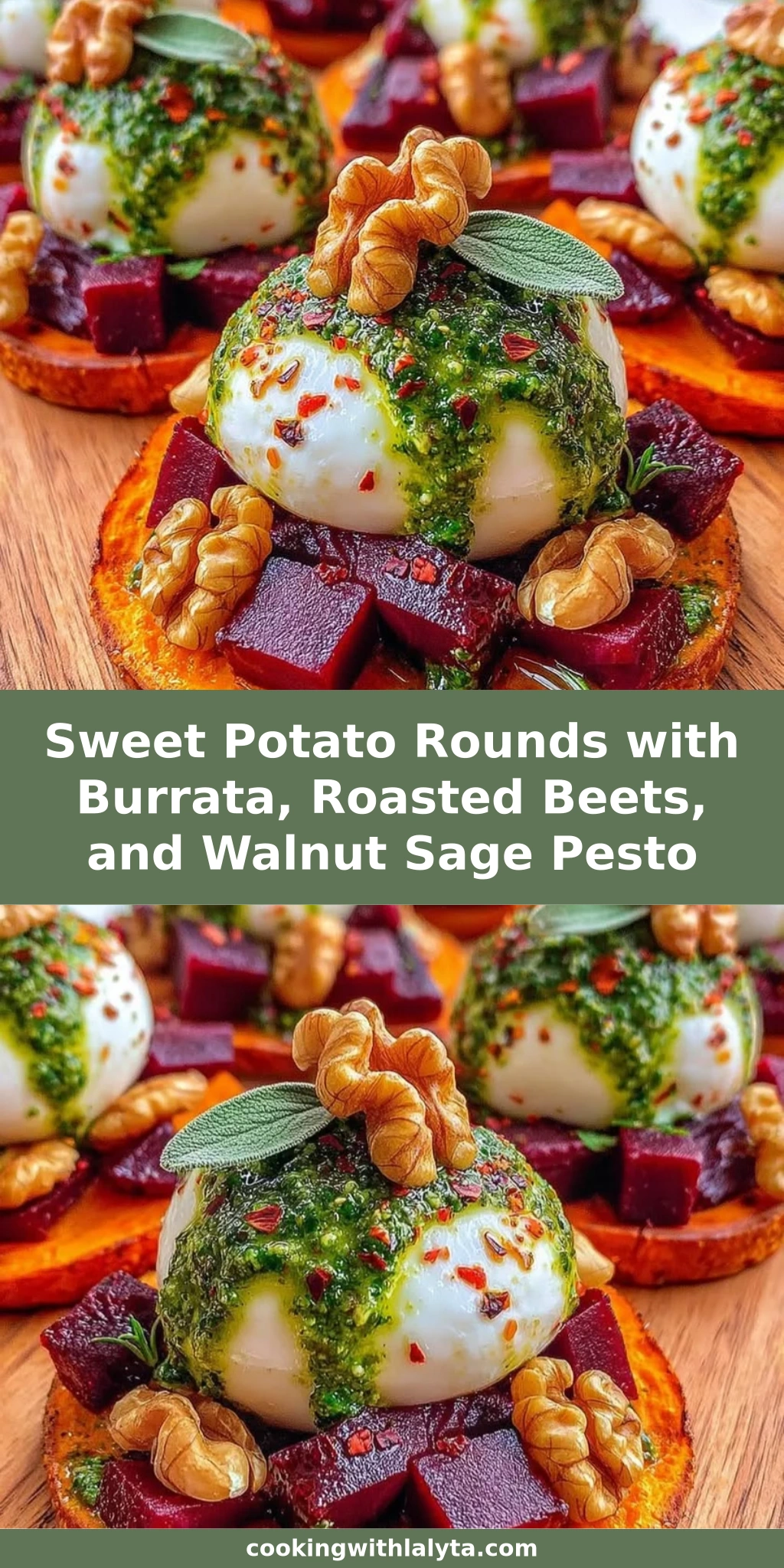
Sweet Potato Rounds with Burrata, Roasted Beets, and Walnut Sage Pesto – A Showstopping Fall Appetizer
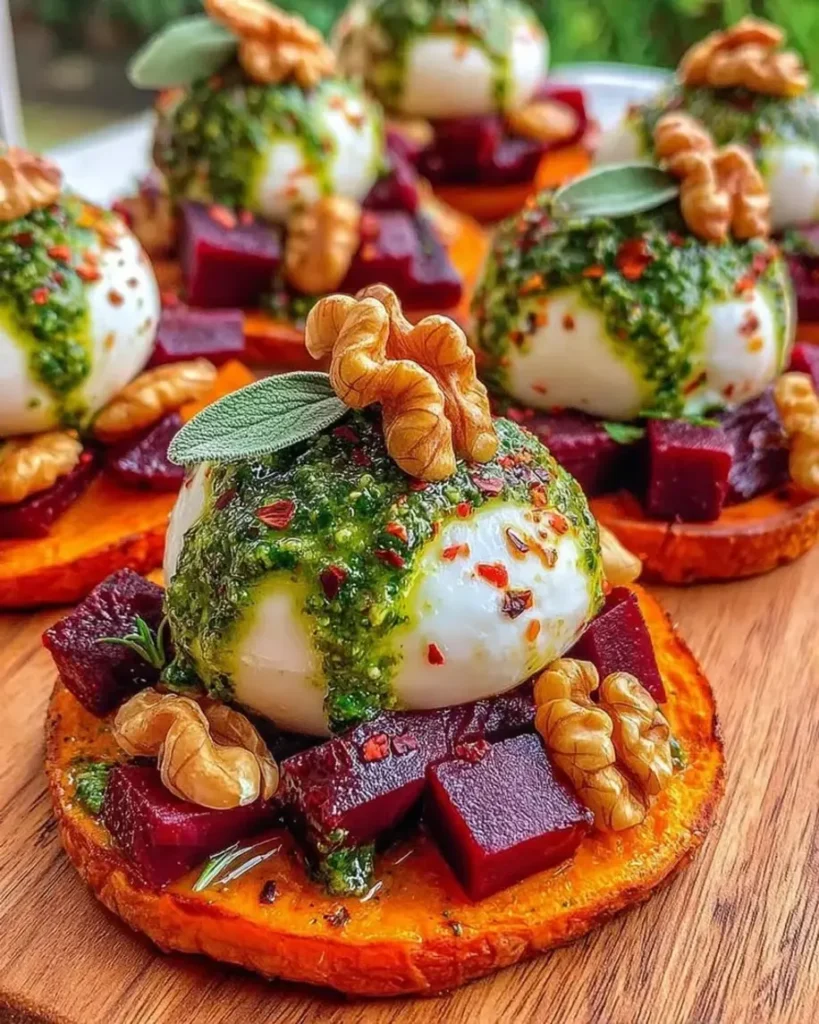
I still remember the first time I brought these sweet potato rounds with burrata to a dinner party in my tiny Upper West Side apartment. My friends — a mix of New Yorkers who had seen it all, culinarily speaking — stopped mid-conversation when I set the platter down. The jewel-toned roasted beets glistening against creamy white burrata, the emerald drizzle of walnut sage pesto catching the light… it was one of those moments when you know you’ve created something truly special. This roasted beet and burrata appetizer was born from my Paris training, where I learned that the most memorable dishes come from layering textures and temperatures with intention.
What makes these sweet potato rounds truly irresistible is the interplay of warm, caramelized sweet potato against cool, milky burrata — a contrast I first fell in love with while staging at a tiny bistro in the Marais. The sweet potato rounds act as a sturdy, slightly chewy base with deeply roasted edges that taste almost like candy. Then comes the earthy sweetness of roasted beets, their flesh tender and concentrated from a long, slow roast wrapped in foil. The burrata adds that signature creaminess — when you cut into each piece, the stracciatella interior spills out like liquid silk. And the walnut sage pesto? It’s the bold, herbaceous punch that ties everything together, with toasted walnuts providing a nutty crunch that reminds me of the nutty dukkah my mother used to sprinkle over roasted vegetables in our kitchen back in Morocco.
Here’s the thing: I’ve tested sweet potato appetizer recipes countless times over my 20 years in professional kitchens, and most fall flat — literally. Sweet potato rounds either turn mushy and collapse under their toppings, or they dry out and become leathery. My technique, which I’ll share in detail below, guarantees rounds that stay firm and golden on the outside with a tender interior. I’ll also show you the one common mistake that causes beets to bleed their color into the burrata (spoiler: it has to do with assembly order), and my secret for a walnut sage pesto recipe that stays vibrantly green even if you make it a day ahead. Whether you’re looking for fall appetizer recipes to impress at Thanksgiving or just want a light dinner that feels elegant, this dish delivers.
Why This Sweet Potato Rounds with Burrata Recipe Is the Best
The Flavor Secret: Most walnut sage pesto recipes lean too heavily on the sage, which can taste medicinal if you’re not careful. My version, honed during my sauce-making days in Paris, balances the woodsy sage with bright lemon juice and nutty Parmesan so the herb shines without overwhelming. I also toast the walnuts in a dry pan for exactly 90 seconds before blending — it’s a tiny step that unlocks their oils and adds a deep, almost buttery dimension to the pesto. This is the same technique my mother used for the walnut-based sauces in our Moroccan kitchen, where toasting nuts was non-negotiable. Combined with the natural sweetness of roasted sweet potato rounds and the earthy beets, every bite has four distinct flavor notes: sweet, savory, creamy, and herbaceous.
Perfected Texture: The biggest challenge with any sweet potato appetizer is achieving rounds that hold their shape. Through trial and error across dozens of dinner parties, I discovered that slicing the sweet potatoes to exactly 1/2-inch thickness — no thinner, no thicker — creates the ideal foundation. At 400°F with a mid-roast flip, the outside caramelizes into a slightly crisp edge while the inside turns velvety and tender. If your rounds are too thin, they’ll buckle under the weight of the beets and burrata. Too thick, and they stay starchy in the center. The beets get their perfect texture from a foil-wrapped roast that steams them gently, concentrating their natural sugars without drying them out. And the burrata? I tear it by hand rather than slicing it — the irregular pieces nestle into the beet slices beautifully and create little pockets for the pesto to pool.
Foolproof & Fast: Even if you’ve never roasted a beet in your life, this recipe walks you through every step with clear visual cues. The sweet potatoes and beets roast at the same temperature, so you can do them simultaneously if you have the oven space. The pesto comes together in under two minutes in a food processor. Assembly takes maybe five minutes, making this an ideal fall appetizer recipe for entertaining — you can roast everything ahead of time and assemble just before guests arrive. I’ve also included detailed substitution notes, so whether you need a dairy-free option or want to switch up the nuts, you’ll know exactly how the final dish will change.
Sweet Potato Rounds with Burrata Ingredients
I source most of these ingredients from the Union Square Greenmarket, which is my Saturday morning ritual here in NYC. In the fall, you’ll find the most stunning jewel-toned beets — look for bunches with fresh, perky greens still attached, which tells you they were recently harvested. The sweet potatoes I buy from a farmer who grows these gorgeous Garnet varieties with deep orange flesh that caramelizes beautifully. For the burrata, I make a special trip to Di Palo’s in Little Italy — their house-made burrata is so fresh it practically weeps milk when you cut into it. But honestly, any good-quality burrata from your local grocery store will work beautifully here. Just avoid the ones that feel overly firm, which means they’ve been sitting too long.
Ingredients List
- 2 large sweet potatoes, sliced into 1/2-inch rounds
- 3 tbsp olive oil
- 1 tsp salt
- 1/2 tsp black pepper
- 2 medium beets, roasted and sliced
- 4 oz burrata cheese
- For the walnut sage pesto:
- 1 cup walnuts
- 1/2 cup fresh sage leaves
- 1/3 cup grated Parmesan
- 1/4 cup olive oil
- 2 tbsp lemon juice
- Salt to taste
Ingredient Spotlight
Sweet Potatoes: I specifically recommend Garnet or Jewel varieties for this sweet potato appetizer because they have higher moisture content and more natural sugar than the paler Hannah or Japanese sweet potatoes. That sugar caramelizes during roasting, creating those irresistible golden-brown edges that contrast so beautifully with the creamy toppings. When shopping, choose sweet potatoes that are firm and heavy for their size with smooth, unblemished skin. Avoid any with soft spots or sprouts. If you can only find Beauregard sweet potatoes (the most common US grocery store variety), they work just fine — the difference is subtle. Do not substitute with white potatoes, as they lack the sweetness that balances the earthy beets and robust pesto.
Burrata: Burrata is fresh mozzarella’s luxurious cousin — a pouch of mozzarella filled with cream and soft curds called stracciatella. When selecting burrata at the store, look for balls that feel plump and slightly soft, not firm. Check the expiration date and buy the freshest one available. If you substitute fresh mozzarella, you’ll lose that creamy interior, so I recommend letting it come to room temperature and tearing it into small pieces to mimic the soft texture. Ricotta can work in a pinch, but it won’t hold its shape as well — spoon small dollops and serve immediately. The flavor will be milder and less tangy, so you might want to add a tiny pinch of flaky salt on top.
Walnuts: Walnuts form the backbone of this walnut sage pesto recipe, and their quality matters more than you might think. I buy raw walnuts (not roasted or salted) and toast them myself — pre-toasted nuts often have stale oils that can taste bitter. At the grocery store, look for walnut halves that are uniform in color without any dark spots or shriveling. Store them in the freezer if you don’t use them often; their high oil content makes them go rancid quickly at room temperature. If you need to substitute, pecans offer a similar buttery richness, while almonds create a slightly sweeter, firmer pesto. Pine nuts are traditional for classic pesto but will make the sage flavor more dominant — use them only if you’re a serious sage lover.
| Original Ingredient | Best Substitution | Flavor / Texture Impact |
|---|---|---|
| Sweet Potatoes (Garnet/Jewel) | Beauregard sweet potatoes | Slightly less sweet but same texture; still excellent |
| Burrata (4 oz) | Fresh mozzarella, torn | Creaminess reduced; still mild and pleasant |
| Walnuts (raw) | Pecans or almonds | Pecans: similar richness; almonds: firmer, sweeter pesto |
| Fresh Sage | Half sage, half flat-leaf parsley | Milder herbaceous note; still vibrant green |
How to Make Sweet Potato Rounds with Burrata — Step-by-Step
This recipe moves in three parallel tracks — sweet potatoes, beets, and pesto — but I promise it all comes together easily. If you’re like me and enjoy having your oven work double-duty, you can roast the sweet potatoes and beets at the same time. The pesto takes literally two minutes in the food processor. Let’s walk through each step together.
Step 1: Roast the Sweet Potatoes
Preheat your oven to 400°F (200°C) and position a rack in the middle. Wash and dry two large sweet potatoes — no need to peel them; the skin adds fiber and helps the rounds hold their shape. Slice them crosswise into rounds exactly 1/2-inch thick. Consistency is key here: if some rounds are thinner, they’ll cook faster and potentially burn. I use a ruler for the first slice, then use that as my guide for the rest — a little chef’s trick I picked up in Paris. Toss the rounds in a large bowl with 3 tablespoons of olive oil, 1 teaspoon of salt, and 1/2 teaspoon of black pepper, making sure every surface is coated. Arrange them in a single layer on a baking sheet — no overlapping, or they’ll steam instead of roast. Roast for 20-25 minutes, flipping each round carefully with a spatula at the 12-minute mark. You’re looking for golden-brown edges and a tender center that yields easily when pierced with a fork. If your oven runs hot, check at 18 minutes.
💡 Lalybeth’s Pro Tip: For sweet potato rounds that stay firm rather than going mushy, don’t crowd the baking sheet. I use two sheets if needed, rotating them between racks halfway through. The space between rounds allows moisture to evaporate rather than steam the potatoes, which is what causes that dreaded sogginess. Also, resist the urge to flip them more than once — each flip disrupts the caramelization process on the surface.
Step 2: Roast the Beets
While the sweet potatoes are roasting — or ahead of time, if you’re prepping — wrap two medium beets individually in aluminum foil, sealing the edges tightly. Place them directly on the oven rack (or on a small baking sheet to catch any drips) and roast at the same 400°F for 45-60 minutes. The beets are done when a knife slides through the foil and into the beet with zero resistance — it should feel like cutting through room-temperature butter. No resistance means they’re perfectly tender. If you feel even a slight crunch or firmness, give them another 10 minutes. Once done, let them cool until you can handle them, then use a paper towel to gently rub off the skins — they should slip right off. Slice the peeled beets into rounds about 1/4-inch thick, matching the diameter of your sweet potato rounds as closely as possible.
⚠️ Common Mistake to Avoid: Dropping the beet roasting time short because you’re in a rush. Undercooked beets taste starchy and earthy in an unpleasant way, and they’ll be too firm to cut cleanly. Also, never peel beets before roasting — the skin acts as a protective barrier that keeps all the color and nutrients inside. Peeling raw beets also stains your hands and cutting board a deep magenta that takes days to fade (ask me how I know).
Step 3: Make the Walnut Sage Pesto
While everything roasts, make the walnut sage pesto. First, toast 1 cup of raw walnuts in a dry skillet over medium heat for about 90 seconds, shaking the pan frequently. You’ll know they’re ready when you can smell their nutty aroma and they’ve turned a shade or two darker. Immediately transfer them to a plate to cool — if you leave them in the hot pan, they’ll continue toasting and potentially burn. In a food processor, combine the cooled walnuts, 1/2 cup fresh sage leaves (packed lightly — don’t cram them in), 1/3 cup grated Parmesan, 2 tablespoons of lemon juice, and a pinch of salt. Pulse a few times to break everything down, then with the motor running, drizzle in 1/4 cup of olive oil until the pesto is smooth but still has some texture. Taste and adjust — more lemon if you want brightness, more salt if it feels flat. The pesto should be vibrant green, intensely aromatic, and spoonable but not runny.
💡 Lalybeth’s Pro Tip: To keep your pesto brilliantly green (and prevent that sad brown oxidation), blanch the sage leaves in boiling water for 10 seconds, then shock them in ice water before blending. This sets the chlorophyll and keeps the color vibrant for days. I learned this trick from a chef in Paris who used it for basil pesto, and it works beautifully with sage too. If you’re making the pesto ahead, float a thin layer of olive oil on top before covering — it creates an airtight seal.
Step 4: Assemble the Rounds
Now for the fun part. Arrange the roasted sweet potato rounds on a serving platter — I like using a large wooden board or a white ceramic platter that makes the colors pop. Place one slice of roasted beet on top of each sweet potato round, centering it so you can see the orange sweet potato peeking out around the edges. Tear the burrata into small, irregular pieces with your hands (I find this more rustic and appealing than a knife cut) and nestle a piece onto each beet slice. Drizzle each round generously with the walnut sage pesto — about a teaspoon per round, but don’t overthink it. If you have extra pesto, serve it in a small bowl on the side for dipping. Finish with a tiny pinch of flaky sea salt and a crack of black pepper. Serve immediately while the sweet potatoes are still slightly warm and the burrata is cool and creamy.
⚠️ Common Mistake to Avoid: Assembling the rounds while the beets are still warm. Warm beets will cause the burrata to melt and release its whey, creating a watery puddle on the platter that dilutes the pesto and makes the sweet potato base soggy. Let the beets cool completely to room temperature before assembling. This is also why I tear the burrata rather than slice it — smaller pieces warm up less from the residual heat of the beets.
| Step | Action | Duration | Key Visual Cue |
|---|---|---|---|
| 1 — Roast Sweet Potatoes | Toss & arrange on sheet | 20-25 min | Golden-brown edges, fork-tender |
| 2 — Roast Beets | Wrap in foil, roast whole | 45-60 min | Knife slides through with no resistance |
| 3 — Make Pesto | Toast walnuts, blend all | 5 min | Smooth, vibrant green, spoonable |
| 4 — Assemble | Layer beet, burrata, pesto | 5-7 min | All components at room temp or cooler |
Serving & Presentation
When I host friends in my NYC apartment, I arrange these sweet potato rounds with burrata on a long rectangular platter — the kind my mother would have used for serving Moroccan mezze. I place them in neat rows, alternating the direction of the beet slices slightly so the magenta catches the light from different angles. A few extra torn sage leaves scattered over the top add a rustic, garden-fresh feel, and I always keep a small ramekin of extra walnut sage pesto on the side because someone always asks for more. These are best served at room temperature — warm enough that the sweet potato’s caramelized notes come through, but cool enough that the burrata holds its shape.
For a full dinner party spread, I love pairing these fall appetizer rounds with a simple arugula salad dressed in lemon and olive oil — the peppery greens cut through the richness beautifully. A glass of chilled Prosecco or a dry Riesling complements the sweet-savory balance without overwhelming it. If you’re serving these as a light dinner (and I often do, especially on busy weeknights), add a bowl of lentil soup on the side — it’s a combination that reminds me of the cozy, vegetable-forward meals my mother made in Morocco, where multiple small plates always graced the table.
| Pairing Type | Suggestions | Why It Works |
|---|---|---|
| Side Dish | Arugula salad, lentil soup, crusty bread | Peppery greens and earthy lentils balance richness |
| Sauce / Dip | Extra pesto, balsamic glaze, lemon aioli | Acidity cuts through the creamy burrata |
| Beverage | Prosecco, dry Riesling, sparkling water with lemon | Bubbles and slight sweetness match the sweet potato |
| Garnish | Flaky sea salt, fried sage leaves, pomegranate arils | Adds crunch, color, and a pop of brightness |
Make-Ahead, Storage & Reheating
In my busy NYC life, I’m all about smart meal prep, and this sweet potato appetizer is wonderfully flexible. I often roast the beets and sweet potatoes on a Sunday afternoon while I’m doing laundry and catching up on emails — the oven does all the work. The pesto can be made up to three days ahead and stored in the fridge. When friends text that they’re coming over (as New Yorkers do, often with 45 minutes’ notice), I just pull everything from the fridge, let it come to room temperature, and assemble. The key is keeping each component separate until you’re ready to serve — this prevents the sweet potato rounds from absorbing moisture from the beets and burrata.
| Method | Container | Duration | Reheating Tip |
|---|---|---|---|
| Refrigerator | Airtight container, components separate | 3-4 days | Reheat sweet potatoes in 350°F oven 5-7 min; assemble fresh |
| Freezer | Freezer bag (pesto only) | Up to 3 months | Thaw pesto overnight in fridge; stir before using |
| Make-Ahead | Separate containers for each component | Up to 2 days in advance | Assemble just before serving; bring to room temp first |
One thing I’ve learned the hard way: don’t assemble these rounds and then refrigerate them. The sweet potatoes will absorb moisture from the beets and burrata, turning gummy and losing their lovely roasted texture. If you have leftovers that are already assembled, eat them within a few hours — the flavors will hold up at room temperature for a party, but overnight refrigeration will compromise the texture. The pesto, however, freezes beautifully. I often make a double batch and freeze half in a small glass jar with a thin layer of olive oil on top. On a busy weeknight, a spoonful of that pesto elevates everything from scrambled eggs to grilled chicken.
To reheat the sweet potato rounds, I skip the microwave entirely — it makes them steamy and soft. Instead, I place them back on a baking sheet and warm them in a 350°F oven for about 5-7 minutes, just until they’re heated through and the edges re-crisp slightly. Let them cool for a couple of minutes before assembling so the burrata doesn’t melt. The beets should be served at room temperature straight from the fridge; if they’re too cold, let them sit on the counter for 15 minutes before slicing.
Variations & Easy Swaps
| Variation | Key Change | Best For | Difficulty Impact |
|---|---|---|---|
| Goat Cheese & Pistachio Pesto | Swap burrata for goat cheese; pistachios for walnuts | Tangy flavor lovers; holiday parties | No change — same technique |
| Dairy-Free Cashew Cream | Replace burrata with cashew cream; omit Parmesan | Dairy-free and vegan guests | Soaking cashews adds 4 hours (passive) |
| Winter Citrus & Pomegranate | Add blood orange segments and pomegranate arils | Thanksgiving and winter gatherings | No change — just an extra garnish |
Goat Cheese and Pistachio Pesto Variation
This variation takes the roasted beet and burrata appetizer in a tangier, more rustic direction. Instead of burrata, use a soft, spreadable goat cheese — the kind that comes in a log, not the crumbly pre-crumbled stuff. Let it come to room temperature so it’s easy to dollop. For the pesto, swap the walnuts for shelled pistachios (I love the bright green Sicilian ones from my local Middle Eastern grocer in Brooklyn) and keep the sage — but reduce it to 1/3 cup and add 2 tablespoons of fresh mint leaves for a Moroccan-inspired twist that reminds me of the herb-packed salads my mother made. The mint brightens the dish and pairs beautifully with the tangy goat cheese. A drizzle of honey over the top right before serving adds a sweet counterpoint that makes this version feel especially festive for holiday gatherings.
Dairy-Free Cashew Cream Variation
I developed this dairy-free version for a close friend who can’t tolerate lactose, and honestly, I find myself making it even when she’s not coming over. The “burrata” effect comes from cashew cream — soak 1 cup of raw cashews in water for at least 4 hours (or quick-soak in boiling water for 20 minutes), then drain and blend with 3 tablespoons of water, 1 tablespoon of lemon juice, a pinch of salt, and 1 tablespoon of nutritional yeast for that cheesy depth. The result is surprisingly creamy and rich. For the pesto, simply omit the Parmesan and add an extra tablespoon of nutritional yeast plus a small clove of garlic. The texture will be slightly thicker, so thin it with a teaspoon of water if needed. This version is completely plant-based but still delivers the creamy, savory notes that make the original so satisfying.
Winter Citrus and Pomegranate Variation
When the Union Square Greenmarket is bursting with citrus in December and January, I add a seasonal twist to these sweet potato rounds. After assembling the rounds with beet, burrata, and pesto as usual, I tuck a few segments of blood orange or Cara Cara orange alongside the burrata — their jewel tones match the beets beautifully. Then I scatter a handful of pomegranate arils over the entire platter. The burst of sweet-tart juice from the pomegranate seeds cuts through the richness in a way that feels almost celebratory. A sprinkle of toasted pumpkin seeds adds an extra autumnal crunch. This version has become my go-to for Thanksgiving appetizers and Christmas cocktail parties — it looks stunning on a buffet table and the colors are pure holiday magic.
How do you roast sweet potato rounds so they stay firm and don’t get mushy?
The secret to firm sweet potato rounds comes down to three things: thickness, spacing, and temperature. First, slice your sweet potatoes exactly 1/2-inch thick — any thinner and they’ll collapse under the toppings; any thicker and the center stays starchy. Arrange the rounds in a single layer with at least half an inch of space between each piece; crowding causes steaming, which leads to sogginess. Roast at a high temperature (400°F) and flip only once at the 12-minute mark. The single flip allows the surface to develop a proper caramelized crust. Also, pat the rounds dry with a paper towel before tossing them in oil — excess surface moisture creates steam. I’ve tested this technique dozens of times in my NYC kitchen, and it consistently produces rounds that are golden-edged and sturdy enough to hold beets, burrata, and a generous drizzle of walnut sage pesto without buckling.
Can I substitute burrata with fresh mozzarella or ricotta in this recipe?
Yes, you can, though the experience will be slightly different. Fresh mozzarella is the closest substitute — it has a similar mild, milky flavor and soft texture. I recommend tearing it into small, irregular pieces rather than slicing, which helps mimic burrata’s rustic look and creates nooks for the pesto to pool. The main difference is that mozzarella lacks burrata’s creamy stracciatella interior, so the overall dish will be less rich. If you use ricotta, choose a high-quality, whole-milk version and spoon small dollops onto the beets just before serving. Ricotta is looser and won’t hold its shape as well, so it’s best for immediate serving. In both cases, I add a tiny pinch of flaky sea salt directly on the cheese to compensate for burrata’s naturally saltier, creamier profile. I tested all three options side by side in my kitchen, and while burrata is the star, mozzarella makes a perfectly lovely stand-in.
How long should I roast the beets to get them tender but not overcooked?
For medium-sized beets (about the size of a tennis ball), roast them wrapped in foil at 400°F for 45 to 60 minutes. The exact time depends on their size and freshness — larger, older beets take longer. The most reliable test is to insert a knife through the foil into the center of the beet; it should slide through with absolutely no resistance, feeling like room-temperature butter. If you feel even the slightest crunch or firmness, give them another 10 to 15 minutes and test again. Avoid the temptation to unwrap and check too frequently, as this releases the steam that helps them cook evenly. Overcooked beets become mushy and watery, losing their concentrated sweetness and deep magenta color. If you’re roasting beets ahead of time for this roasted beet and burrata appetizer, undercook them slightly (pull them at 40 minutes) since they’ll continue to soften as they cool in the foil.
What main dish pairs well with sweet potato rounds topped with burrata and beets?
These sweet potato rounds with burrata shine as a starter before roasted chicken, seared salmon, or a hearty lentil stew. My personal favorite pairing is a simple roast chicken with lemon and thyme — the bright, herbaceous notes echo the sage in the pesto while the chicken’s savory depth balances the sweet potatoes and beets. For a vegetarian main, a wild mushroom risotto makes an elegant companion; the earthy mushrooms and creamy rice complement without competing. If you’re serving these as part of a larger spread, they pair beautifully with a grain salad (farro or quinoa with dried cranberries and toasted pecans) and a simple green salad. For a casual weeknight, I often serve four or five of these rounds per person as a light dinner alongside a bowl of spiced lentil soup — a combination inspired by the multi-plate meals I grew up with in Morocco.
Can I make the walnut sage pesto ahead of time?
Absolutely — and I often do. The walnut sage pesto can be made up to three days in advance and stored in an airtight container in the refrigerator. To prevent oxidation (which turns the bright green pesto brown), I use a trick I learned in Paris: float a thin layer of olive oil on top of the pesto before sealing the container. This creates an airtight barrier that keeps the color vibrant. When you’re ready to use it, stir the oil back in. For longer storage, freeze the pesto in a small glass jar or an ice cube tray — individual frozen cubes thaw in minutes and are perfect for weeknight meals. Just note that the garlic-free version in this recipe stays fresh longer than traditional basil pesto, since sage is a hardier herb. If you blanch the sage leaves before blending (10 seconds in boiling water, then ice water), the pesto will stay brilliantly green for up to five days.
Why do my roasted beets bleed their color onto the burrata?
Beet bleeding happens when the beets are still warm during assembly or when they haven’t been properly dried after roasting. As beets cool, they release moisture that carries their vibrant magenta pigment — if that moisture touches the burrata, it creates pink streaks that muddy the presentation. The fix is simple: after peeling and slicing your roasted beets, lay the slices on a paper towel-lined plate and gently pat them dry on both sides. Let them cool completely to room temperature before assembling — I usually roast the beets first, then work on the sweet potatoes and pesto while the beets cool. Also, place the beet slice directly on the sweet potato round (not on the burrata), so any residual moisture is absorbed by the sweet potato rather than the cheese. This keeps the burrata pristine white and the visual contrast sharp.
Are sweet potato rounds healthy?
Yes, sweet potato rounds are naturally nutrient-dense and make a wholesome base for appetizers. Sweet potatoes are packed with beta-carotene (which your body converts to vitamin A), fiber, and potassium. One medium sweet potato provides over 400% of your daily vitamin A needs. The beets add folate, manganese, and nitrates that support healthy blood flow. Walnuts contribute heart-healthy omega-3 fatty acids, while the olive oil in the pesto provides monounsaturated fats. Burrata adds protein and calcium, though it’s the richest component — which is why the portion is small (about 1 ounce per serving). At approximately 450 calories per serving, this fall appetizer recipe is satisfying and nutrient-rich. For a lighter version, use half the burrata or substitute with a dollop of Greek yogurt mixed with a touch of cream.
Can I use pre-cooked beets from the grocery store?
You can, and I’ve tested this shortcut multiple times when my NYC schedule gets hectic. Pre-cooked vacuum-sealed beets (found in the refrigerated produce section of most grocery stores) work in a pinch and cut the prep time significantly. However, the flavor is noticeably less sweet and concentrated than beets you roast yourself — the pre-cooked versions are typically steamed, which dilutes their natural sugars. If you go this route, pat the beets very dry before slicing and consider roasting them for an additional 10 minutes at 400°F to concentrate their flavor. Avoid canned beets entirely for this recipe; their texture is too soft and they often have a metallic taste from the canning liquid that clashes with the delicate burrata and fresh pesto. For the best results with this roasted beet and burrata appetizer, roasting your own beets is worth the minimal hands-on effort.
What can I do with leftover walnut sage pesto?
This walnut sage pesto recipe is incredibly versatile, and I always make extra. Toss it with hot pasta (especially pappardelle or orecchiette) for an instant weeknight dinner — the residual heat from the pasta warms the pesto without cooking it. Spread it on crostini or grilled bread as a base for bruschetta. Swirl a spoonful into scrambled eggs or an omelet for an herby breakfast upgrade. It’s fantastic dolloped onto roasted winter vegetables like butternut squash, carrots, or parsnips. You can also thin it with a little extra olive oil and lemon juice to make a vibrant salad dressing for sturdy greens like kale or arugula. One of my favorite tricks from my Paris training: stir a spoonful into Greek yogurt for an instant dip or sandwich spread that tastes elegant but takes seconds.
How far in advance can I prepare this fall appetizer for a party?
You can prepare all the components of this sweet potato appetizer up to two days in advance — just keep them separate until assembly time. Roast the sweet potato rounds and beets, let them cool completely, and store them in separate airtight containers in the refrigerator. Make the walnut sage pesto and store it with a thin oil layer on top. On the day of your party, bring everything to room temperature (this takes about 30-45 minutes on the counter), then assemble the rounds just before your guests arrive. I recommend assembling no more than 30 minutes before serving; the rounds hold up beautifully at room temperature for up to two hours. This make-ahead approach is my go-to for NYC dinner parties, where counter space is precious and I want to enjoy my own party instead of being stuck in the kitchen.
Share Your Version!
I truly believe recipes come alive when you make them your own, and I’d love nothing more than to see your take on these sweet potato rounds with burrata. Did you try the goat cheese and pistachio twist? Did you add a sprinkle of something unexpected from your own pantry? Maybe you served them at a holiday gathering and they stole the show — those are the stories that make this community so special to me. Leave a star rating and a comment below to let me know how they turned out for you. Every comment goes straight to my inbox, and I read each one personally.
If you share a photo on Instagram or Pinterest, tag me @cookingwithlalyta — I share my favorite reader recreations in my stories, and honestly, seeing your beautiful platters is the highlight of my week. Here’s a question I’d love you to answer in the comments: what’s the one ingredient or flavor combination you’d add to these rounds to make them uniquely yours? I’m always collecting inspiration from this community, and some of my best recipe ideas have come from your creative twists. From my NYC kitchen to yours — I hope this recipe brings as much warmth to your table as it does to mine. — Lalybeth 🧡
Love This Recipe? Save It to Pinterest!
If you enjoyed this Sweet Potato Rounds with Burrata, Roasted Beets, and Walnut Sage Pesto recipe, don’t let it get lost in your browser tabs! 😄 Pin it now so you can find it again anytime — and explore hundreds more tried-and-tested recipes waiting for you on my Pinterest boards.
👉 Follow Lalybeth on Pinterest @cookingwithlalyta
📌 Pin this recipe · 🔁 Re-pin your favorites · 💬 Tag me when you make it — I love seeing your creations!
⭐ Tried This Recipe? I’d Love to Hear From You!
Rate it, leave a comment below, and tell me your favorite way to serve these sweet potato rounds. Your feedback helps me create more recipes you’ll love — and I read every single one! 🧡

Sweet Potato Rounds with Burrata, Roasted Beets, and Walnut Sage Pesto
- Total Time: 60 minutes
- Yield: 4 1x
Description
These savory sweet potato rounds are topped with creamy burrata, roasted beets, and a vibrant walnut sage pesto. Perfect as an appetizer or light dinner.
Ingredients
- 2 large sweet potatoes, sliced into 1/2-inch rounds
- 3 tbsp olive oil
- 1 tsp salt
- 1/2 tsp black pepper
- 2 medium beets, roasted and sliced
- 4 oz burrata cheese
- For the walnut sage pesto:
- 1 cup walnuts
- 1/2 cup fresh sage leaves
- 1/3 cup grated Parmesan
- 1/4 cup olive oil
- 2 tbsp lemon juice
- Salt to taste
Instructions
- Preheat oven to 400°F (200°C).
- Toss sweet potato rounds with olive oil, salt, and pepper. Arrange on a baking sheet.
- Roast sweet potatoes for 20-25 minutes until tender and golden, flipping halfway.
- Meanwhile, roast beets wrapped in foil at 400°F for 45-60 minutes until tender. Let cool, peel, and slice.
- Make the pesto: In a food processor, blend walnuts, sage, Parmesan, olive oil, lemon juice, and salt until smooth.
- Assemble: Place sweet potato rounds on a serving platter. Top each with a slice of roasted beet, a small piece of burrata, and a drizzle of walnut sage pesto.
- Serve immediately.
Notes
You can swap burrata for fresh mozzarella if desired. Beets can be roasted ahead of time.
- Prep Time: 15 minutes
- Cook Time: 45 minutes
- Method: Appetizer
- Cuisine: American
Nutrition
- Calories: 450 kcal
- Sugar: 10 g
- Fat: 30 g
- Carbohydrates: 35 g
- Protein: 12 g
Tried This Recipe? Leave a Comment!
Did you make this recipe? I’d love to hear how it turned out! Please leave a comment and a rating below. Your feedback helps other home cooks and supports cookingwithlalyta.com!
For more delicious inspiration, follow me on Pinterest!