Table of Contents
Authentic Indian Chicken Curry with Rice: The Overnight Marinade Secret for Rich Flavor
I still remember the first time I tasted an authentic Indian chicken curry—it was in a tiny, family-run restaurant tucked away in Jackson Heights, Queens, just a subway ride from my NYC apartment. The aroma of cumin, cinnamon, and cardamom hit me before the plate even reached the table. As a chef trained in the precision of French cuisine and raised with the bold spices of Morocco, I was captivated by the layers of flavor in that single dish. That’s when I knew I had to develop my own authentic Indian chicken curry recipe—one that marries the depth of traditional Indian cooking with a few of my chef-tested secrets, starting with an overnight marinade that transforms ordinary chicken thighs into something truly extraordinary. This isn’t just another chicken curry with rice; it’s a dish that will fill your kitchen with the most intoxicating scent and deliver restaurant-quality richness right at home.
What sets this easy chicken curry recipe apart is the bone-in chicken. Yes, boneless skinless breasts might be quicker, but bones are flavor gold. As the curry simmers, the marrow releases gelatin and depth into the sauce, creating a velvety texture that you just can’t fake. The overnight marinade—a simple blend of yogurt, ginger-garlic paste, turmeric, and chili—works double duty: it tenderizes the meat deeply and builds that foundational tang that every great Indian curry needs. When you lift the lid after a slow simmer, you’ll see the oil floating in glossy pools on the surface, a sure sign that the spices have bloomed and the flavors have melded perfectly. The accompanying basmati rice, fragrant with cumin and ghee, is the ideal canvas—each grain separate and fluffy, ready to soak up that gorgeous sauce. This is comfort in a bowl, the kind of meal that makes a Tuesday feel like a celebration.
I’ve tested this homemade Indian curry more times than I can count, tweaking the spice ratios until they’re just right for the American pantry while staying true to the soul of Indian cooking. My secret? Toasting the whole spices in ghee until they dance and pop—that simple step, learned in my Paris culinary school days, elevates the entire dish. But I’ll also steer you away from a classic blunder: overcrowding the pan when browning the chicken, which leads to steaming rather than that crucial sear. Stick with me, and I’ll guide you through every step with pro tips and common mistakes to avoid, so you nail this bone-in chicken curry on your first try.
Why This Authentic Indian Chicken Curry Recipe Is the Best
The flavor secret lies in the layering of spices—a technique I refined in Paris and now bring to my NYC kitchen. Instead of dumping all the spices at once, we bloom the whole cumin, cardamom, and cinnamon in hot ghee first, unlocking their essential oils. Then, the ground coriander and garam masala are added later, preserving their brighter, more volatile notes. This two-step approach, combined with an overnight yogurt marinade that tenderizes the chicken and infuses it with tangy depth, results in a curry that is complex yet beautifully balanced. It’s a technique that many quick recipes skip, but once you try it, you’ll never go back.
Texture is where my chef’s training really comes into play. Using bone-in, skin-removed chicken thighs ensures the meat stays juicy through the long simmer, while the bones enrich the sauce. Unlike lean breast meat that can turn dry and stringy, thighs remain succulent, and the marrow adds a silky body to the curry. The sauce itself is a labor of love: slowly cooked until the oil separates, a critical visual cue that the raw tomato edge is gone and the flavors have concentrated. This is the hallmark of an authentic curry—no shortcuts, just patience rewarded with spoon-coating richness.
Even with its depth of flavor, this easy chicken curry recipe is remarkably foolproof. The steps are structured so that each one builds on the last, with clear timing and visual cues. I’ve included a quick-reference cooking table so you never have to guess. And because the marinade does a lot of the heavy lifting, the active cooking time is under an hour. Whether you’re a seasoned cook or just starting to explore Indian cuisine, you’ll find this homemade Indian curry totally doable—and absolutely delicious.
Authentic Indian Chicken Curry Ingredients
Gathering the ingredients for this dish always reminds me of my Sunday morning ritual: strolling through the Union Square Greenmarket for the freshest aromatics, then hitting the little spice shop on Lexington for whole cumin and cardamom pods that still glisten with their natural oils. Quality here makes all the difference. I use full-fat plain yogurt for the marinade—it tenderizes without breaking under heat. As for the chicken, bone-in thighs are non-negotiable; they’re easy to find in any US grocery store and they guarantee that rich, deep flavor that makes this curry sing.
Ingredients List
- For the marinade:
- 1 lb bone-in chicken thighs, skin removed (about 4-5 pieces)
- 2 tablespoons plain yogurt (whole milk preferred)
- 1 tablespoon ginger-garlic paste
- 1 teaspoon turmeric powder
- 1 teaspoon red chili powder (adjust to taste)
- 1 teaspoon salt
- For the curry:
- 2 tablespoons ghee (or vegetable oil for dairy-free)
- 1 large onion, finely chopped
- 2 medium tomatoes, pureed (or 1/2 cup canned crushed tomatoes)
- 1 tablespoon ginger-garlic paste
- 1 teaspoon cumin seeds
- 1 bay leaf
- 2 green cardamom pods, lightly crushed
- 1 cinnamon stick (about 2 inches)
- 1 teaspoon coriander powder
- 1/2 teaspoon garam masala
- 1/2 teaspoon black pepper
- 1 cup water
- Fresh coriander (cilantro) leaves for garnish
- For the rice:
- 1 cup basmati rice
- 2 cups water
- 1/2 teaspoon salt
- 1 tablespoon ghee
- 1 teaspoon cumin seeds
Ingredient Spotlight
Bone-In Chicken Thighs: These are the hero of this dish. The bone imparts collagen and flavor to the sauce, while the dark meat stays tender even after a long simmer. Look for thighs with the skin removed or ask your butcher to do it. If you must use boneless thighs, reduce the simmer time to 15-20 minutes and expect a slightly thinner sauce. Breast meat is not recommended—it will dry out.
Ginger-Garlic Paste: A staple in Indian cooking, this paste adds aromatic punch without the texture of chopped pieces. You can find it in jars at most supermarkets (look in the international aisle) or make your own by blending equal parts fresh ginger and garlic with a splash of water. Don’t skip it—garlic powder and dried ginger can’t replicate the fresh, zingy brightness.
Whole Spices (Cumin Seeds, Bay Leaf, Cardamom, Cinnamon): Toasting these in ghee is non-negotiable for that authentic Indian chicken curry flavor. They’re widely available in US grocery stores. Black cardamom is bolder and smokier, but green cardamom is what we want here. If you’re out of cinnamon sticks, use 1/4 teaspoon ground cinnamon added later with the ground spices, but the stick imparts a mellower note.
Ghee: Clarified butter has a high smoke point and a nutty, rich flavor that vegetable oil just can’t match. In a pinch, use unsalted butter plus 1 tablespoon oil to prevent burning, but the authentic taste will be slightly different. For a dairy-free version, use refined coconut oil or avocado oil—the curry will be less buttery but still delicious.
| Original Ingredient | Best Substitution | Flavor / Texture Impact |
|---|---|---|
| Bone-in chicken thighs | Boneless chicken thighs | Sauce will be slightly thinner, meat less juicy; reduce simmer time |
| Ginger-garlic paste | 1/2 tbsp each finely minced garlic & grated ginger | Slightly coarser texture; fresh flavor preserved |
| Ghee | Avocado oil or refined coconut oil | Less buttery richness, but still aromatic |
| Whole spices (cumin, cardamom, cinnamon) | Ground spices: 1/2 tsp ground cumin, 1/4 tsp ground cardamom, 1/4 tsp ground cinnamon | Less depth and slower release; add cautiously to avoid bitterness |
How to Make Authentic Indian Chicken Curry with Rice — Step-by-Step
I promise, this easy chicken curry recipe is all about simple, sequential steps. Let’s break it down together—I’ll be right here with a pro tip or a common mistake to dodge along the way.
Step 1: Marinate the Chicken
In a large bowl, whisk together the yogurt, ginger-garlic paste, turmeric powder, red chili powder, and salt. Add the bone-in chicken thighs and turn them until every piece is evenly coated. Cover the bowl and refrigerate for at least 1 hour, but ideally overnight. This long marination time is the secret to that deep, penetrative flavor and ultra-tender meat.
💡 Lalybeth’s Pro Tip: If you’re short on time, don’t skip the marinade entirely—even 30 minutes at room temperature helps, but the yogurt won’t tenderize as deeply. For the best results, prep this in the morning before work, and you’ll come home to chicken that’s ready to transform into the most succulent curry.
Step 2: Cook the Curry Base
Heat ghee in a heavy-bottomed pan or Dutch oven over medium heat. Once it shimmers, add the cumin seeds, bay leaf, cardamom pods, and cinnamon stick. Let them sizzle and splutter for 20–30 seconds—you’ll smell the aroma blooming. Immediately add the finely chopped onion and sauté until deeply golden brown, about 8–10 minutes, stirring occasionally to prevent burning. Then stir in the ginger-garlic paste and cook for exactly 1 minute until fragrant.
⚠️ Common Mistake to Avoid: Rushing the onions. Those golden-brown, softened onions are the foundation of your curry’s sweetness and body. If you skip this caramelization step and stop when they’re just translucent, your curry will taste flat and raw. Let them take their time—the color should be a deep honey-brown.
Step 3: Add Tomatoes and Spices
Pour in the tomato puree, then sprinkle the coriander powder, garam masala, and black pepper. Stir well and cook this mixture, uncovered, over medium heat for 5–7 minutes. You’re looking for the oil to separate from the tomato mixture—that’s your signal that the raw tomato flavor has cooked off and the spices are fully integrated. The masala should look glossy and thick.
💡 Lalybeth’s Pro Tip: If the tomato mixture starts sticking too much before the oil separates, splash in a tablespoon or two of water and keep stirring. A little patience here builds the backbone of your authentic Indian chicken curry.
Step 4: Cook the Chicken
Remove the marinated chicken from the fridge. Add the pieces directly to the pan, turning to coat each one in the masala. Let them cook for about 5 minutes, turning once, so they pick up a slight sear. Then pour in 1 cup of water, bring the liquid to a boil, reduce the heat to low, cover, and simmer gently for 25–30 minutes. The chicken is done when it’s fork-tender and the juices run clear. Taste the sauce and adjust salt if needed. Garnish with fresh coriander leaves.
⚠️ Common Mistake to Avoid: Overcrowding the pan when you first add the chicken. If you’re doubling the recipe, cook the chicken in batches so it sears rather than steams. You want those browned bits, or “sucs,” to add depth to the sauce.
Step 5: Prepare the Rice
While the curry simmers, rinse the basmati rice in a fine-mesh sieve under cold running water until the water runs clear—this removes excess starch for fluffier grains. In a saucepan, heat the ghee over medium heat, then add the cumin seeds and let them sizzle for 10 seconds. Add the drained rice and sauté for 2 minutes, stirring gently to coat each grain with ghee. Pour in the water and salt, bring to a boil, then reduce the heat to the lowest setting, cover tightly, and cook for 12–15 minutes. Turn off the heat and let it rest, covered, for 5 minutes, then fluff with a fork.
💡 Lalybeth’s Pro Tip: For foolproof basmati rice, use the knuckle method: after adding water, the water level should reach the first knuckle of your index finger when the tip just touches the rice. This old chef’s trick works every time, regardless of pan size.
Step 6: Serve
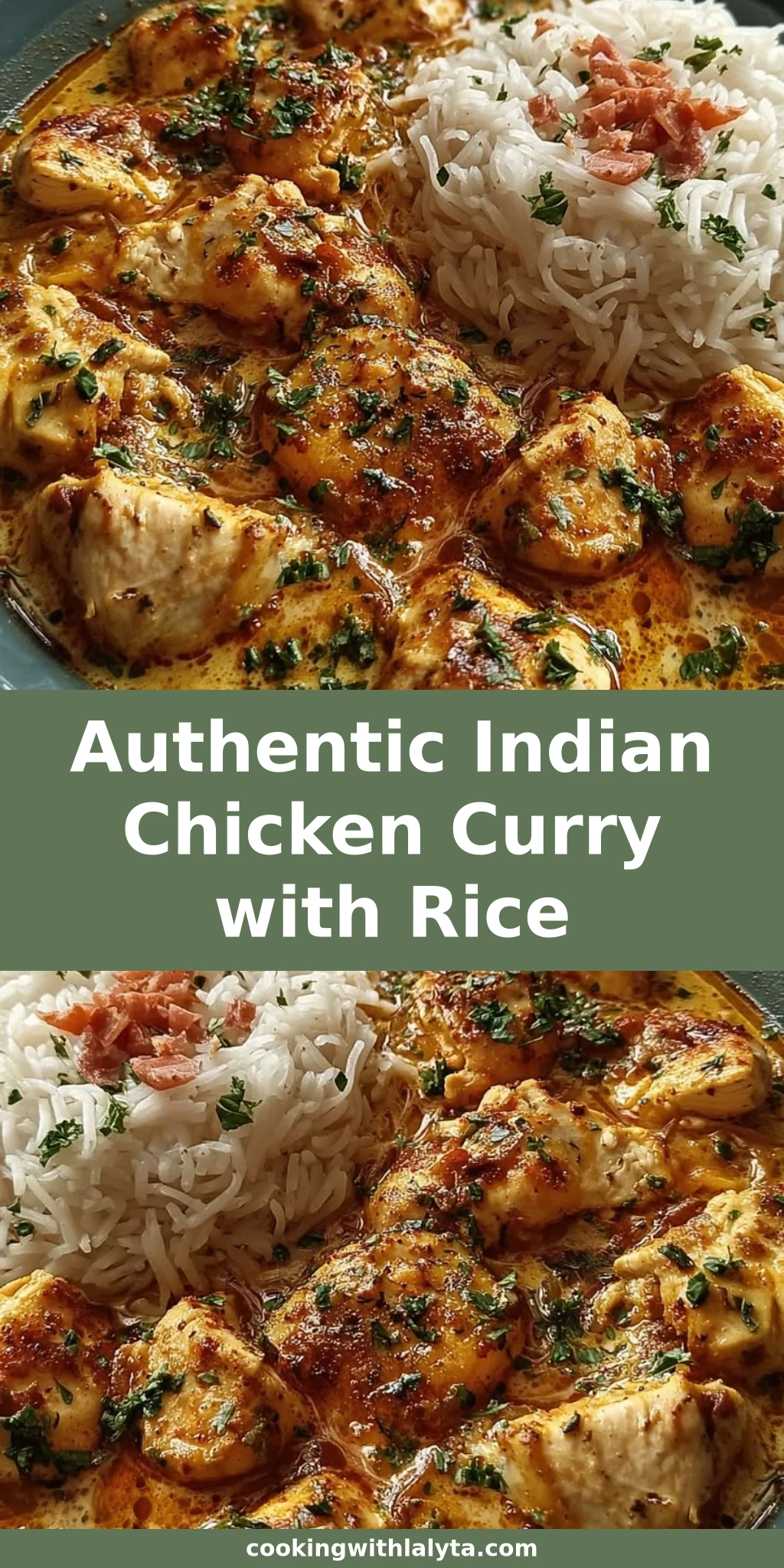
Spoon a generous mound of the fluffy rice into a bowl, ladle the aromatic chicken curry over the top, and finish with a sprinkle of fresh coriander. Serve immediately while piping hot.
| Step | Action | Duration | Key Visual Cue |
|---|---|---|---|
| 1 | Marinate chicken | Hands-on 5 min | Chicken evenly coated, yogurt mixture bright yellow |
| 2 | Cook curry base | 10–12 min | Onions deep golden brown; whole spices fragrant |
| 3 | Add tomatoes & spices | 5–7 min | Oil separates from masala; glossy surface |
| 4 | Cook chicken | 30–35 min | Chicken fork-tender; oil floats on top |
| 5 | Prepare rice | 15–20 min | Rice grains separate; steam holes visible |
| 6 | Serve | 1 min | Curry spooned over rice, garnished with cilantro |
Serving & Presentation
In my NYC kitchen, I like to serve this chicken curry with rice in shallow bowls that show off the vibrant orange-red sauce and the steam gently rising—it’s about feeding the eyes first. A sprinkle of fresh coriander leaves not only adds a pop of green but also a lemony-bright note that lifts the whole dish. For a restaurant-style touch, drizzle a little extra ghee or a spoonful of plain yogurt on top just before serving. It’s how I turn a Tuesday dinner into a little moment of luxury, reminiscent of those cozy bistros in Paris where presentation always mattered.
When it comes to pairings, I keep it simple but authentic. Warmed naan or roti on the side is wonderful for scooping up every last bit of sauce—something I learned to love from my Indian friends here in New York. A crisp, lemony cucumber salad or a quick pickled onion relish cuts through the richness beautifully. And don’t forget a beverage: a cold mango lassi or a glass of off-dry Riesling complements the spice without overpowering it. These little extras turn your chicken curry with rice into a full spread that feels both special and effortless.
| Pairing Type | Suggestions | Why It Works |
|---|---|---|
| Side Dish | Garlic naan, roti, or basmati rice (included) | Soaks up the fragrant curry sauce |
| Sauce / Dip | Raita (yogurt with cucumber & mint), mango chutney | Cooling and sweet contrast to spicy, rich curry |
| Beverage | Mango lassi, off-dry Riesling, or a light IPA | Sweetness tames heat; acids cut through richness |
| Garnish | Fresh cilantro, thinly sliced red onion, lime wedges | Adds freshness, crunch, and acidity |
Make-Ahead, Storage & Reheating
One of the things I love most about this homemade Indian curry is that it tastes even better the next day—the spices continue to meld, and the sauce deepens into something truly magical. In my busy NYC life, I’ll often make a double batch on Sunday and portion it out for easy, midweek dinners. The rice, however, is best made fresh, but I’ll give you a make-ahead trick that works well for meal prep.
| Method | Container | Duration | Reheating Tip |
|---|---|---|---|
| Refrigerator | Airtight glass container | Up to 4 days | Stovetop low heat with splash of water; microwave in 1-min bursts |
| Freezer | Freezer-safe zip-lock bag (flat) or container | Up to 3 months | Thaw overnight in fridge; reheat gently on stovetop |
| Make-Ahead | Cook curry fully, cool, refrigerate; rice day of | 2 days in advance | Reheat curry alone; make fresh rice or reheat frozen rice with damp paper towel |
When reheating, I always add a splash of water to the curry to loosen the sauce, because it thickens as it sits. And a tiny pinch of fresh garam masala stirred in right at the end revives that just-cooked aroma. For the rice, if you’ve made it ahead, sprinkle a few drops of water over it and microwave covered—it will steam back to life. I learned the frozen flat-bag trick during my Paris bistro days: freeze leftover curry in a thin, flat layer, and it thaws in minutes, plus it’s a great space-saver in a tiny NYC freezer.
This easy chicken curry recipe is also perfect for meal prep lunches. Just divide the cooled curry and rice into individual containers, and you’ve got a grab-and-go meal that will make your coworkers jealous. Just remember to remove the bay leaf and cinnamon stick before storing, so no one gets a surprise crunch.
Variations & Easy Swaps
| Variation | Key Change | Best For | Difficulty Impact |
|---|---|---|---|
| Vegetarian Chickpea Curry | Swap chicken for 2 cans chickpeas (rinsed); use dairy yogurt | Meatless Mondays, plant-based eaters | Easier; cook time reduced to 15 min |
| Dairy-Free Coconut Chicken Curry | Replace yogurt in marinade with 2 tbsp coconut cream; use oil instead of ghee | Lactose intolerant, vegan (if chicken substituted) | Same level; slightly sweeter, milder flavor |
| Spicy Masala Chicken Curry | Double red chili powder; add 1-2 slit green chilies with onions | Heat lovers, extra kick | No extra effort; monitor spice level |
Vegetarian Chickpea Curry
This variation is a nod to the vegetarian tagines of my Moroccan upbringing, where chickpeas are a pantry hero. Simply skip the chicken and after step 3 (when the masala is ready), add two 15-oz cans of rinsed, drained chickpeas. Stir in 1/2 cup water (instead of 1 cup) and simmer for 10-15 minutes until the chickpeas are tender and have absorbed the flavors. The result is a hearty, protein-packed curry that’s just as satisfying. I love it over rice with a dollop of yogurt and a squeeze of lime—comfort food at its finest.
Dairy-Free Coconut Chicken Curry
To make this authentic Indian chicken curry recipe dairy-free, I swap the yogurt in the marinade with full-fat coconut cream (the thick part from a can of coconut milk). The ghee can be replaced with refined coconut oil or avocado oil for cooking. The texture becomes slightly richer and the spice notes are mellowed by the coconut’s natural sweetness. Marinate as usual, and you’ll still get that tang from the tomatoes. It’s a wonderful variation that I’ve served many times to friends with dairy sensitivities—they never feel like they’re missing out.
Spicy Masala Chicken Curry
Sometimes I crave an extra kick—blame it on my love for the spicy harissa of my childhood in Morocco. For this version, double the red chili powder to 2 teaspoons and add one or two slit green chilies (like serrano) along with the onions. The heat builds slowly and pairs beautifully with a cooling cucumber raita. Just remember that the longer the curry sits, the more the chili infuses, so if you’re planning leftovers, you might want to go a bit easier. It’s a fiery twist that will warm you up on a cold NYC night.
What is the secret to making an authentic Indian chicken curry with rich flavor and aroma?
The secret lies in three key techniques: overnight marination, blooming whole spices, and slow simmering. Marinating the chicken in yogurt with ginger-garlic paste and turmeric not only tenderizes the meat but infuses it with a base tang. Then, toasting whole cumin, cardamom, and cinnamon in ghee releases their essential oils, building a fragrant foundation. Finally, simmering the curry with bone-in chicken for at least 25-30 minutes allows the marrow to enrich the sauce, while the spices meld into a deep, rounded flavor. Patience is your biggest ally—rushing any of these steps will flatten the taste.
Can I use basmati rice for Indian chicken curry, or is another type of rice better?
Basmati rice is absolutely the best choice for chicken curry with rice. Its long, slender grains stay separate and fluffy when cooked, absorbing the curry’s sauce without becoming mushy. The aromatic fragrance of basmati—often described as nutty or popcorn-like—complements the spices in the curry beautifully. While you could use jasmine rice for a softer, stickier texture, or plain long-grain white rice, basmati is traditional and yields the most authentic result. I always rinse it until the water runs clear to remove excess starch, which is key for that light, airy texture.
How long should I simmer the chicken curry to ensure the meat is tender and the spices are fully blended?
For bone-in chicken thighs, simmer for 25-30 minutes after adding water. This gentle cooking allows the meat to become fork-tender and the connective tissue to break down, enriching the sauce. If using boneless thighs, reduce the time to 15-20 minutes to avoid overcooking. The visual cue is when the oil separates and floats on the surface, and the chicken easily pulls away from the bone. I often let it go an extra 5 minutes on the lowest heat for a deeper flavor marriage, especially if the curry has sat a while after cooking.
Is it possible to make this dish dairy-free by substituting cream or yogurt with coconut milk?
Yes, absolutely! You can create a dairy-free version by replacing the yogurt in the marinade with an equal amount of full-fat coconut cream (the thick part from a can of coconut milk). For the cooking fat, use refined coconut oil or avocado oil instead of ghee. The coconut adds a subtle sweetness that mellows the spices slightly, but the curry remains rich and satisfying. Some of my dairy-free friends even prefer this version. Just note that the marinade may be slightly thicker, so you can thin it with a teaspoon of water if needed.
Can I make this authentic Indian chicken curry in an Instant Pot or slow cooker?
You can adapt this recipe for both. For the Instant Pot, use the sauté function to bloom spices and cook the masala as directed, then add marinated chicken and 3/4 cup water (less liquid since it doesn’t evaporate). Pressure cook on high for 8 minutes with a natural release. For the slow cooker, sauté the spices and masala on the stovetop first, then transfer everything to the cooker and cook on low for 4-5 hours. The flavor will be slightly less concentrated, so you may want to reduce the sauce on sauté mode after cooking.
What can I substitute for garam masala if I don’t have it?
Garam masala is a blend of warm spices like cumin, coriander, cardamom, and cinnamon. If you’re out, you can make a quick substitute: mix 1/4 teaspoon each of ground cumin and ground coriander with a pinch of ground cinnamon, cardamom, and black pepper. It won’t be identical, but it will provide that aromatic warmth. Some stores also sell “curry powder,” but that’s a different blend and will shift the flavor profile. I always keep a jar of garam masala on hand—it’s a staple in my spice drawer.
How do I store leftover chicken curry and rice? Can I freeze them together?
Store the curry and rice separately for best texture. The curry can be refrigerated for up to 4 days or frozen flat in a zip-lock bag for up to 3 months. Rice tends to dry out in the freezer; if you must freeze it, pack it tightly in an airtight container and reheat with a damp paper towel. For meal prep, I portion the curry into individual containers and freeze them without rice, then cook a fresh batch of rice the night I’m eating it. It’s easy: while the curry reheats, the rice cooks in 15 minutes.
Why does my chicken curry taste bland even though I followed the recipe?
A bland curry often results from underseasoning at the marinade stage or insufficient blooming of the spices. Make sure you’re using enough salt in the marinade—it not only flavors the chicken but also helps the yogurt tenderize. Secondly, ensure your whole spices are fresh and that you toast them until very fragrant. Overcooking the spices can make them bitter, so aim for just 20-30 seconds. Finally, let the curry rest for 10 minutes off the heat before serving; this allows the flavors to settle and intensify. A sprinkle of fresh garam masala at the very end can also perk it up.
Can I use chicken breast instead of thighs for a leaner option?
Technically yes, but I don’t recommend it. Chicken breasts lack the fat and connective tissue that makes bone-in thighs so succulent. If you must use breasts, reduce the simmer time to 10-12 minutes after adding water, and cut them into large chunks so they don’t dry out. The sauce will be thinner and less rich. You can compensate by adding a tablespoon of butter or ghee at the end, but the result won’t have the same depth. For the best easy chicken curry recipe, stick with thighs—they’re more forgiving and flavorful.
What’s the best way to reheat chicken curry without drying it out?
Reheat gently on the stovetop over low heat, adding a splash of water or a little extra ghee to loosen the sauce. Stir occasionally until heated through. Avoid high heat, which can cause the chicken to toughen. In the microwave, cover the bowl with a damp paper towel and use short 1-minute bursts, stirring in between. If the curry seems a bit flat after reheating, a pinch of fresh garam masala and a squeeze of lemon juice will revive it instantly. This works for both refrigerated and thawed frozen curry.
Share Your Version!
I truly hope you’ll give this authentic Indian chicken curry with rice a try—and when you do, I’d be thrilled to hear about it! Did you adjust the heat? Try the coconut variation? Or maybe you served it with a side I haven’t thought of? Leave a star rating and comment below; your feedback not only makes my day but helps other home cooks find trusted recipes. If you snap a photo, share it on Instagram or Pinterest and tag me @cookingwithlalyta—I love seeing your kitchen creations and often repost them in my stories.
And here’s a question for you: What’s your favorite weeknight curry ritual—do you have a go-to side or a special way of plating that makes it feel like a treat? I’m always collecting inspiration from this wonderful community, and your twist might just end up in my next recipe post. From my NYC kitchen to yours — I hope this recipe brings as much warmth to your table as it does to mine. — Lalybeth 🧡
Love This Recipe? Save It to Pinterest!
If you enjoyed this Authentic Indian Chicken Curry with Rice, don’t let it get lost in your browser tabs! 😄 Pin it now so you can find it again anytime — and explore hundreds more tried-and-tested recipes waiting for you on my Pinterest boards.
👉 Follow Lalybeth on Pinterest @cookingwithlalyta
📌 Pin this recipe · 🔁 Re-pin your favorites · 💬 Tag me when you make it — I love seeing your creations!

Authentic Indian Chicken Curry with Rice
- Total Time: 1 hour (plus marinating time)
- Yield: 4 1x
Description
A rich and aromatic Indian chicken curry served with basmati rice, made with a blend of spices and simmered to perfection.
Ingredients
- For the marinade:
- 500 g chicken thighs, bone-in, skin removed
- 2 tablespoons plain yogurt
- 1 tablespoon ginger-garlic paste
- 1 teaspoon turmeric powder
- 1 teaspoon red chili powder
- 1 teaspoon salt
- For the curry:
- 2 tablespoons ghee or vegetable oil
- 1 large onion, finely chopped
- 2 tomatoes, pureed
- 1 tablespoon ginger-garlic paste
- 1 teaspoon cumin seeds
- 1 bay leaf
- 2 green cardamom pods
- 1 cinnamon stick
- 1 teaspoon coriander powder
- 1/2 teaspoon garam masala
- 1/2 teaspoon black pepper
- 1 cup water
- Fresh coriander leaves for garnish
- For the rice:
- 1 cup basmati rice
- 2 cups water
- 1/2 teaspoon salt
- 1 tablespoon ghee
- 1 teaspoon cumin seeds
Instructions
- Marinate the chicken: In a bowl, combine yogurt, ginger-garlic paste, turmeric, chili powder, and salt. Add chicken, coat well, cover, and refrigerate for at least 1 hour or overnight.
- Cook the curry base: Heat ghee in a heavy-bottomed pan. Add cumin seeds, bay leaf, cardamom, and cinnamon. When they splutter, add onions and sauté until golden brown. Stir in ginger-garlic paste and cook for 1 minute.
- Add tomatoes and spices: Add tomato puree, coriander powder, garam masala, and black pepper. Cook until oil separates, about 5-7 minutes.
- Cook the chicken: Add marinated chicken pieces, turning to coat. Cook for 5 minutes, then add water. Bring to a boil, reduce heat, cover, and simmer for 25-30 minutes until chicken is tender. Garnish with coriander.
- Prepare the rice: Rinse basmati rice until water runs clear. In a saucepan, heat ghee, add cumin seeds, then rice. Sauté for 2 minutes, add water and salt. Bring to boil, cover, reduce heat to low, and cook for 12-15 minutes. Fluff with fork.
- Serve: Spoon curry over rice in a bowl. Enjoy hot.
Notes
For best results, use bone-in chicken pieces and marinate overnight. Adjust chili powder to taste. This curry also works well with cauliflower or chickpeas for a vegetarian option.
- Prep Time: 15 minutes
- Cook Time: 45 minutes
- Method: Main Course
- Cuisine: Indian
Nutrition
- Calories: 450 kcal
- Sugar: 3 g
- Fat: 20 g
- Carbohydrates: 35 g
- Protein: 30 g
Tried This Recipe? Leave a Comment!
Did you make this recipe? I’d love to hear how it turned out! Please leave a comment and a rating below. Your feedback helps other home cooks and supports cookingwithlalyta.com!
For more delicious inspiration, follow me on Pinterest!