Table of Contents
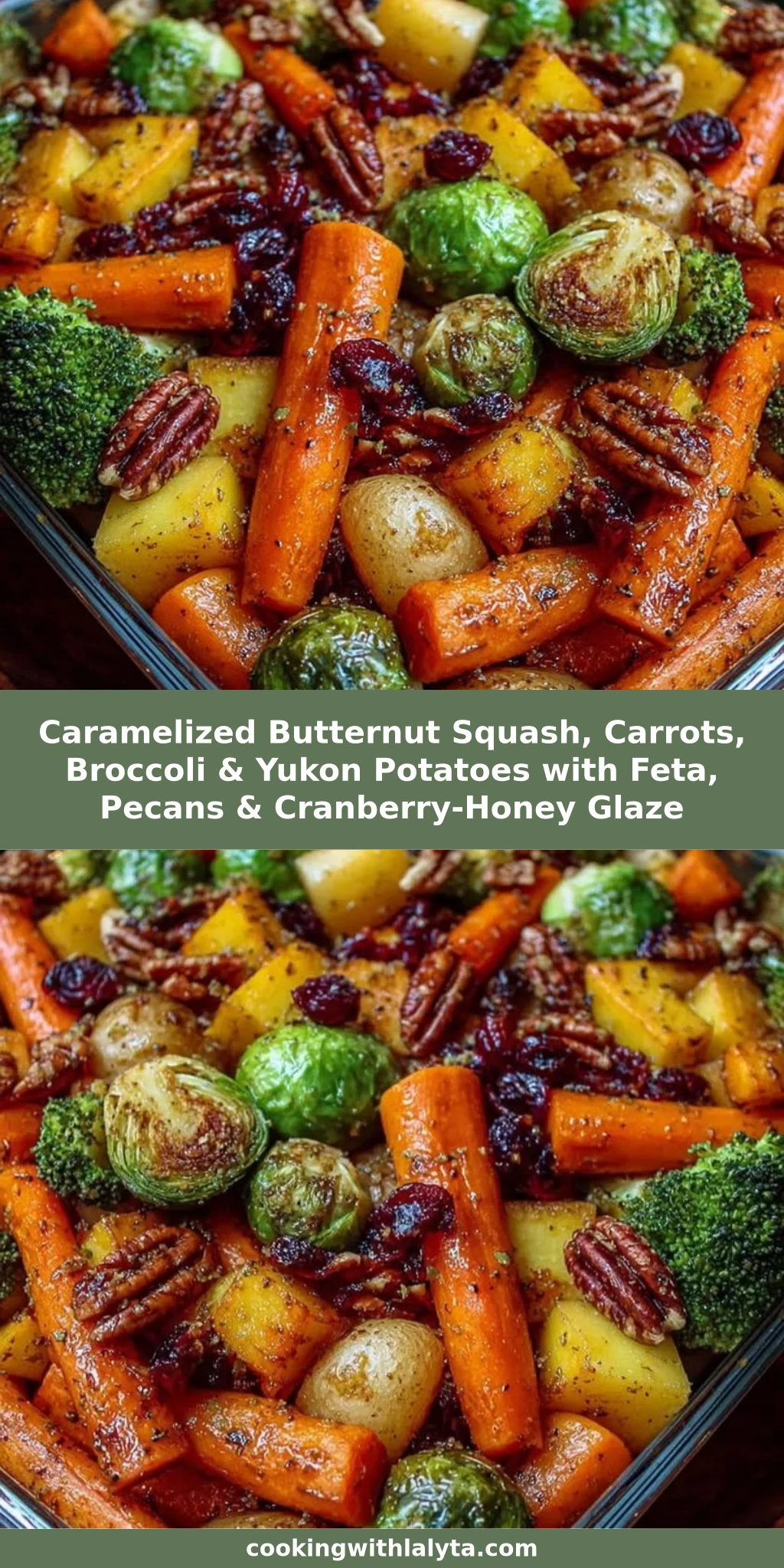
Caramelized Butternut Squash, Carrots, Broccoli & Yukon Potatoes with Feta, Pecans & Cranberry-Honey Glaze: The Ultimate Roasted Fall Vegetables with Feta Side Dish
I first made these roasted fall vegetables with feta on a chilly November afternoon in my tiny Upper West Side kitchen, the kind of day when the radiator hisses and you crave something warm and caramelized. The inspiration struck me at the Union Square Greenmarket: piles of deep orange butternut squash, jewel-toned carrots, and sturdy broccoli that looked like little trees. I remembered my mother back in Morocco, drizzling honey over roasted root vegetables, always adding that sweet-tart balance that makes your mouth water. That memory collided with the French sauce techniques I learned in Paris, and this dish was born: a medley of caramelized butternut squash with feta, bright cranberries, and toasted pecans, all tied together with a glossy, irresistible glaze. It’s a thanksgiving vegetable side dish that will upstage the turkey—trust me.
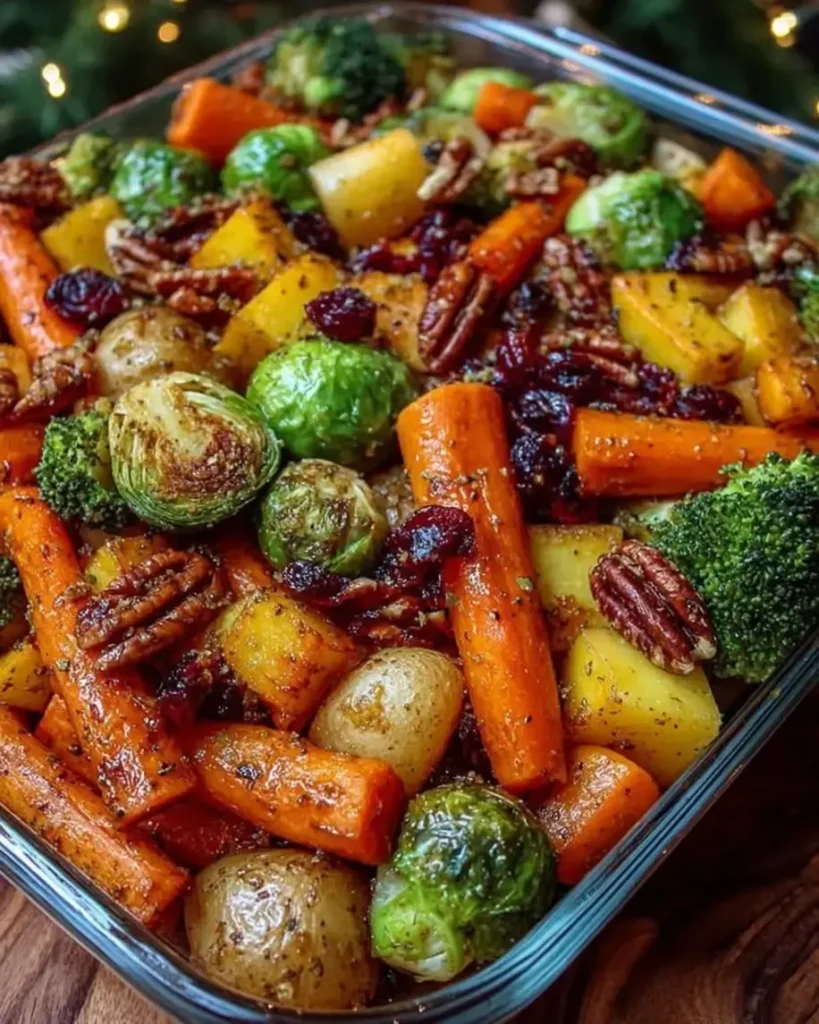
When you pull this pan from the oven, the aroma is pure autumn: nutty, sweet, with a whisper of cinnamon from the glaze. Bite into a piece of squash and you’ll get that deep caramelization—edges crisp, inside velvety—while the Yukon Gold potatoes become golden and creamy. The broccoli offers a gentle char, the carrots a concentrated earthiness. Then comes the magic: a warm cranberry-honey glaze, reduced to a syrupy, jewel-like sheen, that coats every nook and cranny. Salty crumbles of feta cut through the sweetness like a bright note, and the pecans add a toasty crunch. It’s a symphony of textures that I’d happily serve alongside a classic roast chicken or a Moroccan tagine. If you’ve ever wondered how to get that restaurant-style caramelization at home, I’ll share my secret—it’s all about oven temperature and giving the vegetables their space (more on that in the steps).
This isn’t just another roasted veggie recipe. As a chef trained in Paris and raised in a Moroccan kitchen, I bring a few tricks to the table. First, we roast at a relatively high 425°F to achieve those irresistible brown edges without steaming. Second, I’ll show you how to make the cranberry-honey glaze ahead of time so the whole dish comes together in minutes—perfect for busy holiday prep. But the real game-changer? I’ll warn you about the number one mistake home cooks make: overcrowding the baking sheet. Do that, and you’ll get sad, limp vegetables instead of the glorious, honey cranberry glazed roasted vegetables you deserve. Stick with me, and you’ll have a showstopper side that tastes like a warm hug from your favorite kitchen auntie.
Why This Caramelized Butternut Squash & Roasted Vegetables Recipe Is the Best
What sets this dish apart is the depth of flavor I build using a technique borrowed from French pastry: a reduction. The cranberry-honey glaze isn’t just thrown together—it simmers down until it’s thick and concentrated, coating the vegetables in a layer of sweet-tart brightness. It’s the same principle as a gastrique, a classic sauce method I learned during my Paris training, but I’ve swapped vinegar for a touch of apple cider vinegar and added honey’s floral sweetness to marry with the cranberry’s punch. This makes every bite sing with complexity, far beyond a simple drizzle of honey. It’s the secret that transforms ordinary roasted produce into a dish worthy of a holiday table, yet easy enough for a weeknight dinner in New York City.
Texture is everything, and I’ve perfected the roasting method so you get that elusive combination: tender interiors and caramelized, slightly crispy edges. The key is cutting the vegetables to uniform sizes (½-inch cubes for the denser squash and potatoes, ¼-inch rounds for the carrots), then roasting in a single layer. Don’t be tempted to stir too often—letting them sit undisturbed for the first 20 minutes allows the Maillard reaction to work its magic. I also use extra-virgin olive oil, which helps browning while adding its own fruity notes. This isn’t just a side; it’s a lesson in how heat transforms humble root vegetables into something crave-worthy. The broccoli, often the tricky one, gets perfectly crispy florets without burning because I add it to the mix from the start—its slight bitterness balances the sweetness beautifully.
Finally, this recipe is foolproof and fast, even for beginners. The active time is minimal—mostly chopping and a quick glazing—and the oven does the heavy lifting. I’ll hold your hand through every step, from picking the best butternut squash at the grocery store (look for one that feels heavy for its size, with a matte, beige skin) to toasting the pecans in a dry skillet until they smell like a warm pecan pie. You’ll learn the one sign the glaze is ready (it should coat the back of a spoon and leave a clear trail), and I’ll give you my make-ahead strategies so you can enjoy your company instead of slaving away in the kitchen. This is the dish I bring to Thanksgiving potlucks, and it always disappears first.
Roasted Fall Vegetables with Feta Ingredients
I source most of these ingredients from the farmers market in Union Square, where the vendors know me by name. In Morocco, we’d never dream of letting good vegetables go to waste—my mother used to say, “Treat each one like a precious gem.” That’s why I’m a stickler for quality: pick vibrant, firm produce, and you’ll taste the difference. If you’re shopping at a regular grocery store, don’t worry—I’ll tell you what to look for. The glaze ingredients are pantry staples you likely already have, and the feta and pecans are optional? Absolutely not! They’re the soul of this dish, but I’ll give you tested swaps in the spotlight below. Let’s gather everything before we turn on the oven; mise en place, a habit I picked up in my Paris kitchen, saves stress.
Ingredients List
- For the vegetables:
- 1 medium butternut squash, peeled, seeded, and cut into ½-inch cubes (about 4 cups)
- 4 medium carrots, peeled and sliced into ¼-inch rounds
- 1 head broccoli, cut into small florets (about 2 cups)
- 1½ pounds Yukon Gold potatoes, cut into ½-inch cubes
- 3 tablespoons extra-virgin olive oil
- 1 teaspoon kosher salt
- ½ teaspoon freshly ground black pepper
- For the cranberry-honey glaze:
- ½ cup 100% cranberry juice (not cocktail)
- ¼ cup honey
- 1 teaspoon apple cider vinegar
- ¼ teaspoon ground cinnamon
- Pinch of salt
- For serving:
- 4 ounces feta cheese, crumbled
- ½ cup pecan halves, toasted
Ingredient Spotlight
Butternut squash: The star of the show. It caramelizes beautifully due to its natural sugars. In the US, look for a squash that feels heavy for its size with a smooth, tan rind—avoid any with green streaks, which mean it was picked too early. If you’re short on time, pre-cut squash from the refrigerated section works, though the cubes may be uneven. Substitution: Sweet potatoes (peeled and cubed) will give a similar sweetness and texture, though the flavor will be earthier and less nutty. Reduce roasting time by 5 minutes since they cook slightly faster.
Yukon Gold potatoes: My favorite for roasting because they hold their shape while becoming creamy inside and golden outside. Their thin skins mean you don’t have to peel them if you’re in a rush—just scrub well. At the grocery store, choose potatoes that are firm and free of sprouts. Substitution: Red potatoes work well, keeping a waxy texture that holds up nicely; the color adds a festive touch. Avoid russets, as they’ll fall apart.
Feta cheese: I use a block of feta packed in brine, which is creamier and saltier than pre-crumbled. Look for it in the specialty cheese section—sheep’s milk feta has a tanginess that complements the sweet glaze. Crumble it yourself for the best texture. Substitution: Goat cheese will give a softer, tangier creaminess that melts a bit when the vegetables are warm. For a dairy-free option, a good vegan feta made from almond or tofu works, though it won’t have the same melt. Expect a slightly less salty finish.
Pecans: Toasting them in a dry skillet releases their oils and makes them incredibly crunchy. Buy pecan halves, not pieces, for the best presentation and texture. Substitution: Walnuts are my go-to swap—they have a similar buttery bitterness. Toast them the same way. For a nut-free version, use roasted pepitas (pumpkin seeds), which add a green color and a delicate crunch.
Cranberry juice & honey: The glaze’s backbone. Use 100% cranberry juice—the pure, unsweetened kind—not a blend or cocktail, or your glaze will be too sweet and thin. Honey adds floral sweetness; a mild clover or orange blossom honey works best. Substitution: Maple syrup can replace honey for a more robust, woodsy flavor (and makes it vegan). The glaze will be slightly darker and less floral, but equally delicious.
| Original Ingredient | Best Substitution | Flavor / Texture Impact |
|---|---|---|
| Butternut squash | Sweet potatoes | Earthier, slightly softer texture; reduce roast time by 5 minutes. |
| Yukon Gold potatoes | Red potatoes | Nearly identical; slightly waxier, holds shape well. |
| Feta cheese | Goat cheese or vegan feta | Goat cheese is tangier/creamier; vegan feta less salty and melt. |
| Pecans | Walnuts or pepitas | Walnuts are slightly more bitter; pepitas nut-free and mild. |
| Honey | Maple syrup | Darker, woodsy sweetness; glaze may be slightly thinner. |
How to Make Caramelized Butternut Squash, Carrots, Broccoli & Yukon Potatoes — Step-by-Step
Don’t let the number of steps intimidate you; I’ve broken this down into manageable pieces just like I would for my culinary students. Take your time with the chopping—uniform pieces are the secret to even roasting—and remember, I’m right here with you in spirit. Ready? Let’s turn on some music and get roasting.
Step 1: Preheat the Oven
Set your oven rack to the middle position and preheat to 425°F (220°C). This high temperature is non-negotiable for achieving that deep caramelization on the squash and potatoes. If your oven tends to run cool, use an oven thermometer to be sure—I learned that lesson the hard way in Paris when a faulty oven ruined a batch of tarte Tatin!
💡 Lalybeth’s Pro Tip: If you have a convection setting, use it! Convection circulates dry heat, which leads to even better browning. Reduce the temperature to 400°F and check for doneness 5 minutes earlier.
Step 2: Prepare the Vegetables
Peel the butternut squash, cut off the stem end, then halve it, scoop out the seeds, and cut into ½-inch cubes. For the carrots, peel and slice into ¼-inch rounds—no thicker, or they won’t cook through. Cut the broccoli into small, even florets, leaving about an inch of stem if you like a bit of crunch. Scrub the Yukon Gold potatoes (I love leaving the skin on for nutrients and texture) and cut into ½-inch cubes. Uniform sizing is key: use a ruler if you must, like I did my first week at cooking school, or just eyeball it with a little care.
Step 3: Season and Spread on the Baking Sheet
On a large rimmed baking sheet (18×13 inches is ideal), pile all the vegetables. Drizzle with the 3 tablespoons of extra-virgin olive oil, then sprinkle with the kosher salt and pepper. Toss everything with your hands until each piece glistens. Now, spread them into a single, even layer, making sure no pieces are overlapping. This is where the magic happens—room to breathe means room to caramelize. If you have too many vegetables, use two sheets rather than crowd one.
⚠️ Common Mistake to Avoid: Overcrowding the pan. When vegetables are piled up, they steam instead of roast, and you lose those crispy, golden edges. I’ve done it many times as a beginner—trust me, it’s worth pulling out a second sheet pan.
Step 4: Roast Until Caramelized
Slide the sheet into the preheated oven and roast for 30 to 35 minutes. After about 20 minutes, open the oven and use a spatula to gently stir the vegetables, redistributing them into a single layer again. The goal is to let the bottom sides brown. You’ll know they’re ready when the butternut squash is fork-tender and the edges are a deep, golden-brown; the potatoes should be creamy inside with a crisp outer shell, and the broccoli will have charred, wispy tips.
💡 Lalybeth’s Pro Tip: Resist the urge to stir too often—that initial undisturbed time is crucial for browning. I set a timer for 20 minutes and don’t peek until it beeps. Your kitchen will smell like a holiday dream.
Step 5: Make the Cranberry-Honey Glaze
While the vegetables roast, combine the cranberry juice, honey, apple cider vinegar, cinnamon, and a pinch of salt in a small saucepan. Place over medium heat and bring to a simmer. Let it bubble gently, stirring occasionally, for 8 to 10 minutes, until the mixture has reduced by about half. You’re looking for a syrupy consistency that coats the back of a spoon. Don’t walk away—I once let it go too long and ended up with cranberry candy, which, while delicious on its own, isn’t a glaze! Remove from heat and set aside; it will thicken slightly as it cools.
⚠️ Common Mistake to Avoid: Over-reducing the glaze. If it becomes too thick and sticky, it won’t coat the vegetables evenly. If that happens, whisk in a splash of hot water to loosen it. The perfect glaze should drip slowly off a spoon.
Step 6: Glaze the Vegetables
When the vegetables are out of the oven and still hot on the baking sheet, drizzle the warm cranberry-honey glaze all over them. Using a large spatula, gently toss until every piece is glistening and coated. The heat from the vegetables will help the glaze spread and cling. Taste a piece—you should get a hit of sweet, a tang of cranberry, and a whisper of cinnamon. Adjust with a tiny pinch of salt if needed, because salt makes all flavors pop.
💡 Lalybeth’s Pro Tip: If the glaze has cooled and thickened too much, warm it briefly in the microwave or over low heat before drizzling. A fluid glaze distributes evenly, ensuring no sad, unglazed bites.
Step 7: Garnish with Feta and Pecans & Serve
Transfer the glazed vegetables to a large serving platter or shallow bowl—I love using an earthenware dish that shows off the colors. Sprinkle generously with the crumbled feta and the toasted pecans. The warmth will slightly soften the feta, creating little creamy pockets that meld with the glaze. Don’t mix them in; let them sit on top for a beautiful, rustic look. Serve immediately while warm, or at room temperature as part of a buffet. Watch your guests’ faces light up—I promise, you’ll be asked for the recipe.
⚠️ Common Mistake to Avoid: Adding the feta and pecans too early, then tossing the whole dish. That will turn the feta into a melted blob and the pecans will lose their crunch. Gently scatter on top right before serving for the best texture contrast.
| Step | Action | Duration | Key Visual Cue |
|---|---|---|---|
| 1 | Preheat oven to 425°F | 2 mins | Oven thermostat reaches target temp |
| 2 | Cut vegetables to uniform sizes | 10 mins | All pieces roughly ½-inch cubes or ¼-inch rounds |
| 3 | Toss with oil, salt, pepper; spread in single layer | 2 mins | No overlapping vegetables |
| 4 | Roast, stirring after 20 minutes | 30-35 mins total | Golden-brown edges, tender interior |
| 5 | Simmer glaze ingredients | 8-10 mins | Reduced by half, coats spoon |
| 6 | Drizzle glaze over hot vegetables, toss gently | 1 min | All pieces glistening with glaze |
| 7 | Transfer to platter, top with feta and pecans | 1 min | Feta and pecans remain distinct on top |
Serving & Presentation
I like to mound these roasted broccoli and potatoes with feta on a wide, shallow platter—a rustic wooden board works beautifully for a fall gathering. Right before serving, I’ll scatter a few extra crumbles of feta and a handful of pomegranate arils if I have them, which adds a jewel-like pop and a fresh burst of acidity. For a more casual weeknight dinner, I’ll just bring the baking sheet to the table (with a trivet!) and let everyone help themselves, family-style. In my NYC kitchen, where counter space is precious, that’s often the easiest route. The colors are so vibrant—deep orange, green, golden yellow, and white—that the dish almost plates itself.
Pairing wise, this side is a chameleon. It loves roasted turkey or chicken, of course, making it a perfect thanksgiving vegetable side dish. But it also has enough personality to stand alongside a simple roasted salmon or even a Moroccan lamb tagine—the sweet glaze echoes the fruit notes often found in North African cooking, a tip I learned from my mother. For a vegetarian main, serve over a bed of fluffy couscous or quinoa with a dollop of yogurt. The table below gives you my tried-and-true pairings, including a wine that, as a Paris-trained cook, I can’t resist recommending: a slightly chilled Beaujolais that cuts through the richness.
| Pairing Type | Suggestions | Why It Works |
|---|---|---|
| Side Dish | Roasted turkey, grilled chicken thighs, pan-seared salmon | The sweet and savory glaze complements the protein’s umami. |
| Sauce / Dip | Extra cranberry glaze, garlicky yogurt sauce, harissa aioli | Acreamy or spicy dip adds a cooling or fiery contrast. |
| Beverage | Beaujolais, spiced apple cider, sparkling water with lime | Fruity red wine mirrors the cranberry; cider complements the cinnamon. |
| Garnish | Fresh thyme leaves, pomegranate arils, lemon zest | Brightness and freshness cut the rich glaze. |
Make-Ahead, Storage & Reheating
In my bustling New York City life, I’m all about saving time without sacrificing quality. This dish is a dream for meal prep: you can chop the vegetables a day ahead and store them in separate zip-top bags in the fridge—they’ll be ready to toss and roast in just minutes. The glaze can be made up to two days in advance and kept in an airtight jar in the refrigerator; just gently reheat it before drizzling. For the most efficient holiday prep, roast the vegetables earlier in the day, then reheat and add the glaze, feta, and pecans right before serving. I’ll often do this on Thanksgiving morning so I can watch the parade without a care.
| Method | Container | Duration | Reheating Tip |
|---|---|---|---|
| Refrigerator | Airtight glass container (to avoid staining) | Up to 4 days | Spread on a baking sheet and warm in a 350°F oven for 10 mins, then add fresh feta/pecans. |
| Freezer | Freezer-safe zip-top bag, glaze frozen separately in small container | Up to 2 months | Thaw overnight in fridge, re-roast at 400°F for 15-20 mins, then add glaze and toppings. |
| Make-Ahead | Roasted vegetables without glaze or toppings; store in fridge | Roast up to 1 day ahead | Re-roast vegetables, warm glaze separately, assemble just before serving. |
When reheating, always bring the vegetables back to a hot, dry oven rather than the microwave; the microwave will turn them soft and slightly soggy, undoing all that hard-earned caramelization. I’ve found that a quick blast at 400°F brings back the crisp edges. If you’ve already added the glaze, it may darken a bit, but the flavor becomes even more concentrated. And never add the feta and pecans until it’s time to eat—they’re the finishing touch that keeps the dish vibrant.
One more trick from my Paris pastry days: if you plan to serve this at a party and want it to hold at room temperature, arrange the warm vegetables on a platter, drizzle the glaze, and then let it sit uncovered for up to an hour. The glaze will set slightly, making it finger-food friendly. I’ve done this for cocktail-style Thanksgiving gatherings and it’s always a hit. Just pass the feta and pecans on the side so guests can customize each bite.
Variations & Easy Swaps
The beauty of this recipe is how adaptable it is. I grew up in a household where my mother never followed a recipe exactly—she’d swap, tweak, and improvise based on what the market offered. That spirit lives in my NYC kitchen. Below you’ll find three variations I’ve tested and loved, from a spicy Moroccan twist that pays homage to my roots, to a vegan-friendly version that never feels like a compromise. Each variation changes the dish’s personality while keeping its soul intact. The table gives you a quick overview, then I’ll dive deeper into each one with tips straight from my own tests.
| Variation | Key Change | Best For | Difficulty Impact |
|---|---|---|---|
| Spicy Moroccan Harissa | Add harissa paste and cumin to glaze; use sheep’s milk feta | Spice lovers, pairing with lamb or couscous | Easy – no extra steps |
| Vegan & Dairy-Free | Use maple syrup instead of honey; vegan feta or avocado | Plant-based Thanksgiving, dairy-free diets | Easy – straightforward swaps |
| Spring Vegetable Medley | Swap squash for asparagus & peas; lemon-herb glaze | Spring entertaining, Easter brunch | Easy – cooking time adjusts slightly |
Spicy Moroccan Harissa Roasted Vegetables
Channel my Moroccan upbringing with this fiery twist. When making the glaze, whisk in 1 tablespoon of mild harissa paste (my favorite brand is Mina, found at most NYC bodegas) and ½ teaspoon of ground cumin along with the cinnamon. The harissa adds a smoky, garlicky heat that plays beautifully with the sweet cranberry and honey. I also recommend using a robust sheep’s milk feta that can stand up to the heat. Serve this alongside grilled merguez sausages or a lemony chicken tagine for a feast that transports you straight to Marrakech. If you don’t have harissa, a pinch of cayenne and a little smoked paprika will get you close.
Vegan & Dairy-Free Roasted Vegetables
Completely plant-based without losing an ounce of deliciousness. Swap the honey for pure maple syrup (use the same ¼ cup) and the glaze will have a deeper, almost molasses-like richness. For the feta, I’ve tested several vegan blocks, and Violife’s Just Like Feta works well—it crumbles and adds that salty tang. If you can’t find vegan feta, diced avocado tossed with lemon juice and salt, added right before serving, gives a creamy contrast. Make sure to toast the pecans in a dry pan to boost their flavor, since we’re skipping the dairy’s richness. This version has been a hit at my vegan Thanksgiving potluck in Brooklyn.
Spring Vegetable Medley with Lemon-Herb Glaze
When the first asparagus appears at the Union Square market, I instantly think of this bright variation. Replace the butternut squash with asparagus (trimmed and cut into 2-inch pieces) and use snap peas or green beans instead of carrots. The roasting time drops to about 20 minutes at 425°F. For the glaze, skip the cranberry and cinnamon, and instead make a lemon-herb reduction: combine ¼ cup fresh lemon juice, ¼ cup agave or honey, 1 teaspoon fresh thyme leaves, and a small minced garlic clove. Simmer just until syrupy. Top with crumbled goat cheese and toasted sliced almonds. It’s like sunshine on a plate, and I love serving it with roasted salmon or a frittata.
Frequently Asked Questions
What is the best way to caramelize butternut squash and Yukon potatoes for roasting?
To get that gorgeous caramelization on butternut squash and Yukon potatoes, you need high heat (425°F), plenty of breathing room on the baking sheet, and a little patience. I learned this technique in my Paris training: toss the vegetables with enough olive oil to coat lightly, then spread them in a single layer, cut sides down for as many pieces as possible. The direct contact with the hot metal is key. Don’t stir for the first 20 minutes—this allows the natural sugars to brown without steaming. The squash’s natural sugars will deepen into a sweet, nutty flavor, while the Yukon Golds turn crispy outside and creamy inside. I also avoid using parchment paper on this dish because it insulates the vegetables slightly; a bare, preheated baking sheet gives a better sear. If you follow these steps, you’ll get café-worthy caramelization every time.
How long should I roast the vegetables and at what temperature for the perfect caramelized glaze?
Roast at 425°F for 30 to 35 minutes, stirring once halfway through. This timing and temperature are calibrated for the vegetable sizes I recommend: ½-inch cubes for dense vegetables like squash and potatoes, and ¼-inch slices for carrots. The broccoli florets should be small, about 1-inch pieces. At 425°F, the high heat drives off moisture quickly, allowing the vegetables to brown rather than steam. If your oven runs hot, check at 25 minutes; you want fork-tender interiors and deeply golden edges. When the glaze is added after roasting, it will cling to all those craggy, caramelized surfaces, creating that perfect sweet-tart crust. If you’re using a convection oven, reduce the temperature to 400°F and start checking at 25 minutes.
Can I prepare this caramelized butternut squash and vegetable dish ahead of time and reheat it?
Absolutely, and I often do for Thanksgiving. The best approach is to roast the vegetables a day ahead, let them cool, and refrigerate in an airtight container. The glaze can be made up to 2 days in advance and stored separately in the fridge. When you’re ready to serve, re-spread the vegetables on a baking sheet and warm them in a 350°F oven for about 10 minutes, then drizzle the reheated glaze over the top. Add the crumbled feta and toasted pecans only after reheating so they stay fresh and crunchy. I don’t recommend assembling and refrigerating the full dish, as the glaze will make the vegetables soggy and the feta will become watery. With this method, you sacrifice nothing in texture or flavor, and your guests will think you just pulled it from the oven.
Can I substitute the feta cheese or pecans with other ingredients in this roasted vegetable dish?
Yes, and I’ve tested many alternatives. For the feta, goat cheese is a lovely substitute—it’s softer, tangier, and will melt slightly on the warm vegetables. A mild blue cheese like Gorgonzola would also work if you enjoy a stronger flavor. For a dairy-free version, use a good vegan feta (Violife is my pick) or diced avocado with a squeeze of lemon. As for the pecans, walnuts are the closest match—they have a similar buttery bitterness. For nut-free diets, toasted pumpkin seeds (pepitas) or sunflower seeds provide excellent crunch and a nutty flavor. Slivered almonds would also work. The key is to toast whatever nut or seed you choose to bring out its depth, and always add them just before serving for maximum texture.
What can I use instead of cranberry juice in the glaze?
If you don’t have pure cranberry juice, you can use pomegranate juice, tart cherry juice, or even a good-quality balsamic vinegar mixed with a little water. Pomegranate juice will give a similar sweet-tart profile with a deeper color, while balsamic (use about 3 tablespoons balsamic with 3 tablespoons water) adds a rich, caramel-like tang. For a completely different but equally delicious twist, try orange juice with a splash of lemon juice to maintain the acidity. In a pinch, you could also use cranberry sauce—thin it with a little water or orange juice first. I’ve done this after Thanksgiving when I had leftover cranberry sauce, and it worked wonderfully. Just remember to strain out any solid berry pieces for a smooth glaze.
How do I prevent my roasted vegetables from getting soggy?
Soggy vegetables are usually the result of three things: overcrowding the pan, using too much oil, or not roasting at a high enough temperature. Make sure your vegetables are in a single layer with space between them—if you cram too many on one sheet, they’ll steam. I also blot butternut squash and broccoli lightly with a paper towel after washing to remove excess moisture. The 3 tablespoons of olive oil for the whole pan is enough to coat without puddling. Finally, don’t cover the vegetables with foil; they need dry heat. Stir only once, and give them time to brown undisturbed. If you follow these rules, you’ll get beautifully crisp edges and tender centers every time. My mother in Morocco taught me to trust the heat and not fuss too much—words I live by.
Can I use frozen vegetables for this roasted fall vegetable recipe?
I generally don’t recommend frozen vegetables for roasting because they release a lot of water, which can lead to steaming rather than caramelization. However, if you’re in a pinch, you can use frozen butternut squash cubes or frozen broccoli florets. To improve results, thaw them completely and pat very dry with a kitchen towel. Squeeze or press out as much liquid as possible before tossing with oil. Even then, the texture won’t be as crisp as fresh, but it will still taste delightful with the glaze. Frozen carrots and potatoes are trickier since they can become mushy; I’d stick with fresh for those. In my NYC kitchen, I keep frozen butternut squash on hand for quick weeknight sides, and with a hot oven and a vigilant eye, you can get decent browning.
Is this dish gluten-free and can I make it vegan?
Yes, this recipe is naturally gluten-free as written. To make it vegan, you need two simple swaps: replace the honey with an equal amount of maple syrup or agave nectar in the glaze, and use a plant-based feta cheese or omit it and add a final sprinkle of salt and a squeeze of lemon for brightness. I’ve tested it both ways and the maple-cranberry glaze is fantastic—it has a slightly deeper, more robust sweetness. For an even creamier element without dairy, cube 1 ripe avocado and toss with lemon juice and salt, then scatter on top with the pecans. These simple changes keep the dish inclusive while still delivering that crave-worthy caramelized flavor. My vegan friends in NYC always request this version at potlucks.
Share Your Version!
I’d absolutely love to see your take on these honey cranberry glazed roasted vegetables. Did you spice it up with harissa, or go the vegan route? Maybe you swapped in sweet potatoes and topped it with toasted walnuts. Whatever you do, snap a photo and leave a star rating and comment below—it helps our community of home cooks know what works and what creative twists you discovered. I read every single comment, and your feedback often inspires my next recipe testing session in my little NYC kitchen.
And please, tag me on Instagram or Pinterest @cookingwithlalyta when you make this dish—I can’t tell you how much it brightens my day to see your beautiful creations. Use the hashtag #lalybethsroastedvegetables so I can find you easily. I have a question for you: what’s the one vegetable you always keep in your fall pantry, and would you try caramelizing it? Drop your answer in the comments—I’m genuinely curious!
From my NYC kitchen to yours — I hope this recipe brings as much warmth to your table as it does to mine. — Lalybeth 🧡
Love This Recipe? Save It to Pinterest!
If you enjoyed this Caramelized Butternut Squash, Carrots, Broccoli & Yukon Potatoes with Feta, Pecans & Cranberry-Honey Glaze recipe, don’t let it get lost in your browser tabs! 😄 Pin it now so you can find it again anytime — and explore hundreds more tried-and-tested recipes waiting for you on my Pinterest boards.
👉 Follow Lalybeth on Pinterest @cookingwithlalyta
📌 Pin this recipe · 🔁 Re-pin your favorites · 💬 Tag me when you make it — I love seeing your creations!
Caramelized Butternut Squash, Carrots, Broccoli & Yukon Potatoes with Feta, Pecans & Cranberry-Honey Glaze
- Total Time: 50 minutes
- Yield: 6 1x
Description
This is the ultimate fall side dish – a medley of caramelized vegetables tossed with a sweet-tart cranberry honey glaze, salty feta, and toasted pecans. Perfect for Thanksgiving or any cozy dinner.
Ingredients
- For the vegetables:
- 1 medium butternut squash, peeled, seeded, and cut into 1/2-inch cubes
- 4 medium carrots, peeled and sliced into 1/4-inch rounds
- 1 head broccoli, cut into small florets
- 1 1/2 pounds Yukon Gold potatoes, cut into 1/2-inch cubes
- 3 tablespoons extra-virgin olive oil
- 1 teaspoon kosher salt
- 1/2 teaspoon freshly ground black pepper
- For the cranberry-honey glaze:
- 1/2 cup 100% cranberry juice
- 1/4 cup honey
- 1 teaspoon apple cider vinegar
- 1/4 teaspoon ground cinnamon
- Pinch of salt
- For serving:
- 4 ounces feta cheese, crumbled
- 1/2 cup pecan halves, toasted
Instructions
- Preheat the oven to 425°F.
- On a large rimmed baking sheet, combine the butternut squash, carrots, broccoli, and Yukon Gold potatoes. Drizzle with olive oil and season with kosher salt and pepper. Toss well to coat, then spread in a single, even layer.
- Roast for 30 to 35 minutes, stirring once halfway through, until the vegetables are tender and caramelized at the edges.
- While the vegetables roast, prepare the cranberry-honey glaze. In a small saucepan, combine the cranberry juice, honey, apple cider vinegar, cinnamon, and a pinch of salt. Bring to a simmer over medium heat and cook for 8 to 10 minutes, until reduced by half and glossy.
- Remove the roasted vegetables from the oven. Drizzle the warm cranberry-honey glaze over the vegetables and toss gently to coat.
- Transfer the glazed vegetables to a serving platter. Sprinkle with crumbled feta and toasted pecans.
- Serve warm or at room temperature.
Notes
To toast pecans, place them in a dry skillet over medium heat and cook, stirring frequently, for 3 to 5 minutes until fragrant. The glaze can be made up to 2 days ahead and stored in an airtight container in the refrigerator. This dish pairs well with roasted turkey or chicken.
- Prep Time: 15 minutes
- Cook Time: 35 minutes
- Method: Side Dish
- Cuisine: American
Nutrition
- Calories: 390 calories
- Sugar: 18 g
- Fat: 19 g
- Carbohydrates: 48 g
- Protein: 9 g
Tried This Recipe? Leave a Comment!
Did you make this recipe? I’d love to hear how it turned out! Please leave a comment and a rating below. Your feedback helps other home cooks and supports cookingwithlalyta.com!
For more delicious inspiration, follow me on Pinterest!