Table of Contents
Bok Choy with Garlic Sauce: Quick Charred & Glazed Perfection
I still remember the first time I tasted truly great bok choy with garlic sauce recipe — it wasn’t in a bustling Chinatown eatery, but in the tiny kitchen of my flat in Paris’s 13th arrondissement. My neighbor, a French-trained Chinese chef, had invited me over and I watched, utterly mesmerized, as he charred tender baby bok choy in a screaming-hot wok before drenching it in the most glossy, savory garlic sauce. That quick sear transformed the humble green into something with smoky depth while keeping a juicy crunch — a technique I’ve clung to ever since. Today, I’m bringing that same restaurant-worthy sauteed bok choy into your kitchen, infused with all the warmth of my Moroccan heritage and the precision of my Parisian training. This isn’t just a side dish; it’s a masterclass in how a handful of pantry staples can create a Chinese garlic bok choy that rivals any takeout.
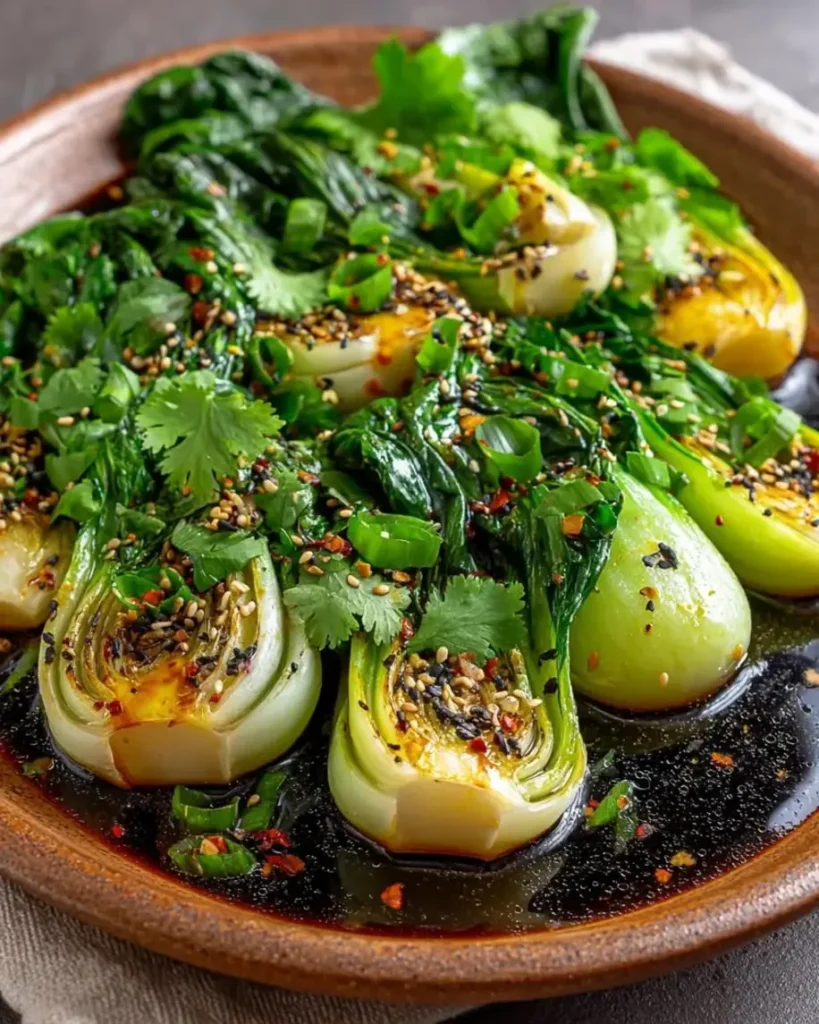
The magic happens in just minutes: you’ll get vibrantly green leaves, caramelized edges from that fearless char, and a velvety sauce that clings to every piece of bok choy. The fragrance of sizzling garlic hits you first — sweet, toasty, irresistible — and then the umami punch of soy and oyster sauce softly mellowed by a whisper of sugar. The texture is the real star: the thick white stems turn buttery while the leafy tips stay silky, all wrapped in a glaze that’s glossy but never goopy. When you drizzle on toasted sesame oil at the very end, the whole dish smells like a cozy, upscale Asian bistro. I often whip up this easy bok choy recipe on busy weeknights when I want something that feels both nourishing and a little luxurious, and it always, always delivers.
My version stands out because I refuse to rush the char — that golden-brown sear on the cut side is non-negotiable, and it’s a trick I honed while working the vegetable station during my culinary school days in Paris. Many home cooks skip it out of caution, but you’ll see just how forgiving it is when you follow my step-by-step. In this post, I’m sharing all the details: how to get the perfect cut for even cooking, why you should never blanch bok choy first (🌡️ Lalybeth’s Pro Tip alert), and the one common mistake that turns your garlic bitter and acrid. Whether you’re looking for a lightning-fast bok choy side dish to pair with grilled salmon or a simple companion to steamed rice, this recipe has your back. Let’s get cooking — I promise you’ll never look at bok choy the same way again.
Why This Bok Choy with Garlic Sauce Recipe Is the Best
The Flavor Secret. Too many garlic sauce recipes fall flat because they rely solely on soy sauce, leaving the dish one-note. Here, the double layering of oyster sauce and a touch of brown sugar creates a deeply savory, slightly sweet backbone that coats the bok choy beautifully. The real secret, though, is the high-heat char we build into the stems before any liquid hits the pan. That Maillard reaction, a gift I learned to exploit at my Paris cooking school, brings out a nutty, almost roasted flavor that balances the fresh greens. It’s the same principle I apply to my Moroccan-style roasted peppers, and it works brilliantly with this Chinese classic.
Perfected Texture. Achieving the ideal texture — tender-crisp stems with silky leaves — can be frustrating if you’ve ever ended up with soggy, watery sauteed bok choy. My method flips the usual script: instead of steaming everything from the start, we sear the halved bok choy cut-side down in a hot skillet, undisturbed, allowing the thick stems to soften while the leaves barely wilt. Then a quick covered simmer in the sauce gently finishes the cooking without drowning the vegetable. This two-step technique ensures every bite has a satisfying contrast, never a mouthful of mush.
Foolproof & Fast. This easy bok choy recipe comes together in 15 minutes flat, using just one pan and nine ingredients — most of which you likely already have. Because we build the sauce separately and cook in stages, there’s zero guesswork. Even if you’re a beginner, the visual cues (golden edges, glossy glaze) guide you perfectly. I’ve taught this dish to friends who claimed they “couldn’t cook vegetables,” and they now text me photos of their glistening Chinese garlic bok choy. It’s that reliable.
Bok Choy with Garlic Sauce Recipe Ingredients
Every time I stroll through the Union Square Greenmarket in New York, I’m drawn to the baby bok choy — those compact, pale green heads look like jewels among the root vegetables. For this dish, freshness is everything. I always grab four firm heads with crisp, unblemished stems. The rest of the ingredients are pantry staples: a good-quality soy sauce I keep stocked like a Moroccan would keep harissa, and a jar of premium oyster sauce that reminds me of the savory depth my French chef instructors insisted on. Nothing exotic, just simple ingredients that together create magic.
Ingredients List
- 4 heads baby bok choy, halved lengthwise
- 2 tablespoons vegetable oil (or avocado oil)
- 4 cloves garlic, minced
- 2 tablespoons soy sauce
- 1 tablespoon oyster sauce
- 1 teaspoon sugar
- 1/2 cup water or chicken broth
- 1 teaspoon sesame oil
- 1 teaspoon cornstarch mixed with 2 teaspoons water (slurry)
Ingredient Spotlight
Baby Bok Choy. The star of this sauteed bok choy is the tender, sweet baby bok choy. Look for heads that are firm, with no yellowing leaves or sliminess at the base. At US grocery stores, they’re often sold in bunches of three or four; you can also use full-size bok choy — simply quarter the heads lengthwise and increase the simmer time by one minute. Baby bok choy’s thinner stems cook faster and have a milder, more delicate flavor that’s perfect for this quick preparation. If you can’t find baby bok choy, Shanghai bok choy is an excellent alternative.
Garlic. You’ll need four cloves, but don’t be shy: I often push it to five because I adore that sweet, caramelized garlic note. Mince it finely and always add it after the initial char to prevent burning. If fresh garlic is unavailable, a heaping teaspoon of jarred minced garlic will work in a pinch, though the flavor won’t be as bright. A heavy hand here gives this Chinese garlic bok choy its signature punch.
Soy Sauce. Opt for regular soy sauce — not dark soy, which would overwhelm the color, and not low-sodium unless you’re watching salt intake. If you must substitute, tamari works for a gluten-free version, or use coconut aminos for a soy-free, slightly sweeter result. The soy sauce provides the salty, umami base that balances the sugar and oyster sauce perfectly.
Oyster Sauce. This thick, glossy sauce is the umami powerhouse of the dish. I reach for a brand without MSG (Lee Kum Kee Premium is my go-to). For a vegan twist, swap in mushroom stir-fry sauce — it delivers a similar savory depth. If you’re completely out, mix a little hoisin with a splash of soy, but the glaze won’t be quite as rich.
Sesame Oil. A teaspoon of toasted sesame oil drizzled at the end is transformative. Its nutty aroma floats over the dish like a little New York autumn breeze. Don’t substitute with plain oil; if you must, use a tiny drizzle of chili oil for heat, but you’ll lose that classic finishing touch.
| Original Ingredient | Best Substitution | Flavor / Texture Impact |
|---|---|---|
| Baby bok choy | Regular bok choy, quartered | Stems slightly firmer; increase simmer by 1 minute |
| Soy sauce | Tamari or coconut aminos | Tamari: similar umami; coconut aminos: slightly sweeter, less salty |
| Oyster sauce | Mushroom stir-fry sauce | Vegan; earthy depth but less briny, adjust salt |
| Vegetable oil | Peanut oil or canola oil | Peanut oil adds nuttiness; canola is neutral |
| Garlic (fresh) | Jarred minced garlic (1 tsp = 2 cloves) | Milder flavor; add a pinch of garlic powder for boost |
How to Make Bok Choy with Garlic Sauce — Step-by-Step
This easy bok choy recipe moves quickly, so have all your ingredients measured and ready — mise en place, as they taught me in Paris. I promise, once you get into the rhythm, you’ll feel like a pro chef in your own New York kitchen.
Step 1: Wash and Halve Bok Choy
Run the bok choy under cold water, gently pulling apart the leaves to rinse away any hidden grit trapped near the base. Shake off excess water and pat thoroughly dry with a clean kitchen towel — damp greens will steam, not sear. Trim just a sliver off the very bottom root end, keeping the head intact, then slice each head in half lengthwise so you have two flat cut sides. If any outer leaves are wilted, remove them now.
💡 Lalybeth’s Pro Tip: For the most even cooking, try to keep the halves similar in size. If one half has a much thicker stem, give it an extra 30 seconds heat before adding sauce later. And those little central leaves? Leave them attached — they get wonderfully caramelized.
Step 2: Prepare the Sauce Mixture
In a small bowl, whisk together the soy sauce, oyster sauce, sugar, and water (or broth) until the sugar completely dissolves. Set this sauce right next to your stove. This is your flavor powerhouse, ready to go. Taste it — you’re looking for a balance of salty, savory, and a hint of sweet. If you prefer a more pronounced sweetness, add an extra ½ teaspoon of sugar.
⚠️ Common Mistake to Avoid: Don’t let undissolved sugar granules sit at the bottom; they can burn later and create bitter spots. Stir until crystal clear.
Step 3: Heat the Oil
Place a large skillet or wok over medium-high heat. Let it get properly hot — you should feel the heat radiating when you hold your hand 4 inches above the surface. Pour in the vegetable oil and swirl to coat. The oil should shimmer but not smoke; if it starts to smoke, reduce the heat slightly. A hot pan is crucial for that initial char we’re after.
⚠️ Common Mistake to Avoid: Adding bok choy to a lukewarm pan will cause it to release water immediately, steaming instead of searing. Wait for that shimmer!
Step 4: Char the Bok Choy
Carefully place the bok choy halves cut side down in the hot oil. Don’t overcrowd the pan — work in two batches if necessary. Now, here’s the key: do not move them for 2 minutes. Let them sizzle and develop those gorgeous golden-brown char marks. You’ll hear a steady crackle; the bottom of the stems will turn opaque and slightly wilted. After 2 minutes, they should be ready to flip.
💡 Lalybeth’s Pro Tip: I like to press down gently with a spatula after the first 30 seconds to ensure even contact. This gives you that restaurant-style sear. If using a wok, tilt the sides toward the heat to char the edges beautifully.
Step 5: Add Garlic
Using tongs, flip each bok choy half over so the leafy side is down. Immediately scatter the minced garlic over the greens and cook for just 30 seconds, stirring the garlic into the hot oil. You want it fragrant and lightly golden, not burnt. If the garlic starts to turn brown too fast, reduce the heat a notch. The garlic will infuse the oil and coat the leaves gorgeously.
⚠️ Common Mistake to Avoid: Adding garlic right at the start with the bok choy will burn it horribly during the 2-minute sear. Always add after flipping. Burnt garlic tastes acrid and ruins the dish.
Step 6: Pour Sauce and Simmer
Give the sauce mixture a quick stir and pour it evenly over the bok choy. It will sizzle dramatically — that’s the pan staying hot. Immediately reduce the heat to medium, cover the skillet with a lid or a sheet of foil, and let the bok choy simmer for 2–3 minutes. This gentle steam finishes cooking the stems through while the leaves become silky. Check one piece: the thickest part of the stem should yield easily when pierced with a paring knife.
💡 Lalybeth’s Pro Tip: If the pan seems dry before covering, add a tablespoon of water or broth. The steam is essential for tender stems. Don’t let the sauce reduce to a sticky glaze quite yet — we’ll thicken it next.
Step 7: Thicken with Cornstarch Slurry
Uncover and give the cornstarch slurry a quick stir (it settles). Drizzle it over the bok choy and gently toss for 1 minute. The sauce will immediately thicken and cling to the greens, turning glossy and luscious. You’re looking for a consistency that coats the back of a spoon. If it’s too thick, add a splash of water; too thin, let it bubble a few seconds more.
⚠️ Common Mistake to Avoid: Adding the slurry without re-stirring can leave lumps of uncooked cornstarch in the sauce. Always whisk it right before pouring.
Step 8: Finish with Sesame Oil and Serve
Remove from heat and drizzle the toasted sesame oil on top. Toss everything gently one final time to coat the bok choy in that nutty perfume. Transfer to a warm serving platter, making sure to scrape out every last drop of that glorious sauce. Serve immediately while the greens are vibrant and the sauce is at its glossiest.
💡 Lalybeth’s Pro Tip: For an extra layer of aroma, I sometimes add a tiny pinch of white pepper right at the end along with the sesame oil. It’s a whisper of heat that makes the garlic pop.
| Step | Action | Duration | Key Visual Cue |
|---|---|---|---|
| 1 | Wash & halve | 2 mins | Clean, dry halves; flat cut sides |
| 2 | Mix sauce | 1 min | Sugar dissolved; uniform liquid |
| 3 | Heat oil | 1 min | Oil shimmering, pan rippling hot |
| 4 | Char bok choy | 2 mins | Golden-brown char on cut sides |
| 5 | Add garlic | 30 secs | Garlic fragrant, pale gold |
| 6 | Pour sauce & simmer | 2–3 mins | Stems tender when pierced |
| 7 | Thicken with slurry | 1 min | Sauce glossy, coats greens |
| 8 | Sesame oil & serve | Instant | Nutty aroma, vibrant green |
Serving & Presentation
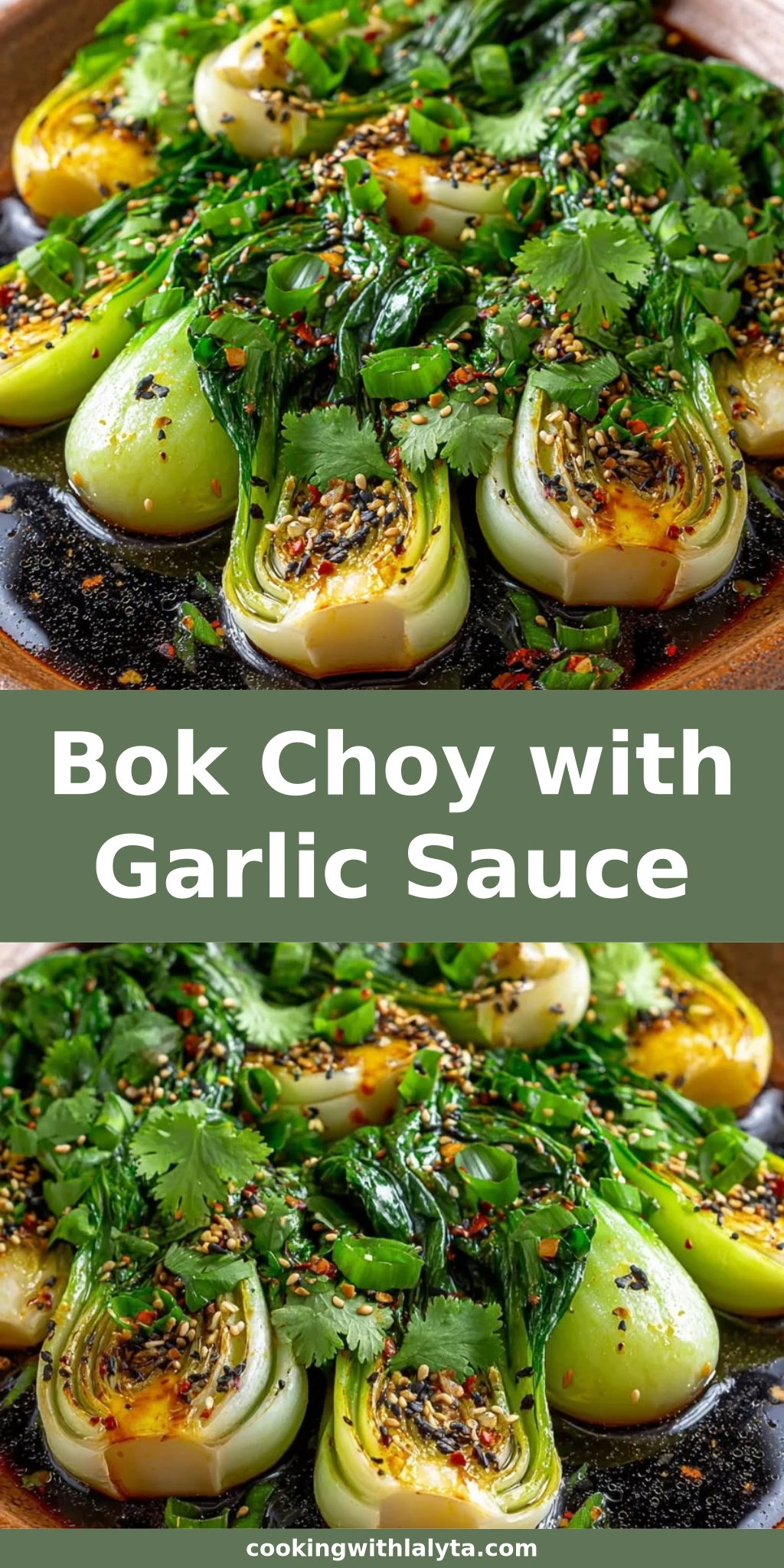
When I plate this Chinese garlic bok choy, I like to arrange the halved heads in a neat fan on a deep platter, then spoon any extra sauce over the top so every piece is lacquered. A sprinkle of toasted sesame seeds and a confetti of sliced green onions add a fresh, vibrant finish that echoes the greenmarkets of New York. This dish shines as a side, but honestly, I’ve been known to eat a whole batch with just a bowl of fluffy jasmine rice — the sauce soaks in, and it’s pure comfort.
For a Moroccan twist that makes my heart sing, I sometimes serve the bok choy alongside chermoula-marinated grilled chicken or pan-seared lamb chops. The garlicky, umami glaze plays beautifully with the smoky, herby North African flavors I grew up with. If you’re hosting a dinner party, set out little dishes of chili crisp or extra sesame oil for guests to customize. And always, always serve it hot — the sauce loses its luster as it cools, though leftovers are still delightful.
To round out the meal, think about what you’d find in a cozy NYC bistro: a glass of off-dry Riesling or a crisp lager cuts through the richness. For a non-alcoholic option, chilled oolong tea or a cucumber-lime spritzer refreshes the palate. No matter how you serve this bok choy side dish, it brings that restaurant-quality sparkle to your weeknight table.
| Pairing Type | Suggestions | Why It Works |
|---|---|---|
| Side Dish | Steamed jasmine rice, pan-fried tofu, grilled miso salmon | Bland bases soak up the sauce; fatty fish balances the char |
| Sauce / Dip | Chili garlic sauce, extra sesame oil, sriracha mayo | Adds heat and creaminess to contrast the clean greens |
| Beverage | Jasmine tea, off-dry Riesling, crisp lager | Floral notes enhance sesame; wine’s sweetness offsets salt |
| Garnish | Toasted sesame seeds, sliced scallions, red pepper flakes | Crunch, fresh bite, and a pop of color |
Make-Ahead, Storage & Reheating
Living in New York means my schedule can be chaotic, so I love a side dish that can be prepped ahead. I wash and halve the bok choy the night before, store it wrapped in a damp paper towel inside a zip-top bag in the fridge, and whisk together the sauce (minus the slurry) so it’s ready to go. When dinnertime arrives, all I do is sear and simmer. If you have leftover sauteed bok choy, it keeps surprisingly well — the flavor even deepens overnight, though you’ll lose a touch of that just-cooked snap.
| Method | Container | Duration | Reheating Tip |
|---|---|---|---|
| Refrigerator | Airtight glass container | 3–4 days | Warm in a skillet with 1 Tbsp water over medium heat; toss gently |
| Freezer | Not recommended | — | Texture becomes mushy; if you must, freeze sauce and bok choy separately, then stir-fry |
| Make-Ahead | Prep bok choy (washed/halved) & sauce | 1 day in advance | Cook fresh when ready; do not add slurry until final minute |
When reheating refrigerated bok choy, I never use the microwave — it turns the greens limp and watery. Instead, a quick spin in a hot nonstick skillet with a splash of water revives the sauce and re-crisps the edges. If the sauce has thickened too much, a spoonful of chicken broth or water brings it back to life. Honestly, I often eat leftovers cold, straight from the fridge, tossed into a grain bowl with quinoa and a soft-boiled egg — an easy no-reheat lunch that still tastes like a little luxury.
Variations & Easy Swaps
| Variation | Key Change | Best For | Difficulty Impact |
|---|---|---|---|
| Spicy Szechuan | Add 1 tsp chili bean paste + pinch Sichuan pepper | Heat lovers | Easy |
| Gluten-Free | Use tamari & gluten-free oyster sauce | Celiac-friendly | Easy |
| Miso-Ginger Spring | Swap oyster sauce for white miso; add 1 tsp grated ginger | Lighter, brighter flavor | Easy |
Spicy Szechuan Bok Choy
For a version that brings the fire of my favorite NYC Szechuan joints, stir a teaspoon of chili bean paste (doubanjiang) into the sauce mixture and add a pinch of ground Sichuan peppercorn right before the slurry. The numbing, tingly heat contrasts beautifully with the sweet char, and the deep red oil that pools around the bok choy is downright dreamy. This is my go-to when I’m craving something bold to pair with a cold Tsingtao beer. Just warn your guests — it packs a punch that even my Moroccan spice-loving palate respects.
Gluten-Free Bok Choy with Garlic Sauce
Turning this into a celiac-safe side is as simple as swapping in tamari for soy sauce and seeking out a gluten-free oyster sauce (Kikkoman makes one, or Lee Kum Kee’s Panda brand is often safe — always check the label). The flavor remains remarkably similar: the tamari brings a slightly richer, less salty umami, and the oyster sauce’s depth stays intact. I’ve served this gluten-free version at dinner parties alongside my gluten-free teriyaki chicken, and no one could tell the difference. Just be sure your cornstarch is pure and not a blend with wheat flour.
Miso-Ginger Spring Twist
When the first ramps and spring onions appear at the Union Square Greenmarket, I morph this recipe into a miso-ginger delight. Replace the oyster sauce entirely with 1 tablespoon of white miso paste whisked into the broth, and add a teaspoon of freshly grated ginger to the sauce. The result is a lighter, slightly tangy glaze with a gingery kick that makes the bok choy taste like spring on a plate. I love this version alongside poached cod or a simple soba noodle salad. It’s proof that a few small tweaks can create an entirely new dish while keeping the quick, foolproof method intact.
How do you clean and cut bok choy for the best texture in garlic sauce?
Start by running the whole head under cool water, gently fanning the leaves to dislodge any soil trapped near the base — this is crucial because grit can ruin the final dish. Pat everything thoroughly dry; wet bok choy will steam rather than sear. Trim only a sliver off the dried root end, keeping the head intact, then slice vertically in half through the core. For the best texture in a bok choy with garlic sauce recipe, I always cut baby bok choy in halves and full-size bok choy in quarters, making sure each piece has a flat cut side for maximum caramelization. The flat surface gets that beautiful char while the stems stay juicy inside. If you notice any limp outer leaves, peel them away before cooking.
What can I substitute for soy sauce in bok choy with garlic sauce?
If you’re avoiding soy, tamari is the best 1:1 swap — it’s gluten-free and brings a similarly savory, slightly richer umami profile that works perfectly in this easy bok choy recipe. For a soy-free alternative, coconut aminos offers a milder, sweeter flavor with less sodium, so you may need to adjust the sugar and add a pinch of salt. Another option is liquid aminos (like Bragg’s), which tastes quite close to soy sauce but is not fermented. In my Paris culinary school days, we even made a quick “soy-less” sauce from reduced mushroom broth and salt — it’s not the same but works in a pinch. Whichever substitute you choose, the goal is to preserve the salty depth that balances the sweet oyster sauce.
Should I blanch bok choy before stir-frying with garlic sauce?
No, I never blanch bok choy for this sauteed bok choy recipe — and I’ll explain why. Blanching precooks the stems and leaves, making it nearly impossible to achieve the char and crisp-tender contrast we’re after. The waterlogged greens would steam in the pan and dilute your gorgeous garlic sauce. Instead, my method uses a high-heat sear on the cut sides to gently cook the thick stems while the leaves only touch the heat briefly. If you find your bok choy still too firm after the simmer, simply extend the covered cooking time by a minute. Trust the process: the combination of char, steam, and sauce creates perfectly cooked bok choy every time without an extra pot of boiling water.
What main dishes pair well with bok choy in garlic sauce?
This Chinese garlic bok choy is a versatile side that complements a wide range of mains. I love it alongside pan-seared salmon or ginger-soy glazed chicken — the clean, garlicky greens cut through the richness beautifully. For a vegetarian feast, serve it with crispy tofu stir-fried in black bean sauce or a hearty mushroom fried rice. In my own kitchen, I often pile it next to Moroccan spiced lamb chops or a simple roast chicken, because the sauce’s umami bridges different cuisines effortlessly. Even a bowl of ramen or a simple soba noodle salad becomes a complete meal with a side of this glossy, tender veg. Essentially, anything that loves garlic will love this bok choy side dish.
Can I use regular bok choy instead of baby bok choy?
Absolutely. While baby bok choy is my first choice for its tenderness and quick cooking, full-size bok choy works wonderfully — you’ll just need to adjust the prep and timing. Halve or quarter mature bok choy lengthwise so you have similar-sized wedges, and remove any very tough outer leaves. Because the stems are thicker, increase the simmer time (step 6) by 1-2 minutes and check for doneness with a knife tip. The flavor is slightly more earthy, but the garlic sauce will still coat it beautifully. I often grab a large head of bok choy at the NYC greenmarket when baby ones aren’t available, and it’s just as satisfying.
Is this bok choy with garlic sauce recipe gluten-free?
As written, it is not gluten-free because regular soy sauce and oyster sauce typically contain wheat. However, it’s incredibly easy to make a gluten-free version: swap the soy sauce for tamari (most brands are wheat-free, but double-check) and use a certified gluten-free oyster sauce like Kikkoman’s. The cornstarch slurry is naturally gluten-free. This simple adaptation doesn’t compromise the dish’s signature savory depth, and I’ve served it to friends with celiac disease who couldn’t taste the difference. So yes, with those two small swaps, this easy bok choy recipe becomes safe for gluten-free diners.
How do I make this dish spicy?
To turn up the heat, you have several delicious options. Stir a teaspoon of sambal oelek or chili garlic paste into the sauce mixture before pouring. Alternatively, add a pinch of red pepper flakes along with the garlic in step 5 for a subtle flakey heat. For a numbing Szechuan kick, sprinkle a dash of ground Sichuan peppercorn right at the end. I sometimes keep it simple by drizzling chili crisp over the finished dish. All these methods amplify the Chinese garlic bok choy experience without overpowering the delicate greens. Start small and taste — you can always add more, but you can’t take it out.
What’s the best oil for stir-frying bok choy?
For the high-heat sear we use, you need an oil with a high smoke point. Vegetable oil is my everyday go-to — it’s neutral and lets the garlic shine. Canola oil, avocado oil, or peanut oil are excellent alternatives; you could even use light olive oil if that’s what you have. Avoid butter or unrefined coconut oil because they’ll burn before you get that golden char. In my Paris training, we often used a blend of peanut and sesame oil for wok cooking, but here I reserve the sesame oil for the finishing drizzle. Choose an oil that can handle the heat, and your sauteed bok choy will sear perfectly.
How long does leftover bok choy with garlic sauce last?
Stored in an airtight container in the refrigerator, leftover bok choy with garlic sauce will keep for 3–4 days. The vegetables will soften slightly and the sauce may thicken, but the flavors meld beautifully. To reheat, I avoid the microwave—it turns the greens limp—instead, warm them in a nonstick pan with a splash of water or broth over medium heat, tossing gently until glossy again. If the dish seems too salty the next day, a little rice vinegar can brighten it. You can also enjoy them cold in a grain bowl; I often do this for a quick office lunch.
Can I double this recipe for a crowd?
Yes, doubling is straightforward, but you must avoid overcrowding the pan. Work in batches: sear half the bok choy at a time to maintain high heat and that essential char. After flipping all batches and adding garlic, you can return all the bok choy to the pan (use a larger wok or skillet if possible) to pour the doubled sauce and simmer. The cornstarch slurry will thicken the larger volume just fine. I’ve scaled this bok choy side dish for dinner parties of eight with great success, and it always disappears first. Just be ready to serve promptly so the greens stay vibrant.
Share Your Version!
I truly hope this bok choy with garlic sauce recipe becomes a staple in your rotation — a little bit of Parisian precision, a dash of Moroccan soul, and a whole lot of New York speed. When you make it, snap a photo and tag me on Instagram @cookingwithlalyta; I get giddy seeing those glossy green beauties on your tables. And if you tweaked the heat level or tried the miso-ginger twist, I’d love to hear about it in the comments below. Your twists often inspire my next kitchen experiment!
From my NYC kitchen to yours — I hope this recipe brings as much warmth to your table as it does to mine. — Lalybeth 🧡
Love This Recipe? Save It to Pinterest!
If you enjoyed this Bok Choy with Garlic Sauce recipe, don’t let it get lost in your browser tabs! 😄 Pin it now so you can find it again anytime — and explore hundreds more tried-and-tested recipes waiting for you on my Pinterest boards.
👉 Follow Lalybeth on Pinterest @cookingwithlalyta
📌 Pin this recipe · 🔁 Re-pin your favorites · 💬 Tag me when you make it — I love seeing your creations!
Bok Choy with Garlic Sauce
- Total Time: 15 minutes
- Yield: 4 1x
Description
A simple and flavorful side dish of tender bok choy tossed in a savory garlic sauce. Ready in minutes, this recipe pairs perfectly with any Asian-inspired meal.
Ingredients
- 4 heads baby bok choy, halved lengthwise
- 2 tablespoons vegetable oil
- 4 cloves garlic, minced
- 2 tablespoons soy sauce
- 1 tablespoon oyster sauce
- 1 teaspoon sugar
- 1/2 cup water or chicken broth
- 1 teaspoon sesame oil
- 1 teaspoon cornstarch mixed with 2 teaspoons water (slurry)
Instructions
- Wash bok choy thoroughly and pat dry. Halve each head lengthwise.
- In a small bowl, mix soy sauce, oyster sauce, sugar, and water/broth. Set aside.
- Heat vegetable oil in a large skillet or wok over medium-high heat.
- Add bok choy cut side down and cook without moving for 2 minutes, until lightly charred.
- Flip bok choy, add garlic, and cook for 30 seconds until fragrant.
- Pour the sauce mixture over the bok choy. Reduce heat to medium, cover, and simmer for 2–3 minutes until bok choy is tender.
- Stir in the cornstarch slurry and cook for 1 minute until sauce thickens.
- Drizzle with sesame oil, toss gently, and serve immediately.
Notes
For a vegan version, substitute oyster sauce with mushroom stir-fry sauce. Adjust garlic to taste.
- Prep Time: 5 minutes
- Cook Time: 10 minutes
- Method: Side Dish
- Cuisine: Chinese
Nutrition
- Calories: 95
- Sugar: 3g
- Fat: 6g
- Carbohydrates: 8g
- Protein: 4g
Tried This Recipe? Leave a Comment!
Did you make this recipe? I’d love to hear how it turned out! Please leave a comment and a rating below. Your feedback helps other home cooks and supports cookingwithlalyta.com!
For more delicious inspiration, follow me on Pinterest!