Table of Contents
Lemon Pesto Tortellini with Burrata & Roasted Pine Nuts – Creamy, Crunchy Weeknight Luxe
I still remember the first time I tasted a dish that felt like sunshine on a plate. It was a warm spring day in my tiny NYC kitchen, and I had just brought home a ball of impossibly fresh burrata from a vendor at the Union Square Greenmarket. As I looked at the cheese, I thought of the pine nut-studded couscous my Moroccan mother used to make for special occasions – the way she’d toast them until they were golden and fragrant, filling the house with a nutty, buttery perfume. That memory sparked an idea: what if I married that toasty crunch with a zesty, herbaceous lemon pesto and pillowy cheese tortellini? The result is this Lemon Pesto Tortellini Recipe – a dish that combines the creaminess of burrata, the brightness of lemon, and deep savory notes in just 25 minutes. It’s my go-to when I want something that tastes like I spent hours in the kitchen, but really, it’s almost effortless.
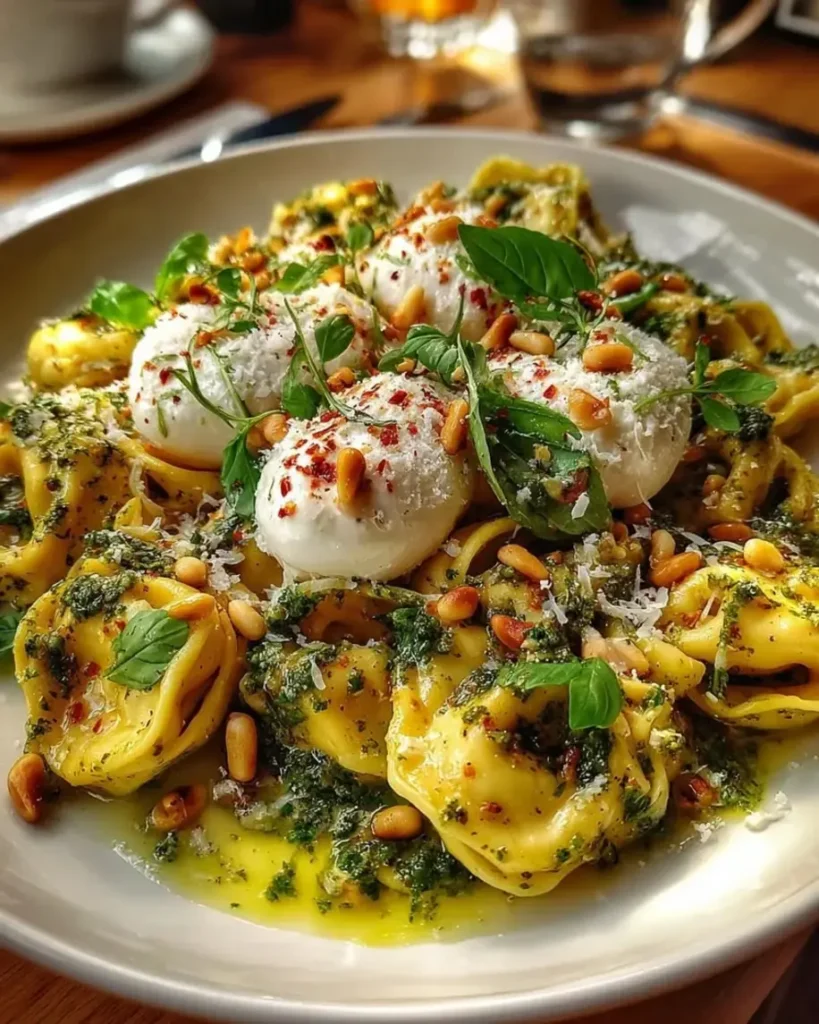
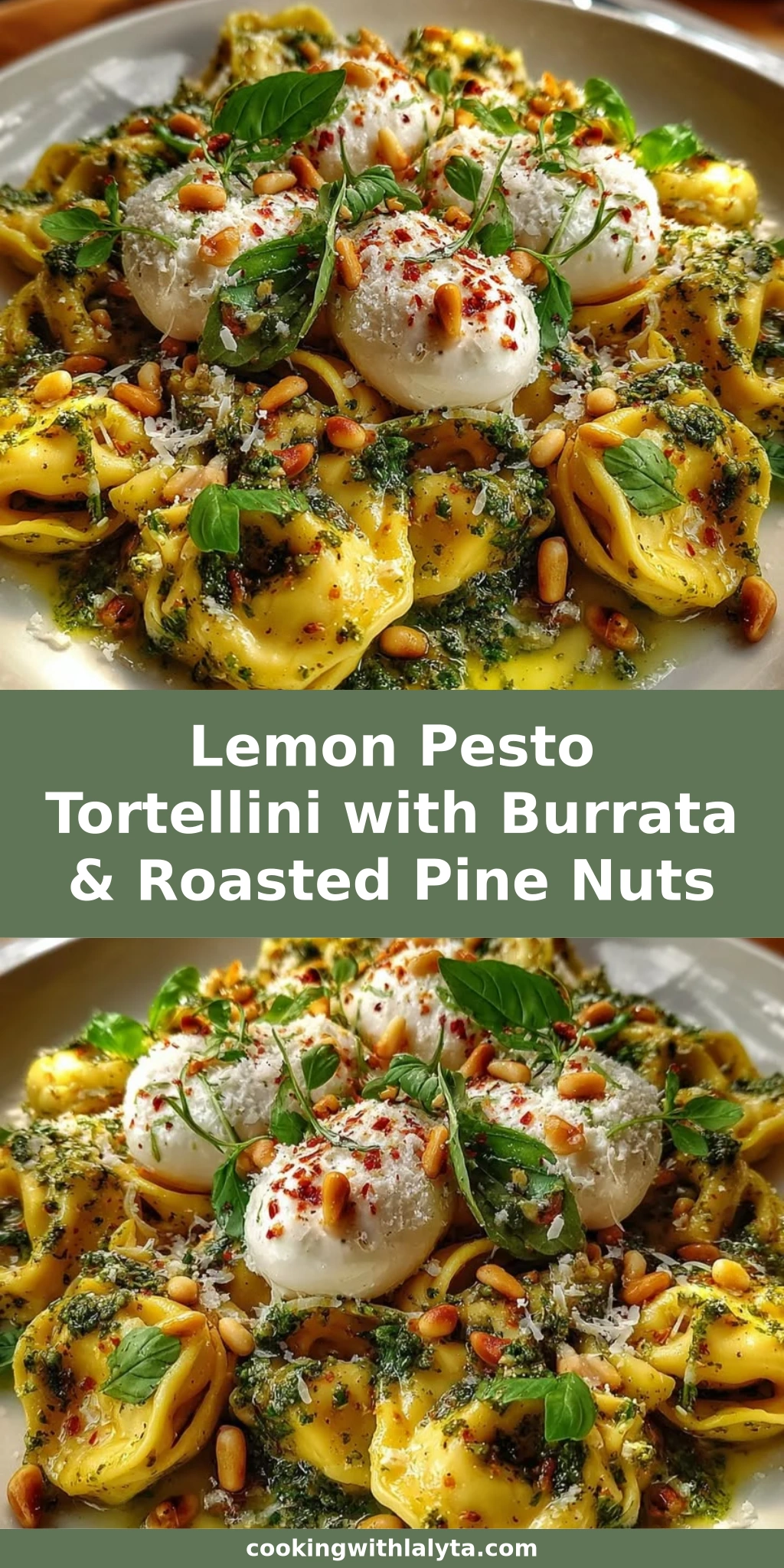
Picture this: each forkful of tender tortellini is cloaked in a silky basil pesto that’s been turbocharged with fresh lemon zest and juice, cutting through the richness with a citrusy spark. Then you get that cool, creamy burrata – it’s almost molten, spilling its milky center over the warm pasta. Right on top, the roasted pine nuts add this addictive, nutty crackle that takes every bite from simple to spectacular. The aroma alone is intoxicating: the garlicky pesto, the oven-toasted pine nuts, and the fresh basil you tear over the finished dish all mingle in the air. It’s a balance of textures that reminds me of the best Parisian bistro plates I learned to build during my training – where each element has a specific role to play, but they come together in perfect harmony.
What makes this version stand out from other burrata pasta recipes is that I treat the lemon pesto like a sauce, not just a condiment, loosening it with a splash of starchy pasta water to coat every nook and cranny of the tortellini. Too often, pesto sits in a little dollop on top, leaving bites underneath naked. I’ll show you a trick to make it cling beautifully. Plus, I’m sharing the one mistake even experienced cooks make when toasting pine nuts – and the foolproof method to never burn them again. Stick with me, and you’ll have a bowl of pasta so good, it’ll become your new weeknight signature.
Why This Lemon Pesto Tortellini Recipe Is the Best
The Flavor Secret: Most pesto recipes rely on Parmesan and basil alone. I borrowed a trick from my French sauce training and added a generous amount of lemon zest plus a full two tablespoons of juice to the food processor. This acidity lifts the entire dish, preventing the richness of the burrata and olive oil from weighing it down. It’s reminiscent of the preserved lemon notes I grew up with in Moroccan tagines – but in a vibrantly Italian-American context. The result is a pesto that tastes fresher, brighter, and more layered than any jar you’ll find at the store.
Perfected Texture: The interplay of creamy, chewy, and crunchy is what makes this tortellini with burrata so memorable. I tested countless ways to incorporate the burrata, and tearing it by hand over the final plated pasta (rather than mixing it in) ensures each person gets pockets of velvety cheese that melt slightly on contact with the warm tortellini but stay intact long enough to taste their full luscious essence. The pine nuts, toasted just 5–7 minutes at 350°F, become crisp without turning bitter – a fine line that my Parisian instructor always stressed when working with nuts.
Foolproof & Fast: This is truly an easy tortellini dinner. While the water boils, you toast the nuts. While the pasta cooks, you blitz the pesto in under a minute. By the time the tortellini are drained, your sauce is ready, and you’re basically minutes away from serving. Even if you’ve never made fresh pesto before, the step-by-step instructions below make it impossible to mess up. Plus, I’ve included substitution tables and variation ideas so you can adapt it to what you have on hand – because as a New Yorker, I know we don’t always have time for a special grocery run.
Lemon Pesto Tortellini Recipe Ingredients
I always like to walk through my ingredients before I start – it’s a habit I picked up in culinary school and it saves so much time later. When I shop for this recipe in NYC, I grab fresh tortellini from a local Italian deli if I can, but dried works beautifully too. For the pine nuts, I head to the bulk section at my neighborhood co-op where they tend to be freshest. The burrata is often the star, so I ask the cheese monger for a piece that’s served at room temperature (cold burrata can be a bit solid and won’t melt as luxuriously). And don’t skimp on the lemon – you’ll use both the zest and the juice, so grab an organic one if possible since we’ll be incorporating the peel.
Ingredients List
- 1 lb (450g) cheese tortellini (fresh or dried)
- 1/2 cup pine nuts
- 1/3 cup fresh basil leaves
- 1/4 cup grated Parmesan cheese
- 2 tablespoons lemon juice (about 1 lemon)
- 1 tablespoon lemon zest
- 1 clove garlic
- 1/3 cup extra-virgin olive oil
- Salt and black pepper, to taste
- 8 oz (225g) burrata cheese (at room temperature)
- Additional basil leaves, for garnish
Ingredient Spotlight
Cheese Tortellini: The foundation of our burrata pasta recipe. Fresh, refrigerated tortellini cook in about 3 minutes and have a delicate egg dough that pairs perfectly with the light pesto. Dried tortellini work just as well; you’ll need to boil them about 7–9 minutes. I sometimes look for tri-color tortellini for a pop of orange and green from tomato and spinach dough – it’s a little nod to my NYC love of vibrant plating. Substitution: Gluten-free tortellini (corn and rice flour blend) holds shape well; just watch the cooking time so it doesn’t get mushy.
Pine Nuts: These buttery gems are essential for that signature roasted pine nuts pasta crunch. When toasted, they release natural oils and become almost floral. If pine nuts are out of budget, blanched slivered almonds or raw walnuts (chopped) are close substitutes – they won’t have the same resinous sweetness, but they’ll give you that necessary crisp contrast. I sometimes recall my mother’s couscous where she’d toast almonds and pine nuts together; the flavor combination is beautiful.
Burrata: The showstopper. This fresh Italian cheese has a solid mozzarella outer shell and a creamy, stracciatella-filled center. Room temperature is non-negotiable – it ensures the inside is soft and flowing. If you can’t find burrata, fresh mozzarella (preferably the kind packed in water) torn into pieces is a decent stand-in, but you’ll miss the dramatic creaminess. In a pinch, a few dollops of whole-milk ricotta work, though the texture becomes more grainy.
Lemon Zest & Juice: The acidity that makes the lemon pesto sing. I use a Microplane to zest the lemon right over the food processor bowl to catch those aromatic oils. The juice joins the party for a sharper tang. A good substitution is 1 tablespoon of quality white wine vinegar plus a little extra zest, but fresh lemon truly elevates this.
| Original Ingredient | Best Substitution | Flavor / Texture Impact |
|---|---|---|
| Cheese tortellini | Gluten-free tortellini | Slightly chewier texture; get al dente carefully. |
| Pine nuts | Slivered almonds or chopped walnuts | Less buttery sweetness, but still crunchy; toast gently. |
| Burrata | Fresh mozzarella (torn) | Creamy center missing; drizzle a little heavy cream with mozzarella for a similar effect. |
| Parmesan | Grana Padano or Pecorino | Pecorino adds saltiness; reduce added salt accordingly. |
| Basil | Spinach + a touch mint | Milder, less anise; mint helps mimic brightness. |
How to Make Lemon Pesto Tortellini with Burrata & Roasted Pine Nuts — Step-by-Step
Before we dive in, take a deep breath – this is one of those dishes that feels like a gentle kitchen meditation. I promise, each step flows into the next with minimal fuss. Let’s get started.
Step 1: Toast the Pine Nuts
Preheat your oven to 350°F (175°C). Spread ½ cup of pine nuts in an even single layer on a small baking sheet. Pop them into the oven and toast for 5–7 minutes. You’re looking for a light golden-brown color and a nutty fragrance; start checking at the 5-minute mark because pine nuts can go from perfectly toasted to burnt in seconds. Immediately transfer the toasted nuts to a cool plate or bowl – leaving them on the hot baking sheet will continue cooking and can ruin them.
⚠️ Common Mistake to Avoid: Walking away from the oven while toasting pine nuts. Their high oil content makes them extremely quick to burn. I set a timer for 4 minutes and then check every 30 seconds until they’re just right.
Step 2: Cook the Tortellini
Bring a large pot of salted water to a rolling boil. Add 1 lb of cheese tortellini and cook according to package directions until al dente. Before draining, carefully scoop out and reserve ½ cup of the starchy pasta water – this liquid gold will help create a silky sauce. Drain the tortellini and give them a quick shake, but do not rinse. Rinsing washes away surface starch that helps the pesto cling.
💡 Lalybeth’s Pro Tip: Salt your pasta water generously – it should taste like the sea. This is the only chance to season the tortellini themselves from within; a bland boil leads to a flat final dish.
Step 3: Make the Lemon Pesto
While the pasta cooks, it’s pesto time. In the bowl of a food processor, combine ⅓ cup fresh basil leaves (packed), ¼ cup grated Parmesan, 2 tablespoons fresh lemon juice, 1 tablespoon lemon zest, 1 clove of garlic, and a pinch of salt. Pulse a few times to chop. Then, with the motor running, slowly drizzle in ⅓ cup extra-virgin olive oil until the mixture is smooth and emulsified. Stop and scrape down the sides, then pulse again. Taste and adjust salt and pepper. The pesto should be vibrant, lemony, and garlicky – not overwhelmingly sharp; the burrata will mellow it on the plate.
💡 Lalybeth’s Pro Tip: If your pesto tastes too sharp, add a tiny pinch of sugar or a couple more basil leaves. If it’s too thick, thin it with a teaspoon of pasta water at a time until it’s just pourable but still lush.
Step 4: Toss Pasta with Pesto
Transfer the drained tortellini to a large skillet set over medium heat. Pour the lemon pesto over the top and add a splash of the reserved pasta water – start with 2 tablespoons. Gently toss everything together with a silicone spatula until each tortellino is evenly coated. The heat will warm the pesto and the starch in the water will bind it to the pasta, creating a creamy, clingy sauce. If the mixture seems dry, add another tablespoon of pasta water; you want it glossy, not soupy.
⚠️ Common Mistake to Avoid: Dumping all the pesto onto hot pasta then letting it sit. The pesto can separate or the tortellini can clump. Keep it moving in the skillet for 1–2 minutes to achieve that perfect emulsion.
Step 5: Assemble with Burrata & Pine Nuts
Remove the skillet from heat. Divide the pesto-tossed tortellini among four shallow bowls. Take the room-temperature burrata (8 oz total, usually 2 balls) and gently tear it into rustic pieces using clean hands, distributing it evenly over the pasta. Immediately sprinkle each bowl with the toasted pine nuts and garnish with a few small fresh basil leaves. The residual heat will soften the burrata edges while its center stays cool and creamy. Serve at once.
💡 Lalybeth’s Pro Tip: For extra pop, finish with a whisper of flaky sea salt (like Maldon) on the burrata and a tiny extra grating of lemon zest over each bowl – it wakes up all the flavors right before the first bite.
| Step | Action | Duration | Key Visual Cue |
|---|---|---|---|
| 1 | Toast pine nuts | 5–7 min | Golden brown, fragrant |
| 2 | Cook tortellini | Per package | Al dente, floating |
| 3 | Blend lemon pesto | 2 min | Smooth, bright green |
| 4 | Toss pasta & pesto | 1–2 min | Evenly coated, glossy |
| 5 | Plate & garnish | 1 min | Burrata torn, pine nuts scattered |
Serving & Presentation
I believe we eat with our eyes first, and this dish is a natural beauty. To serve, I like wide, shallow bowls that let the tortellini spread out, making the torn burrata and golden pine nuts the stars. After placing the pasta in the bowl, I gently drape the burrata pieces so they nestle into the warm pasta but still hold their shape. A final drizzle of the best extra-virgin olive oil you have adds a glossy finish and a little peppery note. I also love to scatter a few small basil leaves and a pinch of lemon zest over the top – it’s a moment that reminds me of finishing plates at my Paris restaurant stage, where every garnish had intention.
This tortellini with burrata is a full meal on its own, but it pairs beautifully with a simple arugula salad dressed in lemon vinaigrette – the peppery greens echo the basil and brighten the plate. Sometimes I’ll add a side of garlic-rubbed crostini to scoop up any stray pesto and burrata cream. For a New York twist, serve it alongside a glass of chilled, unoaked Chardonnay or a crisp Italian Pinot Grigio. The wine’s acidity cuts the richness like a squeeze of extra lemon.
If you’re hosting a dinner party, you can plate individual servings or present the whole skillet in the center of the table for a rustic family-style approach – just be ready to dive in right away while the burrata is at its silkiest.
| Pairing Type | Suggestions | Why It Works |
|---|---|---|
| Side Dish | Simple arugula salad with lemon vinaigrette; roasted asparagus with Parmesan | Peppery greens complement basil; roasted asparagus echoes nuttiness. |
| Sauce / Dip | Extra pesto on the side; sun-dried tomato tapenade | Adds intensity; tangy tomato contrasts creamy burrata. |
| Beverage | Pinot Grigio, unoaked Chardonnay, sparkling water with lemon | Acidity lifts the richness; effervescence refreshes palate. |
| Garnish | Fresh basil, lemon zest, flaky sea salt, chili flakes | Boosts aromatic freshness; gentle heat balances cream. |
Make-Ahead, Storage & Reheating
Life in NYC can be a whirlwind, so I’m all about smart make-ahead components. The lemon pesto can be prepared up to 3 days in advance and stored in a jar in the fridge, with a thin layer of olive oil on top to prevent oxidation. The pine nuts can be toasted and kept in an airtight container at room temperature for a week. Cooking the tortellini, however, is best done fresh because the dish comes together in minutes. If you do have leftovers, they’ll hold, but burrata doesn’t reheat well – it becomes rubbery. I have a clever trick for reviving cold pasta below.
| Method | Container | Duration | Reheating Tip |
|---|---|---|---|
| Refrigerator | Airtight container | Up to 2 days | Gently reheat tortellini with a splash of water in a pan; top with fresh burrata after. |
| Freezer | Not recommended | — | Cooked tortellini gets mushy; pesto can separate. Freeze pesto separately. |
| Make-Ahead | Pesto in jar; pine nuts in bag | Pesto: 3 days; nuts: 1 week | Cook pasta fresh, toss with pesto, assemble with room temp burrata. |
If you must reheat a full portion: transfer the tortellini (without burrata) to a skillet over low heat. Add a tablespoon of water or milk and a tiny drizzle of olive oil. Stir gently until warmed through, then plate and tear fresh burrata on top. The pasta won’t be as perfectly saucy as the first day, but it’s still delicious. Whatever you do, don’t microwave the burrata – trust me, I’ve tried, and it’s a sad, oily mess. Instead, let the burrata come to room temperature and add it cold to the hot pasta; the contrast is actually lovely.
Storing the components separately is also a game changer. I often make a double batch of pesto and freeze half in an ice cube tray — pop a cube or two straight into a hot pan when you need a quick sauce for any pasta. It’s like a little taste of summer in the middle of a New York winter.
Variations & Easy Swaps
One of the joys of this easy tortellini dinner is its flexibility. Over time, I’ve developed a few spins that honor my Moroccan background, my French training, and my love for seasonal NYC produce. Here are three go-to variations to help you make this recipe your own.
| Variation | Key Change | Best For | Difficulty Impact |
|---|---|---|---|
| Spicy ‘Nduja Kick | Melt 2 tbsp ‘nduja into pesto | Heat lovers | Stays easy |
| Dairy-Free & Vegan | Omit Parmesan & burrata; use vegan pesto, pine nuts, optional cashew cream | Dairy-free diets | Easy with store-bought pesto |
| Spring Pea & Mint Fresco | Blanch peas; swap half basil for fresh mint | Spring entertaining | Adds one tiny step |
Variation 1: Spicy ‘Nduja Kick
When I’m craving something with a little fire, I reach for ‘nduja, a spreadable Calabrian salami paste that I discovered at an Italian specialty shop in the East Village. After making the pesto, I stir in a couple of tablespoons of ‘nduja until it melts into the green sauce, turning it a gorgeous rust color. The spicy, porky warmth is incredible against the cool burrata and sweet pine nuts. It’s reminiscent of the harissa-spiked sauces I grew up with in Morocco — that same kind of deep, smoky heat that enhances rather than overwhelms. Serve with a drizzle of hot honey if you want to push it over the top.
Variation 2: Dairy-Free & Vegan
To make this completely plant-based, the burrata is the biggest change. You can substitute a generous scoop of homemade or store-bought cashew cream — or even firm tofu blended with a little lemon juice and nutritional yeast for a creamy, tangy “cheese.” Omit the Parmesan from the pesto and use a high-quality vegan pesto (I love the kale and cashew version from a local NYC brand) or make your own by swapping in nutritional yeast. The roasted pine nuts remain the same, delivering that essential crunch. The result is a lighter dish that still feels indulgent, and honestly, even my non-vegan friends have asked for the recipe.
Variation 3: Spring Pea & Mint Fresco
When the first snap peas arrive at the farmers market, I can’t resist adding them to everything. For this seasonal twist, blanch ½ cup of fresh or frozen green peas in the pasta water during the last minute of cooking, drain along with the tortellini, and toss them with the pesto. I also replace half the basil with fresh mint leaves in the pesto — a combination I learned from a friend in Paris who used to make a pea-mint soup so bright it tasted like a garden. The mint amplifies the lemon’s freshness, and the peas add a sweet pop. Finish with a few pea shoots or microgreens if you’re feeling fancy; it’s a dish that screams spring in NYC.
Frequently Asked Questions
Can I use a different cheese instead of burrata for this lemon pesto tortellini?
Absolutely, and I’ve done it many times. The closest match is fresh mozzarella — the kind packed in water, torn into pieces — but you’ll lose the oozy, creamy center. To mimic burrata’s effect, drizzle a little heavy cream over the mozzarella just before serving, or dollop some whole-milk ricotta seasoned with salt and pepper. If you want a tangier punch, soft goat cheese crumbled on top works beautifully; its tartness plays off the lemon pesto in a lively way. Just make sure whatever cheese you choose is at room temperature so it melts gently when it meets the warm pasta.
How do you roast pine nuts for the lemon pesto tortellini without burning them?
Roasting pine nuts is all about vigilance. I always use the oven method at 350°F (175°C) rather than a dry skillet because the heat is more even and forgiving. Spread them in a single layer on a baking sheet and set a timer for 5 minutes. Check immediately — they should be light golden and fragrant. If not, give them another 1–2 minutes, but never step away. As soon as they’re done, transfer them to a cool plate or bowl; the hot pan will keep cooking them. If you prefer the stovetop, use a small skillet over medium-low heat and stir constantly. The moment you smell a toasty, nutty aroma, pull them off the heat and pour onto a plate. It’s a technique I practice frequently because, as I mentioned, my mother used them in couscous — she’d say, “Once they speak, take them off.”
Should I use fresh or dried tortellini for lemon pesto tortellini with burrata?
Both work wonderfully, so go with what’s convenient. Fresh tortellini (found in the refrigerated section) cook in about 3 minutes and have a softer, delicate egg dough that soaks up pesto like a dream, which I love when I want an ultra-tender bite. Dried tortellini take a few minutes longer and have a slightly firmer texture that holds up well in the skillet tossing step. If using dried, be extra careful not to overcook — they can turn mushy, whereas fresh are more forgiving. In either case, be sure to salt the water well and cook just until al dente. For a gluten-free option, look for fresh gluten-free tortellini in the freezer section of specialty grocers; they often perform better than dried.
Can I make lemon pesto tortellini with burrata ahead of time and reheat it?
I’ll be honest: this dish is at its absolute best eaten right after you toss everything together, while the burrata is cool and creamy and the pine nuts are crisp. But you can prep components ahead — make the pesto up to 3 days in advance and store it with a thin layer of olive oil on top to keep it bright green; toast the pine nuts up to a week ahead. Cooked, fully assembled pasta doesn’t reheat perfectly because the burrata can turn rubbery. However, you can reheat the tortellini and pesto mixture in a skillet with a splash of water, then add fresh burrata and toasted pine nuts just before serving. That’s the make-ahead trick I use for weeknights when I need dinner on the table fast.
What can I serve with this easy tortellini dinner?
I treat this as a complete one-bowl meal, but a crisp side salad rounds it out perfectly. An arugula salad with shaved fennel and lemon citronette echoes the pesto’s citrusy notes, while roasted cherry tomatoes on the vine add a juicy, sweet contrast. If I’m feeling like a true New York Italian dinner, I’ll put out some garlic bread to scoop up any extra pesto. For drinks, a chilled glass of Pinot Grigio or a fizzy Meyer lemon soda keeps things light and bright. The goal is a side that doesn’t compete with the bold flavors of the pasta — think simple, fresh, and crunchy.
Can I use store-bought pesto for this recipe?
You certainly can, and I won’t judge! A high-quality refrigerated basil pesto will save you time. To mimic the lemon pesto flavor, stir in the fresh lemon zest and juice after whisking the pesto into your pasta. Taste as you go — jarred pestos can be quite garlicky or salty, so you may want to hold back on added salt. If you can, avoid shelf-stable jarred pesto; the refrigerated versions in the deli section are much fresher tasting. For the best facsimile, warm the pesto gently with a splash of pasta water to loosen it, just as we do with homemade. You’ll still get that vibrant, lemony finish and creamy burrata goodness.
How do I keep the pesto bright green?
Oxidation is the enemy of a brilliant green pesto. I use two little tricks from my French training: first, blanch the basil leaves in boiling water for 5 seconds, then shock them in ice water before blending. This sets the chlorophyll and dramatically delays browning. Second, always cover the surface of leftover pesto directly with plastic wrap or a thin layer of olive oil to block air. Adding the lemon juice early in the blending process also helps, as the acid helps preserve the color. And don’t warm the pesto too aggressively in the skillet; toss it on moderate heat just long enough to coat the pasta. Your pesto will stay that vibrant spring green.
I don’t have a food processor — can I still make the lemon pesto?
Yes, and it’s a great way to connect with the process. Use a mortar and pestle: start by grinding the garlic clove and a pinch of salt into a paste, then add the pine nuts (yes, use a few from the batch), pounding until crumbly. Gradually work in the basil leaves and lemon zest, continuing to crush and grind. Stir in the Parmesan, lemon juice, and finally stream in the olive oil while mixing with the pestle. The texture will be more rustic, a bit like a traditional Genovese pesto. You can also chop everything very finely with a sharp knife on a cutting board and then mix in a bowl — it’s a bit of an arm workout, but totally doable and worth it for a small batch.
Can I add protein to this lemon pesto tortellini?
Absolutely, and it transforms it into an even heartier meal. Grilled chicken breasts or sliced grilled shrimp tossed in a little lemon juice and olive oil make wonderful additions — I’d place them right under the burrata so they soak up the pesto. For a vegetarian option, seared halloumi slices are fantastic; their salty squeakiness holds up alongside the creamy cheese. You could also stir in crispy chickpeas (roast them with smoked paprika) for a plant-based protein boost. Just remember, the burrata is delicate, so I like to keep the protein relatively simple in seasoning to let the lemon pesto shine.
Why is my burrata not creamy or melting properly?
Temperature is everything. Burrata straight from the fridge is firm and its stracciatella center won’t flow. Take it out 30–45 minutes before serving to let it come to room temperature. If you place cold burrata on hot pasta, the outside may warm but the inside stays chilled, and the whole idea is that oozy creaminess. Another factor is the freshness — burrata should be eaten within a day or two of purchase; older burrata can become chalky. Finally, when you tear it, do it over the pasta so any escaping cream lands right where you want it. With room temp, fresh burrata, you’ll get that luscious, melty moment that makes this dish so special.
Share Your Version!
I genuinely love seeing what you create in your own kitchens — it’s one of the greatest joys of this food blogging journey. Did you add a Moroccan twist with a pinch of cumin in the pesto? Did you use a different nut because pine nuts weren’t in the pantry? Whatever you tried, I’d be thrilled to hear about it. Leave a star rating and a comment below; your feedback helps others and often sparks new recipe ideas for me!
When you make this lemon pesto tortellini, snap a photo and share it on Instagram or Pinterest — tag me @cookingwithlalyta so I can repost and celebrate your beautiful dish. And here’s a little challenge: how did you serve your burrata? Tear it, slice it, or plate it whole? I’d love to know which method gave you that perfect creamy bite. Let’s cook together, from my NYC kitchen to yours.
From my NYC kitchen to yours — I hope this recipe brings as much warmth to your table as it does to mine. — Lalybeth 🧡
Love This Recipe? Save It to Pinterest!
If you enjoyed this Lemon Pesto Tortellini with Burrata & Roasted Pine Nuts recipe, don’t let it get lost in your browser tabs! 😄 Pin it now so you can find it again anytime — and explore hundreds more tried-and-tested recipes waiting for you on my Pinterest boards.
👉 Follow Lalybeth on Pinterest @cookingwithlalyta
📌 Pin this recipe · 🔁 Re-pin your favorites · 💬 Tag me when you make it — I love seeing your creations!

Lemon Pesto Tortellini with Burrata & Roasted Pine Nuts
- Total Time: 25 minutes
- Yield: 4 servings 1x
Description
A creamy and vibrant pasta dish featuring cheese tortellini tossed in a bright lemon pesto, topped with luscious burrata and crunchy roasted pine nuts. Perfect for a quick but impressive weeknight dinner.
Ingredients
- 1 lb (450g) cheese tortellini (fresh or dried)
- 1/2 cup pine nuts
- 1/3 cup fresh basil leaves
- 1/4 cup grated Parmesan cheese
- 2 tablespoons lemon juice (about 1 lemon)
- 1 tablespoon lemon zest
- 1 clove garlic
- 1/3 cup extra-virgin olive oil
- Salt and black pepper to taste
- 8 oz (225g) burrata cheese (room temperature)
- Additional basil leaves for garnish
Instructions
- 1. Preheat oven to 350°F (175°C). Spread pine nuts on a baking sheet and toast for 5-7 minutes, until golden and fragrant. Set aside.
- 2. Cook tortellini according to package directions in salted boiling water until al dente. Reserve 1/2 cup pasta water, then drain.
- 3. While pasta cooks, make the lemon pesto: In a food processor, combine basil, Parmesan, lemon juice, lemon zest, garlic, and a pinch of salt. Pulse while slowly adding olive oil until smooth. Adjust seasoning.
- 4. In a large skillet over medium heat, toss the drained tortellini with the lemon pesto. Add a splash of reserved pasta water if needed to loosen the sauce.
- 5. Divide tortellini among serving bowls. Tear burrata into pieces and place on top. Sprinkle with toasted pine nuts and garnish with fresh basil. Serve immediately.
Notes
For a dairy-free version, omit burrata and use vegan pesto. You can substitute walnuts for pine nuts if desired. Leftovers keep in the fridge for up to 2 days, but best served fresh.
- Prep Time: 10 minutes
- Cook Time: 15 minutes
- Method: Main Course
- Cuisine: Italian-American
Nutrition
- Calories: 620 kcal
- Sugar: 4 g
- Fat: 38 g
- Carbohydrates: 48 g
- Protein: 24 g
Tried This Recipe? Leave a Comment!
Did you make this recipe? I’d love to hear how it turned out! Please leave a comment and a rating below. Your feedback helps other home cooks and supports cookingwithlalyta.com!
For more delicious inspiration, follow me on Pinterest!