Table of Contents
Roasted Vegetable Couscous Bowl with Crispy Halloumi, Whipped Feta & Lemon Herb Dressing – The Ultimate Vegetarian Bowl That Tastes Like a Celebration
I still remember the first time I made a roasted vegetable couscous bowl in my tiny Paris apartment — the kind with a window that overlooked a cobblestone courtyard and a kitchen so narrow I could touch both walls at once. It was autumn, and I’d just returned from the Marché Bastille with a canvas tote bursting with sweet potatoes, glossy bell peppers, and a block of halloumi that the cheesemonger had wrapped in wax paper with such care it felt like a gift. That night, as the vegetables caramelized in the oven and the halloumi sizzled in my well-seasoned cast iron pan, the entire apartment filled with a scent so warm and inviting that my downstairs neighbor — a retired pastry chef named Madame Dupont — knocked on my door and asked what on earth I was cooking. That’s the magic of this crispy halloumi bowl: it draws people in. This isn’t just a vegetarian bowl recipe; it’s a love letter to the Mediterranean, with a distinctly North African soul and a little French technique woven through every layer.
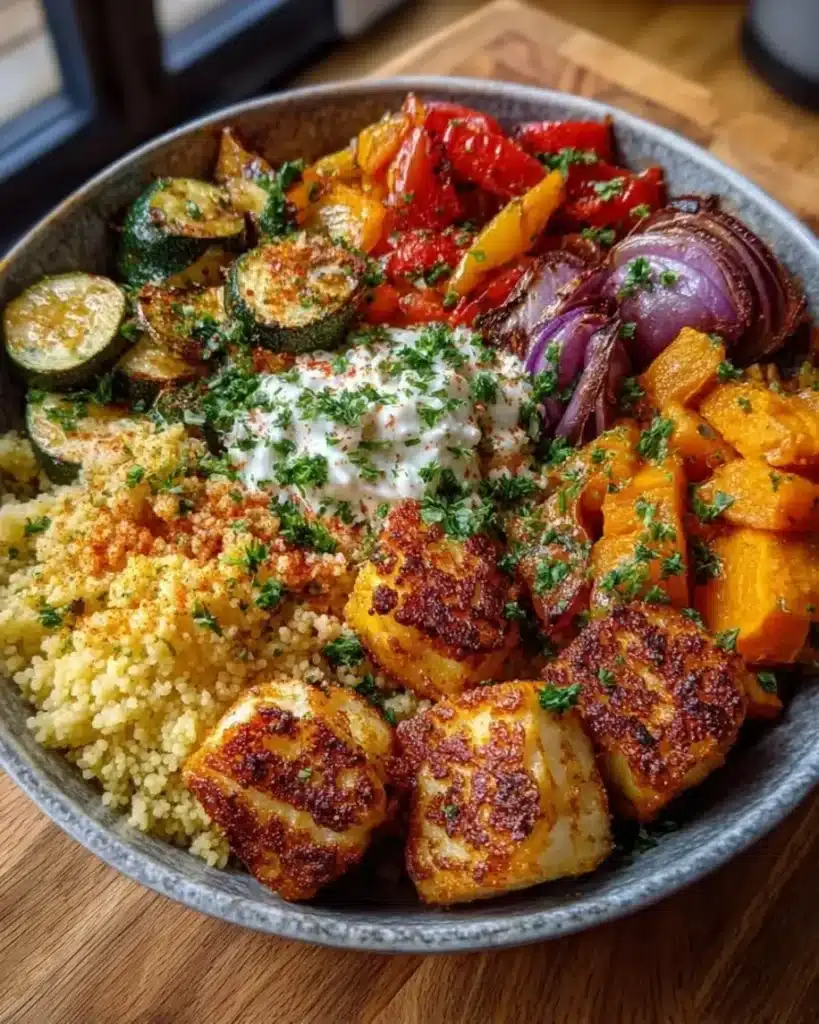
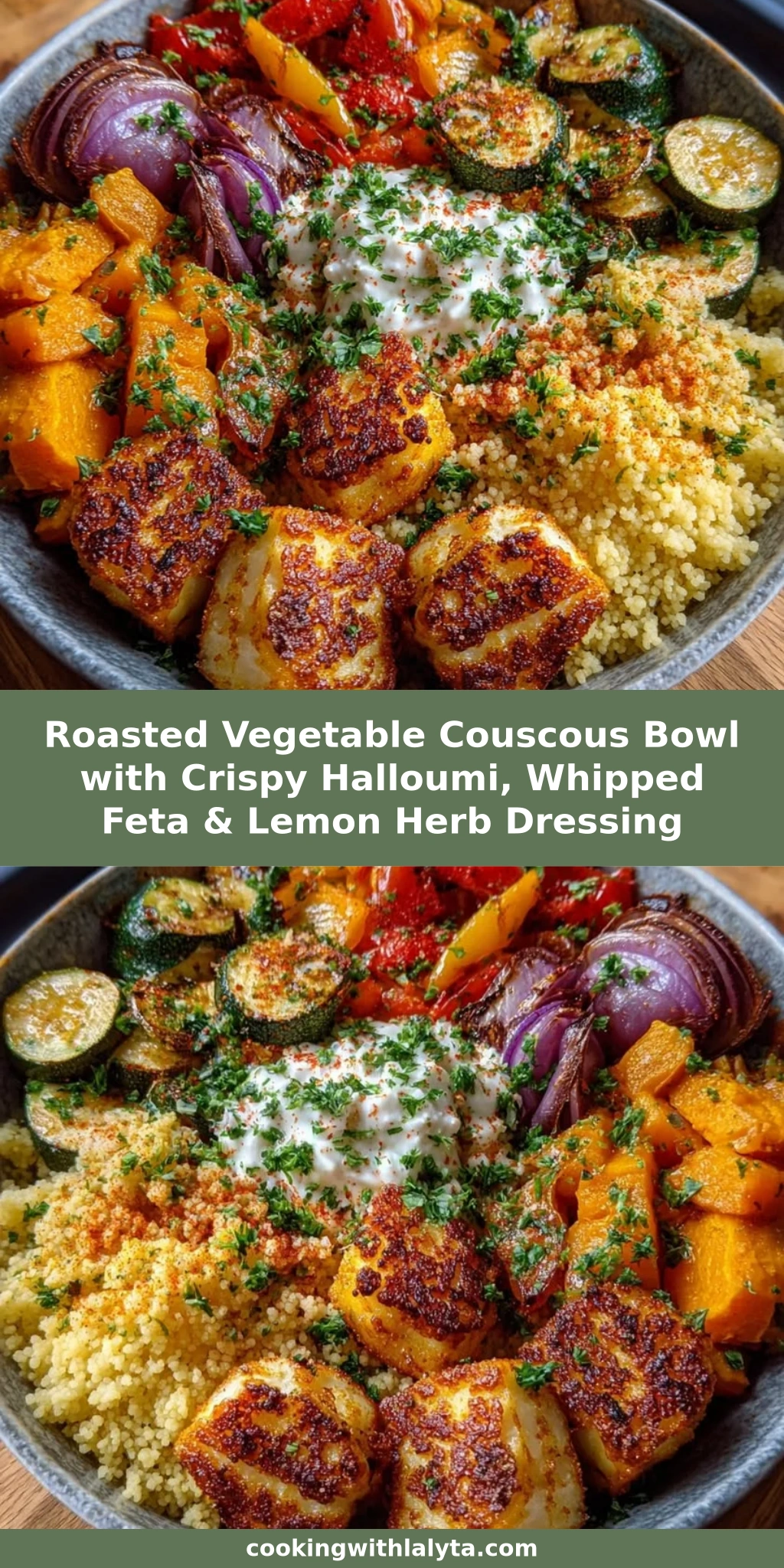
Let me paint you a picture of what you’re about to experience. The base is a bed of pearl couscous — those plump, tender pearls that I toast in olive oil until they’re golden and nutty before simmering them in vegetable broth and finishing with bright lemon zest. Then come the roasted vegetables: sweet potato cubes with caramelized edges, red bell pepper strips that have gone soft and smoky, zucchini half-moons with just the right amount of bite, and red onion wedges that have mellowed into sweetness under the spell of smoked paprika and cumin. On top of all that, you lay slices of halloumi that have been seared in a screaming-hot pan until they’re golden-crisp on the outside and delightfully squeaky within. Then comes the whipped feta — oh, the whipped feta. I learned this technique during my culinary training in Paris, where my instructor taught me that a splash of cold water and a patient food processor can transform crumbly feta into something so silky and tangy it could pass for a cloud. Finally, everything gets drizzled with a lemon herb dressing that’s sharp with Dijon mustard, fragrant with fresh mint and parsley, and balanced with just enough garlic to wake up every other flavor in the bowl. It’s bright, it’s bold, and it’s exactly the kind of meal that makes you close your eyes on the first bite.
What makes my version of this roasted vegetable couscous bowl truly special is the interplay of temperatures and textures — a lesson I brought home from my mother’s kitchen in Morocco, where no meal was ever served at a single temperature. You get the warmth of the roasted vegetables and couscous, the hot crisp of the halloumi, the cool creaminess of the whipped feta, and the room-temperature freshness of the lemon herb dressing all in one spoonful. It’s a bowl that keeps you interested from start to finish. Along the way, I’ll share every trick I’ve picked up over the years: how to achieve that perfect golden crust on halloumi without it sticking to the pan, why toasting your couscous is a non-negotiable step, and — this is the one I really want you to remember — the common mistake of overcrowding your baking sheet that leads to steamed, soggy vegetables instead of beautifully roasted ones. Stick with me, and by the end of this post you’ll be plating a vegetarian bowl that looks like it came from a restaurant kitchen but tastes like home.
Why This Roasted Vegetable Couscous Bowl Recipe Is the Best
The Flavor Secret: Every element in this crispy halloumi bowl is seasoned with intention, and nothing is an afterthought. The vegetables get a smoky, earthy coating of smoked paprika and cumin — two spices I grew up watching my mother crush by hand in her mortar in our kitchen in Casablanca. That warm spice blend caramelizes in the oven and creates a depth of flavor you simply don’t get from plain roasted vegetables. The couscous is toasted before cooking, which releases its nutty aroma and gives it a subtle chew that holds up beautifully against the other components. And the whipped feta? It’s not just feta thinned with yogurt — it’s feta that’s been whipped with cold water and olive oil until it aerates, creating a texture so light and luscious it practically floats. The lemon herb dressing ties everything together with a brightness that cuts through the richness of the cheese and the sweetness of the roasted vegetables, leaving your palate refreshed after every bite.
Perfected Texture: If there’s one thing my French culinary training drilled into me, it’s that texture is just as important as flavor — and this vegetarian bowl recipe delivers on both fronts. The pearl couscous provides a satisfying, slightly bouncy chew. The roasted vegetables offer a range of tender-crisp moments: the sweet potato is velvety, the bell pepper is silky, the zucchini retains just enough firmness, and the red onion edges turn delightfully crisp. Then you get the halloumi — and here’s the chef secret — you must pat it completely dry before searing. Any residual moisture and you’ll steam it instead of searing it. When done right, halloumi develops a thin, golden-brown crust that shatters slightly when you bite into it, revealing the salty, squeaky interior that makes this cheese so beloved. The whipped feta is your creamy element, the fresh arugula adds a peppery crunch, and the lemon herb dressing brings it all into harmony with its bright, herby lift.
Foolproof & Fast: I designed this recipe to be approachable even if you’ve never roasted a vegetable or seared a piece of cheese in your life. The steps are staggered so you can multitask efficiently — while the vegetables roast, you cook the couscous, whip the feta, and shake up the dressing. In 50 minutes total, you’ll have four stunning bowls ready to serve. Every measurement has been tested in my NYC kitchen using standard US measuring cups and spoons, so you can trust the amounts. I’ve also built in flexibility: if you can’t find halloumi, I’ll tell you exactly what to use instead; if you need this to be vegan, there’s a clear path; if you want to prep components ahead for busy weeknights, I’ve got you covered. This is the kind of recipe that becomes a reliable weeknight staple — the one you memorize and start riffing on, the one your family requests, the one you proudly bring to a potluck and leave with an empty dish and a list of people asking for the recipe.
Roasted Vegetable Couscous Bowl Ingredients
When I shop for these ingredients in New York City, I love heading to the Union Square Greenmarket on a Saturday morning. The farmers there have sweet potatoes so fresh their skin practically gleams, and bell peppers in every shade from crimson to deep orange. There’s something grounding about hand-selecting each vegetable, knowing it was pulled from the earth just days ago. If you don’t have a farmers market nearby, any well-stocked grocery store will serve you beautifully — just look for firm, unblemished produce and a block of halloumi that feels dense and unctuous in its package. Here’s everything you’ll need:
Ingredients List
- For the Roasted Vegetables:
- 1 medium sweet potato, peeled and diced
- 1 red bell pepper, chopped
- 1 zucchini, sliced into half moons
- 1 red onion, cut into wedges
- 2 tablespoons olive oil
- 1 teaspoon smoked paprika
- 1/2 teaspoon cumin
- Salt and pepper to taste
- For the Couscous:
- 1 cup pearl couscous
- 1 1/4 cups vegetable broth
- 1 tablespoon olive oil
- Zest of 1 lemon
- For the Crispy Halloumi:
- 8 ounces halloumi cheese, sliced into 1/2-inch thick pieces
- 1 tablespoon olive oil
- For the Whipped Feta:
- 4 ounces feta cheese, crumbled
- 2 tablespoons Greek yogurt
- 1 tablespoon lemon juice
- 2 tablespoons olive oil
- 2 tablespoons water (or more as needed)
- For the Lemon Herb Dressing:
- 1/4 cup olive oil
- 2 tablespoons lemon juice
- 1 teaspoon Dijon mustard
- 1 clove garlic, minced
- 1 tablespoon chopped fresh parsley
- 1 tablespoon chopped fresh mint
- Salt and pepper to taste
- For Assembly:
- Fresh arugula or mixed greens
- Handful of fresh mint leaves
- Lemon wedges for serving
Ingredient Spotlight
Pearl Couscous: Also labeled “Israeli couscous” in most US grocery stores, pearl couscous is larger and rounder than the fine Moroccan couscous I grew up with. It has a delightful chew and toasts beautifully, developing a golden, nutty flavor. If you can’t find it, you can substitute regular couscous — just follow the package instructions and expect a softer, more delicate texture. Another alternative is quinoa, which adds a protein boost and a slightly earthy, nutty note, though the overall mouthfeel will be lighter and less substantial.
Halloumi Cheese: Halloumi is a semi-hard Cypriot cheese with a high melting point, which means it can be seared or grilled without dissolving into a puddle. Look for it in the specialty cheese section of your grocery store — it’s usually vacuum-packed in a small rectangular block. When you open it, you’ll notice a slight brine; that’s normal. The key to getting it crispy is to pat the slices completely dry with paper towels before they hit the pan. If you absolutely can’t find halloumi, paneer is the closest substitute in terms of texture and searing behavior; it’s milder in flavor, so you may want to add an extra pinch of salt. Feta can also be seared but will not hold its shape as well and will be softer and saltier.
Feta Cheese: For the whipped feta, I recommend using a block of feta packed in brine rather than pre-crumbled dry feta. The brine-kept feta is creamier and blends more smoothly. Greek yogurt adds tang and helps with the silky texture, while olive oil and cold water work together to aerate the mixture as it whips. A squeeze of lemon juice brightens the whole thing. If you need a dairy-free version, a plant-based feta alternative made from almonds or tofu can work — the texture will be slightly different, but you’ll still get that salty, tangy component.
Fresh Herbs (Parsley & Mint): These two herbs are the backbone of the lemon herb dressing. Flat-leaf (Italian) parsley is what I always use — it has a cleaner, more robust flavor than curly parsley. Fresh mint adds a cooling, aromatic quality that reminds me of the mint tea my grandmother used to serve in Casablanca. If you only have one or the other, the dressing will still be lovely, but the combination of both is what gives it that unmistakably Mediterranean character. Dried herbs are not a substitute here; the brightness of fresh herbs is essential.
| Original Ingredient | Best Substitution | Flavor / Texture Impact |
|---|---|---|
| Pearl Couscous | Quinoa or regular couscous | Quinoa is nuttier and lighter; regular couscous is softer and less chewy |
| Halloumi | Paneer or seared feta | Paneer is milder; feta is saltier and softer with less defined sear |
| Feta (for whipping) | Plant-based feta or cashew cream | Plant-based is slightly less tangy; cashew cream is richer and milder |
| Fresh Mint | Fresh basil or cilantro | Basil adds sweetness; cilantro adds a brighter, more pungent note |
How to Make Roasted Vegetable Couscous Bowl with Crispy Halloumi — Step-by-Step
Take a deep breath — this recipe is a dance of simple steps that come together beautifully. I’ve laid everything out so you can move through the process efficiently, and I promise the reward is worth every minute. Let’s cook together.
Step 1: Roast the Vegetables
Preheat your oven to 400°F (200°C). On a large rimmed baking sheet, combine the diced sweet potato, chopped red bell pepper, zucchini half-moons, and red onion wedges. Drizzle with 2 tablespoons of olive oil and sprinkle with smoked paprika, cumin, salt, and pepper. Using your hands or a spatula, toss everything until every piece is evenly coated in the spice-infused oil — this is where the flavor begins. Spread the vegetables in a single layer with a little breathing room between pieces; if they’re piled on top of each other, they’ll steam instead of roast. Pop the baking sheet into the oven and roast for 25 to 30 minutes, stirring once at the halfway mark. You’ll know they’re ready when the sweet potato is fork-tender and the edges of the onion and bell pepper have taken on a slight char.
💡 Lalybeth’s Pro Tip: Use two baking sheets if one looks crowded. I learned this the hard way in my Paris training — overcrowded vegetables release steam, and steam is the enemy of caramelization. Give your veggies space to breathe and they’ll reward you with those deeply golden, crispy edges that make a roasted vegetable couscous bowl truly sing.
Step 2: Cook the Pearl Couscous
While the vegetables are roasting, set a medium saucepan over medium heat and add 1 tablespoon of olive oil. Once the oil shimmers, pour in the pearl couscous and stir frequently for about 2 minutes. You’ll notice the couscous pearls turning golden and releasing a warm, toasty aroma — this is exactly what you want. Pour in the vegetable broth, stir once, and bring the liquid to a boil. As soon as it’s bubbling, reduce the heat to low, cover the saucepan with a tight-fitting lid, and let it simmer gently for 12 to 15 minutes. When the time is up, lift the lid and check that the liquid has been absorbed and the couscous is tender with a slight springy bite. Remove from heat, fluff the couscous with a fork, and stir in the zest of one lemon for a bright, citrusy finish.
⚠️ Common Mistake to Avoid: Don’t skip the toasting step. I know it’s tempting to just boil the couscous and move on, but those two minutes of toasting in olive oil unlock a nuttiness that plain boiling can never achieve. It’s a small step with a big payoff — one of those little French techniques that separates a good bowl from a great one.
Step 3: Make the Whipped Feta
In the bowl of a food processor, combine the crumbled feta, Greek yogurt, lemon juice, and olive oil. Pulse several times until the mixture looks crumbly and begins to come together. With the motor running, drizzle in cold water — one tablespoon at a time — and let the processor run until the feta transforms into a smooth, airy cream. This usually takes about 2 to 3 minutes of processing; stop once or twice to scrape down the sides with a spatula. The finished whipped feta should be thick enough to hold a dollop but silky enough to spread. If it’s too thick, add another splash of water. Transfer to a small bowl and set aside. This can be made up to 3 days ahead and kept refrigerated.
💡 Lalybeth’s Pro Tip: Use cold water, not room temperature. I discovered this back in culinary school — cold water helps the olive oil emulsify more effectively into the feta-yogurt mixture, creating a lighter, more mousse-like texture. It’s the same principle behind making a perfectly emulsified mayonnaise or aïoli. Cold is your friend here.
Step 4: Whisk the Lemon Herb Dressing
In a small bowl or a jar with a tight-fitting lid, combine the olive oil, lemon juice, Dijon mustard, minced garlic, chopped parsley, and chopped mint. Add a generous pinch of salt and a few cracks of black pepper. Whisk vigorously until everything is emulsified and the dressing looks slightly creamy, or secure the lid on the jar and shake it like you mean it. Taste the dressing and adjust the seasoning — you’re looking for a bright, punchy balance between the acidity of the lemon and the richness of the olive oil. The mustard not only adds a subtle sharpness but also acts as an emulsifier, helping the oil and lemon juice stay combined. Set the dressing aside; it will keep beautifully in the fridge for up to a week.
⚠️ Common Mistake to Avoid: Don’t mince your garlic too far in advance. Raw garlic, once cut, starts to develop a harsher, more pungent flavor the longer it sits exposed to air. If you’re prepping components ahead, wait to mince the garlic until you’re ready to assemble the dressing. Trust me — your breath (and your dinner guests) will thank you.
Step 5: Sear the Crispy Halloumi
Remove the halloumi from its package and slice it into pieces about 1/2 inch thick. Using paper towels, pat each slice dry on both sides — this is absolutely critical for achieving a golden crust. Place a nonstick skillet over medium-high heat and add 1 tablespoon of olive oil. When the oil is shimmering and hot, lay the halloumi slices in the pan in a single layer, making sure they don’t touch. Let them cook undisturbed for 2 to 3 minutes on the first side, until the bottoms are deeply golden and crispy. Flip each slice carefully with a thin spatula and cook for another 2 to 3 minutes on the second side. Transfer the seared halloumi to a plate lined with paper towels to drain any excess oil. Work in batches if needed to avoid overcrowding the pan.
💡 Lalybeth’s Pro Tip: Halloumi releases a bit of liquid as it heats. If your pan starts to sputter, don’t panic — just keep the heat steady and let the moisture evaporate. The cheese will eventually stop releasing liquid and begin to brown. Also, resist the urge to move the slices around; letting them sit undisturbed is what builds that beautiful crust. Think of it like searing a steak — patience pays off.
Step 6: Assemble the Bowls
Now comes the fun part. Start with a generous handful of fresh arugula or mixed greens in each bowl — the peppery bite of arugula is a natural counterpoint to the richness of the cheese and the sweetness of the roasted vegetables. Add a scoop of the lemon-zested pearl couscous, then top with a colorful array of the roasted vegetables. Nestle two or three slices of crispy halloumi alongside the vegetables. Using a spoon, dollop the whipped feta on the side of the bowl — I like to do a swoosh with the back of the spoon for a restaurant-style presentation. Drizzle the lemon herb dressing generously over everything, letting it pool slightly in the crevices between the ingredients. Finish with a scattering of fresh mint leaves and a lemon wedge on the side. Serve immediately while the halloumi is still warm and crisp.
⚠️ Common Mistake to Avoid: Don’t assemble the bowls until you’re ready to eat. Halloumi is at its peak — golden, crisp, and slightly molten inside — right after it leaves the pan. If you assemble in advance, the residual heat from the vegetables and couscous will steam the halloumi and soften its crust. For the best experience, have all your components ready and assemble each bowl just before serving.
| Step | Action | Duration | Key Visual Cue |
|---|---|---|---|
| 1 | Roast the Vegetables | 25–30 mins | Golden edges, fork-tender sweet potato |
| 2 | Cook the Couscous | 14–17 mins | Liquid absorbed, pearls are tender and separate |
| 3 | Make Whipped Feta | 3–4 mins | Smooth, creamy, light texture |
| 4 | Whisk Dressing | 2 mins | Emulsified, slightly creamy, bright green flecks |
| 5 | Sear Halloumi | 5–6 mins | Deep golden-brown crust on both sides |
| 6 | Assemble Bowls | 3–4 mins | Colorful layers, warm halloumi, fresh herbs |
Serving & Presentation
In my NYC kitchen, I lean into the art of the bowl — there’s something so satisfying about a deep, wide bowl that lets you see every layer before you dig in. I start with the greens as the base, then pile the couscous slightly off-center, arrange the roasted vegetables in a crescent shape, and lean the halloumi slices against the couscous so they’re standing tall and showing off their golden crust. The whipped feta gets a dramatic swoosh with the back of a spoon, and the dressing is drizzled in a zigzag across the top. A final scattering of fresh mint leaves — torn, not chopped, to preserve their delicate edges — and a lemon wedge tucked into the side complete the picture. It’s a bowl that looks like it took hours but comes together in under an hour from start to finish.
This roasted vegetable couscous bowl is a complete meal on its own, but if you’re serving it for a dinner party or want to round out the table, I have a few favorites. A side of warm, pillowy pita bread is always welcome for scooping up the whipped feta and dressing. A simple cucumber and tomato salad — diced and tossed with a splash of red wine vinegar and a pinch of za’atar — echoes the Mediterranean flavors without competing. In the colder months, a cup of spiced Moroccan mint tea or a glass of crisp Sauvignon Blanc from the Finger Lakes region (a New York gem I’ve come to adore) pairs beautifully with the bright, herby notes in the bowl.
| Pairing Type | Suggestions | Why It Works |
|---|---|---|
| Side Dish | Warm pita bread, cucumber-tomato salad, roasted chickpeas | Adds crunch, freshness, and a vehicle for scooping |
| Sauce / Dip | Extra whipped feta, hummus, tahini sauce | Creamy elements that complement the roasted vegetables |
| Beverage | Sauvignon Blanc, sparkling water with lemon, Moroccan mint tea | Bright acidity cuts through the richness of the cheese |
| Garnish | Toasted pine nuts, pomegranate arils, sumac | Adds texture, color, and a pop of acidity |
Make-Ahead, Storage & Reheating
Life moves fast in New York City, and I’m a big believer in meal prep that doesn’t compromise on flavor. This crispy halloumi bowl lends itself beautifully to component prepping — meaning you can have most of the work done ahead of time and simply assemble when you’re ready to eat. On a Sunday afternoon, I’ll roast the vegetables, cook the couscous, whip the feta, and shake up the dressing, then store everything separately in the fridge. On a busy Tuesday evening, all I have to do is sear the halloumi and build the bowls — dinner is on the table in under 10 minutes.
| Method | Container | Duration | Reheating Tip |
|---|---|---|---|
| Refrigerator | Airtight glass containers | Up to 4 days (components separately) | Reheat vegetables and couscous in microwave; sear halloumi fresh |
| Freezer | Freezer-safe bags (roasted vegetables only) | Up to 2 months | Thaw overnight in fridge; re-roast at 400°F for 8–10 mins to re-crisp |
| Make-Ahead | Separate airtight containers | All components up to 3 days in advance | Assemble cold or reheat vegetables and couscous before serving |
One thing I’ve learned from years of meal prepping: the halloumi really does need to be cooked à la minute for the best texture. While leftover halloumi can be reheated, it won’t regain that freshly seared crispness — it’ll be more chewy and dense. The whipped feta, on the other hand, only gets better after a day in the fridge as the flavors meld; just give it a quick stir before dolloping. And the dressing? It’s a meal-prep hero — the garlic and herbs infuse the oil over time, so it actually becomes more flavorful as it sits. I always keep a jar of this lemon herb dressing in my refrigerator door for drizzling over salads, grain bowls, or even a simple piece of grilled fish.
When reheating the couscous, a splash of water or broth and a quick 30-second microwave zap does the trick — fluff it with a fork afterward to separate the pearls. The roasted vegetables can be warmed in the microwave too, or if you have a few extra minutes, spread them on a baking sheet and give them 5 to 8 minutes in a hot oven to bring back some of that caramelized edge. Whatever you do, don’t microwave the arugula — trust me, I’ve made that mistake. Keep the greens cold and crisp, and let the warmth of the other components gently wilt them as you eat.
Variations & Easy Swaps
| Variation | Key Change | Best For | Difficulty Impact |
|---|---|---|---|
| Vegan Couscous Bowl | Omit halloumi and feta; add roasted chickpeas | Vegan, dairy-free diets | Easier (fewer components to juggle) |
| Gluten-Free Bowl | Swap pearl couscous for quinoa | Gluten-free, higher protein | No change |
| Harissa-Spiced Moroccan Bowl | Add harissa paste to vegetables; use merguez spices | Spice lovers, North African flair | Slightly more advanced (balancing heat) |
Vegan Roasted Vegetable Couscous Bowl
Turning this crispy halloumi bowl into a fully vegan delight is simpler than you’d think — and honestly, it’s how I eat this dish about half the time. Omit the halloumi and swap in a can of drained, rinsed chickpeas that you’ve tossed in olive oil and the same smoked paprika-cumin blend, then roasted right alongside the vegetables. Chickpeas crisp up beautifully in the oven and add a satisfying, protein-packed crunch that fills the textural void left by the halloumi. For the whipped feta, use a good-quality plant-based feta alternative — Violife and Follow Your Heart both make versions that blend smoothly — or skip it entirely in favor of a generous drizzle of tahini sauce thinned with lemon juice and water. The lemon herb dressing is naturally vegan, so no changes needed there. The result is a vibrant, plant-based bowl that doesn’t feel like it’s missing a thing.
Gluten-Free Roasted Vegetable Bowl
While pearl couscous is made from wheat and therefore contains gluten, the swap to quinoa is seamless and, in my opinion, elevates the nutritional profile of this bowl. Rinse 1 cup of quinoa under cold water to remove its natural bitterness, then cook it in 1 1/4 cups of vegetable broth using the same toasting method described in Step 2 — it’ll absorb the liquid in about 12 to 15 minutes and fluff up into tender, separate grains with a subtle crunch. Quinoa brings more protein and fiber than couscous, making this an even heartier vegetarian bowl recipe. Every other component — the roasted vegetables, halloumi, whipped feta, and dressing — is naturally gluten-free, so you can assemble the bowl exactly as written. Just double-check that your vegetable broth and Dijon mustard are certified gluten-free, as some brands may contain additives.
Harissa-Spiced Moroccan Couscous Bowl
This variation is a love letter to the flavors of my childhood in Morocco, where harissa — a fiery North African chili paste — was a staple on our dinner table. To make it, stir 1 to 2 tablespoons of harissa paste (depending on your heat tolerance) into the olive oil before tossing it with the vegetables, and add a pinch of ras el hanout — that intoxicating Moroccan spice blend of cinnamon, coriander, turmeric, and rose petals — alongside the smoked paprika and cumin. The halloumi stays, because its salty squeak is the perfect foil for the harissa’s heat, and the whipped feta becomes your cooling element. I like to garnish this version with a sprinkle of toasted almonds and a few pomegranate arils for jewel-like pops of sweetness against the warmth of the spices. It’s a bolder, more adventurous take on the original, and every time I make it, I feel my mother’s spirit right there in the kitchen with me.
Can I use a different cheese instead of halloumi in a roasted vegetable couscous bowl?
Absolutely, and I’ve tested several alternatives in my own kitchen. The closest substitute is paneer — an Indian cheese that, like halloumi, has a high melting point and develops a beautiful golden crust when seared. It’s milder than halloumi, so I recommend seasoning it with a pinch of salt and a sprinkle of za’atar or cumin before it hits the pan. Feta can also be seared — use a firm block packed in brine, pat it very dry, and handle it gently because it’s more crumbly. The texture will be softer and saltier, but the flavor is lovely. In a pinch, thick slices of extra-firm tofu, pressed well and seasoned generously, can mimic the crispy exterior, though the interior won’t have that signature squeaky chew. Whatever you choose, the key is a hot pan and dry cheese — moisture is the enemy of a good sear.
How do you make whipped feta for a couscous bowl?
Whipped feta is one of the simplest yet most transformative additions you can make to any vegetarian bowl recipe, and I’ve been perfecting mine since my Paris culinary school days. Start with a block of feta packed in brine — the brine keeps the cheese moist and creamy — and crumble it into your food processor. Add a couple of spoonfuls of Greek yogurt for tang and body, a glug of good olive oil, and a squeeze of fresh lemon juice. Pulse until the mixture looks like coarse crumbs, then with the motor running, drizzle in cold water a tablespoon at a time. The cold water helps emulsify the oil and aerate the feta, creating a texture that’s impossibly light and mousse-like. Process for a full 2 to 3 minutes, scraping the sides down once or twice, until the feta is completely smooth. If it’s too thick, add another splash of cold water. Taste and adjust the lemon or salt — and that’s it. It keeps in the fridge for up to 3 days and is fantastic on everything from toast to grain bowls.
What vegetables are best for roasting in a vegetable couscous bowl?
For a perfectly balanced roasted vegetable couscous bowl, I look for vegetables that offer a mix of sweetness, texture, and color. Sweet potatoes are my non-negotiable base — they caramelize beautifully, turning tender and slightly chewy at the edges, and their natural sweetness plays off salty cheeses and bright dressings like a dream. Bell peppers, especially red or yellow ones, add a silky texture and a mild, fruity sweetness that deepens in the oven. Zucchini brings a tender, juicy element, though I’m careful to cut it into half-moons at least 1/2 inch thick so it doesn’t disappear into mush. Red onion wedges are my secret weapon — as they roast, their sharp bite mellows into a mellow, jammy sweetness and the outer layers crisp up. Other excellent additions include eggplant (salted and drained first to remove bitterness), cherry tomatoes that burst into little flavor bombs, and cauliflower florets, which take on an incredible nutty depth. The key is cutting everything to roughly the same size so they finish cooking at the same time.
How long does it take to prepare a roasted vegetable couscous bowl with halloumi?
From start to finish, this crispy halloumi bowl takes about 50 minutes total — 20 minutes of active prep work and 30 minutes of cook time, much of which is hands-off while the vegetables roast. The beauty of this vegetarian bowl recipe is that the steps are designed for efficient multitasking. You’ll spend the first 10 minutes chopping vegetables and getting them into the oven, and while they roast for 25 to 30 minutes, you can cook the couscous, whip the feta, and shake up the dressing simultaneously. The halloumi is the fastest component — it sears in just 5 to 6 minutes total — and you’ll want to cook it right before assembly so it stays hot and crispy. If you’re meal prepping, you can break the work into stages: roast the vegetables and make the dressing one day, cook the couscous and whip the feta another, and then all you’ll need is a quick halloumi sear and assembly when you’re ready to eat.
Is this roasted vegetable couscous bowl healthy?
This bowl is actually one of my favorite ways to pack a wide range of nutrients into a single, deeply satisfying meal. Each serving delivers around 22 grams of protein from the halloumi, feta, and pearl couscous, along with 52 grams of complex carbohydrates that provide steady, lasting energy. The roasted vegetables — sweet potato, bell pepper, zucchini, and red onion — bring fiber, vitamin A, vitamin C, and a host of antioxidants to the table. Olive oil, used throughout the recipe in the roasting, dressing, and searing, contributes heart-healthy monounsaturated fats. The fresh herbs in the lemon herb dressing add not just flavor but also trace nutrients and digestive-supporting properties. At 620 calories per serving, this is a substantial meal that leaves you feeling full but not weighed down. If you’re looking to lighten it slightly, you can reduce the halloumi to 4 ounces, use less olive oil in the dressing, or bulk up the greens to increase volume with fewer calories.
Can I make this roasted vegetable couscous bowl ahead of time for meal prep?
Yes — and this is actually how I eat it most often during my busiest weeks in NYC. The secret to successful meal prep with this bowl is storing each component separately and assembling just before eating. The roasted vegetables stay great for up to 4 days in an airtight container in the fridge; reheat them in the microwave or give them a quick blast in a hot oven to bring back some crispness. Pearl couscous also holds up well for 4 days — add a splash of water when reheating to restore moisture. The whipped feta actually improves over a day or two as the flavors meld. The lemon herb dressing keeps for up to a week. The one component I strongly recommend cooking fresh is the halloumi — leftover seared halloumi won’t regain its crispy crust. Either cook it daily (it takes under 6 minutes) or, for advance prep, consider swapping in roasted chickpeas for a still-delicious, fully make-ahead option.
What dressing goes well with a roasted vegetable and halloumi bowl?
The lemon herb dressing in this recipe is my gold standard — it’s bright, herby, and just garlicky enough to tie every component together without overpowering anything. That said, this bowl is a wonderful canvas for other dressings if you’re in the mood to experiment. A creamy tahini-lemon dressing (equal parts tahini and water, a squeeze of lemon, a pinch of salt) leans into the Mediterranean profile and adds a rich, nutty layer that pairs especially well with the roasted vegetables. A pomegranate vinaigrette brings a sweet-tart edge and a gorgeous pink hue. For a spicier kick, a harissa-spiked yogurt dressing is incredible — it echoes the North African flavors I grew up with. Even a simple balsamic vinaigrette works in a pinch, though its sweetness will shift the overall flavor profile. Whatever dressing you choose, make it fresh if possible — the vibrancy of freshly chopped herbs and freshly squeezed lemon juice makes a noticeable difference.
Can I use frozen vegetables for this roasted vegetable couscous bowl?
You can, though with a few important caveats. Frozen vegetables release more water during roasting because the ice crystals that form during freezing rupture some of the cell walls, so they won’t achieve quite the same caramelized, crispy-edged texture as fresh vegetables. That said, in the middle of winter when the farmers markets are closed and I’m craving this bowl, I’ve made it with frozen sweet potato cubes and frozen bell pepper strips with good results. The trick is to thaw the vegetables first, then pat them as dry as possible with paper towels or a clean kitchen towel before tossing with oil and spices. You may also want to increase the oven temperature slightly — to 425°F — and spread the vegetables out even more to encourage browning. Frozen pearl onions can stand in for fresh red onion wedges in a pinch, and frozen zucchini actually holds up surprisingly well since it’s already a high-water vegetable. Fresh is ideal, but a well-executed frozen version will still give you a delicious, nutritious bowl.
How do I store and reheat leftover roasted vegetable couscous bowl?
The best approach for leftovers is to store each component in its own airtight container in the refrigerator. This way, the couscous won’t absorb moisture from the vegetables, the greens stay crisp, and the halloumi can be reheated appropriately (or replaced with a fresh sear). Couscous reheats well in the microwave with a tablespoon of water — cover it loosely and heat for 30 to 45 seconds, then fluff. Roasted vegetables can be microwaved or, for better results, spread on a sheet pan and warmed in a 375°F oven for 5 to 8 minutes. Whipped feta should be served cold or at room temperature — just give it a stir. Halloumi can be reheated in a dry nonstick pan over medium heat for about a minute per side, though it won’t be quite as crispy as the first time. Assemble the bowl with cold greens on the bottom, warmed components on top, and fresh dressing to finish. I don’t recommend freezing assembled bowls, but the roasted vegetables alone freeze well for up to 2 months.
What can I add to this bowl to make it even more filling?
While this bowl is already a hearty meal at 620 calories with 22 grams of protein, there are plenty of ways to bulk it up further if you’re feeding very hungry people or want to stretch it into extra servings. My favorite addition is a can of chickpeas, drained, dried well, tossed in the same spice blend as the vegetables, and roasted right alongside them — they turn into crunchy, protein-rich little nuggets that add both substance and texture. A scoop of cooked lentils tucked into the couscous adds an earthy depth and even more fiber and protein. For a grain blend, you can mix the pearl couscous with cooked farro or quinoa, which adds complexity and chew. A soft-boiled egg with a jammy yolk on top turns this into an even more decadent meal. A handful of toasted nuts — slivered almonds, pine nuts, or walnuts — sprinkled over the top adds healthy fats and crunch. And if you happen to have any grilled chicken or lamb leftover from another meal, it certainly wouldn’t be out of place here, though I love this bowl exactly as it is in its vegetarian glory.
Share Your Version!
There’s nothing I love more than seeing these recipes come to life in your kitchens — it’s the entire reason I started sharing my food journey from Morocco to Paris to New York City right here on cookingwithlalyta.com. When you make this roasted vegetable couscous bowl, I want to hear about it. Did you stick to the recipe exactly, or did you put your own spin on it? Did you swap in a different grain or vegetable based on what was in your fridge? Did harissa make an appearance? Drop a comment below and tell me every detail — I read every single one, and I’m always so inspired by your creativity.
And if you’re the type who snaps a photo before digging in (I see you, and I am you), I’d be over the moon to see your bowl. Tag @cookingwithlalyta on Instagram so I can share your creation in my stories, or save it to Pinterest to revisit again and again. Here’s what I’m really curious about this time: what’s the one ingredient or technique in this crispy halloumi bowl that surprised you the most? Was it the cold water in the whipped feta? The toasting of the couscous? Or maybe it was the first time you heard halloumi squeak against your teeth and thought, “Okay, now I get it.” Whatever it is, I want to know. Your stories make this community what it is, and I’m so grateful you’re here.
From my NYC kitchen to yours — I hope this recipe brings as much warmth to your table as it does to mine. — Lalybeth 🧡
Made This Roasted Vegetable Couscous Bowl?
I’d be so grateful if you’d leave a ⭐⭐⭐⭐⭐ star rating and a comment below — it helps more people discover these recipes and lets me know what you loved most. And don’t forget to tag @cookingwithlalyta on Instagram with your beautiful bowl creations!
Love This Recipe? Save It to Pinterest!
If you enjoyed this Roasted Vegetable Couscous Bowl with Crispy Halloumi, Whipped Feta & Lemon Herb Dressing recipe, don’t let it get lost in your browser tabs! 😄 Pin it now so you can find it again anytime — and explore hundreds more tried-and-tested recipes waiting for you on my Pinterest boards.
👉 Follow Lalybeth on Pinterest @cookingwithlalyta
📌 Pin this recipe · 🔁 Re-pin your favorites · 💬 Tag me when you make it — I love seeing your creations!
Roasted Vegetable Couscous Bowl with Crispy Halloumi, Whipped Feta & Lemon Herb Dressing
- Total Time: 50 minutes
- Yield: 4 servings 1x
Description
A vibrant and hearty bowl featuring roasted vegetables, fluffy couscous, crispy halloumi, creamy whipped feta, and a bright lemon herb dressing. Perfect for a satisfying lunch or dinner.
Ingredients
- For the Roasted Vegetables:
- 1 medium sweet potato, peeled and diced
- 1 red bell pepper, chopped
- 1 zucchini, sliced into half moons
- 1 red onion, cut into wedges
- 2 tablespoons olive oil
- 1 teaspoon smoked paprika
- 1/2 teaspoon cumin
- Salt and pepper to taste
- For the Couscous:
- 1 cup pearl couscous
- 1 1/4 cups vegetable broth
- 1 tablespoon olive oil
- Zest of 1 lemon
- For the Crispy Halloumi:
- 8 ounces halloumi cheese, sliced into 1/2-inch thick pieces
- 1 tablespoon olive oil
- For the Whipped Feta:
- 4 ounces feta cheese, crumbled
- 2 tablespoons Greek yogurt
- 1 tablespoon lemon juice
- 2 tablespoons olive oil
- 2 tablespoons water (or more as needed)
- For the Lemon Herb Dressing:
- 1/4 cup olive oil
- 2 tablespoons lemon juice
- 1 teaspoon Dijon mustard
- 1 clove garlic, minced
- 1 tablespoon chopped fresh parsley
- 1 tablespoon chopped fresh mint
- Salt and pepper to taste
- For Assembly:
- Fresh arugula or mixed greens
- Handful of fresh mint leaves
- Lemon wedges for serving
Instructions
- Preheat the oven to 400°F (200°C).
- Toss the sweet potato, bell pepper, zucchini, and red onion with olive oil, smoked paprika, cumin, salt, and pepper. Spread on a baking sheet in a single layer. Roast for 25-30 minutes, stirring halfway, until tender and slightly charred.
- Meanwhile, cook the couscous: In a saucepan, heat 1 tablespoon olive oil over medium heat. Add the pearl couscous and toast for 2 minutes, stirring frequently. Add vegetable broth and bring to a boil. Reduce heat, cover, and simmer for 12-15 minutes until tender and liquid is absorbed. Fluff with a fork and stir in lemon zest.
- For the whipped feta: In a food processor, combine feta, Greek yogurt, lemon juice, and olive oil. Pulse until crumbly, then add water a tablespoon at a time and blend until smooth and creamy. Set aside.
- For the lemon herb dressing: Whisk together olive oil, lemon juice, Dijon mustard, garlic, parsley, mint, salt, and pepper in a small bowl or shake in a jar. Adjust seasoning to taste.
- For the crispy halloumi: Heat 1 tablespoon olive oil in a nonstick skillet over medium-high heat. Add halloumi slices in a single layer and cook for 2-3 minutes per side until golden brown and crispy. Drain on paper towels.
- Assemble the bowls: Divide arugula or greens among bowls. Top with a scoop of couscous, roasted vegetables, and crispy halloumi slices. Dollop whipped feta on the side. Drizzle generously with lemon herb dressing. Garnish with fresh mint and serve with lemon wedges.
Notes
To make this vegan, omit the halloumi and feta, and use a vegan feta alternative or skip the cheese entirely. The whipped feta can be made ahead and refrigerated for up to 3 days. The dressing can be stored in the fridge for up to a week. For extra protein, add chickpeas to the roasted vegetables.
- Prep Time: 20 minutes
- Cook Time: 30 minutes
- Method: Main Course
- Cuisine: Mediterranean
Nutrition
- Calories: 620 kcal
- Sugar: 12 g
- Fat: 38 g
- Carbohydrates: 52 g
- Protein: 22 g
Tried This Recipe? Leave a Comment!
Did you make this recipe? I’d love to hear how it turned out! Please leave a comment and a rating below. Your feedback helps other home cooks and supports cookingwithlalyta.com!
For more delicious inspiration, follow me on Pinterest!