Table of Contents
Cajun-Kissed Chicken Penne in a Velvety Garlic Parmesan Cream Sauce – 30-Minute Restaurant-Quality Pasta
I still remember the first time I tasted real Cajun cooking — not in New Orleans, believe it or not, but right here in New York City at a tiny hole-in-the-wall spot in Harlem that a fellow chef dragged me to after a long shift. The heat, the depth, the way the spices clung to every bite of chicken… I was hooked. That memory stayed with me, and years later, after culinary school in Paris taught me the delicate art of building a velvety cream sauce that doesn’t break, I knew I had to marry those two worlds. This Cajun chicken penne recipe is exactly that marriage — juicy, spice-crusted chicken tossed with al dente penne in a garlic Parmesan cream sauce so silky and luxurious, you’d swear it came from a white-tablecloth restaurant. The best part? It lands on your table in just 30 minutes, making it the ultimate weeknight indulgence that feels like a special occasion.
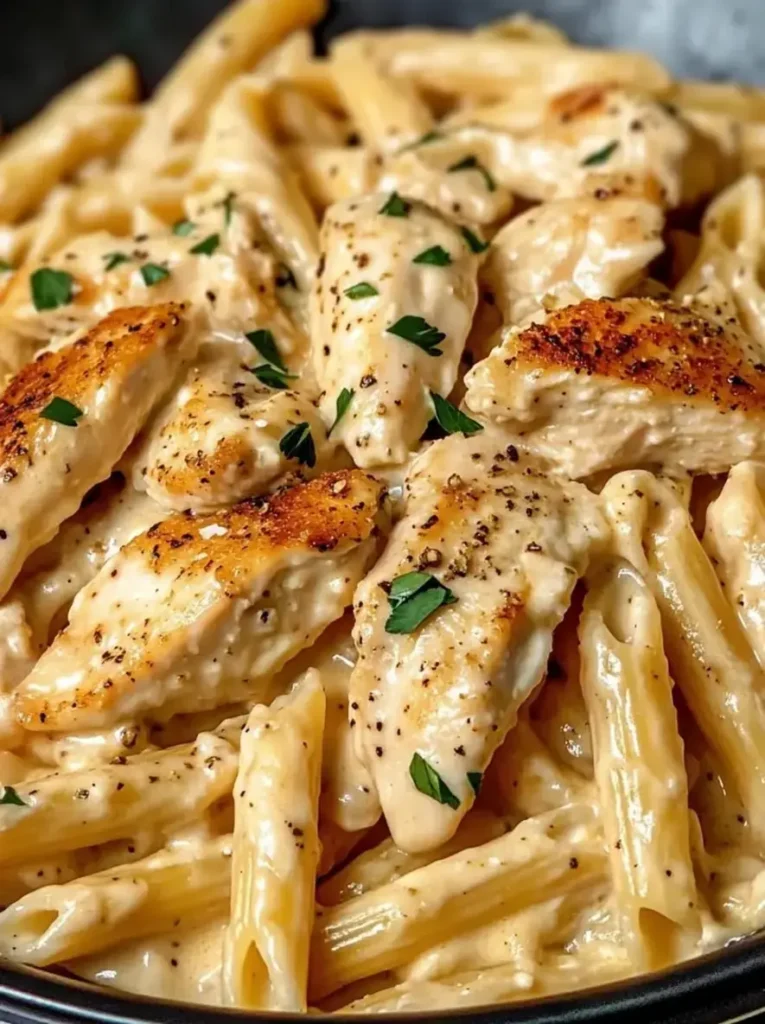
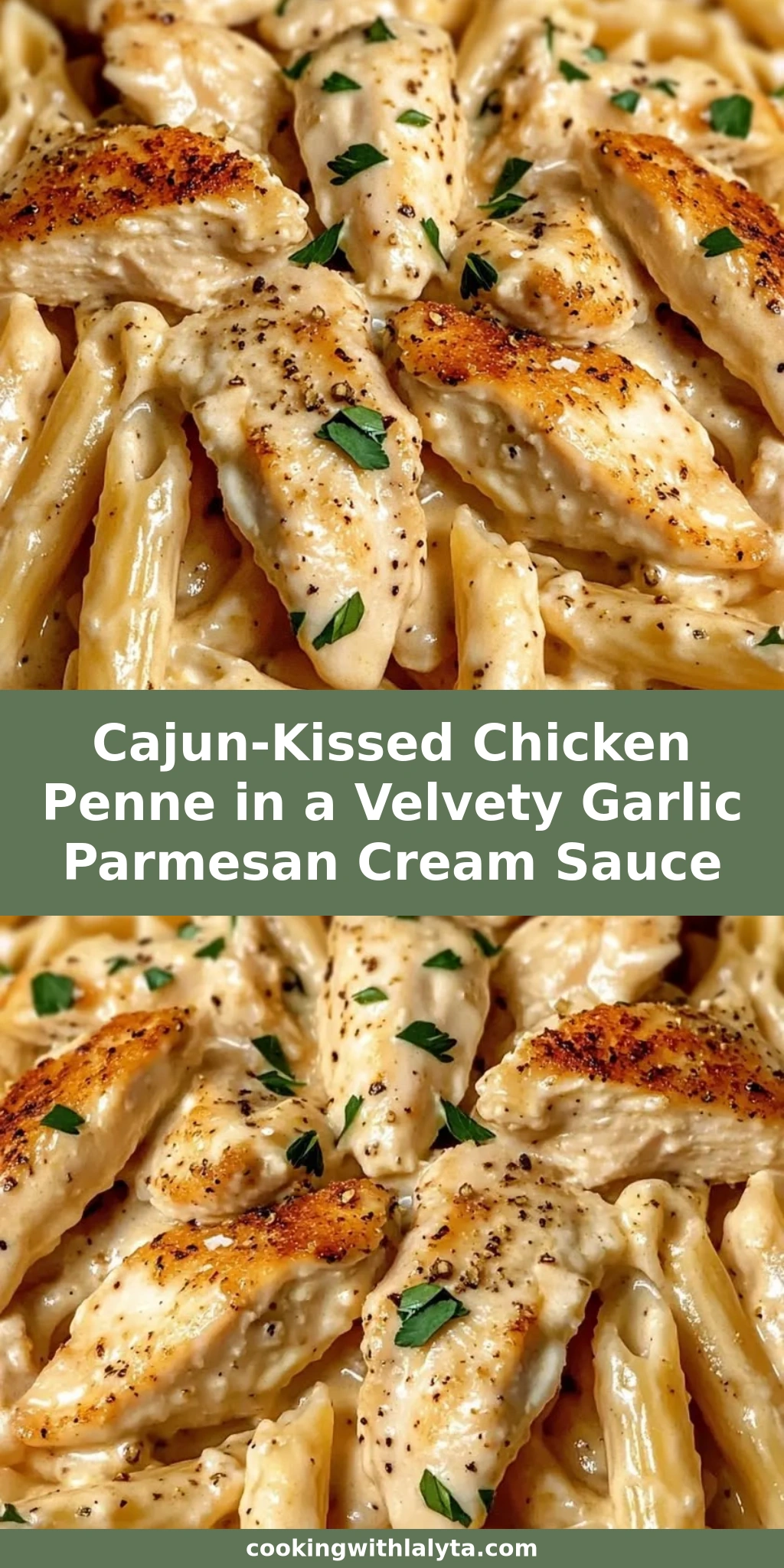
Picture this: the skillet sizzles as those Cajun-dusted chicken strips hit hot olive oil, releasing a smoky, peppery aroma that fills your entire kitchen. The chicken develops a deep golden crust — that’s the Cajun seasoning caramelizing into something magical — while staying impossibly tender inside. Then comes the sauce: butter and garlic melting together, heavy cream swirling into the pan in creamy ribbons, and a generous snowfall of freshly grated Parmesan that transforms everything into a velvety garlic Parmesan cream sauce that coats each penne tube like a warm hug. There’s heat from the Cajun spices, yes, but it’s balanced beautifully by the rich, nutty Parmesan and the sweet, mellow garlic. Fresh parsley at the end adds that bright, herbaceous pop that cuts through the richness and wakes up every flavor on the plate. This is the kind of creamy Cajun pasta that makes you close your eyes on the first bite.
What makes my version of this Cajun chicken pasta recipe different from the dozens you’ll find online comes down to one word: technique. At culinary school in Paris, I learned that a truly velvety cream sauce isn’t just about dumping in cream and cheese — it’s about temperature control, the order of operations, and knowing exactly when to pull the pan off the heat. Too hot, and your Parmesan seizes into grainy clumps. Too cool, and the sauce never achieves that glossy, cling-to-the-pasta texture. I’m going to walk you through every critical moment in this recipe — including the one mistake even experienced home cooks make with cream-based sauces — so you nail it on your very first try. Trust me: once you master this penne with Cajun chicken, it’ll become a permanent fixture in your dinner rotation, just like it has in my little NYC kitchen.
Why This Cajun-Kissed Chicken Penne Recipe Is the Best
The Flavor Secret: Growing up in my mother’s kitchen in Morocco, I learned that spice isn’t just about heat — it’s about layering. My mother would toast cumin and coriander seeds until the whole house smelled like a spice bazaar, then grind them fresh. That principle of building flavor in stages is exactly what makes this garlic Parmesan cream sauce chicken pasta sing. Instead of simply dumping Cajun seasoning into the sauce, I coat the chicken with it first, letting those spices bloom in hot oil as the chicken sears. That same skillet — now kissed with the fond from the chicken — becomes the foundation of the cream sauce, infusing it with a subtle smokiness that you simply cannot replicate by adding spices later. It’s a French technique (déglacer, or deglazing) that my Paris instructors drilled into me, and it makes all the difference here.
Perfected Texture: Here’s where my culinary school training truly shines. The difference between a good cream sauce and a great one is emulsion — getting fat and liquid to coexist in creamy harmony rather than separating into an oily mess. I use a combination of butter and heavy cream, brought to a gentle simmer (never a rolling boil!), then I remove the pan from the heat entirely before stirring in the Parmesan. Why? Because Parmesan is a delicate cheese with low moisture content, and if it hits bubbling liquid, the proteins seize up and you end up with a gritty, broken sauce. Off-heat incorporation, constant whisking, and freshly grated cheese (not pre-shredded — those anti-caking agents are the enemy of smooth sauces) are the three non-negotiables that give this creamy Cajun pasta its signature velvet texture.
Foolproof & Fast: I live in New York City, which means my schedule is packed and my kitchen is roughly the size of a coat closet. If a recipe requires 45 minutes and three pans, it’s not making it into my weeknight repertoire — no matter how delicious it is. This Cajun chicken pasta recipe is brilliantly efficient: one pot for the penne, one skillet for everything else. The chicken cooks while the pasta boils, and by the time the penne is al dente, the sauce is ready and waiting. Every step is designed to be forgiving — even if your knife skills aren’t Paris-trained, even if your stove runs a little hot, the visual cues I’ve built into the instructions will guide you to a perfect result every single time.
Cajun Chicken Penne Ingredients
I do most of my grocery shopping at the Union Square Greenmarket when I can, grabbing fresh parsley and garlic that still smell like the earth they came from. For the pantry staples — penne, Cajun seasoning, good olive oil — I rely on my neighborhood Italian grocer in the East Village, the kind of place where the owner knows your name and will passionately debate the merits of different Parmesan ages with you. These ingredients are simple and accessible; you likely have half of them already. The key is quality where it counts: fresh garlic over jarred, block Parmesan you grate yourself, and a Cajun seasoning blend you actually love the taste of — because its flavor will be front and center in every bite.
Ingredients List
- 8 oz penne pasta
- 1 lb boneless skinless chicken breasts, sliced into strips
- 2 teaspoons Cajun seasoning
- 1 tablespoon olive oil
- 2 tablespoons butter
- 4 cloves garlic, minced
- 1 cup heavy cream
- 1/2 cup chicken broth
- 1 cup freshly grated Parmesan cheese
- 1/4 teaspoon salt
- 1/4 teaspoon black pepper
- 2 tablespoons chopped fresh parsley
Ingredient Spotlight
Penne Pasta: Penne’s tubular shape and ridged surface (look for “penne rigate” at the store) are purpose-built for trapping creamy sauces inside and out. Each bite delivers pockets of that velvety garlic Parmesan cream sauce that flat noodles would just let slide off. When shopping, pick a bronze-die extruded pasta — you can tell by the rough, almost dusty surface — it grips sauce infinitely better than the smooth, Teflon-extruded kind. If you’re out of penne, rigatoni or ziti are your best swaps; both have that hollow-center sauce-catching magic. Avoid long, thin pastas like spaghetti or angel hair, which just can’t hold onto a thick cream sauce the same way.
Cajun Seasoning: Not all Cajun blends are created equal. Some lean heavy on the paprika with gentle warmth; others pack serious cayenne heat that’ll make you reach for a glass of milk. I recommend tasting your blend straight from the jar before you start — you can always add more spice, but you can’t take it out. For this Cajun chicken penne recipe, I use a Louisiana-style blend with paprika, garlic powder, onion powder, cayenne, oregano, and thyme. If you’re spice-sensitive, look for a “mild” blend or make your own by mixing smoked paprika with a tiny pinch of cayenne. And please, don’t skip the step of coating the chicken with it before searing — that spice crust is pure flavor gold.
Heavy Cream: This is non-negotiable for the sauce’s signature richness and body. Heavy cream (also labeled “heavy whipping cream” in US grocery stores) contains at least 36% milk fat, which means it can simmer and reduce without curdling — something lower-fat dairy simply cannot do. For a lighter version of this garlic Parmesan cream sauce chicken pasta, you can swap in half-and-half, but know that the sauce will be noticeably thinner and you’ll need to simmer it a few extra minutes to achieve any real thickness. Full-fat canned coconut milk is a surprisingly excellent dairy-free alternative that brings its own subtle sweetness to the dish.
Freshly Grated Parmesan Cheese: I cannot stress this enough: grate your own Parmesan from a block. The pre-shredded stuff in the green can or plastic tub? It’s coated with cellulose and anti-caking powders that prevent it from melting into a smooth sauce. You’ll end up with a grainy, clumpy mess instead of the silky velvety garlic Parmesan cream sauce we’re after. Look for Parmigiano-Reggiano stamped on the rind — that certification guarantees it’s the real deal, aged at least 12 months, with the complex nutty-savory depth that makes this sauce sing. A microplane grater gives you feathery wisps that melt almost instantly. If you must substitute, Pecorino Romano works beautifully but is saltier, so dial back the added salt accordingly.
| Original Ingredient | Best Substitution | Flavor / Texture Impact |
|---|---|---|
| Penne pasta | Rigatoni or ziti | Similar tube shape; holds sauce equally well. Slightly different mouthfeel but equally satisfying. |
| Heavy cream | Half-and-half (lighter) or full-fat coconut milk (dairy-free) | Half-and-half yields a thinner sauce; coconut milk adds subtle sweetness and tropical notes but mimics the body well. |
| Freshly grated Parmesan | Pecorino Romano or Grana Padano | Pecorino is sharper and saltier (reduce added salt); Grana Padano is milder and slightly sweeter than Parmesan. |
| Cajun seasoning | DIY blend: smoked paprika + garlic powder + cayenne + oregano + thyme | Fully customizable heat level; skip cayenne for a mild version or double it for extra fire. |
| Chicken breasts | Boneless chicken thighs | Juicier and more forgiving if slightly overcooked; slightly richer flavor that complements the cream sauce beautifully. |
How to Make Cajun-Kissed Chicken Penne in a Velvety Garlic Parmesan Cream Sauce — Step-by-Step
Take a deep breath — you’ve got this. I’ve broken this penne with Cajun chicken recipe down into eight manageable steps, each with clear visual cues so you always know exactly what to look for. Read through all the steps once before you start (a habit my Parisian chef instructors insisted on, and one that’s saved my dinner more times than I can count), then work through them one at a time. You’ll be twirling creamy, spicy pasta onto your fork before you know it.
Step 1: Cook the Penne Pasta
Bring a large pot of generously salted water to a rolling boil — I mean salty like the Mediterranean Sea, because this is your only chance to season the pasta itself from the inside out. Add 8 oz of penne and cook according to package directions until al dente, which typically takes 9–11 minutes depending on the brand. You want a slight firmness in the center when you bite into it; the pasta will continue cooking for another minute or two when it hits the hot sauce later. Before draining, scoop out about half a cup of that starchy pasta water and set it aside — it’s liquid gold for adjusting the sauce consistency later. Drain the penne and set it aside.
💡 Lalybeth’s Pro Tip: That reserved pasta water is your secret weapon. The starch in it acts as a natural emulsifier, helping the cream sauce cling to every tube of penne. If the sauce ever looks too thick or tight, a splash of this starchy water will loosen it up without diluting the flavor — something plain water or extra broth simply can’t do.
Step 2: Season the Chicken Strips
Slice 1 lb of boneless skinless chicken breasts into strips about half an inch wide — think the size of your pinky finger. Uniformity matters here; strips that are all roughly the same thickness will cook at the same rate, so you won’t end up with some pieces dry and others underdone. Place the strips in a bowl and sprinkle 2 teaspoons of Cajun seasoning over them. Use your hands (clean ones, obviously!) or tongs to toss and massage the seasoning into every surface of the chicken until each strip is evenly coated with that beautiful rust-colored spice blend. No naked chicken allowed — every bite should carry that Cajun kiss.
⚠️ Common Mistake to Avoid: Don’t season the chicken and then let it sit for 20 minutes while you prep other things. Cajun seasoning contains salt, which will start drawing moisture out of the chicken if it sits too long, leaving you with wet chicken that steams instead of sears. Season right before the oil is hot and the pan is ready.
Step 3: Sear the Chicken to Golden Perfection
Heat 1 tablespoon of olive oil in a large skillet over medium-high heat until it shimmers and flows like water — that’s your signal that the pan is hot enough. Carefully lay the seasoned chicken strips in a single layer (work in two batches if your skillet is on the smaller side; crowding the pan is the enemy of a good sear). Let the chicken cook undisturbed for 4–5 minutes on the first side. Don’t poke, don’t prod, don’t shuffle — patience here rewards you with that beautiful golden-brown crust. When the edges look opaque and the bottom is deeply colored, flip each strip and cook for another 4–5 minutes until the chicken is cooked through and no longer pink in the center. An instant-read thermometer should register 165°F. Transfer the chicken to a plate and set it aside.
💡 Lalybeth’s Pro Tip: Those brown bits stuck to the bottom of the skillet after you remove the chicken — called fond in French — are concentrated flavor bombs. Do not wash the pan! Those bits will dissolve into the cream sauce in the next steps, infusing it with smoky, savory depth that you simply cannot replicate any other way. This is déglacer, and it’s the same technique I use for pan sauces in classic French cooking.
Step 4: Sauté Garlic in Butter
Reduce the heat under your skillet to medium. Add 2 tablespoons of butter and let it melt completely, swirling the pan gently to pick up some of those flavorful brown bits. Once the butter is foamy and fragrant, add 4 cloves of minced garlic. Sauté for about 1 minute, stirring constantly with a wooden spoon or silicone spatula. You’re not looking for the garlic to brown — golden and intensely aromatic is the goal. Burnt garlic turns bitter and acrid, and there’s no saving a sauce once that flavor takes hold. When your kitchen smells like the best garlic bread you’ve ever imagined, you’re there.
⚠️ Common Mistake to Avoid: Mincing garlic too far in advance. Once garlic is cut, its volatile aroma compounds start to oxidize and mellow out. For the most intense, sweet garlic flavor in your Cajun chicken penne, mince it right before it hits the butter — not 10 minutes earlier while you’re prepping other ingredients.
Step 5: Build the Velvety Cream Sauce
With the garlic fragrant and the butter bubbling gently, pour in 1 cup of heavy cream and 1/2 cup of chicken broth. Stir everything together with your spatula, scraping up any remaining browned bits from the bottom of the skillet — that’s pure flavor dissolving into your sauce. Bring the mixture to a gentle simmer (you’ll see small bubbles forming around the edges of the pan and a light steam rising). Let it cook for 2–3 minutes, stirring occasionally. You’ll notice the sauce beginning to thicken slightly, its volume reducing as some of the water evaporates and the cream concentrates. Don’t walk away during this step — cream can go from simmering to boiling over surprisingly fast, and a boiled cream sauce can break and turn oily.
💡 Lalybeth’s Pro Tip: Watch for the “coating consistency” test. Dip the back of a spoon into the sauce and run your finger through it. If the line holds its shape and the sauce doesn’t immediately run back together, it’s thick enough. If it’s still watery, give it another minute of gentle simmering. This is the same test I learned for crème anglaise in Paris — it works for savory cream sauces just as reliably.
Step 6: Melt Parmesan into the Sauce
Here is the most critical moment in the entire recipe, the step where many garlic Parmesan cream sauce attempts go wrong. Remove the skillet from the heat entirely. Yes, off the burner. Now add 1 cup of freshly grated Parmesan cheese in three or four additions, stirring or whisking constantly between each addition until the cheese is fully melted and the sauce is smooth. The residual heat of the cream is more than enough to melt the Parmesan — adding it over direct heat risks overheating the cheese proteins, which causes them to seize into grainy, stringy clumps that no amount of whisking can fix. Once all the Parmesan is incorporated, season with 1/4 teaspoon of salt and 1/4 teaspoon of black pepper. Taste and adjust — the salt level will depend on how salty your Parmesan and Cajun seasoning are.
⚠️ Common Mistake to Avoid: Using pre-shredded Parmesan. Those convenient bags are coated with cellulose powder to prevent clumping, but that same powder prevents the cheese from melting smoothly into your sauce. You’ll end up with a gritty texture and little white specks floating in what should be a silky, uniform cream sauce. Buy a block, grate it fresh — it takes two extra minutes and makes all the difference.
Step 7: Combine Pasta, Chicken & Sauce
Return the skillet to low heat — just enough to keep everything warm without further reducing the sauce. Add the drained penne and the cooked chicken strips (along with any juices that have collected on the plate — that’s flavor you don’t want to waste). Using tongs or two large spoons, toss everything together gently but thoroughly, making sure every piece of pasta and every strip of chicken is generously coated in that velvety garlic Parmesan cream sauce. Let it all cook together for 1–2 minutes, just until everything is heated through and the flavors have a chance to meld. If the sauce seems too thick at this stage, add a splash of your reserved pasta water — a tablespoon at a time — until it reaches your ideal consistency.
💡 Lalybeth’s Pro Tip: This is the moment to fold in any quick-cooking vegetables if you’re using them. Baby spinach will wilt beautifully into the hot pasta in about 30 seconds; halved cherry tomatoes add bursts of juicy sweetness; sun-dried tomatoes bring concentrated umami. Add them now and toss to distribute — the residual heat does all the work.
Step 8: Garnish and Serve
Transfer the creamy Cajun pasta to a large serving bowl or plate it directly onto individual dishes. Sprinkle 2 tablespoons of chopped fresh parsley generously over the top — that pop of green isn’t just for looks; the herbaceous, slightly peppery notes of fresh parsley cut through the richness of the cream sauce and brighten every bite. For an extra flourish, you can add a few shavings of Parmesan on top and a light dusting of additional Cajun seasoning for color. Serve immediately while the sauce is at its creamiest and most luxurious. Pasta waits for no one, and this dish is at its absolute peak within minutes of leaving the skillet.
⚠️ Common Mistake to Avoid: Letting the finished dish sit in the hot skillet off the heat for too long before serving. As the pasta sits, it continues to absorb moisture from the sauce, which can turn your beautifully creamy Cajun chicken penne dry and sticky. Have your plates or serving bowl ready before you start Step 7, so you can serve it up the moment it’s done.
| Step | Action | Duration | Key Visual Cue |
|---|---|---|---|
| 1. Cook Penne | Boil in salted water until al dente; reserve 1/2 cup pasta water | 9–11 min | Penne is tender with a slight firm center bite |
| 2. Season Chicken | Coat strips evenly with Cajun seasoning | 2 min | Chicken is rust-colored with no bare spots |
| 3. Sear Chicken | Cook in hot oil, single layer, flipping once | 8–10 min | Deep golden crust; internal temp 165°F |
| 4. Sauté Garlic | Melt butter, add minced garlic, stir constantly | 1 min | Garlic is golden and intensely fragrant, not brown |
| 5. Build Sauce | Add cream and broth; simmer gently | 2–3 min | Sauce coats the back of a spoon; line holds its shape |
| 6. Melt Parmesan | Remove from heat; stir in cheese gradually | 1–2 min | Sauce is smooth, glossy, and uniformly creamy |
| 7. Combine | Toss pasta and chicken with sauce over low heat | 1–2 min | Everything is hot and evenly coated; sauce clings to pasta |
| 8. Garnish | Top with parsley; serve immediately | <1 min | Bright green parsley contrasting with creamy orange-hued sauce |
Serving & Presentation
When I plate this Cajun chicken penne for guests — or even just for myself on a Tuesday night when I need a little pick-me-up — I like to use wide, shallow bowls rather than deep plates. The extra surface area lets the sauce pool beautifully around the pasta, and the chicken strips sit proudly on top instead of getting buried. A final flourish of fresh parsley, a few delicate Parmesan shavings (use a vegetable peeler on the block for those gorgeous ribbons), and a whisper of extra Cajun seasoning right at the edge of the bowl for a pop of color — it takes 30 seconds but makes the dish look like it came from a restaurant kitchen. Food is meant to be beautiful, and your eyes should feast before your mouth does.
Growing up in Morocco, no pasta dish — however French or American the influences — hit the table without something fresh and bright alongside it. My mother would insist on a simple salad of diced tomatoes and cucumbers with lemon and olive oil, and that instinct carries through to my NYC kitchen today. For this creamy Cajun pasta, I love pairing it with a crisp arugula salad dressed in nothing more than lemon juice, good olive oil, and flaky salt — the peppery greens and acidic dressing cut right through the richness of the sauce. Crusty garlic bread on the side is non-negotiable in my house for sopping up every last drop of sauce; my husband would stage a gentle protest if I ever skipped it.
For a full dinner party spread, I’ll often start with a simple appetizer that echoes the Cajun theme without competing — think roasted shrimp with a remoulade-style dipping sauce, or a small bowl of spicy marinated olives that I pick up from my favorite vendor at the Union Square farmers market. A crisp, cold lager or a glass of unoaked Chardonnay balances the heat and richness beautifully. Whatever you pair it with, this penne with Cajun chicken is the kind of dish that makes people lean back in their chairs and sigh contentedly — and really, isn’t that the whole point of cooking for the people we love?
| Pairing Type | Suggestions | Why It Works |
|---|---|---|
| Side Dish | Arugula salad with lemon vinaigrette, crusty garlic bread, roasted asparagus | Peppery greens and acidity cut through the cream; bread soaks up every drop of sauce; asparagus adds freshness. |
| Sauce / Dip | Extra Cajun seasoning on the side, hot honey drizzle, lemon wedges | Lets guests customize heat levels; hot honey adds sweet-spicy contrast; lemon brightens the whole dish. |
| Beverage | Crisp lager beer, unoaked Chardonnay, sparkling water with lemon | Cold beer refreshes between spicy bites; Chardonnay’s body matches the cream sauce; sparkling water cleanses the palate. |
| Garnish | Fresh parsley, Parmesan shavings, extra Cajun sprinkle, red pepper flakes | Herbs add color and freshness; cheese adds visual appeal and umami; spice dusting signals the dish’s heat level before the first bite. |
Make-Ahead, Storage & Reheating
In my tiny NYC kitchen, meal prep is survival. On Sundays, when I’m planning the week ahead, this Cajun chicken pasta recipe often makes an appearance because it’s endlessly adaptable to my schedule. I’ll cook the chicken and make the sauce ahead, store them separately, and then boil fresh penne on the night I’m serving — but honestly, it also reheats beautifully if you know the right tricks. Cream-based pasta has a reputation for being finicky the next day (the sauce can separate, the pasta can get gummy), but with the right storage and gentle reheating method, your leftovers will taste nearly as glorious as the first night. Here’s exactly how I handle it.
| Method | Container | Duration | Reheating Tip |
|---|---|---|---|
| Refrigerator | Airtight glass container | Up to 4 days | Reheat gently on stovetop with a splash of milk or broth; stir frequently; avoid microwave if possible. |
| Freezer | Freezer-safe container (sauce and chicken only; freeze pasta separately or cook fresh) | Up to 2 months | Thaw overnight in fridge; reheat sauce slowly on stovetop; boiled fresh pasta recommended for best texture. |
| Make-Ahead | Separate containers for sauce, chicken, and cooked pasta | Prep components up to 2 days in advance | Reheat sauce and chicken together; toss with freshly boiled pasta for the best texture on serving day. |
The single most important reheating lesson I’ve learned — and one I wish I’d known during my early years in NYC when I’d sadly microwave leftover cream pasta into a greasy, separated mess — is that gentle, low heat is your friend. Skip the microwave if you can; the intense, uneven heat causes cream sauces to break almost instantly. Instead, transfer your leftovers to a skillet or saucepan, add a splash of milk, cream, or chicken broth (about 2 tablespoons per serving), and warm over low heat while stirring gently. The extra liquid helps re-emulsify the sauce, bringing it back to its creamy glory. If it still looks a little thin, a tiny knob of cold butter whisked in at the end works magic — another classic French trick for rescuing a sauce.
I often make a double batch of the sauce and freeze half without the pasta. On a busy weeknight — and let’s be real, in NYC, most weeknights are busy — I’ll thaw the sauce in the fridge during the day, boil fresh penne when I get home, and dinner is on the table in 15 minutes flat. The sauce actually deepens in flavor after a day or two in the fridge as the spices continue to meld, so in many ways, your leftovers or make-ahead portions might taste even better than the first night. Just don’t tell my dinner guests that the “fresh” meal they’re raving about was mostly prepped on Sunday.
Variations & Easy Swaps
| Variation | Key Change | Best For | Difficulty Impact |
|---|---|---|---|
| Extra-Spicy Cajun Blaze | Add cayenne, use hot Cajun blend, finish with fresh sliced jalapeño | Heat lovers who want their pasta to pack real fire | No change — just adjust spice to taste |
| Gluten-Free & Dairy-Free Comfort | GF penne, full-fat coconut milk, nutritional yeast + vegan Parmesan | Dietary restrictions without sacrificing creamy satisfaction | Slightly more attention to sauce consistency needed |
| Seasonal Harvest Creamy Cajun Pasta | Add roasted bell peppers, zucchini, cherry tomatoes, or mushrooms based on season | Making the most of farmers market finds; adding color and nutrition | Adds one extra step (roasting or sautéing vegetables) |
Extra-Spicy Cajun Blaze
Some nights call for serious heat — the kind that makes your forehead glisten and your taste buds do a happy dance. For this variation, I swap in a “hot” Cajun blend (check the label — brands like Slap Ya Mama offer an extra-hot version) and add a pinch of cayenne directly to the cream sauce as it simmers. The real game-changer, though, is finishing the dish with thin slices of fresh jalapeño or a drizzle of chile-infused oil right before serving. The fresh pepper adds a bright, vegetal heat that plays beautifully against the rich Parmesan — it reminds me of the harissa-spiked pasta experiments I used to do in my mother’s Moroccan kitchen, where no dish was ever quite spicy enough for my family’s palate. Serve with a cold beer and plenty of napkins; this version has personality.
Gluten-Free & Dairy-Free Comfort
At culinary school in Paris, I learned that the best substitutions don’t try to mimic the original — they create something new that stands on its own delicious merits. For a gluten-free and dairy-free version of this Cajun chicken penne, I use a high-quality brown rice or chickpea penne (cook it one minute less than the package says — gluten-free pasta goes from perfect to mushy in the blink of an eye). The cream sauce gets reimagined with full-fat canned coconut milk instead of heavy cream, which brings its own natural sweetness and velvety body. For the Parmesan element, a combination of nutritional yeast (for that savory, cheesy depth) and a sprinkle of good-quality vegan Parmesan-style shreds stirred in off the heat creates a sauce that’s creamy, satisfying, and entirely its own beautiful thing. My dairy-free friends have literally hugged me over this one.
Seasonal Harvest Creamy Cajun Pasta
One of the greatest joys of living in New York City is the rhythm of the seasons at the farmers markets. In summer, I’ll fold halved cherry tomatoes and ribbons of basil into this creamy Cajun pasta; in fall, roasted butternut squash cubes and crispy sage leaves; in spring, tender asparagus tips and sweet peas. The key is to roast or sauté your vegetables separately first — you want them caramelized and concentrated, not steaming and watery, which would thin out your precious sauce. Toss them in at the very end, just before the parsley garnish. This variation turns a weeknight staple into a celebration of whatever’s fresh and beautiful right now, and it’s how I keep this recipe feeling new and exciting even after making it dozens of times.
Can I use a different type of pasta instead of penne for this Cajun chicken recipe?
Absolutely — and I actually encourage you to experiment! The best substitutes for penne in this Cajun chicken pasta recipe are other short, tubular shapes with ridges, like rigatoni, ziti, or even cavatappi (those cute little corkscrews). The ridges and hollow centers are designed to grip and trap creamy sauces, ensuring every bite is coated in that velvety garlic Parmesan cream sauce. Fusilli (spiral pasta) is another excellent choice — all those twists and turns act like little sauce pockets. I’d steer clear of long, thin pastas like spaghetti, linguine, or angel hair, which simply don’t hold onto thick cream sauces the same way. If long pasta is all you have, fettuccine or pappardelle — wider ribbons with more surface area — will work better than skinny noodles. Just remember to cook whatever pasta you choose to al dente so it holds its structure when tossed with the hot sauce.
How can I reduce the spiciness of the Cajun seasoning in the cream sauce?
The beauty of this Cajun chicken penne is that you control the heat from the very beginning. The simplest approach is to use a mild Cajun seasoning blend — many brands offer a “mild” or “low-sodium mild” version that dials back the cayenne while keeping all the aromatic spices. If you already have a spicy blend, cut the amount in half (use 1 teaspoon instead of 2) and supplement with sweet smoked paprika to maintain that beautiful color and smoky depth without the burn. Another trick I love: serve a dollop of sour cream or Greek yogurt on the side. When swirled into the hot pasta, it adds even more creaminess while tempering the heat almost instantly — plus, it’s a nice little tableside flourish that makes guests feel like they’re customizing their own plate. And if you realize mid-cooking that you’ve gone too spicy, an extra splash of heavy cream and a bit more Parmesan will help mellow things out.
What is the best way to thicken the garlic Parmesan cream sauce if it’s too thin?
If your garlic Parmesan cream sauce is looking thinner than you’d like, don’t panic — there are several easy fixes. The first and most natural method is simply to let it simmer a little longer. Heavy cream reduces as it simmers, and with it, the water content evaporates while the fat and solids concentrate. Give it another 2–4 minutes over gentle heat, stirring occasionally, and watch for the “coating the back of a spoon” test. If you’re short on time, a cornstarch slurry (1 teaspoon cornstarch mixed with 1 tablespoon cold water, whisked into the simmering sauce) will thicken things in about 30 seconds without altering the flavor. My personal favorite trick, though, is adding more freshly grated Parmesan off the heat — the cheese not only thickens the sauce as it melts but also intensifies the savory depth. Just remember: the sauce will continue to thicken as it cools slightly in the bowl, so aim for a consistency that’s just slightly looser than your ideal final texture.
Can I make this Cajun-kissed chicken penne ahead of time and reheat it?
Yes, you absolutely can — and with the right technique, your leftovers will taste fantastic. The key is understanding that cream-based pasta sauces can separate when reheated too aggressively. For the best results, I recommend storing the components separately if you’re planning ahead: keep the cooked penne, the sauce, and the chicken in separate airtight containers in the fridge. When you’re ready to eat, reheat the sauce and chicken together in a skillet over low heat with a splash of milk or broth, stirring gently until everything is warm and the sauce has returned to its creamy state. Toss in the pasta at the very end just to heat it through. If you’ve already combined everything, the stovetop is still your best friend — low and slow, with added liquid — rather than the microwave, which can turn your velvety sauce grainy. I’d also suggest undercooking the pasta by one minute if you know you’ll be reheating; it’ll absorb liquid from the sauce overnight and reach the perfect texture when warmed.
Can I use pre-cooked or rotisserie chicken for this creamy Cajun pasta?
You can, and it’s a fantastic shortcut for busy weeknights! Shred or slice rotisserie chicken or leftover grilled chicken and skip the raw chicken searing step entirely. Here’s the key adjustment: since the pre-cooked chicken won’t create those flavorful browned bits (fond) in the skillet that infuse the sauce, I recommend adding a pinch of Cajun seasoning directly to the butter-garlic mixture in Step 4 — just a half teaspoon bloomed in the hot butter before you add the cream. This wakes up the spices and builds that missing layer of flavor. Toss the pre-cooked chicken in at the very end with the pasta, just to warm it through. The dish will still be delicious, though the chicken won’t have quite the same crispy-spicy crust that makes the original version so special. If you have an extra three minutes, a quick sear of the pre-cooked chicken in a hot skillet with a drizzle of oil and a sprinkle of Cajun seasoning can bring back some of that magic.
What’s the best Parmesan cheese to use for a smooth cream sauce?
The absolute best Parmesan for this velvety garlic Parmesan cream sauce is authentic Parmigiano-Reggiano, aged at least 12 to 24 months, and — this is the non-negotiable part — freshly grated by you from a solid block. Look for the pin-dot rind stamp that certifies it as true Parmigiano-Reggiano from Italy. The cheese should be a pale straw color with a granular, crystalline texture when you bite into it. Avoid anything labeled simply “Parmesan” without the full name, and stay far away from pre-grated or powdered options — those contain cellulose and anti-caking agents that will turn your sauce gritty. A microplane or the fine holes of a box grater will give you light, airy shreds that melt into the warm cream almost instantly. If you can’t find Parmigiano-Reggiano, Grana Padano is a slightly milder, less expensive cousin that melts beautifully, and aged Pecorino Romano (sheep’s milk) works wonderfully too — though it’s quite salty, so dial back any added salt accordingly.
How do I prevent the cream sauce from curdling or breaking?
This is the number one fear I hear from home cooks attempting cream-based pasta sauces, and the solution comes down to three simple rules. First, never let your cream sauce reach a rolling boil — a gentle simmer (small bubbles around the edges, light steam) is all you need. Boiling causes the fat and water in the cream to separate, leaving you with an oily, curdled-looking mess. Second, always remove the pan from the heat before adding your Parmesan cheese. The residual warmth of the cream is more than enough to melt the cheese, and direct heat causes Parmesan’s proteins to seize into stringy, grainy clumps. Third, use full-fat heavy cream (at least 36% milk fat), not half-and-half or milk — the higher fat content stabilizes the emulsion and makes the sauce far more forgiving. If your sauce does start to look a little separated despite your best efforts, remove it from the heat immediately and whisk in a tablespoon of cold butter; the rapid cooling and extra fat can often bring it back together. It’s a rescue trick I learned from a pastry chef in Paris, and it’s saved more sauces than I can count.
Is this Cajun chicken pasta spicy enough for kids to enjoy?
This Cajun chicken pasta recipe is wonderfully flexible when it comes to spice levels, making it a great family dinner with just a few adjustments. As written, the heat level is moderate — present and warming but not overwhelming — thanks to the balancing effect of the cream and Parmesan. For younger palates or spice-sensitive eaters, I recommend using a mild Cajun seasoning blend (many brands label them clearly) and cutting the amount on the chicken to just 1 teaspoon, supplementing with a little sweet paprika for color. You can also serve extra Parmesan and a dollop of sour cream on the side — both help neutralize capsaicin (the compound that makes peppers hot) and give kids a way to customize their own bowls. My nieces, who are seven and ten, happily devour this pasta when I make it with these tweaks, and they feel very grown-up eating the same “fancy” dinner as the adults. The creamy, cheesy nature of the sauce is naturally kid-friendly, so don’t be afraid to introduce them to mild Cajun flavors early!
Can I add vegetables to this creamy Cajun pasta?
Please do! Vegetables turn this Cajun chicken penne into a complete one-dish meal and add color, nutrition, and texture contrast. My favorite additions are bell peppers (red, yellow, or orange for sweetness), sliced and sautéed right after the chicken comes out of the pan — they pick up all those delicious browned bits. Baby spinach is effortless: just fold a few handfuls into the hot pasta at the very end and watch it wilt in under a minute. Sliced mushrooms, sautéed until golden before you start the sauce, add earthy depth. In summer, halved cherry tomatoes bring juicy pops of acidity. The one rule: cook any vegetables that release water (like mushrooms, zucchini, or tomatoes) separately first to drive off excess moisture, or they’ll thin out your carefully crafted cream sauce. Roasted vegetables work especially well — toss them in during the final combining step. This is how I turn a decadent pasta into something I feel great about eating on a random Wednesday.
What wine pairs best with Cajun chicken penne in garlic Parmesan cream sauce?
A rich, creamy, slightly spicy pasta like this penne with Cajun chicken calls for a wine with enough body to stand up to the sauce and enough acidity to cut through the richness. My top pick is an unoaked or lightly oaked Chardonnay — its full body and buttery notes complement the cream sauce beautifully, while its natural acidity refreshes your palate between bites. If you prefer red wine, reach for a lighter-bodied, fruit-forward option like a Pinot Noir or a Beaujolais; their lower tannins won’t clash with the spice the way a heavy Cabernet might. For beer lovers, a crisp lager, pilsner, or even a hazy IPA works wonderfully — the cold carbonation and slight bitterness balance the creamy heat. And if you’re feeling fancy, a dry sparkling wine like a brut Champagne or Cava is surprisingly perfect; the bubbles and acidity cut through the richness and make every bite taste like the first one. In my NYC apartment, a bottle of chilled unoaked Chardonnay is the default pairing, and it’s never steered us wrong.
Share Your Version!
There’s nothing that makes my day quite like seeing one of you bring a Lalybeth recipe to life in your own kitchen. When you take that first twirl of creamy, spicy penne onto your fork and it tastes like something you’d happily pay $22 for at a restaurant — that’s the moment I live for as a recipe developer. So here’s my ask: if you make this Cajun-kissed chicken penne, please come back and leave a star rating and a comment below. Tell me how it turned out, what spice level you went with, whether you added vegetables or kept it classic. Did your kids clean their plates? Did your partner do that happy eyebrow-raise thing? I genuinely want to hear it all — your feedback makes these recipes better for everyone.
And if you’re the kind of cook who snaps a photo before digging in (guilty as charged over here), I would absolutely love to see your creation! Tag me on Instagram or Pinterest @cookingwithlalyta and use the hashtag #LalybethsKitchen — I reshare my favorite reader photos in my stories, and let me tell you, the creativity I’ve seen from this community blows me away every single time. Here’s a question I’d especially love to hear your answer to: What’s one spice or ingredient from your own cultural background that you’d be tempted to add to this Cajun cream sauce? I’m always looking for cross-cultural flavor inspiration, and your family traditions might just spark my next recipe. So don’t be shy — let’s cook together, even if we’re miles apart.
From my NYC kitchen to yours — I hope this recipe brings as much warmth to your table as it does to mine. — Lalybeth 🧡
Love This Recipe? Save It to Pinterest!
If you enjoyed this Cajun-Kissed Chicken Penne in a Velvety Garlic Parmesan Cream Sauce recipe, don’t let it get lost in your browser tabs! 😄 Pin it now so you can find it again anytime — and explore hundreds more tried-and-tested recipes waiting for you on my Pinterest boards.
👉 Follow Lalybeth on Pinterest @cookingwithlalyta
📌 Pin this recipe · 🔁 Re-pin your favorites · 💬 Tag me when you make it — I love seeing your creations!
🔥 Loved This Recipe? Let’s Keep Cooking Together!
Subscribe to my newsletter for weekly recipes straight from my NYC kitchen — plus exclusive pro tips, seasonal guides, and stories from my Moroccan-Parisian-New Yorker culinary journey. No spam, just really good food.
✨ New subscribers get my free e-book: “5 Sauces Every Home Cook Should Master” — the same techniques I learned in Paris, simplified for your kitchen.
Cajun-Kissed Chicken Penne in a Velvety Garlic Parmesan Cream Sauce
- Total Time: 30 minutes
- Yield: 4 servings 1x
Description
This creamy, spicy pasta dish features juicy chicken breasts seasoned with Cajun spices, tossed with penne pasta and a velvety garlic Parmesan cream sauce. It’s a restaurant-quality meal you can make at home in under 30 minutes!
Ingredients
- 8 oz penne pasta
- 1 lb boneless skinless chicken breasts, sliced into strips
- 2 teaspoons Cajun seasoning
- 1 tablespoon olive oil
- 2 tablespoons butter
- 4 cloves garlic, minced
- 1 cup heavy cream
- 1/2 cup chicken broth
- 1 cup freshly grated Parmesan cheese
- 1/4 teaspoon salt
- 1/4 teaspoon black pepper
- 2 tablespoons chopped fresh parsley
Instructions
- Cook penne according to package directions until al dente. Drain and set aside.
- Season chicken strips with Cajun seasoning, tossing to coat evenly.
- Heat olive oil in a large skillet over medium-high heat. Add chicken and cook until golden and cooked through, about 4-5 minutes per side. Remove chicken from skillet and set aside.
- Reduce heat to medium. Add butter to the skillet and melt. Add garlic and sauté for about 1 minute until fragrant.
- Pour in heavy cream and chicken broth, stirring to combine. Bring to a simmer and let cook for 2-3 minutes until slightly thickened.
- Stir in grated Parmesan cheese until melted and smooth. Season with salt and pepper.
- Add cooked penne and chicken back to the skillet, tossing to coat in the sauce. Cook for 1-2 minutes until heated through.
- Garnish with chopped parsley and serve immediately.
Notes
For a lighter version, substitute half-and-half for heavy cream. Feel free to add vegetables like bell peppers or sun-dried tomatoes.
- Prep Time: 10 minutes
- Cook Time: 20 minutes
- Method: Main Course
- Cuisine: American/Cajun
Nutrition
- Calories: 620
- Sugar: 4g
- Fat: 32g
- Carbohydrates: 45g
- Protein: 38g
Tried This Recipe? Leave a Comment!
Did you make this recipe? I’d love to hear how it turned out! Please leave a comment and a rating below. Your feedback helps other home cooks and supports cookingwithlalyta.com!
For more delicious inspiration, follow me on Pinterest!