Table of Contents
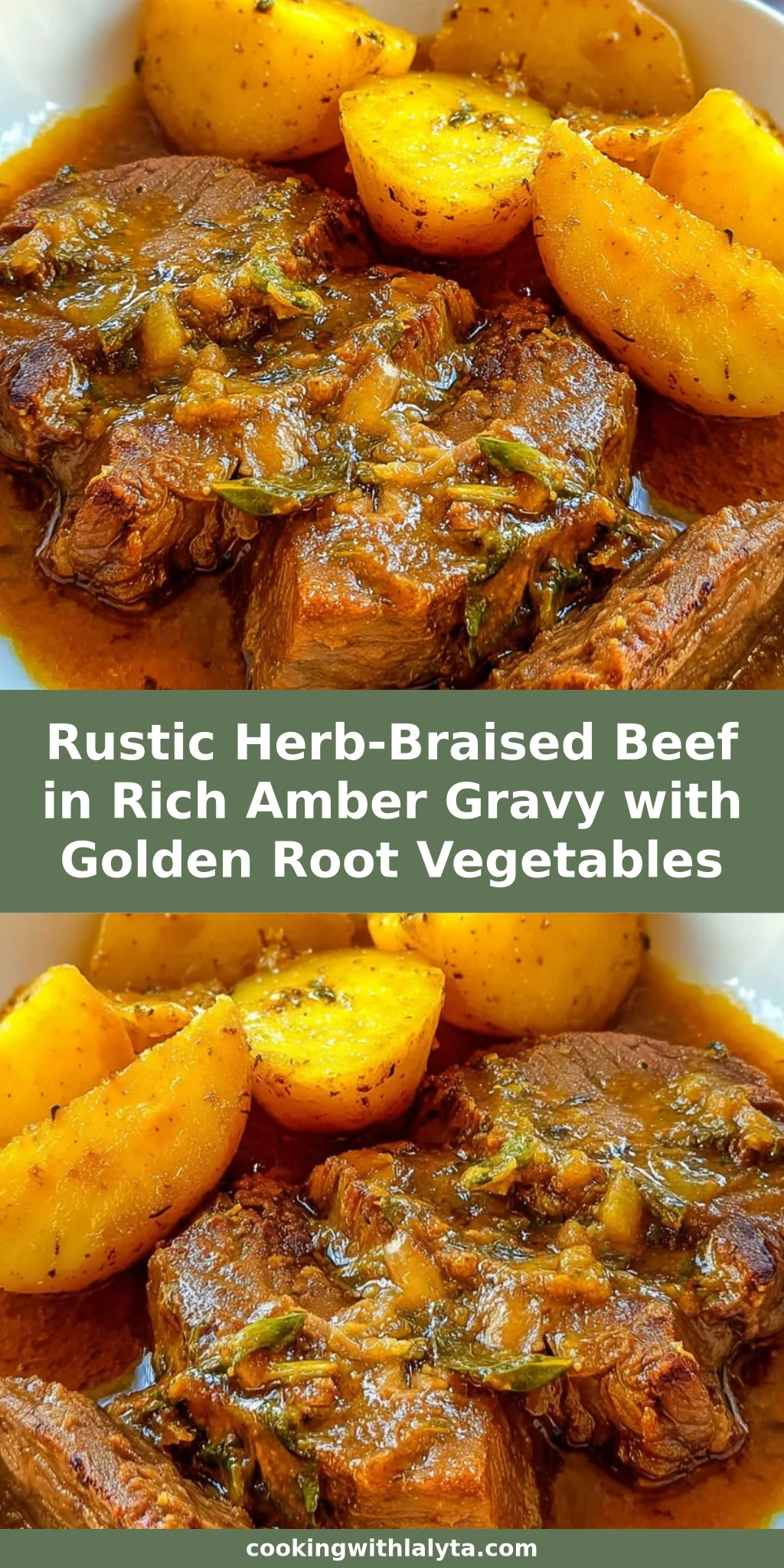
Rustic Herb-Braised Beef in Rich Amber Gravy with Golden Root Vegetables – A Hearty, Slow-Cooked Comfort Dish
There are dishes that transport you, and then there’s this herb braised beef — a recipe that carries the soul of my Moroccan upbringing, the polish of my Parisian training, and the no-nonsense warmth of my NYC kitchen. I first learned to slow-cook meat from my mother in Casablanca, where aromatic spices lingered in the air for hours. But it was at Le Cordon Bleu in Paris that I truly understood the magic of a proper braise: the deep, amber-hued gravy that forms when wine, broth, and fresh herbs meld with beef chuck roast over low, steady heat. When I moved to New York, I started adding golden root vegetables like parsnips and Yukon Gold potatoes, a nod to the fall farmers’ markets in Union Square. This dish is my love letter to all three homes, and it’s the ultimate comfort food — a rustic beef stew that’s both elegant and soul-satisfying.
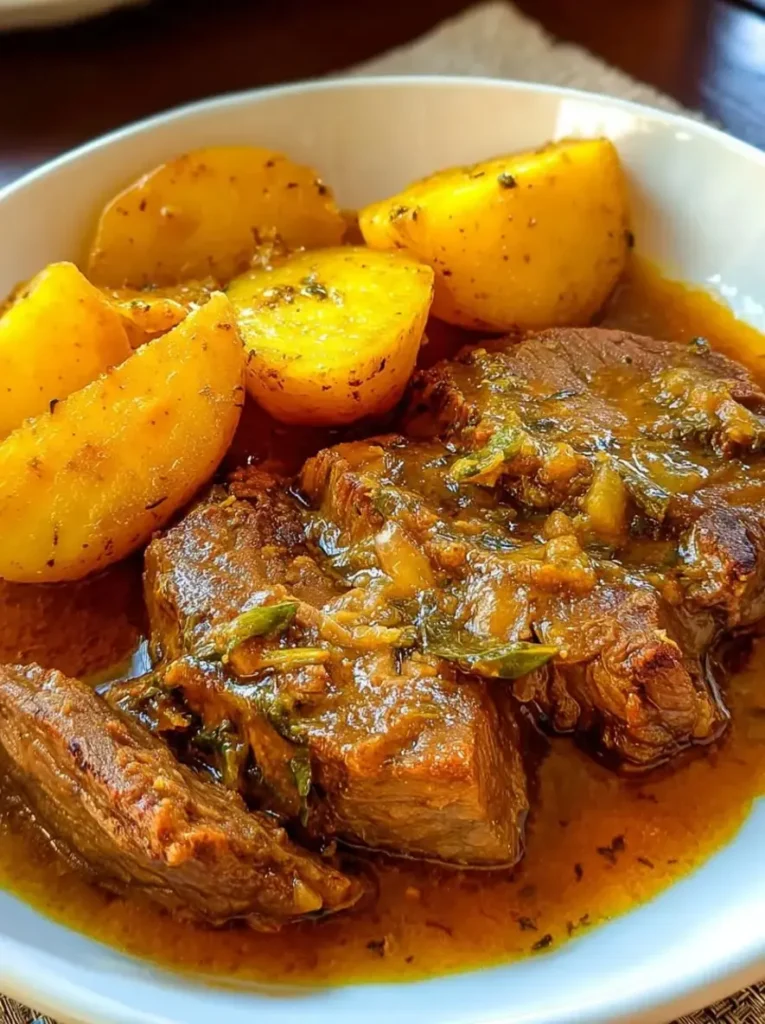
Imagine this: as the Dutch oven lifts from the heat, you’re hit with a savory plume of rosemary, thyme, and rich red wine. The beef, once tough, is now so tender it surrenders at the touch of a fork — each cube encased in a glossy, amber gravy that shimmers with a buttery finish. The root vegetables, caramelized from their time in the oven, add a natural sweetness that balances the deep umami of the broth. I always say that a good braise is like a symphony: the herbs are the melody, the wine is the harmony, and the slow hours are the rhythm. Here, I use a classic French technique — making a roux with flour and onions — to give the gravy body, then let the oven do the hard work. It’s a dish that makes your home smell like a cozy bistro, and every spoonful is a hug for your taste buds.
What makes my version of braised beef with root vegetables different? I lean on a double layer of flavor: searing the beef until a deep crust forms, then deglazing with a robust Cabernet Sauvignon that I pick up from a little wine shop in Greenwich Village. I also add the root vegetables later in the cooking process — a mistake I see too many home cooks make is tossing everything in at once, which leads to mushy carrots and disintegrating potatoes. My method ensures they stay chunky, golden, and tender while infusing the gravy with sweetness. Stick with me, and I’ll share a pro tip that took me years to perfect: always finish the sauce with a pat of cold butter to give it that mirror-like shine. This is the beef in gravy recipe you’ll keep on repeat, whether for a Sunday supper or a dinner party that impresses without the stress.
Why This Rustic Herb-Braised Beef Recipe Is the Best
The flavor secret lies in how I build the gravy from the bottom up, a lesson etched into me during my Parisian training. Unlike a typical beef chuck roast recipe that might rely on a simple broth, I start with a carefully developed fond — those caramelized bits left from searing the beef. When I deglaze the pot with a full-bodied red wine, it releases a cascade of complex notes: fruit, tannin, and a dark intensity that mingle with the onions and garlic. The herbs — fresh rosemary, thyme, and bay leaves — aren’t just thrown in; they’re chosen to complement the amber gravy, adding an earthy freshness that cuts through the richness. I always say that cooking is about patience, and this dish rewards it with a depth that you simply can’t rush. The tomato paste adds a subtle sweetness and acidity, while the Worcestershire sauce brings a savory kick that ties everything together. It’s a symphony of flavors that my Moroccan mother would recognize, even if she’d never use a French technique.
Texture is where science meets art, and I perfected this during my time testing recipes in a tiny NYC apartment kitchen. The key is treating each ingredient with respect: the beef chuck roast is seared in batches to avoid overcrowding, which ensures a crust that locks in moisture rather than steaming it away. The flour roux, cooked with onions for exactly two minutes, eliminates any raw taste and gives the gravy a silky mouthfeel without needing a thickener later. I add the root vegetables — carrots, parsnips, and Yukon Gold potatoes — in two-thirds of the way through braising, so they absorb the savory liquid but still hold their shape. The result is a rustic beef stew where every element has its own identity: the beef is fork-tender, the vegetables are melt-in-your-mouth, and the gravy is so luscious you’ll want to drink it with a spoon.
I designed this recipe to be foolproof, even for a beginner who’s never braised before. All you need is a trusty Dutch oven and a little stove-to-oven confidence. The steps are broken down so you know exactly when to sear, stir, and simmer. I’ve included specific timing cues — like braising for 1½ hours before adding vegetables — to prevent the common pitfall of overcooking. My pro tip throughout is to season in layers: first the beef, then the broth, and a final check at the end. This isn’t a chase-your-tail dinner; it’s a set-it-and-forget-it meal that fills your home with an aroma so good, your neighbors might just knock on the door. Whether you’re a seasoned cook or just starting out, this herb braised beef recipe will make you feel like a pro.
Herb Braised Beef Ingredients
When I gather ingredients for this dish, I often think of my Saturday morning ritual: a stroll to the Union Square Greenmarket for root vegetables, then a stop at a local butcher for a beautiful chuck roast. In Morocco, my mother would use lamb and a tagine, but here in NYC, I’ve fallen in love with beef chuck for its marbling and flavor. The herbs I grow on my tiny fire escape — rosemary, thyme, and parsley — are a reminder that even in a concrete jungle, you can cultivate a kitchen garden. The ingredients here are simple but transformative; each one play a critical role in building that signature amber gravy.
Ingredients List
- 2 lbs beef chuck roast, cut into 2-inch cubes
- 2 tablespoons olive oil
- 1 large onion, diced
- 3 cloves garlic, minced
- 2 carrots, peeled and cut into chunks
- 2 parsnips, peeled and cut into chunks
- 2 large Yukon Gold potatoes, peeled and cubed
- 3 tablespoons all-purpose flour
- 1 cup dry red wine (such as Cabernet Sauvignon)
- 2 cups beef broth, low sodium
- 2 tablespoons tomato paste
- 2 sprigs fresh rosemary
- 3 sprigs fresh thyme
- 2 bay leaves
- 1 teaspoon salt
- ½ teaspoon black pepper
- 1 tablespoon Worcestershire sauce
- 2 tablespoons unsalted butter
- Fresh parsley for garnish
Ingredient Spotlight
Beef Chuck Roast: This is the star of our herb braised beef. Chuck comes from the shoulder area and has stunning marbling that slowly renders during braising, keeping the meat juicy. In a US grocery store, look for a cut with lots of white fat veins — it should be bright red and firm. If you can’t find chuck, brisket or round roast works, but the texture will be leaner and less velvety. I always ask the butcher to cut it into cubes for me to save time.
Dry Red Wine: Cabernet Sauvignon is my go-to for its bold, dark fruit flavors that build the amber gravy’s body. Avoid “cooking wine” from the supermarket — it’s often loaded with salt and vinegar. Instead, pick a bottle you’d drink; I usually use a mid-priced wine from a Napa Valley producer. For a substitution, try a Merlot for a softer finish, or a good-quality pomegranate juice with a splash of vinegar for depth, though the gravy won’t have the same complexity.
Golden Root Vegetables: Yukon Gold potatoes, carrots, and parsnips create a sweet, earthy balance. I source these from farmers’ markets for peak freshness; parsnips can be tricky to find, so regular yellow potatoes and an extra carrot can swap in, but you’ll miss that subtle nuttiness. The key is to cut them uniformly — about 1½-inch chunks — so they cook evenly. I learned this precision in Paris, where vegetable cuts are a matter of pride.
Fresh Herbs: Rosemary and thyme are non-negotiable here — they infuse the broth with a woodsy, aromatic essence that dried herbs just can’t replicate. I grab bundles from my local bodega, but any grocery store carries them. For substitutions, dried rosemary and thyme at 1 teaspoon each will work in a pinch, but the dish loses its vibrant, garden-fresh lift. Bay leaves add a subtle tea-like note; don’t skip them!
| Original Ingredient | Best Substitution | Flavor / Texture Impact |
|---|---|---|
| Beef Chuck Roast | Brisket or Round Roast | Leaner, slightly chewier, but still flavorful with longer braising |
| Dry Red Wine | Pomegranate Juice + 1 tbsp Vinegar | Fruitier, less tannic, gravy will be lighter in color |
| Yukon Gold Potatoes | Russet Potatoes | More starchy, might break down slightly, thicker gravy |
| Fresh Rosemary & Thyme | 1 tsp Each Dried | Less aromatic, but still herbal; use dried in a sachet for easy removal |
How to Make Rustic Herb-Braised Beef — Step-by-Step
I’ve taught this recipe to many home cooks in my NYC kitchen, and I promise it’s easier than you think. The oven does the heavy lifting, and my step-by-step guide will keep you on track. Let’s create some magic together!
Step 1: Sear the Beef
Preheat your oven to 325°F (163°C). Toss the beef cubes with 1 teaspoon salt and ½ teaspoon pepper. Heat 2 tablespoons of olive oil in a large Dutch oven over medium-high heat. Add the beef in a single layer — don’t crowd the pot! Sear for 3-4 minutes per side until deeply browned on all sides. Do this in batches if needed; crowding will steam the meat instead of searing it, and we lose that fond. Transfer seared beef to a plate.
💡 Lalybeth’s Pro Tip: For the best crust, pat the beef cubes dry with paper towels before seasoning. Any excess moisture prevents browning and those golden bits that flavor the gravy.
Step 2: Sauté Aromatics
Reduce heat to medium. Add the diced onion to the pot and cook, stirring occasionally, until soft and translucent, about 5 minutes. You’ll see it pick up the brown bits from the bottom — that’s flavor! Add the minced garlic and cook for 1 minute more, just until fragrant. Don’t let the garlic burn, or it will turn bitter and ruin the broth.
⚠️ Common Mistake to Avoid: Rushing the onions. If you don’t cook them until truly soft, they won’t melt into the gravy, leaving a raw, sharp taste. Be patient here — it’s the foundation of the dish.
Step 3: Make the Roux
Sprinkle 3 tablespoons of all-purpose flour evenly over the onion mixture. Stir constantly with a wooden spoon for 2 minutes. This step cooks out the raw flour taste and creates a roux that will thicken our amber gravy beautifully. You’ll see it turn a pale golden color and smell nutty. Keep it moving to prevent any burning; if it starts to stick, lower the heat slightly.
💡 Lalybeth’s Pro Tip: Use a flat-edged spatula to stir the roux — it scrapes the bottom of the pot better than a round spoon, ensuring no flour hides in the curves. This is a trick I picked up from a Parisian pâtissier!
Step 4: Deglaze with Wine
Pour in 1 cup of dry red wine, then use a wooden spoon to scrape up all the caramelized bits from the bottom of the pot. These bits — the fond — are pure gold for flavor. Bring the wine to a simmer and let it bubble gently for 3 minutes. This reduces the alcohol and concentrates the fruity notes, giving the gravy a deep, complex backbone.
⚠️ Common Mistake to Avoid: Using too high a heat here. If the wine boils too vigorously, it can evaporate too quickly without extracting the fond, leaving you with a thin, one-note sauce. Keep it at a gentle simmer.
Step 5: Build the Braising Liquid
Stir in 2 cups of low-sodium beef broth, 2 tablespoons of tomato paste, and 1 tablespoon of Worcestershire sauce. Whack the pot with a spoon to combine everything into a smooth, rich liquid. Tuck in 2 sprigs of rosemary, 3 sprigs of thyme, and 2 bay leaves. The herbs will infuse the broth as it braises. Taste the liquid — it should be slightly undersalted at this point, as it will reduce and concentrate in the oven.
💡 Lalybeth’s Pro Tip: Tie the herbs together with kitchen twine into a bouquet garni. It makes removal a breeze later, and you won’t end up with rogue stems in your final dish. A trick straight from my Le Cordon Bleu days!
Step 6: Oven Braising – Phase 1
Return the seared beef to the pot, nestling it into the liquid in a single layer. Bring the broth to a gentle boil on the stovetop, then cover the Dutch oven with its lid. Transfer the pot to the preheated oven and braise for 1½ hours. The low, steady heat will gradually break down the beef’s collagen, transforming it into meltingly tender chunks. Avoid peeking — every time you lift the lid, you extend the cooking time!
⚠️ Common Mistake to Avoid: Not bringing the liquid to a boil before covering. A simmer on the stovetop ensures the oven doesn’t waste time reheating from cold, which can lead to uneven cooking and tough beef.
Step 7: Add Root Vegetables
After 1½ hours, carefully remove the pot from the oven. Lift the lid and add the carrot chunks, parsnip chunks, and Yukon Gold potato cubes. Stir them into the stew, ensuring they’re mostly submerged in the gravy. This late addition prevents the vegetables from overcooking and turning to mush. The steam will be hot — use oven mitts and stand back a bit!
💡 Lalybeth’s Pro Tip: If you love a little caramelization, let the root vegetables sit on top of the beef without stirring them in completely for the first 10 minutes of this phase. They’ll get a slight golden hue before being coated in gravy.
Step 8: Finish Braising
Cover the pot and return it to the oven. Braise for another 45 minutes to 1 hour. The vegetables should be fork-tender but still hold their shape, and the beef should be so soft it falls apart when prodded. Check for doneness: a paring knife should slide into a carrot with zero resistance. If the beef isn’t yet tender, give it 15-20 more minutes; it can take longer if the meat was extra cold or the cubes were larger.
⚠️ Common Mistake to Avoid: Checking too early. Every time you lift the lid, you lose heat and moisture, which can dry out the stew. Trust the process and let the oven work its magic.
Step 9: Finish the Gravy
Remove the pot from the oven. Using tongs, fish out the herb sprigs and bay leaves and discard them — they’ve done their job. Add 2 tablespoons of unsalted butter and stir gently until it melts completely, turning the gravy glossy and rich. Taste and adjust seasoning with additional salt and pepper if needed; it might need a pinch after the braise. If you prefer a thicker gravy, whisk 1 tablespoon cornstarch with 2 tablespoons cold water and stir it in, then simmer on the stovetop for 5 minutes.
💡 Lalybeth’s Pro Tip: For an extra-luxurious gravy, stir in a spoonful of crème fraîche or heavy cream with the butter. It adds a velvety tang that reminds me of a classic French sauce.
Step 10: Garnish and Serve
Ladle the braised beef into shallow bowls, making sure each gets plenty of gravy and a mix of vegetables. Sprinkle generously with fresh chopped parsley for a pop of color and freshness. Serve immediately while the gravy is hot and shimmering. I love sopping up every drop with a hunk of crusty bread or spooning it over creamy mashed potatoes — but it’s a star on its own too.
⚠️ Common Mistake to Avoid: Skipping the parsley. That final herb garnish isn’t just decoration — it cuts through the richness with a clean, grassy note that elevates every bite. Don’t leave it out!
| Step | Action | Duration | Key Visual Cue |
|---|---|---|---|
| 1. Sear Beef | Brown beef cubes in batches | 8-10 mins | Deep golden crust on all sides |
| 2. Sauté Aromatics | Cook onion and garlic | 6 mins | Onion translucent, garlic fragrant |
| 3. Make Roux | Cook flour-onion mixture | 2 mins | Golden color, nutty aroma |
| 4. Deglaze | Add wine and scrape fond | 3 mins | Bubbling, fond dissolved, slightly reduced |
| 5. Build Liquid | Add broth, tomato paste, herbs | 5 mins | Smooth, blended, herbs submerged |
| 6. Oven Braise 1 | Cover and cook in oven | 90 mins | Beef starting to soften, liquid bubbling gently |
| 7. Add Vegetables | Stir in carrots, parsnips, potatoes | 5 mins | Vegetables evenly distributed, mostly submerged |
| 8. Oven Braise 2 | Continue cooking covered | 45-60 mins | Beef fork-tender, vegetables tender but intact |
| 9. Finish Gravy | Remove herbs, stir in butter | 2 mins | Gravy is glossy, butter melted |
| 10. Garnish & Serve | Plate and add parsley | 1 min | Fresh green parsley on golden dish |
Serving & Presentation
When it’s time to serve, I love to bring the Dutch oven right to the table — there’s something so inviting about a rustic pot of braised beef with root vegetables that everyone can dig into. In my NYC kitchen, I’ll ladle portions into wide, shallow bowls that showcase the glossy amber gravy and chunky vegetables. Drizzle a little extra gravy on top for that photo-worthy shine, then scatter fresh parsley leaves. The bright green against the deep brown and gold makes it a feast for the eyes. For a casual dinner, serve it family-style and let people help themselves; it’s the kind of dish that sparks conversation.
Pairing is where the fun begins. A thick slice of crusty sourdough bread is my non-negotiable — it’s perfect for sopping up every last drop of gravy. For a heartier meal, spoon the stew over a mountain of creamy mashed potatoes, a pairing that reminds me of Parisian bistros where sauces are sacred. In Morocco, my mother would serve a similar dish with couscous and harissa, and sometimes I’ll do that here for a North African twist. A simple green salad with a sharp vinaigrette cuts through the richness, making the meal feel balanced and complete.
For beverages, I always recommend a glass of the same Cabernet Sauvignon you used in cooking — its boldness stands up to the deep flavors. For non-drinkers, a sparkling water with lemon or a tart cranberry juice is lovely. When I’m feeling nostalgic for my Paris days, I’ll set the table with a French tablecloth and some jazz playing softly; in Morocco, we’d have mint tea afterward. In NYC, it’s all about the cozy factor — I invite friends over and let the aroma do the welcoming. This dish transforms any meal into an occasion.
| Pairing Type | Suggestions | Why It Works |
|---|---|---|
| Side Dish | Crusty sourdough bread, creamy mashed potatoes, roasted green beans | Soaks up gravy, adds texture contrast, or provides freshness |
| Sauce / Dip | Horseradish cream, whole-grain mustard, a dollop of crème fraîche | Adds a tangy kick that contrasts with the rich beef |
| Beverage | Cabernet Sauvignon, dark stout beer, sparkling water with lemon | Matches the depth of the gravy or cleanses the palate |
| Garnish | Fresh parsley, lemon zest, chive flowers | Adds a fresh, floral note that brightens the dish |
Make-Ahead, Storage & Reheating
One of the things I love most about this herb braised beef is how beautifully it preps ahead. In my busy NYC life, I often make it on a Sunday and enjoy it through the week. In fact, the flavors deepen overnight in the fridge, making it even more delicious the next day. Just cool it completely before storing, and you’ll have a week’s worth of cozy meals at your fingertips.
| Method | Container | Duration | Reheating Tip |
|---|---|---|---|
| Refrigerator | Airtight glass container | Up to 4 days | Reheat gently on stovetop over low heat, adding a splash of broth if needed |
| Freezer | Freezer-safe bag or container | Up to 3 months | Thaw overnight in fridge, reheat slowly; stir butter in at the end |
| Make-Ahead | Original Dutch oven or baking dish | 2 days in advance | Complete through Step 8, cool, refrigerate; reheat and finish with butter |
When reheating, I always use the stovetop instead of the microwave to preserve the gravy’s texture. Place the stew in a saucepan over low heat, adding a few tablespoons of beef broth or water if it looks too thick. Stir occasionally until bubbling gently, then turn off the heat and swirl in a small piece of butter to bring back that glossy shine. For best results, reheat only the portion you plan to eat; repeated temperature changes can make the vegetables a bit soft, but the flavor will remain outstanding.
I’ve frozen this many times, and it’s a lifesaver on days when I’m rushing from the kitchen to a meeting. Let it thaw in the fridge overnight, then reheat as above. The root vegetables might lose a little bite, but they’ll still taste incredible. One tip: I often freeze it without the potatoes, then add freshly boiled potatoes when reheating for a nearly-made-fresh taste. This is a dish that’s as kind to your schedule as it is to your palate.
Variations & Easy Swaps
| Variation | Key Change | Best For | Difficulty Impact |
|---|---|---|---|
| Moroccan-Spiced Braised Beef | Replace herbs with cinnamon, cumin, coriander; use white wine | Those who love warm, aromatic flavors | Slightly easier; fewer ingredients |
| Gluten-Free Braised Beef | Swap flour with 2 tbsp cornstarch slurry | Gluten-sensitive or celiac diets | No change in difficulty |
| Seasonal Spring Braised Beef | Substitute root vegetables with baby carrots, asparagus, peas | Lighter, fresher take for warmer months | Slightly easier; quicker vegetable cook time |
Moroccan-Spiced Braised Beef
This variation is a tribute to my mother’s kitchen in Casablanca, where braised meats were infused with warm spices instead of herbs. Swap the rosemary and thyme for 1 teaspoon each of ground cinnamon, cumin, and coriander. Use a dry white wine instead of red for a lighter, slightly tangy gravy. The root vegetables will take on a caramelized sweetness from the cinnamon, and the whole house will smell like a Moroccan souk. I love serving this over fluffy couscous with a dollop of preserved lemon paste on the side — it’s a beautiful fusion of my two culinary worlds, Parisian technique and Moroccan soul.
Gluten-Free Braised Beef
For my friends who avoid gluten, this easy swap makes the dish indistinguishable from the original. Replace the all-purpose flour with 2 tablespoons of cornstarch mixed into a slurry with 2 tablespoons of cold water. After removing the finished stew from the oven, stir in the slurry and simmer for 5 minutes until the gravy thickens. You’ll still get that glossy, amber finish, and the flavor remains rich and deep. I’ve tested this in many dinner parties, and no one ever notices the difference! Just ensure your beef broth and Worcestershire sauce are certified gluten-free.
Seasonal Spring Braised Beef
When the NYC farmers’ markets burst with spring produce, I lighten this dish by swapping the heavy root vegetables for tender baby carrots, asparagus tips, and fresh peas. Add them in the last 20 minutes of cooking so they stay bright and crisp-tender. The gravy remains the same but feels more delicate, and the fresh herbs shine through. It’s perfect for a chilly April evening when you still want comfort but with a nod to the changing season. I often stir in a handful of fresh mint at the end for an unexpected, fragrant lift.
What cut of beef is best for braising in a rich herb gravy with root vegetables?
Beef chuck roast is my top choice for this herb braised beef recipe. It’s cut from the shoulder and has ideal marbling and connective tissue that slowly melts during braising, resulting in incredibly tender, succulent meat. In US grocery stores, you’ll find it as “chuck roast” or “shoulder steak.” The fat content keeps the beef moist, while the collagen thickens the amber gravy naturally. If chuck isn’t available, brisket or round roast can work, but brisket will be leaner and round might be slightly drier, so you’ll need to extend the braising time by 30-45 minutes and ensure the liquid always covers the meat. Avoid tender cuts like sirloin—they don’t have enough fat and will turn stringy during the long, slow cooking process that’s essential for a rustic beef stew like this one.
Can I substitute the golden root vegetables with regular carrots and potatoes?
Absolutely! If you can’t find parsnips or Yukon Gold potatoes, regular orange carrots and russet potatoes will still yield a delicious braised beef with root vegetables. However, there will be subtle changes: parsnips add a nutty, slightly sweet flavor that you’ll miss, so I recommend adding a pinch of sugar or a drizzle of honey to the broth to mimic that sweetness. Russet potatoes are starchier than Yukon Golds, so they might break down more in the gravy, creating a thicker, almost creamy texture. To prevent them from disintegrating, add them even later—say, 30 minutes before the end—and handle the stew gently when stirring. I’ve made this swap many times in my NYC kitchen when the market runs out of parsnips, and it’s still a comforting, crowd-pleasing dish. The key is to season as you go to compensate for the flavor differences.
How long should I braise the beef to get it tender in an amber gravy?
For this beef chuck roast recipe, total braising time should be between 2 to 2½ hours at 325°F (163°C) in the oven. However, the magic happens in two phases: first, sear and braise the beef alone for 1½ hours to start breaking down the tough fibers. Then, add the root vegetables and cook for another 45 minutes to 1 hour. The beef is done when a fork slides in with no resistance and the meat flakes apart easily. Several factors can affect timing: the size of your beef cubes (larger ones need longer), the type of pot (a heavy Dutch oven retains heat best), and your oven’s accuracy. I always check after the minimum time by pressing a piece against the side of the pot—if it yields, it’s ready. As my Paris chefs taught me, “Patience is the secret ingredient in every braise.”
What herbs pair well with a rustic braised beef and root vegetable dish?
Fresh rosemary, thyme, and bay leaves are the classic trio for this type of beef in gravy recipe. Rosemary adds a piney, robust note that stands up to the rich meat, while thyme brings a subtle, earthy fragrance that infuses the broth. Bay leaves contribute a tea-like depth that rounds out the flavors. For this dish, I use them fresh because their oils release slowly during braising, creating a more vibrant taste. If you want to experiment, sage or marjoram can replace thyme for a different profile, but avoid delicate herbs like basil or cilantro, which break down and lose flavor during the long cooking. I often tie them into a bouquet garni—a technique I perfected in Paris—so they infuse the liquid without leaving stems in the final stew. The key is to balance the herbs so they complement, not overpower, the beef.
Can I make this herb braised beef in a slow cooker instead of the oven?
Yes, you can adapt this recipe for a slow cooker with great results! First, sear the beef in a skillet as directed—don’t skip this, as it builds the deep amber gravy flavor. Then, transfer the beef to the slow cooker. Sauté the onions and garlic, make the roux, and deglaze with wine in the same skillet, then pour everything into the slow cooker along with the broth, tomato paste, and herbs. For root vegetables, add them after 4 hours of cooking on low, not at the start, or they’ll turn to mush. Cook on low for 6-8 hours total, until the beef is tender. I slightly prefer the oven for more even heat distribution, but this is a set-it-and-forget-it option that works beautifully on busy days.
How do I thicken the gravy for braised beef if it’s too thin?
If your gravy isn’t as thick as you’d like, there are a few easy fixes. My go-to method is a cornstarch slurry: mix 1 tablespoon cornstarch with 2 tablespoons cold water until smooth, then stir it into the pot during the last 5 minutes of cooking. Bring to a quick boil to activate, and the gravy will turn glossy and thick. Alternatively, if you want a richer texture, you can make a beurre manié—knead equal parts flour and butter into a paste and whisk it in. In my Paris training, we’d sometimes simmer the stew uncovered for 10 minutes to reduce it naturally, which intensifies the flavors too. Avoid adding flour directly to hot liquid, as it will clump! I always thicken at the end, after removing the herbs and stirring in the butter, to control the consistency perfectly.
What are the best root vegetables for a rustic beef stew?
For a balanced, golden-hued rustic beef stew, I use a combination of carrots, parsnips, and Yukon Gold potatoes. Carrots bring natural sweetness and color, parsnips add a nutty, earthy depth, and Yukon Gold potatoes contribute a buttery, creamy texture that holds up during braising. Other excellent options include turnips for a peppery bite, celery root for a subtle celery flavor, or sweet potatoes for a sweeter twist. In my NYC kitchen, I adapt based on what’s at the market—in fall, I might add cubed butternut squash. The key is to choose vegetables with similar cooking times so they finish together. I avoid greens or quick-cooking veg like zucchini, which will disintegrate. Always cut them into uniform 1½-inch chunks so they cook evenly and look beautiful on the plate.
Can I prepare this braised beef recipe ahead of time for a dinner party?
This is one of the best make-ahead dishes you can serve for a gathering. I often cook the beef and vegetables through Step 8, then cool and refrigerate it for up to 2 days. The flavors meld and deepen, making the gravy even more robust. On the day of your event, reheat it gently on the stovetop until bubbling, then finish with butter and adjust seasonings. For presentation, I add fresh parsley just before serving so it stays vibrant. You can also freeze it up to 3 months—my NYC friends love when I pull a container out for a spontaneous dinner. Since braising is a slow process, doing it in advance frees you up to enjoy your guests. Just remember to under-salt slightly before storing, as flavors intensify over time.
Is it necessary to use red wine, or can I substitute it in the amber gravy?
Red wine adds a signature depth and slight acidity that defines the amber gravy, but you can substitute it if needed. For a non-alcoholic version, use an equal amount of pomegranate juice with 1 tablespoon of red wine vinegar or balsamic vinegar to mimic that tang. Beef broth alone works, but the gravy will lack complexity and might taste flat, so I add a teaspoon of soy sauce for umami. In Morocco, my mother often used tomato-based sauces for braises, which gives a different but lovely result. However, for the authentic, rich flavor of this dish, a bold red like Cabernet Sauvignon is hard to beat. It’s worth keeping a small bottle just for cooking—it transforms a simple beef chuck roast recipe into something restaurant-worthy.
How do I prevent the beef from becoming tough during a braise?
Tough beef in a braise usually comes from undercooking, not overcooking, with this cut. Beef chuck has lots of collagen that needs hours at low heat to break down into gelatin, which makes the meat tender and the gravy silky. The biggest mistake is using too high a temperature—preheat your oven to exactly 325°F and keep the lid on. Also, don’t cut the braise short; test for doneness by pulling a piece with a fork. If it resists, give it more time. I’ve rescued many stews by simply extending the cooking. On the flip side, if you boil the liquid instead of gently simmering, the muscle fibers can seize up. Finally, sear the beef properly at the start—those browned edges protect the meat and add flavor. Trust the process, and it will be spoon-tender.
Share Your Version!
I truly believe that cooking is a conversation, and I’d love to see how this recipe turns out in your kitchen. Did you add your own twist, like swapping parsnips for sweet potatoes or using an unusual herb from your garden? Share a photo on Instagram and tag me @cookingwithlalyta — I try to feature your creations in my stories, and there’s nothing that makes me happier than seeing a bubbling Dutch oven in your home. Leave a comment below with your rating and any questions; I read every single one and often chime in with a little extra advice.
Which part of this rustic beef stew surprised you the most — the glossy amber gravy, the tender chuck roast, or how the root vegetables hold their shape? I’m curious to know if you experimented with the Moroccan spiced variation or the make-ahead method. Your feedback helps me craft future recipes that fit into your life, whether you’re in a small apartment kitchen or a big family home. From my NYC kitchen to yours — I hope this recipe brings as much warmth to your table as it does to mine. — Lalybeth 🧡
Love This Recipe? Save It to Pinterest!
If you enjoyed this Rustic Herb-Braised Beef in Rich Amber Gravy with Golden Root Vegetables recipe, don’t let it get lost in your browser tabs! 😄 Pin it now so you can find it again anytime — and explore hundreds more tried-and-tested recipes waiting for you on my Pinterest boards.
👉 Follow Lalybeth on Pinterest @cookingwithlalyta
📌 Pin this recipe · 🔁 Re-pin your favorites · 💬 Tag me when you make it — I love seeing your creations!
Did you make this herb braised beef? I’d love to hear about it!
Tag @cookingwithlalyta on Instagram with #LalybethsKitchen for a chance to be featured in my stories 🌟
Rustic Herb-Braised Beef in Rich Amber Gravy with Golden Root Vegetables
- Total Time: 2 hours 50 minutes
- Yield: 6 1x
Description
A hearty, slow-braised beef dish featuring tender chunks of chuck roast simmered in a deeply flavorful amber gravy made with red wine, beef broth, and fresh herbs, accompanied by caramelized golden root vegetables like carrots, parsnips, and potatoes.
Ingredients
- 2 lbs beef chuck roast, cut into 2-inch cubes
- 2 tablespoons olive oil
- 1 large onion, diced
- 3 cloves garlic, minced
- 2 carrots, peeled and cut into chunks
- 2 parsnips, peeled and cut into chunks
- 2 large Yukon Gold potatoes, peeled and cubed
- 3 tablespoons all-purpose flour
- 1 cup dry red wine (such as Cabernet Sauvignon)
- 2 cups beef broth, low sodium
- 2 tablespoons tomato paste
- 2 sprigs fresh rosemary
- 3 sprigs fresh thyme
- 2 bay leaves
- 1 teaspoon salt
- ½ teaspoon black pepper
- 1 tablespoon Worcestershire sauce
- 2 tablespoons unsalted butter
- Fresh parsley for garnish
Instructions
- Preheat the oven to 325°F (163°C).
- Season beef cubes with salt and pepper. In a large Dutch oven, heat olive oil over medium-high heat and sear beef in batches until browned on all sides. Remove and set aside.
- Reduce heat to medium. Add diced onion and cook until soft, about 5 minutes. Add garlic and cook 1 minute more.
- Sprinkle flour over the onion mixture and stir constantly for 2 minutes to cook out the raw flour taste.
- Pour in the red wine, scraping up any browned bits from the bottom of the pot. Let simmer for 3 minutes.
- Add beef broth, tomato paste, Worcestershire sauce, rosemary, thyme, and bay leaves. Stir to combine.
- Return the beef to the pot, bring the liquid to a gentle boil, then cover and transfer to the oven.
- Braise for 1½ hours, then carefully add the carrot, parsnip, and potato chunks. Stir, cover, and return to the oven for another 45 minutes to 1 hour, until the vegetables are tender and the beef is fork-tender.
- Remove from oven. Discard herb sprigs and bay leaves. Stir in butter until melted and the gravy is glossy. Adjust seasoning with additional salt and pepper if needed.
- Serve hot, garnished with fresh parsley. Great with crusty bread or over mashed potatoes.
Notes
For an even richer flavor, marinate the beef in red wine overnight before cooking. If you prefer a thicker gravy, mix 1 tablespoon cornstarch with 2 tablespoons cold water and stir into the pot during the last 5 minutes of cooking.
- Prep Time: 20 minutes
- Cook Time: 2 hours 30 minutes
- Method: Main Course
- Cuisine: American
Nutrition
- Calories: 520 kcal
- Sugar: 8 g
- Fat: 24 g
- Carbohydrates: 32 g
- Protein: 38 g
Tried This Recipe? Leave a Comment!
Did you make this recipe? I’d love to hear how it turned out! Please leave a comment and a rating below. Your feedback helps other home cooks and supports cookingwithlalyta.com!
For more delicious inspiration, follow me on Pinterest!