Table of Contents
Restaurant-Style Chicken Madras with Creamy Coconut Tomato Gravy – 30-Minute One-Pot Dinner
Growing up in Morocco, my mother’s kitchen was a swirl of warm spices and slow-simmered tagines, but it was during my culinary training in Paris that I first fell in love with Indian curries. The layered heat of a good Madras, the velvety tomato coconut gravy—it felt like a bridge between the North African flavors of my childhood and the sophisticated sauce work I was mastering. Back home in my NYC kitchen, I’ve spent years perfecting this Restaurant-Style Chicken Madras so you can whip up a one‑pot wonder in just thirty minutes, without any of the takeout fuss.

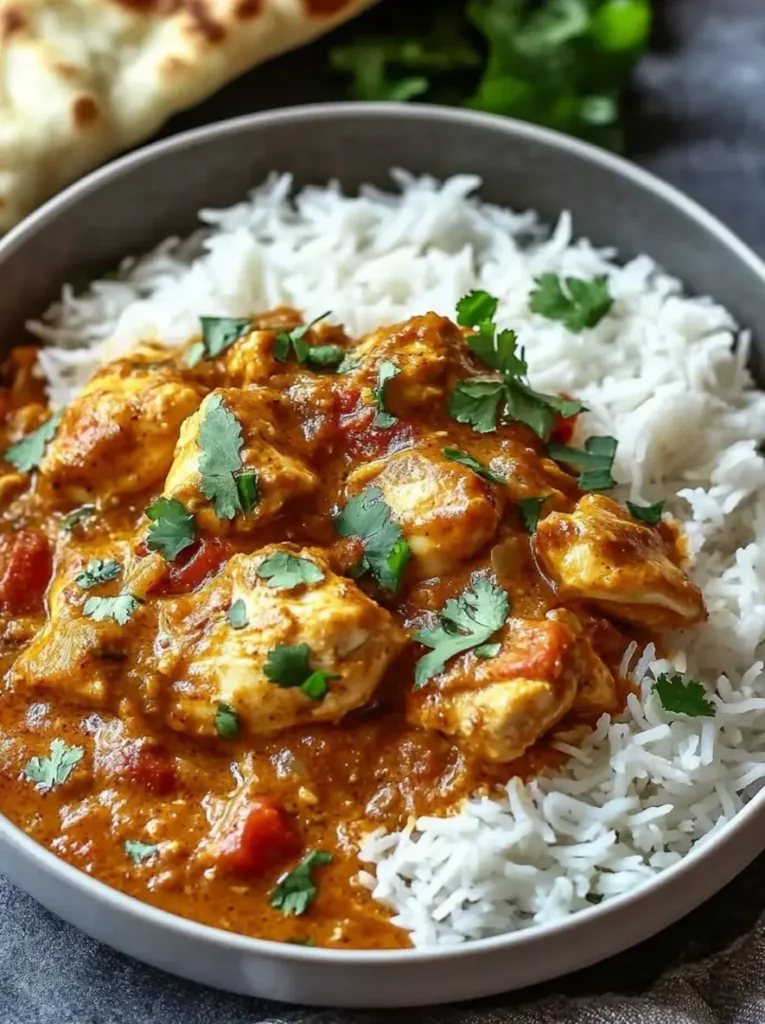
Every spoonful of this curry delivers a symphony of warmth: smoky sweet Madras curry powder, earthy cumin and coriander, sunny turmeric, and a whisper of cayenne that you can dial up or down. The coconut milk rounds out the tangy crushed tomatoes into a silky, almost buttery gravy that clings to tender chunks of seared chicken thigh. It’s the kind of dish that fills your apartment with an irresistible fragrance even before the first bite—a promise of comfort in a bowl.
What makes my version truly stand out is a quick sear‑bloom‑simmer technique I learned in Paris: we lock in chicken juices by browning first, then toast the spices in the same pot to release their full oils, and finally let the sauce reduce gently so the flavors marry into restaurant‑style depth. Trust me—once you taste this Restaurant-Style Chicken Madras, you’ll never need delivery again. Stay with me and I’ll share the pro tip that guarantees a luscious, never‑watery gravy, plus the one mistake even confident home cooks make.
Why This Restaurant-Style Chicken Madras Recipe Is the Best
The Flavor Secret: In Paris, my instructors drilled into us the importance of building a fond—those caramelized bits that cling to the pan after searing meat. Here, we use that same pot to sweat the onion and bloom the spices, deglazing with crushed tomatoes, so every bit of browned goodness dissolves into the gravy. The Madras curry powder, with its gentle heat and hint of fenugreek, is the backbone; I amp it with a custom blend of cumin, coriander, and turmeric for layers that taste like they simmered all day.
Perfected Texture: A common pitfall is a thin, broken sauce, but using full‑fat coconut milk (or coconut cream for extra richness) alongside chicken broth creates a gravy that’s creamy without being heavy. I let the pot simmer uncovered for the last few minutes to thicken naturally—no cornstarch needed. The result? A luscious, velvety coating for every morsel of chicken, just like your favorite Indian restaurant.
Foolproof & Fast: This recipe was designed for busy weeknights in my Queens apartment. All the ingredients can be found at any US grocery store—no specialty market required. The steps are straightforward, and the timings are forgiving: even if you let it simmer a few extra minutes while setting the table, the curry only gets better. It’s a beginner‑friendly dish that tastes like you spent hours.
Restaurant-Style Chicken Madras Ingredients
Whenever I shop for this dish, I love stopping by the spice aisle at my local NYC supermarket—it’s like a treasure hunt for the freshest Madras curry powder. I still remember my mother in Morocco grinding cumin and coriander by hand; now I reach for high‑quality ground spices, but the ritual remains the same. Here’s exactly what you’ll need:
Ingredients List
- 2 lbs boneless skinless chicken thighs, cut into chunks
- 2 tablespoons vegetable oil
- 1 large onion, finely chopped
- 4 garlic cloves, minced
- 1‑inch piece ginger, grated
- 2 tablespoons Madras curry powder
- 1 teaspoon ground cumin
- 1 teaspoon ground coriander
- 1/2 teaspoon turmeric
- 1/2 teaspoon cayenne pepper (adjust to taste)
- 1 can (14 oz) crushed tomatoes
- 1 can (14 oz) full‑fat coconut milk
- 1 cup chicken broth
- Salt to taste
- Fresh cilantro for garnish
Ingredient Spotlight
Madras Curry Powder: This is the heart of the dish. Look for a blend that lists coriander, cumin, fenugreek, and turmeric without too much filler; I prefer ‘Sun Brand’ or Patel’s from my local Patel Brothers in Jackson Heights. If you can’t find Madras, a good quality curry powder plus 1/2 teaspoon extra fenugreek will come close. The substitution will be slightly milder but still delicious.
Full-Fat Coconut Milk: It provides the creamy body. Shake the can well, and avoid light versions—they water down the sauce. For an even richer gravy, substitute canned coconut cream. If you must use a dairy option, half‑and‑half works in a pinch, but the sauce will be thinner and lose that signature coconut aroma.
Crushed Tomatoes: They give the gravy its tomatoey tang without chunks. If you only have diced tomatoes, pulse them briefly in a blender or food processor. A 14‑oz can of plain tomato sauce can also work, but the sauce will be smoother; in that case, reduce the chicken broth by 1/4 cup to avoid excessive thinning.
Chicken Thighs: Boneless, skinless thighs stay juicy and tender even with a longer simmer. Chicken breast can be used, but it dries out faster—if substituting, reduce the braising time to 15 minutes and check doneness early. I always buy thighs in bulk at my NYC Costco and freeze them flat in 1‑lb bags.
| Original Ingredient | Best Substitution | Flavor / Texture Impact |
|---|---|---|
| Madras curry powder | Mild curry powder + 1/2 tsp fenugreek | Slightly less pungent, still warm and complex |
| Full‑fat coconut milk | Coconut cream or half‑and‑half | Cream adds extra body; dairy loses coconut note |
| Crushed tomatoes | Diced tomatoes (blended) or tomato sauce | Slightly chunkier or smoother; adjust liquid |
| Chicken thighs | Boneless chicken breast | Drier texture; shorten cooking time |
How to Make Restaurant-Style Chicken Madras — Step-by-Step
This is one of those magic recipes where everything happens in a single pot. I’ll walk you through each step so you feel like a seasoned Indian chef by the time you’re done.
Step 1: Sear Chicken
Heat the vegetable oil in a large heavy‑bottomed pot or Dutch oven over medium‑high heat. Pat the chicken chunks dry with paper towels, then add them to the hot oil in a single layer. Sear until deeply golden on all sides, about 5 minutes total—don’t crowd the pot; if needed, work in batches. Remove the chicken with a slotted spoon and set aside on a plate.
💡 Lalybeth’s Pro Tip: Make sure the oil shimmers before adding the chicken. A good sear builds the fond that will flavor the entire curry. If the meat sticks, let it cook a bit longer—it will release naturally.
Step 2: Sauté Aromatics
In the same pot, add the chopped onion and cook, stirring frequently, until softened and translucent, about 5 minutes. The moisture from the onion will help lift those browned bits from the bottom. Stir in the minced garlic and grated ginger and cook for 1 minute until fragrant—be careful not to let the garlic burn.
⚠️ Common Mistake to Avoid: Rushing the onion. If it’s still crunchy, the gravy will lack sweetness and body. Cook until it’s truly soft and starting to turn golden.
Step 3: Bloom Spices
Add the Madras curry powder, cumin, coriander, turmeric, and cayenne pepper directly to the onion mixture. Stir constantly for about 1 minute—just until the spices release their aroma and the kitchen smells like an Indian market. This brief toasting deepens their flavors and eliminates any raw taste.
💡 Lalybeth’s Pro Tip: Keep a splash of water nearby. If the spices start to stick or darken too fast, add a tablespoon of water to the pan to prevent burning while still blooming.
Step 4: Simmer Gravy
Pour in the crushed tomatoes, coconut milk, and chicken broth. Use a wooden spoon to scrape up any remaining fond from the bottom. Bring the mixture to a gentle simmer, stirring occasionally, and let it bubble for 5 minutes so the flavors begin to meld.
Step 5: Braise Chicken
Return the seared chicken pieces (along with any accumulated juices) to the pot. Reduce the heat to low, cover with a lid, and simmer for 20–25 minutes. The sauce will thicken and the chicken will become fork‑tender. After 20 minutes, remove the lid and let it bubble uncovered for the last 5–10 minutes if you prefer a thicker gravy.
⚠️ Common Mistake to Avoid: Boiling instead of simmering. A hard boil can cause the coconut milk to separate and the chicken to toughen. Keep it at a gentle, steady bubble.
Step 6: Finish & Serve
Taste the curry and season with salt—start with 1/2 teaspoon and adjust. Stir in half of the fresh cilantro, saving the rest for garnish. Ladle the chicken madras into bowls over steamed basmati rice or alongside warm naan, and sprinkle with the remaining cilantro.
| Step | Action | Duration | Key Visual Cue |
|---|---|---|---|
| 1 | Sear chicken | 5 min | Deep golden‑brown crust |
| 2 | Sauté onion, garlic, ginger | 6 min | Onion translucent, fragrant |
| 3 | Bloom spices | 1 min | Intensely aromatic, slightly darker |
| 4 | Add liquids & simmer | 5 min | Bubbling, steam rising |
| 5 | Braise with lid | 20‑25 min | Chicken fork‑tender, sauce thickened |
| 6 | Season & garnish | 2 min | Vibrant cilantro on creamy gravy |
Serving & Presentation
In my tiny NYC kitchen, I love setting out a family‑style spread with this Chicken Madras as the star. Spoon the curry into wide, shallow bowls over a mound of fluffy basmati rice—the grains soak up that coconut tomato gravy beautifully. For a striking presentation, garnish each bowl with a few extra cilantro leaves and a wedge of lime on the side; the acidity cuts through the richness and makes the colors pop.
When I crave an even more authentic experience, I serve the Madras with warm, pillowy naan bread brushed with melted butter and a sprinkle of garlic salt. The combination reminds me of the late‑night curry runs I used to make after pastry school in Paris—except now, it’s all from my own pot. A side of cooling cucumber raita or a simple kachumber salad balances the warmth wonderfully.
| Pairing Type | Suggestions | Why It Works |
|---|---|---|
| Side Dish | Steamed basmati rice, garlic naan, jeera rice | Absorbs the rich gravy without overpowering |
| Sauce / Dip | Cucumber raita, mango chutney, plain yogurt | Cooling contrast to the warm spices |
| Beverage | Mango lassi, Indian pale ale (IPA), chilled Chardonnay | Fruity, creamy, or hoppy notes complement the curry |
| Garnish | Fresh cilantro, lime wedges, thin‑sliced red onion | Adds freshness, color, and a pop of acidity |
Make-Ahead, Storage & Reheating
This Chicken Madras is a meal‑prepper’s dream, and it’s saved many a busy weeknight in my Brooklyn apartment. The flavors deepen overnight, so I often make it on Sunday for Monday’s dinner. It keeps beautifully, and the sauce stays creamy even after reheating.
| Method | Container | Duration | Reheating Tip |
|---|---|---|---|
| Refrigerator | Airtight glass container | Up to 4 days | Gently reheat on stovetop over low, adding splash of broth if needed |
| Freezer | Freezer‑safe zip‑top bag (flat) or container | Up to 3 months | Thaw overnight in fridge, reheat low and slow; whisk if sauce separates |
| Make-Ahead | Same pot or storage container | 1‑2 days ahead | Cool completely, refrigerate; reheat gently and garnish fresh |
When reheating from frozen, I thaw it in the refrigerator overnight to keep the texture intact. If the gravy looks a little thick after chilling, stir in a tablespoon of chicken broth or water until it reaches the desired consistency. The one thing I always do is wait to add the fresh cilantro until right before serving—that bright herbal pop is best fresh.
Variations & Easy Swaps
| Variation | Key Change | Best For | Difficulty Impact |
|---|---|---|---|
| Dairy‑Free & Vegan | Swap chicken for canned chickpeas & use vegetable broth | Plant‑based diners | Same easy process |
| Gluten‑Free | All ingredients naturally GF; serve with rice or GF naan | Celiac or gluten‑sensitive | No extra steps |
| Extra‑Spicy Madras | Add 2‑3 sliced green chilies with onions and increase cayenne to 1 tsp | Heat lovers | Easy, just adjust |
| Slow Cooker Version | Sear chicken, sauté onion, then transfer everything to slow cooker on LOW for 4‑5 hours | Hands‑off cooking | Even easier |
Dairy‑Free & Vegan Version
To turn this into a hearty plant‑based meal, skip the chicken and use two 15‑oz cans of drained chickpeas, adding them when you return the seared chicken in step 5. Substitute vegetable broth for the chicken broth. The coconut milk already makes this recipe dairy‑free, so no other swaps are needed. This is one of my favorite pantry recipes—it reminds me of the chickpea‑based stews my mother would whip up during Ramadan, fragrant with cumin and turmeric.
Gluten‑Free Adaptation
Great news: this Chicken Madras is naturally gluten‑free as written. All the spices and canned goods I recommend are typically gluten‑free, but always check labels on your curry powder and broth to be sure. Serve with steamed basmati rice or a gluten‑free naan from your local bakery, and you’ve got a safe, satisfying meal. I’ve served this to gluten‑sensitive friends at my NYC dinner parties without a second thought.
Extra‑Spicy Madras
If you crave the extra heat you’d find in a South Indian curry house, stir in a teaspoon of Kashmiri chili powder along with the other spices, or add two fresh green Thai chilies (split lengthwise) when you sauté the onion. I learned this trick from a Parisian chef de partie who used to toss whole red chilies into his butter chicken to bloom. The oil in the pan will carry the chili’s heat throughout the gravy. Start with less and taste—you can always add, but you can’t take away!
Slow Cooker Version
On days when I’m running around Manhattan and want dinner waiting for me, I lean on my slow cooker. After searing the chicken and sautéing the onion‑garlic‑ginger mixture (steps 1‑2), scrape everything into a 6‑quart slow cooker. Bloom the spices right in the sauté pan with a splash of water for 30 seconds, then add crushed tomatoes, coconut milk, and broth, scraping up any bits, and pour it all into the slow cooker. Add the seared chicken, give it a stir, and cook on LOW for 4‑5 hours. The sauce will be a touch thinner, so you can stir in a slurry of 1 tablespoon cornstarch mixed with 2 tablespoons cold water at the end if you prefer a thicker gravy.
Frequently Asked Questions
What is the key difference between chicken madras and other Indian curry dishes?
Chicken Madras stands out for its bold, tangy‑spicy gravy that relies heavily on a robust Madras curry powder—typically a blend of coriander, cumin, fenugreek, and chilies—rather than on cream or nut pastes. Unlike a korma, which is creamy and mild, or a butter chicken, which uses butter and cream, Madras has a deeper, earthier heat and often includes tomatoes for acidity. The sauce is traditionally thinner and spicier, but my restaurant‑style version tempers it with coconut milk for creaminess without dulling its character, making it a perfect bridge between fiery Vindaloo and mild curries.
Can I use coconut milk instead of cream to make a lighter version of chicken madras?
Absolutely! In fact, this recipe is designed around full‑fat coconut milk, which gives a silky, creamy mouthfeel without heavy dairy cream. If you want an even lighter version, you can use light coconut milk, but the sauce will be thinner and less luscious. I often stir in a tablespoon of Greek yogurt right at the end for extra tang and body—just make sure to remove the pot from the heat first to prevent curdling. For a truly decadent treat, though, coconut cream is the upgrade.
How long should I simmer chicken madras to get that restaurant-style thick gravy?
For the perfect consistency, simmer the curry covered for 20 minutes, then remove the lid and let it bubble gently for an additional 5‑10 minutes, depending on your preference. The uncovered phase allows steam to escape and concentrates the sauce, while the initial covered simmer keeps the chicken moist. I find that 25 minutes total (20 covered, 5 uncovered) hits sweet spot—thick enough to coat the back of a spoon but still saucy. If you need to speed things up, you can increase the heat slightly but stir often to avoid scorching.
What are the best side dishes to serve with creamy coconut tomato chicken madras?
My go‑to accompaniments are steamed basmati rice (the long grains stay separate and soak up the gravy beautifully) and warm naan for dipping. A cooling cucumber raita—made with grated cucumber, yogurt, and a pinch of cumin—balances the spice, while a simple kachumber salad of diced tomato, onion, and cilantro adds freshness. For drinks, I love a mango lassi or a crisp, dry Riesling to cut through the richness. If you’re feeling festive, some pickled mango or onion on the side brings a tangy crunch that I picked up from the South Asian restaurants in my NYC neighborhood.
Is this chicken madras spicy? Can I make it mild for kids?
As written, the recipe carries a moderate, warming heat from 1/2 teaspoon cayenne, but it’s not overwhelmingly spicy—the coconut milk tames it significantly. To make a kid‑friendly version, simply omit the cayenne pepper entirely and use a mild Madras curry powder or a sweet curry blend. You’ll still get all the aromatic complexity without the burn. I’ve served this to my nephew many times; he licks the bowl clean. If some family members love heat, pass a bowl of chopped fresh chilies or a spicy chutney at the table.
Can I make chicken madras in a slow cooker or Instant Pot?
Yes, both methods work well. For a slow cooker, follow the variation under “Slow Cooker Version” above: sear the chicken and sauté the aromatics on the stovetop, then combine everything and cook on LOW for 4‑5 hours. For an Instant Pot, use the Sauté function for steps 1‑3, then add liquids, seal the lid, and pressure cook on HIGH for 10 minutes with a natural release. The sauce may be thinner from the extra condensation, so I sometimes stir in a cornstarch slurry or let it simmer on Sauté mode for a few minutes after opening.
What is madras curry powder and can I substitute it?
Madras curry powder is a British‑inspired blend with more heat and tang than standard curry powder, typically containing coriander, cumin, turmeric, fenugreek, and red chilies. It’s named after the city of Madras (now Chennai) but is not a traditional Indian masala. If you can’t find it, mix equal parts of a mild curry powder with a pinch of extra fenugreek and a dash of cayenne to replicate the warmth. Or use garam masala plus a little chili powder, though the flavor will be slightly more perfumed and less tomato‑friendly.
How can I tell when the chicken madras is done cooking?
The chicken is ready when you can easily pierce a thick chunk with a fork and the meat shreds apart with gentle pressure. The internal temperature should reach 165°F if you’re using a thermometer, but because thighs are forgiving, a visual check is usually enough. The sauce should have thickened to a consistency that lightly coats the back of a spoon and no longer tastes of raw tomato or raw spice. If the gravy is too loose, simmer uncovered for a few more minutes; if it’s too thick, add a splash of broth.
Can I double this recipe for a crowd?
Absolutely—this recipe scales up beautifully. Use a larger pot, such as an 8‑quart Dutch oven, and increase the seasoning proportionally (but always taste and adjust salt at the end). The searing step will take longer because you’ll likely need to work in a couple of batches to avoid crowding; I like to set the seared chicken aside in a bowl and pour any accumulated juices back into the pot. The simmering time may stay about the same, but check the chicken for doneness. Leftovers for a crowd are a gift!
Does this chicken madras taste better the next day?
Yes, like most braised dishes, the flavors meld and deepen overnight in the refrigerator. The spices seem to bloom further, and the sauce becomes even silkier. I often make this on a Sunday and reheat it on Monday for a comforting dinner. Just remember to add the fresh cilantro right before serving, not before storing, to keep its bright flavor. Reheat gently on the stovetop with a splash of water or broth to loosen the gravy if needed.
Love This Recipe? Save It to Pinterest!
If you enjoyed this Restaurant-Style Chicken Madras with Creamy Coconut Tomato Gravy recipe, don’t let it get lost in your browser tabs! 😄 Pin it now so you can find it again anytime — and explore hundreds more tried-and-tested recipes waiting for you on my Pinterest boards.
👉 Follow Lalybeth on Pinterest @cookingwithlalyta
📌 Pin this recipe · 🔁 Re-pin your favorites · 💬 Tag me when you make it — I love seeing your creations!
Share Your Version!
I’d absolutely love to see your take on this Restaurant-Style Chicken Madras. Drop a star rating in the comments below, and don’t forget to snap a photo of your creamy creation and tag me on Instagram or Pinterest @cookingwithlalyta. Did you dial up the cayenne, or maybe add a surprise twist like a handful of spinach at the end? I read every single comment and love swapping kitchen stories.
From my NYC kitchen to yours — I hope this recipe brings as much warmth to your table as it does to mine. — Lalybeth 🧡

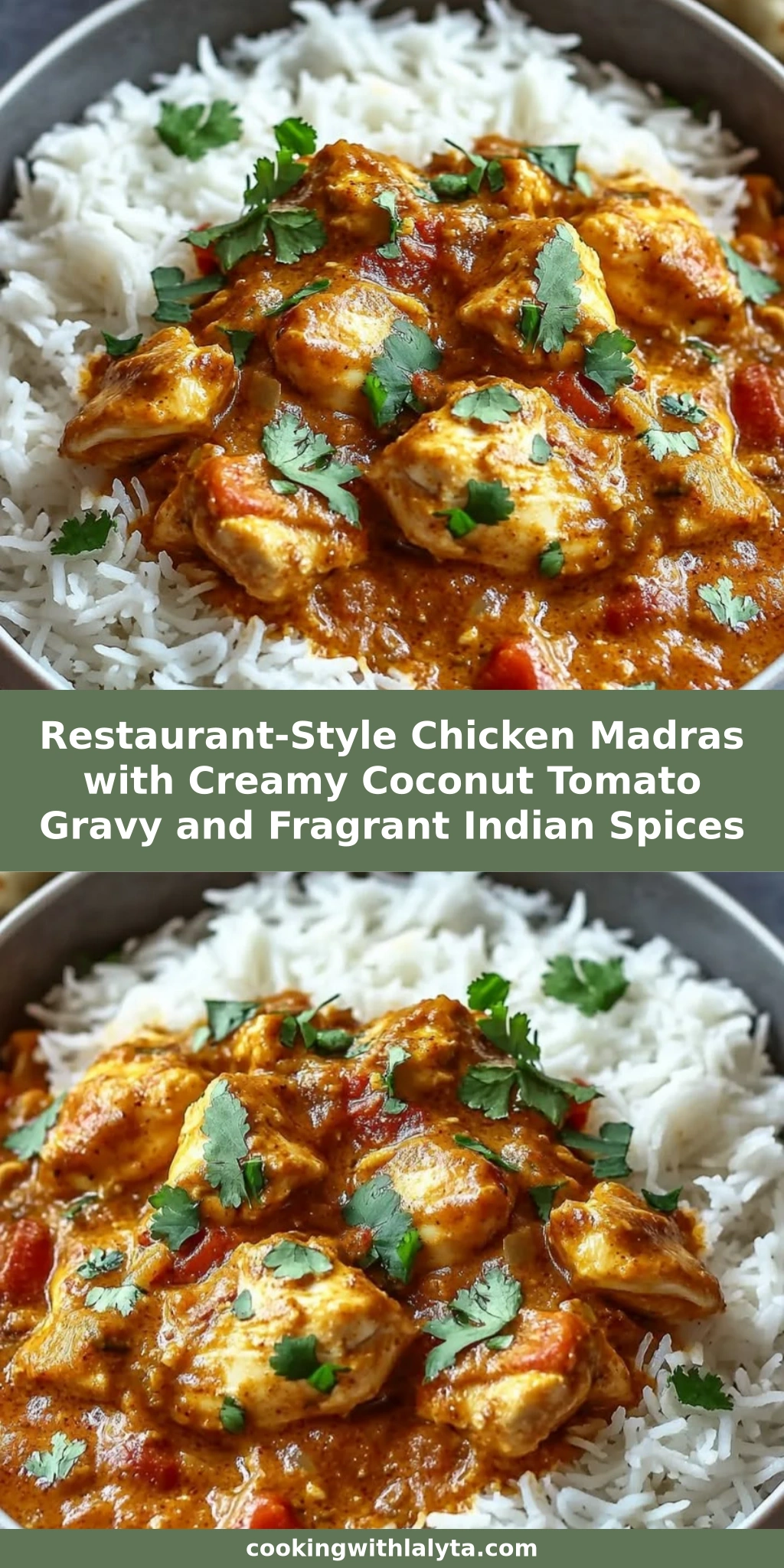
Restaurant-Style Chicken Madras with Creamy Coconut Tomato Gravy and Fragrant Indian Spices
- Total Time: 45 minutes
- Yield: 4 1x
Description
A rich, creamy, and aromatic Chicken Madras made with coconut milk and tomato gravy, infused with Indian spices. This restaurant-style recipe is easy to make at home, delivering authentic flavors with minimal effort.
Ingredients
- 2 lbs boneless skinless chicken thighs, cut into chunks
- 2 tablespoons vegetable oil
- 1 large onion, finely chopped
- 4 garlic cloves, minced
- 1-inch piece ginger, grated
- 2 tablespoons Madras curry powder
- 1 teaspoon ground cumin
- 1 teaspoon ground coriander
- 1/2 teaspoon turmeric
- 1/2 teaspoon cayenne pepper (adjust to taste)
- 1 can (14 oz) crushed tomatoes
- 1 can (14 oz) full-fat coconut milk
- 1 cup chicken broth
- Salt to taste
- Fresh cilantro for garnish
Instructions
- Heat oil in a large pot over medium-high heat. Add chicken pieces and sear until golden brown on all sides, about 5 minutes. Remove and set aside.
- In the same pot, add onion and cook until softened, about 5 minutes. Add garlic and ginger, cook for 1 minute.
- Stir in Madras curry powder, cumin, coriander, turmeric, and cayenne. Cook for 1 minute until fragrant.
- Pour in crushed tomatoes, coconut milk, and chicken broth. Bring to a simmer.
- Return chicken to the pot. Reduce heat to low, cover, and simmer for 20-25 minutes until chicken is tender and sauce thickens.
- Season with salt to taste. Garnish with fresh cilantro and serve with steamed basmati rice or naan.
Notes
For a milder version, reduce or omit the cayenne pepper. For a richer gravy, use coconut cream instead of coconut milk. This dish tastes even better the next day.
- Prep Time: 15 minutes
- Cook Time: 30 minutes
- Method: Main Course
- Cuisine: Indian
Nutrition
- Calories: 450 kcal
- Sugar: 6 g
- Fat: 32 g
- Carbohydrates: 12 g
- Protein: 30 g
Tried This Recipe? Leave a Comment!
Did you make this recipe? I’d love to hear how it turned out! Please leave a comment and a rating below. Your feedback helps other home cooks and supports cookingwithlalyta.com!
For more delicious inspiration, follow me on Pinterest!