Table of Contents
Rustic Whole Roasted Chicken with Caramelized Herb Butter Glaze, Golden Baby Potatoes, and Garden Vegetables – Juicy, Crisp & Foolproof
The first time I made a whole roasted chicken was in my mother’s kitchen in Morocco, where the scent of sizzling butter, garlic, and fresh herbs would wrap around you like a worn-in blanket. Years later, in a tiny Paris apartment while at culinary school, I learned the secrets of French roasting—high heat for golden skin, low heat for succulent meat—and it transformed a simple bird into something grand. Now, in my New York kitchen, I’ve married those lessons with the season’s best market finds to create this rustic whole roasted chicken with caramelized herb butter glaze. It’s a showstopper: a juicy whole roasted chicken surrounded by tender golden baby potatoes and garden vegetables, all bathed in a sticky, herb-flecked butter that caramelizes into magic.
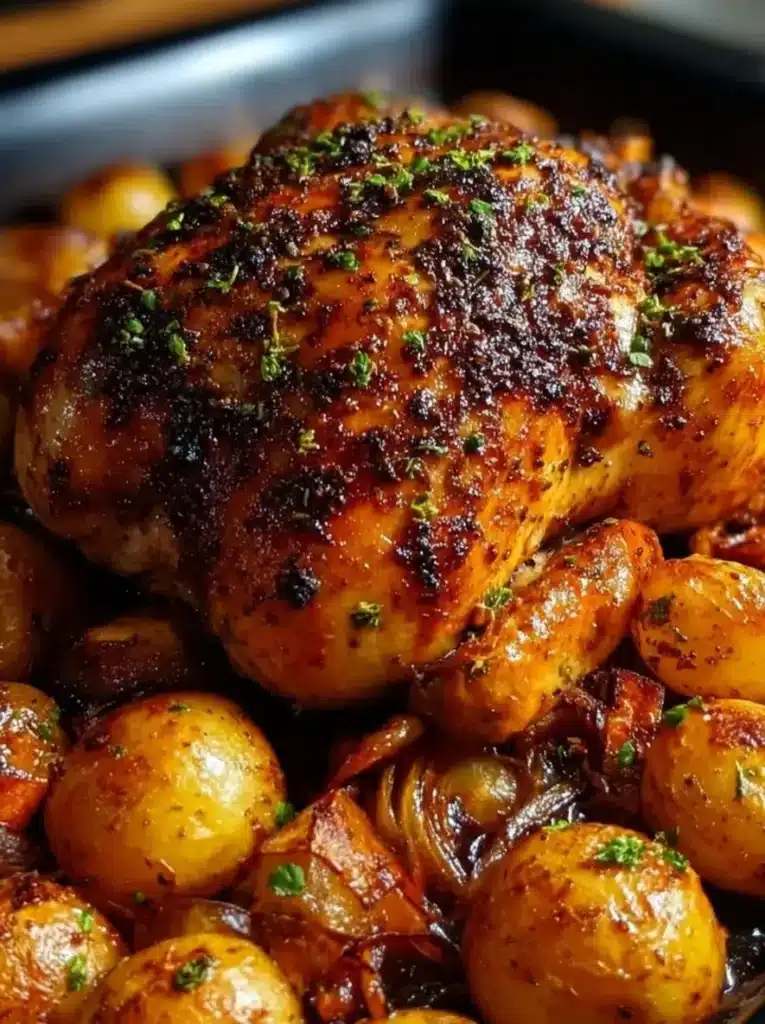
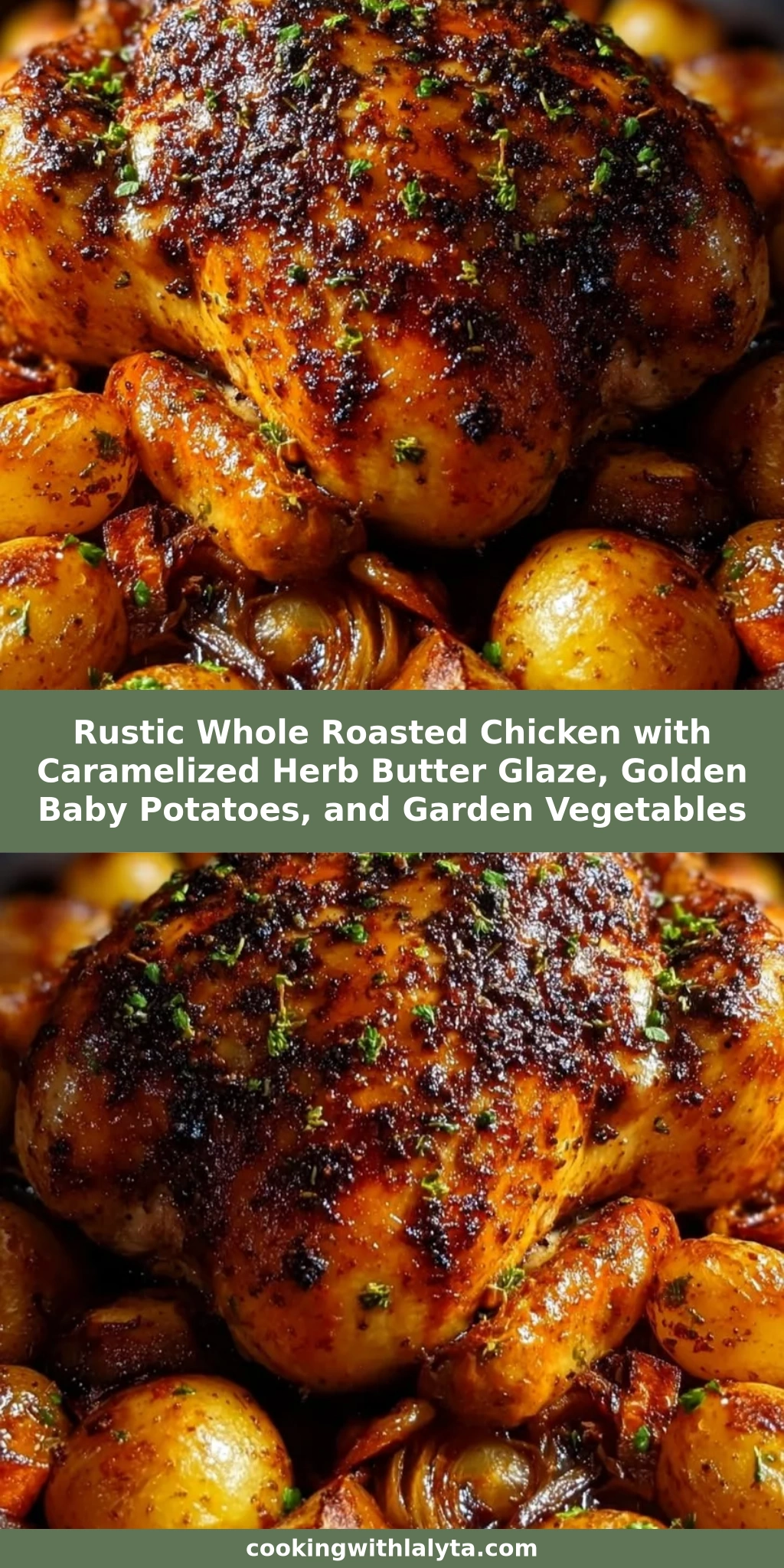
Imagine pulling a heavy cast-iron skillet from the oven—the chicken’s skin crackling and deep mahogany, the herb butter melted into every crevice, tiny pools of honey and butter shimmering on the pan. As you carve, steam rises, carrying the earthy scent of rosemary and sweet caramelized onion. The potatoes, halved and nestled snugly around the bird, soak up those rich juices while the zucchini and peppers soften into jammy bites. Your fork slides through the meat like butter, each mouthful brightened by a whisper of lemon zest and just enough red pepper flake to keep things interesting. This isn’t a stiff, formal roast; it’s a rustic, family-style feast that feels both elegant and effortlessly thrown together.
I’ve tested this herb butter roasted chicken many times—because as a chef, I know the difference between “good” and “can’t-stop-thinking-about-it”—and I’m going to share exactly how to get that caramelized, glassy crust without drying out the meat. One huge secret? Rubbing compound butter under the skin. A common mistake is simply dumping herbs on top, which means they burn before they flavor. Stick with me, and I’ll walk you through each step, plus pro tips I’ve gleaned from both my mother’s instinctive cooking and my Parisian training. From my NYC kitchen to yours, let’s make a whole roasted chicken that turns a regular Tuesday into a holiday.
Why This Rustic Whole Roasted Chicken Recipe Is the Best
The flavor secret lies in the caramelized herb butter glaze—a luscious blend of softened butter, honey, and three fresh herbs that I learned to balance during my time in French kitchens. Unlike standard roast chicken recipes that rely on a simple oil rub, here the butter is not only massaged all over but also slid under the skin. That way, the breast and thigh meat baste from the inside while the skin turns crispy. The honey isn’t just for sweetness; it amplifies the caramelization, giving you those dark, burnished edges without a sugary burn. A final touch of lemon zest cuts through the richness and makes every bite pop. It’s a whole roasted chicken that tastes deeply savory yet has a subtle, sticky glaze—the kind of flavor you’d expect at a high-end bistro.
Perfected texture is at the heart of this recipe. Starting at a high 425°F then dropping to 375°F mimics the French technique of “saisir”—seizing the heat to crisp the exterior, then gently cooking through. The result? Skin that shatters under your knife and meat so juicy it glistens. Underneath the chicken, the baby potatoes and garden vegetables roast in the drippings, turning creamy and caramelized at the edges while still holding their shape. I’ve planned the vegetable sizes to cook at the same rate as the bird, so nothing is burnt or raw. This isn’t guesswork; it’s a tested method that guarantees a rustic roasted chicken with perfectly done sides every time.
And here’s why it’s foolproof even for novices: the recipe uses a one-pan method and clear visual cues. You don’t need a fancy rotisserie or special equipment—just a sturdy roasting pan or cast-iron skillet. The herb butter can be prepped a day ahead, so on the day of cooking, it’s truly a 20-minute hands-on affair. The step-by-step instructions walk you through the process so you know exactly when to baste and when to let the oven do its magic. Whether you’re cooking for a Sunday supper or a small holiday gathering, this caramelized butter chicken delivers restaurant-quality results with home-cook confidence.
Whole Roasted Chicken Ingredients
I’m a firm believer that the best meals start with a little market wandering. For this recipe, I love hitting the Union Square Greenmarket in NYC for just-dug baby potatoes and bright, firm garden vegetables. The chicken I pick up from my trusted butcher—a 4–5 lb bird that promises plenty of leftovers. Back in Morocco, my mother would snipe herbs straight from the rooftop pots; here in my city kitchen, I keep a small rosemary plant on the windowsill, but any fresh herbs from the grocery store will do beautifully. Trust me, the aroma of thyme and sage as they hit warm butter will transport you.
Ingredients List
- For the Chicken and Vegetables:
- 1 whole chicken (4–5 lbs), giblets removed
- 1 lb baby potatoes, halved if large
- 2 cups mixed garden vegetables (carrots, zucchini, bell peppers, cut into 2-inch chunks)
- 1 large onion, quartered
- 5 cloves garlic, smashed
- 2 tablespoons olive oil
- Salt and freshly ground black pepper, to taste
- For the Caramelized Herb Butter Glaze:
- 4 tablespoons unsalted butter, softened
- 2 tablespoons honey
- 1 tablespoon fresh rosemary, finely chopped
- 1 tablespoon fresh thyme leaves
- 2 teaspoons fresh sage, chopped
- 1 teaspoon lemon zest
- 1/2 teaspoon red pepper flakes (optional)
Ingredient Spotlight
Whole Chicken (4–5 lbs): The star of the show. A smaller bird cooks more evenly and fits nicely in a skillet. Look for air-chilled chicken if possible—it gives you drier skin that crisps up better. In a pinch, a 5 lb bird works; just add a few minutes to the roasting time. Substitution: a 3–4 lb chicken will cook faster, so start checking internal temp 10 minutes earlier.
Baby Potatoes: Their thin skins and waxy texture hold shape during roasting, absorbing the herby drippings without turning mushy. You can use any small potato—Yukon Gold halves are excellent. If baby potatoes aren’t available, cut larger Yukon Golds or red potatoes into 1.5-inch chunks. Avoid russets; they’ll fall apart.
Fresh Rosemary, Thyme & Sage: This herbal trinity defines the caramelized herb butter glaze. Rosemary brings piney depth, thyme adds earthy warmth, and sage gives a peppery, slightly camphor note. If you’re missing one, double up on the others—I’ve done it on busy weeknights. Dried herbs can work in a pinch: use 1 teaspoon dried rosemary, 1/2 teaspoon dried thyme, and 1/2 teaspoon dried sage, but the fresh version is far superior for that burst of fragrance.
Honey: The secret to that crackling, lacquered skin. Honey caramelizes at a lower temperature than sugar, creating a beautiful amber glaze without scorching. A mild clover honey works best here; if you only have strong-flavored honey like buckwheat, use 1 tablespoon honey mixed with 1 tablespoon maple syrup to soften the edge.
Unsalted Butter: Using softened unsalted butter lets you control the seasoning. Its fat content carries the herb flavors and promotes even browning. Salted butter can be used; just reduce added salt by 1/4 teaspoon. Vegan swap: a high-quality plant-based butter stick works, but it won’t caramelize quite as deeply.
| Original Ingredient | Best Substitution | Flavor / Texture Impact |
|---|---|---|
| Baby potatoes | Yukon Gold or red potatoes, cut into 1.5-inch chunks | Creamier texture; slightly longer to crisp |
| Fresh rosemary, thyme, sage | Dried: 1 tsp rosemary, 1/2 tsp thyme, 1/2 tsp sage | Less vibrant, more muted flavor; still delicious |
| Honey | Maple syrup or agave nectar | Maple adds a woody note; agave is neutral but less caramelization |
| Unsalted butter | Vegan butter stick (soy or oat-based) | Less browning; still yields a glossy finish |
How to Make Rustic Whole Roasted Chicken — Step-by-Step
You’re just nine simple steps away from a rustic whole roasted chicken that looks like it came out of a countryside French kitchen. I promise—if I can do this in my tiny NYC galley while balancing a cat on my feet, you can do it in your own kitchen. Let’s get roasting.
Step 1: Preheat Oven
Preheat your oven to 425°F (220°C) with a rack set in the lower third. This high initial heat is crucial for searing the chicken skin immediately and jumping-starting caramelization. Give your oven at least 20 minutes to fully preheat; a not-quite-hot oven will lead to pale, flabby skin.
💡 Lalybeth’s Pro Tip: If you have a convection setting, use it at 400°F instead. The circulating air crisps the skin even better—just reduce total cooking time by about 10 minutes.
Step 2: Pat Chicken Dry & Season
Remove the chicken from its packaging, pull out any giblets from the cavity, and pat it thoroughly dry inside and out with paper towels. A dry bird equals crispy skin; any excess moisture will steam rather than sear. Season the cavity and the exterior generously with salt and freshly ground black pepper—don’t be shy; this is a big piece of protein.
⚠️ Common Mistake to Avoid: Skipping the drying step. Even if the chicken looks dry, there’s surface moisture. Take an extra minute and use firm pressure with paper towels—it’s the most overlooked factor in achieving crackling skin.
Step 3: Make Caramelized Herb Butter
In a small bowl, combine the softened butter, honey, finely chopped rosemary, thyme leaves, chopped sage, lemon zest, and optional red pepper flakes. Mash together with a fork or spatula until everything is evenly blended and you have a fragrant, slightly sticky paste. This herb butter is the soul of the dish—don’t rush it; make sure the herbs are very fine so they distribute evenly.
💡 Lalybeth’s Pro Tip: If your butter is still cool, microwave it for 5 seconds at a time—just until soft, not melted. Melted butter won’t hold the herbs as well and can slide right off the chicken.
Step 4: Butter Under the Skin & Rub All Over
Starting at the neck opening or the larger cavity side, use your fingers to gently loosen the skin from the breast and thighs without tearing it. Slide about 2 tablespoons of the herb butter underneath the skin, spreading it evenly over the breast meat and as far down the thighs as you can reach. Then rub the remaining butter all over the outside of the chicken, making sure to cover every inch, including the wings and drumsticks. This dual application bastes the meat from inside and out.
⚠️ Common Mistake to Avoid: Tearing the skin while loosening it. Use your fingers like a spatula, working slowly. A tear will let the butter leak out and prevent that perfect pocket of flavor. If you do tear, use a toothpick to pin it shut.
Step 5: Arrange Chicken & Vegetables
Place the buttered chicken breast-side up in a large roasting pan or 12-inch cast-iron skillet. Tuck the wing tips underneath the body to prevent burning. Arrange the halved baby potatoes, mixed vegetable chunks, quartered onion, and smashed garlic cloves around the chicken in a single layer as much as possible. The vegetables shouldn’t be piled too high; they need heat to caramelize.
💡 Lalybeth’s Pro Tip: If your pan is crowded, use a separate sheet tray for some of the vegetables. They’ll still catch the pan juices and you’ll maximize browning. Just give them a little drizzle of olive oil.
Step 6: Drizzle Oil & Season Vegetables
Drizzle the 2 tablespoons of olive oil over the vegetables, then season generously with salt and pepper. Toss everything gently with your hands or a spoon to coat evenly. The oil helps the vegetables roast rather than steam, while the seasoning draws out their natural sweetness.
⚠️ Common Mistake to Avoid: Under-salting the vegetables. They need a good pinch of salt separate from the chicken, or they’ll taste bland compared to the richly seasoned bird. Season as if you were making roasted vegetables on their own.
Step 7: Roast with Temperature Switch
Slide the pan into the preheated 425°F oven and roast for 20 minutes. You’ll hear sizzling—that’s the honey and butter doing their work. Then, without opening the oven door, reduce the heat to 375°F (190°C) and continue roasting for 40–50 minutes more. This two-temperature method gives you a jump-start on crispy skin, then gently cooks the meat through. The chicken is done when the skin is deep golden and a thermometer inserted into the thickest part of the thigh (not touching bone) reads 165°F (74°C).
💡 Lalybeth’s Pro Tip: Invest in a probe thermometer that stays in the meat and beeps when it hits temperature. It’s the only way to guarantee you won’t overcook the breast while waiting for the thighs.
Step 8: Baste & Finish
Halfway through the 375°F roast—around the 40-minute total mark—pull the pan out and quickly baste the chicken with the accumulated pan juices using a large spoon. This re-moistens the skin and encourages even browning. If you want extra caramelization, after the chicken reaches temperature, you can switch the oven to broil for 2–3 minutes, watching carefully to avoid burning. The skin will blister and darken beautifully.
⚠️ Common Mistake to Avoid: Basting too often, which lowers the oven temperature and extends cooking time. One mid-roast baste is plenty—resist the urge to open the door repeatedly.
Step 9: Rest & Carve
Remove the pan from the oven and transfer the chicken to a clean cutting board. Let it rest for 10–15 minutes before carving. This resting period allows the juices to redistribute, so they don’t flood out when you cut. Meanwhile, the vegetables can stay in the warm pan, soaking up those last bits of flavor. When ready to serve, carve the chicken into pieces—I like to separate drumsticks, thighs, and then slice the breast crosswise.
💡 Lalybeth’s Pro Tip: Use the resting time to make a quick pan sauce: spoon off excess fat, then deglaze the skillet with a splash of white wine or chicken broth over medium heat, scraping up the browned bits. Drizzle over the carved chicken.
| Step | Action | Duration | Key Visual Cue |
|---|---|---|---|
| 1 | Preheat oven | 20 mins | Oven fully at temp; rack set |
| 2 | Pat chicken dry, season | 5 mins | Skin feels papery, no moisture |
| 3 | Make herb butter | 3 mins | Paste is smooth, herbs evenly distributed |
| 4 | Loosen skin, apply butter | 4 mins | Butter visible under skin; exterior coated |
| 5 | Arrange chicken & vegetables | 3 mins | One snug layer; nothing piled high |
| 6 | Drizzle oil, season veg | 2 mins | Vegetables glisten with oil |
| 7 | Roast at 425°F then 375°F | 1 hr 0–10 mins | Deep golden skin; thigh temp 165°F |
| 8 | Baste midway | 1 min | Skin glistens with pan juices |
| 9 | Rest & carve | 10–15 mins | Juices settle; meat relaxes |
Serving & Presentation
When I bring this rustic roasted chicken to the table, I like to keep things effortlessly beautiful. Transfer the carved pieces to a large warm platter, then use a slotted spoon to arrange the roasted potatoes and garden vegetables around it. Drizzle any remaining pan juices over the top—those buttery, herb-flecked drippings are pure liquid gold. A final scatter of fresh thyme sprigs and a pinch of flaky sea salt on the skin adds that “I’m a real chef” touch that takes seconds but looks stunning.
To round out the meal, I often serve a simple green salad with a lemon vinaigrette to cut through the richness. Crusty bread is non-negotiable for sopping up the last bits of glaze. If you want to honor my Moroccan roots, try a small bowl of chermoula on the side—its bright cilantro-garlic zip is an unexpected foil to the deep herby chicken. My Parisian friends would insist on a glass of crisp Chardonnay or a light Pinot Noir, and I wholeheartedly agree.
| Pairing Type | Suggestions | Why It Works |
|---|---|---|
| Side Dish | Lemon-dressed arugula salad, steamed green beans with toasted almonds, or a simple pearl couscous | Bright acidity or neutral base balances rich butter and honey |
| Sauce / Dip | Pan sauce (deglazed with white wine), classic gravy, or Moroccan chermoula | Adds moisture and a flavor pop—chermoula brings a herby garlic punch |
| Beverage | Unoaked Chardonnay, Pinot Noir, or a crisp hard cider | Wine’s acidity cuts the fat; cider echoes the caramel notes |
| Garnish | Fresh thyme sprigs, lemon wedges, flaky sea salt, cracked black pepper | Enhances visual appeal and lets guests brighten their own portions |
Make-Ahead, Storage & Reheating
In my busy NYC life, I often prep the herb butter a day in advance and stash it in the fridge. I’ll also chop all the vegetables and keep them in airtight containers, so when I walk in the door at 6 PM, it’s just a quick assembly and into the oven. The whole chicken itself is best roasted fresh, but leftovers are a gift—this bird stays remarkably moist even after chilling.
| Method | Container | Duration | Reheating Tip |
|---|---|---|---|
| Refrigerator | Airtight container; separate meat from bones if possible | Up to 4 days | Reheat gently in a 300°F oven with a splash of broth, covered, until just warm—overheating dries it out. |
| Freezer | Freezer-safe zip-top bag or container; remove as much air as possible | Up to 3 months | Thaw overnight in fridge, then reheat in a 325°F oven with a bit of liquid to restore moisture. |
| Make-Ahead | Herb butter in a small lidded jar; chopped vegetables in zip-top bags | Up to 2 days in advance | Bring butter to room temp before using. Roast chicken fresh the day of. |
When I reheat leftovers, I never use the microwave—it turns that once-crisp skin into a rubbery mess. Instead, I place chicken and vegetables on a sheet pan, add a splash of chicken broth or water to the pan, and tent loosely with foil. Warm it in a 300°F oven for about 15–20 minutes. The skin won’t be quite as shatteringly crisp, but it will regain some texture, and the meat stays juicy. For a quick lunch, I’ll shred the chicken and crisp it in a skillet with a little olive oil for chicken tacos or a grain bowl.
Variations & Easy Swaps
| Variation | Key Change | Best For | Difficulty Impact |
|---|---|---|---|
| Moroccan-Inspired Spiced Roast Chicken | Add ras el hanout, preserved lemon, and swap honey for date syrup | Aromatic, exotic dinner; pairs with couscous | No change — still easy |
| Gluten-Free & Dairy-Free Herb Roast Chicken | Use vegan butter and ensure spices are GF-certified | Dietary restrictions; still rich and flavorful | No change |
| Seasonal Vegetable Swap | Use butternut squash, Brussels sprouts, or parsnips in fall/winter | Holiday gatherings; heartier veg | Slight adjustment: cut larger veg smaller to ensure even cooking |
Moroccan-Inspired Spiced Roast Chicken
This variation is my heart on a plate. Instead of the classic herb butter, I blend the butter with 2 teaspoons of ras el hanout—a fragrant Moroccan spice blend with cinnamon, cumin, and ginger—and 1 tablespoon of finely chopped preserved lemon rind. The honey becomes date syrup for a deeper, molasses-like caramelization. The vegetables stay, but I toss them with a pinch of saffron threads and a few whole dried apricots. The result is a stunning Moroccan whole roasted chicken that fills the kitchen with souk-worthy aromas. Serve it over a bed of fluffy couscous with a drizzle of harissa for heat—you’ll feel like you’re dining in Marrakech.
Gluten-Free & Dairy-Free Herb Roast Chicken
If you’re avoiding dairy, you can still achieve that glossy, caramelized crust. I’ve tested this with a high-quality plant-based butter stick (such as Miyoko’s) and it works beautifully. The butter alternative won’t brown quite as deeply, but you can add an extra 1/2 teaspoon of lemon zest to compensate for the lost richness. Ensure your honey is pure and your spice blends are certified gluten-free if necessary. The olive oil on the vegetables remains unchanged. The taste is slightly more herb-forward and citrusy, and the texture is still wonderfully juicy. No one will miss the dairy, I promise.
Seasonal Vegetable Swap
The beauty of this rustic roasted chicken with potatoes is that you can swap in whatever is bountiful at your local market. In the fall, I love using 1-inch cubes of butternut squash and halved Brussels sprouts instead of the zucchini and peppers. The squash turns buttery-soft and the sprouts get crispy edges. Just keep the total vegetable amount to about 3 cups so there’s enough room in the pan. Root vegetables like parsnips and carrots work wonderfully—cut them into similar sizes as the potatoes so they cook at the same rate. In spring, try asparagus and sugar snap peas, adding them during the last 20 minutes of roasting so they stay vibrant.
Frequently Asked Questions
How long should you roast a whole chicken at what temperature to achieve a crispy skin and juicy meat?
For a crispy skin and completely juicy interior, I use a two-temperature method: start at 425°F for 20 minutes to crisp the skin, then reduce to 375°F for 40–50 minutes until the internal thigh temperature hits 165°F. This technique gives you the best of both worlds—initial high heat renders fat quickly and starts the browning, while the gentler heat finishes cooking without drying out the breast. Always use a meat thermometer; it’s the only foolproof way to know when your whole roasted chicken is perfectly done. Let it rest 10–15 minutes before carving to retain all those delicious juices.
Can I substitute the golden baby potatoes with other root vegetables like carrots or parsnips?
Absolutely! Root vegetables like carrots, parsnips, and even turnips are fantastic substitutes for baby potatoes. Just cut them into uniform 1.5-inch chunks so they roast at the same pace as the chicken. Keep in mind that root vegetables release less starch, so they won’t soak up pan juices in quite the same creamy way, but they caramelize beautifully. I often do a 50/50 mix of baby potatoes and carrots for a colorful, sweet-savory side. One tip: toss them with a little extra olive oil to help browning, and spread them in a single layer to avoid steaming.
What herbs work best for making a caramelized herb butter glaze for a roasted chicken?
The ideal trio for a deeply aromatic caramelized herb butter is fresh rosemary, thyme, and sage. Rosemary provides a piney backbone, thyme adds earthy subtlety, and sage gives an almost peppery warmth that cuts through the butter’s richness. Lemon zest brightens everything, while optional red pepper flakes introduce a gentle heat. You can swap in other woody herbs like oregano or marjoram if needed, but I’d avoid tender herbs like basil or cilantro—they lose their flavor under high heat. If fresh herbs aren’t available, dried will work, but use about half the amount as the flavor is more concentrated.
How do you keep the garden vegetables from burning while the whole chicken roasts to perfection?
The key is to cut vegetables into larger chunks (about 2-inch pieces) and nestle them under and around the chicken, not piled on top. The chicken acts as a shield, and the vegetables cook in the rendered fat and juices, which keeps them moist. Starting at a high heat for 20 minutes gives them a head start on caramelization, but the temperature drop to 375°F prevents burning. If you notice the vegetables are browning too fast, simply tent that side of the pan with a small piece of foil. Basting the vegetables when you baste the chicken also helps coat them in protective juices.
Can I make this rustic roasted chicken ahead of time for a dinner party?
While the chicken is best roasted fresh on the day of serving, you can prep most components well in advance. Make the herb butter up to two days ahead and store it in the fridge; let it soften again before using. Chop the vegetables, halve the potatoes, and keep them in zip-top bags in the refrigerator. The morning of your party, you can even loosen the chicken skin and rub the butter under it, then cover and refrigerate the bird. Then, an hour and a half before serving, pull everything out, arrange the pan, and roast. It’s fresh, hot, and stress-free.
What’s the best pan to use for a whole roasted chicken with vegetables?
My go-to is a 12-inch cast-iron skillet—it retains heat beautifully, encourages even browning, and goes seamlessly from oven to table. If you don’t have cast iron, a heavy-duty stainless steel roasting pan or a large oven-safe ceramic dish works well. Avoid glass pans; they don’t conduct heat as efficiently and can cause uneven cooking. The pan should be large enough to fit the chicken with room for a single layer of vegetables around it. Too small a pan and the vegetables will steam; too large and the juices might burn. A skillet roughly 12 inches in diameter is the sweet spot.
How do I know when my whole roasted chicken is done without a meat thermometer?
While I highly recommend an instant-read thermometer, you can use visual cues: the skin should be deeply golden and the leg should move easily when wiggled. Pierce the thickest part of the thigh with a skewer or knife; the juices should run clear, not pink. Another test: the drumstick meat should feel tender when prodded. However, these methods aren’t foolproof—overcooked breast is too easy. If you roast chicken often, an inexpensive digital probe thermometer is a game-changer and worth the small investment for perfectly juicy results every time.
Can I use frozen vegetables for this roasted chicken recipe?
Frozen vegetables release a lot of water as they cook, which will steam rather than roast and can make the pan juices watery. If that’s all you have, go ahead, but don’t expect the same caramelization. I’d suggest patting them dry first and increasing the roast time slightly to evaporate excess moisture. For best results, stick with fresh vegetables when possible. However, in a pinch, frozen pearl onions and baby carrots work okay—just add them 10 minutes later into the roast to prevent mushiness.
Share Your Version!
I can’t wait for you to try this rustic whole roasted chicken with caramelized herb butter glaze. When you do, please leave a star rating and a comment below telling me how it turned out—did you add your own twist? Maybe a splash of white wine in the pan or a handful of olives? I read every single note and love hearing about your kitchen adventures.
And please, if you snap a photo of your beautiful caramelized butter chicken, share it on Instagram or Pinterest and tag me @cookingwithlalyta. Seeing those golden, crackling skins and colorful vegetables through your lens absolutely makes my day. Have you ever tried tucking a halved lemon or garlic bulb into the cavity? Tell me your favorite extra-special touch—I’m always collecting new flavor inspiration. From my NYC kitchen to yours — I hope this recipe brings as much warmth to your table as it does to mine. — Lalybeth 🧡
Love This Recipe? Save It to Pinterest!
If you enjoyed this Rustic Whole Roasted Chicken with Caramelized Herb Butter Glaze, Golden Baby Potatoes, and Garden Vegetables recipe, don’t let it get lost in your browser tabs! 😄 Pin it now so you can find it again anytime — and explore hundreds more tried-and-tested recipes waiting for you on my Pinterest boards.
👉 Follow Lalybeth on Pinterest @cookingwithlalyta
📌 Pin this recipe · 🔁 Re-pin your favorites · 💬 Tag me when you make it — I love seeing your creations!
What’s your secret for the perfect roast chicken?
I’d love to hear your go-to trick—whether it’s a spice blend, a basting method, or a family tradition. Drop it in the comments and let’s chat! Your tip might just inspire my next recipe.

Rustic Whole Roasted Chicken with Caramelized Herb Butter Glaze, Golden Baby Potatoes, and Garden Vegetables
- Total Time: 1 hour 30 minutes
- Yield: 4 servings 1x
Description
A show-stopping whole roasted chicken slathered with a caramelized herb butter glaze, surrounded by golden baby potatoes and seasonal garden vegetables. This rustic, family-style dinner is juicy, flavorful, and perfect for Sunday suppers or holiday gatherings.
Ingredients
- For the Chicken and Vegetables:
- 1 whole chicken (4–5 lbs), giblets removed
- 1 lb baby potatoes, halved if large
- 2 cups mixed garden vegetables (carrots, zucchini, bell peppers, cut into 2-inch chunks)
- 1 large onion, quartered
- 5 cloves garlic, smashed
- 2 tablespoons olive oil
- Salt and freshly ground black pepper, to taste
- For the Caramelized Herb Butter Glaze:
- 4 tablespoons unsalted butter, softened
- 2 tablespoons honey
- 1 tablespoon fresh rosemary, finely chopped
- 1 tablespoon fresh thyme leaves
- 2 teaspoons fresh sage, chopped
- 1 teaspoon lemon zest
- 1/2 teaspoon red pepper flakes (optional)
Instructions
- Preheat the oven to 425°F (220°C).
- Pat the chicken dry with paper towels and season inside and out with salt and pepper.
- In a small bowl, mash together the butter, honey, rosemary, thyme, sage, lemon zest, and red pepper flakes until well combined.
- Gently loosen the skin of the chicken breast and thighs, and spread about 2 tablespoons of the herb butter under the skin. Rub the remaining butter all over the outside of the chicken.
- Place the chicken in a large roasting pan or cast-iron skillet. Arrange the baby potatoes, garden vegetables, onion, and garlic around the chicken.
- Drizzle the vegetables with olive oil and season with salt and pepper. Toss to coat.
- Roast for 20 minutes at 425°F, then reduce the oven temperature to 375°F (190°C) and continue roasting for 40–50 minutes, or until the chicken skin is deep golden and the internal temperature of the thigh reaches 165°F (74°C).
- Baste the chicken with the pan juices halfway through roasting. Let rest for 10–15 minutes before carving.
- Serve the chicken on a platter surrounded by the roasted vegetables and potatoes. Spoon any remaining pan juices over the top.
Notes
For extra caramelization, broil the chicken for the last 2–3 minutes. The herb butter can be made a day ahead and refrigerated. Feel free to swap vegetables with whatever is in season.
- Prep Time: 20 minutes
- Cook Time: 1 hour 10 minutes
- Method: Main Course
- Cuisine: American
Nutrition
- Calories: 650 kcal
- Sugar: 12 g
- Fat: 38 g
- Carbohydrates: 28 g
- Protein: 46 g
Tried This Recipe? Leave a Comment!
Did you make this recipe? I’d love to hear how it turned out! Please leave a comment and a rating below. Your feedback helps other home cooks and supports cookingwithlalyta.com!
For more delicious inspiration, follow me on Pinterest!