Table of Contents
Slow-Simmered Aromatic Beef Curry with Coconut and Warming Spices – A Cozy One-Pot Wonder
I still remember the first time I tasted a truly great beef curry — not in a restaurant, but in my mother’s kitchen in Morocco, where she’d simmer lamb with ras el hanout for hours until the meat surrendered at the mere touch of a spoon. Years later, walking through the steamy streets of Paris after culinary school, I discovered how Thai cooks used coconut milk and warming spices to create something equally magical but entirely different. This slow cooked beef curry is my love letter to both traditions — an easy beef curry recipe that marries the slow-simmered patience I learned in my mother’s kitchen with the bright, layered aromatics I fell for during my training in France. The result is pure comfort in a bowl.
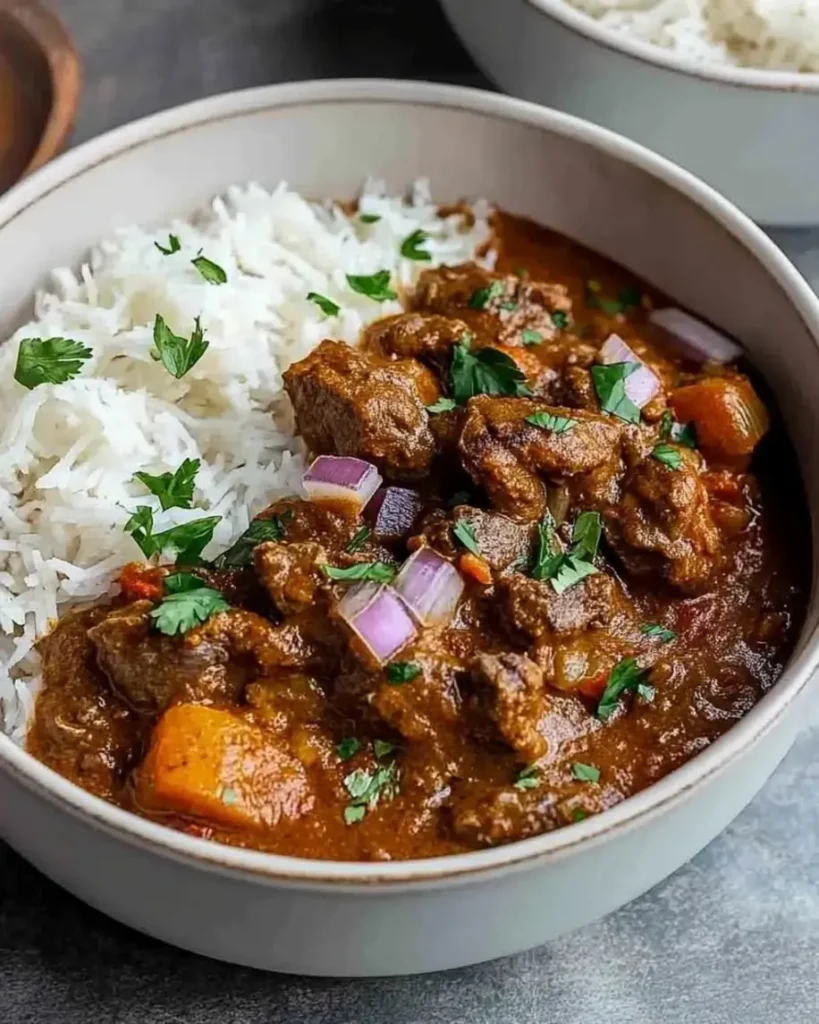
Picture this: tender chunks of beef chuck that practically melt on your tongue, swimming in a velvety sauce that gets its creaminess from coconut milk and its soul from whole cinnamon, green cardamom, and cloves. As this aromatic beef curry bubbles gently on your stovetop, your entire home fills with a fragrance so intoxicating you’ll find yourself peeking under the lid just to breathe it in. The kaffir lime leaves add a citrusy whisper that cuts through the richness, while the fish sauce and brown sugar work together to create that elusive sweet-savory balance that makes you go back for bite after bite. It’s the kind of dish that makes a chilly NYC evening feel like a warm embrace.
Now, here’s why my version is different — and why I think you’ll love it. Instead of relying on store-bought curry paste (which can be inconsistent and often lacks depth), we’re making our own from scratch in a blender. It takes five minutes, and the payoff is enormous. I’ll share a crucial technique I picked up in Paris about properly blooming your curry paste before adding liquids — it’s the step most home cooks skip, and it’s the difference between a good curry and a transcendent one. Plus, I’ll warn you about the one common mistake even experienced cooks make with coconut milk that can leave your sauce grainy and separated. Stick with me, and you’ll nail this coconut beef curry on your very first try.
Why This Slow-Simmered Aromatic Beef Curry Recipe Is the Best
The flavor secret here is all in the homemade paste. When you blend whole cinnamon sticks, cardamom pods, and cloves with fresh aromatics like shallots, garlic, and ginger, you’re releasing essential oils that pre-ground spices simply can’t match. I learned this in my Paris kitchen — whole spices, toasted or fresh-ground, carry a vibrancy that wakes up every corner of your palate. The coconut milk doesn’t just add creaminess; it carries those fat-soluble flavor compounds deep into every fiber of the beef, creating layers of taste that unfold slowly as you eat.
Texture-wise, this slow cooked beef curry is pure perfection because of one simple choice: beef chuck. This cut has the perfect marbling of fat and connective tissue that, when simmered low and slow for two hours, transforms into silky, spoon-tender meat that never dries out. I’ve tested this with brisket, round, and even sirloin — nothing compares to chuck for that melt-in-your-mouth quality. And here’s a chef’s trick: browning the beef in batches before braising creates a deeply savory fond on the bottom of your pot that dissolves into the sauce, adding an umami backbone you simply can’t get from bouillon alone.
This is truly a foolproof recipe, and I say that as someone who has taught dozens of home cooks in my NYC workshops. The active work is minimal — about 20 minutes of prep and stirring — and then your stovetop does the rest. Because we’re building flavor at every stage (toasting the paste, deglazing with broth, slow-simmering), even if you’re a complete beginner, the dish will taste like it came from a professional kitchen. It’s forgiving, deeply satisfying, and honestly, it makes you look like a genius with very little effort. That’s my kind of cooking.
Beef Curry with Coconut Milk Ingredients
I do most of my ingredient shopping at the Union Square Greenmarket and a wonderful little Thai grocer in Elmhurst, Queens — it’s where I find the freshest kaffir lime leaves and whole spices that make this dish sing. If you’re not in NYC, don’t worry; most of these ingredients are available at well-stocked supermarkets or online. The key is seeking out whole spices when you can — they stay potent longer and give you so much more flavor.
Ingredients List
- For the curry paste:
- 1 dried red chili, soaked in warm water for 10 minutes
- 2 shallots, roughly chopped
- 4 cloves garlic
- 1 thumb-size piece of fresh ginger (about 1 inch), chopped
- 1 stick cinnamon
- 3 green cardamom pods
- 4 whole cloves
- 1 teaspoon ground turmeric
- 1 teaspoon cumin seeds
- 1 tablespoon neutral oil (like avocado or vegetable oil)
- For the curry:
- 2 lbs beef chuck, cut into 1½-inch cubes
- 2 tablespoons oil
- 1 medium onion, thinly sliced
- 1 can (13.5 oz) full-fat coconut milk
- 1 cup beef broth (preferably low-sodium)
- 2 tablespoons fish sauce
- 1 tablespoon brown sugar
- 2 kaffir lime leaves
- Salt to taste
- Fresh cilantro, for garnish
Ingredient Spotlight
Beef Chuck: This is my non-negotiable for this easy beef curry recipe. Chuck comes from the shoulder area and has generous marbling that slowly renders during cooking, basting the meat from within. When shopping at a US grocery store, look for chuck labeled “beef chuck roast” or “chuck shoulder steak” — it should have visible white streaks of fat running through the meat. If you absolutely must substitute, beef brisket is your next best option, though it will be slightly chewier and needs an extra 30–45 minutes of simmering.
Full-Fat Coconut Milk: Please, please don’t use light coconut milk here — I say this with love. The fat is what carries those warming spices and gives the sauce its luxurious, velvety mouthfeel. When shopping, shake the can; you should feel a thick, solid mass inside, which means it has a high cream content. My go-to US brands are Aroy-D and Chaokoh. If you absolutely need a substitute, you can use 1 cup of heavy cream mixed with ½ cup unsweetened coconut cream concentrate, but the flavor will shift from tropical to more French-bistro. It’s delicious, just different.
Kaffir Lime Leaves: These glossy, double-lobed leaves are the secret weapon of this aromatic beef curry. They impart a bright, citrusy-floral note that cuts through the richness in a way no other ingredient can. You’ll find them fresh or frozen in Asian markets, and sometimes dried in the international aisle of larger supermarkets. If you can’t find them, substitute the zest of 1 lime — but add it only at the very end of cooking, as its delicate oils fade with heat. The flavor will be simpler but still lovely.
| Original Ingredient | Best Substitution | Flavor / Texture Impact |
|---|---|---|
| Beef Chuck | Beef Brisket | Slightly chewier texture; add 30–45 minutes extra simmering. |
| Full-Fat Coconut Milk | Heavy Cream + Coconut Concentrate | Richer, less tropical flavor; French-bistro vibe. |
| Kaffir Lime Leaves | Lime Zest (added at end) | Milder citrus note; less floral complexity. |
| Fish Sauce | Soy Sauce or Tamari | Less funky depth; slightly saltier, adjust accordingly. |
| Brown Sugar | Coconut Sugar or Maple Syrup | Deeper caramel notes; slightly less sweet, use ¾ amount. |
How to Make Slow-Simmered Aromatic Beef Curry with Coconut and Warming Spices — Step-by-Step
Take a deep breath — this recipe is a gentle, forgiving process. I’ll walk you through every step, and before you know it, you’ll have a pot of the most incredible coconut beef curry bubbling away on your stove.
Step 1: Make the Curry Paste
In a blender, combine the soaked dried red chili (drained), chopped shallots, garlic cloves, chopped ginger, the whole cinnamon stick, green cardamom pods, whole cloves, ground turmeric, cumin seeds, and 1 tablespoon of oil. Blend until you have a smooth paste, scraping down the sides as needed. If the mixture is too thick to blend properly, add water 1 tablespoon at a time — no more than 3 tablespoons total. You’re looking for a consistency similar to thick tomato paste. The fragrance at this stage is incredible — warm, spicy, and promising.
💡 Lalybeth’s Pro Tip: Soak your dried chili in warm water for a full 10 minutes — not just a quick dip. This rehydrates it fully so it blends into a silky paste rather than leaving tough flecks in your curry. I learned this trick from a Thai chef I worked alongside in Paris, and it makes a noticeable difference.
Step 2: Brown the Beef
Heat 2 tablespoons of oil in a heavy-bottomed pot or Dutch oven over medium-high heat. Pat your beef cubes dry with paper towels — this is crucial for getting a good sear. Working in two or three batches (don’t crowd the pot!), brown the beef on all sides, about 2–3 minutes per batch. You want a deep, dark brown crust developing on the bottom of the pot. Transfer each batch to a plate and set aside. That brown crust? That’s pure gold — it will dissolve into your sauce and create an incredible depth of flavor.
⚠️ Common Mistake to Avoid: Do NOT skip drying the beef with paper towels. If the meat is wet, it will steam rather than sear, and you’ll miss out on that rich, caramelized crust that makes this slow cooked beef curry so deeply savory. I see even experienced cooks rush this step — take the extra two minutes!
Step 3: Sauté the Onion
Reduce the heat to medium and add the sliced onion to the same pot. Cook, stirring occasionally, until the onion is soft and translucent, about 5 minutes. The onion will pick up all those browned bits from the bottom of the pot and start turning a lovely golden color. Don’t rush this step — properly softened onions form the aromatic backbone of your aromatic beef curry.
💡 Lalybeth’s Pro Tip: Add a tiny pinch of salt when you start sautéing the onion. It draws out moisture and helps the onion cook more evenly without browning too fast. This is a little French technique I picked up at culinary school, and I use it in almost every dish.
Step 4: Cook the Curry Paste
Add the curry paste to the pot and cook for 2 full minutes, stirring constantly. This step — called “blooming” the paste — is non-negotiable. You’ll notice the paste darkens slightly and the kitchen fills with an even more intense aroma. This tells you the spices are toasting and releasing their essential oils. The paste will stick a bit to the bottom; that’s fine, just keep stirring and scraping. Those stuck bits will later meld into the sauce.
⚠️ Common Mistake to Avoid: Don’t rush the blooming step. If you add the liquid too soon, the paste won’t have a chance to toast, and your curry will taste raw and flat — like it’s missing something. Set a timer for exactly 2 minutes if that helps. This is the single step that separates a good curry from a great one.
Step 5: Combine and Simmer
Return the browned beef (and any juices collected on the plate) to the pot. Pour in the full can of coconut milk and the beef broth. Add the fish sauce, brown sugar, and kaffir lime leaves. Give everything a good stir, then bring the mixture to a gentle simmer — you should see small bubbles breaking the surface, but not a rolling boil. Boiling can cause the coconut milk to separate, so keep the heat moderate.
💡 Lalybeth’s Pro Tip: Before opening your coconut milk can, shake it vigorously for 30 seconds. This re-emulsifies the cream and liquid that have separated. If your can has been sitting in a cool pantry, it tends to separate more — shaking ensures a smooth, cohesive sauce from the start.
Step 6: Slow-Simmer to Tender
Once the curry reaches a gentle simmer, reduce the heat to low, cover the pot, and let it cook for 1½ to 2 hours. Stir occasionally — every 20 minutes or so — to prevent anything from sticking to the bottom. As it cooks, the sauce will gradually thicken and the beef will transform from firm to fork-tender. You’ll know it’s ready when a piece of beef yields easily when pierced with a fork and the sauce coats the back of a spoon. If the sauce thickens too much before the beef is tender, add a splash of water or broth.
⚠️ Common Mistake to Avoid: Using too high heat. I know it’s tempting to speed things up, but a fast simmer will toughen the beef rather than tenderize it. Low and slow is the mantra here — that gentle heat slowly breaks down the collagen in the chuck, giving you that melt-in-your-mouth texture that makes this coconut beef curry unforgettable.
Step 7: Final Seasoning
Taste the curry and adjust the seasoning. You may want a pinch more salt, an extra splash of fish sauce for umami depth, or even a tiny pinch more brown sugar if the flavors need rounding out. Remember, the salt level will seem more pronounced once you serve this over rice, so taste with a grain of plain rice if you can. Remove the kaffir lime leaves and the cinnamon stick if you can find it (or warn your diners!). Serve hot over steamed jasmine rice, garnished generously with fresh cilantro.
💡 Lalybeth’s Pro Tip: Let the curry rest off the heat for 5–10 minutes before serving. This allows the sauce to settle and thicken just a bit more, and the flavors have a chance to marry into an even more cohesive whole. I always do this — it’s a restaurant trick that makes a noticeable difference at the table.
| Step | Action | Duration | Key Visual Cue |
|---|---|---|---|
| 1 – Make Paste | Blend all paste ingredients | 5 mins | Smooth, thick paste like tomato paste |
| 2 – Brown Beef | Sear beef in batches | 8–10 mins | Deep brown crust on all sides |
| 3 – Sauté Onion | Cook sliced onion | 5 mins | Soft, translucent, golden edges |
| 4 – Bloom Paste | Cook paste with onions | 2 mins | Paste darkens, intense aroma |
| 5 – Combine | Add liquids and beef back | 3 mins | Small bubbles at surface, not boiling |
| 6 – Slow Simmer | Covered low-heat simmer | 90–120 mins | Beef fork-tender, sauce coats spoon |
| 7 – Season & Serve | Taste, adjust, garnish | 2–3 mins | Balanced salty-sweet, bright cilantro on top |
Serving & Presentation
When I plate this slow cooked beef curry, I like to create a generous mound of steaming jasmine rice in the center of a shallow bowl, then ladle the curry around it in a moat of golden, fragrant sauce. A handful of fresh cilantro leaves scattered on top adds a pop of green and a fresh, herbaceous note that wakes up every bite. If I’m feeling fancy — maybe for a dinner party in my NYC apartment — I’ll add a few thin slices of fresh red chili and a sprinkle of crispy fried shallots for crunch.
As for pairings, I love serving this with a simple cucumber salad on the side — just thinly sliced cucumbers tossed with rice vinegar, a pinch of sugar, and toasted sesame seeds. The cool, crisp cucumber is a refreshing counterpoint to the warm, rich curry. Warm naan or crusty bread is also wonderful for sopping up every last drop of that incredible sauce. And if you want to go the traditional route, a side of lightly stir-fried greens like bok choy or spinach with garlic completes the meal beautifully.
This dish brings back memories of Sunday dinners in Morocco, where my mother would serve her slow-cooked tagines with crusty bread for scooping, and of the bistros in Paris where a perfectly braised dish was always accompanied by something bright and acidic to cut the richness. In NYC, I’ve found that my friends go crazy for this with a cold beer — a light lager or a wheat beer works wonders — or a glass of off-dry Riesling that echoes the subtle sweetness in the curry.
| Pairing Type | Suggestions | Why It Works |
|---|---|---|
| Side Dish | Steamed jasmine rice, cucumber salad, garlic sautéed bok choy | Rice absorbs the rich sauce; salad adds refreshing crunch and acidity. |
| Sauce / Dip | Extra fish sauce with sliced chilies, lime wedges, sambal oelek | Lets diners adjust salt and heat; lime brightens the richness. |
| Beverage | Light lager, wheat beer, off-dry Riesling, iced jasmine tea | Crisp and refreshing against the creamy, spiced curry. |
| Garnish | Fresh cilantro, sliced red chili, crispy fried shallots, lime zest | Adds color, texture, and a final aromatic lift. |
Make-Ahead, Storage & Reheating
In my busy NYC life, I’m a huge fan of recipes that taste even better the next day — and this slow cooked beef curry is exactly that. The spices continue to meld and deepen overnight, so I often make this on a Sunday and enjoy it for dinner on Monday, when the flavors are at their absolute peak. It’s the ultimate meal-prep hero.
| Method | Container | Duration | Reheating Tip |
|---|---|---|---|
| Refrigerator | Airtight glass container | Up to 3 days | Gently reheat in a pot over low heat, stirring occasionally. Add a splash of water if the sauce has thickened too much. |
| Freezer | Freezer-safe container or heavy-duty zip-top bag | Up to 3 months | Thaw overnight in the fridge. Reheat gently on the stovetop — avoid microwave if possible, as it can cause the coconut milk to separate. |
| Make-Ahead | Airtight container in fridge | Make 1–2 days in advance | Prepare entirely, cool, and refrigerate. Reheat gently; garnish fresh cilantro right before serving. |
When reheating from the fridge, I always use a pot on the stovetop over low heat rather than the microwave. It takes a few extra minutes, but it reheats the curry more evenly and preserves the creamy texture of the sauce. If the sauce looks a bit thick after refrigeration, add a splash of water or broth — about 2 tablespoons at a time — until it reaches the consistency you like.
One more thing: if you’re freezing this coconut beef curry, know that the texture of coconut milk can change slightly upon thawing. It may appear a little grainy or separated. Don’t panic! Just heat it slowly while stirring, and it will come back together. The flavor will still be amazing — I’ve served this from frozen to dinner guests, and nobody could tell the difference.
Variations & Easy Swaps
| Variation | Key Change | Best For | Difficulty Impact |
|---|---|---|---|
| Spicy Smoky Beef Curry | Add 2–3 dried chilies + 1 tsp smoked paprika | Heat lovers; BBQ-inspired twist | No change — still easy |
| Dairy-Free Extra-Creamy | Use coconut cream + cashew butter | Dairy-free diets; extra richness | No change — minimal extra step |
| Autumn Harvest Beef Curry | Add cubed sweet potato & star anise | Fall menus; family-friendly | Slight — adds 15 mins cook time |
Spicy Smoky Beef Curry
For those who like their curry with serious kick, add 2–3 extra dried red chilies to the curry paste and stir in 1 teaspoon of smoked Spanish paprika along with the coconut milk. The paprika adds a smoky depth that reminds me of the charcoal-grilled meats I grew up eating at Moroccan street markets — it pairs beautifully with the warming cinnamon and cloves. This version is fantastic served with a dollop of cooling yogurt on top, which I learned to appreciate during my time in Paris, where French crème fraîche often accompanies spicy dishes.
Dairy-Free Extra-Creamy Version
This easy beef curry recipe is already dairy-free, but if you want to push the creaminess even further, replace half the coconut milk with full-fat coconut cream and stir in 1 tablespoon of smooth cashew butter at the same time. The cashew butter melts into the sauce, giving it an almost velvety, luxurious body without any dairy. I tested this version for a friend who avoids dairy and she said it was the creamiest curry she’d ever had. Just be sure to use unsweetened, unsalted cashew butter — the natural kind with no additives.
Autumn Harvest Beef Curry
When fall arrives in NYC and the farmers markets overflow with sweet potatoes and winter squash, I love adding 1 cup of cubed sweet potato to the pot during the last 45 minutes of simmering. The sweet potato absorbs the coconut-spice sauce and becomes tender and almost candied at the edges. I also swap one of the cloves for a whole star anise, which adds a subtle licorice note that complements the sweet potato beautifully. This version is a little sweeter and heartier — perfect for Thanksgiving week when you want something warming but not turkey.
Can I use a different cut of beef for a slow-simmered curry, and how does it affect cooking time?
Absolutely! While beef chuck is my top recommendation for its ideal fat-to-meat ratio, you can use brisket, short ribs, or even round steak. Brisket has a similar fat content and will need roughly the same 1½–2 hours, though I’d check it at the 90-minute mark. Short ribs on the bone are a luxurious option — they’ll need closer to 2½ hours to become truly tender, but the marrow adds incredible richness. Round steak is leaner and can dry out, so keep a closer eye on the liquid level and reduce the simmering time to about 1¼ hours. Whatever cut you choose, the key is low, gentle heat — never a rolling boil.
What can I substitute for coconut milk in this aromatic beef curry to keep it creamy?
If you need or want to avoid coconut milk, you have a few solid options. The closest substitute in both texture and richness is a blend of heavy cream and unsweetened coconut cream concentrate — use 1 cup heavy cream plus ½ cup coconut concentrate for the best flavor approximation. For a completely coconut-free version, you can use 1 cup of whole milk Greek yogurt whisked with ½ cup of heavy cream; the yogurt adds pleasant tang and the cream keeps it from curdling. Cashew cream (made by blending 1 cup soaked cashews with ¾ cup water) is another excellent dairy-free option that yields a velvety, neutral base. Each substitution changes the flavor profile slightly — the yogurt version tastes more Eastern European, while cashew cream stays neutral — but all produce a creamy, satisfying sauce.
How long should I simmer the beef curry to ensure the meat is tender and the spices are well blended?
For beef chuck, the sweet spot is 1½ to 2 hours of gentle simmering over low heat, with the pot covered. At the 90-minute mark, test a piece of beef — it should yield easily when pierced with a fork but still hold its shape. If it feels at all resistant, continue simmering and check every 15 minutes. The spices begin to meld and deepen after the first hour, but I find the flavor is at its absolute peak after a full 2 hours of cooking, or even better after an overnight rest in the refrigerator. If you’re using a tougher cut like brisket or short ribs, plan on 2–2½ hours. For an electric pressure cooker (Instant Pot), cook on high pressure for 35 minutes with a natural release for equally tender results.
What sides or accompaniments pair best with this slow-simmered beef curry and coconut?
This coconut beef curry is incredibly versatile when it comes to sides, and I’ve served it with everything from classic steamed jasmine rice to crusty sourdough bread for sopping up the sauce. Steamed basmati rice is my go-to for its fluffy, separate grains that soak up the sauce without getting mushy. For a low-carb option, cauliflower rice works surprisingly well — just be sure to sauté it briefly to remove excess moisture. A simple cucumber salad dressed with rice vinegar, sugar, and a pinch of chili flake provides a cooling, crunchy contrast that I consider almost essential. Warm naan, roti, or even flour tortillas are great for scooping. On the side, I love garlic-sautéed greens (bok choy, spinach, or kale) for a hit of color and nutrition.
Can I make this beef curry in a slow cooker or Instant Pot?
Yes, and both appliances yield excellent results! For a slow cooker, brown the beef and sauté the onions and paste on the stovetop first (this step is crucial for flavor), then transfer everything to the slow cooker. Cook on LOW for 6–8 hours or on HIGH for 3–4 hours, until the beef is fall-apart tender. For an Instant Pot, use the Sauté function to brown the beef and bloom the paste, then add all ingredients except the cilantro. Pressure cook on HIGH for 35 minutes with a full natural pressure release (about 15 minutes). The sauce may be slightly thinner than the stovetop version — if so, use the Sauté function to simmer and reduce it for 5–10 minutes after opening the lid.
Why does my coconut milk curry sometimes separate or look grainy, and how can I prevent it?
Coconut milk separation is usually caused by two things: too high heat or adding cold coconut milk to a very hot pan. When coconut milk boils rapidly, the fat can split from the water content, leaving you with an oily, grainy-looking sauce. To prevent this, always bring your curry to a gentle simmer — small bubbles, never a rolling boil — and maintain that low heat throughout cooking. Shake the coconut milk can vigorously before opening to re-emulsify any separation that occurred in the can. If your sauce does separate, don’t panic: remove the pot from the heat, let it cool for 5 minutes, then whisk vigorously until it comes back together. A teaspoon of cornstarch dissolved in cold water, whisked in at the end, can also help stabilize the emulsion.
Is this beef curry spicy, and can I adjust the heat level?
As written, this aromatic beef curry is more warming than spicy — the single dried red chili provides a gentle background heat that most people, including kids, find very approachable. The real emphasis is on the aromatic spices like cinnamon, cardamom, and cloves. To make it milder, simply remove the seeds and membrane from the dried chili before soaking, or omit it entirely — you’ll still have a deeply flavorful curry. For more heat, add 2–3 extra dried chilies to the paste, or stir in a teaspoon of sambal oelek or your favorite hot sauce when you add the coconut milk. You can also set out chili oil or fresh sliced chilies as a garnish so each diner can customize their own level of heat.
Can I freeze this beef curry, and does it still taste good after thawing?
This coconut beef curry freezes beautifully and honestly, I almost always keep a batch in my freezer for busy NYC weeknights. Portion it into freezer-safe containers or heavy-duty zip-top bags, removing as much air as possible, and freeze for up to 3 months. Upon thawing, you may notice the sauce looks slightly separated or grainy — this is normal with coconut milk. Simply reheat the curry gently in a pot over low heat, stirring frequently, and it will smooth out again. The flavor after freezing is remarkably good; in blind taste tests with friends, most couldn’t distinguish freshly made from frozen-and-thawed. I do recommend adding fresh cilantro after reheating rather than freezing it with the curry, as frozen herbs become limp and lose their brightness.
What is the best type of rice to serve with this beef curry?
Jasmine rice is my absolute favorite for this dish — its delicate floral fragrance complements the kaffir lime leaves and coconut beautifully, and its slightly sticky texture clings to the curry sauce in the most satisfying way. Basmati rice is my second choice, offering fluffy, separate grains that soak up the sauce without becoming mushy; it has a nuttier flavor that works well with the warming spices. For a healthier option, brown jasmine rice adds a pleasant chew and more fiber, though it requires a longer cooking time. I avoid short-grain or sushi rice here, as it tends to become too sticky and clumpy against the rich sauce. Whichever rice you choose, rinse it well before cooking to remove excess starch for the best texture.
How can I make this beef curry recipe even more authentic?
For a more traditional Thai-inspired version, there are a few ingredient swaps that make a big difference. First, replace the brown sugar with palm sugar — you’ll find it in Asian markets or well-stocked grocery stores; it has a more complex, caramel-like sweetness. Add a stalk of lemongrass (bruised with the back of a knife) along with the kaffir lime leaves for an authentic citrusy-bright note. Galangal instead of ginger is another traditional switch — it’s earthier and more peppery, though harder to find. Finally, a tablespoon of shrimp paste, toasted briefly in the pan before adding the liquids, adds an incredible savory depth that’s common in authentic Thai curries. None of these are essential — the recipe as written is delicious — but they’re wonderful if you want to explore deeper flavors.
Share Your Version!
I truly love seeing this slow cooked beef curry come to life in your kitchens. If you make it, please leave a star rating and a comment below — I read every single one and your feedback means the world to me. Tell me: did you stick with the classic version, or did you try one of the variations? What did your family think? I’m especially curious to hear if you experimented with different cuts of beef or added your own twist to the spice blend.
Snap a photo of your finished dish and share it on Instagram or Pinterest — tag me @cookingwithlalyta so I can see your creation and share it with the community. There’s nothing that makes me happier than seeing a steaming bowl of curry on someone’s dinner table, whether it’s in New York, California, or halfway across the world. Food connects us, and I’m so grateful you’re here cooking alongside me.
From my NYC kitchen to yours — I hope this recipe brings as much warmth to your table as it does to mine. — Lalybeth 🧡
Love This Recipe? Save It to Pinterest!
If you enjoyed this Slow-Simmered Aromatic Beef Curry with Coconut and Warming Spices recipe, don’t let it get lost in your browser tabs! 😄 Pin it now so you can find it again anytime — and explore hundreds more tried-and-tested recipes waiting for you on my Pinterest boards.
👉 Follow Lalybeth on Pinterest @cookingwithlalyta
📌 Pin this recipe · 🔁 Re-pin your favorites · 💬 Tag me when you make it — I love seeing your creations!
👩🍳 Tried This Recipe? I’d Love to Hear From You!
Leave a comment and star rating below ⭐ — it helps more home cooks find this recipe and lets me know how it turned out for you. Don’t forget to tag @cookingwithlalyta on Instagram so I can see your beautiful creation!

Slow-Simmered Aromatic Beef Curry with Coconut and Warming Spices
- Total Time: 2 hours 20 minutes
- Yield: 6 1x
Description
A rich and aromatic beef curry slow-cooked with coconut milk and a blend of warming spices like cinnamon, cardamom, and cloves. Perfect for cozy dinners.
Ingredients
- For the curry paste:
- 1 dried red chili, soaked
- 2 shallots, chopped
- 4 cloves garlic
- 1 thumb-size ginger, chopped
- 1 stick cinnamon
- 3 green cardamom pods
- 4 cloves
- 1 teaspoon turmeric
- 1 teaspoon cumin seeds
- 1 tablespoon oil
- For the curry:
- 2 lbs beef chuck, cubed
- 2 tablespoons oil
- 1 onion, sliced
- 1 can (13.5 oz) coconut milk
- 1 cup beef broth
- 2 tablespoons fish sauce
- 1 tablespoon brown sugar
- 2 kaffir lime leaves
- Salt to taste
- Fresh cilantro for garnish
Instructions
- Make the curry paste: In a blender, combine the soaked dried chili, shallots, garlic, ginger, cinnamon stick, cardamom pods, cloves, turmeric, cumin seeds, and 1 tablespoon oil. Blend to a smooth paste, adding a little water if needed.
- Heat 2 tablespoons oil in a heavy pot over medium-high heat. Brown the beef cubes in batches, then set aside.
- In the same pot, sauté the sliced onion until soft, about 5 minutes.
- Add the curry paste and cook for 2 minutes, stirring constantly.
- Return the beef to the pot. Pour in the coconut milk and beef broth. Add fish sauce, brown sugar, and kaffir lime leaves. Bring to a simmer.
- Reduce heat to low, cover, and simmer gently for 1.5 to 2 hours, stirring occasionally, until the beef is tender and the sauce has thickened.
- Taste and adjust seasoning with salt or more fish sauce. Serve over rice, garnished with fresh cilantro.
Notes
This curry tastes even better the next day. Store in the refrigerator for up to 3 days. For a spicier version, add more dried chilies to the paste.
- Prep Time: 20 minutes
- Cook Time: 2 hours
- Method: Main Course
- Cuisine: Thai
Nutrition
- Calories: 485
- Sugar: 6g
- Fat: 32g
- Carbohydrates: 12g
- Protein: 38g

Tried This Recipe? Leave a Comment!
Did you make this recipe? I’d love to hear how it turned out! Please leave a comment and a rating below. Your feedback helps other home cooks and supports cookingwithlalyta.com!
For more delicious inspiration, follow me on Pinterest!