Table of Contents
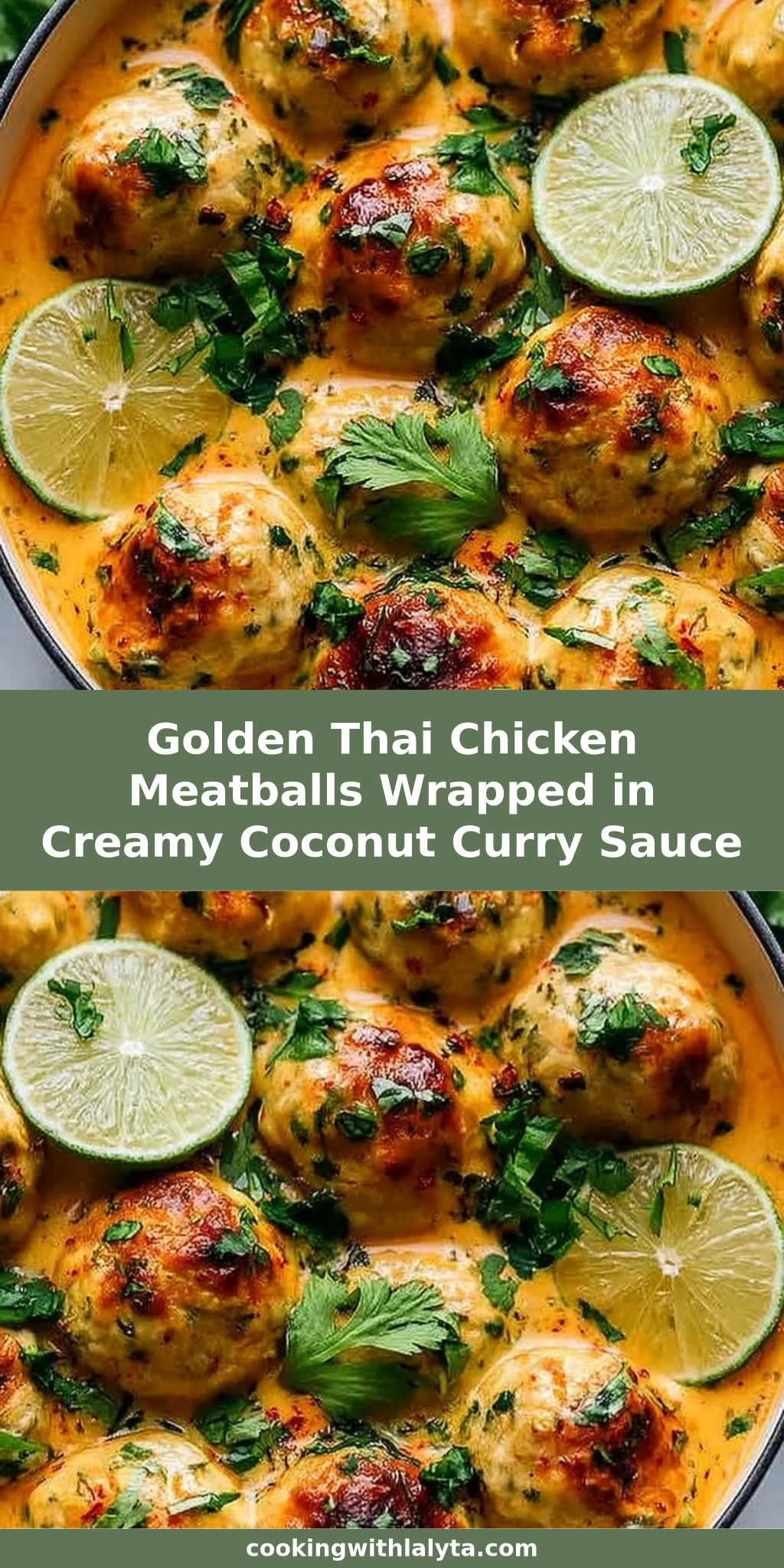
Golden Thai Chicken Meatballs Wrapped in Creamy Coconut Curry Sauce – Perfectly Golden Without Deep Frying
I still remember standing in my tiny Paris apartment kitchen, fresh out of culinary school, trying to recreate the bold, intoxicating flavors of a Thai coconut curry I’d tasted near the Marché d’Aligre. The balance of sweet, salty, and spicy felt like a beautiful puzzle I was determined to solve on my own terms. Years later, now in my bustling NYC kitchen, that memory collided with my love for tender, golden-browned meatballs—and these Thai chicken meatballs simmered in a velvety coconut curry sauce were born. The secret to their gorgeous golden exterior? A proper pan-sear with high-quality coconut oil—no deep frying required. These golden chicken meatballs deliver all the satisfying caramelization you crave while staying light, juicy, and packed with fresh herbaceous flavor. Paired with a luscious Thai red curry sauce that hugs every bite, this dish has become my go-to for impressing dinner guests and comforting my family on chilly New York evenings alike.
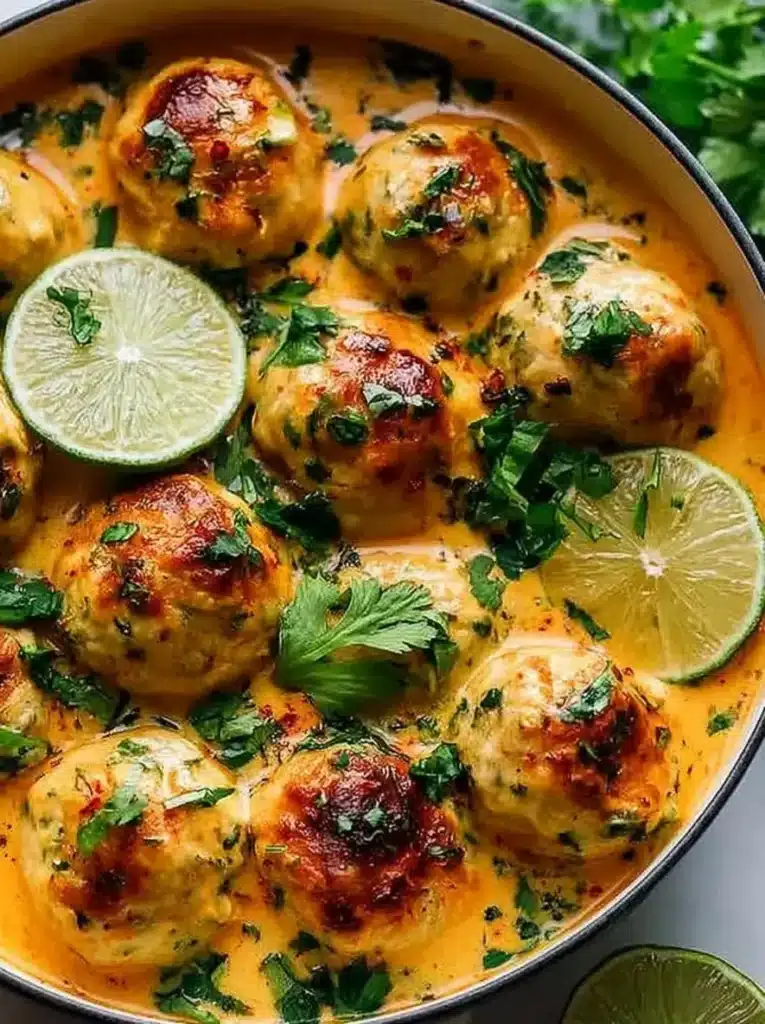
Picture this: you walk into your kitchen and the air is thick with the warm aroma of garlic and ginger sizzling in coconut oil, mingling with the bold, slightly smoky fragrance of red curry paste blooming in a hot skillet. Then comes the pour of full-fat coconut milk—creamy and luxurious—swirling together with fish sauce, brown sugar, and a bright squeeze of lime. The coconut curry meatballs gently simmer in that golden sauce, absorbing every layer of flavor while staying impossibly tender inside. Each meatball has a delicate, almost pillowy texture from panko breadcrumbs and finely chopped cilantro woven throughout the ground chicken. When you finally plate them over a mound of steaming jasmine rice, the contrast of the vibrant orange-hued sauce against the deep green of fresh cilantro and a wedge of lime is nothing short of stunning. The first bite? Savory, slightly sweet, with just enough warmth from the curry paste to make your palate tingle—a bowl of pure comfort that feels both exotic and familiar all at once.
What makes my version of these Thai meatballs with curry sauce stand out from the countless others you’ll find online comes down to technique and a few non-negotiable ingredient choices I honed during my training. First, I use a gentle hand when mixing the meatball mixture—overworking ground chicken is the fastest route to dense, tough meatballs, and trust me, I learned that lesson the hard way more than once in my early cooking days. I’ll walk you through exactly how to achieve that tender, almost bouncy texture that makes these so addictive. Second, I bloom the red curry paste directly in the residual oil left from browning the meatballs—that’s where all the fond (those gorgeous caramelized bits) lives, and it infuses the sauce with an irreplaceable depth of flavor. Stick with me through this post and I’ll share a foolproof trick for thickening the sauce without a drop of cornstarch, plus the one common mistake even experienced home cooks make that can split your coconut milk. Ready to turn your weeknight dinner into something truly golden? Let’s cook.
Why This Golden Thai Chicken Meatballs Recipe Is the Best
The Flavor Secret: Here’s what my French culinary training taught me about building depth: you can’t rush the bloom. When you add red curry paste to a hot skillet with just enough oil and let it sizzle for a full minute, the dried spices and aromatics “wake up,” releasing their essential oils and transforming from a simple paste into a complex, fragrant foundation. This step alone is the difference between a sauce that tastes flat and one that sings with layers of lemongrass, galangal, and chili. I also lean heavily on fish sauce—not just as salt, but as umami—balancing it precisely with brown sugar and fresh lime juice until the sauce hits that perfect sweet-salty-sour equilibrium that defines great Thai cooking. Every spoonful of these Thai red curry meatballs is a masterclass in balance.
Perfected Texture: Achieving that golden crust on the outside while keeping the inside juicy and tender is what separates a good meatball from a great one. I use a combination of panko breadcrumbs—lighter and crispier than regular breadcrumbs—and a careful hand-mixing technique. The meatball mixture should be just combined, never packed or compressed. When you roll them loosely and sear them in a hot skillet with coconut oil (which has a higher smoke point than butter, allowing for better browning), the exterior forms a beautiful golden-brown crust while the interior stays moist. Then, finishing them gently in the simmering creamy coconut curry sauce ensures they cook through without drying out. It’s a technique I perfected after many batches, and it’s absolutely foolproof.
Foolproof & Fast: I know you’re busy—between work, family, and the relentless pace of life (I feel it here in NYC every single day), you need a recipe that delivers big flavor without a big time commitment. This entire dish clocks in at just 40 minutes from start to finish, and most of that is hands-off simmering time. The ingredient list relies on pantry staples you can find at any well-stocked supermarket—no trekking to a specialty Asian grocer required. Even the curry paste, which might seem intimidating, comes in a convenient jar in the international aisle. I’ve tested this recipe over a dozen times, tweaking each variable until it works reliably for home cooks of any skill level. If you can roll a meatball and stir a sauce, you can absolutely nail this dish on your first try.
Thai Chicken Meatballs Ingredients
One of my favorite Saturday morning rituals is strolling through the Union Square Greenmarket, picking up fresh cilantro, bright green onions, and plump garlic bulbs from local Hudson Valley farmers. There’s something deeply satisfying about starting a recipe with ingredients that still carry the scent of the earth they were grown in. For the pantry items—coconut milk, fish sauce, red curry paste—I turn to the well-stocked international aisle at my neighborhood grocery store, or occasionally make the trip to Chinatown for brands I’ve come to trust. Quality matters enormously here; a good fish sauce should be amber-clear with a rich, savory aroma, never harsh or overly salty. The full-fat coconut milk is non-negotiable for that velvety, luxurious sauce texture—light versions simply won’t give you the same body or richness.
Ingredients List
- For the Meatballs:
- 1 lb ground chicken
- 1/4 cup panko breadcrumbs
- 1/2 cup finely chopped cilantro
- 2 green onions, minced
- 2 cloves garlic, minced
- 1 tbsp fish sauce
- 1 tbsp soy sauce
- 1 tsp grated ginger
- 1/2 tsp salt
- 1/4 tsp black pepper
- For the Sauce:
- 1 tbsp coconut oil
- 1 small onion, diced
- 2 cloves garlic, minced
- 1 tbsp red curry paste
- 1 can (13.5 oz) full-fat coconut milk
- 1/2 cup chicken broth
- 1 tbsp fish sauce
- 1 tbsp brown sugar
- 1 tbsp lime juice
- 1/2 cup frozen peas (optional)
- For garnish: fresh cilantro, lime wedges
Ingredient Spotlight
Ground Chicken: This lean protein is the perfect canvas for bold Thai flavors. Look for ground chicken that’s pale pink with visible fat streaks—if it’s too lean, your meatballs will be dry. I prefer buying it fresh from the butcher counter rather than pre-packaged, but either works. If you can’t find ground chicken, ground turkey is an excellent substitute that yields similarly tender results; ground pork will give you a juicier, richer meatball with a slightly different flavor profile that actually leans beautifully into the curry.
Fish Sauce: The unsung hero of Southeast Asian cooking. Made from fermented anchovies and salt, it adds an irreplaceable savory depth that salt alone cannot replicate. My go-to brands are Red Boat (for a cleaner, less funky taste) or Three Crabs (for a more traditional, robust flavor). If you’re in a pinch, you can substitute with an equal amount of soy sauce plus a small pinch of salt, but you’ll lose some of that complex umami character. For a gluten-free option, tamari plus a tiny splash of Worcestershire sauce comes close.
Red Curry Paste: This concentrated blend of dried red chilies, lemongrass, galangal, shrimp paste, and spices is the flavor engine of your sauce. Brands like Mae Ploy and Thai Kitchen are widely available in US grocery stores—I prefer Mae Ploy for its bolder, spicier kick. Always bloom it in hot oil for about a minute before adding liquids; this simple step unlocks essential oils and deepens the color dramatically. If you can’t find red curry paste, yellow curry paste offers a milder alternative, while Panang curry paste brings a sweeter, peanut-forward dimension.
Full-Fat Coconut Milk: This is your sauce’s backbone—creamy, rich, and slightly sweet. Do not shake the can before opening; you want the thick cream that rises to the top. If the sauce ever tastes flat, a splash of coconut cream (the solid part) at the end revives it instantly. Light coconut milk can work in a pinch, but expect a thinner, less luxurious sauce. For a dairy-free, nut-free, and naturally vegan-friendly option, coconut milk is already the perfect choice—just ensure you’re buying an unsweetened version.
| Original Ingredient | Best Substitution | Flavor / Texture Impact |
|---|---|---|
| Ground chicken | Ground turkey or ground pork | Turkey: slightly leaner, similar texture. Pork: juicier, richer, excellent with curry. |
| Fish sauce | Soy sauce + pinch of salt (or tamari for GF) | Loses umami depth but maintains saltiness. Add a dash of Worcestershire for complexity. |
| Red curry paste | Yellow curry paste or Panang curry paste | Yellow: milder, less heat. Panang: sweeter, peanut-tinged, slightly thicker. |
| Panko breadcrumbs | Crushed rice crackers or almond flour (GF) | Rice crackers: similar lightness. Almond flour: denser, nuttier, binds well but less airy. |
| Full-fat coconut milk | Light coconut milk | Thinner, less creamy sauce; may need extra simmering to reduce and thicken. |
How to Make Thai Chicken Meatballs with Curry Sauce — Step-by-Step
Take a deep breath—you’ve got this. I’ll guide you through each stage with the same patience and precision I offer my cooking students here in New York. The process flows logically: mix, brown, bloom, simmer, and finish. Let’s walk through it together.
Step 1: Make the Meatball Mixture
In a large mixing bowl, combine 1 lb ground chicken, 1/4 cup panko breadcrumbs, 1/2 cup finely chopped cilantro, 2 minced green onions, 2 minced garlic cloves, 1 tablespoon fish sauce, 1 tablespoon soy sauce, 1 teaspoon grated ginger, 1/2 teaspoon salt, and 1/4 teaspoon black pepper. Use your hands or a fork to gently fold everything together—mix just until the ingredients are evenly distributed and the mixture begins to hold together, about 30 to 45 seconds. Overmixing will make the meatballs dense and tough, so stop the moment you see everything come together. Using slightly damp hands, roll the mixture into 20 to 24 small, uniform meatballs (about 1½ inches in diameter) and place them on a parchment-lined tray.
💡 Lalybeth’s Pro Tip: Chill the formed meatballs in the fridge for 10 minutes before searing. This quick rest helps them hold their shape in the hot skillet and prevents sticking.
Step 2: Brown the Meatballs to Golden Perfection
Heat 1 tablespoon of coconut oil in a large, heavy-bottomed skillet over medium heat. Once the oil shimmers, carefully place the meatballs in a single layer—do not crowd the pan. Cook for 3 to 4 minutes per side, using tongs to gently turn them, until each meatball develops a deep golden-brown crust on all sides. Work in batches if necessary, adding a touch more oil between batches. The goal is color, not cooking them all the way through—they’ll finish cooking in the sauce. Transfer the browned meatballs to a clean plate and set aside. Resist the urge to wipe out the skillet; those caramelized brown bits are pure flavor gold for your sauce.
⚠️ Common Mistake to Avoid: Overcrowding the pan drops the temperature instantly, causing the meatballs to steam rather than sear. Always leave a little breathing room between them for that perfect golden crust.
Step 3: Start the Fragrant Curry Sauce Base
In the same skillet (with all those beautiful browned bits still clinging to the bottom), add a splash more coconut oil if the pan looks dry. Toss in the diced onion and sauté over medium heat until softened and translucent, about 3 minutes. Add the 2 minced garlic cloves and cook for 30 seconds more, just until fragrant. Now, push the aromatics to one side and drop 1 tablespoon of red curry paste into the cleared space. Let it sizzle and bloom in the hot oil for 1 full minute, stirring and mashing it gently with your spatula to release its essential oils. The paste will darken slightly and fill your kitchen with an incredible, heady fragrance—this is the moment your sauce gains its soul.
💡 Lalybeth’s Pro Tip: If your red curry paste is very thick and dry, add a tiny splash of the coconut milk (just the thick cream from the top of the can) to help it bloom and prevent scorching.
Step 4: Build the Creamy Coconut Sauce
Pour in the entire can of full-fat coconut milk (don’t shake it first—let that thick cream slide in), 1/2 cup of chicken broth, 1 tablespoon fish sauce, 1 tablespoon brown sugar, and 1 tablespoon fresh lime juice. Stir everything together thoroughly, using your spatula to scrape up every last bit of those browned bits from the bottom of the skillet. Bring the sauce to a gentle simmer—you’ll see small bubbles forming around the edges of the pan and a few lazy bubbles in the center. The sauce will look quite thin at this stage, but don’t worry; as it simmers, it will reduce and thicken into a velvety, creamy consistency that coats the back of a spoon.
⚠️ Common Mistake to Avoid: Boiling the sauce vigorously can cause the coconut milk to split, resulting in a grainy, separated texture. Always keep the heat at a gentle simmer—patience yields a silky, unified sauce.
Step 5: Simmer and Finish the Meatballs
Carefully return the browned meatballs to the simmering sauce, nestling them in so they’re mostly submerged. Let them cook, uncovered, for 10 to 12 minutes. The sauce will gently reduce and thicken around the meatballs, while the meatballs themselves finish cooking through to a safe internal temperature of 165°F. During the last 2 minutes of cooking, stir in 1/2 cup of frozen peas if you’re using them—they add a pop of sweetness and vibrant green color. You’ll know the meatballs are done when they feel firm to the touch but still spring back slightly, and the sauce has a rich, clinging consistency.
💡 Lalybeth’s Pro Tip: If the sauce hasn’t thickened to your liking by the 12-minute mark, let it simmer for an extra 2 to 3 minutes. You can also mash a few meatballs into the sauce with the back of your spoon—this releases starch and natural gelatin, thickening the sauce without any added flour or cornstarch.
Step 6: Taste, Adjust, and Serve
Before serving, always taste your sauce and adjust the seasoning. Need more saltiness? Add a few dashes of fish sauce. Craving brightness? A squeeze of fresh lime juice wakes everything up. Want more sweetness to balance the heat? A tiny pinch of brown sugar does the trick. The perfect sauce should taste balanced—no single flavor should dominate. Once you’re happy, ladle the meatballs and sauce generously over steamed jasmine rice or alongside warm naan for scooping. Finish with a shower of fresh cilantro leaves and a wedge of lime on the side. Serve immediately while the sauce is hot and the meatballs are at their most tender.
⚠️ Common Mistake to Avoid: Underseasoning. Coconut milk has a naturally sweet, mild flavor that can mute other seasonings. Don’t be shy about tasting and adjusting multiple times—bold seasoning is what makes this dish truly sing.
| Step | Action | Duration | Key Visual Cue |
|---|---|---|---|
| 1. Mix | Combine meatball ingredients | 5 mins | Mixture just holds together when pressed |
| 2. Brown | Sear meatballs in coconut oil | 8-10 mins | Deep golden-brown crust on all sides |
| 3. Bloom | Sauté onion, garlic, and curry paste | 4-5 mins | Paste darkens; aroma intensifies |
| 4. Build | Add liquids, bring to simmer | 3 mins | Smooth, pale orange sauce; small bubbles |
| 5. Simmer | Cook meatballs in sauce | 10-12 mins | Sauce thickened; meatballs firm yet springy |
| 6. Finish | Taste, adjust, garnish, serve | 2 mins | Balanced flavor; vibrant garnish |
Serving & Presentation
When I plate this dish, I think back to the elegant simplicity of plating at my Paris restaurant stage—clean, intentional, and letting the food’s natural beauty take center stage. Start with a generous scoop of fluffy jasmine rice in a wide, shallow bowl, then create a slight well in the center with the back of your spoon. Nestle 5 to 6 meatballs into that well, then ladle the golden coconut curry sauce generously over and around them. The sauce should pool beautifully around the rice, not drown it. Finish with a scattering of fresh cilantro leaves—whole leaves, not chopped, for visual impact—and place a lime wedge right on the edge of the bowl. The vibrant orange-gold sauce against the white rice and green herbs is pure eye candy.
For a more casual, family-style presentation (my favorite for dinner parties), pile the meatballs and sauce onto a large platter surrounded by steamed jasmine rice and let everyone serve themselves. I love adding a bowl of quick-pickled cucumbers on the side—thinly sliced cucumbers tossed with rice vinegar, a pinch of sugar, and a sprinkle of crushed red pepper. The cool, tangy crunch cuts through the richness of the coconut sauce beautifully. If you’re feeling ambitious, serve it with warm naan or roti alongside for scooping up every last drop of sauce. For a low-carb option, cauliflower rice works surprisingly well—the mild flavor soaks up the curry sauce without competing.
Beverage-wise, a crisp, off-dry Riesling or a cold Thai iced tea are my top picks. The slight sweetness in both complements the gentle heat of the curry while refreshing your palate between bites. For a non-alcoholic option, a sparkling limeade with fresh mint is incredibly refreshing and echoes the lime in the sauce. If you’re serving this for a special occasion, set the table with colorful cloth napkins and tiny bowls of extra garnishes—chopped peanuts, sliced Thai chilies, and extra lime wedges—so everyone can customize their bowl.
| Pairing Type | Suggestions | Why It Works |
|---|---|---|
| Side Dish | Jasmine rice, naan bread, cauliflower rice | Neutral base soaks up sauce; cauliflower rice keeps it low-carb |
| Sauce / Dip | Quick-pickled cucumbers, sriracha, sweet chili sauce | Tangy contrast cuts richness; extra heat for spice lovers |
| Beverage | Off-dry Riesling, Thai iced tea, sparkling limeade | Slight sweetness balances curry heat; lime echoes sauce flavors |
| Garnish | Fresh cilantro, lime wedges, chopped peanuts | Freshness and crunch; lime brightens every bite |
Make-Ahead, Storage & Reheating
Living in New York means my schedule is often unpredictable—some days I’m testing recipes from dawn, other days I’m running between meetings and barely have 20 minutes to get dinner on the table. That’s why I love recipes like this one that can be prepped ahead and finished in a flash. I’ll often make the meatballs the night before, roll them out, and stash them in the fridge on a parchment-lined tray. The next evening, all I need to do is sear them off and build the sauce—dinner is on the table in under 30 minutes. You can even make the entire dish two days ahead; in fact, the flavors meld and deepen overnight in the fridge, making it even more delicious the next day.
| Method | Container | Duration | Reheating Tip |
|---|---|---|---|
| Refrigerator | Airtight glass container | Up to 4 days | Gently reheat in a skillet over medium-low, adding a splash of water or broth to loosen the sauce. |
| Freezer | Freezer-safe zip-top bag or container | Up to 3 months | Thaw overnight in fridge; reheat gently. Sauce may look slightly grainy—a quick whisk fixes it. |
| Make-Ahead | Parchment-lined tray (raw meatballs) | Up to 24 hours in fridge | Sear directly from the fridge—cold meatballs hold their shape better in the hot pan. |
For reheating, my favorite method is the stovetop: place the meatballs and sauce in a skillet over medium-low heat with a splash of chicken broth or water. Cover and let them warm gently for 5 to 7 minutes, stirring occasionally to prevent sticking. The extra liquid helps revive the sauce’s creamy consistency. If you’re in a hurry, the microwave works too—just use 50% power in 1-minute increments, stirring between each, to avoid overheating and potentially splitting the sauce. One thing I’ve learned: never reheat this dish at a rolling boil. The coconut milk is delicate and can separate if rushed. Low and slow is the way to go, and your patience will be rewarded with a sauce just as silky as the day you made it.
If you’re freezing, I recommend freezing the meatballs and sauce together in a single container. When reheating from frozen, thaw completely in the refrigerator overnight first. The sauce may look slightly separated after thawing—don’t panic. Pour everything into a skillet and whisk gently as it warms; the sauce will come back together beautifully. Add a fresh squeeze of lime juice right before serving to brighten the flavors back up, and garnish with fresh cilantro. Frozen and reheated, these Thai chicken meatballs taste nearly as good as fresh, making them a true meal-prep champion.
Variations & Easy Swaps
| Variation | Key Change | Best For | Difficulty Impact |
|---|---|---|---|
| Spicy Thai Chili Version | Add 2-3 minced Thai bird’s eye chilies to the sauce | Heat lovers; authentic Thai spice level | No change (Easy) |
| Gluten-Free | Swap panko for crushed rice crackers; use tamari instead of soy sauce | GF diets; no flavor compromise | No change (Easy) |
| Seasonal Vegetable Twist | Add diced sweet potato or baby spinach during simmer | Bulk up the meal; seasonal flexibility | No change (Easy) |
Spicy Thai Chili Version
If you’re someone who craves real heat—the kind that builds slowly and leaves a pleasant tingle on your lips—this variation is for you. Finely mince 2 or 3 fresh Thai bird’s eye chilies (those tiny, innocent-looking red or green peppers that pack a serious punch) and add them along with the garlic when building your sauce base. The chilies infuse the oil with their capsaicin, spreading heat throughout the entire dish. I also like to stir in an extra teaspoon of red curry paste for a deeper chili flavor that layers beautifully with the fresh chilies. This reminds me of the fiery harissa-spiked dishes my mother made in Morocco—different continent, same love for bold heat. Serve with a cooling cucumber raita or extra lime wedges to balance the fire.
Gluten-Free Version
Making these Thai chicken meatballs gluten-free is surprisingly simple and doesn’t require any specialty ingredients you can’t find at a regular grocery store. Swap the panko breadcrumbs for an equal amount of finely crushed plain rice crackers—they provide a similar lightness and binding ability without any gluten. For the soy sauce, use tamari (which is naturally gluten-free) or coconut aminos for a slightly sweeter, soy-free alternative. Both fish sauce and red curry paste are typically gluten-free, but always double-check labels—some brands of curry paste may contain trace wheat. The result is virtually indistinguishable from the original: tender meatballs, creamy sauce, and all the bold Thai flavor you expect, now completely safe for gluten-sensitive diners.
Seasonal Vegetable Twist
One of the joys of cooking with the seasons—something I picked up during my time in France, where markets dictate the menu—is adapting recipes to what’s fresh and available. In the fall, I love adding 1 cup of diced sweet potato to the sauce during the simmer; its natural sweetness echoes the brown sugar and coconut milk beautifully while adding hearty substance. In spring, a handful of baby spinach or tender pea shoots stirred in during the last minute wilts perfectly and adds vibrant color. Come summer, I’ll toss in halved cherry tomatoes and slivers of red bell pepper for a brighter, garden-fresh twist. In winter, hearty greens like chopped kale work beautifully—just add them a few minutes earlier so they have time to soften. Each seasonal spin keeps this recipe exciting year-round while using whatever looks best at the market.
How do you get the meatballs a golden color without deep frying them?
Getting that beautiful golden-brown crust on your golden chicken meatballs is all about technique, not gallons of oil. The key is using coconut oil—it has a higher smoke point than butter or olive oil, which means you can heat it hot enough to create a proper sear without it burning. Make sure your skillet is fully preheated over medium heat before adding the oil; when the oil shimmers, it’s ready. Place your meatballs in a single layer with at least a half-inch of space between them—crowding drops the pan temperature and causes steaming instead of searing. Let them cook undisturbed for a full 3 to 4 minutes per side before turning; that uninterrupted contact with the hot oil is what builds the golden crust. Work in batches if needed, and resist the urge to move them around too much. The result is meatballs with a deeply caramelized, golden-brown exterior and a juicy, perfectly cooked interior—no deep fryer required.
Can I use ground turkey or pork instead of chicken for this recipe?
Absolutely, and I’ve tested this recipe with both! Ground turkey is the closest match to ground chicken in terms of leanness and texture—your Thai turkey meatballs will be tender and mild, allowing the curry sauce to take center stage. Just watch the cooking time carefully, as turkey can dry out even faster than chicken if overcooked. Ground pork, on the other hand, is naturally fattier and produces a juicier, more succulent meatball that holds up exceptionally well in the sauce. The pork’s richness actually complements the creamy coconut curry sauce beautifully, creating a more decadent dish. If using pork, you may get slightly less of that golden sear (pork releases more moisture), so make sure your skillet is extra hot before adding the meatballs. Either swap works wonderfully—choose based on your preference for lean or rich.
What is the best way to thicken the creamy coconut curry sauce if it’s too thin?
If your coconut curry meatballs sauce is looking thinner than you’d like, don’t reach for cornstarch just yet—there are more flavorful ways to achieve the perfect consistency. First, simply simmer the sauce uncovered for an extra 3 to 5 minutes; the additional reduction time often solves the problem by evaporating excess liquid and concentrating the flavors. If it’s still too thin, try my favorite chef trick: use the back of your spoon to gently mash 2 or 3 meatballs directly into the sauce. The natural starches from the panko breadcrumbs and the gelatin from the ground chicken will thicken the sauce while adding body. For a dairy-free richness boost, stir in a spoonful of the thick coconut cream that sits at the top of a can of coconut milk. As an absolute last resort, you can make a slurry with 1 teaspoon of cornstarch mixed with 1 tablespoon of cold water and stir it in during the last minute of simmering, but honestly, the mashing trick works so well I rarely need it.
What side dishes pair well with Thai chicken meatballs in coconut curry sauce?
These Thai chicken meatballs are incredibly versatile when it comes to sides. The classic and most beloved pairing is steamed jasmine rice—its fragrant, slightly sticky texture is perfect for absorbing every drop of the golden sauce. For a low-carb option, cauliflower rice roasted until slightly golden makes an excellent substitute. Warm naan bread or roti are fantastic for a more hands-on eating experience; tear off a piece and use it to scoop up meatballs and sauce. On the side, I always recommend something with crunch and acidity to cut through the richness: quick-pickled cucumbers with rice vinegar and a pinch of sugar, a simple shredded carrot salad with lime dressing, or even a fresh Thai-inspired papaya salad if you’re feeling ambitious. Steamed or stir-fried green beans or bok choy add a lovely vegetal contrast and make the meal feel more complete.
Can I make these Thai chicken meatballs ahead of time?
Yes, and they’re absolutely brilliant for meal prep! You have several make-ahead options. You can mix and roll the raw meatballs up to 24 hours in advance—place them on a parchment-lined tray, cover tightly with plastic wrap, and refrigerate. Searing them directly from the fridge actually helps them hold their shape better in the hot pan. Alternatively, you can cook the entire dish 2 to 3 days ahead and store it in an airtight container in the refrigerator; the flavors actually meld and deepen overnight, so your Thai meatballs with curry sauce will taste even better on day two. For longer storage, freeze the cooked meatballs and sauce together for up to 3 months. I often make a double batch on Sunday—one for dinner that night and one for the freezer. It’s the kind of make-ahead magic that saves a busy New Yorker’s weeknight sanity.
How do I know when the chicken meatballs are fully cooked?
The most reliable method is using an instant-read thermometer—chicken meatballs are safely cooked when they reach an internal temperature of 165°F. Insert the thermometer into the center of a meatball, making sure not to touch the skillet or go all the way through. If you don’t have a thermometer, look for visual cues: the meatballs will feel firm yet slightly springy when pressed, and if you cut one open, the interior should be uniformly white or very pale tan with no pink remaining. The juices should run clear, not pink. After simmering in the sauce for 10 to 12 minutes and having already been seared for 6 to 8 minutes, they should be perfectly cooked through. Trust the process—the combination of the initial sear plus the gentle simmer is more than enough to cook these small meatballs all the way through.
Is this recipe gluten-free? How can I make it gluten-free?
As written, this recipe is not gluten-free because of two ingredients: panko breadcrumbs and soy sauce. However, making it completely gluten-free is incredibly easy with two simple swaps. Replace the panko breadcrumbs with an equal amount of finely crushed plain rice crackers or store-bought gluten-free panko (which is now widely available in most US grocery stores). For the soy sauce, swap in tamari—a Japanese-style soy sauce that’s typically gluten-free—or use coconut aminos for a soy-free, slightly sweeter alternative. Both fish sauce and red curry paste are naturally gluten-free in most brands, but I always recommend double-checking labels for any hidden wheat-based additives. With these two quick substitutions, you’ll have entirely gluten-free Thai red curry meatballs that taste exactly like the original.
Can I freeze these Thai chicken meatballs with the sauce?
Absolutely—freezing these coconut curry meatballs is one of my favorite make-ahead strategies. Let the cooked dish cool completely to room temperature, then transfer the meatballs and sauce to a freezer-safe container or heavy-duty zip-top freezer bag. Press out as much air as possible to prevent freezer burn, label it with the date, and freeze for up to 3 months. When you’re ready to enjoy, thaw the dish overnight in the refrigerator. The sauce may look slightly separated or grainy after thawing—that’s completely normal and happens because coconut milk can split during freezing. Pour everything into a skillet and reheat gently over medium-low heat, whisking occasionally; the sauce will come back together and re-emulsify into its original creamy state. Add a splash of fresh lime juice and a sprinkle of fresh cilantro right before serving to revive the flavors.
What can I use instead of fish sauce if I don’t have any?
Fish sauce is a unique ingredient that contributes both saltiness and a deep, savory umami character that’s hard to replicate exactly, but you can get close with a few pantry staples. My first-choice substitute is an equal amount of soy sauce (or tamari for gluten-free) plus a small pinch of salt—this covers the saltiness but misses some of that fermented depth. To get closer to the real thing, add a tiny splash (about 1/4 teaspoon) of Worcestershire sauce, which itself contains anchovies and brings a similar savory note. For a vegan alternative, I’ve had good results using coconut aminos with a pinch of sea salt and a drop of liquid aminos. The sauce will taste slightly different—less funky, more straightforwardly salty—but it will still be delicious. In a dish with so many bold flavors like this one, the substitution is far less noticeable than you might think.
How spicy are these Thai red curry meatballs?
As written, with 1 tablespoon of red curry paste, these Thai red curry meatballs fall into the mild-to-moderate spice range—warm and gently tingly rather than aggressively hot. Most store-bought red curry pastes, like Thai Kitchen or Mae Ploy, are designed to be approachable for a Western palate, and the full-fat coconut milk and brown sugar in the sauce further temper the heat. If you’re serving kids or spice-sensitive eaters, start with just 2 teaspoons of curry paste; you can always bloom a little more in oil and stir it in at the end if you want more fire. For true heat seekers, ramp it up to 1½ or 2 tablespoons of paste and add a minced Thai bird’s eye chili or two. The beauty of this recipe is how easily the spice level adjusts to your preference—the creamy sauce is forgiving and balances whatever amount of heat you throw at it.
Share Your Version!
There’s nothing I love more than seeing your beautiful recreations of my recipes pop up in my feed. When you make these golden Thai chicken meatballs, I want to hear every detail—did you dial up the spice with extra chili, serve it over coconut rice, or maybe add your own twist with a squeeze of orange instead of lime? Your creativity inspires me and helps our little cooking community grow richer with every shared experience. Drop a star rating and a comment below to let me know how it turned out—I read every single one and always respond to your questions.
Snap a photo of your finished dish and share it on Instagram or Pinterest—tag me @cookingwithlalyta so I can see it and share your creation with our community. Use the hashtag #LalybethsKitchen to join the growing collection of home cooks making these recipes their own. Tell me: what’s one unexpected ingredient or technique from your own kitchen that you’d love to see me incorporate into a future recipe? I’m always taking requests and love a good culinary challenge. From my NYC kitchen to yours — I hope this recipe brings as much warmth to your table as it does to mine. — Lalybeth 🧡
Love This Recipe? Save It to Pinterest!
If you enjoyed this Golden Thai Chicken Meatballs Wrapped in Creamy Coconut Curry Sauce recipe, don’t let it get lost in your browser tabs! 😄 Pin it now so you can find it again anytime — and explore hundreds more tried-and-tested recipes waiting for you on my Pinterest boards.
👉 Follow Lalybeth on Pinterest @cookingwithlalyta
📌 Pin this recipe · 🔁 Re-pin your favorites · 💬 Tag me when you make it — I love seeing your creations!

Golden Thai Chicken Meatballs Wrapped in Creamy Coconut Curry Sauce
- Total Time: 40 minutes
- Yield: 4 servings 1x
Description
These flavorful Thai chicken meatballs are simmered in a rich and creamy coconut curry sauce. Perfect for a weeknight dinner.
Ingredients
- For the Meatballs:
- 1 lb ground chicken
- 1/4 cup panko breadcrumbs
- 1/2 cup finely chopped cilantro
- 2 green onions, minced
- 2 cloves garlic, minced
- 1 tbsp fish sauce
- 1 tbsp soy sauce
- 1 tsp grated ginger
- 1/2 tsp salt
- 1/4 tsp black pepper
- For the Sauce:
- 1 tbsp coconut oil
- 1 small onion, diced
- 2 cloves garlic, minced
- 1 tbsp red curry paste
- 1 can (13.5 oz) full-fat coconut milk
- 1/2 cup chicken broth
- 1 tbsp fish sauce
- 1 tbsp brown sugar
- 1 tbsp lime juice
- 1/2 cup frozen peas (optional)
- For garnish: fresh cilantro, lime wedges
Instructions
- Make the meatballs: In a large bowl, combine ground chicken, breadcrumbs, cilantro, green onions, garlic, fish sauce, soy sauce, ginger, salt, and pepper. Mix gently until just combined. Roll into 20–24 small meatballs.
- Heat coconut oil in a large skillet over medium heat. Add meatballs in a single layer and cook until browned on all sides, about 3–4 minutes per side. Work in batches if needed. Remove meatballs and set aside.
- Make the sauce: In the same skillet, add a bit more oil if needed. Sauté onion and garlic until softened, about 3 minutes. Stir in red curry paste and cook for 1 minute until fragrant.
- Pour in coconut milk, chicken broth, fish sauce, brown sugar, and lime juice. Bring to a simmer, scraping up any browned bits.
- Return meatballs to the skillet. Simmer uncovered for 10–12 minutes, until meatballs are cooked through and sauce has thickened slightly. Stir in peas during the last 2 minutes if using.
- Taste and adjust seasoning with more fish sauce, lime, or brown sugar as needed.
- Serve over jasmine rice or with naan, garnished with fresh cilantro and lime wedges.
Notes
Can be made ahead and frozen. Garnish with cilantro and lime. For a spicier version, add extra red curry paste or a minced Thai chili.
- Prep Time: 15 minutes
- Cook Time: 25 minutes
- Method: Main Course
- Cuisine: Thai
Nutrition
- Calories: 450
- Sugar: 6g
- Fat: 28g
- Carbohydrates: 12g
- Protein: 35g
Tried This Recipe? Leave a Comment!
Did you make this recipe? I’d love to hear how it turned out! Please leave a comment and a rating below. Your feedback helps other home cooks and supports cookingwithlalyta.com!
For more delicious inspiration, follow me on Pinterest!