Table of Contents
Slow-Cooked Thai Yellow Curry Chicken with Coconut Cream and Tender Vegetables – The Coconut Cream Secret for Ultra-Rich, Velvety Sauce
I still remember the first time I tasted a truly great Thai yellow curry — it was at a tiny hole-in-the-wall spot in Queens, just a subway ride from my NYC apartment. The sauce was impossibly silky, the chicken so tender it practically fell apart at the touch of a spoon, and the aroma of turmeric, lemongrass, and ginger lingered in the air like a warm hug. That bowl of slow cooker Thai yellow curry chicken rewired my understanding of what comfort food could be. Years later, after my culinary training in Paris taught me the patience of slow-cooking and my Moroccan upbringing instilled a deep love for layered spices, I set out to recreate that magic in my own kitchen. The secret? Using full-fat coconut cream — not just coconut milk — and letting time do all the heavy lifting. This Thai yellow curry recipe is the result: a one-pot wonder that fills your home with the most intoxicating scent and delivers a bowl of pure golden comfort every single time.
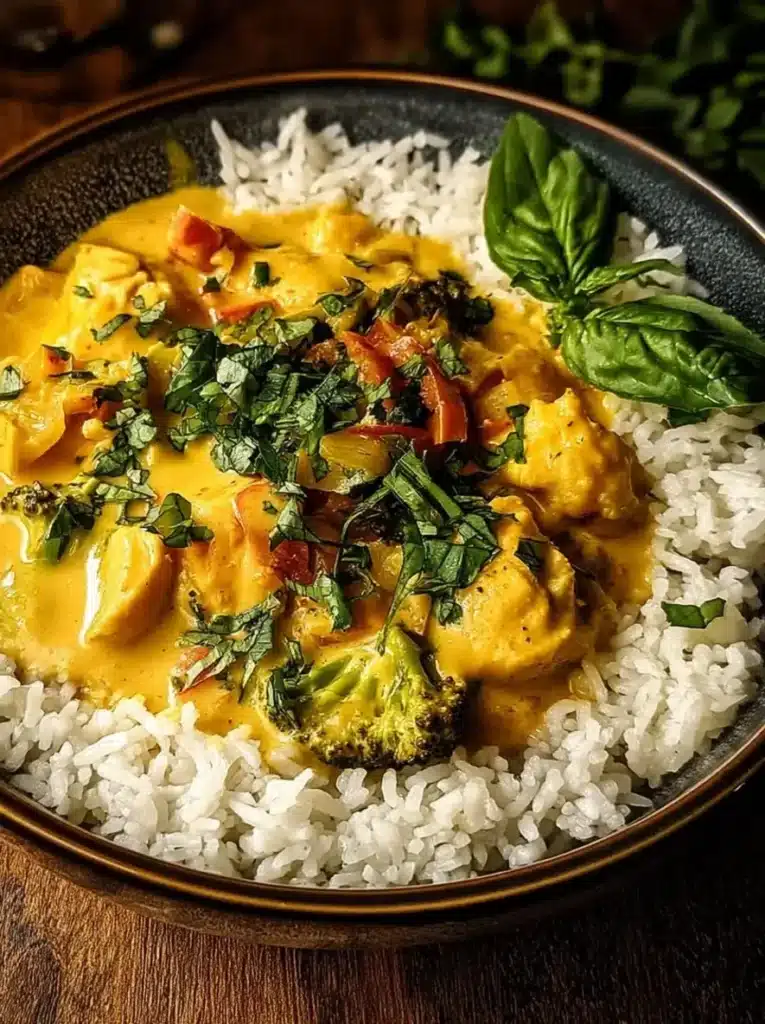
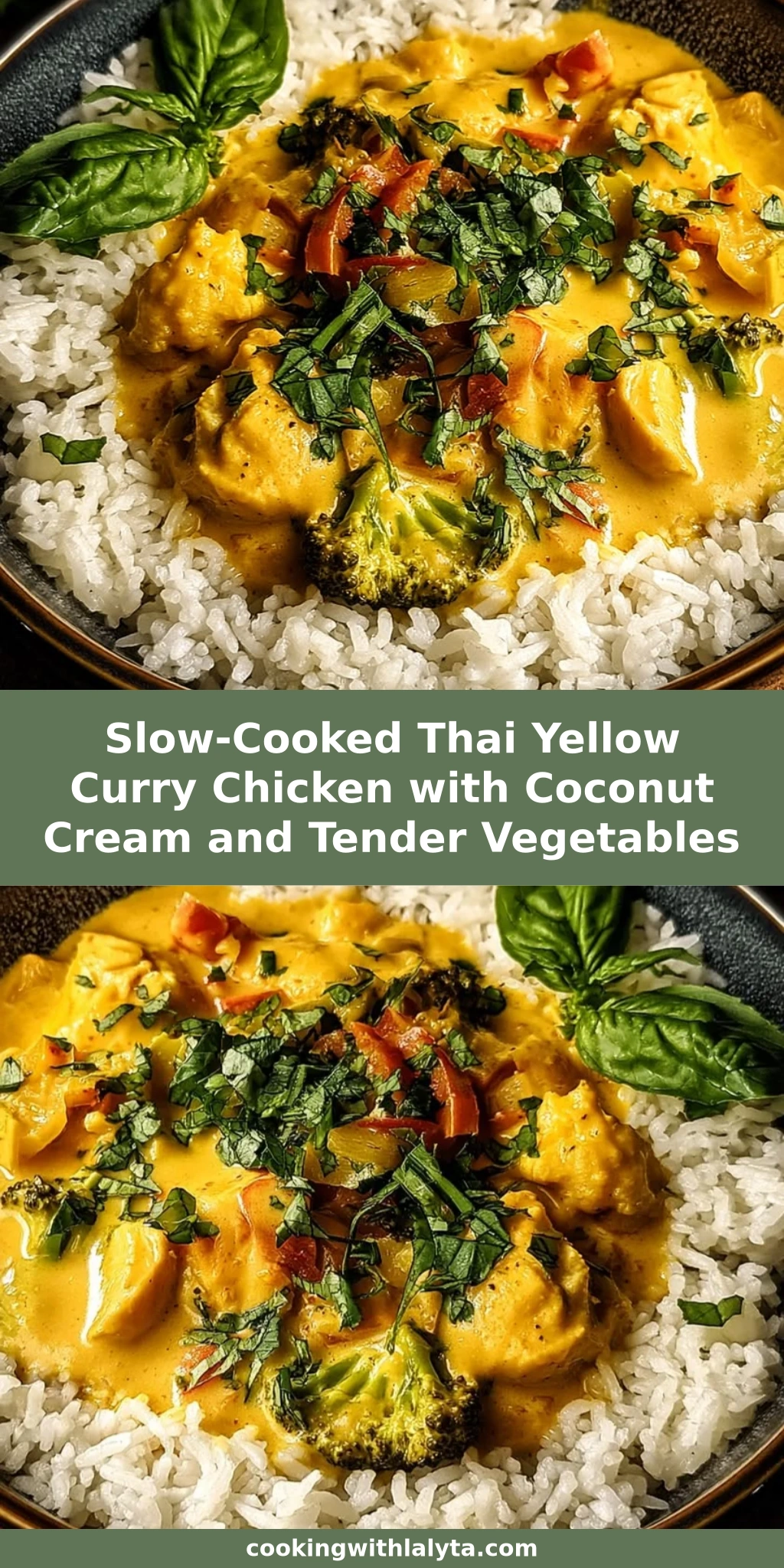
Picture this: chunks of boneless chicken thighs, velvety and infused with warm spices, swimming in a sauce that’s equal parts rich and bright. The coconut cream chicken curry base is luxuriously thick — almost custard-like — with ribbons of golden turmeric and fragrant ginger running through every spoonful. Tender waxy potatoes hold their shape beautifully, while sweet carrot coins add just the right pop of color and natural sweetness. There’s a gentle hum of heat from the yellow curry paste — milder than its red and green cousins but deeply aromatic — balanced by a touch of brown sugar and a squeaky-clean finish of fresh lime juice. I learned the power of blooming curry paste in hot oil during my Paris training: that single minute of sizzling the paste unlocks essential oils you simply can’t get any other way, transforming a good curry into an unforgettable one.
What makes my Thai curry with vegetables different from the dozens of recipes floating around the internet? It’s the coconut cream — not coconut milk — which delivers a sauce so velvety and rich it’ll make you close your eyes on the first bite. I’ve tested this recipe over two dozen times (my NYC neighbors have become very willing taste-testers), and I can tell you exactly where things go wrong. The most common mistake? Adding the vegetables too early, which turns them into mush by the time the chicken is fall-apart tender. I’ll guide you through exactly when to add each ingredient so everything finishes at its peak. Stick with me, and you’ll have a slow cooker chicken curry that tastes like it simmered all day under the watchful eye of a Bangkok street vendor — even if you were just at work or running errands. This is the kind of meal that makes a random Tuesday feel like a celebration.
Why This Slow-Cooked Thai Yellow Curry Chicken Recipe Is the Best
The flavor secret starts with blooming. Before any liquid hits the pot, I sauté the yellow curry paste in a little hot oil with garlic, ginger, and onion. This technique — drilled into me during my Paris culinary school days — releases the volatile oils in the spices, intensifying the turmeric, coriander, lemongrass, and galangal notes that make Thai yellow curry so distinctive. Unlike red or green curry pastes, yellow curry gets its mellow warmth from dried spices like cumin and cinnamon alongside fresh aromatics. When you bloom it properly, the paste transforms from a simple ingredient into a flavor powerhouse that permeates every bite of chicken and every chunk of potato. This isn’t just a shortcut recipe; it’s a technique-driven dish that respects the integrity of each ingredient while being completely achievable for a home cook.
Texture is where this recipe truly shines, and it’s something I obsess over. Chicken breasts have a tendency to dry out and turn stringy during long cooking times, which is why I exclusively use boneless skinless chicken thighs in this slow cooker Thai yellow curry chicken. Thighs have more intramuscular fat and connective tissue that breaks down beautifully over hours of gentle heat, resulting in meat that’s spoon-tender and infused with the coconut cream sauce. For the vegetables, timing is everything. Waxy potatoes like Yukon Golds hold their shape far better than starchy Russets, and slicing carrots into thick coins rather than thin rounds prevents them from disintegrating. I add the vegetables about halfway through the cooking process — a small but critical tweak that ensures everything in the bowl is perfectly cooked, never mushy.
This is a foolproof, fast-prep recipe that fits seamlessly into a busy life — and as a working food blogger in NYC, I know the value of that. You can throw everything into a slow cooker in the morning, head out to explore the Union Square Greenmarket or tackle your workday, and come home to a house that smells like the best Thai restaurant in town. If you’re cooking on the stovetop, the active time is minimal: just a few minutes of sautéing and stirring before the pot does the rest. I’ve written the instructions so clearly that even a complete beginner can nail this on the first try. No confusing jargon, no hard-to-find ingredients — just straightforward steps that lead to restaurant-quality coconut cream chicken curry at your own dinner table.
Slow Cooker Thai Yellow Curry Chicken Ingredients
I source most of these ingredients right here in NYC — the yellow curry paste from a tiny Thai grocery in Elmhurst, Queens (ask for Mae Ploy or Maesri brand if you can find them!), the coconut cream from my local Trader Joe’s when I’m in a pinch, and the freshest ginger and garlic from the Union Square Greenmarket on Saturdays. My mother back in Morocco would have used a clay tagine for slow-cooking, but the principle is the same: humble ingredients, treated with patience, transform into something extraordinary. Here’s everything you need to make this Thai yellow curry recipe shine.
Ingredients List
- 2 lbs boneless skinless chicken thighs, cut into 1½-inch chunks
- 1 can (14 oz) full-fat coconut cream (not coconut milk)
- 3 tablespoons yellow curry paste (Mae Ploy or Maesri recommended)
- 2 cups chicken broth (low-sodium preferred)
- 2 medium waxy potatoes (Yukon Gold or red potatoes), peeled and diced into 1-inch cubes
- 2 medium carrots, peeled and sliced into ½-inch thick coins
- 1 medium yellow onion, chopped
- 3 cloves garlic, minced
- 1 tablespoon fresh ginger, grated on a microplane
- 1 tablespoon fish sauce
- 1 tablespoon brown sugar (light or dark)
- 1 tablespoon fresh lime juice (about ½ lime)
- Salt to taste (start with ½ teaspoon kosher salt)
- Fresh cilantro leaves, for garnish
- Jasmine rice, for serving
Ingredient Spotlight
Coconut Cream: This is the star of the show and the key to that ultra-velvety sauce. Coconut cream has a much higher fat content than coconut milk — typically around 20-25% fat versus 15-18% — which means it creates a richer, more luxurious mouthfeel and doesn’t break or separate during long cooking times. Look for cans labeled “coconut cream” (not “cream of coconut,” which is sweetened and used for cocktails). My favorite brands are Savoy, Aroy-D, and the Trader Joe’s coconut cream in the yellow can. If you absolutely must substitute, use full-fat coconut milk plus 2 tablespoons of coconut oil melted in, but the sauce will be noticeably thinner.
Yellow Curry Paste: This is the aromatic backbone of the dish. Yellow curry paste is milder than red or green varieties, with a warm, earthy profile from turmeric, cumin, coriander, lemongrass, and galangal. It’s what gives this slow cooker Thai yellow curry chicken its signature golden hue. You’ll find it in the international aisle of most US grocery stores — Thai Kitchen is widely available, but I prefer Mae Ploy for its deeper, more complex flavor. Start with 3 tablespoons for a mild-to-medium heat; bump it to 4 if you like more kick. Can’t find yellow curry paste? You can use red curry paste in a pinch, but the flavor profile will shift from warm and earthy to sharper and spicier — still delicious, just different.
Fish Sauce: Don’t skip this — I know the smell can be daunting (it reminds me of my first day in a Paris kitchen, where the chef held a bottle under my nose and laughed at my expression), but fish sauce is the umami powerhouse that gives Thai curries their deep, savory backbone. It doesn’t taste fishy in the finished dish; it simply amplifies all the other flavors. Look for Three Crabs or Red Boat brands at your grocery store. If you’re vegetarian or allergic to fish, substitute with soy sauce or tamari plus a pinch of sea salt — you’ll lose some depth, but the curry will still be excellent. For a gluten-free option, make sure your fish sauce brand is certified gluten-free (most are, but check the label).
Chicken Thighs: Boneless, skinless chicken thighs are non-negotiable for this recipe. They have the perfect fat-to-meat ratio for slow cooking, staying juicy and tender even after hours in the pot. I’ve tested this with chicken breasts, and while it works, the texture is drier and less satisfying. If you prefer white meat, reduce the cooking time by about 30 minutes and keep a close eye on the internal temperature — 165°F is your target. At most US grocery stores, you’ll find thighs pre-trimmed in the poultry section; look for pieces that are uniform in size so they cook evenly.
| Original Ingredient | Best Substitution | Flavor / Texture Impact |
|---|---|---|
| Coconut cream (14 oz can) | Full-fat coconut milk + 2 tbsp coconut oil | Slightly thinner sauce; less velvety mouthfeel. Still creamy and delicious. |
| Yellow curry paste | Red curry paste (use 2½ tbsp — it’s spicier) | Sharper, spicier profile; loses the warm, earthy turmeric notes. Color will shift from golden to reddish-orange. |
| Fish sauce (1 tbsp) | Tamari or soy sauce + pinch of salt | Less umami depth; slightly saltier finish. Works well for vegetarian/vegan adaptations. |
| Boneless chicken thighs (2 lbs) | Boneless chicken breasts (reduce cook time by 30 min) | Drier texture; less forgiving if overcooked. Still tasty with careful timing. |
| Yukon Gold potatoes | Sweet potatoes (same weight, cubed) | Sweeter, softer texture; breaks down faster so add 30 min later than white potatoes. |
How to Make Slow-Cooked Thai Yellow Curry Chicken — Step-by-Step
Take a deep breath — you’ve got this. I’ve broken the process down into eight manageable steps that anyone can follow, whether you’re a seasoned cook or stepping into the kitchen for the first time. I’ll walk you through each one with the exact cues I use when I teach this recipe to friends in my NYC apartment kitchen. Ready? Let’s make something beautiful.
Step 1: Sauté the Aromatics
Heat about 1 tablespoon of neutral oil (I use avocado or canola oil) in a large heavy-bottomed pot or Dutch oven over medium heat. If you’re using a slow cooker with a sauté function, you can do this directly in the insert. Once the oil shimmers — you’ll see little waves on the surface — add the chopped onion, minced garlic, and grated ginger. Stir constantly with a wooden spoon for 2 to 3 minutes until the onion turns translucent and the whole kitchen fills with that incredible garlic-ginger perfume. Don’t let the garlic brown; if it starts to darken too quickly, lower the heat slightly. This step builds the aromatic foundation of your entire curry.
💡 Lalybeth’s Pro Tip: Grate your ginger with a microplane instead of mincing it with a knife. The microplane breaks down the tough ginger fibers completely, so you get pure ginger flavor in every bite without any stringy bits. I picked up this trick in my Paris pastry training, where we used microplanes for citrus zest — it works just as beautifully for ginger and garlic.
Step 2: Bloom the Curry Paste
Push the aromatics to one side of the pot and drop the 3 tablespoons of yellow curry paste directly onto the hot surface. Let it sizzle for about 30 seconds without stirring, then mix it into the onion-garlic-ginger mixture. Stir continuously for 1 full minute. You’ll notice the paste darkens slightly and releases an intensely fragrant aroma — that’s the turmeric, lemongrass, and coriander essential oils waking up. This blooming step is the single most important technique for deepening the flavor of your Thai yellow curry recipe. If you skip it, the paste will taste raw and flat rather than rich and complex.
⚠️ Common Mistake to Avoid: Don’t rush the blooming step or walk away from the stove during this minute. Curry paste can burn quickly, and burnt curry paste tastes bitter and acrid — there’s no saving it. Keep the heat at medium and stir constantly. If your paste starts sticking or darkening too fast, add a splash of water to cool the pan.
Step 3: Brown the Chicken
Add the chicken thigh chunks to the pot in a single layer. Let them sear undisturbed for about 2 minutes on the first side — you’re looking for a pale golden color, not a deep brown. Flip the pieces and cook for another 1 to 2 minutes on the other side. Don’t worry about cooking the chicken through at this stage; we’re just developing a little surface flavor and sealing in the juices. If your pot is crowded, brown the chicken in two batches to avoid steaming. The chicken should look lightly golden with some of the curry paste clinging to each piece.
Step 4: Add the Coconut Cream and Broth
Open your can of coconut cream — don’t shake it first; you want that thick, spoonable cream on top. Scoop the entire contents into the pot, including any solid cream and liquid. Pour in the 2 cups of chicken broth, then stir everything together gently but thoroughly. As you stir, use your spoon to scrape up any browned bits from the bottom of the pot — those little caramelized flecks are packed with flavor. The sauce will look a bit thin at this stage, but don’t worry: as it slow-cooks, the coconut cream will thicken and meld with the broth into a luxuriously rich base. Bring the mixture just to a gentle simmer — you’ll see small bubbles forming around the edges of the pot.
💡 Lalybeth’s Pro Tip: If your coconut cream has separated in the can (solid on top, liquid on the bottom), don’t panic — that’s perfectly normal. Just scoop it all in together. The solids will melt into the sauce as it heats, creating that signature velvety texture. In fact, a good separation is a sign of high-quality coconut cream with no emulsifiers or additives.
Step 5: Add Vegetables and Seasonings
Now add the diced potatoes and sliced carrots to the pot, along with the fish sauce and brown sugar. Stir well to distribute everything evenly. The brown sugar might seem counterintuitive in a savory curry, but it balances the saltiness of the fish sauce and rounds out the warm spices in the curry paste — don’t skip it. At this point, the pot should be filled with golden liquid, tender-looking chicken pieces, and colorful vegetables peeking through. Take a moment to appreciate the aroma filling your kitchen; this is the smell of something truly special coming together.
Step 6: Slow Cook to Perfection
Bring the pot to a gentle simmer, then reduce the heat to low. Cover with a tight-fitting lid and let it cook for 1½ to 2 hours on the stovetop. If you’re using a slow cooker, transfer everything to the slow cooker insert after bringing it to a simmer, set it to low, and cook for 6 to 8 hours. The chicken is ready when it’s fork-tender and practically falls apart when you press it with the back of a spoon. The potatoes should be creamy and easily pierced with a fork, and the carrots should be tender but still hold their shape. For a thicker curry, uncover the pot during the last 30 minutes of cooking to let some of the liquid evaporate and the sauce concentrate.
⚠️ Common Mistake to Avoid: Lifting the lid too often to check on the curry. Every time you open the pot, you release steam and heat, which extends the cooking time and prevents the sauce from thickening properly. Trust the process! Check it once at the 1-hour mark if you’re on the stovetop, or at the 5-hour mark in a slow cooker.
Step 7: Finish with Lime Juice
Once the chicken and vegetables are perfectly tender, remove the pot from the heat (or turn off the slow cooker). Stir in the fresh lime juice — this final hit of acidity brightens the entire dish, cutting through the richness of the coconut cream and waking up all the spices. Taste the sauce and adjust the salt. I usually add about ½ teaspoon of kosher salt at this stage, but it depends on the saltiness of your broth and fish sauce, so go slowly and taste as you go. The sauce should be rich, slightly sweet, savory, and finished with a clean, citrusy pop.
💡 Lalybeth’s Pro Tip: Always add lime juice off the heat. High temperatures can make citrus juice taste slightly bitter and cooked. That fresh, bright finish is what separates a good curry from a great one — it’s a trick I learned from a Thai chef friend who runs a restaurant in Hell’s Kitchen.
Step 8: Serve Over Jasmine Rice
Spoon generous portions of the curry over steamed jasmine rice in wide, shallow bowls. The rice soaks up the golden sauce beautifully, so don’t be shy with the ladle. Garnish each bowl with a generous handful of fresh cilantro leaves — the herbal freshness cuts through the richness and adds a pop of bright green color. For an extra flourish, add a lime wedge on the side for squeezing and a few thinly sliced red chili rings if you like a little extra heat. Step back for just a second before you dig in and appreciate the stunning golden hue, the tender chunks of chicken and vegetables, and that intoxicating steamy aroma. You made this.
| Step | Action | Duration | Key Visual Cue |
|---|---|---|---|
| 1. Sauté Aromatics | Cook onion, garlic, ginger in oil | 2-3 min | Onion turns translucent, edges just starting to soften |
| 2. Bloom Curry Paste | Stir paste into hot aromatics | 1 min | Paste darkens slightly; intense fragrance released |
| 3. Brown Chicken | Sear chicken chunks on both sides | 3-4 min | Pale golden color on chicken surfaces |
| 4. Add Liquids | Pour in coconut cream and broth | 2 min | Sauce comes to a gentle simmer; small bubbles at edges |
| 5. Add Vegetables | Stir in potatoes, carrots, fish sauce, brown sugar | 1 min | Vegetables evenly distributed; sauce turns deep golden |
| 6. Slow Cook | Cover and cook on low heat (stovetop or slow cooker) | 1.5-2 hrs (stovetop) / 6-8 hrs (slow cooker) | Chicken fork-tender; potatoes creamy; sauce thickened |
| 7. Finish with Lime | Stir in lime juice off heat; adjust salt | 1 min | Sauce brightens in color and aroma; balanced flavor |
| 8. Serve | Ladle over jasmine rice; garnish with cilantro | 2 min | Golden curry pooled over fluffy white rice; bright green garnish |
Serving & Presentation
When I plate this slow cooker Thai yellow curry chicken for guests, I channel a little of my Paris training — presentation matters even for a rustic dish. Use wide, shallow bowls rather than deep ones; this allows the curry to spread out so every spoonful captures both sauce and rice. Start with a generous mound of jasmine rice slightly off-center, then ladle the curry around it in a golden pool. Nestle the chicken pieces and vegetables on top so they’re visible, not buried under the sauce. Scatter fresh cilantro leaves generously over the top — I like to leave some whole and roughly tear others for varied texture. A final flourish of thinly sliced red Fresno chili adds a gorgeous pop of color and a whisper of fresh heat.
This dish is a complete meal in a bowl, but a few simple sides can elevate it into a dinner party-worthy spread. A crisp cucumber salad dressed with rice vinegar and a pinch of sugar offers a cooling contrast to the warm spices — a trick I learned from my mother’s Moroccan tableside salads. Warm naan or roti on the side is perfect for scooping up every last drop of that coconut cream sauce. For a truly NYC-inspired twist, I sometimes serve this with a side of quick-pickled red onions; the bright pink tang against the golden curry is as stunning visually as it is delicious. And don’t forget extra lime wedges — a final squeeze at the table wakes everything up one more time.
Leftover night is its own kind of magic. The flavors of this Thai curry with vegetables deepen and meld overnight, making day-two bowls even more aromatic than the first. I’ll often reheat it gently on the stovetop with a splash of chicken broth to loosen the sauce, then serve it over fresh rice with a fried egg on top for a quick, satisfying lunch that feels indulgent. It’s the kind of meal that makes my tiny NYC kitchen feel like the coziest restaurant in town.
| Pairing Type | Suggestions | Why It Works |
|---|---|---|
| Side Dish | Cucumber salad with rice vinegar, steamed bok choy, warm naan bread | Cool, crisp textures balance the rich, creamy curry; bread soaks up every drop of sauce. |
| Sauce / Dip | Sweet chili sauce, sriracha, extra fish sauce with sliced chilies | Adds customizable heat and tang; lets each diner adjust to their spice preference. |
| Beverage | Thai iced tea, crisp lager beer, off-dry Riesling, coconut water | Sweetness and effervescence cut through the richness; aromatic whites complement the spices. |
| Garnish | Fresh cilantro, sliced red chilies, lime wedges, crispy fried shallots, chopped roasted peanuts | Herbs brighten, chilies add heat, lime adds acidity, and crunchy toppings provide textural contrast. |
Make-Ahead, Storage & Reheating
As someone who juggles recipe testing, food photography, and the general chaos of NYC life, I am a huge fan of meals that get better with time — and this is one of them. I often make a double batch of this coconut cream chicken curry on Sunday afternoon, portion it out, and have soul-warming lunches ready to go all week. The flavors actually deepen and meld overnight, so don’t hesitate to make this a day ahead if you’re planning a dinner party or holiday meal. Here’s exactly how to store and reheat it without losing that velvety texture.
| Method | Container | Duration | Reheating Tip |
|---|---|---|---|
| Refrigerator | Airtight glass container (I love Pyrex with snap-lock lids) | Up to 4 days | Reheat gently on stovetop over low heat, stirring occasionally. Add a splash of broth if the sauce has thickened too much. |
| Freezer | Freezer-safe container or heavy-duty zip-top bag (lay flat to freeze) | Up to 3 months | Thaw overnight in the fridge, then reheat gently on stovetop. The sauce may appear slightly separated — stir well and it will come back together. |
| Make-Ahead | Same pot or transfer to airtight container | Up to 2 days in advance | Undercook vegetables slightly (by about 10 minutes) if making ahead, so they don’t get too soft upon reheating. Add fresh lime juice after reheating, not before storing. |
A word on freezing: coconut cream-based sauces can sometimes separate when frozen and thawed due to the high fat content. Don’t be alarmed if you see little white flecks or a slightly grainy texture when you first pull it out of the fridge — this is completely normal and purely cosmetic. As you gently reheat the curry on the stovetop, stirring consistently, the sauce will re-emulsify into its original silky glory. Avoid the microwave if possible; the uneven heat can cause the coconut cream to break and the chicken to become rubbery. A few extra minutes on the stovetop is absolutely worth it.
For meal prep, I portion the curry into individual containers right after cooking and let them cool to room temperature before sealing. Pair each portion with a separate container of jasmine rice (rice freezes beautifully too — just sprinkle a few drops of water on top before microwaving to revive its fluffiness). Having these golden bowls of comfort waiting in my freezer makes even the longest NYC workdays end on a delicious note.
Variations & Easy Swaps
| Variation | Key Change | Best For | Difficulty Impact |
|---|---|---|---|
| Moroccan-Spiced Twist | Add 1 tsp ras el hanout and a pinch of cinnamon; swap cilantro for fresh mint | Adventurous eaters who love North African flavors | No change — just a spice swap |
| Gluten-Free & Dairy-Free | This recipe is already naturally gluten-free and dairy-free! Just verify fish sauce brand. | GF/DF eaters — no changes needed | None — naturally compliant |
| Seasonal Vegetable Swap | Replace potatoes with kabocha squash in fall; add snap peas and bell peppers in summer | Farmers market lovers; seasonal cooking | Slight — adjust cooking times for softer vegetables |
Moroccan-Spiced Yellow Curry Twist
This variation is my love letter to the two culinary worlds I call home — Thailand by way of Morocco. Add 1 teaspoon of ras el hanout (that intoxicating North African spice blend my mother used in everything from tagines to roasted vegetables) along with the curry paste during the blooming step. The warm notes of cinnamon, ginger, and rose petals in ras el hanout echo the turmeric and coriander in the yellow curry paste, creating a cross-cultural flavor that’s deeply aromatic and surprisingly harmonious. Finish the dish with fresh mint leaves instead of cilantro — the cool, bright mint against the warm spices is a combination I grew up with in Marrakech, and it works beautifully here too. Serve with couscous instead of jasmine rice for the full Moroccan-Thai fusion experience.
Gluten-Free & Dairy-Free Assurance
Great news: this slow cooker Thai yellow curry chicken is already 100% gluten-free and dairy-free as written! Coconut cream is naturally dairy-free, and all the other ingredients — chicken, vegetables, fish sauce, curry paste, and spices — contain no gluten or dairy. That said, always double-check your specific brands: some fish sauce brands may use hydrolyzed wheat protein as a filler (though it’s rare in quality brands like Red Boat), and a few commercial curry pastes may contain shrimp paste with trace gluten. For absolute peace of mind, look for certified gluten-free labels on your fish sauce and curry paste. I’ve tested this recipe for friends with celiac disease using Red Boat fish sauce and Maesri curry paste, and it’s always been a safe, delicious hit.
Seasonal Vegetable Swap
One of my favorite things about living in NYC is the rhythm of the farmers markets — each season brings something new to play with. In the fall, swap the potatoes for cubes of kabocha squash or sweet potatoes; their natural sweetness intensifies as they slow-cook, and their creamy texture is divine against the coconut sauce. In spring, I love adding a handful of snap peas and thinly sliced red bell pepper during the last 20 minutes of cooking so they stay crisp-tender and vibrant. Summer calls for zucchini and yellow squash — add them in the final 30 minutes to prevent mushiness. The sauce is forgiving and adaptable, so let whatever looks beautiful at the market guide your choices. Just remember the golden rule: harder vegetables go in earlier, softer vegetables go in later.
Can you use chicken thighs instead of chicken breasts in slow-cooked Thai yellow curry?
Absolutely — and in fact, I strongly recommend using chicken thighs over breasts for this slow cooker Thai yellow curry chicken. Chicken thighs have a higher fat content and more connective tissue than breasts, which means they stay incredibly moist and tender during long cooking times. As the curry simmers, the collagen in the thighs slowly breaks down, giving the meat that luxurious, fall-apart texture that makes this dish so satisfying. Chicken breasts, being leaner, tend to dry out and become stringy when cooked for hours. If you do use breasts, reduce the cooking time by about 30 minutes and keep a close eye on the internal temperature — pull them as soon as they hit 165°F. Thighs are more forgiving and deliver consistently better results, which is why they’re my go-to for this recipe.
How long should you cook Thai yellow curry chicken in a slow cooker on low heat?
For fork-tender, perfectly cooked Thai yellow curry chicken, set your slow cooker to low and cook for 6 to 8 hours. The exact timing depends on your specific slow cooker model — newer ones tend to run hotter than older models — so I recommend checking at the 6-hour mark. The chicken is done when it shreds easily with a fork and the potatoes are creamy and easily pierced. If you’re short on time, you can cook it on high for 3 to 4 hours, but I find the low-and-slow method produces noticeably more tender meat and allows the spices to meld more deeply. Avoid lifting the lid too often during cooking, as each peek releases heat and adds about 20 minutes to the total cooking time. Trust the process, and your patience will be rewarded with the most aromatic, tender curry imaginable.
What are the best vegetables to add to Thai yellow curry so they stay tender but not mushy?
The key to perfectly textured vegetables in a Thai yellow curry recipe is timing and choosing the right varieties. Waxy potatoes like Yukon Gold or red potatoes hold their shape beautifully during long cooking, while starchy Russets tend to disintegrate. Carrots should be sliced into thick coins (about ½ inch) so they soften without turning to mush. For vegetables that cook quickly — like bell peppers, snap peas, zucchini, or baby spinach — add them during the last 15 to 30 minutes of cooking. Heartier vegetables like potatoes, carrots, and onions can go in at the beginning. I also love adding cubed butternut squash or sweet potatoes in the fall, which hold up well and contribute natural sweetness. The golden rule: hard, dense vegetables go in early; tender, quick-cooking vegetables go in at the very end. This simple strategy ensures every vegetable in your bowl is perfectly cooked.
Can you substitute coconut milk for coconut cream in a slow-cooked Thai yellow curry recipe?
Yes, you can substitute coconut milk for coconut cream, but the result will be noticeably different in both texture and richness. Coconut cream has a fat content of around 20-25%, while coconut milk typically hovers around 15-18%. That extra fat is what gives this coconut cream chicken curry its signature velvety, almost custard-like sauce. If you use coconut milk, the curry will be thinner and less luxurious. To compensate, I recommend adding 2 tablespoons of coconut oil or unsalted butter when you sauté the aromatics, and simmering the curry uncovered for an extra 20 to 30 minutes to reduce and thicken the sauce. You can also use the thick, solid part from a can of full-fat coconut milk (refrigerate the can overnight to encourage separation) as a closer approximation. The flavor will still be delicious — just a bit lighter in body.
How spicy is Thai yellow curry compared to red or green curry?
Thai yellow curry is generally the mildest of the three main Thai curry varieties, making it an excellent entry point if you’re sensitive to heat. Yellow curry paste gets its golden color from turmeric and its warmth from dried spices like cumin, coriander, and cinnamon, rather than from large amounts of fresh chilies. Red curry is medium-hot, relying on dried red chilies for both color and heat, while green curry is typically the spiciest, made with fresh green chilies that deliver a sharper, brighter burn. That said, heat levels can vary significantly between brands — Mae Ploy yellow curry paste, for instance, is spicier than Thai Kitchen’s version. I always recommend starting with 2 tablespoons of paste, tasting, and adding more if you want more fire. You can also serve sliced fresh chilies on the side so each person can customize their own bowl.
Can I make this Thai yellow curry chicken in an Instant Pot?
You absolutely can adapt this Thai yellow curry recipe for the Instant Pot, and it’s a fantastic option for weeknights when you need speed without sacrificing flavor. Use the sauté function to complete steps 1 through 5 as written — blooming the aromatics and curry paste, browning the chicken, and adding the liquids and vegetables. Then seal the lid, set the valve to sealing, and pressure cook on high for 10 minutes with a 10-minute natural release. The chicken thighs will be perfectly tender, and the vegetables will be cooked through but not mushy. One note: the sauce won’t reduce as much under pressure, so if you prefer a thicker curry, switch back to sauté mode after pressure cooking and simmer uncovered for 5 to 10 minutes to concentrate the flavors. Stir in the lime juice right before serving, just as you would with the stovetop version.
What’s the best way to thicken slow-cooked Thai yellow curry?
The easiest and most flavorful way to thicken your slow cooker chicken curry is simply to uncover the pot during the last 30 minutes of cooking. This allows steam to escape and the sauce to reduce naturally, concentrating all those beautiful spices and the richness of the coconut cream. If you’re still not getting the thickness you want, there are a few other tricks. You can mash a few of the cooked potato pieces against the side of the pot and stir them back in — the potato starch acts as a natural thickener. Another method is to mix 1 tablespoon of cornstarch with 2 tablespoons of cold water, then stir this slurry into the simmering curry and cook for an additional 5 minutes. Avoid adding raw flour or over-reducing, which can make the sauce taste heavy. A well-thickened curry should coat the back of a spoon and leave a clean trail when you run your finger through it.
Is Thai yellow curry gluten-free?
Yes, this Thai curry with vegetables is naturally gluten-free as written, which makes it a wonderful option for anyone with celiac disease or gluten sensitivity. The core ingredients — chicken, coconut cream, vegetables, yellow curry paste, fish sauce, and spices — contain no wheat, barley, or rye. However, it’s always smart to double-check your specific brands. Some commercial curry pastes may include additives or be processed in facilities that handle wheat, and a few fish sauce brands use hydrolyzed wheat protein. I recommend Red Boat fish sauce and Maesri or Mae Ploy curry pastes, all of which are gluten-free. Also, serve this curry with jasmine rice rather than regular pasta or bread to keep the meal completely gluten-free. If you’re cooking for someone with a serious allergy, always read labels carefully and reach out to manufacturers if you’re unsure.
Can I freeze leftover Thai yellow curry chicken?
Yes, this coconut cream chicken curry freezes exceptionally well and is one of my favorite meal prep staples. Let the curry cool completely to room temperature, then transfer it to freezer-safe containers or heavy-duty zip-top bags. If using bags, lay them flat in the freezer for faster freezing and easier storage — this is a space-saving trick I rely on heavily in my compact NYC kitchen. The curry will keep for up to 3 months. When you’re ready to eat, thaw it overnight in the refrigerator, then reheat gently on the stovetop over low heat, stirring frequently. Coconut cream-based sauces can sometimes look slightly separated after freezing — don’t worry, this is just the fat separating from the liquid. As you stir while reheating, the sauce will re-emulsify into its original silky smoothness. Avoid the microwave if possible, as uneven heating can cause the chicken to toughen.
What do I serve with Thai yellow curry chicken?
The classic and most beloved pairing for slow cooker Thai yellow curry chicken is steamed jasmine rice — its delicate floral aroma and fluffy texture soak up the golden sauce perfectly without competing with the curry’s complex flavors. Beyond rice, I love serving this with warm naan or roti for scooping, a crisp cucumber and red onion salad dressed with rice vinegar for a cooling contrast, and a side of quickly stir-fried greens like bok choy or Chinese broccoli with garlic. For drinks, Thai iced tea is the traditional choice, but a cold lager or an off-dry Riesling also pairs beautifully with the creamy, aromatic curry. For a low-carb option, serve the curry over cauliflower rice — the neutral flavor lets the curry shine while keeping the meal light. Garnish generously with fresh cilantro, lime wedges, and sliced red chilies for each person to customize their bowl.
Share Your Version!
I truly hope this slow-cooked Thai yellow curry chicken becomes a beloved staple in your kitchen — the kind of recipe you return to again and again, tweaking it to make it your own. Whether you stick to the classic version, try the Moroccan-spiced twist, or load it up with whatever vegetables are in season at your local market, I want to see what you create. Your variations and personal touches are what make cooking such a beautiful, living tradition.
If you make this recipe, please leave a star rating and a comment below — I read every single one, and your feedback helps me create better recipes for this amazing community. Snap a photo of your finished dish and share it on Instagram or Pinterest, tagging @cookingwithlalyta so I can see your creation and share it with others. Here’s a question I’d especially love to hear your answer to: what’s the one unexpected ingredient you love to add to your curries that makes them uniquely yours? Let’s swap secrets and keep the inspiration flowing.
From my NYC kitchen to yours — I hope this recipe brings as much warmth to your table as it does to mine. — Lalybeth 🧡
Love This Recipe? Save It to Pinterest!
If you enjoyed this Slow-Cooked Thai Yellow Curry Chicken with Coconut Cream and Tender Vegetables recipe, don’t let it get lost in your browser tabs! 😄 Pin it now so you can find it again anytime — and explore hundreds more tried-and-tested recipes waiting for you on my Pinterest boards.
👉 Follow Lalybeth on Pinterest @cookingwithlalyta
📌 Pin this recipe · 🔁 Re-pin your favorites · 💬 Tag me when you make it — I love seeing your creations!
Did You Make This Slow-Cooked Thai Yellow Curry Chicken?
I’d love to hear how it turned out! Drop a ⭐ rating and comment below — did you try the coconut cream trick? Add a seasonal vegetable? I read every single one and can’t wait to see your twist on this golden bowl of comfort.
💬 Your feedback makes this NYC kitchen feel like a global family table. Let’s cook together! 🧡
Slow-Cooked Thai Yellow Curry Chicken with Coconut Cream and Tender Vegetables
- Total Time: 2 hours 20 minutes
- Yield: 6 1x
Description
A fragrant and creamy Thai yellow curry made with tender chicken and vegetables, slow-cooked to perfection in a rich coconut cream sauce with aromatic spices.
Ingredients
- 2 lbs boneless skinless chicken thighs, cut into chunks
- 1 can (14 oz) coconut cream
- 3 tablespoons yellow curry paste
- 2 cups chicken broth
- 2 medium potatoes, peeled and diced
- 2 carrots, peeled and sliced
- 1 onion, chopped
- 3 cloves garlic, minced
- 1 tablespoon fresh ginger, grated
- 1 tablespoon fish sauce
- 1 tablespoon brown sugar
- 1 tablespoon lime juice
- Salt to taste
- Fresh cilantro for garnish
Instructions
- In a large pot or slow cooker, heat a little oil over medium heat. Add garlic, ginger, and onion, sauté until fragrant.
- Add the yellow curry paste and stir for 1 minute until aromatic.
- Add the chicken chunks and brown them on all sides.
- Pour in the coconut cream and chicken broth, stirring to combine.
- Add potatoes, carrots, fish sauce, and brown sugar. Stir well.
- Bring to a simmer, then reduce heat to low. Cover and cook for 1.5 to 2 hours (or use a slow cooker on low for 6-8 hours) until chicken is tender and vegetables are cooked.
- Stir in lime juice and adjust salt to taste.
- Serve over jasmine rice, garnished with fresh cilantro.
Notes
For a thicker curry, uncover during the last 30 minutes of cooking. This curry can also be made with chicken breasts, but thighs remain more tender. Adjust curry paste to spice preference.
- Prep Time: 20 minutes
- Cook Time: 2 hours
- Method: Main Course
- Cuisine: Thai
Nutrition
- Calories: 485
- Sugar: 6 g
- Fat: 32 g
- Carbohydrates: 22 g
- Protein: 28 g
Tried This Recipe? Leave a Comment!
Did you make this recipe? I’d love to hear how it turned out! Please leave a comment and a rating below. Your feedback helps other home cooks and supports cookingwithlalyta.com!
For more delicious inspiration, follow me on Pinterest!