Table of Contents
Basil Chicken & Lemon Orzo with Burrata and Toasted Pine Nuts – One-Pot Creamy Italian Dinner

I still remember the first time I tasted a dish that married creamy burrata with lemon and fresh basil. It was in a tiny trattoria in Paris, during my culinary school days, where the chef let the burrata melt slowly over hot pasta, releasing its milky richness into every bite. Years later, in my New York City kitchen, I’ve recreated that magic in this basil chicken and lemon orzo recipe. It’s a one-pot meal that feels indulgent yet comes together so quickly — perfect for busy weeknights when you crave something special. The toasted pine nuts add the perfect nutty crunch, and the bright lemon zest cuts through the creaminess, creating a dish that’s both comforting and vibrant.
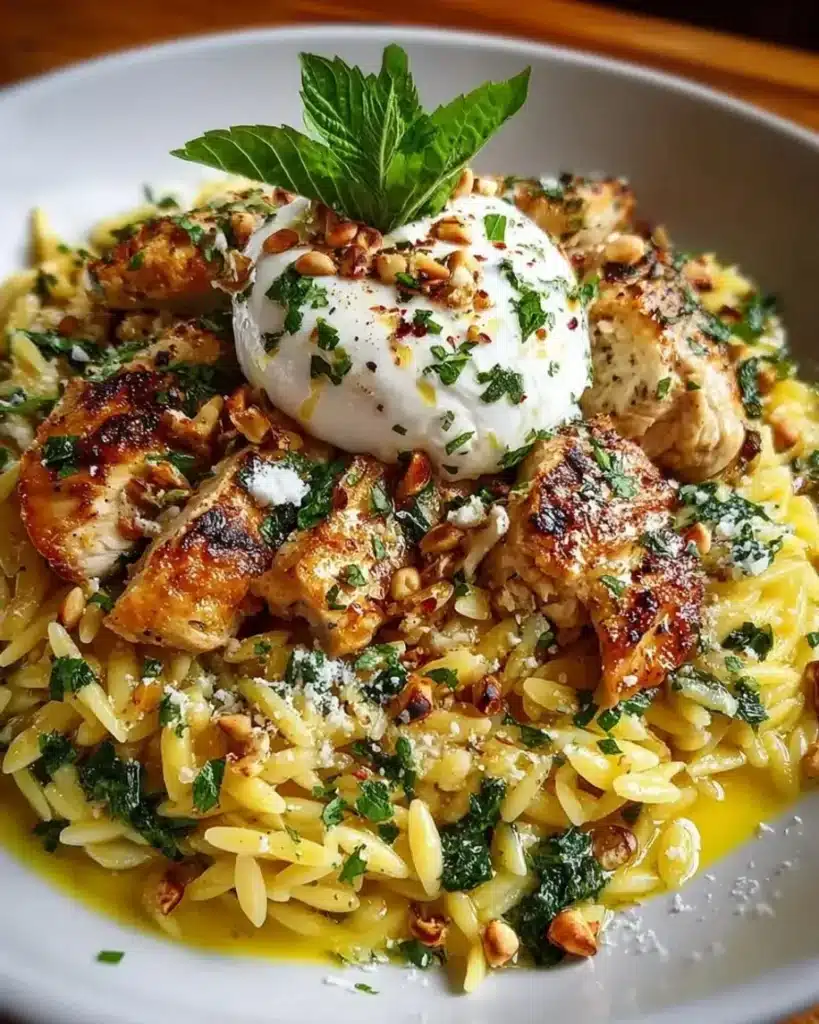
Every forkful of this basil chicken lemon orzo delivers a symphony of textures: bite-sized chicken pieces, golden and tender, woven through tiny pearls of al dente orzo that have soaked up a velvety sauce of heavy cream, Parmesan, and lemon. The scent of garlic and shallots blooming in olive oil fills the kitchen, instantly transporting me back to the Moroccan spice markets of my childhood, where bold flavors were always at the forefront. Here, the subtle heat of garlic powder and dried oregano on the chicken echoes that layered seasoning philosophy, while the fresh basil and lemon bring a clean, modern twist. The star, without a doubt, is the burrata — a cloud of creamy stracciatella and mozzarella that melts into the pasta, forming a sauce so luscious you’ll want to scrape the bowl clean.
I developed this lemon orzo recipe to be foolproof yet elegant, the kind of dish that impresses dinner guests but is simple enough for a Tuesday night. The secret technique? Toasting the orzo in the rendered chicken fat and aromatics before adding any liquid. It deepens the nutty flavor and ensures the orzo stays distinct and not mushy. A common mistake when making any chicken orzo with burrata is overcooking the poultry, which can dry it out. I’ll share my Parisian-trained trick for perfectly juicy chicken every time, plus a pro tip for keeping the burrata beautifully creamy right until serving. Trust me, once you try this toasted pine nuts recipe combined with the bright lemon and basil, it’ll become a permanent part of your rotation.
Why This Basil Chicken & Lemon Orzo Recipe Is the Best
The Flavor Secret: Having trained in classical French kitchens, I learned that building layers of flavor is everything. In this basil chicken lemon orzo, we start with deeply seasoned chicken that sears in olive oil, leaving behind a fond that forms the base of the sauce. Deglazing with a splash of dry white wine (a technique I perfected in Paris) lifts all those caramelized bits, while lemon zest added at the end keeps the citrus bright and zesty, not bitter. The combination of dried oregano and fresh basil brings a Mediterranean herbaceousness that pairs perfectly with the rich cream and burrata, making every mouthful a delightful contrast of earthy and fresh.
Perfected Texture: Orzo can easily turn into a sticky blob if you’re not careful. My method of toasting the orzo grains in the flavorful oil before adding liquid creates a subtle chewy bite that holds its shape beautifully. Then, cooking it risotto-style — stirring occasionally and adding broth incrementally — allows the starches to release slowly, thickening the sauce naturally. When you fold in the heavy cream and Parmesan at the end, the orzo absorbs that richness without becoming gummy. The result is a creamy, luscious bed for the tender chicken and the luxurious melted burrata.
Foolproof & Fast: This recipe was designed with busy home cooks in mind. The entire dish cooks in a single Dutch oven or large skillet, meaning less cleanup and more time to enjoy your evening. I’ve tested it dozens of times, adjusting the liquid ratios so the orzo comes out perfect whether you use wine or chicken broth, and I’ve included simple swaps for any ingredient you might not have on hand. Even if you’ve never cooked with burrata or toasted pine nuts before, my step-by-step guidance will walk you through it. In just 35 minutes, you’ll have an Italian-inspired main course that tastes like it came from a restaurant, yet is so straightforward you’ll be making it on autopilot.
Basil Chicken Lemon Orzo Ingredients
I love picking up these ingredients at the Union Square Greenmarket when I’m in Manhattan — the fresh basil from a local farm stand, the burrata from a specialty cheese monger, and the pine nuts from a bulk bin. It reminds me of the vibrant souks in Marrakech where my mother would hunt for the perfect spices. For the best results, use high-quality olive oil and freshly grated Parmesan; they truly make a difference.
Ingredients List
- For the Chicken:
- 1 1/2 pounds boneless skinless chicken breasts, cut into bite-size pieces
- 2 tablespoons olive oil
- 1 teaspoon dried oregano
- 1/2 teaspoon garlic powder
- Salt and black pepper to taste
- For the Orzo:
- 1 tablespoon olive oil
- 1 shallot, finely chopped
- 3 cloves garlic, minced
- 1 cup orzo pasta
- 1/2 cup dry white wine (or chicken broth)
- 2 cups chicken broth
- 1/2 cup heavy cream
- 1/2 cup grated Parmesan cheese
- 1/4 cup fresh basil, chopped
- Zest and juice of 1 lemon
- 1/4 cup toasted pine nuts
- 4 ounces burrata cheese, torn
- Fresh basil for garnish
Ingredient Spotlight
Burrata: This is the star of the show. Burrata is fresh mozzarella filled with stracciatella and cream, giving it a soft, oozy center. Look for it in the specialty cheese section of your grocery store — BelGioioso makes a widely available version. Handle it gently; I tear it just before serving so it stays cool and creamy. If you can’t find burrata, fresh mozzarella or small bocconcini are decent substitutes, though you’ll miss that signature runny interior. In a pinch, dollop fresh ricotta on top for a creamier effect.
Orzo: Despite its rice-like shape, orzo is a small pasta made from semolina flour. Toasting it deepens its nuttiness and helps it maintain a pleasant chew. I prefer Barilla or De Cecco brands for consistent cooking. If you need a gluten-free alternative, look for gluten-free orzo made from corn and rice; the texture will be slightly softer but still delicious. Avoid substituting with rice, as it won’t absorb the sauce the same way and will change the dish’s character.
Pine Nuts: Toasted pine nuts add a buttery, resinous crunch that balances the creamy orzo. I always buy them from the bulk section of Whole Foods or at a Middle Eastern grocer where they turn over quickly. Store any extras in the freezer to prevent them from going rancid. If you have a nut allergy, skip them or use toasted sunflower seeds for a similar earthy note. Toast them carefully — they can burn in seconds — using a dry skillet over medium heat, shaking frequently until golden and fragrant.
| Original Ingredient | Best Substitution | Flavor / Texture Impact |
|---|---|---|
| Burrata | Fresh mozzarella or ricotta | Less creamy, milder richness; still satisfying |
| Orzo pasta | Gluten-free orzo or stelline | Slightly softer bite; reduced chew |
| Dry white wine | Chicken broth + 1 tsp lemon juice | Slightly less acidic, but still bright |
| Pine nuts | Toasted slivered almonds or sunflower seeds | Different crunch, pleasant nuttiness |
How to Make Basil Chicken & Lemon Orzo with Burrata and Toasted Pine Nuts – Step-by-Step
This one-pot basil chicken lemon orzo comes together quickly, so I like to prep all my ingredients first — dice the chicken, mince the garlic, zest the lemon. Once you start cooking, it’s a seamless 25-minute flow. Let me walk you through each step with my best pro tips and a few common pitfalls to dodge.
Step 1: Season the Chicken
In a medium bowl, toss the 1 1/2 pounds of bite-size chicken breast pieces with 1 teaspoon dried oregano, 1/2 teaspoon garlic powder, and a generous pinch each of salt and black pepper. Use your hands to massage the seasoning into every piece — this ensures even flavor in every bite. Let it sit while you prep the aromatics; just 5 minutes of marinating time makes a noticeable difference.
💡 Lalybeth’s Pro Tip: Pat the chicken pieces dry with a paper towel before seasoning. This removes excess moisture and helps the spices adhere better, guaranteeing a beautiful golden sear later.
Step 2: Sear the Chicken
Heat 2 tablespoons olive oil in a large, heavy-bottomed skillet or Dutch oven over medium-high heat. Once the oil shimmers, add the chicken in a single layer — don’t crowd the pan. Cook for 3-4 minutes per side, until deeply golden and the internal temperature reaches 165°F (74°C). Transfer the chicken to a plate and tent loosely with foil. It will finish cooking through residual heat while you work on the orzo. This method keeps the chicken juicy, just like my Parisian chef instructors taught me for sautéing poultry.
⚠️ Common Mistake to Avoid: Overcrowding the skillet. When chicken pieces overlap, they steam rather than sear, and you lose that caramelized crust that builds flavor in the fond. Cook in two batches if needed.
Step 3: Sauté Aromatics
In the same skillet, reduce the heat to medium and add the remaining 1 tablespoon olive oil. Toss in the finely chopped shallot and minced garlic. Sauté for about 1 minute, stirring constantly, until fragrant and translucent — you’ll smell that irresistible garlic-shallot perfume filling your kitchen. Be careful not to let the garlic burn; if it does, start over, as burnt garlic imparts a bitter taste that can ruin the delicate sauce.
💡 Lalybeth’s Pro Tip: Use a microplane to finely grate the shallot alongside the garlic. It practically melts into the oil, creating an incredibly smooth flavor base without any chunky bits.
Step 4: Toast the Orzo
Add the 1 cup of dry orzo to the skillet and stir to coat each grain in the fragrant oil. Let it toast for 1-2 minutes, stirring frequently, until the orzo turns a pale golden hue and releases a nutty aroma. This step is crucial — it seals the starches on the outside, so the orzo retains its shape and doesn’t become mushy later. I learned this technique while cooking pilafs in Morocco, where toasting grains is second nature.
⚠️ Common Mistake to Avoid: Skipping the toasting step. Without it, the orzo releases too much starch into the liquid later, resulting in a gluey, unappealing texture rather than a creamy, risotto-like one.
Step 5: Deglaze with White Wine (or Broth)
Pour in 1/2 cup dry white wine (or chicken broth if you prefer). Scrape the bottom of the skillet with a wooden spoon to release all those browned bits — the fond — from the chicken. Let the wine bubble and reduce for about 1 minute, until mostly absorbed. The alcohol cooks off, leaving behind a subtle acidity that brightens the whole dish. If using broth, add a tiny squeeze of lemon to mimic that lift. This deglazing step is a classic French move that builds incredible depth.
💡 Lalybeth’s Pro Tip: Use a wine you’d enjoy drinking — a crisp Sauvignon Blanc or Pinot Grigio works beautifully. Avoid cooking wines, which are often salty and lack nuance.
Step 6: Simmer in Chicken Broth
Pour in 2 cups of chicken broth, increase the heat to high, and bring the mixture to a rolling boil. Immediately reduce the heat to low, cover the skillet, and let it simmer gently for 10-12 minutes. Stir occasionally to prevent sticking, until the orzo is tender and most of the liquid has been absorbed. You’re looking for a loose, creamy consistency — the orzo should still be slightly fluid, as it will thicken further when you add the cream and cheese. Taste a grain; it should be al dente with a pleasant bite.
⚠️ Common Mistake to Avoid: Letting the orzo simmer unattended without stirring. Orzo loves to sink and stick to the bottom, especially in the last minutes when the liquid is low. A gentle stir every few minutes prevents burning.
Step 7: Build the Creamy Lemon Sauce
Once the orzo is cooked, stir in the 1/2 cup heavy cream, 1/2 cup grated Parmesan, 1/4 cup chopped fresh basil, the zest and juice of one lemon. Cook for another 1-2 minutes, stirring continuously, until everything melts together into a silky, fragrant sauce. The lemon zest infuses the cream with bright citrus oils, while the juice adds a tangy kick that balances the richness of the cheese and cream. This is the moment the dish transforms from simple to spectacular.
💡 Lalybeth’s Pro Tip: Zest the lemon directly over the pan to capture the essential oils that aerosolize. And always zest before juicing — it’s much easier. For an extra pop of color and flavor, stir in a pinch of red pepper flakes with the cream.
Step 8: Return Chicken to the Skillet
Add the cooked chicken pieces (and any accumulated juices from the plate) back into the skillet. Stir gently to coat the chicken with the creamy orzo. Let everything heat through for 1 minute. The chicken will absorb the lemony sauce without drying out, because we’re not cooking it further, just warming. This guarantees the chicken stays supremely juicy — a trick I’ve relied on since my bistro days in Paris.
⚠️ Common Mistake to Avoid: Over-stirring at this stage. Be gentle with the chicken pieces; aggressive stirring can break them apart. A light fold is all you need to mingle the flavors and keep the chicken intact.
Step 9: Garnish with Burrata, Pine Nuts & Fresh Basil
Remove the skillet from the heat. Tear the 4 ounces of burrata into rustic pieces and scatter them over the top of the orzo. Sprinkle with the 1/4 cup toasted pine nuts and a handful of fresh basil leaves. The residual warmth will soften the burrata just enough to make it oozy but not fully melt it. Serve immediately, scooping from the bottom to ensure each plate gets that dreamy combination of creamy orzo, chicken, and molten cheese.
💡 Lalybeth’s Pro Tip: Pat the burrata dry with a paper towel before tearing; this prevents excess liquid from watering down your beautiful sauce. If you’re serving a crowd, present the skillet at the table and let everyone gasp when they see that creamy cheese.
| Step | Action | Duration | Key Visual Cue |
|---|---|---|---|
| 1 | Season chicken | 2 min | Spices evenly coat each piece |
| 2 | Sear chicken | 6-8 min | Deep golden crust, no pink inside |
| 3 | Sauté aromatics | 1 min | Fragrant, translucent shallot |
| 4 | Toast orzo | 1-2 min | Orzo turns pale golden, nutty scent |
| 5 | Deglaze with wine | 1 min | Liquid mostly absorbed, fond lifted |
| 6 | Simmer in broth | 10-12 min | Orzo tender, creamy liquid left |
| 7 | Build cream sauce | 1-2 min | Silky, uniform sauce; bright yellow from lemon zest |
| 8-9 | Combine & garnish | 2 min | Burrata just beginning to soften |
Serving & Presentation
I love bringing this skillet straight to the table — it’s rustic yet elegant, much like the family-style meals I remember in Morocco. To serve, I spoon generous portions into shallow bowls, making sure each gets a torn piece of burrata and a shower of pine nuts. A final drizzle of good extra-virgin olive oil and a light crack of black pepper elevate the presentation instantly. For a pop of color, I scatter a few whole basil leaves and a pinch of lemon zest right on top. The contrast of the white cheese, green basil, and golden pine nuts against the creamy orzo is simply stunning.
This lemon orzo recipe pairs wonderfully with a crisp green salad dressed in a simple vinaigrette — that acidity cuts through the richness. In Paris, we’d often serve such a dish with a chilled glass of Sancerre, but here in my NYC apartment, I reach for a citrusy craft IPA or a sparkling water with lemon. For a heartier meal, roast some asparagus or broccolini alongside, or simply pass a crusty baguette to mop up every last bit of that sauce. My mother would have added a side of harissa-spiked carrots for a Moroccan twist, which I fully endorse!
| Pairing Type | Suggestions | Why It Works |
|---|---|---|
| Side Dish | Arugula salad, roasted asparagus, garlic bread | Bitter greens and crisp vegetables balance the creamy orzo |
| Sauce / Dip | Extra lemon wedges, chili oil, pesto drizzle | Adds brightness or heat to customize each bite |
| Beverage | Sauvignon Blanc, Pinot Grigio, sparkling water with lemon | Acidic white wines echo the lemon and cut through cream |
| Garnish | Microgreens, edible flowers, extra pine nuts | Adds texture and a fresh, colorful finishing touch |
Make-Ahead, Storage & Reheating
In my busy NYC life, I often prep the components of this basil chicken and lemon orzo ahead of time. You can season the chicken and store it in the fridge up to 4 hours, or even toast the pine nuts and keep them in an airtight jar. The full dish is best fresh, but leftovers are still delicious if you follow my gentle reheating method. I always reserve the burrata and add it fresh when serving — that’s non-negotiable for that signature creamy finish.
| Method | Container | Duration | Reheating Tip |
|---|---|---|---|
| Refrigerator | Airtight container | 3-4 days | Gently reheat on stovetop with a splash of broth; add fresh burrata after |
| Freezer | Freezer-safe container | Up to 2 months (without burrata) | Thaw overnight in fridge; reheat low and slow, then top with fresh burrata |
| Make-Ahead | Prep chicken & aromatics | Up to 1 day ahead | Store components separately; assemble and cook just before serving |
When reheating leftover basil chicken lemon orzo, I always use the stovetop over low heat with a splash of chicken broth or water to loosen it up. The orzo will have absorbed more liquid, but a gentle stir and a few minutes brings back its creaminess. Never microwave on high, or the chicken can turn rubbery and the sauce may separate. Once it’s warm, transfer to bowls and tear fresh burrata over the top — it will melt into the reheated pasta just as gorgeously as day one. And if you have extra toasted pine nuts, add them at the end to restore that vital crunch.
Variations & Easy Swaps
One of the joys of this lemon orzo recipe is how adaptable it is. Drawing from my Moroccan roots and Parisian training, I love playing with flavors to suit the season or whatever’s in my fridge. Below are three of my favorite twists, each tested and approved by my toughest critics (my NYC supper club friends).
| Variation | Key Change | Best For | Difficulty Impact |
|---|---|---|---|
| Creamy Citrus Burst | Add orange zest & juice, swap basil for tarragon | Spring & summer meals | No extra difficulty |
| Gluten-Free & Dairy-Free | Use GF orzo, full-fat coconut milk instead of cream, vegan Parmesan, omit burrata | Those with dietary restrictions | Slightly softer texture, still creamy |
| Seasonal Roasted Veggie | Add roasted cherry tomatoes, zucchini, or red bell peppers | Using summer garden bounty | Adds 15 min roasting time |
Creamy Citrus Burst
I sometimes swap half the lemon zest for orange zest and replace the basil with fresh tarragon — a trick I picked up from a fellow chef in Paris who loved playing with French herbs. The orange brings a sweeter citrus note that pairs beautifully with the chicken, and tarragon’s anise-like fragrance echoes the pine nuts. Follow the same steps but add the orange zest along with the lemon. A final glug of heavy cream keeps things luscious. It’s like sunshine on a plate and is always a hit when I host brunch on my fire escape in Brooklyn.
Gluten-Free & Dairy-Free Option
For friends with food sensitivities, this basil chicken lemon orzo transforms effortlessly. Use a gluten-free orzo made from corn and brown rice (I like the Jovial brand), and substitute the heavy cream with full-fat canned coconut milk. It lends a slight sweetness that actually complements the lemon. Swap the Parmesan with a dairy-free alternative or nutritional yeast for a cheesy note. Skip the burrata, or if you can find a good vegan mozzarella, tear that on top. The texture is a tad softer but still satisfyingly creamy, and all those bright flavors shine through. Even my dairy-loving husband didn’t notice the difference.
Seasonal Roasted Veggie Version
When summer hits the Union Square Greenmarket, I load up on cherry tomatoes and baby zucchini. For this variation, simply roast halved cherry tomatoes and sliced zucchini with olive oil, salt, and pepper at 400°F for 15 minutes until blistered. Stir them into the orzo right before adding the cream. The tomatoes burst and mingle with the lemon sauce, creating a rustic, jammy sweetness that contrasts with the savory chicken. It’s a beautiful way to incorporate more veggies and makes the dish feel even more vibrant. I often sprinkle some crumbled feta alongside the burrata for a salty kick.
Can I substitute the burrata with another cheese in this basil chicken and lemon orzo dish?
Absolutely. While burrata’s creamy center is unique, you can use fresh mozzarella (preferably the small pearls or a ball torn into pieces) – it will still melt nicely but won’t give you the same oozy liquid. For a more indulgent result, dollop fresh ricotta on each serving as you plate; it adds a lovely milky richness. If you prefer a sharper flavor, crumbled feta or goat cheese works beautifully, though the dish will lose some of its Italian classic feel. No matter which cheese you choose, add it off the heat so it softens without completely dissolving, preserving that nice textural contrast.
How do you toast pine nuts for the basil chicken and lemon orzo recipe?
Place 1/4 cup pine nuts in a small dry skillet over medium heat. Stir or shake the pan frequently, and watch them like a hawk — they can go from golden to burnt in seconds. In about 2-4 minutes, they’ll turn lightly browned and give off a nutty aroma. Immediately transfer them to a cool plate to stop the cooking. Never leave them unattended, as the residual heat from the pan can over-toast them even after you turn off the stove. I often toast an extra batch to snack on while I cook!
What is the best way to cook the chicken so it stays juicy for this basil and lemon orzo dish?
The key is a quick, high-heat sear and then resting. Pat the chicken pieces dry, season well, and cook in a single layer in hot oil for about 3-4 minutes per side until deeply golden. Don’t move the chicken around once it’s in the pan; let it develop a crust. Use an instant-read thermometer and remove the chicken as soon as it reaches 165°F (74°C). Then tent it with foil while you prepare the orzo. The residual heat continues cooking it gently, but the resting period allows the juices to redistribute, so you get tender, succulent chicken every time.
Can I prepare the basil chicken and lemon orzo with burrata ahead of time and reheat it?
You can, but I strongly recommend leaving the burrata off until just before serving. Prepare the orzo and chicken fully, then cool and refrigerate in an airtight container for up to 3 days. Reheat gently on the stovetop with a splash of chicken broth to revive the creaminess. Once hot, transfer to bowls and tear fresh burrata over the top. If you add burrata before storing, it will melt completely and become an oily, less appealing texture upon reheating. Keeping it fresh is what gives that signature creaminess.
Can I use chicken thighs instead of breasts in this recipe?
Yes, boneless skinless chicken thighs are a fantastic swap. They have more fat and intrinsic flavor, so they stay even juicier. Cut them into bite-size pieces and follow the same seasoning and searing instructions. Thighs may need an extra minute or two of cooking, but otherwise the process is identical. The darker meat adds a richer, more savory depth that pairs beautifully with the lemon and cream.
What can I serve with basil chicken and lemon orzo for a complete meal?
This dish is pretty hearty on its own, but a simple arugula salad with lemon vinaigrette cuts the richness beautifully. Roasted asparagus, green beans, or steamed broccoli also make great sides. For a larger gathering, I add a platter of roasted cherry tomatoes on the side. And don’t forget crusty bread to soak up every last drop of the creamy lemon sauce.
How do I prevent the orzo from getting mushy?
The secret is to toast the orzo in oil before adding any liquid, which creates a protective coating that locks in texture. Also, cook it risotto-style, stirring occasionally, and monitor the liquid amount. I recommend adding the full 2 cups of broth at once, but if your stove runs hot, check a few minutes earlier and add a splash of water if it’s drying out before the orzo is cooked al dente. Never overcook; the orzo should still have a slight bite when you add the cream.
Can I make this lemon orzo recipe vegetarian?
Absolutely. Swap the chicken for a plant-based protein like cubed firm tofu or chickpeas, and use vegetable broth instead of chicken broth. Sauté the tofu or chickpeas until golden just like the chicken. You can also bulk it up with sautéed mushrooms or spinach. The rich burrata and creamy sauce will still make it a satisfying main course.
What’s the best way to store and reheat toasted pine nuts?
Toasted pine nuts can be stored in an airtight container at room temperature for up to a week, but I prefer to keep them in the freezer where they stay fresh for months. When you need them, just sprinkle them frozen right onto the hot dish — the heat will rewarm them instantly and bring back their crunch.
How can I add more vegetables to this chicken and orzo recipe?
Stir in a handful of baby spinach or arugula right at the end until just wilted. You can also sauté sliced mushrooms with the aromatics, or fold in steamed peas. For a more substantial veggie addition, roast broccoli, asparagus, or cherry tomatoes separately and toss them in before serving. The beauty of this one-pot meal is that it easily adapts to whatever you have on hand.
Share Your Version!
I absolutely love seeing your re-creations of my basil chicken and lemon orzo with burrata. Did you add a twist of your own, like a pinch of smoked paprika or a northern African harissa kick? Let me know in the comments below — your feedback helps me refine every recipe and often inspires my next dish. Don’t forget to rate the recipe with those golden stars; it makes my day when you do.
Snap a photo of your beautiful skillet and share it on Instagram or Pinterest with the tag @cookingwithlalyta. I share my reader’s creations in my Instagram stories, and there’s nothing that makes me prouder than seeing your kitchen triumphs. And while you’re there, tell me: what’s your favorite way to use leftover toasted pine nuts? I’m always collecting ideas. From my NYC kitchen to yours — I hope this recipe brings as much warmth to your table as it does to mine. — Lalybeth 🧡
Love This Recipe? Save It to Pinterest!
If you enjoyed this Basil Chicken & Lemon Orzo with Burrata and Toasted Pine Nuts recipe, don’t let it get lost in your browser tabs! 😄 Pin it now so you can find it again anytime — and explore hundreds more tried-and-tested recipes waiting for you on my Pinterest boards.
👉 Follow Lalybeth on Pinterest @cookingwithlalyta
📌 Pin this recipe · 🔁 Re-pin your favorites · 💬 Tag me when you make it — I love seeing your creations!

Basil Chicken & Lemon Orzo with Burrata and Toasted Pine Nuts
- Total Time: 35 minutes
- Yield: 4 1x
Description
This basil chicken and lemon orzo with burrata and toasted pine nuts is a quick and easy one-pot meal that’s perfect for any night of the week. The creamy burrata melts into the orzo, creating a rich and delicious sauce.
Ingredients
- For the Chicken:
- 1 1/2 pounds boneless skinless chicken breasts, cut into bite-size pieces
- 2 tablespoons olive oil
- 1 teaspoon dried oregano
- 1/2 teaspoon garlic powder
- Salt and black pepper to taste
- For the Orzo:
- 1 tablespoon olive oil
- 1 shallot, finely chopped
- 3 cloves garlic, minced
- 1 cup orzo pasta
- 1/2 cup dry white wine (or chicken broth)
- 2 cups chicken broth
- 1/2 cup heavy cream
- 1/2 cup grated Parmesan cheese
- 1/4 cup fresh basil, chopped
- Zest and juice of 1 lemon
- 1/4 cup toasted pine nuts
- 4 ounces burrata cheese, torn
- Fresh basil for garnish
Instructions
- Season the chicken pieces with oregano, garlic powder, salt, and pepper.
- Heat 2 tablespoons olive oil in a large skillet over medium-high heat. Add the chicken and cook until golden and cooked through, about 6-8 minutes. Remove from skillet and set aside.
- In the same skillet, add 1 tablespoon olive oil. Sauté shallot and garlic until fragrant, about 1 minute.
- Add the orzo and cook, stirring, for 1-2 minutes until lightly toasted.
- Pour in the white wine (or broth) and cook until mostly absorbed, about 1 minute.
- Add the chicken broth and bring to a boil. Reduce heat to a simmer and cook until orzo is tender and liquid is absorbed, about 10-12 minutes, stirring occasionally.
- Stir in the heavy cream, Parmesan cheese, basil, lemon zest, and lemon juice. Cook for 1-2 minutes until creamy.
- Return the cooked chicken to the skillet and stir to combine.
- Top with torn burrata, toasted pine nuts, and additional fresh basil. Serve immediately.
Notes
Burrata is best added just before serving so it remains creamy. You can substitute with fresh mozzarella if needed.
- Prep Time: 10 minutes
- Cook Time: 25 minutes
- Method: Main Course
- Cuisine: Italian
Nutrition
- Calories: 685
- Sugar: 4g
- Fat: 42g
- Carbohydrates: 38g
- Protein: 38g

Tried This Recipe? Leave a Comment!
Did you make this recipe? I’d love to hear how it turned out! Please leave a comment and a rating below. Your feedback helps other home cooks and supports cookingwithlalyta.com!
For more delicious inspiration, follow me on Pinterest!