Table of Contents
Mediterranean Layered Beet, Sweet Potato & Feta Gratin with Walnuts – Vibrant Layers & Creamy Feta: A NYC Chef’s Twist
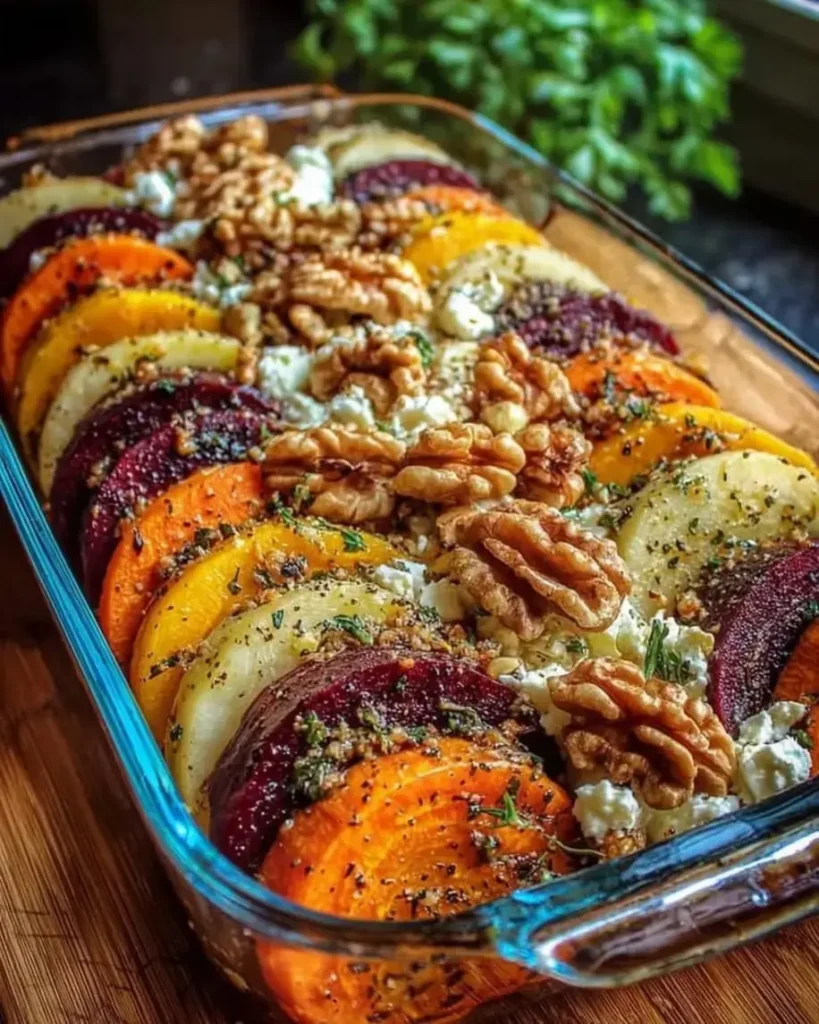
I’ll never forget the first time I tasted beets and sweet potatoes together — it was in my mother’s kitchen back in Morocco, where earthy root vegetables were a staple, often roasted with cumin and coriander. But it wasn’t until my culinary school days in Paris that I discovered the magic of a gratin: thinly sliced vegetables layered with creamy cheese and baked into a bubbling, golden masterpiece. This Mediterranean beet sweet potato gratin marries that French technique with the bold, sun-drenched flavors of the Mediterranean, and the addition of walnuts and feta brings a nutty crunch and salty tang that my New York City friends can’t get enough of. Every time I pull it from the oven, the colors — deep magenta beets, bright orange sweet potatoes, white feta, and green parsley — remind me of a Moroccan sunset, and I know you’ll fall in love with it too.
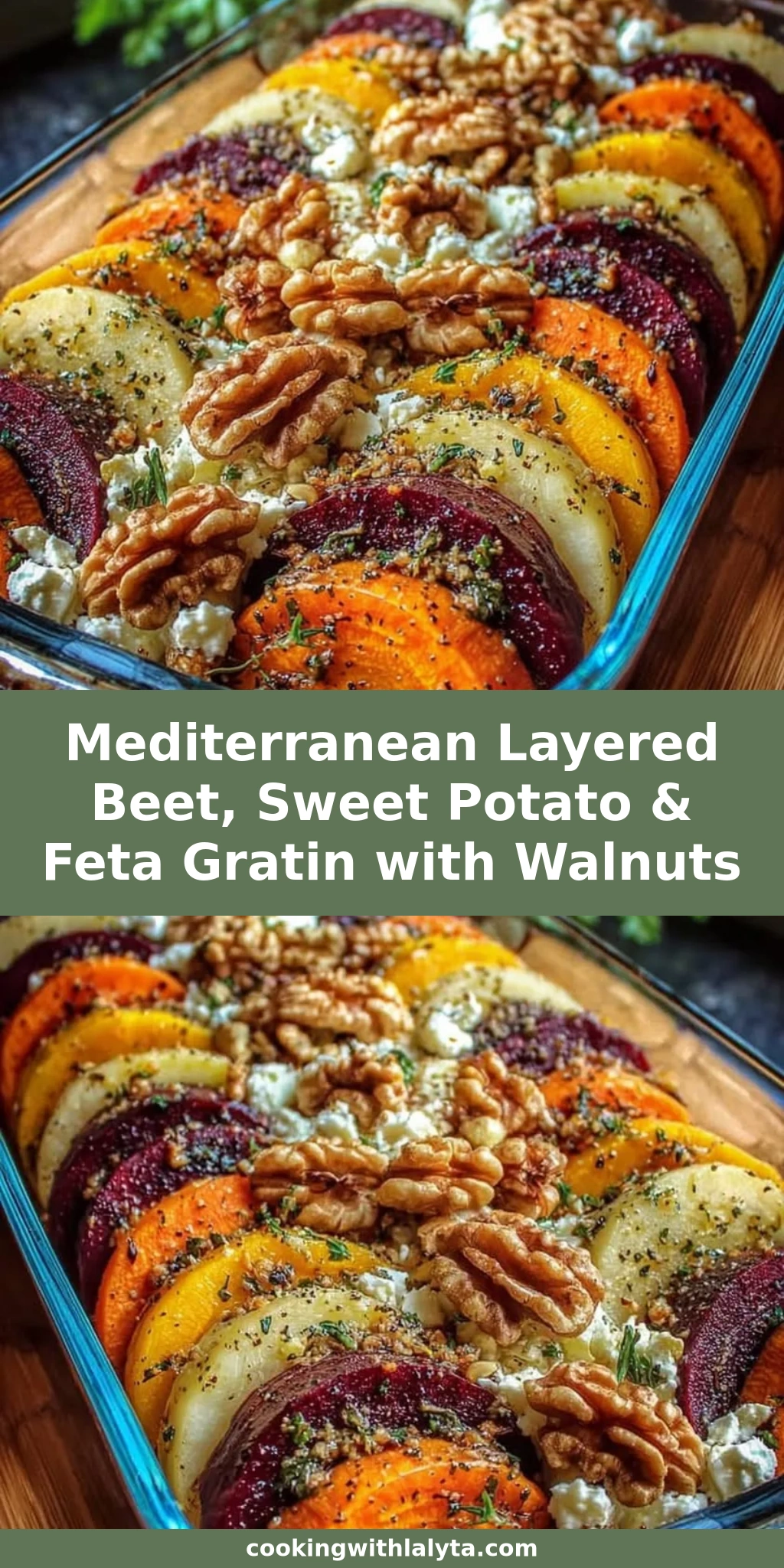
Imagine a dish where each forkful delivers a silky, tender bite of sweet potato that gives way to the subtle crunch of toasted walnuts, all bound by the salty creaminess of melted feta. The herb oil — a simple emulsion of olive oil, garlic, oregano, and thyme — seeps into every layer, perfuming the vegetables with a fragrance that fills your kitchen. There’s a hint of sweetness from the root vegetables, a savory depth from the feta, and an earthy backbone from the beets that makes this beet and sweet potato gratin with feta anything but ordinary. I love how the edges crisp up slightly, forming a lacy, caramelized crust that contrasts the soft interior. It’s a dish that looks as beautiful as it tastes, and it’s a guaranteed showstopper for any dinner party or holiday table.
This isn’t just another gratin recipe — it’s the result of my years testing and tweaking in my professional kitchen to get the balance right. The secret lies in the layering technique I learned in Paris: overlapping the slices just so ensures even cooking, while the broth poured around the edges steams the vegetables from within, making them tender without becoming mushy. I also use a touch of dried thyme and oregano, which I always keep in my NYC pantry, to tie everything together with that unmistakable Mediterranean character. One common mistake is slicing the vegetables too thick, which leads to uneven doneness — I’ll show you how to avoid that. Stick with me, and I’ll also share a pro tip about toasting the walnuts beforehand, which takes this feta walnut gratin to a whole new level.
Why This Mediterranean Beet Sweet Potato Gratin Recipe Is the Best
The flavor secret is all about the quality of feta. I always buy authentic Greek feta made from sheep’s milk — its briny, tangy punch cuts through the natural sugars of the sweet potatoes and beets in a way that goat cheese just can’t. When I trained in Paris, my chef instructor insisted that a gratin must have a harmonious depth, and that’s exactly what the herb-infused olive oil does here. The garlic blooms gently in the oil as the dish bakes, melding with the dried herbs to create a sauce that’s both aromatic and comforting, making this layered vegetable gratin taste like it simmered all day.
Texture perfection is a non-negotiable for me. Too many gratins end up watery or one-note, but here I focus on two techniques: slicing the beets and sweet potatoes to an even ⅛-inch thickness (a mandoline works wonders), and finishing the bake uncovered. That final blast of dry heat evaporates excess moisture and allows the top layer of feta to brown ever so slightly, while the walnuts toast to a deep, rich crunch. The result is a Mediterranean gratin recipe where every layer is distinct yet cohesive — creamy, tender, crispy, and nutty all at once.
Even if you’re new to gratins, this recipe is remarkably foolproof. The ingredient list is short, the steps are straightforward, and the dish is incredibly forgiving. I’ve taught this to home cooks in my NYC classes, and they’re always amazed at how impressive it looks with minimal effort. The make-ahead potential is another win: assemble it the night before, then bake when needed. Plus, the colorful layers mean no fancy plating is required — just scoop and serve, and watch the smiles. Trust me, this will become your go-to side dish for everything from weeknight dinners to Thanksgiving.
Mediterranean Beet Sweet Potato Gratin Ingredients
When I shop for this recipe in New York, I head straight to the Union Square Greenmarket, where I can find freshly dug beets with their greens still attached — a sure sign of peak flavor. The sweet potatoes should be firm and free of soft spots; I prefer the orange-fleshed variety for their vibrant color. The feta I buy from a Greek importer in Astoria, but any good-quality block of feta stored in brine will work. Walnuts are a pantry staple in my kitchen, a reminder of the nutty cookies my mother used to make. Let’s gather everything you’ll need to create this beautiful dish.
Ingredients List
- 2 medium beetroots (about 1 lb), peeled and thinly sliced to ⅛ inch
- 2 medium sweet potatoes (about 1 lb), peeled and thinly sliced to ⅛ inch
- 200g (7 oz) feta cheese, crumbled
- 1/2 cup (2 oz) walnuts, roughly chopped
- 2 cloves garlic, minced
- 1/4 cup chopped fresh parsley, plus more for garnish
- 1/4 cup extra-virgin olive oil
- 1/2 teaspoon salt
- 1/4 teaspoon freshly ground black pepper
- 1/2 teaspoon dried oregano
- 1/2 teaspoon dried thyme
- 1/4 cup vegetable or chicken broth
Ingredient Spotlight
Beets: Earthy and sweet, beets provide the dramatic color base. Look for uniformly round, firm beets at the grocery store — avoid any with wrinkles or spongy spots. If you can’t find fresh beets, pre-cooked vacuum-packed ones can work, though the texture will be slightly softer. For a twist, golden beets make a beautiful substitute and won’t stain as much.
Sweet Potatoes: Their natural sugars caramelize in the oven, balancing the savory notes. Garnet or Jewel varieties are perfect — they hold their shape well. Butternut squash can stand in, but the flavor is cooler and less sweet; I sometimes mix both for a fall version.
Feta Cheese: The creamy, salty anchor of the dish. I recommend a block of Greek sheep’s milk feta packed in brine — it’s less crumbly and melts better. If you’re dairy-free, a high-quality plant-based feta made from almonds or tofu is a decent alternative, though the tang won’t be as sharp.
Walnuts: They add essential crunch. Toast them in a dry pan for 3–4 minutes before chopping to amplify their nuttiness. Pecans or slivered almonds work well too, but walnuts have that slightly bitter edge that complements the sweetness perfectly.
| Original Ingredient | Best Substitution | Flavor / Texture Impact |
|---|---|---|
| Beetroots | Golden beets or carrots | Slightly sweeter, less earthy; color less dramatic. |
| Sweet potatoes | Butternut squash | Milder sweetness, slightly softer texture. |
| Feta cheese | Vegan feta (almond-based) or goat cheese | Richer, less brine; may need extra salt. |
| Walnuts | Pecans or slivered almonds | More buttery, less bitter crunch. |
How to Make Mediterranean Layered Beet, Sweet Potato & Feta Gratin with Walnuts — Step-by-Step
I promise, this dish comes together quickly once you have your vegetables sliced. The key is to enjoy the layering — it’s like building a colorful painting. I’ll walk you through each step with all the little chef tricks I’ve picked up over the years.
Step 1: Prep Oven and Dish
Preheat your oven to 375°F (190°C). Lightly grease a 9-inch deep-dish pie plate or an 8×8-inch baking dish with a bit of olive oil or cooking spray. I love using a ceramic dish because it holds heat beautifully and makes for a lovely presentation directly at the table.
💡 Lalybeth’s Pro Tip: If your dish is on the deeper side, increase the bake time slightly. The depth affects how evenly the layers cook — I always check the center with a knife tip at the 50-minute mark.
Step 2: Make Herb Oil
In a small bowl, whisk together the 1/4 cup olive oil, minced garlic, 1/2 teaspoon salt, 1/4 teaspoon pepper, 1/2 teaspoon oregano, and 1/2 teaspoon thyme. This simple infusion is the backbone of the dish — it distributes the Mediterranean flavors evenly. Set it aside so the garlic can mellow while you slice the vegetables.
⚠️ Common Mistake to Avoid: Don’t be tempted to skip the fresh garlic or substitute with powder. Fresh garlic cooked slowly in the oil develops a sweet nuttiness that powder can’t replicate, and it ensures every bite is fragrant.
Step 3: Layer Vegetables
Arrange half of the sliced beets and sweet potatoes in the prepared dish, overlapping them slightly like fallen dominoes. I like to alternate a few slices of beet with sweet potato directly in the layer for a marbled look, but you can also do one row of each. Press down gently to compact them — this helps the gratin hold together when sliced.
💡 Lalybeth’s Pro Tip: Aim for slices that are uniformly 1/8 inch thick. A mandoline is your best friend here; it took me years to appreciate this tool, but now I use it for all my gratins. Uniform slices cook at the same rate, so no crunchy bits.
Step 4: Add Feta and Walnuts
Drizzle half of the herb oil mixture over the first vegetable layer, using a spoon to get it into the crevices. Then sprinkle half of the crumbled feta evenly on top, followed by half of the chopped walnuts. The feta will melt into creamy pockets, while the walnuts add crunch between the layers.
⚠️ Common Mistake to Avoid: Don’t crowd the walnuts too much — scatter them loosely. If they are piled thick, they won’t toast properly and can become chewy instead of crisp. I toast mine in a dry skillet for 3 minutes before chopping for extra flavor.
Step 5: Repeat and Add Broth
Repeat the layers: arrange the remaining beets and sweet potatoes, drizzle the rest of the herb oil, sprinkle the remaining feta and walnuts. Pour the 1/4 cup of broth gently around the inside edge of the dish — not over the top, so you don’t wash away the topping. The broth creates steam that will cook the vegetables from the bottom up.
💡 Lalybeth’s Pro Tip: Use room-temperature broth; cold liquid can shock the dish and increase baking time. I often use a rich chicken bone broth for deeper savoriness, but vegetable broth works perfectly for a vegetarian version.
Step 6: Bake Covered
Cover the dish tightly with aluminum foil, crimping the edges to seal. Place it on the middle rack of the preheated oven. Bake for 40 minutes, which gives the dense root vegetables time to soften. You might hear a gentle bubbling — that’s exactly what we want.
⚠️ Common Mistake to Avoid: If the foil touches the feta topping, the cheese can stick. To prevent that, I gently dome the foil upward, creating a little tent. You can also spray the underside of the foil with cooking spray for extra insurance.
Step 7: Uncover and Finish
After 40 minutes, remove the foil and bake for an additional 15–20 minutes, until the vegetables are fork-tender when pierced in the center and the top is golden and slightly crisped. The feta should look like it’s melted into a lacy, browned crust at the edges.
💡 Lalybeth’s Pro Tip: For an extra golden top, switch the oven to broil for the last 2–3 minutes, but watch it like a hawk — walnuts can burn quickly. I stand by the oven door during this part, and the result is a beautifully caramelized finish.
Step 8: Garnish and Serve
Remove the gratin from the oven and let it rest for 5–10 minutes — this helps the layers settle and makes slicing easier. Sprinkle generously with the remaining fresh parsley (I use a full 1/4 cup, roughly chopped). The parsley adds a fresh, peppery lift that balances the richness.
⚠️ Common Mistake to Avoid: Cutting into the gratin too soon can cause it to fall apart. Let it rest! This is true for all baked casseroles — the liquids re-distribute and the cheese firms up just enough to hold a clean wedge.
| Step | Action | Duration | Key Visual Cue |
|---|---|---|---|
| 1 | Preheat & grease dish | 5 min | Oven beeps ready |
| 2 | Make herb oil | 2 min | Fragrant, emulsified |
| 3–5 | Layer, drizzle, repeat | 10 min | Colorful overlapping slices |
| 6 | Bake covered | 40 min | Bubbling liquid |
| 7 | Bake uncovered | 15–20 min | Golden, fork-tender center |
| 8 | Rest & garnish | 5–10 min | Parsley bright over golden top |
Serving & Presentation
I love bringing this gratin to the table still in its baking dish — the jewel tones are a conversation starter. For a dinner party, I’ll scoop it with a large spoon onto a white platter, letting the layers fan out naturally. A final drizzle of good olive oil and a few whole toasted walnuts on top make it look elegant. In Morocco, we often serve gratins alongside a simple tomato and cucumber salad, and that fresh acidity is a perfect foil for the richness here. My New York friends often pair it with roasted lamb or grilled chicken for a hearty meal.
When plating individually, I use a fish spatula — its thin, angled edge slides cleanly under the bottom layer without breaking the slices. Garnish each portion with a little extra parsley and maybe a lemon wedge for squeezing over. The citrus really wakes up the earthy flavors. For a complete Mediterranean spread, I’d add a side of warm pita bread and a bowl of marinated olives.
| Pairing Type | Suggestions | Why It Works |
|---|---|---|
| Side Dish | Roast chicken, leg of lamb, or a white bean salad | The gratin is rich; a lean protein or bright salad cuts through. |
| Sauce / Dip | Tzatziki, hummus, or a lemony yogurt sauce | Creamy, tangy sauces complement the earthy roots. |
| Beverage | Sauvignon Blanc, iced mint tea, or a crisp lager | Acidity and herbal notes refresh the palate. |
| Garnish | Crushed red pepper flakes, lemon zest, extra parsley | Brightness and heat balance the creamy feta. |
Make-Ahead, Storage & Reheating
As a busy chef running between the restaurant and my home kitchen, I rely on make-ahead dishes. This gratin is perfect for that — assemble it completely, cover tightly, and refrigerate for up to 24 hours before baking (add 5–10 minutes to the covered baking time since it’s going in cold). For meal prep, I’ll bake it fully, then portion out lunches for the week. The flavors actually deepen overnight, making leftovers a treat.
| Method | Container | Duration | Reheating Tip |
|---|---|---|---|
| Refrigerator | Airtight container or covered dish | Up to 5 days | Reheat in 350°F oven, covered, 15–20 min. |
| Freezer | Freezer-safe dish, wrap well | Up to 3 months | Thaw overnight; reheat covered at 350°F. |
| Make-Ahead | Unbaked, in baking dish | 24 hours in fridge | Add 5–10 min to covered bake time. |
Leftovers reheat beautifully in the oven — I avoid the microwave because it can make the walnuts soft. Simply cover and warm at 350°F until heated through, about 15 minutes. If the top has lost its crispness, pop it under the broiler for a quick minute. I also love leftovers crumbled over a salad the next day; the beets and feta are a perfect lunch duo.
Variations & Easy Swaps
| Variation | Key Change | Best For | Difficulty Impact |
|---|---|---|---|
| Vegan Feta & Walnut Gratin | Use vegan feta & vegetable broth | Vegan guests | Same |
| Gluten-Free & Dairy-Free | Naturally GF; use dairy-free cheese | Allergy-friendly | Same |
| Spicy Harissa Root Gratin | Add 2 tsp harissa to herb oil | Heat lovers | Easy |
Vegan Feta & Walnut Gratin
Swap the feta for a good plant-based alternative — I’ve tested several and find the almond-based ones have the best saltiness and texture. Use vegetable broth instead of chicken broth. The dish remains beautifully layered and the vegan feta melts less but still offers a creamy bite. To boost that tangy note, I add a teaspoon of lemon zest to the herb oil, a trick I learned from a vegan café in the East Village.
Gluten-Free and Dairy-Free Version
Already gluten-free! For dairy-free, use a firm dairy-free cheese that can crumble; I like Miyoko’s artisan cultured vegan cheese. The key is to choose one with a briny profile so you don’t miss the feta’s punch. The walnuts provide the same crunch, and the dish remains completely comforting. I served this at a friend’s dinner party last month, and no one guessed it was dairy-free.
Spicy Harissa Root Gratin
This variation brings my Moroccan roots front and center. Add 2 teaspoons of harissa paste to the herb oil — it infuses the whole dish with a smoky, slow-building heat. You can also scatter a few pitted Kalamata olives between the layers for a briny pop. The result is a fiery, deeply aromatic gratin that pairs perfectly with a cool cucumber yogurt sauce on the side. I often make this on cold NYC nights when I crave a taste of North Africa.
Can I use goat cheese instead of feta in this Mediterranean gratin?
Yes, you can definitely use goat cheese, and it will bring a slightly tangier, earthier note to the dish. I recommend a soft, spreadable goat cheese (chèvre) because it melts into creamy pockets much like feta, though it won’t hold its crumbles as distinctly. The texture will be a bit more velvety and less salty, so you may want to add an extra pinch of salt to the herb oil. If you’re using a firm goat cheese, you can crumble it; it will soften but not fully melt. In either case, the walnuts and herbs will still shine, giving you a delicious layered vegetable gratin with a different personality.
Do I need to peel the beets and sweet potatoes before layering the gratin?
I always peel both beets and sweet potatoes for this recipe to ensure a silky, uniform texture and clean slices. Beet skin can be tough and slightly bitter, while sweet potato skin is edible but changes the delicate, melt-in-your-mouth feel of the gratin. If you’re short on time or prefer a more rustic dish, you can scrub the vegetables well and leave the skins on — just be aware the final texture will be a bit chewier. For the best results, use a vegetable peeler or a paring knife to remove all the skin before slicing on a mandoline. This is a small step that makes a big difference in achieving that restaurant-quality result.
How long should I bake this beet and sweet potato gratin, and at what temperature?
Bake at 375°F (190°C) for 40 minutes covered with foil, then 15–20 minutes uncovered, totaling about 55–60 minutes. The covered stage steams the dense root vegetables so they become perfectly tender, while the uncovered finish evaporates moisture and bronzes the top. I test doneness by inserting a thin knife into the center — it should slide through with no resistance. If your oven runs cool or your slices are thicker, you may need an extra 5–10 minutes. Just keep an eye on the color; once the walnuts are toasted and the feta is golden, it’s ready. Resting for 5–10 minutes is also crucial for clean slicing.
What main dish pairs well with this Mediterranean layered vegetable gratin?
This gratin is incredibly versatile. It shines alongside simply roasted chicken, herby grilled lamb chops, or even a hearty white fish like cod. For a vegetarian feast, I serve it with a bulgur or quinoa salad and a side of lemony greens. The earthy, creamy notes of the beet and sweet potato gratin with feta stand up well to bold flavors, so don’t be afraid to pair it with spiced meats or a tangy tomato-based stew. I often bring it to potlucks because it complements almost anything — my NYC friends especially love it next to a Thanksgiving turkey or as part of a mezze spread with falafel and pita.
Can I prepare this gratin ahead of time and bake later?
Absolutely — it’s one of the best make-ahead side dishes. Assemble the entire gratin up to 24 hours in advance, cover it tightly with plastic wrap or foil, and store it in the refrigerator. When you’re ready to bake, let it sit at room temperature for about 20 minutes to take the chill off while you preheat the oven, then bake as directed, adding 5–10 minutes to the covered bake time. The flavors actually meld together beautifully overnight, making it even more delicious. I do this often when I’m hosting dinner parties, and I can focus on my guests instead of last-minute prep.
How do I keep the beet color from bleeding into the sweet potatoes?
Beets do have a tendency to bleed their vibrant magenta hue, but there are a few tricks to minimize it. First, after slicing the beets, you can rinse them quickly under cold water and pat them dry to remove excess surface pigment. Another method is to toss the beet slices separately with a little olive oil before layering — this creates a slight barrier. When layering, I like to sandwich the beets between two rows of sweet potatoes; the orange sweet potato acts as a buffer. However, some bleeding is natural and actually quite beautiful — it gives the gratin a gorgeous pink tint around the edges, which I love. It won’t affect the taste at all.
Can I add other vegetables to this gratin?
Yes, and I encourage you to experiment! Thinly sliced potatoes (Yukon Gold or red potatoes) are a natural addition — they add an even creamier texture. You could also include slices of zucchini or yellow squash between the layers, but note they release more moisture, so you may want to salt and pat them dry first to prevent a watery gratin. For an autumnal twist, parsnips or turnips work wonderfully. Just maintain an even thickness across all vegetables so they cook uniformly. This flexibility is what makes this Mediterranean gratin recipe a staple in my kitchen — it’s a template for endless seasonal variations.
Is this gratin healthy, and what are its nutrition facts?
With 380 calories per serving, 34g carbs, 22g fat (mostly from heart-healthy olive oil and walnuts), and 12g protein, this gratin is a satisfying and nutrient-dense side. Beets are packed with folate and fiber, sweet potatoes are loaded with vitamin A, and walnuts provide omega-3s. The feta adds calcium and protein. It’s a well-balanced dish that fits into a Mediterranean-style diet. If you’re watching sodium, you can reduce the added salt and use a low-sodium broth — the feta already brings plenty of savory flavor. I often serve a smaller portion alongside a large salad for a light but filling lunch.
Share Your Version!
I can’t wait to see your beautiful, colorful creations! When you try this Mediterranean layered beet, sweet potato & feta gratin with walnuts, please leave a star rating and comment below — your feedback makes my NYC kitchen feel connected to yours. Did you add your own twist, like a sprinkle of za’atar or a drizzle of honey? Tell me all about it! And if you share a photo on Instagram or Pinterest, tag @cookingwithlalyta — I love reposting your masterpieces. One question I hear often is, “Can I use golden beets?” and I’d especially love to see how that turns out in your version.
From my NYC kitchen to yours — I hope this recipe brings as much warmth to your table as it does to mine. — Lalybeth 🧡
Love This Recipe? Save It to Pinterest!
If you enjoyed this Mediterranean Layered Beet, Sweet Potato & Feta Gratin with Walnuts recipe, don’t let it get lost in your browser tabs! 😄 Pin it now so you can find it again anytime — and explore hundreds more tried-and-tested recipes waiting for you on my Pinterest boards.
👉 Follow Lalybeth on Pinterest @cookingwithlalyta
📌 Pin this recipe · 🔁 Re-pin your favorites · 💬 Tag me when you make it — I love seeing your creations!
Mediterranean Layered Beet, Sweet Potato & Feta Gratin with Walnuts
- Total Time: 1 hour 15 minutes
- Yield: 4 1x
Description
A vibrant and hearty gratin featuring earthy beets, sweet potatoes, creamy feta, and crunchy walnuts, layered with Mediterranean flavors.
Ingredients
- 2 medium beetroots, peeled and thinly sliced
- 2 medium sweet potatoes, peeled and thinly sliced
- 200g feta cheese, crumbled
- 1/2 cup walnuts, roughly chopped
- 2 cloves garlic, minced
- 1/4 cup fresh parsley, chopped
- 1/4 cup olive oil
- 1/2 teaspoon salt
- 1/4 teaspoon black pepper
- 1/2 teaspoon dried oregano
- 1/2 teaspoon dried thyme
- 1/4 cup vegetable or chicken broth
Instructions
- Preheat oven to 190°C (375°F). Lightly grease a baking dish.
- In a small bowl, mix olive oil, garlic, salt, pepper, oregano, and thyme.
- Layer half of the beetroot and sweet potato slices in the baking dish, overlapping slightly.
- Drizzle half of the herb oil mixture over the vegetables.
- Sprinkle half of the crumbled feta and half of the walnuts over the layer.
- Repeat with remaining beetroot and sweet potato slices, herb oil, feta, and walnuts.
- Pour the broth around the edges of the dish. Cover with foil.
- Bake for 40 minutes, then remove foil and bake for an additional 15–20 minutes until vegetables are tender and top is golden.
- Garnish with fresh parsley before serving.
Notes
For a vegan version, substitute feta with a plant-based alternative and use vegetable broth. Add a pinch of red pepper flakes for heat.
- Prep Time: 20 minutes
- Cook Time: 55 minutes
- Method: Side Dish
- Cuisine: Mediterranean
Nutrition
- Calories: 380
- Sugar: 12g
- Fat: 22g
- Carbohydrates: 34g
- Protein: 12g
Tried This Recipe? Leave a Comment!
Did you make this recipe? I’d love to hear how it turned out! Please leave a comment and a rating below. Your feedback helps other home cooks and supports cookingwithlalyta.com!
For more delicious inspiration, follow me on Pinterest!