Table of Contents
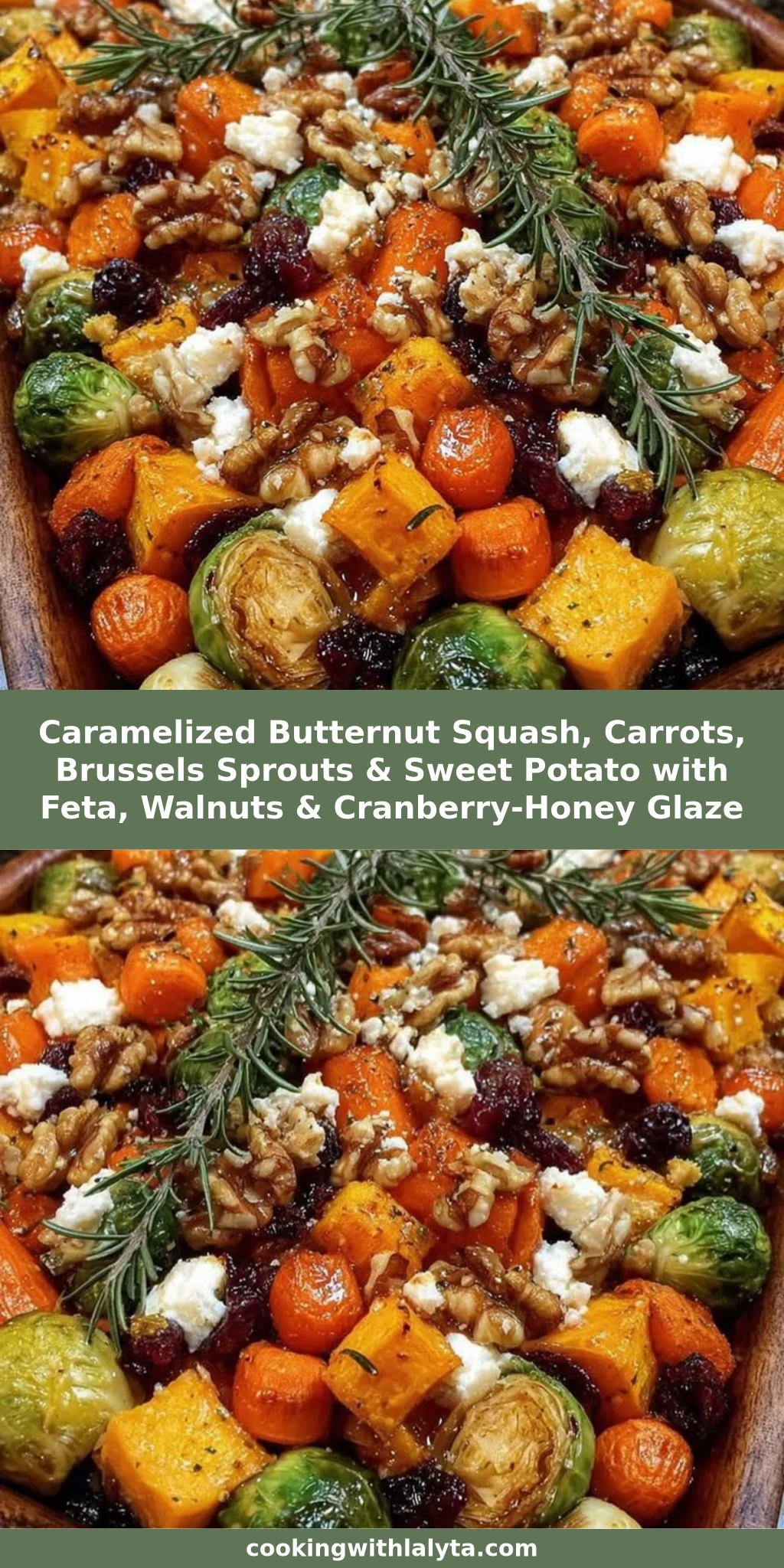
Caramelized Butternut Squash, Carrots, Brussels Sprouts & Sweet Potato with Feta, Walnuts & Cranberry-Honey Glaze – A Show-Stopping Holiday Side
Walking through the Union Square Greenmarket on a crisp autumn morning, I always get drawn to the heaping piles of butternut squash, jewel-toned sweet potatoes, and tight little Brussels sprouts. They remind me of the earthy vegetable tagines my mother would simmer for hours back in Marrakech, but with a New York minute to spare these days, I need a holiday side that’s both stunning and streamlined. This caramelized butternut squash and Brussels sprouts recipe marries my Paris-trained love of a glossy, sweet-tart glaze with the bold, rustic flavors that feel like home. The cranberry-honey glaze is the game-changer here — it lacquers each roasted vegetable with just the right balance of tartness and sweetness, while the salty crumbles of feta and the toasty crunch of walnuts make every bite sing. It’s the kind of dish that stops dinner-table conversation, and I am so excited for you to try it.
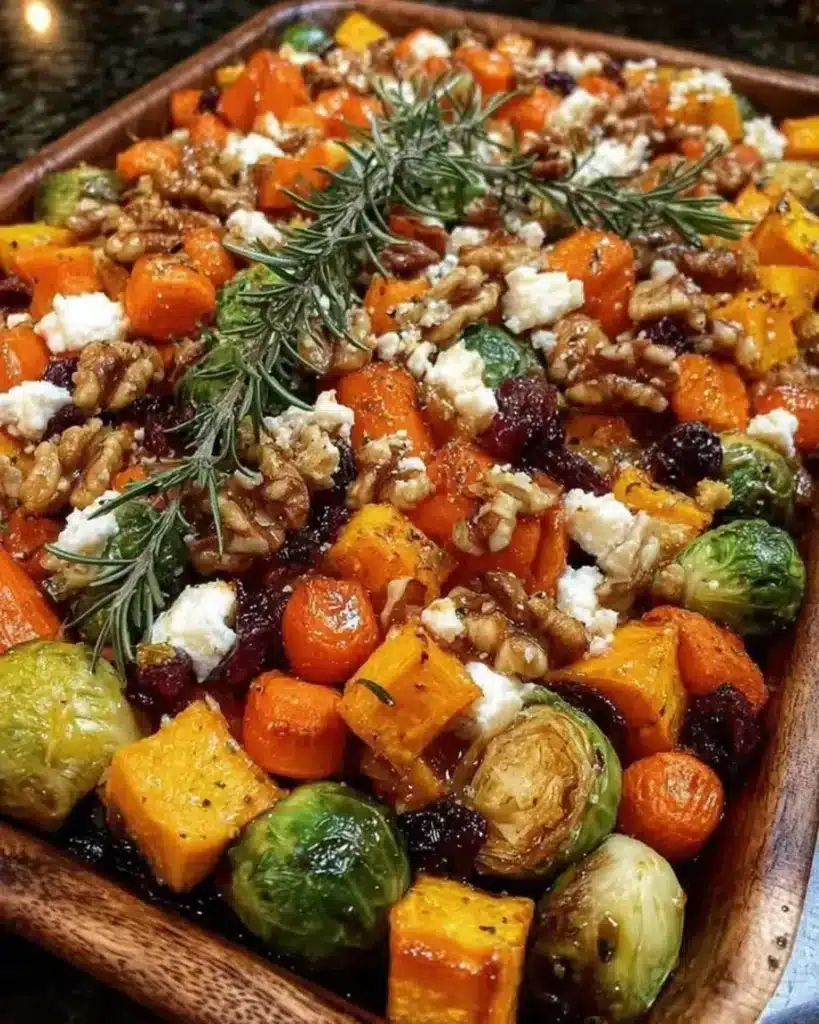
The first time I pulled a sheet pan of these vegetables from the oven, I felt that same jolt of kitchen magic I experienced in my tiny Paris apartment when I perfected a jus lié. The butternut squash and sweet potato caramelize into velvety, sweet nuggets, the carrots develop a concentrated earthiness, and the Brussels sprouts leaves get charred and crisp at the edges — all bathed in a glossy cranberry-honey lacquer that tastes of late autumn. As the feta softens slightly against the warm vegetables, the walnuts bring an essential snap, and a final drizzle of glaze pools in the nooks and crannies. The aroma alone — honey, balsamic vinegar’s tang, and the nutty scent of roasting squash — will lure everyone into the kitchen before the timer even dings. It is honestly one of the most holiday roasted vegetables dishes I have ever created, and it requires no fancy pans or chef-level knife work.
What makes this version different from any other roasted vegetable platter you have seen is the thoughtfully layered build. Instead of just tossing everything with oil and hoping for the best, we roast the vegetables hot and fast — 425°F — to force that deep caramelization without turning the Brussels sprouts into mush, then we finish with a quick simmered glaze that clings beautifully. I’ll share a 💡 Lalybeth’s Pro Tip along the way: pre-warming your sheet pans before adding the vegetables jump-starts the searing process. And a ⚠️ common mistake to avoid: overcrowding the pan, which steams instead of roasting. Stick with me through each step, and you will have a showstopper side that’s as beautiful as it is delicious.
Why This Caramelized Butternut Squash Recipe Is the Best
The flavor secret lies in the cranberry-honey glaze. It is inspired by the sweet-and-sour notes I grew up with in Moroccan tagines, where we often balance honey with a sharp fruit kick. Here, cranberry juice concentrate (no artificial cloying sweetness, just pure fruit intensity) meets balsamic vinegar for a complex, almost wine-like depth. Unlike a simple honey drizzle, this glaze reduces on the stovetop in five minutes, thickening to a syrup that coats each vegetable generously without making anything soggy. As it cooks, the kitchen fills with a scent that reminds me of the candied fruit stands in the Marrakech souk — but completely achievable in a tiny NYC galley kitchen. Every forkful delivers that bright, sweet-tart pop, lifting the natural sugars of the vegetables rather than masking them.
Texture is everything in a roasted vegetable dish, and I learned from my French mentors that you have to treat each vegetable with a little individual attention, even when they share a pan. By cutting the butternut squash and sweet potatoes into uniform 1-inch cubes, they soften into almost buttery tenderness while the edges caramelize. The carrots stay slightly firm, and the Brussels sprouts half-roast, half-char, creating an irresistible contrast between silky and crunchy. The finishing with creamy, salty feta and raw walnuts adds yet another layer — the cheese slowly melts into warm pools, and the walnuts release their oils, coating the vegetables in a subtle, nutty richness. It’s the kind of roasted vegetables with feta and walnuts that even dedicated carnivores will pile high on their plates.
Busy home cooks, you are going to love how foolproof this recipe is. There is no parboiling, no blanching, and absolutely no candy thermometer needed for the glaze — just a small saucepan and a whisk. Because we roast at a high temperature, you can walk away while the oven does the heavy lifting, and the vegetables are surprisingly forgiving: an extra five minutes gives even more caramelization without burning. All ingredients are available at any US supermarket, and I have tested multiple substitutions (check the ingredient spotlight below) so you can tailor it to your pantry. Whether you are hosting Thanksgiving, a festive dinner party, or just want to bring some color to a weeknight meal, this recipe delivers elegance without the stress.
Caramelized Butternut Squash and Brussels Sprouts Ingredients
Even writing this ingredient list makes me smile, because each one does something important. I source my butternut squash and sweet potatoes from Migliorelli Farm at the Union Square Greenmarket when they’re in season — you can taste the sweetness that comes from soil that’s been cared for. The Brussels sprouts I look for are small and tight, still on the stalk if I’m lucky. Carrots should be firm and bright, not rubbery. And for the feta, I always keep a block of Greek sheep’s milk feta in brine in my fridge — it’s creamier and tangier than pre-crumbled. The walnuts are my mother’s touch; she’d toast them in a dry pan until fragrant, and that’s the way I like them here too. Gather everything, and let’s get cooking.
Ingredients List
- 1 medium butternut squash (about 2 lbs), peeled, seeded, and cut into 1-inch cubes
- 3 large carrots (about ½ lb), peeled and sliced on the bias into ½-inch thick rounds
- 1 lb Brussels sprouts, trimmed and halved lengthwise
- 2 medium sweet potatoes (about 1½ lbs), peeled and cut into 1-inch cubes
- 3 tablespoons extra-virgin olive oil
- 1 teaspoon kosher salt, or to taste
- ½ teaspoon freshly ground black pepper
- ½ cup crumbled feta cheese (preferably sheep’s milk, in brine)
- ½ cup chopped walnuts (raw or lightly toasted)
- For the Cranberry-Honey Glaze:
- ¼ cup good-quality honey
- ¼ cup unsweetened cranberry juice concentrate (not cocktail)
- 1 tablespoon balsamic vinegar
Ingredient Spotlight
Butternut Squash & Sweet Potatoes: These two form the sweet, velvety base of the dish. Look for squash with a solid beige skin and no soft spots; a heavy feel means it’s moist inside. Sweet potatoes with reddish-brown skin (often labeled “Garnet”) have a higher sugar content that caramelizes gorgeously. If you can’t find butternut, acorn squash works, but it’s a bit firmer — adjust roasting time by 5 extra minutes. For a low-carb swap, replace half the squash and sweet potato with additional cauliflower florets, but expect a less luxurious texture.
Brussels Sprouts & Carrots: Brussels sprouts bring that coveted char and crunch. Choose sprouts that are compact and bright green, without yellowing leaves. Halving them ensures the cut side gets deeply browned while the leaves stay tender. Carrots add earthy sweetness and a pop of color. Rainbow carrots are lovely if you spot them, but regular orange are just fine. No fresh carrots? Frozen sliced carrots work in a pinch; just pat them very dry before roasting or they’ll steam.
Feta & Walnuts: I always crumble my own feta from a block — pre-crumbled often has anti-caking agents that dull the flavor. The briny creaminess contrasts with the sweet glaze masterfully. If you need a substitute, crumbled goat cheese gives a similar tang but lacks the salty punch. Walnuts add that essential crunch; I love toasting them lightly in a dry skillet for 3-4 minutes to wake up their oils, but raw is fine too. For a nut-free version, toasted pumpkin seeds are a decent stand-in.
Cranberry-Honey Glaze: This is the heart of the recipe. Use unsweetened cranberry juice concentrate — it’s the thick, tart stuff sold in 12-oz bottles, not the watery juice drinks. If you absolutely can’t find it, simmer ½ cup 100% cranberry juice with the honey, and reduce for about 10-12 minutes instead of 5, until syrupy. Balsamic vinegar rounds out the flavor; a good aged balsamic makes a noticeable difference. Honey can be swapped for maple syrup for a deeper, woodsy note, but the glaze will be thinner, so cook it a minute longer.
| Original Ingredient | Best Substitution | Flavor / Texture Impact |
|---|---|---|
| Butternut squash | Acorn squash or sugar pumpkin | Slightly firmer, less sugar, so you may need an extra 5 min roast time. |
| Feta cheese | Crumbled goat cheese | Creamier, less salty; the dish loses a bit of briny kick. |
| Walnuts | Toasted pumpkin seeds | Nut-free; milder flavor, still crunchy. |
| Cranberry juice concentrate | 100% cranberry juice (not cocktail) + extra reduction time | Less intense tartness; glaze will be slightly thinner. |
How to Make Caramelized Butternut Squash and Brussels Sprouts – Step-by-Step
I promise you, this is one of those recipes that looks ten times harder than it is. With a little mise en place — chopping all your vegetables to uniform size — the oven does the hard work. Just keep an eye on the glaze and trust your senses: you’ll know it’s ready when the kitchen smells like autumn in a pan.
Step 1: Preheat and Prep Your Baking Sheets
Preheat your oven to 425°F (220°C) and position two racks in the upper and lower thirds of the oven. Line two large rimmed baking sheets with parchment paper. For even better caramelization, place the empty sheet pans in the oven while it preheats — a trick I picked up in Paris to mimic a roasting pan’s searing power. When you add the cold vegetables to hot pans, they’ll sizzle immediately, creating that gorgeous brown crust.
💡 Lalybeth’s Pro Tip: If you don’t have two racks to use simultaneously, roast in batches — otherwise the vegetables will steam and never reach that deep color. You can keep the first batch warm in a low oven while the second finishes.
Step 2: Toss the Vegetables with Oil and Seasoning
In a very large bowl, combine the cubed butternut squash, sliced carrots, halved Brussels sprouts, and cubed sweet potatoes. Drizzle with the 3 tablespoons of olive oil, then sprinkle the salt and pepper over the top. Using your hands (the best tool!), toss until every piece is glistening and well-coated. Don’t skimp on the salt at this stage; it draws out moisture and intensifies the natural sugars. The vegetables should all be roughly the same size so they cook evenly — if some sweet potato or squash pieces are larger, cut them down.
⚠️ Common Mistake to Avoid: Adding the glaze before roasting. The sugars in honey and cranberry would burn in the high heat, turning bitter. Always glaze after roasting, while the vegetables are hot but off the heat.
Step 3: Roast for Deep Caramelization
Spread the oiled vegetables in a single layer on the preheated (or room-temperature) baking sheets. You want them to have a little breathing room; if they’re crowded, use a third sheet pan. Roast for 25 to 30 minutes, swapping the pans top to bottom and rotating them back to front halfway through, until the vegetables are fork-tender and golden-brown around the edges. The Brussels sprouts should have charred cut sides, the sweet potatoes softened through, and the butternut squash almost caramelized at the corners. If you prefer extra char, switch to broil for the last 2 minutes — watch carefully!
💡 Lalybeth’s Pro Tip: Not all ovens are created equal. Check for doneness after 20 minutes: a paring knife should slide easily through a squash cube. If some vegetables are done before others, use a spatula to remove the tender ones and keep them warm while the rest finish.
Step 4: Simmer the Cranberry-Honey Glaze
While the vegetables are in the oven, prepare the glaze. In a small saucepan, combine the honey, cranberry juice concentrate, and balsamic vinegar. Set over medium heat and bring to a gentle simmer, whisking occasionally. Once bubbling, reduce the heat to low and let it cook for about 5 minutes, swirling the pan now and then, until the mixture has reduced by about a third and coats the back of a spoon. It will thicken slightly as it cools, so don’t over-reduce or it may become sticky. Remove from heat and set aside; it will stay pourable at warm room temperature.
⚠️ Common Mistake to Avoid: Boiling the glaze too vigorously. A rapid boil can cause the honey to foam up or even burn, altering the flavor. Keep it at a low, steady simmer — tiny bubbles around the edge — for the best consistency and taste.
Step 5: Toss with Glaze, Feta, and Walnuts
Transfer the hot roasted vegetables to a large serving platter or a wide, shallow bowl. Drizzle the cranberry-honey glaze evenly over the top — you can start with three-quarters and add more to taste. Using two large spoons or a flexible spatula, gently toss to coat each piece without breaking them down too much. While the vegetables are still warm, scatter the crumbled feta and chopped walnuts over the top, letting the residual heat soften the cheese ever so slightly. Give one final light toss so the toppings are evenly distributed, but don’t overmix or the feta will disappear into the glaze.
💡 Lalybeth’s Pro Tip: For the prettiest presentation, reserve a small handful of feta and walnuts to sprinkle on top right before serving — it adds visual contrast and reminds diners of the wonderful textures.
| Step | Action | Duration | Key Visual Cue |
|---|---|---|---|
| 1 | Preheat & prep sheets | 5 min | Oven light on, empty sheets warming |
| 2 | Toss & season | 3 min | Vegetables evenly glossy with oil |
| 3 | Roast at 425°F | 25-30 min | Golden edges, fork-tender interior |
| 4 | Simmer glaze | 5-6 min | Glaze coats spoon, syrupy |
| 5 | Toss & garnish | 2 min | Glaze evenly distributed, feta slightly soft |
Serving & Presentation
I love to pile these cranberry honey glazed vegetables onto a large, rustic wooden board or a shallow white ceramic platter — the contrast between the glossy, dark orange-brown vegetables and the bright white dish makes it look straight out of a restaurant. If you have fresh herbs on hand, a scattering of flat-leaf parsley or a few thyme sprigs right before serving adds a pop of green that plays nicely against the jewel tones. For parties, I set the platter in the center of the table and let everyone dig in family-style; it never fails to elicit “wow, what’s in this glaze?” from the first person who takes a bite.
This sweet potato and carrot side dish is designed as a companion, not a competitor, to your main course. The sweet-savory balance makes it incredibly versatile. At Thanksgiving, it holds its own next to a classic roast turkey and cornbread stuffing. For a cozy NYC supper, I’ll serve it alongside pan-seared chicken thighs with a quick pan sauce, or even over a bed of lemony quinoa for a meatless main that tastes anything but spare. It’s also an unexpected hit with grilled lamb chops — the Moroccan girl in me rejoices every time the feta and sweet glaze echo the flavors of a tagine.
If you want to elevate the plating further, drizzle a tiny bit of extra glaze in a swoosh on the plate before spooning the vegetables over it — that technique I learned in pastry school never gets old. A final pinch of flaky sea salt over the top just before serving brings all the flavors into sharp focus. And don’t forget: serve it warm, but it’s equally delightful at room temperature, so you can set it out 20 minutes early and not worry about last-minute oven juggling. That’s a huge win for holiday hosting.
| Pairing Type | Suggestions | Why It Works |
|---|---|---|
| Side Dish | Roast turkey, grilled chicken thighs, lamb chops, pan-seared salmon | Sweet-tart glaze complements savory meat, vegetables add color and texture. |
| Sauce / Dip | Garlic yogurt drizzle, tahini-lemon sauce, balsamic reduction | Cool, creamy sauces balance the warm sweetness and char. |
| Beverage | Sparkling apple cider, off-dry Riesling, Pinot Noir | Crisp, slightly sweet or fruity drinks mirror the glaze’s berry notes. |
| Garnish | Fresh parsley, thyme, pomegranate arils, flaky sea salt | Adds freshness, crunch, and a burst of color. |
Make-Ahead, Storage & Reheating
Weeknights in NYC can be chaotic, so I often roast the vegetables a day ahead and store them separately from the glaze. That way, I can quickly reheat them in a hot oven while I whip up the glaze on the stovetop — it turns a last-minute scramble into a relaxed 10-minute assembly. The flavors actually deepen overnight, so this is one recipe that’s a dream for meal prep. If you’re serving a crowd, you can roast the vegetables a few hours before, keep them loosely covered on the counter, and then warm them briefly before drizzling the glaze and adding the toppings right before guests arrive.
| Method | Container | Duration | Reheating Tip |
|---|---|---|---|
| Refrigerator | Airtight glass container; keep glaze separate | Up to 4 days | Reheat vegetables on a sheet pan at 400°F for 6-8 minutes, then toss with warm glaze and fresh toppings. |
| Freezer | Freezer-safe bag, flattened, with glaze frozen separately | Up to 2 months | Thaw overnight. Re-roast straight from fridge at 425°F for 10-12 min to re-crisp. |
| Make-Ahead | Sheet pan, covered loosely with foil | Up to 4 hours at room temp before roasting, or roast 1 day ahead and chill | If roasting ahead, under-roast by 5 minutes, then rewarm to finish caramelization. |
To bring leftovers back to life, I avoid the microwave because it can turn the vegetables mushy. A quick spin in a hot oven or even an air fryer at 375°F for 4-5 minutes revives that crisp edge. If the vegetables seem dry after refrigeration, a tiny drizzle of fresh olive oil and a splash of the leftover glaze before reheating will perk them right up. And don’t forget to add a fresh hit of feta and walnuts after reheating — the original toppings lose their crunch in storage. That one small step makes leftovers taste just as good as day one.
Variations & Easy Swaps
| Variation | Key Change | Best For | Difficulty Impact |
|---|---|---|---|
| Spicy Harissa-Kissed Roasted Vegetables | Add 1 tbsp harissa paste to olive oil before tossing; glaze stays the same. | Heat lovers, North African-inspired meals | Easy – just whisk harissa into oil |
| Dairy-Free & Vegan Roasted Vegetables | Replace feta with crumbled, marinated baked tofu or a drizzle of tahini; use maple syrup in glaze. | Plant-based eaters, dairy allergies | Medium – maple glaze requires 1 extra min of reduction |
| Maple-Balsamic Butternut Medley | Swap honey for maple syrup; add 1 tsp Dijon mustard to glaze; swap walnuts for pecans. | Fall gatherings, Thanksgiving | Easy – no extra steps |
Spicy Harissa-Kissed Roasted Vegetables
If you are a heat seeker, this North African twist will steal your heart. Harissa, the smoky red chili paste that is a staple in my childhood kitchen, blends beautifully with the natural sugars in the vegetables. Just whisk a tablespoon of good-quality harissa (I love the rose-spiked Tunisian kind) into the olive oil before tossing, and proceed exactly as written. The harissa adds a gentle warmth that dances around the sweet cranberry glaze without overpowering it, and the feta tames the fire. It’s an incredible partner for grilled merguez sausages or roasted chicken.
Dairy-Free & Vegan Roasted Vegetables
Making this dish fully plant-based is surprisingly simple. Instead of feta, I crumble a block of firm baked tofu that has been marinated in a little lemon juice, olive oil, and a pinch of salt — it mimics that creamy-salty contrast. You could also drizzle a good tahini sauce over the top. For the glaze, I swap honey with pure maple syrup (the darker the grade, the better), and cook it for an extra 45-60 seconds to reach the same syrupy consistency. The dish remains every bit as luscious, and the maple brings a woodsy note that complements the vegetables even more deeply than honey in some bites. My vegan friends request this version every year for Friendsgiving.
Maple-Balsamic Butternut Medley
On crisp November evenings when I want something that tastes like New England wrapped in my Moroccan roots, I reach for maple syrup. By replacing honey with Grade A dark maple syrup and adding a teaspoon of Dijon mustard to the glaze, you get a more complex, savory edge that highlights the caramelization on the Brussels sprouts. I also swap the walnuts for toasted pecans — their buttery crunch is a match made in heaven with maple. This version feels incredibly festive and pairs wonderfully with roast pork loin or a holiday ham. It’s proof that this recipe is a canvas for whatever season you’re celebrating.
Frequently Asked Questions
Can I substitute the feta with another cheese or omit it for a dairy-free version?
Absolutely. Feta brings a salty tang that cuts through the sweet glaze, but goat cheese is a lovely alternative — it’s creamier and less briny, so you may want to add a small pinch of flaky salt. For a dairy-free version, you can omit the cheese entirely and increase the walnuts for extra crunch, or use my vegan suggestion: crumbled marinated baked tofu tossed with a squeeze of lemon and olive oil. The dish will still be delicious, although you lose that creamy element that balances the sweet glaze. Another option is a dollop of dairy-free ricotta made from almonds, spooned over the top.
What temperature and roasting time work best to caramelize the butternut squash and sweet potatoes without burning the Brussels sprouts?
I’ve found 425°F (220°C) is the sweet spot. It’s high enough to develop deep caramelization on the squash and sweet potatoes yet not so hot that the delicate Brussels sprouts burn before the insides cook through. Roasting for 25-30 minutes, with a pan swap and stir halfway, ensures even browning. If your Brussels sprouts seem to be browning too quickly, simply move them to a cooler part of the oven or tent them loosely with a piece of foil. Every oven behaves differently, so start checking at the 20-minute mark to dial in your perfect doneness.
Should I toast the walnuts before adding them, or can I add them raw to the dish?
You can add them raw, and they’ll still deliver a nice crunch, but I highly recommend toasting them for just a few minutes in a dry skillet over medium-low heat until they smell nutty and look slightly golden. That quick step intensifies their flavor and makes them crispier, which holds up better against the moist vegetables and glaze. In my kitchen, toasting nuts is second nature — it’s a small effort that pays back big in the final dish. If you’re short on time, raw is perfectly fine; just know they may soften faster in leftovers.
Is this recipe better served as a main dish or a side, and what main course pairs well with it?
This recipe shines as a side dish — it’s designed to accompany a protein without stealing the show, though the flavors are bold enough to stand alone. It pairs beautifully with roast turkey, glazed ham, lamb chops, or even a simple roast chicken. If you want to turn it into a main, try serving it over a bed of warm farro or quinoa, perhaps with some grilled halloumi or a fried egg on top for extra protein. The sweet-tart glaze and rich feta make it satisfying enough for a meatless holiday centerpiece.
How do I store leftovers of this roasted vegetable dish, and how long will it last?
Store leftovers in an airtight container in the refrigerator for up to 4 days. Keep the feta and walnuts separate if possible, or add fresh toppings when reheating, as the cheese can become too soft and the walnuts lose their crunch. To reheat, spread the vegetables on a sheet pan and warm them in a 400°F oven for 6-8 minutes until hot; you can also use an air fryer. I don’t recommend the microwave because it can make the vegetables mushy. Leftover glaze can be refrigerated separately and gently rewarmed in a saucepan.
Can I use frozen vegetables for this recipe?
I recommend fresh vegetables for the best texture, but in a pinch, frozen can work if you take an extra step. Thaw frozen butternut squash, sweet potatoes, carrots, and Brussels sprouts completely, then pat them very, very dry with paper towels. Excess water is the enemy of caramelization. Because frozen vegetables tend to be softer, reduce the roasting time by 5-8 minutes and check often. The result won’t be quite as crisp-edged as with fresh, but the glaze, feta, and walnuts will still make it a wonderful dish.
What if I can’t find cranberry juice concentrate? Can I use regular cranberry juice?
Yes, you can substitute 100% cranberry juice (not sweetened cranberry cocktail), but you’ll need to simmer it longer — about 10-12 minutes — to reduce it to a syrupy consistency. The flavor will be slightly less intensely tart, so I add a teaspoon of lemon juice or a splash of pomegranate molasses for extra brightness. Look for cranberry juice concentrate near the bottled juices or in the freezer section; if all else fails, pomegranate juice concentrate is an excellent alternative that keeps the sweet-tart profile and adds a jewel-like color.
Is this caramelized butternut squash and Brussels sprouts recipe gluten-free?
Yes, as written, this recipe is naturally gluten-free — all of the vegetables, olive oil, honey, cranberry juice concentrate, balsamic vinegar, feta, and walnuts are free of gluten. Just be sure to check the labels on your cranberry juice concentrate and balsamic vinegar to ensure no additives contain gluten (most don’t). If you’re serving it to someone with celiac disease or a strong sensitivity, also confirm that your feta is processed in a gluten-free facility. This makes it an excellent choice for a holiday table where dietary needs vary.
How do I prevent the vegetables from getting soggy?
The top cause of sogginess is overcrowding the baking sheet. Vegetables need space so that moisture can escape as steam rather than pooling around them. Use two large sheet pans and spread everything in a single layer with a little breathing room. Another culprit is not drying your vegetables after washing — pat them well with a towel. Hot, preheated sheet pans also help by immediately searing the exterior, locking in the structure. Finally, always glaze after roasting, never before; high-heat sugar can steam and burn. Follow these steps and your vegetables will stay beautifully crisp-tender.
Can I make this recipe ahead for Thanksgiving?
Yes, and it’s a smart move. Roast the vegetables up to a day in advance, undercooking them by about 5 minutes, then cool and refrigerate. Just before serving, spread them on a sheet pan and re-roast at 425°F for 8-10 minutes until hot and crisp. While they reheat, quickly make the cranberry-honey glaze on the stovetop (or reheat it if you made it ahead). Toss everything together with fresh feta and walnuts at the last minute. The flavors actually develop overnight, so it’s a win-win for your holiday timeline. Your oven is freed up, and you get a stunning side with minimal last-minute work.
Share Your Version!
Nothing makes me happier than seeing your kitchen successes! When you make this caramelized butternut squash, carrots, Brussels sprouts & sweet potato dish — with that magical cranberry-honey glaze — snap a photo and share it on Instagram or Pinterest, tagging @cookingwithlalyta. I’ll be sure to repost my favorites. Did you try one of the variations, like the spicy harissa kick or the dairy-free version? I’d love to hear how it turned out for you, and whether your dinner guests scraped the platter clean!
Leaving a star rating and a quick comment below also helps other readers find this recipe and trust it’s worth their time. So if you have a moment, tell me: what main dish did you serve it with, and did you add your own twist? Cooking is a conversation that travels from my tiny Moroccan kitchen memories, through the halls of Le Cordon Bleu, all the way to your table — and I want to hear your part of the story. From my NYC kitchen to yours — I hope this recipe brings as much warmth to your table as it does to mine. — Lalybeth 🧡
Love This Recipe? Save It to Pinterest!
If you enjoyed this Caramelized Butternut Squash, Carrots, Brussels Sprouts & Sweet Potato with Feta, Walnuts & Cranberry-Honey Glaze recipe, don’t let it get lost in your browser tabs! 😄 Pin it now so you can find it again anytime — and explore hundreds more tried-and-tested recipes waiting for you on my Pinterest boards.
👉 Follow Lalybeth on Pinterest @cookingwithlalyta
📌 Pin this recipe · 🔁 Re-pin your favorites · 💬 Tag me when you make it — I love seeing your creations!
Ready to Wow Your Holiday Table?
Grab your sheet pans, preheat that oven, and let’s get those vegetables caramelizing! If this recipe made your dinner shine, please share the love and help others discover it.
⭐⭐⭐⭐⭐ Leave a review · 📸 Snap a pic & tag me · 📌 Pin for later · It means the world to this Moroccan-French New Yorker!
Caramelized Butternut Squash, Carrots, Brussels Sprouts & Sweet Potato with Feta, Walnuts & Cranberry-Honey Glaze
- Total Time: 50 minutes
- Yield: 6 1x
Description
A medley of roasted fall vegetables tossed with feta, walnuts, and a sweet-tart cranberry-honey glaze, perfect as a holiday side dish.
Ingredients
- 1 medium butternut squash, peeled and cubed
- 3 large carrots, peeled and sliced
- 1 lb Brussels sprouts, halved
- 2 medium sweet potatoes, peeled and cubed
- 3 tbsp olive oil
- 1 tsp salt
- 1/2 tsp black pepper
- 1/2 cup crumbled feta cheese
- 1/2 cup chopped walnuts
- For the glaze:
- 1/4 cup honey
- 1/4 cup cranberry juice concentrate
- 1 tbsp balsamic vinegar
Instructions
- Preheat oven to 425°F (220°C). Line two large baking sheets with parchment paper.
- In a large bowl, combine butternut squash, carrots, Brussels sprouts, and sweet potatoes. Drizzle with olive oil, salt, and pepper; toss to coat evenly.
- Spread vegetables in a single layer on the prepared baking sheets. Roast for 25-30 minutes, stirring halfway through, until tender and caramelized.
- While vegetables roast, prepare the glaze: In a small saucepan, combine honey, cranberry juice concentrate, and balsamic vinegar. Bring to a simmer over medium heat, then reduce heat and cook for 5 minutes until slightly thickened. Remove from heat.
- Transfer roasted vegetables to a serving platter. Drizzle with cranberry-honey glaze and toss gently. Sprinkle with feta cheese and walnuts. Serve warm or at room temperature.
- Prep Time: 20 minutes
- Cook Time: 30 minutes
- Method: Side Dish
- Cuisine: American
Nutrition
- Calories: 320
- Sugar: 22g
- Fat: 14g
- Carbohydrates: 45g
- Protein: 7g
Tried This Recipe? Leave a Comment!
Did you make this recipe? I’d love to hear how it turned out! Please leave a comment and a rating below. Your feedback helps other home cooks and supports cookingwithlalyta.com!
For more delicious inspiration, follow me on Pinterest!