Table of Contents
Caramelized Butternut Squash with Gorgonzola and Cranberry-Balsamic Glaze — A Sweet, Tangy, and Savory Fall Side Dish
Growing up in my mother’s kitchen in Morocco, winter squash was never just a vegetable — it was a canvas for bold, contrasting flavors. She would slow-cook pumpkin with honey and cinnamon, then crumble salty goat cheese over the top, creating this incredible sweet-savory dance on the plate. Years later, while training in Paris, I learned the art of reduction sauces — how a simple balsamic vinegar, simmered patiently until syrupy, could transform a dish from ordinary to extraordinary. Now in my NYC kitchen, I’ve brought those two worlds together in this caramelized butternut squash with Gorgonzola and cranberry-balsamic glaze. It’s an elegant yet incredibly easy side dish that captures everything I love about fall cooking: deep caramelized edges on tender squash, the pungent creaminess of Italian blue cheese, and a tart-sweet glaze studded with jewel-like dried cranberries. This is the butternut squash side dish that will have everyone at your Thanksgiving table asking for the recipe.
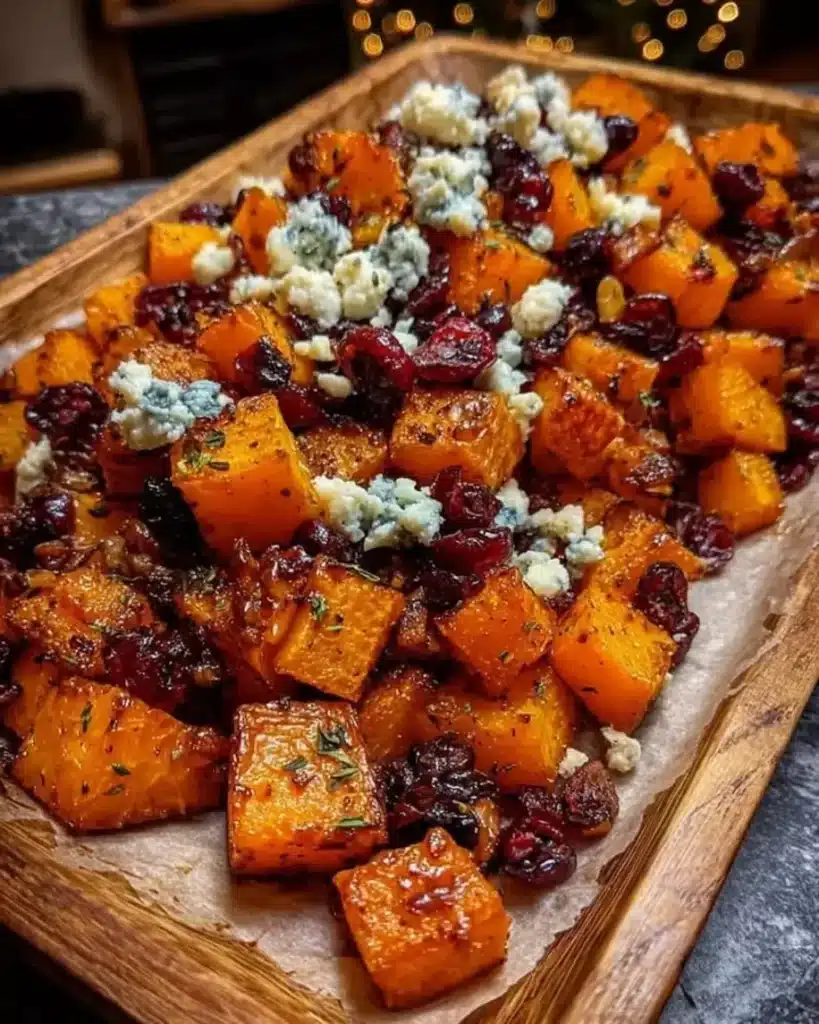
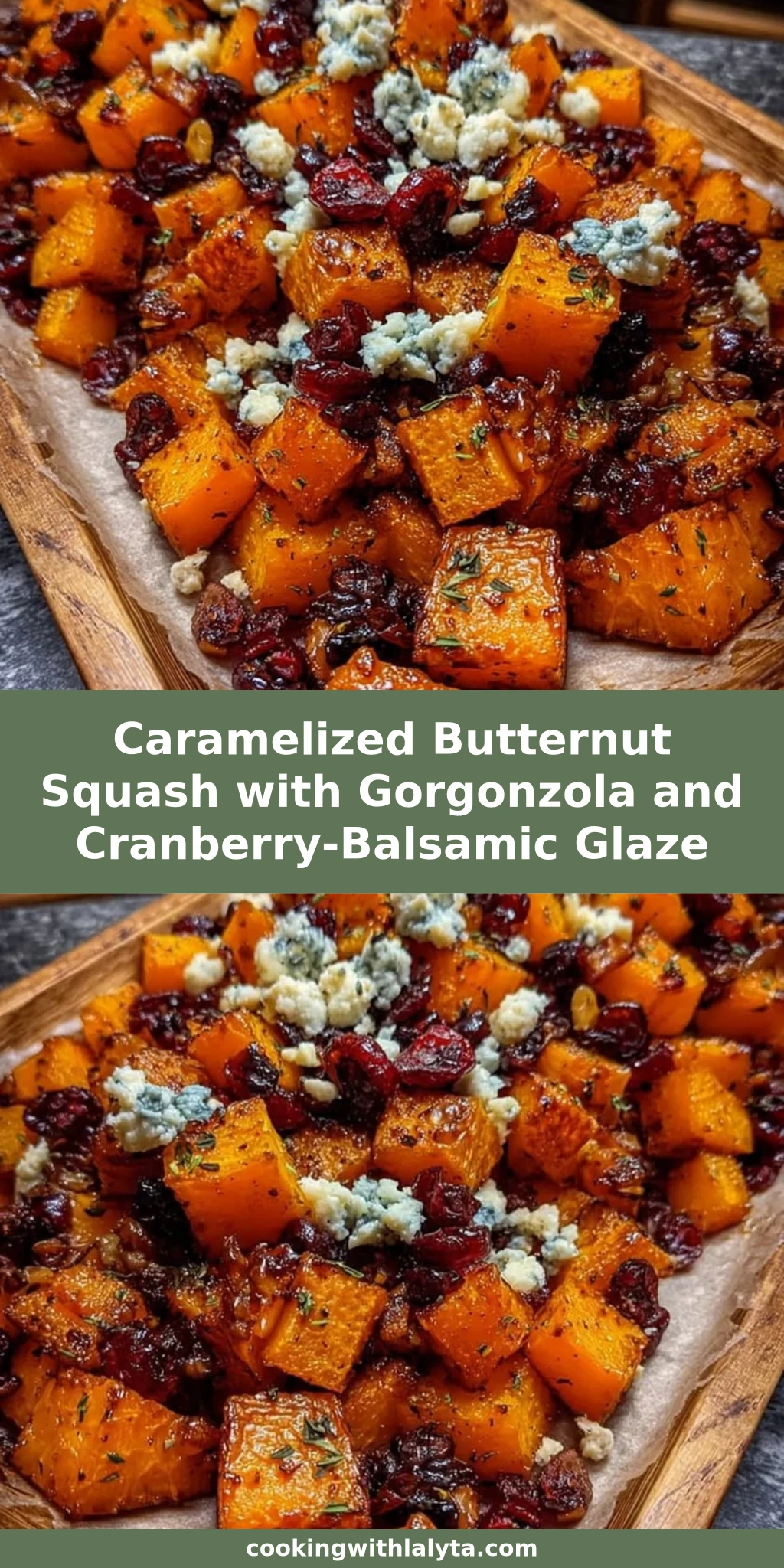
The first time I tested this roasted butternut squash with blue cheese, I pulled the baking sheet from the oven and was hit with the intoxicating aroma of nutty, browned butter and caramelizing squash edges — those little bits where the natural sugars had concentrated and turned golden. The cranberry balsamic glaze, bubbling away on the stovetop, filled my tiny NYC apartment with a tangy sweetness that reminded me of the fruit preserves my aunt used to make in Fez. When you drizzle that glossy, ruby-red glaze over the hot squash, it sizzles slightly, seeping into every crevice. Then you scatter the Gorgonzola — and the heat from the squash just barely softens the cheese, creating creamy pockets of salty tang that cut through the sweetness. A few fresh sage leaves, if you have them, add an earthy, almost peppery note that ties everything together. It’s the kind of dish that looks stunning on a platter — golden, crimson, and creamy white — but tastes even better than it looks.
What makes my version of caramelized butternut squash different from the dozens of recipes floating around the internet? It comes down to technique and balance. I roast the squash at a high 425°F — a trick I picked up in a Paris bistro kitchen where we needed deep browning without steaming the vegetables. This high heat drives off moisture quickly, giving you those coveted caramelized edges while keeping the interior creamy and tender. I also build the cranberry-balsamic glaze with a touch of honey, which balances the sharpness of the vinegar without making it cloying. And instead of tossing the cheese into the oven, I sprinkle it on at the very end — this preserves its distinct tangy character and prevents it from turning into an oily mess. Along the way, I’ll share a few pro tips that will save you from common pitfalls: overcrowding the baking sheet (the number one reason squash turns out soggy instead of caramelized), burning the balsamic reduction, and choosing the wrong cheese. Stick with me, and you’ll nail this butternut squash with Gorgonzola on your very first try.
Why This Caramelized Butternut Squash with Gorgonzola Recipe Is the Best
The Flavor Secret: The magic here lies in the tension between four bold elements — sweet caramelized squash, sharp and creamy Gorgonzola, tart balsamic reduction, and chewy-tangy dried cranberries. My culinary training in Paris taught me that a great sauce is the soul of a dish, and this cranberry balsamic glaze is a perfect example of how reduction concentrates flavor. By simmering balsamic vinegar with honey until it’s thick enough to coat the back of a spoon, you get a syrup that’s intensely tangy, slightly sweet, and complex enough to stand up to the pungent blue cheese. My Moroccan roots remind me never to shy away from bold contrasts — in North African cooking, we often pair sweet stewed fruits with salty preserved meats or cheeses, and that same principle is at work here. The cranberries plump up in the warm glaze, becoming little bursts of concentrated fruitiness that pop against the creamy Gorgonzola and earthy roasted squash.
Perfected Texture: As a trained chef, I know that texture is just as important as flavor — and this dish delivers on every level. The butternut squash cubes develop a paper-thin, caramelized crust on the outside while remaining velvety and tender inside. This happens because we roast at 425°F, which is hot enough to trigger the Maillard reaction (that beautiful browning that creates deep, nutty flavor) without burning the squash. I also insist on cutting the squash into uniform 1-inch cubes — this ensures every piece cooks at the same rate, so you don’t end up with some pieces charred and others undercooked. The glaze adds a glossy, syrupy coating that clings to each cube, while the crumbled Gorgonzola provides a creamy, slightly crumbly contrast. And if you add the optional crispy sage leaves (quickly fried in butter while the squash roasts), you get an irresistible crackly garnish that elevates the entire dish.
Foolproof & Fast: I designed this recipe to be approachable even if you’ve never made a balsamic reduction before. You don’t need any fancy equipment — just a good baking sheet, a small saucepan, and a sharp knife. The active prep time is only 15 minutes, and while the squash roasts, you have just enough time to make the glaze and set the table. I’ve included detailed visual cues throughout the instructions (like “cook until the vinegar coats the back of a spoon” instead of just “cook for 5 minutes”), because I know from years of teaching cooking classes that these little signposts make all the difference. This is the kind of recipe that looks and tastes like you spent hours on it, when in reality it’s easier than most weeknight sides. Whether it’s a regular Tuesday dinner or your holiday table, this roasted butternut squash with blue cheese will become a go-to.
Caramelized Butternut Squash Ingredients
I source most of these ingredients from the Union Square Greenmarket here in NYC, where the fall butternut squash display is a thing of beauty — heaping piles of tan, bell-shaped squash that seem to glow in the autumn light. If you don’t have a farmers market nearby, any well-stocked supermarket will have everything you need. The key is choosing a squash that feels heavy for its size with a firm, unblemished skin and a deep, even beige color — avoid any with green patches, which indicate under-ripeness. For the Gorgonzola, I like to buy a wedge and crumble it myself rather than using pre-crumbled tubs, which often contain anti-caking agents that affect the creamy texture. Let’s walk through each ingredient and its role in the dish.
Ingredients List
- 1 large butternut squash, peeled, seeded, and cut into 1-inch cubes
- 2 tablespoons olive oil
- 2 tablespoons unsalted butter
- 1/4 cup dried cranberries
- 1/2 cup balsamic vinegar
- 1 tablespoon honey
- 1/2 cup crumbled Gorgonzola cheese
- Salt and freshly ground black pepper, to taste
- Fresh sage leaves for garnish (optional)
Ingredient Spotlight
Butternut Squash: The star of the show. Look for a squash that’s heavy for its size with a smooth, matte beige skin and no soft spots. The neck should be long and the bulb small — the neck is solid flesh with no seeds, giving you the most usable squash. One large butternut squash (about 2.5 to 3 pounds) will yield approximately 6 cups of cubed squash, which is perfect for this recipe. If butternut squash isn’t available, acorn squash or delicata squash both work beautifully — delicata has an edible skin, so you can skip the peeling step entirely. The flavor will be slightly sweeter and less nutty with these alternatives, but still delicious. Avoid pumpkin, which tends to be more watery and fibrous.
Gorgonzola Cheese: This Italian blue cheese is the creamy, tangy counterpoint to the sweet squash. Gorgonzola comes in two styles: “dolce” (young, soft, and mild) and “piccante” (aged, firmer, and sharper). For this recipe, I prefer Gorgonzola dolce because its buttery creaminess melts slightly on contact with the warm squash, creating luscious little pockets of flavor. You can substitute any crumbly blue cheese — Roquefort, Stilton, or even a domestic American blue — just keep in mind that Roquefort is saltier and Stilton is earthier. If you’re not a fan of blue cheese, a crumbled goat cheese or feta will still give you that salty tang, though you’ll lose the distinctive funky depth.
Balsamic Vinegar: Not all balsamic vinegars are created equal. For this glaze, you don’t need an expensive aged balsamico tradizionale that costs $50 a bottle — a good-quality commercial balsamic vinegar from the grocery store will work perfectly, as the reduction process concentrates its flavor. Look for one labeled “balsamic vinegar of Modena” with a short, clean ingredient list (grape must, wine vinegar — avoid caramel color and added thickeners if possible). The honey balances the sharp acidity and helps the glaze achieve that glossy, syrupy consistency. In a pinch, you can substitute pomegranate molasses mixed with a splash of red wine vinegar for a different but equally delicious tangy-sweet profile.
| Original Ingredient | Best Substitution | Flavor / Texture Impact |
|---|---|---|
| Butternut Squash | Delicata or Acorn Squash | Slightly sweeter; delicata has edible skin, so no peeling needed |
| Gorgonzola Cheese | Goat Cheese, Feta, or Roquefort | Milder tang with goat cheese; saltier with feta; funkier with Roquefort |
| Balsamic Vinegar + Honey | Pomegranate Molasses + Red Wine Vinegar | Fruitier, less acidic; still tangy-sweet but with Middle Eastern flair |
| Dried Cranberries | Dried Tart Cherries or Golden Raisins | Cherries add more tartness; golden raisins are milder and sweeter |
How to Make Caramelized Butternut Squash with Gorgonzola — Step-by-Step
This recipe comes together with just a few simple steps, but each one is designed to maximize flavor and texture. I’ll walk you through it just like I would if you were standing next to me in my NYC kitchen, with plenty of chef’s tips along the way.
Step 1: Preheat and Prep the Squash
Preheat your oven to 425°F (220°C). Peel the butternut squash using a sharp vegetable peeler — don’t be shy about going over the skin a second time to remove all the pale green layer underneath; that’s where bitterness can hide. Cut the squash in half crosswise where the neck meets the bulb, then slice each piece in half lengthwise. Scoop out the seeds and stringy pulp from the bulb with a spoon. Cut all the squash into uniform 1-inch cubes — this size allows for maximum caramelized surface area while keeping the interior tender. In a large bowl, toss the squash cubes with 2 tablespoons of olive oil, a generous pinch of kosher salt (about 3/4 teaspoon), and several cracks of freshly ground black pepper. Use your hands to make sure every cube is evenly coated — this is what ensures even browning.
💡 Lalybeth’s Pro Tip: When cutting butternut squash, microwave the whole squash for 1 minute before peeling. This ever-so-slightly softens the skin and makes it infinitely easier to remove with a peeler — a trick I learned during marathon prep sessions in Paris when we’d peel dozens of squash at a time.
Step 2: Roast the Butternut Squash
Spread the oiled squash cubes in a single layer on a large rimmed baking sheet. This is the most crucial step for caramelization — if the pieces are crowded or overlapping, they’ll steam instead of roast, and you’ll never get those gorgeous golden-brown edges. If your baking sheet isn’t large enough to hold all the squash in one layer, use two sheets, rotating them between racks halfway through baking. Dot the squash with the 2 tablespoons of unsalted butter, cut into small pieces and scattered evenly over the top. Roast for 25 to 30 minutes, stirring gently once halfway through (around the 12-minute mark), until the squash is fork-tender and deeply caramelized on the edges. You’re looking for golden-brown to deep amber spots on multiple sides of the cubes — that’s where the flavor lives.
⚠️ Common Mistake to Avoid: Overcrowding the pan is the number one reason home cooks don’t achieve caramelization. The squash cubes need breathing room so that moisture can escape and the dry heat of the oven can work its magic. If you pile them on top of each other, you’ll end up with pale, steamed squash instead of roasted, caramelized squash. When in doubt, use two baking sheets.
Step 3: Make the Cranberry-Balsamic Glaze
While the squash roasts, combine the 1/2 cup balsamic vinegar and 1 tablespoon honey in a small saucepan over medium heat. Bring to a gentle simmer — you’ll see small bubbles forming around the edges of the pan — and cook, stirring occasionally with a wooden spoon or silicone spatula, until the liquid reduces by about half and becomes syrupy enough to coat the back of a spoon. This usually takes 5 to 7 minutes, but watch it closely during the last minute because it can go from perfectly reduced to burnt very quickly. When you drag a finger through the glaze on the back of the spoon and the line holds, it’s ready. Remove the saucepan from the heat and immediately stir in the 1/4 cup dried cranberries. The residual heat will plump them up and infuse them with the tangy balsamic flavor. Set aside — the glaze will continue to thicken slightly as it cools.
💡 Lalybeth’s Pro Tip: Don’t walk away from a reducing balsamic vinegar! The difference between a perfect syrupy glaze and a burnt, bitter mess is about 30 seconds. I set a timer for 4 minutes, then stand right there watching it for the remaining time. If it reduces too much and becomes hard or bitter, there’s no saving it — you’ll need to start over. The glaze should still be pourable, just noticeably thicker than straight vinegar.
Step 4: Assemble the Dish
When the butternut squash is finished roasting, remove the baking sheet from the oven and let it cool for just 1 to 2 minutes — this prevents the Gorgonzola from instantly melting into a puddle. Transfer the warm squash cubes to a serving platter or shallow bowl, arranging them in a mostly even layer. Drizzle the cranberry-balsamic glaze evenly over the top, making sure each piece gets some of that glossy, tangy-sweet goodness and a few cranberries. Then, while the squash is still warm but not piping hot, sprinkle the 1/2 cup crumbled Gorgonzola cheese over everything. The cheese will soften slightly from the residual heat but retain its shape and distinct creamy texture.
⚠️ Common Mistake to Avoid: Adding the Gorgonzola when the squash is too hot will cause it to melt completely and lose its tangy kick, becoming greasy rather than creamy. You want the cheese to soften just barely, still holding its crumbly form. If your squash has cooled too much during plating, pop the platter into the warm (but turned-off) oven for 30 seconds before adding the cheese.
Step 5: Garnish and Serve
If you’re using fresh sage, now is the moment to add it. For an extra-special touch, quickly fry 6 to 8 sage leaves in a small skillet with a teaspoon of butter over medium heat until they turn crisp and darken slightly, about 30 seconds per side. Drain on a paper towel and scatter them over the platter. The crispy sage adds an earthy, almost peppery note and a beautiful visual accent. Alternatively, simply tuck fresh raw sage leaves around the squash — they’ll wilt slightly from the warmth and release their aroma. Serve the dish warm, not piping hot, so all the flavors — sweet, tangy, salty, earthy — have a chance to shine individually. This is a side dish that’s best enjoyed within an hour of making it, though it’s still delicious at room temperature.
| Step | Action | Duration | Key Visual Cue |
|---|---|---|---|
| 1. Prep Squash | Peel, seed, cube, and toss with oil, salt, and pepper | 10–12 mins | Uniform 1-inch cubes, all evenly glossy with oil |
| 2. Roast | Spread in single layer on baking sheet; dot with butter; roast at 425°F | 25–30 mins | Deep golden-brown edges, fork-tender centers |
| 3. Make Glaze | Simmer balsamic vinegar and honey; stir in cranberries off heat | 5–7 mins | Glaze coats back of spoon; line holds when finger is drawn through |
| 4. Assemble | Transfer squash to platter; drizzle with glaze; sprinkle with Gorgonzola | 2–3 mins | Cheese softens slightly but holds its crumble |
| 5. Garnish & Serve | Add crispy or fresh sage leaves; serve warm | 1 min | Sage is crisp and fragrant; dish is warm but not hot |
Serving & Presentation
When I plate this dish for a dinner party, I like to use a wide, shallow serving bowl or an oblong platter — something with a little bit of a rim to catch any glaze that pools. Arrange the squash in a single, slightly overlapping layer rather than piling it high; this shows off the caramelized edges and makes it easy for guests to serve themselves without the cheese and cranberries all sliding to the bottom. Drizzle the glaze in a zigzag pattern over the top rather than dumping it all in one spot, which ensures every serving gets that tangy-sweet finish. The colors alone — golden-amber squash, deep ruby glaze, creamy white Gorgonzola, and forest-green sage — make it one of the most beautiful dishes on any table.
This caramelized butternut squash side dish is a natural fit for Thanksgiving and holiday feasts, where it holds its own next to roast turkey, prime rib, or a festive vegetarian centerpiece like a stuffed acorn squash. But I also make it throughout the fall and winter for casual weeknight dinners — it’s wonderful alongside simple pan-seared chicken thighs, roasted pork tenderloin, or a hearty grain salad with farro and arugula. One of my favorite NYC-inspired pairings is to serve it with a warm baguette from a neighborhood bakery and a crisp glass of Sauvignon Blanc or a dry hard cider. The acidity in both cuts through the richness of the cheese and the sweetness of the squash beautifully.
| Pairing Type | Suggestions | Why It Works |
|---|---|---|
| Side Dish | Roast chicken, pork tenderloin, seared steak, lentil loaf | The sweet-tangy-savory profile complements roasted meats and earthy vegetarian mains equally well |
| Sauce / Dip | Extra cranberry-balsamic glaze, garlic yogurt, herbed crème fraîche | A creamy element balances the tangy glaze and sharp cheese; yogurt adds a refreshing coolness |
| Beverage | Sauvignon Blanc, dry hard cider, Pinot Noir, sparkling water with lemon | Bright acidity in the wine or cider cuts through the richness; Pinot Noir’s earthiness echoes the roasted squash |
| Garnish | Crispy sage, toasted pecans, pomegranate arils, fresh thyme | Crunch and freshness contrast the soft squash and creamy cheese; pomegranate adds a jewel-like pop of color and tartness |
Make-Ahead, Storage & Reheating
In my busy NYC life, I’m all about strategic meal prep, and this dish has several components that can be made in advance. While the fully assembled dish is best served fresh, you can certainly get ahead on the prep work to make dinnertime — especially holiday dinnertime — much smoother. The key is to store each component separately and combine them just before serving so the textures stay perfect.
| Method | Container | Duration | Reheating Tip |
|---|---|---|---|
| Refrigerator | Airtight container (squash and glaze stored separately) | Up to 4 days | Reheat squash in a 375°F oven for 8–10 minutes to re-crisp; warm glaze gently in a saucepan; add fresh cheese after reheating |
| Freezer | Freezer-safe zip-top bag (roasted squash only) | Up to 2 months | Reheat from frozen on a baking sheet at 400°F for 15–18 minutes; glaze and cheese should be made fresh |
| Make-Ahead | Glaze: small jar; Squash: refrigerate in airtight container after roasting and cooling completely | Roast squash and make glaze up to 2 days in advance | Assemble just before serving: reheat squash, warm glaze, then top with cheese and garnish |
A word about reheating from my professional kitchen experience: the oven is your friend, and the microwave is not — at least not for this dish. Microwaving roasted squash turns it mushy and washes away all that hard-earned caramelization. If you must use a microwave, do it on low power in short bursts and then crisp the squash under the broiler for 1 to 2 minutes. The cranberry-balsamic glaze can be reheated gently in a small saucepan over low heat, adding a teaspoon of water if it has thickened too much in the fridge. Never reheat the Gorgonzola — always add it fresh to the warm squash so it softens just slightly.
For holiday meal prep, I roast the squash the morning of or the night before, let it cool, and refrigerate it. I make the glaze up to 2 days ahead and keep it in a sealed jar at room temperature (if your kitchen is warm, refrigerate it and bring it to room temperature before using). Then, 15 minutes before dinner, I spread the squash on a baking sheet, pop it into a hot oven to re-crisp, gently warm the glaze, and assemble everything on the platter. It’s a low-stress way to have a showstopping side dish ready with minimal last-minute effort.
Variations & Easy Swaps
| Variation | Key Change | Best For | Difficulty Impact |
|---|---|---|---|
| Mediterranean Twist | Swap Gorgonzola for feta; add za’atar and pomegranate arils | Summer-to-fall transition meals, mezze platters | No change — same roasting technique |
| Dairy-Free & Vegan | Use olive oil instead of butter; replace cheese with toasted nuts and a squeeze of lemon | Vegan holiday gatherings, dairy-free diets | Easier — no cheese to worry about |
| Winter Citrus & Herb | Add orange zest to glaze; finish with fresh thyme and toasted hazelnuts | December dinners, wine-pairing evenings | No change — just extra garnish steps |
Mediterranean Twist with Za’atar and Pomegranate
This variation is my love letter to the flavors of my Moroccan childhood, with a modern Mediterranean spin. Instead of Gorgonzola, use crumbled feta cheese — the saltier, brinier flavor pairs beautifully with the sweet squash. Before roasting, toss the squash cubes with a teaspoon of za’atar (a Middle Eastern spice blend of dried herbs, sesame seeds, and sumac) along with the olive oil, salt, and pepper. The za’atar adds an irresistible earthy, lemony note that permeates the squash as it roasts. Finish the dish with a handful of fresh pomegranate arils scattered over the top along with the feta — they burst in your mouth with bright, tart juice that cuts through the richness. A final drizzle of good-quality extra-virgin olive oil and a sprinkle of flaky sea salt make this version sing. This is my go-to for mezze-style dinners where the squash sits alongside hummus, warm pita, and marinated olives.
Dairy-Free & Vegan Version
I’ve tested this dairy-free version multiple times for friends who follow a vegan diet, and honestly, it’s so good that I make it even when I’m not avoiding dairy. Replace the butter with an additional tablespoon of olive oil for roasting — the squash will still caramelize beautifully, though you’ll miss a tiny bit of that nutty brown butter flavor. For the “cheese” element, I skip the vegan cheese alternatives (which can be hit or miss with melting) and instead toast 1/3 cup of roughly chopped pecans or walnuts in a dry skillet until fragrant, then toss them with a pinch of salt. Scatter these over the squash along with the cranberry-balsamic glaze, and finish with a squeeze of fresh lemon juice right before serving. The toasted nuts provide that missing fatty richness and crunch, while the lemon brightens everything up and mimics the tangy kick of the Gorgonzola. If you really want a cheese-like element, a sprinkle of nutritional yeast adds an umami, savory note.
Winter Citrus and Herb Variation
When December rolls around and the Union Square Greenmarket is overflowing with citrus, I love to add a bright, wintry twist to this dish. Add the zest of one orange to the balsamic-honey mixture before reducing it — the citrus oils infuse the glaze with a floral, sunny note that lifts the entire dish. After assembling, scatter fresh thyme leaves and roughly chopped toasted hazelnuts over the top. The thyme’s woodsy, slightly lemony flavor complements the orange, and the hazelnuts bring a toasty, buttery crunch that’s even better than the pecans in the vegan version. This variation is particularly stunning on a holiday table and pairs exceptionally well with roasted duck or a rack of lamb. If you have a few moments extra, candy the hazelnuts by tossing them in a hot skillet with a teaspoon of maple syrup and a pinch of salt until they’re glossy and caramelized — it’s a little extra step that makes the dish feel truly special.
How do you caramelize butternut squash without it turning soggy?
Caramelizing butternut squash without sogginess comes down to three key factors: high heat, space, and dry surfaces. First, your oven must be fully preheated to at least 425°F — this high temperature drives off moisture quickly and encourages the Maillard reaction, which creates those golden-brown, nutty edges. Second, the squash cubes must be spread in a single layer with breathing room between them; if the pieces are crowded or overlapping, they’ll steam each other, and you’ll end up with pale, waterlogged squash. Third, make sure your squash cubes are patted dry before tossing with oil — excess surface moisture is the enemy of browning. I also recommend cutting the squash into uniform 1-inch cubes so they all finish roasting at the same time. A cast-iron skillet or heavy-gauge baking sheet helps by retaining and distributing heat evenly. Finally, resist the urge to flip the squash too often — let it sit undisturbed for at least 12 to 15 minutes before stirring to give the undersides time to develop a deep caramelized crust.
Can I use a different cheese instead of Gorgonzola in this dish?
Absolutely — and this is one of the most common questions I get from readers who either can’t find Gorgonzola or aren’t fans of blue cheese. The role of the cheese in this dish is to provide a salty, creamy, tangy counterpoint to the sweet caramelized squash and the tart balsamic glaze. Any crumbly, salty cheese can fill this role with delicious results. Crumbled feta is a great option if you want a milder, brinier flavor without any blue cheese funk. Soft goat cheese (chèvre) brings a pleasant tang and a creamy texture that melts slightly on contact with the warm squash. If you do enjoy blue cheese but want to experiment, try Roquefort for a saltier, more pungent kick, or Stilton for a richer, earthier flavor. For a dairy-free approach, I recommend toasted nuts (pecans or walnuts) with a squeeze of lemon juice to provide the fatty richness and tang that the cheese normally delivers. The key is to add the cheese at the very end, after the squash is plated, so it softens gently from the residual heat without completely melting.
How long does butternut squash take to roast and caramelize in the oven?
At 425°F, 1-inch cubes of butternut squash typically take 25 to 30 minutes to roast until tender and caramelized, with a stir at the halfway mark. However, the exact timing depends on a few variables: the size and uniformity of your cubes, the type of baking sheet you’re using, and your particular oven’s hot spots. Thicker, heavy-gauge baking sheets conduct heat more evenly, while thin, dark-colored pans may cause the bottoms to brown more quickly — if you’re using the latter, check at the 20-minute mark. You’ll know the squash is perfectly caramelized when the edges are deep golden-brown to amber in spots, the cubes are easily pierced with a fork but still hold their shape, and your kitchen smells nutty and sweet. For extra caramelization, I sometimes switch the oven to broil for the final 1 to 2 minutes, watching carefully to avoid burning. The total roasting time in this recipe is factored alongside the 5 to 7 minutes for the cranberry-balsamic glaze, which you make while the squash is in the oven, so everything comes together in about 30 minutes of active oven time.
Can I make the cranberry-balsamic glaze ahead of time and refrigerate it?
Yes — and I strongly recommend doing so if you’re making this dish for a holiday or dinner party, because it takes one task off your last-minute to-do list. The cranberry-balsamic glaze can be made up to 2 days in advance and stored in a sealed jar at room temperature if your kitchen is cool, or in the refrigerator if it’s warm. As the glaze cools, it will thicken considerably — don’t panic! When you’re ready to use it, gently reheat the glaze in a small saucepan over low heat, adding a teaspoon of water if necessary to loosen it back to a pourable consistency. You can also place the sealed jar in a bowl of warm water to bring it back to room temperature if you prefer not to use the stove. The dried cranberries will plump and absorb the balsamic flavor even more as they sit, which only makes them more delicious. I often double the glaze recipe and keep the extra in a squeeze bottle in my fridge to drizzle over roasted vegetables, grilled chicken, or even vanilla ice cream — it’s incredibly versatile.
What is the best way to peel and cut a butternut squash safely?
Butternut squash has a tough skin and dense flesh, which can make it intimidating to prep — but with a few techniques, it becomes quick and safe. First, microwave the whole squash for 1 minute; this ever-so-slightly softens the skin and makes it much easier to peel with a standard vegetable peeler. If you don’t have a microwave, a sharp Y-shaped peeler is your best tool — it removes the skin more efficiently than a straight peeler. Start by slicing off both ends (the stem and the blossom end) to create flat, stable surfaces. Then, peel the squash from top to bottom, rotating as you go, making sure to remove the pale green layer just beneath the skin. Cut the squash in half crosswise where the narrow neck meets the bulbous base. Slice each piece lengthwise, scoop out the seeds with a spoon, and then cut the flesh into planks, strips, and finally 1-inch cubes. Always work on a stable cutting board, and if the squash is wobbling, place a damp paper towel underneath the board to anchor it. A sharp chef’s knife is essential — a dull knife requires more force and is more likely to slip.
Is this caramelized butternut squash side dish healthy?
This dish strikes a beautiful balance between indulgent and wholesome. Butternut squash itself is packed with nutrients — it’s an excellent source of vitamin A (in the form of beta-carotene), vitamin C, potassium, and fiber, all for about 80 calories per cup. The olive oil contributes heart-healthy monounsaturated fats, and the Gorgonzola, while rich, adds protein and calcium in moderate amounts. The cranberry-balsamic glaze does contain honey and reduced vinegar, which concentrates the natural sugars, but because it’s used as a drizzle, the amount per serving is modest. A single serving of this dish comes in at approximately 250 calories, which is reasonable for a side dish that delivers this much flavor. If you’re looking to lighten it further, you can reduce the butter by half (using just 1 tablespoon) and use a lighter hand with the cheese — the dish will still be delicious. For those monitoring sugar intake, you can omit the honey from the glaze; the balsamic reduction and cranberries will still provide natural sweetness.
Can I use frozen butternut squash instead of fresh for this recipe?
I’m going to be honest with you — fresh butternut squash is vastly superior for this recipe, and I don’t recommend frozen. Frozen squash has been blanched before freezing, which means it has already absorbed water, and that excess moisture is the enemy of caramelization. When you roast frozen squash cubes, they tend to steam rather than brown, and you’ll struggle to get those beautiful golden edges that make this dish so special. The texture can also turn out mealy or mushy rather than tender and creamy. That said, if you’re really in a pinch and frozen squash is all you have, here’s how to make the best of it: thaw the cubes completely and pat them extremely dry with paper towels — really press down to extract as much moisture as possible — then proceed with the recipe as written. Even then, expect less caramelization and a softer overall texture. For the absolute best results, take the extra 10 minutes to peel and cube a fresh butternut squash; the flavor and texture payoff is significant.
What can I do with leftover cranberry-balsamic glaze?
This cranberry-balsamic glaze is so versatile that I often make a double batch on purpose — it’s liquid gold in my kitchen. Drizzle it over roasted Brussels sprouts, sweet potatoes, or carrots for an instant flavor upgrade on other vegetable sides. It’s wonderful spooned over grilled chicken, pork chops, or salmon, where the tangy-sweet syrup cuts through the richness of the meat. On a cheese board, a small ramekin of this glaze alongside a wedge of sharp cheddar, some crusty bread, and toasted nuts makes for an impressive appetizer. For a quick appetizer, spread goat cheese on crostini and top with a drizzle of the glaze and a sprinkle of flaky salt. I’ve even been known to swirl a spoonful into my morning yogurt with granola, or to use it as a topping for vanilla ice cream with some crushed amaretti cookies — the combination of creamy, cold ice cream and tangy, fruity balsamic glaze is unexpectedly magical. It keeps for up to a week in the refrigerator and can be reheated gently to restore its pourable consistency.
Should I peel butternut squash before roasting it?
Yes, for this particular recipe, you should peel the butternut squash before roasting. The skin of a butternut squash is technically edible — and on smaller, younger squashes it can be tender enough to eat — but it’s generally tough and fibrous, which detracts from the velvety texture we’re aiming for in this dish. Peeling also allows the olive oil, salt, and heat to work directly on the flesh of the squash, promoting maximum caramelization on all surfaces. Some recipes call for roasting squash halves with the skin on and then scooping out the flesh, but that technique is better suited for purées and soups where texture isn’t as critical. Here, we want distinct, caramelized cubes that hold their shape, so peeling is essential. Use a sharp vegetable peeler and don’t be afraid to go over any stubborn spots a second time to remove the pale green fibrous layer just beneath the skin — that part can be slightly bitter and tough even after roasting.
How do I choose a good butternut squash at the grocery store?
Choosing a good butternut squash is all about looking for signs of maturity and freshness. First, pick it up — a ripe butternut squash should feel heavy for its size, which indicates that the flesh is dense and moist. A squash that feels light may be old, dehydrated, or stringy inside. Examine the skin: it should be a uniform matte beige color with no green patches or streaks, which indicate under-ripeness. The skin should also be smooth and free of deep cuts, soft spots, or bruises. A little bit of roughness or light scarring on the surface is fine — that’s just cosmetic. Check the stem end; if the stem is still attached, it should be firm and dry, not shriveled or moldy. The ideal squash has a long, thick neck and a relatively small bulb at the base — the neck is solid flesh with no seeds, so you get more usable vegetable. At the farmers market or grocery store, I always choose a squash with a straight, even neck, which makes peeling and cubing much easier. Store your whole butternut squash in a cool, dry, dark place (not the refrigerator), where it will keep for up to a month.
Share Your Version!
I genuinely love seeing what happens when you take one of my recipes and make it your own. Did you try the Mediterranean twist with za’atar and pomegranate? Did you discover a new favorite cheese substitution? Maybe you served this caramelized butternut squash with Gorgonzola at your Thanksgiving table and it stole the show — or you whipped it up on a random Tuesday and it made the whole kitchen smell incredible. Whatever your story, I want to hear it. Your feedback, your tweaks, and your kitchen victories are the reason I share these recipes in the first place.
If you make this recipe, please leave a star rating and a comment below — it helps other readers find it and gives me the best kind of motivation to keep creating. Snap a photo of your beautiful platter and tag me on Instagram or Pinterest @cookingwithlalyta — I repost my favorites in my stories and love celebrating your culinary wins. And here’s a question I’d really love to hear your answer to: What’s your favorite way to use balsamic glaze beyond this dish? I’m always collecting ideas from my community of home cooks, and some of my best recipe inspirations have come from your comments. Drop your thoughts below — I read every single one.
From my NYC kitchen to yours — I hope this recipe brings as much warmth to your table as it does to mine. — Lalybeth 🧡
Love This Recipe? Save It to Pinterest!
If you enjoyed this Caramelized Butternut Squash with Gorgonzola and Cranberry-Balsamic Glaze recipe, don’t let it get lost in your browser tabs! 😄 Pin it now so you can find it again anytime — and explore hundreds more tried-and-tested recipes waiting for you on my Pinterest boards.
👉 Follow Lalybeth on Pinterest @cookingwithlalyta
📌 Pin this recipe · 🔁 Re-pin your favorites · 💬 Tag me when you make it — I love seeing your creations!
Did You Make This Recipe? I Want to Know!
Your star rating, comment, and kitchen photos make my day. Leave a review below and tag @cookingwithlalyta — I might just feature your creation in my stories! 🧡

Caramelized Butternut Squash with Gorgonzola and Cranberry-Balsamic Glaze
- Total Time: 45 minutes
- Yield: 6 servings 1x
Description
This elegant yet easy side dish features sweet caramelized butternut squash, tangy Gorgonzola cheese, and a tart cranberry-balsamic glaze. Perfect for fall dinners and holiday feasts.
Ingredients
- 1 large butternut squash, peeled, seeded, and cut into 1-inch cubes
- 2 tablespoons olive oil
- 2 tablespoons unsalted butter
- 1/4 cup dried cranberries
- 1/2 cup balsamic vinegar
- 1 tablespoon honey
- 1/2 cup crumbled Gorgonzola cheese
- Salt and freshly ground black pepper, to taste
- Fresh sage leaves for garnish (optional)
Instructions
- Preheat oven to 425°F (220°C).
- In a large bowl, toss butternut squash cubes with olive oil, salt, and pepper.
- Spread squash in a single layer on a baking sheet.
- Roast for 25-30 minutes or until caramelized and tender, stirring once halfway.
- Meanwhile, in a small saucepan, combine balsamic vinegar and honey. Bring to a simmer over medium heat and cook until reduced by half and syrupy, about 5-7 minutes. Remove from heat and stir in dried cranberries.
- When squash is done, transfer to a serving platter.
- Drizzle with cranberry-balsamic glaze.
- Sprinkle with Gorgonzola cheese and fresh sage if desired.
- Serve warm.
Notes
Tip: For extra caramelization, use a cast-iron skillet and roast at high heat. Gorgonzola can be substituted with blue cheese.
- Prep Time: 15 minutes
- Cook Time: 30 minutes
- Method: Side Dish
- Cuisine: American
Nutrition
- Calories: 250
- Sugar: 18g
- Fat: 14g
- Carbohydrates: 30g
- Protein: 6g
Tried This Recipe? Leave a Comment!
Did you make this recipe? I’d love to hear how it turned out! Please leave a comment and a rating below. Your feedback helps other home cooks and supports cookingwithlalyta.com!
For more delicious inspiration, follow me on Pinterest!