Table of Contents
Layered Carrot, Sweet Potato & Butternut Bake with Burrata and Cranberry Walnut Drizzle – A Cozy Thanksgiving Vegetable Side
I still remember the first time I made a layered vegetable bake in my tiny Paris apartment during culinary school — the way the sweet, caramelized edges of roasted butternut squash filled the entire studio with the most intoxicating aroma. Fast forward to today, and this carrot sweet potato butternut bake has become one of my most requested dishes for Thanksgiving and cozy fall dinners here in New York City. It’s the kind of recipe that looks like you spent hours fussing in the kitchen, but in reality, the oven does most of the work while you sip a glass of wine and catch up with your guests. The burrata bake recipe element — that luscious, creamy cheese melting into every nook and cranny of the roasted vegetables — is what truly sets this dish apart from any ordinary roasted vegetable side.
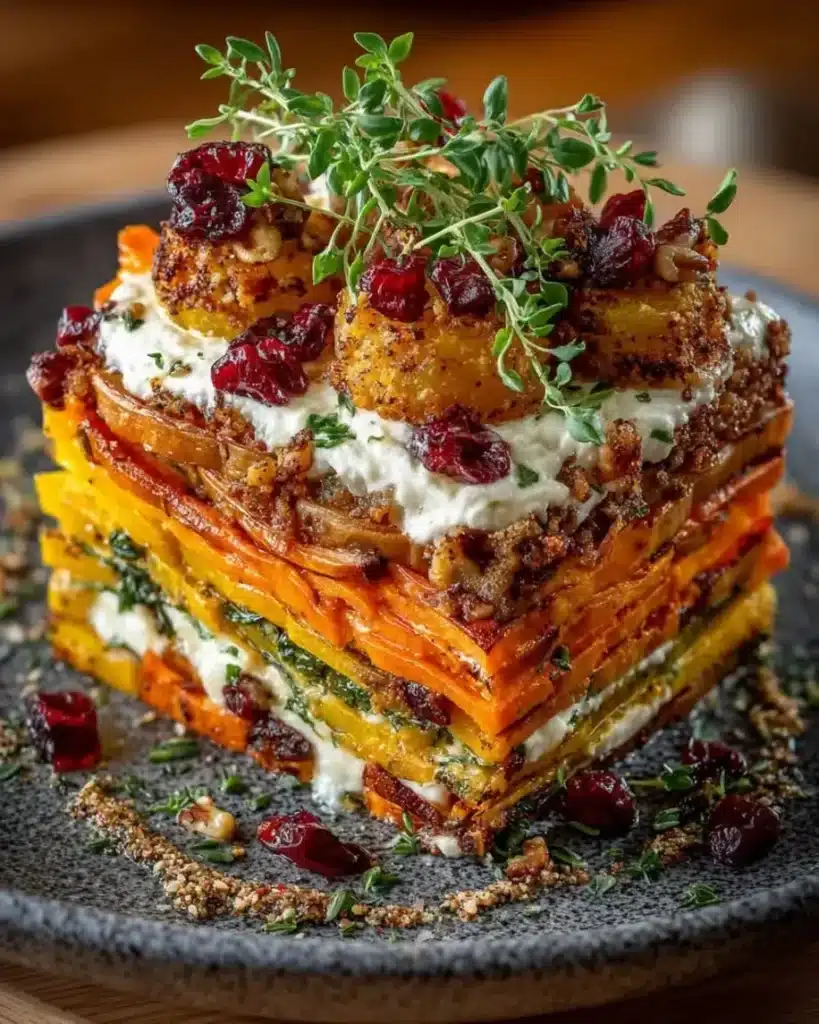
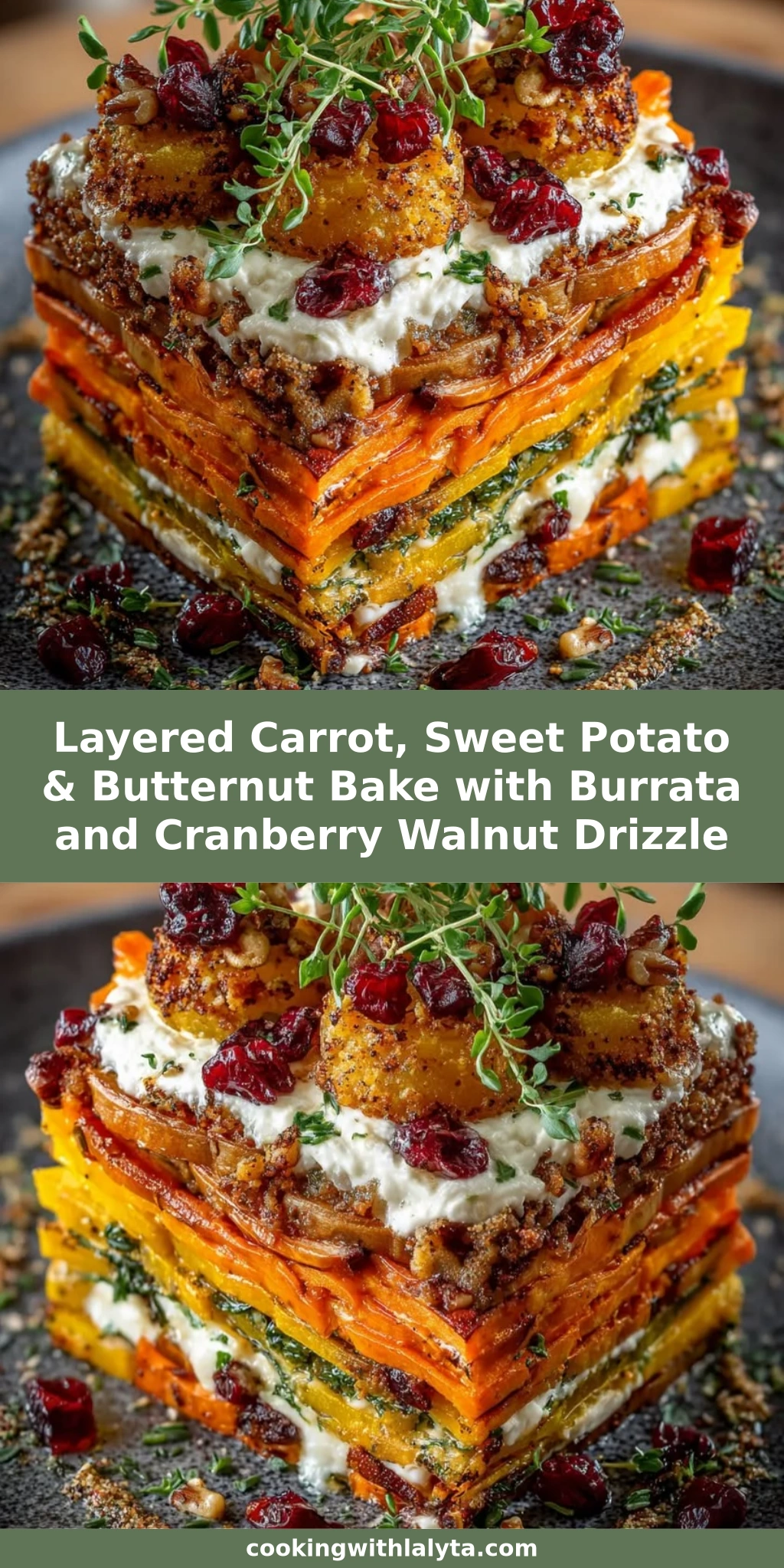
Imagine pulling a bubbling baking dish from the oven: vibrant orange carrots, deep golden sweet potatoes, and tender butternut squash all glistening with olive oil and flecked with dried thyme. Then you tear open a ball of fresh burrata — and if you’ve never experienced that moment when the creamy stracciatella center spills out, you are in for a revelation. The cranberry walnut drizzle is the final flourish: a warm, slightly thickened sauce made with tart dried cranberries, crunchy chopped walnuts, rich balsamic vinegar, and a touch of honey. It hits every note your palate craves — sweet, tangy, earthy, and savory all at once. This is a layered vegetable casserole that feels both rustic and elegant, the kind of dish that would feel right at home on a Moroccan family table in my mother’s kitchen, a Parisian bistro, or a modern Brooklyn dinner party.
What I love most about this recipe is how deceptively simple it is. I’ve drawn on my French culinary training to perfect the roasting technique — high heat, a single layer, and no overcrowding — so you get beautifully caramelized vegetables every single time, never steamed or watery. And here’s where so many home cooks stumble: they pile the vegetables too high or rush the roast, ending up with a soggy mess instead of those irresistible golden-brown edges. Stick with me through this recipe and I’ll show you exactly how to nail that perfect texture. Plus, I’ll share a trick I learned from my Moroccan grandmother for waking up the natural sweetness in root vegetables without adding any extra sugar. Ready to create a thanksgiving vegetable side that might just steal the spotlight from the turkey? Let’s get into it.
Why This Carrot Sweet Potato Butternut Bake Recipe Is the Best
The flavor secret behind this bake lies in the high-heat roasting method I mastered during my Paris training. When you roast carrots, sweet potatoes, and butternut squash at 400°F in a single, uncrowded layer, the natural sugars in these root vegetables undergo the Maillard reaction — that magical browning process that creates deep, complex caramelized notes you simply cannot achieve at lower temperatures. I also add a generous teaspoon of dried thyme, which blooms in the hot olive oil and infuses the vegetables with an herbaceous warmth that complements the sweet-tart cranberry walnut drizzle. This isn’t just tossing vegetables in a pan — it’s understanding how heat transforms humble ingredients into something extraordinary. The burrata on top adds a rich, creamy contrast that cools the palate between bites, making every forkful a study in balance.
Texture is where this layered vegetable casserole truly shines, and I’ve tested this recipe dozens of times to get it exactly right. The vegetables emerge from the oven tender enough to cut with the side of a fork, but with edges that are deeply browned and slightly crisp. That contrast between the soft interior and the caramelized exterior is essential — it’s what separates a good roast from a great one. The burrata, added while the vegetables are still hot from the oven, melts just slightly into creamy puddles without fully disintegrating. Meanwhile, the cranberry walnut drizzle brings a pleasant chew from the dried cranberries and a satisfying crunch from the walnuts. No single texture dominates; instead, every bite offers a little bit of everything, which is exactly what keeps people coming back for seconds.
Despite its impressive presentation, this recipe is genuinely foolproof and fast, which is why I recommend it to everyone from beginner cooks to seasoned hosts managing a full Thanksgiving spread. There’s no complicated technique, no precise knife cuts required — just a rough chop, a quick toss in olive oil and seasonings, and into the oven it goes. The cranberry walnut drizzle comes together in under five minutes on the stovetop, and the burrata requires zero prep beyond tearing it open. In less than an hour, you have a stunning thanksgiving vegetable side that looks and tastes like it came from a restaurant kitchen. I’ve had readers tell me this dish converted their vegetable-averse kids and earned them standing ovations at holiday dinners. If you can turn on an oven and stir a saucepan, you can absolutely make this recipe.
Carrot Sweet Potato Butternut Bake Ingredients
One of my favorite Saturday morning rituals is strolling through the Union Square Greenmarket here in New York City, filling my tote bag with the most vibrant root vegetables I can find. There’s something deeply satisfying about selecting carrots with their leafy green tops still attached, or hefting a perfectly plump butternut squash in your palm. When I can’t make it to the farmers market, I rely on my local grocery store — just look for firm vegetables with no soft spots or wrinkling. For the burrata, I always check the expiration date and give the package a gentle squeeze; it should feel plump and yielding, not hard. The dried cranberries and walnuts I keep stocked in my pantry year-round, because once you have them on hand, this burrata bake recipe becomes a dish you can throw together on any chilly weeknight.
Ingredients List
- For the Vegetable Bake:
- 2 large carrots, peeled and sliced into 1/2-inch rounds
- 1 large sweet potato, peeled and cubed into 1-inch pieces
- 1 small butternut squash, peeled, seeded, and cubed into 1-inch pieces
- 2 tablespoons olive oil
- 1 teaspoon salt
- 1/2 teaspoon black pepper
- 1 teaspoon dried thyme
- For the Topping:
- 8 oz burrata cheese (one large ball or two smaller ones)
- For the Cranberry Walnut Drizzle:
- 1/2 cup dried cranberries
- 1/4 cup walnuts, chopped
- 2 tablespoons balsamic vinegar
- 1 tablespoon honey
- 2 tablespoons olive oil
Ingredient Spotlight
Butternut Squash: This is the backbone of the bake, providing a creamy, slightly nutty sweetness that anchors the entire dish. When shopping in a US grocery store, look for a squash that feels heavy for its size with a matte, blemish-free skin — a shiny exterior means it was picked too early. The ideal squash has a long, thick neck (which means more usable flesh and a smaller seed cavity). If butternut squash isn’t available, you can substitute with acorn squash or even sugar pumpkin; both will give you a similar tender texture, though acorn squash has a slightly milder, more buttery flavor. Avoid using frozen butternut squash if you can — it tends to release more water during roasting, which can lead to steaming instead of caramelizing. But if frozen is all you have, I’ll share a workaround in the FAQ below.
Burrata Cheese: Burrata is the crown jewel of this burrata bake recipe, and once you’ve tasted it melted over roasted vegetables, you’ll understand why I insist on it. This Italian cheese consists of a solid mozzarella shell filled with cream and soft, stringy curds called stracciatella. When torn open over the hot vegetables, that creamy interior spills out and mingles with the balsamic drizzle, creating an instant sauce. Look for burrata in the specialty cheese section of your grocery store — BelGioioso is a widely available brand in the US. The best substitute for burrata is fresh mozzarella torn into pieces with a drizzle of heavy cream to mimic the creamy center. For a tangier option, goat cheese works beautifully, though the texture will be crumblier rather than molten. If you need a dairy-free option, there are now excellent vegan burrata alternatives made from cashew or almond milk — the brand Miyoko’s makes a fantastic one that melts surprisingly well.
Dried Cranberries: These little ruby gems bring a concentrated sweet-tart punch that cuts through the richness of the roasted vegetables and burrata. I prefer unsweetened or low-sugar dried cranberries when I can find them, as the balsamic vinegar and honey in the drizzle already contribute plenty of sweetness. Ocean Spray is the standard in most US pantries, but Trader Joe’s carries an excellent organic version. Substitution: Dried cherries or dried tart apricots (chopped) work wonderfully here. Dried cherries will give you a deeper, more wine-like flavor, while dried apricots add a honeyed floral note. Golden raisins are another option in a pinch, though they lack the same level of tartness that balances the dish so well.
Walnuts: The chopped walnuts in the drizzle provide an essential earthy crunch and a slight bitterness that grounds all the sweet and creamy elements. I always recommend toasting your walnuts in a dry skillet for 2–3 minutes before adding them to the drizzle — it amplifies their flavor tenfold and adds an irresistible nutty aroma to your kitchen. When buying walnuts, look for pieces that are uniform in color without any dark spots or signs of moisture. Substitution: Pecans are the closest substitute and bring a buttery richness that pairs beautifully with the cranberries. For a more Mediterranean twist, try toasted pine nuts — they’re smaller and more delicate, but their buttery flavor melts into the drizzle gorgeously. Almond slivers work too, offering a firmer, snappier crunch that contrasts nicely with the soft vegetables.
| Original Ingredient | Best Substitution | Flavor / Texture Impact |
|---|---|---|
| Butternut Squash | Acorn squash or sugar pumpkin | Slightly milder and more buttery; still creamy when roasted |
| Burrata Cheese | Fresh mozzarella + heavy cream drizzle, or goat cheese | Mozzarella gives similar melt; goat cheese adds tanginess |
| Dried Cranberries | Dried cherries or chopped dried apricots | Cherries are deeper and wine-like; apricots are honeyed and floral |
| Walnuts | Pecans, pine nuts, or almond slivers | Pecans are buttery; pine nuts are delicate; almonds add firm crunch |
| Honey | Maple syrup or agave nectar | Maple adds a deeper, woodsy sweetness perfect for fall |
How to Make Layered Carrot, Sweet Potato & Butternut Bake with Burrata and Cranberry Walnut Drizzle — Step-by-Step
Take a deep breath — this is one of the most relaxed, forgiving recipes in my entire collection. There’s no finicky technique to worry about, and I’ll walk you through every single step so you feel completely confident. The key is to give your vegetables enough space in the baking dish and let the oven work its magic while you prepare the drizzle. Let’s get started!
Step 1: Preheat the Oven
Position a rack in the middle of your oven and preheat it to 400°F (200°C). This temperature is the sweet spot — hot enough to caramelize the natural sugars in the vegetables without burning the olive oil or drying out the squash before it becomes tender. If your oven runs cool, bump it up to 425°F; if it runs hot, stick to 400°F and check the vegetables five minutes early. While the oven heats, lightly grease a 9×13-inch baking dish with olive oil or cooking spray.
💡 Lalybeth’s Pro Tip: Place your baking dish in the oven while it preheats, then carefully remove it and add the oil and vegetables. The hot dish gives the vegetables an immediate sear on the bottom, jumpstarting that golden-brown caramelization. This is a trick I picked up from a chef in Paris who swore by it for roast potatoes — and it works just as beautifully for this layered vegetable casserole.
Step 2: Toss the Vegetables
In a large mixing bowl, combine your peeled and sliced carrots, cubed sweet potato, and cubed butternut squash. Drizzle with 2 tablespoons of olive oil and sprinkle with 1 teaspoon salt, 1/2 teaspoon black pepper, and 1 teaspoon dried thyme. Use your hands or a large spoon to toss everything together until every piece is evenly coated with oil and seasonings. I always use my hands for this step — you can feel when the oil has reached every surface, and honestly, it connects you to the food in a way a spoon never can. The vegetables should glisten but not be dripping with oil.
⚠️ Common Mistake to Avoid: Don’t be shy with the salt at this stage! Root vegetables need adequate seasoning to bring out their natural sweetness, and undersalting at the beginning leads to a bland final dish. The 1 teaspoon called for is correct for this volume of vegetables — if you’re using kosher salt, you may want to use a generous teaspoon since the flakes are larger. Taste a raw piece of squash if you’re unsure; it should taste pleasantly seasoned, not salty.
Step 3: Arrange and Roast
Spread the seasoned vegetables in a single, even layer in your prepared baking dish. This is crucial: the vegetables should have a little breathing room around each piece. If they’re piled on top of each other, they’ll steam instead of roast, and you’ll miss out on those gorgeous caramelized edges that make this carrot sweet potato butternut bake so irresistible. If your baking dish feels crowded, split the vegetables between two dishes or use a larger sheet pan. Slide the dish into your preheated oven and roast for 35 to 40 minutes, tossing once halfway through with a spatula to ensure even browning. You’ll know they’re done when the vegetables are fork-tender and the edges have taken on a deep golden-brown color.
💡 Lalybeth’s Pro Tip: At the 20-minute mark, open the oven and give the vegetables a good toss. This is also your chance to check if the bottom of the dish looks dry — if so, add a tiny drizzle of olive oil. The tossing redistributes the vegetables so the ones on the edges (which cook faster) move to the center, and vice versa. Don’t skip this step! It takes 30 seconds and makes a noticeable difference in the final texture.
Step 4: Prepare the Cranberry Walnut Drizzle
While the vegetables roast, make the cranberry walnut drizzle. In a small saucepan, combine 1/2 cup dried cranberries, 1/4 cup chopped walnuts, 2 tablespoons balsamic vinegar, 1 tablespoon honey, and 2 tablespoons olive oil. Place the saucepan over low heat and stir gently. You’re not looking for a boil — just a gentle warming that allows the cranberries to plump up slightly in the balsamic-honey mixture and the walnuts to release their oils. This should take about 3 to 5 minutes. The drizzle is ready when it’s warm, slightly thickened, and fragrant. Remove from heat and set aside; it will continue to thicken slightly as it cools.
⚠️ Common Mistake to Avoid: Do not cook the drizzle over high heat! Balsamic vinegar can quickly reduce to a bitter, burnt-tasting syrup if you’re not careful. Keep the heat on low and stir occasionally. If the mixture starts to bubble aggressively, pull the pan off the heat for a moment. You want the cranberries to soften and absorb some liquid, not to turn into hard, sticky candy. The drizzle should be loose enough to pour but thick enough to cling to the vegetables.
Step 5: Add the Burrata
Remove the roasted vegetables from the oven and place the baking dish on a heat-safe surface. Take your 8 oz ball of burrata and, using your hands, tear it into roughly 6 to 8 pieces. Distribute these pieces evenly over the surface of the hot vegetables. The residual heat will gently warm the burrata, causing the creamy center to soften and begin to melt into the crevices between the vegetables — this is exactly what you want. Don’t worry if the burrata doesn’t fully melt; those pillowy pockets of warm, creamy cheese are part of the magic of this burrata bake recipe.
💡 Lalybeth’s Pro Tip: Let the burrata sit on the hot vegetables for 2 minutes before adding the drizzle. This brief rest allows the cheese to come to temperature and start melting naturally. If you add the drizzle immediately, the cold or room-temperature liquid can cool the vegetables too quickly, and the burrata won’t soften as beautifully. Patience here pays off in the creamiest, most luxurious texture.
Step 6: Drizzle and Serve
Spoon the warm cranberry walnut drizzle evenly over the burrata and vegetables, making sure each portion gets some cranberries, walnuts, and that glossy balsamic-honey glaze. Use a light hand — you want the drizzle to accentuate the dish, not drown it. Serve immediately while the burrata is still warm and creamy and the vegetables are at their peak texture. This dish is best enjoyed straight from the oven, with everyone gathered around the table, ready to dig in.
| Step | Action | Duration | Key Visual Cue |
|---|---|---|---|
| 1 | Preheat Oven | 10-15 mins | Oven thermometer reads 400°F |
| 2 | Toss Vegetables | 5 mins | Every piece evenly coated and glistening |
| 3 | Arrange and Roast | 35-40 mins | Fork-tender with deep golden-brown edges |
| 4 | Prepare Drizzle | 3-5 mins | Warm, slightly thickened, and fragrant |
| 5 | Add Burrata | 1-2 mins | Cheese softens and begins melting into vegetables |
| 6 | Drizzle and Serve | 1 min | Glossy drizzle evenly distributed; serve immediately |
Serving & Presentation
I love bringing this dish to the table right in the baking dish — there’s something so rustic and inviting about a bubbling casserole fresh from the oven, steam still rising, the burrata glistening in soft white mounds against the jewel-toned vegetables and ruby cranberries. For a more formal presentation, use a wide, shallow serving platter and gently transfer the vegetables with a spatula, trying to keep the layers somewhat intact. Then nestle the burrata pieces on top and spoon the cranberry walnut drizzle over everything — finishing with a few extra fresh thyme leaves scattered across the top for a pop of green that makes the whole dish look restaurant-worthy.
This thanksgiving vegetable side pairs beautifully with classic roast turkey or a simple roasted chicken, but it’s also substantial enough to serve as a vegetarian main course alongside a bright green salad and some crusty bread for sopping up every last bit of the creamy burrata and balsamic glaze. In my NYC kitchen, I often serve it with a lemony arugula salad on the side — the peppery greens cut through the richness perfectly. For a Moroccan-inspired twist, I’ll sometimes add a sprinkle of toasted cumin seeds and fresh cilantro over the top, a nod to the way my mother would finish roasted vegetables back home.
When it comes to garnishes, I’m a big believer in finishing touches that add both beauty and flavor. A light scattering of flaky sea salt (Maldon is my go-to) right before serving adds a delightful crunch and amplifies all the flavors. If you have pomegranate seeds on hand, a handful sprinkled over the top adds a burst of juicy sweetness and a stunning visual contrast against the golden vegetables. And please, don’t forget the crusty bread — you’ll want it for that last swipe of melted burrata and warm balsamic drizzle at the bottom of the dish. Trust me, no one at your table will leave a single drop behind.
| Pairing Type | Suggestions | Why It Works |
|---|---|---|
| Side Dish | Arugula salad with lemon vinaigrette, crusty sourdough bread, roasted garlic green beans | Peppery greens cut the richness; bread soaks up the sauce |
| Sauce / Dip | Extra balsamic reduction, tahini drizzle, herbed yogurt | Tahini adds nuttiness; yogurt brings cooling tang |
| Beverage | Dry Riesling, oaked Chardonnay, sparkling apple cider, rosemary-infused lemonade | Wine acidity balances the richness; cider echoes fall flavors |
| Garnish | Flaky sea salt, fresh thyme, pomegranate seeds, toasted walnuts | Adds crunch, color contrast, and fresh herbal notes |
Make-Ahead, Storage & Reheating
As someone who juggles recipe development, food photography, and hosting dinner parties in my NYC apartment, I’m a huge fan of anything that can be prepped ahead. This layered vegetable casserole is wonderfully flexible — you can peel and chop all the vegetables the night before and store them in a bowl of cold water in the refrigerator (drain and pat them dry thoroughly before roasting, or they’ll steam). The cranberry walnut drizzle can be made up to three days in advance and stored in an airtight container in the fridge; just reheat it gently on the stovetop or in the microwave before drizzling. The one thing I don’t recommend making ahead is the full assembled dish with burrata, as the cheese is best added fresh and served immediately for that irresistible molten creaminess.
| Method | Container | Duration | Reheating Tip |
|---|---|---|---|
| Refrigerator | Airtight glass container | Up to 3 days | Reheat in 350°F oven for 10-15 mins; add fresh burrata after reheating |
| Freezer | Freezer-safe container (vegetables only, no burrata) | Up to 1 month | Thaw overnight in fridge; reheat in 375°F oven until hot, then top with burrata |
| Make-Ahead | Prep vegetables in water; drizzle in separate jar | 1 day in advance | Drain and dry vegetables well before roasting; reheat drizzle gently |
If you do have leftovers, here’s the best way to bring them back to life: transfer the vegetables to an oven-safe dish and warm them in a 350°F oven for 10 to 15 minutes until heated through. The burrata from the first serving won’t re-melt in quite the same creamy way, so I recommend adding a small fresh piece of burrata or a drizzle of heavy cream over the top before reheating — it revives that luxurious creaminess beautifully. Avoid the microwave if you can, as it tends to make the vegetables a bit mushy and the burrata can turn rubbery. But if time is tight, a 60-second microwave burst at 50% power, covered with a damp paper towel, will do in a pinch.
One more tip from my Paris training days: when reheating roasted vegetables, always sprinkle a few drops of water or an extra drizzle of olive oil over the top before they go into the oven. This creates a little steam that prevents them from drying out while the edges re-crisp. Your leftovers should taste nearly as good as the day you made them — and in my experience, the flavors of the cranberry walnut drizzle actually deepen overnight, making the reheated version even more complex and satisfying.
Variations & Easy Swaps
| Variation | Key Change | Best For | Difficulty Impact |
|---|---|---|---|
| Dairy-Free & Vegan | Swap burrata for vegan cashew burrata; use maple syrup instead of honey | Vegan guests, dairy-free diets | No change — remains easy |
| Moroccan Spiced Twist | Replace thyme with ras el hanout; add chickpeas; use dates instead of cranberries | Flavor adventurers, North African-inspired menus | No change — remains easy |
| Holiday Maple Pecan | Use pecans instead of walnuts; maple syrup instead of honey; add a pinch of cinnamon | Thanksgiving, Christmas, festive gatherings | No change — remains easy |
Dairy-Free & Vegan Version
I’ve tested this burrata bake recipe with several dairy-free alternatives, and the best results came from using a high-quality vegan burrata — Miyoko’s and Kite Hill both make excellent cashew-based versions that actually melt and have that signature creamy center. The texture won’t be identical to traditional burrata, but it’s remarkably close, and the mild, buttery flavor of the cashew cheese complements the roasted vegetables beautifully. To keep the drizzle fully vegan, simply swap the honey for an equal amount of maple syrup or agave nectar — the maple, in particular, adds a wonderful woodsy depth that feels perfectly autumnal. The rest of the recipe remains unchanged, and I promise your vegan guests will feel just as celebrated as everyone else at the table.
Moroccan Spiced Twist
When I’m craving the flavors of my mother’s kitchen in Morocco, I give this layered vegetable casserole a North African spin that transforms it into something entirely new. Instead of dried thyme, I use a generous teaspoon of ras el hanout — that aromatic Moroccan spice blend with cumin, coriander, cinnamon, and rose petals — which adds an intoxicating warmth and complexity to the roasted vegetables. I also toss in a can of drained chickpeas along with the vegetables for added protein and a nutty bite that makes the dish even more substantial as a vegetarian main course. For the drizzle, I swap the dried cranberries for chopped Medjool dates and replace the balsamic vinegar with a splash of pomegranate molasses, which brings a deep, tangy sweetness that my grandmother would absolutely approve of. A final sprinkle of toasted sesame seeds and fresh cilantro over the top, and suddenly you’re transported to a Moroccan dinner table.
Holiday Maple Pecan Version
For Thanksgiving or Christmas dinner, I love leaning fully into the festive flavors with this holiday variation. I substitute the walnuts for buttery pecans and swap the honey in the drizzle for pure maple syrup — the combination of maple and pecan is undeniably nostalgic and pairs beautifully with the caramelized edges of the roasted carrot sweet potato butternut bake. Adding a pinch of ground cinnamon and a whisper of freshly grated nutmeg to the vegetable seasoning gives everything a gentle holiday warmth without tipping into dessert territory. This version has become my signature thanksgiving vegetable side, and more than once, it’s been the dish that guests ask about before they even compliment the turkey. If you really want to gild the lily, a few crispy fried sage leaves scattered over the top right before serving will make your entire kitchen smell like the holidays in the best possible way.
Can I use frozen butternut squash instead of fresh for this layered bake?
Yes, you absolutely can, though I want to be upfront that the texture will be slightly different. Frozen butternut squash tends to release more moisture during roasting because the freezing process breaks down some of the vegetable’s cell walls. To work around this, I recommend thawing the frozen squash completely and then patting it very dry with paper towels or a clean kitchen towel before tossing it with the olive oil and seasonings. Even better, spread the thawed and dried squash pieces on a sheet pan and roast them separately at 425°F for 10 minutes to drive off excess moisture before combining them with the carrots and sweet potatoes. You’ll still get some caramelization, though the edges won’t be quite as crispy as they would be with fresh squash. The flavor will still be lovely, and for a busy weeknight, frozen is a perfectly acceptable shortcut that saves you the peeling and cubing time.
What can I substitute for burrata to make this dish dairy-free or vegan?
For a dairy-free or vegan version of this recipe, you have several excellent options depending on what’s available in your area. My top recommendation is a store-bought vegan burrata — Miyoko’s makes a cashew-based one that has a convincingly creamy center and melts well when placed on hot vegetables. Kite Hill’s almond-based fresh mozzarella is another great choice; tear it into pieces just like you would with traditional burrata and add a drizzle of unsweetened plant-based cream or full-fat coconut milk over the vegetables before adding the cheese to mimic that luscious stracciatella effect. If you can’t find vegan burrata, a combination of crumbled firm tofu marinated in a little lemon juice, nutritional yeast, and olive oil can provide a tangy, creamy element, though it won’t melt in the same way. For a simpler approach, a generous dollop of cashew cream or almond ricotta spooned over the hot vegetables will give you a similar creamy contrast to the caramelized edges and the tangy drizzle.
Should I peel the carrots and sweet potatoes before layering them in the bake?
I recommend peeling both the carrots and sweet potatoes for this particular dish, and here’s why: the skins of carrots and sweet potatoes, while perfectly edible and nutritious, have a different texture than the flesh — they tend to become slightly chewy or papery when roasted, which can disrupt the otherwise uniformly tender, melt-in-your-mouth experience of this layered bake. That said, if you’re using organic carrots and sweet potatoes and you scrub them thoroughly, leaving the peel on is absolutely fine from a food safety perspective and adds fiber and nutrients. For the butternut squash, you definitely want to peel it, as the skin is thick and tough even after roasting. Here in my NYC kitchen, I use a sharp Y-peeler for all three vegetables — it makes quick work of the task and removes just the thinnest layer of skin so you don’t waste any of that precious flesh. If you’re really pressed for time, some grocery stores sell pre-peeled and cubed butternut squash in the produce section, which is a great shortcut.
How do I prevent the vegetables from becoming too watery when baking this dish?
This is one of the most common pitfalls with any roasted vegetable dish, and I learned the hard way during my Paris training that overcrowding is usually the culprit. The single most important thing you can do is spread the vegetables in one even, uncrowded layer in your baking dish — if they’re piled on top of each other, the trapped steam will make them soggy instead of caramelized. Use a larger dish or split the vegetables between two pans if needed. Secondly, make sure you pat any washed vegetables dry before tossing them with oil; excess surface water creates steam. Third, don’t cover the baking dish with foil during roasting — you want moisture to escape, not to be trapped inside. Fourth, resist the urge to add any liquid to the dish. And finally, roast at a high temperature (400°F is ideal) and don’t open the oven door too frequently, as this drops the temperature and interrupts the browning process. If you follow these guidelines, you’ll be rewarded with perfectly tender vegetables with beautifully caramelized, slightly crisp edges every time.
Can I assemble this layered vegetable casserole ahead of time for Thanksgiving?
Yes, with a few smart strategies, this dish can be largely prepped ahead, which is a lifesaver on Thanksgiving when oven space and time are at a premium. You can peel and chop all the vegetables up to 24 hours in advance and store them submerged in cold water in the refrigerator — just be sure to drain them thoroughly and pat them completely dry with a clean kitchen towel before tossing with oil and roasting. The cranberry walnut drizzle can be made up to three days ahead and stored in a sealed jar in the refrigerator; reheat it gently in a small saucepan or microwave until warm and pourable before serving. I don’t recommend roasting the vegetables ahead and reheating them on the day of, as they lose their crisp edges and can become a bit tired. Instead, do all the prep work the night before, then on Thanksgiving day, simply toss the vegetables with oil and seasonings, slide them into the oven, and let them roast while you focus on other dishes. Add the burrata and drizzle right before serving for the freshest, most impressive result.
What’s the best way to reheat leftovers of this burrata bake?
The oven is your best friend when it comes to reheating this dish and preserving its texture. Preheat your oven to 350°F, transfer the leftovers to an oven-safe dish, and sprinkle a few drops of water or an extra drizzle of olive oil over the vegetables to prevent them from drying out. Cover loosely with foil and warm for 10 to 15 minutes until heated through. The burrata from the original serving won’t re-melt into quite the same creamy pools, so I recommend adding a small fresh piece of burrata or a drizzle of heavy cream over the top about 5 minutes into reheating — it revives that luxurious creaminess beautifully. If you must use a microwave, do so at 50% power in 30-second bursts, covered with a damp paper towel, but know that the vegetables may become slightly softer and the cheese can turn a bit rubbery. Leftover drizzle can be reheated separately in a small saucepan over low heat or in the microwave for 20 seconds.
Is this carrot sweet potato butternut bake healthy?
This dish is quite nourishing and packed with nutrient-dense ingredients! Carrots are rich in beta-carotene and fiber, sweet potatoes bring vitamin A, vitamin C, and complex carbohydrates, and butternut squash adds even more fiber, potassium, and antioxidants. The olive oil provides heart-healthy monounsaturated fats, and walnuts contribute omega-3 fatty acids and a satisfying crunch. At approximately 420 calories per serving with 12 grams of protein from the burrata, this bake works well as a satisfying vegetarian main course or a hearty side dish. The dried cranberries and honey do add natural sugars, but the overall sugar content (15g per serving) is reasonable for a holiday dish, especially since it comes paired with so much fiber and healthy fats that slow down sugar absorption. If you’re watching your calorie or fat intake, you can reduce the olive oil slightly or use a lighter hand with the burrata, though I’d encourage you to enjoy this dish as intended — it’s meant to be a celebration-worthy recipe that nourishes both body and soul.
What other nuts work well in the cranberry walnut drizzle?
While walnuts are my go-to for their earthy flavor and soft crunch, this drizzle is wonderfully adaptable to whatever nuts you have in your pantry. Pecans are the most natural swap and arguably even more festive for a Thanksgiving table — their natural buttery sweetness pairs exquisitely with the tart cranberries and balsamic vinegar. Toasted almond slivers add a firmer, snappier texture that holds up well in the warm drizzle, and their mild flavor lets the cranberries shine. For a more unexpected twist, try toasted hazelnuts, which bring a rich, almost chocolatey depth that works surprisingly well with roasted root vegetables. Pistachios are another lovely option, adding a subtle green color and a slightly sweet, almost fruity note. Whichever nut you choose, I insist on toasting it first in a dry skillet for 2 to 3 minutes until fragrant — this simple step intensifies the nutty flavor dramatically and adds an irresistible aroma to your kitchen. Just be sure to chop the nuts into roughly uniform pieces so they distribute evenly throughout the drizzle.
Share Your Version!
I genuinely love seeing how you make this recipe your own — whether it’s a clever substitution, a beautiful plating idea, or your family’s reaction when you bring it to the Thanksgiving table. Cooking is at its best when it’s shared, and your twists on this carrot sweet potato butternut bake inspire me just as much as I hope my recipes inspire you. So please, leave a star rating and a comment below letting me know how it turned out — did you try the Moroccan spice twist? Did your kids go back for seconds? Every comment makes my day and helps other home cooks find this recipe too.
If you share a photo on Instagram or Pinterest, tag me @cookingwithlalyta — I reshare my favorite reader creations in my stories, and there’s nothing that makes me happier than seeing a dish from my NYC kitchen being enjoyed in yours. And I have one specific question for you: what’s the one vegetable dish that always graces your holiday table, and would this burrata bake recipe earn a spot alongside it? I’d love to hear your traditions — drop them in the comments and let’s swap stories. From my NYC kitchen to yours — I hope this recipe brings as much warmth to your table as it does to mine. — Lalybeth 🧡
Love This Recipe? Save It to Pinterest!
If you enjoyed this Layered Carrot, Sweet Potato & Butternut Bake with Burrata and Cranberry Walnut Drizzle recipe, don’t let it get lost in your browser tabs! 😄 Pin it now so you can find it again anytime — and explore hundreds more tried-and-tested recipes waiting for you on my Pinterest boards.
👉 Follow Lalybeth on Pinterest @cookingwithlalyta
📌 Pin this recipe · 🔁 Re-pin your favorites · 💬 Tag me when you make it — I love seeing your creations!
🍂 Made This Carrot Sweet Potato Butternut Bake?
I’d love to hear how it turned out! Leave a star rating and comment below — your feedback helps other home cooks discover this recipe and inspires me to keep creating. Did you put your own spin on it? Tell me all about it!
⭐ Rate it · 💬 Comment below · 📸 Tag @cookingwithlalyta on Instagram · 📌 Pin for later

Layered Carrot, Sweet Potato & Butternut Bake with Burrata and Cranberry Walnut Drizzle
- Total Time: 55 minutes
- Yield: 4-6 1x
Description
A cozy, colorful vegetable bake topped with creamy burrata and a tangy cranberry walnut drizzle.
Ingredients
- For the Vegetable Bake:
- 2 large carrots, peeled and sliced
- 1 large sweet potato, peeled and cubed
- 1 small butternut squash, peeled and cubed
- 2 tablespoons olive oil
- 1 teaspoon salt
- 1/2 teaspoon black pepper
- 1 teaspoon dried thyme
- For the Topping:
- 8 oz burrata cheese
- For the Cranberry Walnut Drizzle:
- 1/2 cup dried cranberries
- 1/4 cup walnuts, chopped
- 2 tablespoons balsamic vinegar
- 1 tablespoon honey
- 2 tablespoons olive oil
Instructions
- Preheat oven to 400°F (200°C).
- In a large bowl, toss the carrots, sweet potato, and butternut squash with olive oil, salt, pepper, and thyme.
- Arrange the vegetables in a single layer in a baking dish.
- Roast for 35-40 minutes until tender and lightly browned.
- While vegetables roast, prepare the drizzle: In a small saucepan, combine cranberries, walnuts, balsamic vinegar, honey, and olive oil. Heat over low until warm and slightly thickened.
- Remove vegetables from oven. Tear burrata into pieces and distribute over the top.
- Drizzle the cranberry walnut mixture over the burrata and vegetables.
- Serve immediately.
Notes
You can substitute goat cheese for burrata if desired.
- Prep Time: 15 minutes
- Cook Time: 40 minutes
- Method: Main Course
- Cuisine: American
Nutrition
- Calories: 420
- Sugar: 15g
- Fat: 28g
- Carbohydrates: 35g
- Protein: 12g
Tried This Recipe? Leave a Comment!
Did you make this recipe? I’d love to hear how it turned out! Please leave a comment and a rating below. Your feedback helps other home cooks and supports cookingwithlalyta.com!
For more delicious inspiration, follow me on Pinterest!