Table of Contents
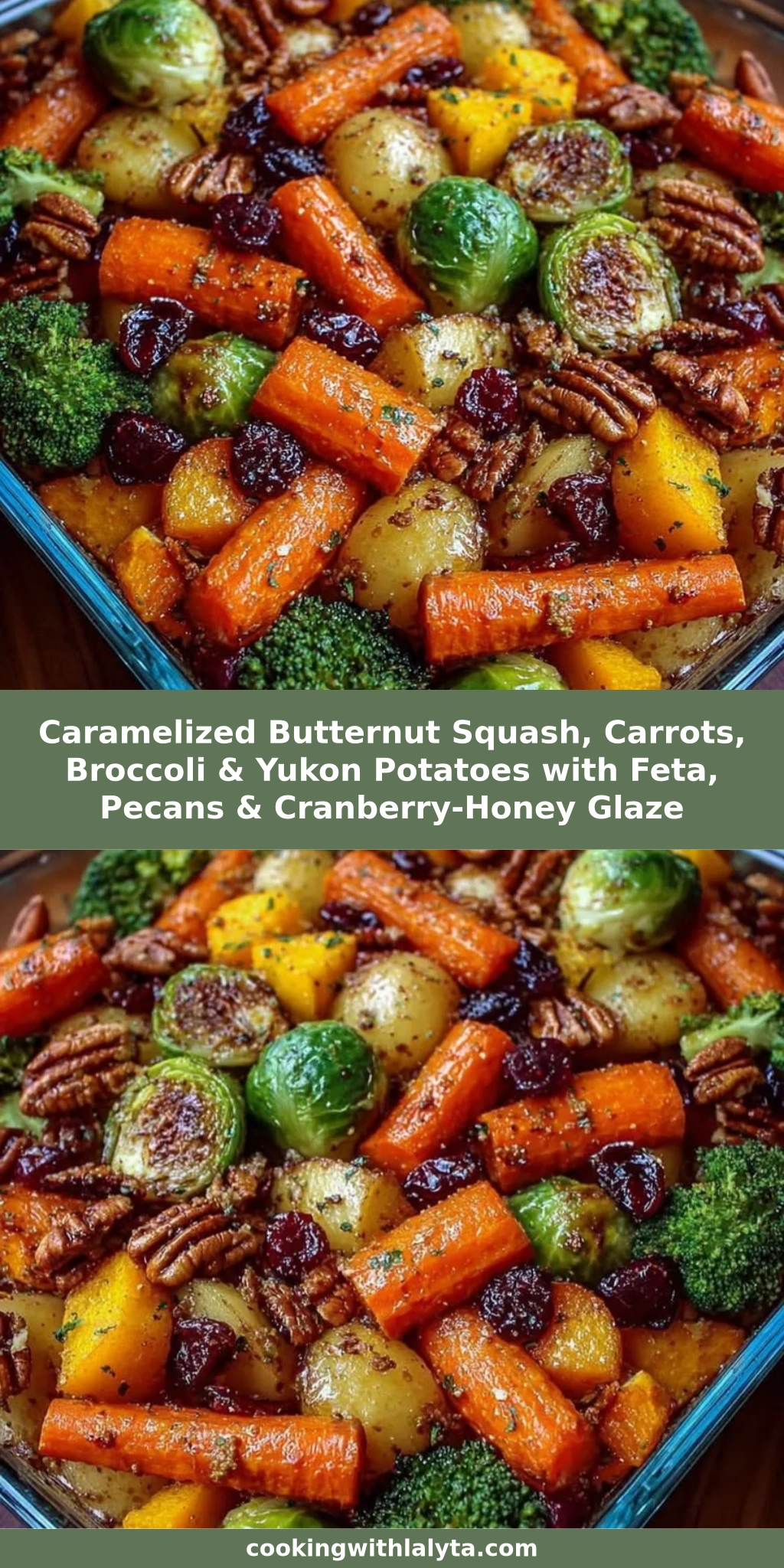
Caramelized Butternut Squash, Carrots, Broccoli & Yukon Potatoes with Feta, Pecans & Cranberry-Honey Glaze – The Ultimate Holiday Roasted Vegetable Side Dish That Steals the Show
Every Thanksgiving, my tiny New York City apartment kitchen transforms into a whirlwind of roasting pans bubbling olive oil, and this cranberry honey glazed roasted vegetables dish has become the unexpected star of my holiday table. I’ll never forget the first year I brought it to a Friendsgiving in Brooklyn — my neighbor took one bite of the roasted butternut squash with feta, closed her eyes, and whispered, “This tastes like autumn threw a party.” That’s exactly what I’d hoped for. Growing up in Morocco, my mother would slow-roast root vegetables until they collapsed into sweet, jammy tenderness, drizzled with honey and scattered with toasted nuts — a technique I later refined during my culinary training in Paris, where I learned the precise art of balancing sweet, savory, tangy, and salty on a single plate. This recipe is my love letter to those three kitchens: the warmth of my mother’s hearth, the discipline of French saucier training, and the bold, eclectic energy of NYC.
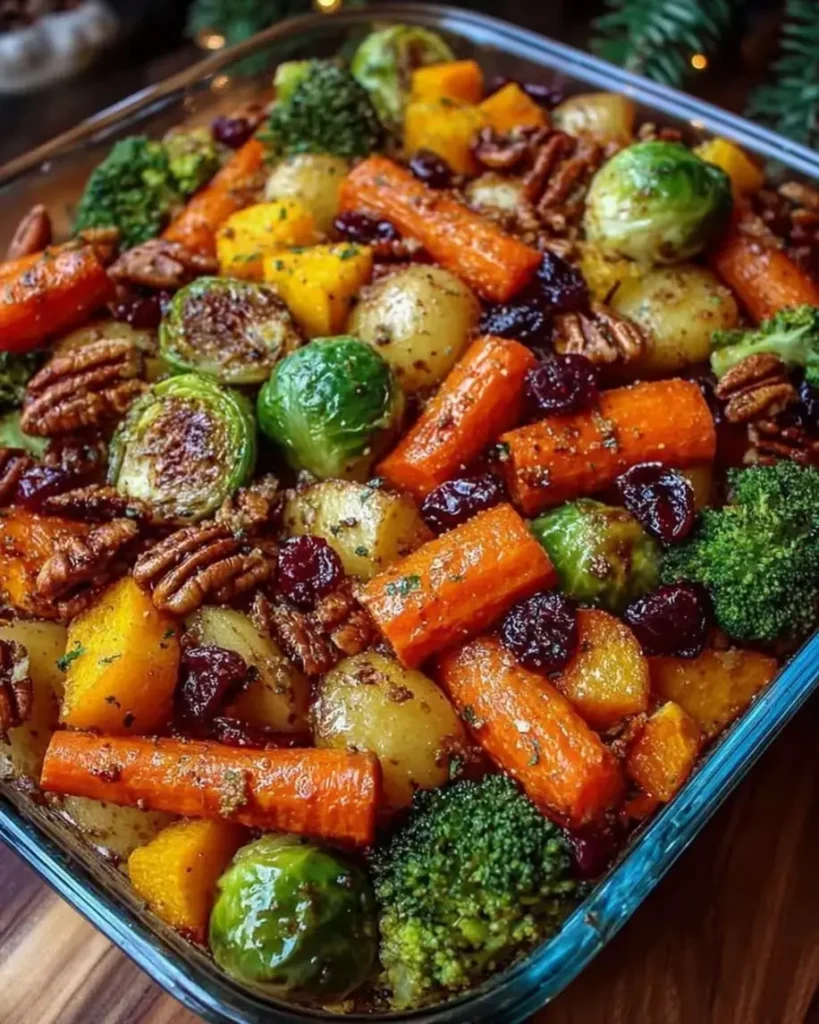
Picture this: golden-edged cubes of butternut squash that have turned almost candy-like at their caramelized corners, nestled alongside tender Yukon gold potatoes with delicately crisped skins, sweet carrot chunks that practically melt on your tongue, and broccoli florets roasted just until their frilly tops turn lacy and brittle — all glistening under a cranberry-honey glaze that’s simultaneously bright, sticky, and just sharp enough from Dijon mustard and apple cider vinegar to cut through the natural sweetness of the vegetables. Then comes the shower of roasted vegetables with pecans and cranberries — those ruby-red dried cranberries plumped in the warm glaze, and toasted pecan halves that shatter with a buttery crunch. And just when you think it can’t get better, crumbles of briny, creamy feta cheese melt ever so slightly against the hot vegetables, creating little pockets of salty tang that make every forkful sing. The aroma alone — roasted squash and potatoes mingling with warm honey and toasted nuts — will pull everyone into the kitchen before the oven timer even beeps.
What makes this caramelized vegetables recipe truly special, and why I believe it’s the best holiday roasted vegetable side dish you’ll ever make, is a technique I picked up during my Paris training: roasting at a high 425°F and resisting the urge to overcrowd the pan. This allows each vegetable piece to develop its own deeply browned, almost French-onion-soup-sweet exterior while staying tender inside — that’s the magic of proper caramelization. I’ll let you in on a little secret right now: the cranberries get stirred into the glaze off the heat so they soften and swell without turning into hard little pebbles or, worse, burning. One common mistake I see home cooks make is tossing all the vegetables together without considering their different roasting speeds — but don’t worry, I’ve perfected the timing so your broccoli stays vibrant and just-tender, not mushy or scorched. Stick with me, and I’ll walk you through every step with the same care I’d give a friend standing in my kitchen.
Why This Caramelized Vegetables Recipe Is the Best
The Flavor Secret: The cranberry-honey glaze isn’t just a finishing drizzle — it’s a carefully balanced sauce that bridges the gap between savory and sweet with a foundation of Dijon mustard and apple cider vinegar. This combination, which I first experimented with in my Paris culinary school’s sauce module, creates a depth that’s reminiscent of a gastrique — that classic French sweet-and-sour reduction — but made entirely approachable for a home cook. The honey brings floral warmth, the mustard adds a subtle back-of-the-throat heat, and the vinegar brightens everything so the dish never feels cloying. Meanwhile, the feta’s saltiness plays against the sweetness in a way that reminds me of the Moroccan salads of my childhood, where preserved lemon and orange blossom water would dance together on the tongue. This isn’t just a pile of roasted vegetables — it’s a composed dish with intentional layers of flavor.
Perfected Texture: Texture is where this roasted butternut squash with feta recipe truly shines, and it’s something I obsess over as a professional cook. Roasting at 425°F creates that irresistible contrast between the crackly, browned exterior and the creamy, almost mashed-potato-soft interior of the squash and potatoes. The carrots develop a concentrated sweetness with slightly chewy edges. The broccoli — often the trickiest vegetable in a mixed roast — gets just enough high-heat exposure to develop nutty, toasty notes while retaining a pleasant bite. And then there’s the textural triumph of the toppings: the snap of toasted pecans against the soft, jammy cranberries, and the way the feta stays in distinct crumbles that gently warm without fully melting. Every bite offers something different — a crunch here, a silky-smooth vegetable there, a burst of tangy-sweet glaze everywhere.
Foolproof & Fast: I designed this recipe for real life — for the home cook who’s juggling a turkey, setting the table, and maybe entertaining a toddler with a wooden spoon. There’s no special equipment needed beyond a good sheet pan and parchment paper. The active prep takes only 20 minutes, and while the vegetables roast, you have a full half-hour to make the glaze (which comes together in three minutes) or just pour yourself a glass of wine. The glaze is nearly impossible to mess up — just stir until slightly thickened — and because we glaze after roasting rather than before, you never risk burning the sugars. Even my busiest NYC friends, who claim they “can’t cook,” have sent me proud photos of this dish on their holiday tables. It’s that reliable.
Cranberry Honey Glazed Roasted Vegetables Ingredients
I do most of my ingredient shopping at the Union Square Greenmarket here in New York City, where I can chat with the farmers about which butternut squash was just harvested and grab a block of locally made feta that’s impossibly creamy. In the fall, the market overflows with jewel-toned root vegetables, and I can’t resist filling my canvas tote to the brim. This recipe is forgiving — you don’t need farmer’s-market perfection; your regular grocery store will have everything you need. The key is selecting vegetables that are all roughly the same size when cut, so they finish roasting at the same time. Below is everything you’ll need, with notes on what each ingredient brings to the party.
Ingredients List
- 1 small butternut squash, peeled, seeded, and cut into 1-inch cubes
- 3 large carrots, peeled and cut into 1-inch chunks
- 2 cups broccoli florets
- 3 Yukon gold potatoes, cut into 1-inch cubes
- 1/4 cup olive oil
- 1 teaspoon salt
- 1/2 teaspoon black pepper
- 1/3 cup dried cranberries
- 1/3 cup pecan halves
- 1/3 cup crumbled feta cheese
- 1/2 cup honey
- 1 tablespoon apple cider vinegar
- 1 tablespoon Dijon mustard
Ingredient Spotlight
Butternut Squash: The backbone of this dish. Look for a squash that feels heavy for its size with a matte, unblemished tan skin — avoid any with green streaks, which signal under-ripeness. Butternut squash becomes incredibly sweet and creamy when roasted, with a natural caramelization that almost tastes like brown sugar. Cutting it into uniform 1-inch cubes is crucial for even cooking. If you’re short on time, many grocery stores now sell pre-cut butternut squash in the refrigerated produce section — just know that those pieces might be irregularly sized, so pick through and halve any overly large chunks. As a substitute, sweet potatoes work beautifully; they’ll be slightly starchier and sweeter, with a softer texture.
Yukon Gold Potatoes: I specifically call for Yukon Golds because of their medium starch content and naturally buttery flavor — they strike the perfect balance between waxy and fluffy. When roasted, their skins turn deliciously crisp while the insides stay creamy and golden. In a US grocery store, they’re usually labeled clearly and have a distinctive yellowish-tan thin skin. Avoid russets, which are too starchy and will turn mealy. Baby red potatoes are the best substitute; their waxy texture holds its shape well and they don’t need peeling.
Broccoli: The wild card in this mixed roast. Broccoli adds a fresh, green, slightly bitter counterpoint to the sweetness of the squash and carrots. Choose heads with tight, dark green florets and firm stalks — yellowing florets or a strong sulfurous smell mean it’s past its prime. Cut the florets into roughly 2-inch pieces with plenty of flat surfaces, which maximize contact with the hot pan for browning. Cauliflower makes an excellent substitute and will behave nearly identically in the oven, though it’s slightly milder in flavor.
Feta Cheese: This is where everything comes together. That salty, tangy crumble is the perfect foil for the sweet glaze and caramelized vegetables. I recommend buying a block of feta packed in brine rather than pre-crumbled — it’s creamier, less dry, and you can crumble it yourself in larger pieces that hold their shape better on the finished dish. In most US supermarkets, you’ll find both Greek and Bulgarian feta; Greek tends to be firmer and saltier, while Bulgarian is creamier and milder. Either works here. For a vegan version, use a high-quality dairy-free feta alternative.
Honey: The star of the glaze. A mild, floral honey like clover or orange blossom works best here — avoid intensely flavored varietals like buckwheat honey, which can overpower the vegetables. The honey not only sweetens the glaze but also helps it thicken into a glossy, clingy consistency that coats every vegetable piece beautifully. If you don’t have honey on hand, pure maple syrup is a wonderful substitute that brings its own woodsy depth, making the dish even more autumn-forward.
| Original Ingredient | Best Substitution | Flavor / Texture Impact |
|---|---|---|
| Butternut Squash | Sweet Potatoes | Slightly sweeter, softer texture; caramelizes just as well |
| Yukon Gold Potatoes | Baby Red Potatoes | Waxier, firmer bite; no peeling needed; slightly less creamy |
| Broccoli | Cauliflower | Milder, nuttier flavor; nearly identical roasting behavior |
| Feta Cheese | Dairy-Free Feta Alternative | Slightly less creamy; tangy-salty note remains intact |
| Honey | Pure Maple Syrup | Deeper, woodsy sweetness; slightly thinner glaze |
How to Make Caramelized Butternut Squash, Carrots, Broccoli & Yukon Potatoes — Step-by-Step
This recipe is wonderfully straightforward — I promise you, even if you’re new to roasting vegetables, you’ll end up with a dish that looks and tastes like it came from a restaurant kitchen. The key is organization: get all your vegetables prepped and onto the sheet pan, then while they’re in the oven, you’ll have plenty of time to make the glaze and gather your toppings. Let’s walk through each step together.
Step 1: Prep Oven and Pan
Preheat your oven to 425°F (220°C) and position a rack in the middle of the oven. Line a large, rimmed baking sheet with parchment paper — this is non-negotiable in my kitchen. Not only does parchment prevent sticking (no one wants to scrape caramelized squash off a pan for 20 minutes), but it also promotes even browning without requiring extra oil. If you only have aluminum foil, go ahead, but lightly grease it with cooking spray first. Make sure your baking sheet is truly large — at least 13×18 inches — because overcrowding is the number one enemy of caramelization. When vegetables are piled on top of each other, they steam instead of roast, and you’ll end up with soft, pale pieces instead of those gorgeous golden-brown edges. If you’re doubling the recipe, use two pans and rotate them between racks halfway through.
💡 Lalybeth’s Pro Tip: For the absolute best caramelization, let your sheet pan preheat in the oven for 5 minutes before adding the vegetables. When you spread the cold veggies onto a hot pan, they immediately start to sizzle and brown on the bottom — that’s restaurant-level technique right there.
Step 2: Season the Vegetables
In a large mixing bowl, combine your 1-inch butternut squash cubes, carrot chunks, broccoli florets, and Yukon potato cubes. Drizzle evenly with 1/4 cup of olive oil, then sprinkle with 1 teaspoon of salt and 1/2 teaspoon of black pepper. Now, use your hands — clean hands are a cook’s best tool — to toss everything thoroughly until each vegetable piece glistens with oil and carries its share of seasoning. Don’t rush this step; unevenly oiled vegetables will cook unevenly. Pay special attention to the broccoli florets: their nooks and crannies love to hide dry spots, so give them a gentle rub between your fingers to ensure the oil gets into all those little crevices. The salt isn’t just for flavor here — it also helps draw out moisture from the vegetables, which accelerates browning and concentrates their natural sugars.
⚠️ Common Mistake to Avoid: Seasoning timidly. Roasted vegetables need more salt than you think because the high heat mellows saltiness. If the raw vegetables don’t taste slightly overseasoned to you, they’ll be underseasoned once roasted. A good pinch of flaky sea salt right before serving can rescue an undersalted dish, but building flavor at every step is the professional way.
Step 3: Roast to Caramelized Perfection
Spread the vegetables in a single, even layer on your prepared baking sheet. If a few pieces overlap slightly, that’s okay, but you want as much surface area touching the pan as possible. Slide the sheet into the preheated 425°F oven and set a timer for 25 minutes. At the 15-minute mark, pull the pan out and use a spatula to flip and stir the vegetables — this ensures even browning on all sides. You’ll notice they’ve already started to color and shrink slightly. Return to the oven for the remaining 10–15 minutes. You’ll know they’re done when the butternut squash and carrots are easily pierced with a fork and have developed deep, golden-brown caramelized spots, the potatoes are tender and crisp-skinned, and the broccoli florets are vibrant green with slightly charred, lacy edges. If the broccoli seems to be browning faster than the denser vegetables, simply push it to the center of the pan where the heat is slightly less intense.
💡 Lalybeth’s Pro Tip: Don’t obsess over perfect uniformity in the caramelization — those darker, almost-burnt edges on the squash and carrots are flavor powerhouses. In professional kitchens, we call this “controlled char” and it adds a subtle smokiness that makes the dish taste infinitely more complex.
Step 4: Make the Cranberry-Honey Glaze
While the vegetables are roasting, make the glaze. In a small saucepan, combine 1/2 cup of honey, 1 tablespoon of apple cider vinegar, and 1 tablespoon of Dijon mustard. Set the pan over medium heat and whisk everything together until smooth. Bring the mixture to a gentle simmer — you’ll see small bubbles forming around the edges of the pan. Stir occasionally with a heatproof spatula and let it cook for 2 to 3 minutes. The glaze is ready when it has slightly thickened and coats the back of a spoon, leaving a clear trail when you run your finger through it. Immediately remove the pan from the heat and stir in the 1/3 cup of dried cranberries, letting them soften in the residual warmth. The cranberries will plump up beautifully, absorbing some of the glaze and becoming juicy little flavor bombs. If the glaze thickens too much while you wait for the vegetables, simply rewarm it over low heat with a splash of water until it loosens back to a drizzle-able consistency.
⚠️ Common Mistake to Avoid: Overcooking the glaze. Honey-based glazes can go from perfectly thickened to hard candy in a matter of seconds. Watch it closely during those 2–3 minutes and pull it off the heat as soon as it reaches a light syrupy consistency — it will continue to thicken as it cools. And never add the cranberries while the glaze is still over direct heat; they’ll harden instead of plumping.
Step 5: Assemble and Garnish
When the vegetables are roasted to perfection, remove the sheet pan from the oven and let them cool for just 2–3 minutes — this brief rest allows the caramelized bits to release from the parchment more easily. Transfer the vegetables to a large serving platter or shallow bowl, creating a generous, rustic pile. Drizzle the warm cranberry-honey glaze evenly over the top, letting it cascade down into the crevices between the vegetables. Immediately sprinkle the 1/3 cup of pecan halves and the 1/3 cup of crumbled feta cheese over everything. Serve warm or at room temperature — the dish actually tastes even better as it sits and the flavors meld, which makes it an excellent make-ahead option for holiday buffets. The feta will soften gently against the warm vegetables without fully melting, maintaining that essential salty-tangy pop in every forkful.
💡 Lalybeth’s Pro Tip: For an extra layer of flavor and visual drama, toast the pecan halves in a dry skillet over medium heat for 2–3 minutes before sprinkling them on. Toasting awakens their oils and intensifies their buttery crunch — a trick my mother taught me in her Moroccan kitchen that I’ve never abandoned.
| Step | Action | Duration | Key Visual Cue |
|---|---|---|---|
| 1 | Preheat & Prep | 5 min | Oven at 425°F; parchment-lined pan |
| 2 | Season Vegetables | 5 min | All pieces evenly glossy with oil |
| 3 | Roast | 25–30 min | Deep golden-brown edges; fork-tender |
| 4 | Make Glaze & Add Cranberries | 5 min | Glaze coats spoon; cranberries plump |
| 5 | Assemble & Garnish | 3 min | Glaze drizzled; pecans & feta scattered |
Serving & Presentation
Presentation matters — even for a rustic roasted vegetable dish. I love serving this holiday roasted vegetable side dish on a large, shallow white platter that makes the jewel tones of the squash, carrots, and cranberries pop against the creamy white feta. For a more casual weeknight dinner, a simple ceramic bowl does the trick. When I host holiday gatherings in my NYC apartment, I arrange the vegetables in a generous mound, then use a spoon to drizzle the glaze in a zigzag pattern across the top rather than pouring it all in one spot — this ensures every guest gets an equal share of that glorious sweet-tangy sauce. A final sprinkle of flaky sea salt and a few cracks of fresh black pepper right before bringing it to the table adds a professional finishing touch. If I’m feeling extra festive, I’ll scatter a few fresh thyme sprigs or a handful of pomegranate seeds over the top — the ruby-red seeds echo the cranberries and add a juicy pop of tartness that I adore.
This dish is versatile enough to stand proudly next to a Thanksgiving turkey or a simple roast chicken on a Tuesday night. In the fall and winter, I pair it with a slow-braised lamb shank that reminds me of the fragrant tagines of my Moroccan childhood — the earthy meat and sweet-spiced vegetables are a match made in culinary heaven. For a vegetarian holiday main, serve it alongside a wild rice and mushroom stuffed squash, and you’ve got a stunning, colorful spread that will make even the most dedicated carnivore happy. During the summer, I’ll swap the root vegetables for Mediterranean ones — zucchini, bell peppers, eggplant — and the dish transforms into a warm-weather wonder. It’s also right at home on a brunch buffet next to a crustless quiche or a platter of smoked salmon.
| Pairing Type | Suggestions | Why It Works |
|---|---|---|
| Main Dish | Roast turkey, braised lamb shanks, herb-crusted salmon | Sweet-savory vegetables complement rich, hearty proteins |
| Side Dish | Wild rice pilaf, garlic mashed potatoes, crusty bread | Soaks up extra glaze; adds varied textures |
| Beverage | Off-dry Riesling, hard cider, sparkling water with lemon | Slight sweetness echoes the honey; acidity cuts richness |
| Garnish | Fresh thyme, pomegranate seeds, flaky sea salt | Adds herbal brightness, juicy crunch, and visual appeal |
Make-Ahead, Storage & Reheating
Living in New York City means my kitchen often doubles as a prep station for dinner parties I’m hosting across town — so I’ve perfected the art of making this dish ahead without sacrificing texture. The vegetables can be roasted, cooled, and stored separately from the glaze up to two days in advance. The glaze (with cranberries stirred in) also keeps beautifully in the fridge. When you’re ready to serve, simply bring everything to room temperature, drizzle the rewarmed glaze over the top, add your pecans and feta, and it tastes like you just pulled it from the oven. This is my secret weapon for stress-free holiday hosting — I roast the vegetables the night before, and on the big day, I only need 10 minutes to reheat and assemble while the turkey rests.
| Method | Container | Duration | Reheating Tip |
|---|---|---|---|
| Refrigerator | Airtight glass container | Up to 4 days | Spread on sheet pan, reheat at 375°F for 8–10 min |
| Freezer | Freezer-safe zip-top bag | Up to 2 months | Thaw overnight in fridge; reheat from cold as above |
| Make-Ahead | Separate containers for veggies and glaze | Up to 2 days in advance | Assemble just before serving; add pecans and feta last |
One thing I’ve learned through plenty of trial and error: don’t add the pecans and feta until right before serving, especially if you’re reheating. Pecans will soften if stored with the vegetables, losing that essential crunch, and feta is best enjoyed fresh — it can become rubbery when reheated. If I’m bringing this to a potluck or Friendsgiving, I pack the roasted vegetables in one container, the glaze in a small jar, and the pecans and feta in separate little bags, then assemble it all on-site. It takes two extra minutes and makes a world of difference.
For the best reheating results, avoid the microwave — it makes roasted vegetables steam and turn soggy, undoing all your hard-earned caramelization. Instead, spread them in a single layer on a sheet pan and pop them into a 375°F oven for 8 to 10 minutes. They’ll crisp back up beautifully. The glaze can be gently rewarmed in a small saucepan over low heat (add a teaspoon of water if it’s too thick) or in the microwave in 15-second bursts. If you froze the vegetables, don’t worry if the broccoli loses a little of its vibrancy — it’ll still taste wonderful, and the pecans and feta added fresh at the end will bring back that just-made feeling.
Variations & Easy Swaps
| Variation | Key Change | Best For | Difficulty Impact |
|---|---|---|---|
| Vegan Dairy-Free | Omit feta or use plant-based alternative | Plant-based holiday meals | No change — just as easy |
| Nut-Free | Swap pecans for toasted pumpkin seeds | Allergy-friendly gatherings | No change — same crunch factor |
| Moroccan-Spiced | Add ras el hanout and swap feta for goat cheese | Exotic flavor twist; pairs with lamb | No change — just additional seasoning |
Vegan Dairy-Free Version
Transforming this dish into a fully plant-based masterpiece is beautifully simple. Omit the feta cheese entirely, or swap in a high-quality vegan feta alternative — I’ve tested several brands available at Whole Foods and Trader Joe’s, and the almond-based ones tend to crumble best and deliver that necessary salty-tangy punch. The honey in the glaze can be seamlessly replaced with pure maple syrup using the exact same measurement; the glaze will be slightly thinner and carry a deeper, woodsy sweetness that actually pairs wonderfully with the earthiness of the roasted root vegetables. If you want to boost the umami that feta usually provides, try scattering a few tablespoons of toasted, salted pumpkin seeds along with the pecans — the extra salt and crunch compensate beautifully. This vegan version has become a staple at my plant-based Friendsgiving gatherings, and honestly, even the dairy-lovers go back for seconds without noticing the swap.
Nut-Free Crunchy Seed Topping
For those with nut allergies or simply looking to switch things up, replacing pecans is easier than you might think. Toasted pumpkin seeds (pepitas) are my go-to substitute — they have a similar size, an incredibly satisfying crunch, and a nutty, slightly grassy flavor that complements the sweet vegetables beautifully. Sunflower seeds work in a pinch, though they’re smaller and can get lost among the larger vegetable pieces. Toast the seeds in a dry skillet for 2–3 minutes until they begin to pop and turn lightly golden, then sprinkle them on just as you would the pecans. The dish loses none of its textural magic, and you’ve just made it accessible to even more guests around your table.
Moroccan-Spiced Winter Vegetables
This variation is incredibly close to my heart, inspired by the fragrant vegetable tagines my mother used to slow-cook in our kitchen in Casablanca. Before roasting, toss the vegetables with an additional teaspoon of ras el hanout — that warm, aromatic Moroccan spice blend with notes of cinnamon, cumin, coriander, and ginger — along with the olive oil and salt. The ras el hanout amplifies the natural sweetness of the squash and carrots while adding a gentle, exotic warmth. Swap the feta for a soft, tangy goat cheese, which echoes the fresh cheeses often served in Moroccan cuisine. Finish with a sprinkle of toasted slivered almonds instead of pecans and a handful of chopped fresh cilantro. This version pairs exquisitely with roasted lamb or a hearty couscous, and every time I serve it, I feel a little closer to my mother’s kitchen.
Can I substitute sweet potatoes for the Yukon Gold potatoes in this roasted vegetable dish?
Absolutely — and I do this all the time when sweet potatoes are beautifully in season at my NYC farmers market. Sweet potatoes will roast up a bit softer and sweeter than Yukon Golds, which actually enhances the caramelized vegetable flavor profile. Cut them the same size (1-inch cubes) and keep an eye on them — sweet potatoes can roast slightly faster, so you may want to pull the pan about 5 minutes earlier. The natural sugars in sweet potatoes caramelize gorgeously at 425°F, giving you those irresistible burnt-caramel edges. You can even do a mix of both Yukon Golds and sweet potatoes for the best of both worlds: creamy, buttery bites next to candy-sweet ones.
How do you keep the broccoli from getting too soft or burnt when roasting with butternut squash and carrots?
This is the most common question I get about mixed vegetable roasts, and the trick lies in both size and placement. Cut your broccoli florets into larger, 2-inch pieces with flat cut surfaces that sit flush against the hot pan — this maximizes browning while keeping the interior tender-crisp. Broccoli cooks faster than dense root vegetables like squash and carrots, so I like to position the broccoli pieces toward the center of the baking sheet rather than the edges, where heat is most intense. If you notice the broccoli browning too quickly at the 15-minute stir mark, simply cluster it together in the middle of the pan. Another pro move: you can add the broccoli to the pan about 10 minutes after the denser vegetables have already started roasting, giving them a head start.
What can I use instead of pecans to make this recipe nut-free?
Toasted pumpkin seeds (pepitas) are my top recommendation for a nut-free version that doesn’t sacrifice that essential crunch. Toast them in a dry skillet for 2 to 3 minutes over medium heat, shaking the pan occasionally, until they turn lightly golden and begin to make small popping sounds. They have a wonderfully nutty, earthy flavor and a satisfying snap that mirrors pecans beautifully. Roasted sunflower seeds are another solid option, though they’re smaller and more delicate. For a completely different but equally delicious approach, crispy roasted chickpeas add a fantastic crunch and a boost of protein. Whichever you choose, add them right before serving so they stay crisp against the warm vegetables and glaze.
Should I toss the vegetables in the cranberry-honey glaze before or after roasting?
Definitely after roasting — and here’s why. Glazes that contain honey or other sugars will burn at high roasting temperatures long before the vegetables are cooked through, leaving you with a bitter, charred mess. By drizzling the glaze over the already-roasted and caramelized vegetables, you preserve its bright, sweet-tangy flavor and glossy, appetizing sheen. The residual heat from the hot vegetables gently warms the glaze, allowing it to coat every piece and plump up the cranberries without any risk of scorching. If you prefer a slightly more “baked-on” glaze, you can toss the vegetables with half the glaze during the last 5 minutes of roasting, then drizzle the remaining half before serving — but I find the post-roast method yields the cleanest, brightest flavor.
Can I make this roasted vegetable dish ahead of time for a holiday meal?
Yes, and I encourage it — this dish is a holiday host’s dream for make-ahead prep. Roast the vegetables up to two days in advance, let them cool completely, and store them in an airtight container in the refrigerator. Prepare the cranberry-honey glaze separately and store it in a jar; the cranberries will continue to plump and soften in the glaze as they sit, which only improves their texture. On serving day, spread the vegetables on a sheet pan and reheat at 375°F for 8–10 minutes until warmed through, gently rewarm the glaze in a saucepan, then assemble with fresh pecans and feta. The vegetables may lose a tiny bit of crispness, but the flavors actually deepen and meld during storage, making the dish taste even better.
What main dishes pair well with cranberry honey glazed roasted vegetables?
This side dish is remarkably versatile and pairs with just about any main course you can imagine. For holiday meals, it’s a natural alongside roast turkey, honey-baked ham, or prime rib — the sweet-tangy glaze complements both poultry and red meat beautifully. On weeknights, I love it with simple pan-seared chicken thighs, herb-crusted salmon, or even a juicy grilled steak. For vegetarian mains, try it alongside a wild rice pilaf, lentil loaf, or a crustless quiche. The dish also holds its own on a buffet table next to other sides like mashed potatoes and green bean casserole, bringing a welcome pop of color and brightness to the spread.
How do I get my roasted vegetables to caramelize instead of steam in the oven?
The secret to deeply caramelized vegetables lies in three non-negotiable rules. First, high heat: 425°F is the sweet spot for creating those golden-brown, flavor-packed edges. Second, don’t overcrowd the pan — vegetables need breathing room; if they’re piled on top of each other, they’ll release steam and stew instead of roast. Use two sheet pans if necessary. Third, ensure your vegetables are thoroughly dry before oiling them, and don’t skimp on the oil — it conducts heat and promotes browning. Pat your washed broccoli and potatoes dry with a clean kitchen towel before tossing with oil. These three rules, combined with a mid-roast flip, will give you restaurant-quality caramelization every time.
Can I add other vegetables like Brussels sprouts or sweet potatoes to this recipe?
Absolutely — this recipe is wonderfully flexible and invites improvisation. Brussels sprouts halved lengthwise are a fantastic addition; they develop crispy, almost chip-like outer leaves and a tender, sweet interior when roasted at high heat. Sweet potatoes, as mentioned, work beautifully and bring extra sweetness. Parsnips, turnips, and red onion wedges are also welcome additions. Just remember the golden rule: keep all your vegetable pieces roughly uniform in size (1 to 1.5 inches) so they finish cooking at the same time. If adding vegetables with different roasting speeds, you can stagger their addition to the pan — start denser root vegetables first and add quicker-cooking ones like Brussels sprouts or bell peppers about 10 minutes later.
How should I store and reheat leftovers of this roasted vegetable dish?
Store leftover vegetables in an airtight container in the refrigerator for up to 4 days. For the best texture when reheating, avoid the microwave — it makes roasted vegetables steam and turn soft. Instead, spread them on a sheet pan in a single layer and warm in a 375°F oven for 8 to 10 minutes, which helps revive some of the crisp edges. The glaze can be rewarmed separately in a small saucepan over low heat with a splash of water to loosen it. Fresh pecans and feta should be added after reheating, as they don’t hold up well to a second trip through the oven. Leftovers also taste wonderful cold or at room temperature, tossed into a salad with some leafy greens and an extra drizzle of olive oil.
Is this cranberry honey glazed roasted vegetable dish healthy?
This dish is packed with nutrient-dense vegetables — butternut squash is rich in vitamin A and fiber, carrots provide beta-carotene, broccoli delivers vitamin C and antioxidants, and Yukon potatoes offer potassium and vitamin B6. The olive oil provides heart-healthy monounsaturated fats, while pecans contribute additional healthy fats, protein, and minerals. The honey-based glaze does add natural sugars, but the overall dish is free from refined sugars and artificial ingredients. At around 320 calories per serving with 6 grams of protein and 5 grams of fiber, it’s a balanced side dish that brings both nutrition and indulgence to your plate — exactly the kind of cooking I believe in.
Share Your Version!
There’s nothing I love more than seeing this caramelized vegetables recipe come to life in your kitchens — whether you’re making it for a cozy weeknight dinner in a small apartment or as the showstopping side for a big family Thanksgiving. Did you swap in sweet potatoes? Add a pinch of cinnamon to the glaze? Throw some Brussels sprouts into the mix? I want to hear all about it! Your tweaks and twists are what make this community so special, and honestly, I’ve picked up some of my best recipe ideas from readers just like you who weren’t afraid to experiment.
If you make this roasted butternut squash with feta and pecan dish, please leave a star rating and a comment below — it helps other home cooks find the recipe and gives me a little boost of joy every time I read your feedback. Snap a photo of your beautiful creation and share it on Instagram or Pinterest, tagging @cookingwithlalyta so I can see it and share it with our community. And here’s a question I’d genuinely love your answer to: What’s the one roasted vegetable that always disappears first from your holiday table? Drop your answer in the comments — I read every single one.
From my NYC kitchen to yours — I hope this recipe brings as much warmth to your table as it does to mine. — Lalybeth 🧡
Love This Recipe? Save It to Pinterest!
If you enjoyed this Caramelized Butternut Squash, Carrots, Broccoli & Yukon Potatoes with Feta, Pecans & Cranberry-Honey Glaze recipe, don’t let it get lost in your browser tabs! 😄 Pin it now so you can find it again anytime — and explore hundreds more tried-and-tested recipes waiting for you on my Pinterest boards.
👉 Follow Lalybeth on Pinterest @cookingwithlalyta
📌 Pin this recipe · 🔁 Re-pin your favorites · 💬 Tag me when you make it — I love seeing your creations!
Did You Make This Recipe?
I’d be so grateful if you’d leave a ⭐⭐⭐⭐⭐ rating below — your support helps keep my little NYC kitchen creating free recipes for you. And don’t forget to tag @cookingwithlalyta on Instagram so I can celebrate your beautiful dish!
Caramelized Butternut Squash, Carrots, Broccoli & Yukon Potatoes with Feta, Pecans & Cranberry-Honey Glaze
- Total Time: 50 minutes
- Yield: 6 servings 1x
Description
A colorful and delicious roasted vegetable side dish with a sweet and tangy glaze, perfect for holiday dinners or weeknight meals.
Ingredients
- 1 small butternut squash, peeled, seeded, and cut into 1-inch cubes
- 3 large carrots, peeled and cut into 1-inch chunks
- 2 cups broccoli florets
- 3 Yukon gold potatoes, cut into 1-inch cubes
- 1/4 cup olive oil
- 1 teaspoon salt
- 1/2 teaspoon black pepper
- 1/3 cup dried cranberries
- 1/3 cup pecan halves
- 1/3 cup crumbled feta cheese
- 1/2 cup honey
- 1 tablespoon apple cider vinegar
- 1 tablespoon Dijon mustard
Instructions
- Preheat oven to 425°F (220°C). Line a large baking sheet with parchment paper.
- In a large bowl, combine the butternut squash, carrots, broccoli, and Yukon potatoes. Drizzle with olive oil, sprinkle with salt and pepper, and toss to coat evenly.
- Spread the vegetables in a single layer on the prepared baking sheet. Roast for 25-30 minutes, or until tender and caramelized, stirring halfway through.
- While the vegetables roast, prepare the glaze: In a small saucepan, combine honey, apple cider vinegar, and Dijon mustard. Bring to a simmer over medium heat, stirring occasionally. Cook for 2-3 minutes until slightly thickened. Remove from heat and stir in dried cranberries.
- Remove the roasted vegetables from the oven and transfer to a serving platter. Drizzle the cranberry-honey glaze over the top. Sprinkle with pecans and crumbled feta cheese. Serve warm or at room temperature.
Notes
Feel free to substitute other vegetables such as sweet potatoes or Brussels sprouts. For a vegan version, omit the feta cheese or use a plant-based alternative.
- Prep Time: 20 minutes
- Cook Time: 30 minutes
- Method: Side Dish
- Cuisine: American
Nutrition
- Calories: 320 kcal
- Sugar: 28 g
- Fat: 14 g
- Carbohydrates: 45 g
- Protein: 6 g
Tried This Recipe? Leave a Comment!
Did you make this recipe? I’d love to hear how it turned out! Please leave a comment and a rating below. Your feedback helps other home cooks and supports cookingwithlalyta.com!
For more delicious inspiration, follow me on Pinterest!