Table of Contents
Greek-Style Beef Meatballs with Creamy Sun-Dried Tomato Tzatziki – A Mediterranean Twist on Classic Comfort
Some of my favorite kitchen memories go back to a small bistro in the 11th arrondissement of Paris, where my culinary school roommate first introduced me to the magic of Greek meatballs — juicy, herb-flecked, and served with the creamiest tzatziki I’d ever tasted. Years later, living in New York City, I found myself craving that same comforting bite, but I wanted to do something a little different. That’s how these Greek beef meatballs with a creamy sun-dried tomato tzatziki were born — a dish that marries the rustic warmth of Greek cooking with a tangy, umami-packed sauce that feels both familiar and excitingly new. The sun-dried tomatoes bring a concentrated sweetness and subtle acidity that cuts through the richness of the beef, creating a sauce that’s anything but ordinary.
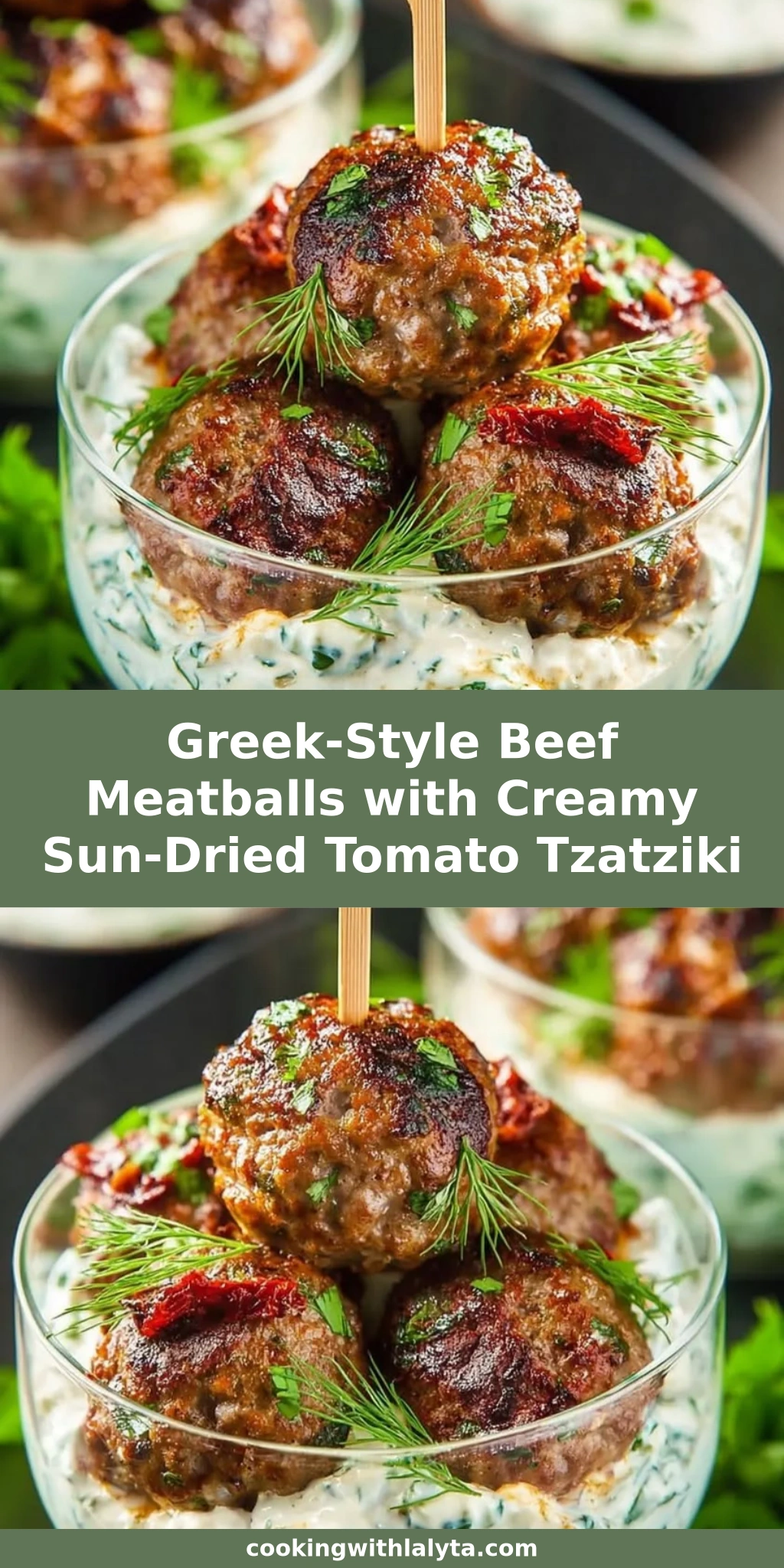
Picture this: you pull a tray of golden-brown meatballs from the oven, their surface crackling and caramelized in spots, releasing the scent of oregano, garlic, and sizzled beef fat into your kitchen. Each meatball is tender to the bite — not dense or dry, but light and springy, thanks to a simple panade of breadcrumbs and milk that I learned during my French training. And then comes that glorious tzatziki: thick, velvety Greek yogurt swirled with jewel-toned bits of sun-dried tomato, flecks of fresh garlic, and cool, watery cucumber that has been squeezed dry so the sauce stays luxuriously thick. A spoonful drapes over the warm meatballs, melting slightly at the edges, and the first bite is a perfect storm of savory, tangy, and herbaceous notes that transport you straight to a seaside taverna — even if you’re actually eating at your kitchen counter in Brooklyn.
Over the years, I’ve made more batches of beef meatballs with tzatziki than I can count — testing, tweaking, and tasting until every element felt just right. What makes my version truly stand out is the addition of sun-dried tomatoes directly into the tzatziki, a trick I stumbled upon one winter when fresh tomatoes at the Union Square Greenmarket were less than inspiring. That little twist transformed a classic sauce into something deeply savory and memorable. In the steps below, I’ll walk you through every detail — including a crucial tip about mixing the meat gently to avoid tough texture, and one surprisingly common mistake that can ruin your tzatziki in seconds. Stick with me, and you’ll have a restaurant-quality Greek meatball recipe that comes together in just over half an hour.
Why This Greek-Style Beef Meatballs Recipe Is the Best
The Flavor Secret: What sets this recipe apart is the deeply savory, almost caramelized character that sun-dried tomatoes bring to the creamy tzatziki sauce. Traditional tzatziki relies on fresh cucumber and dill for its brightness, but by folding in chopped sun-dried tomatoes — especially the oil-packed kind — you introduce a layer of umami and a subtle tang that elevates the entire dish. I first experimented with this combination after reminiscing about the preserved lemons and slow-simmered tomato sauces of my mother’s Moroccan kitchen, where concentrated flavors were always the backbone of a memorable meal. Paired with earthy dried oregano and sharp raw garlic, these meatballs hit every note: savory, bright, herbaceous, and just a little bit indulgent.
Perfected Texture: If you’ve ever bitten into a meatball that felt more like a rubbery golf ball than a tender morsel, you know how crucial technique is. My training in Paris drilled into me the importance of a proper panade — that humble mixture of breadcrumbs and milk that acts like a sponge, holding moisture inside the meat as it cooks. Combined with gentle mixing (overworking ground beef is the cardinal sin of meatball-making) and the right oven temperature, you get a result that’s cooked through but still juicy, with a lightly crisped exterior that gives way to a soft, flavorful center. These Greek beef meatballs deliver that perfect texture every single time.
Foolproof & Fast: Even if you’re new to cooking or short on time after a long day, this recipe is designed to work with you, not against you. Everything comes together in about 33 minutes from start to finish, and the oven does most of the heavy lifting while you whip up the no-cook tzatziki. There’s no finicky stovetop browning, no need for a stand mixer, and no hard-to-find ingredients — I’ve tested every step to make sure the process is as streamlined as possible while still yielding a dish that tastes like you spent hours on it. Whether you’re feeding a busy family or hosting friends for a casual dinner, this Greek meatball recipe is a reliable crowd-pleaser.
Greek Beef Meatballs Ingredients
I’ve always believed that great cooking starts with great ingredients, and this recipe is no exception. When I shop for these meatballs, I swing by my local butcher in the East Village for freshly ground beef with an 80/20 lean-to-fat ratio — it’s the sweet spot for flavor and moisture. The sun-dried tomatoes I pick up from a Mediterranean market in Astoria, where the jars glisten with golden olive oil, and the Greek yogurt comes from a brand I’ve trusted since my Paris days, thick enough to hold its shape on a spoon. You don’t need to be in NYC to source excellent ingredients, though — everything on this list is readily available at any well-stocked US grocery store. Here’s what you’ll need:
Ingredients List
- For the meatballs:
- 1 lb ground beef (80/20 recommended)
- 1/2 cup breadcrumbs (plain or Italian-style)
- 1/4 cup milk (whole milk preferred)
- 1 large egg
- 2 cloves garlic, minced
- 1 tsp dried oregano
- 1/2 tsp salt
- 1/4 tsp black pepper
- 1/4 cup finely chopped onion
- For the tzatziki:
- 1 cup Greek yogurt (full-fat, for the creamiest texture)
- 1/2 cup sun-dried tomatoes, finely chopped (oil-packed, drained)
- 1/2 cucumber, grated and squeezed dry
- 1 tbsp fresh lemon juice
- 1 tbsp olive oil
- 1 clove garlic, minced
- Salt and pepper to taste
Ingredient Spotlight
Ground Beef (80/20): The fat content here is non-negotiable for me. Leaner beef (like 90/10 or 93/7) will produce drier, less flavorful meatballs because there’s simply not enough fat to baste the meat from within as it cooks. In a typical US grocery store, look for “ground chuck” on the label, which naturally hovers around that 80/20 mark. If you can only find leaner ground beef, you can compensate by adding a tablespoon of olive oil to the mixture, but the texture will still be slightly less tender. An even richer alternative is to substitute half the beef with ground lamb, which adds a gamier, more assertively Greek flavor profile and boosts the overall juiciness.
Sun-Dried Tomatoes: This is the ingredient that transforms the tzatziki from classic to crave-worthy. I always reach for the oil-packed variety, which are plump, soft, and packed with concentrated tomato flavor that disperses beautifully through the yogurt. You’ll find them in jars, often near the pasta aisle or olive bar at markets like Whole Foods or Trader Joe’s. Be sure to drain the excess oil and blot them lightly with a paper towel before chopping — too much residual oil can make the tzatziki greasy and split. If you only have dry-packed sun-dried tomatoes, rehydrate them in warm water for 10 minutes and pat dry before using. The flavor will be slightly less intense, but still delicious.
Greek Yogurt: True Greek yogurt is strained more heavily than regular yogurt, which gives it that luxuriously thick, spoonable texture that holds up beautifully in sauces. I opt for full-fat (at least 5% milk fat) because it delivers the richest mouthfeel and doesn’t release watery whey into the tzatziki over time. Brands like Fage Total 5% or Stonyfield Organic Greek are widely available in US supermarkets and consistently perform well. If you’re in a pinch, you can use whole-milk plain yogurt, but I recommend straining it through a cheesecloth-lined sieve for 30 minutes to achieve a similar thickness; otherwise, your tzatziki may turn out thin and runny.
Fresh Cucumber: Cucumber brings cool, refreshing contrast to the rich meatballs, but it’s also the ingredient that most often sabotages tzatziki. Cucumbers are over 95% water, and if that moisture isn’t removed, it will leach out and dilute the sauce into a sad, watery puddle. After grating the cucumber — I use the large holes of a box grater — pile it into a clean kitchen towel or several layers of paper towels and squeeze firmly over the sink. You’ll be amazed at how much liquid comes out. In terms of variety, English (hothouse) cucumbers are my go-to because they have thinner skin and fewer seeds, but a standard garden cucumber works perfectly well too.
| Original Ingredient | Best Substitution | Flavor / Texture Impact |
|---|---|---|
| Ground beef (80/20) | Ground lamb or half beef + half lamb | Lamb adds a richer, gamier flavor; slightly more fat keeps meatballs even juicier |
| Breadcrumbs | Gluten-free panko or almond flour | Panko keeps the light texture; almond flour adds a subtle nuttiness and binds well |
| Whole milk | Unsweetened almond milk or oat milk | Slightly less rich panade, but still effective for moisture retention |
| Full-fat Greek yogurt | Dairy-free coconut yogurt (unsweetened) | Adds mild coconut flavor; choose a thick brand to avoid runny tzatziki |
| Sun-dried tomatoes in oil | Roasted red peppers, finely chopped | Sweeter, less intense umami, but still adds nice color and tang |
How to Make Greek-Style Beef Meatballs with Creamy Sun-Dried Tomato Tzatziki — Step-by-Step
Cooking should feel joyful, not stressful, and this recipe is designed to give you plenty of breathing room. The meatballs bake hands-off in the oven while you stir together the tzatziki, so everything comes together in a relaxed, efficient rhythm. Follow each step as written, and I promise you’ll be rewarded with a meal that tastes like a summer evening on the Aegean coast.
Step 1: Prepare Oven and Pan
Preheat your oven to 400°F and position a rack in the center. Line a large, rimmed baking sheet with parchment paper — this not only prevents sticking but also makes cleanup a breeze. The high heat is essential for achieving that golden-brown exterior on the meatballs while keeping the inside tender. If your oven tends to run cool, bump it up to 425°F; if it runs hot, check the meatballs at the 14-minute mark.
💡 Lalybeth’s Pro Tip: For extra browning and a slightly crisper crust, lightly brush the parchment paper with a teaspoon of olive oil before placing the meatballs on it. This gives them a delicious seared edge without any stovetop splatter.
Step 2: Mix the Meatball Mixture
In a large mixing bowl, combine the breadcrumbs and milk first, stirring gently and letting the mixture sit for about 2 minutes until the breadcrumbs have fully absorbed the liquid. This is your panade — the secret to moist meatballs. Then add the ground beef, egg, minced garlic, dried oregano, salt, black pepper, and finely chopped onion. Using clean hands or a fork, mix everything together just until the ingredients are evenly distributed — about 30 to 45 seconds of gentle folding. You should still see small streaks and ribbons of fat in the meat; that’s a good sign.
⚠️ Common Mistake to Avoid: Overmixing is the number one reason meatballs turn out tough and dense. When ground beef is handled too much, the proteins knit together tightly, squeezing out moisture during cooking. Mix lightly, stop as soon as everything is combined, and your meatballs will stay beautifully tender.
Step 3: Form the Meatballs
Using slightly damp hands to prevent sticking, scoop out portions of the meat mixture and roll them into balls about 1 to 1.5 inches in diameter. You should end up with roughly 18 to 20 meatballs. Place them on the prepared baking sheet with at least an inch of space between each one — this spacing allows hot air to circulate and ensures even browning on all sides, rather than steaming the meatballs.
💡 Lalybeth’s Pro Tip: Use a small cookie scoop or a tablespoon measure to portion the meat mixture before rolling. This guarantees uniformly sized meatballs, which means they’ll all finish cooking at exactly the same time — no guessing, no dry edges on the smaller ones.
Step 4: Bake the Meatballs
Slide the baking sheet into the preheated oven and bake for 15 to 18 minutes. At the halfway point (around 8 minutes), rotate the pan 180 degrees to promote even browning, especially if your oven has hot spots. The meatballs are done when they’re nicely browned on the outside and register at least 160°F on an instant-read thermometer inserted into the center of one. If you don’t have a thermometer, cut one open — the interior should be just barely pink in the very center, with clear juices running.
⚠️ Common Mistake to Avoid: Don’t overcrowd the baking sheet. If you try to fit too many meatballs on one tray, they’ll steam rather than brown. Use two sheets if needed, and rotate them between racks halfway through baking.
Step 5: Make the Sun-Dried Tomato Tzatziki
While the meatballs are in the oven, prepare the sun dried tomato tzatziki. In a medium bowl, spoon in the full-fat Greek yogurt. Add the finely chopped sun-dried tomatoes (make sure they’re well-drained and blotted), the grated cucumber that you’ve already squeezed firmly dry, fresh lemon juice, olive oil, and minced garlic. Stir everything together with a spatula or spoon until the sun-dried tomato pieces are evenly distributed and the sauce is a uniform pale orange-pink color. Season with salt and freshly cracked black pepper to taste, then refrigerate the tzatziki for at least 5 minutes to let the flavors meld.
💡 Lalybeth’s Pro Tip: Make the tzatziki at least 15 minutes ahead of serving if you can — the garlic mellows and the sun-dried tomato flavor deepens beautifully as it sits. This is a trick I picked up from a Greek chef friend who swore by “resting the sauce like a good stew.”
Step 6: Assemble and Serve
When the meatballs are hot out of the oven, transfer them to a serving platter or individual plates. You can either spoon the chilled tzatziki generously over the top or serve it on the side in a small bowl for dipping. For a beautiful presentation, nestle the meatballs over a bed of warm pita wedges or a simple arugula salad, then drizzle with the tzatziki and finish with a sprinkle of fresh herbs and a final crack of black pepper. The contrast of warm meatballs against the cool, creamy sauce is absolutely irresistible.
⚠️ Common Mistake to Avoid: Don’t let the hot meatballs sit in the tzatziki for too long before serving, or the yogurt sauce can separate from the heat. Either top the meatballs just before bringing them to the table or serve the tzatziki on the side.
| Step | Action | Duration | Key Visual Cue |
|---|---|---|---|
| 1 | Preheat oven, line sheet | 5 mins | Oven at 400°F, parchment in place |
| 2 | Mix panade and meat mixture | 5 mins | Evenly combined, still loose |
| 3 | Form meatballs | 5 mins | 18–20 uniform 1-inch balls |
| 4 | Bake meatballs | 15–18 mins | Golden brown, 160°F internal |
| 5 | Make tzatziki | 10 mins | Creamy, evenly tinted sauce |
| 6 | Assemble and serve | 2 mins | Warm meatballs, chilled sauce |
Serving & Presentation
There’s something deeply satisfying about presenting a platter of these glistening, herb-scented meatballs to your family or guests — it’s the kind of dish that looks impressive but took you less than 35 minutes to pull together. I love to arrange the warm meatballs over a large, shallow bowl of lemony couscous or orzo, the grains catching all the extra tzatziki that drips down. A scattering of fresh dill, mint, or flat-leaf parsley adds a pop of green and a final layer of brightness, while a few extra chopped sun-dried tomatoes on top reinforce the sauce’s star ingredient and make the dish totally photo-worthy.
When I serve these Greek beef meatballs in my NYC apartment, I lean into the Mediterranean vibe with simple, fresh sides. A classic Greek salad with chunks of ripe tomato, cucumber, red onion, kalamata olives, and crumbled feta is an obvious but perfect partner — the acidity of the vinaigrette cuts through the richness of the meat and creamy tzatziki. For something a bit more substantial, warm pita bread or grilled flatbread is fantastic for scooping up every last bit of sauce, and I sometimes put out a small bowl of extra-virgin olive oil sprinkled with za’atar for dipping. If you grew up in a Moroccan household like I did, you might also recognize my mother’s habit of putting a small dish of harissa on the table — just a tiny dab adds a fiery kick that plays beautifully against the cooling yogurt.
For a dinner party no-fail presentation, spoon a generous pool of the creamy sun-dried tomato tzatziki onto a large wooden board, then nestle the meatballs right into it. Scatter crumbled feta, toasted pine nuts, and fresh herbs over the top, and let everyone serve themselves with toothpicks or small forks. It’s casual, convivial, and guaranteed to disappear fast — exactly the way food should be enjoyed.
| Pairing Type | Suggestions | Why It Works |
|---|---|---|
| Side Dish | Greek salad, lemon-herb orzo, roasted zucchini | Bright, acidic flavors balance the rich meatballs and creamy tzatziki |
| Sauce / Dip | Extra tzatziki, hummus, spicy harissa | Layers of flavor from cooling to fiery; harissa nods to Mediterranean heat |
| Beverage | Crisp white wine (Assyrtiko), sparkling water with lemon, iced mint tea | Refreshing, palate-cleansing drinks that complement the oregano and garlic |
| Garnish | Fresh dill, crumbled feta, toasted pine nuts, lemon wedges | Adds color, texture, and a final bright pop of flavor |
Make-Ahead, Storage & Reheating
As a busy New Yorker who often juggles recipe testing with teaching cooking classes and exploring the city’s ever-changing food scene, I’m a huge fan of recipes that can be prepped ahead. These beef meatballs with tzatziki are wonderfully meal-prep friendly — you can have a batch of meatballs ready in the fridge or freezer, and the tzatziki only gets better after a day of melding. I often make a double batch on Sunday and enjoy them throughout the week in different ways: tucked into a pita for lunch, crumbled over a grain bowl, or reheated for a quick dinner with a fresh batch of sauce.
| Method | Container | Duration | Reheating Tip |
|---|---|---|---|
| Refrigerator | Airtight glass container | Up to 4 days | Reheat in a 350°F oven for 8–10 minutes, or microwave with a damp paper towel for 45 seconds |
| Freezer | Freezer-safe zip-top bag (uncooked or cooked) | Up to 3 months | Thaw overnight in fridge; reheat as above. Cook from frozen by adding 5–7 extra minutes to bake time |
| Make-Ahead | Covered bowl (meat mixture) / separate container (tzatziki) | Meat mixture: 1 day in advance. Tzatziki: up to 2 days in advance | Form and bake meatballs day-of; stir tzatziki well before serving to re-incorporate any separated liquid |
One thing I’ve learned from countless leftovers in my own fridge: the tzatziki may release a small amount of liquid as it sits — that’s perfectly normal. Simply give it a good stir before serving, and it will come right back together. For the meatballs, I find the oven reheating method far superior to the microwave, as it revives that slightly crisped exterior without drying out the interior. If I’m in a rush, though, a 45-second zap with a damp paper towel draped over the meatballs works in a pinch — the steam keeps them from turning rubbery. Never boil or pan-fry already-cooked meatballs to reheat them; the intense direct heat will seize up the proteins and undo all your careful work.
If you’re freezing raw meatballs, I recommend flash-freezing them first: arrange the formed meatballs on a parchment-lined tray, freeze until solid (about 1 hour), then transfer them to a zip-top bag. This way, they won’t clump together, and you can pull out exactly as many as you need for a quick weeknight meal. When you’re ready to cook, add 5 to 7 minutes to the bake time and check for doneness with a thermometer. The tzatziki, on the other hand, does not freeze well — the yogurt will separate and turn grainy upon thawing — so always make that fresh or store it in the fridge only.
Variations & Easy Swaps
| Variation | Key Change | Best For | Difficulty Impact |
|---|---|---|---|
| Lamb and Mint Meatballs | Swap beef for ground lamb; add 2 tbsp chopped fresh mint | Traditional Greek flavor lovers | No change — still easy |
| Gluten-Free & Dairy-Free | Use GF panko and unsweetened coconut yogurt | Dietary restrictions | Slightly more attention to tzatziki texture |
| Spicy Harissa Meatballs | Add 1–2 tbsp harissa paste to meat mixture | Heat seekers | No change — still easy |
Lamb and Mint Meatballs
For a more traditional Greek profile, swap the ground beef entirely for ground lamb — the slightly gamey, rich flavor of lamb is a natural partner to oregano and garlic. Lamb also tends to be fattier than beef, so your meatballs will be exceptionally juicy. I like to add about two tablespoons of finely chopped fresh mint to the mixture, which brings a cooling, aromatic note that balances the richness beautifully. This variation reminds me of the fragrant lamb dishes my mother would slow-cook in Morocco, though she used cumin and cinnamon instead of Greek herbs. Serve these lamb meatballs with the same sun-dried tomato tzatziki — the tangy sweetness of the tomatoes is even more striking against the bold lamb flavor.
Gluten-Free and Dairy-Free Meatballs
You don’t have to miss out on these Greek beef meatballs if you’re avoiding gluten or dairy. For the panade, use gluten-free panko breadcrumbs (I’ve had great results with the Kikkoman brand, which is widely available in US grocery stores) and swap the whole milk for unsweetened almond or oat milk. The meatballs will still hold their moisture well, though the exterior may be slightly less browned — a trick to help with that is to broil them for the final 2 minutes of cooking. For the tzatziki, choose a thick, unsweetened coconut yogurt (Culina or Cocojune are excellent options) and expect a subtle coconut undertone that actually complements the sun-dried tomatoes rather than clashing with them. The texture will be slightly softer than dairy-based tzatziki, so keep it well-chilled until serving.
Spicy Harissa Meatballs
If your palate leans toward the bold and spicy side — as mine often does — stir one to two tablespoons of harissa paste directly into the meat mixture before forming the meatballs. Harissa, a North African chili paste that I grew up eating in Morocco, brings smoky, garlicky heat that pairs surprisingly well with the cooling tzatziki. The sun-dried tomatoes in the sauce echo the deep red color of the harissa, so visually, it’s stunning too. You can find harissa in the international aisle of most supermarkets, or at specialty stores like Kalustyan’s here in NYC. Start with one tablespoon if you’re heat-sensitive; two if you want a noticeable kick that lingers. As a finishing touch, drizzle a tiny bit of extra harissa oil over the plated dish for a restaurant-worthy presentation.
Frequently Asked Questions
What is the best way to keep Greek-style beef meatballs moist and tender?
The secret to moist, tender Greek beef meatballs lies in three key factors: using ground beef with at least 20% fat (80/20 chuck is ideal), incorporating a panade of breadcrumbs soaked in milk, and mixing the meat as gently and briefly as possible. The panade acts like a moisture sponge, trapping steam inside the meatball as it cooks, while the fat bastes the meat from within. Overmixing is the enemy — it overworks the proteins, causing them to tighten and squeeze out the juices. I also bake these at 400°F rather than at a lower temperature, which quickly sets the exterior, sealing in moisture and giving you that golden-brown crust without drying out the center. With these techniques, you’ll never bite into a tough, dry meatball again.
Can I substitute lamb or turkey for the beef in this meatball recipe?
Absolutely, and each substitution brings its own character to the dish. Ground lamb is a classic Greek choice and will yield even juicier meatballs thanks to its higher fat content, plus a deeper, slightly gamey flavor that pairs wonderfully with oregano and the tangy sun-dried tomato tzatziki. If you prefer a leaner option, ground turkey can work, but I strongly recommend using dark meat turkey (thigh) rather than breast, and adding a tablespoon of olive oil to the mixture to prevent dryness. Turkey meatballs also benefit from an extra pinch of salt and a touch more garlic to compensate for the milder flavor. No matter which protein you choose, follow the same gentle mixing technique and temperature guidelines for the best results.
How long should I cook the meatballs for the perfect texture, and at what temperature?
I’ve found that 400°F for 15 to 18 minutes is the sweet spot for perfectly textured Greek beef meatballs. At this temperature, the exterior browns and develops a lightly crisp crust while the interior cooks through to a safe 160°F without drying out. If your oven runs hot, check them at the 14-minute mark. For the most reliable results, I always use an instant-read thermometer — it takes the guesswork out of doneness. If you’re working with larger meatballs (2 inches or more), you’ll need to add 3 to 5 minutes to the bake time. Avoid cooking at a lower temperature for longer, as that tends to dry the meatballs out from the outside in, leaving you with a tough, overcooked exterior and no improvement in tenderness.
What are some good side dishes to serve with creamy sun-dried tomato tzatziki and beef meatballs?
The versatility of these meatballs and their creamy tzatziki means they pair beautifully with a wide range of sides. For a classic Greek-inspired meal, serve them over lemon-herb orzo or fluffy couscous, with a crisp Greek salad of tomato, cucumber, red onion, olives, and feta on the side. Warm pita bread or grilled flatbread is perfect for scooping up every last bit of sauce. For a lighter, low-carb option, try them over a bed of peppery arugula dressed simply with lemon and olive oil. Roasted vegetables like zucchini, eggplant, or bell peppers also make excellent companions, their natural sweetness echoing the sun-dried tomatoes in the tzatziki. Don’t forget a squeeze of fresh lemon over everything just before serving — it brightens all the flavors beautifully.
Can I make the sun-dried tomato tzatziki ahead of time, and how should I store it?
Yes, and in fact, I encourage it! The sun-dried tomato tzatziki actually improves as it rests — the garlic mellows, the sun-dried tomato flavor deepens and disperses more evenly, and the sauce thickens slightly in the refrigerator. You can make it up to two days in advance and store it in an airtight container in the fridge. Before serving, give it a good stir, as a small amount of liquid may settle on top. Do not freeze the tzatziki, as yogurt-based sauces separate and become grainy when thawed. If you’re meal-prepping, store the tzatziki separately from the meatballs and combine them just before serving to maintain the perfect temperature and texture contrast.
Why do my meatballs fall apart during cooking, and how can I prevent it?
Meatballs typically fall apart for one of two reasons: either the mixture is too wet, or there isn’t enough binder to hold everything together. In this Greek meatball recipe, the egg and the breadcrumb panade work together as the binding agents — the egg proteins set during cooking and act as a glue, while the hydrated breadcrumbs add structure. Make sure you’re using the full 1/2 cup of breadcrumbs and the egg as written. Also, avoid adding extra wet ingredients (like additional milk or watery onion) without compensating with more breadcrumbs. When forming the meatballs, roll them firmly enough to hold their shape but don’t compact them into dense spheres — a light but confident touch is what you’re aiming for. If you’re still having trouble, chill the formed meatballs for 15 minutes before baking to help them set.
Can I pan-fry the meatballs instead of baking them?
You certainly can, though I prefer baking for its hands-off ease and even browning without the need for constant tending. To pan-fry, heat a tablespoon or two of olive oil in a large skillet over medium-high heat. Add the meatballs in a single layer — don’t overcrowd the pan — and cook for about 8 to 10 minutes, turning them every couple of minutes with tongs to brown all sides evenly. You’ll likely need to work in batches. The interior should reach 160°F on a thermometer. Pan-frying gives you a slightly crisper, more deeply caramelized crust, but it requires more attention and can smoke up your kitchen. Both methods produce delicious results, so choose based on your preference and cleanup tolerance!
What type of sun-dried tomatoes should I use for the tzatziki — oil-packed or dry-packed?
I almost always reach for oil-packed sun-dried tomatoes for this tzatziki. They’re softer, more pliable, and packed with a rich, concentrated tomato flavor that disperses easily through the yogurt. Plus, their texture is already tender, so they meld seamlessly into the sauce without any chewiness. Just be sure to drain them well and blot off excess oil with a paper towel before chopping. Dry-packed sun-dried tomatoes are a fine substitute in a pinch — rehydrate them in warm water for about 10 minutes, then drain and pat very dry. The flavor will be slightly less intense and the texture a bit firmer, but they’ll still work well. Avoid sun-dried tomatoes packed in water or brine, as they can be too acidic and watery for this application.
How can I make this recipe low-carb or keto-friendly?
With a few simple swaps, this Greek meatball recipe fits beautifully into a low-carb or keto lifestyle. Replace the breadcrumbs with an equal amount of almond flour or crushed pork rinds — both act as effective binders while keeping the carb count minimal. The milk can be swapped for heavy cream, which brings even more richness and fat to the panade. Be sure to use full-fat Greek yogurt for the tzatziki (it’s naturally lower in carbs than regular yogurt), and double-check that your sun-dried tomatoes aren’t packed in a sugary solution — most oil-packed varieties are perfectly keto-friendly. Served over cauliflower rice or a crisp green salad, this becomes a satisfying, nutritious meal that clocks in under 10 grams of net carbs per serving.
What can I do with leftover meatballs and tzatziki?
Leftovers from this recipe are a gift that keeps on giving. Slice the cold or reheated meatballs and tuck them into a warm pita with shredded lettuce, sliced tomato, and a generous drizzle of the tzatziki for a quick Greek-inspired wrap. Crumble them over a grain bowl with quinoa, roasted vegetables, and a lemony dressing for a hearty lunch. You can also chop the meatballs and use them as a protein-packed topping for a Greek salad, transforming it into a satisfying main course. The tzatziki itself is fantastic as a dip for raw vegetables, a spread for sandwiches, or a sauce for grilled chicken or fish later in the week. Both components keep well for up to four days in the refrigerator, so don’t let a single bite go to waste.
Share Your Version!
There is nothing I love more than seeing your kitchen creations come to life — it’s the heartbeat of this blog and the reason I keep sharing recipes from my little NYC kitchen. If you make these Greek-Style Beef Meatballs with Creamy Sun-Dried Tomato Tzatziki, please take a moment to leave a star rating and a comment below. Tell me how they turned out, whether you tried any of the variations, or what you served alongside them. Your feedback helps other readers and honestly makes my whole day.
And if you’re snapping a photo — and I hope you are, because these meatballs are beautiful on the plate — share it on Instagram or Pinterest and tag me @cookingwithlalyta. I repost my favorites in my stories, and it’s such a joy to see this recipe appearing in kitchens from California to Maine. Here’s a question I’d especially love to hear your answer to: What’s one ingredient you always keep in your pantry that makes your meatballs uniquely yours? Drop your secret in the comments — I’m always collecting inspiration from this incredible community.
From my NYC kitchen to yours — I hope this recipe brings as much warmth to your table as it does to mine. — Lalybeth 🧡
Love This Recipe? Save It to Pinterest!
If you enjoyed this Greek-Style Beef Meatballs with Creamy Sun-Dried Tomato Tzatziki recipe, don’t let it get lost in your browser tabs! 😄 Pin it now so you can find it again anytime — and explore hundreds more tried-and-tested recipes waiting for you on my Pinterest boards.
👉 Follow Lalybeth on Pinterest @cookingwithlalyta
📌 Pin this recipe · 🔁 Re-pin your favorites · 💬 Tag me when you make it — I love seeing your creations!
Did you try this Greek-Style Beef Meatballs recipe? 🧆
I’d love to hear your twist on it! Leave a ⭐ star rating and a comment below, or tag me @cookingwithlalyta on Instagram — I share my favorite remakes every week!
What’s one pantry ingredient that makes your meatballs uniquely yours? Let me know in the comments!

Greek-Style Beef Meatballs with Creamy Sun-Dried Tomato Tzatziki
- Total Time: 33 minutes
- Yield: 4 servings 1x
Description
Tender beef meatballs flavored with Greek spices, served with a creamy tzatziki sauce made tangy with sun-dried tomatoes.
Ingredients
- For the meatballs:
- 1 lb ground beef
- 1/2 cup breadcrumbs
- 1/4 cup milk
- 1 egg
- 2 cloves garlic, minced
- 1 tsp dried oregano
- 1/2 tsp salt
- 1/4 tsp black pepper
- 1/4 cup finely chopped onion
- For the tzatziki:
- 1 cup Greek yogurt
- 1/2 cup sun-dried tomatoes, chopped
- 1/2 cucumber, grated and squeezed dry
- 1 tbsp lemon juice
- 1 tbsp olive oil
- 1 clove garlic, minced
- Salt and pepper to taste
Instructions
- Preheat oven to 400°F. Line a baking sheet with parchment paper.
- In a large bowl, combine ground beef, breadcrumbs, milk, egg, garlic, oregano, salt, pepper, and onion. Mix well.
- Form into 1-inch meatballs and place on prepared baking sheet.
- Bake for 15-18 minutes until cooked through and browned.
- While meatballs bake, prepare tzatziki: In a bowl, combine yogurt, sun-dried tomatoes, cucumber, lemon juice, olive oil, garlic, salt, and pepper. Stir well.
- Serve meatballs topped with tzatziki sauce.
Notes
For best results, use full-fat Greek yogurt. Sun-dried tomatoes in oil work well; drain excess oil.
- Prep Time: 15 minutes
- Cook Time: 18 minutes
- Method: Main Course
- Cuisine: Greek
Nutrition
- Calories: 350
- Sugar: 5g
- Fat: 22g
- Carbohydrates: 15g
- Protein: 28g
Tried This Recipe? Leave a Comment!
Did you make this recipe? I’d love to hear how it turned out! Please leave a comment and a rating below. Your feedback helps other home cooks and supports cookingwithlalyta.com!
For more delicious inspiration, follow me on Pinterest!