Table of Contents
Grilled Flank Steak with Balsamic Caprese Twist – A Juicy Summer Showstopper
I still remember the first time I tasted a true caprese salad in Paris—a stacked tower of ruby tomatoes, milky mozzarella, and basil leaves that smelled like summer. Back then, as a culinary student, I was learning the art of balancing bright, clean flavors. Years later, in my New York City kitchen, I found myself craving that same freshness but with a hearty, satisfying protein. That’s how this grilled flank steak with balsamic caprese twist was born. It’s a dish that marries my French training with my Moroccan love for bold marinades, all finished with a drizzle of sweet-tangy balsamic glaze that makes every bite sing. Whether you call it balsamic caprese steak or flank steak caprese, this recipe delivers restaurant-quality results on a weeknight timeline.
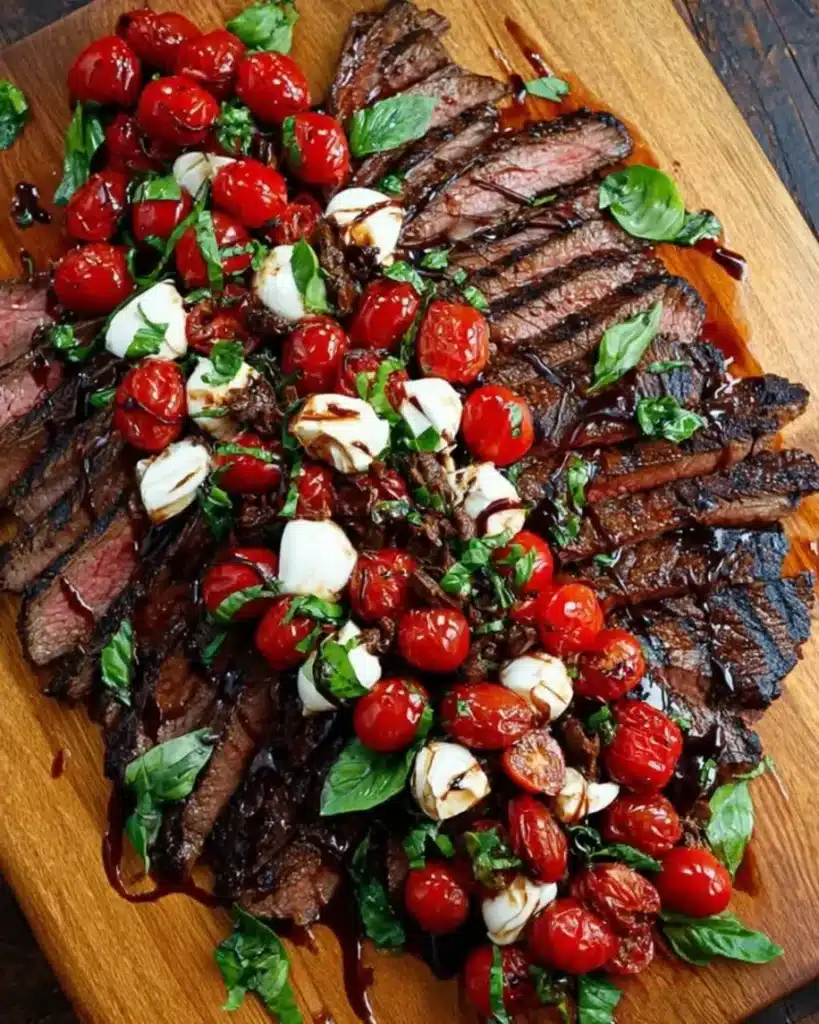
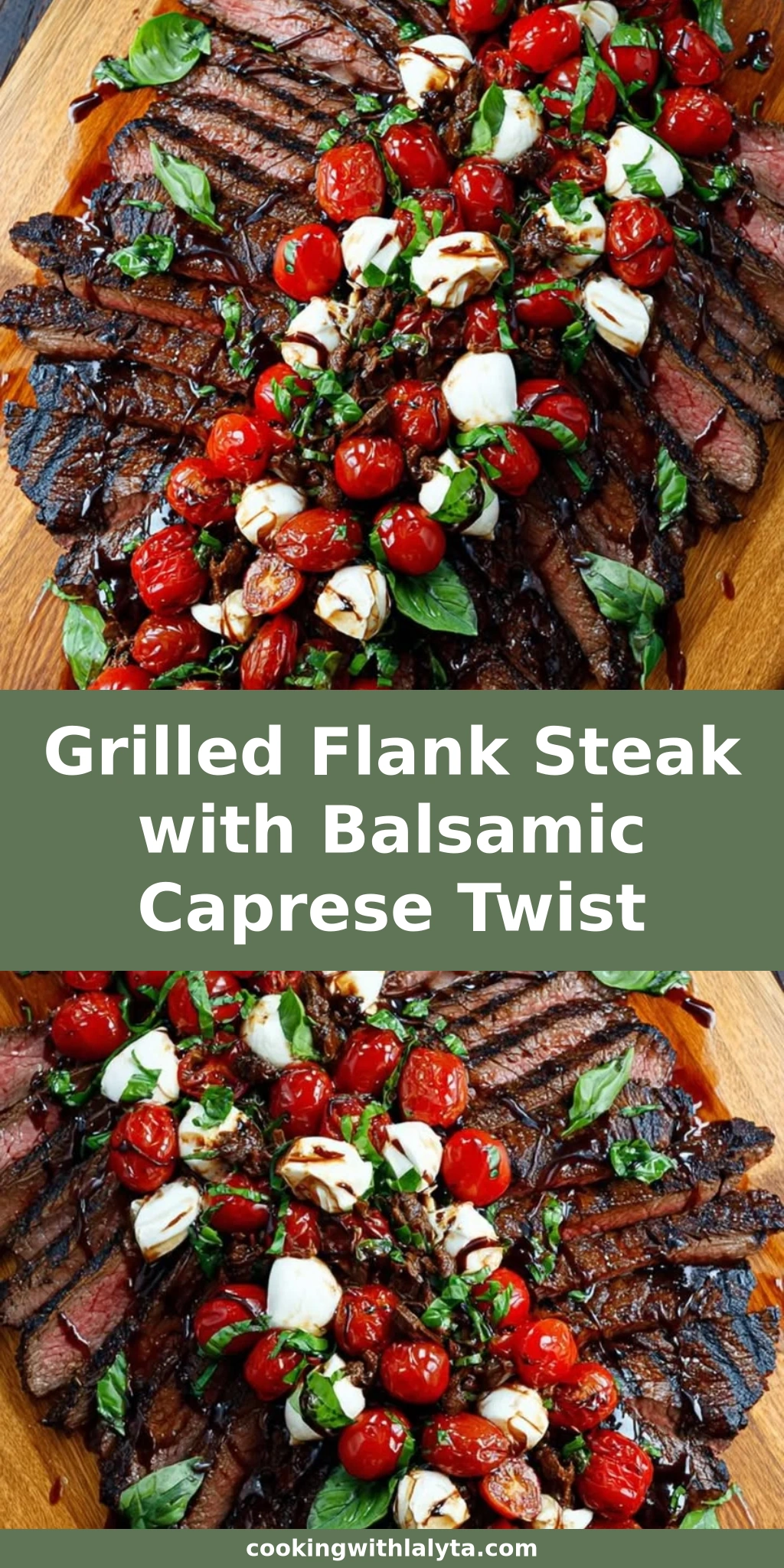
Imagine slicing into a perfectly grilled flank steak—the exterior charred just enough to give those irresistible grill marks, while the interior stays butter-soft and blushing pink. The aroma of garlic, oregano, and balsamic vinegar hits you first, then the visual of creamy mozzarella melting ever so slightly over warm steak slices, topped with jewel-toned tomatoes and bright green basil. I like to use a two-step marinade technique I learned in Paris: an acid-based marinade tenderizes the meat while infusing it with deep flavor, and a quick brush of olive oil right before grilling ensures a beautiful crust. The result is a grilled flank steak recipe that’s juicy, not chewy—a common pitfall I’ll help you avoid.
What makes this version special is the caprese twist—it’s more than just a garnish. The fresh mozzarella and tomatoes are arranged over the hot steak so they gently warm without losing their fresh bite, and the balsamic glaze ties everything together with a sweet, tangy finish. I’ll share my pro tip for slicing flank steak against the grain (the absolute non-negotiable for tenderness) and a common mistake that can turn your prized steak into a tough disappointment. Stick with me, and you’ll have a stunning main course that’s equally at home on a busy weeknight or a backyard dinner party.
Why This Grilled Flank Steak Recipe Is the Best
The Flavor Secret: This isn’t just a steak with a salad on top. The balsamic vinegar in the marinade does double duty—it tenderizes the lean flank steak while building layers of umami. I borrowed a trick from my Paris instructors: adding dried oregano to the marinade rather than fresh, because its concentrated oils penetrate the meat more effectively. Then, the balsamic glaze finish echoes that tangy sweetness, creating a harmonious flavor loop. It’s exactly what you want in a balsamic caprese steak: every forkful captures grilled smokiness, creamy richness, and bright acidity.
Perfected Texture: Flank steak can be unforgiving if mishandled, but here’s where chef precision pays off. I teach you to grill over high heat for a fast sear, creating a caramelized crust while keeping the center medium-rare. The resting step is non-negotiable—those 10 minutes let muscle fibers relax so juices don’t flood your cutting board. And slicing against the grain shortens the tough muscle strands, giving you that melt-in-your-mouth texture. In all my years cooking in NYC steakhouses and catering, this is the grilled flank steak recipe that gets the most “how did you do that?” comments.
Foolproof & Fast: Even if you’re nervous around the grill, this recipe has your back. With only 15 minutes of active prep and a quick cook time, it’s achievable on a hectic Tuesday yet impressive enough for company. The marinade does the heavy lifting, and the caprese topping requires zero cooking—just slicing and arranging. I’ve tested it dozens of times in my tiny NYC apartment kitchen (with a trusty grill pan) and out on my fire escape, so I know it works with minimal equipment. Plus, I’ll give you all my storage and reheating hacks so leftover flank steak caprese stays delicious tomorrow.
Grilled Flank Steak Ingredients
I buy my flank steak at the butcher counter in my neighborhood, but most US supermarkets carry it. Look for a piece with even thickness so it cooks uniformly. For the mozzarella, I grab a ball of fresh, water-packed mozzarella from the Italian specialty shop near Union Square—it’s milky soft and melts just right. In summer, I snag heirloom tomatoes at the greenmarket; in winter, Campari or vine-ripened tomatoes work beautifully. The balsamic glaze is a pantry staple—I use a good-quality store-bought one, but if you’re ambitious, you can reduce balsamic vinegar with a touch of honey until syrupy.
Ingredients List
- 1 1/2 to 2 pounds flank steak
- 3 tablespoons olive oil, divided
- 2 tablespoons balsamic vinegar
- 3 cloves garlic, minced
- 1 teaspoon dried oregano
- 1 teaspoon kosher salt
- 1/2 teaspoon black pepper
- 8 ounces fresh mozzarella, sliced
- 2 large ripe tomatoes, sliced
- 1 cup fresh basil leaves
- 2 tablespoons balsamic glaze, for drizzling
- Flaky sea salt, for serving
Ingredient Spotlight
Flank Steak: This lean, beefy cut comes from the belly area. Because it’s well-exercised, it has long muscle fibers, so slicing against the grain is critical. Buy one with a bright red color and minimal surface moisture. Substitute skirt steak or hanger steak for a similar texture, but note they cook faster and have a richer flavor.
Fresh Mozzarella: Opt for the soft, milky kind sold in brine, not low-moisture block mozzarella. It adds a creamy contrast to the beef. If you can’t find it, burrata is an indulgent swap—just tear it gently over the steak. In a pinch, sliced provolone offers a mild melt.
Balsamic Glaze: This is aged balsamic vinegar reduced to a thick syrup. It’s sweet, tangy, and clings beautifully to steak and cheese. Look for it in the vinegar aisle or make your own by simmering 1 cup balsamic vinegar with 2 tablespoons honey over low heat until it coats the back of a spoon (about 15 minutes).
Fresh Basil: Bright, peppery basil is non-negotiable for that caprese character. If you’re out, fresh arugula adds a spicy kick, though it’s not a true caprese twist.
| Original Ingredient | Best Substitution | Flavor / Texture Impact |
|---|---|---|
| Flank steak | Skirt steak or hanger steak | Richer flavor, slightly chewier if overcooked |
| Fresh mozzarella | Burrata or fresh provolone | Creamier (burrata) or milder melt (provolone) |
| Balsamic glaze | Reduced aged balsamic vinegar | Same tangy sweetness, slightly thinner |
| Fresh basil | Baby arugula | Peppery bite, loses the classic caprese aroma |
How to Make Grilled Flank Steak with Balsamic Caprese Twist – Step-by-Step
I promise this is easier than it looks. The key is organization: get your marinade mixed, let the steak soak up all that flavor, then focus on grilling it just right. I’ll walk you through each step with timing and visual cues so you feel like a pro.
Step 1: Make the Marinade
In a small bowl, whisk together 2 tablespoons olive oil, the balsamic vinegar, minced garlic, dried oregano, kosher salt, and black pepper until emulsified. The mixture will smell intensely of garlic and oregano—that’s exactly what we want. I use dried oregano here because its flavor infuses the oil without burning on the grill later.
💡 Lalybeth’s Pro Tip: For even more garlicky depth, smash the cloves with the side of your knife before mincing. This releases more allicin, the compound that gives garlic its punch.
Step 2: Marinate the Steak
Place the flank steak in a shallow dish or a resealable bag. Pour the marinade over it, turning to coat every inch. Let it sit at room temperature for 30 minutes if you’re short on time, or cover and refrigerate for up to 8 hours. The acid in the balsamic vinegar begins tenderizing the meat immediately. I usually do this before I start my NYC workday, letting it marinate in the fridge until dinner.
⚠️ Common Mistake to Avoid: Don’t marinate longer than 8 hours. The vinegar can over-tenderize the steak, turning the exterior mushy. If you need to prep further ahead, mix the dry spices and oil, but add the vinegar closer to cook time.
Step 3: Preheat the Grill
Whether you’re using an outdoor grill or a stovetop grill pan, get it screaming hot—high heat. Brush the steak with the remaining 1 tablespoon olive oil to prevent sticking and help those beautiful grill marks form. The pan should be so hot that a drop of water dances and evaporates instantly.
💡 Lalybeth’s Pro Tip: Pat the steak dry with paper towels before oiling if you’ve marinated it in the fridge. Excess moisture creates steam, which prevents a proper sear. A dry surface equals a caramelized crust.
Step 4: Grill the Steak
Lay the steak on the hot grates at a slight diagonal to get those crosshatch marks if you like. Grill undisturbed for 4 minutes, then rotate 90 degrees (don’t flip yet) and cook 2 more minutes for those pretty char lines. Flip and repeat on the second side, aiming for an internal temperature of 130°F for medium-rare (check with an instant-read thermometer). Total cook time is about 10–12 minutes, but thickness varies, so trust your thermometer.
⚠️ Common Mistake to Avoid: Resist the urge to press down on the steak with your spatula. You’ll squeeze out juices and end up with a dry, sad piece of meat. Let the grill do its magic.
Step 5: Let It Rest
Transfer the grilled flank steak to a cutting board and tent loosely with foil. Rest for exactly 10 minutes. This step is as important as the grilling—carryover cooking will raise the temp a few degrees, and the muscle fibers relax, redistributing juices throughout the steak. I usually use this time to slice my mozzarella and tomatoes.
💡 Lalybeth’s Pro Tip: Resting time should be about half the total cooking time. If your steak took 12 minutes, rest 6 minutes—but with flank steak, a full 10 minutes is golden. I learned this in a Paris bistro kitchen, and it’s never failed me.
Step 6: Slice Against the Grain
Look at the steak—you’ll see thin lines running parallel across the surface: that’s the grain. Slice perpendicular to those lines, cutting thin strips at a slight bias. This severs the tough muscle fibers into short segments, giving you fork-tender bites. It’s the one thing that separates a great grilled flank steak recipe from a disappointment.
⚠️ Common Mistake to Avoid: Always double-check the grain direction before your first cut. If you slice with the grain, the steak will be unpleasantly chewy. I’ve seen even seasoned home cooks make this error—don’t let it be you!
Step 7: Assemble the Caprese Twist
Arrange the sliced steak on a serving platter, slightly overlapping the pieces for a pretty presentation. Top with fresh mozzarella slices and tomato slices, tucking them between the steak strips. Scatter the basil leaves generously. The warmth of the meat will just begin to soften the cheese—it’s a beautiful thing.
💡 Lalybeth’s Pro Tip: For a more melty effect, place the mozzarella slices on the steak immediately after slicing while it’s still very hot, then layer the tomatoes and basil. The residual warmth creates a luscious, slightly oozy texture.
Step 8: Drizzle & Serve
Finish with a generous drizzle of balsamic glaze across everything—the sweet-tangy ribbon ties the dish together. Sprinkle flaky sea salt over the tomatoes and mozzarella; it adds a subtle crunch and brings out their flavors. Serve immediately while the steak is still slightly warm.
| Step | Action | Duration | Key Visual Cue |
|---|---|---|---|
| 1 | Make marinade | 5 mins | Emulsified, fragrant mixture |
| 2 | Marinate steak | 30 mins – 8 hrs | Meat coated and darkened slightly |
| 3 | Preheat grill & oil steak | 10 mins | Grill smoking hot, steak glistening |
| 4 | Grill steak | 10–12 mins | Charred marks, 130°F internal |
| 5 | Rest | 10 mins | Steak warm, no pooling juices |
| 6 | Slice against grain | 2 mins | Perpendicular to muscle fibers |
| 7 | Assemble caprese | 3 mins | Cheese glistening, tomatoes layered |
| 8 | Drizzle & serve | 1 min | Glossy balsamic ribbons |
Serving & Presentation
In my NYC dinner parties, I love plating this grilled flank steak on a large rustic wooden board—it feels communal and instantly elevates the meal. Fan the slices out in a single layer, then nestle the mozzarella and tomato slices among them, letting the colors pop. A scattering of whole basil leaves and a final drizzle of balsamic glaze right at the table always draws oohs and aahs. For a more intimate setting, plate individually on warmed dishes and add a side of crusty bread to soak up the juices.
This flank steak caprese pairs beautifully with simple sides that don’t compete. In summer, I throw some thick slices of zucchini or eggplant on the grill alongside the steak. A chilled glass of rosé or a light Italian red like Chianti complements the balsamic notes perfectly. My Moroccan heritage nudges me to add a touch of heat sometimes—a sprinkle of crushed red pepper flakes or a side of harissa-spiked aioli for dipping.
| Pairing Type | Suggestions | Why It Works |
|---|---|---|
| Side Dish | Grilled asparagus, arugula salad, roasted potatoes | Green veggies add freshness; potatoes absorb juices |
| Sauce / Dip | Extra balsamic glaze, pesto, garlic aioli | Adds layers of creamy or herbal notes |
| Beverage | Dry rosé, Chianti, sparkling water with lemon | Acidity cuts through richness, refreshes palate |
| Garnish | Flaky sea salt, basil, toasted pine nuts | Salt enhances; pine nuts add crunch and nuttiness |
Make-Ahead, Storage & Reheating
Even with my busy NYC schedule, I find this grilled flank steak with balsamic caprese twist meal-prep friendly. I’ll often marinate the steak in the morning, then grill it fresh in the evening. If I have leftover cooked steak (happens rarely, but it’s a treat), I store it separately from the caprese toppings so everything stays fresh. The key is gentle reheating—flank steak dries out easily if blasted with high heat.
| Method | Container | Duration | Reheating Tip |
|---|---|---|---|
| Refrigerator | Airtight container | 3–4 days | Gently warm in a skillet with a splash of water or broth |
| Freezer | Freezer-safe bag, vacuum-sealed | 2–3 months | Thaw overnight; reheat in a 275°F oven wrapped in foil |
| Make-Ahead | Marinate up to 8 hours in advance | 1 day ahead | Assemble caprese toppings just before serving |
When I reheat, I slice the steak cold and lay it in a single layer in a skillet over low heat with a tablespoon of water or beef broth. Cover and let it steam gently for 2–3 minutes; it brings back that just-cooked tenderness without overcooking. I always add the fresh mozzarella, tomatoes, and basil only after reheating, with a fresh drizzle of balsamic glaze. That way, every bite tastes like the first day. If you packed it for lunch, serve it as a cold steak caprese salad—it’s surprisingly delightful straight from the fridge, especially on a hot summer day in the city.
Variations & Easy Swaps
| Variation | Key Change | Best For | Difficulty Impact |
|---|---|---|---|
| Spicy Caprese Steak | Add chili flakes to marinade, drizzle with spicy honey | Heat lovers | No change |
| Dairy-Free Pesto Flank Steak | Swap mozzarella for avocado, use dairy-free pesto | Lactose-intolerant or vegan option | Slightly easier |
| Grilled Veggie Caprese Board | Serve steak over grilled eggplant and bell peppers | When you want extra vegetables | Adds 10 mins |
Spicy Caprese Steak
I love channeling my Moroccan roots with a kick of heat. Add 1/2 teaspoon crushed red pepper flakes to the marinade, and instead of plain balsamic glaze, mix 2 tablespoons glaze with 1 teaspoon hot honey. Drizzle this over the finished dish. The sweet-spicy-tangy trio plays beautifully against the cooling mozzarella. I sometimes toss the basil with a little mint for an aromatic north African flair—it reminds me of the rooftop herb gardens in Marrakech.
Dairy-Free Pesto Flank Steak
When I’m cooking for my lactose-intolerant friends, I replace fresh mozzarella with sliced ripe avocado and a generous spoonful of dairy-free basil pesto. The avocado delivers that creamy mouthfeel, while pesto brings herby brightness. I still use the balsamic glaze because its sweetness balances the savory notes. The texture is a bit softer, but the flavors are so vibrant you won’t miss the cheese. Just add the avocado at the very last second so it doesn’t brown.
Grilled Veggie Caprese Board
For a smorgasbord dinner, I fire up the grill with extra vegetables: thick slices of eggplant, red bell pepper strips, and zucchini. After the steak rests, I grill the veggies with a drizzle of olive oil and salt. I arrange them on a big board, slice the steak on top, then add the caprese elements. This turns your grilled flank steak caprese into a family-style feast that’s perfect for a lazy Sunday in my NYC backyard. Leftovers make incredible sandwiches the next day.
What is the best way to grill flank steak so it stays tender and juicy?
To keep grilled flank steak tender, three things matter: high heat for a quick sear, proper resting, and slicing against the grain. I always preheat my grill or pan until it’s ripping hot, then cook the steak just to medium-rare (130°F internal). After grilling, let it rest 10 minutes so juices redistribute. Most importantly, look for the muscle fibers running along the steak and slice perpendicular to them. This shortens the tough strands, giving you fork-tender meat. Using a marinade with acid, like balsamic vinegar, also helps break down some of the toughness.
Can I use a different cut of beef instead of flank steak for this recipe?
Absolutely, skirt steak and hanger steak are excellent substitutes. Skirt steak has a more intense beefy flavor and cooks even faster, so watch it closely—it can go from perfectly charred to overdone in a flash. Hanger steak, once a butcher’s secret, is incredibly tender and marbled, though it’s a bit thicker. Both require the same slicing-against-the-grain technique. If you’re looking for a more budget-friendly option, top round can work, but it’s leaner and benefits from a longer marinade (up to 12 hours) to improve tenderness.
What can I substitute for fresh mozzarella or tomatoes in the caprese twist?
For mozzarella, burrata is a dreamy upgrade—its creamy center oozes over the warm steak. In a pinch, fresh provolone or even feta crumbles would work, though feta brings a saltier, tangier profile. If tomatoes aren’t in season, roasted red peppers or sun-dried tomatoes deliver concentrated sweetness and a similar juicy texture. I’ve also used peach slices in summer for a fruity twist that pairs surprisingly well with the balsamic. Just remember, the goal is to balance creamy, tangy, and fresh elements with the beef.
How long should I let the grilled flank steak rest before slicing it?
Rest your grilled flank steak for at least 10 minutes. This allows the muscle fibers to relax and reabsorb the juices that get pushed to the center during cooking. If you slice too soon, those juices spill out onto the board, leaving the steak dry. I rest mine tented loosely with foil on a cutting board, and I don’t skip this step even if I’m in a hurry. The result is a noticeably juicier, more tender steak. Trust me, after years of cooking in professional kitchens, it’s the single most important step for any grilled meat.
Can I make this recipe indoors without a grill?
Yes, a cast-iron grill pan or a heavy-bottomed skillet works beautifully. Get it very hot, add a touch of oil, and sear the flank steak the same as on an outdoor grill. You may need to open a window—it creates a fair amount of smoke, but that’s the mark of a good sear! I use a grill pan in my NYC apartment all winter, and the results rival any outdoor grill. If you want those crosshatch marks, rotate the steak 90 degrees halfway through each side. Just ensure your pan is large enough to avoid crowding, or cook in batches.
Is there a way to make this recipe ahead for a party?
You can grill the steak a few hours in advance, let it rest, and keep it whole (unsliced) at room temperature. Right before serving, slice it against the grain and reheat gently in a low oven or on a warm platter. The caprese toppings, however, are best added at the last minute so the mozzarella stays fresh and the tomatoes don’t weep. If I’m hosting, I’ll have everything prepped on a tray, then assemble right as guests arrive. Leftover sliced steak with caprese can also be served cold as a salad—it’s delicious that way.
Why does my flank steak sometimes come out tough even when I follow the recipe?
The most common culprit is slicing with the grain instead of against it—always double-check! Another reason is overcooking; flank steak is lean and can turn chewy beyond medium. Use a meat thermometer and aim for 130°F for medium-rare. Grilling over too-low heat can also make it tough by drying out the steak before a crust forms. High heat is your friend. Finally, not resting the meat can cause it to lose moisture, making it seem tougher. Follow these tips, and your caprese flank steak should be succulent every time.
What’s the difference between balsamic vinegar and balsamic glaze, and can I use just one?
Balsamic vinegar is a liquid, aged vinegar with a sharp tang and slight sweetness. Balsamic glaze is vinegar that’s been reduced to a thicker, syrupy consistency, often with added sugar. In this recipe, I use vinegar in the marinade for its penetrating acidity, and glaze at the end for a glossy, sweet-tangy finish. If you only have vinegar, you can make a quick glaze by simmering it with a little honey until it coats a spoon. Using only vinegar as a drizzle won’t give the same sticky, concentrated sweetness, so I recommend having both.
Can I freeze cooked flank steak with the caprese toppings?
Freezing the cooked steak is fine, but I don’t recommend freezing the fresh mozzarella and tomatoes—they’ll become watery and mushy upon thawing. Slice and freeze the steak alone in an airtight bag for up to 3 months. When you’re ready to use it, thaw overnight in the refrigerator, then reheat gently. Add fresh caprese toppings just before serving. This way, you’ll still get that vibrant, fresh flavor. If you’re meal-prepping, keep the steak slices and toppings separate in the fridge for a few days and assemble as needed.
How can I add more vegetables to this dish without losing the caprese flavor?
I love grilling sliced eggplant, zucchini, or bell peppers alongside the steak, then layering them underneath the sliced meat. You can also toss a handful of arugula or fresh spinach on the platter, which wilts just slightly from the heat. The key is to keep the mozzarella, tomato, and basil combo on top so the caprese identity stays front and center. Drizzle the vegetables with a little extra balsamic glaze, too—it ties everything together. In peak summer, fresh corn cut off the cob adds a sweet crunch that complements the steak beautifully.
Share Your Version!
There’s nothing I love more than seeing your take on my recipes. When you make this grilled flank steak with balsamic caprese twist, snap a photo and tag me on Instagram or Pinterest @cookingwithlalyta. Did you add a spicy kick? Use burrata instead of mozzarella? I want to know! Drop a star rating and comment below to let me know how it turned out—your feedback fuels my tiny NYC kitchen.
This dish is so much more than a grilled flank steak recipe; it’s a celebration of fresh ingredients and simple techniques done right. I hope it becomes a staple in your home, whether you’re cooking for a crowd or treating yourself to a solo steak night. Tell me in the comments: what’s your favorite balsamic glaze brand, or do you make your own? I’m always on the hunt for new ideas.
From my NYC kitchen to yours — I hope this recipe brings as much warmth to your table as it does to mine. — Lalybeth 🧡
Love This Recipe? Save It to Pinterest!
If you enjoyed this Grilled Flank Steak with Balsamic Caprese Twist recipe, don’t let it get lost in your browser tabs! 😄 Pin it now so you can find it again anytime — and explore hundreds more tried-and-tested recipes waiting for you on my Pinterest boards.
👉 Follow Lalybeth on Pinterest @cookingwithlalyta
📌 Pin this recipe · 🔁 Re-pin your favorites · 💬 Tag me when you make it — I love seeing your creations!
Did You Try This Caprese Steak?
I’d be so grateful if you’d leave a ⭐⭐⭐⭐⭐ rating and a comment below. Your feedback helps other readers trust my recipes and makes my day—every single review counts!
Tag @cookingwithlalyta on Instagram with your beautiful platters. I can’t wait to see your twist on this grilled flank steak!
Grilled Flank Steak with Balsamic Caprese Twist
- Total Time: 27 minutes
- Yield: 4 servings 1x
Description
Juicy grilled flank steak is topped with fresh mozzarella, ripe tomatoes, and basil, then finished with a sweet-tangy balsamic glaze for a delicious caprese-inspired main course.
Ingredients
- 1 1/2 to 2 pounds flank steak
- 3 tablespoons olive oil, divided
- 2 tablespoons balsamic vinegar
- 3 cloves garlic, minced
- 1 teaspoon dried oregano
- 1 teaspoon kosher salt
- 1/2 teaspoon black pepper
- 8 ounces fresh mozzarella, sliced
- 2 large ripe tomatoes, sliced
- 1 cup fresh basil leaves
- 2 tablespoons balsamic glaze, for drizzling
- Flaky sea salt, for serving
Instructions
- In a small bowl, whisk together 2 tablespoons olive oil, balsamic vinegar, garlic, oregano, kosher salt, and black pepper.
- Place the flank steak in a shallow dish and pour the marinade over it, turning to coat. Let marinate at room temperature for 30 minutes, or cover and refrigerate for up to 8 hours.
- Preheat an outdoor grill or grill pan to high heat. Brush the steak with the remaining 1 tablespoon olive oil.
- Grill the steak for 4 to 6 minutes per side for medium-rare, or until desired doneness is reached.
- Transfer the steak to a cutting board and let rest for 10 minutes before slicing.
- Slice the steak thinly against the grain.
- Arrange the sliced steak on a serving platter and top with fresh mozzarella slices, tomato slices, and basil leaves.
- Drizzle with balsamic glaze and sprinkle with flaky sea salt before serving.
Notes
For the most tender steak, always slice against the grain. Letting the steak rest for at least 10 minutes allows the juices to redistribute. If you prefer more char, pat the steak dry before grilling and use high heat.
- Prep Time: 15 minutes
- Cook Time: 12 minutes
- Method: Main Course
- Cuisine: Italian-American
Nutrition
- Calories: 485 kcal
- Sugar: 6 g
- Fat: 28 g
- Carbohydrates: 8 g
- Protein: 40 g
Tried This Recipe? Leave a Comment!
Did you make this recipe? I’d love to hear how it turned out! Please leave a comment and a rating below. Your feedback helps other home cooks and supports cookingwithlalyta.com!
For more delicious inspiration, follow me on Pinterest!