Table of Contents
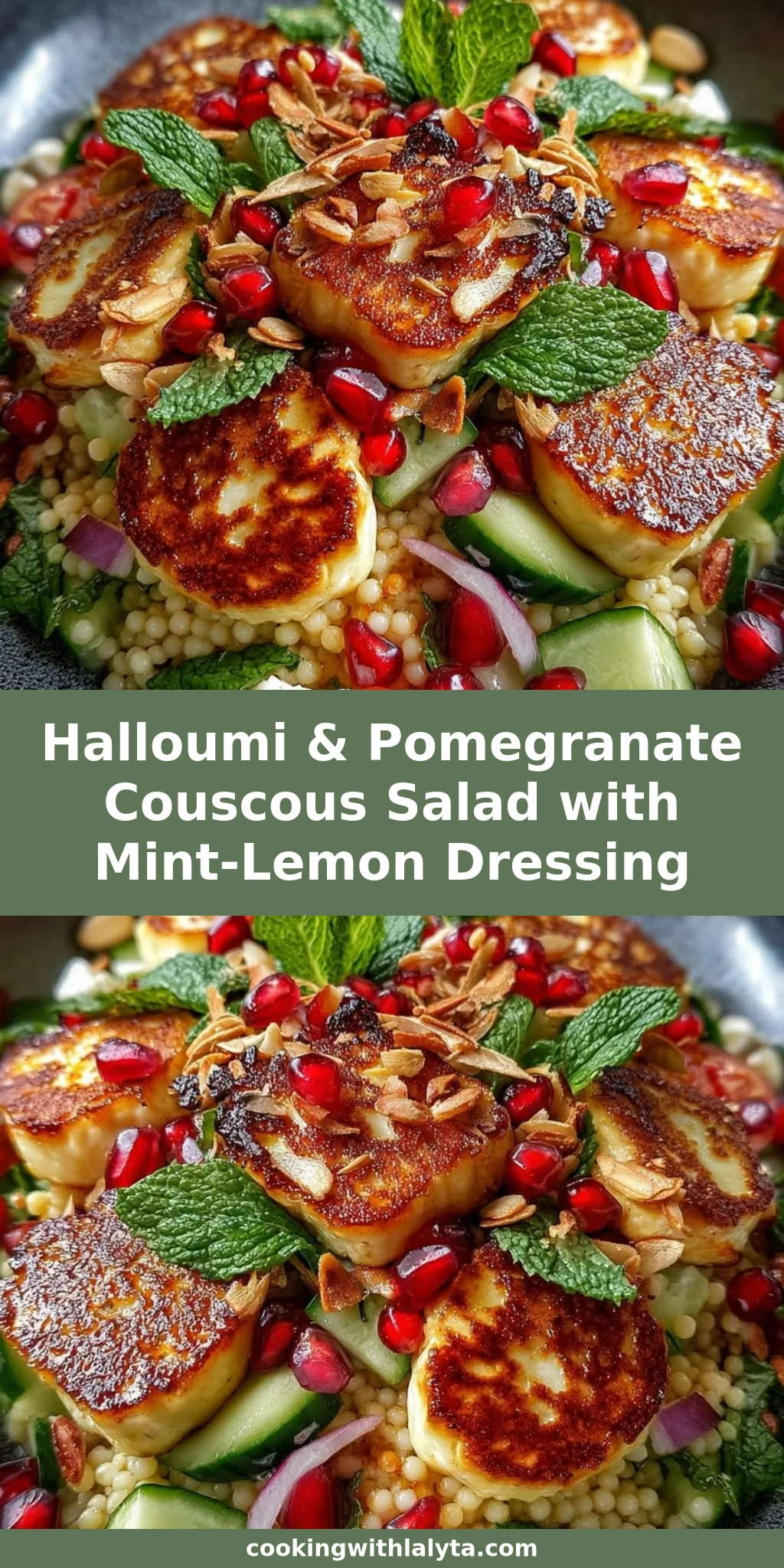
Halloumi & Pomegranate Couscous Salad with Mint-Lemon Dressing: A Grilled, Jewelled Mediterranean Gem
Growing up in my mother’s kitchen in Morocco, pomegranate seeds were more than just fruit—they were tiny jewels we’d scatter over couscous for celebratory meals. I still remember the first time I watched her break open a ripe fruit with a wooden spoon, the crimson arils tumbling out like scattered rubies. Fast‑forward to my Paris culinary school days, where I learned that a perfectly grilled cheese could be the star of a salad, not just a garnish. Today, in my snug NYC kitchen, I’ve married those memories into this halloumi couscous salad: a vibrant, refreshing dish where salty‑squeaky grilled halloumi meets fluffy couscous, sweet‑tart pomegranate seeds, and a zesty mint‑lemon dressing that wakes up every bite. It’s exactly the kind of recipe I reach for when I need a 25‑minute lunch that still feels special—and I know you’ll love it too.
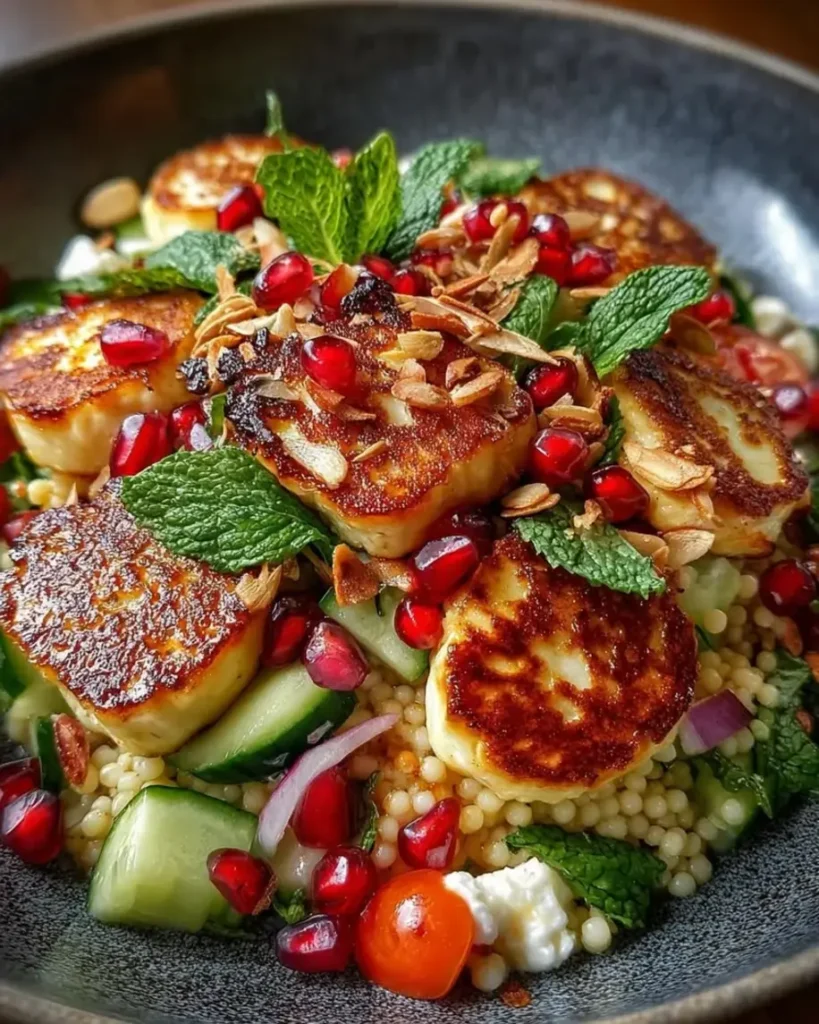
Imagine the interplay: warm, golden‑brown halloumi with its irresistible crispy edges, popping pomegranate seeds that burst with juice, and the delicate herbaceous notes of fresh mint and parsley. The couscous, plumped to perfection with just a bit of salt and boiling water, acts as a neutral, tender canvas that soaks up the bright, garlic‑kissed lemon dressing. That dressing, by the way, is my secret weapon—you whisk it in seconds, but it tastes like something that simmered all afternoon. The moment you toss everything together, the kitchen fills with a citrusy, herbal aroma that instantly transports me to a sunny Mediterranean terrace. Toasted sliced almonds (optional but highly recommended) add a nutty crunch that plays off the soft cheese and chewy grains. Every forkful is a little celebration of texture and brightness—satisfying without ever feeling heavy.
What makes my version stand out isn’t just the combination—it’s the careful technique I’ve tested dozens of times. I grill the halloumi slices in a hot, nearly dry pan, which gives them a gorgeous char without any rubbery chew, then cut them into bite‑sized cubes so you get pieces in every spoonful. I also sneak minced garlic and lemon zest directly into the dressing for a potent punch that clings to each pearl of couscous. This salad is built to be foolproof, but I’ll warn you about one common slip‑up: overcooking the halloumi turns it tough and squeaky, so I’ll share my exact timing below. Stick with me, and you’ll have a stunning, no‑stress halloumi pomegranate salad that works equally well for a quick weeknight dinner or a dinner‑party starter. Ready to cook alongside a pro? Let’s dive in.
Why This Halloumi Couscous Salad Recipe Is the Best
The Flavor Secret: I owe the depth of this salad to a little trick I picked up in Paris—blooming the minced garlic in the lemon juice for a few minutes before whisking in the oil. That tiny step tames the raw bite and infuses the dressing with a mellow, rounded garlic sweetness that pairs beautifully with the salty halloumi. Add honey (or maple syrup) and bright lemon zest, and you’ve got a dressing that’s so much more than the sum of its parts. It’s the same principle I use in North African chermoula, just translated through a French‑trained lens.
Perfected Texture: Achieving the ideal couscous is about one thing: not disturbing it while it steams. I learned this from my mother, who would firmly tell me to cover the bowl and walk away. Fluffing with a fork only after the grains have fully absorbed the water keeps them separate and light, never clumpy. Meanwhile, the halloumi gets a quick, high‑heat grill just until golden. That 2‑minute‑per‑side window is critical: it creates a delicate crust that stays tender inside, not rubbery. As a chef, I can promise you that texture is what memorizes a dish, and this pomegranate couscous salad nails it.
Foolproof & Fast: Even if you’ve never grilled cheese with a pan or cooked couscous, this recipe holds your hand. I’ve structured every step with visual cues—wait for the water to be fully absorbed, look for char marks on the halloumi—so you know exactly when to move on. It’s designed to come together in under half an hour using basic pantry staples and just a few fresh ingredients. Whether you’re a busy parent in Brooklyn or a college student in downtown Manhattan, you can pull off a show‑stopping pearl couscous salad (yes, I’ll show you the swap!) that tastes like restaurant‑quality food, fast.
Halloumi Couscous Salad Ingredients
On any given Saturday, you’ll find me wandering the Union Square Greenmarket, arms full of fragrant herbs and a hunk of imported halloumi from a nearby specialty cheese stall. I love sourcing my pomegranates in late fall, but even out of season, I can grab a tub of ready‑to‑use arils at my corner bodega—no shame in that! The ingredients for this halloumi couscous salad are deliberately short: good‑quality couscous, a block of halloumi (look for it labeled “grilling cheese” in the refrigerated section), and a handful of fresh herbs. Let’s break down each star player so you can shop smart and substitute confidently.
Ingredients List
- 1 cup couscous (Moroccan‑style, fine grain)
- 1 1/4 cups boiling water
- 1/2 teaspoon salt
- 200g (7 oz) halloumi cheese, sliced into 1/2‑inch thick slabs
- 1 tablespoon olive oil (for grilling halloumi)
- 1/2 cup pomegranate seeds (arils)
- 1/4 cup chopped fresh mint leaves
- 1/4 cup chopped fresh parsley (flat‑leaf preferred)
- 1/4 cup sliced almonds, toasted (optional, see note)
- For the Mint‑Lemon Dressing:
- 3 tablespoons extra virgin olive oil
- 2 tablespoons fresh lemon juice (from about 1 large lemon)
- 1 tablespoon honey or maple syrup
- 1 teaspoon lemon zest
- 1 clove garlic, minced
- 2 tablespoons chopped fresh mint
- Salt and black pepper to taste
Ingredient Spotlight
Halloumi: This semi‑hard Cypriot cheese is the MVP because it doesn’t melt—it grills into golden, squeaky perfection. In a US grocery store, find it near feta or specialty cheeses. Always pat it dry before oiling; excess moisture prevents browning. If you can’t locate halloumi, firm feta (block, not crumbled) works, but it’s saltier, so reduce added salt and handle gently so it doesn’t break. Paneer is an even closer swap—mild, firm, and grill‑able—though it lacks the salty tang. Expect a slightly softer texture if using feta, but still delicious.
Pomegranate Seeds: Those jewel‑like arils bring a burst of sweetness and acidity that cuts through the richness of the cheese. Choose a heavy fruit with firm, deep‑red skin for the juiciest seeds. When fresh pomegranates are unavailable or you’re short on time, packaged seeded pomegranate cups from the refrigerated produce section are a lifesaver. If you absolutely can’t find them, dried cranberries rehydrated in warm water for 10 minutes provide a similar sweet‑tart pop, though the texture shifts from crunchy to chewy. Frozen raspberries (slightly thawed) also work in a pinch—just drain them well.
Couscous: This recipe calls for traditional Moroccan couscous—the tiny, fine granules that cook via steam in 5 minutes. It’s found in the grain or international aisle of any supermarket. Do not confuse it with pearl (Israeli) couscous, which is larger and requires simmering like pasta. That said, I’ll show you how to adapt the salad to pearl couscous in the variations below. For a gluten‑free option, quinoa makes a splendid substitution; cook it according to package directions, fluff, and use an equal volume. The flavor will be earthier, but it still ties the salad together beautifully.
| Original Ingredient | Best Substitution | Flavor / Texture Impact |
|---|---|---|
| Halloumi | Firm feta block or paneer | Slightly saltier/softer with feta; milder with paneer but still grillable. |
| Pomegranate seeds | Dried cranberries (soaked) or frozen raspberries | Chewier and less juicy, but still sweet‑tart; raspberries add soft, floral notes. |
| Couscous | Quinoa or pearl (Israeli) couscous | Earthier/quinoa; pearl couscous gives a chewier, more pasta‑like bite. |
| Fresh mint | Basil or a mix of cilantro & dill | Minty freshness becomes sweeter with basil or more aromatic with cilantro+dill. |
How to Make Halloumi & Pomegranate Couscous Salad — Step‑by‑Step
I promise you, this recipe moves fast, so have all your ingredients prepped and measured before you turn on the stove. Enlist a friend to slice the halloumi while you whisk the dressing—many hands make light work, and it’s more fun that way.
Step 1: Prepare the Couscous
Place 1 cup of couscous in a large heatproof bowl. Sprinkle with 1/2 teaspoon salt, then pour 1 1/4 cups of boiling water over it. Stir once gently to combine, then immediately cover the bowl with a tight‑fitting plate or plastic wrap. Set a timer for 7 minutes and walk away—no peeking! The steam does all the work. When the timer beeps, remove the cover and fluff the couscous with a fork, scraping from the bottom to separate every grain. You’ll know it’s perfect when the small granules look plump and separate, not sticky or wet.
💡 Lalybeth’s Pro Tip: For extra flavor, use half water and half vegetable or chicken broth. You can also add a strip of lemon peel to the water while it boils—just remove it before covering the couscous.
Step 2: Grill the Halloumi
Heat a grill pan or non‑stick skillet over medium‑high heat until a drop of water sizzles and evaporates instantly. Pat the halloumi slices completely dry with a paper towel—this is non‑negotiable. Brush both sides lightly with the 1 tablespoon of olive oil. Lay the slices in the hot pan in a single layer (work in batches if needed). Grill for 2 to 3 minutes per side, resisting the urge to move them too soon; you want deep golden‑brown marks and a crisp crust. Flip gently with a thin spatula. Once charred on both sides, transfer to a cutting board and let them cool for 1 minute, then cut into bite‑sized cubes.
⚠️ Common Mistake to Avoid: Do not overcook halloumi. More than 4 minutes per side turns it tough and rubbery, with a texture like a pencil eraser. If you’re using a substitute like feta, reduce heat to medium and cook for just 1‑2 minutes per side—it’s more delicate.
Step 3: Make the Mint‑Lemon Dressing
In a small bowl, combine the minced garlic and fresh lemon juice. Let them mingle for 5 minutes while you prep other ingredients—this mellows the garlic’s raw punch. Then whisk in the extra virgin olive oil, honey (or maple syrup), lemon zest, and the 2 tablespoons of chopped mint. Season with a generous pinch of salt and a few grinds of black pepper. Whisk until the dressing looks slightly thickened and emulsified. Taste it; it should be bright, zippy, and faintly sweet. Adjust salt or lemon to your liking—I often add an extra pinch of zest for more sparkle.
💡 Lalybeth’s Pro Tip: Double the dressing recipe and keep the extra in a jar in the fridge. It’s divine drizzled over grilled vegetables, chickpea bowls, or even as a marinade for chicken.
Step 4: Assemble the Salad
Transfer the fluffed couscous to a large, wide serving bowl. Gently fold in the grilled halloumi cubes, pomegranate seeds, 1/4 cup chopped mint, 1/4 cup chopped parsley, and the toasted almonds (if using). Use a folding motion rather than aggressive stirring; you want to distribute everything evenly without crushing the delicate pomegranate arils or breaking the halloumi. At this point, the salad should look like a tapestry of colors—pale gold couscous, white cheese, red pomegranate seeds, and green herbs.
⚠️ Common Mistake to Avoid: Pouring the dressing over piled‑up ingredients in one spot. Instead, drizzle it in a slow stream around the edge of the bowl, then toss gently. This ensures every grain gets coated without drowning any one area.
Step 5: Finish and Serve
Pour the prepared mint‑lemon dressing over the salad (start with three‑quarters of it, then add more as needed). Toss gently but thoroughly until everything glistens. Taste a spoonful and decide if you’d like more salt, pepper, or a final squeeze of lemon—the dressing should be assertive enough to balance the salty cheese. Serve immediately at room temperature, or cover and refrigerate for 30 minutes if you prefer it chilled. Right before serving, I love to garnish with extra mint leaves and a scattering of pomegranate seeds for that “just‑made” look.
💡 Lalybeth’s Pro Tip: This salad tastes even better after an hour of rest in the fridge—the flavors marry beautifully. Just be sure to take it out 10 minutes before serving so the olive oil in the dressing isn’t congealed.
| Step | Action | Duration | Key Visual Cue |
|---|---|---|---|
| 1 | Prepare couscous | 7 min | Water fully absorbed, grains separate when fluffed. |
| 2 | Grill halloumi | 6 min | Golden‑brown char marks, cheese slightly puffed. |
| 3 | Make dressing | 5 min | Smooth, emulsified liquid; no wateriness. |
| 4 | Assemble salad | 2 min | Colorful, evenly mixed; no clumps. |
| 5 | Finish & serve | 1 min | Dressing evenly coats all ingredients; glossy appearance. |
Serving & Presentation
This salad is as much a feast for the eyes as for the palate, so I like to serve it on a large, shallow platter rather than a deep bowl. Spoon the couscous mixture into the center, then use the back of the spoon to create a slight well in the middle. Scatter extra pomegranate seeds and whole mint leaves around the edges for that vibrant, “just‑picked” look. A few flaky salt crystals on top of the halloumi cubes right before serving amplify the salty‑sweet contrast—a trick I picked up while staging in a Paris bistro.
Pair this halloumi pomegranate salad with grilled lamb chops or roasted eggplant for a complete Mediterranean spread, much like my family would do for a Friday couscous gathering. If you’re keeping it light, a simple arugula salad with lemon and olive oil on the side adds a peppery bite that complements the sweetness of the pomegranate. For a New York‑style brunch, I’ve been known to serve it alongside soft‑scrambled eggs and a crusty baguette from my favorite East Village bakery. The salad is surprisingly versatile—it even works tucked into a warm pita for a quick on‑the‑go lunch.
| Pairing Type | Suggestions | Why It Works |
|---|---|---|
| Side Dish | Grilled lamb chops, roasted eggplant, or za’atar chicken thighs | Hearty proteins balance the bright, acidic salad. |
| Sauce / Dip | Tahini‑yogurt sauce, hummus, or tzatziki | Creamy dips cool the grilled cheese and add richness. |
| Beverage | Mint iced tea, dry rosé, or sparkling water with lemon | Refreshing, not heavy; rosé echoes the fruity pomegranate. |
| Garnish | Extra pomegranate seeds, mint sprigs, flaky sea salt, edible flowers | Adds color and a finishing pop of freshness. |
Make‑Ahead, Storage & Reheating
In my NYC life, meal prep is survival—so I often assemble the components separately on Sunday. I’ll cook the couscous, grill the halloumi, and whisk the dressing, then store each in its own container. Come Monday lunch, I toss them together in under two minutes. The assembled salad keeps beautifully in the fridge for up to 2 days; just know that the pomegranate seeds will soften slightly and the mint will darken a bit, but the flavor actually deepens. Always give it a fresh squeeze of lemon and a pinch of salt before serving leftovers to wake everything up again.
| Method | Container | Duration | Reheating Tip |
|---|---|---|---|
| Refrigerator (assembled) | Airtight glass container | Up to 2 days | Serve cold or at room temp; avoid microwaving halloumi. |
| Refrigerator (components) | Separate airtight containers | Couscous & dressing 4 days, halloumi 3 days | Quickly re‑crisp halloumi in a hot dry skillet for 30 seconds per side. |
| Freezer | Not recommended (except couscous alone) | Cooked couscous up to 1 month | Thaw overnight; fluff and refresh with a splash of hot water. |
Let me be candid: I don’t recommend freezing the fully assembled salad. The fresh herbs and pomegranate seeds turn mushy, and halloumi loses its signature squeak when frozen and thawed. If you must freeze, cook and freeze only the plain couscous (with a drizzle of olive oil to prevent clumping). Thaw it in the fridge, then bring it back to life with a quick steam in the microwave before adding fresh toppings. For reheating the halloumi, skip the microwave entirely—a dry non‑stick pan over medium heat for 30 seconds per side brings back that glorious golden crust without making it rubbery.
Variations & Easy Swaps
| Variation | Key Change | Best For | Difficulty Impact |
|---|---|---|---|
| Pearl Couscous Version | Use 1 cup pearl couscous, cook in salted boiling water for 8‑10 min; drain and cool. | A chewier, more substantial salad for hearty eaters. | Still easy—just an extra pot to wash. |
| Dairy‑Free & Vegan | Replace halloumi with pan‑seared, marinated extra‑firm tofu or king oyster mushrooms; use maple syrup. | Plant‑based eaters craving that charred, savory element. | Slightly more effort—marinate tofu 15 min. |
| Moroccan Spiced Harvest | Toss couscous with 1 tsp ras el hanout and fold in roasted butternut squash cubes & toasted pecans. | Fall gatherings; a cozier, aromatic twist. | Adds 20 min roasting time but still straightforward. |
Pearl Couscous (Israeli) Halloumi Salad
Swap in pearl couscous when you want a more robust bite—it’s almost like little pasta pearls. Cook 1 cup in a pot of salted boiling water for 8–10 minutes until al dente, then drain and spread on a sheet pan to cool quickly so it doesn’t clump. The rest of the recipe stays the same, but I recommend increasing the dressing by half because pearl couscous soaks up more. In Morocco, we’d call this mhamsa, though slightly different; my Paris‑trained side loves how the larger grains cradle the pomegranate seeds like tiny treasure chests.
Dairy‑Free & Vegan Pomegranate Couscous Salad
To keep all the charred, savory satisfaction without dairy, I turn to extra‑firm tofu. Press it for 15 minutes, then cut into halloumi‑sized slabs and marinate in a mix of 1 tablespoon soy sauce, 1 tablespoon lemon juice, and a pinch of smoked salt for 15 minutes. Pan‑sear in olive oil over high heat until beautifully golden on each side—about 3 minutes per side. The result is a salty‑umami bite that mimics halloumi’s heft. Stick with maple syrup in the dressing, and you’ve got a stunning vegan halloumi pomegranate salad that even cheese lovers devour.
Moroccan Spiced Harvest Bowl
When autumn hits the Union Square farmers market, I load up on butternut squash. I peel and dice it into ½‑inch cubes, toss with olive oil and a generous teaspoon of ras el hanout, and roast at 425°F for 20‑25 minutes until caramelized. Fold these golden nuggets into the salad along with toasted pecans instead of almonds. The warm spices—cinnamon, ginger, turmeric—echo the sweetness of pomegranate and create a cozier profile. It’s a nod to my mother’s tagine flavors, translated into a fork‑friendly couscous bowl that’s perfect for Thanksgiving potlucks.
Can I use a different type of cheese instead of halloumi in this salad?
Absolutely! Halloumi’s high melting point makes it uniquely grill‑able, but firm block feta or paneer are excellent substitutes. For feta, pat it very dry and handle it gently—cook over medium heat for only 1–2 minutes per side to avoid crumbling. Paneer is milder and holds its shape even better; it will take on a golden crust similarly. If you use feta, taste the salad before adding extra salt, as feta is naturally saltier than halloumi. I’ve also had success with queso panela in a pinch, but stay away from fresh mozzarella—it will melt into a puddle.
How do you keep halloumi from getting rubbery when pan‑frying?
The biggest culprit is overcooking. Halloumi needs just 2–3 minutes per side over medium‑high heat; beyond that, the proteins tighten and it turns tough and squeaky. Preheat your pan well, use a light brush of oil, and resist the urge to move the slices until a golden crust forms. Also, always slice halloumi into ½‑inch thick pieces—too thin and it dries out, too thick and the inside won’t warm through before the outside chars. Finally, let it rest for a minute after cooking; this allows the heat to distribute evenly and the exterior to crisp up perfectly.
Can I make the mint‑lemon dressing ahead of time, and how long will it keep?
Yes, in fact it gets better! Whisk the dressing together and store in an airtight jar in the refrigerator for up to 5 days. I often double the recipe and keep it as a pantry staple for drizzling over grain bowls or roasted veggies. The olive oil may solidify slightly when chilled; simply let the jar sit at room temperature for 10 minutes or run it under warm water, then shake vigorously to re‑emulsify. The mint might lose some bright green color over time, but the lemon and garlic flavors actually deepen, making it even zippier.
What can I substitute for pomegranate seeds if they are not in season?
I’ve got two go‑tos. First, dried cranberries rehydrated in warm water for 10 minutes—they plump up and bring a sweet‑tart punch, though with a chewier texture. Drain them well before adding. Second, frozen raspberries (partially thawed and patted dry) deliver a juicy, tangy pop that mimics the freshness of pomegranate seeds. For a completely different but equally vibrant twist, try diced fresh figs when they’re in season; their honeyed sweetness is a dream with halloumi. In a pinch, even halved red grapes work, though they lack the tartness.
Is this halloumi couscous salad suitable for meal prep?
It’s one of my favorite meal‑prep champions! For best results, store the components separately: couscous in one container, grilled halloumi cubes in another, dressing in a jar, and pomegranate seeds/herbs in a small ziplock. Assemble in the morning (or the night before) and the salad stays fresh for lunch. If assembling ahead, layer the couscous, cheese, then pomegranate and herbs on top, and keep the dressing on the side until just before eating. The halloumi won’t be as crispy on day two, but you can quickly re‑crisp it in a hot pan for 30 seconds.
Can I serve this salad warm instead of cold?
Absolutely! This salad is delightful at room temperature or even slightly warm. After grilling the halloumi, toss the still‑warm cubes with freshly fluffed hot couscous, then fold in the cold ingredients (pomegranate seeds and herbs) with the dressing. The contrast between warm grains, hot cheese, and cool, sweet arils is incredible. Just be mindful that the pomegranate seeds may bleed a touch of color if the couscous is steaming hot, so I recommend letting the couscous cool for 2–3 minutes before adding them. Serve immediately if going warm—it’s my favorite way on a chilly evening.
What’s the best way to reheat halloumi in this salad?
Microwaving halloumi is a mistake—it turns rubbery and releases a pool of salty liquid. Instead, reheat leftovers in a dry non‑stick skillet over medium heat for 30‑45 seconds per side until the cheese is warm and the exterior re‑crisps. If the halloumi cubes are mixed into the salad, you can quickly toss the entire portion in a hot pan for a minute, but the pomegranate seeds may burst. My advice: pick out the cheese pieces and reheat them separately, then return them to the salad. This keeps everything at its best texture.
Can I use pearl couscous instead of regular couscous?
Yes—and many people actually prefer the chewier, pasta‑like texture of pearl (Israeli) couscous. Use 1 cup pearl couscous and cook it in a pot of boiling salted water for 8–10 minutes until al dente, then drain and cool slightly. Because pearl couscous is more absorbent, you may need a bit more dressing; I start with 1.5 times the amount and add to taste. The salad will feel heartier and more substantial, almost like a warm grain bowl. It’s a wonderful variation that holds up exceptionally well for packed lunches or picnics.
Share Your Version!
I created this halloumi pomegranate salad to be a canvas for your own creativity—did you swap in juicy figs, toss in some toasted pine nuts, or double the garlic? I’d love to see and hear about it. Leave a star rating and your thoughts in the comments below; your tweaks often inspire my next recipe. And if you post a photo on Instagram, be sure to tag @cookingwithlalyta so I can cheer you on from my NYC kitchen. I pop over to my feed daily just to see your beautiful plates—they truly make my day.
From my NYC kitchen to yours — I hope this recipe brings as much warmth to your table as it does to mine. — Lalybeth 🧡
Love This Recipe? Save It to Pinterest!
If you enjoyed this Halloumi & Pomegranate Couscous Salad recipe, don’t let it get lost in your browser tabs! 😄 Pin it now so you can find it again anytime — and explore hundreds more tried-and-tested recipes waiting for you on my Pinterest boards.
👉 Follow Lalybeth on Pinterest @cookingwithlalyta
📌 Pin this recipe · 🔁 Re-pin your favorites · 💬 Tag me when you make it — I love seeing your creations!
Made this vibrant Halloumi & Pomegranate Couscous Salad?
I’d be thrilled to hear your twist! Leave a comment and star rating below — it helps other readers find this recipe and welcomes new friends to our kitchen table. And if you share a photo on Instagram, don’t forget to tag @cookingwithlalyta so I can repost your creation. Let’s cook together! 🧡
Halloumi & Pomegranate Couscous Salad with Mint-Lemon Dressing
- Total Time: 25 minutes
- Yield: 4 1x
Description
A refreshing salad combining grilled halloumi, jewel-like pomegranate seeds, and fluffy couscous, all tossed in a zesty mint-lemon dressing. Perfect as a light lunch or a vibrant side dish.
Ingredients
- 1 cup couscous
- 1 1/4 cups boiling water
- 1/2 teaspoon salt
- 200g halloumi cheese, sliced into 1/2-inch thick pieces
- 1 tablespoon olive oil (for grilling halloumi)
- 1/2 cup pomegranate seeds
- 1/4 cup chopped fresh mint leaves
- 1/4 cup chopped fresh parsley
- 1/4 cup sliced almonds, toasted (optional)
- For the Dressing:
- 3 tablespoons extra virgin olive oil
- 2 tablespoons fresh lemon juice
- 1 tablespoon honey or maple syrup
- 1 teaspoon lemon zest
- 1 clove garlic, minced
- 2 tablespoons chopped fresh mint
- Salt and pepper to taste
Instructions
- Prepare the couscous: Place couscous in a large bowl. Pour boiling water over it, add salt, and stir once. Cover with a plate or plastic wrap and let sit for 5-10 minutes until water is absorbed. Fluff with a fork.
- Grill the halloumi: Heat a grill pan or non-stick skillet over medium-high heat. Brush halloumi slices with olive oil. Grill for 2-3 minutes per side until golden brown and char marks appear. Remove and cut into bite-sized cubes.
- Make the dressing: In a small bowl, whisk together olive oil, lemon juice, honey, lemon zest, minced garlic, and chopped mint. Season with salt and pepper to taste.
- Assemble the salad: Add fluffed couscous to a large serving bowl. Gently fold in grilled halloumi cubes, pomegranate seeds, fresh mint, parsley, and toasted almonds if using.
- Finish and serve: Pour the mint-lemon dressing over the salad and toss gently to combine. Taste and adjust seasoning. Serve at room temperature or chilled. Garnish with extra mint leaves and pomegranate seeds if desired.
Notes
Halloumi does not melt, making it perfect for grilling. If you cannot find halloumi, substitute with firm feta or paneer, but reduce grilling time. For a nut-free version, omit almonds or replace with pumpkin seeds. The salad can be made ahead and stored in the fridge for up to 2 days; refresh with a squeeze of lemon before serving.
- Prep Time: 15 minutes
- Cook Time: 10 minutes
- Method: Salad
- Cuisine: Mediterranean
Nutrition
- Calories: 420 kcal
- Sugar: 8 g
- Fat: 24 g
- Carbohydrates: 38 g
- Protein: 16 g
Tried This Recipe? Leave a Comment!
Did you make this recipe? I’d love to hear how it turned out! Please leave a comment and a rating below. Your feedback helps other home cooks and supports cookingwithlalyta.com!
For more delicious inspiration, follow me on Pinterest!