“`html
Table of Contents
Honey-Glazed Acorn Squash with Creamy Goat Cheese and Cranberry Drizzle – The Perfect Sweet-Savory Holiday Side Dish
There is something deeply nostalgic for me about the smell of acorn squash roasting in the oven — the way its natural sugars caramelize and fill the kitchen with a warm, almost chestnut-like aroma. I first learned to appreciate winter squash not in Paris, where my culinary training taught me to reduce and refine, but in my mother’s kitchen in Morocco, where vegetables were never an afterthought. She would roast squash halves with nothing more than a drizzle of olive oil and a sprinkle of salt, letting the vegetable’s inherent sweetness shine. Years later, standing in my tiny NYC apartment kitchen, I found myself craving that same simplicity but with a chef’s desire to layer flavors. That is how this Honey-Glazed Acorn Squash with creamy goat cheese and cranberry drizzle was born — a dish that honors the humble squash while elevating it with a sweet-savory contrast that feels both rustic and refined. This is the kind of holiday acorn squash recipe that earns its place at the center of any fall gathering.
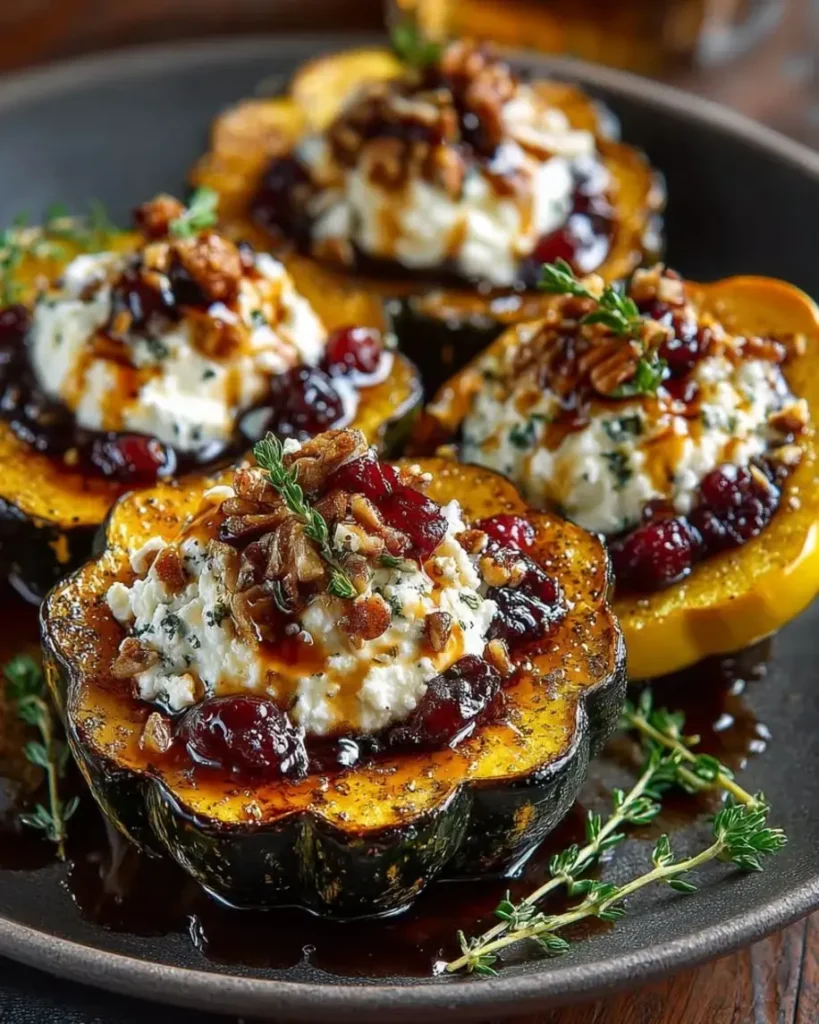
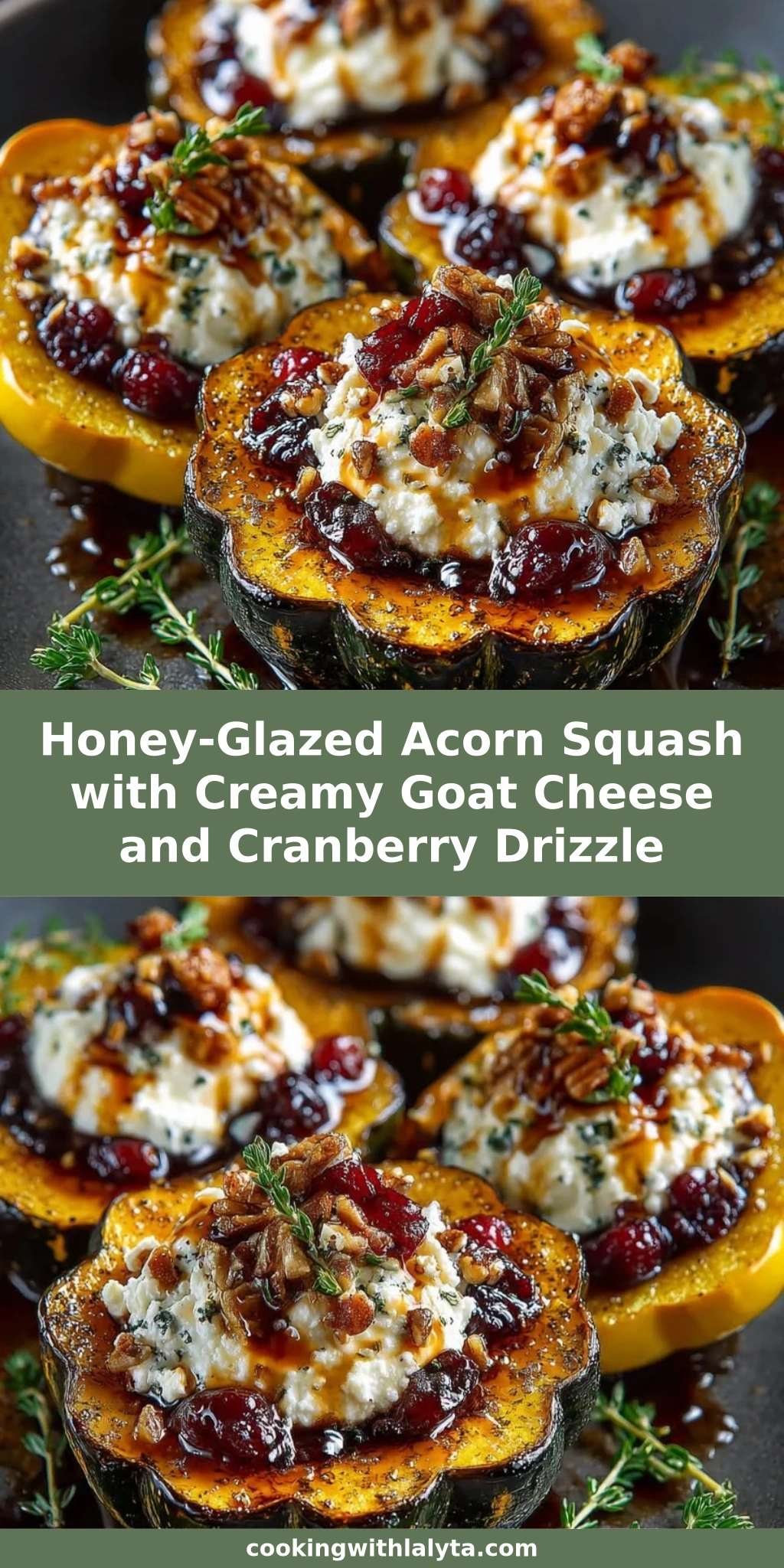
When you pull these glistening roasted acorn squash honey halves from the oven, the cut sides will be burnished with a deep amber glaze — sticky, slightly crisp at the edges, and tender enough to yield under the slightest pressure of a fork. The goat cheese melts ever so slightly into the warm ridges of the squash, creating a creamy, tangy layer that cuts through the sweetness like a bright note in a warm chord. And then comes the cranberry drizzle acorn squash finish: ruby-red cranberries plumped in orange juice and balsamic vinegar, releasing a jammy, tart-sweet syrup that pools in the natural hollow of each half. The interplay of honey, creamy cheese, and tangy cranberry is what makes this dish unforgettable — it hits every corner of your palate and leaves you wanting just one more bite. Fresh thyme, if you have it, adds an herbal whisper that reminds me of walking through the Union Square Greenmarket on a crisp October morning.
What sets my version of acorn squash with goat cheese apart is a technique I learned during my Paris training: brushing the squash with the honey-butter mixture not once but twice during roasting. The first brush penetrates the flesh as it begins to soften, while the second — applied midway through — creates that lacquered, almost confit-like exterior that makes each bite taste like it has been slow-roasted for hours. I will share my secret for achieving the perfect caramelization without burning (the line is thinner than you might think), and I will also caution you about a common mistake that can turn your gorgeous squash into a watery mess. Trust me — once you make this dish, it will become a permanent fixture on your autumn and holiday table rotation. Let’s get cooking, shall we?
Why This Honey-Glazed Acorn Squash Recipe Is the Best
The Flavor Secret: My Moroccan heritage taught me that the best dishes balance sweet, savory, and tangy in a single bite — a principle that guides everything I create in my NYC kitchen. This recipe layers three distinct flavor profiles: the deep, floral sweetness of honey caramelized into the squash’s natural sugars, the bright lactic tang of softened goat cheese, and the punchy, fruity acidity of a cranberry-balsamic reduction. Unlike many holiday acorn squash recipes that lean solely on brown sugar and butter, this one uses honey as the primary sweetener, which brings a more nuanced, aromatic quality. The balsamic vinegar in the cranberry drizzle is a trick I picked up in Paris — just a tablespoon adds a sophisticated depth that elevates the entire dish from simple to memorable. When I serve this at dinner parties, guests always ask what that elusive “something” is, and I smile knowing it is the balsamic doing its quiet work.
Perfected Texture: From a chef’s perspective, texture is often what separates a good dish from a great one, and this roasted acorn squash honey recipe delivers on every front. The squash itself becomes velvety-soft, almost custard-like at its center, while the outer edges develop a delicate, caramelized crust. The goat cheese, softened to room temperature before spreading, melts into a silky layer that clings to the warm ridges of the squash — never grainy, never clumpy. The cranberries, rehydrated in orange juice, offer a pleasant chew that pops against the tender squash, and the thickened drizzle coats each forkful with a glossy, jam-like finish. I tested this recipe seven times in my home kitchen before publishing it, tweaking the roasting temperature and timing until I achieved that perfect contrast between the yielding flesh and the slightly firm, glazed surface. Four hundred degrees is the magic number — hot enough to caramelize but not so hot that the honey burns before the squash cooks through.
Foolproof & Fast: Even if you have never roasted a winter squash before, this recipe is designed to guide you confidently through each step. There are no complicated techniques, no intimidating equipment — just a sharp knife, a baking sheet, and a small saucepan. The active prep time is only about 15 minutes, which means you can have this dish ready for the oven while you focus on the main course or other sides. I have included visual cues at every stage — what the squash should look like when properly caramelized, how thick the cranberry drizzle should be before you pull it off the heat, and exactly when to spread the goat cheese so it melts just right without liquefying. Whether you are a seasoned home cook preparing an elaborate Thanksgiving spread or a beginner looking for an impressive but manageable holiday acorn squash recipe, this one delivers beautiful results every single time.
Honey-Glazed Acorn Squash Ingredients
I am a firm believer that the best cooking starts with the best ingredients, and living in New York City gives me access to some truly wonderful produce. During the fall months, I love visiting the Union Square Greenmarket, where local farmers bring in acorn squash with skins so glossy and deep green they almost look lacquered. If you are shopping at a regular grocery store, look for acorn squash that feel heavy for their size, with dull, unblemished skin — a shiny surface often means the squash was picked too early. For the goat cheese, I reach for a creamy, spreadable variety from a small Hudson Valley creamery, but any good-quality chèvre will work beautifully here. The dried cranberries should be unsweetened or lightly sweetened so you can control the sugar level in the drizzle. Orange juice — freshly squeezed if you have the time — adds a brightness that bottled juice simply cannot replicate. These simple, humble ingredients come together in a way that feels far more luxurious than the sum of their parts.
Ingredients List
- 2 medium acorn squash, halved and seeded
- 3 tablespoons honey
- 2 tablespoons unsalted butter, melted
- 1/2 teaspoon salt
- 1/4 teaspoon black pepper
- 4 ounces creamy goat cheese, softened
- 1/2 cup dried cranberries
- 1/4 cup orange juice
- 1 tablespoon balsamic vinegar
- 1 tablespoon maple syrup
- Optional: fresh thyme sprigs for garnish
Ingredient Spotlight
Acorn Squash: The star of the show. Choose squash that are symmetrical with a flat bottom so they sit stably on the baking sheet. The skin should be mostly dark green with some orange patches — too much orange indicates over-ripeness, which can mean stringy flesh. When you halve and seed them, use a sturdy chef’s knife and a secure cutting board; if the squash wobbles, place a folded kitchen towel underneath for stability. No acorn squash? Butternut squash works as a substitute, though you will need to adjust the roasting time — butternut tends to be denser and may require an extra 10 minutes. Expect a slightly sweeter, nuttier flavor with a smoother texture.
Goat Cheese: A creamy, spreadable chèvre is essential for that velvety layer that melts into the warm squash. Let it sit at room temperature for at least 20 minutes before spreading — cold goat cheese will tear the delicate roasted flesh. If goat cheese is not your thing, cream cheese provides a milder, equally creamy alternative, though you lose some of that signature tang. For a dairy-free version, I have tested this with a high-quality plant-based cream cheese (the almond-based ones work best), and the result is surprisingly close to the original — just add a tiny squeeze of lemon juice to mimic goat cheese’s acidity.
Honey: This is where you can really play with flavor. A mild clover honey lets the squash shine, while a more assertive orange blossom or wildflower honey adds an extra layer of floral complexity. I sometimes use chestnut honey from a specialty shop in Brooklyn — it has a slightly bitter, earthy note that contrasts beautifully with the sweet cranberries. If you are vegan or avoiding honey, agave nectar is your best bet for the same consistency and a neutral sweetness, though you will miss some of honey’s aromatic depth. Maple syrup works too but will add a distinct maple flavor that shifts the dish’s profile.
| Original Ingredient | Best Substitution | Flavor / Texture Impact |
|---|---|---|
| Acorn Squash | Butternut Squash | Sweeter, nuttier, smoother; needs 10 extra minutes roasting |
| Goat Cheese | Plant-Based Cream Cheese | Milder tang; add lemon juice for acidity |
| Honey | Agave Nectar | Neutral sweetness, less aromatic; slightly thinner glaze |
| Dried Cranberries | Dried Cherries or Raisins | Cherries add deeper tartness; raisins are sweeter and softer |
| Balsamic Vinegar | Apple Cider Vinegar + 1 tsp brown sugar | Brighter acidity, less complexity; still works well |
How to Make Honey-Glazed Acorn Squash with Creamy Goat Cheese and Cranberry Drizzle — Step-by-Step
Take a deep breath — this recipe is wonderfully straightforward, and I will walk you through every detail. There are only about 15 minutes of active work, and then the oven does the rest. Let’s go step by step together.
Step 1: Preheat and Prep Your Squash
Preheat your oven to 400°F (200°C) and line a baking sheet with parchment paper. This temperature is the sweet spot — hot enough to drive off excess moisture and encourage caramelization, but not so fierce that the honey glaze burns before the squash flesh becomes tender. While the oven heats, carefully slice each acorn squash in half lengthwise from stem to tip using a large, sharp chef’s knife. If the squash is very firm, microwave it whole for 30 to 60 seconds to soften the skin slightly — this little trick has saved my fingers more times than I can count. Scoop out the seeds and any stringy fibers with a sturdy spoon, scraping until the cavity is smooth and clean. Place the four halves cut-side up on the prepared baking sheet, making sure they sit flat and stable.
💡 Lalybeth’s Pro Tip: To keep the squash halves from wobbling on the baking sheet, trim a tiny sliver off the rounded bottom of each half with your knife. This creates a flat base and prevents them from tipping over during roasting — which also means the precious honey-butter glaze stays pooled right where you want it.
Step 2: Create the Honey-Butter Glaze
In a small bowl, whisk together the 3 tablespoons of honey, 2 tablespoons of melted unsalted butter, 1/2 teaspoon of salt, and 1/4 teaspoon of black pepper until the mixture is smooth and emulsified. The salt here is critical — it does not just season; it helps draw out the squash’s natural moisture during roasting, concentrating its flavor. Using a pastry brush, generously coat the cut surfaces and inner cavities of each squash half with the glaze, making sure to get into every ridge and crevice. Do not use all the glaze yet — reserve about one-third of it for basting midway through roasting. The butter carries the honey deep into the flesh, while the pepper adds a subtle warmth that rounds out the sweetness.
⚠️ Common Mistake to Avoid: Using cold butter straight from the fridge and expecting it to mix smoothly with honey. The butter must be fully melted and still warm, or the honey will seize up and you will end up with a separated, gloppy mixture that does not brush evenly. Take the extra 20 seconds to melt the butter properly.
Step 3: Roast to Caramelized Perfection
Slide the baking sheet into the preheated oven and roast the squash for 35 to 40 minutes total. Set a timer for the 18-minute mark — this is when you will open the oven and brush the squash with the remaining honey-butter mixture. You should already see the edges starting to brown and the glaze bubbling gently in the cavities. After basting, continue roasting for another 17 to 22 minutes. The squash is done when a fork inserted into the thickest part of the flesh meets no resistance — it should slide in like butter — and the surface is deeply golden with darker caramelized spots around the edges. The aroma at this point will be absolutely intoxicating: warm honey, toasted squash, and a hint of browned butter. Remove from the oven and let the squash rest on the baking sheet for 5 minutes before adding any toppings. This brief rest allows the flesh to set slightly and absorb any remaining glaze.
💡 Lalybeth’s Pro Tip: If after 40 minutes your squash is tender but not as caramelized as you would like, switch the oven to broil for the final 1 to 2 minutes. Watch it like a hawk — honey can go from golden to burnt in seconds under the broiler. This quick blast gives you that gorgeous, restaurant-worthy lacquered finish.
Step 4: Simmer the Tangy Cranberry Drizzle
While the squash roasts, prepare the cranberry drizzle acorn squash topping. In a small saucepan, combine the 1/2 cup of dried cranberries, 1/4 cup of orange juice, 1 tablespoon of balsamic vinegar, and 1 tablespoon of maple syrup. Place the saucepan over medium heat and bring the mixture to a gentle simmer — you will see small bubbles forming around the edges of the pan. Cook for 5 to 7 minutes, stirring occasionally, until the cranberries have plumped up and absorbed much of the liquid, and the remaining syrup has thickened to a loose jam consistency. It should coat the back of a spoon and leave a trail when you drag your finger through it. Remove from the heat and let it cool; the syrup will continue to thicken as it sits. If it becomes too thick, simply stir in a teaspoon of warm water to loosen it back up. The combination of orange juice and balsamic creates a sweet-tart backbone that perfectly offsets the honeyed squash.
⚠️ Common Mistake to Avoid: Cooking the cranberry mixture over high heat in an attempt to speed things up. High heat will cause the sugars in the orange juice and maple syrup to scorch before the cranberries have a chance to plump, resulting in a burnt-tasting syrup with tough, chewy berries. Medium heat and a little patience are your friends here.
Step 5: Spread the Creamy Goat Cheese
Once the roasted squash has rested for about 5 minutes — just long enough to handle comfortably — it is time to add the acorn squash with goat cheese element. Take your 4 ounces of softened goat cheese and divide it evenly among the four squash halves, about 1 ounce (roughly 2 tablespoons) per half. Using the back of a spoon or a small offset spatula, gently spread the goat cheese across the surface of each squash half, pressing it into the natural ridges and letting it begin to melt from the residual heat. The warmth will soften the cheese further, turning it into a creamy, almost sauce-like layer that blankets the squash. Do not spread all the way to the very edge — leaving a small border of the caramelized squash visible creates a beautiful visual contrast. The goat cheese should look glossy and inviting, not dry or crumbly, which is why room-temperature cheese is so important.
💡 Lalybeth’s Pro Tip: For an even creamier texture, mix the softened goat cheese with 1 teaspoon of warm water or milk before spreading. This loosens it just enough to create an ultra-smooth, spreadable consistency that melts seamlessly into the warm squash without any clumps.
Step 6: Garnish and Serve Warm
Spoon the cooled cranberry drizzle generously over the goat cheese on each squash half, allowing some of the ruby-red syrup to cascade down the sides. The visual effect is stunning — the dark green skin of the squash, the deep amber glaze, the white creamy cheese, and the jewel-toned cranberries create a plate that looks like autumn on a platter. If you have fresh thyme sprigs, tuck a few leaves or a small sprig onto each half for a pop of green and an herbal aroma that ties everything together. Serve immediately while the squash is still warm — the contrast between the hot, tender squash and the cool, creamy cheese is part of what makes this dish so special. Transfer each half to a plate or a serving platter using a wide spatula, and be prepared for the compliments to roll in.
⚠️ Common Mistake to Avoid: Adding the goat cheese and cranberry drizzle to piping-hot squash straight from the oven. The cheese will melt into a puddle and the cranberry syrup will thin out and run everywhere, creating a messy, unattractive presentation. That 5-minute rest is not optional — it gives the squash just enough time to cool to the perfect serving temperature while still being deliciously warm.
| Step | Action | Duration | Key Visual Cue |
|---|---|---|---|
| 1 | Preheat & Prep Squash | 10 mins | Halves cleaned and stable on sheet |
| 2 | Make Honey-Butter Glaze | 2 mins | Smooth, emulsified mixture |
| 3 | Roast Squash | 35–40 mins | Fork-tender, deep golden caramelization |
| 4 | Simmer Cranberry Drizzle | 5–7 mins | Syrup coats spoon, cranberries plump |
| 5 | Spread Goat Cheese | 2 mins | Cheese melts slightly into ridges |
| 6 | Garnish & Serve | 1 min | Cranberries cascading, thyme bright green |
Serving & Presentation
When I plate this dish for a gathering, I like to arrange the four squash halves on a large, rustic wooden board or a cream-colored ceramic platter that lets the colors pop. A scattering of extra fresh thyme sprigs across the board adds a touch of green and signals to guests that herbs are part of the flavor story. If you really want to impress, finish the platter with a light drizzle of extra honey and a few whole dried cranberries scattered artfully around — it looks effortlessly elegant and takes about 30 seconds. This is the kind of side dish that anchors a fall dinner party, and I have found it pairs beautifully with a simple roast chicken, a heritage pork loin, or even alongside a vegetarian grain salad for a lighter meal. The Moroccan side of me sometimes adds a tiny pinch of cinnamon or cumin to the honey glaze for a warm, spiced note that transports me straight back to my mother’s kitchen — it is unexpected but utterly delicious.
For a holiday spread, this holiday acorn squash recipe holds its own next to all the traditional heavy hitters — mashed potatoes, stuffing, green bean casserole — while offering something distinctly fresh and vegetable-forward. Because each half is an individual portion, it also makes for stunning plated presentations at a seated dinner. I have served this at Thanksgiving for the past three years, and it is always the first side dish to disappear. Leftover squash halves can be scooped out of their skins and stirred into warm grains or salad greens for a next-day lunch that feels completely different from the original dish. One of my favorite NYC food memories is eating the leftovers cold, straight from the fridge, standing at my kitchen counter on a busy weekday — it is that good, even without reheating.
| Pairing Type | Suggestions | Why It Works |
|---|---|---|
| Main Protein | Roast chicken, pork tenderloin, seared duck breast | Savory meat balances sweet-savory squash |
| Grain Base | Farro, wild rice, quinoa pilaf | Nutty grains echo the roasted squash notes |
| Beverage | Dry Riesling, hard cider, sparkling apple juice | Acidity cuts through richness; bubbles refresh palate |
| Garnish Boost | Toasted pumpkin seeds, candied pecans, fried sage leaves | Crunch and herbal contrast elevate texture |
Make-Ahead, Storage & Reheating
As a working chef and blogger in New York City, I know that time is precious — especially around the holidays. That is why I designed this recipe with make-ahead flexibility in mind. You can roast the squash and prepare the cranberry drizzle up to two days in advance, storing them separately in the refrigerator. On the day you are serving, simply reheat the squash, spread on the goat cheese, and spoon the drizzle over the top — the assembly takes less than five minutes, and the dish tastes as fresh as if you had just made it. The cranberry drizzle actually improves after a day in the fridge, as the flavors meld and deepen, becoming even more jammy and complex. This is one of my favorite hosting tricks, and it has saved me from countless last-minute kitchen scrambles when guests are already arriving.
| Method | Container | Duration | Reheating Tip |
|---|---|---|---|
| Refrigerator | Airtight glass container | Up to 3 days | Reheat at 350°F for 10 mins, then add cheese |
| Freezer | Freezer-safe zip-top bag | Up to 1 month | Thaw overnight, reheat at 350°F for 15–20 mins |
| Make-Ahead | Separate containers for squash & drizzle | 2 days in advance | Assemble just before serving; warm drizzle gently |
A word on reheating from my experience: the microwave will work in a pinch, but it tends to make the squash a bit watery and can cause the caramelized edges to lose their texture. The oven is truly the best route — 350°F for about 10 minutes brings the squash back to life, re-crisping the glaze and warming the flesh through without drying it out. If you have stored the squash and drizzle separately, warm the drizzle in a small saucepan over low heat with a splash of orange juice to revive its consistency. And remember — always add the goat cheese after reheating, never before, or you will end up with a separated, oily mess. I learned that lesson the hard way one Thanksgiving, and I am happy to spare you the same fate.
One more tip from my NYC kitchen: if you are meal-prepping for the week, portion the roasted squash halves into individual containers with a dollop of goat cheese and a small ramekin of cranberry drizzle on the side. That way, you can grab a complete lunch that feels indulgent but is packed with vegetables and protein. On busy workdays when I barely have time to breathe between recipe tests and blog posts, having these ready in the fridge is a small act of self-care that keeps me nourished and happy.
Variations & Easy Swaps
| Variation | Key Change | Best For | Difficulty Impact |
|---|---|---|---|
| Vegan & Dairy-Free | Plant-based cream cheese + agave | Vegan holiday gathering | No change |
| Savory Herb Twist | Feta cheese + toasted walnuts + rosemary | Mediterranean-inspired menu | No change |
| Maple-Pecan Holiday | Maple syrup replaces honey, add candied pecans | Thanksgiving or Christmas dinner | No change |
Vegan & Dairy-Free Variation
This is the variation I make most often for friends who follow a plant-based lifestyle, and I promise it does not feel like a compromise. Swap the honey for agave nectar in the same quantity — it glazes up beautifully and provides a clean, neutral sweetness that lets the squash shine. For the cheese, I use a high-quality almond-based cream cheese spread, softened to room temperature, and I stir in a tiny pinch of salt and a few drops of lemon juice to mimic the tanginess of goat cheese. The cranberry drizzle remains exactly the same, and the overall effect is still that gorgeous sweet-savory-tangy balance. My vegan friends in Brooklyn have declared this one of their favorite fall dishes, and I have to agree that it holds its own against the original.
Savory Herb Twist with Toasted Nuts
If you are looking for a version that leans more savory and less sweet — perhaps for a dinner where the main course is already quite rich — this twist is for you. Replace the goat cheese with crumbled feta, which is saltier and firmer, adding a pleasant crumbly texture that contrasts with the soft squash. Scatter toasted walnuts or pine nuts over the top for crunch, and swap the thyme for finely chopped fresh rosemary, which has a more assertive, piney aroma. Instead of the sweet cranberry drizzle, I make a quick balsamic reduction with a touch of honey and a few finely chopped dried figs — it is still fruity and tangy but far less sweet than the original. This version reminds me of the flavors I encountered traveling through the South of France, where roasted vegetables often get a savory-sweet treatment with herbs and aged vinegar.
Maple-Pecan Holiday Variation
For those all-out celebratory meals — Thanksgiving, Christmas, or a special anniversary dinner — I pull out all the stops with this decadent version. Replace the honey in the glaze with pure maple syrup, which has a deeper, more caramel-like sweetness that pairs incredibly well with winter squash. After roasting, I dot the goat cheese with buttery candied pecans that I make quickly on the stovetop while the squash is in the oven. The cranberry drizzle gets a splash of bourbon (just a tablespoon, cooked off) for a warm, smoky undertone that feels festive and grown-up. This variation is richer than the original, so I tend to serve slightly smaller portions alongside a big green salad — but do not be surprised if your guests go back for seconds. It is the kind of dish that makes a holiday table feel truly special.
Frequently Asked Questions
How do you cut and prepare acorn squash for this recipe?
Start by washing the squash thoroughly and drying it completely — a damp squash is a slipping hazard. Place the squash on a sturdy cutting board with a folded kitchen towel underneath for stability. Using a large, sharp chef’s knife, slice lengthwise from the stem to the tip in one confident motion, letting the knife do the work rather than forcing it. If the squash is very hard, microwave it whole for 30 to 60 seconds to soften the skin slightly. Once halved, use a sturdy metal spoon to scoop out the seeds and any stringy fibers from each cavity, scraping until the surface is smooth and clean. I also recommend trimming a tiny sliver off the rounded bottom of each half so they sit flat and stable on the baking sheet — this prevents tipping and keeps the glaze pooled inside where it belongs.
Can I use feta cheese instead of goat cheese in honey-glazed acorn squash?
Yes, absolutely — and I have tested this substitution multiple times in my NYC kitchen. Feta brings a saltier, brinier punch and a crumbly texture that contrasts beautifully with the soft, sweet squash. The flavor profile shifts from tangy-creamy to salty-tangy, which actually works wonderfully if your main course is particularly rich. I recommend using a block of feta packed in brine rather than pre-crumbled feta, as it is creamier and less dry. Crumble it over the squash just before serving rather than spreading it, since feta does not melt the way goat cheese does. For a hybrid approach that mimics goat cheese’s creaminess, try blending equal parts feta and cream cheese — you get the tang of feta with a smoother, more spreadable texture.
What temperature should I roast acorn squash for honey glaze?
Four hundred degrees Fahrenheit (200°C) is the ideal roasting temperature for this honey-glazed acorn squash recipe. At this temperature, the squash flesh becomes fork-tender in about 35 to 40 minutes while the honey-butter glaze caramelizes into a deep amber, slightly crisp coating without burning. If your oven runs hot, you may want to check at the 30-minute mark. Temperatures below 375°F will cook the squash but will not give you that gorgeous caramelized exterior — the glaze will remain pale and sticky rather than lacquered and golden. Conversely, temperatures above 425°F risk burning the honey before the squash cooks through. Four hundred is truly the sweet spot, and it is the temperature I have settled on after testing this recipe at 350°F, 375°F, 400°F, and 425°F in my home oven.
Can I make honey-glazed acorn squash with goat cheese and cranberry drizzle ahead of time?
You can absolutely make most of this holiday acorn squash recipe ahead of time, which is a lifesaver during busy holiday preparations. Roast the squash and prepare the cranberry drizzle up to two days in advance, storing them in separate airtight containers in the refrigerator. The cranberry drizzle actually improves after resting, as the flavors meld and the syrup thickens to a perfectly jammy consistency. When you are ready to serve, reheat the squash halves in a 350°F oven for about 10 minutes, then spread the goat cheese and spoon the drizzle over the top. Do not assemble the full dish ahead of time — the goat cheese should be added just before serving so it melts gently from the residual heat without breaking or becoming oily. This make-ahead approach gives you all the wow factor with almost none of the last-minute stress.
What does acorn squash taste like, and how does the goat cheese complement it?
Acorn squash has a mild, subtly sweet flavor with nutty and earthy undertones — less intensely sweet than butternut squash and slightly more fibrous in texture when roasted. Its natural sugars caramelize beautifully in the oven, becoming almost chestnut-like in their warmth and depth. The creamy goat cheese provides a tangy, bright counterpoint that cuts through the squash’s sweetness, creating a balanced bite that is neither cloying nor one-dimensional. Think of it as the culinary equivalent of adding a squeeze of lemon to roasted vegetables — it lifts and defines all the other flavors. The soft, spreadable texture of the cheese also fills the natural ridges of the squash, ensuring that every forkful has that perfect combination of sweet, savory, and tangy.
How do I know when my acorn squash is fully cooked?
The most reliable test for doneness is the fork test: insert a fork into the thickest part of the squash flesh (usually near the stem end). If the fork slides in with no resistance — like it would into room-temperature butter — the squash is fully cooked. The surface should be deeply golden and caramelized, with darker amber spots around the edges where the honey glaze has concentrated. You can also check by gently pressing the flesh with the back of a spoon; cooked squash will yield easily and feel soft rather than firm. If there is any resistance or the fork feels like it is hitting a firmer layer, return the squash to the oven in 5-minute increments until it passes the fork test. Visual cues are your friend here — a perfectly roasted squash half looks glossy, golden, and slightly collapsed at the center.
Can I use fresh cranberries instead of dried for the cranberry drizzle?
Yes, fresh cranberries work beautifully in this cranberry drizzle acorn squash recipe, though they require a slightly different approach. Replace the 1/2 cup of dried cranberries with 1 cup of fresh or frozen cranberries, and increase the orange juice to 1/3 cup and the maple syrup to 2 tablespoons to balance the tartness. Simmer the mixture for 8 to 10 minutes instead of 5 to 7, stirring frequently, until the cranberries burst and release their natural pectin, which will thicken the syrup. The resulting drizzle will be brighter, tarter, and more intensely fruity than the dried cranberry version. Both are delicious in their own right — dried cranberries give you a chewier, sweeter drizzle, while fresh cranberries create a more jam-like, vibrant topping that I especially love when cranberries are in season during the fall months.
Is acorn squash healthy, and what are the nutritional benefits of this dish?
Acorn squash is indeed a nutrient-dense vegetable, packed with vitamin C, potassium, magnesium, and dietary fiber, all for relatively few calories. A typical serving of this dish contains about 320 calories, 48 grams of carbohydrates, 14 grams of fat, and 8 grams of protein, making it a reasonably balanced side dish. The goat cheese contributes protein and calcium, while the cranberries add antioxidants and a boost of vitamin C from the orange juice in the drizzle. The honey and maple syrup do add natural sugars, but they are balanced by the fiber in the squash and the satiating fats in the cheese and butter. If you are watching your sugar intake, you can reduce the honey to 2 tablespoons and use unsweetened dried cranberries — the dish will still be delicious, just a bit less sweet. For a lower-fat version, you can cut the butter to 1 tablespoon and use a light goat cheese.
What can I serve with honey-glazed acorn squash for a complete meal?
This roasted acorn squash honey dish is incredibly versatile and pairs well with a wide range of mains and sides. For a classic fall dinner, serve it alongside a simple roast chicken or turkey breast, with a wild rice pilaf or herbed couscous to soak up any extra cranberry drizzle. It also shines next to a seared pork tenderloin or a slow-braised lamb shank — the sweetness of the squash balances the richness of the meat beautifully. For a vegetarian or vegan meal, pair it with a hearty lentil salad, a quinoa bowl with toasted nuts and fresh herbs, or a warm farro salad with roasted Brussels sprouts. A simple green salad dressed with a sharp vinaigrette provides a refreshing contrast that cuts through the dish’s richness. As for beverages, a dry Riesling, a crisp hard cider, or a sparkling water with a wedge of orange all complement the flavors without overwhelming them.
Can I reheat leftover honey-glazed acorn squash in the microwave?
You can reheat leftovers in the microwave, but I will be honest — it is not my preferred method. The microwave tends to steam the squash rather than re-crisp it, which can result in a slightly watery texture and soft, unappealing edges. If you are in a rush, microwave the squash on a microwave-safe plate for 60 to 90 seconds at medium power, then briefly pop it under the broiler for 1 to 2 minutes to restore some of the caramelized surface. The far better method is to reheat the squash in a 350°F oven for about 10 minutes, which brings back the texture and warms the flesh evenly without drying it out. Whichever method you choose, always remove the goat cheese before reheating if possible, and add fresh cheese and cranberry drizzle after warming — this keeps the flavors bright and the textures distinct.
Share Your Version!
One of the greatest joys of my work as a food blogger is seeing the creative twists that home cooks bring to my recipes. Every time you tag me in a photo of your honey-glazed squash — maybe with a different cheese, a new herb, or a plating idea I never thought of — it genuinely makes my day. So please, do not be shy! Leave a star rating and a comment below telling me how this holiday acorn squash recipe turned out in your kitchen. Did you try one of the variations? Did you discover a new pairing that blew you away? I read every single comment and respond to as many as I can — your feedback not only warms my heart but also helps other readers who are wondering whether to give this dish a try.
If you are active on Instagram or Pinterest, snap a photo of your finished dish and share it with the world — and be sure to tag me @cookingwithlalyta so I can see your beautiful creation. I regularly feature reader photos in my stories and on my Pinterest boards, and there is something so special about building a community around the food we love. And here is a question I would love for you to answer in the comments: what is the one fall ingredient you wish you knew how to cook with better? Your answers help me plan future recipes and videos, and I am always inspired by what you are curious about in your own kitchens.
From my NYC kitchen to yours — I hope this recipe brings as much warmth to your table as it does to mine. — Lalybeth 🧡
Love This Recipe? Save It to Pinterest!
If you enjoyed this Honey-Glazed Acorn Squash with Creamy Goat Cheese and Cranberry Drizzle recipe, don’t let it get lost in your browser tabs! 😄 Pin it now so you can find it again anytime — and explore hundreds more tried-and-tested recipes waiting for you on my Pinterest boards.
👉 Follow Lalybeth on Pinterest @cookingwithlalyta
📌 Pin this recipe · 🔁 Re-pin your favorites · 💬 Tag me when you make it — I love seeing your creations!
“`
Print
Honey-Glazed Acorn Squash with Creamy Goat Cheese and Cranberry Drizzle
- Total Time: 55 minutes
- Yield: 4 1x
Description
A beautiful and flavorful side dish featuring roasted acorn squash halves glazed with honey, topped with creamy goat cheese, and finished with a tangy cranberry drizzle. Perfect for fall dinners or holiday gatherings.
Ingredients
- 2 medium acorn squash, halved and seeded
- 3 tablespoons honey
- 2 tablespoons unsalted butter, melted
- 1/2 teaspoon salt
- 1/4 teaspoon black pepper
- 4 ounces creamy goat cheese, softened
- 1/2 cup dried cranberries
- 1/4 cup orange juice
- 1 tablespoon balsamic vinegar
- 1 tablespoon maple syrup
- Optional: fresh thyme sprigs for garnish
Instructions
- Preheat oven to 400°F (200°C). Line a baking sheet with parchment paper.
- Place squash halves cut-side up on the baking sheet. In a small bowl, mix honey, melted butter, salt, and pepper. Brush mixture over the cut sides of the squash.
- Roast squash for 35–40 minutes, or until tender and caramelized, brushing with remaining honey mixture halfway through.
- While squash roasts, prepare cranberry drizzle: In a small saucepan, combine dried cranberries, orange juice, balsamic vinegar, and maple syrup. Bring to a simmer over medium heat. Cook for 5–7 minutes, until cranberries are plump and liquid has thickened slightly. Remove from heat and let cool.
- Once squash is done, let cool for 5 minutes. Spread about 1 ounce of goat cheese onto each squash half.
- Spoon the cranberry drizzle over the goat cheese. Garnish with fresh thyme if desired. Serve warm.
Notes
For a vegan version, substitute goat cheese with a plant-based cream cheese and use agave instead of honey. Leftovers can be refrigerated for up to 3 days; reheat in a 350°F oven for 10 minutes.
- Prep Time: 15 minutes
- Cook Time: 40 minutes
- Method: Side Dish
- Cuisine: American
Nutrition
- Calories: 320
- Sugar: 30 g
- Fat: 14 g
- Carbohydrates: 48 g
- Protein: 8 g
Tried This Recipe? Leave a Comment!
Did you make this recipe? I’d love to hear how it turned out! Please leave a comment and a rating below. Your feedback helps other home cooks and supports cookingwithlalyta.com!
For more delicious inspiration, follow me on Pinterest!