“`html
Table of Contents
Honey-Thyme Roasted Fig Flatbread with Whipped Brie & Walnut Crunch – A French-Inspired Twist on the Classic Fig and Brie Flatbread That Melts in Every Bite
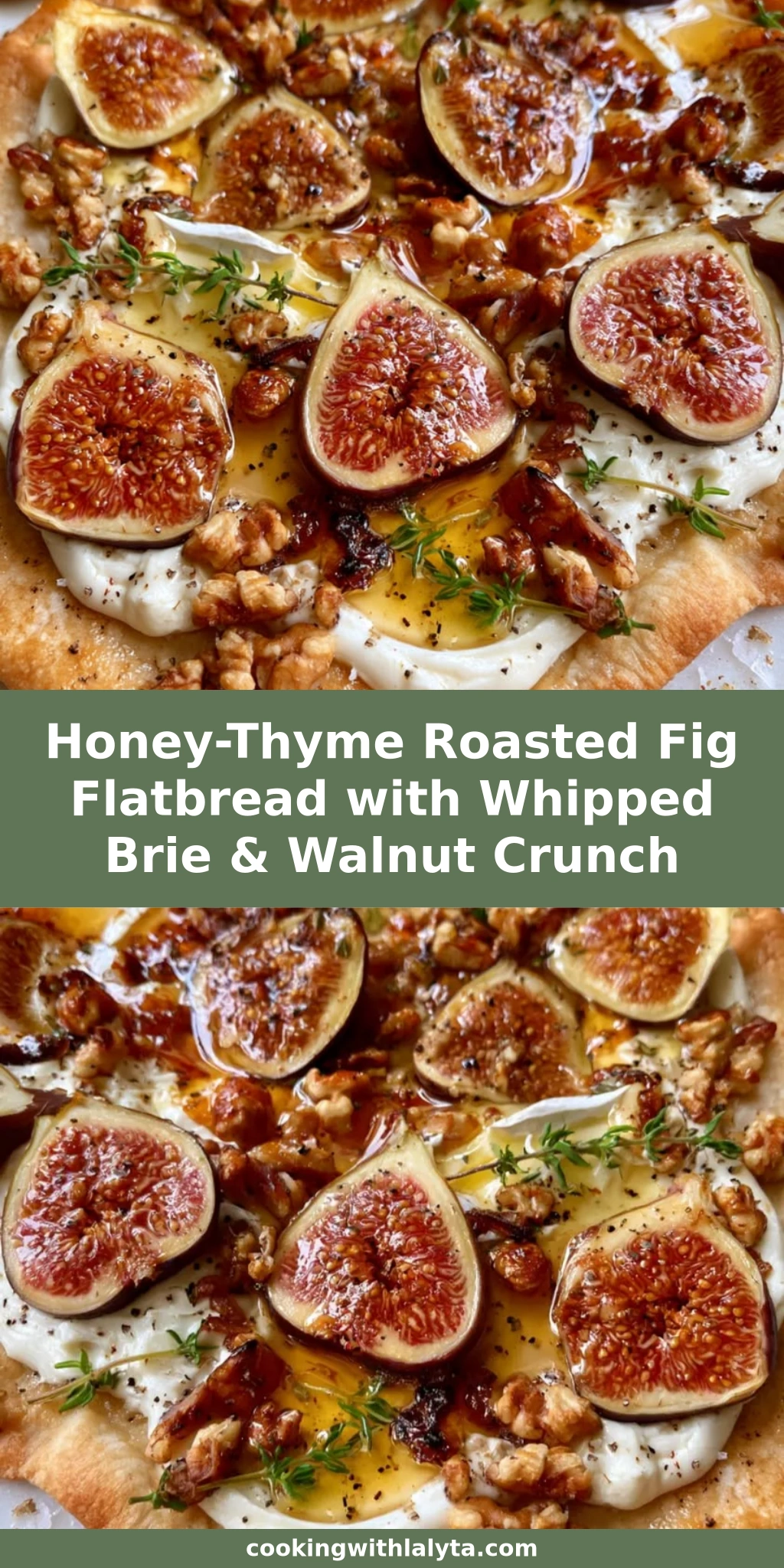
The first time I made this fig flatbread, I was standing in my tiny NYC apartment kitchen, a basket of perfectly ripe Black Mission figs from the Union Square Greenmarket on my countertop, and the scent of fresh thyme transporting me straight back to my mother’s kitchen in Morocco. In our family home, figs were never just a fruit — they were little jewels, drizzled with wild honey from the Atlas Mountains and roasted until their edges caramelized into something almost jammy. That memory collided with my Paris training — specifically, the way my French pastry chef instructor taught us to whip brie into an impossibly airy, mousse-like spread — and this honey thyme fig recipe was born. It is, without question, the best fig and brie flatbread I’ve ever created: a warm, golden crust, that ethereal whipped brie, sweet roasted figs, and a crunchy walnut topping that shatters between your teeth.
Let me paint you a picture. You pull this roasted fig appetizer out of the oven and the first thing that hits you is the honey — it’s bloomed in the heat, turned floral and slightly smoky. Then the thyme, woodsy and aromatic. The brie isn’t just melted; it’s whipped — so light it practically dissolves on your tongue, carrying the sweetness of the figs and the salty crunch of the walnuts in perfect balance. The flatbread itself is crisp at the edges but still has give in the center, sturdy enough to hold all those toppings without collapsing. There’s a peppery bite from a handful of fresh arugula tossed on at the last second, a final drizzle of honey, and a shower of flaky sea salt that makes every single flavor pop. This is the kind of appetizer that silences a dinner party when it hits the table — everyone takes a bite, then looks at you with that “what is this sorcery?” expression. I’ve served it at Friendsgiving gatherings, book club nights, and cozy date nights in, and it always steals the show.
Here’s the thing about this whipped brie flatbread that sets it apart from every other version out there: most recipes tell you to just lay slices of brie on the flatbread and hope for the best. That’s a missed opportunity. By whipping the brie with a touch of cream cheese and honey — a trick I picked up in a tiny Parisian fromagerie where the owner showed me how to transform overripe brie into a spreadable dream — you create a base layer that’s evenly distributed, luxuriously creamy, and flavored all the way through. But there’s one common mistake I see home cooks make again and again: they overload the flatbread before the second bake and end up with a soggy center. I’ll share exactly how to avoid that below, along with my favorite make-ahead shortcuts for the walnut crunch (spoiler: it stays crispy in the fridge for days and is incredible on everything from yogurt to salad). If you’re looking for a foolproof, impressive, deeply satisfying recipe, this honey thyme roasted fig flatbread is exactly it.
Why This Honey-Thyme Roasted Fig Flatbread Recipe Is the Best
The flavor secret lies in a technique I learned during my culinary training in Paris — infusing honey with fresh thyme before it ever touches the figs. Instead of simply drizzling honey over the fruit, I gently warm the honey with whole thyme sprigs until the oils release and the honey takes on an almost savory depth. This infused honey is used three ways in the recipe: it coats the figs before roasting, it’s blended into the whipped brie, and it caramelizes the walnuts into crunchy little clusters. Each layer tastes distinctly of honey and thyme, but in slightly different expressions — the roasted figs get jammy and concentrated, the brie stays fresh and floral, and the walnuts turn deeply nutty and almost toffee-like. It’s the kind of layered flavor building that makes people think you spent hours on this when in reality, the active work is maybe 20 minutes. If you’ve ever had a fig and brie flatbread that tasted flat or one-dimensional, it’s because that honey-thyme infusion step was skipped. Don’t skip it — it’s the soul of this dish.
Texture is everything in a flatbread, and I’ve engineered this recipe so every bite delivers contrast. Crisp naan forms the base — I toast it solo in the oven first to drive off any residual moisture, creating a golden, crunchy foundation that won’t turn into a soggy mess when the whipped brie hits it. The brie itself is whipped — not just softened — which means it spreads like a cloud and melts into the bread’s crevices without seeping through. The roasted figs become slightly chewy at the edges, almost like fruit leather, while staying tender and juicy in the center. And the walnut crunch? Those little nuggets are toasted dry first to intensify their nuttiness, then coated in honey and sea salt until they’re sticky and shatteringly crisp. When you bite in, you get crunch, creaminess, chew, and that peppery arugula freshness all at once. I’ve tested this recipe over a dozen times in my NYC kitchen, and I can tell you this: the textural harmony is what will make you want to make it again the very next night.
It’s foolproof and fast, which is why this roasted fig appetizer has become my go-to for everything from last-minute guests to meal-prepped weeknight dinners. You can have the whipped brie and walnut crunch made a full day ahead, so when you’re ready to serve, all that’s left is roasting the figs and crisping the flatbread — about 15 minutes of hands-off oven time. The naan shortcut means no yeast, no proofing, no flour all over your counters. I buy mine from a local NYC bakery that makes them fresh daily, but any good-quality store-bought naan works beautifully. Even if you’ve never made a flatbread before, the visual cues in this recipe — the figs should look slightly collapsed and glossy, the brie should be smooth without any white streaks, the walnuts should smell toasty and nutty — will guide you to success. This isn’t a fussy chef recipe; it’s a deeply forgiving, endlessly adaptable one that I’ve seen my friends’ kids assemble and my mother-in-law perfect on her first try. You’ve got this.
Fig Flatbread Ingredients
When I put together my shopping list for this recipe, I like to take a little tour of my favorite NYC spots: the Union Square Greenmarket for fresh figs and thyme when they’re in season (late summer through early fall is peak fig time in the Northeast), Kalustyan’s on Lexington Avenue for the most aromatic honey I can find, and Murray’s Cheese in Greenwich Village for a perfectly ripe wheel of brie. But you absolutely don’t need specialty stores — all of these ingredients are readily available at any well-stocked US grocery store. Here’s everything you’ll need, organized by component so you can prep efficiently.
Ingredients List
- For the flatbread:
- 3 pieces of naan or flatbread
- 2 tablespoons olive oil
- For the roasted figs:
- 8 fresh figs, halved
- 2 tablespoons honey
- 2 sprigs fresh thyme
- For the whipped brie:
- 8 ounces brie, rind removed
- 2 ounces cream cheese, softened
- 1 tablespoon honey
- 1 teaspoon fresh thyme leaves
- For the walnut crunch:
- 1/2 cup walnuts, chopped
- 1 tablespoon honey
- 1 teaspoon fresh thyme leaves
- 1/4 teaspoon sea salt
- For serving:
- Fresh arugula
- Honey, for drizzling
- Flaky sea salt
Ingredient Spotlight
Fresh Figs: Fresh figs are the undisputed star of this fig flatbread, and choosing ripe ones makes all the difference. Look for figs that are plump, slightly soft to the touch (like a ripe peach), with smooth, unbroken skin. They should feel heavy for their size and have a subtle sweetness at the stem end. Black Mission figs are my favorite for roasting because they have an intense, jammy flavor and deep purple-black skin that looks stunning against the white brie. Brown Turkey figs are a great alternative — they’re slightly milder and often more widely available in US grocery stores. Avoid figs that are hard, shriveled, or have any signs of mold at the stem. If you can’t find fresh figs, dried figs work in a pinch (see the substitution table below), but the texture will be chewier and less juicy — still delicious, just different.
Brie: The brie for this whipped brie flatbread should be ripe but not overripe — you want it to be creamy and yielding when pressed, but not ammonia-scented or runny. I recommend a double-cream brie for maximum richness; triple-cream brie will also work but the whipped texture will be extremely decadent (some might say too rich). Always remove the rind before whipping — it doesn’t break down fully and can leave bitter, chewy bits in the spread. To remove the rind easily, chill the brie for about 15 minutes first, then use a sharp serrated knife to slice it off in thin strips. The cream cheese in this recipe isn’t just filler — it adds structure and tang, preventing the whipped brie from becoming too liquid when it hits the warm flatbread.
Honey & Thyme: These two ingredients are the aromatic backbone of this honey thyme fig recipe. For the honey, choose a variety with character — orange blossom honey is my everyday pick for its bright, floral notes, but if you can find chestnut honey or wildflower honey, the deeper, slightly bitter undertones play beautifully against the sweet figs. I’d avoid clover honey here only because its flavor is so mild it tends to disappear in the oven. As for thyme, fresh is non-negotiable for the roasted figs and the walnut crunch — dried thyme won’t release the same essential oils and can taste dusty. Tuck the whole sprigs in with the figs while they roast; the leaves will fall off naturally and the woody stems are easy to remove before assembling. For the whipped brie, strip the leaves off and mince them so they disperse evenly.
Walnuts: Walnuts bring that essential crunch to the walnut crunch topping, and toasting them is a step I will never skip. Raw walnuts have a slightly bitter, almost astringent quality that disappears completely when toasted. I use English walnut halves and chop them roughly by hand — the irregular pieces create more textural interest than pre-chopped walnut pieces, which tend to be uniformly small and can burn more easily in the skillet. Pecans are an excellent swap if that’s what you have; they’re sweeter and softer than walnuts, but the caramelization process works exactly the same way. Whichever nut you choose, keep a close eye on them during toasting — they go from fragrant to burnt in about 30 seconds flat.
| Original Ingredient | Best Substitution | Flavor / Texture Impact |
|---|---|---|
| Fresh figs | Dried figs, soaked in warm water 10 min | Chewier, less juicy; roast for 5–6 min instead of 10–12 |
| Brie | Camembert or Saint-André | Similar creaminess; slightly earthier flavor |
| Honey | Maple syrup or date syrup | Less floral, more robust caramel notes |
| Walnuts | Pecans or almonds | Sweeter / crunchier; toasting time may vary |
| Naan | Pita, lavash, or pizza dough | Texture varies; adjust baking time accordingly |
How to Make Honey-Thyme Roasted Fig Flatbread — Step-by-Step
I promise you, this roasted fig appetizer looks far more complicated than it actually is. We’re going to tackle it in stages — roasting the figs, whipping the brie, toasting the walnuts, and assembling — and most of these steps overlap so the whole thing comes together in about 35 minutes. Read through the steps once before you start, but don’t overthink it. Your kitchen is about to smell incredible.
Step 1: Prep the Oven and Flatbread
Preheat the oven to 400°F (200°C). Line two baking sheets with parchment paper — one for the flatbread, one for the figs. Place the 3 naan pieces on one baking sheet and brush each generously with the olive oil, making sure you get all the way to the edges. This oil layer isn’t just for flavor — it’s your first defense against sogginess, creating a barrier that prevents the whipped brie from seeping into the bread. Set the oiled naan aside while you work on the figs.
💡 Lalybeth’s Pro Tip: Use a pastry brush to really work the olive oil into the nooks and crannies of the naan — especially if your naan has those lovely bubbled pockets. Those little divots will hold onto the whipped brie later and create the most delicious creamy-crispy bites.
Step 2: Roast the Figs to Jammy Perfection
In a medium bowl, toss the 8 halved fresh figs with 2 tablespoons of honey and the 2 whole thyme sprigs. Use clean hands or a spatula to coat every fig half — the honey should glisten on the cut surfaces. Spread the figs cut-side up on the second parchment-lined baking sheet, leaving a little space between each half. Roast for 10–12 minutes at 400°F, until the figs are visibly softened, slightly collapsed, and the honey has bubbled into a sticky glaze around the edges. You’ll smell them before you see them — that warm, jammy aroma is your cue. Remove from the oven and set aside. Don’t discard the sticky honey-thyme juices left on the parchment; you can scrape those up and drizzle them over the finished flatbread.
⚠️ Common Mistake to Avoid: Roasting the figs cut-side down. When the figs are cut-side down, the honey pools underneath and burns before it can caramelize properly, leaving you with scorched sugar and figs that steam rather than roast. Always roast cut-side up so the honey concentrates on the exposed flesh and those beautiful caramelized edges develop.
Step 3: Make the Whipped Brie
While the figs are roasting, make the whipped brie. In a food processor, combine the 8 ounces of rind-removed brie, 2 ounces of softened cream cheese, 1 tablespoon of honey, and 1 teaspoon of fresh thyme leaves. Puree for 60–90 seconds, scraping down the sides once or twice, until the mixture is completely smooth, aerated, and has the texture of a thick mousse. There should be no visible white streaks — those are bits of the brie rind or unincorporated cream cheese. Season with a pinch of salt (about 1/8 teaspoon), pulse once more, and taste. It should be creamy, slightly tangy, and lightly sweet with that herbal thyme note humming underneath. Set aside at room temperature — if you refrigerate it, it will firm up and become harder to spread.
💡 Lalybeth’s Pro Tip: If your food processor is small, cube the brie and cream cheese first so they blend more evenly. And if your brie is on the firmer side, let it sit at room temperature for 20 minutes before processing — cold brie will just bounce around the bowl without breaking down properly.
Step 4: Toast the Walnut Crunch
Place a small skillet over medium heat and add the 1/2 cup of chopped walnuts. Toast them dry — no oil needed — for about 3 minutes, stirring or tossing frequently, until they’re fragrant and just starting to turn golden at the edges. You’ll see a subtle color shift and smell that rich, nutty aroma. Immediately add 1 tablespoon of honey, 1 teaspoon of fresh thyme leaves, and 1/4 teaspoon of sea salt. Stir continuously with a heatproof spatula as the honey melts and coats the nuts. Cook for 1–2 more minutes, until the honey thickens and becomes sticky, clinging to each walnut piece in a glossy shell. Transfer the walnut mixture to a plate or a piece of parchment paper and spread it out so it doesn’t clump into one solid mass as it cools. It will crisp up as it sits.
⚠️ Common Mistake to Avoid: Walking away from the skillet during toasting. Walnuts go from raw to burnt in what feels like seconds — the oils release quickly and they can scorch if you’re not actively stirring. Stay present, keep them moving, and pull them off the heat the moment they smell toasty.
Step 5: Crisp the Flatbread
Increase your oven temperature to 425°F (220°C). Slide the baking sheet with the oiled naan into the oven and bake for 6–8 minutes, until the edges are golden and the surface is crisp to the touch. You’re not aiming for deep browning here — just a firm, dry surface that will support the toppings without buckling. If your naan pieces are on the thinner side, check them at the 5-minute mark. Remove the baking sheet from the oven and let the naan cool for just a minute or two on the sheet — they’ll continue crisping as they sit.
Step 6: Assemble the Flatbread
Spread the whipped brie over the warm flatbread using an offset spatula or the back of a spoon, leaving about a 1/2-inch border around the edges. Be generous but not thick — you want a creamy layer that covers the surface but doesn’t pool. Arrange the roasted figs over the brie, nestling them in slightly so they adhere. Scatter the walnut crunch evenly across the top, letting some pieces fall between the figs. Return the assembled flatbread to the 425°F oven for just 2–3 minutes — this final brief bake warms everything through and slightly melts the whipped brie into the bread without making it runny.
💡 Lalybeth’s Pro Tip: Assemble quickly while the flatbread is still warm — the residual heat helps the brie spread like butter. If you wait until it’s completely cool, the brie will sit on top rather than melt slightly into the bread, and you lose that cohesive bite.
Step 7: Garnish and Serve
Remove the flatbread from the oven and immediately top with a generous handful of fresh arugula — the heat will ever-so-slightly wilt the greens just at the edges. Drizzle with additional honey in a thin stream (use a spoon or a squeeze bottle for control), then finish with a pinch of flaky sea salt — Maldon is my go-to for those crunchy, pyramid-shaped crystals that dissolve slowly. Slice into wedges or strips with a sharp knife or pizza cutter, and serve warm. The arugula adds a peppery bite that cuts through the richness, and that final honey drizzle catches the light and makes the whole thing look like it came out of a restaurant kitchen.
| Step | Action | Duration | Key Visual Cue |
|---|---|---|---|
| 1 | Preheat oven & oil naan | 5 min | Naan glistens with olive oil |
| 2 | Roast figs | 10–12 min | Figs are softened, honey is bubbly |
| 3 | Whip brie | 2 min | Smooth, white, mousse-like texture |
| 4 | Toast walnut crunch | 5 min | Fragrant, golden, honey-coated |
| 5 | Crisp flatbread | 6–8 min | Golden edges, firm surface |
| 6 | Assemble & warm | 2–3 min | Brie softens, figs are warmed through |
| 7 | Garnish & serve | 1 min | Arugula is fresh, honey drizzle visible |
Serving & Presentation
Presentation matters, especially with a dish this beautiful. I like to serve this fig flatbread on a large wooden cutting board, sliced into rustic wedges or long strips that are easy to grab. The dark purple figs, bright green arugula, and glossy honey create a natural color palette that needs very little fussing — just scatter a few extra thyme sprigs around the board if you want to be fancy. At my NYC dinner parties, I’ll often set this out as a centerpiece appetizer and let guests pull pieces off themselves; it’s casual, interactive, and always sparks conversation. In Morocco, we have a tradition of serving sweet-savory flatbreads with mint tea in the late afternoon — the combination of warm, honeyed bread and cool, fragrant tea is something I’ve carried with me. While this isn’t a traditional Moroccan recipe, the spirit of it — generous toppings, bold flavors, and communal eating — is deeply rooted in my upbringing.
For a more composed presentation, you can plate individual portions: one large slice per person, balanced on a small bed of extra arugula dressed lightly with lemon juice and olive oil. This turns the appetizer into a starter course that feels elegant and considered. A glass of chilled Sancerre or a dry rosé alongside is pure magic — the acidity cuts through the richness of the brie while the fruit notes echo the honey. If you’re serving this as part of a larger spread, it pairs beautifully with a simple green salad dressed in a sharp vinaigrette, or a bowl of warm olives marinated with orange zest and rosemary. The key is to serve it warm — within 5–10 minutes of coming out of the oven — when the brie is at its most luscious and the figs still carry their oven heat. Left to sit too long, it’s still delicious, but you lose that wonderful temperature contrast between the warm bread and the cool, fresh arugula.
In my Paris days, I would have plated this with a perfectly quenelled mound of additional whipped brie on the side and a tiny pitcher of warm honey for drizzling at the table. These little touches — learned from watching chefs in Michelin-starred kitchens — make even a humble flatbread feel like a special occasion. But you don’t need any of that. If your friends are gathered in the kitchen with a glass of wine in hand, just slide the whole thing onto a board, scatter some sea salt, and watch it disappear in minutes. That’s the real measure of a great fig and brie flatbread.
| Pairing Type | Suggestions | Why It Works |
|---|---|---|
| Side Dish | Simple green salad with lemon vinaigrette, marinated olives, or roasted squash soup | Acidity balances the richness; soup echoes autumnal notes |
| Sauce / Dip | Extra whipped brie, hot honey, or fig balsamic reduction | Adds customizable richness, heat, or tangy sweetness |
| Beverage | Sancerre, dry rosé, sparkling water with lemon, or mint tea | Wine cuts through brie; tea echoes North African serving tradition |
| Garnish | Flaky sea salt, fresh thyme sprigs, pomegranate arils, or toasted pine nuts | Adds crunch, color, and bright pops of flavor |
Make-Ahead, Storage & Reheating
I am a big believer in strategic prep, especially living in NYC where my kitchen is, let’s be honest, not enormous. The beauty of this roasted fig appetizer is that almost everything can be prepared in advance, so when your guests arrive — or when you’re just hungry after a long day — all that’s left is assembly and a quick oven warm. I often make the whipped brie and walnut crunch on a Sunday afternoon, stash them in the fridge, and then on a busy Tuesday evening, all I have to do is roast some figs and toast the naan. It’s a life-saver, and it means I actually make this on weeknights instead of saving it just for entertaining. Here’s exactly how to store and reheat each component.
| Method | Container | Duration | Reheating Tip |
|---|---|---|---|
| Refrigerator | Airtight container, components stored separately | 3 days | Reheat flatbread at 350°F for 5 min, then add fresh arugula |
| Freezer | Whipped brie in freezer-safe container; walnut crunch in zip-top bag | 1 month (brie); 3 months (walnuts) | Thaw brie overnight in fridge; re-crisp walnuts in skillet 1 min |
| Make-Ahead | Separate airtight containers for brie, walnuts, roasted figs | 1 day in advance | Assemble and bake just before serving for best texture |
A few important notes from my own trial and error: the whipped brie will firm up in the refrigerator — this is normal and expected. Let it sit at room temperature for 20 minutes before spreading, or give it a quick 10-second zap in the microwave to loosen it up. Don’t try to spread cold whipped brie on room-temperature naan; it will tear the bread and clump unevenly. The walnut crunch is my favorite thing to make ahead because it actually gets crispier as it sits — just store it at room temperature in a loosely covered container (not the fridge, where moisture can soften it) and it’ll stay crunchy for a week. As for the assembled flatbread, it’s truly best eaten fresh and warm, but if you have leftovers, wrap them loosely in foil and reheat in a 350°F oven for 5–6 minutes. Add the arugula fresh after reheating — wilted, reheated arugula isn’t anyone’s idea of appetizing. The microwave works in a pinch, but the flatbread will soften; I’d only use it if you’re okay with a softer, more foldable texture.
One last tip from my Paris training: never store figs and flatbread assembled together for more than a few hours. The moisture from the figs and brie will inevitably seep into the bread, and you’ll lose that crisp bottom crust that makes this fig and brie flatbread so satisfying. If you know you’re bringing this to a party, prep all the components, transport them separately, and assemble on-site — it takes literally 3 minutes and an oven, or even a toaster oven, and the result is infinitely better than a pre-assembled, slightly soggy version. I’ve done this for countless NYC rooftop gatherings and it’s always a hit.
Variations & Easy Swaps
| Variation | Key Change | Best For | Difficulty Impact |
|---|---|---|---|
| Moroccan-Spiced Flatbread | Add ras el hanout & swap walnuts for almonds | Adding warmth & complexity | No change — still easy |
| Gluten-Free & Dairy-Free | GF naan, vegan brie, coconut cream | Dietary restrictions | Slightly more attention needed |
| Summer Peach & Prosciutto Twist | Replace figs with roasted peaches, add prosciutto | Seasonal summer entertaining | No change — still easy |
Moroccan-Spiced Flatbread
This variation is close to my heart because it draws directly from the spice cabinet of my Moroccan childhood. Add 1/2 teaspoon of ras el hanout — that warm, aromatic North African spice blend with notes of cinnamon, cumin, coriander, and rose petals — to the honey before tossing it with the figs. The spice blooms in the oven and creates an intoxicating fragrance that mingles with the thyme. Swap the walnuts for blanched almonds, which are more traditional in Moroccan cooking, and consider adding a few dried apricot halves to the roasting pan alongside the figs for extra sweetness and chew. Serve with fresh mint leaves instead of arugula for an herbal finish that’s unmistakably North African. I made this version for a Moroccan-themed dinner party last fall and my guests — including my mother, who is my toughest critic — declared it the best dish on the table.
Gluten-Free & Dairy-Free Flatbread
I’ve tested this version multiple times for friends with dietary restrictions, and while the flavor profile shifts slightly, it’s still deeply satisfying. Use certified gluten-free naan or flatbread — there are several good brands available in the US now, or you can use gluten-free pizza dough rolled thin and pre-baked. For the whipped brie, substitute a soft vegan brie-style cheese (brands like Miyoko’s or Treeline work well) blended with 2 tablespoons of full-fat coconut cream instead of cream cheese — it won’t whip up quite as aerated as dairy brie, but it will be creamy and spreadable. The honey, figs, and walnuts remain the same, so the core sweet-savory-thyme character stays intact. Note that vegan brie can be slightly saltier than traditional brie, so taste before adding any additional salt to the whip or the walnut crunch. The texture will be a touch denser without the aeration from the dairy brie, but the flavor is still wonderful and my dairy-free friends have been thrilled to have a version of this fig and brie flatbread they can fully enjoy.
Summer Peach & Prosciutto Twist
When figs are out of season but I’m craving this flatbread, I pivot to stone fruit. Ripe but firm peaches, halved and pitted, roast beautifully with honey and thyme — they need about 8–10 minutes at 400°F, just until the edges soften and the honey caramelizes. The sweetness is brighter and more floral than figs, so I like to balance it with a few slices of prosciutto draped over the whipped brie before adding the fruit (the prosciutto crisps slightly in the final oven blast and adds a salty, savory counterpoint). Add a handful of toasted pine nuts alongside or instead of the walnuts, and finish with fresh basil instead of arugula. This is my go-to for summer rooftop parties in NYC — it feels lighter, more seasonal, and pairs beautifully with a chilled rosé. If you can get white peaches from a farmers market, their delicate flavor is absolutely stunning here.
Can I use dried figs instead of fresh figs for this flatbread?
Absolutely — dried figs are a perfectly good substitute when fresh figs are out of season or hard to find. To use them, soak 8 dried figs in warm water for about 10 minutes to plump them up and restore some moisture, then drain, pat dry, and halve them. Roast as directed but reduce the roasting time to 5–6 minutes, since dried figs are already concentrated and can burn more easily than fresh ones. The texture will be chewier and less jammy than roasted fresh figs, but the flavor will be deeply sweet and concentrated. I’ve used this method many times in the middle of winter when I’m craving this fig flatbread, and the results are still wonderful — just a slightly different expression of figgy goodness. If you want to get closer to that fresh-fig texture, you can also use fig preserves as an additional spread layer under the whipped brie, but that moves the dish in a sweeter direction.
What can I substitute for brie cheese in the whipped brie topping?
If brie isn’t your thing or you can’t find a good wheel, you have several excellent options. Camembert is the closest substitute — it has a similar creamy texture and earthy flavor, though it tends to be slightly stronger and more mushroomy. Saint-André is a decadent triple-cream option that whips up even more luxuriously, but use it sparingly as it’s much richer. For a tangier, lighter result, a good quality full-fat goat cheese blended with a tablespoon of heavy cream works beautifully — it won’t be as mousse-like but the tang pairs wonderfully with the honey and figs. If you need a dairy-free option, soft vegan brie-style cheeses (Miyoko’s and Treeline make solid versions) blended with a little coconut cream will give you a spreadable, creamy base. Avoid hard cheeses or very young, chalky brie — neither will whip into the smooth, aerated texture that makes this whipped brie flatbread so special.
How do you keep the flatbread from getting soggy with roasted figs and whipped brie?
Preventing a soggy flatbread is all about building moisture barriers and managing heat. First, brushing the naan generously with olive oil and baking it at 425°F until golden and crisp creates a water-resistant crust that repels liquid rather than absorbing it. Second, the whipped brie should be spread in a thin, even layer — not piled on thick, which can steam the bread underneath. Third, roasted figs should be well-drained; any excess honey-thyme liquid from the roasting pan should be drizzled on after assembly, not pooled under the figs where it can seep into the bread. Fourth, keep the final warming bake short (2–3 minutes maximum) — just enough to meld everything together without giving moisture time to penetrate. Finally, serve immediately while the bread is still crisp; as it sits, any flatbread will gradually absorb moisture from the toppings, so timing is your friend. If you follow these steps, you’ll have a crisp-bottomed fig and brie flatbread every time.
Can I make the whipped brie and walnut crunch ahead of time?
Yes, and I actually encourage it — making the whipped brie and walnut crunch a day ahead transforms this from a party recipe into a realistic weeknight meal. The whipped brie can be prepared up to 24 hours in advance and stored in an airtight container in the refrigerator. Let it come to room temperature for about 20 minutes before spreading, or give it a very brief microwave zap (10 seconds, no more) to loosen it up. The walnut crunch can be made up to 3 days ahead and stored at room temperature in a loosely covered container — keep it out of the fridge, where humidity can soften the honey coating and make the nuts chewy instead of crisp. In fact, the walnut crunch gets even crunchier as it sits, and I often make a double batch just to have on hand for sprinkling over yogurt, salads, or roasted vegetables. Having both components ready to go means that when dinnertime rolls around, all you need to do is roast the figs and crisp the flatbread — about 15 minutes of hands-off time.
What kind of honey works best for a honey thyme fig recipe?
The best honey for this honey thyme fig recipe is one with enough character to stand up to the brie and roasted figs without overpowering them. Orange blossom honey is my everyday choice — it’s floral, bright, and widely available in US grocery stores. Wildflower honey brings more complexity with its varied pollen sources, and chestnut honey has a deep, almost bitter edge that plays beautifully against the sweet figs and rich brie. I’d avoid very mild honeys like clover, which can disappear during roasting, and very strong honeys like buckwheat, which can dominate the dish. If you have access to a farmers market, ask for a local honey with herbal notes — thyme honey, if you can find it, is a poetic match. Warm the honey slightly with the thyme sprigs before using it to maximize infusion; even 30 seconds in a small saucepan releases the essential oils from the thyme and elevates the entire dish.
Do I need to remove the rind from brie for whipped brie?
Yes, removing the rind is essential for achieving that silky-smooth, aerated whipped brie texture. Brie rind is edible and perfectly fine on a cheese board, but it doesn’t break down fully in the food processor — you’ll end up with small, chewy bits of rind suspended throughout the whip, which disrupts the creamy mouthfeel. To remove the rind easily, chill the brie for 15 minutes first (it firms up and is easier to handle), then use a sharp serrated knife to slice off the top and bottom rinds in thin strips. You can also use a vegetable peeler in a pinch, though it removes more cheese. Don’t worry about being perfect — a few tiny specks of rind won’t ruin anything, but the goal is to get the vast majority removed. Once the brie is rind-free, cube it and let it come to room temperature before processing for the smoothest result. Some people blanch the brie briefly to remove the rind, but I find that unnecessarily fussy and it can melt the cheese before you even get to the whipping step.
Can I use a different bread base instead of naan for fig flatbread?
Absolutely — naan is my favorite for its pillowy texture and slight chew, but this fig flatbread works beautifully on several bases. Pita bread makes a thinner, crispier flatbread and is a great option if you prefer more crunch; split the pita into two rounds so they’re not too thick. Store-bought pizza dough rolled thin and pre-baked for 5–6 minutes before topping gives you a more traditional flatbread feel. Lavash is another excellent choice — it bakes up shatteringly crisp and works especially well if you’re cutting the flatbread into small appetizer squares. If you’re gluten-free, there are several good store-bought gluten-free flatbreads and naan available now. Whatever base you choose, the key is pre-baking it with olive oil until crisp before adding the toppings — this prevents sogginess and gives you a sturdy foundation. Baking times will vary slightly depending on thickness, so use the visual cues (golden edges, firm to the touch) rather than the clock.
What’s the best way to reheat leftover fig and brie flatbread?
The best way to reheat leftover fig and brie flatbread is in a 350°F oven for 5–6 minutes, placed directly on a baking sheet or on a piece of foil. This gently warms the brie, re-crisps the bread, and revives the figs without drying everything out. Avoid the microwave if you can — it will soften the flatbread and make the brie greasy rather than creamy. If you do use a microwave out of necessity, do 30-second bursts on medium power and accept that the texture will be softer and less crisp. Always add fresh arugula after reheating, never before, as wilted and reheated arugula is unpleasantly soggy and bitter. If you know you’ll have leftovers, consider storing the components separately — the flatbread, roasted figs, whipped brie, and walnut crunch all store better individually, and you can re-assemble and warm quickly for a nearly fresh result. The walnut crunch doesn’t need reheating; just sprinkle it on at the end.
Can this roasted fig appetizer be served at room temperature?
Yes, this roasted fig appetizer can be served at room temperature and it’s still delicious — which makes it an excellent option for buffets, picnics, or potlucks where hot food isn’t practical. The whipped brie will be firmer and less molten, but the flavors remain beautifully balanced. The flatbread will be crisper at room temperature than it is hot, which some people actually prefer. The arugula stays fresher and more peppery without the heat to wilt it. If you’re planning to serve it at room temperature, I’d recommend assembling it no more than an hour ahead of time and adding the arugula and final honey drizzle just before serving so they look and taste their freshest. The one thing you lose at room temperature is the temperature contrast between the warm bread and cool arugula — but since it’s a flatbread, not a soufflé, it’s very forgiving. I’ve brought this to countless gatherings and it’s always one of the first things to disappear, whether it’s piping hot or pleasantly cool.
How can I make this recipe nut-free while keeping the crunch?
To make this fig flatbread nut-free while preserving that essential crunchy element, you have several great options. Toasted pumpkin seeds (pepitas) are my top recommendation — they have a similar size and crunch to chopped walnuts and toast up beautifully with honey and sea salt in the same 3–5 minute skillet method. Sunflower seeds also work, though they’re a bit smaller and can burn more easily, so reduce toasting time by about a minute. Toasted sesame seeds mixed with a pinch of flaky salt add a different kind of crunch — more delicate but very aromatic — and they nod to the North African flavors I grew up with. If seeds are also off the table due to allergies, try crushed roasted chickpeas: drain and thoroughly dry a can of chickpeas, toss with olive oil and salt, and roast at 400°F for 20–25 minutes until deeply crunchy, then toss with honey and thyme as you would the walnuts. They’re a completely different texture — more substantial and almost crouton-like — but they bring a satisfying crunch and extra protein to the dish.
Share Your Version!
I love seeing what comes out of your kitchens — truly, it’s the best part of doing this work. When you make this honey-thyme roasted fig flatbread, I want to hear about it. Did you swap the walnuts for pecans? Did you try the Moroccan-spiced version with ras el hanout? Did you serve it at a party and watch it disappear in five minutes flat? Leave a star rating and a comment below — your feedback helps other readers and it helps me know what recipes to bring you next. Every comment genuinely makes my day, and I read every single one.
If you’re sharing on Instagram or Pinterest, tag me @cookingwithlalyta — I share reader creations in my stories and it’s such a joy to see this recipe popping up in kitchens across the country. When you post, tell me what occasion you made it for, or share one thing you learned while making it — those little kitchen moments are what connect us. And here’s a question for you: what’s one ingredient from your own family food traditions that you’d pair with this fig and brie flatbread? I’m always looking for new inspiration, and the best ideas often come from this community.
From my NYC kitchen to yours — I hope this recipe brings as much warmth to your table as it does to mine. — Lalybeth 🧡
Love This Recipe? Save It to Pinterest!
If you enjoyed this Honey-Thyme Roasted Fig Flatbread with Whipped Brie & Walnut Crunch recipe, don’t let it get lost in your browser tabs! 😄 Pin it now so you can find it again anytime — and explore hundreds more tried-and-tested recipes waiting for you on my Pinterest boards.
👉 Follow Lalybeth on Pinterest @cookingwithlalyta
📌 Pin this recipe · 🔁 Re-pin your favorites · 💬 Tag me when you make it — I love seeing your creations!

Honey-Thyme Roasted Fig Flatbread with Whipped Brie & Walnut Crunch
- Total Time: 35 minutes
- Yield: 6 servings 1x
Description
This flatbread is sweet, savory, and so delicious! Roasted figs, whipped brie, and a walnut crunch are an amazing combination, perfect for a fall appetizer or light meal.
Ingredients
- For the flatbread:
- 3 pieces of naan or flatbread
- 2 tablespoons olive oil
- For the roasted figs:
- 8 fresh figs, halved
- 2 tablespoons honey
- 2 sprigs fresh thyme
- For the whipped brie:
- 8 ounces brie, rind removed
- 2 ounces cream cheese, softened
- 1 tablespoon honey
- 1 teaspoon fresh thyme leaves
- For the walnut crunch:
- 1/2 cup walnuts, chopped
- 1 tablespoon honey
- 1 teaspoon fresh thyme leaves
- 1/4 teaspoon sea salt
- For serving:
- Fresh arugula
- Honey, for drizzling
- Flaky sea salt
Instructions
- Preheat the oven to 400°F (200°C). Line two baking sheets with parchment paper.
- Place the naan on one baking sheet and brush with olive oil. Set aside.
- In a bowl, toss the halved figs with honey and thyme sprigs. Spread on the second baking sheet.
- Roast the figs for 10–12 minutes, until softened and caramelized. Remove from oven and set aside.
- Meanwhile, make the whipped brie: In a food processor, combine the brie, cream cheese, honey, and thyme leaves. Puree until smooth and creamy. Season with salt, then set aside.
- For the walnut crunch: In a small skillet over medium heat, toast the walnuts until fragrant, about 3 minutes. Add honey, thyme, and sea salt, stirring to coat. Cook for 1–2 minutes until sticky and caramelized. Set aside.
- Increase the oven temperature to 425°F (220°C). Bake the flatbread for 6–8 minutes, until golden and crisp.
- Spread the whipped brie over the warm flatbread, leaving some room around the edges.
- Top with the roasted figs, then scatter the walnut crunch over the top.
- Return to the oven for 2–3 minutes, just until everything is warmed through.
- Remove from the oven and top with fresh arugula, a drizzle of honey, and flaky sea salt. Slice and serve warm.
Notes
If you don’t have fresh figs, you can use dried figs soaked in warm water for 10 minutes before roasting. The whipped brie and walnut crunch can both be made a day ahead and stored in the refrigerator.
- Prep Time: 15 minutes
- Cook Time: 20 minutes
- Method: Appetizer
- Cuisine: American
Nutrition
- Calories: 450
- Sugar: 18g
- Fat: 22g
- Carbohydrates: 55g
- Protein: 14g
Tried This Recipe? Leave a Comment!
Did you make this recipe? I’d love to hear how it turned out! Please leave a comment and a rating below. Your feedback helps other home cooks and supports cookingwithlalyta.com!
For more delicious inspiration, follow me on Pinterest!