Table of Contents
Pistachio Basil Rigatoni with Burrata & Lemon Zest – Nutty & Bright, Ready in 25 Minutes
I still remember the first time I tasted pistachio pesto. It was during my culinary school days in Paris, tucked into a tiny bistro near Le Marais where the chef swapped traditional pine nuts for vibrant green Sicilian pistachios. The pesto was silkier, richer, and had this almost buttery quality that pine nuts simply couldn’t replicate. Fast forward fifteen years, and I found myself standing in my New York City kitchen on a sweltering July evening, craving that exact flavor but wanting something even more indulgent. That’s how this Pistachio Basil Rigatoni with Burrata & Lemon Zest was born — a dish that marries the nutty brightness of pistachio pesto pasta with the luscious creaminess of fresh burrata and the zippy pop of lemon zest. It’s the kind of recipe that feels restaurant-worthy but comes together in just 25 minutes, making it my go-to easy pesto pasta recipe for both busy weeknights and impromptu dinner parties.
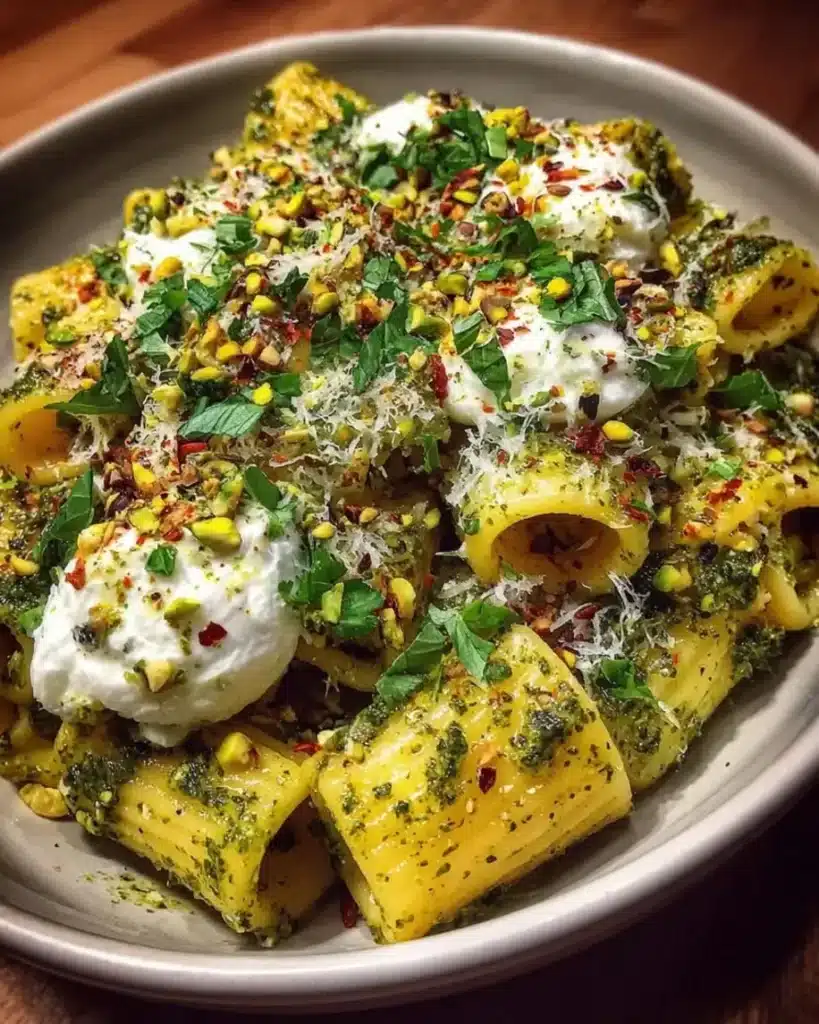
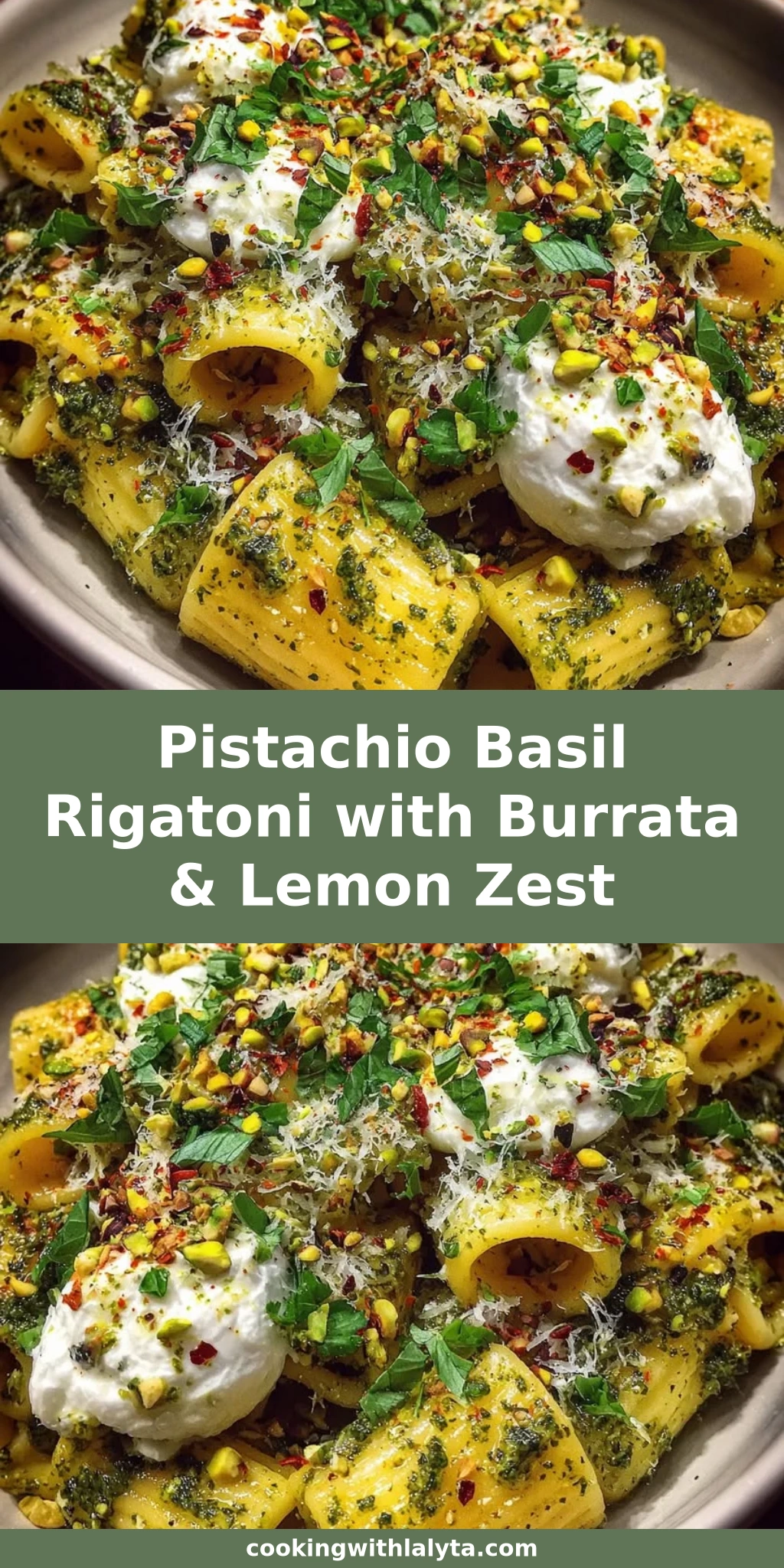
Picture this: al dente rigatoni — those perfect ridged tubes designed to catch every drop of sauce — coated in a velvety emerald-green pistachio basil pesto that smells of freshly crushed basil, toasted garlic, and nutty pistachios. Then comes the burrata: a cloud-like ball of mozzarella filled with stracciatella and cream that melts ever so slightly against the warm pasta, creating ribbons of milky richness. A shower of bright lemon zest cuts through the richness like sunshine breaking through clouds, while a gentle squeeze of lemon juice wakes up every single flavor on the plate. The textures dance between the satisfying chew of rigatoni, the slight crunch of pistachio bits, and the pillowy softness of burrata. It’s the kind of burrata pasta recipe that makes you close your eyes on the first bite — and isn’t that exactly what we want from a bowl of pasta?
What sets my version of this pistachio basil rigatoni apart from other lemon zest pasta recipes floating around the internet is the balance I’ve perfected through years of professional cooking. I use raw pistachios for their vibrant color and delicate sweetness — though I’ll share my trick for toasting them if you prefer a deeper, nuttier flavor profile — and I’m meticulous about the pesto-to-pasta ratio so every bite is generously coated without being greasy. One mistake I see home cooks make again and again is over-processing the pesto until it becomes a paste; I’ll show you how to keep it textured and lively. Plus, there’s a little secret about when to add the burrata so it stays creamy and distinct rather than disappearing into the sauce. Stick with me, and you’ll have a bowl of pasta that tastes like it came straight out of a trattoria in Florence — with a decidedly New York twist.
Why This Pistachio Basil Rigatoni Recipe Is the Best
The Flavor Secret: My French culinary training taught me that the best sauces start with understanding each ingredient’s personality. Pistachios from California’s Central Valley — which I pick up at my local NYC farmers market whenever possible — bring an inherently sweet, almost floral nuttiness that’s completely different from the resinous punch of pine nuts. When you blend them with just-picked basil, a whisper of raw garlic, and the salty depth of genuine Parmigiano-Reggiano, the resulting pistachio pesto pasta sauce is more nuanced and luxurious than any traditional pesto you’ve tried. The burrata isn’t just a topping; it’s a functional element that adds creaminess without requiring heavy cream or butter, keeping this burrata pasta recipe feeling light even as it satisfies deeply.
Perfected Texture: Texture is where this lemon zest pasta truly shines. Rigatoni is my non-negotiable choice here — those deep ridges and wide tubes are engineered to trap pesto inside and out, giving you sauce in every single forkful. I pulse the pesto by hand-feel rather than a timer, stopping when the pistachios are finely ground but still have micro-bits for crunch. The burrata goes on at the very end, torn by hand into craggy pieces that hold their shape just long enough to create pockets of cool creaminess against the warm pasta. It’s the kind of textural contrast that my professors in Paris called “la différence” — the difference between a good dish and an unforgettable one.
Foolproof & Fast: I designed this easy pesto pasta recipe for real life. You don’t need any special equipment beyond a basic food processor, and the entire dish comes together in the time it takes to boil water and cook pasta. The pesto is forgiving — if it’s too thick, you thin it with pasta water; if you want it brighter, you add more lemon. There’s no roux, no reduction, no fussy techniques. Even if you’ve never made homemade pesto before, you’ll nail this on your first try. And because I know how busy life gets in this city, I’ve included make-ahead tips and storage guidance so you can prep components in advance and have dinner on the table in under 10 minutes on a hectic Tuesday.
Pistachio Basil Rigatoni Ingredients
I’m a firm believer that a recipe is only as good as its ingredients, and this one demands freshness above all else. When I shop for this dish in NYC, I make a beeline for the Union Square Greenmarket, where local basil is fragrant and abundant from late spring through early fall. The pistachios I source from a tiny Middle Eastern grocer in Brooklyn — they stock the most beautiful shelled pistachios with deep green centers. For the burrata, I treat myself to the hand-tied ones from Di Palo’s in Little Italy; they’re so fresh the cheese practically breathes. But even if you’re grabbing everything from your neighborhood Trader Joe’s, this recipe will still sing as long as your basil is perky and your lemon is heavy with juice.
Ingredients List
- 12 ounces rigatoni pasta
- 1/2 cup shelled pistachios (raw, unsalted)
- 1 cup fresh basil leaves, packed
- 2 cloves garlic, peeled
- 1/2 cup grated Parmesan cheese
- 1/3 cup extra virgin olive oil
- Salt and freshly ground black pepper, to taste
- 8 ounces burrata cheese
- Zest of 1 lemon
- Juice of 1/2 lemon
Ingredient Spotlight
Shelled Pistachios: These are the backbone of our pistachio pesto pasta. Look for raw, unsalted pistachios with a vivid green hue — that color indicates freshness and high chlorophyll content, which translates to a brighter pesto. In most US grocery stores, you’ll find them in the baking aisle or with the nuts and seeds. Avoid roasted and salted pistachios for the pesto itself; the salt level is unpredictable, and roasted nuts can turn the pesto slightly bitter. If raw pistachios are hard to find, raw almonds make an excellent substitute — they’re milder but still deliver that creamy-nutty body. Expect a slightly less vibrant green color with almonds, but the flavor will still be lovely.
Fresh Basil Leaves: This is where your pesto gets its soul. Choose basil bunches with perky, dark green leaves and no black spots or wilting. Give them a sniff — great basil should smell sweet and almost peppery. If basil is out of season or your grocery store’s supply looks sad, you can use a combination of fresh spinach and mint (60% spinach, 40% mint) for a different but equally delicious green pesto. Know that the flavor will shift from classic Italian to something more garden-fresh and slightly cooling, which actually pairs beautifully with the burrata in this lemon zest pasta.
Burrata Cheese: Burrata is mozzarella’s more decadent cousin — a tender shell of fresh mozzarella wrapped around a luscious center of cream and stracciatella (shredded mozzarella curds). For this burrata pasta recipe, look for burrata packed in water or brine in the specialty cheese section, usually near the fresh mozzarella. It should feel soft and slightly jiggly, never firm. Fresh mozzarella can be used in a pinch, but you’ll miss the dramatic creaminess that makes this dish special. If substituting, tear the mozzarella into pieces and drizzle a tablespoon of heavy cream over the finished pasta to approximate burrata’s effect.
Lemon Zest & Juice: The lemon is the unsung hero of this dish — its zest carries aromatic oils that perfume the entire plate, while its juice provides the acidity needed to balance the richness of olive oil, nuts, cheese, and burrata. Choose organic lemons if possible since you’re using the zest, and look for fruits that feel heavy for their size (that means more juice). Roll the lemon firmly on the counter before zesting to release its oils. If you’re out of fresh lemons, 1 teaspoon of high-quality white wine vinegar can stand in for the juice, but you’ll lose the floral citrus notes that make this pistachio basil rigatoni so bright.
| Original Ingredient | Best Substitution | Flavor / Texture Impact |
|---|---|---|
| Shelled pistachios | Raw almonds or cashews | Milder nuttiness; slightly less vibrant green color |
| Fresh basil | 60% spinach + 40% fresh mint | More herbaceous, cooling; less traditional pesto flavor |
| Burrata cheese | Fresh mozzarella + 1 Tbsp heavy cream | Less creamy mouthfeel; need to add cream for richness |
| Parmesan cheese | Pecorino Romano or Grana Padano | Pecorino is saltier; Grana Padano is milder and nuttier |
| Rigatoni pasta | Penne, fusilli, or casarecce | Similar sauce-gripping ability; cooking times may vary slightly |
How to Make Pistachio Basil Rigatoni — Step-by-Step
Cooking should feel like a joy, not a chore, and I’ve broken this recipe down into four simple steps that flow naturally from one to the next. The key is multitasking: get your pasta water boiling first, then make the pesto while the rigatoni cooks. By the time the pasta is al dente, your pesto is ready, and dinner is just a quick toss away. Trust the process — I’ve tested this sequence dozens of times in my NYC kitchen, and it’s foolproof.
Step 1: Cook the Rigatoni
Fill a large pot with at least 4 quarts of water and bring it to a rolling boil over high heat. Once bubbling vigorously, add 1 tablespoon of kosher salt — the water should taste like the sea. Pour in 12 ounces of rigatoni and stir immediately to prevent sticking. Cook according to package directions until al dente, usually 10 to 12 minutes. The pasta should be tender but still have a slight firmness when bitten. Before draining, use a heatproof measuring cup to scoop out 1 cup of the starchy pasta water and set it aside — this liquid gold is your secret weapon for achieving a silky, cohesive sauce. Drain the pasta in a colander but do not rinse it; the residual starch helps the pesto cling.
💡 Lalybeth’s Pro Tip: Set a timer for 2 minutes less than the package’s lowest recommended cook time. Start tasting at that point — you want the pasta to have just a tiny white dot of uncooked starch at the center. It will finish cooking from residual heat when you toss it with the hot pesto, giving you perfect al dente every time.
Step 2: Make the Pistachio Basil Pesto
While the pasta water comes to a boil and the rigatoni cooks, turn your attention to the pesto. In the bowl of a food processor, combine 1/2 cup shelled pistachios, 2 peeled garlic cloves, and 1/2 cup grated Parmesan cheese. Pulse 8 to 10 times until the nuts are coarsely ground — you want a texture somewhere between fine crumbs and small pebbles. Add 1 cup packed fresh basil leaves and, with the motor running, stream in 1/3 cup extra virgin olive oil through the feed tube. Stop as soon as the mixture comes together into a loose, spoonable paste. Scrape down the sides with a spatula, then pulse in a splash of the reserved pasta water (about 2 tablespoons) to emulsify the pesto and make it creamier. Season with a generous pinch of salt and several grinds of black pepper, pulsing once or twice to incorporate.
⚠️ Common Mistake to Avoid: Over-processing the pesto is the fastest way to ruin its texture and color. The friction from prolonged blending heats the basil, turning it dark and slightly bitter. Pulse just until combined — your pesto should look slightly rustic with visible flecks of pistachio and basil. A little texture is exactly what you want for this pistachio pesto pasta.
Step 3: Toss Pasta with Pesto
Return the drained rigatoni to the same pot (off the heat) or transfer it to a large mixing bowl. Scrape all of the pistachio basil pesto over the pasta and begin tossing with tongs or two large spoons. At first, the pesto will seem thick and stubborn, but as you toss, the residual heat from the pasta will loosen it. Now, start adding the reserved pasta water, one tablespoon at a time, continuing to toss until the sauce becomes glossy and coats every ridge of the rigatoni. You’ll likely use about 1/4 to 1/3 cup total. The sauce should cling to the pasta without pooling at the bottom of the pot. Taste and adjust salt and pepper — remember that the burrata and lemon will add brightness in the final step, so the pasta itself should be well-seasoned but not aggressively so.
💡 Lalybeth’s Pro Tip: Warm your serving bowls or platter before plating. I run mine under hot tap water for 30 seconds and dry them quickly. A warm vessel keeps the pasta at the ideal temperature — especially important when you’re adding cool burrata on top, as it prevents the cheese from chilling the entire dish.
Step 4: Add Burrata & Lemon Zest
Transfer the pesto-coated rigatoni to a large serving platter or individual bowls. Remove the 8-ounce ball of burrata from its packaging and gently pat it dry with paper towels — this prevents excess liquid from watering down your sauce. Using your hands, tear the burrata into 6 to 8 rough pieces, distributing them artfully across the surface of the pasta. The tearing motion creates natural, organic shapes that look far more inviting than a single plopped ball. Immediately sprinkle the zest of 1 lemon over the entire dish, letting the bright citrus oils fall across both the pasta and the burrata. Finish with a squeeze of lemon juice from half the lemon, aiming for even coverage. Serve immediately while the contrast between the warm pasta and cool, creamy burrata is at its peak.
⚠️ Common Mistake to Avoid: Don’t stir the burrata into the pasta! I see this all the time — people mix it in like they would ricotta, and the delicate cheese breaks down into a milky mess. Burrata is meant to be experienced as distinct creamy pockets. Let each diner break into their portion of burrata themselves, or leave the pieces visible on top so the presentation stays stunning.
| Step | Action | Duration | Key Visual Cue |
|---|---|---|---|
| 1. Cook Rigatoni | Boil salted water, cook pasta, reserve water | 12 mins | Pasta is al dente with tiny white center dot |
| 2. Make Pesto | Pulse nuts, garlic, cheese; add basil & oil | 5 mins | Pesto is coarse, spoonable, vibrant green |
| 3. Toss Pasta | Combine pasta & pesto, thin with pasta water | 3 mins | Sauce is glossy and clings to every ridge |
| 4. Finish & Serve | Top with torn burrata, zest, lemon juice | 2 mins | Burrata pieces remain distinct and creamy |
Serving & Presentation
I learned the art of plating during my years in Paris, where even a simple pasta dish was treated with reverence. For this pistachio basil rigatoni, I love using a wide, shallow bowl or a rimmed pasta plate — something with enough surface area to show off those beautiful torn pieces of burrata and the flecks of green pesto. Use tongs to twirl a generous nest of rigatoni in the center of each bowl, letting the pasta naturally mound up. Then, with your hands, tear the burrata and tuck the pieces into the crevices of the pasta rather than just plopping them on top. A final flourish of lemon zest, a tiny drizzle of your best olive oil, and a few small basil leaves scattered around the edges make the dish look like it came from a restaurant kitchen. In Morocco, my mother always said we eat with our eyes first — and she was right.
For a complete meal that feels special but stays effortless, I keep the sides simple and bright. A peppery arugula salad dressed with nothing more than lemon juice, olive oil, and shaved Parmesan echoes the flavors in the pasta without competing. When I’m hosting friends in my NYC apartment, I’ll often put out a board of marinated olives, roasted red peppers, and some crusty ciabatta to soak up any leftover pesto on the plate. This burrata pasta recipe is rich enough to stand alone as a main course, but if you’re feeding particularly hungry guests, grilled lemon-garlic shrimp or a simple roasted chicken thigh on the side turns it into a feast. To drink, a crisp Vermentino or a dry Prosecco cuts through the richness of the burrata beautifully — though honestly, a cold glass of sparkling water with a slice of lemon is just as refreshing.
Temperature matters more than you might think with this dish. The pasta should be served immediately — warm enough to gently melt the burrata’s outer shell but not so hot that the cheese dissolves into a puddle. If the pasta cools too much while you’re taking photos (guilty as charged!), simply pop the bowls into a 200°F oven for 2 to 3 minutes, then add the burrata fresh. I’ve also served this pistachio basil rigatoni at room temperature for summer picnics in Central Park, and it’s genuinely lovely that way — the pesto stays vibrant, and the burrata softens just enough to be spoonable. Just hold off on adding the lemon juice until right before serving so the basil stays bright green.
| Pairing Type | Suggestions | Why It Works |
|---|---|---|
| Side Dish | Arugula salad, roasted asparagus, grilled zucchini | Peppery or charred flavors contrast the creamy, nutty pasta |
| Protein Addition | Grilled shrimp, pan-seared chicken, crispy prosciutto | Adds substance without overpowering the delicate pesto |
| Beverage | Vermentino, Pinot Grigio, dry Prosecco, sparkling water with lemon | Bright acidity cuts through the richness of olive oil and burrata |
| Garnish | Extra lemon zest, torn basil, crushed red pepper flakes, flaky sea salt | Enhances the fresh, zesty notes and adds visual appeal |
Make-Ahead, Storage & Reheating
In my busy NYC life, I’m all about smart prep without sacrificing quality. This easy pesto pasta recipe lends itself beautifully to make-ahead strategies. The pistachio basil pesto can be made up to three days in advance and stored in an airtight container in the refrigerator — just press a piece of plastic wrap directly onto the surface of the pesto to prevent oxidation, and it’ll stay brilliantly green. The pasta itself is best cooked fresh, but you can shave off precious minutes by having your ingredients prepped and measured before you start. On nights when I know I’ll be home late from recipe testing, I make the pesto on Sunday and all I have to do come dinnertime is boil water, cook pasta, and assemble in under 15 minutes.
| Method | Container | Duration | Reheating Tip |
|---|---|---|---|
| Refrigerator | Airtight glass container | 3–4 days | Reheat gently in a skillet with a splash of water; add fresh burrata after reheating |
| Freezer (pesto only) | Ice cube trays, then freezer bag | Up to 3 months | Thaw overnight in fridge; do not freeze assembled pasta with burrata |
| Make-Ahead | Pesto in jar, pasta cooked day-of | Pesto: 3 days in advance | Toss hot pasta with cold pesto; the heat warms the sauce perfectly |
A quick note on reheating leftovers, because I know you’ll want to enjoy this pistachio basil rigatoni for lunch the next day. The microwave is not your friend here — it’ll turn the burrata rubbery and the pesto dull. Instead, place your leftover pasta in a nonstick skillet over medium-low heat with a tablespoon of water or milk. Toss gently with tongs until warmed through, about 3 to 4 minutes. Remove from heat and, if you have any fresh burrata on hand, tear a little on top to revive that creamy magic. The lemon zest will have mellowed overnight, so hit the reheated pasta with a fresh grating of zest and a tiny squeeze of juice to wake it back up. This is how I do it in my kitchen, and it tastes nearly as good as the first night.
One thing I never do is freeze the fully assembled dish — burrata does not survive freezing well; it becomes grainy and watery upon thawing. However, the pesto freezes like a dream. I portion it into ice cube trays, freeze until solid, then pop the cubes into a zip-top freezer bag. Each cube is about 2 tablespoons — the perfect amount for a quick single-serving pasta or to stir into soups and grain bowls. It’s a trick I picked up during my Paris training, where we’d always have frozen herb cubes at the ready for last-minute sauces.
Variations & Easy Swaps
| Variation | Key Change | Best For | Difficulty Impact |
|---|---|---|---|
| Toasted Pistachio Pesto | Toast pistachios before blending | Deeper, nuttier flavor lovers | No change — still easy |
| Gluten-Free & Dairy-Free | GF pasta + dairy-free pesto + vegan burrata alternative | Dietary restrictions | Slightly more attention to substitutions |
| Seasonal Spring Pea & Mint | Add blanched peas; swap half the basil for mint | Spring and summer gatherings | No change — still easy |
Toasted Pistachio Pesto
This is the variation I turn to in the colder months when I crave something with more depth and warmth. Spread the shelled pistachios in a single layer on a dry skillet and toast them over medium heat, shaking the pan frequently, for 3 to 5 minutes until they’re fragrant and barely golden at the edges. Immediately transfer them to a plate to cool — nuts go from toasted to burnt in seconds, a lesson I learned the hard way during a busy dinner service in Paris. Once cooled, proceed with the pesto recipe as written. The toasting process intensifies the nuttiness and adds a subtle smokiness that makes the finished pistachio basil rigatoni feel more robust and autumnal. This version pairs exceptionally well with a sprinkle of crispy pancetta or a glass of medium-bodied red wine like a Chianti.
Gluten-Free & Dairy-Free
Having friends with dietary restrictions has taught me that nobody should miss out on a great bowl of pasta. For a gluten-free version, use a high-quality brown rice or chickpea rigatoni — I’ve tested both, and brown rice holds its shape better without getting gummy. Cook it exactly to package directions, erring on the side of slightly underdone since gluten-free pasta can go from perfect to mushy in an instant. For the dairy-free adaptation, replace the Parmesan with 3 tablespoons of nutritional yeast plus an extra pinch of salt; the pesto won’t be identical but will have that savory, umami backbone. Instead of burrata, look for a cashew-based vegan burrata (Miyoko’s makes a lovely one) or simply drizzle the finished pasta with a high-quality unsweetened coconut cream for richness. The lemon zest becomes even more critical here — it brightens the entire dish and distracts from the absence of dairy.
Seasonal Spring Pea & Mint Twist
When spring hits NYC and the Union Square Greenmarket overflows with fresh peas, I can’t resist adding them to this lemon zest pasta. Blanch 1 cup of fresh or frozen peas in boiling water for 60 seconds, then plunge them into ice water to lock in their vivid green color. Swap half the basil for fresh mint leaves — the combination tastes like a garden in the best possible way. Fold the peas into the pasta along with the pesto, and consider adding a handful of toasted pine nuts alongside the pistachios for a more complex nutty profile. This variation is lighter, fresher, and practically screams for a glass of rosé on a sunny terrace. It’s become my signature dish for spring dinner parties, and my friends now request it by name when the weather turns warm. The mint may seem unexpected, but it’s a nod to my Moroccan roots where mint finds its way into everything from tea to savory tagines.
Can I substitute burrata with mozzarella in Pistachio Basil Rigatoni?
Yes, you absolutely can substitute fresh mozzarella for burrata in this pistachio basil rigatoni recipe, though the experience will be slightly different. Fresh mozzarella is milder and lacks the luscious, creamy center that makes burrata so special. To bridge the gap, I recommend tearing the mozzarella into pieces and drizzling a tablespoon of heavy cream or extra virgin olive oil over the finished pasta. This adds back some of the richness you lose by skipping the burrata. The dish will still be delicious — just a bit lighter and less decadent. If you can find buffalo mozzarella, that’s your best bet; its tangier, more complex flavor stands up well to the nutty pesto and bright lemon zest. Whatever you choose, just make sure it’s fresh mozzarella packed in water, not the low-moisture block kind meant for pizza, which won’t give you the same creamy texture.
How do you toast pistachios for pasta?
Toasting pistachios for your pistachio pesto pasta is wonderfully simple and takes just a few minutes. Place raw, shelled pistachios in a dry skillet — no oil needed — and set it over medium heat. Shake the pan gently every 30 seconds or so to ensure even toasting and prevent scorching. After about 3 to 5 minutes, you’ll notice a warm, nutty aroma filling your kitchen, and the pistachios will develop slightly golden edges. Immediately transfer them to a cool plate or bowl; leaving them in the hot pan will cause carryover cooking that can burn them. Let the nuts cool completely before adding them to your food processor for the pesto. Toasting deepens the pistachios’ natural sweetness and adds a subtle smoky note that makes the finished rigatoni taste more complex. For an extra layer of flavor, I sometimes toast them with a tiny pinch of flaky sea salt, which draws out their oils and enhances the nuttiness.
What can I use instead of basil in this rigatoni dish?
If basil isn’t available or you’re looking to switch things up in this lemon zest pasta, you have several excellent options. My favorite substitute is a blend of fresh spinach and mint — about 60% spinach for body and 40% mint for that herbaceous punch. This combination makes a vibrant green pesto with a cooler, more refreshing character that pairs beautifully with the rich burrata. Flat-leaf parsley is another solid choice; it yields a slightly peppery, grassy pesto that’s just as versatile. Arugula adds a spicy kick that I particularly love in the cooler months, though I’d recommend using only about 3/4 cup since its flavor is quite assertive. Kale works too, but you’ll want to blanch it for 60 seconds and squeeze it dry before blending to remove bitterness. Whatever green you choose, keep the pistachios and Parmesan constant — they provide the foundational richness that makes this pistachio basil rigatoni so satisfying.
Should this pasta be served warm or at room temperature?
This burrata pasta recipe is most magical when served warm — not piping hot — because that gentle warmth allows the burrata to soften and release its creamy center without completely melting into a puddle. I aim for a temperature where the pasta is hot enough to be comforting but cool enough that you can taste all the nuances of the pesto, lemon, and cheese. That said, I’ve served this pistachio basil rigatoni at room temperature many times for summer picnics and potlucks, and it holds up beautifully. At room temperature, the pesto’s flavor actually becomes more pronounced, the olive oil stays glossy, and the burrata takes on an almost spreadable consistency. If serving at room temperature, hold off on adding the lemon juice until just before serving so the basil retains its bright green color. Both ways work — it just depends on the occasion and the weather.
Can I make pistachio pesto ahead of time?
Absolutely — making pistachio pesto ahead of time is one of my favorite time-saving strategies for this easy pesto pasta recipe. The pesto can be prepared up to three days in advance and stored in an airtight container in the refrigerator. The key to keeping it vibrantly green is preventing oxidation: press a piece of plastic wrap directly onto the surface of the pesto, smoothing out any air bubbles, then seal the container. You can also pour a thin layer of olive oil over the top, which acts as a natural barrier against air. When you’re ready to use it, let the pesto sit at room temperature for about 15 minutes so it loosens up, then toss it with hot pasta as directed. The pesto also freezes beautifully — I portion it into ice cube trays, freeze solid, and transfer the cubes to a freezer bag. Each cube is roughly 2 tablespoons, perfect for a single serving of this pistachio basil rigatoni whenever the craving strikes.
What’s the best pasta shape for pistachio basil pesto?
Rigatoni is my hands-down favorite for this pistachio basil rigatoni recipe because its wide tubes and deep ridges are specifically designed to capture chunky sauces like pesto. The hollow center fills with sauce while the ridged exterior grips even more, ensuring every single bite is fully coated. That said, other excellent choices include penne rigate (similar ridged tubes, slightly smaller), fusilli (the spirals trap pesto in their twists), and casarecce (those charming little scrolls that fold around the sauce). Avoid long, smooth pastas like spaghetti or linguine — they simply can’t hold onto this textured pesto the same way. Short, shaped pastas with plenty of nooks and crannies are your best friends for this dish. If you’re making a gluten-free version of this pistachio pesto pasta, look for a brown rice rigatoni or penne that mimics the traditional shape as closely as possible.
Is this pistachio basil rigatoni recipe suitable for vegetarians?
Yes, this pistachio basil rigatoni is entirely vegetarian as written. All the ingredients — pasta, pistachios, basil, garlic, Parmesan cheese, olive oil, burrata, and lemon — are plant-based or dairy-derived, with no meat, poultry, or fish. However, it’s important to note that traditional Parmesan cheese is made with animal rennet, which some strict vegetarians avoid. If you’re cooking for someone who follows a vegetarian diet that excludes rennet, look for Parmesan labeled “vegetarian” or “microbial rennet” at your grocery store — brands like BelGioioso and Whole Foods’ 365 label offer vegetarian-friendly options. Alternatively, you can use Pecorino Romano made with vegetable rennet or a high-quality nutritional yeast for a completely plant-based version. The burrata and regular Parmesan make this dish vegetarian but not vegan; for a vegan adaptation, see my dairy-free variation notes above.
How can I make this recipe dairy-free?
Turning this burrata pasta recipe into a dairy-free delight is easier than you might think. Start with the pesto: replace the 1/2 cup of grated Parmesan with 3 tablespoons of nutritional yeast plus an extra pinch of salt. Nutritional yeast provides that savory, cheesy depth without any dairy, and it blends seamlessly into the pistachio-basil mixture. For the burrata, you have a couple of options. Miyoko’s Creamery makes a fantastic plant-based cashew mozzarella that mimics the creaminess of fresh burrata when torn over warm pasta. If you can’t find that, drizzle the finished dish with 2 to 3 tablespoons of full-fat canned coconut cream (the thick part that separates at the top of the can) for richness. The lemon zest and juice become even more crucial in the dairy-free version — their brightness compensates for the missing tang of cheese. Use a good-quality gluten-free rigatoni if you also need to avoid wheat, and you’ll have a completely inclusive dish that everyone at the table can enjoy.
Can I use salted pistachios instead of unsalted?
You can use salted pistachios in a pinch, but I generally recommend against it for this pistachio pesto pasta. The salt level in commercially salted pistachios varies wildly from brand to brand, making it nearly impossible to control the final seasoning of your pesto. If salted pistachios are all you have, give them a quick rinse under cool water and pat them thoroughly dry with paper towels before using — this removes some of the surface salt. Then, hold off on adding any additional salt to the pesto until you’ve tasted it with the Parmesan (which is also salty) and pasta water. The biggest risk is ending up with an over-salted dish that masks the delicate sweetness of the pistachios and the brightness of the lemon zest. For the best, most consistent results with this lemon zest pasta, seek out raw, unsalted pistachios — they’re widely available at Trader Joe’s, Whole Foods, and most grocery store nut aisles.
What wine pairs well with pistachio basil rigatoni?
The rich, nutty, and creamy elements of this pistachio basil rigatoni call for a white wine with good acidity and a touch of body. A Vermentino from Sardinia or coastal Tuscany is my top pick — its citrusy brightness mirrors the lemon zest in the dish while its subtle almond notes echo the pistachios. If you prefer something more widely available, a crisp Pinot Grigio from northern Italy works beautifully; its clean, mineral finish cuts through the richness of the burrata without overwhelming the delicate pesto. For celebrations, I love a dry Prosecco or even a Franciacorta — the bubbles lift the creamy textures and refresh the palate between bites. If you’re set on red wine, go light and unoaked: a young Barbera or a chilled Gamay has enough acidity to stand up to the olive oil without clashing with the basil. Avoid heavy, tannic reds like Cabernet Sauvignon, which will overpower the subtle pistachio flavor and make the burrata taste flat. When in doubt, remember my Paris mentor’s rule: what grows together goes together — so an Italian white is always a safe and lovely bet for this burrata pasta recipe.
Share Your Version!
There’s nothing I love more than seeing this pistachio basil rigatoni come to life in your kitchens. Whether you follow the recipe to the letter or put your own spin on it — maybe you added some grilled shrimp or swapped the basil for arugula — I want to hear all about it. Drop a star rating and a comment below to let me know how it turned out. Did the burrata create that perfect creamy moment you were hoping for? Did you try the toasted pistachio variation? Your feedback not only makes my day but also helps other home cooks discover this easy pesto pasta recipe and make it their own.
And if you’re active on Instagram or Pinterest, snap a photo of your finished dish and tag me @cookingwithlalyta — I genuinely treasure every single tag and do my best to reply to them all. Use the hashtag #LalybethsKitchen so I can find your creations easily. Here’s a question I’d love you to answer in the comments: What’s your favorite unexpected ingredient to add to pesto? I’m always looking for inspiration from my community of cooks. From my NYC kitchen to yours — I hope this recipe brings as much warmth to your table as it does to mine. — Lalybeth 🧡
Love This Recipe? Save It to Pinterest!
If you enjoyed this Pistachio Basil Rigatoni with Burrata & Lemon Zest recipe, don’t let it get lost in your browser tabs! 😄 Pin it now so you can find it again anytime — and explore hundreds more tried-and-tested recipes waiting for you on my Pinterest boards.
👉 Follow Lalybeth on Pinterest @cookingwithlalyta
📌 Pin this recipe · 🔁 Re-pin your favorites · 💬 Tag me when you make it — I love seeing your creations!
Pistachio Basil Rigatoni with Burrata & Lemon Zest
- Total Time: 25 minutes
- Yield: 4 1x
Description
This easy pistachio basil pesto rigatoni is tossed with creamy burrata and fresh lemon zest for a bright, nutty pasta dish.
Ingredients
- 12 ounces rigatoni pasta
- 1/2 cup shelled pistachios
- 1 cup fresh basil leaves
- 2 cloves garlic
- 1/2 cup grated Parmesan cheese
- 1/3 cup extra virgin olive oil
- Salt and pepper to taste
- 8 ounces burrata cheese
- Zest of 1 lemon
- Juice of 1/2 lemon
Instructions
- 1. Bring a large pot of salted water to a boil. Cook rigatoni according to package directions until al dente. Reserve 1 cup pasta water before draining.
- 2. While pasta cooks, make pesto: In a food processor, combine pistachios, basil, garlic, Parmesan, and olive oil. Pulse until smooth, adding a splash of pasta water if needed. Season with salt and pepper.
- 3. Drain pasta and return to pot. Toss with pesto, adding a little pasta water if needed to coat.
- 4. Tear burrata into pieces and place on top of pasta. Sprinkle with lemon zest and a squeeze of lemon juice. Serve immediately.
Notes
For a milder flavor, toast the pistachios before blending.
- Prep Time: 10 minutes
- Cook Time: 15 minutes
- Method: Main Course
- Cuisine: Italian
Nutrition
- Calories: 650
- Sugar: 5g
- Fat: 35g
- Carbohydrates: 55g
- Protein: 25g
Tried This Recipe? Leave a Comment!
Did you make this recipe? I’d love to hear how it turned out! Please leave a comment and a rating below. Your feedback helps other home cooks and supports cookingwithlalyta.com!
For more delicious inspiration, follow me on Pinterest!