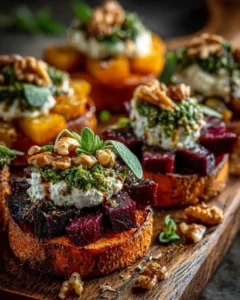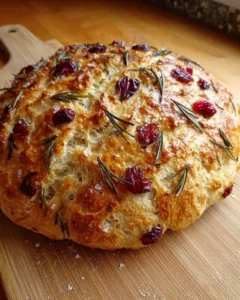
This is a complete HTML code for a recipe blog post, designed as a production-ready WordPress Gutenberg block. It includes a styled info bar, detailed ingredients and instructions, variations, an FAQ section, and a Pinterest call-to-action, all optimized for SEO and a personal, chef-driven voice.
“`html
Table of Contents
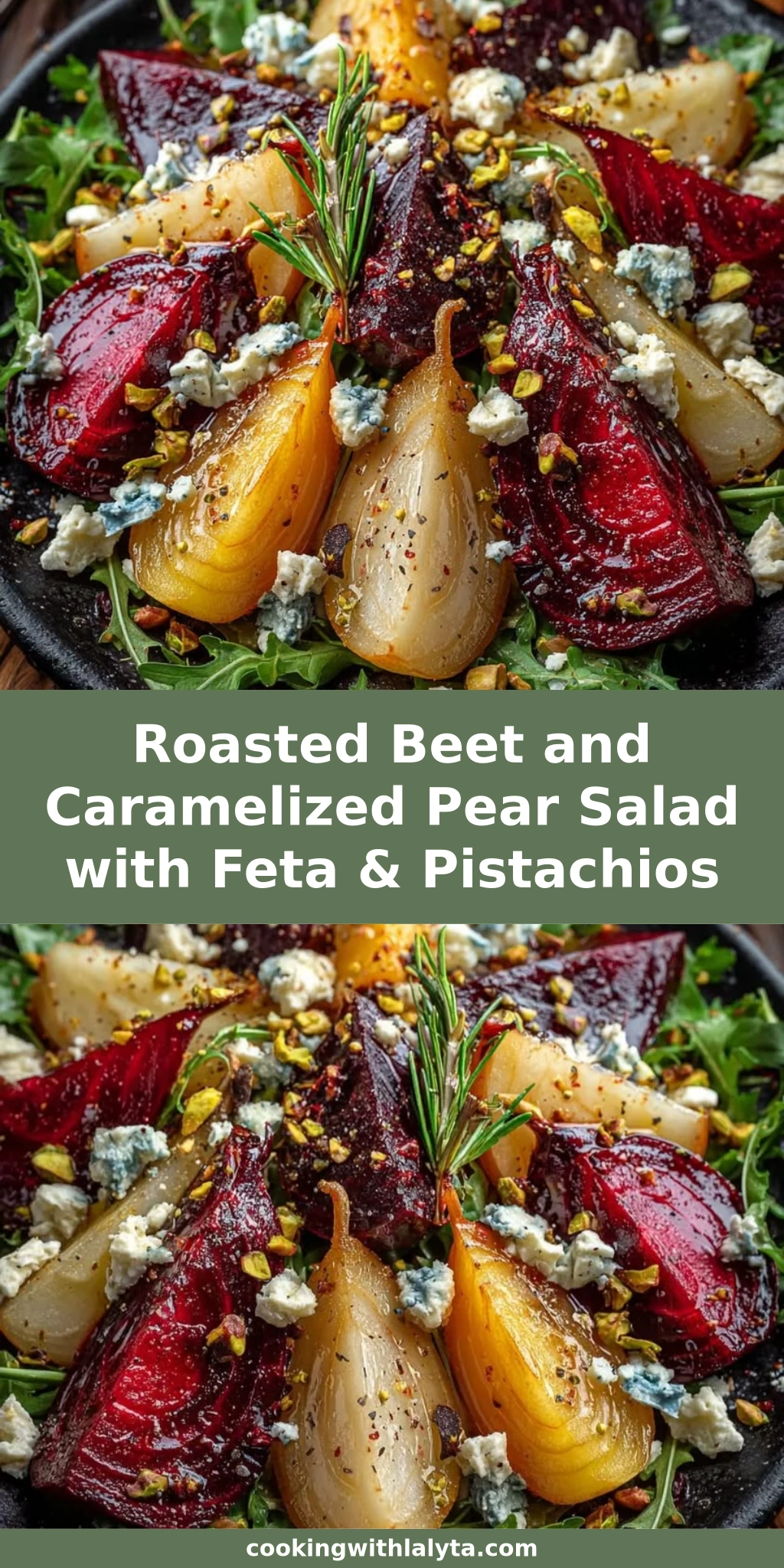
Roasted Beet and Caramelized Pear Salad with Feta & Pistachios – French-Inspired Fall Elegance on a Plate
There’s a particular magic that happens in my NYC kitchen every autumn when the farmers market overflows with deep crimson beets and perfectly ripe pears. This roasted beet and caramelized pear salad was born on a crisp October afternoon when I found myself craving something that bridged my three culinary worlds: the earthy, spice-forward warmth of my Moroccan upbringing, the precise finesse of my Paris training, and the bold, fresh energy of New York City dining. The moment I pulled those foil-wrapped beets from the oven — their skins sliding off effortlessly, revealing jewel-toned flesh that stained my fingertips — I knew this roasted beet salad would become a seasonal staple. And let me tell you, once you’ve tasted beets roasted until they’re almost jammy, paired with pears caramelized in butter and brown sugar using a classic French technique, there’s simply no going back to the canned version.
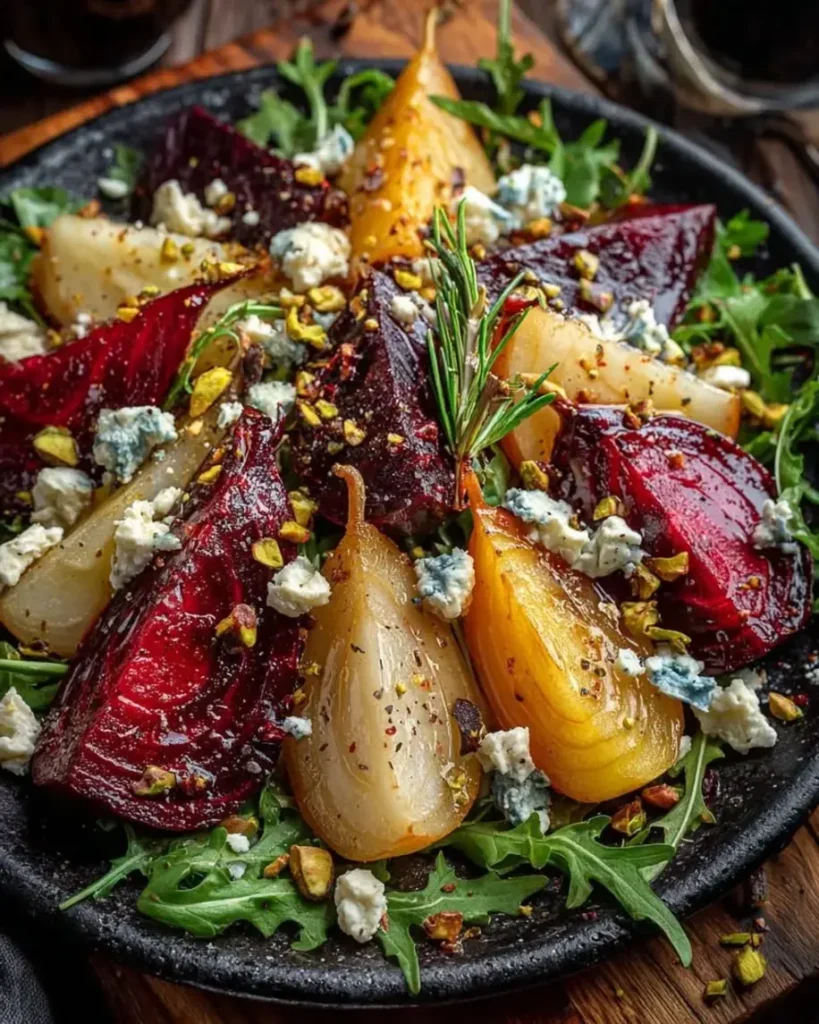
Close your eyes and imagine this: a bed of peppery arugula that bites back just enough, topped with wedges of roasted beets so sweet they taste almost like candy, alongside golden-crusted pear slices that glisten with a buttery balsamic glaze. Crumbled feta adds creamy, salty pops against the crunch of toasted pistachios, while a Dijon-balsamic dressing ties everything together with its bright, tangy kiss. The aroma is intoxicating — earthy, sweet, and slightly sharp — and the colors? Oh, the colors are a painter’s palette of deep magenta, warm amber, snowy white, and vibrant green. This beet and pear salad isn’t just food; it’s a centerpiece, a conversation starter, the dish that makes guests pause mid-sentence to ask, “What’s in this dressing?”
What sets my version of this roasted beet and feta salad apart is the caramelization technique I learned during my stint in a tiny Parisian bistro kitchen: we’re not just warming the pears through — we’re building a proper fond in the skillet, letting the butter and brown sugar meld into a glossy, nutty caramel before deglazing with a splash of balsamic vinegar. It’s a small extra step that transforms the entire salad from simple to sublime. 💡 Lalybeth’s Pro Tip: Always choose pears that are ripe but still firm — if they yield too much to pressure at the stem, they’ll turn to mush in the pan. And here’s the number one mistake I see home cooks make: they crowd the skillet, which steams the pears instead of caramelizing them. Work in batches if you need to — patience here is everything. Stick with me through this recipe, and I promise you’ll have a caramelized pear salad that rivals anything you’d find at a downtown bistro.
Why This Roasted Beet and Caramelized Pear Salad Recipe Is the Best
The flavor secret behind this roasted beet salad lies in what I call the “layered sweetness approach” — a technique I developed by merging the Moroccan love for contrasting sweet-savory notes with the French insistence on building flavor in stages. Instead of relying solely on the natural sugars in the beets and pears, we roast the beets to concentrate their earthiness until they’re nearly molasses-like in depth, then separately caramelize the pears with brown sugar and butter to create a completely different type of sweetness — one that’s rich, nutty, and slightly tangy from the balsamic deglaze. Add the salty tang of feta and the toasty crunch of pistachios, and you get a salad where every single bite hits sweet, salty, tangy, and earthy notes all at once. It’s the kind of layered complexity I first learned to appreciate while standing beside my maman in her Marrakech kitchen, where a simple carrot salad would feature orange blossom water, cinnamon, and lemon in perfect harmony.
Texture is where many salads fall flat, but not this one. As a professionally trained cook, I’m meticulous about contrast — and this beet salad with pistachios delivers on every front. The roasted beets are tender and velvety, almost melting on the tongue. The caramelized pears retain just enough structure to offer a gentle bite. Crumbled feta provides creamy, cooling pockets that balance the sweetness. And those toasted pistachios? They’re non-negotiable — their loud, assertive crunch is the punctuation mark that wakes up your palate. I toast them in a dry skillet for exactly 3 minutes, shaking constantly, until they’re fragrant and just beginning to turn golden. The arugula brings a peppery freshness that cuts through all the richness, and the Dijon dressing — emulsified properly with a whisk until it’s glossy and cohesive — coats every leaf without drowning it.
What makes this roasted beet and feta salad truly foolproof is that it works beautifully whether you’re a seasoned home cook or a complete beginner. The beets roast unattended in the oven for an hour — you literally wrap them in foil and walk away. The caramelized pears take under 10 minutes from start to finish, and the dressing comes together in a single bowl with a whisk. I’ve tested this recipe on busy weeknights when my NYC schedule barely left me time to breathe, and it’s never failed me. The components can be prepped ahead in stages (roast the beets on Sunday, caramelize the pears just before serving), making it an ideal dish for entertaining. And because it’s naturally gluten-free and easily adaptable for vegans, it accommodates nearly every dietary need without sacrificing an ounce of flavor.
Roasted Beet Salad Ingredients
Whenever I shop for this salad, I make a ritual of it. On Saturday mornings, I walk the few blocks from my apartment to the Union Square Greenmarket, where the beets arrive still dusted with soil and the pears smell so fragrant you can catch their perfume from a stall away. In Morocco, my maman would send me to the souk with a woven basket, teaching me how to select vegetables by feel and aroma. That instinct still guides me today. Here’s everything you’ll need — and don’t worry, I’ve included plenty of substitutions for whatever your pantry holds.
Ingredients List
- For the Salad:
- 3 medium beets, roasted, peeled, and quartered
- 2 ripe but firm pears, cored and sliced
- 2 tablespoons unsalted butter
- 2 tablespoons brown sugar
- 1 tablespoon balsamic vinegar
- 4 cups arugula or mixed greens
- 1/2 cup crumbled feta cheese
- 1/3 cup pistachios, toasted
- For the Dressing:
- 3 tablespoons extra-virgin olive oil
- 1 tablespoon balsamic vinegar
- 1 teaspoon Dijon mustard
- 1 teaspoon honey
- Salt and freshly ground black pepper, to taste
Ingredient Spotlight
Beets: Look for beets that are firm, smooth-skinned, and heavy for their size. Avoid any with soft spots or wrinkled skin. At US grocery stores, you’ll typically find red beets, but golden beets work beautifully here too — they’re slightly sweeter and won’t stain your hands. If you can find them at a farmers market with the greens still attached, grab them; the greens are edible and delicious sautéed. Tested substitution: Pre-cooked vacuum-packed beets from the refrigerated section work in a pinch, though the flavor won’t be as concentrated. Simply pat them dry and proceed with the recipe — no roasting needed.
Pears: Bosc and Anjou pears are my top picks for this caramelized pear salad because they hold their shape during cooking. Bosc pears have a cinnamon-spice undertone that pairs gorgeously with roasted beets, while Anjou pears bring a clean, honeyed sweetness. Whichever variety you choose, the pear should yield slightly at the neck when pressed — rock-hard pears won’t caramelize properly, and overly soft ones will collapse into mush. Tested substitution: Firm apples (like Honeycrisp or Granny Smith) can replace pears; they’ll caramelize similarly but bring a tarter edge. Reduce brown sugar by 1 teaspoon if using tart apples.
Feta Cheese: I reach for a block of feta packed in brine — it’s creamier, tangier, and far superior to the pre-crumbled dry varieties sold in plastic tubs. Greek feta made from sheep’s milk (or a sheep-and-goat blend) has that perfect salty punch that balances the sweetness of the beets and pears. Tested substitution: Goat cheese offers a similar tang but is creamier and more spreadable; it’s an excellent choice. For a dairy-free version, a high-quality almond-based feta-style cheese works surprisingly well, though the salt level may differ — taste and adjust.
Pistachios: Toasted pistachios are the secret crunch weapon in this roasted beet salad. I buy raw, shelled pistachios and toast them myself — it takes 3 minutes and transforms their flavor from mild to intensely nutty. Look for pistachios that are bright green with minimal browning; that vibrant color makes the salad visually stunning. Tested substitution: Walnuts or pecans can replace pistachios. Toast them the same way, but watch pecans carefully — their higher fat content means they burn faster.
| Original Ingredient | Best Substitution | Flavor / Texture Impact |
|---|---|---|
| Beets | Pre-cooked vacuum-packed beets | Slightly less earthy depth; convenient shortcut |
| Pears | Firm apples (Honeycrisp or Granny Smith) | Tarter profile; reduce sugar by 1 tsp |
| Feta cheese | Goat cheese or almond-based feta | Creamier texture; adjust salt accordingly |
| Pistachios | Toasted walnuts or pecans | Richer, more buttery crunch; watch burning |
How to Make Roasted Beet and Pear Salad — Step-by-Step
I want you to feel completely at ease as we walk through this together. Each step is simple, and I’ve noted exactly what to watch for along the way. Trust your senses — the smell of caramelizing butter, the deep jewel color of perfectly roasted beets, the glossy sheen of a properly emulsified dressing — and you’ll nail this every time.
Step 1: Roast the Beets
Preheat your oven to 400°F. Scrub the beets well under cool water — no need to peel them yet; the skin will slip right off after roasting. Pat them dry, then wrap each beet individually in aluminum foil, sealing the edges tightly to trap steam. Place the foil packets directly on the middle oven rack and roast for 45–60 minutes. The beets are done when a fork or skewer pierces through the center with absolutely no resistance — you’re looking for that butter-soft texture. Remove from the oven and let them cool until you can handle them comfortably, about 15–20 minutes. Using your fingers or a paper towel, gently rub the skins off — they should slide away effortlessly, revealing glossy, intensely colored flesh underneath. Quarter the beets and set them aside. The color is so vivid at this stage, it honestly takes my breath away every single time.
💡 Lalybeth’s Pro Tip: For even more concentrated flavor, drizzle the beets with a tiny splash of olive oil and a pinch of salt before wrapping them in foil. This creates a mini steaming-roasting environment that intensifies their natural sweetness. And don’t toss those beet greens if they came attached! Sauté them with garlic and olive oil as a bonus side dish.
Step 2: Caramelize the Pears
While the beets roast, prepare the caramelized pears. Core the pears and slice them into wedges about 1/2-inch thick — not too thin, or they’ll disintegrate; not too thick, or they won’t cook through. In a large skillet over medium heat, melt the butter until it foams and just begins to smell nutty. Lay the pear slices in a single layer — this is crucial; overcrowding creates steam instead of caramelization. Sprinkle the brown sugar evenly over the pears and let them cook undisturbed for 2–3 minutes, until the undersides turn deep golden brown and the sugar melts into a glossy glaze. Flip each slice with tongs and caramelize the second side for another 2 minutes. Pour in the balsamic vinegar, swirl the pan gently to coat the pears, and let it bubble for 30 seconds until slightly reduced. Remove from heat immediately.
⚠️ Common Mistake to Avoid: Never walk away from caramelizing pears. The line between perfectly golden and burnt is razor-thin — about 30 seconds. Stay at the stove, watch the edges, and the moment you see them deepening to amber, flip or pull them. Burnt caramel tastes acrid and will ruin the entire salad.
Step 3: Make the Dressing
In a small bowl, combine the extra-virgin olive oil, balsamic vinegar, Dijon mustard, and honey. Add a generous pinch of salt and several grinds of black pepper. Whisk vigorously for about 30 seconds until the mixture thickens and emulsifies into a glossy, cohesive dressing. You’ll know it’s ready when it coats the back of a spoon and no longer separates. Taste it on a leaf of arugula — the dressing should be bright and tangy with a subtle sweetness from the honey. Adjust salt as needed; remember the feta and pistachios will add saltiness to the final dish, so don’t overdo it here.
💡 Lalybeth’s Pro Tip: I learned this in my Paris pastry training and it applies to salad dressings too: if your dressing breaks or separates, add a teaspoon of warm water and whisk again. The water helps re-emulsify the oil and vinegar. Also, make double the dressing — it keeps beautifully in the fridge for five days and doubles as a marinade for grilled chicken or roasted vegetables.
Step 4: Assemble the Salad
Spread the arugula across a large serving platter or shallow bowl — you want a nice wide surface so every component has its moment. Arrange the roasted beet quarters artfully over the greens, tucking them in at different angles. Nestle the caramelized pear slices among the beets, letting some of that buttery balsamic glaze from the pan drizzle over the arugula. Crumble the feta cheese generously over everything — those white pops against the magenta and green are stunning. Scatter the toasted pistachios across the top. Just before serving, drizzle the dressing evenly over the salad. Serve immediately, with extra dressing on the side for those who want more.
⚠️ Common Mistake to Avoid: Don’t dress the entire salad if you’re not serving it right away. The arugula will wilt and turn soggy within 20 minutes under the dressing. If you’re bringing this to a gathering, pack the dressing separately and drizzle it on just before it hits the table. And never assemble more than 30 minutes ahead — the pears can release liquid and make the greens limp.
| Step | Action | Duration | Key Visual Cue |
|---|---|---|---|
| 1 | Roast the beets | 45–60 min | Fork pierces center with zero resistance |
| 2 | Caramelize the pears | 6–8 min | Deep golden-brown edges; glossy balsamic glaze |
| 3 | Make the dressing | 2 min | Emulsified, glossy, coats back of spoon |
| 4 | Assemble the salad | 5 min | Vibrant color contrast; even distribution of toppings |
Serving & Presentation
In my little NYC apartment, I’ve learned that presentation matters almost as much as taste — especially when you’re cooking for friends who pull out their phones before they pick up their forks. For this roasted beet and caramelized pear salad, I love using a large, shallow white platter that lets the colors truly pop. Start by spreading the arugula in a loose, cloud-like layer — don’t pack it down. Then scatter the beet quarters and pear slices like you’re composing a painting, letting some overlap and others stand alone. Crumble the feta from a height for natural, rustic-looking pieces that dot the salad like little clouds. Finish with a shower of toasted pistachios and a few extra cracks of black pepper right over the top. If I’m feeling especially fancy, I’ll add a few microgreens or edible flowers for that restaurant-worthy finish — something I picked up while staging in Paris, where even a simple salad got the full treatment.
This salad shines as a starter for a fall dinner party, but it’s substantial enough to stand as a main course on a weeknight. Pair it with a crusty baguette — perhaps one from a local NYC bakery like Balthazar or Sullivan Street — and a bowl of roasted butternut squash soup for a meal that feels both elegant and deeply comforting. For wine, I reach for a Sauvignon Blanc with bright acidity that cuts through the richness of the caramelized pears and feta, or a light Pinot Noir that complements the earthy beets without overwhelming them. In the warmer months, I’ll serve this alongside grilled lamb chops, channeling my Moroccan roots with a sprinkle of cumin and fresh mint over everything.
One of my favorite hosting tricks: I set up a “salad bar” version of this dish for casual gatherings. I arrange all the components — roasted beets, caramelized pears, feta, pistachios, arugula, and dressing — in separate bowls on my kitchen island, and let guests build their own plates. It’s interactive, visually stunning, and takes the pressure off me to perfectly plate a dozen servings. Plus, it accommodates picky eaters and dietary preferences without any extra work. This is the kind of effortless entertaining I’ve come to love in my NYC hosting days.
| Pairing Type | Suggestions | Why It Works |
|---|---|---|
| Side Dish | Crusty baguette, roasted butternut squash soup, grilled lamb chops | Bread soaks up dressing; soup echoes earthy sweetness; lamb adds smoky depth |
| Sauce / Dip | Extra balsamic-Dijon dressing, honey-drizzled Greek yogurt, tahini-lemon sauce | Tangy contrast to sweet beets; yogurt adds creaminess; tahini ties to Moroccan roots |
| Beverage | Sauvignon Blanc, light Pinot Noir, sparkling water with lemon | Bright acidity cuts richness; Pinot complements earthy beets; bubbles cleanse palate |
| Garnish | Microgreens, edible flowers, fresh mint leaves, extra cracked black pepper | Adds visual drama; mint brings Moroccan freshness; pepper enhances savory notes |
Make-Ahead, Storage & Reheating
Let’s be real — between work, life, and the perpetual hustle of NYC, I don’t always have an hour to roast beets on a Tuesday evening. That’s why I’ve perfected the art of prepping this roasted beet and caramelized pear salad in stages. The beets can be roasted up to two full days ahead and stashed in the fridge; in fact, they’re often even better on day two as their flavor deepens. The dressing also keeps beautifully for five days in a sealed jar. The only component I always make fresh is the caramelized pears — they’re at their peak within an hour of cooking, and honestly, they take barely eight minutes from start to finish. This approach means I can throw together a stunning salad in under ten minutes on a busy weeknight, which feels like a small miracle.
| Method | Container | Duration | Reheating Tip |
|---|---|---|---|
| Refrigerator | Airtight glass container | Up to 3 days (assembled); 5 days (components separate) | Bring to room temperature before serving; do not microwave |
| Freezer | Freezer-safe bag (roasted beets only) | Up to 3 months | Thaw overnight in fridge; texture softens slightly — best used in cooked dishes |
| Make-Ahead | Separate airtight containers | Beets: 2 days ahead; dressing: 5 days ahead; pears: cook day-of | Assemble just before serving; drizzle dressing at the last moment |
A quick note on storage from my own trial and error: if you’ve already assembled the salad and find yourself with leftovers, don’t despair. While the arugula will inevitably wilt, the beets and pears hold up surprisingly well in the fridge for another day. I like to repurpose leftover salad by tossing it into a warm quinoa bowl the next day — the dressing soaks into the grains beautifully, and a fresh handful of greens brings it back to life. As for reheating, this salad is meant to be served at room temperature or slightly chilled, so no microwave needed. Simply pull the components from the fridge 30 minutes before serving to let them lose their chill. The flavors actually bloom as they come to room temperature, which is a lovely bonus.
One last storage secret: those caramelized pears release a bit of liquid as they sit overnight. If you’ve made extra pears and stored them, drain off any accumulated juices before adding them to the salad — that liquid can make the arugula soggy faster. And never, ever freeze the assembled salad. The arugula will turn to green mush, the feta will become crumbly and dry, and the pears will lose all their lovely texture. Freeze only the roasted beets if you must, and even then, know that they’re best used in smoothies or blended soups after thawing.
Variations & Easy Swaps
| Variation | Key Change | Best For | Difficulty Impact |
|---|---|---|---|
| Vegan & Dairy-Free | Swap feta for almond feta; use olive oil instead of butter for pears | Plant-based eaters; dairy sensitivities | No change in difficulty |
| Gluten-Free Grain Bowl | Add warm quinoa or farro (certified GF); double the dressing | Hearty lunch; meal prep | Easier — grains make it more forgiving |
| Seasonal Winter Citrus Twist | Add blood orange segments; use orange zest in dressing | Winter entertaining; bright flavor boost | Slightly easier — citrus adds instant brightness |
Vegan & Dairy-Free Variation
Transforming this roasted beet and feta salad into a fully plant-based dish is easier than you might think — and I say this as someone who was initially skeptical about vegan cheese. For the feta, I’ve tested several almond-based feta-style cheeses, and the one from Violife or a well-drained homemade almond feta (seasoned with lemon, salt, and a touch of garlic) works beautifully. The key is to crumble it just before serving so it holds its shape. For caramelizing the pears, replace the butter with a good-quality extra-virgin olive oil — it won’t brown quite the same way, but the fruit will still develop gorgeous caramelized edges. A pinch of flaky sea salt at the end helps mimic that savory depth. This version is every bit as stunning as the original and aligns beautifully with the plant-forward way of eating I’ve come to appreciate more and more in NYC’s vibrant food scene.
Gluten-Free Grain Bowl Variation
On days when I need this salad to work harder as a main course, I transform it into a warm grain bowl that’s naturally gluten-free when made with quinoa or certified GF farro. While the beets roast, I cook a cup of quinoa according to package directions, fluffing it with a fork and letting it cool slightly. I spread the warm quinoa as the base instead of arugula, then layer on the roasted beets, caramelized pears, feta, and pistachios just as before. The warmth of the quinoa gently softens the feta and makes the whole dish feel more substantial — it’s become my go-to packed lunch for long days at the kitchen. I double the dressing so the quinoa absorbs plenty of flavor, and I’ll often add a handful of fresh herbs — parsley or mint, a nod to my Moroccan roots — for freshness.
Seasonal Winter Citrus Twist
When winter citrus floods the Union Square Greenmarket, I can’t resist adding blood orange or Cara Cara orange segments to this roasted beet and pear salad. The bright, juicy citrus cuts through the richness of the caramelized pears in the most magical way — it’s like sunshine on a cold January day. I peel and segment two oranges over a bowl to catch the juices, then whisk a tablespoon of that fresh orange juice directly into the dressing along with a little orange zest. The citrus segments get tucked among the beets and pears, their jewel-like translucence adding yet another layer of visual beauty. A sprinkle of pomegranate arils in place of (or in addition to) the pistachios makes this variation especially festive for holiday tables. This is the version I brought to my friend’s Christmas dinner last year, and I’m fairly certain it upstaged the prime rib.
Share Your Version!
I truly believe that recipes are meant to be shared, tweaked, and made your own. Every time I make this roasted beet and caramelized pear salad, I think of my maman in Morocco, who taught me that cooking is an act of love, and my Paris instructors, who taught me that technique is the foundation of freedom in the kitchen. Now it’s your turn to bring this dish to your table — and I genuinely can’t wait to see what you create. Did you try the blood orange twist? Did you discover a new cheese substitution that blew your mind? Did your toddler inexplicably fall in love with roasted beets? (It happens!) Drop a comment below and tell me all about it — I read every single one and respond personally.
If you’re on Instagram or Pinterest, snap a photo of your finished salad and tag me @cookingwithlalyta. I love re-sharing your beautiful creations and cheering you on from my little corner of NYC. And here’s a question I’d love you to answer in the comments: what’s your favorite fall ingredient to pair with roasted beets? Is it citrus, like my winter variation? Warm spices? Something unexpected? I’m always looking for new ideas to play with in my kitchen, and your suggestions genuinely inspire me. From my NYC kitchen to yours — I hope this recipe brings as much warmth to your table as it does to mine. — Lalybeth 🧡
Can I roast the beets ahead of time, or should I roast them fresh for this salad?
Absolutely — and in fact, I encourage it! Roasted beets can be prepared up to two full days ahead and stored in an airtight container in the refrigerator. Their flavor actually deepens and concentrates as they sit, becoming even sweeter and more intensely earthy. When I’m meal-prepping for a busy NYC week, I roast a batch of beets on Sunday afternoon and build salads around them all week long. Just bring them to room temperature before assembling the salad — the flavors bloom best when they’re not ice-cold. If you’re short on time entirely, pre-cooked vacuum-packed beets from the refrigerated produce section work in a pinch, though the flavor won’t be quite as rich as freshly roasted ones.
What can I use as a substitute for feta cheese in a roasted beet and pear salad?
Goat cheese is my top substitute — it has a similar tangy, salty profile and a creamy texture that pairs beautifully with sweet roasted beets and caramelized pears. For a milder option, try ricotta salata, which is firmer and less salty but still adds that needed creamy contrast. If you’re avoiding dairy entirely, a high-quality almond-based feta-style cheese works surprisingly well; I’ve tested Violife’s version and found it holds its shape and delivers the salty punch this salad needs. Blue cheese lovers can also experiment with a mild Gorgonzola dolce, though it will shift the flavor profile significantly toward the pungent and funky — delicious, but different. Whatever you choose, crumble it fresh and sprinkle it on just before serving for the best texture.
How do you caramelize pears for a salad without them turning mushy?
The secret to perfectly caramelized pears that hold their shape lies in three things: choosing the right pear variety, cutting them to the correct thickness, and managing your pan temperature. Start with Bosc or Anjou pears — they’re naturally firmer and less watery than Bartletts, which tend to collapse during cooking. Slice them about 1/2-inch thick; any thinner and they’ll disintegrate, any thicker and they won’t cook through. Cook them over medium heat in a single, uncrowded layer, and resist the urge to move them around. Let them sit undisturbed for 2–3 minutes per side until a deep golden crust forms. The balsamic vinegar goes in only at the very end, just long enough to coat the pears without steaming them. And most importantly: pull them from the heat the moment they’re done — carryover cooking in a hot pan can turn them to mush in seconds.
Should this roasted beet and caramelized pear salad be served warm or chilled?
This salad is at its absolute best served at room temperature — not piping hot, not refrigerator-cold. When the roasted beets and caramelized pears have cooled to just warm or room temperature, their flavors are most expressive and their textures are at their peak. The arugula stays crisp and vibrant, the feta doesn’t melt into a puddle, and the dressing coats everything beautifully without wilting the greens. If you’ve prepped components ahead, simply pull the beets and pears from the fridge about 30 minutes before assembling. In the summer, I occasionally serve a lightly chilled version on especially hot days, and it’s still lovely — just know that cold temperatures mute sweetness, so you may want to add an extra drizzle of honey to the dressing if serving chilled.
What type of beets work best for roasting in this salad?
Red beets are the classic choice and what I reach for most often — their deep magenta color creates that stunning contrast against the white feta and green arugula. Golden beets are equally delicious and slightly sweeter with a more mellow, less earthy flavor; they’re a wonderful option if you’re serving guests who claim they “don’t like beets.” Chioggia beets (the candy-striped Italian heirlooms) are visually spectacular when sliced raw but lose their stripes when roasted, so I save those for raw preparations. Regardless of variety, always choose beets that are firm, heavy for their size, and smooth-skinned. Medium beets (about the size of a tennis ball) roast most evenly. Avoid beets larger than a softball — they tend to be woody and take much longer to cook through.
Can I use goat cheese instead of feta in this roasted beet and feta salad?
Yes, and it’s a delicious swap! Goat cheese brings a similar tangy brightness to feta but with a creamier, more spreadable texture that melts slightly into the warm beets and pears. I recommend using a fresh goat cheese log (not the pre-crumbled kind) and crumbling it yourself for the best presentation. The flavor is slightly more tart and “grassy” than feta, which pairs wonderfully with the earthy sweetness of roasted beets. If you’re serving this salad to guests, I might even offer both — a block of feta and a log of goat cheese — and let people choose their own adventure. Soft goat cheese also makes the salad feel a touch more rustic and French-bistro-inspired, which I personally love given my Paris training background.
How do I toast pistachios for this beet salad with pistachios?
Toasting pistachios is quick and transforms their flavor dramatically — but it requires your full attention. Place raw, shelled pistachios in a dry skillet (no oil) over medium-low heat. Shake the pan continuously or stir with a wooden spoon for 3–4 minutes, until the nuts are fragrant and just beginning to turn golden. The moment you smell that warm, nutty aroma, immediately transfer them to a cool plate — residual heat in the pan will continue cooking them, and pistachios can go from perfectly toasted to scorched in under 30 seconds. Let them cool completely before scattering over the salad; warm nuts will wilt the arugula. For extra depth, you can toast them with a tiny pinch of flaky salt, which amplifies their flavor. Store any extras in an airtight container for up to a week.
Is this roasted beet and pear salad gluten-free?
Yes — as written, this roasted beet and caramelized pear salad is naturally and completely gluten-free. None of the ingredients contain gluten: beets, pears, butter, brown sugar, balsamic vinegar, arugula, feta, pistachios, olive oil, Dijon mustard, honey, salt, and pepper are all inherently gluten-free. That said, if you’re cooking for someone with celiac disease or severe gluten sensitivity, double-check your Dijon mustard label — some brands use grain-based vinegar, though most are gluten-free. The same goes for balsamic vinegar; authentic balsamic is made from grapes and is naturally GF. If you’re adding grains to make a heartier bowl, choose certified gluten-free quinoa or rice instead of farro or wheat berries. This salad is one of my go-to dishes for potlucks precisely because it accommodates so many dietary needs without modification.
What wine pairs well with a roasted beet and caramelized pear salad?
An unoaked Sauvignon Blanc is my hands-down favorite pairing — its bright, citrusy acidity slices through the richness of the caramelized pears and feta while complementing the earthy beets. Look for bottles from the Loire Valley (Sancerre or Pouilly-Fumé) or New Zealand, which have that steely, mineral quality that echoes the salad’s freshness. For red wine lovers, a light-bodied Pinot Noir with low tannins works beautifully — its subtle berry notes harmonize with the beets’ natural sweetness without overwhelming the delicate pears. If you’re in the mood for something unexpected, a dry rosé from Provence offers the best of both worlds: red fruit character with white wine acidity. Avoid big, oaky Chardonnays and heavy Cabernets, which will bulldoze right over the salad’s nuanced flavors.
Can I make this roasted beet and feta salad vegan?
Absolutely, and you won’t sacrifice much flavor in the process. Replace the feta with a high-quality almond-based or tofu-based feta-style cheese — I’ve had great results with Violife’s feta block, which crumbles nicely and has a convincing salty tang. For the caramelized pears, swap the butter for extra-virgin olive oil or a plant-based butter stick; the caramelization won’t be quite as nutty but will still develop beautiful golden edges. The honey in the dressing can be replaced with maple syrup or agave nectar at a 1:1 ratio — maple syrup actually adds a lovely autumnal depth that works beautifully with the roasted beets. With these three simple swaps, you’ll have a stunning vegan roasted beet and caramelized pear salad that even dairy-lovers will devour. I’ve served this vegan version at dinner parties without announcing it was plant-based, and no one guessed.
Share Your Version!
I truly believe that recipes are meant to be shared, tweaked, and made your own. Every time I make this roasted beet and caramelized pear salad, I think of my maman in Morocco, who taught me that cooking is an act of love, and my Paris instructors, who taught me that technique is the foundation of freedom in the kitchen. Now it’s your turn to bring this dish to your table — and I genuinely can’t wait to see what you create. Did you try the blood orange twist? Did you discover a new cheese substitution that blew your mind? Did your toddler inexplicably fall in love with roasted beets? (It happens!) Drop a comment below and tell me all about it — I read every single one and respond personally.
If you’re on Instagram or Pinterest, snap a photo of your finished salad and tag me @cookingwithlalyta. I love re-sharing your beautiful creations and cheering you on from my little corner of NYC. And here’s a question I’d love you to answer in the comments: what’s your favorite fall ingredient to pair with roasted beets? Is it citrus, like my winter variation? Warm spices? Something unexpected? I’m always looking for new ideas to play with in my kitchen, and your suggestions genuinely inspire me. From my NYC kitchen to yours — I hope this recipe brings as much warmth to your table as it does to mine. — Lalybeth 🧡
Love This Recipe? Save It to Pinterest!
If you enjoyed this Roasted Beet and Caramelized Pear Salad with Feta & Pistachios recipe, don’t let it get lost in your browser tabs! 😄 Pin it now so you can find it again anytime — and explore hundreds more tried-and-tested recipes waiting for you on my Pinterest boards.
👉 Follow Lalybeth on Pinterest @cookingwithlalyta
📌 Pin this recipe · 🔁 Re-pin your favorites · 💬 Tag me when you make it — I love seeing your creations!
“`
Print
Roasted Beet and Caramelized Pear Salad with Feta & Pistachios
- Total Time: 1 hour 20 minutes
- Yield: 4 servings 1x
Description
A beautiful and flavorful fall salad with sweet roasted beets, caramelized pears, creamy feta, and crunchy pistachios over fresh arugula, finished with a tangy balsamic Dijon dressing.
Ingredients
- For the Salad:
- 3 medium beets, roasted, peeled, and quartered
- 2 ripe but firm pears, cored and sliced
- 2 tablespoons unsalted butter
- 2 tablespoons brown sugar
- 1 tablespoon balsamic vinegar
- 4 cups arugula or mixed greens
- 1/2 cup crumbled feta cheese
- 1/3 cup pistachios, toasted
- For the Dressing:
- 3 tablespoons extra-virgin olive oil
- 1 tablespoon balsamic vinegar
- 1 teaspoon Dijon mustard
- 1 teaspoon honey
- Salt and freshly ground black pepper, to taste
Instructions
- Preheat oven to 400°F. Wrap beets in aluminum foil and roast for 45–60 minutes, or until tender when pierced with a fork. Let cool, then peel and quarter.
- While beets roast, prepare the caramelized pears: melt butter in a large skillet over medium heat. Add pear slices and sprinkle with brown sugar. Cook for 2–3 minutes per side, until golden and caramelized. Add balsamic vinegar and swirl to coat. Remove from heat.
- Make the dressing: in a small bowl, whisk together olive oil, balsamic vinegar, Dijon mustard, honey, salt, and pepper until emulsified.
- To assemble: spread arugula on a serving platter. Top with roasted beets, caramelized pears, crumbled feta, and toasted pistachios. Drizzle with the dressing just before serving.
Notes
Roasted beets can be prepared up to two days ahead and stored in the refrigerator. The caramelized pears are best made fresh. For extra flavor, add a squeeze of lemon juice to the dressing if desired.
- Prep Time: 20 minutes
- Cook Time: 1 hour
- Method: Salad
- Cuisine: American
Nutrition
- Calories: 320 kcal
- Sugar: 18 g
- Fat: 21 g
- Carbohydrates: 28 g
- Protein: 7 g
Tried This Recipe? Leave a Comment!
Did you make this recipe? I’d love to hear how it turned out! Please leave a comment and a rating below. Your feedback helps other home cooks and supports cookingwithlalyta.com!
For more delicious inspiration, follow me on Pinterest!