Table of Contents
Spaghetti & Spinach with Sun-Dried Tomato Cream Sauce – The Secret to Silky, Restaurant-Worthy Pasta in Under 30 Minutes
Some nights, all I want is a bowl of pasta that tastes like it came from a cozy trattoria — but without the hour-long simmer and a sink full of pots. This spaghetti with sun-dried tomato cream sauce is exactly that: a dish born from my tiny NYC kitchen, where speed and flavor have to shake hands like old friends. I first made this on a rainy Tuesday after a long day of recipe testing, craving something creamy and tangy but too tired for anything complicated. I reached for a jar of sun-dried tomatoes I’d picked up at a Chelsea market stall — the kind packed in fragrant olive oil — and a bag of spinach from my Greenmarket haul. Twenty minutes later, I was twirling forkfuls of the most luxurious creamy sun-dried tomato pasta I’d ever made at home, and I knew this one had to live on the blog. The secret? It’s all in how you marry the starchy pasta water with the cream — a little trick I picked up during my Paris training that turns a simple sauce into something glossy, emulsified, and downright restaurant-worthy.
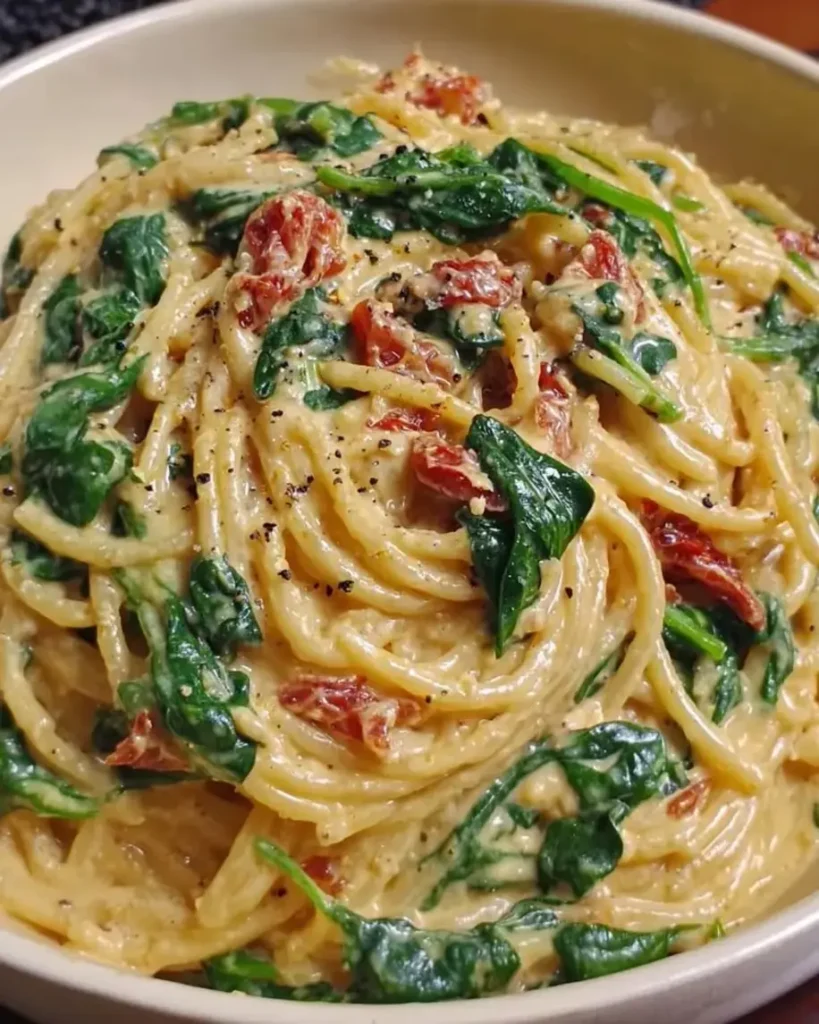
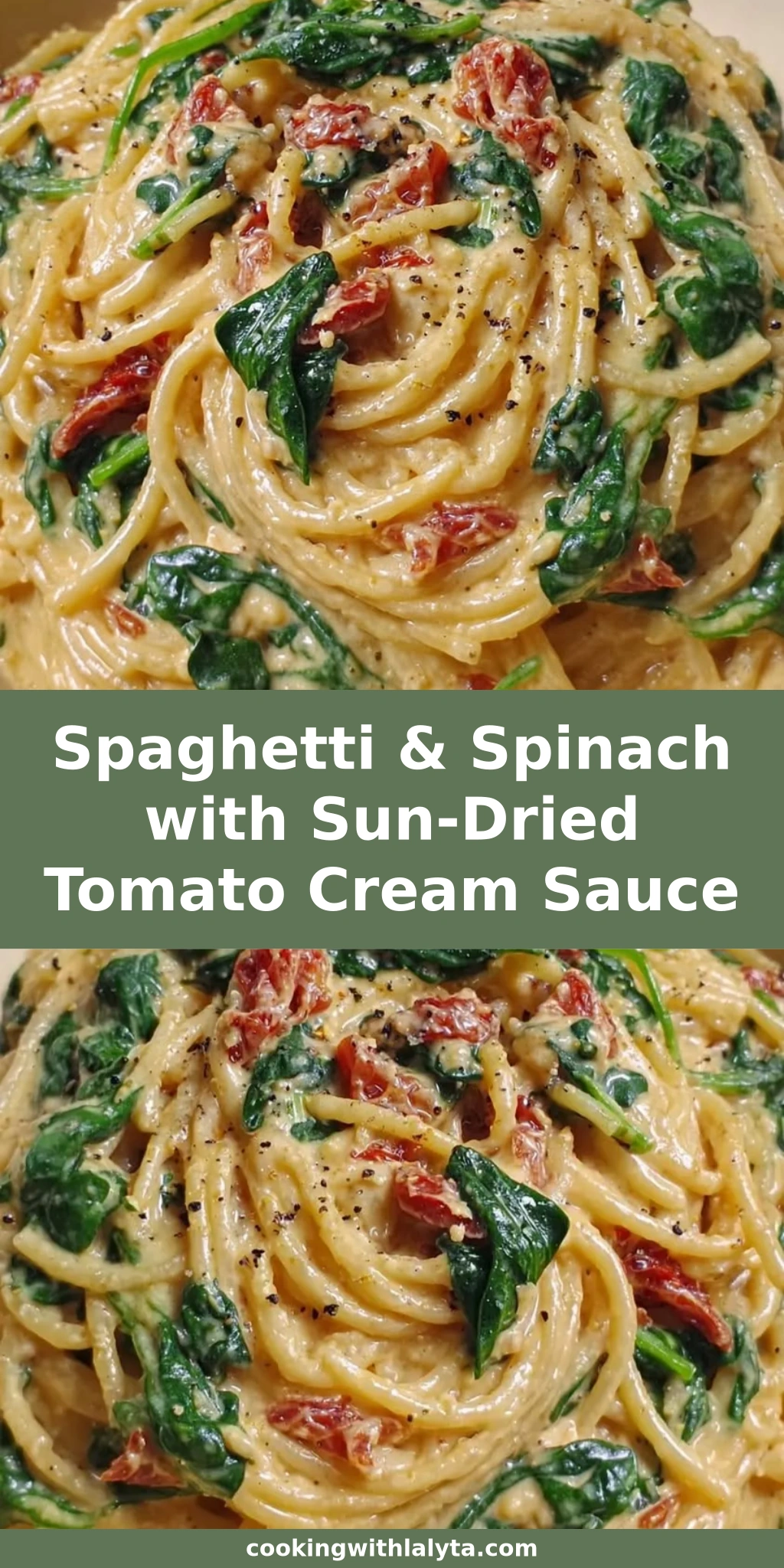
Let me paint you a picture: the sauce is velvety and blush-toned, studded with jewel-like bits of chopped sun-dried tomato that deliver little pops of concentrated, sweet-tart flavor in every bite. Fresh spinach leaves wilt into the cream, turning silky and vibrant green — they almost melt into the pasta. Garlic sizzled in good olive oil lays the aromatic foundation, while Parmesan cheese brings that nutty, savory depth that makes you close your eyes on the first forkful. There’s a whisper of heat from red pepper flakes if you’re feeling bold, and a shower of fresh basil at the end that adds a bright, peppery lift. The spaghetti itself — cooked just to that perfect al dente bite — clings to every drop of the sauce, thanks to the pasta water emulsion technique I’m going to walk you through step by step. This isn’t just another spinach spaghetti recipe; it’s a masterclass in how a few humble ingredients, treated right, can become something truly special.
What sets my version of this sun-dried tomato pasta sauce creamy dish apart is the intentional layering of flavors and the precision behind each step. I learned in my Paris culinary school days that a great sauce isn’t just about what you put in it — it’s about when and how you combine those ingredients. Here, we bloom the garlic just until fragrant (never letting it brown), toast the sun-dried tomatoes briefly to intensify their sweetness, then build the cream sauce with both heavy cream and broth for a balanced richness that won’t weigh you down. And that reserved pasta water? It’s liquid gold — stirred in at the end, it loosens the sauce while helping it cling to every strand of spaghetti, creating that glossy, cohesive texture you expect from a professional kitchen. Stick with me, and I’ll share every pro tip I’ve gathered along the way — from the one mistake that can turn your cream sauce grainy to the ingredient swap that makes this dish weeknight-friendly without sacrificing an ounce of flavor. This spaghetti with spinach and sun-dried tomatoes recipe is about to become your new go-to, and I couldn’t be more excited to share it with you.
Why This Spaghetti & Spinach with Sun-Dried Tomato Cream Sauce Recipe Is the Best
The flavor secret behind this dish lies in the sun-dried tomatoes — but not just any sun-dried tomatoes. I insist on the kind packed in olive oil, which carry a deeper, richer sweetness and a tender-chewy texture that rehydrated dry ones can’t quite replicate. When these oil-packed gems hit a hot skillet with garlic, they release their infused oil into the pan, creating an instant flavor base that’s light-years beyond plain olive oil. It’s a technique that reminds me of the way my mother in Morocco would use preserved lemons — an ingredient so potent that just a spoonful of its oil could transform an entire tagine. Here, the same principle applies: that tomato-infused oil becomes the backbone of the sauce, carrying its tangy-sweet essence through every drop of cream. It’s the kind of layered flavor-building I was taught in Paris, applied to a dish that takes less time to make than it does to order delivery.
Texture is where this recipe truly shines, and it’s the pasta water technique that makes all the difference. Here’s what happens: when you boil spaghetti, the water becomes rich with starch. By reserving a cup of that starchy liquid and whisking it into the cream sauce at just the right moment, you create an emulsion — the fat from the cream and cheese binds with the starchy water, forming a silky, cohesive sauce that coats every strand of pasta instead of pooling at the bottom of the bowl. It’s the same principle behind a perfect carbonara or cacio e pepe, and once you master it, you’ll never go back to plain cream sauces that feel heavy and separated. The spinach, added right at the end, wilts gently into the sauce, retaining just enough structure to offer a tender bite, while the spaghetti — cooked exactly to al dente — provides that satisfying chew that makes pasta worth eating in the first place.
What I love most about this recipe is how foolproof and fast it is, even for beginner cooks. There’s no roux to worry about, no finicky temperature control — just a straightforward sequence of building flavors in one skillet while your pasta boils. The entire dish comes together in 30 minutes flat, making it a true weeknight hero. And because the sauce is naturally flexible, you can adapt it endlessly: swap in gluten-free pasta, use half-and-half for a lighter version, or toss in leftover rotisserie chicken for extra protein. I’ve tested this recipe dozens of times — on busy weeknights, for impromptu dinner guests, even as a quick lunch between recipe shoots — and it delivers every single time. It’s the recipe I wish I’d had during my early years in NYC, when I was learning to balance a professional kitchen schedule with the simple joy of cooking for myself at home.
Spaghetti with Sun-Dried Tomato Cream Sauce Ingredients
When I’m gathering ingredients for this dish, I love making a little ritual of it — a quick trip to the Union Square Greenmarket for the freshest spinach and basil I can find, then a stop at my favorite Italian specialty shop on Bleecker Street for a wedge of genuine Parmigiano-Reggiano. There’s something deeply satisfying about selecting each component with intention, a habit I inherited from my mother in Morocco, who would visit three different vendors to source the perfect ingredients for a single couscous. You don’t need to go to those lengths — your local grocery store will do just fine — but I encourage you to seek out the best quality you can afford, especially when it comes to the sun-dried tomatoes and Parmesan. These are the flavor powerhouses of the dish, and their quality will shine through in the final result.
Ingredients List
- 12 oz spaghetti (or your favorite long pasta)
- 2 tbsp olive oil
- 3 cloves garlic, minced
- 1/2 cup sun-dried tomatoes in oil, drained and chopped
- 1 cup heavy cream
- 1/2 cup chicken or vegetable broth
- 1/2 cup grated Parmesan cheese, plus more for serving
- 4 cups fresh spinach (about 5 oz)
- Salt and black pepper to taste
- Red pepper flakes (optional)
- Fresh basil for garnish
Ingredient Spotlight
Sun-Dried Tomatoes in Oil: These are the soul of the dish, delivering concentrated umami and a tangy-sweet punch that defines the sauce’s character. Look for jars in the condiment or Italian foods aisle — the tomatoes should be plump, bright red-orange, and fully submerged in olive oil. Avoid the dry-packed variety for this recipe; they require rehydration and lack the infused oil that gives our sauce its head start. If you must substitute, drain oil-packed roasted red peppers and chop them finely — the flavor will be milder and sweeter, but still lovely.
Heavy Cream: This is what gives the sauce its luxurious, velvety body. Heavy cream (also labeled heavy whipping cream, usually 36–40% milk fat) resists curdling at high heat better than lighter dairy, making it ideal for a simmered sauce. For a lighter version, half-and-half works beautifully — the sauce will be slightly thinner and less rich, but still creamy and satisfying. I don’t recommend milk alone, as it can curdle and won’t thicken properly.
Fresh Spinach: Four cups may sound like a mountain, but spinach wilts dramatically — it’ll cook down to just the right amount. I prefer flat-leaf spinach for its tender texture, but curly leaf works too. Frozen spinach can pinch-hit in a pinch (I hear you, busy parents!); just thaw it completely, squeeze out every last drop of water, and add it at the same stage. The texture will be softer and more compact, but the flavor holds up well.
Parmesan Cheese: Please, freshly grate your own. Pre-shredded Parmesan contains anti-caking agents that prevent it from melting smoothly into the sauce, and you’ll miss out on that glossy, cohesive finish. A microplane or the fine side of a box grater makes quick work of it. Look for Parmigiano-Reggiano stamped with the official consortium mark — it’s pricier but infinitely more flavorful than domestic Parmesan. Pecorino Romano makes a wonderful substitute if you prefer a sharper, saltier bite.
Pasta Water (The Secret Weapon): Not an ingredient you’ll buy, but one you’ll make. That starchy, salted water is your sauce’s best friend — it emulsifies the cream and cheese, loosens the sauce to the perfect consistency, and helps everything cling to the spaghetti. Before you drain the pasta, dip a heatproof measuring cup into the pot and scoop out about a cup. It’s liquid gold, and I never start a pasta dish without reserving it.
| Original Ingredient | Best Substitution | Flavor / Texture Impact |
|---|---|---|
| Sun-dried tomatoes in oil | Roasted red peppers, drained & chopped | Milder, sweeter flavor; less tangy intensity |
| Heavy cream | Half-and-half | Lighter body, slightly thinner sauce |
| Fresh spinach | Frozen spinach, thawed & squeezed dry | Softer texture; slightly more compact |
| Parmesan cheese | Pecorino Romano | Sharper, saltier; still melts beautifully |
| Spaghetti | Gluten-free spaghetti or linguine | Slightly different bite; starch content varies |
How to Make Spaghetti & Spinach with Sun-Dried Tomato Cream Sauce — Step-by-Step
Take a deep breath — this is going to be easier than you think. We’ll move through each step together, and I’ll share the little chef’s tricks that elevate this from good to unforgettable. Set your largest pot of salted water on to boil, and let’s get cooking.
Step 1: Cook the Spaghetti
Bring a large pot of generously salted water to a rolling boil — it should taste like the sea. Add 12 oz of spaghetti and cook according to package directions until al dente (usually about 8–10 minutes). About a minute before draining, dip a heatproof measuring cup into the pot and reserve 1 cup of that starchy pasta water. Drain the spaghetti in a colander — no need to rinse it; that starch on the surface is your sauce’s best friend.
💡 Lalybeth’s Pro Tip: Salt your pasta water aggressively — at least 1 tablespoon of kosher salt per 4 quarts of water. This is your only chance to season the pasta itself from the inside out, and it makes a noticeable difference in the final dish.
Step 2: Sauté the Garlic
While the pasta cooks, heat 2 tablespoons of olive oil in a large skillet over medium heat. Add 3 minced garlic cloves and cook for about 1 minute, stirring constantly, until fragrant and just beginning to turn pale golden. Keep a close eye on it — garlic can go from perfect to burnt in seconds, and burnt garlic tastes acrid and unpleasant.
⚠️ Common Mistake to Avoid: Don’t let the garlic brown or burn. If it does, start over — the bitter flavor will permeate the entire sauce and there’s no fixing it. Keep the heat at medium and stir continuously.
Step 3: Toast the Sun-Dried Tomatoes
Add the 1/2 cup of drained, chopped sun-dried tomatoes to the skillet and cook for 2 minutes, stirring occasionally. This brief toasting intensifies their sweetness and releases some of their infused oil into the pan, deepening the flavor base of your sauce. The kitchen will start smelling absolutely incredible at this point — that’s the sign you’re on the right track.
💡 Lalybeth’s Pro Tip: If your sun-dried tomatoes are packed in herb-seasoned oil, don’t discard that oil — use it in place of some or all of the olive oil in this step for an even more flavorful foundation. It’s a little trick I learned from an Italian nonna at a cooking workshop in Bologna.
Step 4: Build the Cream Sauce
Pour in 1 cup of heavy cream and 1/2 cup of chicken or vegetable broth. Stir to combine, then bring the mixture to a gentle simmer — you’ll see small bubbles forming around the edges of the pan. Reduce the heat to medium-low and let it bubble very gently for 2–3 minutes. The broth lightens the richness of the cream and adds another layer of savory depth, preventing the sauce from feeling too heavy.
Step 5: Melt in the Parmesan
Gradually sprinkle in the 1/2 cup of grated Parmesan cheese, stirring constantly with a whisk or wooden spoon. Keep stirring until the cheese is fully melted and the sauce thickens slightly — this should take about 1–2 minutes. You’ll notice the sauce transforms from liquid cream to something glossier and more cohesive. This is the emulsion starting to form.
⚠️ Common Mistake to Avoid: Adding all the Parmesan at once can cause it to clump. Sprinkle it in gradually while stirring — and make sure your heat isn’t too high, or the cheese can seize up and turn grainy. Low and slow wins here.
Step 6: Wilt the Spinach
Add 4 cups of fresh spinach to the skillet, piling it in — it’ll look impossibly huge, but trust the process. Gently fold the spinach into the sauce with tongs or a wooden spoon. In about 1–2 minutes, the leaves will wilt dramatically, turning dark green and silky. The residual heat of the sauce is all you need; there’s no need to crank up the temperature.
💡 Lalybeth’s Pro Tip: If you’re using mature spinach with thicker stems, take an extra minute to pinch off the tough stems before adding the leaves to the skillet. Baby spinach can go in stem and all — it’s tender enough to wilt beautifully without any prep.
Step 7: Toss the Spaghetti in the Sauce
Add the drained spaghetti directly to the skillet. Using tongs, toss everything together, lifting and turning the pasta to coat every strand in that gorgeous, creamy sauce. Now, here’s where the magic happens: while tossing, slowly drizzle in some of the reserved pasta water — start with about 1/4 cup and add more as needed. The starchy water will loosen the sauce while helping it cling to the spaghetti, creating a glossy, restaurant-quality emulsion. Keep tossing until the sauce reaches a consistency you love — it should coat the pasta without pooling excessively in the pan.
⚠️ Common Mistake to Avoid: Adding too much pasta water at once can make the sauce watery. Drizzle it in gradually while tossing, and stop when the sauce looks glossy and cohesive. You can always add more, but you can’t take it out.
Step 8: Season and Serve
Taste the pasta and season with salt, freshly ground black pepper, and a pinch of red pepper flakes if you like a little heat. Divide among bowls or plates, garnish generously with fresh basil leaves (tear them just before scattering for the best aroma), and pass extra Parmesan at the table. Serve immediately while the sauce is at its creamiest and the pasta is hot.
💡 Lalybeth’s Pro Tip: Warm your serving bowls before plating — just fill them with hot tap water for a minute, then drain and dry. It’s a small touch that keeps the pasta hot longer, and it’s something every restaurant kitchen does that’s easy to replicate at home.
| Step | Action | Duration | Key Visual Cue |
|---|---|---|---|
| 1 | Cook spaghetti & reserve water | 8–10 min | Pasta is al dente; water is cloudy & starchy |
| 2 | Sauté garlic | 1 min | Fragrant, pale golden — not brown |
| 3 | Toast sun-dried tomatoes | 2 min | Tomatoes sizzle gently; aroma intensifies |
| 4 | Add cream & broth; simmer | 2–3 min | Small bubbles at edges; sauce is smooth |
| 5 | Melt in Parmesan | 1–2 min | Sauce thickens & becomes glossy |
| 6 | Wilt spinach | 1–2 min | Leaves collapse & turn dark green |
| 7 | Toss pasta with sauce & pasta water | 2 min | Sauce coats every strand; glossy emulsion |
| 8 | Season & garnish | 1 min | Fresh basil is bright green; cheese is melted |
Serving & Presentation
When I plate this dish, I like to channel a little bit of that effortless Italian elegance — nothing fussy, just intentional. Twirl a generous nest of the sauced spaghetti onto each warm plate or shallow bowl (remember my trick of warming the bowls with hot water first). Use tongs to lift and twist the pasta into a tidy mound — it creates height and makes the dish look instantly more polished. Spoon any remaining sauce and those little bits of sun-dried tomato and spinach from the skillet right over the top, making sure each serving gets a fair share of the good stuff. A final flourish of freshly torn basil leaves — not chopped, please; tearing preserves their delicate cell structure and releases more aroma — adds that vibrant green pop that says “I made this with care.”
For pairings, I love serving this with a simple arugula salad dressed with lemon juice, olive oil, and shaved Parmesan — the peppery greens and bright acidity cut through the richness of the cream sauce beautifully. On a chilly NYC evening, a side of garlic bread or warm, crusty ciabatta for mopping up every last drop of sauce is non-negotiable. As for wine, a crisp Pinot Grigio or an unoaked Chardonnay complements the creamy tang without overwhelming it. If you’re in the mood for red, reach for a light-bodied Chianti — its acidity plays nicely with the sun-dried tomatoes. And if you want to add protein, sliced grilled chicken breast or seared shrimp nestled right on top turn this into a heartier main course that still feels elegant enough for date night.
Garnishes matter more than you might think. Beyond the basil, I love finishing with a few extra slivers of sun-dried tomato placed artfully on top — they hint at what’s inside and look stunning against the creamy pasta. A light dusting of additional Parmesan and a crack of black pepper from high above the plate (it disperses more evenly) add that final chef’s touch. If you’re feeling adventurous, a pinch of lemon zest grated right over the top just before serving adds a surprising brightness that wakes up all the flavors — a trick I picked up from a Moroccan friend who uses preserved lemon in everything. It’s unexpected in an Italian dish, but it works brilliantly.
| Pairing Type | Suggestions | Why It Works |
|---|---|---|
| Side Dish | Arugula salad, garlic bread, roasted asparagus | Peppery/crunchy contrast cuts the creaminess |
| Sauce / Dip | Extra Parmesan, chili oil, balsamic drizzle | Layers of umami, heat, or acidity for balance |
| Beverage | Pinot Grigio, unoaked Chardonnay, Chianti | Acidity complements tangy tomatoes & cream |
| Garnish | Fresh basil, extra sun-dried tomato slivers, lemon zest | Brightens flavors; adds visual appeal & aroma |
Make-Ahead, Storage & Reheating
In my busy NYC life, I’m always thinking about how a dish fits into the rhythm of a hectic week. This spaghetti with sun-dried tomato cream sauce is at its absolute best fresh — the sauce is glossiest, the spinach is brightest, and the pasta is perfectly al dente right after tossing. But it also holds up surprisingly well for next-day lunches and meal prep, provided you store and reheat it with a little TLC. The key is knowing that cream-based pasta sauces thicken as they cool, so you’ll want to revive them with a splash of liquid when reheating. I often make a double batch of the sauce alone (without the pasta) on Sunday, then cook fresh spaghetti on busy weeknights — it’s a game-changer for getting dinner on the table in under 15 minutes.
| Method | Container | Duration | Reheating Tip |
|---|---|---|---|
| Refrigerator | Airtight glass container | 3–4 days | Reheat gently in skillet with splash of milk or broth |
| Freezer | Freezer-safe container (sauce only) | 1–2 months | Thaw overnight in fridge; reheat slowly on stove |
| Make-Ahead | Sauce made up to 3 days ahead | 3 days in fridge | Cook fresh pasta day-of; warm sauce + pasta water to toss |
When reheating leftovers, skip the microwave if you can — cream sauces can separate and turn greasy under harsh, uneven heat. Instead, tip the pasta into a skillet over medium-low heat with a splash of milk, cream, or broth (about 2 tablespoons per serving), and gently toss with tongs until warmed through and the sauce loosens back up. You’ll be amazed at how close it comes to the freshly made version. If the spinach looks a little tired, toss in a handful of fresh leaves right at the end — they’ll wilt in seconds and bring back that vibrant green pop. And here’s a little secret from my meal-prep Sundays: the sauce freezes beautifully on its own, without the pasta or spinach. Make a double batch, cool it completely, and freeze in portion-sized containers. On a busy night, all you have to do is boil spaghetti, wilt in fresh spinach, and stir in the thawed, reheated sauce. Dinner, done.
One more note from experience: if you’re making this for a dinner party or date night, I recommend cooking the pasta and sauce in parallel so they come together at the last possible moment. The sauce can sit, covered, on the lowest heat for 10–15 minutes while you chat with guests or set the table — just give it a stir and a splash of pasta water right before tossing. The spinach is best wilted at the very end, so hold off on that step until you’re ready to serve. This way, you get all the freshness and vibrancy of a just-made dish without any last-minute panic.
Variations & Easy Swaps
| Variation | Key Change | Best For | Difficulty Impact |
|---|---|---|---|
| Protein-Packed | Add grilled chicken or sautéed shrimp | Hearty weeknight dinner; meal prep | No change — Easy |
| Dairy-Free / Lighter | Swap cream for full-fat coconut milk; use nutritional yeast | Dairy-free diets; lighter fare | No change — Easy |
| Spicy Arrabbiata-Style | Add crushed red pepper, a splash of tomato paste, & extra garlic | Spice lovers; cold-weather comfort | No change — Easy |
Protein-Packed Version with Chicken or Shrimp
Transform this pasta into an even heartier meal by adding your protein of choice. For chicken, season two boneless, skinless breasts with salt, pepper, and a pinch of smoked paprika — a nod to the warm spices I grew up with in Morocco — then sear them in the same skillet before you start the sauce. Slice and nestle them on top of the finished pasta for a stunning presentation. For shrimp, I love using large, wild-caught ones, quickly sautéed in garlic and olive oil just until pink, then folded into the sauce right before adding the spinach. Both options add substance without stealing the spotlight from the sun-dried tomato cream sauce, and they make the dish feel special enough for a dinner party.
Dairy-Free & Lighter Version
If you’re avoiding dairy or just want a lighter take, full-fat canned coconut milk is your best friend here — it mimics the richness of heavy cream without any dairy, and its subtle sweetness plays beautifully with the tangy sun-dried tomatoes. Use the same amount (1 cup) and follow the recipe exactly as written. For the Parmesan, nutritional yeast adds a savory, cheesy depth that’s surprisingly convincing — start with 2 tablespoons and adjust to taste. The sauce will be slightly thinner and have a faint coconut aroma, but I’ve served this version to dairy-loving friends who couldn’t tell the difference. A squeeze of fresh lemon juice at the end brightens everything up and balances the coconut’s natural sweetness.
Spicy Arrabbiata-Style Twist
When the New York winter wind is howling outside my window, I crave a version of this pasta with some serious heat. I bump up the red pepper flakes to a full teaspoon, add an extra garlic clove, and stir in a tablespoon of tomato paste right after toasting the sun-dried tomatoes. The tomato paste deepens the sauce’s color and adds a rich, concentrated tomato flavor that stands up to the spice. A splash of the oil from the sun-dried tomato jar — or a drizzle of good Calabrian chili oil if you want to go all in — finishes the dish with a fiery glow. It’s bold, warming, and utterly satisfying, reminiscent of the spicy arrabbiata sauces I fell in love with during a post-culinary-school trip through Rome.
Frequently Asked Questions
Can I use frozen spinach instead of fresh in this sun-dried tomato cream sauce?
Absolutely — frozen spinach works well in this recipe, and it’s a great shortcut when fresh isn’t available. Thaw about 5 ounces of frozen chopped spinach completely, then place it in a clean kitchen towel and squeeze out every last drop of water. Excess moisture is the enemy of a creamy sauce; if you skip this step, your sauce will turn watery and thin. Add the squeezed spinach at the same stage you’d add fresh — it’s already cooked, so it just needs to warm through in the sauce for about a minute. The texture will be softer and more compact than fresh wilted spinach, but the flavor holds up beautifully, and it distributes more evenly throughout the pasta. I always keep a box of frozen spinach in my freezer for nights when I haven’t made it to the market.
How do you make sun-dried tomato cream sauce less acidic?
Sun-dried tomatoes bring a wonderful tangy brightness, but if you find the sauce too acidic for your palate, there are a few easy fixes. The simplest is to stir in a small pinch of baking soda — just 1/8 teaspoon — while the sauce simmers; it neutralizes some of the acidity without affecting flavor. A more traditional approach is to add a teaspoon of sugar or honey, which balances the tartness with subtle sweetness. The Parmesan cheese in the recipe already helps mellow the acidity, so make sure you’re using the full amount. Additionally, using vegetable broth instead of chicken broth, which tends to be milder, can soften the overall tang. If you’re particularly sensitive, look for sun-dried tomatoes packed in olive oil rather than those with added vinegar or citric acid — check the label, as some brands are noticeably sharper than others.
What can I substitute for heavy cream in spaghetti with sun-dried tomato and spinach?
You have several excellent options depending on your dietary needs. Half-and-half is the closest substitute and will give you a lighter but still creamy sauce — use it in the same amount and simmer gently to avoid curdling. For a dairy-free version, full-fat canned coconut milk (the thick kind, not the light or refrigerated variety) works brilliantly; it’s rich and creamy with a subtle sweetness that pairs well with sun-dried tomatoes. Cashew cream — made by blending soaked raw cashews with water until smooth — is another fantastic dairy-free alternative that creates a luxuriously thick sauce. Evaporated milk (not sweetened condensed!) can also step in; it has less fat than heavy cream but a similar viscosity. Whichever substitute you choose, keep the heat moderate and stir frequently to maintain a smooth emulsion.
How long does spaghetti with sun-dried tomato cream sauce last in the fridge?
Stored in an airtight container, this spaghetti with sun-dried tomato cream sauce will keep well in the refrigerator for 3 to 4 days. The sauce thickens considerably as it chills, so when reheating, add a splash of milk, cream, or broth — about 2 tablespoons per serving — to restore its creamy consistency. I recommend reheating gently in a skillet over medium-low heat rather than the microwave, as cream-based sauces can separate under harsh, uneven heat. Stir and toss frequently as it warms through. The spinach may darken slightly after a day or two, but the flavor remains delicious. If you know you’ll have leftovers, consider slightly undercooking the pasta on day one so it maintains a better texture after reheating.
Can I make this creamy sun-dried tomato pasta ahead of time for meal prep?
Yes, and I actually have a favorite strategy for this. The sauce — without the pasta or spinach — is what I recommend making ahead. Prepare the sauce through Step 5 (melting in the Parmesan), let it cool, and refrigerate it in an airtight container for up to 3 days. When you’re ready to eat, cook fresh spaghetti, wilt in fresh spinach at the last minute, then combine with the reheated sauce and a generous splash of pasta water. This approach gives you the freshest possible texture and eliminates the risk of mushy leftover pasta. If you do prep the entire dish in advance, portion it into individual containers and expect the pasta to absorb some of the sauce overnight — add a little extra liquid when reheating to compensate, and consider it a deliciously intentional development rather than a flaw.
What protein pairs best with spinach spaghetti in sun-dried tomato cream sauce?
This sauce is wonderfully versatile and pairs beautifully with several proteins. Grilled or pan-seared chicken breast is the most popular choice — season it simply with salt, pepper, and Italian herbs, and slice it on top of the plated pasta. Large shrimp, quickly sautéed in garlic butter until just pink, add an elegant touch and cook in under 5 minutes. For a vegetarian option, crispy pan-fried tofu cubes or tender white beans (like cannellini) work wonderfully and soak up the creamy sauce. Italian sausage — either mild or spicy, removed from its casing and crumbled — adds deep, savory flavor. Whichever protein you choose, cook it separately and add it at the end, or cook it in the same skillet before starting the sauce to build even more flavor into the dish.
Can I freeze spaghetti with sun-dried tomato cream sauce?
While you can freeze the fully assembled dish, I strongly recommend freezing only the sauce — without the pasta and spinach — for the best results. Cream-based sauces can separate slightly when frozen and thawed, but a gentle reheat on the stove with constant stirring usually brings them back together. Pasta, on the other hand, becomes unpleasantly mushy after freezing, and spinach turns watery and loses its texture. To freeze the sauce, cool it completely, transfer to a freezer-safe container, and freeze for up to 2 months. Thaw overnight in the refrigerator, then reheat slowly in a skillet, whisking in a splash of cream or broth to restore its silky texture. Cook fresh pasta and wilt fresh spinach just before serving — it takes only a few extra minutes and makes a world of difference.
What kind of sun-dried tomatoes should I use — dry-packed or oil-packed?
For this recipe, oil-packed sun-dried tomatoes are the clear winner. They’re tender, plump, and ready to use straight from the jar — no rehydration needed. More importantly, the flavorful oil they’re packed in contributes tremendously to the sauce; when you sauté them with garlic, that infused oil releases into the pan and forms the aromatic foundation of the dish. Dry-packed sun-dried tomatoes can work in a pinch, but they need to be rehydrated in hot water for about 20 minutes first, and they lack that flavor-packed oil. If oil-packed isn’t available, look for jars of sun-dried tomatoes in the Italian foods aisle of well-stocked grocery stores — brands like Bella Sun Luci or Trader Joe’s are reliably good. Drain them well before chopping, but save that oil for drizzling over roasted vegetables or into vinaigrettes.
How can I make this sun-dried tomato pasta sauce creamy without heavy cream?
There are several clever ways to achieve a creamy texture without heavy cream. The pasta water method I use in this recipe already does a lot of the heavy lifting — starchy water emulsifies with cheese and a smaller amount of fat to create a creamy mouthfeel. You can use half-and-half, whole milk (simmer very gently to prevent curdling), or evaporated milk for a lighter but still creamy result. For dairy-free options, full-fat canned coconut milk, cashew cream, or even silken tofu blended until smooth can create surprisingly rich, creamy sauces. A spoonful of cream cheese or mascarpone melted into the sauce towards the end also adds body without requiring a full cup of heavy cream. The key is to incorporate your chosen creamy element gradually and to reserve that pasta water — it’s the secret to a cohesive, silky sauce regardless of what dairy or non-dairy base you use.
Why did my sun-dried tomato cream sauce turn out grainy or separated?
A grainy or separated cream sauce is usually caused by one of two things: heat that’s too high or cheese that’s added too quickly. When dairy products like heavy cream are heated too aggressively, the proteins can coagulate and the fat can separate, resulting in a grainy, broken sauce. Always keep your heat at medium or medium-low — a gentle simmer with small bubbles at the edges is perfect. As for the Parmesan, pre-shredded cheese contains anti-caking agents that prevent smooth melting, so always grate your own from a block. Add it gradually while stirring continuously, and make sure the sauce isn’t boiling when you do. If your sauce does break, don’t panic — removing it from the heat and whisking in a tablespoon of cold cream or a small splash of pasta water can sometimes bring it back together. Prevention is easier than a fix, so keep the heat gentle and your cheese freshly grated.
Share Your Version!
There’s nothing I love more than seeing this recipe come to life in your kitchen. Whether you stick to the script or put your own spin on it — maybe with a different pasta shape, an extra handful of spinach, or a protein you had in the fridge — I want to hear about it. Drop a star rating and a comment below to let me know how it turned out; your feedback helps other readers and honestly, it makes my whole day. Did you try the coconut milk swap? Did your kids clean their plates? Did you discover a new variation I need to try? Tell me everything — I read every single comment and reply as often as I can between recipe tests and farmers market runs.
If you’re sharing on Instagram or Pinterest, tag me @cookingwithlalyta so I can see your gorgeous creations and share them with our community. Use the hashtag #cookingwithlalyta and you might just find your dish featured in my stories! And here’s a question I’d genuinely love to hear your answer to: What’s your favorite way to use reserved pasta water — have you tried this emulsion technique before, or is it new to you? I’m always curious how these little chef tricks land with home cooks, and your insights help me create better recipes for all of us.
From my NYC kitchen to yours — I hope this recipe brings as much warmth to your table as it does to mine. — Lalybeth 🧡
Love This Recipe? Save It to Pinterest!
If you enjoyed this Spaghetti & Spinach with Sun-Dried Tomato Cream Sauce recipe, don’t let it get lost in your browser tabs! 😄 Pin it now so you can find it again anytime — and explore hundreds more tried-and-tested recipes waiting for you on my Pinterest boards.
👉 Follow Lalybeth on Pinterest @cookingwithlalyta
📌 Pin this recipe · 🔁 Re-pin your favorites · 💬 Tag me when you make it — I love seeing your creations!
🌟 Loved This Recipe? Let’s Keep In Touch!
Join thousands of home cooks who get my newest recipes, kitchen tips, and NYC market finds delivered straight to their inbox every week — absolutely free!
📬 Subscribe to Lalybeth’s Newsletter — and never miss a delicious update from my kitchen to yours.
Spaghetti & Spinach with Sun-Dried Tomato Cream Sauce
- Total Time: 30 minutes
- Yield: 4 1x
Description
A creamy, tangy pasta dish with sun-dried tomatoes and fresh spinach, perfect for a quick weeknight dinner.
Ingredients
- 12 oz spaghetti
- 2 tbsp olive oil
- 3 cloves garlic, minced
- 1/2 cup sun-dried tomatoes in oil, drained and chopped
- 1 cup heavy cream
- 1/2 cup chicken or vegetable broth
- 1/2 cup grated Parmesan cheese
- 4 cups fresh spinach
- Salt and black pepper to taste
- Red pepper flakes (optional)
- Fresh basil for garnish
Instructions
- Cook spaghetti according to package directions in salted boiling water until al dente. Reserve 1 cup pasta water, then drain.
- In a large skillet, heat olive oil over medium heat. Add garlic and cook for 1 minute.
- Add sun-dried tomatoes and cook for 2 minutes.
- Pour in heavy cream and broth, bring to a simmer.
- Stir in Parmesan cheese until melted and sauce thickens slightly.
- Add fresh spinach and cook until wilted.
- Add cooked spaghetti to the skillet, toss to coat, adding pasta water as needed to loosen sauce.
- Season with salt, pepper, and red pepper flakes if using. Serve garnished with basil.
Notes
For a lighter version, use half-and-half instead of heavy cream.
- Prep Time: 10 minutes
- Cook Time: 20 minutes
- Method: Main Course
- Cuisine: Italian
Nutrition
- Calories: 620
- Sugar: 6g
- Fat: 28g
- Carbohydrates: 72g
- Protein: 18g
Tried This Recipe? Leave a Comment!
Did you make this recipe? I’d love to hear how it turned out! Please leave a comment and a rating below. Your feedback helps other home cooks and supports cookingwithlalyta.com!
For more delicious inspiration, follow me on Pinterest!