Table of Contents
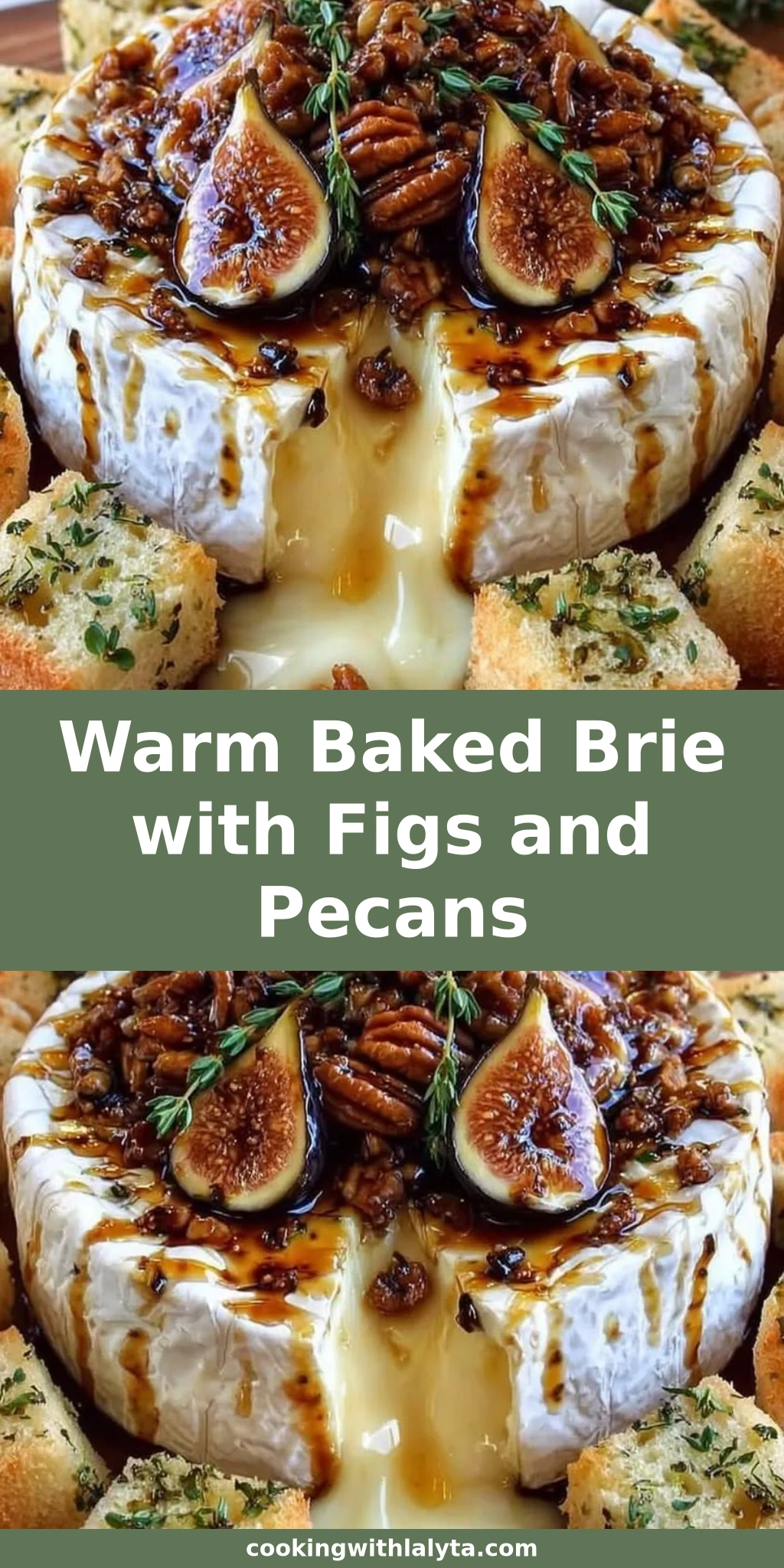
Warm Baked Brie with Figs and Pecans – A 20-Minute Elegant Appetizer That Steals the Show
The first time I made this baked brie with figs and pecans, I was hosting an impromptu dinner party in my tiny NYC apartment, and I needed something that felt luxurious without requiring hours in the kitchen. In Morocco, my mother would serve warm cheese drizzled with honey and scattered with dried fruit as a gesture of hospitality the moment guests walked through the door — no fuss, just abundance. That memory came rushing back as I pulled a wheel of Brie from my fridge. This warm brie appetizer is my homage to her effortless entertaining style, elevated with a French technique I learned in Paris: scoring the rind so the cheese melts evenly beneath its fig-and-pecan crown. It is the kind of appetizer that makes people pause mid-conversation, close their eyes, and say, “What is in this?” And the answer is deceptively simple — just five ingredients and twenty minutes.
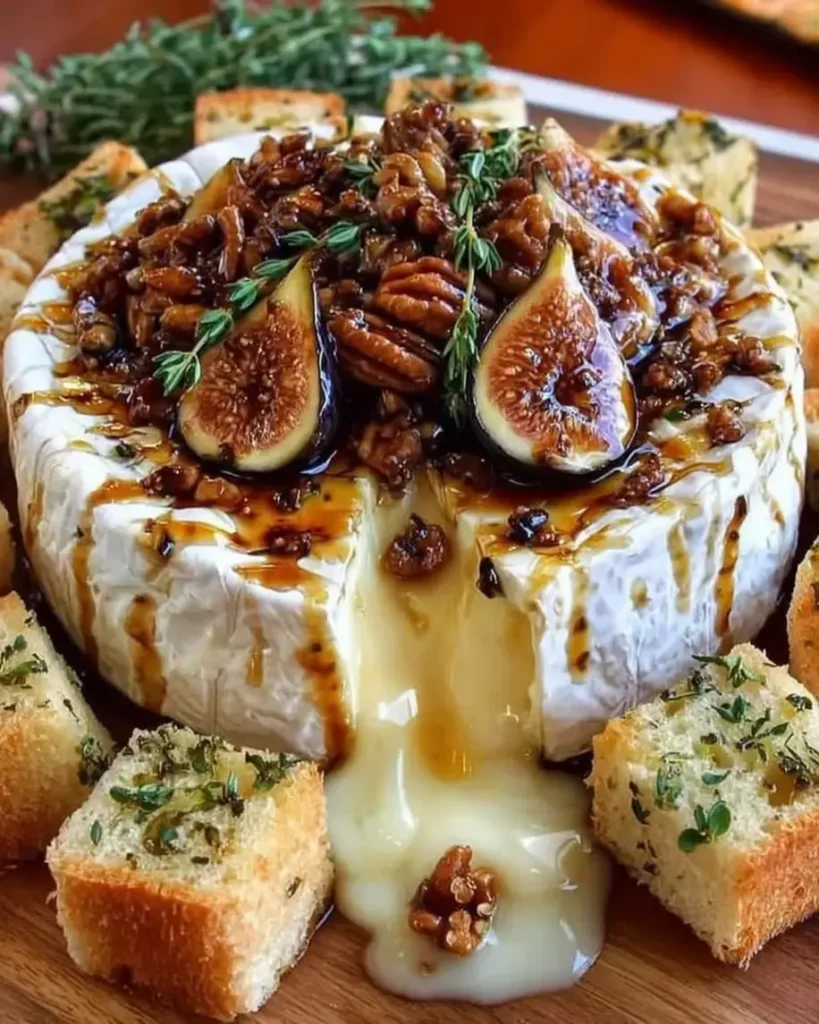
Picture this: a round of creamy, oozing Brie, its bloomy rind barely containing the molten center beneath a glistening layer of deep purple fig preserves that taste like the ripest summer fruit concentrated into a jam. Chopped pecans, toasted ever so slightly in the oven’s heat, add a buttery crunch that contrasts with the silky cheese in the most satisfying way. A drizzle of golden honey catches the light, while fresh thyme — if you choose to add it — releases its woodsy, slightly peppery fragrance as it hits the warm cheese. When you pull the baking sheet from the oven, the aroma that fills your kitchen is a heady mix of warm milk, caramelized fruit, and toasted nuts. It smells like a Parisian fromagerie and a Moroccan souk had a beautiful, delicious baby right there in your oven.
Now, here is where my version of this fig pecan brie sets itself apart. Most recipes tell you to just pop the Brie in the oven and hope for the best. But through years of professional cooking — and a few melted Brie puddles I would rather forget — I have developed a foolproof method that guarantees a warm, perfectly softened center every single time. The secret? Scoring the top rind in a crosshatch pattern so heat penetrates evenly, and baking at a high temperature for a short time so the outside stays intact while the inside turns gloriously molten. I will walk you through every step, share the common mistake that causes Brie to seize up instead of melt, and give you a tested trick for substituting dried figs when you cannot find good preserves. Stick with me, and you will never serve a disappointing baked brie recipe again.
Why This Warm Baked Brie with Figs and Pecans Recipe Is the Best
The Flavor Secret: My culinary training in Paris taught me that the best dishes come from balancing contrasts, and this baked brie recipe is a masterclass in that principle. The Brie itself brings a rich, buttery, slightly mushroomy depth — I always reach for a double-cream Brie from the specialty cheese counter rather than the mass-produced wedges, because the texture is silkier and the flavor more nuanced. The fig preserves add a natural, jammy sweetness and a gentle tang that cuts through the richness of the cheese. What makes this combination sing is the addition of pecans, which I toast directly on top of the cheese as it bakes. The nuts release their oils, intensifying their nuttiness, while the honey and optional thyme bridge everything with an aromatic sweetness and a hint of the herb garden. It is a warm brie appetizer that tastes far more complex than its ingredient list suggests.
Perfected Texture: Let me tell you what I learned during my time in a professional kitchen in Paris: cheese is a living thing, and how you treat it before it hits the heat determines everything. For this baked brie with figs, I use a specific technique that guarantees a molten center without the cheese collapsing into a puddle. First, I remove the Brie from the refrigerator 20 minutes before baking — cold Brie straight from the fridge can seize up and refuse to melt evenly. Second, I score the top rind in a shallow crosshatch pattern with a sharp paring knife. This creates channels for heat to travel through, so the interior melts at the same rate as the exterior. The result? A wheel of Brie that holds its shape beautifully on the platter but yields the moment a cracker touches it, revealing a river of warm, velvety cheese. This is the fig pecan brie that will have your guests convinced you hired a caterer.
Foolproof & Fast: I developed this recipe for my busiest readers — the ones who want to entertain effortlessly without sacrificing quality. You need exactly five minutes of active prep time, and the oven does the rest. No complicated thermometer work, no double boilers, no finicky pastry. Even if you have never made a baked brie recipe before, I have built in enough visual cues and timing guidelines that you will nail it on your first try. And because I know life in a small NYC kitchen — where counter space is a luxury — I designed this to use just one baking sheet and a handful of ingredients you can find at any grocery store. It is weeknight-easy but dinner-party-worthy, and that is exactly how I like my recipes.
Baked Brie with Figs Ingredients
One of my favorite weekend rituals in the city is walking down to the Union Square Greenmarket, where the local honey vendors and cheese purveyors know me by name. For this warm brie appetizer, I gravitate toward a creamy French-style double-cream Brie from the cheese monger — it melts like a dream. The fig preserves I buy from a small-batch jam maker, but honestly, a good-quality jar from the supermarket works beautifully too. I remember my mother in Morocco would dry figs on the rooftop under the hot sun, then simmer them with a little orange blossom water for a quick jam. That floral note is lovely here if you want to experiment. And the pecans? I always keep a bag from the bulk bins — fresher and more affordable than the pre-packaged options.
Ingredients List
- 1 (13.2 ounce) wheel Brie cheese
- 3/4 cup fig preserves or fig jam
- 1/2 cup chopped pecans
- 1/2 teaspoon fresh thyme leaves (optional)
- 1 tablespoon honey (optional)
- Assorted crackers or baguette slices, for serving
Ingredient Spotlight
Brie Cheese: The star of the show. Look for a wheel that is plump and slightly springy when pressed gently — this indicates it is ripe and will melt evenly. Avoid Brie that smells strongly of ammonia, as that is a sign it is overripe. In US grocery stores, you will find Brie in the specialty cheese section, often sold in wooden boxes. For this baked brie with figs, I recommend a double-cream or triple-cream Brie for maximum ooze factor. If you cannot find a full wheel, two smaller wedges will work — just arrange them snugly together on the baking sheet. The flavor will be slightly tangier, but still delicious.
Fig Preserves: This is the sweet, jammy soul of the dish. Fig preserves are thicker and chunkier than fig jam, with visible pieces of fruit that add wonderful texture. I reach for brands like Bonne Maman or Dalmatia, both widely available at major US grocery chains. The deep, honeyed flavor of figs pairs beautifully with the creamy Brie. In a pinch, apricot preserves or even a high-quality orange marmalade can work — the result will be brighter and more citrus-forward, but still stunning on a warm brie appetizer.
Pecans: These nuts bring a buttery crunch and a slightly sweet, toasty flavor when baked. I buy raw pecan halves and roughly chop them myself — pre-chopped pecans tend to be drier and less flavorful. Toast them for a few minutes in a dry skillet before using if you want an even deeper nuttiness. If pecans are not available, walnuts are the closest substitute in both texture and flavor. Sliced almonds will give you a milder crunch and a more delicate appearance, making them a lovely option for a lighter variation of this fig pecan brie.
| Original Ingredient | Best Substitution | Flavor / Texture Impact |
|---|---|---|
| Brie cheese | Camembert | Slightly earthier, stronger flavor; melts similarly |
| Fig preserves | Apricot preserves or orange marmalade | Brighter, more acidic; less earthy sweetness |
| Pecans | Walnuts or sliced almonds | Walnuts: similar richness; almonds: milder crunch |
| Fresh thyme | Fresh rosemary (sparingly) | More piney and assertive; use half the amount |
| Honey | Maple syrup or agave nectar | Maple adds warmth; agave is more neutral |
How to Make Warm Baked Brie with Figs and Pecans — Step-by-Step
You are about to make the easiest, most impressive appetizer in your entertaining arsenal. Do not be intimidated by the word “Brie” — this baked brie recipe is as straightforward as it gets. I will walk you through each step with the same care I use when teaching my cooking classes here in the city.
Step 1: Preheat and Prepare
Set your oven rack to the middle position and preheat the oven to 400°F (200°C). Line a small baking sheet or an oven-safe ceramic dish with a sheet of parchment paper. The parchment is not optional here — it prevents the melted cheese from sticking and makes transferring the finished baked brie with figs to a serving platter a breeze. If you are using a Brie that came in a wooden box, remove all plastic wrapping and discard the box. Wood is not oven-safe, and I learned that the hard way during my early cooking days in Paris when I nearly set a toaster oven ablaze. The cheese goes directly on the parchment, not in the wooden box.
⚠️ Common Mistake to Avoid: Do not bake Brie in its wooden box, even if you have seen it done online. The box can catch fire or impart a woody, resinous flavor to your cheese. Always remove all packaging — plastic, paper labels, and wood — before baking.
Step 2: Prep the Brie
Place the wheel of Brie in the center of your prepared baking sheet. Take a sharp paring knife and gently score the top rind in a crosshatch pattern — about 6 to 8 shallow cuts in one direction, then the same in the opposite direction, creating a diamond grid. You only want to cut through the thin white rind, not deep into the cheese. This is a technique I picked up in Paris: scoring allows heat to reach the interior more efficiently, so the center melts while the cheese still holds its beautiful round shape. If you prefer to remove the top rind entirely, you can slice it off with a sharp knife, but keep the sides and bottom intact to act as a container for all that glorious molten cheese in your warm brie appetizer.
💡 Lalybeth’s Pro Tip: Take the Brie out of the fridge 20 minutes before you plan to bake it. Cold cheese resists melting and can seize up when it hits high heat, leaving you with a warm exterior and a stubbornly firm center. Room-temperature Brie melts more evenly and develops that luscious, spoonable texture we are after.
Step 3: Add Fig Preserves
Spoon the 3/4 cup of fig preserves directly onto the top of the Brie. Use the back of the spoon to spread them evenly all the way to the edges, covering the entire surface. The preserves should be a generous layer — about a quarter-inch thick — so every bite gets that sweet, jammy contrast. If your fig preserves are very thick and difficult to spread, warm them slightly in a small bowl in the microwave for 10 seconds, or stir in a teaspoon of water to loosen them. This step is pure simplicity, but it is the heart of this fig pecan brie, layering the fruit directly onto the cheese so the flavors meld as they bake.
💡 Lalybeth’s Pro Tip: For an extra layer of flavor, stir a pinch of flaky sea salt into the fig preserves before spreading. The salt brightens the sweetness of the figs and enhances the creamy notes of the Brie in a way that feels very chef-driven but takes zero extra effort.
Step 4: Top with Pecans
Scatter the 1/2 cup of chopped pecans evenly over the fig-covered Brie. Press them down very gently with your palm or the flat bottom of a measuring cup so they adhere to the sticky preserves. This ensures they do not roll off during baking and that they toast directly against the hot surface of the cheese. The pecans will release their natural oils as they warm, becoming fragrant and deeply nutty. If you have an extra minute, toast the pecans in a dry skillet over medium heat for 2 to 3 minutes before adding them — it intensifies their flavor beautifully and adds a rustic warmth that reminds me of the roasted nut carts in the Marrakech medina.
Step 5: Bake to Perfection
Slide the baking sheet into the preheated oven and bake for 12 to 15 minutes. Start checking at the 12-minute mark. You are looking for a Brie that has visibly softened — the sides should look slightly puffed, and when you gently press the top near the edge with a fingertip, it should feel soft and yielding, like a water balloon about to burst. The center should still hold its shape but feel very tender. If the cheese has completely collapsed and flattened into a puddle, it has over-baked slightly. It will still taste delicious — do not panic — but aim to catch it just before that point for the most elegant presentation of your baked brie with figs. The aroma at this stage will be intoxicating: warm milk, sweet fruit, and toasted nuts.
⚠️ Common Mistake to Avoid: Do not walk away from the oven during those last few minutes. The window between perfectly molten Brie and a melted puddle is narrow — sometimes just 60 to 90 seconds. Set a timer and check visually. If you are unsure, it is better to pull it slightly early; the residual heat will continue softening the cheese on the platter.
Step 6: Finish and Garnish
Remove the baking sheet from the oven and let the Brie rest for 2 to 3 minutes directly on the sheet. This brief rest allows the cheese to stabilize slightly so it does not ooze out uncontrollably the moment you serve it. Now for the finishing touches: drizzle the tablespoon of honey in a thin, even stream over the top of the warm Brie with pecans, letting it pool in the little crevices between the nuts. If using fresh thyme, strip the leaves from the sprigs and scatter them over the surface right now. The heat of the cheese will release the thyme’s essential oils, filling the air with a beautiful herbaceous fragrance. I love how that tiny pop of green looks against the deep purple figs and golden pecans — it is a plate that photographs as beautifully as it tastes.
💡 Lalybeth’s Pro Tip: Use a small offset spatula or two wide pancake turners to transfer the entire Brie wheel from the baking sheet to your serving platter. Slide the spatulas underneath from opposite sides and lift in one confident motion. The parchment paper underneath makes this easier — you can slide the whole thing, parchment and all, onto the platter, then gently tug the parchment out from under the cheese.
Step 7: Serve Immediately
Place the warm baked Brie with figs and pecans on a beautiful wooden board or a ceramic platter. Arrange assorted crackers, toasted baguette slices, and perhaps a few apple or pear slices around the cheese for dipping and spreading. Serve immediately while the cheese is still warm and flowing. I like to place a small cheese knife or a butter knife right on the board, inviting guests to cut into that first glorious wedge and watch the molten center escape. The first crack of the crusted topping giving way to the silky interior is pure culinary theater — and trust me, your guests will applaud.
| Step | Action | Duration | Key Visual Cue |
|---|---|---|---|
| 1 | Preheat oven to 400°F; line baking sheet with parchment | 2 mins | Oven indicator light off; parchment flat |
| 2 | Score Brie rind in crosshatch pattern | 1 min | Diamond grid visible on white rind |
| 3 | Spread fig preserves evenly on top | 1 min | Entire surface covered, 1/4-inch thick |
| 4 | Sprinkle pecans; press gently to adhere | 30 secs | Pecans evenly distributed, no gaps |
| 5 | Bake at 400°F until softened | 12–15 mins | Brie puffed, soft to the touch |
| 6 | Rest 2–3 mins; drizzle honey, add thyme | 2–3 mins | Honey pools in crevices; thyme leaves bright green |
| 7 | Transfer to platter; serve immediately | 1 min | Molten cheese visible when first slice is cut |
Serving & Presentation
When I plate this warm baked brie appetizer, I think of it as creating an edible centerpiece. I use a rustic wooden serving board — the kind you can find at any kitchen supply store in the city — and place the still-warm Brie right in the center. Around it, I fan out slices of toasted baguette in overlapping rows, letting them catch the light so their golden edges contrast with the dark jam. A small cluster of fresh figs halved and tucked into the corners adds a gorgeous, seasonal touch that nods to my Mediterranean roots. In Morocco, we always serve food with an eye toward abundance and beauty, and this fig pecan brie deserves nothing less than a presentation that makes people reach for their phones to snap a photo before they reach for a knife.
Beyond the visual, think about the full guest experience. Place small cocktail napkins nearby because this is a delightfully messy, hands-on appetizer — the best kind, if you ask me. Provide a dedicated cheese knife for cutting wedges and a small spoon so guests can scoop up any escaped molten cheese. I also like to add a few flavor-boosting accompaniments: a drizzle of balsamic glaze over the finished Brie adds a tangy, syrupy contrast that cuts through the richness, and a scattering of pomegranate arils in the fall brings a jewel-like pop of color and a burst of tart juice. These little touches, inspired by the vibrant market stalls I grew up wandering in Morocco, elevate a simple baked brie recipe into a memorable dish.
For pairing, I always think about balance. The creamy, sweet, nutty notes of this dish call for crisp, acidic companions. A chilled glass of Sauvignon Blanc or a dry sparkling wine like Prosecco is my go-to — the bubbles scrub your palate clean between bites. If you prefer non-alcoholic options, a sparkling apple cider or an iced green tea with a squeeze of lemon works wonderfully. As for the crackers and bread, avoid anything too heavily flavored. Plain water crackers, lightly toasted baguette rounds, and thin slices of crisp green apple or ripe pear are ideal. They provide texture and structure without competing with the star of the show: that glorious warm brie with pecans and figs.
| Pairing Type | Suggestions | Why It Works |
|---|---|---|
| Side Dish | Toasted baguette slices, water crackers, apple slices | Mild crunch and subtle sweetness complement the rich Brie without overpowering it |
| Sauce / Dip | Balsamic glaze drizzle, extra honey, whole-grain mustard | Acidity and sharpness cut through the creamy cheese, adding dimension |
| Beverage | Sauvignon Blanc, Prosecco, sparkling cider | Crisp and bubbly options cleanse the palate between rich, creamy bites |
| Garnish | Fresh thyme sprigs, pomegranate arils, flaky sea salt | Herbal notes and pops of color enhance the visual and flavor appeal |
Make-Ahead, Storage & Reheating
Living in New York means my schedule can turn on a dime — one minute I am planning a quiet evening, the next I have friends texting they are in the neighborhood. That is why I love that this baked brie with figs can be prepped almost entirely ahead of time. You can assemble the Brie with the fig preserves and pecans up to 24 hours in advance, wrap it tightly in plastic, and keep it in the refrigerator. When your guests arrive, unwrap it, let it sit at room temperature for about 20 minutes, and then bake as directed. It is my secret weapon for looking like a relaxed hostess when, in reality, I have done all the work the night before. Just remember: only add the honey and fresh thyme after baking, or they will burn in the oven.
| Method | Container | Duration | Reheating Tip |
|---|---|---|---|
| Refrigerator | Airtight container or tightly wrapped in plastic | Up to 3 days (baked Brie) | Reheat in a 350°F oven for 8–10 minutes until warmed through; microwave can work in 30-second bursts but may cause uneven melting |
| Freezer | Freezer-safe container or heavy-duty foil | Up to 1 month (unbaked assembly only) | Do not freeze baked Brie; freeze the assembled, unbaked Brie and bake directly from frozen at 375°F for 20–22 minutes |
| Make-Ahead | Plastic wrap (refrigerator) | Up to 24 hours in advance (assembled, unbaked) | Assemble the Brie with preserves and pecans; cover and refrigerate; let sit at room temperature 20 minutes before baking as directed |
Now, let me be honest about reheating baked Brie. This warm brie appetizer is at its absolute peak fresh from the oven — the texture is molten, the pecans are crisp, the presentation is show-stopping. Leftovers will never quite recapture that just-baked magic, but they can still be delicious. I have reheated leftover Brie in the oven at 350°F with good results; just know the cheese will be slightly firmer and the pecans a bit softer. The microwave is an option in a pinch, but use low power and short bursts to avoid turning the cheese rubbery. My personal preference? If I have leftover baked Brie, I spread it cold on toast the next morning, topped with a little extra honey and a pinch of salt. It is a completely different experience — more like a savory-sweet cheese spread — but it is so good that I sometimes intentionally make extra. A little secret from my NYC kitchen to yours.
If you are planning to freeze, note that this applies only to the assembled but unbaked Brie. Wrap the fig-and-pecan-topped wheel tightly in a layer of plastic wrap followed by a layer of heavy-duty foil, and freeze for up to one month. When you are ready to bake, do not thaw it — just unwrap, place on a parchment-lined sheet, and bake at 375°F for about 20 to 22 minutes, checking for the same visual cues of puffing and softness. The slightly lower temperature allows the center to thaw and melt without the exterior burning. I tested this method in my own kitchen one busy holiday season when I needed to prep ahead for a party, and it worked beautifully. The key is patience and watching for that perfect moment of molten readiness.
Variations & Easy Swaps
| Variation | Key Change | Best For | Difficulty Impact |
|---|---|---|---|
| Savory Rosemary & Walnut Baked Brie | Swap figs for caramelized onions, pecans for walnuts, add rosemary | Savory appetizer lovers; wine pairings | Medium (extra 10 mins to caramelize onions) |
| Gluten-Free and Dairy-Free Baked Brie Alternative | Use dairy-free Brie-style cheese; serve with gluten-free crackers | Guests with dietary restrictions | Easy (same method, different cheese) |
| Winter-Spiced Cranberry & Pecan Baked Brie | Use cranberry sauce, add cinnamon and orange zest | Holiday gatherings; Thanksgiving appetizer | Easy (swap preserves, add spices) |
Savory Rosemary & Walnut Baked Brie
If you lean more toward savory appetizers, this variation of the warm baked brie with figs and pecans will be your new go-to. Instead of fig preserves, top the Brie with a generous layer of caramelized onions — thinly sliced and slowly cooked in butter with a pinch of salt until they are deep golden and jammy. Swap the pecans for chopped walnuts, which have a slightly more bitter, earthy edge that plays beautifully against the sweet onions. Tuck a few fresh rosemary sprigs into the topping before baking, and the herb will perfume the entire dish as it warms. This version reminds me of a rustic French onion soup meets melted cheese board, and it is absolutely stunning served with a bold red wine like a Côtes du Rhône. The caramelized onions add about ten minutes of active cooking time, but I promise the payoff is worth it for a cold-weather gathering.
Gluten-Free and Dairy-Free Baked Brie Alternative
Hosting guests with dietary restrictions should never mean compromising on the wow factor of your appetizer spread. For a dairy-free version of this fig pecan brie, I tested several plant-based Brie-style cheeses and found that brands like Miyoko’s Creamery or Violife make wheels that hold their shape and melt reasonably well under the same baking conditions. The texture will be slightly different — less oozy and more spreadable, akin to a warm cashew cheese — but the fig and pecan topping works its magic just the same. Serve with an assortment of gluten-free crackers, sliced apple, and celery sticks for scooping. I have served this at dinner parties where guests did not even realize it was dairy-free until I told them, and the reaction is always a delighted surprise. The key is to watch the baking time closely, as dairy-free cheeses can melt faster than traditional Brie.
Winter-Spiced Cranberry & Pecan Baked Brie
When the holiday season rolls around in New York and the frost is on the windows, I swap the fig preserves for whole-berry cranberry sauce spiked with a pinch of cinnamon and fresh orange zest. This variation of the baked brie recipe channels all the cozy flavors of Thanksgiving and Christmas into one stunning appetizer. The cranberry sauce brings a tart, bright punch that cuts through the richness of the Brie, while the cinnamon and orange zest add warmth and a perfume that fills the kitchen with holiday spirit. Keep the pecans — their buttery crunch is perfect here — and finish with a drizzle of maple syrup instead of honey for a deeper, more wintry sweetness. This version has become a staple at my family’s holiday table, and it pairs beautifully with mulled wine or a glass of off-dry Riesling.
Share Your Version!
There is nothing that makes me happier than seeing your kitchen creations come to life — it is the whole reason I started sharing these recipes in the first place. When you make this warm baked brie with figs and pecans, I want to hear every detail: Did you stick with the classic combination, or did you experiment with one of the variations? Did the crosshatch scoring technique give you that perfect molten center? Your feedback not only fuels my creative fire but also helps other home cooks who are reading these pages and wondering if they can pull it off. So please, leave a star rating and a comment below — I read every single one, often with a cup of mint tea in hand, imagining your tables and your gatherings and the delicious things happening in your kitchen.
If you share your creation on Instagram or Pinterest, tag me at @cookingwithlalyta so I can see your beautiful baked brie recipe come to life in your home. I regularly feature reader photos in my stories, and honestly, your versions often inspire my next recipe experiments. Here is a question I would love for you to answer in the comments: What is the one appetizer that always makes an appearance at your family gatherings, and how does it bring everyone together? I will go first — for my Moroccan family, it was always warm msemen bread with honey and butter, torn by hand and passed around the table before any other dish arrived. The food is the excuse; the togetherness is the point. Now it is your turn.
From my NYC kitchen to yours — I hope this recipe brings as much warmth to your table as it does to mine. — Lalybeth 🧡
How long should you bake brie to make it warm and melty in the middle?
For a standard 13.2-ounce wheel of Brie, bake at 400°F for 12 to 15 minutes to achieve that perfectly warm, molten center. The exact time depends on the starting temperature of your cheese — if it came straight from the fridge, lean toward the 15-minute mark; if you let it rest at room temperature for 20 minutes as I recommend, start checking at 12 minutes. You will know it is ready when the sides look puffed and the top yields softly when pressed near the edge with a fingertip. Over-baking even by a minute or two can cause the Brie to collapse completely into a puddle, so I always set a timer and watch closely during those final moments.
Can I use dried figs instead of fresh figs for baked brie?
Absolutely, dried figs work beautifully in this baked brie with figs recipe, though the approach is slightly different than using fig preserves. Slice dried figs into thin strips and arrange them directly on top of the Brie before baking. Because dried figs lack the moisture of preserves, add 1 tablespoon of water or orange juice to the baking dish to create a steamy environment that keeps the fruit plump and prevents it from drying out or burning. The result will have a slightly chewier texture and a more concentrated sweetness than preserves, which I actually love for a rustic, earthy variation of the warm brie appetizer. Just be sure to rehydrate particularly dry figs by soaking them in warm water for 10 minutes before slicing.
What can I substitute for pecans if I don’t have any on hand?
Walnuts are my top substitute for pecans in this fig pecan brie — they share a similar buttery richness and soften slightly during baking while retaining enough crunch to contrast with the creamy Brie. Sliced almonds are another excellent option, offering a milder flavor and a more delicate texture that lets the fig preserves take center stage. For a completely different twist, try chopped pistachios, which bring a vibrant green color and a subtle sweetness that nods to my Moroccan heritage. No matter which nut you choose, I recommend giving them a quick toast in a dry skillet before adding them to the cheese, as this deepens their flavor and adds a toasty warmth to the finished dish.
What should I serve with warm baked brie with figs and pecans?
The ideal accompaniments for a warm baked brie appetizer are crisp, relatively neutral vehicles that support the cheese without competing. Toasted baguette slices sliced on the bias are my classic choice — they are sturdy enough to scoop molten Brie but delicate enough not to overwhelm. Plain water crackers, grissini breadsticks, and thinly sliced green apple or ripe pear are all excellent options that provide textural contrast and a touch of freshness. I also like to offer a small dish of balsamic glaze or a pot of whole-grain mustard on the side for guests who want to add a sharp, acidic counterpoint. The key is to avoid strongly flavored crackers like rosemary or black pepper varieties, which can clash with the sweet fig and nutty pecan topping.
Do I need to remove the rind from Brie before baking?
The rind on Brie is entirely edible and helps the cheese hold its shape during baking, so I recommend keeping the bottom and sides intact. The top rind, however, can be treated one of two ways: score it in a shallow crosshatch pattern with a sharp knife, which creates channels for heat to penetrate and yields an even melt while keeping the wheel’s structure, or remove it entirely if you prefer a more open, spreadable surface for your toppings. I favor scoring because it preserves the beautiful presentation of a whole, intact wheel while still achieving that luscious, molten center. If you do remove the top rind, work carefully with a sharp paring knife and slice horizontally, taking care not to cut too deep into the cheese beneath.
Can I make baked brie with figs ahead of time?
Yes, you can assemble the entire warm brie appetizer up to 24 hours in advance, which makes it an ideal choice for stress-free entertaining. Top the Brie with the fig preserves and pecans as instructed, wrap it tightly in plastic wrap, and refrigerate. When you are ready to serve, unwrap the cheese and let it sit at room temperature for about 20 minutes before baking — this ensures even melting from a chilled start. Add the honey and fresh thyme only after baking, as they can burn or lose their brightness in the oven. I do not recommend baking the Brie ahead and reheating it later, as the texture is vastly superior when it is fresh from the oven with that first glorious cut revealing the flowing center.
Why did my baked brie not melt in the middle?
If your baked brie with figs came out of the oven with a firm, unmelted center, the most likely culprit is starting with cheese straight from the refrigerator. Cold Brie resists melting — the exterior may scorch before the interior ever warms through, leaving you with an unpleasant firm core. Another common issue is an oven temperature that is too low; Brie needs a relatively high heat of 400°F to melt properly. Baking at 350°F, for instance, will warm the cheese without achieving that sought-after molten consistency. Finally, check that your oven is fully preheated before the cheese goes in, and avoid opening the door frequently during baking, as heat loss can significantly extend the melting time and produce uneven results.
What is the best wine to pair with baked brie and figs?
A crisp, dry white wine with good acidity is my top recommendation for this warm baked brie appetizer — Sauvignon Blanc from New Zealand or the Loire Valley cuts through the richness of the cheese while complementing the sweet fig notes. For a celebratory feel, I reach for a brut Prosecco or a Champagne-style sparkling wine, whose bubbles and bright acidity cleanse the palate between creamy bites. If you prefer red wine, choose something light-bodied and low in tannins, such as a Pinot Noir or a chilled Beaujolais, which will not clash with the delicate flavors of the Brie. Avoid oaky, heavy wines like a full-bodied Chardonnay or a bold Cabernet, as their weight can overwhelm this dish and leave a heavy, cloying sensation.
Can I use a different type of cheese instead of Brie?
Brie is ideal for this baked brie recipe because of its high butterfat content and its ability to melt into a silky, flowing consistency while still holding its shape, but a few other soft-ripened cheeses can step in admirably. Camembert is the closest substitute — it has a slightly earthier, more mushroomy flavor but melts in the same luscious way and comes in similar-sized wheels. For a completely different profile, consider a small wheel of goat cheese, which will not melt into a puddle but will soften gently in the oven and pair beautifully with the fig and pecan topping. Just note that goat cheese is tangier and firmer, so the eating experience will be more scoopable than oozy, and you may want to reduce the baking time slightly to prevent it from drying out.
How do I know when baked brie is perfectly done?
The moment of perfect doneness for this fig pecan brie is when the Brie wheel looks slightly puffed and swollen, the edges are visibly soft and may have a subtle sheen of melted cheese at the base, and a gentle press with your fingertip near the side yields a soft, almost liquid sensation beneath the surface. The top should still be intact and holding the fig and pecan topping in place, and the cheese should not have collapsed into a flat puddle. If you gently jiggle the baking sheet, the center of the Brie should quiver. This usually occurs between 12 and 15 minutes at 400°F. If you are unsure, err on the side of slightly underdone — the residual heat will continue softening the cheese for a few minutes after it leaves the oven, and it is far better to have a soft center than a completely collapsed wheel.
Love This Recipe? Save It to Pinterest!
If you enjoyed this Warm Baked Brie with Figs and Pecans recipe, don’t let it get lost in your browser tabs! 😄 Pin it now so you can find it again anytime — and explore hundreds more tried-and-tested recipes waiting for you on my Pinterest boards.
👉 Follow Lalybeth on Pinterest @cookingwithlalyta
📌 Pin this recipe · 🔁 Re-pin your favorites · 💬 Tag me when you make it — I love seeing your creations!
Did You Make This Warm Baked Brie with Figs and Pecans?
I would absolutely love to hear how it turned out! Leave a star rating and a comment below — your feedback means the world to me and helps other home cooks discover this recipe. And if you snap a photo of your creation, tag me on Instagram @cookingwithlalyta so I can share in your delicious moment. Nothing makes my day quite like seeing your kitchen wins!
Warm Baked Brie with Figs and Pecans
- Total Time: 20 minutes
- Yield: 8 servings 1x
Description
A decadent, warm appetizer featuring creamy baked brie topped with sweet figs and crunchy pecans, perfect for entertaining.
Ingredients
- 1 (13.2 ounce) wheel Brie cheese
- 3/4 cup fig preserves or fig jam
- 1/2 cup chopped pecans
- 1/2 teaspoon fresh thyme leaves (optional)
- 1 tablespoon honey (optional)
- Assorted crackers or baguette slices, for serving
Instructions
- Preheat oven to 400°F (200°C). Line a small baking sheet or oven-safe dish with parchment paper.
- Place the Brie wheel on the prepared baking sheet. With a sharp knife, score the top rind in a crosshatch pattern, or remove it if desired.
- Spread the fig preserves evenly over the top of the Brie.
- Sprinkle the chopped pecans over the fig preserves, pressing lightly so they adhere.
- Bake for 12–15 minutes, until the Brie is warm and slightly melted but still holds its shape.
- Remove from the oven and let rest for 2–3 minutes. Drizzle with honey and sprinkle with thyme, if using.
- Serve immediately with crackers or sliced baguette.
Notes
To easily slice the baked Brie, let it cool for 5 minutes. If using a whole Brie wheel in a wooden box, remove all packaging and the wood before baking. You can substitute dried figs for fig preserves: place sliced dried figs on top and add 1 tablespoon of water or orange juice to the dish to keep them moist.
- Prep Time: 5 minutes
- Cook Time: 15 minutes
- Method: Appetizer
- Cuisine: American
Nutrition
- Calories: 220 kcal
- Sugar: 12 g
- Fat: 14 g
- Carbohydrates: 18 g
- Protein: 8 g
Tried This Recipe? Leave a Comment!
Did you make this recipe? I’d love to hear how it turned out! Please leave a comment and a rating below. Your feedback helps other home cooks and supports cookingwithlalyta.com!
For more delicious inspiration, follow me on Pinterest!