Table of Contents
Greek Beef Wraps with Roasted Garlic Feta Sauce – Juicy, Garlicky & Ready in 45 Minutes
I still remember the first time I tasted a proper Greek beef wrap — not from a travel magazine or a restaurant menu, but from a tiny family-run taverna tucked away on a cobblestone street in the Plaka neighborhood of Athens, discovered during a whirlwind weekend trip from Paris while I was still in culinary school. The beef was seared so quickly over an open flame that it developed a deep, caramelized crust while staying impossibly tender inside, and the sauce — oh, that sauce — was a velvety, roasted garlic-feta dream that clung to every fold of warm pita. I knew right then that I had to recreate those Greek Beef Wraps in my own kitchen, and after years of tweaking and testing, I’ve landed on a version that captures all that Mediterranean magic but fits perfectly into a busy New York City weeknight — with a roasted garlic feta sauce that’s so good you’ll want to put it on everything.
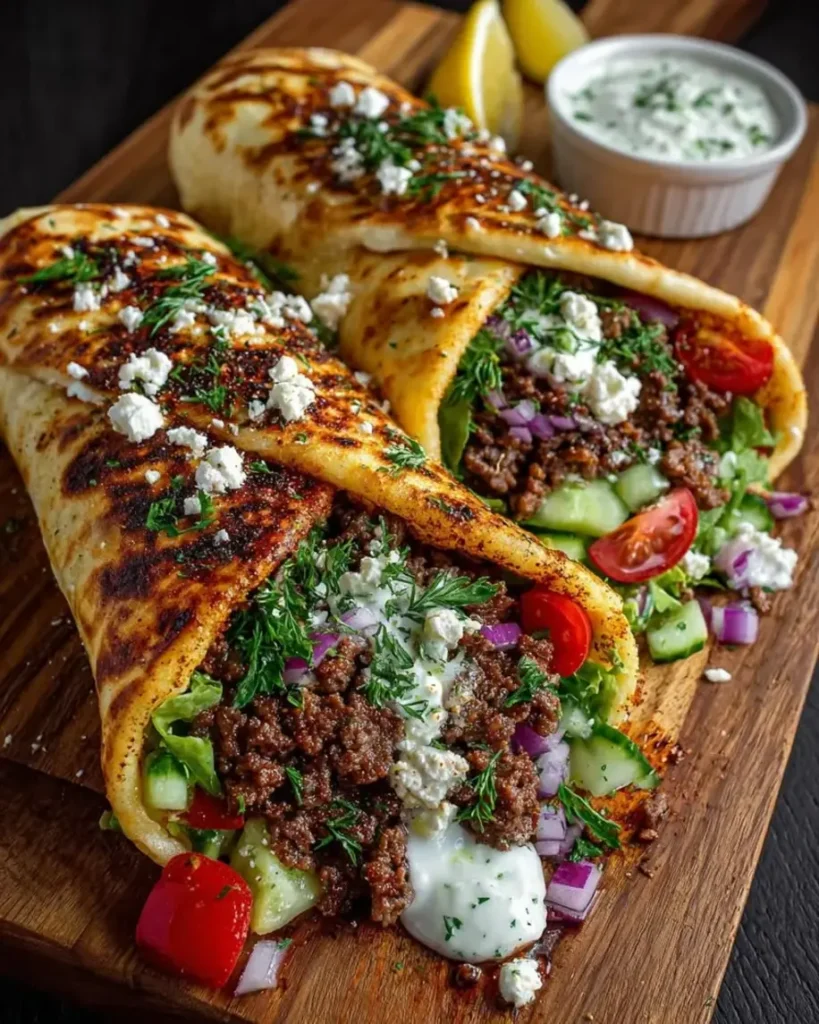
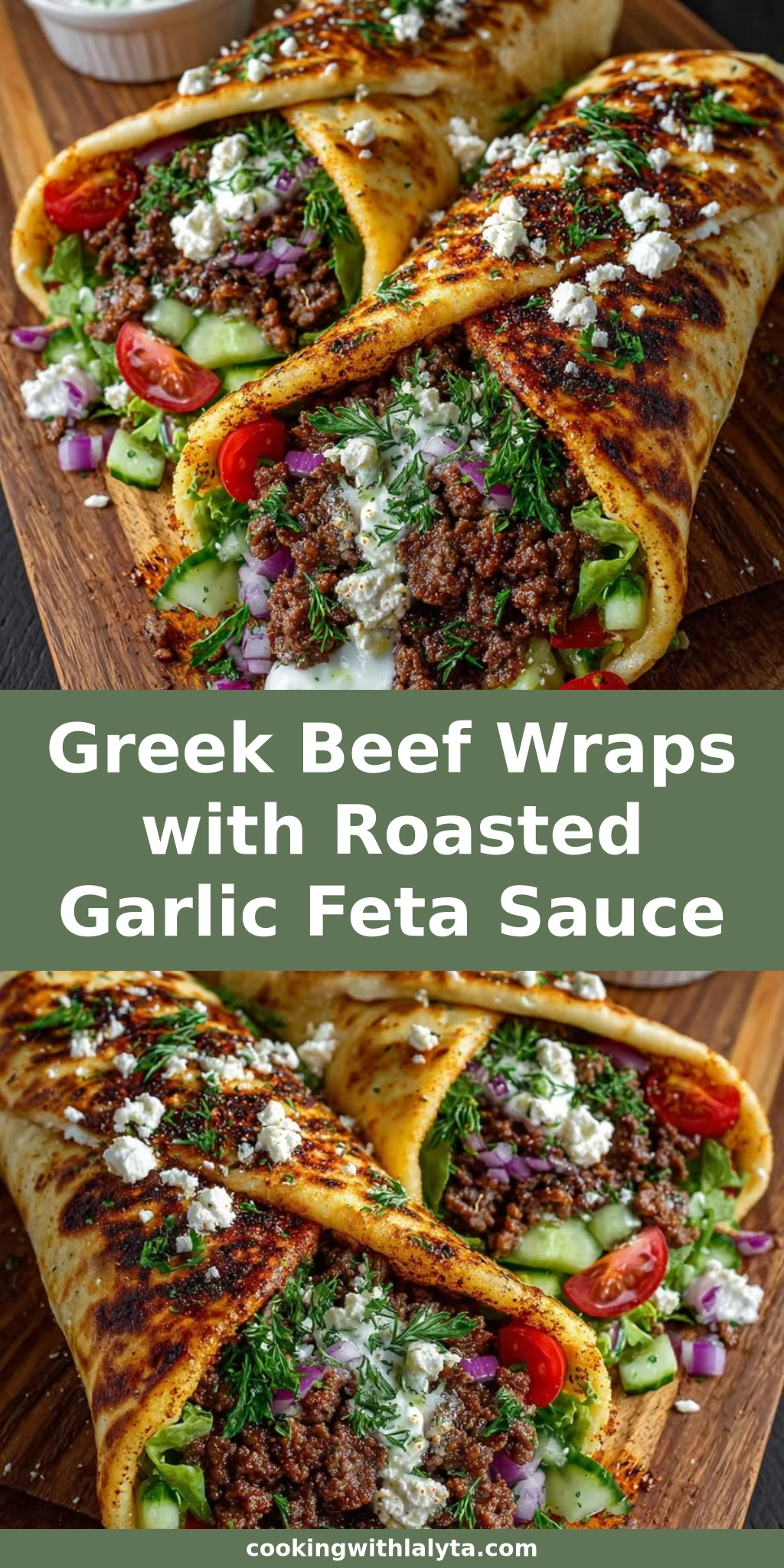
These Greek Beef Wraps are everything I crave in a meal: the deeply savory, oregano-and-cumin-scented beef sizzling in a hot skillet, the cool crunch of cucumber and red onion, the briny pop of Kalamata olives, and that luscious roasted garlic feta sauce that ties it all together with tangy, garlicky creaminess. The aroma that fills my apartment when the garlic is roasting — mellow, sweet, slightly caramelized — takes me straight back to my mother’s kitchen in Morocco, where slow-roasting vegetables was a weekly ritual, and patience was the secret ingredient. The contrast of warm, spiced beef against cold, crisp vegetables and that silky sauce is the kind of sensory experience that makes you close your eyes on the first bite. It’s rustic and elegant all at once, the kind of meal that feels like a celebration even on a random Tuesday.
What sets this Greek beef wrap recipe apart is the sauce — and I don’t say that lightly. Instead of a basic tzatziki or plain feta crumble, I roast an entire head of garlic until it turns buttery-soft and sweet, then blend it with tangy feta, creamy Greek yogurt, and just enough lemon juice to brighten everything up. It’s a technique I picked up in Paris, where my sauce-making instructor drilled into us that a great sauce isn’t just a condiment — it’s the soul of the dish. And trust me, once you taste this sauce, you’ll understand why I make a double batch every single time. Now, before we dive in, here’s 💡 Lalybeth’s Pro Tip: the biggest mistake home cooks make with beef wraps is overcrowding the pan, which steams the meat instead of searing it — work in batches and give each strip of beef its moment in the hot skillet. That caramelized edge? That’s where the flavor lives.
Why This Greek Beef Wraps Recipe Is the Best
The Flavor Secret: The magic of these Greek Beef Wraps lies in a seemingly simple technique that I learned in my Paris culinary school and have never forgotten: layering aromatics. Instead of just seasoning the beef with a single spice blend, I build flavor in three dimensions — a quick dry marinade of oregano, cumin, and smoked paprika for the beef, slow-roasted garlic for the sauce, and fresh, bright garnishes that cut through the richness. The roasted garlic feta sauce is the real star here. When you roast garlic low and slow, those sharp, pungent compounds mellow into something almost nutty and caramelized, and blending that with salty feta and tangy yogurt creates a sauce that’s both bold and balanced. It’s the kind of layered flavor profile I grew up with in Morocco, where spices were never just added — they were built, step by step, until the dish sang.
Perfected Texture: From a chef’s perspective, the textural interplay in these wraps is what elevates them from good to unforgettable. The beef is sliced thin against the grain and seared at high heat — just two to three minutes per side — to achieve a beautifully browned exterior while keeping the interior tender and juicy. This is a technique I refined during my years in professional kitchens: you want your pan screaming hot, the beef in a single layer, and the discipline not to move it around until a proper crust forms. Meanwhile, the sauce is blended until it’s silky and pourable, not chunky, so it coats every bite evenly. Then you’ve got the warm, pliable pita, the cool crunch of cucumber, the juicy burst of cherry tomatoes, and the satisfying chew of Kalamata olives — it’s a symphony of textures that makes each bite exciting.
Foolproof & Fast: I designed this easy beef wraps recipe specifically for real life — for the busy New Yorker who wants a restaurant-quality meal on the table in under an hour, for the home cook who might be intimidated by roasting garlic but will discover just how simple it truly is. The sauce can be made up to three days ahead, the beef marinates in just 15 minutes while the garlic roasts, and the actual cooking takes less than 10 minutes. There’s no complicated equipment, no hard-to-find ingredients — everything is available at any well-stocked grocery store or, if you’re lucky enough to live near one, a Mediterranean market where the feta is still packed in brine. Even if you’ve never roasted garlic before, I promise this recipe will make you feel like a confident, capable cook.
Greek Beef Wraps Ingredients
Whenever I’m shopping for these ground beef wraps ingredients here in New York City, I find myself gravitating toward the Union Square Greenmarket for the freshest cucumbers and cherry tomatoes — there’s something about sun-ripened produce that makes all the difference — and then I swing by my favorite Mediterranean grocer in Astoria for the feta and olives. It reminds me of the markets in Morocco, where my mother would haggle over olives and come home with paper cones full of briny, glistening gems. You don’t need to go to specialty shops, though; a regular supermarket will do just fine as long as you look for quality where it counts: good olive oil, block feta (not pre-crumbled), and fresh-looking pita.
Ingredients List
- 1 1/2 lbs beef sirloin or flank steak, thinly sliced
- 2 tbsp olive oil
- 2 tsp dried oregano
- 1 tsp ground cumin
- 1 tsp smoked paprika
- Salt and black pepper to taste
- 4 large pita breads or flatbreads
- 1 cup cherry tomatoes, halved
- 1/2 cucumber, diced
- 1/2 red onion, thinly sliced
- 1/2 cup Kalamata olives, pitted and halved
- 1/2 cup crumbled feta cheese
- Fresh parsley or mint for garnish
For the Roasted Garlic Feta Sauce:
- 1 head garlic
- 1 tsp olive oil
- 6 oz crumbled feta cheese
- 1/4 cup Greek yogurt
- 2 tbsp lemon juice
- 2 tbsp extra-virgin olive oil
- 2 tbsp water (as needed)
- Salt and pepper to taste
Ingredient Spotlight
Beef Sirloin or Flank Steak: The cut of beef matters enormously here. I recommend sirloin for its balance of tenderness and flavor, or flank steak if you want a slightly beefier taste with a bit more chew — both work beautifully in Greek Beef Wraps. Look for meat with a deep red color and fine marbling at your local butcher or grocery store. The key is slicing it thinly against the grain, which shortens the muscle fibers and ensures every bite is tender rather than tough. If you can’t find sirloin or flank, skirt steak is a great stand-in with a similarly robust flavor, though it’s a bit thinner and will cook even faster. You can also substitute boneless, skinless chicken thighs — just adjust the cooking time to ensure they’re cooked through.
Feta Cheese: For the roasted garlic feta sauce, please, please buy block feta packed in brine rather than the pre-crumbled stuff in a plastic tub. The difference is night and day — brine-packed feta is creamier, tangier, and blends into a much silkier sauce without any grittiness. I look for Greek or Bulgarian feta, which tend to have that perfect balance of salt and tang. If you’re dairy-free, a good-quality almond-based feta alternative works surprisingly well in the sauce, though you’ll want to add an extra pinch of salt and a tiny splash more lemon juice to mimic the tang of real feta.
Kalamata Olives: These dark purple, almond-shaped olives bring a briny, slightly fruity bite that cuts through the richness of the beef and sauce. I always buy them pitted to save time, and I give them a quick rinse if they seem overly salty. If Kalamatas aren’t available, Castelvetrano olives make a wonderful substitute — they’re milder, buttery, and just as satisfying. In a pinch, black olives from a can will work, though you’ll lose some of that distinctive Mediterranean character.
Greek Yogurt: The yogurt in the sauce adds body, tang, and a velvety texture that lightens the feta’s intensity. I always use full-fat Greek yogurt — it’s thicker, creamier, and less likely to make the sauce watery. If you only have regular plain yogurt, strain it through a cheesecloth-lined sieve for 15 minutes to remove excess liquid before using. For a dairy-free version, coconut yogurt works, but choose an unsweetened, plain variety to avoid any coconut flavor clashing with the garlic and feta.
| Original Ingredient | Best Substitution | Flavor / Texture Impact |
|---|---|---|
| Beef sirloin / flank steak | Chicken thighs or skirt steak | Slightly leaner or thinner; adjust cooking time accordingly |
| Block feta in brine | Almond-based feta alternative | Less tangy; add extra lemon juice and a pinch of salt |
| Kalamata olives | Castelvetrano olives or black olives | Milder, less briny, but still pleasantly salty |
| Full-fat Greek yogurt | Strained plain yogurt or coconut yogurt | Slightly thinner; strain first for best results |
How to Make Greek Beef Wraps with Roasted Garlic Feta Sauce — Step-by-Step
I promise you, making these Greek Beef Wraps is so much simpler than it looks — and I’ll walk you through every single step, from roasting the garlic to assembling the final wrap, with all the little tips I’ve picked up along the way.
Step 1: Roast the Garlic
Preheat your oven to 400°F (200°C). Take one whole head of garlic and, using a sharp knife, slice off the top quarter to expose the tops of the cloves. Don’t worry about being too precise — just enough to reveal each clove’s surface. Place the garlic on a square of aluminum foil, drizzle with 1 teaspoon of olive oil, and wrap it up tightly into a little sealed packet. Place it directly on the oven rack and roast for 35 to 40 minutes. You’ll know it’s done when your kitchen smells impossibly fragrant and the cloves are soft enough to squeeze out of their skins like warm butter. Let it cool for a few minutes before handling.
💡 Lalybeth’s Pro Tip: Roast an extra head of garlic while you’re at it! The roasted cloves keep beautifully in a small jar covered with olive oil in the fridge for up to a week, and they’re incredible spread on toast, mashed into potatoes, or whisked into salad dressings.
Step 2: Marinate the Beef
While the garlic is roasting, slice your 1 1/2 pounds of beef sirloin or flank steak into thin strips — about 1/4 inch thick — making sure to cut against the grain. In a medium bowl, combine the sliced beef with 2 tablespoons olive oil, 2 teaspoons dried oregano, 1 teaspoon ground cumin, 1 teaspoon smoked paprika, and a generous pinch of salt and black pepper. Toss everything together with your hands until every strip is evenly coated. Let it sit at room temperature for at least 15 minutes while the garlic finishes roasting. This quick marinade not only seasons the meat but also starts breaking down the surface proteins so you get a better sear.
⚠️ Common Mistake to Avoid: Don’t slice the beef too thick, or it will take longer to cook and risk becoming tough. Aim for thin, uniform strips — if you’re having trouble, pop the beef in the freezer for 15 minutes before slicing; it firms up and becomes much easier to cut cleanly.
Step 3: Make the Roasted Garlic Feta Sauce
Once the roasted garlic is cool enough to handle, squeeze the soft, caramelized cloves out of their papery skins and into the bowl of a food processor. Add 6 ounces of crumbled feta cheese, 1/4 cup Greek yogurt, 2 tablespoons lemon juice, and 2 tablespoons extra-virgin olive oil. Blend until smooth, scraping down the sides as needed. The sauce will be quite thick at this point — now, with the motor running, add water one tablespoon at a time until it reaches a pourable but still creamy consistency (about 2 tablespoons total). Season with black pepper and a tiny pinch of salt if needed, though feta is naturally salty so taste first. Transfer to a bowl and set aside.
💡 Lalybeth’s Pro Tip: Make the sauce at least an hour ahead if you can — the flavors meld and deepen as it sits. If it thickens up in the fridge while you prep everything else, just whisk in a teaspoon of water or lemon juice to loosen it back up.
Step 4: Sear the Beef
Heat a large skillet or grill pan over medium-high heat until it’s really hot — you should see a faint wisp of smoke. Add the marinated beef in a single layer, making sure not to overcrowd the pan. (Cook in two batches if necessary — I cannot stress this enough.) Let the beef sear undisturbed for 2 to 3 minutes per side, until it develops a deep brown crust and is cooked through. The total cooking time will be about 5 to 6 minutes per batch. Remove the beef to a plate and let it rest for just a minute while you warm the pitas.
⚠️ Common Mistake to Avoid: Moving the beef around the pan too much. Let it sit and develop that beautiful caramelized crust — if you keep stirring, you’ll end up with gray, steamed meat instead of gloriously seared, flavorful strips.
Step 5: Warm the Pita
Warm each pita bread in the same skillet (wipe it out first if there are burned bits) or directly over a gas flame for about 30 to 60 seconds per side. You’re looking for them to be soft, pliable, and just slightly charred in spots. If you’re using a gas stove, use tongs and watch carefully — pita can go from perfectly toasted to burnt in seconds. Stack the warmed pitas on a plate and cover with a clean kitchen towel to keep them soft.
Step 6: Assemble the Wraps
Spread a generous spoonful of roasted garlic feta sauce down the center of each warm pita — don’t be shy, this is the soul of the dish. Top with a portion of the seared beef, a scatter of halved cherry tomatoes, diced cucumber, thinly sliced red onion, Kalamata olives, and a sprinkle of crumbled feta. Finish with a handful of fresh parsley or mint leaves. Fold the pita over the filling, or roll it up tightly if you’re on the go. Serve immediately while everything is warm and vibrant.
| Step | Action | Duration | Key Visual Cue |
|---|---|---|---|
| 1 | Roast the garlic | 35–40 minutes | Cloves are soft, golden, and squeeze out easily |
| 2 | Marinate the beef | 15 minutes | Beef is evenly coated with spices and oil |
| 3 | Blend the sauce | 3–5 minutes | Smooth, creamy, pourable consistency |
| 4 | Sear the beef | 5–6 minutes | Deep brown crust; beef is just cooked through |
| 5 | Warm the pita | 2–3 minutes | Soft, pliable, with light char marks |
| 6 | Assemble the wraps | 3–5 minutes | Colorful, layered, and ready to serve |
Serving & Presentation
When I plate these Greek Beef Wraps for friends in my NYC apartment, I like to serve them open-faced on a large wooden board, letting everyone see the beautiful layers of beef, colorful vegetables, and that creamy sauce before they fold them up. It’s a casual, family-style presentation that reminds me of the way my mother would set the table in Morocco — everything in the center, everyone helping themselves, the meal becoming a shared experience rather than a formal affair. A generous sprinkle of fresh parsley or mint at the very end isn’t just for looks; it adds a burst of freshness that lifts the entire dish.
For sides, I’m partial to a simple cucumber and tomato salad dressed with nothing more than olive oil, lemon juice, and a pinch of dried oregano — it echoes the flavors in the wraps without competing. When I want something heartier, a batch of lemon-roasted potatoes, crispy on the outside and tender within, makes a perfect companion. And if you’re serving these at a summer gathering, a pitcher of chilled white sangria or sparkling water with lemon and mint keeps everything feeling bright and effortless.
| Pairing Type | Suggestions | Why It Works |
|---|---|---|
| Side Dish | Greek cucumber-tomato salad, lemon-roasted potatoes, or a simple arugula salad | Bright, acidic sides balance the richness of the beef and feta sauce |
| Sauce / Dip | Extra roasted garlic feta sauce, tzatziki, or hummus | Creamy, tangy dips complement the spiced beef and fresh veggies |
| Beverage | Chilled white sangria, sparkling water with lemon and mint, or a light Pinot Noir | Refreshing, not-too-heavy drinks that won’t overpower the Mediterranean flavors |
| Garnish | Fresh parsley, mint, a drizzle of extra-virgin olive oil, or a squeeze of lemon | Adds a final layer of freshness and vibrancy to each bite |
Make-Ahead, Storage & Reheating
As someone who balances a busy New York City schedule with a deep love for home-cooked meals, I’ve learned that a little advance prep goes a long way with these easy beef wraps. The roasted garlic feta sauce is my secret weapon — I make it on Sunday and stash it in the fridge, where it patiently waits to elevate everything from wraps to roasted vegetables to a quick pasta sauce. The beef can be marinated the night before, and while I recommend cooking it fresh for the best texture, it does reheat surprisingly well if you’re gentle with it. Here’s exactly how to store and reheat every component so nothing goes to waste.
| Method | Container | Duration | Reheating Tip |
|---|---|---|---|
| Refrigerator | Airtight glass container | Up to 3 days | Reheat beef gently in a skillet over medium-low heat with a splash of water |
| Freezer | Freezer-safe zip-top bag (beef only) | Up to 2 months | Thaw overnight in the fridge; reheat in a skillet, not the microwave |
| Make-Ahead | Sauce: sealed jar in the fridge | Sauce up to 3 days in advance | Prep veggies and sauce ahead; cook beef fresh and assemble just before serving |
When reheating the beef, I always use a skillet rather than the microwave — it preserves the texture and prevents that sad, rubbery quality that microwaved meat can develop. Add a tiny splash of water or beef broth to the pan, cover it briefly, and warm over medium-low heat just until heated through. The vegetables, of course, should be stored separately and added fresh when you’re ready to assemble. And the pita? Give it a quick 20-second toast in a dry skillet to bring back its soft, pliable warmth.
One more thing: the roasted garlic feta sauce actually gets better after a day in the fridge. The garlic mellows further, the feta and yogurt meld into an even creamier dream, and all those flavors deepen. If it thickens too much, whisk in a teaspoon of water or lemon juice until it’s back to that perfect drizzling consistency. This sauce alone is worth making a double batch — trust me on this one.
Variations & Easy Swaps
| Variation | Key Change | Best For | Difficulty Impact |
|---|---|---|---|
| Lamb Gyro-Style | Swap beef for ground lamb; add cinnamon and allspice | A more traditional Greek flavor | Still easy — just adjust spices |
| Gluten-Free & Dairy-Free Lettuce Wraps | Use butter lettuce cups and dairy-free feta alternative | Gluten-free, dairy-free, and low-carb diets | Slightly more delicate to assemble |
| Spicy Harissa Beef Wraps | Add 1–2 tbsp harissa paste to the beef marinade | Spice lovers and a Moroccan twist | Just as easy — heat level is customizable |
Lamb Gyro-Style Wraps
If you want to take these wraps in a more traditional Greek direction, swap the beef for an equal amount of ground lamb — it’s richer, slightly gamier, and absolutely sings with Mediterranean spices. I like to add a pinch of ground cinnamon and a whisper of allspice to the marinade, a trick I picked up from a Greek chef I met at a food festival in Brooklyn who swore by the warmth those spices bring to lamb. The roasted garlic feta sauce works just as beautifully here, its tangy creaminess cutting through the lamb’s richness. Cook the lamb exactly as you would the beef, breaking it up in the skillet if you’re using ground meat, and pile it high on warm pita with all the same fresh toppings.
Gluten-Free & Dairy-Free Lettuce Wraps
For a lighter, allergy-friendly version, I love serving these Greek Beef Wraps in crisp butter lettuce cups instead of pita. The lettuce adds an incredible fresh crunch and makes the whole dish feel brighter and more refreshing. For the sauce, use a high-quality dairy-free feta alternative — the almond-based ones I’ve tested blend surprisingly well, especially with an extra squeeze of lemon juice and a tiny pinch of salt to mimic the tang of real feta. The beef and vegetable toppings stay exactly the same, and the result is a wrap that’s gluten-free, dairy-free, and still packed with all those bold Mediterranean flavors. It’s become my go-to for summer dinner parties when at least one guest has dietary restrictions.
Spicy Harissa Beef Wraps
This variation is close to my heart because it brings a piece of my Moroccan heritage into the recipe. I stir one to two tablespoons of harissa paste — depending on your heat tolerance — right into the beef marinade along with the olive oil and spices. The harissa adds a deep, smoky, gently spicy warmth that transforms the wraps into something entirely new, reminiscent of the fiery, aromatic beef dishes my mother used to make on chilly evenings in Casablanca. I offset the heat with an extra dollop of the roasted garlic feta sauce, and sometimes I’ll swap the parsley garnish for fresh cilantro, which has a natural affinity for spicy North African flavors. It’s a beautiful fusion of Greek and Moroccan cuisines that feels completely at home in my NYC kitchen.
What is the best cut of beef to use for Greek beef wraps with roasted garlic feta sauce?
For Greek Beef Wraps, I recommend beef sirloin or flank steak as the top choices. Sirloin offers a perfect balance of tenderness and beefy flavor, and it sears beautifully in a hot skillet. Flank steak has a slightly more robust, meaty character with a bit more chew — just be sure to slice it thinly against the grain to shorten the muscle fibers and keep every bite tender. If neither is available, skirt steak is an excellent alternative with similarly bold flavor, though it’s thinner and cooks even faster. The key with any cut is the thin slice and the high-heat sear — that caramelized crust is where all the magic happens, and it works with any of these cuts.
Can I substitute the beef with lamb or chicken in this Greek wrap recipe?
Absolutely — this Greek wrap recipe is wonderfully flexible. Ground lamb or thinly sliced lamb leg works beautifully and brings a richer, more traditional gyro-like flavor; I like adding a pinch of cinnamon and allspice to the marinade when using lamb. For chicken, boneless, skinless chicken thighs are my top pick because they stay juicy and tender during high-heat searing. Slice them into thin strips just like the beef, and cook until they reach an internal temperature of 165°F. The roasted garlic feta sauce pairs perfectly with all three proteins, so you truly can’t go wrong. Just adjust your cooking time slightly — chicken may need an extra minute per side.
How do you roast garlic for the feta sauce in these Greek beef wraps?
Roasting garlic for the feta sauce is wonderfully simple and fills your kitchen with the most incredible aroma. Start by preheating your oven to 400°F (200°C). Take a whole head of garlic and slice off the top quarter to expose the tops of the cloves. Drizzle with about a teaspoon of olive oil, then wrap the garlic tightly in aluminum foil to create a little sealed packet. Place it directly on the oven rack and roast for 35 to 40 minutes. You’ll know it’s done when the cloves are soft, golden, and squeeze out of their skins like warm butter. Let it cool for a few minutes before squeezing the cloves into your food processor — they’ll be sweet, mellow, and completely transformed from their raw, pungent state.
What sides go well with Greek beef wraps and roasted garlic feta sauce?
These Greek beef wraps pair beautifully with a variety of Mediterranean-inspired sides. A classic Greek cucumber-tomato salad dressed with olive oil, lemon juice, and dried oregano echoes the fresh flavors inside the wraps. For something heartier, lemon-roasted potatoes with crispy edges and tender centers are always a hit. A simple arugula salad with shaved Parmesan and a lemon vinaigrette adds a peppery contrast. If you’re entertaining, a bowl of creamy hummus with warm pita chips and a platter of marinated olives makes for an effortless, beautiful spread. On the beverage side, a chilled glass of Assyrtiko or a crisp Pinot Grigio complements the garlicky, tangy notes perfectly.
Can I make the roasted garlic feta sauce ahead of time?
Yes, and I actually encourage it! The roasted garlic feta sauce can be made up to three days in advance and stored in an airtight container or sealed jar in the refrigerator. In fact, the flavors meld and deepen as it sits, and I find the sauce is even better on day two. If it thickens up in the fridge — which it tends to do as the feta and yogurt settle — simply whisk in a teaspoon of water or lemon juice until it returns to that perfectly pourable, creamy consistency. This make-ahead magic is a lifesaver on busy weeknights when you want dinner to come together in minutes.
How do I keep the beef tender in Greek beef wraps?
The secret to tender beef in these wraps comes down to three things: the cut, the slice, and the sear. Choose a tender cut like sirloin or flank steak. Slice it thinly — about 1/4 inch thick — and always against the grain, which shortens the muscle fibers and prevents chewiness. A quick tip: pop the beef in the freezer for 15 minutes before slicing; it firms up and becomes much easier to cut into clean, even strips. Finally, sear the beef over high heat for just 2 to 3 minutes per side. Overcooking is the enemy of tenderness — you want a deep brown crust on the outside while the inside stays juicy and just cooked through.
What can I use instead of feta in the roasted garlic feta sauce?
If you need a feta alternative, there are a few good options depending on your dietary needs. For a dairy-free version, almond-based feta alternatives work surprisingly well — they blend smoothly and, with an extra squeeze of lemon juice and a pinch of salt, come close to the tangy creaminess of real feta. If you’re simply out of feta, goat cheese (chèvre) makes a lovely substitute with a similar tangy profile, though the sauce will be slightly milder and less salty. Ricotta salata, a firm, salted ricotta, can also work in a pinch — just add a bit more lemon juice to brighten it up. Keep in mind that each substitution will shift the flavor slightly, so taste and adjust as you go.
Are Greek beef wraps healthy?
These Greek Beef Wraps strike a lovely balance between wholesome and satisfying. Each wrap comes in at approximately 556 calories with 34 grams of protein, making it a substantial, protein-packed meal that will keep you full for hours. The beef provides iron and B vitamins, the Greek yogurt in the sauce adds calcium and probiotics, and the fresh vegetables contribute fiber, vitamins, and crunch. If you’re looking to lighten things up, you can use lean beef, reduce the amount of olive oil, or serve the filling in butter lettuce cups instead of pita for a lower-carb option. It’s a meal that feels indulgent while still being made from real, whole ingredients — exactly the kind of cooking I love.
Can I use ground beef instead of sliced steak for Greek beef wraps?
Yes, ground beef works wonderfully in this Greek beef wrap recipe and actually makes the whole process even faster. I recommend using 85/15 ground beef for the best flavor and juiciness — anything leaner risks drying out during cooking. Season it with the same spice blend (oregano, cumin, smoked paprika, salt, and pepper), and cook it in a hot skillet, breaking it up into crumbles, until it’s nicely browned and cooked through. The texture will be different from sliced steak — more like a loose, spiced crumble — but it’s just as delicious, and it’s often easier to keep on hand for spontaneous weeknight dinners. The roasted garlic feta sauce ties it all together beautifully either way.
How do I warm pita bread without drying it out?
Warming pita without turning it into a dry, crackly disc is all about speed and moisture management. My favorite method is warming each pita directly over a gas flame for about 30 seconds per side using tongs — this gives you soft, pliable bread with lovely, smoky char marks. If you don’t have a gas stove, heat a dry skillet over medium heat and warm each pita for about 45 to 60 seconds per side, just until it’s flexible and warm. The key is not to overheat it; pita goes from perfectly warmed to stiff and brittle very quickly. Stack the warmed pitas on a plate and cover them with a clean kitchen towel — the trapped steam keeps them soft and pliable while you finish the rest.
Share Your Version!
There’s nothing that makes me happier than seeing your take on these Greek Beef Wraps with Roasted Garlic Feta Sauce. Did you try the harissa variation? Did you discover a new pairing that I need to know about? I’d love to hear all about it — leave a star rating and a comment below, and let me know how it turned out in your kitchen. Every comment makes my day, and I read every single one.
If you share a photo on Instagram or Pinterest, tag me @cookingwithlalyta so I can see your beautiful creation and share it with our community. And here’s my one question for you: what’s your favorite way to use leftover roasted garlic feta sauce — drizzled over roasted vegetables, swirled into pasta, or simply spread on warm bread with a drizzle of olive oil? Let me know in the comments — I’m always looking for new ideas!
From my NYC kitchen to yours — I hope this recipe brings as much warmth to your table as it does to mine. — Lalybeth 🧡
Love This Recipe? Save It to Pinterest!
If you enjoyed this Greek Beef Wraps with Roasted Garlic Feta Sauce recipe, don’t let it get lost in your browser tabs! 😄 Pin it now so you can find it again anytime — and explore hundreds more tried-and-tested recipes waiting for you on my Pinterest boards.
👉 Follow Lalybeth on Pinterest @cookingwithlalyta
📌 Pin this recipe · 🔁 Re-pin your favorites · 💬 Tag me when you make it — I love seeing your creations!
Loved This Recipe? Let’s Stay Connected!
Join thousands of home cooks who get my newest recipes, exclusive tips, and a peek behind the scenes of my NYC kitchen — straight to your inbox every week.

Greek Beef Wraps with Roasted Garlic Feta Sauce
- Total Time: 45 minutes
- Yield: 4 1x
Description
Tender, seasoned beef wrapped in warm pita with crunchy vegetables and a creamy roasted garlic feta sauce. A quick and satisfying Mediterranean-inspired meal.
Ingredients
- 1 1/2 lbs beef sirloin or flank steak, thinly sliced
- 2 tbsp olive oil
- 2 tsp dried oregano
- 1 tsp ground cumin
- 1 tsp smoked paprika
- Salt and black pepper to taste
- 4 large pita breads or flatbreads
- 1 cup cherry tomatoes, halved
- 1/2 cucumber, diced
- 1/2 red onion, thinly sliced
- 1/2 cup Kalamata olives, pitted and halved
- 1/2 cup crumbled feta cheese
- Fresh parsley or mint for garnish
- For the Roasted Garlic Feta Sauce:
- 1 head garlic
- 1 tsp olive oil
- 6 oz crumbled feta cheese
- 1/4 cup Greek yogurt
- 2 tbsp lemon juice
- 2 tbsp extra-virgin olive oil
- 2 tbsp water (as needed)
- Salt and pepper to taste
Instructions
- Preheat oven to 400°F (200°C). Cut the top off the garlic head to expose cloves, drizzle with 1 tsp olive oil, wrap in foil, and roast for 35-40 minutes until soft. Let cool slightly.
- While garlic roasts, prepare the beef: In a bowl, combine sliced beef with 2 tbsp olive oil, oregano, cumin, paprika, salt, and pepper. Toss to coat. Let marinate for at least 15 minutes.
- Make the sauce: Squeeze roasted garlic cloves out of their skins into a food processor. Add feta, yogurt, lemon juice, 2 tbsp olive oil, and a pinch of salt. Blend until smooth, adding water 1 tbsp at a time until pourable consistency. Season with pepper. Set aside.
- Heat a large skillet or grill pan over medium-high heat. Add the marinated beef in a single layer (cook in batches if needed). Sear for 2-3 minutes per side until browned and cooked through. Remove from heat.
- Warm the pita breads in the skillet or oven for about 1 minute per side. Spread a generous amount of roasted garlic feta sauce on each pita.
- Top with cooked beef, cherry tomatoes, cucumber, red onion, olives, and crumbled feta. Garnish with fresh parsley or mint. Serve immediately.
Notes
For a lighter version, use lean beef or chicken. The roasted garlic feta sauce can be made up to 3 days ahead and stored in the refrigerator. Warm pitas directly on a gas flame for a charred flavor.
- Prep Time: 20 minutes
- Cook Time: 25 minutes
- Method: Main Course
- Cuisine: Greek
Nutrition
- Calories: 556 kcal
- Sugar: 6 g
- Fat: 28 g
- Carbohydrates: 38 g
- Protein: 34 g
Tried This Recipe? Leave a Comment!
Did you make this recipe? I’d love to hear how it turned out! Please leave a comment and a rating below. Your feedback helps other home cooks and supports cookingwithlalyta.com!
For more delicious inspiration, follow me on Pinterest!