Table of Contents
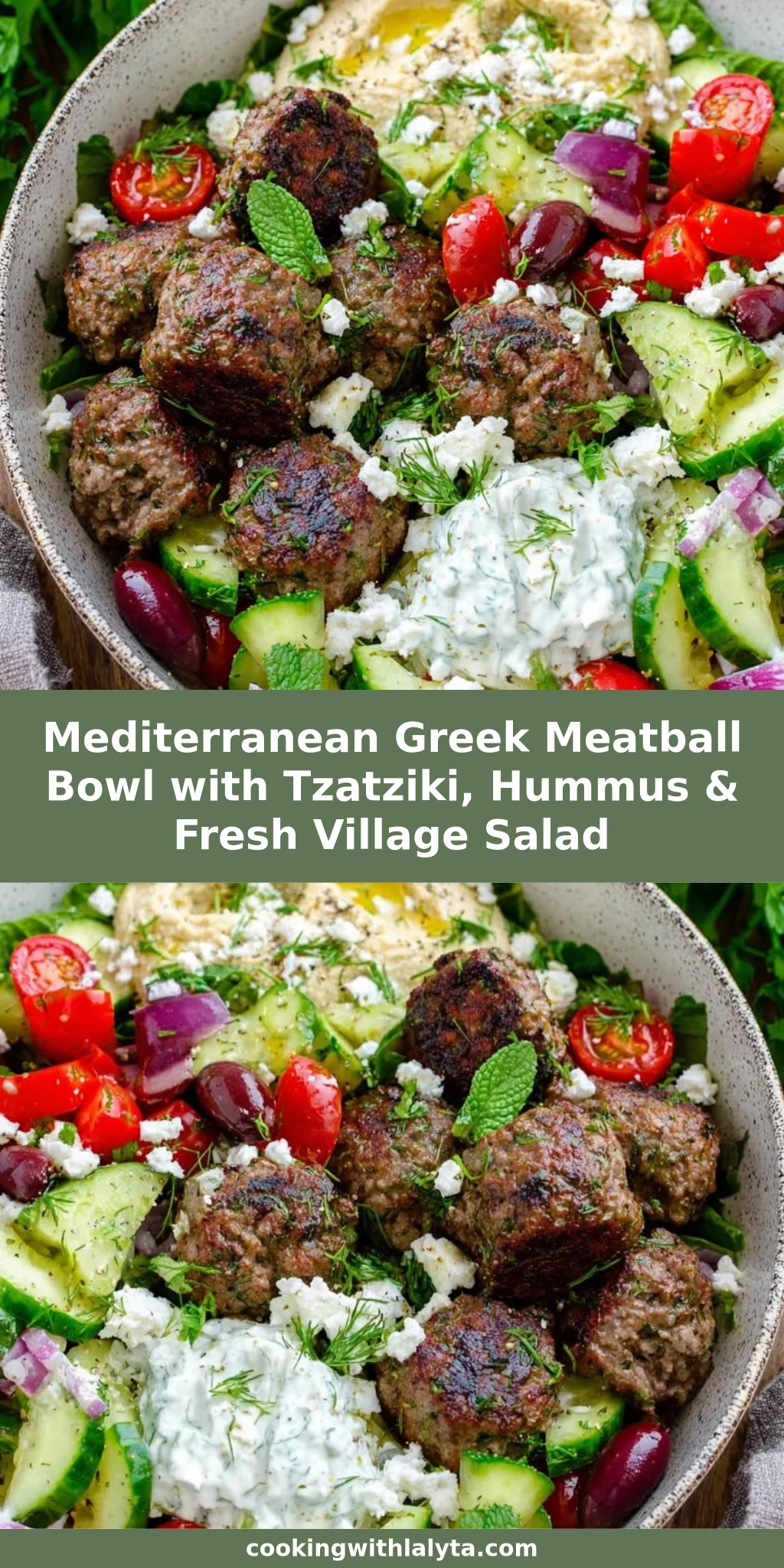
Mediterranean Greek Meatball Bowl with Tzatziki, Hummus & Fresh Village Salad – A Healthy Bowl That Transports You to the Greek Isles
The first time I tasted a true Greek meatball bowl, I was sitting at a tiny taverna on the island of Crete, the summer before culinary school in Paris. The combination of juicy, herb-flecked meatballs, cool and tangy tzatziki, silky hummus, and that impossibly crisp village salad — it was a revelation. I’ve been chasing that memory ever since, and after years of trial and error between my mother’s spice-laden kitchen in Morocco, my chef training in France, and now my bustling NYC home kitchen, I’ve finally landed on a Mediterranean bowl recipe that delivers that same sun-drenched magic. This Greek meatball bowl is a healthy, vibrant, and deeply satisfying meal that comes together in just 35 minutes — and I promise it’ll become a weeknight staple in your home just as it has in mine.
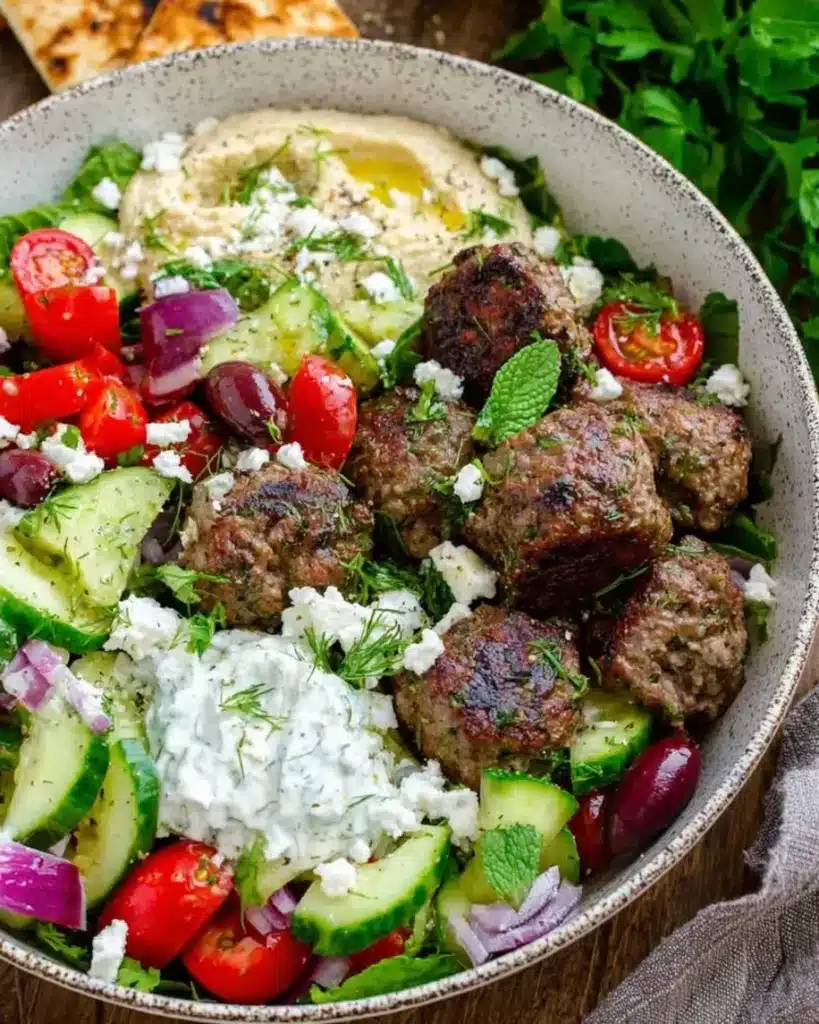
Let me paint you a picture: the aroma of cumin and oregano hits you first as the meatballs sizzle in olive oil, their exteriors turning deeply golden and caramelized. Then you scoop into a bowl layered with cool, creamy hummus — made from scratch in minutes — alongside a tzatziki so fresh it practically crackles with lemon and dill. And then there’s the village salad, my absolute favorite part: crisp cucumber, sweet tomatoes, sharp red onion, briny Kalamata olives, and creamy feta, all dressed simply with olive oil and a splash of red wine vinegar. Every forkful is a perfect balance of textures and temperatures — warm meatballs, chilled dips, and crunchy salad. It’s the kind of meal that feels both indulgent and nourishing, a Mediterranean meatball bowl that satisfies every craving.
What makes my version different? I borrow a little trick from my Moroccan upbringing: a touch of ground cumin in the meatball mixture that adds a warm, earthy depth you won’t find in most traditional Greek recipes. It’s subtle, but it makes these meatballs absolutely unforgettable. I’ll also walk you through the single biggest mistake people make with village salad (hint: it has to do with salting the cucumber ahead of time), and my foolproof method for tzatziki that stays thick and creamy instead of turning into a watery mess. Whether you’re meal-prepping for a busy NYC workweek or serving friends at a weekend gathering, this healthy bowl recipe delivers restaurant-quality flavor with minimal fuss. Let’s dive in — I’ve got so much to share with you.
Why This Greek Meatball Bowl Recipe Is the Best
The Flavor Secret. Most Greek meatball recipes rely solely on oregano and maybe a bit of mint. But I reach for ground cumin — a spice I grew up with in my mother’s Moroccan kitchen, where it scented everything from tagines to grilled meats. Just half a teaspoon transforms the meatballs, adding an earthy, almost smoky warmth that plays beautifully against the bright lemon and dill in the tzatziki. It’s the kind of “what is that?” flavor that makes people ask for the recipe. Combined with the classic garlic and oregano, these aren’t just Greek meatballs — they’re Lalybeth’s Greek meatballs, and they’re bursting with character.
Perfected Texture. During my training in Paris, my chef instructor drilled into us that texture is just as important as taste. I apply that lesson here by ensuring every component of this Mediterranean bowl recipe has distinct, intentional texture. The meatballs stay incredibly moist thanks to a panade-like effect from the breadcrumbs and egg, while pan-frying creates a deeply browned crust. The hummus is blended until luxuriously smooth, while the tzatziki gets body from properly drained cucumber (I’ll show you my trick). And the salad — oh, that salad — stays crisp and never watery because we salt the cucumber first, then pat it dry. Every bite has crunch, creaminess, and tenderness all at once.
Foolproof & Fast. I know how chaotic weeknights can be in a New York City kitchen — mine is roughly the size of a closet. This healthy bowl recipe is designed for real life. You can make the hummus and tzatziki up to two days ahead, the meatballs can be pre-rolled and refrigerated, and the salad comes together in under five minutes. From start to finish, if you’re organized, you’ll have dinner on the table in 35 minutes flat. And because everything gets arranged in individual bowls, it’s also spectacular for entertaining — set up the components and let everyone build their own perfect Mediterranean meatball bowl.
Greek Meatball Bowl Ingredients
I source most of these ingredients from my neighborhood farmers market in Union Square — the cucumbers and tomatoes are especially spectacular in late summer — but everything is readily available at any well-stocked US grocery store. For the best flavor, seek out authentic Greek yogurt (I love Fage 5%), good-quality extra-virgin olive oil, and block feta that you crumble yourself rather than the pre-crumbled variety. Trust me, these small choices add up to a vastly superior Mediterranean bowl recipe.
Ingredients List
- For the Meatballs:
- 1 lb ground lamb or beef
- 1/2 cup breadcrumbs
- 1/4 cup finely chopped onion
- 2 cloves garlic, minced
- 1 large egg
- 1 teaspoon dried oregano
- 1/2 teaspoon ground cumin
- 1/2 teaspoon salt
- 1/4 teaspoon black pepper
- 2 tablespoons olive oil (for frying)
- For the Tzatziki:
- 1 cup Greek yogurt
- 1/2 cucumber, grated and drained
- 1 tablespoon lemon juice
- 1 tablespoon chopped fresh dill
- 1 clove garlic, minced
- Salt to taste
- For the Hummus:
- 1 can (15 oz) chickpeas, drained and rinsed
- 1/4 cup tahini
- 2 tablespoons lemon juice
- 1 tablespoon olive oil
- 1 clove garlic
- 1/2 teaspoon salt
- Water as needed for consistency
- For the Village Salad:
- 2 cups diced cucumber
- 1 cup diced tomatoes
- 1/2 cup diced red onion
- 1/4 cup crumbled feta cheese
- 1/4 cup Kalamata olives
- 2 tablespoons olive oil
- 1 tablespoon red wine vinegar
- Salt and oregano to taste
Ingredient Spotlight
Ground Lamb or Beef. I love using ground lamb for its rich, slightly gamey flavor that feels authentically Mediterranean, but a good 85/15 ground beef works beautifully too and is easier to find in most US supermarkets. If you’re in a specialty market, ask your butcher to grind fresh lamb shoulder — it has the perfect fat-to-lean ratio. For a lighter twist, ground turkey or chicken works, but you’ll want to add an extra tablespoon of olive oil to the mixture to keep things from drying out.
Greek Yogurt. This is non-negotiable for authentic tzatziki. Full-fat Greek yogurt gives you that luscious, creamy texture, but 2% works fine if you’re watching fat intake. Avoid nonfat — it’s too thin and lacks the richness that makes tzatziki so satisfying. The key is straining it: even Greek yogurt benefits from 10 minutes in a cheesecloth-lined sieve to remove any excess whey, ensuring your tzatziki stays thick and scoopable.
Kalamata Olives. These dark, almond-shaped olives from Greece are essential for that briny, fruity pop in the village salad. You’ll find them at any grocery store, usually packed in jars with brine. Do not substitute black canned olives — they lack the complexity and will leave your salad feeling flat. If you must swap, oil-cured black olives are your best bet, though they are saltier, so adjust accordingly.
Tahini. This sesame seed paste is the backbone of great hummus, giving it that nutty depth and silky texture. Look for tahini that’s well-stirred and pourable — brands like Soom or Joyva are excellent in US stores. If your tahini has separated (oil on top, solid below), give it a good stir before measuring. A thin, runny tahini blends more easily into smooth hummus than a thick, pasty one.
| Original Ingredient | Best Substitution | Flavor / Texture Impact |
|---|---|---|
| Ground Lamb | 85/15 Ground Beef | Milder flavor, slightly less rich; still juicy and delicious |
| Greek Yogurt (Full-Fat) | 2% Greek Yogurt + 1 tbsp Sour Cream | Slightly tangier, still creamy but less decadent |
| Kalamata Olives | Oil-Cured Black Olives | Saltier and more intense; reduce added salt in salad |
| Tahini | Smooth Peanut Butter (not natural) | Nutty but distinctly peanut-flavored; adds sweetness |
How to Make Greek Meatball Bowl — Step-by-Step
Take a deep breath — this Mediterranean bowl recipe looks like a lot of components, but each one is incredibly straightforward, and much of the work can be done ahead. I’ll walk you through every step with the same care I’d use teaching a new cook in my NYC kitchen. Let’s make magic.
Step 1: Prepare the Meatballs
In a large bowl, combine 1 lb ground lamb or beef, 1/2 cup breadcrumbs, 1/4 cup finely chopped onion, 2 minced garlic cloves, 1 large egg, 1 teaspoon dried oregano, 1/2 teaspoon ground cumin, 1/2 teaspoon salt, and 1/4 teaspoon black pepper. Use your hands to mix gently but thoroughly — overworking the meat will make the meatballs tough. Roll the mixture into about 16 evenly sized 1-inch meatballs, placing them on a plate or baking sheet as you go. They should feel slightly sticky and hold together when rolled.
💡 Lalybeth’s Pro Tip: Wet your hands lightly with cold water before rolling the meatballs — the mixture won’t stick to your fingers, and you’ll get beautifully smooth, round meatballs every time.
Step 2: Cook the Meatballs
Heat 2 tablespoons of olive oil in a large skillet over medium heat until shimmering but not smoking. Carefully place the meatballs in a single layer — work in batches if needed to avoid overcrowding the pan. Cook for 8-10 minutes total, turning every 2-3 minutes with tongs, until all sides are deeply browned and the internal temperature reaches 160°F if using beef, or 165°F if using lamb or poultry. The meatballs should feel firm to the touch but still give slightly. Transfer to a paper towel-lined plate to drain briefly, then set aside and tent loosely with foil to keep warm.
⚠️ Common Mistake to Avoid: Crowding the pan is the #1 enemy of a good sear. If the meatballs are too close together, they steam instead of brown, and you lose that gorgeous caramelized crust. Give them room to breathe!
Step 3: Make the Tzatziki
First, grate 1/2 cucumber on the large holes of a box grater, then place the shreds in a clean kitchen towel or a few layers of paper towels and squeeze firmly over the sink to remove as much liquid as possible — you’ll be amazed how much water comes out. In a small bowl, combine the drained cucumber with 1 cup Greek yogurt, 1 tablespoon lemon juice, 1 tablespoon chopped fresh dill, 1 minced garlic clove, and a pinch of salt. Stir until smooth and well blended. Taste and adjust salt and lemon as needed. Refrigerate until ready to serve; this actually improves after 30 minutes as the flavors meld.
💡 Lalybeth’s Pro Tip: For the smoothest, most restaurant-quality tzatziki, grate the garlic on a Microplane instead of mincing it — it practically dissolves into the yogurt, distributing flavor evenly without any harsh raw garlic bites.
Step 4: Make the Hummus
In a food processor, combine 1 drained and rinsed can of chickpeas, 1/4 cup tahini, 2 tablespoons lemon juice, 1 tablespoon olive oil, 1 clove garlic, and 1/2 teaspoon salt. Process for about 1 minute until a thick paste forms, then with the machine running, drizzle in water 1 tablespoon at a time — you’ll likely need 2-3 tablespoons — until the hummus is smooth, creamy, and just loose enough to dollop. Stop and scrape down the sides at least once during blending. The hummus should be silky and spreadable but not runny. Transfer to a serving bowl and, if desired, swirl the top with the back of a spoon and drizzle with a little extra olive oil.
⚠️ Common Mistake to Avoid: Skipping the scraping-down step leaves unblended chunks of chickpeas near the blade. Pause halfway through, scrape thoroughly, and taste — you might find you need a touch more lemon or salt for brightness.
Step 5: Prepare the Village Salad
In a large bowl, combine 2 cups diced cucumber, 1 cup diced tomatoes, and 1/2 cup diced red onion. Here’s my game-changing step: sprinkle the cucumber and tomato mixture lightly with salt and let it sit for 5 minutes, then drain off any accumulated liquid — this prevents the dreaded watery salad. Add 1/4 cup crumbled feta cheese and 1/4 cup Kalamata olives. Drizzle with 2 tablespoons olive oil and 1 tablespoon red wine vinegar, then season with a pinch of dried oregano and black pepper. Toss gently with your hands or two spoons until everything is glossy and evenly dressed. Taste and add more salt only if needed (the feta and olives are already salty).
💡 Lalybeth’s Pro Tip: Dice your vegetables into uniform 1/2-inch pieces — it’s a small detail, but it means every forkful has a balanced mix of cucumber, tomato, olive, and feta. Rustic is charming; wildly uneven pieces are just frustrating to eat.
Step 6: Assemble the Bowls
Now for the fun part. Divide the village salad among four wide, shallow serving bowls, mounding it slightly on one side or letting it cover the base. Add a generous scoop of hummus (about 1/4 cup) next to the salad, then arrange 4-5 warm meatballs in the remaining space. Finish with a generous dollop of tzatziki — about 2 tablespoons per bowl — right on top of the meatballs or beside them. If you’re feeling fancy, garnish with a sprinkle of fresh dill, a drizzle of olive oil, and a pinch of sumac or paprika for color. Serve immediately while the meatballs are still warm and the salad is crisp and cool.
⚠️ Common Mistake to Avoid: Don’t assemble bowls too far ahead of time. The warm meatballs will wilt the salad and the tzatziki will start to warm up. For the best texture contrast, assemble right before serving.
| Step | Action | Duration | Key Visual Cue |
|---|---|---|---|
| 1. Prepare Meatballs | Mix and roll | 10 mins | Mixture holds together when pressed |
| 2. Cook Meatballs | Pan-fry in batches | 8–10 mins | Deep brown crust on all sides |
| 3. Make Tzatziki | Grate, drain, mix | 5 mins | Thick, creamy, no liquid pooling |
| 4. Make Hummus | Blend in food processor | 5 mins | Silky smooth, easily dollops |
| 5. Prepare Salad | Dice, salt, drain, dress | 5 mins | Vegetables glossy, no liquid in bowl |
| 6. Assemble Bowls | Arrange and serve | 2 mins | Distinct, colorful sections in bowl |
Serving & Presentation
In my NYC kitchen, I’m a firm believer that we eat with our eyes first, and this Mediterranean bowl recipe is a natural showstopper. I like to use wide, shallow bowls — think pasta bowls or low-rimmed salad bowls — rather than deep ones, which hide all the beautiful layers. Arrange the components in distinct sections rather than mixing everything together: the hummus as a creamy swoop on one side, the vibrant salad mounded next to it, the meatballs nestled in their own zone, and the tzatziki dolloped with a dramatic swoosh of the back of a spoon. The colors alone — deep brown meatballs, bright white tzatziki, pale hummus, and the red-and-green jewel tones of the salad — are absolutely stunning.
As for what to serve alongside, warm pita bread is the classic choice and practically mandatory for scooping up every last bit of hummus. I love brushing pita with a little olive oil and warming it in a dry skillet until it puffs slightly and gets those beautiful char marks. If you want to make this a larger spread — something I learned from big family meals back in Morocco — add a bowl of marinated gigante beans, some grilled halloumi, or a simple lentil salad. A pile of fresh herbs like mint and parsley on the side is never a bad idea either; they brighten every bite. During summer, I’ll sometimes throw grilled eggplant or zucchini into the mix for extra vegetable goodness.
| Pairing Type | Suggestions | Why It Works |
|---|---|---|
| Side Dish | Warm pita bread, grilled halloumi, marinated olives | Adds warmth, saltiness, and scoop-ability to every bite |
| Sauce / Dip | Extra tzatziki, spicy harissa yogurt, tahini drizzle | Layers of creaminess and optional heat for contrast |
| Beverage | Crisp Assyrtiko white wine, sparkling water with lemon, iced mint tea | Bright acidity cuts through the richness of lamb and yogurt |
| Garnish | Fresh dill fronds, sumac, Aleppo pepper flakes, flaky sea salt | Adds color, pop of flavor, and a restaurant-quality finish |
Make-Ahead, Storage & Reheating
One of the reasons this Mediterranean bowl recipe has become such a staple in my busy NYC routine is how beautifully it lends itself to meal prep. I’ll often make the hummus and tzatziki on a Sunday evening, roll the meatballs and stash them in the fridge, and then all that’s left on Monday is a quick sear and a five-minute salad. The components hold up wonderfully, and honestly, both dips taste even better after a day as the garlic and herbs meld. Let me give you my exact system.
| Method | Container | Duration | Reheating Tip |
|---|---|---|---|
| Refrigerator | Airtight glass containers | Up to 4 days (components separate) | Reheat meatballs in a skillet over medium-low heat with a splash of water |
| Freezer | Freezer-safe zip-top bags | Meatballs up to 3 months (raw or cooked) | Thaw overnight in fridge, then reheat gently; do not freeze tzatziki or salad |
| Make-Ahead | Separate airtight containers | Hummus & tzatziki 2 days ahead; meatballs rolled 1 day ahead | Assemble just before serving for best texture contrast |
When reheating meatballs, I avoid the microwave if at all possible — it tends to make them tough and rubbery. Instead, place them in a nonstick skillet with a tablespoon of water, cover with a lid, and warm over medium-low heat for 3-4 minutes. The steam gently revives them while the pan re-crisps the exterior. If you’re in a rush, 30-45 seconds in the microwave at 50% power works in a pinch, but keep a close eye on them. The hummus and tzatziki should always be served cold — they’re not meant to be heated — and the salad is best dressed just before eating. If you’ve stored dressed salad overnight, it will soften, but it’s still tasty; just give it a gentle toss to redistribute the dressing.
For meal-prep bowls, I recommend storing each component separately and assembling fresh each day. Layer the hummus, tzatziki, and salad in one container (salad on the bottom, dips on top so they don’t get soggy), and keep the meatballs in another. At lunchtime, just reheat the meatballs and drop them into your waiting bowl — a desk lunch that will make your coworkers genuinely jealous.
Variations & Easy Swaps
One of the best things about this Mediterranean bowl recipe is how flexible it is. Over the years, I’ve played with dozens of variations — some inspired by my Moroccan upbringing, others by seasonal produce at the Union Square Greenmarket. Here are my three favorite twists, each tested and approved right here in my NYC kitchen.
| Variation | Key Change | Best For | Difficulty Impact |
|---|---|---|---|
| Lighter Turkey Meatballs | Swap lamb for ground turkey, add 1 tbsp olive oil | Lower-calorie, high-protein option | Slightly easier to overcook — watch carefully |
| Gluten-Free & Dairy-Free | GF breadcrumbs, coconut yogurt tzatziki | Allergy-friendly weeknight dinner | Tzatziki texture changes slightly — still delicious |
| Roasted Red Pepper & Spicy Feta | Add roasted red pepper to hummus, use whipped spicy feta | Entertaining and weekend gatherings | Same ease, elevated presentation |
Lighter Turkey Meatball Version
When I’m craving all the flavors of this Greek meatball bowl but want something a little leaner, I turn to ground turkey. The key is adding an extra tablespoon of olive oil to the meatball mixture and a splash of milk to the breadcrumbs — a little trick I picked up in Paris for keeping lean meats moist. The turkey meatballs cook slightly faster, about 6-8 minutes total, so keep a close eye on them. The cumin and oregano shine just as beautifully with poultry, and honestly, some days I prefer the lighter feel, especially during New York’s steamy August heat waves.
Gluten-Free & Dairy-Free Option
For my gluten-free friends, simply swap the regular breadcrumbs for gluten-free panko or almond flour — both work beautifully and hold the meatballs together. The bigger challenge is the tzatziki, but I’ve had great success using unsweetened coconut yogurt (the thick, cultured kind, like CocoJune or Culina) with an extra squeeze of lemon to mimic that Greek yogurt tang. It won’t be quite as thick, so be extra diligent about draining the cucumber. The hummus is naturally gluten-free and dairy-free, so no changes needed there. This version has saved me more than once when hosting friends with dietary restrictions, and honestly, no one misses the dairy.
Roasted Red Pepper & Spicy Feta Twist
When I want to make this Mediterranean bowl recipe feel extra special — say, for a dinner party or a date night in — I take a cue from my Moroccan roots and add a smoky, spicy element. I blend a jarred roasted red pepper (drained) into the hummus, which turns it a gorgeous coral color and adds a subtle sweetness. Then I whip feta cheese with a little Greek yogurt, olive oil, and a pinch of Aleppo pepper or crushed red pepper flakes until it’s fluffy and spreadable. This spicy whipped feta gets dolloped alongside the hummus and tzatziki, turning the bowl into a full mezze experience. It’s stunning, and it all comes together with about five extra minutes of effort.
What is the best way to season Greek meatballs to keep them moist and flavorful?
Great Greek meatballs start with the right fat content and a light hand when mixing. I use ground lamb or 85/15 beef, which have enough fat to stay juicy. The breadcrumbs and egg act as a panade, trapping moisture inside. Season generously with dried oregano, fresh garlic, finely minced onion, and my secret: a touch of ground cumin for earthy warmth. Don’t overwork the meat — mix just until combined, or the meatballs will turn dense and tough. And always cook them in olive oil over medium heat so they brown deeply without drying out. If you’re using leaner meat like turkey, add an extra drizzle of olive oil to the mixture to compensate.
Can I use store-bought hummus and tzatziki for this Mediterranean bowl, or is homemade better?
You absolutely can use store-bought, and I won’t judge you one bit — we all have those weeks. A high-quality store-bought hummus (I like Sabra’s supremely creamy or the fresh ones from Whole Foods’ deli section) and a good tzatziki (Cedar’s makes a solid version) will shave 10 minutes off your prep time. That said, homemade is a noticeable upgrade. Fresh hummus is brighter and more lemony, and homemade tzatziki with freshly grated cucumber and dill has a vibrancy that store-bought just can’t match. My advice? If you’re short on time, buy the hummus and make the tzatziki — it takes five minutes and makes all the difference.
How do I make the fresh village salad without it getting watery?
The secret to a crisp, never-watery Greek village salad is salting the cucumber and tomato before dressing. After dicing, sprinkle them lightly with salt, toss, and let them sit in a colander for 5-10 minutes. You’ll see a surprising amount of liquid drain away — that’s the water that would otherwise pool at the bottom of your bowl and dilute the dressing. Pat the vegetables dry with a paper towel, then proceed with the olives, feta, olive oil, and vinegar. Also, always add the dressing just before serving; letting the salad sit dressed for more than 15 minutes will soften the vegetables even with the pre-salting step.
What are the ideal side dishes or toppings to add to this Greek meatball bowl?
This Greek meatball bowl is already a complete meal, but if you want to round it out or create more of a mezze spread, warm pita bread is the essential side — perfect for scooping up hummus and tzatziki. Grilled or roasted vegetables like eggplant, zucchini, or bell peppers add wonderful smoky depth. Marinated gigante beans or a simple lentil salad bring extra protein and texture. For toppings, I love a sprinkle of sumac for tang, Aleppo pepper for gentle heat, toasted pine nuts for crunch, or a handful of fresh mint and parsley. A side of lemon wedges is always welcome too — a fresh squeeze brightens the whole bowl beautifully.
Can I make the meatballs in the oven instead of pan-frying?
Yes, and it’s a great hands-off option! Arrange the meatballs on a parchment-lined baking sheet and bake at 400°F for 15-18 minutes, turning once halfway through, until browned and cooked through. The texture will be slightly different — less of a crusty exterior compared to pan-frying, but still delicious. I’d recommend brushing the meatballs lightly with olive oil before baking to encourage browning. For the best of both worlds, you can also sear them quickly in a hot skillet for 2 minutes per side and then finish in the oven, but honestly, on busy weeknights, straight oven-baking works just fine.
Is this Greek meatball bowl healthy? What are the nutrition facts?
This is absolutely a healthy bowl recipe, packed with protein, fiber, and heart-healthy fats. One serving (with lamb meatballs) clocks in around 650 calories, with 35g of protein, 35g of carbohydrates, and 40g of fat. The meatballs provide high-quality protein and iron, the chickpea hummus offers fiber and plant-based protein, the Greek yogurt tzatziki delivers calcium and probiotics, and the village salad is loaded with fresh vegetables and antioxidant-rich olive oil. If you’re looking to lighten it further, use ground turkey or chicken for the meatballs, choose 2% Greek yogurt, and go easy on the olive oil drizzle. It’s a perfectly balanced Mediterranean diet meal.
Can I prepare this bowl for meal prep? How do I store it?
Absolutely — this Mediterranean bowl recipe is a meal-prep superstar. Store each component separately: meatballs in one container, hummus and tzatziki in their own containers, and the salad undressed in another. When you’re ready to eat, reheat the meatballs, dress the salad fresh, and assemble. The hummus and tzatziki keep beautifully for up to 4 days in the fridge, and the meatballs can be frozen raw or cooked for up to 3 months. I don’t recommend freezing the dips or the salad. For grab-and-go lunches, layer the salad on the bottom of a container, top with hummus and tzatziki, and pack meatballs separately to reheat — just be sure to keep everything cold until lunchtime.
What’s the difference between a Greek village salad and a traditional Greek salad?
A Greek village salad, or horiatiki, is actually the authentic version of what Americans call a “Greek salad.” The hallmarks are chunky-cut vegetables (never shredded), no lettuce, large pieces of feta placed on top (not crumbled throughout), briny Kalamata olives, and a simple dressing of excellent olive oil, red wine vinegar, and dried oregano. The key difference from American-style Greek salads is the absence of lettuce and the emphasis on peak-season tomatoes and cucumbers. In Greece, the salad is often served with the feta as a slab on top, and you break it up yourself as you eat. My version uses crumbled feta for ease, but the spirit is the same: rustic, simple, and gloriously fresh.
Can I use chicken instead of lamb or beef for the meatballs?
Yes, ground chicken works well, but it’s leaner and more delicate, so you’ll need to make a few adjustments. Add an extra tablespoon of olive oil to the mixture and consider mixing in 2 tablespoons of milk-soaked breadcrumbs (squeezed dry) for additional moisture. Chicken meatballs are also stickier to roll, so wet your hands more frequently. Cook them at a slightly lower temperature — medium heat instead of medium-high — to prevent them from drying out before they’re cooked through. The flavor will be milder, which actually lets the oregano and cumin shine through beautifully. Ground turkey is an even better substitute; it has a bit more fat and holds together more reliably.
What can I substitute for tahini in the hummus if I have a sesame allergy?
If you’re allergic to sesame, you can still make a delicious, creamy hummus-like dip. Sunflower seed butter is my top recommendation — it has a similar nutty richness and smooth texture, though the flavor is slightly more earthy. Use the same amount as tahini (1/4 cup) and you may want to add an extra teaspoon of lemon juice to brighten it. Another option is Greek yogurt, which creates a tangier, lighter dip that’s more like a chickpea-yogurt spread; start with 3 tablespoons and add more for creaminess. I’ve also tested cashew butter with good results — it’s sweeter and milder, so add an extra pinch of salt. Whatever substitute you choose, the hummus will be different from traditional but still absolutely enjoyable.
Share Your Version!
There’s nothing that makes me happier than seeing your take on my Mediterranean Greek meatball bowl recipe. Did you go full lamb, or did you try the turkey version? Did you add your own spice twist, or discover a pairing I haven’t thought of? I want to hear all about it. Leave a star rating and your thoughts in the comments below — I read every single one, and they help other home cooks decide if this recipe is right for their table too.
And please, if you snap a photo (or a quick reel!) of your finished bowl, tag me on Instagram or Pinterest at @cookingwithlalyta. I love resharing your beautiful creations with our growing community of food lovers. Here’s a question I’d especially love to hear your answer to: What’s the one spice or herb you can’t live without in your kitchen — the one that makes everything taste like home? For me, it’s cumin, as you probably guessed. But I have a feeling yours might surprise me.
From my NYC kitchen to yours — I hope this recipe brings as much warmth to your table as it does to mine. — Lalybeth 🧡
Love This Recipe? Save It to Pinterest!
If you enjoyed this Mediterranean Greek Meatball Bowl recipe, don’t let it get lost in your browser tabs! 😄 Pin it now so you can find it again anytime — and explore hundreds more tried-and-tested recipes waiting for you on my Pinterest boards.
👉 Follow Lalybeth on Pinterest @cookingwithlalyta
📌 Pin this recipe · 🔁 Re-pin your favorites · 💬 Tag me when you make it — I love seeing your creations!
🌟 Loved This Greek Meatball Bowl? Let’s Keep Cooking Together!
Join thousands of home cooks who get my newest Mediterranean recipes, pro tips, and behind-the-scenes kitchen stories delivered straight to their inbox every week — absolutely free.
📬 Simply leave a comment below and check the box to subscribe. I’ll never spam you, and you can unsubscribe anytime. Let’s make something delicious together!
Mediterranean Greek Meatball Bowl with Tzatziki, Hummus & Fresh Village Salad
- Total Time: 35 minutes
- Yield: 4 1x
Description
A delicious and healthy bowl featuring seasoned Greek meatballs, creamy tzatziki, smooth hummus, and a crisp fresh village salad. Perfect for a balanced Mediterranean meal.
Ingredients
- For the Meatballs:
- 1 lb ground lamb or beef
- 1/2 cup breadcrumbs
- 1/4 cup finely chopped onion
- 2 cloves garlic, minced
- 1 large egg
- 1 teaspoon dried oregano
- 1/2 teaspoon ground cumin
- 1/2 teaspoon salt
- 1/4 teaspoon black pepper
- 2 tablespoons olive oil (for frying)
- For the Tzatziki:
- 1 cup Greek yogurt
- 1/2 cucumber, grated and drained
- 1 tablespoon lemon juice
- 1 tablespoon chopped fresh dill
- 1 clove garlic, minced
- Salt to taste
- For the Hummus:
- 1 can (15 oz) chickpeas, drained and rinsed
- 1/4 cup tahini
- 2 tablespoons lemon juice
- 1 tablespoon olive oil
- 1 clove garlic
- 1/2 teaspoon salt
- Water as needed for consistency
- For the Village Salad:
- 2 cups diced cucumber
- 1 cup diced tomatoes
- 1/2 cup diced red onion
- 1/4 cup crumbled feta cheese
- 1/4 cup Kalamata olives
- 2 tablespoons olive oil
- 1 tablespoon red wine vinegar
- Salt and oregano to taste
Instructions
- Prepare the meatballs: In a bowl, combine ground meat, breadcrumbs, onion, garlic, egg, oregano, cumin, salt, and pepper. Mix well and form into 1-inch meatballs.
- Heat olive oil in a large skillet over medium heat. Cook meatballs in batches until browned on all sides and cooked through, about 8-10 minutes. Set aside.
- Make the tzatziki: In a small bowl, combine Greek yogurt, grated cucumber, lemon juice, dill, garlic, and salt. Stir well and refrigerate until ready to serve.
- Make the hummus: In a food processor, combine chickpeas, tahini, lemon juice, olive oil, garlic, and salt. Blend until smooth, adding water a tablespoon at a time to reach desired consistency. Transfer to a bowl.
- Prepare the salad: In a large bowl, combine cucumber, tomatoes, onion, feta cheese, and olives. Drizzle with olive oil and red wine vinegar, season with salt and oregano, and toss gently.
- Assemble the bowls: Divide the salad among serving bowls. Add a generous scoop of hummus, a few meatballs, and a dollop of tzatziki. Serve immediately.
Notes
For a lighter version, use ground turkey or chicken. The tzatziki can be made a day ahead for better flavor. Adjust the hummus consistency with extra water if needed.
- Prep Time: 20 minutes
- Cook Time: 15 minutes
- Method: Main Course
- Cuisine: Mediterranean
Nutrition
- Calories: 650
- Sugar: 10g
- Fat: 40g
- Carbohydrates: 35g
- Protein: 35g
Tried This Recipe? Leave a Comment!
Did you make this recipe? I’d love to hear how it turned out! Please leave a comment and a rating below. Your feedback helps other home cooks and supports cookingwithlalyta.com!
For more delicious inspiration, follow me on Pinterest!