Table of Contents
Greek Style Loaded Hummus – A No-Cook Mediterranean Appetizer in 15 Minutes
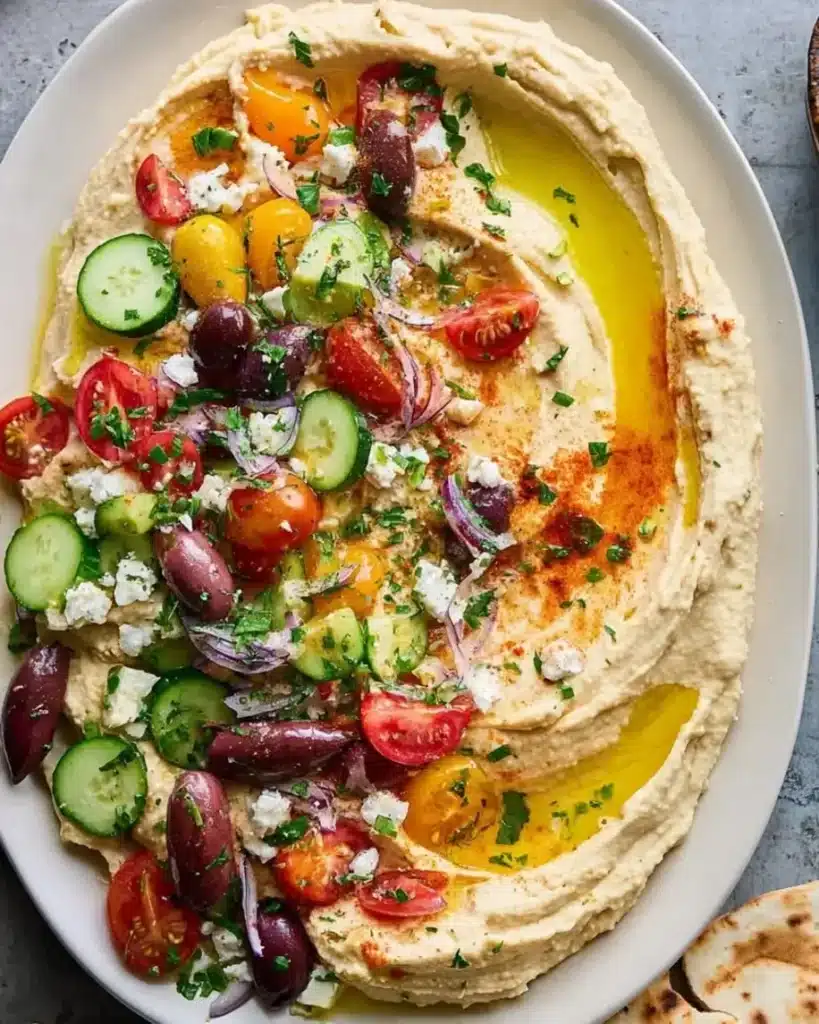
The first time I saw a loaded hummus platter, I was in a tiny Greek restaurant in Astoria, NYC, shortly after moving from Paris. It was a work of art—creamy hummus blanketed with crisp cucumbers, juicy tomatoes, briny olives, and tangy feta, all glistening with olive oil. That moment inspired my Greek style loaded hummus recipe, a no-cook appetizer that brings the vibrancy of a Greek mezze table to your kitchen in just 15 minutes. It’s the kind of dish that makes you want to gather friends around the table with a glass of wine and nothing more than warm pita for dipping.
Every bite of this Mediterranean hummus appetizer is a harmony of textures and flavors: the velvety hummus base, the crunch of fresh cucumber and red onion, the juicy pop of cherry tomatoes, the salty punches of feta and olives, all lifted by bright parsley and mint. A final drizzle of good extra-virgin olive oil and a dusting of paprika bring warmth and depth, making it impossible to stop dipping. It’s vibrant, fresh, and so simple that you’ll wonder why you haven’t been eating hummus this way forever.
As a professionally trained cook, I’ve learned that the secret to a standout loaded hummus recipe lies in the balance of toppings and letting the dish rest briefly before serving. I’ll share my pro tips for layering, the biggest mistake to avoid (soggy hummus!), and how to customize it for any crowd. Whether you’re hosting a game-day spread or need a last-minute healthy snack, this Greek loaded hummus will become your go-to easy appetizer. Trust me, once you try it, you’ll never look at a plain tub of hummus the same way again.
Why This Greek Style Loaded Hummus Recipe Is the Best
The Flavor Secret: My Paris training taught me that simplicity shines when ingredients are exceptional. Here, the hummus is merely a canvas; the real magic comes from using ripe, in-season produce and a fruity olive oil. This Greek loaded hummus recipe leans on the Mediterranean tradition of bold, fresh flavors—no cooking, just assembly. I often reach for a high-quality prepared hummus from a NYC market (Sabra or a local brand), but if you have time, a quick blender hummus with canned chickpeas and tahini elevates it further. The key is to let the toppings speak, so don’t skimp on the feta or herbs.
Perfected Texture: I see too many loaded hummus recipes where toppings sink into the hummus or the plate becomes a watery mess. My technique of spreading the hummus in an even layer with gentle swirls creates texture, while patting the vegetables dry ensures they stay crisp. The result: every scoop has the perfect ratio of creamy to crunchy. Plus, I always use an English cucumber (fewer seeds, less moisture) and drain the olives well. This is the difference between a pretty platter and one that actually eats well.
Foolproof & Fast: Even if you’ve never made an appetizer before, this Greek loaded hummus is impossible to mess up. With just 15 minutes and a few pantry staples, you’ll have a stunning dish that looks like it came from a restaurant. I’ll walk you through each step, complete with my chef-tested tips, so you can nail it on your first try. It’s the ultimate easy hummus appetizer for busy weeknights or spontaneous get-togethers—no cooking required.
Greek Loaded Hummus Ingredients
I often pick up a container of my favorite local hummus at the Saturday Union Square Greenmarket, then grab cucumbers and herbs from the farm stands. This recipe is my weeknight secret weapon because it uses mostly ingredients I already have in my fridge and pantry. Feel free to adjust the amounts based on what you have or love—more feta is never a bad decision!
Ingredients List
- 1 (10 ounce) container prepared hummus
- 1/2 English cucumber, diced
- 1 cup cherry tomatoes, halved
- 1/2 cup Kalamata olives, pitted and sliced
- 1/4 cup red onion, finely chopped
- 1/2 cup crumbled feta cheese
- 1/4 cup chopped fresh parsley
- 1 tablespoon chopped fresh mint
- 2 tablespoons extra-virgin olive oil
- 1/4 teaspoon paprika
- Salt and freshly ground black pepper, to taste
- Warm pita bread, for serving
Ingredient Spotlight
Hummus: The base of our Greek loaded hummus. I use a good-quality plain prepared hummus (Sabra or Ithaca) to save time, but you can absolutely make your own. Look for one with minimal ingredients—chickpeas, tahini, lemon, garlic. If you’re making from scratch, blend a can of drained chickpeas with 1/4 cup tahini, juice of 1 lemon, a garlic clove, and a drizzle of olive oil. The substitution for store-bought hummus is homemade, and the impact is slightly fresher flavor with more control over texture. Expect a creamier, brighter result if you DIY.
Feta Cheese: Real Greek feta made from sheep’s milk (or a mix of sheep and goat) is creamy, tangy, and crumbles beautifully. I buy it in blocks packed in brine from a Mediterranean grocer in Astoria. If you can’t find it, Bulgarian feta works well; for a dairy-free option, use a high-quality vegan feta (Violife is my favorite). The flavor will be slightly less salty and tangy with vegan feta, but still delicious. Avoid pre-crumbled feta—it lacks moisture and can taste dry.
Kalamata Olives: These Greek olives bring a meaty, winey, briny kick. Make sure they’re pitted and sliced or halved. You can substitute Castelvetrano olives for a milder, buttery flavor, or even capers for a sharper saltiness (use half the amount). The texture will change slightly—capers are smaller and more intense, so sprinkle them lightly.
Fresh Herbs: Parsley and mint are non-negotiable for that bright, fresh finish. The mint especially gives it a true Mediterranean vibe. If you only have parsley, double it, but don’t skip the herbs entirely. Dried herbs won’t work here because you lose the vibrant green color and fresh pop. I sometimes add a little fresh dill from my window sill if I have it.
| Original Ingredient | Best Substitution | Flavor / Texture Impact |
|---|---|---|
| 10 oz prepared hummus | Homemade hummus (chickpeas, tahini, lemon) | Fresher, creamier texture and brighter flavor |
| 1/2 cup crumbled feta | Vegan feta (Violife) or crumbled goat cheese | Slightly less salty, similar tang; goat cheese adds earthiness |
| 1/2 cup Kalamata olives | Castelvetrano olives or 2 tbsp capers | Milder, buttery; capers are sharper and saltier |
| 1 tbsp fresh mint | Extra fresh parsley + pinch dried mint (optional) | Less bright minty pop, still herbal and fresh |
How to Make Greek Style Loaded Hummus — Step-by-Step
Alright, let’s build this beautiful platter. Don’t stress—this is more about arrangement than technique. I’ll guide you through each stage with the tricks I’ve picked up in professional kitchens to make every bite perfect.
Step 1: Spread the Hummus
Spoon the prepared hummus onto a large serving platter or shallow bowl. Using the back of a spoon, spread it in an even layer about 1/4 to 1/2 inch thick, creating little swirls and ridges. This not only looks rustic but also creates pockets for the olive oil and toppings to settle. You want the hummus to cover the plate almost to the edges, leaving a small rim for any stray toppings.
💡 Lalybeth’s Pro Tip: Don’t spread the hummus too thin or it will tear under the weight of the toppings. Aim for a thickness that feels generous but not mountain-like—this ensures every scoop gets both hummus and toppings.
Step 2: Add the Fresh Toppings
Pat the diced cucumber dry with a paper towel to remove excess moisture—this is crucial to avoid a watery platter. Then evenly sprinkle the cucumber, halved cherry tomatoes, sliced Kalamata olives, and finely chopped red onion over the hummus. Distribute them so every inch of the surface is dotted with color. I like to place the tomatoes cut-side up for the prettiest presentation.
⚠️ Common Mistake to Avoid: Dumping all the toppings in one spot. You want a balanced mix across the platter so nobody ends up with a bite of just olives. Use your fingers to scatter them artistically.
Step 3: Finish with Cheese & Herbs
Crumble the feta cheese over the top, letting it fall into the little valleys between the vegetables. Then sprinkle the chopped parsley and mint generously. The herbs should look like confetti against the white feta and red tomatoes. This is the moment your platter transforms from a simple snack into something special.
💡 Lalybeth’s Pro Tip: Crumbling feta from a block by hand gives you irregular pieces that melt into the hummus better than pre-crumbled one. And for the herbs, give them a final gentle toss with your fingers to release their oils before sprinkling.
Step 4: Drizzle & Season
Drizzle the two tablespoons of extra-virgin olive oil in a thin stream across the entire surface—making sure to hit the feta and the bare hummus. Then sprinkle the paprika, salt, and a few cracks of black pepper. If you have smoked paprika, it adds a lovely subtle smokiness. Let the platter sit at room temperature for 5–10 minutes to let the flavors meld; the hummus will absorb some of the oil and the vegetables will soften ever so slightly.
⚠️ Common Mistake to Avoid: Seasoning without tasting. The feta and olives are already salty, so start with a light hand on the salt. You can always add more, but you can’t take it away. A squeeze of fresh lemon juice right before serving is my little Paris-inspired touch that brightens everything.
Step 5: Serve with Warm Pita
Warm the pita bread either in a dry skillet over medium heat for 30 seconds per side, or wrapped in foil in a 300°F oven for 5–7 minutes. Cut into triangles and arrange them around the platter. Encourage guests to scoop deeply, getting a bit of everything in one go. I love placing the platter in the center of the table with a small bowl of extra olive oil for drizzling and a pile of extra pita.
💡 Lalybeth’s Pro Tip: For a touch of New York deli nostalgia, I sometimes brush the pita with a little garlic oil before warming. It makes the kitchen smell incredible and adds another layer of flavor that echoes the hummus’s garlic notes.
| Step | Action | Duration | Key Visual Cue |
|---|---|---|---|
| 1 | Spread hummus on platter | 2 minutes | Even layer with defined swirls and ridges |
| 2 | Sprinkle cucumber, tomatoes, olives, onion | 3 minutes | Evenly distributed, colorful mosaic pattern |
| 3 | Top with feta, parsley, mint | 1 minute | White crumbles and green specks throughout |
| 4 | Drizzle olive oil, season | 30 seconds | Glossy sheen, visible paprika and pepper specks |
| 5 | Rest and serve with warm pita | 5–10 minutes + pita warming | Slightly softened toppings, aromatic herbs |
Serving & Presentation
When I serve this Greek loaded hummus at NYC dinner parties, I like to place the platter on a rustic wooden board surrounded by warm pita triangles, extra olive oil for drizzling, and a small bowl of olives. It instantly becomes the centerpiece. For a more casual gathering, I’ll set out little bowls of additional toppings—extra feta, roasted red peppers, or pickled onions—so guests can customize their scoops. The key is to keep everything within easy reach for dipping.
This Mediterranean hummus appetizer pairs beautifully with a simple Greek salad on the side, or as part of a larger mezze spread with tzatziki, dolmas, and grilled halloumi. I also love to drizzle a little pomegranate molasses over the top right before serving—it’s a trick I picked up from a Moroccan friend and adds a sweet-tart note that balances the richness. If you’re feeling fancy, scatter a few edible flowers or extra mint leaves for a pop of color that screams “spring in the city.”
| Pairing Type | Suggestions | Why It Works |
|---|---|---|
| Side Dish | Greek salad, roasted red peppers, marinated artichokes | Adds brightness and extra textures |
| Sauce / Dip | Tzatziki, extra hummus, skordalia | Creamy contrast, garlicky kick |
| Beverage | Crisp white wine (Assyrtiko), sparkling water with lemon, ouzo spritz | Cuts through richness, refreshes palate |
| Garnish | Lemon zest, extra fresh herbs, sumac | Enhances fresh, bright notes |
Make-Ahead, Storage & Reheating
Busy weeknights in my NYC kitchen call for prep-ahead magic. I often chop all the toppings (cucumber, tomatoes, onion, olives) on Sunday and store them separately in airtight containers in the fridge for up to two days. The hummus stays in its original container. Then, when hunger strikes, I can assemble this Greek loaded hummus in under two minutes flat. It’s a lifesaver for those evenings when you want something impressive but have zero energy to cook.
| Method | Container | Duration | Reheating Tip |
|---|---|---|---|
| Refrigerator (toppings) | Airtight glass containers | Up to 2 days | Pat dry before using; bring to room temp |
| Refrigerator (assembled) | Covered platter with plastic wrap | Up to 24 hours | Let sit 15 min at room temp; stir gently if needed |
| Freezer | Not recommended | N/A | Hummus may become grainy; veggies turn mushy |
| Make-Ahead | Separate components | Prep 2 days in advance | Assemble just before serving for ultimate freshness |
If you’ve already assembled the hummus and have leftovers, don’t despair. Store the platter tightly wrapped in the fridge for up to a day. The vegetables will soften slightly, but the flavor remains excellent. I find it’s still delicious the next day for a solo lunch—just give it a gentle toss and maybe add a few more fresh herbs. To freshen it up, drizzle a tiny bit more olive oil and a pinch of salt.
Never reheat hummus in the microwave—it can turn dry and lose its creaminess. Instead, let it come to room temperature naturally. If the hummus has thickened too much in the fridge, a teaspoon of warm water stirred in can revive its smoothness. And remember, the pita can be re-warmed in a skillet just before serving to maintain that toasty exterior.
Variations & Easy Swaps
| Variation | Key Change | Best For | Difficulty Impact |
|---|---|---|---|
| Spicy Harissa Loaded Hummus | Swirl 1–2 tbsp harissa paste into hummus before topping | Spice lovers, Moroccan twist | Easy (no change) |
| Dairy-Free & Vegan Greek Loaded Hummus | Use vegan feta or omit feta; add toasted pine nuts | Vegan guests, dairy-free needs | Easy |
| Seasonal Roasted Red Pepper Hummus | Replace hummus with roasted red pepper hummus; add grilled artichokes | Summer gatherings, smoky flavor | Easy |
Spicy Harissa Loaded Hummus
For a fiery kick that reminds me of my mother’s Moroccan kitchen, swirl 1–2 tablespoons of harissa paste into the hummus before spreading it. The smoky, chili-laced flavor mingles with the cool cucumber and tangy feta in the most addictive way. Top with all the same fresh veggies, but consider adding a sprinkle of toasted cumin seeds or a few slices of pickled jalapeño for extra heat. I love serving this version with grilled pita brushed with olive oil and za’atar—it’s a showstopper at any tapas-themed dinner.
Dairy-Free & Vegan Greek Loaded Hummus
To make this Greek loaded hummus entirely plant-based, simply swap the feta for a good vegan feta (I like Violife or Follow Your Heart) or omit it and scatter toasted pine nuts or slivered almonds for a satisfying crunch. The dish is naturally vegan except for the cheese, so this swap is effortless. The vegan feta can be a little softer, so crumble gently. For an even heartier version, add a handful of roasted chickpeas on top for protein and texture. The result is just as creamy, salty, and satisfying.
Seasonal Roasted Red Pepper Hummus
When summer hits NYC and the greenmarket is bursting with bell peppers, I’ll roast a few at home and blend them into the hummus for a sweet, smoky base. Then I top with all the traditional Greek toppings plus grilled artichoke hearts and a drizzle of balsamic glaze. This variation feels more like a composed salad on a hummus bed, and it’s fantastic with crusty bread instead of pita. The roasted pepper hummus brings a natural sweetness that contrasts beautifully with the salty feta and olives. If you’re short on time, store-bought roasted red pepper hummus works perfectly too.
What toppings are traditionally used to make Greek style loaded hummus?
Traditional Greek hummus toppings include diced cucumber, cherry tomatoes, Kalamata olives, red onion, crumbled feta cheese, and fresh herbs like parsley and mint. A generous drizzle of extra-virgin olive oil and a dusting of paprika finish the dish. These ingredients reflect classic Greek salad components, which pair perfectly with creamy hummus. Some variations also include bell peppers, capers, or a squeeze of lemon. The key is to use fresh, high-quality produce to let each bite burst with bright Mediterranean flavors.
Can I make Greek style loaded hummus ahead of time and how should I store it?
Yes! To get ahead, prepare all the toppings (diced cucumber, halved tomatoes, sliced olives, chopped onion, crumbled feta, and chopped herbs) and store them in separate airtight containers in the refrigerator for up to 2 days. Keep the hummus in its original container. Assemble the platter just before serving for the freshest texture and appearance. If you have leftovers, cover and refrigerate for up to 24 hours; the vegetables may soften slightly, but the flavor remains delicious. Always let it sit at room temperature for about 10 minutes before serving to bring out the full taste.
What can I use instead of tahini in Greek loaded hummus?
If you’re making homemade hummus and don’t have tahini, you can substitute Greek yogurt for a creamy, tangy twist—just use about 2 tablespoons per can of chickpeas. Another option is to blend in a spoonful of creamy peanut butter or cashew butter, which adds richness without overpowering. For a nut-free alternative, a drizzle of extra sesame oil can mimic tahini’s nuttiness, though use sparingly. However, since this recipe uses prepared hummus, you likely won’t need to worry about tahini; just choose a high-quality store-bought hummus that already contains it.
What are the best dippers or sides to serve with Greek style loaded hummus?
Beyond warm pita bread, there are plenty of delicious dippers. Try pita chips, toasted baguette slices, or sturdy crackers for extra crunch. Fresh vegetable sticks like carrot, celery, bell pepper, and cucumber are great for a lighter option. I also love serving it with grilled zucchini rounds or crispy chickpea “croutons.” As a side, a Greek salad, roasted vegetables, or marinated artichokes complement the flavors beautifully. For a heartier spread, add some felafel or grilled halloumi cheese on the side.
Is Greek style loaded hummus healthy?
Absolutely! This loaded hummus recipe is packed with nutrients. The hummus base provides plant-based protein and fiber from chickpeas, while the fresh vegetables add vitamins, antioxidants, and crunch. Olive oil delivers heart-healthy monounsaturated fats, and the feta offers calcium. A serving (about 1/6 of the platter) runs around 220 calories, making it a satisfying yet light appetizer. For an even more nutrient-dense version, use a whole-grain pita or load up on extra veggies. It’s a colorful, wholesome dish that you can feel good about devouring.
Can I use homemade hummus for this recipe?
Of course! Homemade hummus often tastes fresher and allows you to control the consistency and seasoning. I recommend making a large batch and using part of it for this Greek style loaded hummus. Simply blend a can of drained chickpeas with tahini, lemon juice, garlic, olive oil, and salt until smooth. You can even customize it by adding roasted garlic, cumin, or extra lemon for more zip. Just make sure your homemade hummus is well-chilled and not too runny, or it may not hold the toppings as nicely.
How can I make this Greek loaded hummus gluten-free?
The dish itself is naturally gluten-free because hummus, vegetables, feta, and olives contain no wheat. The only potential gluten is the pita bread. To make it completely gluten-free, serve with gluten-free pita or crackers, vegetable sticks, or even thick slices of roasted eggplant. Always check labels on store-bought hummus and feta to ensure no gluten-containing additives. I often swap in gluten-free pita chips from the health-food store or simply use cucumber rounds as little edible scoops—they’re refreshing and perfectly on theme.
What’s the difference between Greek loaded hummus and regular hummus?
Regular hummus is typically served as a smooth dip in a bowl, often with a simple drizzle of olive oil and a sprinkle of paprika. Greek loaded hummus, on the other hand, transforms hummus into a full appetizer platter by covering the entire surface with a generous layer of fresh Mediterranean toppings—cucumber, tomatoes, olives, feta, onions, and herbs. It’s more of a composed dish meant to be scooped with pita, offering a complete bite with creamy, crunchy, tangy, and fresh elements all at once. Think of it as a deconstructed Greek salad on a bed of hummus.
Share Your Version!
I can’t wait to see your colorful creations! This Greek loaded hummus is such a fun, customizable recipe, and I love seeing how you make it your own. Leave a comment below with your favorite topping combination—did you stick with the classic Greek toppings, or did you try one of my spicy harissa or roasted pepper twists? Don’t forget to give this recipe a star rating if you enjoyed it; your feedback helps my little NYC kitchen thrive.
Snap a photo of your platter and share it on Instagram or Pinterest—tag me @cookingwithlalyta so I can see your beautiful work! I’ll reshare my favorites in my stories. And if you have a question about a substitution or technique, drop it below; I’m always here to help. From my NYC kitchen to yours — I hope this recipe brings as much warmth to your table as it does to mine. — Lalybeth 🧡
Love This Recipe? Save It to Pinterest!
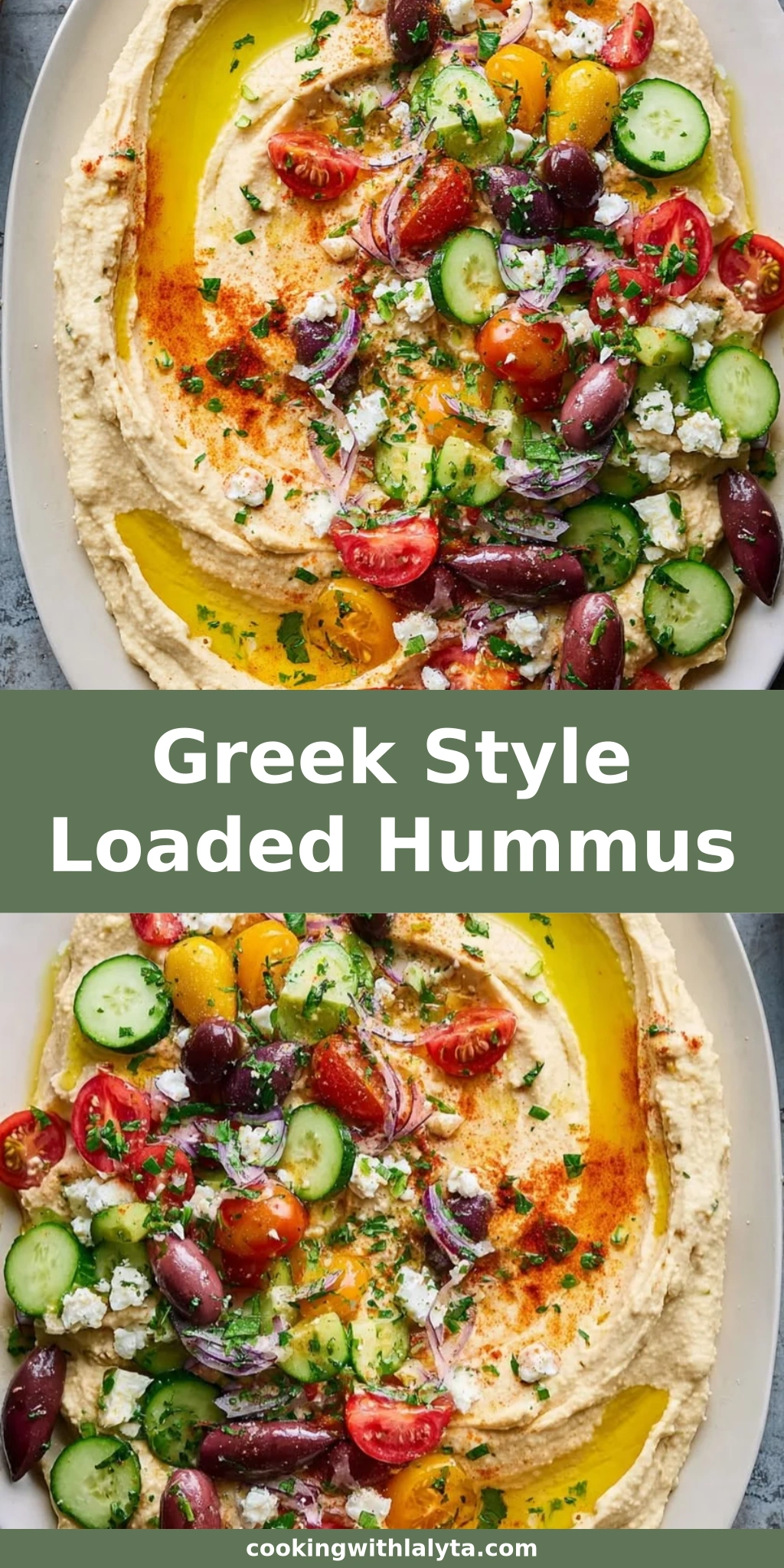
If you enjoyed this Greek Style Loaded Hummus recipe, don’t let it get lost in your browser tabs! 😄 Pin it now so you can find it again anytime — and explore hundreds more tried-and-tested recipes waiting for you on my Pinterest boards.
👉 Follow Lalybeth on Pinterest @cookingwithlalyta
📌 Pin this recipe · 🔁 Re-pin your favorites · 💬 Tag me when you make it — I love seeing your creations!

Greek Style Loaded Hummus
- Total Time: 15 minutes
- Yield: 6 servings 1x
Description
A loaded hummus platter topped with fresh cucumber, tomatoes, Kalamata olives, red onion, feta cheese, and herbs, drizzled with olive oil and served with warm pita. A simple, vibrant Greek-inspired appetizer.
Ingredients
- 1 (10 ounce) container prepared hummus
- 1/2 English cucumber, diced
- 1 cup cherry tomatoes, halved
- 1/2 cup Kalamata olives, pitted and sliced
- 1/4 cup red onion, finely chopped
- 1/2 cup crumbled feta cheese
- 1/4 cup chopped fresh parsley
- 1 tablespoon chopped fresh mint
- 2 tablespoons extra-virgin olive oil
- 1/4 teaspoon paprika
- Salt and freshly ground black pepper, to taste
- Warm pita bread, for serving
Instructions
- Spread the prepared hummus in an even layer on a large serving platter.
- Sprinkle evenly with cucumber, cherry tomatoes, Kalamata olives, and red onion.
- Top with crumbled feta cheese, fresh parsley, and fresh mint.
- Drizzle with olive oil and sprinkle with paprika, salt, and black pepper.
- Serve immediately with warm pita bread.
Notes
To make ahead, prepare all of the toppings and store them separately in the refrigerator for up to 2 days. Assemble just before serving. For best flavor, let the assembled hummus sit at room temperature for about 10 minutes before serving.
- Prep Time: 15 minutes
- Cook Time: 0 minutes
- Method: Appetizer
- Cuisine: Greek
Nutrition
- Calories: 220 kcal
- Sugar: 3 g
- Fat: 17 g
- Carbohydrates: 12 g
- Protein: 7 g
Tried This Recipe? Leave a Comment!
Did you make this recipe? I’d love to hear how it turned out! Please leave a comment and a rating below. Your feedback helps other home cooks and supports cookingwithlalyta.com!
For more delicious inspiration, follow me on Pinterest!